Search Results(13802)

2011-01-27
PIER B
Vol. 28, 95-109
Determination of the Resonance Frequencies of the Magnetic Near-Field Radiated by a Smps
Cecile Labarre , Francois Costa and Jacques Ecrabey
In this paper, we analyze the behaviour of a switched mode power supply (SMPS) regarding the radiated magnetic nearfield through an initial understanding of the electrical working of the converter, particularly during switchings. We propose a method based on impedance analysis at each state of the converter in order to predict the resonances of currents and/or voltages in the SMPS at the origin of the magnetic radiated near-field.
DETERMINATION OF THE RESONANCE FREQUENCIES OF THE MAGNETIC NEAR-FIELD RADIATED BY A SMPS
2011-01-27
PIER Letters
Vol. 20, 119-128
High Power VHF Frequency-Hopping Filters with High Suppression of Second Harmonic
Zhi-Yuan Zhao , Ping-Hui Li , Kun-Lun Cheng , Wen-Quan Cao and Kun-He Chen
A compact helix structure implementation and associated design formula of lumped element second-order bandpass filter circuit for high power frequency-hopping filter are proposed in this paper. The filter schematic provides one, two or three finite transmission zeros (Tzs), and these Tzs locates in the upper stopband to improve the rejection above the center frequency, especially the suppression of second harmonic with two Tzs. The filter schematic is built on a common grounded helix coil of inductive coupled resonator tanks whose suspectance is tunable. Due to the parasitical capacitance of the helix coil, the filter has a feedback capacitor between input and output. Its working mechanism is revealed both mathematically and graphically. The measured results have a good agreement with the 3D full-wave electromagnetic simulation responses. The experimental filter has a insert loss < 1.5 dB , return loss > 15 dB, a 3-dB bandwidth of 5%~8.5% over entire operating range with the power handling capability greater than 49 dBm and the suppression of second harmonic better than 56 dB.
HIGH POWER VHF FREQUENCY-HOPPING FILTERS WITH HIGH SUPPRESSION OF SECOND HARMONIC
2011-01-27
PIER C
Vol. 19, 163-177
Enclosure Effect on Microwave Power Amplifier
Jolly Dhar , Raj Kumar Arora , A. Dasgupta and S. S. Rana
The package design for microwave sub-systems requires adequate knowledge of electromagnetic field distribution inside the package housing. The cavity resonance of the microwave amplifier not only degrades the electrical performance, the feedback through the resonance mode also can cause unwanted oscillation in the frequency band of interest. It may even result in catastrophic failure of the device, wherein the peak oscillating voltage exceeds the device breakdown voltage. Hence, comprehensive analysis of the package effects is one of the prime requirements for stable microwave amplifier design for high-rel applications. This paper describes modeling, analysis of the package and different mitigation techniques to make stable, resonance free microwave amplifier for a C-band spaceborne SAR payload.
ENCLOSURE EFFECT ON MICROWAVE POWER AMPLIFIER
2011-01-27
PIER C
Vol. 19, 149-162
A Novel 10 GHz Super-Heterodyne Bio-Radar System Based on a Frequency Multiplier and Phase-Locked Loop
Seong-Sik Myoung , Yong-Jun An , Jong-Gwan Yook , Byung-Jun Jang and Jun-Ho Moon
This paper presents a novel 10 GHz bio-radar system based on a frequency multiplier and phase-locked loop (PLL) for non-contact measurement of heartbeat and respiration rates. In this paper, a 2.5 GHz voltage controlled oscillator (VCO) with PLL is employed as a frequency synthesizer, and 10 GHz continuous wave (CW) signal is generated by using frequency multiplier from 2.5 GHz signal. This paper also presents the noise characteristics of the proposed system, and the analysis result shows that the same signal-to-noise-ratio (SNR) performance can be achieved with the proposed system based on the frequency multiplier compared with the conventional system with identical carrier frequency. The experimental results shows excellent vital-signal measurement up to 100 cm without any additional digital signal processing (DSP), thus proving the validity of the proposed system.
A NOVEL 10 GHZ SUPER-HETERODYNE BIO-RADAR SYSTEM BASED ON A FREQUENCY MULTIPLIER AND PHASE-LOCKED LOOP
2011-01-27
PIER
Vol. 113, 83-102
On the Fundamental Equations of Electromagnetism in Finslerian Spacetimes
Nicoleta Voicu
In spaces with Finslerian geometry, the metric tensor depends on the directional variable, which leads to a dependence on this variable of the electromagnetic tensor and of the 4-potential. In this paper, we investigate some of the consequences of this fact, regarding the basic notions and equations of classical electromagnetic field theory.
2011-01-27
PIER
Vol. 113, 67-82
Impedance Matching Capability of Novel Socket Contactor Design Using Variable Open Stubfor RF Packaging Testing
Sung-Mao Wu , Kao-Yi Wang and Chuan-Hau Liu
In this paper, we will propose a new structure of the socket contactor, which is applied to the lead-frame test board. This structure contains a variable open stub to suffice for matching the impedance between the package and the load board. Its electrical property is considered superior to a conventional spring probe's especially when it is applied to a QFP device. In the following paragraphs, we will present its equivalent model and go into details. Note that the transmission-line model is a substitute for a physical structure at this point. First of all, its RLC model will be constructed after we demonstrate its simulation and test data. Finally, we will use the so-called MonteCarlo Method to analyze the inaccurate length in manufacturing to see how this new structure works.
IMPEDANCE MATCHING CAPABILITY OF NOVEL SOCKET CONTACTOR DESIGN USING VARIABLE OPEN STUBFOR RF PACKAGING TESTING
2011-01-26
PIER B
Vol. 28, 75-94
MIMO Radar Array for Termite Detection and Imaging
Nick W. D. Le Marshall and Andrew Z. Tirkel
In this paper, we describe the design of a hybrid 24 GHz RADAR array for termite detection and imaging. The array uses MIMO techniques to provide transmit beam steering and null steering in conjunction with the Matrix Enhanced Matrix Pencil (MEMP), which provides direction of arrival processing. We describe the selection of our MIMO orthogonal codes and test their suitability. Simulated results are shown for our array design and MIMO processing in a range of applications MIMO enables us to produce flexible nulling and beam steering for our transmitter array as well as reducing multipath re°ections and narrowband interference. MIMO processing also produces large time savings, enabling longer, more accurate acquisitions which can increase SNR. Transmitter beam-forming, produces an SNR improvement of 18.2 dB and can be used to reject clutter by up to 20 dB. Flexible nulling can reject interferers still further.
MIMO RADAR ARRAY FOR TERMITE DETECTION AND IMAGING
2011-01-26
PIER
Vol. 113, 47-66
Multifrequency Self-Diplexed Single Patch Antennas Loaded with Split Ring Resonators
Javier Montero-de-Paz , Eduardo Ugarte-Munoz , Francisco Javier Herraiz-Martinez , Vicente Gonzalez-Posadas , Luis Enrique Garcia-Munoz and Daniel Segovia-Vargas
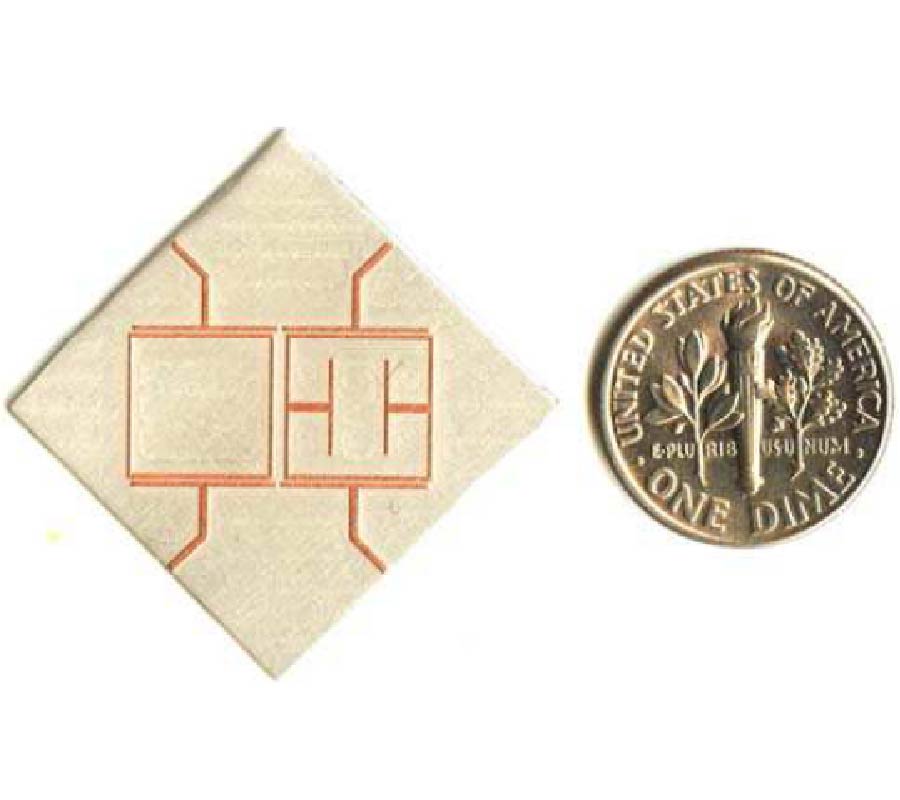
In this paper a novel approach to design multifrequency self-diplexed single patch antennas is proposed. This approach is based on a square microstrip patch antenna loaded with split ring resonators (SRRs). The working frequencies can be arbitrarily chosen and frequency ratios lower than 1.07 have been achieved. In addition self-diplexing characteristics are also achieved between transmitting and receiving ports by including SRRs in the feeding lines. Several prototypes have been manufactured and measured in the X-band showing good performance.
MULTIFREQUENCY SELF-DIPLEXED SINGLE PATCH ANTENNAS LOADED WITH SPLIT RING RESONATORS
2011-01-25
PIER B
Vol. 28, 55-73
A Tunable Bandpass Filter Using q-Enhanced and Semi-Passive Inductors at S-Band in 0.18-μm CMOS
Sen Wang and Rui-Xian Wang
A fully-integrated bandpass filter using Q-enhanced and semi-passive inductors is design, implemented, and verified experimentally in a standard 0.18-μm CMOS process. The inductors achieve high-Q factors by using a tapped-inductor feedback technique to produce negative resistances. Compared with conventional transformer feedback, the proposed technique not only compensates resistive losses with low-power consumption but also provides a high-inductance inductor which is suitable for low-frequency applications. The 2-pole Chebyshev series-C coupled bandpass filter provides a frequency tuning range of 300 MHz around 2.65 GHz. Measurements shown that it consumes 2.4 mW to achieve 1.0-dB insertion loss, 12-dB return loss, 6.3-dB noise figure, and --- 2.5-dBm input P1dB with a 950-MHz bandwidth at 2.8 GHz. And it consumes 5.6 mW to achieve 1.5-dB insertion loss, 10-dB return loss, 7.9-dB noise figure, and --- 4-dBm input P1dB with a 700-MHz bandwidth at 2.5 GHz. The overall chip size of the filter is 0.7 mm×0.9 mm including all testing pads.
A TUNABLE BANDPASS FILTER USING Q-ENHANCED AND SEMI-PASSIVE INDUCTORS AT S-BAND IN 0.18-μM CMOS
2011-01-25
PIER B
Vol. 27, 385-399
A Multi Band Mini Printed Omni Directional Antenna with V-Shaped for RFID Applications
Abdul Kadir Evizal , Tharek Bin Abdul Rahman , Sharul Kamal Bin Abd Rahim and Mohd Faizal Bin Jamlos
This paper presents a mini multi-band printed omni-directional antenna with v-shaped structure for radio frequency identification (RFID applications. The proposed multi-band antenna is developed from the initial v-shaped design which is only capable of working as a single-band antenna. By deploying a concept of dipole antenna to an initial design, the proposed antenna is accomplished to operate with two different modes of RFID system which are passive and active modes at frequencies of 915 MHz and 2.45 GHz respectively. The passive RFID tag is invented when a chip of UHF (Ultra High Frequency) is integrated with a proposed multi-band antenna. This passive tag, which is able to radiate with the measured signal strength, shows that the reading ranges are boosted almost two times compared to the conventional inlay antenna. The maximum reading range of passive RFID tag with inlay antenna is 5 m, though a reading range up to 10 m is achievable through the deployment of the proposed antenna at a measurement field. Implicitly, the measurements carried out on the antenna are in good agreement with the simulated values. Moreover, the size of the mobile passive RFID tag has been substantially as 100 mm x 70 mm, even though the antenna is fabricated with an inexpensive FR-4 substrate material. With the reasonable gain, coupled with cheaper material and smaller size, the proposed antenna has attractive potentials for use in RFID applications with multiple frequency antenna for active and passive tags.
A MULTI BAND MINI PRINTED OMNI DIRECTIONAL ANTENNA WITH V-SHAPED FOR RFID APPLICATIONS
2011-01-25
PIER Letters
Vol. 20, 107-117
Novel Printed Yagi-Uda Antenna with Highgain and Broadband
Shu Lin , Guan-Long Huang , Run-Nan Cai and Jin-Xiang Wang
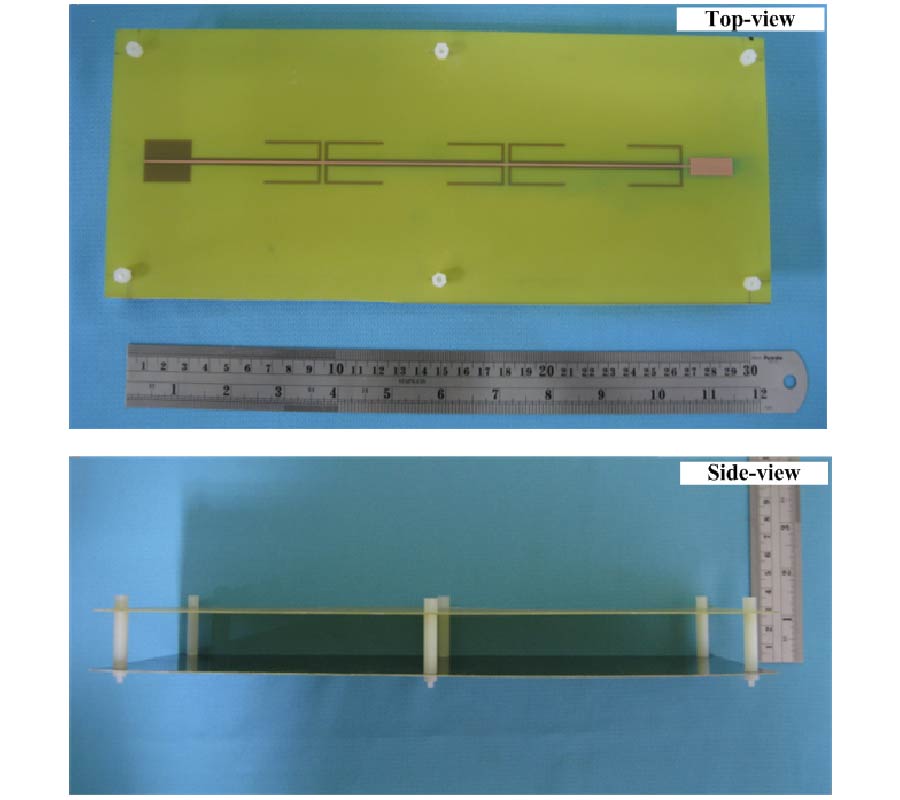
A high-gain and broadband printed Yagi-Uda antenna is proposed. The microstripline-to-balance microstripline technique is adopted in the feeding mode of the active dipole, which can help to realize the balanced-unbalanced transformation. The ground of the microstrip feeding line can function as a reflector, and both the longer reflector and the shorter director can also help the antenna achieve wideband. By altering the area of the substrate, the antenna gain can be effectively improved. A printed Yagi-Uda antenna operating at 3.5 GHz has been designed and manufactured. Both the simulated and measured results indicate that there is a high positive correlation between antenna gain and the substrate area extended from the front of the director, and antenna broadband characteristic would not be changed at the same time. Moreover, the impedance bandwidth of the proposed antenna can achieve 27.4%, and the maximum gain in the operating band can reach 10.6 dBi.
NOVEL PRINTED YAGI-UDA ANTENNA WITH HIGHGAIN AND BROADBAND
2011-01-25
PIER Letters
Vol. 20, 97-105
Effect on Tumoral Cells of Low Intensity Electromagnetic Waves
Vitaly P. Kalantaryan , Radik Martirosyan , Lusine Nersesyan , Anahit Aharonyan , Irina Danielyan , Hrachya Stepanyan , Jilda Gharibyan and Naira Khudaverdyan
Violations of the process of methylation reveal itself at the early stages of malignant transformation of cells, and the content of 5-methylcytosine can serve as a diagnostic test for tumor formation and treatment of disease. The carried out studies revealed the correlation of antitumor activity of MM-therapy (the coherent millimeter electromagnetic waves of low intensity) with inhibition of methylation of tumor DNA in vivo. It is established that an half-hour exposure of MM-radiation results in the tumor growth inhibition by 33,5% and a sharp suppression of the level of DNA-methylation -2.5 times. The results obtained in this experiment indicate the prospects of working out the MM-therapy for clinical oncology in the treatment of malignant neoplasms.
2011-01-25
PIER Letters
Vol. 20, 87-96
The Nonlinear Absorption of a Strong Electromagnetic Waves Caused by Confined Electrons in a Cylindrical Quantum Wire
Hoang Dinh Trien and N. V. Nhan
The nonlinear absorption of a strong electromagnetic wave caused by electrons confined in cylindrical quantum wires is theoretically studied by using the quantum kinetic equation for electrons. An analytic expression of the nonlinear absorption coefficient of a strong electromagnetic wave caused by electrons confined in a cylindrical quantum wire with a parabolic potential for electron-optical phonon scattering is obtained. The dependence of the nonlinear absorption coefficient on the intensity E0 and the frequency Ω of the external strong electromagnetic wave, the temperature T of the system and the radius R of the wires is strong and nonlinear. Analytic expression is numerically calculated and discussed for a GaAs/GaAsAl quantum wire. The results are compared with those for normal bulk semiconductors and quantum wells to show the differences.
THE NONLINEAR ABSORPTION OF A STRONG ELECTROMAGNETIC WAVES CAUSED BY CONFINED ELECTRONS IN A CYLINDRICAL QUANTUM WIRE
2011-01-25
PIER Letters
Vol. 20, 77-86
A Novel g-Shaped Slot Ultra-Wideband Bandpass Filter with Narrow Notched Band
Li-Na Chen , Yong-Chang Jiao , Huan-Huan Xie and Fu-Shun Zhang
A novel G-shaped slot ultra-wideband (UWB) bandpass filter with a very narrow notched band is proposed. The basic ultra-wideband filter is short-circuited stub bandpass filter consisting of shunted λ/4 short-circuited stubs and λ/4 connecting lines. To avoid the interferences such as WLAN signals. The G-shaped slot embedded in the stub filter is used to obtain the notched band inside the UWB passband. Additional U-shaped defected ground structures are adopted to improve the out-band suppression. Measured results show that the proposed filter has an ultra-wide bandwidth from 3.1 GHz to 10.6 GHz, and the insertion loss is less than 1 dB. Specifically, the fabricated filter possesses a 10 dB notched fractional bandwidth (FBW) of 2.36% at the notched center frequency of 5.8 GHz. It also achieves a stop band with 20 dB attenuation.
A NOVEL G-SHAPED SLOT ULTRA-WIDEBAND BANDPASS FILTER WITH NARROW NOTCHED BAND
2011-01-25
PIER M
Vol. 16, 213-223
A Semi-Empirical Model of Rain Attenuation at Ka-Band in Northern Taiwan
Kunshan Chen , Chih-Yuan Chu and Yu-Chang Tzeng
Combining a two-year measurement and numerical approach, a semi-empirical model has been developed for prediction of rain attenuation at Ka-band in northern Taiwan. This was done using the drop size distribution (DSD) measurement and the extinction coefficient calculated by T-matrix, followed by regressing with rain attenuation measurements in all seasons. The attenuation due to rain can be estimated by calculating the extinction coefficient over all of the rain drops within the antenna beam volume. Comparing with the measured data demonstrates that the proposed model proves sufficiently accurate for Ka-band signal attenuation in site specific. For purpose of cross reference, we also compared the proposed model with Crane and ITU-R-P838 rain attenuation models. The RMS error and chi-square test shows that the proposed semi-empirical model has better performance to predicted rain attenuation than Crane and ITU-RP383 models, implied that both model predictions may not be quite reliable in some specific areas. Analysis suggests that seasonal effects are strong in signal attenuation due to rain types. It means that rain rate itself is not a quite reliable enough to be the single parameter in the rain attenuation model.
A SEMI-EMPIRICAL MODEL OF RAIN ATTENUATION AT KA-BAND IN NORTHERN TAIWAN
2011-01-25
PIER
Vol. 113, 17-46
Joint Azimuth-Elevation/(-Range) Estimation of Mixed Near-Field and Far-Field Sources Using Two-Stage Separated Steering Vector-Based Algorithm
Junli Liang , Ding Liu , Xianju Zeng , Wenyi Wang , Jiulong Zhang and Hongyang Chen
Passive source localization has wide applications in array signal processing. In the practical applications, the observations collected by an array may be ``arbitrary"-field signals, i.e., which are either mixed near-field and far-field signals or multiple near-field signals or multiple far-field signals. With a cross array, a two-stage separated steering vector-based algorithm is developed to localize ``arbitrary"-field narrowband sources in the spherical coordinates. The key points of this paper are: i) different physical steering vectors of near-field and far-field sources are transformed into the virtual ones with the same form, thus linearizing the quadratic phases of near-field sources and allowing the same operations for near-field and far-field sources; ii) the virtual steering vector is separated into two parts and restored by introducing a special phase angle, and thus it is used to estimate the azimuth-elevation arrival-angles of ``arbitrary"-field sources; and iii) special Hermitian matrices are constructed using the separated physical steering vector and their eigenvalue decomposition (EVD) are performed, thus the ranges of near-field sources are easily obtained from the eigenvector being corresponding to the smallest eigenvalue. The proposed algorithm can localize ``arbitrary"-field sources without pairing parameters and multidimensional search. Simulation results are provided to validate the performance of the proposed method.
JOINT AZIMUTH-ELEVATION/(-RANGE) ESTIMATION OF MIXED NEAR-FIELD AND FAR-FIELD SOURCES USING TWO-STAGE SEPARATED STEERING VECTOR-BASED ALGORITHM
2011-01-25
PIER
Vol. 113, 1-15
Limitations of the Uda Model for T-Match Antennas
Kenneth R. Demarest and Daniel D. Deavours
The T-match feed is a useful impedance matching tool for dipole antennas, especially for electrically short dipoles with capacitive loads. The Uda model has been extensively tested for accuracy in the literature for the special case of the folded dipole, but not for the more general T-match dipole, which is often used for RFID antenna design. We investigate the accuracy of the Uda model for this more general case and show that aspects of the model become inaccurate for a number of practical scenarios. Nevertheless, we show that the model can still be used as a guide to T-match dipole designs.
LIMITATIONS OF THE UDA MODEL FOR T-MATCH ANTENNAS
2011-01-25
PIER
Vol. 112, 441-457
A Robust Cad Tool for Integrated Design of UWB Antenna System
Zhan Zhang and Yee Hui Lee
This paper proposes a robust Computer-Aided Design (CAD) tool for an Ultra-Wideband (UWB) antenna system which successfully integrates the design of the transmitting antenna, the receiving antenna and the shaping of the transmitted pulse. The distinctive features of this tool include: the efficient characterization of transfer function in terms of an analytical model, the effective evaluation from system point of view and the simultaneous optimization of multiple objectives. Using this tool, an automatic and efficient design can be realized to deliver the UWB antenna system upon the optimal performance.
A ROBUST CAD TOOL FOR INTEGRATED DESIGN OF UWB ANTENNA SYSTEM
2011-01-25
PIER
Vol. 112, 415-440
Phenomenological Model Combining Dipole-Interaction Signal and Background Effects for Analyzing Modulated Detection in Apertureless Scanning Near-Field Optical Microscopy
Chia-Chi Liao and Yu-Lung Lo
Modulation methods such as homodyne and heterodyne detections are employed in A-SNOM in order to eliminate serious background effects from scattering fields. Usually, the frequency-modulated detection signal in apertureless scanning near-field optical microscopy (A-SNOM) is generally analyzed using a simple dipole-interaction model based only on the near-field interaction. However, the simulated A-SNOM spectra obtained using such models are in poor agreement with the experimental results since the effects of background signals are ignored. Accordingly, this study proposes a new phenomenological model for analyzing the A-SNOM detection signal in which the effects of both the dipole-interaction and the background fields are taken into account. It is shown that the simulated A-SNOM spectra for 6H-SiC crystal and polymethylmethacrylate (PMMA) samples are in good agreement with the experimental results. The validated phenomenological model is used to identify the experimental A-SNOM parameter settings which minimize the effects of background signals and ensure that the detection signal approaches the pure near-field interaction signal. Finally, the phenomenological model is used to evaluate the effects of the residual stress and strain in a SiC substrate on the corresponding A-SNOM spectrum.
PHENOMENOLOGICAL MODEL COMBINING DIPOLE-INTERACTION SIGNAL AND BACKGROUND EFFECTS FOR ANALYZING MODULATED DETECTION IN APERTURELESS SCANNING NEAR-FIELD OPTICAL MICROSCOPY
2011-01-25
PIER
Vol. 112, 397-414
Analysis of High Frequency Plane Wave Transmission into a Double Negative Cylinder by the Modified Watson Transformation and Debye Series Expansion: First Term of the Debye Series
Saffet Sen
The modified Watson transform is applied to the Mie series for the electromagnetic wave transmitted into the double negative cylinder due to high frequency plane wave incidence The Debye series expansion is adapted to the transmission coefficients to reveal the transmission mechanism at high frequency. The first term of the Debye series is examined. Two kinds of geometrical shadow regions and two kinds of geometrically lit regions are shown to exist. The field formation mechanisms in these regions are indicated. Several differences between a double positive cylinder and a double negative cylinder are determined. The field computations are performed in the geometrical shadow and the geometrically lit regions for the first term of the Debye series. The residue series and steepest descent computations are shown to be in good agreement with the Mie series computations.
ANALYSIS OF HIGH FREQUENCY PLANE WAVE TRANSMISSION INTO A DOUBLE NEGATIVE CYLINDER BY THE MODIFIED WATSON TRANSFORMATION AND DEBYE SERIES EXPANSION: FIRST TERM OF THE DEBYE SERIES