Search Results(13804)

2010-04-27
PIER M
Vol. 12, 95-105
Characterization of the Regular Polygonal Waveguide for the RF EM Shielding Application
Blaise Ravelo and Belahcene Mazari
This article presents a theoretical characterization of the regular polygonal waveguide (RPW) having n-sides. Based on the symmetrical circular symmetry of the RPW and the circular waveguide (CW), the analogy between the electromagnetic (EM) behaviors of these to waveguide (WG) is established. After a brief recall about the state of the art concerning the WG engineering and its application, we introduce a basic theory of the WG presenting a regular polygonal cross-section with n-sides. By considering, the fundamental mode TE11, we develop the main mathematical formulas summarizing the different characteristics (cut-off frequency, fc, propagating constant, k11 and S-parameters) appropriated to any RPW in function of its physical parameters (number of sides, n, diameter, D and height, h). In order to verify the validation of the developed analytical expressions, comparisons between the HFSS simulated and theoretical dispersion diagrams of regular pentagonal (n=5), hexagonal (n=6), heptagonal (n=5) metallic (copper) WG with for example, 50 mm outer diameter are presented. So, it was demonstrated that very good correlation between the theoretical predictions (fc(n), k11(n)) is found with a relative error less than 1%. As application of the present study in terms of EM wave shielding, simulation of metallic wall with hexagonal aperture is also performed. Finally, discussion about the future work is drawn in conclusion.
CHARACTERIZATION OF THE REGULAR POLYGONAL WAVEGUIDE FOR THE RF EM SHIELDING APPLICATION
2010-04-27
PIER M
Vol. 12, 81-93
On the Distribution of Current on an Open Tape Helix
Natarajan Kalyanasundaram , Gnanamoorthi Babu and Rahul Tulsian
The approximate distribution of the current density induced on the tape surface by guided electromagnetic waves supported by an infinite open tape helix is estimated from an exact solution of a homogenous boundary value problem for Maxwell's equations. It is shown that the magnitude of the surface current density component perpendicular to the winding direction is at least three orders of magnitude smaller than that of the surface current density component parallel to the winding direction everywhere on the tape surface. Also, the magnitude and phase distribution for the surface current density components parallel and perpendicular to the winding direction are seen to be nearly uniform at all frequencies corresponding to real values of the propagation constant.
ON THE DISTRIBUTION OF CURRENT ON AN OPEN TAPE HELIX
2010-04-26
PIER Letters
Vol. 14, 59-67
A Low-Profile Shorted Monopole Antenna Embedded with a Resonant Slot
Wen-Jian Liu , Qing-Xin Chu and Liang-Hua Ye
A low profile dual-band mobile phone antenna with a very small volume of 0.768 cm3 (40 × 4 × 4.8 mm3) is presented. The antenna is formed by a monopole and an open-end slot embedded therein. The impedance bandwidths for the lower and upper bands with a definition of 3:1 VSWR (6 dB return loss) reach 215 MHz (815-1030 MHz) and 515 MHz (1660-2175 MHz) respectively. Furthermore, small excited surface current distributions on the ground plane of the antenna are achieved, and the ground plane length has smaller effect on the achievable bandwidths of the antenna compared with the conventional internal patch antennas for mobile phones, which make the antenna very attractive to be applied to the mobile phones with various possible ground plane lengths. Good radiation characteristics over the operating bands are obtained.
A LOW-PROFILE SHORTED MONOPOLE ANTENNA EMBEDDED WITH A RESONANT SLOT
2010-04-26
PIER Letters
Vol. 14, 51-58
Standing Wave Effects in Microwave Ellipsometry
Lawrence R. Lawson and Hashim A. Yousif
Unlike ellipsometry using light, ellipsometry using microwaves can be subject to significant standing wave effects resulting from reflection of the received wave back to the source. This paper examines these effects on the apparent homogeneity of circular polarization. These effects are examined experimentally using an ellipsometer with no sample and compared with calculated results for a single order of reflection. Good agreement is obtained. That the peak-to-peak variations in the observed irradiance are on the order of four times the amplitude reflectance is observed. The angular dependencies of these effects are path length dependent.
STANDING WAVE EFFECTS IN MICROWAVE ELLIPSOMETRY
2010-04-26
PIER C
Vol. 13, 135-148
On-Chip Fgcpw Lowpass and Bandpass Filters with Low Insertion Loss and High Stopband Rejection for V-Band Applications
Hwann-Kaeo Chiou and I-Shan Chen
This paper presents compact on-chip finite ground coplanar waveguide (FGCPW) lowpass filter (LPF) and bandpass filter (BPF) for V-band multi gigabit per second (Gbps) wireless personal area network (WPAN) applications. The equivalent lumped-element circuit of the proposed filters can be represented by an ABCD matrix which is obtained by consecutively multiplied ABCD matrixes of one T-network impedance and two shunt admittances. The full-wave EM simulators, AnsoftTM HFSS and AgilentTM Momentum, were used to fine tune the desired frequency response. The FGCPW LPF and BPF were implemented in WINTM semiconductor 0.15 μm pHEMT process. The obtained insertion losses are smaller than 0.5 dB and 1.5 dB with return losses of better than 20 dB and 13 dB, respectively. The 1-dB bandwidths of the LPF and BPF are 70 GHz (0-70 GHz) and 11 GHz (55-66 GHz), respectively. The stopband rejections are better than 20 dB from 95 to 120 GHz in the LPF, and from 0 to 42 GHz and 82 to 120 GHz in the BPF. The measured frequency responses show good agreements with the simulations. The chip size is very compact of 0.43×0.45 mm2.
ON-CHIP FGCPW LOWPASS AND BANDPASS FILTERS WITH LOW INSERTION LOSS AND HIGH STOPBAND REJECTION FOR V-BAND APPLICATIONS
2010-04-26
PIER C
Vol. 13, 121-134
A Broadband Dual-Inflection Point RF Predistortion Linearizer Using Backward Reflection Topology
Mohammad S. Hashmi , Zaharia S. Rogojan , S. R. Nazifi and Fadhel M. Ghannouchi
This paper presents a flexible and generic broadband RF predistortion linearizer designed using backward reflection topology that can correct for the dualinflection point type compression characteristics usually encountered in the gain profile of metal semiconductor field effect transistor (MESFET) based power amplifiers. It employs circuit configuration of two parallel Schottky diodes with one p-intrinsic-n (PIN) diode in parallel, connected at two ports of a 90°hybrid coupler. The Schottky diodes are coupled via a quarter wave transmission line segment which generates dual inflection points in the gain characteristics of the linearizer. The incorporation of a PIN diode helps in improving the achievable range in the gain and phase characteristics of the linearizer. Overall, the linearizer is capable of linearizing various types of power amplifiers owing to the flexible control on the linearizer's parameters and eventually the gain and phase characteristics of the linearizer. The proposed linearizer can be employed in the frequency range of 1.4-2.8 GHz and can simultaneously improve the third- and fifth-order intermodulation distortions. The measurements carried out on a commercial ZHL-4240 gallium arsenide field effect transistor (GaAs FET) based power amplifier demonstrates the broadband functionality of the proposed linearizer.
A BROADBAND DUAL-INFLECTION POINT RF PREDISTORTION LINEARIZER USING BACKWARD REFLECTION TOPOLOGY
2010-04-25
PIER B
Vol. 21, 27-45
Estimation of Error Induced by a Crossed-Dipole Probe in the Near-Field
Paramesha and Ajay Chakraborty
The Moment Method is used to estimate the error induced by a compact measuring probe in the near-field. A crossed-dipole is used as a compact near-field measuring probe of a waveguide radiator in an infinite ground plane, since it measures both co-pole and cross-pole components simultaneously. However, due to multiple reflections between radiator and probe, in addition, mutual coupling effects between the poles, near-field values are changed. The relative sampled electric field pattern (without the probe) is compared to the relative sampled co-pole voltage pattern in the scan plane and the induced error is computed. The radiating waveguide's reflection coefficient is altered with respect to the reflection coefficient when there is no probe in the near-field. The numerical results concerning the reflection coefficient without the probe are compared to the measured values, and good agreement is observed.
ESTIMATION OF ERROR INDUCED BY A CROSSED-DIPOLE PROBE IN THE NEAR-FIELD
2010-04-25
PIER B
Vol. 21, 1-26
Variable-Fidelity Design Optimization of Microwave Devices Using Multi-Dimensional Cauchy Approximation and Coarsely Discretized Electromagnetic Models
Slawomir Koziel , Stanislav Ogurtsov and Mohamed H. Bakr
Application of multi-dimensional Cauchy approximation and coarse-discretization electromagnetic (EM) models to surrogate-based optimization of microwave structures is discussed. Space mapping is used as an optimization engine with the surrogate model constructed as a Cauchy approximation of the coarsely discretized device EM model. The proposed approach allows us to perform computationally efficient optimization of microwave structures without using circuit-equivalent coarse models traditionally exploited by space mapping algorithms. We demonstrate our technique through design of a range of microwave devices, including filters, antennas, and transitions. Comprehensive numerical verification of the proposed methodology is carried out with satisfactory designs obtained --- for all considered devices --- at a computational cost corresponding to a few fullwave simulations.
VARIABLE-FIDELITY DESIGN OPTIMIZATION OF MICROWAVE DEVICES USING MULTI-DIMENSIONAL CAUCHY APPROXIMATION AND COARSELY DISCRETIZED ELECTROMAGNETIC MODELS
2010-04-25
PIER Letters
Vol. 14, 41-49
Spectral Switch of Light Induced by Scattering from a System of Particles
Tao Wang and Daomu Zhao
The spectral switch phenomenon of light induced by scattering from a collection of particles is, to the best of our knowledge, reported for the first time. It is shown that when a spatially coherent light wave with a spectrum of Gaussian distribution is scattered from a collection of particles, the rapidly transition of the spectrum of the scattered field from red shift to blue shift (i.e., spectral switch) can be observed. It is also found that the spectrum of the scattered field will experience several spectral switches with the increase of the scattering angle.
SPECTRAL SWITCH OF LIGHT INDUCED BY SCATTERING FROM A SYSTEM OF PARTICLES
2010-04-25
PIER
Vol. 103, 305-322
Scattering from Large 3-D Piecewise Homogeneous Bodies through Linear Embedding via Green's Operators and Arnoldi Basis Functions
Vito Lancellotti , Bastiaan P. de Hon and Antonius G. Tijhuis
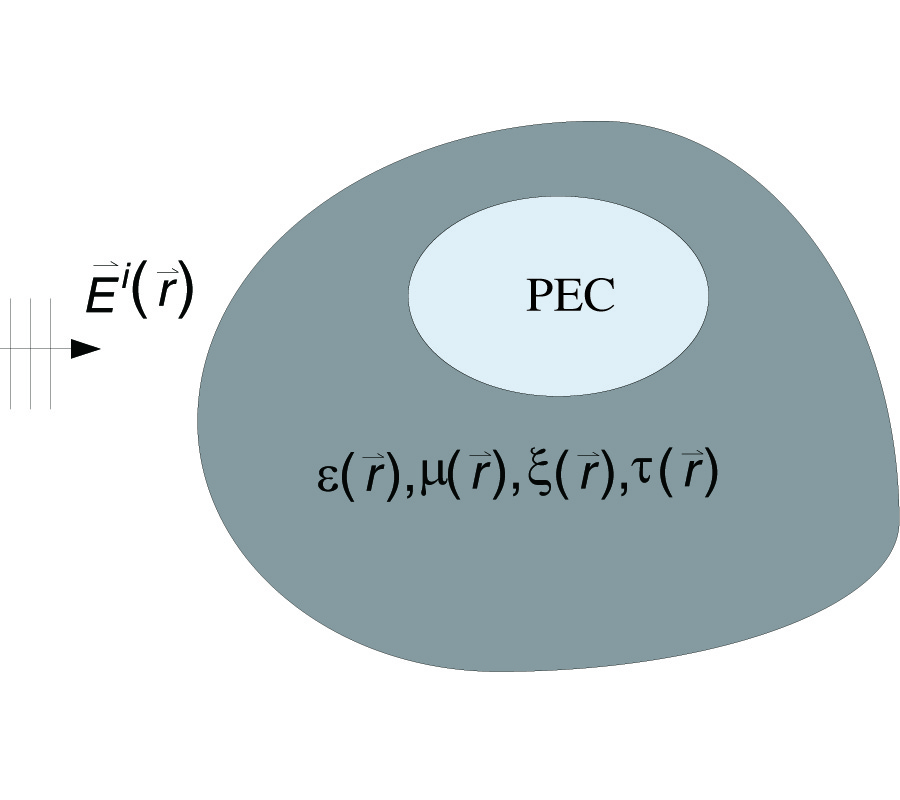
We apply the linear embedding via Green's operators (LEGO) method to the scattering by large finite dielectric bodies which contain metallic or penetrable inclusions. After modelling the body by means of LEGO bricks, we formulate the problem via an integral equation for the total incident currents over the boundaries of the bricks. This equation is turned into a weak form by means of the Method of Moments (MoM) and sub-domain basis functions. Then, to handle possibly large MoM matrices, we employ an order-reduction strategy based on: i) compression of the off-diagonal sub-blocks of the system matrix by the adaptive cross approximation algorithm and ii) subsequent compression of the whole matrix by using a basis of orthonormal entire-domain functions generated through the Arnoldi iteration algorithm. The latter leads to a comparatively small upper Hessenberg matrix easily inverted by direct solvers. We validate our approach and discuss the properties of the Arnoldi basis functions through selected numerical examples.
SCATTERING FROM LARGE 3-D PIECEWISE HOMOGENEOUS BODIES THROUGH LINEAR EMBEDDING VIA GREEN'S OPERATORS AND ARNOLDI BASIS FUNCTIONS
2010-04-23
PIER B
Vol. 20, 353-373
A General Framework for the Analysis of Metamaterial Transmission Lines
Giulio Antonini
This paper presents a closed-form analysis of composite right/left handed transmission lines. The ladder network structure of the transmission line allows to obtain a rational form of any twoport network representation. As a consequence of the rational form of the transfer functions, poles and residues are easily computed and the dominant ones selected leading to an efficient time-domain macromodel. The numerical results confirm the robustness and the accuracy of the proposed method in capturing the physics of composite right/left handed transmission lines.
A GENERAL FRAMEWORK FOR THE ANALYSIS OF METAMATERIAL TRANSMISSION LINES
2010-04-23
PIER Letters
Vol. 14, 31-40
Design of Modified Microstrip Combline Array Antenna for Avionic Applications
Abbas Pirhadi and G. A. Jafarabadi
A modified microstrip combline array antenna (MMCA) is designed to obtain wide beamwidth (≈90°) in E-Plane radiation pattern and therefore the better coverage for using in the radio controller systems for avionic application. Beside wide beamwidth, wide bandwidth can be obtained by designing of MMCA in travelling wave mode. Moreover, as will be seen in the paper, to achieve a better performance we need the low sidelobe level and tilted radiation pattern, which can be obtained by suitable tapering the amplitudes of array elements and adjustment the phase difference between them, respectively.
DESIGN OF MODIFIED MICROSTRIP COMBLINE ARRAY ANTENNA FOR AVIONIC APPLICATIONS
2010-04-23
PIER C
Vol. 13, 107-119
A Reconfigurable Active Array Antenna System with the Frequency Reconfigurable Amplifiers Based on RF MEMS Switches
Seong-Sik Myoung , Jong-Gwan Yook , Soon Young Eom , Soon-Ik Jeon , Terence Wu , Rong-Lin Li , Kyutae Lim , Manos M. Tentzeris and Joy Laskar
In this paper, a frequency reconfigurable active array antenna (RAA) system, which can be reconfigurable at three different frequency bands, is proposed. The proposed RAA system is designed with a novel frequency reconfigurable front-end amplifiers (RFA) designed with the simple reconfigurable impedance matching circuits (RMC) with the MEMS switches. With the MEMS switch, the RFA is realized without any performance sacrifice especially linear characteristic. The proposed RMC is composed of a series transmission line and a shunt capacitor, and an arbitrary impedance can be transformed to any other impedance value with single switch control for a desired frequency band. The proposed RAA antenna system is composed of the RMC, RFA with the RMC, 2×2 array of reconfigurable antenna elements (RAE), as well as a reconfiguration control board (RCB) for MEMS switch control, and the validity of the proposed RMC, RFA, as well as RAA system, which is presented with the experimental results.
A RECONFIGURABLE ACTIVE ARRAY ANTENNA SYSTEM WITH THE FREQUENCY RECONFIGURABLE AMPLIFIERS BASED ON RF MEMS SWITCHES
2010-04-23
PIER M
Vol. 12, 67-79
Effective Plasma Frequency for Two- Dimensional Metallic Photonic Crystals
Khee Lam Low , Mohd Zubir Mat Jafri and Sohail A. Khan
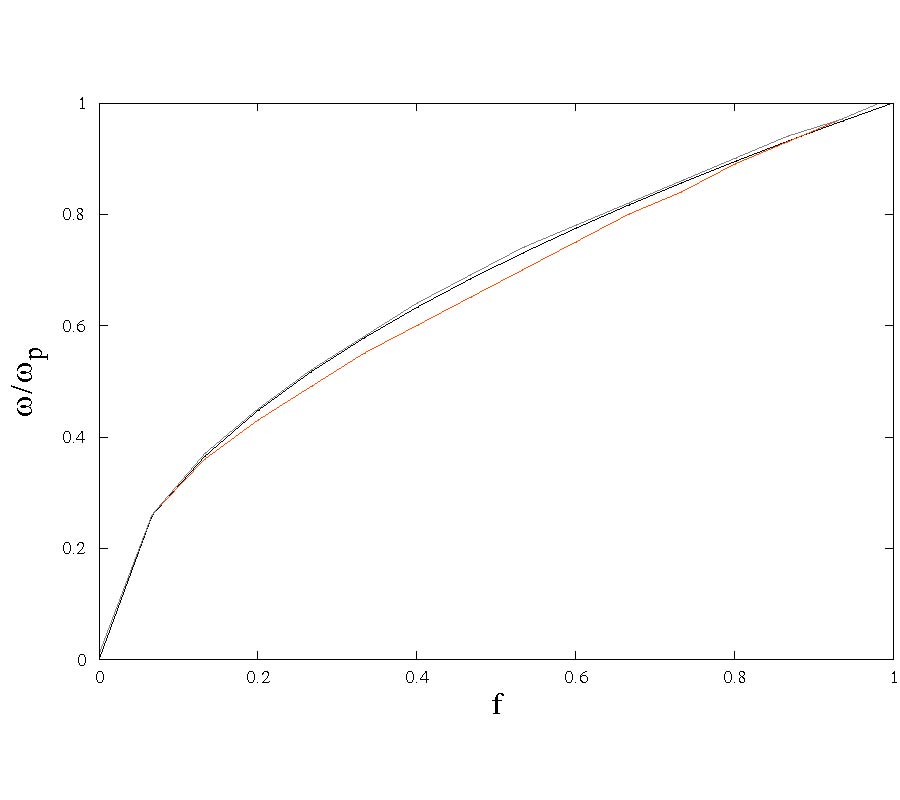
Generalized band structure equation for photonic crystals which containing dielectric rods in metals medium was derived by using the plane wave expansion method. From the band structure, we can study band gap of photonic crystals in both E and H polarizations. Since metals are frequency-dependant materials, modification needs to be done on the plane wave expansion equation to calculate the metallic photonic crystals containing dielectric constant rods. To ease the calculation, simple Drude model for metals are used. In this model, the equation is without damping constant. We have plotted the band structure for photonic crystals in metals medium. Then, we studied the ffective plasma frequency of the structure from the band graph in E polarization mode (TM). We found that effective plasma frequency can be tailored as we want. Detailed results are presented with different sizes of radius. Comparison is made for different background materials.
EFFECTIVE PLASMA FREQUENCY FOR TWO- DIMENSIONAL METALLIC PHOTONIC CRYSTALS
2010-04-23
PIER
Vol. 103, 285-303
Electromagnetic Wave Propagation in Chiral h-Guides
Antonio Topa , Carlos Paiva and Afonso Barbosa
Guided-wave propagation in chiral H-guides is analyzed, using a building-block approach. In a first stage, a 2D chiral parallel-plate waveguide is studied using a frequency dispersion model for the optically active medium, where the constitutive chiral parameter is assumed to be dependent on the gyrotropic parameter. In the second stage, the mode matching technique and the transverse resonance method are used to characterize the 3D structure. A full parametric study is presented for a fixed frequency. The operational and dispersion diagrams for the chiral H-guide are presented. By replacing the common isotropic slab with a chiral slab, chirality provides an extra degree of freedom in the design of new devices.
ELECTROMAGNETIC WAVE PROPAGATION IN CHIRAL H-GUIDES
2010-04-22
PIER B
Vol. 20, 337-352
Inductance Comparison of the Solenoidal Coil of Modular Toroidal Coils Using the Analytical and Finite Element Method
Mohammad Reza Pahlavani , Abbas Shiri , H. A. Mohammadpour and Abbas Shoulaie
The modular toroidal coil (MTC) is composed of several solenoidal coils (SCs) connected in series and distributed in toroidal and symmetrical forms. In this paper, we present an accurate approach for calculation of the mutual and self-inductance between all the SCs of MTC with any arbitrary section. We use Biot-Savart's and Neumann's equations to calculate the self- and mutual inductance between two filamentary circular rings with inclined axes that lie in the same plane, respectively. Their centers are either displaced along the axis of one coil or displaced along one axis of the first coil and then displaced sideways. We use the extended three-point Gaussian algorithm to solve the numerical analysis of the integrations resulting from these equations. Additionally, we apply the filament method to calculate the inductance of the MTC coil. Moreover, the finite element method (FEM) is employed to obtain SC inductance. The results obtained using the FEM confirms the analytical and empirical results. Furthermore, the comparison of the behavior of SC inductance, when the dimensional parameters of the SC are changed, with the FEM results shows an error of less than 0.2%. In this approach, we clarify how the presented equations have to be used for different coil combinations in the filament treatment. Thus, the presented approach can be easily used to calculate the mutual and self-inductance of a MTC between any two MTC rings in three dimensions.
INDUCTANCE COMPARISON OF THE SOLENOIDAL COIL OF MODULAR TOROIDAL COILS USING THE ANALYTICAL AND FINITE ELEMENT METHOD
2010-04-22
PIER B
Vol. 20, 321-335
On the Compensation of Probe Positioning Errors When Using a Nonredundant Cylindrical Nf-Ff Transformation
Francesco D'Agostino , Flaminio Ferrara , Claudio Gennarelli , Rocco Guerriero and Massimo Migliozzi
Two different approaches for compensating the probe positioning errors in a near-field-far-field transformation with cylindrical scanning using a nonredundant number of measurements are presented and experimentally validated in this paper. In order to evaluate the uniformly distributed samples from the irregularly spaced ones, the former makes use of the singular value decomposition method, whereas the latter employs an iterative technique. In both the cases, the near-field data needed by a standard nearfield-far-field transformation are efficiently evaluated via an optimal sampling interpolation algorithm.
ON THE COMPENSATION OF PROBE POSITIONING ERRORS WHEN USING A NONREDUNDANT CYLINDRICAL NF-FF TRANSFORMATION
2010-04-21
PIER B
Vol. 20, 303-320
A Simple Analysis of Helical Slow-Wave Structure Loaded by Dielectric Embedded Metal Segments for Wideband Traveling-Wave Tubes
R. Seshadri , Sanjay Kumar Ghosh , A. Bhansiwal , S. Kamath and Pradip Kumar Jain
A simple field analysis was developed for helical slow-wave structure symmetrically supported by rectangular shaped discrete dielectric support rods partially embedded in the metal segments projecting radially inward from a metal envelope for wideband traveling-wave tubes. The tape helix model was used for the prediction of the dispersion relation and the interaction impedance characteristics. The closed form simplified expressions are obtained by combining the tape model dispersion relation for free-space helix and the dielectric loading factor obtained for the loaded helix in the sheath model. The dispersion characteristics and the interaction impedance characteristics obtained by the present analysis were compared with other more involved analytical method reported in the literature for the similar helical slow-wave structure and found to be in close agreement. The present analytical results were also validated against HFSS simulation with an agreement within 5% for both the characteristics for a wide range of structure parameters. An appropriate choice of the structure parameters (helix thickness, height of the metal segments, material of the dielectric support rods, wedge segments angle and helix pitch) provided the phase velocity varying with frequency corresponding to flat to negative structure dispersion with an appreciable interaction impedance values over a wide frequency band. The present analysis enjoys simplicity and establishes the potential of theproposed helical interaction structure for its employment in wideband traveling-wave tubes.
A SIMPLE ANALYSIS OF HELICAL SLOW-WAVE STRUCTURE LOADED BY DIELECTRIC EMBEDDED METAL SEGMENTS FOR WIDEBAND TRAVELING-WAVE TUBES
2010-04-21
PIER B
Vol. 20, 285-302
Target-Aided SAR Image Intelligent Compression
Xiao-Hong Yuan , Zhao-Da Zhu and Gong Zhang
Intelligent compression is important to image transmission in real time over bandlimited channels for synthetic aperture radar (SAR) payloads deployed on unmanned aerial vehicles (UAV), where target areas are encoded with high fidelity, while background data are encoded with lesser fidelity. A target-aided SAR image intelligent compression (TAIC)system is presented in this paper, which utilizes robust fixed-rate trellis-coded quantization (FRTCQ) to encode target sequences and FRTCQ to encode background sequences. Multiresolution constant false alarm rate (CFAR) detector in wavelet domain using db4 based on the multiscale model of target is embedded. Generic region of interest (ROI) mask is created. In order to achieve better quality of target areas decoded, ROI mask is modified. The improved performance using TAIC system by compressing target chips from training set and testing set in Moving and Stationary Target Acquisition and Recognition (MSTAR) database is demonstrated.
TARGET-AIDED SAR IMAGE INTELLIGENT COMPRESSION
2010-04-21
PIER C
Vol. 13, 91-106
Optimization of Hata Propagation Prediction Model in Suburban Area in Malaysia
Mardeni Roslee and Kok Foong Kwan
This paper describes a study on RF attenuation path loss behavior in suburban coverage within Cyberjaya and Putrajaya areas, located in Selangor State in Malaysia. The objective of this study is to develop and optimize a path loss model based on the existing Hata path loss model and outdoor measurement using frequency range from 400 MHz to 1800 MHz. The optimized model had been used and validated at places within Putrajaya area to find the relative error in order to assess its performance. The values for modified empirical parameters of Hata model were developed and presented in this paper. From the simulation result, the optimized model is found to best fit into the base station located at Putrajaya with smaller mean relative error. The smaller mean error shows that the optimization has been done successfully and thus, this optimized model can be useful to telecommunication providers in Malaysia in order to improve their service for mobile user satisfaction.
OPTIMIZATION OF HATA PROPAGATION PREDICTION MODEL IN SUBURBAN AREA IN MALAYSIA