Search Results(13804)

2010-04-15
PIER
Vol. 103, 153-168
Channel-Ranked Beamformer for the Early Detection of Breast Cancer
Martin O'Halloran , Martin Glavin and Edward Jones
Confocal Microwave Imaging (CMI) for the early detection of breast cancer is based on several assumptions regarding the dielectric properties of normal and malignant breast tissue. One of these assumptions is that the breast is primarily dielectrically homogeneous, and that the propagation, attenuation and phase characteristics of normal breast tissue allows for the constructive addition of the UWB returns from dielectric scatterers within the breast. However, recent studies by Lazebnik et al. have highlighted a very signicant dielectric contrast between normal adipose and broglandular tissue within the breast. This dielectric heterogeneity presents a considerably more challenging imaging scenario, where constructive addition of the UWB returns, and therefore tumor detection, is much more dicult. In a dielectrically homogeneous breast, each additional beamformed backscattered signal adds coherently with existing signals, resulting in an improved image of any dielectric scatterers present. However, in a dielectrically heterogeneous breast, signals with a longer propagation distance are more likely to encounter heterogeneity and therefore are more prone to incoherent addition, reducing the overall quality of the breast image. In this paper, a novel beamforming algorithm is described, which gives extra weighting to signals with shorter propagation distances to create an improved image of the breast. The beamformer is shown to provide improved images of more dielectrically heterogeneous breasts than the traditional delay and sum beamformer from which it is derived.
CHANNEL-RANKED BEAMFORMER FOR THE EARLY DETECTION OF BREAST CANCER
2010-04-15
PIER
Vol. 103, 139-152
Semi-Infinite Chiral Nihility Photonics: Parametric Dependence, Wave Tunneling and Rejection
Vladimir Tuz and Cheng-Wei Qiu
The novel characteristics of wave transmission and reflection in one-dimensional semi-infinite chiral photonics have been investigated theoretically. Waves in each region have been formulated for both normal and oblique incidences. At a given incident angle, the transmission or reflection is found to be easily adjusted to be equal to 1 for the chiral photonics using chiral nihility media. The wave tunneling and rejection properties in chiral nihility photonics, as well as their parametric dependences on periodicity, chiral nihility and incident angles, have been explicitly presented theoretically and verified numerically.
SEMI-INFINITE CHIRAL NIHILITY PHOTONICS: PARAMETRIC DEPENDENCE, WAVE TUNNELING AND REJECTION
2010-04-14
PIER
Vol. 103, 115-138
Novel Fractal Antenna Arrays for Satellite Networks: Circular Ring Sierpinski Carpet Arrays Optimized by Genetic Algorithms
Katherine Siakavara
A novel fractal antenna-array type is proposed. The design is based on the Sierpinski rectangular carpet concept. However, the generator is a circular ring area, filled with radiating elements, so the higher stages of the fractal development produce large arrays of circular rings which, besides the high directivity, have the advantage of the almost uniform azimuthal radiation pattern, attribute that many applications require. The introduced arrays can operate as direct radiating multi-beam phased arrays and meet the requirements of satellite communications links: high End of Coverage (EOC) directivity, low Side Lobe Level (SLL) and high Career to Interference ratio (C/I). These operational indices were further optimized by a synthesized multi-objective and multi-dimensional Genetic Algorithm (GA) which, additionally, gave arrays no more than 120 elements.
NOVEL FRACTAL ANTENNA ARRAYS FOR SATELLITE NETWORKS: CIRCULAR RING SIERPINSKI CARPET ARRAYS OPTIMIZED BY GENETIC ALGORITHMS
2010-04-13
PIER B
Vol. 20, 167-186
Analytical Modeling of the Printed Dipole Antenna Loaded with CRLH Structures
Mahmood Rafaei Booket , Manouchehr Kamyab , Amir Jafargholi and Seyed Mostafa Mousavi
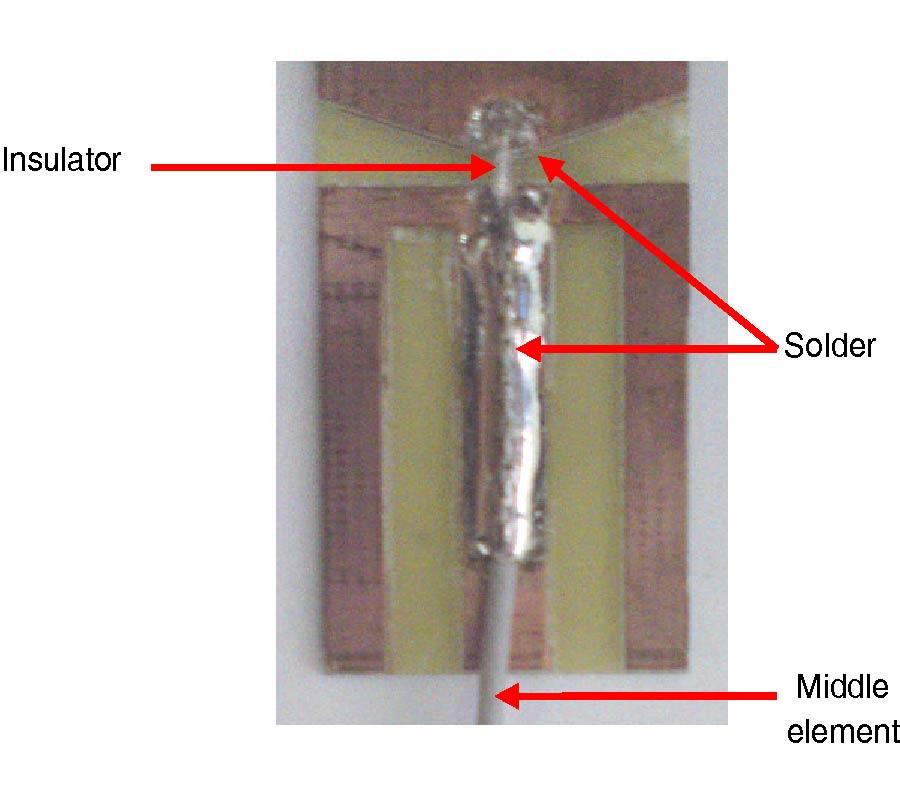
In this paper, an analytical method to characterize the frequency behaviour of Composite Right/Left Handed (CRLH) loaded printed dipole antenna is presented. One needs to determine the parameters of ungrounded reactive components realizing CRLH structures. Efficient resonant RLC circuit models based on Partial Elements Theory are presented to calculate inductance of meander line inductor and inter digital capacitor, while their capacitance is determined by Conformal Mapping Method. By using these circuit models and dispersion relation of balanced CRLH TL, negative resonance modes of antenna can be obtained. In addition, to validate the accuracy of the proposed analytical method, a prototype of the CRLH loaded printed dipole antenna is simulated, fabricated and measured.
ANALYTICAL MODELING OF THE PRINTED DIPOLE ANTENNA LOADED WITH CRLH STRUCTURES
2010-04-13
PIER B
Vol. 20, 147-166
Through-the-Wall Detection of Stationary Human Targets Using Doppler Radar
Ram M. Narayanan , Mahesh C. Shastry , Pin-Heng Chen and Mark Levi
In homeland security and law enforcement situations, it is often required to remotely detect human targets obscured by walls and barriers. In particular, we are specifically interested in scenarios that involve a human whose torso is stationary. We propose a technique to detect and characterize activity associated with a stationary human in through-the-wall scenarios using a Doppler radar system. The presence of stationary humans is identified by detecting Doppler signatures resulting from breathing, and movement of the human arm and wrist. The irregular, transient, non-uniform, and non-stationary nature of human activity presents a number of challenges in extracting and classifying Doppler signatures from the signal. These are addressed using bio-mechanical human arm movement models and the empirical mode decomposition (EMD) algorithm for Doppler feature extraction. Experimental results demonstrate the effectiveness of our approach to extract Doppler signatures corresponding to human activity through walls using a 750-MHz Doppler radar system.
THROUGH-THE-WALL DETECTION OF STATIONARY HUMAN TARGETS USING DOPPLER RADAR
2010-04-13
PIER C
Vol. 13, 67-76
Material-Loaded High q-Factor Slot Resonator and Measurement of Relative Permittivity
Adel B. Abdel-Rahman , Mohamed Kheir , Anand Kumar Verma and Abbas Omar
We introduce a new slot resonator in the ground plane of a microstrip that is loaded with a parallel plate capacitor. The loaded slot has a 73% reduced length. Its unloaded Q-factor is 98 which is 91% higher than that of an ordinary slot. It is suitable to reject the narrow band unwanted signal. The proposed high Q-factor compact slot resonator also suppresses the undesired spurious high frequency response of the unloaded slot resonator. The structure is further used to determine the unknown dielectric constant of a sheet material with 0.04 variation in εr.
MATERIAL-LOADED HIGH Q-FACTOR SLOT RESONATOR AND MEASUREMENT OF RELATIVE PERMITTIVITY
2010-04-13
PIER C
Vol. 13, 51-66
Application of Complete Complementary Sequence in Orthogonal MIMO SAR System
Shufeng Li , Jie Chen , Lvqian Zhang and Yin-Qing Zhou
The Complete Complementary Sequence (CC-S) consists of several complementary orthogonal sequences and has optimal sidelobe level performance, which is satisfied with the requirement of the orthogonal Multiple Input Multiple Output (MIMO) radar signals. Aimed at the difficulty of high sidelobe level in Synthetic Aperture Radar (SAR) imaging processing in range dimension, an approach of depressing sidelobe level based on CC-S in MIMO SAR system was proposed. The transmitter model for orthogonal MIMO SAR system using CC-S and the corresponding matched filter (MF) were established in this paper. In addition, the MIMO SAR imaging results were simulated. The simulation results demonstrate that the performance of CC-S employed in orthogonal MIMO radar system is much better than that with traditional Linear Frequency Modulation (LFM) signal, by which the feasibility and validity of CC-S applied in orthogonal MIMO SAR system are justified.
APPLICATION OF COMPLETE COMPLEMENTARY SEQUENCE IN ORTHOGONAL MIMO SAR SYSTEM
2010-04-13
PIER
Vol. 103, 101-114
Polarization-Tunable Negative or Positive Refraction in Self-Complementariness-Based Extraordinary Transmission Prism
Miguel Navarro-Cia , Miguel Beruete , Francisco J. Falcone , Mario Sorolla Ayza and Igor Campillo
Here we report a prism made of stacked quasi-selfcomplementary extraordinary transmission surfaces which allows simultaneously left- and right-handed propagation within the V-band for vertical and horizontal polarizations, respectively and righthanded propagation within the W-band for both polarizations. The numerical dispersion diagram of the infinite structure and effective indexes of refraction retrieved from S-parameters under normal incidence together with the finite integration time domain simulations predict single negative and double positive birefringence. The unusual type of birefringence single negative and regular double positive birefringence are afterwards demonstrated experimentally at the millimeter-waves (V- and W-bands) by the wedge experiment which lets us check, using a straightforward geometrical method, the refraction of each component. The effective index of refraction is retrieved via the Snell's law and compared to those obtained through the dispersion diagram and the retrieval method from S-parameters computed with the commercial software CST Microwave StudioTMTM.
POLARIZATION-TUNABLE NEGATIVE OR POSITIVE REFRACTION IN SELF-COMPLEMENTARINESS-BASED EXTRAORDINARY TRANSMISSION PRISM
2010-04-13
PIER
Vol. 103, 67-100
Field and Source Equivalence in Source Reconstruction on 3D Surfaces
Javier Leonardo Araque Quijano and Giuseppe Vecchi
This paper describes in detail different formulations of the inverse-source problem, whereby equivalent sources and/or fields are to be computed on an arbitrary 3-D closed surface from the knowledge of complex vector electric field data at a specified (exterior) surface. The starting point is the analysis of the formulation in terms of the Equivalence Principle, of the possible choices for the internal fields, and of their practical impact. Love's (zero interior field) equivalence is the only equivalence form that yields currents directly related to the fields on the reconstruction surface; its enforcement results in a pair of coupled integral equations. Formulations resulting in a single integral equation are also analyzed. The first is the single-equation, two-current formulation which is most common in current literature, in which no interior field condition is enforced. The single-current (electric or magnetic) formulation deriving from continuity enforcement of one field is also introduced and analyzed. Single-equation formulations result in a simpler implementation and a lower computational load than the dual-equation formulation, but numerical tests with synthetic data support the benefits of the latter. The spectrum of the involved (discretized) operators clearly shows a relation with the theoretical Degrees of Freedom (DoF) of the measured field for the dual-equation formulation that guarantees extraction of these DoF; this is absent in the single-equation formulation. Examples confirm that single-equation formulations do not yield Love's currents, as observed both with comparison with reference data and via energetic considerations. The presentation is concluded with a test on measured data which shows the stability and usefulness of the dual-equation formulation in a situation of practical relevance.
FIELD AND SOURCE EQUIVALENCE IN SOURCE RECONSTRUCTION ON 3D SURFACES
2010-04-12
PIER B
Vol. 20, 125-146
A Novel of Reconfigurable Planar Antenna Array (Rpaa) with Beam Steering Control
Mohd Tarmizi Ali , Mohd Nor Md Tan , Tharek Bin Abdul Rahman , Muhammad Ramlee Kamarudin , Mohd Faizal Bin Jamlos and Ronan Sauleau
A new antenna structure is formed by combining the concept of reconfigurable planar antenna array (RPAA) with the parasitic elements to produce beam steering patterns. The antenna has been integrated with the PIN diode switches that enable the beam to be steered in the desired direction. This has been done by changing the switch state to either on or off mode. In this work, a number of parasitic elements have been applied to the antenna, namely reflectors and directors. They are placed in between the driven elements, which is aimed to improve the beam steering angle. With such configuration, the main beam radiated by the array can be tilted due to the effect of mutual coupling between the driven elements and parasitic elements (reflectors and director). The unique property of this antenna design is that instead of fabricating all together in the same plane, the antenna's feeding network is separated from the antenna radiating elements (the patches) by an air gap distance. This allows reducing the spurious effects from the feeding line. The optimization results for the resonant frequencies of the antennas with variable air gap heights are also been studied. The antenna is made for 5.8 GHz. Good agreement is achieved between the simulation and measurement.
A NOVEL OF RECONFIGURABLE PLANAR ANTENNA ARRAY (RPAA) WITH BEAM STEERING CONTROL
2010-04-12
PIER C
Vol. 13, 41-50
Wave Analysis for Inductively Matched Millimeter Wave Amplifier Design
Mahmoud Mohammad-Taheri , Mehrdad Fahimnia , Ying Wang , Ming Yu and Safieddin Safavi-Naeini
A new design approach based on wave analysis has been implemented in order to derive voltage gain, center frequency and bandwidth of millimeter wave amplifier using parameters of transmission lines (TL). The derived formula allows one to design high frequency amplifier with predetermined bandwidth and centner frequency. It has been shown that in the case of lossy TL or at high frequency, circuit theory cannot predict the amplifier gain behavior while presented wave theory can accurately predict the frequency response of the amplifier in both low and high frequency ranges.
WAVE ANALYSIS FOR INDUCTIVELY MATCHED MILLIMETER WAVE AMPLIFIER DESIGN
2010-04-12
PIER M
Vol. 12, 29-38
A New Hybrid mm/Compact 2-d Fdfd Method for Rectangular Ridged Waveguide Discontinuities
Wei Zhao , Yong-Jiu Zhao , Hong-Wei Deng , Duanwei Zhang and Bing Liu
A hybrid mode-matching/compact 2-D finite-difference frequency-domain (MM/compact 2-D FDFD) method is proposed for the analysis of rectangular ridged waveguide discontinuities. In order to apply MM technique, mode spectrum of the ridged waveguide is determined by an improved compact 2-D FDFD method with only two transverse field components at the cutoff frequencies which lead to two independent sets of real symmetric eigenvalue problems for TE and TM modes. Solving these two separate eigenvalue equations, cutoff wave numbers and discrete mode field functions can be obtained respectively from eigenvalues and eigenvectors. Finally, the generalized scattering matrix (GSM) of the rectangular-ridged waveguide step discontinuity can be easily calculated through the transverse field matching procedure. The method is demonstrated at the examples of two waveguide structures, and results are shown to be in excellent agreement with those by the commercial CAD software HFSS.
A NEW HYBRID MM/COMPACT 2-D FDFD METHOD FOR RECTANGULAR RIDGED WAVEGUIDE DISCONTINUITIES
2010-04-10
PIER Letters
Vol. 13, 161-171
Design of a Broadband Frequency Offset Van Atta Array
Lei Chen , Xin Huai Wang , Xiao-Wei Shi , Tian-Ling Zhang and Jian-Zhao Tong
A novel broadband Van Atta array operating in a broadband with frequency offset characteristic is proposed. A single sideband mixer is introduced to achieve sideband choice without utilizing filters which make this array have excellent performance and wider applications than the conventional Van Atta array. The simulated results of the amplitude and phase of the array show that this antenna array can achieve retrodirectivity with frequency offset and good isolation in a broadband. The experimental performance of the array is observed within the frequency range from 2.8 GHz to 3.4 GHz.
DESIGN OF A BROADBAND FREQUENCY OFFSET VAN ATTA ARRAY
2010-04-10
PIER
Vol. 103, 57-65
Large Aperture Low Aberration Aspheric Dielectric Lens Antenna for W-Band Quasi-Optics
Jayprakash Thakur , Won-Gyum Kim and Yong-Hoon Kim
An advanced aspheric and asymmetric large aperture dielectric lens antenna is proposed firstly here for high resolution at W-band frequency. Large aperture and aspheric lens provides minimum focusing error and high resolution in millimeter wave quasi-optics application. To the best of the authors' knowledge we design first time 500 mm large aperture lens for W-band quasi optics application. Near field radiation pattern, beam size and focal length of the lens are obtained theoretically and experimentally as well. Dielectric rod waveguide antenna is also designed and employed as a source antenna for the lens. The measured and simulated results of the DRW antenna also show very good performance at W-band frequency, and it has 15.3 dB gain with -22.5 dB sidelobe levels at 94 GHz.
LARGE APERTURE LOW ABERRATION ASPHERIC DIELECTRIC LENS ANTENNA FOR W-BAND QUASI-OPTICS
2010-04-08
PIER Letters
Vol. 13, 149-159
Backward Tamm States in 1D Single-Negative Metamaterial Photonic Crystals
Hadi Rahimi
Existence of backward electromagnetic surface waves at an interface separating a semi-infinite uniform left-handed metamaterial and a 1D photonic crystal composed of alternating layers of two kinds of single-negative (ε-negative and μ-negative) metamaterial is theoretically investigated. Dispersion characteristics of surface states are analyzed for two different cases of ENG-MNG and MNG-ENG layered periodic structures. It was demonstrated that in the presence of metamaterial, surface waves are sensitive to light polarization and there exist only backward TM-polarized (or TE-polarized) surface Tamm states depending on the ratio of the thicknesses of two periodic stacking layers.
BACKWARD TAMM STATES IN 1D SINGLE-NEGATIVE METAMATERIAL PHOTONIC CRYSTALS
2010-04-08
PIER M
Vol. 12, 17-28
Synthesis and Investigation of Three-Section Microstrip Filter on Folded Dual-Mode Stepped-Impedance Resonators
Ivan A. Dovbysh and Vladimir V. Tyurnev
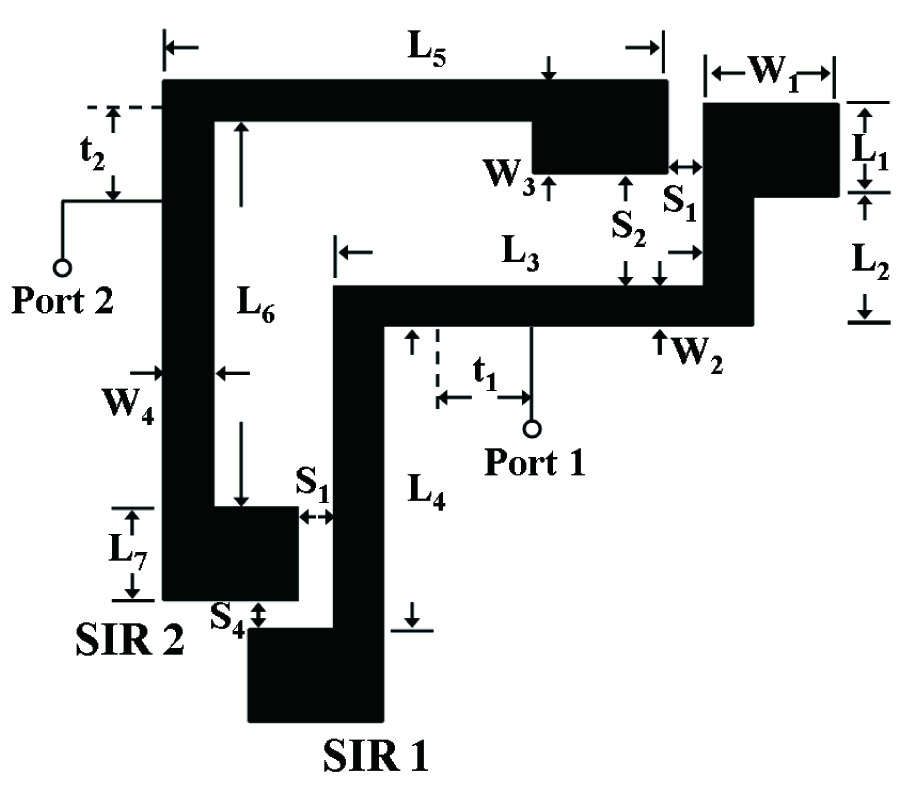
A new structure of an ultra-wide bandpass filter is considered. An intelligence method of optimization is applied first for synthesis of three-section filter on dual-mode resonators. An area of fractional bandwidth values and values of dielectric constant of the substrate, where synthesis problem for the filter has a solution, is determined theoretically. Experimental results show good agreement with simulated values.
SYNTHESIS AND INVESTIGATION OF THREE-SECTION MICROSTRIP FILTER ON FOLDED DUAL-MODE STEPPED-IMPEDANCE RESONATORS
2010-04-08
PIER M
Vol. 12, 1-15
A Cell-Vertex Finite Volume Time Domain Method for Electromagnetic Scattering
Narendra Deore and Avijit Chatterjee
A cell-vertex based finite volume scheme is used to solve the time-dependentMaxwell's equations and predict electromagnetic scattering from perfectly conducting bodies. The scheme is based on the cell-vertex finite volume integration method, originally proposed by Ni[1], for solution of the two dimensional unsteady Euler equations of gas dynamics. The resulting solution is second-order accurate in space and time, and requires cell based fluctuations to be appropriately distributed to the state vector stored at cell vertices at each time step. Results are presented for two-dimensional canonical shapes and complex three dimensional geometries. Unlike in gas dynamics, no user defined numerical damping is required in this novel cell-vertex based finite volume integration scheme when applied to the time-domain Maxwell's equations.
A CELL-VERTEX FINITE VOLUME TIME DOMAIN METHOD FOR ELECTROMAGNETIC SCATTERING
2010-04-07
PIER C
Vol. 13, 33-40
Realization of a Compact Branch-Line Coupler Using Quasi-Fractal Loaded Coupled Transmission-Lines
Mehdi Nosrati and Bal Singh Virdee
An extremely compact branch-line coupler operating at 900 MHz is presented without the use of viaholes, multilayered technique, or air-bridged. The technique presented here uses the concept of fractals to load a coupled transmission-line in order to realize a compact quarter-wavelength transmission-line, which forms the couplers arms. It is shown that the proposed branch-line coupler's performance is analogous to a conventional branch-line coupler with the benefit of substantially reduced physical dimensions by a factor of 78%. The measured result of the fabricated microstrip branch-line coupler is compared with the simulation data. The agreement of the measurement and simulated confirms the theory and validates the proposed coupler design.
REALIZATION OF A COMPACT BRANCH-LINE COUPLER USING QUASI-FRACTAL LOADED COUPLED TRANSMISSION-LINES
2010-04-07
PIER C
Vol. 13, 19-32
Effects of DC-Bias Conditions on Low-Loss Thin Film Microstrip Line
Hung-Wei Wu and Min-Hang Weng
This paper presents the microwave characteristics of thin film microstrip line (TFML) under dc-bias conditions. The proposed TFML with 20 μm thick polyimide layer is used as a thin dielectric supporter on low-resistivity silicon (LRS) substrate. Measured frequency-dependent microwave characteristics and equivalent lumped elements are evaluated for the dc-biased TFML over 1-50 GHz. This work presents acceptable attenuation of 0.561, 0.563 and 0.565 dB/mm at 50 GHz with dc-bias conditions, showing that the TFML can be used for high frequency interconnects for any 3D-based microwave devices and monolithic microwave integrated circuits (MMICs).
EFFECTS OF DC-BIAS CONDITIONS ON LOW-LOSS THIN FILM MICROSTRIP LINE
2010-04-07
PIER M
Vol. 11, 241-256
Focal Region Fields of Gregorian System Placed in Homogeneous Chiral Medium
Muhammad Qasim Mehmood , Muhammad Junaid Mughal and Tariq Rahim
This work presents the derivation of high frequency electromagnetic field expressions for two dimensional Gregorian system embedded in a chiral medium. Two cases have been analyzed. Firstly, the chirality parameter is adjusted to support positive phase velocity (PPV) for both left circularly polarized (LCP) and right circularly polarized (RCP) modes traveling in the medium. Secondly, the chirality is adjusted in such a way that one mode travels with PPV and other with negative phase velocity (NPV). Method proposed by Maslov is used, for finding the field expressions, to overcome the problem of Geometrical Optics (GO) because GO fails at caustics. The results for both the cases are given in the paper.
FOCAL REGION FIELDS OF GREGORIAN SYSTEM PLACED IN HOMOGENEOUS CHIRAL MEDIUM