Search Results(13804)

2010-03-09
PIER
Vol. 102, 301-313
Wide-Band Hybrid Amplifier Operating in S-Band Region
Siamak Dawazdah Emami , Parsin Hajireza , Faidz Abd-Rahman , Hairul Azhar Abdul-Rashid , Harith Ahmad and Sulaiman Wadi Harun
Wide-band hybrid amplifier is theoretically proposed using a series configuration of Thulium-doped fiber amplifier (TDFA) and fiber Raman amplifier (FRA), which using the similar type of pump laser. The operating wavelength of this amplifier covers the bandwidth of entire short wavelength band (S-band) region by combining the gain spectrum of TDFA and FRA. The theoretical gain varies from 20 to 24 dB within a wavelength region from 1460 to 1525 nm and which is in a good agreement with the experimental result. The development of reliable high-power diode lasers in the 1420 nm wavelength range will make this type of wide-band hybrid amplifier an interesting candidate for S-band optical telecommunication systems.
WIDE-BAND HYBRID AMPLIFIER OPERATING IN S-BAND REGION
2010-03-09
PIER
Vol. 102, 287-299
A SPICE Compatible Model of on-Wafer Coupled Interconnects for CMOS Rfics
Xiaomeng Shi , Kiat Seng Yeo , Wei Meng Lim , Manh Anh Do and Chirn Chye Boon
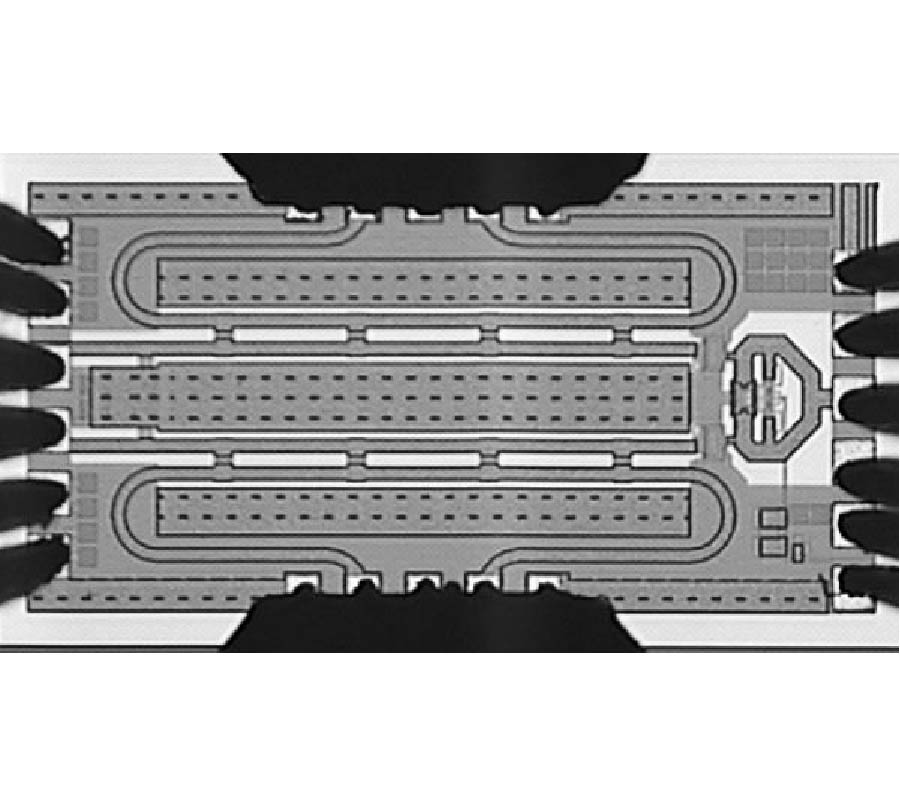
This paper investigates the properties of the on-wafer coupled interconnects built in a 0.18 μm CMOS technology for RF applications. A SPICE compatible equivalent circuit model is developed. The proposed model is an extension of a 2-Ⅱ equivalent circuit model for single-line interconnects by adding two coupling components. The model parameters are extracted from four-port S-parameter simulation results through a calibrated electromagnetic (EM) simulator, i.e. HFSS. The accuracy of the model is validated from 500 MHz to 20 GHz.
A SPICE COMPATIBLE MODEL OF ON-WAFER COUPLED INTERCONNECTS FOR CMOS RFICs
2010-03-04
PIER B
Vol. 20, 49-64
A Mode Based Approach for Characterizing RF Propagation in Conduits
Ivan L. Howitt and Muhammad Safeer Khan
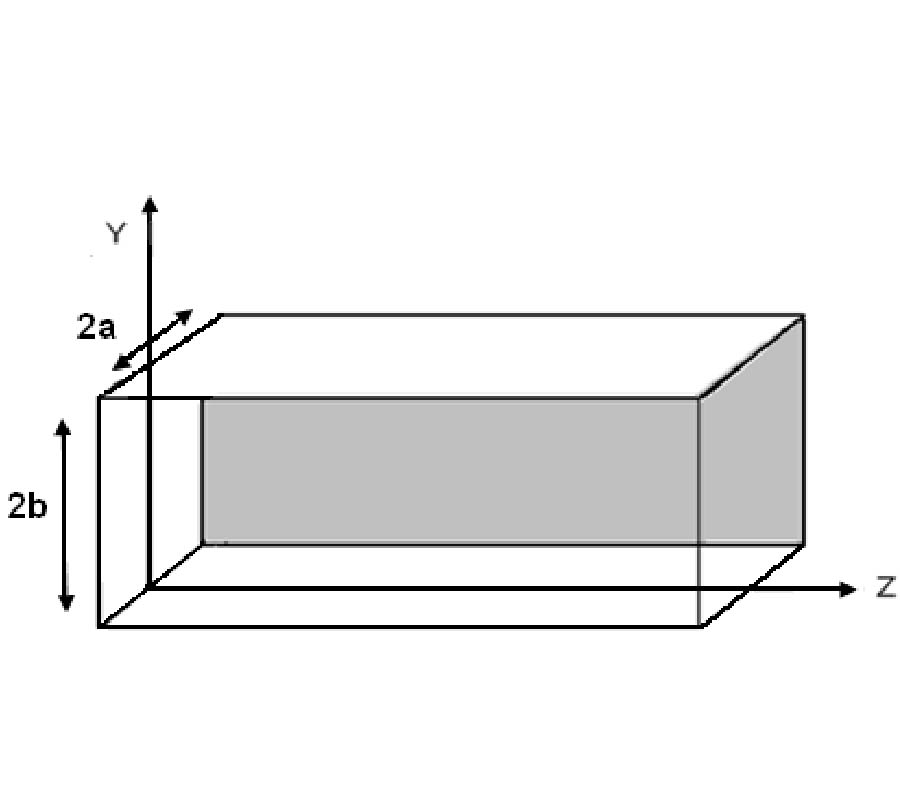
We propose a mode based approach for developing a parametric model to characterize RF propagation in conduits. The model considers a conduit as a lossy waveguide and defines the total received power as the sum of powers excited in propagating modes. The model's parameters are estimated from both the physical properties of the conduit material and an empirical data set. Underground conduits have significant value as wireless communication channels for condition based monitoring within the conduit. An enabler for this wireless sensor network application is based on characterizing the expected coverage range of wireless transceivers operating in the 2.4 GHz ISM band. Previous studies on modeling RF propagation in underground conduits have focused on conduits with diameters larger than 1.05 m. This motivated our measurement campaign to collect empirical data from underground conduits with varying diameters from 0.30 m to 1.37 m. The empirical data is used to predict the mode coupled powers which are model parameters that are analytically intractable. We observe that the proposed model provides a good estimate of received power in terms of contribution from dominant propagating modes.
A MODE BASED APPROACH FOR CHARACTERIZING RF PROPAGATION IN CONDUITS
2010-03-04
PIER C
Vol. 12, 173-189
Performance-Driven Dimension Estimation of Memory Polynomial Behavioral Models for Wireless Transmitters and Power Amplifiers
Oualid Hammi , Mayada Younes , Andrew Kwan , Michael R. Smith and Fadhel M. Ghannouchi
A novel approach is proposed for automated dimension estimation in memory polynomial based power amplifiers/transmitters behavioral models. This method consists of successively identifying the static nonlinearity order and memory depth of the model in accordance with a predefined performance criterion. The proposed method is validated using a 3G Doherty power amplifier driven by various WCDMA signals. Experimental results demonstrate the robustness of the proposed successive sweep approach compared to the conventional blind simultaneous sweep approach. The proposed dimension estimation method is an enabling tool for efficient design optimization of power amplifiers circuits to enhance their linearizability.
PERFORMANCE-DRIVEN DIMENSION ESTIMATION OF MEMORY POLYNOMIAL BEHAVIORAL MODELS FOR WIRELESS TRANSMITTERS AND POWER AMPLIFIERS
2010-03-04
PIER
Vol. 102, 267-286
Planar Transmission Line Method for Characterization of Printed Circuit Board Dielectrics
Jianmin Zhang , Marina Koledintseva , Giulio Antonini , James Drewniak , Antonio Orlandi and Konstantin Rozanov
An effective approach to characterize frequency-dispersive sheet materials over a wide RF and microwave frequency range based on planar transmission line geometries and a genetic algorithm is proposed. S-parameters of a planar transmission line structure with a sheet material under test as a substrate of this line are measured using a vector network analyzer (VNA). The measured S-parameters are then converted to ABCD matrix parameters. With the assumption of TEM/quasi-TEM wave propagation on the measured line, as well as reciprocity and symmetry of the network, the complex propagation constant can be found, and the corresponding phase constant and attenuation constant can be retrieved. Attenuation constant includes both dielectric loss and conductor loss terms. At the same time, phase term, dielectric loss and conductor loss can be calculated for a known transmission line geometry using corresponding closed-form analytical or empirical formulas. These formulas are used to construct the objective functions for approximating phase constants, conductor loss and dielectric loss in an optimization procedure based on a genetic algorithm (GA). The frequency-dependent dielectric properties of the substrate material under test are represented as one or a few terms following the Debye dispersion law. The parameters of the Debye dispersion law are extracted using the GA by minimizing the discrepancies between the measured and the corresponding approximated loss and phase terms. The extracted data is verified by substituting these data in full-wave numerical modeling of structures containing these materials and comparing the simulated results with experimental.
PLANAR TRANSMISSION LINE METHOD FOR CHARACTERIZATION OF PRINTED CIRCUIT BOARD DIELECTRICS
2010-03-03
PIER
Vol. 102, 249-265
Unified Design Procedure for Planar Dipoles Oriented on UWB Application
Mariusz Pergol and Wlodzimierz Zieniutycz
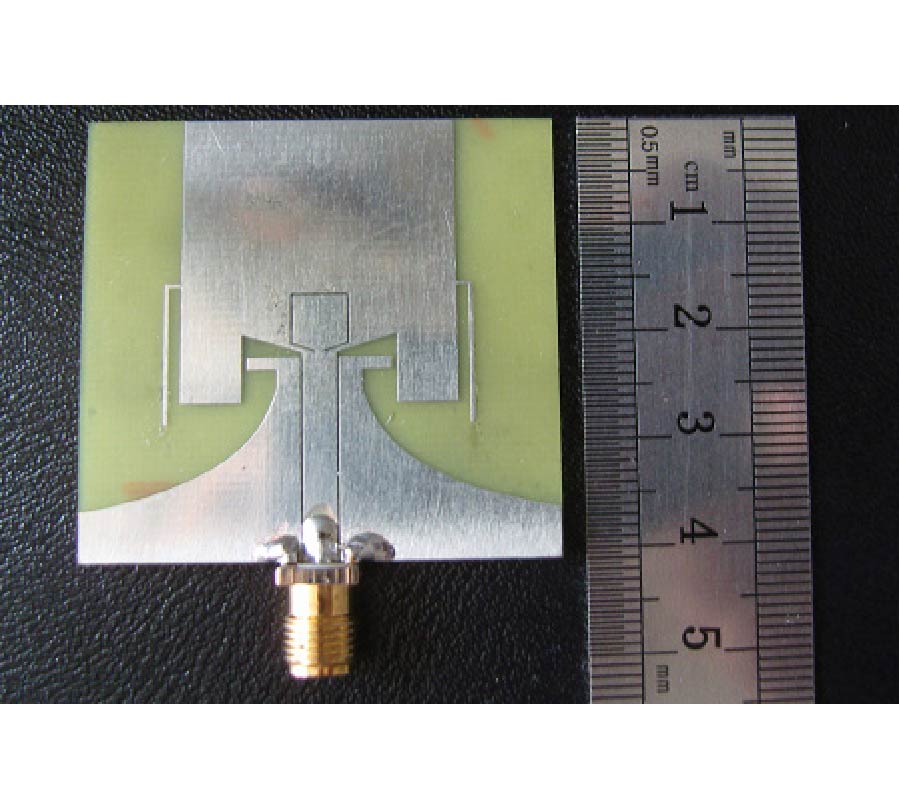
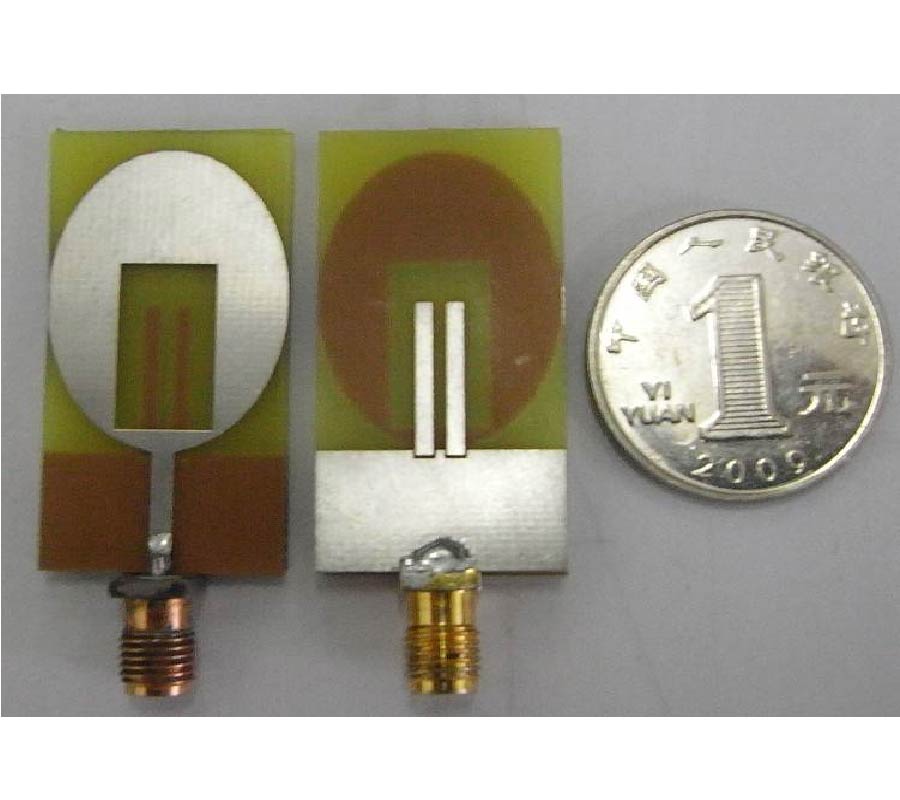
In the paper the unified design procedure for planar dipoles oriented on UWB application is proposed. The procedure leads to obtain a good matching characteristic of planar dipoles in UWB frequency band. The design process is split into two parts: the radiator and the balun design. The Radiator Quality Factor (RQF) is defined as an evaluation suitability of planar radiators to be matched in UWB frequency band. Based on RQF, the optimal circular radiator is chosen, and the whole dipole antenna is designed. The general algorithm of antenna design is formulated and utilised in the planar dipole with elliptical arms project. Two antennas, with circular and elliptical arms, have been fabricated and measured in order to verify the design procedure. Both antennas are characterized by the reflection coefficient less than -10 dB from 2 GHz up to 14 GHz.
UNIFIED DESIGN PROCEDURE FOR PLANAR DIPOLES ORIENTED ON UWB APPLICATION
2010-03-03
PIER
Vol. 102, 227-248
An Approximate UTD Ray Solution for the Radiation and Scattering by Antennas Near a Junction Between Two Different Thin Planar Material Slab on Ground Plane
Titipong Lertwiriyaprapa , Prabhakar H. Pathak and John Volakis
A new, approximate, uniform geometrical theory of diffraction (UTD) based ray solutions are developed for describing the high frequency electromagnetic (EM) wave radiation/coupling mechanisms for antennas on or near a junction between two different thin planar slabs on ground plane. The present solution is obtained by extending the normal incidence solution in order to treat the more general case of skew (or oblique) incidence (three-dimensional 3-D). Plane wave (for oblique or skew incidence) and spherical wave illumination are all considered in this work. Unlike most previous works, which analyze the plane wave scattering by such structures via the Wiener-Hopf (W-H) or Maliuzhinets (MZ) methods, the present development can also treat problems of the radiation by and coupling between antennas near or on finite material coatings on large metallic platforms. In addition, the present solution does not contain the complicated split functions of the W-H solutions nor the complex MZ functions. Unlike the latter methods based on approximate boundary conditions, the present solutions, which are developed via a heuristic spectral synthesis approach, recover the proper local plane wave Fresnel reflection and transmission coefficients and surface wave constants of the material slabs. There is a very good agreement, with less than ± 1 dB differences when the numerical results based on the presented UTD solution for a material junction are compared with that of the MZ solution.
AN APPROXIMATE UTD RAY SOLUTION FOR THE RADIATION AND SCATTERING BY ANTENNAS NEAR A JUNCTION BETWEEN TWO DIFFERENT THIN PLANAR MATERIAL SLAB ON GROUND PLANE
2010-03-02
PIER B
Vol. 20, 33-48
On the Optimal Synthesis of Ring Symmetric Shaped Patterns by Means of Uniformly Spaced Planar Arrays
Andrea Francesco Morabito , Antonia Rita Lagana and Tommaso Isernia
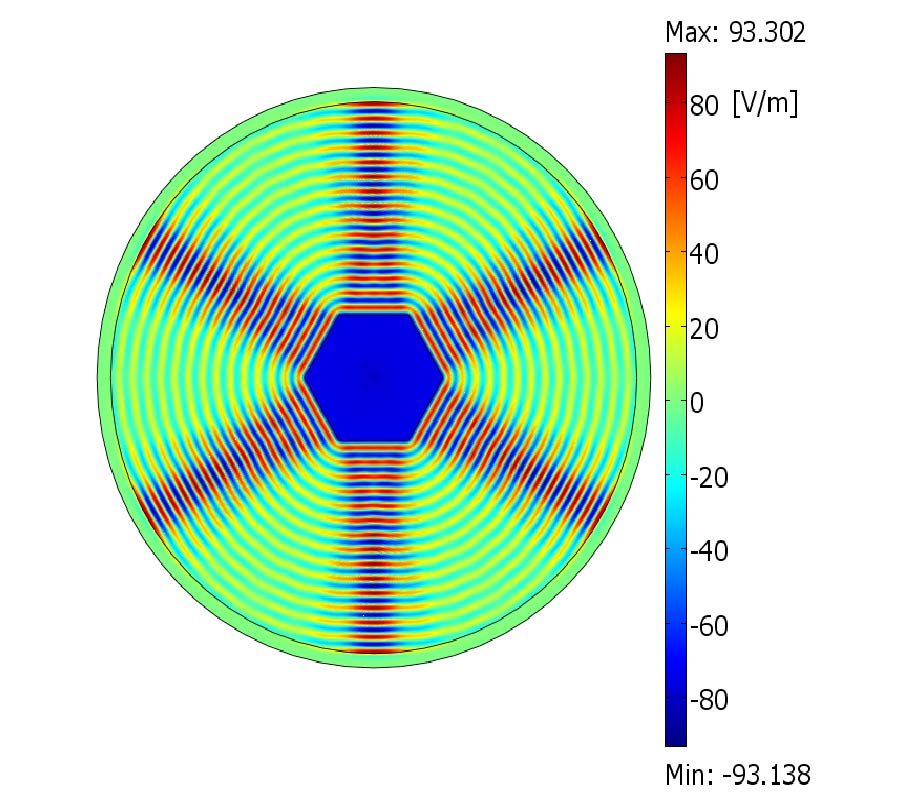
By taking inspiration from [1], a synthesis strategy is proposed for the case of planar arrays and ring shaped patterns which does not require the exploitation of global optimization procedures. In particular, the approach is able to determine a priori (that is, without solving the overall design problem) whether the given power pattern design constraints can be fulfilled or not, and, in the affirmative case, to determine the needed excitation coefficients. Although the approach does not apply to generic planar arrays and generic constraints, it may serve both as a reference solution for more general synthesis procedures, and as an elementary brick for more cumbersome synthesis problems.
ON THE OPTIMAL SYNTHESIS OF RING SYMMETRIC SHAPED PATTERNS BY MEANS OF UNIFORMLY SPACED PLANAR ARRAYS
2010-03-02
PIER B
Vol. 19, 445-473
A Domain Decomposition Method Based on a Generalized Scattering Matrix Formalism and a Complex Source Expansion
Enrica Martini , Giacomo Carli and Stefano Maci
A general domain decomposition scheme based on the use of complex sources is presented for the electromagnetic analysis of complex antenna and/or scattering problems. The analysis domain is decomposed into separate subdomains whose interactions are described through a network formalism, where the ports are associated with complex point source (CPS) beams radially emerging from the subdomain boundaries. Each obstacle is independently analyzed with the most appropriate technique and described through a generalized scattering matrix (GSM). Finally, a linear system is constructed, where the excitation vector is given by the complex source expansion of the primary sources. Thanks to the angular selectivity of the CPS beams, the subdomain interactions only involve a small fraction of the beams; thus, yielding sparse moderate size linear systems. Due to the re-usability of the GSMs, the proposed approach is particularly efficient in the context of parametric studies or antenna installation problems. Numerical examples are provided to demonstrate the efficiency and the accuracy of the proposed strategy.
A DOMAIN DECOMPOSITION METHOD BASED ON A GENERALIZED SCATTERING MATRIX FORMALISM AND A COMPLEX SOURCE EXPANSION
2010-03-02
PIER M
Vol. 11, 213-223
A New Approach to Design Digitally Tunable Optical Filter System for DWDM Optical Networks
Anirudh Banerjee
A new approach to design digitally tunable optical filter system for DWDM (Dense Wavelength Division Multiplexed) optical networks is presented. This digitally tunable optical filter system uses semiconductor optical amplifiers (SOAs) and DWDM thin film filter based wavelength selection elements. The design is very easy to configure, expand and reduce. This digitally tunable optical filter system is smaller in size, lesser in weight, cheaper in costt, consumes low power and has better timing performance as compared to digitally tunable optical filter suggested by researchers recently.
A NEW APPROACH TO DESIGN DIGITALLY TUNABLE OPTICAL FILTER SYSTEM FOR DWDM OPTICAL NETWORKS
2010-03-02
PIER
Vol. 102, 213-226
Multiband Folded Loop Antenna for Smart Phones
Chien-Wen Chiu , Chih-Hao Chang and Yu-Jen Chi
This paper presents a multiband folded loop antenna for smart phone applications. The proposed antenna with a symmetric loop pattern generates four resonance modes in the design bands. The current distributions of the excited resonance modes are analyzed to confirm the mode characteristic. Using a pair of tuning elements near the feed port, the impedance bandwidth is broadened to cover GSM850/GSM900/DCS/PCS/UMTS bands. This research performed simulation by a high frequency structure simulator (HFSS) to optimally design the antenna, and a practical structure was constructed to test. The current study measured the antenna parameters including reflection coefficient, radiation characteristics, peak gain, and radiation efficiency to validate the proposed antenna.
MULTIBAND FOLDED LOOP ANTENNA FOR SMART PHONES
2010-03-01
PIER B
Vol. 20, 19-32
Sparse Frequency Waveform Design for MIMO Radar
Guohua Wang and Yi-Long Lu
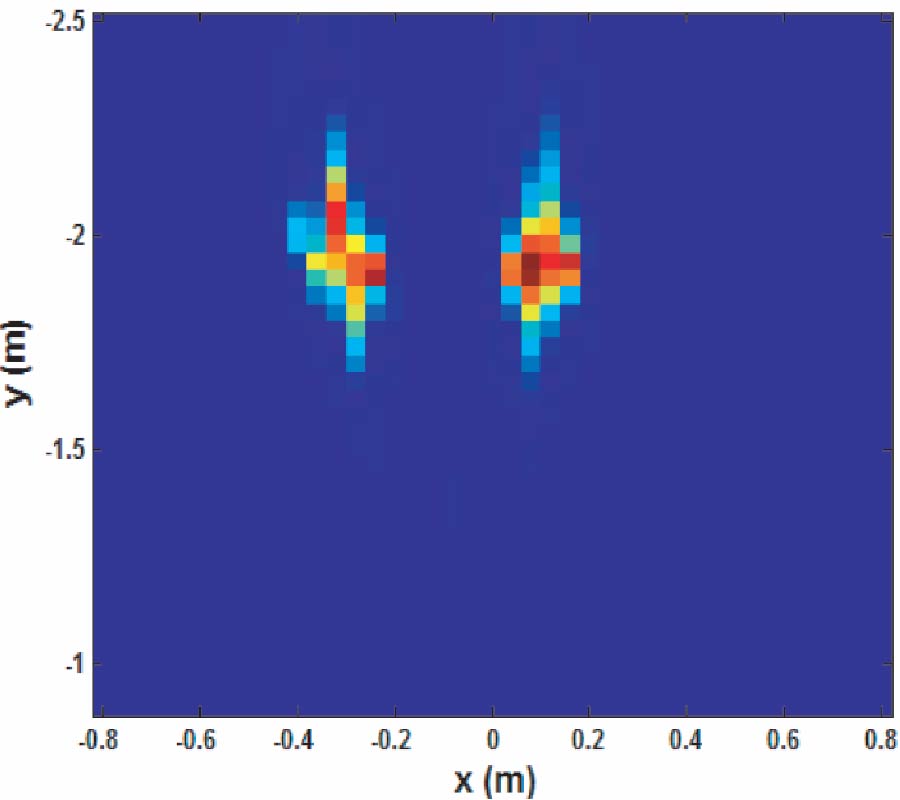
Multiple-input multiple-output (MIMO) radar has superior performance to conventional one. It has been introduced to almost every application field of conventional radar in recent years. In practical application, MIMO radar also faces the problem of congested spectrum assignment, which makes it not possible to have a continuous clear band with large bandwidth. Sparse frequency waveform that contains several individual clear bands is a desirable solution to this problem. In this paper, we propose a method to design sparse frequency waveform set with low sidelobes in autocorrelations and cross-correlations by optimizing an objective function constructed based on Power Spectrum Density requirement and sidelobe performances of waveform set. Thus, besides the property of approximate orthogonality, the designed waveforms obtain the ability of avoiding spectrum interference to/from other users. The waveform is phasecoded and thereby has constant modulus. The effectiveness of the proposed method is illustrated by numerical studies. Practical implementation issues such as quantization effect and Doppler effect are also discussed.
SPARSE FREQUENCY WAVEFORM DESIGN FOR MIMO RADAR
2010-03-01
PIER C
Vol. 12, 163-172
Broad-Band Dipole for RFID Applications
Giuseppina Monti , Luca Catarinucci and Luciano Tarricone
A novel planar dipole for Ultra-High-Frequency (UHF) Radio Frequency Identification (RFID) systems is presented here. Referring to a realization based on the use of a chip produced by Texas Instruments, the proposed design approach has been numerically and experimentally investigated. Reported results demonstrate that the proposed antenna exhibits good radiation properties and matching (|S11|<-10 dB) over the entire UHF RFID bandwidth (860-960 MHz).
BROAD-BAND DIPOLE FOR RFID APPLICATIONS
2010-02-26
PIER B
Vol. 19, 427-444
Dielectric Resonator Antenna Mounted on a Circular Cylindrical Ground Plane
Saber Zainud-Deen , Hend Abd El-Azem Malhat and Kamal Awadalla
In this paper, the radiation characteristics of the single- element cylindrical dielectric resonator antenna mounted on the surface of a metallic hollow circular cylindrical structure is investigated. The effect of the radius of curvature on the return loss, input impedance, standing wave ratio, and radiation pattern is explored. Mutual coupling between two identical cylindrical dielectric resonator antennas on a cylindrical structure in different configurations is determined. To reduce the mutual coupling between the two antennas, the surface of the cylinderical ground plane is defected by cutting slots, or inserting quarter wavelength grooves between the two antennas. The finite element method and the finite integration technique are used to calculate the radiation characteristics of the antenna.
DIELECTRIC RESONATOR ANTENNA MOUNTED ON A CIRCULAR CYLINDRICAL GROUND PLANE
2010-02-26
PIER C
Vol. 12, 149-162
Design of a Dual-Band Metamaterial Bandpass Filter Using Zeroth Order Resonance
Geonho Jang and Sungtek Kahng
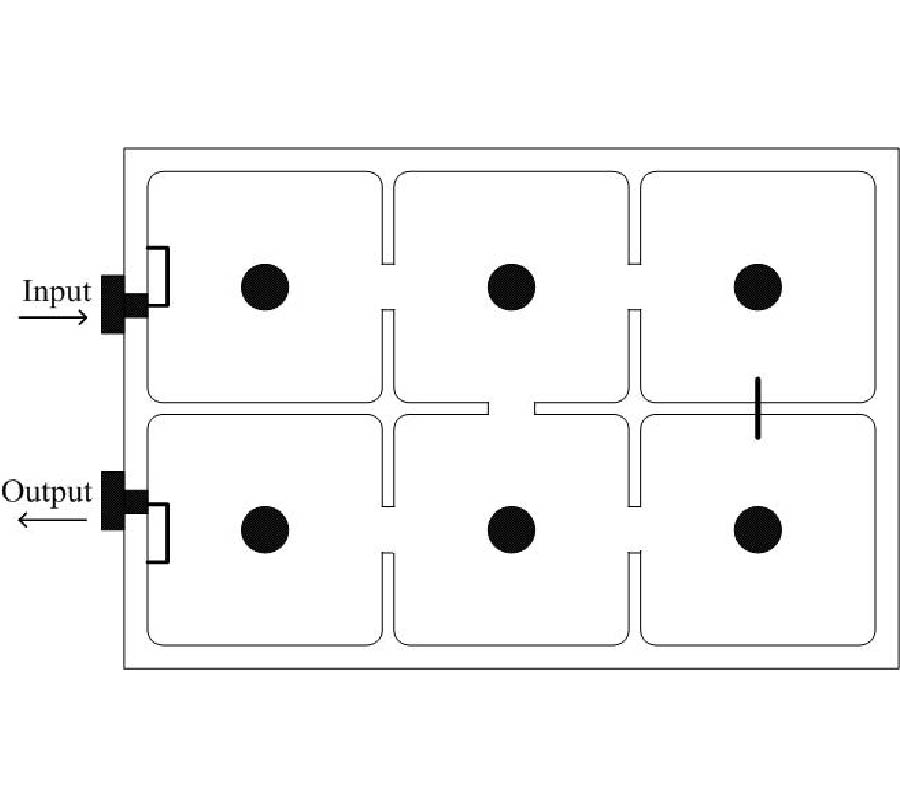
This paper suggests the design of a novel miniaturized dual-band bandpass filter based on the composite right/left-handed (CRLH) metamaterial structure. In detail, subwavelength resonators are realized through the zeroth order resonance (ZOR), and inverter structures are proposed to control the coupling between neighboring ZOR resonators. The proposed technique is validated by the EM predictions, the proof of metamaterial properties with the ZOR field distributions and extracted constitutive parameters, and measurements. It is found that the suggested method enables the remarkable size reduction from the conventional filters such as the parallel coupled type which is designed on the basis of the half-wavelength resonance.
DESIGN OF A DUAL-BAND METAMATERIAL BANDPASS FILTER USING ZEROTH ORDER RESONANCE
2010-02-26
PIER M
Vol. 11, 203-211
Interpolation Scheme Based on Adaptive Integral Method for Solving Electrically Large Radiation Problem by Surface/Surface Configuration
Xing Wang , Shu-Xi Gong , Jin Ling and Xiao-Ming Wang
A novel interpolation scheme based on Adaptive Integral Method (AIM) is presented to solve electrically large radiation problem of conducting surface/surface configurations. For a complex structure that involves wires and surfaces, three basis functions must be assigned to surfaces, wires and wire/surface junctions. To simplify this, the thin strips with no thickness instead of wires are proposed, and the wire/surface junctions can be replaced by surface/surface junctions, thus it is only necessary to define a uniform basis function. The Electric Field Integral Equation (EFIE) is solved using the Method of Moments (MoM) to obtain the equivalent surface current on PEC surfaces. To facilitate the analysis of electrically large radiation problem, the interpolation scheme based on AIM is employed to accelerate the matrix-vector multiplications and reduce matrix storage. Numerical results are presented to demonstrate the accuracy and efficiency of the technique.
INTERPOLATION SCHEME BASED ON ADAPTIVE INTEGRAL METHOD FOR SOLVING ELECTRICALLY LARGE RADIATION PROBLEM BY SURFACE/SURFACE CONFIGURATION
2010-02-26
PIER M
Vol. 11, 191-202
Full-Wave Semiconductor Devices Simulation Using Adi-FDTD Method
Rashid Mirzavand , Abdolali Abdipour , Gholamreza Moradi and Masoud Movahhedi
This paper describes the alternating-direction implicit finite-difference time-domain (ADI-FDTD) method for physical modeling of high-frequency semiconductor devices. The model contains the semiconductor equations in conjunction with the Maxwell's equations which describe the complete behavior of high-frequency active devices. Using ADI approach leads to a significant reduction of the full-wave simulation time. We can reach over 99% reduction in the simulation time by using this technique while still have a good degree of accuracy compared to the conventional approaches. As the first step in the performance investigation, we use the electrons flow equations in the absence of holes and recombination as semiconductor equations in this paper.
FULL-WAVE SEMICONDUCTOR DEVICES SIMULATION USING ADI-FDTD METHOD
2010-02-26
PIER
Vol. 102, 197-211
Embedded Antennas in Dry and Saturated Concrete for Application in Wireless Sensors
Xiaohua Jin and Mohammod Ali
Efficient embedded antennas are needed for future wireless structural health monitoring. The input return loss and transmission losses of a dipole, a planar inverted-F antenna (PIFA), a microstrip patch, and a loop antenna are studied at around 2.45 GHz when these antennas are embedded inside a concrete cylinder. Antenna performance is investigated in free-space, in air dried concrete and in saturated concrete with and without the presence of steel reinforcements. It is observed that the maximum transmission loss for a distance of 250 mm between antennas is around 50 dB which is acceptable for inside the bridge wireless communication between sensors.
EMBEDDED ANTENNAS IN DRY AND SATURATED CONCRETE FOR APPLICATION IN WIRELESS SENSORS
2010-02-26
PIER
Vol. 102, 181-195
A TDIE/TDPO Hybrid Method for the Analysis of TM Transient Scattering from Two-Dimensional Combinative Conducting Cylinders
San-Tuan Qin , Shu-Xi Gong , Rui Wang and Li-Xin Guo
In this work, a hybrid method which combines time domain integral equation method (TDIE) with time domain physical optics method (TDPO) is presented for the problem of TM transient scattering from two-dimensional (2-D) combinative conducting targets. The explicit solution of Marching-On-in-Time (MOT) is developed. The high accuracy and efficiency of this hybrid method are demonstrated by comparing the numerical results of this hybrid method with those obtained by TDIE. To obtain 2-D transient far scattered field, a concise algorithm about time-domain near-zone to far-zone transformation without double Fourier transform is presented for TDIE and hybrid method, and its numerical results are verified by comparing with results obtained from inverse discrete Fourier transform (IDFT) techniques.
A TDIE/TDPO HYBRID METHOD FOR THE ANALYSIS OF TM TRANSIENT SCATTERING FROM TWO-DIMENSIONAL COMBINATIVE CONDUCTING CYLINDERS
2010-02-25
PIER M
Vol. 11, 177-190
Coherent Field Approximation of Plane Wave Scattering from 1D-Rough Mirrors
Pierre Hillion
For an harmonic plane wave impinging on a perfectly reflecting smooth plane the total field, incident and reflected, satisfying on this plane a Dirichlet or Neumann boundaray condition, has an integral representation that we extend to the specular reflection from a perfectly reflecting rough plane. To make this generalization possible, some constraints must be imposed on the wavelength of the incident field and on the rough amplitude to make the diffuse field negligible so that only the coherent field is important and we may use the fact that the coherent power is identical to that of a smooth surface. This generalized integral representation supplies an approximation of the coherent field valid far from the rough plane. We limit the discussion to acoustic, TE, TM electromagnetic wave incident on 1D-perfectly reflecting rough planes with roughness described by zig-zag functions piecewise linear with opposite slop on adjacent intervalls.