Search Results(13900)

2009-09-18
PIER M
Vol. 8, 249-261
Polarized Photon Generation for the Transport of Quantum States: A Closed-System Simulation Approach
Md. Mijanur Rahman and Pankaj Kumar Choudhury
A novel approach for logic state dependent generation of polarized photon is proposed, where the logic states '0' and '1' are represented by two sub-spaces in the Hilbert space of the hyperfine states of rubidium atom (87Rb). Each subspace consists of a ground state, an intermediate state and an excited state. The atom is placed at the center of a two-mode cavity, and the cavity modes correspond to frequencies of the generated photon. Photon generation process involves raising the atom to the excited state within the corresponding subspace and letting it decay back to the initial (ground) state, emitting thereby a photon of logic state dependent polarization. In order to keep the driving laser frequencies far off from the cavity mode frequencies, the atom is raised to the excited state in two steps --- first from the ground state to the intermediate state and then from the intermediate state to the excited state. Polarization states of the photon represent the logic states, and can be used to transport logic from one node to another of the quantum network.
POLARIZED PHOTON GENERATION FOR THE TRANSPORT OF QUANTUM STATES: A CLOSED-SYSTEM SIMULATION APPROACH
2009-09-18
PIER Letters
Vol. 11, 113-118
Compact Circularly Polarized Microstrip Antenna with Wide Beamwidth for Compass Satellite Service
Jing-Ya Deng , Ying-Zeng Yin , You-Huo Huang , Jie Ma and Qi-Zhong Liu
A compact circularly polarized (CP) microstrip antenna with inserted nine cross slots is proposed to reduce the size and widen the beamwidth. The antenna is operated at 1.268 GHz, and built by using a substrate with a coaxial probe feed. The impedance bandwidth (VSWR < 2) is 1.5% and the 3 dB axial ratio bandwidth is 0.52%. The measure gain is 4.5 dBi and beamwidth is about 110o. The measured results for the compact CP antenna with embedded cross slots size shows that the resonate frequency is significantly lowered from 1.951 GHz to 1.268 GHz, corresponding to a 35% antenna size reduction compared with the one without any slot.
COMPACT CIRCULARLY POLARIZED MICROSTRIP ANTENNA WITH WIDE BEAMWIDTH FOR COMPASS SATELLITE SERVICE
2009-09-18
PIER C
Vol. 10, 175-185
A Wideband Miniaturized Dipole Antenna on a Printed Circuit Board
Hung Yu Yang and Yanyan Zhang
This paper investigates a miniaturized resonant antenna that comprises a meandered monopole and a partial ground plane. A bandwidth enhancement is found using the ground plane on the back side of the circuit board where the entire communication system resides. The meandered monopole together with the ground plane forms a wideband dipole antenna. The design shows over 25% 10 dB impedance bandwidth at 2.5 GHz ISM band with a monopole area of 300 mils by 166 mils on a small circuit board and a backside ground plane 1500 mils by 600 mils. The wire length is about one third and the Q factor is about twice as compared against the case of using a straight quarter-wave microstrip monopole. The antenna Q factor as a function ground plane area is characterized. The use of circuit ground as a part of an antenna should find useful applications in portable wireless systems. Good agreements are found between simulated and measured antenna gain patterns and return loss.
A WIDEBAND MINIATURIZED DIPOLE ANTENNA ON A PRINTED CIRCUIT BOARD
2009-09-16
PIER
Vol. 96, 237-249
Bright and Dark Soliton Generation in a Left-Handed Nonlinear Transmission Line with Series Nonlinear Capacitors
Fatemeh Gharakhili , Mahmoud Shahabadi and Mohammad Hakkak
In this article, we demonstrate that in the case of a positive group velocity left-handed nonlinear (LH-NL) transmission line with series nonlinear capacitances, the spatial derivative of the voltage distribution satisfies the nonlinear Schrödinger (NLS) equation. Consequently, it will shown that a LH-NL transmission line with series varactors can be used to generate both bright and dark solitons similar to a composite right-left-handed (CRLH) transmission line periodically loaded with shunt varactors. The paper also discusses the conditions for generation of bright and dark solitons.
BRIGHT AND DARK SOLITON GENERATION IN A LEFT-HANDED NONLINEAR TRANSMISSION LINE WITH SERIES NONLINEAR CAPACITORS
2009-09-16
PIER
Vol. 96, 217-236
Reduction of Leakage Magnetic Field in Electromagnetic Systems Based on Active Shielding Concept Verified by Eigenvalue Analysis
Faramarz Faghihi and Hossein Heydari
Leakage fields are one of the main issues in design of electromagnetic systems. Some of these fields close their paths through the core and air, giving rise to non-ideal behavior of the magnetic systems. This paper explains a novel concept of active shielding which consists of two compensation coils in series and generates a counter field opposite to the leakage fields leaking from an iron-core system. As the method is based on physical reasoning of electromagnetic coupled circuit theory, the design criterions for the compensating coils parameters, their number of turns and their adaptation to the systems, were considered. The state of the art is presented by a model which is verified by roots of system characteristic equations, using state equations. In a case study, this method was investigated in a 25kA (125kVA) current injection transformer (CIT) system delivering a secondary current as closely proportioned to the primary current as possible, using finite element method (FEM) simulation. This paper will also push the state of the art by reducing the age effect of the CIT through mechanical force reduction.
REDUCTION OF LEAKAGE MAGNETIC FIELD IN ELECTROMAGNETIC SYSTEMS BASED ON ACTIVE SHIELDING CONCEPT VERIFIED BY EIGENVALUE ANALYSIS
2009-09-16
PIER B
Vol. 18, 1-24
FDTD Modeling of the Breast: A Review
Martin O'Halloran , Raquel Cruz Conceicao , Dallan Byrne , Martin Glavin and Edward Jones
Microwave imaging is one of the most promising emerging imaging technologies for breast cancer detection. Microwave imaging exploits the dielectric contrast between normal and malignant breast tissue at microwave frequencies. Many UWB radar imaging techniques require the development of accurate numerical phantoms to model the propagation and scattering of microwave signals within the breast. The Finite Difference Time Domain (FDTD) method is the most commonly used numerical modeling technique used to model the propagation of Electromagnetic (EM) waves in biological tissue. However, it is critical that an FDTD model accurately represents the dielectric properties of the constituent tissues and the highly correlated distribution of these tissues within the breast. This paper presents a comprehensive review of the dielectric properties of normal and cancerous breast tissue, and the heterogeneity of normal breast tissue. Furthermore, existing FDTD models of the breast are examined and compared. This paper provides a basis for the development of more geometrically and dielectrically accurate numerical breast phantoms used in the development of robust microwave imaging algorithms.
FDTD MODELING OF THE BREAST: A REVIEW
2009-09-16
PIER B
Vol. 17, 343-359
The Contrast Source-Extended Born Model for 2D Subsurface Scattering Problems
Lorenzo Crocco , Michele D'Urso and Tommaso Isernia
In this paper, we describe a new full-wave integral equation model to tackle electromagnetic scattering problems arising from objects buried in layered media. Such a model is a rewriting of the usually adopted Contrast Source integral equation and is named Contrast Source-Extended Born (CS-EB) owing to this circumstance and to the relationship existing among its linearization and the Extended Born approximation. By means of this alternative formulation, it is possible to modify the relationship among the scatterer permittivity and the field it scatters, thus possibly reducing the degree of non-linearity of this latter relationship. Accordingly, in these cases, the adoption of the CS-EB model may be convenient with respect to traditional ones in both forward and inverse scattering problems.
THE CONTRAST SOURCE-EXTENDED BORN MODEL FOR 2D SUBSURFACE SCATTERING PROBLEMS
2009-09-16
PIER B
Vol. 17, 327-342
Dispersion Analysis of FDTD Schemes for Doubly Lossy Media
Ding Yu Heh and Eng Leong Tan
This paper presents the 3-D dispersion analysis of finite-difference time-domain (FDTD) schemes for doubly lossy media, where both electric and magnetic conductivities are nonzero. Among the FDTD schemes presented are time-average (TA), time-forward (TF), time-backward (TB) and exponential time differencing (ETD). It is first shown that, unlike in electrically lossy media, the attenuation constant in doubly lossy media can be larger than its phase constant. This further calls for careful choice of cell size such that both wavelength and skin depth of the doubly lossy media are properly resolved. From the dispersion analysis, TF generally displays higher phase velocity and attenuation errors due to its first-order temporal accuracy nature compared to second-order ETD and TA. Although both have second-order temporal accuracy, ETD has generally lower phase velocity and attenuation errors than TA. This may be attributed to its closer resemblance to the solution of first-order differential equation. Numerical FDTD simulations in 1-D and 3-D further confirm these findings.
DISPERSION ANALYSIS OF FDTD SCHEMES FOR DOUBLY LOSSY MEDIA
2009-09-16
PIER C
Vol. 10, 163-173
Effects of Coupling Coefficient on Static Properties of Bistable Qws-DFB Semiconductor Laser Amplifiers
Mahmoud Aleshams
We previously analyzed the effects of trapezoidal tapered gratings on the dispersive bistable characteristics of a quarter wavelength phase-shifted distributed feedback semiconductor laser amplifier (QWS-DFB-SLA). In this paper, we analyze the effects of coupling coefficient on the static bistable characteristics of a QWS-DFB SLA with a tapered or a non-tapered grating. Simulation results show that any change in the coupling coefficient can change the characteristics such as the spectral range of low-threshold bistable switching and the on-off switching contrast.
EFFECTS OF COUPLING COEFFICIENT ON STATIC PROPERTIES OF BISTABLE QWS-DFB SEMICONDUCTOR LASER AMPLIFIERS
2009-09-15
PIER
Vol. 96, 205-215
A Non-Spurious Vector Spectral Element Method for Maxwell's Equations
Jiefu Chen and Qing Huo Liu
In this paper, a non-spurious vector spectral element method is proposed to solve Maxwell's equations using E and H as variables. The mixed-order curl-conforming basis functions are used for both variables to facilitate applying boundary and interface conditions; and the interpolation degree of basis functions for E is set different from that for H to suppress the spurious modes. The proposed method can be utilized in both time domain and frequency domain, and it is very suitable for the future implementation of discontinuous Galerkin spectral element method. Numerical results demonstrate the property of spurious-free and the spectral accuracy of this method. The method has also been implemented for the more general finite element method in time and frequency domains.
A NON-SPURIOUS VECTOR SPECTRAL ELEMENT METHOD FOR MAXWELL'S EQUATIONS
2009-09-13
PIER B
Vol. 17, 309-326
EM Field Coupling to Non-Uniform Microstrip Lines Using Coupled Multi-Conductor Strips Model
Hamid Khodabakhshi and Ahmad Cheldavi
A model for the two-dimensional analysis of microstrip lines, named Rigorously Coupled Multi-conductor Strip (RCMS) is introduced. In this model, the width of the strip of a microstrip line is subdivided into a large number of rigorously coupled narrow strips. So, a microstrip line can be considered as a coupled multi-conductor transmission line. Determination of the capacitance and inductance matrices of the model is introduced, also. The voltages and currents induced by electromagnetic fields for the coupled multi-condutor strips problem can be obtained using Bernardi's method. The effect of an external EM wave on a microstrip line with non-uniformity in its width is computed by adding the circuit model of transverse discontinuity (narrow slit) to the RCMS model. Finally, the validity and efficiency of the introduced method is investigated using previous work and full wave EM-simulation software.
EM FIELD COUPLING TO NON-UNIFORM MICROSTRIP LINES USING COUPLED           MULTI-CONDUCTOR STRIPS MODEL
2009-09-13
PIER B
Vol. 17, 293-308
On the Impact of Mutual Coupling Effects on the Psl Performances of Ads Thinned Arrays
Giacomo Oliveri , Luca Manica and Andrea Massa
In this paper, the performances of thinned arrays based on Almost Difference Sets are analyzed in the presence of mutual coupling effects. The geometry under test is composed by thin dipole elements and the arising mutual interactions are modeled by means of the induced EMF method. To assess the robustness of the ADS-based thinning technique also in such a non-ideal case, an extensive numerical analysis is carried out by considering several test cases characterized by different aperture sizes, lattice spacings, and thinning factors. The obtained results show that the peak sidelobe estimators deduced in the ideal case still keep their validity although, as expected, a deterioration usually arises due to the mutual coupling.
ON THE IMPACT OF MUTUAL COUPLING EFFECTS ON THE PSL PERFORMANCES OF ADS THINNED ARRAYS
2009-09-13
PIER B
Vol. 17, 275-292
Gain Enhancement for Circularly Polarized Microstrip Patch Antenna
The-Nan Chang , Ming Chi Wu and Jyun-Ming Lin
A method to enhance gain of a circularly polarized (CP) microstrip patch antenna is proposed. We etch coupled square-shaped split ring resonators (CSSSRRs) on both sides of a superstrate which is separated from the patch by an air layer. Thickness of the air layer is around 0.1λ, which keeps the radome in low profile. Open gaps of each CSSSRR on opposite sides of the superstrate are orthogonally oriented to each other. This unique orientation allows the radome not only enhance gain but also maintain good CP performance.
GAIN ENHANCEMENT FOR CIRCULARLY POLARIZED MICROSTRIP PATCH ANTENNA
2009-09-13
PIER B
Vol. 17, 255-273
The Compressed-Sampling Filter (Csf)
Lianlin Li , Wenji Zhang , Yin Xiang and Fang Li
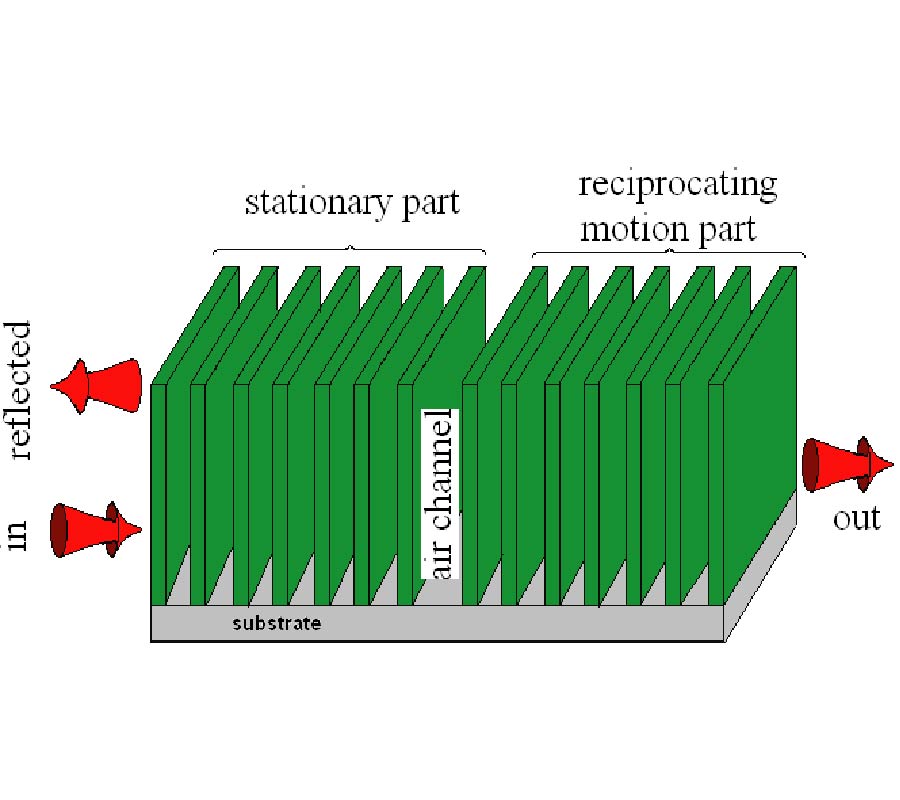
The common approaches to sample a signal generally follow the well-known Nyquist-Shannon's theorem: the sampling rate must be at least twice the maximum frequency presented in the signal. A new emerging field, compressed sampling (CS), has made a paradigmatic step to sample a signal with much less measurements than those required by the Nyquist-Shannon's theorem when the unknown signal is sparse or compressible in some frame. We call a compressed-sampling filter (CSF) one for which the function relating the input signal to the output signal is pseudo-random. Motivated by the theory of random convolution proposed by Romberg (for convenience, called the Romberg's theory) and the fact that the signal in complex electromagnetic environment may be spread out due to the rich multi-scattering effect, two CSFs via microwave circuit to enable signal acquisition with sub-Nyquist sampling have been constructed, tested and analyzed. Afterwards, the CSF based on surface acoustic wave (SAW) structure has also been proposed and examined by the numerical simulation. The results has empirically shown that by the proposed architectures the S-sparse n-dimensional signal can be exactly reconstructed with O(Slogn) real-valued measurements or O(Slog(n/S)) complex-valued measurements with overwhelming probability.
THE COMPRESSED-SAMPLING FILTER (CSF)
2009-09-13
PIER C
Vol. 10, 151-161
Dual-Band Dual-Polarized Array for WLAN Applications
J. M. Steyn , Johann Wilhelm Odendaal and Johan Joubert
This paper presents a dual-band dual-polarized antenna array design for WLAN applications. Four double-dipole elements are orthogonally interleaved to facilitate operation in both the standard WLAN frequency bands (IEEE 802.11b and IEEE 802.11a) simultaneously. The two linear polarizations have separate ports. The presented design is characterized by dual-band operation, reasonably good front-to-back ratios, average gains of 5.2 dBi and 6.2 dBi over the 2.4 and 5.2 GHz bands respectively, stable end-fire radiation patterns and very low cross-polarization levels.
DUAL-BAND DUAL-POLARIZED ARRAY FOR WLAN APPLICATIONS
2009-09-11
PIER
Vol. 96, 193-204
High Resolution Range Profile Identifying Simulation of Laser Radar Based on Pulse Beam Scattering Characteristics of Targets
Ming-Jun Wang , Zhen-Sen Wu , Ying-Le Li and Geng Zhang
This is a presentation of an innovative technique of rigid body estimation for use with laser high-range resolution profile (LHRRP) simulations. The theory of pulse beam scattering from random rough surface is used to build a theoretical model which computes simulations for the laser pulse HRRP of the whole dimension target. As two especial cases, the LHRRP of sphere and cone are simulated in detail. We discuss and analyze some influential factors on laser radar HRRP imaging such as their dimensions, correlation length and height root mean square of the rough surface, refractive index of the material and width pulse. The simulated results suggest that the reliable identifications are possible provided in some aero and aerial recognized applications with higher resolution by laser radar.
HIGH RESOLUTION RANGE PROFILE IDENTIFYING SIMULATION OF LASER RADAR BASED ON PULSE BEAM SCATTERING CHARACTERISTICS OF TARGETS
2009-09-11
PIER B
Vol. 17, 233-254
Efficient Implementation of Higher-Order Finite Volume Time-Domain Method for Electrically Large Scatterers
Avijit Chatterjee and R. S. Myong
The Finite Volume Time-Domain (FVTD) method finds limited application in the simulation of electromagnetic scattering from electrically large scatterers because of the fine discretization required in terms of points-per-wavelength. An efficient implementation of a higher-order FVTD method is proposed for electrically large, perfectly conducting scatterers. Higher-order and fine-grid accuracy are preserved, despite using only a first-order spatial accuracy and a coarse grid in substantial parts of the FVTD computational domain, by partially incorporating a time-domain Physical Optics (PO) approximation for the surface current. This can result in considerable savings in computational time while analyzing geometries containing electrically large, smooth sections using the FVTD method. The higher-order FVTD method in the present work is based on an Essentially Non-Oscillatory (ENO) reconstruction and results are presented for two-dimensional perfectly conducting scatterers subject to Transverse Magnetic (TM) or Transverse Electric (TE) illumination.
EFFICIENT IMPLEMENTATION OF HIGHER-ORDER FINITE VOLUME TIME-DOMAIN METHOD FOR ELECTRICALLY LARGE SCATTERERS
2009-09-11
PIER Letters
Vol. 11, 103-112
Rotational Stability of a Charged Dielectric Rigid Body in a Uniform Magnetic Field
Guo-Quan Zhou
Based on a new concept, i.e., charge moment tensor and the rotational equation of a charged dielectric rigid body about a fixed-point under a uniform external magnetic field, one symmetrical case has been rigorously solved. The rotational stability has been analyzed in detail for two cases, general and symmetrical, respectively, by means of some techniques of matrix analysis.
2009-09-11
PIER Letters
Vol. 11, 93-102
Computational Modeling of Induction Heating Process
Mohammad Hossein Tavakoli , Hossein Karbaschi and Feridoun Samavat
An accurate 2D steady state mathematical model for induction heating process is described and additional results of electromagnetic field, eddy currents distribution and volumetric heat generation have been computed for a sample setup using a finite element method. For the calculations, the input voltage of induction coil is set to be 200 ν with a frequency of 10 kHz. It was shown that for the case considered here, the distribution of eddy currents density along the radius/thickness of the workpiece has a damped sinusoidal wave-shaped form.
COMPUTATIONAL MODELING OF INDUCTION HEATING PROCESS
2009-09-11
PIER Letters
Vol. 11, 83-91
Compact CPW-Fed UWB Antenna with Dual Band-Notched Characteristics
Zhi-An Zheng and Qing-Xin Chu
In this paper, a coplanar waveguide fed (CPW-Fed) ultra-wideband (UWB) antenna with dual band-notched characteristics is proposed. Two symmetrical slots are etched from the ground plane to achieve the notched band at 5.5 GHz. The other notched band at 3.5 GHz is obtained by etching a split ring slot in the radiator. The simulation and measurement show that the proposed antenna achieves an impedance bandwidth of 3.1-10.6 GHz with VSWR < 2, except in the bands of 3.2-3.8 GHz and 4.8-6.2 GHz. A nearly omnidirectional radiation pattern and stable gain with variation less than 3 dB are also observed except in the two notched bands. Moreover, time-domain characteristics of the antenna are analyzed and discussed as well.
COMPACT CPW-FED UWB ANTENNA WITH DUAL BAND-NOTCHED CHARACTERISTICS