Search Results(13805)

2009-08-03
PIER C
Vol. 9, 131-143
Frequency Notched Wide Band Planar Monopole Antennas
Bahman Rahmati and Hamid Reza Hassani
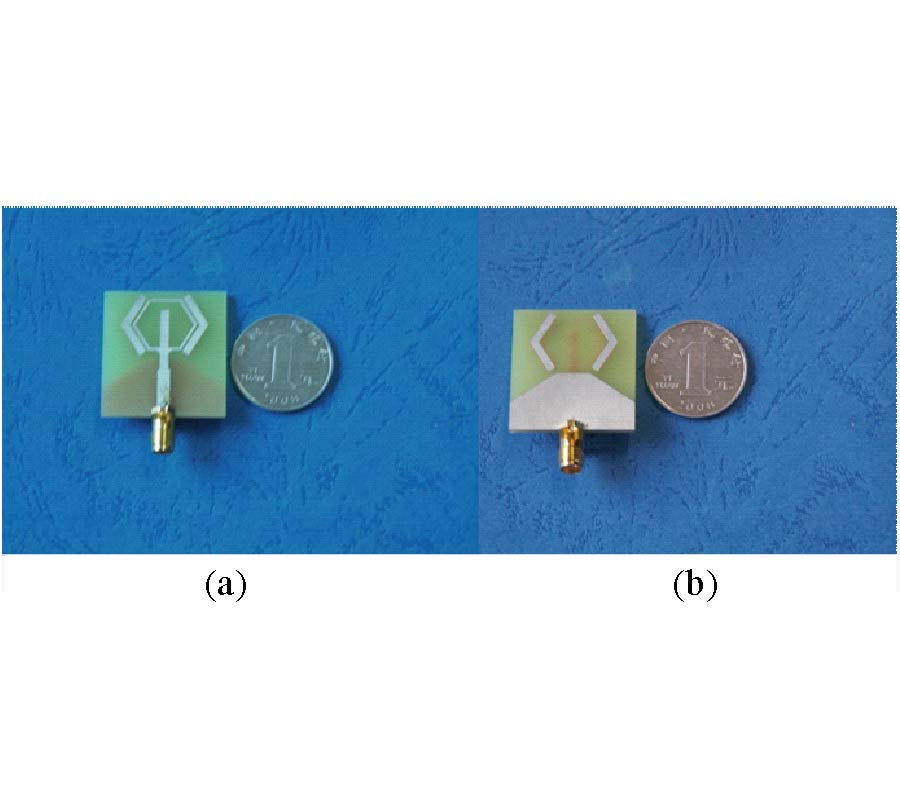
The characteristics of an ultra-wideband (UWB) planar monopole antenna with multiple simple slots is presented. By placing a pair of symmetrical horizontal slots on the sides of the monopole antenna a tune-able notch characteristic can be obtained. The length, width and height of the slot can be used to tune the centre frequency, bandwidth and reflection coefficient of the notch. Placing two pairs of horizontal slots on the sides of the monopole antenna two tune-able notched characteristics can be obtained. Based on slot length and slot position an approximate formula for the notch centre frequency is given. The results of simulation and measurement are presented and discussed.
FREQUENCY NOTCHED WIDE BAND PLANAR MONOPOLE ANTENNAS
2009-08-03
PIER B
Vol. 16, 407-432
A Priori Modeling for Gradient Based Inverse Scattering Algorithms
Sven Nordebo and Mats Gustafsson
This paper presents a Fisher information based Bayesian approach to analysis and design of the regularization and preconditioning parameters used with gradient based inverse scattering algorithms. In particular, a one-dimensional inverse problem is considered where the permittivity and conductivity profiles are unknown and the input data consist of the scattered field over a certain bandwidth. A priori parameter modeling is considered with linear, exponential and arctangential parameter scalings and robust preconditioners are obtained by choosing the related scaling parameters based on a Fisher information analysis of the known background. The Bayesian approach and a principal parameter (singular value) analysis of the stochastic Cramer-Rao bound provide a natural interpretation of the regularization that is necessary to achieve stable inversion, as well as an indicator to predict the feasibility of achieving successful reconstruction in a given problem set-up. In particular, the Tikhonov regularization scheme is put into a Bayesian estimation framework. A time-domain least-squares inversion algorithm is employed which is based on a quasi-Newton algorithm together with an FDTD-electromagnetic solver. Numerical examples are included to illustrate and verify the analysis.
A PRIORI MODELING FOR GRADIENT BASED INVERSE SCATTERING ALGORITHMS
2009-08-03
PIER B
Vol. 16, 389-406
A Novel Wide-Band Microstrip Yagi-Uda Array Antenna for WLAN Applications
Mohammad Bemani and Saeid Nikmehr
This paper presents a design of Wide-Band Microstrip Yagi-Uda antenna with high gain and high front to back (F/B) ratio. Numerical and measured results of our design show more than 18dB front to back ratio at 5.5 GHz and no backward radiation at 5.2 GHz. An impedance bandwidth of 22.05% was achieved around 5.5 GHz. The antenna gain (10-12.4 dBi) can be varied to be suitable for various applications. Measured return loss and radiation pattern of this antenna is presented to validate the results of simulations by two methods. The first method based on finite element method (FEM) and the second one based on finite integral technique (FIT) were used to analyze antenna structure, and subsequently the Genetic Algorithm (GA) was applied by using HFSS simulator to obtain the optimized parameters. In order to find the best design method for this antenna, the effect of distance between the parasitic elements of proposed antenna was studied. Finally two microstrip Yagi-Uda array antennas were combined to increase the gain of antenna. To demonstrate the major benefits, a comparison of our initial and final designs of Yagi-Uda antenna is provided.
A NOVEL WIDE-BAND MICROSTRIP YAGI-UDA ARRAY ANTENNA FOR WLAN APPLICATIONS
2009-08-02
PIER C
Vol. 9, 119-129
A Simple Strategy for Life Signs Detection via an X-Band Experimental Set-Up
Michele D'Urso , Giovanni Leone and Francesco Soldovieri
In this paper, a simple and effective method for Through-The-Wall (TTW) life signs detection is introduced and discussed. To this aim, a Continuous Wave (CW) Microwave Transceiver working in X-Band is adopted. The detection procedure is based on the evaluation of correlation function in frequency domain between the measured and model signals. In order to ensure the reliability, proper background removal strategies are introduced. The effectiveness of the proposed approach is shown by processing experimental data collected in a realistic TTW scenario.
A SIMPLE STRATEGY FOR LIFE SIGNS DETECTION VIA AN X-BAND EXPERIMENTAL SET-UP
2009-08-02
PIER C
Vol. 9, 109-117
Compact Top-Loaded Monopole Antenna with a Pair of Sleeves on the Ground Plane for Multi-Band WLAN Applications
Jin Chen , Guang Fu , Guang-De Wu and Shu-Xi Gong
A novel printed top-loaded monopole antenna with a pair of sleeves on the ground plane for multiband wireless local area network (WLAN) applications is presented. This antenna is composed of a top-loaded monopole and two sleeves on a ground plane. Both the antenna and the ground plane are printed on the same side of an inexpensive FR4 substrate. This antenna has light weight and compact size of only 29×45×0.5 mm3. The operation bandwidth of this proposed antenna covers 2.4 GHz/5.2 GHz/5.8 GHz WLAN bands and 7.4 GHz~8.8 GHz for UWB application, which perfectly meet the requirement of multiband working. The measured and simulated results agree well with each other.
COMPACT TOP-LOADED MONOPOLE ANTENNA WITH A PAIR OF SLEEVES ON THE GROUND PLANE FOR MULTI-BAND WLAN APPLICATIONS
2009-08-02
PIER C
Vol. 9, 101-108
Fiber Loop Mirror Filter with Two-Stage High Birefringence Fibers
Kok Sing Lim , Chang Hong Pua , Noor Azura Awang , Sulaiman Wadi Harun and Harith Ahmad
A fiber loop mirror (FLM) with two-stage high birefringence (Hi-Bi) fibers is theoretically and experimentally studied for various rotation angles and Hi-Bi fiber lengths. The experimental spectra are observed to be in good agreement with the theoretical spectra, verifying our theoretical model. The wavelength interval of the comb filter depends on the Hi-Bi fiber lengths and rotation angles. By varying the rotation angle from 0ο to 90ο, a comb-like transmission spectrum with small wavelength spacing is evolving into an exotic but periodic transmission spectrum and eventually become a larger wavelength spacing transmission spectrum. The FLM is useful in many applications such wavelength division multiplexing power equalization and management, switchable multi-wavelength fiber laser, optical switch and etc.
FIBER LOOP MIRROR FILTER WITH TWO-STAGE HIGH BIREFRINGENCE FIBERS
2009-08-02
PIER M
Vol. 8, 131-141
Inverse Source Problem from the Knowledge of Radiated Field Over Multiple Rectilinear Domains
Francesco Soldovieri , Claudio Mola , Raffaele Solimene and Rocco Pierri
This paper deals with an inverse source problem starting from the knowledge of the radiated field in Fresnel and near zone. In particular, here we are concerned with a 2D geometry characterized by a rectilinear magnetic source and measurement rectilinear domains in Fresnel and near zone. The effect of the added knowledge of the radiated field over a second observation domain is investigated via the Singular Values Decomposition of the radiation operator and we point out how the addition of a second observation domain allows us always to achieve a better noise rejection. Also, we determine conditions under which the knowledge of the field over the second domain increases the information content (as the number of singular values of the radiation operator before their asymptotic decay) for both the Fresnel and near zone cases. Finally reconstruction examples with noise-free and noisy data are presented.
INVERSE SOURCE PROBLEM FROM THE KNOWLEDGE OF RADIATED FIELD OVER MULTIPLE RECTILINEAR DOMAINS
2009-08-02
PIER B
Vol. 16, 371-387
Design of an Ultra-Wideband, Low-Noise Amplifier Using a Single Transistor: A Typical Application Example
Salih Demirel , Filiz Gunes and Ufuk Ozkaya
In this work, a design method of an Ultra-Wideband (UWB), low-noise amplifier (LNA) is proposed exerting the performance limitations of a single high-quality discrete transistor. For this purpose, the compatible (Noise F, Input VSWR Vi, Gain GT) triplets and their (ZS, ZL) terminations of a microwave transistor are exploited for the feasible design target space with the minimum noise Fmin(ƒ), maximum gain GTmax(ƒ) and a low input VSWR Vi over the available bandwidth B. This multi-objective design procedure is reduced into syntheses of the Darlington equivalences of the ZSopt(ƒ), ZLmax(ƒ) terminations with the Unit-elements and short-circuited stubs in the T-, L-, Π- configurations and Particle Swarm Intelligence is successfully implemented as a comparatively simple and efficient optimization tool into both verification of the design target space and the design process of the input and output matching circuits. A typical design example is given with its challenging performance in the simple Π- and Π-configurations realizable by the microstrip line technology. Furthermore the performances of the synthesized amplifiers are compared using an analysis programme in MATLAB code and a microwave system simulator and verified to agree with each other.
DESIGN OF AN ULTRA-WIDEBAND, LOW-NOISE AMPLIFIER USING A SINGLE TRANSISTOR: A TYPICAL APPLICATION EXAMPLE
2009-08-01
PIER C
Vol. 9, 89-100
Quasi-Elliptic Bandpass Filter Based on SIR with Elimination of First Spurious Response
Nima Molaei Garmjani and Nader Komjani
In this paper, a quasi-elliptic bandpass filter was designed, simulated, and fabricated using four-pole cross-coupled stepped impedance resonators (SIR). Using a special type of stepped impedance resonators, a great increase in rejection band width of the filter was obtained. In order to perform the mentioned design practically, we utilized a compound sandwich model of two substrates (in strip line form). Furthermore, we used Defected Ground Structure (DGS) in order to omit the first spurious resonant frequency and increase bandwidth of the filter. The fabricated sample was measured, and the results showed a good agreement with simulated results.
QUASI-ELLIPTIC BANDPASS FILTER BASED ON SIR WITH ELIMINATION OF FIRST SPURIOUS RESPONSE
2009-07-30
PIER
Vol. 94, 419-433
Lower Frequency Limit of Carbon Nanotube Antenna
Ahmed Attiya
Carbon nanotubes are characterized by slow wave propagation and high characteristic impedance due to the additional kinetic inductive effect. This slow wave property can be used to introduce resonant dipole antennas with dimensions much smaller than traditional half-wavelength dipole in Terahertz band. However, this property has less effect at lower frequency bands. This paper introduces the physical interpretation of this property based on the relation between the resonance frequency and the surface wave propagation constant on a carbon nanotube. This surface wave propagation is found to be characterized by high attenuation coefficient at low frequency bands which limits using carbon nanotube as an antenna structure at these frequencies.
LOWER FREQUENCY LIMIT OF CARBON NANOTUBE ANTENNA
2009-07-30
PIER M
Vol. 8, 119-129
Neural Model for Circular-Shaped Microshield and Conductor-Backed Coplanar Waveguide
P. Thiruvalar Selvan and Singaravelu Raghavan
A Computer Aided Design (CAD) approach based on Artificial Neural Networks (ANN's) is successfully introduced to determine the characteristic parameters of Circular-shaped Microshield and Conductor-Backed Coplanar Waveguide (CMCB-CPW). ANN's have been promising tools for many applications and recently ANN has been introduced to microwave modeling, simulation and optimization. The Multi Layered Perceptron (MLP) neural network used in this work were trained with Levenberg-Marquart (LM), Bayesian regularization (BR), Quasi-Newton (QN), Scaled Conjugate gradient (SCG), Conjugate gradient of Fletcher-Powell (CGF) and Conjugate Gradient backpropagation with Polak-Ribiere (CGP) learning algorithms. This has facilitated the usage of ANN models. The notable benefits are simplicity & accurate determination of the characteristic parameters of CMCBCPW's. The greatest advantage is lengthy formulas can be dispensed with.
NEURAL MODEL FOR CIRCULAR-SHAPED MICROSHIELD AND CONDUCTOR-BACKED COPLANAR WAVEGUIDE
2009-07-30
PIER B
Vol. 16, 351-369
Electromagnetic Scattering Using GPU-Based Finite Difference Frequency Domain Method
Saber Zainud-Deen , Emadeldeen Hassan , Mourad Ibrahim , Kamal Awadalla and Adel Botros
This paper presents a graphics processing based implementation of the Finite-Difference Frequency-Domain (FDFD) method, which uses a central finite differencing scheme for solving Maxwell's equations for electromagnetics. The radar cross section for different structures in 2D and 3D has been calculated using the FDFD method. The FDFD code has been implemented for the CPU calculations and the same code is implemented for the GPU calculations using the Brook+ developed by AMD. The solution obtained by using the GPU based-code showed more than 40 times speed over the CPU code.
ELECTROMAGNETIC SCATTERING USING GPU-BASED FINITE DIFFERENCE FREQUENCY DOMAIN METHOD
2009-07-30
PIER B
Vol. 16, 333-349
Magnetic Couplings with Cylindrical and Plane Air Gaps: Influence of the Magnet Polarization Direction.
Romain Ravaud and Guy Lemarquand
This paper presents a comparison of cylindrical and plane air gap magnetic couplings in which the tile permanent magnet polarizations can be either radial or tangential or axial. The expressions of the torque transmitted between the two rotors of each coupling are determined by using the coulombian approach. All the calculations are performed without any simplifying assumptions. Consequently, the expressions obtained are accurate and enable a fast comparison between the structures presented in this paper.
MAGNETIC COUPLINGS WITH CYLINDRICAL AND PLANE AIR GAPS: INFLUENCE OF THE MAGNET POLARIZATION DIRECTION.
2009-07-29
PIER
Vol. 94, 403-418
A New Method for Evaluation of Thickness and Monitoring Its Variation of Medium- and Low-Loss Materials
Ugur Cem Hasar
In this research paper, we propose an amplitude-only method for unique thickness evaluation of medium- and low-loss materials. The method is based on using amplitude-only measurements at different frequencies to evaluate the unique thickness. Main advantages of the method are a) it eliminates the necessity of repetitive measurements of different-length materials to evaluate the unknown thickness of the same type material and b) it determines the thickness at any desired frequency in the band. Because the method uses amplitude-only measurements and enables the thickness evaluation at any frequency, it can be a good candidate for thickness evaluation of materials in industrial-based applications.
A NEW METHOD FOR EVALUATION OF THICKNESS AND MONITORING ITS VARIATION OF MEDIUM- AND LOW-LOSS MATERIALS
2009-07-29
PIER
Vol. 94, 383-402
Application of Two-Step Spectral Preconditioning Technique for Electromagnetic Scattering in a Half Space
Da-Zhi Ding , Ru-Shan Chen and Zhenhong Fan
To efficiently solve large dense complex linear system arising from electric field integral equations (EFIE) formulation of half-space electromagnetic scattering problems, the multilevel fast multipole algorithm (MLFMA) is used to accelerate the matrix-vector product operations. The two-step spectral preconditioning is developed for the generalized minimal residual iterative method (GMRES). The two-step spectral preconditioner is constructed by combining the spectral preconditioner and sparse approximate inverse (SAI) preconditioner to speed up the convergence rate of iterative methods. Numerical experiments for scattering from conducting objects above or embeded in a lossy half-space are given to demonstrate the efficiency of the proposed method.
APPLICATION OF TWO-STEP SPECTRAL PRECONDITIONING TECHNIQUE FOR ELECTROMAGNETIC SCATTERING IN A HALF SPACE
2009-07-28
PIER
Vol. 94, 367-382
Accurate and Efficient Evaluation of MoM Matrix Based on a Generalized Analytical Approach
Kye See , Eng Kee Chua and Zhihong Liu
Based on an analytical expression for the integration of the free-space Green's function involving any combination of basis and test functions, an accurate and highly efficient method to determine the Method of Moments matrix has been developed. A full analytical expression is obtained through direct integration of the Taylor's series expansion of the free-space Green's function. Based on the distance between the source and observation points, a criterion is established to reduce the full expression to a much-simplified expression, which speeds up the computational efficiency to fill up the Method of Moments matrix without compromising the solution accuracy.
ACCURATE AND EFFICIENT EVALUATION OF MOM MATRIX BASED ON A GENERALIZED ANALYTICAL APPROACH
2009-07-28
PIER C
Vol. 9, 75-88
A Low Cost RF Oscillator Incorporating a Folded Parallel Coupled Resonator
Kashif Amjad Butt , Ahmed Nadeem and Azhar Hasan
In this paper, we present a low cost RF oscillator design incorporating a folded parallel coupled resonator. The oscillator is designed on FR4 substrate to achieve low cost. FR4 is a low cost substrate but has a poorly controlled dielectric constant and high loss tangent thereby challenging the design of higher performance circuits. This oscillator operates in 900 MHz band, delivers an output of -3.13 dBm and has phase noise 101.8 dBc/Hz at 10 kHz offset. The size of the folded parallel coupled resonator is 16% smaller than the conventional parallel coupled resonator, thereby making the overall circuit more compact. The power output and phase noise results are better than the oscillator designed with conventional resonator. Open loop analysis method has been adopted for the oscillator design and analysis. The measured data shows good agreement with the simulated results. The performance parameters of this oscillator make it suitable for use in low cost wireless communication solutions in 900 MHz band.
A LOW COST RF OSCILLATOR INCORPORATING A FOLDED PARALLEL COUPLED RESONATOR
2009-07-28
PIER M
Vol. 8, 103-118
The Multiple Antenna Induced EMF Method for the Precise Calculation of the Coupling Matrix in a Receiving Antenna Array
Simon Henault , Yahia M. Antar , Sreeraman Rajan , Robert Inkol and Sichun Wang
Practical antenna array designs generally require that the elements are separated by electrically short distances. The resultant mutual coupling often adversely affects the achievable performance. Various methods are available to quantify the effects of mutual coupling in arrays and improve performance through mutual coupling compensation. Mutual coupling is often described by a coupling matrix that relates the coupled and uncoupled quantities. Unfortunately, the accuracy with which the coupling matrix can be calculated is highly dependent on both the method selected and the frequency. This is a significant limitation for wideband analysis where the coupling matrix needs to be calculated accurately at all frequencies of interest. This paper introduces a novel method for the precise calculation of the coupling matrix at any frequency of interest. It is an extension of the induced EMF method to multiple array elements. The method has the important practical advantage of being independent of the numerical technique used in the analysis. Since the coupling matrix is calculated by exciting the elements in the transmission mode, the method resembles well-known network analysis. However, as outlined in the paper, there are subtle differences between the two approaches, which lead to more accurate results with the new proposed method. It is also demonstrated that antennas with arbitrary geometries and illuminations are handled accurately by the method.
THE MULTIPLE ANTENNA INDUCED EMF METHOD FOR THE PRECISE CALCULATION OF THE COUPLING MATRIX IN A RECEIVING ANTENNA ARRAY
2009-07-28
PIER M
Vol. 8, 91-102
High-Order Modes of Spoof Surface Plasmon Polaritons on Periodically Corrugated Metal Surfaces
Tao Jiang , Linfang Shen , Xufeng Zhang and Li-Xin Ran
High-order modes of spoof surface plasmon polaritons (SPPs) on the periodically corrugated metal surfaces are investigated theoretically with the modal expansion method. An analytical expression for the condition of existence of high-order modes is presented. The properties of high-order modes such as dispersion and field pattern are analyzed detailedly, from which it seems that the propagation of spoof SPPs along the corrugated metal surface is mainly based on the coupling between the open groove cavities.
HIGH-ORDER MODES OF SPOOF SURFACE PLASMON POLARITONS ON PERIODICALLY CORRUGATED METAL SURFACES
2009-07-28
PIER B
Vol. 16, 311-331
Dispersion of Electromagnetic Waves Guided by an Open Tape Helix I
Natarajan Kalyanasundaram and Gnanamoorthi Babu
The dispersion equation for free electromagnetic waves guided by an anisotropically conducting open tape helix is derived from the exact solution of a homogenous boundary value problem for Maxwell's equations without invoking any apriori assumption about the tape-current distribution. A numerical solution of the dispersion equation for a set of typical parameter values reveals that the tape-helix dispersion curve is virtually indistinguishable from the corresponding dominant-mode sheath helix dispersion curve except within the tape-helix forbidden regions.
DISPERSION OF ELECTROMAGNETIC WAVES GUIDED BY AN OPEN TAPE HELIX I