Search Results(13786)

2024-02-15
PIER M
Vol. 124, 43-51
Design and Analysis of a Low-Profile Tapered Slot UWB Vivaldi Antenna for Breast Cancer Diagnosis
Shanmugam Sasikala , Kandasamy Karthika , Shanmugam Arunkumar , Karunakaran Anusha , Srinivasan Adithya and Ahmed Jamal Abdullah Al-Gburi
Antennas are significant passive components in Microwave Imaging (MWI) system. The proposed work focuses on the design and analysis of a Vivaldi antenna of size 45×40×1.6 mm3 for breast cancer diagnosis. The proposed antenna utilizes an FR4 substrate and offers a wideband response. The suggested antenna design is based on a tapered slot antenna. The design utilizes microstrip slot line transition feed as it provides good impedance matching and wide bandwidth. The proposed antenna's design attributes like the radius of the slot and tapering rate are optimized through parametric analysis to achieve desired ultra-wideband (UWB) performance. The UWB offered by the designed antenna is 13.87 GHz (2.79 GHz-16.66 GHz). A Voltage Standing Wave Ratio (VSWR) of less than 2 is obtained for the entire resonating frequency range. The proposed antenna exhibits 60% size reduction compared to the conventional Vivaldi antenna with a peak gain and directivity of 4.77 dBi and 5.84 dBi, respectively. A breast phantom has been designed and simulated for Specific Absorption Rate (SAR) calculation. The designed structure exhibits an average SAR of 0.997\,W/kg. Further, the proposed antenna is fabricated and tested. The measured results agree with simulation findings. Hence, the compactness and radiation performance of the proposed antenna makes it suitable for breast cancer diagnosis.
Design and Analysis of a Low-profile Tapered Slot UWB Vivaldi Antenna for Breast Cancer Diagnosis
2024-02-14
PIER C
Vol. 141, 143-150
Tunable Filters Based on Fano Resonance Using Asymmetric Moving Resonators in a Single Loop System
Mimoun El-Aouni , Youssef Ben-Ali , Ilyass El Kadmiri , Younes Errouas , Abdelaziz Ouariach and Driss Bria
We report a novel characteristic of the phenomenon of Fano resonance obtained by the interaction of incident electromagnetic waves and waveguides system formed of loop and resonators. The Green Function Method (GFM) is employed to calculate the transmittance of the incoming electromagnetic waves. Our proposed system achieve a selecting and filtering device either by total transmission or by total reflection with a very high performance. The proposed structure contains four segments of the same lengths, and asymmetric resonators (N and N' resonators) are moving in the structure. Through parameters optimization, we show that the system creates Fano resonances, which are sensitive to the variations of the segment lengths, the resonator lengths, the positions of the resonators and the physical properties of the system components. Then, the proposed system is able to filter at least two resonance modes with different frequencies. This system has potential applications in the field of microwave communication antennas.
Tunable Filters Based on Fano Resonance Using Asymmetric Moving Resonators in a Single Loop System
2024-02-14
PIER Letters
Vol. 118, 9-14
DOA Estimation of Quasi-Stationary Signals Based on a Separated Generalized Nested Array
Jing Zhao , Sheng Liu , Decheng Wu and Cheng Zeng
This paper proposes a sparse array consisting of two separated generalized nested arrays. The unit element-spacing of each generalized nested array can be adjusted to multiple half-wavelengths of the incident signal. By adjusting the element-spacing, the mutual coupling effect can be greatly reduced. For this array, a direction of arrival (DOA) estimation method of quasi-stationary signals has also been proposed. By using the received signals of the separated generalized nested array, a signal subspace is obtained. Then, this subspace is filled into a higher-order signal subspace to avoid angle ambiguity. Using the higher-order signal subspace, DOAs of all signals can be estimated by spectral peak search. Simulation results show that the proposed separated generalized nested array has better than the conventional nested array performance in DOA estimation.
DOA Estimation of Quasi-stationary Signals Based on a Separated Generalized Nested Array
2024-02-14
PIER Letters
Vol. 118, 1-7
Opportunities in Antenna Development by Using Distilled Water
Benigno Rodríguez Díaz and Leonardo Barboni Morales
This paper presents some opportunities in the development of antennas when using Distilled Water (DW) as a dielectric with high relative electrical permittivity (εr(DW) = 80). By embedding an antenna in DW, the electrical growth of the antenna is achieved without significantly increasing its physical size. In other words, the antenna will resonate at frequencies lower than those to whom it originally resonated. It was also found that the antennas developed through this technique are usually multiband antennas, offering various resonance frequencies at frequencies lower than the original ones. Finally, the change in radiation patterns was also verified through the use of this technique that allows beamforming to be carried out by varying the size and shape of the DW block. The development of more efficient antennas has a direct impact on the energy consumption of wireless systems, which represents an effective contribution to climate change mitigation, the reason that the improvement of antennas is a very important research area.
Opportunities in Antenna Development by Using Distilled Water
2024-02-13
PIER C
Vol. 141, 133-141
Weather Radar High-Resolution Spectral Moment Estimation Using Bidirectional Extreme Learning Machine
Zhongyuan Wang , Ling Qiao , Yu Jiang , Mingwei Shen and Guodong Han
Since the performance of the spectral moment estimation algorithm commonly used in engineering degrades under the conditions of low SNR, this paper introduces the Extreme Learning Machine (ELM) to the spectral moment estimation of weather signals based on the correlation of the signals of adjacent range cells. To solve the problem that the hidden layer nodes of ELM algorithm are difficult to be determined, the Bidirectional Extreme Learning Machine (B-ELM) algorithm is applied to achieve the high resolution of spectral moments. Firstly, to improve the SNR of the training samples, time-domain pulse signals are converted into weather power spectrum by Welch method. Then, the parameters of the B-ELM hidden layer nodes are directly calculated by backpropagation of network residuals. The model parameters are optimized according to the least-squares solution, where the optimal number of hidden layer nodes is determined adaptively. Finally, the optimized B-ELM model is employed for the spectral moment estimation of weather signals. The algorithm is validated to be fast and accurate for spectral moment estimation using the measured IDRA weather radar data and is easy to implement in engineering.
Weather Radar High-resolution Spectral Moment Estimation Using Bidirectional Extreme Learning Machine
2024-02-13
PIER C
Vol. 141, 123-132
Research on the Control System of Bearingless Induction Motor Based on Improved Active Disturbance Rejection Control
Xiang Wang , Zebin Yang , Xiaodong Sun and Shihan Zhan
To enhance the reaction speed, suspension performance, and anti-interference ability of a Bearingless Induction Motor (BIM) operation control system, an improved Active Disturbance Rejection Control (ADRC) technique is proposed. Firstly, the ADRC in the suspension system and the ADRC in the torque system are designed, respectively, using the BIM's mathematical model as the basis. Furthermore, the error integral signal is incorporated into the nonlinear state error feedback control law of the standard ADRC controller. Subsequently, a novel optimal control function is formulated using the fitting method, which is based on the original fal function. This approach effectively mitigates the impact of output signal fluctuations at the inflection point of the fal function. Simultaneously, the RBF neural network technique is employed to autonomously adjust the control parameters of the extended state observer, therefore enhancing the system's observation capability. Ultimately, the classic ADRC control strategy and the IADRC strategy are compared through simulation and experimentation. Simulations and experimental findings demonstrate that the suggested control method enhances the BIM control system's response time and resilience to external disturbance. Additionally, it enhances the levitation performance of the BIM system.
Research on the Control System of Bearingless Induction Motor Based on Improved Active Disturbance Rejection Control
2024-02-13
PIER C
Vol. 141, 109-121
Decoupling Control of Bearingless Permanent Magnet Synchronous Motor Based on Least Squares Support Vector Machine Inverse System Optimized by Improved Grey Wolf Optimization Algorithm
Huangqiu Zhu , Jiankun Du and Gai Liu
The characteristics of nonlinear and strong coupling of a bearingless permanent magnet synchronous motor (BPMSM) greatly affect the improvement of its control performance. In the traditional decoupling control of least squares support vector machine (LSSVM) inverse system, the kernel function parameter σ and regularization parameter c are determined according to the empirical value, but not the nonoptimal value, so large error exist in the decoupling control. Therefore, this paper proposes a decoupling control method of LSSVM inverse system based on improved grey wolf optimization algorithm (IGWO). Firstly, the working principle of the BPMSM is described, and the mathematical model is derived. Secondly, the reversibility of the BPMSM is analyzed, and the σ and c of LSSVM are optimized by IGWO, before establishing a generalized inverse system for decoupling control. Thirdly, the simulation tests of the speed regulation and anti-interference are carried out, which show that the decoupling performance of the proposed method is better than the traditional LSSVM inverse system method. Finally, the dynamic experiments, static experiments and anti-interference experiments are carried out. The feasibility and superiority of the proposed method are verified according to the built experimental platform.
Decoupling Control of Bearingless Permanent Magnet Synchronous Motor Based on Least Squares Support Vector Machine Inverse System Optimized by Improved Grey Wolf Optimization Algorithm
2024-02-13
PIER M
Vol. 124, 35-42
Wideband RCS Reduction of Fabry-Perot Resonator Antenna Based on Diffuse Scattering Method
Guoqiang Feng and Peng Xie
Three methods to reduce the RCS of Fabry-Perot (FP) resonator antenna using diffuse scattering are verified and compared in this paper. They are 1 bit random coding, 2 bit random coding, and 2 bit random phase gradient coding method. In order to realize reflection phase coding, a receiver-transmitter type unit with adjustable reflection phase from top side is proposed. Metasurface (MS) composed of this unit is the best choice to achieve the RCS reduction of FP resonator antenna, because it has the ability to independently control the reflection phase on both sides. By changing the size of radiation patch, two units with 90° reflection phase difference and four units with 90° reflection phase difference from top side can be obtained. They are used to compose MSs with different reflection phase distributions. These MSs can form FP resonator antennas with RCS reduction characteristics. Subsequently, three antennas are fabricated and tested, and the test results are compared. The results show that the FP resonator antenna using 2-bit random phase gradient coding has the best performance. It achieves the wideband RCS reduction of antenna and has the least influence on radiation performance. The proposed antenna A3 achieves an average RCS reduction of 12 dB over the bandwidth range of 7.7-13.7 GHz while maintaining a peak gain of 18 dB and good radiation patterns.
Wideband RCS Reduction of Fabry-Perot Resonator Antenna Based on Diffuse Scattering Method
2024-02-13
PIER Letters
Vol. 117, 97-101
Varactor Loaded Phase Shifter with Frequency-Adaptive Control Circuit
Waleed Alomar , Abdullah Alburadi , Meshaal Alyahya and Hussein Shaman
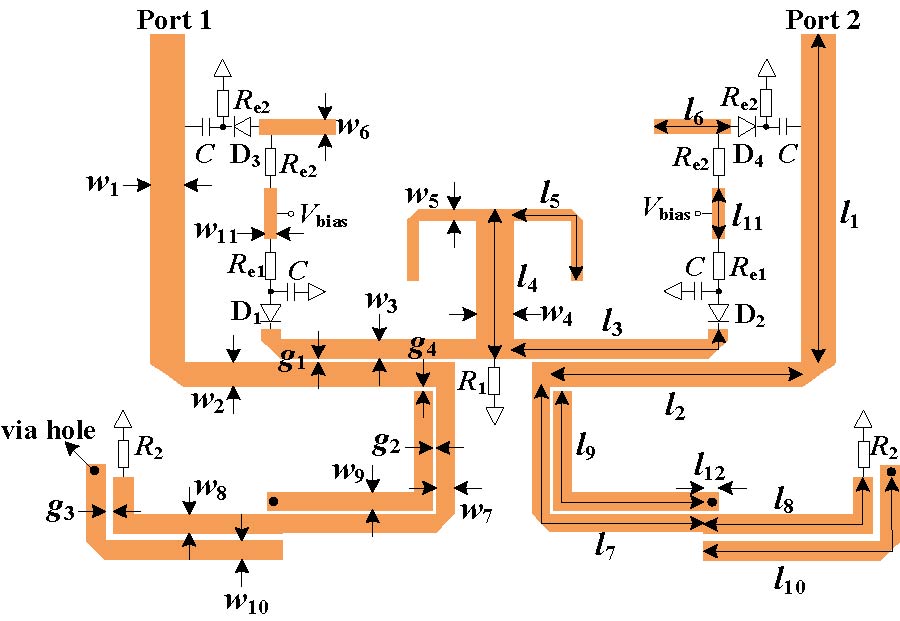
This paper introduces a novel RF phase shifter design that operates at constant phase shift over operation frequency range. The proposed phase shifter utilizes the conventional reflective-type phase shifter which is inherently frequency-dependent. The introduced reflective-type phase shifter design is integrated with an adaptive control circuit that varies the required DC voltage as a function of the frequency. Thus, the phase shift will be relatively constant throughout the frequency of operation compared to the conventional frequency-dependent reflective-type phase shifter. The phase shifter is designed to operate at 90˚ and is shown to maintain that phase shift with around 15˚ compared to the conventional design where the phase shift varies by more than 60˚ at the same bandwidth. The proposed design, including the adaptive controlled circuit, is fabricated, and the measured data agree with simulations.
Varactor Loaded Phase Shifter with Frequency-adaptive Control Circuit
2024-02-12
PIER M
Vol. 123, 137-144
Screen Printed High Gain EBG-Based Wearable Textile Antenna for Wireless Medical Band Applications
Somasundaram Arulmurugan , T. R. Suresh Kumar and Zachariah Callottu Alex
A screen-printed wearable coplanar waveguide (CPW) fed semi-octagonal shaped antenna is developed on a denim textile substrate to resonate at 2.45 GHz for wireless medical body area network communications. The antenna is integrated with a circular ring-type electromagnetic bandgap structure (EBG) to mitigate performance degradation due to the high permittivity of the tissue model when it works on body conditions. The CPW antenna and EBG surfaces are fabricated using the screen-printing method, which provides good conformability, good wearable comfortability, and light weight. The proposed EBG integrated antenna has dimensions of 0.66λ × 0.66λ × 0.056λ and an impedance bandwidth of 13% (2.3-2.62 GHz) with a gain of 6.7 dB. The specific absorption rates (SARs) of the antenna are 0.309 W/kg and 0.14 W/kg for 1 g and 10 g of tissue, respectively, which are within the wearable safety limits. Thus, the fabricated prototype antenna is suitable for wearable WBAN and MBAN applications.
Screen Printed High Gain EBG-based Wearable Textile Antenna for Wireless Medical Band Applications
2024-02-10
PIER Letters
Vol. 117, 89-96
A Compact Multiband Hybrid Rectangular DRA for Wireless Applications
Lavuri Nageswara Rao , Govardhani Immadi , Madhavareddy Venkata Narayana , Ambati Navya , Aovuthu Sree Madhuri and Kolasani Rajkamal
A new tri band rectangular DRA is simulated and tested for wireless communication applications like ISM, Wi-Max, and WLAN. The dielectric resonator antenna structure is excited by a 50 Ω transmission line. The rectangular DRA with concentric square rings is designed to acquire the operation of triple-bands. The parametric analysis of the rectangular DRA has been carried on HFSS tool. The rectangular DRA exhibits triple-band characteristics at 2.16-2.57 GHz, 3.35-4.45 GHz, and 5.35-5.95 GHz, with a fractional bandwidth of 17.3%, 28.1%, and 10.6%, respectively. The implemented concentric square rings are imposed on FR4-substrate material to emphasize the antenna parameters and to minimize the size. The designed DRA has a compact size, good radiation properties and optimal operational bandwidth. To validate the antenna, it is fabricated, and the fabricated DRA results match well with the simulated ones. The antenna is well suitable for wireless communication applications. The fabricated rectangular DRA is measured by using MS2037C Anritsu-Combinational Analyzer.
A Compact Multiband Hybrid Rectangular DRA for Wireless Applications
2024-02-10
PIER Letters
Vol. 117, 83-88
A Compact Coplanar Waveguide Spoof Surface Plasmon Polariton with Enhanced Field Confinements
Chao Pang and Lin Li
In this article, a novel transmission line (TL) based on coplanar waveguide (CPW) spoof surface plasmon polariton (SSPP) with flipper structures is proposed to improve field confinement. An equivalent circuit (E.C) is developed to analyze the proposed SSPP. The E.C analyses reveals that the proposed unit exhibits flexibly controllable dispersion features and improved field confinements owing to the introduction of the flipper structures. Finally, the proposed SSPP TL is designed, fabricated, and tested to validate the design principles. The experiment results illustrate the theoretical analyses and validate that the proposed SSPP TL exhibits ultra-compact size occupation and enhanced field confinement.
A Compact Coplanar Waveguide Spoof Surface Plasmon Polariton with Enhanced Field Confinements
2024-02-09
PIER M
Vol. 124, 29-34
A Flexible Foldable Broadband Metamaterial Absorber Fabricated by Intaglio Printing Technology
Ye Dong , Zhangyou Yang , Siqi Zhang , Rongrong Zhu , Bin Zheng and Huan Lu
Absorbing materials can absorb incident electromagnetic waves effectively and have important research value in radar fields. However, the current absorbing materials are mostly affected by the thickness and flexibility of the dielectric substrate, and they have shortcomings such as being not thin, not flexible, not folding, and not conformal with the protection target, which is not conducive to practical application. In this paper, we propose a flexible absorbing material that can be folded freely for wearable and practical engineering applications, which is composed of a conductive carbon paste ink resistance film layer, a flexible fabric dielectric substrate and a metal backplane. When the incidence angle is less than 30°, more than 90% absorption performance can be achieved at the operating frequency of 9.5-11.5 GHz with polarization insensitive characteristics. Simulated and experimental results prove the effectiveness of the structure. Our work provides the groundwork for the commercialization of future meta-devices such as wearable invisibility cloaks, sensors, optical filters/switchers, photodetectors, and energy converters.
A Flexible Foldable Broadband Metamaterial Absorber Fabricated by Intaglio Printing Technology
2024-02-08
PIER M
Vol. 124, 19-27
Ultrawideband Polarization Conversion Metasurface with Wide Incidence Angle Suitable to Reduce RCS of Planar and Curved Surfaces
Jinrong Su , Yanliang Guo , Haipeng Dou and Xinwei Chen
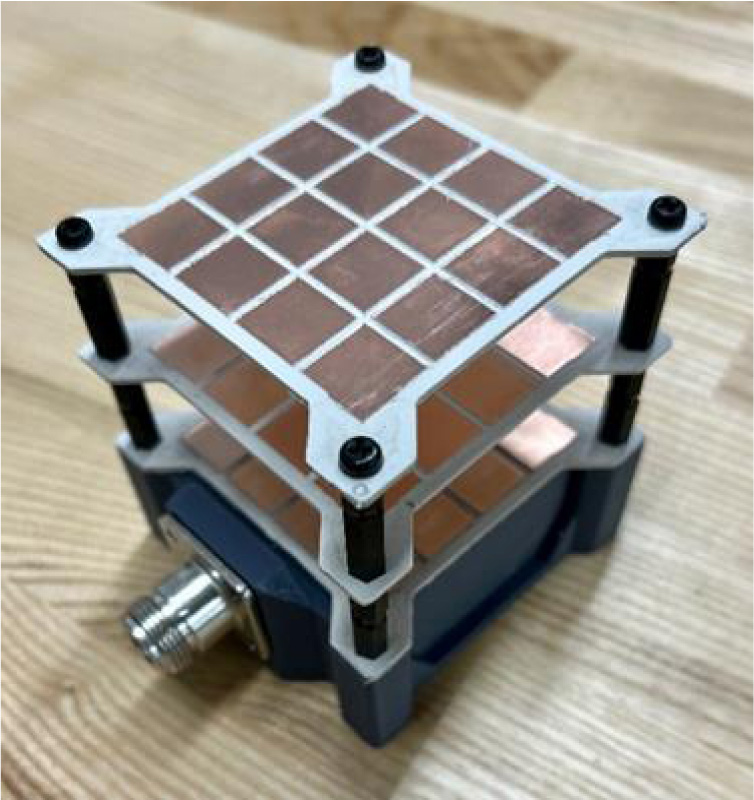
In this paper, an ultrawideband linear cross polarization converter based on metasurface (MS) with wide incidence angle is presented and applied to the reduction of radarcross section (RCS) for planar and conformal surfaces. A pair of bow-and-arrow shaped split ring cells is printed onan FR4 dielectric substrate. The simulated and experimental results indicate that the converter achieves a cross polarization conversion ratio (PCR) of over 90% in 11.5-28.5 GHz (85% relative bandwidth), and that its oblique incidence performance can be stabilized at ±40° with a very small loss of bandwidth (1.65%). Then, the polarization conversion metasurface (PCM) cells and their mirror cells are laid out in a checkerboard array and applied to reduce RCS of planar and conformal surfaces. The planar PCM achieves more than 7 dB of RCS reduction in 11.4 to 29.6 GHz (88.8% relative bandwidth), and the conformal array with a center angle of 90°obtains more than 10 dB RCS reduction in 18.2 to 23.7 GHz. Due to its excellent performances, the proposed metasurface offers promising options for polarization control devices and stealth technology in Ku- and K-bands.
Ultrawideband Polarization Conversion Metasurface with Wide Incidence Angle Suitable to Reduce RCS of Planar and Curved Surfaces
2024-02-08
PIER M
Vol. 124, 11-17
Dual Split Ring Resonator Based Reconfigurable Reflective Metasurface for Linear-to-Linear Polarization Conversion
Kinatingal Neema and Deepti Das Krishna
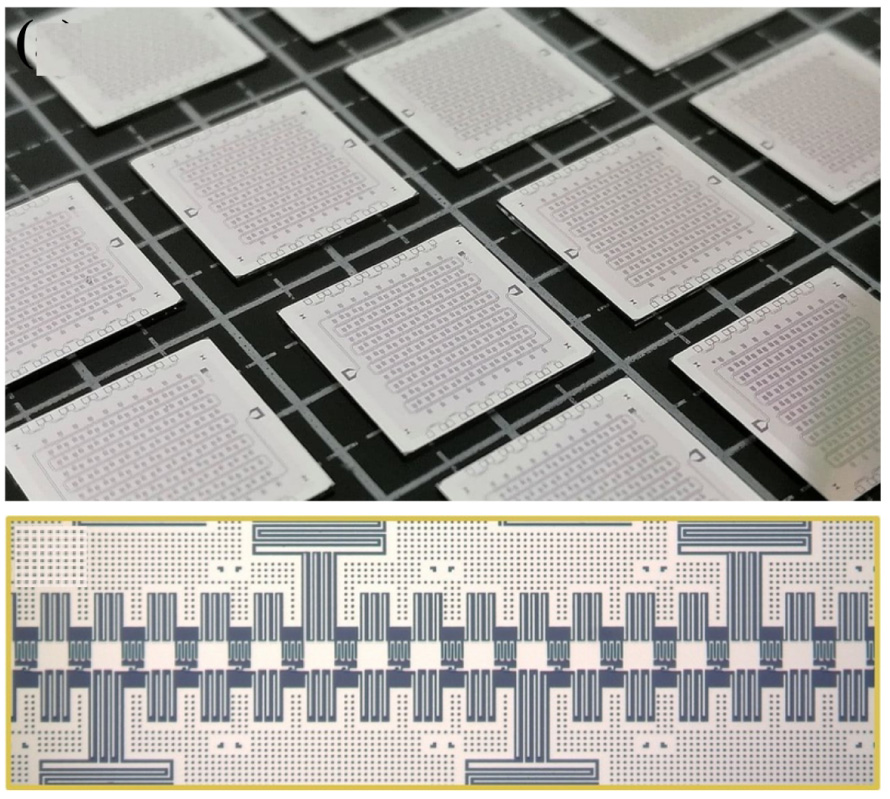
A metasurface that can be reconfigured for the conversion of linear-to-linear polarization has been designed, fabricated, and verified. It consists of dual co-centric split-ring resonators (SRRs), each of which has a pair of splits. It is specifically engineered to function in two reflection modes, one with polarization conversion and the other without. The unit cell achieves reconfiguration by utilizing two PIN diodes. Conversion of linear polarization to its perpendicular counterpart is achieved while the diodes are in OFF state. When the PIN diodes are turned on, full reflection without polarization conversion occurs. The proposed meta-surface operates over the 6.03-10.5 GHz frequency range. A 42×42 unit cell array is fabricated, and the results are experimentally verified. An FR4 substrate is used with copper ground plane on one side. The polarization conversion is measured and compared to simulation results for various incident angles. A Polarization Conversion Ratio (PCR) of ≥90% is achieved for incident angles up to 30°, with simulation and measured results showing good agreement.
Dual Split Ring Resonator Based Reconfigurable Reflective Metasurface for Linear-to-linear Polarization Conversion
2024-02-08
PIER Letters
Vol. 117, 75-81
Wideband Multi-Linear Polarization Reconfigurable Antenna for Wireless Communication System
Kaisheng Yang , Na Kou and Shixing Yu
This letter presents a wideband multi-linear polarization reconfigurable antenna, which has the ability to switch among four linear polarizations at rotation angle of 45°, namely 0°, 45°, 90° and -45°. Its main structure consists of three layers of substrates and a reflective cavity. Four pairs of crossed bow-tie dipoles are used as the primary radiators, and the polarization switching is realized by controlling the ON/OFF states of four pairs of PIN diodes between feeding source and the dipoles. In addition, circular ring and reflective cavity structures are used for enhancing the operating bandwidth, stabilizing the radiation patterns and increasing the gain. Finally, the simulation and measurement results both demonstrate that the antenna exhibits an overlapped impedance bandwidth of 42.6% (2.4 GHz-3.7 GHz) for all polarization states, and it remains a steady radiation pattern within the operating bandwidth. With these features, the design can be used in wireless communication systems in the 5G sub-6 GHz band.
Wideband Multi-linear Polarization Reconfigurable Antenna for Wireless Communication System
2024-02-08
PIER B
Vol. 105, 1-15
Circularly Polarized Double-Walled SIW Fractal Slot and Hexagonal Ring Slot Antenna Array for X-Band Satellite Applications
Mostafa Mahmoud Rabie , Mohamed S. El-Gendy , Angie Reda El Damak , Fawzy Ibrahim and Hadia El-Hennawy
This paper presents a circularly polarized double wall substrate integrated waveguide (SIW) fractal slot antenna array designed for X-band satellite applications. The proposed antenna demonstrates a reflection coefficient, covering the frequency range from 7.3 GHz to 8.5 GHz. The antenna is circularly polarized with a 3-dB axial ratio bandwidth ranging from 7.88 GHz to 8.58 GHz. The antenna array exhibits a gain variation between 11 dBi and 12.51 dBi. Moreover, the proposed design achieves an efficiency of 89%. With overall dimensions of 177 mm x 48.8 mm x 3.175 mm (4.8λ0 x 1.32λ0 x 0.086λ0), the antenna array is compact and suitable for satellites with limited surface area. This compact form factor facilitates seamless integration into satellite systems without compromising performance. The proposed antenna is suitable to be employed for the satellite X-band telemetry application extending from 7.9 GHz to 8.4 GHz. A prototype of the proposed antenna has been fabricated and then measured using Vector Network Analyzer (VNA) and Anechoic chamber. The proposed antenna's measurement results match the simulated results.
Circularly Polarized Double-walled SIW Fractal Slot and Hexagonal Ring Slot Antenna Array for X-band Satellite Applications
2024-02-07
PIER C
Vol. 141, 101-108
Co-Optimization of Long Secondary Double-Sided Linear Flux Switching Permanent Magnet Motors
Cheng Wen , Jian Cui , Mingye Li , Zhiping Wan and Yujian Chang
This study aims to achieve the co-optimization of thrust force and thrust fluctuation using a long secondary double-sided linear flux switching permanent magnet motor (LSDLFSPM). Firstly, the motor model is constructed and derived using a theoretical approach. Subsequently, the motor parameters are subjected to sensitivity analysis using the Taguchi method to identify the significant influencing factors. Based on the screening results, the Response Surface Method (RSM) is employed to construct the test space and derive regression equations for thrust force and thrust fluctuation. The Multi-Objective Grasshopper Optimization Algorithm (MOGOA) is then utilized to iteratively optimize the regression equation for optimal parameter sizes. Finally, the optimized results are validated through finite element analysis (FEA) and compared with the original motor performance to demonstrate the effectiveness of the optimization approach proposed in this paper.
Co-optimization of Long Secondary Double-sided Linear Flux Switching Permanent Magnet Motors
2024-02-07
PIER M
Vol. 124, 1-9
A Method of Reducing Coupling Between PIFAs Using Cross Slot Defected Ground Structure
Hao Zhang , Yafei Wang and Xuehua Li
To reduce the coupling between closely packed antenna elements in multiple-input multiple-output (MIMO) systems, a method is proposed to reduce the coupling between planar inverted F-shaped antennas (PIFAs) by using cross slot defected ground structure (CSDGS). This structure includes four intersecting slits etched into the ground plane. The resonant frequency of the PIFA is within the bandgap of the CSDGS, effectively suppressing surface waves and reducing the coupling between antennas. Through simulation, it is demonstrated that the proposed structure achieves more than 35 dB isolation between two antenna elements. To validate the effectiveness of the method, the circuit of the simulated structure is processed and measured using a vector network analyzer. The measured results align closely with the simulated ones, confirming the viability of the proposed method. The parameter study and correlation coefficient of CSDGS are also analyzed.
A Method of Reducing Coupling between PIFAs Using Cross Slot Defected Ground Structure
2024-02-07
PIER Letters
Vol. 117, 69-73
Unconventional Method for Antenna Array Synthesizing Based on Ascending Clustered Rings
Jafar Ramadhan Mohammed
Recently, clustered antenna arrays have been proved as an efficient method in implementing the large planar arrays for massive MIMO wireless communications in 5G and beyond applications. However, obtaining optimum clustering configurations needs a high computational time, and it does not guarantee a total clustering coverage of the whole array aperture. In this paper, a new and unconventional array pattern synthesis method based on ascending/descending clustered subarray rings is presented. The method is equally applicable to the rectangular and circular planar arrays where they are first divided into multiple square or circular clustered rings starting from the largest ring at the array perimeter up to the last ring (the smallest one) at the array center. Then the amplitude distributions of these clustered rings are optimized to obtain the desired radiation characteristics subject to the user-defined constraint mask. Implementation of the proposed array at the clustered level instead of the conventional element level offers many advantages such as simplified feeding network, efficient taper efficiency, low sidelobe level, and high directivity. Simulation results show the effectiveness of the proposed method for both square and circular planar array layouts.
Unconventional Method for Antenna Array Synthesizing Based on Ascending Clustered Rings