Search Results(13786)

2024-02-06
PIER M
Vol. 123, 145-151
An Array of Double-Cornu Spiral Antenna
Paul Tcheg , Matthias Möck and David Pouhè
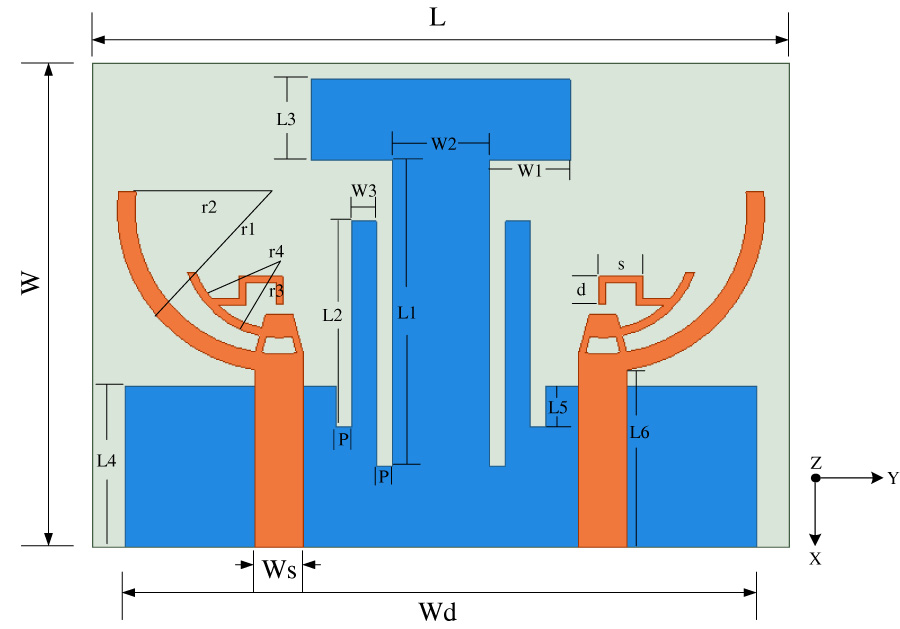
Based on a framework recently published, the double-Cornu spiral antenna is extended to an array to enhance the gain. The designed array of 2×2-elements is of low profile and small sizes, has however a large effective bandwidth, and shows overall good radiation characteristics: enhanced gain, large axial ratio bandwidth, and high degree of polarization purity. Except for a few deviations, which are due to manufacturing tolerances, artificial noise and measurement uncertainties on the one hand and diffracted waves at external edges on the other, simulated results and experimental data fit well together. In addition, EMC along with signal integrity issues related to the reduction of noise and unwanted radiation have been addressed. The proposed antenna is suitable for 5G applications and radar systems. With 14.02 dB realized gain, 6.2 GHz effective bandwidth and an uplink data rate of 3.44 Mbit/s, the array is promising for many mobility applications.
An Array of Double-Cornu Spiral Antenna
2024-02-05
PIER
Vol. 179, 19-36
Fast Calculations of Vector Electromagnetics in 3D Periodic Structures Based on Multiple Scattering Theory and Broadband Green's Function
Leung Tsang , Tien-Hao Liao , Shurun Tan , Xiaolan Xu , Xuyang Bai and Rouxing Gao
We have developed a fast method of using Multiple Scattering Theory-Broadband Green's Function (MST-BBGF) for band field calculations. In this paper, we successfully extended the method to the vector electromagnetic case of 3D periodic structures. In the MST-BBGF approach, the broadband transformation to vector spherical waves for 3D is derived using the Broadband Green's function. The band eigenvalue problem is expressed in terms of the single scatterer T matrix which is independent of the periodic lattice nor the Bloch vector. For the first five bands, the dimension of the KKR eigen equation is merely 6, as 6 vector spherical waves are utilized for the scattered waves. We make extensive comparisons of the results with the commercial software COMSOL in both accuracy and computation efficiency. The CPU requirementon a standard laptop for the MST-BBGF method is merely 0.309 seconds for the first 5 bands. The MST-BBGF method is accurate and is at least two orders of magnitude faster than commercial software COMSOL. In the band field calculations, we employ the approach of extended coefficient to use the low order eigenvector of 6 to extend to 240 vector spherical wave coefficients without the need of re-calculating the eigenvalue nor the eigenvector of the KKR equation. The extended coefficients approach gives accurate band field solutions for the entire (0,0,0) cell.
Fast Calculations of Vector Electromagnetics in 3D Periodic Structures Based on Multiple Scattering Theory and Broadband Green's Function
2024-02-05
PIER
Vol. 179, 1-18
Information-Theoretic Measures for Reconfigurable Metasurface-Enabled Direct Digital Modulation Systems: an Electromagnetic Perspective
Xuyang Bai , Shurun Tan , Said Mikki , Erping Li and Tie-Jun Cui
The fusion of electromagnetic (EM) waves and information theory in wireless and waveguide communication technologies has enjoyed a remarkable revival during the last few years. In particular, unlike traditional transceiver systems, the recently proposed information metasurface system directly links the controllable binary array sources with the scattered EM waves, making the combination of EM and information theories highly desirable and natural. Moreover, a traditional linear channel matrix cannot be directly used for such scattering reconfigurability enabled communication system, making the information characterization of such system a great challenge. In this paper, EM information characteristics of a direct digital modulation (DDM) system enabled by programmable information metasurface, also known as reconfigurable intelligent surface (RIS), are analyzed, in which RIS is used as a modulator of the illuminating field, while the scattered far-field amplitudes are measured and effectively treated as the received quantities. The posterior probability for a specific source coding pattern, conditioned over a given measured scattering fields, is obtained through the Bayesian analysis technique, from which the average mutual information (AMI) is obtained to estimate the RIS observation capability along any particular direction. The averaged receiver mutual information (ARMI) is then introduced to characterize the generated field correlation structures along different observation directions. Based on ARMI, the joint observation capability is also analyzed. Furthermore, the suggested techniques are employed in a noisy environment, and a code selection scheme is put forth to achieve efficient information transmission. The proposed configuration is validated through a simulated experiment. As a comprehensive evaluation of the system's performance, the channel capacity of the system is derived, and a set of relevant influencing factors are identified and analyzed from four different perspectives: 1) the observation direction, 2) the size of RIS, 3) potential joint observations in multiple directions, and 4) the noise level. The proposed method, together with the various related performance measure metrics introduced therein, are expected to provide the research community with guidelines for analyzing and designing the current and future RIS-based communication systems, which can also be extended to other aspects in the growing field of the EM information theory.
Information-theoretic Measures for Reconfigurable Metasurface-enabled Direct Digital Modulation Systems: An Electromagnetic Perspective
2024-02-05
PIER C
Vol. 141, 89-100
A Novel Approach Utilizing Graphene-Based Microfluidic Technology for Skin Cancer Detection
Marwa Rezeg , Aymen Hlali , Afef Oueslati and Hassen Zairi
The introduction of microfluidics technology with graphene provides many advantages, such as improving the selectivity and sensitivity, achieving chemical and thermal stability, decreasing the size of devices, and impoving the cell and The biological response of the substance. The principal objective of this paper is to compare the constitutive parameters in order to develop graphene-based microfluidic sensors. The simulation results illustrate that the suggested sensor exhibits a strong ability in detecting normal skin tissue with an exellent sensitivity of 6.060 (THz/RIU) and to identify skin cancer with a notably significant sensitivity of 4.59 THz/RIU. Additionally, it shows considerable figure of merits, with values of 550.9 and 353.61 RIU, respectively. In conclusion, the simplicity, effectiveness, and adjustability of the proposed biosensor render it well-suited for breast tumor detection.
A Novel Approach Utilizing Graphene-based Microfluidic Technology for Skin Cancer Detection
2024-02-05
PIER C
Vol. 141, 67-78
Impact of Laser Cutting on Iron Loss in High Speed Machines
Shruti Singh , Andrea Credo , Ilya Petrov , Juha Pyrhönen and Pia Marjatta Lindh
In electrical machines, most of the iron loss estimation in finite element modeling is based on Bertotti coefficients obtained from the corresponding data sheet. However, often a more exact estimation of coefficients for the laminated steel material is needed. Especially in the case of high speed machines (where iron loss has the highest contribution to the total loss), it is very difficult to estimate the iron loss variation as a result of laser cutting when just using data sheet information as input data in finite element analysis. Laser cutting impacts also the magnetic properties, in terms of magnetization curves at different frequencies, not only the core losses. In this paper, three different core materials of the same lamination steel are prepared to realize the estimation of the Berttotti loss coefficient when the material is subjected to high frequency and under the stress of laser cutting. Experimental analysis is performed to obtain more precise values of Bertotti coefficients at a high frequency range so that they can be utilized in iron loss estimation in a high speed machine (100 krpm maximum speed-1667 Hz) which is further shown as an application. Finally, it is shown how frequency domain iron loss results can be utilized for the time stepping iron loss analysis.
Impact of Laser Cutting on Iron Loss in High Speed Machines
2024-02-04
PIER C
Vol. 141, 79-87
Synthesis and Characterization of Polymer (PDMS-FE3O4) Magneto-Dielectric Material Based on Complementary Double Split RingResonator
Fatin Hamimah Ikhsan , Yee See Khee , Samsul Haimi Dahlan , Fahmiruddin Esa and Vahid Nayyeri
In this paper, a comparison microwave method between Transmission and Reflection using a Coaxial Cable and complimentary double split ring resonator (CDSRR) for characterization of magneto-dielectric material is proposed. This method enables the determination of both relative permittivity and permeability of magneto-dielectric material. The CDSRR resonates at 3.46 GHz with a quality factor of 127 in unloaded condition. To determine the effects of permittivity and permeability on the shift of resonant frequency, the electric and magnetic fields are localized in two separate zones in the CDSRR sensor. Prediction formulas are proposed to extract the value of real permittivity and permeability from S21 parameter. For Transmission/Reflection Method, to extract the dielectric and magnetic properties, Nicolson-Ross-Weir (NRW) are used. The prototypes of proposed sensors are fabricated on a ROGERS 3003 and tested for validation of their functionality. A good agreement between the measured data using Transmission/Reflection Method and CDSRR sensor is observed.
Synthesis and Characterization of Polymer (PDMS-Fe<sub>3</sub>O<sub>4</sub>) Magneto-dielectric Material Based on Complementary Double Split Ring
Resonator
2024-02-04
PIER Letters
Vol. 117, 61-67
A Triband Slot Antenna Loaded with Asymmetric Split Ring Resonator for Wireless Applications
Vinaya Kumar Sugganapalya Rajanna , Thimmegowda Venkatesh , Puneeth Kumar Tharehalli Rajanna and Mudukavvanavar Shambulinga
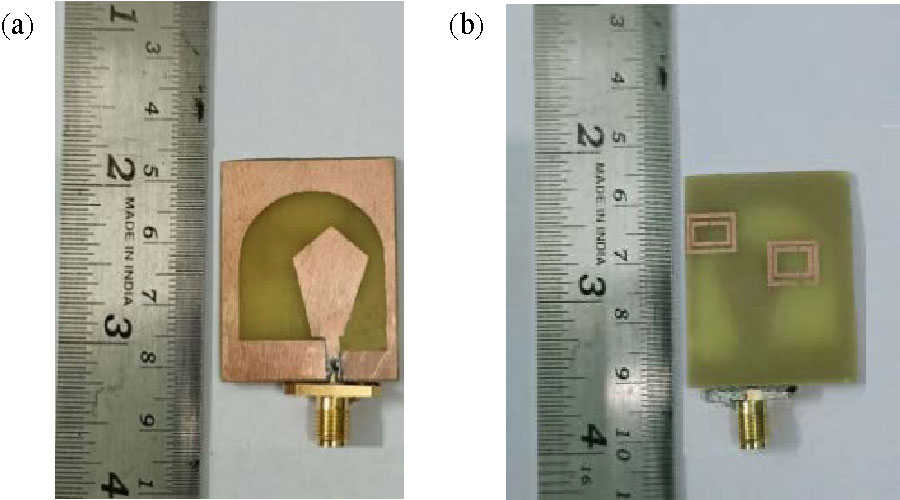
For applications involving triple bands, a small slot structure loaded with an asymmetric split ring resonator (ASRR) is suggested in this article. The slot mode, which is agitated with the help of a microstrip line feed, produces the first band. 2.24 GHz resonance frequency is the intended operating band. The sand third frequency bands are achieved by loading ASRR on the slot. The slot produces axial magnetic field required to excite the ASRR. The asymmetry introduced in the conventional SRR produces dual resonances. The ASRR gives the resonant frequencies at 2.97 GHz and 3.66 GHz. The frequency bands of the slot and ASRR can be independently tuned. The proposed geometry is verified experimentally, and it is in good agreement with the simulated one. The impedance bandwidth of all three resonant bands measured from experiment are 14.25%, 1.78%, 8.37%. The peak gains of 3.1 dBi, 2.18 dBi, and 3.29 dBi are obtained at resonant points, respectively. The designed antenna is compact and well suits for wireless application like WLAN, GPS, and LTE48/TD3600.
A Triband Slot Antenna Loaded with Asymmetric Split Ring Resonator for Wireless Applications
2024-02-03
PIER C
Vol. 141, 41-52
Study on Anti-Offset Performance of Dynamic Wireless Charging System with Reverse Series Double-Layer Symmetrical Coil for Electric Vehicles
Xiangfei Li , Xin Zhou , Shentao Zou , Yu Cheng , Xiaohua Shu , Xinbo Xiong , Ziyue Gan and Zhongqi Li
In dynamic wireless charging systems for electric vehicles (EVs), the coupling mechanism is difficult to align, which leads to high output voltage fluctuations and low transmission efficiency of the system. A reverse series double-layer symmetrical coil (RSDSC) structure with magnetic core is proposed. First, the mutual inductance characteristics of this structure are analyzed based on its coupling structure. Secondly, a mutual inductance optimization method is proposed to obtain the optimal values of each parameter of the coil and the optimal values of the magnetic core parameters. Finally, a wireless power transfer system is built based on the obtained coil and magnetic core parameters, and the correctness of the structure is verified through simulation and experimentation. The results show that the maximum mutual inductance fluctuation of the structure of RSDSC with magnetic core is only 4.88%, and the efficiency is up to 97.86% when the receiving coil is offset within 50% (20.8 cm) of the outer length of the transmitting coil.
Study on Anti-offset Performance of Dynamic Wireless Charging System with Reverse Series Double-layer Symmetrical Coil for Electric Vehicles
2024-02-02
PIER C
Vol. 141, 53-65
Design and Analysis of Quad Dumbbell Shaped Directive UWB Antenna for Microwave Tumour Detection Integrated with Meander Strip Resonators
Asheesh Gupta and Madan Lal Meena
A novel design of a dumbbell shape quad elliptical slotted (DSQES) antenna for directive ultra-wideband (UWB) integrated with WCDMA, WLAN, and mid-band of 5G applications is presented. Initially, a circular patch is designed by inserting four elliptical slots in radiator with a rectangular slotted ground plane. To realize ultra-wide impedance bandwidth, three symmetrical stepped rectangular slots are inserted in ground below a stepped-quarter-wave transformer feed line. The proposed antenna achieves fractional bandwidth (FBW) of 104% (S11 < -10 dB) which covers UWB frequency range of 5.4-17.3 GHz at resonant frequencies 5.8/7.4/10.3/12/15.7 GHz. Further, a ground structure is customized by loading two asymmetrical meander strip resonators (MSRs), which provides extra lower frequency bands 2.1 GHz (1.96-2.21 GHz) and 3.5 GHz (3.22-4.07 GHz) for WCDMA, WLAN, and 5G mid-band applications, respectively. Furthermore, the measured gain and half-power-beam-width (HPBW) are 1.7-6.4 dBi and 75°-20° in 5.4-17.3 GHz UWB, respectively. The optimized dimension of proposed antenna is 30×30 mm2 which is simulated on Computer Simulation Technology (CST) electromagnetic simulator using an FR-4 substrate of thickness 1.6 mm and dielectric constant 4.3. The simulated structure is computed by ADS simulator, and simulated results are validated with measured ones.
Design and Analysis of Quad Dumbbell Shaped Directive UWB Antenna for Microwave Tumour Detection Integrated with Meander Strip Resonators
2024-02-02
PIER M
Vol. 123, 127-135
Dual-Band and Dual-Sense Circularly Polarized Dielectric Resonator Antenna with Filtering Response
Chuanyun Wang , Weikang Hu , Xiaofeng Jiang , Qilei Fan and Jianjun Huang
A dual-band dual-sense (DBDS) circularly polarized (CP) filtering dielectric resonator antenna (FDRA) with a quasi-elliptic band-pass response is proposed in this paper. The proposed antenna consists of a rectangular dielectric resonator (DR) with a Z-shaped strip at the top, a ground plane with a rectangular slot, and a microstrip feedline etched with a section of the spur line. By using the microstrip coupled slot line structure to excite DR with a Z-shaped strip, different senses of circular polarization are achieved in the two bands. The results show that the lower and upper bands are independently controlled by the strip and the DR, respectively. In addition, three radiation nulls are generated at the passband's edge by elaborately designing a half-wavelength open stub and etching the spur line. For demonstration, a prototype DBDS CPFDRA is fabricated and measured. The measurements illustrate that the antenna achieves a wide impedance bandwidth of 38.2%, as well as a dual axial ratio (AR) bandwidth of 2.2% for the left-hand circular polarization (LHCP) and 4% for the right-hand circular polarization (RHCP). The realized gain exhibits a decline of 25 dB at the passband edge, indicating high selectivity.
Dual-band and Dual-sense Circularly Polarized Dielectric Resonator Antenna with Filtering Response
2024-02-02
PIER M
Vol. 123, 119-126
Fault-Tolerant Control of d-PMSG Demagnetization Based on Linear Active Disturbance Rejection Controller
Bing Luo , Bozhong Liu , Sicheng Peng , Zhi Yu and Yang Zhang
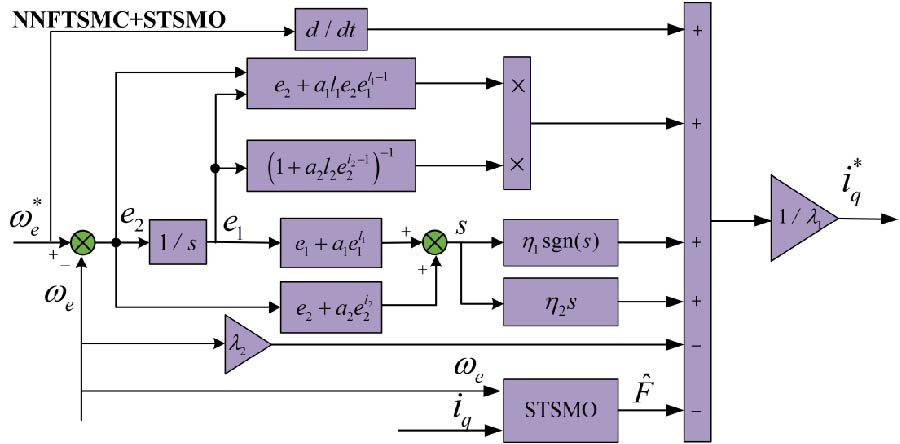
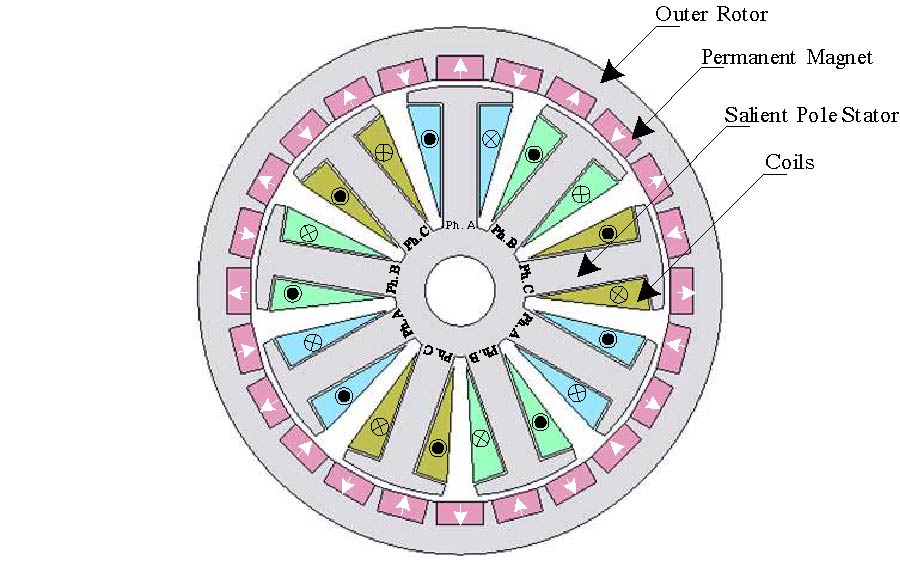
When demagnetization occurs, direct-drive permanent magnet synchronous wind generator exhibits problems of poor dynamic performance, weak immunity to disturbances and speed fluctuations. Aiming at these problems, this paper proposes a cascaded linear active disturbance rejection control method. First, the mathematical models of the generator during normal operation and demagnetization are described. Second, the linear active disturbance rejection controller (LADRC) for the speed and current loops is designed. The compensation for demagnetization disturbances at the speed loop's input is enabled by the control approach. The current output of the speed loop is imported as a rated value into the LADRC of the current loop. At the same time, the current is compensated at the input. Compensated speed and current accurately track the given values, and the goal of achieving demagnetization fault tolerance is met. Finally, this method is compared with dual-loop Proportional Integral (PI) control. The experimental results affirm that, under this control method, when demagnetization occurs, the speed fluctuation is reduced by 95.7%, the current response time decreased from 0.01 seconds to 0.001 seconds, and the electromagnetic torque ripple amplitude reduced by 50%. These experimental results fully validate the heightened fault tolerance and resistance to interference exhibited by the method advocated in this paper.
Fault-tolerant Control of D-PMSG Demagnetization Based on Linear Active Disturbance Rejection Controller
2024-02-01
PIER C
Vol. 141, 33-40
A Compact Sierpinski Gasket Fractal Antenna for S, C, X, and Ku Band Applications
Ezhumalai Aravindraj , Ganesan Nagarajan and Palaniappan Ramanathan
A Sierpinski Gasket Fractal Structure embedded in an Octagonal Microstrip Printed Monopole Antenna is proposed. The prototype is mathematically developed in a miniaturized cross-sectional area with ultra-wide resonance. A fractal design resembling a third-order Sierpinski gasket is applied to the octagonal radiator in a mutually proportional manner, increases the radiation across the entire surface area by extending the effective length of the dielectric. Additionally, the partial ground alters the resonant modes of TM11 and TM21 to a second-order iterative response via two contactless slots. Also, the driven radiator exhibits Fractional Bandwidth (FBW) of 156% spanning at 2.65 GHz-21.6 GHz, along with a peak gain 6.23 dB. The fabricated prototype demonstrates excellent agreement during testing and measurement using a microwave analyzer and an anechoic chamber, respectively. The proposed antenna covers resonance for applications at the S, C, X, and Ku bands. Also, it completely envelopes the Ultra-Wideband (UWB) and Sub-6 GHz 5G spectrum.
A Compact Sierpinski Gasket Fractal Antenna for S, C, X, and Ku Band Applications
2024-02-01
PIER M
Vol. 123, 105-117
Calculation and Optimization of Magnetic Leakage in Electric Vehicle WPT Based on Bidirectional Inverse Series Coils of Four Meshes
Xueyi Zhang , Bin Li , Liquan Ren , Pengsheng Kong and Zhongqi Li
In the wireless power transfer (WPT) system of electric vehicles, the system leakage magnetic field and transmission efficiency depend on the coil structure, and the traditional unipolar coil has high transmission efficiency but generates high leakage magnetic field. In order to maintain the transmission efficiency while reducing the magnetic leakage and improve the safety index of the WPT system, this paper proposes a bidirectional inverse series coil of four meshes structure (FBISC), which maintains the high transmission efficiency of the WPT system only by the advantages of the coil structure without applying any metal materials and shielding coils. At the same time, the leakage field produced by the coil structure of the target area is less than the safety limit value, which makes the traditional shielding coils no longer necessary, and is light, clean, and highly efficient. First, the leakage magnetic field generated by the coil in the target region after energization is analytically calculated using a vector potential-based method for calculating the magnetic induction strength of rectangular coils. Secondly, a coil parameter assignment optimization method that weighs two structural performance indexes, namely, transmission efficiency and leakage magnetic field, is given to obtain the coil parameters that satisfy the given conditions. Furthermore, the proposed coil structure is compared with the conventional coil structure. Compared with the conventional unipolar coil, the bidirectional inverse series coil of four meshes reduces the leakage magnetic field by 56.4% and sacrifices only 2.38% of the transmission efficiency. Compared with the reverse double D coil (DD coil), the bidirectional inverse series coils of four meshes reduces the leakage magnetic field in the target region by 48.5% and sacrifices only 1.3% of the transmission efficiency. Finally, an electric vehicle WPT system with shielding is built to verify the correctness of the proposed structure. The results show that the leakage magnetic field of the FBISC coil structure in the target region is only 5.22 μT, and the transmission efficiency is more than 95% at an output power of 4 kW.
Calculation and Optimization of Magnetic Leakage in Electric Vehicle WPT Based on Bidirectional Inverse Series Coils of Four Meshes
2024-01-31
PIER M
Vol. 123, 95-103
Compact Broadband Low-Pass Filter with Novel Fishbone Structure Based on Spoof Surface Plasmon Polariton
Haodong Xu , Fushun Nian , Jianqin Deng and Muzhi Gao
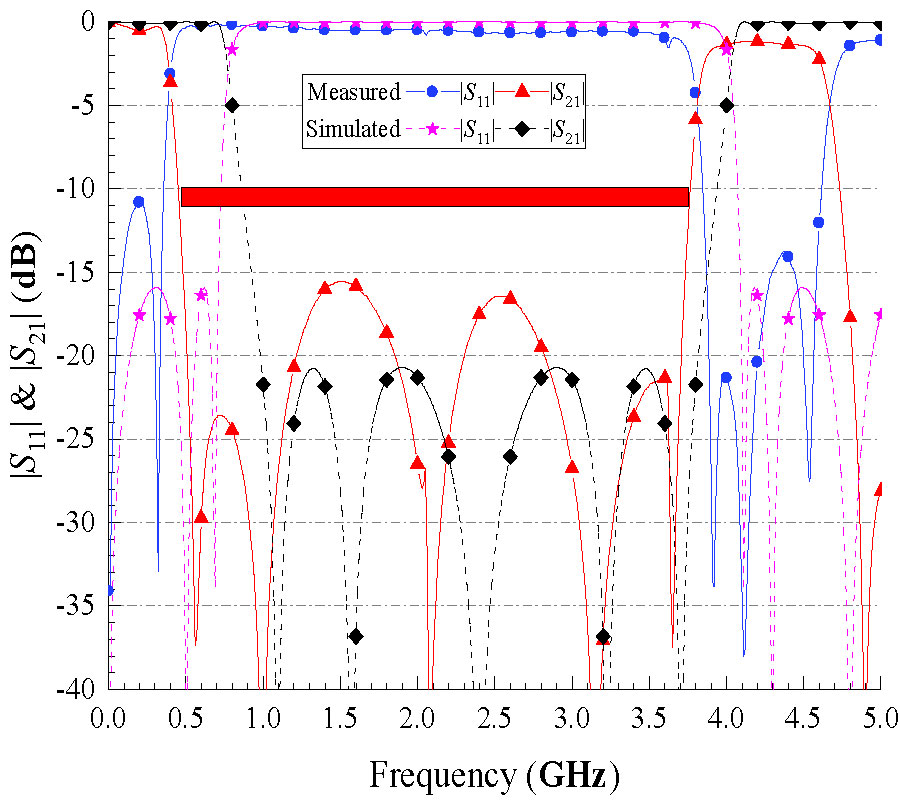
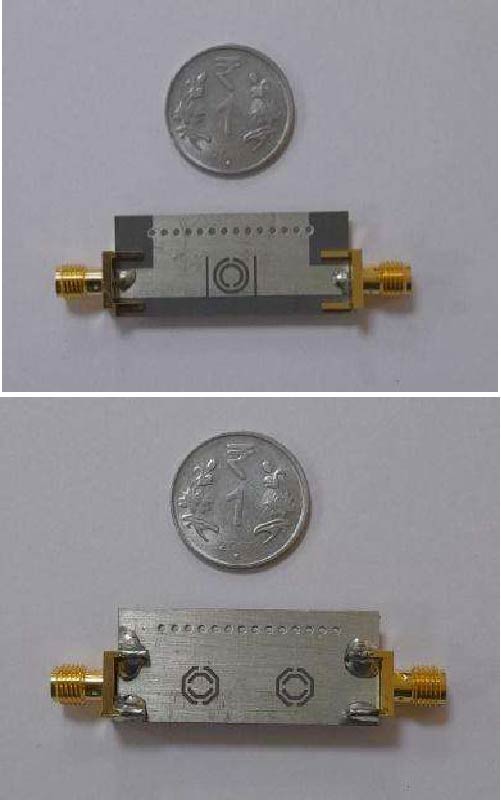
A compact spoof surface plasmon polariton (SSPP) low-pass filter is proposed. By adopting a novel fishbone structure, the effective depth of the groove is increased, reducing the filter width by 24.84%. The length of the filter is reduced by 22.23% with a new transmission structure. To intuitively display this structure, the filter is designed and fabricated. The area of the filter is 47.44 mm × 8 mm. The results demonstrate that the insertion and return losses are less than 3 dB and greater than 13 dB, respectively, in a wideband range of 0-10.00 GHz.
Compact Broadband Low-pass Filter with Novel Fishbone Structure Based on Spoof Surface Plasmon Polariton
2024-01-31
PIER Letters
Vol. 117, 55-59
Curvature-Based Feature Representation for Ship Detection in SAR Image
Zhenyu Chen and Meng Yang
This article aims to exploit Ricci tensor with certain geometric properties which are used for feature representation and ship detection in synthetic aperture radar (SAR) image. The proposed method is composed of the following key points. Firstly, Riemannian metrics on the Gamma manifold are constructed based on the family of Gamma density functions. Secondly, direct calculation gives the Ricci tensor of Gamma manifold, where the curvature tensor resorts to the torsion-free affine connection. Thirdly, a general scheme for Zermelo navigation problem on the Riemannian manifold is addressed, and the solution of the navigation problem is proposed. Fourthly, feature representation problems are formulated as certain forms of Finsler metric of Randers type, indicating a joint framework for extracting low-dimensional features with closed-form solutions. Comprehensive experiments on real SAR image data sets demonstrate the effectiveness of the proposed method against compared state-of-the-art detection approaches.
Curvature-based Feature Representation for Ship Detection in SAR Image
2024-01-30
PIER C
Vol. 141, 25-32
A Low-Profile UHF RFID Tag Antenna Loaded with Rectangular Loop for Double-Sided Anti-Metal Applications
Jinhao Wang and Jiade Yuan
A low-profile ultra-high frequency (UHF) radio frequency identification (RFID) tag antenna for double-sided anti-metal applications is proposed. The antenna comprises a middle layer of radiation patch, which is sandwiched between two layers of foam substrates, each with a thickness of 0.5 mm, and flanked by two layers of ground plane. A rectangular loop is designed on the radiation patch to expand the frequency band and optimize impedance matching. Particularly, one side of the radiation patch is shorted to the ground through a slotted stub to reduce the antenna size. The tag antenna is compact with a dimension of 38 mm × 20 mm × 1.15 mm (0.1159λ × 0.061λ × 0.0035λ at 915 MHz). When the two ground planes are individually mounted on metallic objects, the read distances are 5.4 m and 5.2 m, respectively. The proposed tag antenna demonstrates double-sided metal resistance, making it highly suitable for use in the industrial internet of things field.
A Low-profile UHF RFID Tag Antenna Loaded with Rectangular Loop for Double-sided Anti-metal Applications
2024-01-30
PIER Letters
Vol. 117, 47-54
A Broadband SIW Cavity-Backed Circular Arc-Shaped Slot Antenna for Millimeter-Wave Applications
Mingming Gao , Chunli Liu , Jingchang Nan and Hongliang Niu
A broadband circular arc-shaped slot antenna is proposed in this paper which operates from 25.1 GHz to 31.5 GHz. The antenna is based on a substrate-integrated waveguide (SIW) and fed through a grounded coplanar waveguide (GCPW). A circular arc-shaped slot is presented instead of a conventional narrow rectangular slot to extend bandwidth performance. The slot antenna generates six closely resonant frequencies by exciting high-order modes, which help get a broadband response. Antenna's prototype is fabricated using the standard Printed Circuit Board (PCB) process. The results of its measurement show that the antenna achieves an impedance bandwidth of 22.6% at 28 GHz and a peak gain of 11.5 dBi. The efficiency in the operating bandwidth is more than 85%. The antenna shows the merits of low-profile, high-gain, and broadband characteristics, which are very suitable for mm-wave wireless communication systems.
A Broadband SIW Cavity-backed Circular Arc-shaped Slot Antenna for Millimeter-wave Applications
2024-01-29
PIER C
Vol. 141, 13-23
RIS-Assisted Wireless Channel Characteristic in Coal Mine Tunnel Based on 6G Mobile Communication System
Shuqi Wang and Wei Zhang
In the context of 6G communication technology, Reconfigurable Intelligent Surfaces (RIS) can effectively reconfigure signal propagation paths through the adjustment of their passive metamaterial reflector units. This capability mitigates the issue of radio wave attenuation in the complex environments of mine tunnels by optimizing signal paths, thereby reducing energy loss and minimizing coverage dead zones. By utilizing RIS-assisted multi-antenna terrestrial mobile communication channels and ray tracing techniques, researchers have established a wireless channel fading model specifically for rectangular coal mine tunnels. The results suggest that under comparable conditions, RIS technology enhances low-frequency signals (e.g., 2.4 GHz) more effectively than high-frequency signals (e.g., 30 GHz). Furthermore, these improvements are more pronounced as the size of the RIS increases.
RIS-assisted Wireless Channel Characteristic in Coal Mine Tunnel Based on 6G Mobile Communication System
2024-01-29
PIER C
Vol. 141, 1-11
Characteristic Mode Analysis for Microstrip Fed Conformal Metasurface Multiband Antenna
Kothakonda Durga Bhavani , Boddapati Taraka Phani Madhav , Usha Devi Yalavarthi , Yarlagadda Ramakrishna and Mudunuri Padmanabha Raju
In this study, an optimal multi-band microstrip fed metasurface antenna is designed. Three by three non-uniform circular radiating cross slotted elements make up the antenna's metasurface. The metasurface is analyzed using characteristic mode analysis (CMA), and the Modal Significance (MS), Characteristic angle (CA), and Eigen Value (EV) curves are utilized to optimize the antenna's performance. In addition, surface currents are examined for the metasurface and patch using CMA, and the design incorporates microstrip feeding to excite the targeted frequency bands. With its resonance frequencies of 5.4 GHz, 8.9 GHz, 12.8 GHz, 15.9 GHz, and 19.8-31.58 GHz, the developed antenna has potential uses in 5G and wireless communications. The suggested antenna achieves a gain of 10.05 on average. The prototyped model conformability analysis of the antenna is also performed, and good matching with simulation results is found.
Characteristic Mode Analysis for Microstrip Fed Conformal Metasurface Multiband Antenna
2024-01-29
PIER Letters
Vol. 117, 41-46
Compact Single Notch UWB Bandpass Filter with Metamaterial and SIW Technique
Senathipathi Udhayanan and Krishnan Shambavi
A design of compact planar SIW filter with notch band characteristics is proposed. Double split square complementary split ring resonators are used to realize the ultra-wide band (UWB) characteristics. Proposed UWB filter contributes a passband from 2.9 GHz to 10.3 GHz with minimum insertion loss 0.7 dB at 3.7 GHz and maximum of 1.84 dB at 7 GHz. By employing complementary split ring resonator in the ground plane, a narrow band characteristic is obtained to reject the undesired wireless local area network (WLAN) signals. The notch band frequency ranges from 5 GHz to 5.7 GHz with insertion loss of 14 dB at center frequency. The 3 dB fractional bandwidth in the notch band is 12.9%. The variation of group delay less than 0.5 ns in the passband range. Overall size of the proposed filter is 0.35λg × 1.06λg. Because of these salient features, the proposed filter can be used for space applications.
Compact Single Notch UWB Bandpass Filter with Metamaterial and SIW Technique