Search Results(13786)

2024-03-25
PIER M
Vol. 125, 143-151
A New Robust Adaptive Beamforming Algorithm Based on GSC
Xiaohan Guan , Yao Chen and Enchen Wang
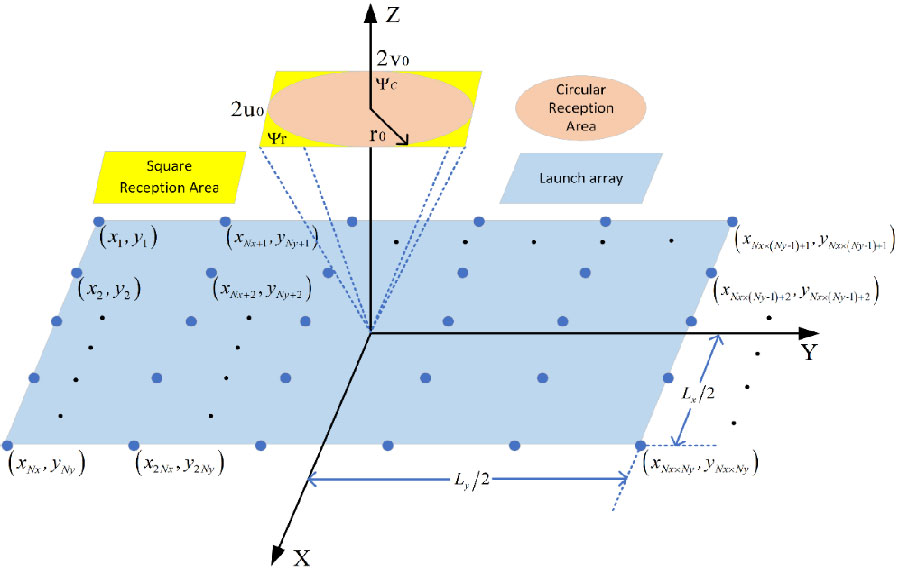
The generalized sidelobe cancellation (GSC) is a commonly used adaptive beamforming technology, which can be used in antenna arrays. Due to the error of the direction of arrival of the received signal and the spacing error of the received array elements, the signal received by the array antenna has a mismatch of steering vectors, which leads to that the GSC method cannot accurately aim at the expected signal and suppress the interference signal. In order to improve the robustness of GSC algorithm, a new adaptive beamforming algorithm named SGSC (Sequential Quadratic Programming-Generalized Side Lobe Cancellation) is proposed in this paper. In this method, firstly, the mismatching expected signal steering vector is corrected by the stepwise quadratic programming, so that the auxiliary antenna can effectively block the expected signal. Then, the optimal weight vector is obtained by combining the corrected steering vector with the GSC, so that the expected signal components of the auxiliary antenna and of the main antenna can be avoided from being cancelled due to mismatch errors. Finally, the simulation results based on MATLAB show that the new algorithm can point the desired signal more accurately and suppress the interference signal more obviously in the presence of mismatch error, which shows the effectiveness of the method.
A New Robust Adaptive Beamforming Algorithm Based on GSC
2024-03-24
PIER M
Vol. 126, 11-18
UHF-Band Solid Sensor Based on Tweaking Electric Field Coupled Resonator for Material Characterization
Syah Alam , Indra Surjati , Lydia Sari , Yuli Kurnia Ningsih , Munanda Yorias Fathanah , Yessi Kartini Gultom , Ghathfan Daffin , Teguh Firmansyah and Zahriladha Zakaria
This paper proposes a UHF-band microwave sensor for solid material detection based on a tweaking electric field coupled (ELC) resonator. The microwave sensor operates at a low resonant frequency of 0.82 GHz to characterize solid materials with a permittivity range of 1-9.8. The location of the sensing area is determined based on the surface of the resonator with the highest electric field. The permittivity of the sample is determined based on perturbation theory by observing the frequency shift relative to changes in the permittivity of the sample placed in the sensing area of the proposed sensor. From the measurement process, the proposed sensor has a normalized sensitivity (NS) of 1.49%, frequency detection resolution (FDR) of 0.012 GHz, and an average accuracy of 96.72%. This work has a significant contribution and can be recommended for several applications including the pharmaceutical, biomedical, and materials industries.
UHF-band Solid Sensor Based on Tweaking Electric Field Coupled Resonator for Material Characterization
2024-03-24
PIER M
Vol. 126, 1-10
Conformal Microstrip Antennas on the Rocket Cylinder
Anita Pascawati , Muh Fakhri , Aditya Inzani Wahdiyat , Idris Eko Putro , Sonny Dwi Harsono , Mirza Zulfikar Rahmat , Rahmat Alfi Duhri , Kandi Rahardiyanti , Herma Yudhi Irwanto , Yuyu Wahyu , Arief Rufiyanto , Budi Sulistya , Evi Nur Qomariya , Cahyaning Retno Rahayu , Rizki Fadhila Ridho and Muhammad Reza Kahar Aziz
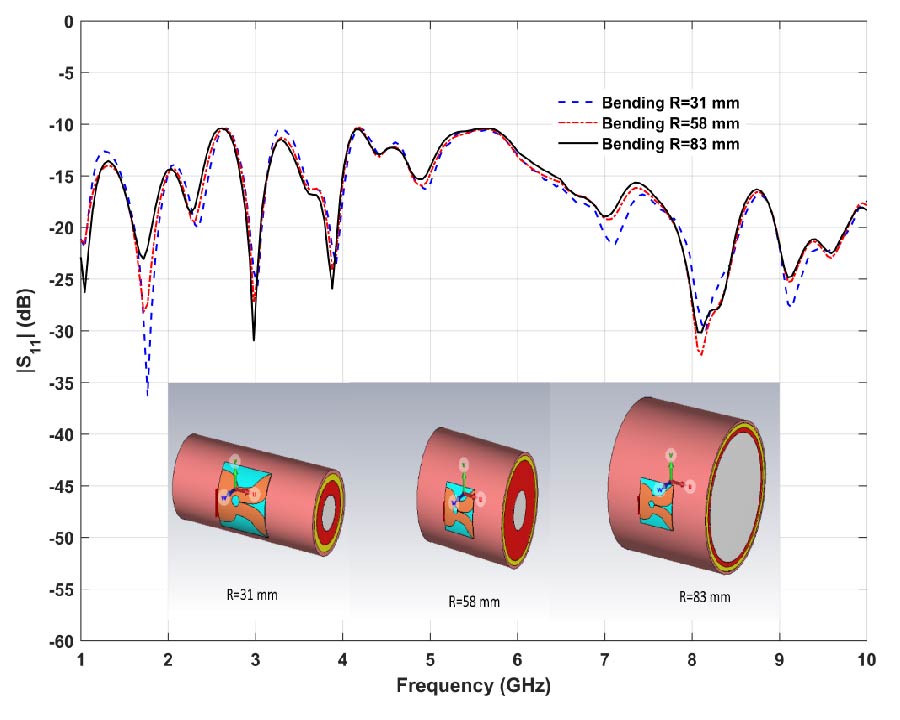
This paper presents the design of conformal microstrip antennas wrapped around on a rocket cylinder. These antennas should exhibit favorable S11-parameter values within the desired radio frequency range and an omnidirectional radiation pattern. Given their external placement on rockets, the challenge in this context is to ensure heat resistance. Two types of conformal microstrip antennas are developed to address this issue: one features an 8x1 array of rectangular patch (RP) elements, and the other consists of a single long rectangular patch (LP) element. Each antenna is wrapped around the rocket cylinder, with the patch array elements tailored to match the cylinder circumference to achieve an omnidirectional radiation pattern. Both antennas operate at a resonant frequency of 2.44 GHz and are constructed using RT/duroid 5880, a flexible material with a low dielectric constant. The antennas designs are assessed through computer simulations, followed by fabrication and measurements to analyze their performance against simulation results. The results indicate that the conformal RP antenna displays an S11 value of -24.512 dB at the center frequency of 2.445 GHz featuring a 48 MHz bandwidth, while the conformal LP antenna discloses an S11 value of -16 dB at the center frequency of 2.44 GHz having a wider bandwidth of 55 MHz. Both of the conformal RP and LP antennas exhibit an omnidirectional radiation pattern with a maximum gain of 6.13 dB and 7.21 dB, respectively. Following simulation and testing results, the antennas can tolerate temperatures up to 71.8˚C during flight tests. Although temperature variations trigger slight frequency shifts, these deviations are insignificant. Finally, the measurement results agree with the simulation ones.
Conformal Microstrip Antennas on the Rocket Cylinder
2024-03-22
PIER M
Vol. 125, 135-142
A Compact High Gain Circular Shaped Two-Port MIMO Antenna with Fractal DGS for Downlink Satellite Communication
Manjula Sanugomula and Ketavath Kumar Naik
This paper presents an innovative high gain multiple-input-multiple-output antenna featuring a compact circular shape, enhanced by strategically positioned slots, slits, and defected grounds created by etching multiple iterations of circle inserted with triangle shape. The investigation thoroughly explores the various traits and properties exhibited by the antenna. The antenna design harmoniously incorporates two radiating elements shaped in circles, positioned 16 mm apart from their centers, and has been physically constructed using an FR4 substrate. Enhancing the antenna's bandwidth and gain requires the implementation of slots with fractal patterns on the ground with a precise edge-to-edge separation of 2.5 mm. The placement of the antenna elements at a 16 mm distance guarantees an isolation level exceeding 15 dB consistently throughout the entire wideband frequency range. The dimensions of the compact MIMO antenna are tailored to be 1.12λ × 1.8λ × 0.091λ (20 × 32 × 1.62 mm3). In this study, the circular patch MIMO antenna with a fractal DGS resonates precisely at 16.903 GHz. It showcases an impressive impedance bandwidth spanning 2.027 GHz, ranging from 15.946 GHz to 17.973 GHz. It exhibits a reflection coefficient of -43.82 dB and achieves an observed gain of 6.25 dBi. The observed results include a minimal envelope correlation coefficient (<0.025) and a substantial Diversity Gain (>9.89). The measured results mirror the simulated outcomes, affirming the effectiveness of the wideband, high-gain antenna design. Its bandwidth and gain are well-suited for Satellite Communications particularly in downlink applications, enabling faster data transmission rates.
A Compact High Gain Circular Shaped Two-port MIMO Antenna with Fractal DGS for Downlink Satellite Communication
2024-03-22
PIER M
Vol. 125, 127-134
An Optimization of Subarrayed Planar Array Pattern via Fractal Structure Thinning
Ahmed Jameel Abdulqader
Dividing large planar arrays into several subarrays and then turning off some of them reduces the complexity (cost) of the system significantly. In this paper, two optimization stages for the formation of planar subarrays and the removal of some of them are proposed. The first optimization stage improves the pattern of the original planar array after dividing it into a set of rotational square and rectangular subarrays. In the second optimization stage, it works to remove some of the subarrays completely or partially, depending on new fractal structures derived from the conventional Sierpinski carpet structure. The proposed fractal-thinned planar array is based on amplitude-only excitation, i.e. the phases of the elements are set to zero. To execute the optimization steps above, a genetic algorithm (GA) is used. Some determinants are included in the optimization process to maintain the properties of the desired pattern. Simulation results showed the effectiveness of the proposed optimization method in achieving almost the same performance in both stages of optimization.
An Optimization of Subarrayed Planar Array Pattern via Fractal Structure Thinning
2024-03-22
PIER M
Vol. 125, 117-125
Noncontact Voltage Measurement System for Low-Voltage Power Line
Huafeng Su , Haojun Li , Weihao Liang , Chaolan Shen and Zheng Xu
As one of the most basic electric quantities in the power system, voltage plays an important role in many fields such as condition monitoring and fault diagnosis. The construction and development of the smart grid cannot be separated from the reform and progress of the advanced sensing and measurement technology. Noncontact voltage measurement technology, as one of the important technologies, has many advantages such as no electrical contact, low insulation requirements, easy installation, and great potential in improving the panoramic perception ability of the power system. In this paper, a noncontact measurement method of the power line voltage based on capacitive coupling principle is proposed, which realizes the reliable measurement of the line voltage waveform. First, the principle of the noncontact voltage measurement method is introduced, which mainly includes self-calibration and online measurement of the sensor. The high-frequency voltage signal is injected into the capacitive coupling network of the sensor to implement the self-calibration of the sensor. Then, the digital integration method is used to integrate the output signal of the sensor to measure the line voltage waveform. Second, the noncontact voltage sensor prototype and the signal processing circuit are designed. Finally, the test platform of the line voltage measurement is built, and the measurement test of 220 V/50 Hz line voltage waveform is carried out. The test results show the relative amplitude error of the voltage measured by the sensor is less than 2.5%, the maximum phase error less than 2° at 50 Hz, and the linearity better than 0.5%. The frequency response experiment shows that the system has almost constant gain in the frequency range of 50-1800 Hz, and the phase error reaches a maximum of 2.8° at a frequency of 1800 Hz.
Noncontact Voltage Measurement System for Low-voltage Power Line
2024-03-22
PIER Letters
Vol. 118, 93-98
High-Performance Silicon Nitride Grating-Coupled SPR Sensors for Gas Detection and Biosensing
Mounir Bouras
Surface Plasmon Resonance (SPR) serves as a crucial optical technique in the realm of chemical sensing. Under specific conditions, the reflectivity of a thin metal film exhibits an exceptional sensitivity to optical changes in the medium on one side. In this investigation, we propose and simulate a plasmonic sensor incorporating a silicon nitride grating with Ag layers for the detection of solution and gas at an optical communication wavelength of 1550 nm. In both cases of the surface diffraction-grating, there is a notable enhancement in angular sensitivity compared to conventional prism-coupled configurations. Simulations, employing rigorous coupled wave analysis (RCWA), highlight that the suggested sensor, optimized in design parameters, offers notably superior sensitivity, a lower detection limit, and a higher figure of merit (FOM) than existing grating-based SPR sensors. This implies the potential realization of refractive index sensors with a high figure of merit through such streamlined and compact configurations.
High-performance Silicon Nitride Grating-coupled SPR Sensors for Gas Detection and Biosensing
2024-03-21
PIER Letters
Vol. 118, 85-92
A Miniaturized and High-Gain Antipodal Vivaldi Antennas Using Directors
Islam M. Ibrahim , Mohamed Ismail Ahmed , Hala Mansour Abdelkader , Ahmed Jamal Abdullah Al-Gburi and Moataz. M. Elsherbini
In this paper, a miniaturized millimeter-wave (mm-wave) antipodal Vivaldi antenna (AVA) is proposed. The AVA structure is modeled using MWSCST2022 optimization tools. The AVA exhibits good impedance matching, high gain, and a small optimum size of 5x2.5x1.5 mm3, fabricated on an FR-4 substrate. An array of square and circular director units is modeled and loaded at the front and back of the AVA. The spacing between directors is studied and positioned at a tuned distance from the antenna for gain improvements and optimum radiation parameters. The AVA has an operating spectrum from 58 GHz up to 62 GHz. The finalized AVA, along with directors, obtained a high gain of 12.9 dBi with directors, while the AVA achieved 9.22 dBi without directors. The proposed antenna model is simulated and measured for short-range communications and imaging. The results of the modeling techniques and measurements agree well with each other.
A Miniaturized and High-gain Antipodal Vivaldi Antennas Using Directors
2024-03-20
PIER C
Vol. 142, 107-117
Model Predictive Control with ESO and an Improved Speed Loop for PMSM
Dingdou Wen , Wenting Zhang , Zhongjian Tang , Xu Zhang and Zhun Cheng
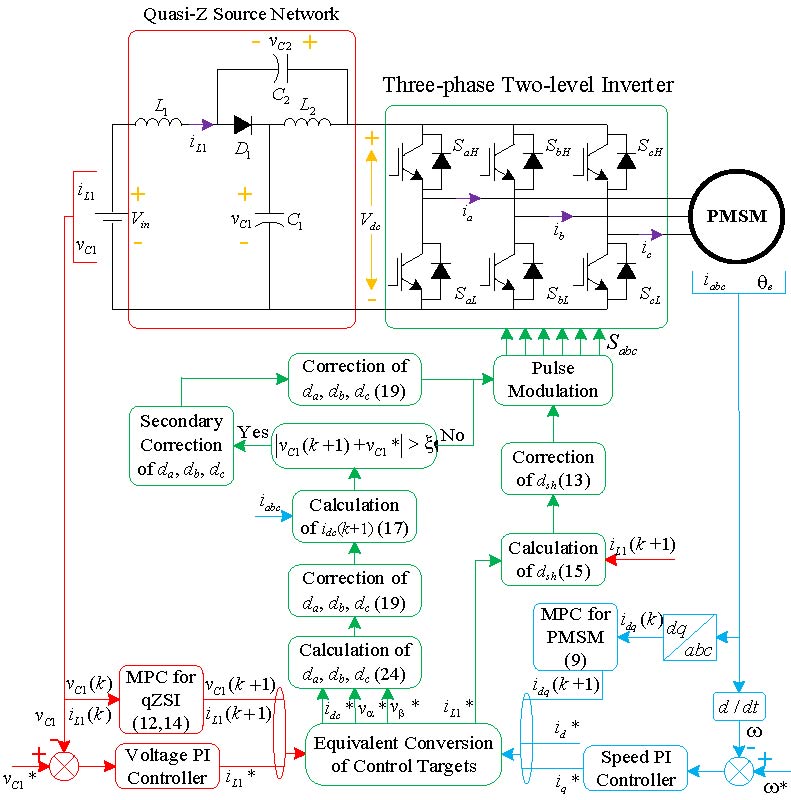
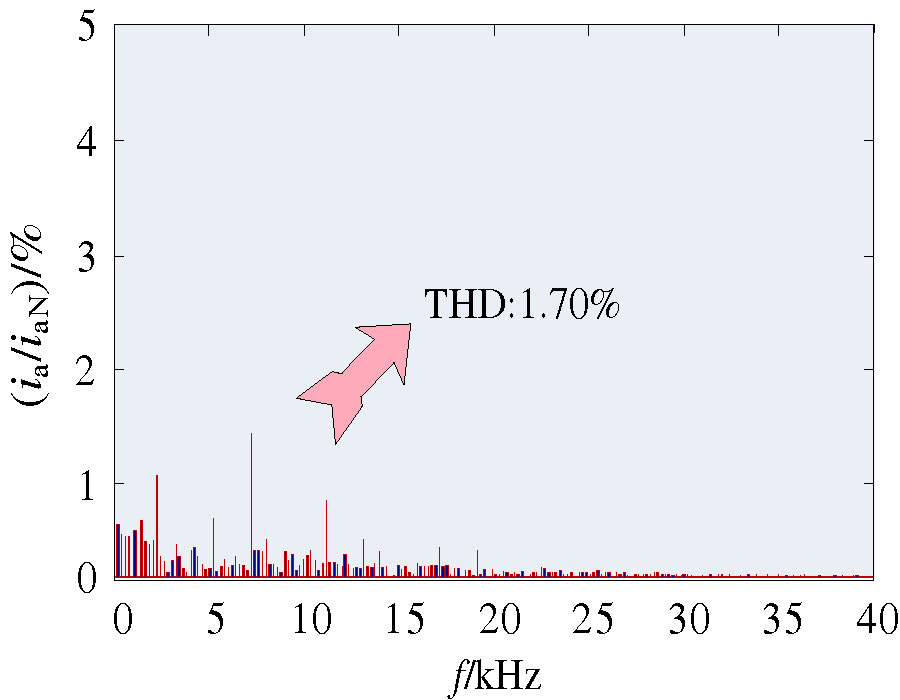
An Improved Speed Loop (ISL) and Extended State Observer (ESO) strategy based on Model Predictive Control (MPC) of the Permanent Magnet Synchronous Motor (PMSM) is proposed in this paper. Firstly, considering the impact of load torque sudden changes on speed tracking performance, a reduced-order Luenberger observer is utilized to observe the load torque and combine with model prediction to form ISL. Secondly, the ESO is utilized to estimate the lumped disturbance and feedforward compensated to the improved speed loop, which improves the system's anti-interference performance. Then, a cost function that introduces the current tracking error at the switching point is constructed, reducing the current ripple. Finally, the experiments show that compared with the traditional PI speed control, the proposed strategy reduces the speed overshoot over a wide range of speeds, improves the speed tracking performance, and has superior dynamic performance and anti-disturbance performance under different operating conditions.
Model Predictive Control with ESO and an Improved Speed Loop for PMSM
2024-03-20
PIER C
Vol. 142, 95-106
Compact Dual-Polarized Antenna with Wide Band and High Isolation Using Characteristic Mode Analysis
Zhongjie Zhan , Wen Huang , Rui Deng and Bao Li
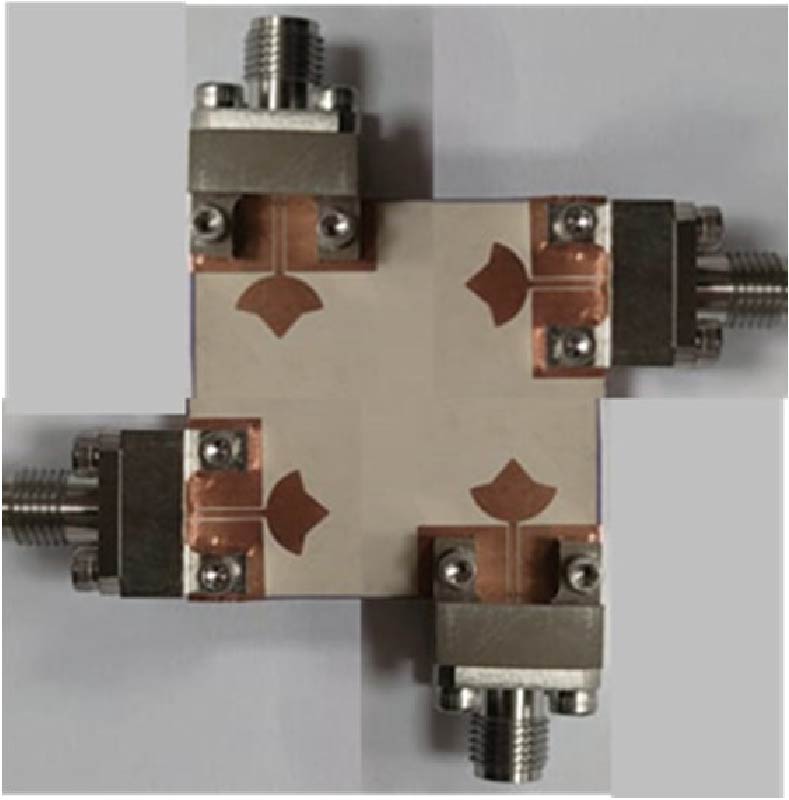
In this paper, a compact dual-polarized antenna with wide band and high isolation is proposed, which can be applied to the 5G WiFi frequency band. The antenna is composed of 2 × 2 arrayed patches and two orthogonal L-shaped probe structures with reduced middle patch width and loaded U-shaped slots. The proposed antenna achieves a compact size by eliminating the need for a complex feeding network, instead utilizing only two closely spaced L-shaped probes for feeding. The antenna's radiation modes excited by two ports are orthogonal in polarization direction, and each port can excite two linearly polarized radiation modes respectively within the operating frequency band, thereby achieving dual-linear polarization and wideband performance. The antenna is analyzed and designed using characteristic mode analysis (CMA). By reducing the patch middle width and loading U-shaped slots on the L-shaped probe of the antenna, the suppression of high-order modes, improvement of isolation, and reduction of cross-polarization levels are achieved. The size of the antenna is 0.54λ0 × 0.54λ0 × 0.068λ00 is the free-space wavelength of central frequency). The measured bandwidth is 23.5% (4.73 GHz-5.99 GHz) with |S11| < -10 dB, |S21| < -27.9 dB, boresight gain of 4.8 dBi-6.2 dBi and cross-polarization levels better than -23 dB.
Compact Dual-polarized Antenna with Wide Band and High Isolation Using Characteristic Mode Analysis
2024-03-20
PIER Letters
Vol. 118, 79-83
A Modified Sparsified Nested Dissection Ordering Preconditioner for Discrete Exterior Calculus Solver Using Vector-Scalar Potentials
Boyuan Zhang and Weng Cho Chew
A broadband preconditioner based on a modified version of the sparsified nested dissection ordering (m-spaNDO) technique is proposed for the full wave discrete exterior calculus (DEC) A-Φformulation solver in electromagnetics. The matrix equation discretized by the DEC A-Φ solver is in general complex symmetric and indefinite. When conductive media and disparate mesh are involved, the DEC A-Φ matrix equation is ill-conditioned, and proper preconditioner must be utilized to accelerate iterative solver convergence. In this letter, an introduction to the DEC A-Φ solver is provided, followed by the implementation details of the m-spaNDO preconditioner. Numerical examples in this paper show that the proposed m-spaNDO preconditioner can effectively accelerate the convergence of iterative solvers in solving ill-conditioned problems. The m-spaNDO preconditioned DEC A-Φ solver has O(N logN) computational complexity and the efficiency of the preconditioner is independent of change in parameters such as frequency and conductivity in the problem, which indicates the broadband stable nature of the m-spaNDO preconditioner.
A Modified Sparsified Nested Dissection Ordering Preconditioner for Discrete Exterior Calculus Solver Using Vector-Scalar Potentials
2024-03-19
PIER C
Vol. 142, 85-94
A Wide Adaptation Variable Step-Size Adaline Neural Network Parameter Identification IPMSM Model Predictive Control Strategy
Qianghui Xiao , Xingwang Chen , Zhun Cheng , Zhongjian Tang and Zhi Yu
Model predictive control (MPC), as a frequently adopted control strategy for permanent magnet synchronous motors (PMSMs), exhibits favorable dynamic response capabilities. However, it necessitates an accurate mathematical model of the controlled object, and any parameter mismatch can lead to a decline in control performance. This paper proposes a model predictive current control (MPCC) method based on parameter identification, which can be extended to the parameter identification of plug-in permanent magnet synchronous motors (IPMSMs). A wide-adaptability variable step-size algorithm is designed in response to the varying effects of single variable step-size functions on parameter convergence speed and ripple when the motor experiences different parameter disturbances. This method classifies and fits various variable step-size functions based on the maximum value of the absolute value of different instantaneous errors. This allows different variable step-size functions to adapt to different parameter disturbances, resulting in rapid waveform convergence and consistent ripple size in the identification process. Additionally, a new variable step-size function type was designed with simple parameter settings and easy debugging. Finally, the effectiveness of the proposed method was verified through experiments, and the results showed that the method can achieve fast and accurate identification of multiple parameters under different parameter perturbations, ensuring stable current control.
A Wide Adaptation Variable Step-size Adaline Neural Network Parameter Identification IPMSM Model Predictive Control Strategy
2024-03-18
PIER C
Vol. 142, 75-83
Optimization of Electromagnetic Thrust for Short Primary Unilateral Linear Induction Motor
Cheng Wen , Junyi Chen , Jian Cui , Zhiping Wan and Yujian Chang
In this paper, four different structures are proposed to optimize electromagnetic thrust for the primary and secondary pole linear induction motors. Firstly, the two-dimensional topology structure of the motor is established, and the correlation equation of electromagnetic thrust is established. Secondly, the electromagnetic thrust optimization of the primary structure of the motor is carried out by the chamfer method and trapezoidal structure method. Then, the secondary structure of the motor is slotted and mixed with different conductivity materials to optimize the electromagnetic thrust. At the same time, a motor model with high permeability under ideal conditions is proposed from the angle of relative permeability of secondary aluminum plate. Finally, the four optimized structures were simulated, and the changes of electromagnetic thrust, air gap density, and back electromotive force were analyzed. The simulation results fully verify the effectiveness of the four optimization structures proposed in this paper.
Optimization of Electromagnetic Thrust for Short Primary Unilateral Linear Induction Motor
2024-03-18
PIER M
Vol. 125, 107-116
Design of a Monopole Antenna for WiFi-UWB Based on Characteristic Mode Theory
Zhonggen Wang , Rui You , Ming Yang , Jinzhi Zhou and Mingqing Wang
In this paper, a WiFi-UWB multiband monopole antenna is designed, fabricated, and tested based on the characteristic mode theory, which mainly consists of an L-shaped metal, an ``ok''-shaped metal radiator, and a T-shaped metal patch. The substrate dimensions are 40×43×1.6 mm3, featuring a rectangular ground plate at the substrate's bottom. The ``ok''-shaped metal on the upper surface is composed of a metal ring and a curved finger-shaped metal. To improve impedance matching and broaden the bandwidth, strategic modifications are implemented. Specifically, a rectangular slot is introduced at the top of the L-shaped metal, and the T-shaped metal is rotated 90° counterclockwise and positioned beneath the ``ok''-shaped metal. The microstrip feed line, constructed from metal, incorporates a feed point. Simulation results indicate that the antenna effectively covers the frequency ranges of 2.30-2.50 GHz and 3.65-9.77 GHz. At the resonance point, the maximum return loss is below -40 dB, signifying superior directional radiation characteristics. The antenna design is characterized by a wide frequency band, simple structure, and holds significant practical value for multi-frequency communication.
Design of a Monopole Antenna for WiFi-UWB Based on Characteristic Mode Theory
2024-03-17
PIER M
Vol. 125, 97-105
Stack Dual-Band EBG Based Sensor for Dielectric Characterization of Liquids
Pramod P. Bhavarthe , Alam N. Shaikh and Kompella S. L. Parvathi
A tiny electromagnetic band gap (EBG) based microwave sensor with dual-band operation for dielectric characterization of Liquids is presented in this work. The suggested design uses a suspended microstrip line placed over the stack dual-band type EBG (SD-EBG) unit cell at 2.40 GHz and 2.98 GHz. To achieve the dual band characteristics, the stack type of EBG with different patch sizes and offset vias is used. To validate the sensor performance, absolute solution of butan-l-o1, methonal, and water are considered as liquid under test (LUT) and loaded in transparent polypropylene (PP) material, and the maximum sensitivity of 1.14% from the first resonance with maximum Q-factor of 137.5 from the second resonance is achieved with frequency detection resolution of 27.4 MHz. The size of proposed SD-EBG based sensor is 54.95% and 39.02% of that of planar EBG based sensor and cesaro fractals EBG based sensor.
Stack Dual-band EBG Based Sensor for Dielectric Characterization of Liquids
2024-03-16
PIER M
Vol. 125, 87-95
Multi-Band Notched Circular Polarized MIMO Antenna for Ultra-Wideband Applications
Ekta Thakur , Naveen Jaglan , Anupma Gupta and Ahmed Jamal Abdullah Al-Gburi
The paper details the development of an innovative Ultra-Wideband (UWB) Circularly Polarized (CP) Multi-Input Multi-Output (MIMO) antenna. Drawing inspiration from an Electromagnetic Band-Gap Structure, the antenna incorporates two compact electromagnetic bandgap cells strategically positioned near the feedline. The result is a sophisticated triple-band notched planar antenna configuration. To enhance its performance, a slot and a stub are strategically added to the ground plane, effectively broadening the Axial Ratio Bandwidth (ARBW). This carefully designed setup achieves a wide ARBW while simultaneously rejecting interference at 3.5, 5.5, and 8.2 GHz. Notably, the MIMO antenna demonstrates an axial ratio spanning from 3 to 10.4 GHz, coupled with an impedance bandwidth ranging from 3.1 to 10.6 GHz. Diversity features of the proposed structure are quantified through three key parameters: ECC (Envelope Correlation Coefficient) greater than 0, TARC (Total Active Reflection Coefficient) surpassing 10, and DG (Diversity Gain) exceeding 9.7. These parameters collectively indicate robust diversity characteristics, underscoring the antenna's efficacy in challenging communication scenarios. Practical implementation involves the use of FR4 dielectric substrates, with precise measurements of 42.7×55×1.6 mm3. This meticulous construction ensures the realization of the proposed structure's theoretical framework, highlighting the antenna's potential applicability in advanced UWB communication systems.
Multi-band Notched Circular Polarized MIMO Antenna for Ultra-wideband Applications
2024-03-15
PIER C
Vol. 142, 61-73
Microstrip Patch Antenna with Multi-Fins for Radio Frequency Energy Harvesting Applications
Mohammed Muataz Hasan and Ahmed M. A. Sabaawi
A novel multiband microstrip patch antenna (Antenna-1) is introduced in this paper to target the frequencies of interest required for RF energy harvesting applications, including mobile DCS (Digital Cellular System), mobile LTE (Long Term Evolution), mobile 5G, WLAN (Wireless Local Area Network), and WIMAX (Worldwide Interoperability for Microwave Access) services. The simulated results for the proposed antenna showed outstanding performance. The antenna supports a high number of total (11) eleven operating frequencies and covers all of the frequencies of the 2.4 GHz (IEEE 802.11) band, as well as the downlink frequencies of mobile DCS 1800 and the downlink frequencies for mobile LTE/5G (Band 68). The proposed antenna has achieved a high gain for most of its resonating frequencies, with a high gain of (4.49 dBi) at the frequency of (2.4527 GHz), and a peak gain of (6.349 dBi) at the frequency of (3.95 GHz). Furthermore, the proposed antenna achieved a high bandwidth capacity of (677 MHz) at the resonating frequency of (5.2 GHz), which covers a lot of frequencies utilized by WLAN, WIMAX, and mobile LTE services, making it a suitable antenna for radio frequency energy harvesting applications. Good agreement between the measured and simulation results was observed.
Microstrip Patch Antenna with Multi-fins for Radio Frequency Energy Harvesting Applications
2024-03-15
PIER M
Vol. 125, 75-85
A SM-PB Acceleration Algorithm for Calculating Electromagnetic Scattering from 2D Gaussian Rough Surfaces
Shaoliang Yuan
In this paper, an SM-PB (Sparse Matrix Canonical Grid method-Physics Based Two Grid) acceleration algorithm is proposed which can be used to calculate electromagnetic scattering from two-dimensional rough surfaces with large dielectric constants. Firstly, a two-dimensional rough surface model is established based on the Monte Carlo method and Gaussian spectral function, and a conical incident wave with Gaussian characteristics is introduced to eliminate the error caused by artificial truncation of the rough surface. In the scattering calculation, the integral equation of the rough surface is processed by the SMCG algorithm, and then the matrix equation is further processed by applying the PBTG algorithm to decompose the matrix equation into the very near-field matrix, near-field matrix and far-field matrix. The FFT method is then used to calculate the matrix vector product during the iteration for fast computation. The proposed algorithm and the MOM algorithm were compared from the perspectives of computational accuracy and efficiency. Through comparison, it was found that the two algorithms produced highly consistent results, validating the effectiveness of the proposed algorithm. The proposed algorithm demonstrated a significant advantage in computational efficiency, with considerable efficiency also observed for large-scale rough surfaces. The electromagnetic scattering from rough surfaces with large dielectric constants was calculated, and the influence of the correlation distance rd and dielectric constant on the electromagnetic scattering characteristics was investigated. It was found that it is important to set a reasonable value of rd in order to balance calculation accuracy and calculation efficiency.
A SM-PB Acceleration Algorithm for Calculating Electromagnetic Scattering from 2D Gaussian Rough Surfaces
2024-03-14
PIER M
Vol. 125, 63-74
Magneto-Acousto-Electrical Tomography Based on Synthetic Aperture with Inhomogeneous Static Magnetic Field
Shuaiyu Bu , Xingchen Zhang , Sanxi Wu , Guo-Qiang Liu , Wenting Ren and Yuanyuan Li
Magneto-acousto-electrical tomography (MAET) is an imaging method generating a source current under excitation of both static magnetic field and acoustic field, and electrodes are used to detect the electrical signal to further reconstruct conductivity image. Previous studies ignored the non-uniformity of magnetic field. However, the reconstructed image will introduce artifacts due to magnetic field inhomogeneity, which is small but cannot be neglected. We analyzed the characteristics of magneto-acousto-electrical signal under uniform and inhomogeneous magnetic fields in simulation. This paper deduces the relation of magneto-acoustic signal generated by inhomogeneous static magnetic field, and reconstructed conductivity image under non-uniform static magnetic field through synthetic aperture imaging. Furthermore, to verify the validity of the theory, an experimental platform was built to reconstruct the conductivity of phantom. In clinical applications, non-uniform static magnetic field can achieve a fully open magnetic field structure, which is much more friendly for inspection of patients with autism and even children. Permanent magnets that generate non-uniform static magnetic fields have the advantages of smaller size, lighter weight, and lower cost than magnets that generate uniform static magnetic field, which can effectively optimize equipment space.
Magneto-Acousto-Electrical Tomography Based on Synthetic Aperture with Inhomogeneous Static Magnetic Field
2024-03-14
PIER Letters
Vol. 118, 71-78
The Positive-Definite Stability Analysis for Marching-on-in-Time Schemes
Petrus Wilhelmus Nicolaas (Pieter) Van Diepen , Martijn Constant van Beurden and Roeland Johannes Dilz
The positive-definite stability analysis (PDSA) is presented as a technique complementary to the companion-matrix stability analysis (CMSA). The PDSA is used to analyze the stability of marching-on-in-time (MOT) schemes. The heart of the PDSA is formed by the analysis on particular linear combinations of interaction matrices from an MOT scheme, which are assumed to be real-valued. If these are all positive definite, then the PDSA guarantees the stability of the scheme. The PDSA can be of a lower complexity than the full CMSA. The construction of the PDSA is shown and applied to two numerical examples.
The Positive-definite Stability Analysis for Marching-on-in-time Schemes