Search Results(13979)

2007-11-08
PIER B
Vol. 1, 219-235
Meandered Slot and Slit Loaded Compact Microstrip Antenna with Integrated Impedance Tuning Network
Adnan Kaya
In this paper, novel compact broadband dual frequency microstrip antennas are presented and broad-band impedance matching is proposed as a method for improve the matching level of antennas. The first proposed design consists of a rectangular microstrip antenna with a pair of parallel slots loaded close to the radiating edge of the patch and three meandering narrow slots embedded in the antenna surface. The second proposed design consists of a rectangular microstrip antenna with a meandering slits. With the first proposed design a size reduction of 34% and 45% for the two resonant frequencies is obtained respectively. The two frequencies have an operation frequency ratio of 1.30 and 1.25. The theoretical design implementation of compensated compact rectangular microstrip antennas with new configuration Pi-matching networks was presented. A new compensation network consisting of RC Mutator circuit and discrete capacitors are employed at the input of the microstrip antenna operating at 1.5 GHz and 2.5 GHz. The performance parameters of the designed microstrip antenna with and without compensation network were compared. The results show that compensation network can improve the return loss level and the resonant frequency can be controlled in a wide RF band.
MEANDERED SLOT AND SLIT LOADED COMPACT MICROSTRIP ANTENNA WITH INTEGRATED IMPEDANCE TUNING NETWORK
2007-11-07
PIER
Vol. 79, 387-399
Electromagnetic Scattering Analysis Using the Two-Dimensional MRFD Formulation
Mesut Gokten , Atef Elsherbeni and Ercument Arvas
Recently developed multiresolution frequency domain (MRFD) technique is applied to two-dimensional electromagnetic scattering problems. Scattered field formulation and perfectly matched layer is implemented into the MRFD formulation. Far field distributions of dielectric and perfectly electric conductor (PEC) bodies are calculated and bistatic echo widths of these structures are presented. Good agreement between MRFD and FDFD results is recognized. It is observed that the MRFD technique demonstrates superior computational efficiency characteristics compared to the traditional FDFD technique.
ELECTROMAGNETIC SCATTERING ANALYSIS USING THE TWO-DIMENSIONAL MRFD FORMULATION
2007-11-07
PIER
Vol. 79, 367-386
A Nondestructive Technique for Determining Complex Permittivity and Permeability of Magnetic Sheet Materials Using Two Flanged Rectangular Waveguides
Milo Hyde IV and Michael John Havrilla
In this paper,a nondestructive technique for determining the complex permittivity and permeability of magnetic sheet materials using two flanged rectangular waveguides is presented. The technique extends existing single probe methods by its ability to simultaneously measure reflection and transmission coefficients imperative for extracting both permittivity and permeability over all frequencies. Using Love's Equivalence Principle,a system of coupled magnetic field integral equations (MFIEs) is formed. Evaluation of one of the two resulting spectral domain integrals via complex plane integration is discussed. The system,solv ed via the Method of Moments (MoM),yields theoretical values for the reflection and transmission coefficients. These values are compared to measured values and the error minimized using nonlinear least squares to find the complex permittivity and permeability of a material. Measurement results for two magnetic materials are presented and compared to traditional methods for the purpose of validating the new technique. The technique's sensitivity to uncertainties in material thickness and waveguide alignment is also examined.
A NONDESTRUCTIVE TECHNIQUE FOR DETERMINING COMPLEX PERMITTIVITY AND PERMEABILITY OF MAGNETIC SHEET MATERIALS USING TWO FLANGED RECTANGULAR WAVEGUIDES
2007-11-07
PIER
Vol. 79, 353-366
Modified Multi-Objective Particle Swarm Optimization for Electromagnetic Absorber Design
Somayyeh Chamaani , Seyed Mirtaheri , Mohammad Teshnehlab , Mahdi Shooredeli and Vahid Seydi
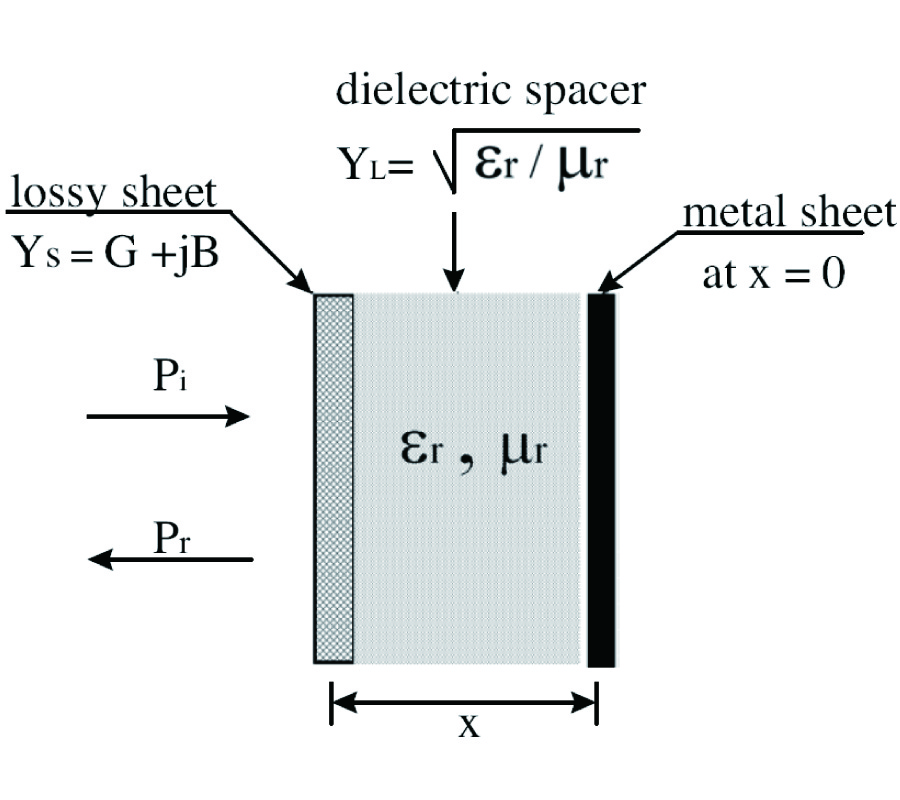
Use of Multi-Objective Particle Swarm Optimization for designing of planar multilayered electromagnetic absorbers and finding optimal Pareto front is described. The achieved Pareto presents optimal possible trade-offs between thickness and reflection coefficient of absorbers. Particle swarm optimization method in comparison with most of optimization algorithms such as genetic algorithms is simple and fast. But the basic form of Multi-objective Particle Swarm Optimization may not obtain the best Pareto. We applied some modifications to make it more efficient in finding optimal Pareto front. Comparison with reported results in previous articles confirms the ability of this algorithm in finding better solutions.
MODIFIED MULTI-OBJECTIVE PARTICLE SWARM OPTIMIZATION FOR ELECTROMAGNETIC ABSORBER DESIGN
2007-11-07
PIER B
Vol. 1, 209-218
Diffraction Efficiency Enhancement of Guided Optical Waves by Magnetostatic Forward Volume Waves in the Yttrium-Iron-Garnet Waveguide Coated with Perfect Mental Layers
Feng Wen and Bao-Jian Wu
The diffraction efficiency (DE) of guided optical waves (GOWs) and the magneto-optic (MO) -3 dB bandwidth are key parameters in MO Bragg cells. To improve the diffraction performance, the MO Stokes interaction between magnetostatic forward volume waves (MSFVWs) and GOWs are studied by use of the coupledmode theory in metal clad yttrium-iron-garnet (YIG) waveguides. Our analysis shows that, by adjusting the spacing of the metal layer from the ferrite surface, (1) the DE can be further increased by 7.32 dB compared with that of the inclined magnetization, but the MO bandwidth will be dropped down to the low level in the optimizing waveguide configuration; (2) when the DE and the MO bandwidth should be considered synthetically, a DE improvement of 3.9 dB with a bandwidth about 560 MHz is achieved corresponding to the large gainbandwidth product. Thus, the YIG waveguide coated with perfect metal layers can be used to improve the performance of MO Bragg cells.
DIFFRACTION EFFICIENCY ENHANCEMENT OF GUIDED OPTICAL WAVES BY MAGNETOSTATIC FORWARD VOLUME WAVES IN THE YTTRIUM-IRON-GARNET WAVEGUIDE COATED WITH PERFECT MENTAL LAYERS
2007-11-07
PIER B
Vol. 1, 197-208
Enhancement of Omnidirectional Reflection in Photonic Crystal Heterostructures
Ragini Srivastava , Shyam Pati and Sant Ojha
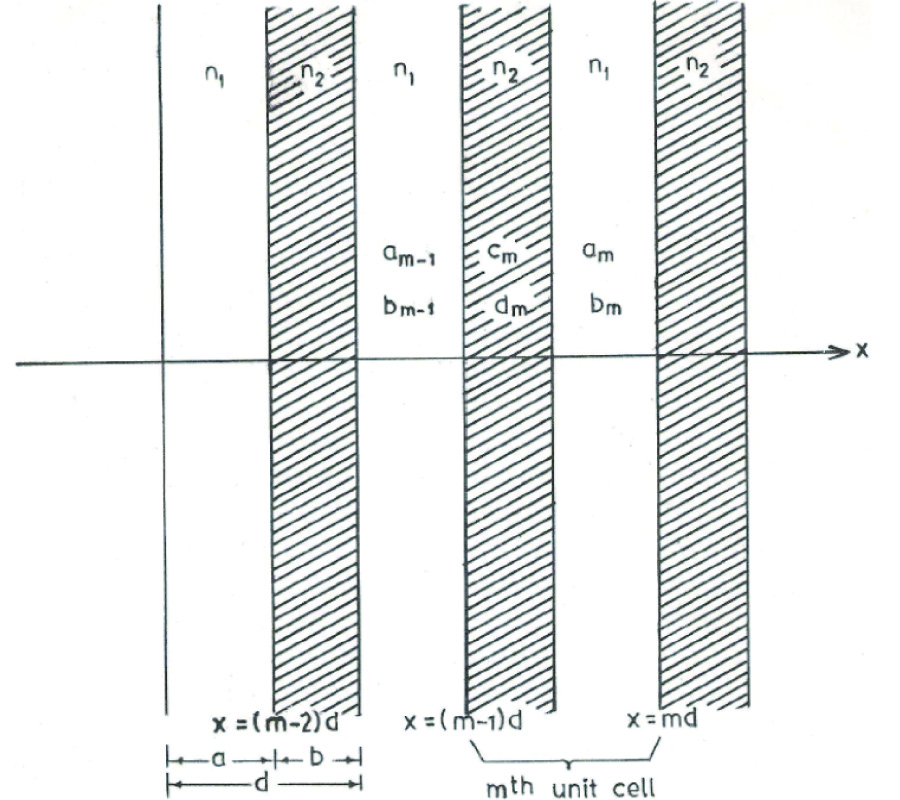
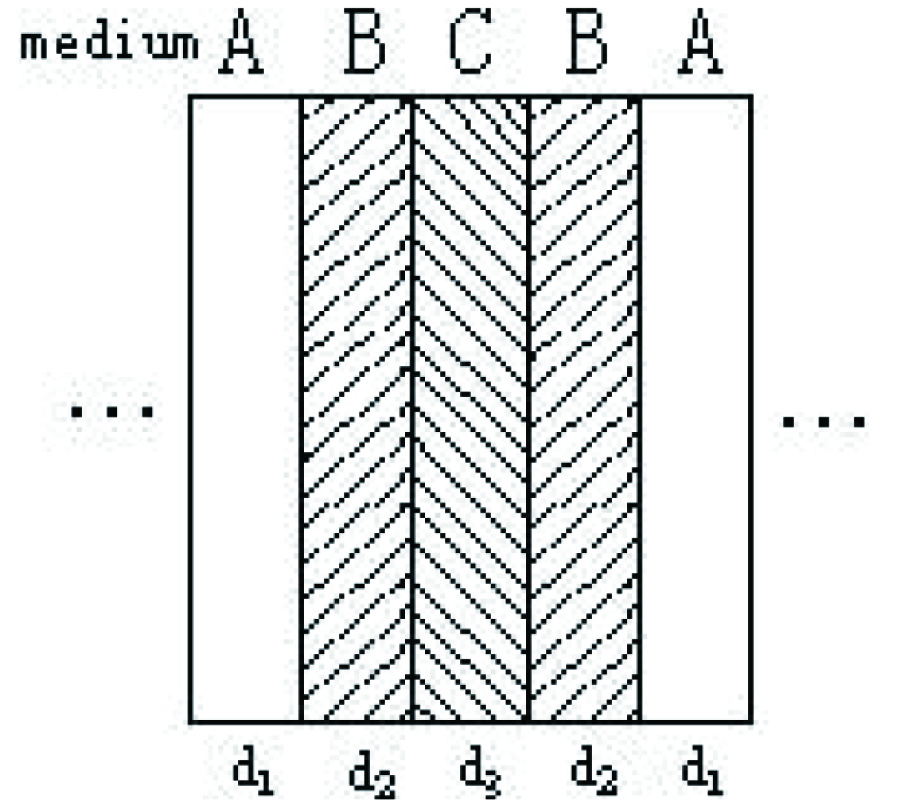
In this paper we have theoretically studied the omnidirectional total reflection frequency range of a multilayered dielectric heterostructures. Three structures of Na3AlF6/Ge multilayer have been studied. The thickness of the two layers of the first and second structure is differing from each other and the third photonic structure is the combination of first and second structures. Using the Transfer Matrix Method (TMM) and the Bloch theorem, the reflectivity of one dimensional periodic structure for TE- and TM-modes at different angles of incidence is calculated. From the analysis it is found that the proposed structure has very wide range of omnidirectional total frequency bands for both polarizations.
ENHANCEMENT OF OMNIDIRECTIONAL REFLECTION IN PHOTONIC CRYSTAL HETEROSTRUCTURES
2007-11-07
PIER B
Vol. 1, 189-195
Scattering Analysis of a Printed Dipole Antenna Using PBG Structures
Hong-Wei Yuan , Shu-Xi Gong , Xing Wang and Wen-Tao Wang
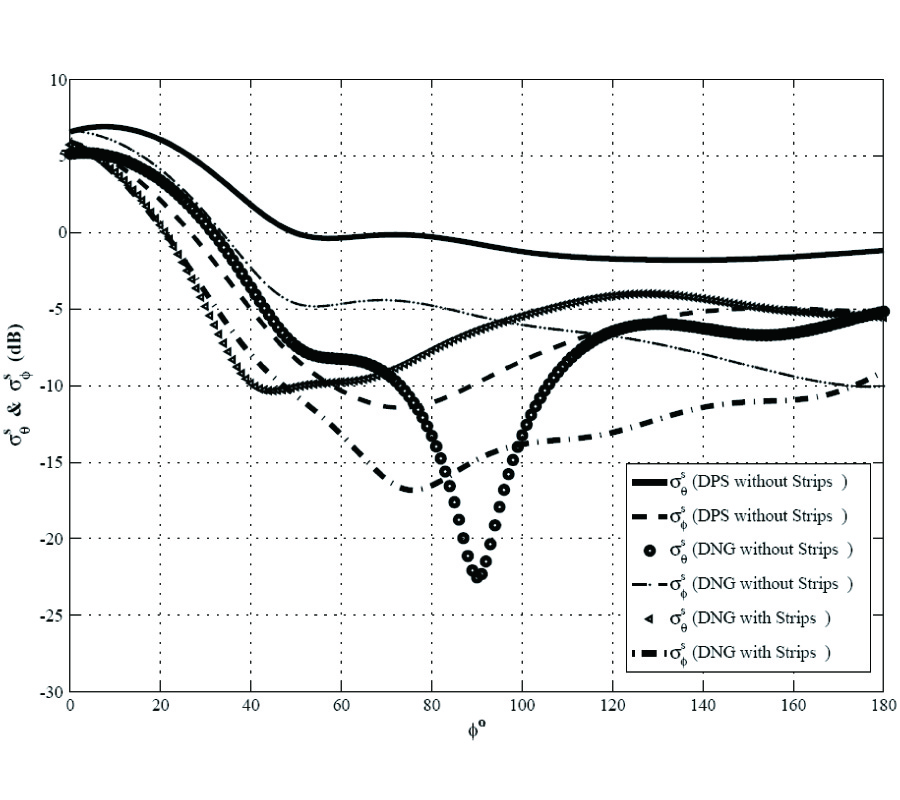
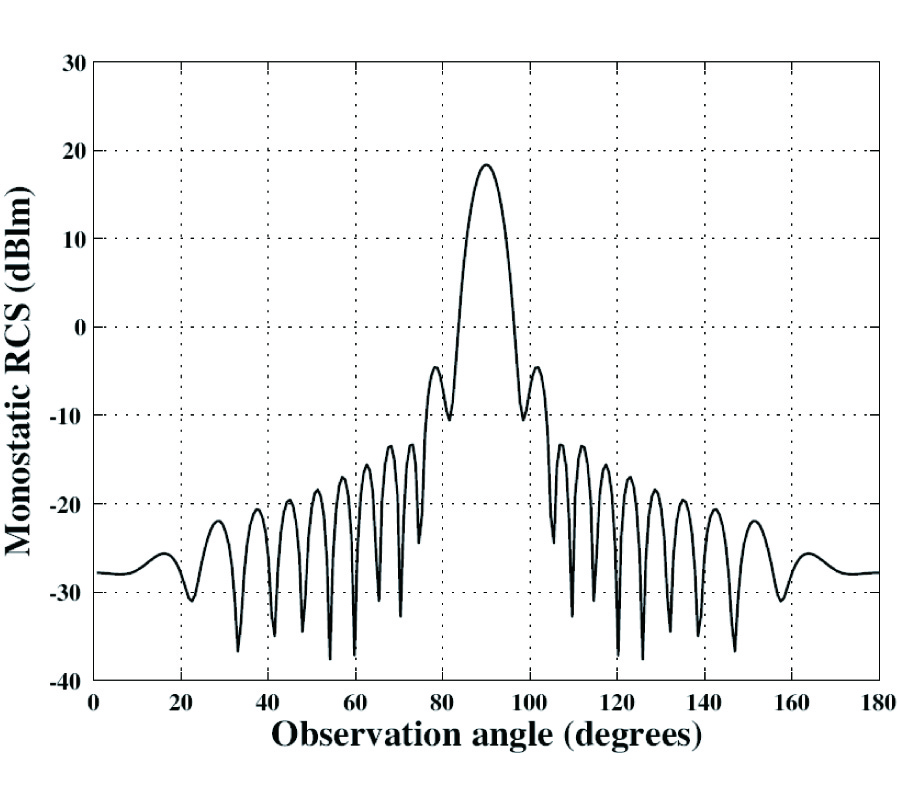
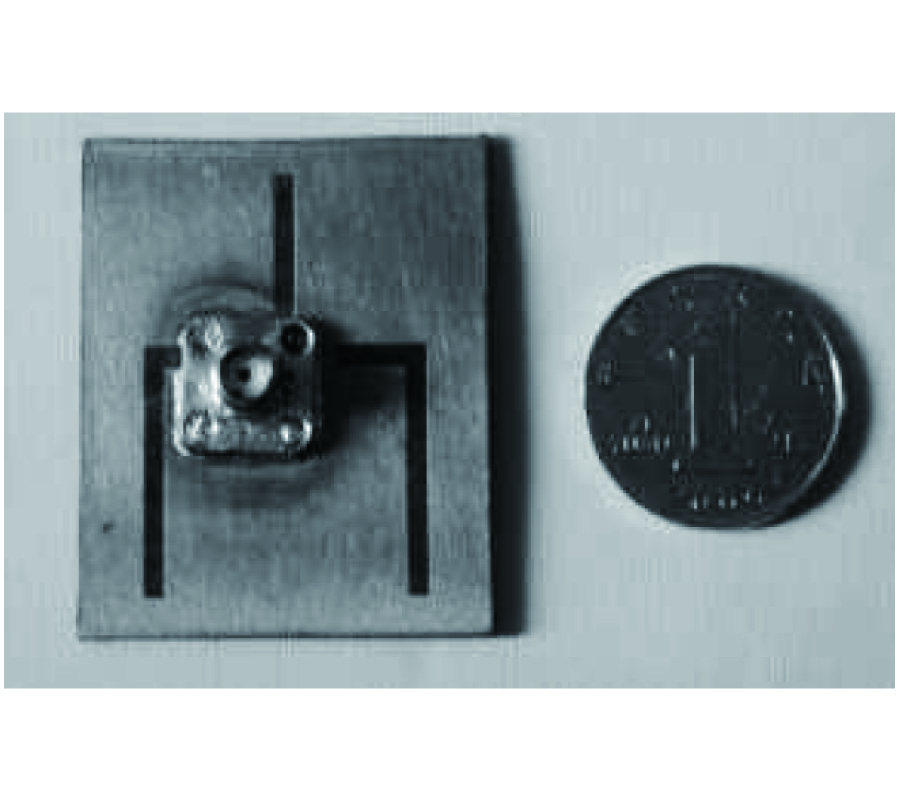
A novel broadband design of a printed dipole antenna using PBG (photonic band-gap) structures is proposed and studied in the electromagnetic scattering. The high surface impedance and a frequency gap are used to reduce RCS (radar cross section) across needed frequency range (3.7-4.5 GHz). Because the high surface impedance restrains the surface waves, the obtained results show that RCSis reduced by 15 dB at resonance frequency and radiation characteristics of the antenna at operating frequencies are improved. The method of RCSreduction is suggested, and experimental results are presented.
SCATTERING ANALYSIS OF A PRINTED DIPOLE ANTENNA USING PBG STRUCTURES
2007-11-06
PIER
Vol. 79, 339-352
Solving Time Domain Helmholtz Wave Equation with MOD-FDM
Baek-Ho Jung and Tapan Kumar Sarkar
In this work, we present a marching-on in degree finite difference method (MOD-FDM) to solve the time domain Helmholtz wave equation. This formulation includes electric and magnetic current densities that are expressed in terms of the incident field for scattering problems for an open region to implement a plane wave excitation. The unknown time domain functional variations for the electric field are approximated by an orthogonal basis function set that is derived using the Laguerre polynomials. These temporal basis functions are also used to expand current densities. With the representation of the derivatives of the time domain variable in an analytic form, all the time derivatives of the field and current density can be handled analytically. By applying a temporal testing procedure, we get a matrix equation that is solved in a marching-on in degree technique as the degree of the temporal basis functions is increased. Numerical results computed using the proposed formulation are presented and compared with the solutions of the conventional time domain finite difference method (TD-FDM) and analytic solutions.
SOLVING TIME DOMAIN HELMHOLTZ WAVE EQUATION WITH MOD-FDM
2007-11-06
PIER
Vol. 79, 321-337
Optimization of Side Lobe Level and Fixing Quasi-Nulls in Both of the Sum and Difference Patterns by Using Continuous Ant Colony Optimization (ACO) Method
S. Hosseini and Zahra Atlasbaf
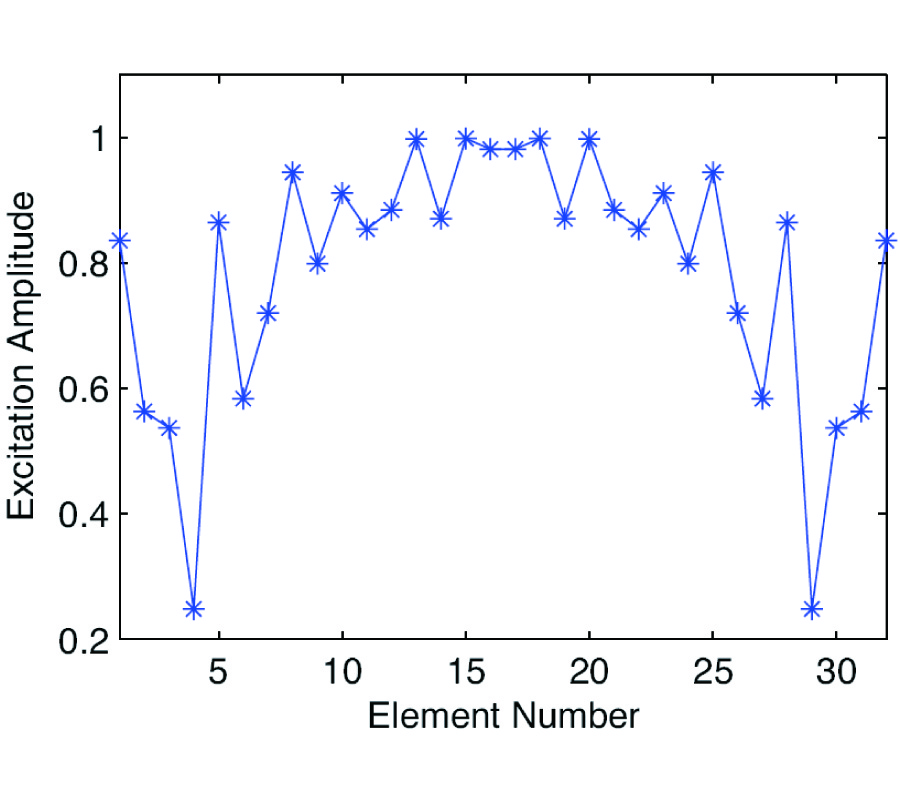
In this paper, the optimization of both sum and difference patterns of linear monopulse antennas with low side lobe levels, high directivity and also narrow main beam width are efficiently solved by Continuous Ant Colony Optimization (ACO) Method. The synthesis problem is optimized by defining a suitable cost function which is based on limitation of the side lobe level. In this work, three different parameters are considered to be optimized separately which are the excitation amplitude of each element, the excitation phase of each element and finally the element-to-element spacing. Numerical results of each step, sum and difference patterns, are illustrated in each related part. Finally, we investigate placing some nulls in specific directions to suppress the jamming signals in both sum and difference patterns.
OPTIMIZATION OF SIDE LOBE LEVEL AND FIXING QUASI-NULLS IN BOTH OF THE SUM AND DIFFERENCE PATTERNS BY USING CONTINUOUS ANT COLONY OPTIMIZATION (ACO) METHOD
2007-11-06
PIER B
Vol. 1, 177-188
High-Frequency Method Analysis on Scattering from Homogenous Dielectric Objects with Electrically Large Size in Half Space
Xiao-Feng Li , Yong-Jun Xie and Rui Yang
The high-frequency method for solving the scattering from homogeneous dielectric objects with electrically large size in half space is presented in this paper. In order to consider the scattering fields of the targets in half space, the half-space physical optics method is deduced by introducing the half-space Green's function into the conventional physical optics method (PO). Combined with the graphical-electromagnetic computing method to read the geometry information of all visible facets, the equivalent currents and the reflection coefficients are utilized to account of the homogenous dielectric objects with half-space physical optics method in half space. The numerical results show that this method is efficient and accurate.
HIGH-FREQUENCY METHOD ANALYSIS ON SCATTERING FROM HOMOGENOUS DIELECTRIC OBJECTS WITH ELECTRICALLY LARGE SIZE IN HALF SPACE
2007-11-06
PIER B
Vol. 1, 159-176
A SAR Autofocus Algorithm Based on Particle Swarm Optimization
Tien Sze Lim , Voon Koo , Hong-Tat Ewe and Hean-Teik Chuah
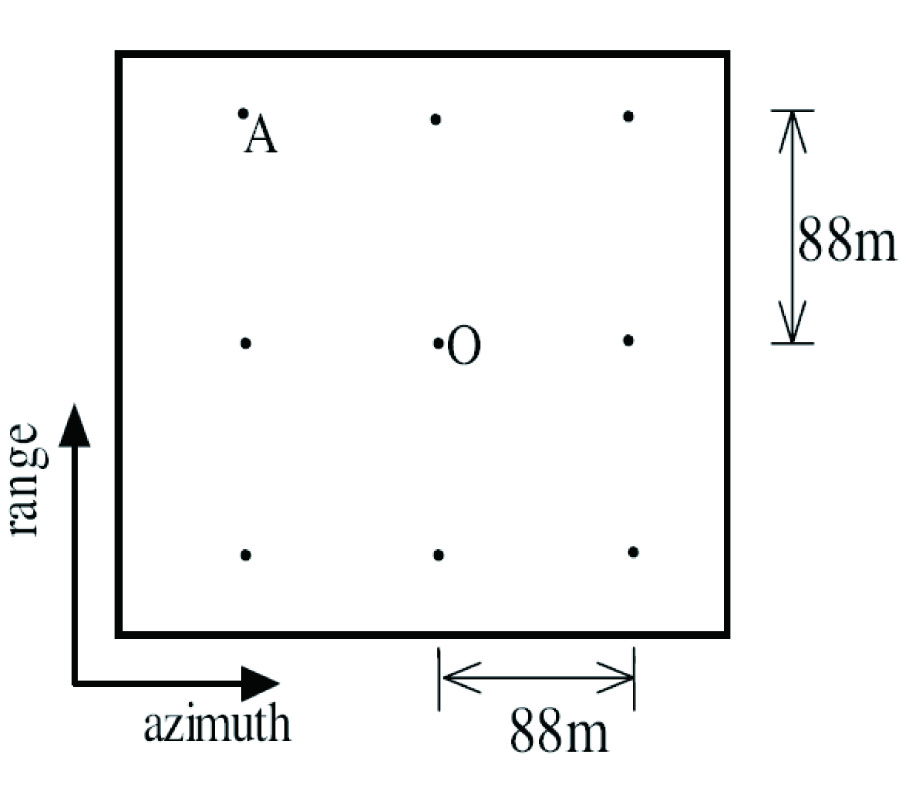
In synthetic aperture radar (SAR) processing, autofocus techniques are commonly used to improve SAR image quality by removing its residual phase errors after conventional motion compensation. This paper highlights a SAR autofocus algorithm based on particle swarm optimization (PSO). PSO is a population-based stochastic optimization technique based on the movement of swarms and inspired by social behavior of bird flocking or fish schooling. PSO has been successfully applied in many different application areas due to its robustness and simplicity [1-3]. This paper presents a novel approach to solve the low-frequency high-order polynomial and highfrequency sinusoidal phase errors. The power-to-spreading noise ratio (PSR) and image entropy (IE) are used as the focal quality indicator to search for optimum solution. The algorithm is tested on both simulated two-dimensional point target and real SAR raw data from RADARSAT-1. The results show significant improvement in SAR image focus quality after the distorted SAR signal was compensated by the proposed algorithm.
A SAR AUTOFOCUS ALGORITHM BASED ON PARTICLE SWARM OPTIMIZATION
2007-11-06
PIER B
Vol. 1, 147-157
Investigation of GSM Signal Variation Dry and Wet Earth Effects
Selcuk Helhel , Sukru Ozen and Hüseyin Göksu
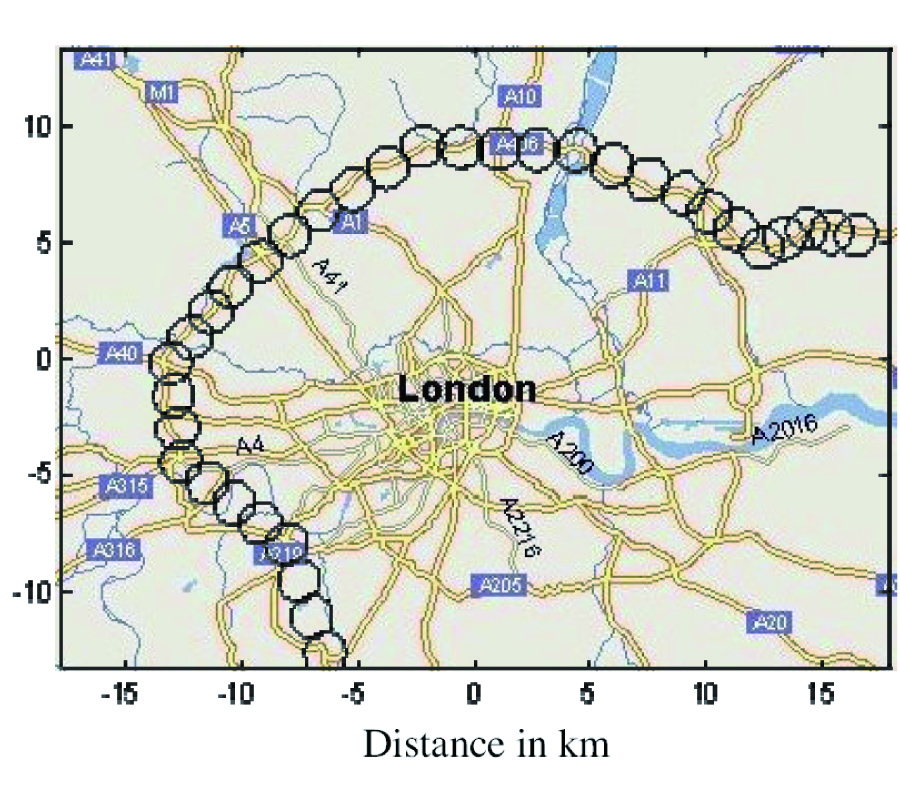
This work proposes a site attenuation method to calculate the intensity of the field received by a mobile phone on a two-lane highway. To validate the model, radio propagation measurement was carried out through the intercity connection highway of the City of Isparta. The measurement system consisted of live radio base stations transmitting at 900 MHz and 1800 MHz. Downlink signal strength level data were collected by using TEMS test mobile phones, and were analyzed by TEMS Investigation, MapInfo and Google earth. Transmitted power-into-antenna was 14 W for both 900 MHz and 1800 MHz. Both base station sectors are facing towards the same direction having a 14 dBi gain. A proposed approximation was compared with real data. The results indicate that wet white pine trees cause 3 dB to 6 dB extra loss at 1800 MHz and about 1 dB to 3 dB extra loss at 900 MHz. Although 1800 MHz transmitter is 10 m higher, it loses its advantage in signal strength at longer distances.
INVESTIGATION OF GSM SIGNAL VARIATION DRY AND WET EARTH EFFECTS
2007-11-05
PIER B
Vol. 1, 115-134
Uplink Power Based Admission Control in Multi-Cell Wcdma Networks with Heterogeneous Traffic
Sami El-Dolil , A. Al-Nahari , Moawad Desouky and Fathi Abd El-Samie
Wideband code division multiple access (WCDMA) is an interference-limited system. When the system operates at nearly full capacity, admitting another user may affect the stability of the system. Therefore, proper Call Admission Control (CAC) is crucial and should balance between Quality of Service (QoS) requirements for the new user and also for the existing users and at the same time keep the accepted traffic as high as possible. In this paper, we investigate this tradeoff in the uplink direction using power-based Multi-Cell Admission Control (MC-AC) algorithm. Multimedia services are considered with different QoS requirements. Different traffic scenarios are considered. Simulation results reveal that MC-AC algorithms have many advantages over single cell admission control in terms of overall stability of the system and total system throughput.
UPLINK POWER BASED ADMISSION CONTROL IN MULTI-CELL WCDMA NETWORKS WITH HETEROGENEOUS TRAFFIC
2007-11-03
PIER B
Vol. 1, 95-113
Small Size Ka-Band Distributed MEMS Phase Shifters Using Inductors
Saeid Afrang and Burhanuddin Yeop Majlis
MEMS phase shifter has been developed using inductors. The design consists of a CPW line capacitively and inductively loaded by the periodic set of inductors and electrostatic force actuated MEMS switches as capacitors. By applying a single bias voltage on the line, the characteristic impedance can be changed, which in turn changes the phase velocity of the line and creates a true time delay phase shift. The governing equations for the impedance and loss are derived. The ABCD matrix is defined for a unit cell and multi-cell DMTL phase shifter to extract scattering parameters equations. The MEMS switch is actuated by a 39 voltage waveform using a high resistance bias line. Estimated spring constant and switching time is 22 N/m and 3 μs, respectively. The structure is designed for Ka-band frequency range. The acceptable frequency range for the design containing 21 cells is between 26 GHz and 27 GHz and optimum condition occurs at 26.3 GHz. For the whole structure and optimum condition the un actuated position results in a return loss -16 dB and insertion loss of -1.65 dB. The actuated position results in a return loss -12.5 dB and insertion loss of -1.6 dB. The phase shift for the whole structure is 190 degree. The optimum condition can be easily changed by modifying the design parameters. The spacing in the proposed structures is S = 250 μm. The structure is also low loss. The length and the loss per bit with the phase shift of 270 are decreased by 37.5 percent and 21 percent respectively.
SMALL SIZE KA-BAND DISTRIBUTED MEMS PHASE SHIFTERS USING INDUCTORS
2007-11-03
PIER B
Vol. 1, 81-94
Electromagnetic Model for Microwave Components of Integrated Circuits
Farah Mohammadi and Mustapha Yagoub
This paper presents an accurate and robust time-domain electromagnetic model for microwave components of integrated circuits. The time-domain model has been validated on different structures such as metallic waveguides, planer lines and the transition of waveguide-microstrip line under harmonic oscillation excitation. The results obtained from simulation were compared to the experimental test results. The simulation results demonstrated that the approach is suitable to model microwave components of integrated circuits.
ELECTROMAGNETIC MODEL FOR MICROWAVE COMPONENTS OF INTEGRATED CIRCUITS
2007-10-31
PIER B
Vol. 1, 67-80
A Novel Dual-Polarized Double-Ridged Horn Antenna for Wideband Applications
Ali Reza Mallahzadeh , Ali Dastranj and Hamid Reza Hassani
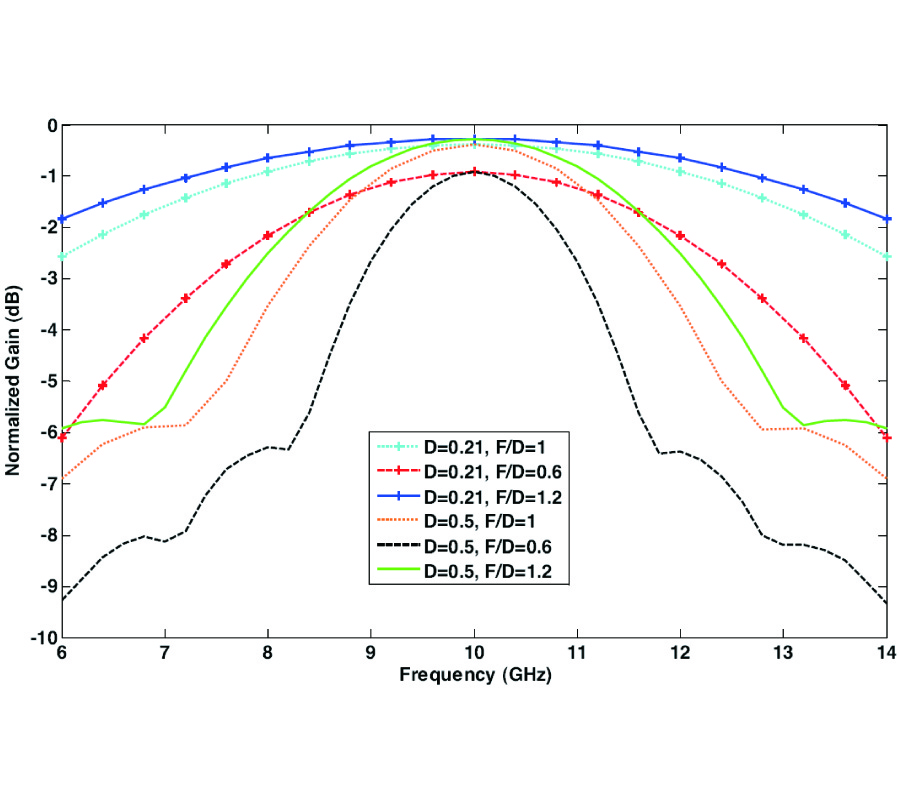
Dual-polarized antenna is widely used in communication systems such as ECM and DF systems. In this paper a novel doubleridged horn antenna with dual polarizations is introduced for frequency range of 8-18 GHz. Common double ridged horn antennas have single polarization over the operating frequency. We have used five layers polarizer to provide dual polarizations performance of the double-ridged horn antenna. In order to achieve dual polarizations the strips width, strips spacing and layers distances are optimized. It is worth mentioning that the corresponding VSWR of the antenna during the optimization process should be maintain below a certain value (VSWR<2). Simulation results show that the proposed antenna yields dual polarizations performance and low VSWR over the operating frequency. We have used CST software for antenna simulation which is based on the finite integral technique.
A NOVEL DUAL-POLARIZED DOUBLE-RIDGED HORN ANTENNA FOR WIDEBAND APPLICATIONS
2007-10-30
PIER
Vol. 79, 291-304
Raman Amplification and Superluminal Propagation of Ultrafast Pulses Based on Loop Silicon Waveguides: Theoretical Modeling and Performance
Jian-Wei Wu , Feng-Guang Luo and Qing-Tang Zhang
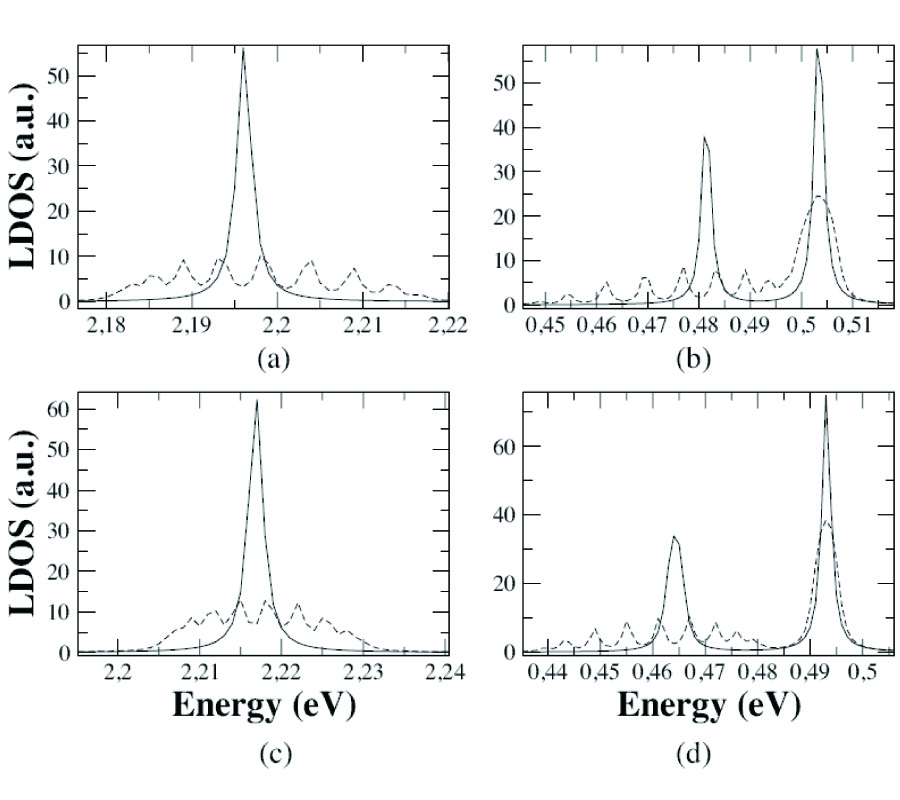
In this paper, we report, for the first time to the best of our knowledge, the detailed modeling and performance of Raman amplification and superluminal propagation of weak ultrafast femtosecond optical pulses in nonlinear loop single mode silicon-oninsulator anomalously dispersive optical waveguides. Using the device, theoretical results for 100-fs signal optical pulse show that when the launch peak power of signal pulse is fixed at −10 dBm, the gain value up to 30 dB can be achieved, and the delay time of superluminal propagation can also be adjusted by changing the system parameters, including initial chirp and peak power of pump pulse, initial delay time between pump and signal pulses, and waveguide length, etc.
RAMAN AMPLIFICATION AND SUPERLUMINAL PROPAGATION OF ULTRAFAST PULSES BASED ON LOOP SILICON WAVEGUIDES: THEORETICAL MODELING AND PERFORMANCE
2007-10-30
PIER B
Vol. 1, 43-65
Determining the Specific Ground Conductivity Aided by the Horizontal Electric Dipole Antenna Near the Ground Surface
S. Makki , Tohid Ershadi and Mohammad Abrishamian
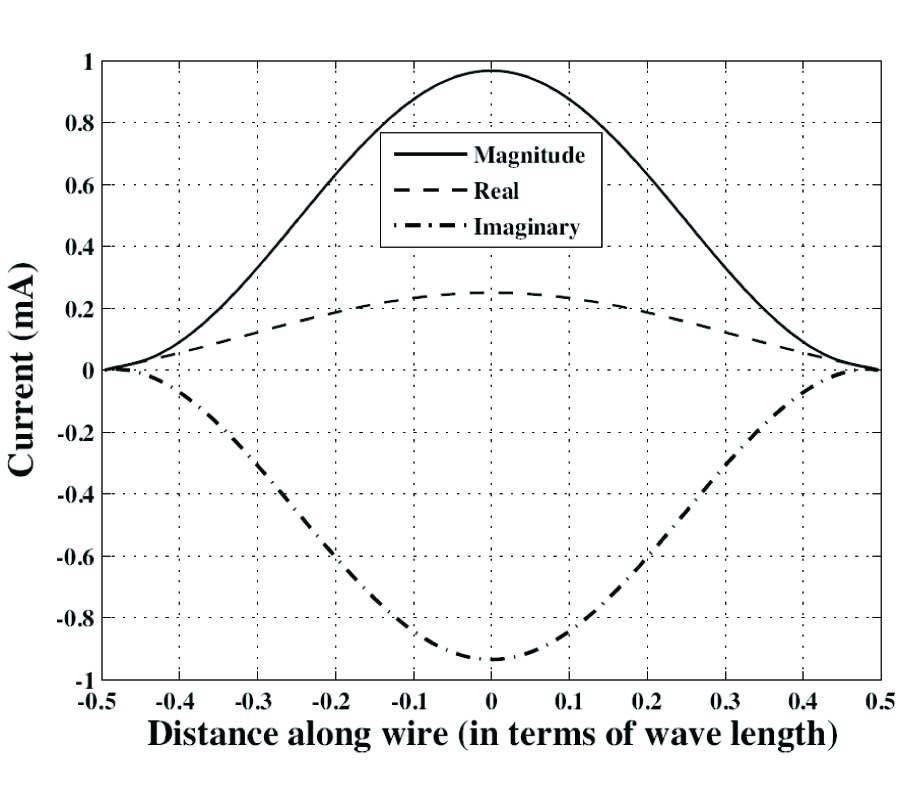
The ground conductivity is the most important factor in the transmitter's coverage area in ground wave propagation. Regarding the day-to-day increase in digital broadcasting, a lower sensitivity of this kind of broadcasting and ability to create single frequency networks, it seems necessary to increase the accuracy of ground conductivity to minimize fading zones. The higher the abovementioned conductivity, the lower the ground wave attenuation. Also in this case, the transmitted wave will tilt less towards the ground to satisfy the boundary conditions in electric conductivity and so-called will enter the earth. In most of the presented papers to determine the field strength, conductivity is considered as known, but it's dependent upon the soil genus, the annual/monsoon precipitation and the heat average. Here it is intended to provide a new method based on Mie algorithm to determine the conductivity based on the difference of Horizontal Electric Dipole near the ground. The previous conductivity measurements included determining it in a point by point manner in a low frequency and determining the conductivity based on the coverage area intensity. The new method holds the two methods advantages together.
DETERMINING THE SPECIFIC GROUND CONDUCTIVITY AIDED BY THE HORIZONTAL ELECTRIC DIPOLE ANTENNA NEAR THE GROUND SURFACE
2007-10-30
PIER B
Vol. 1, 29-42
E-Shaped Patch Symmetrically Loaded with Tunnel Diodes for Frequency Agile/Broadband Operation
Jamshed Aslam Ansari and Ram Ram
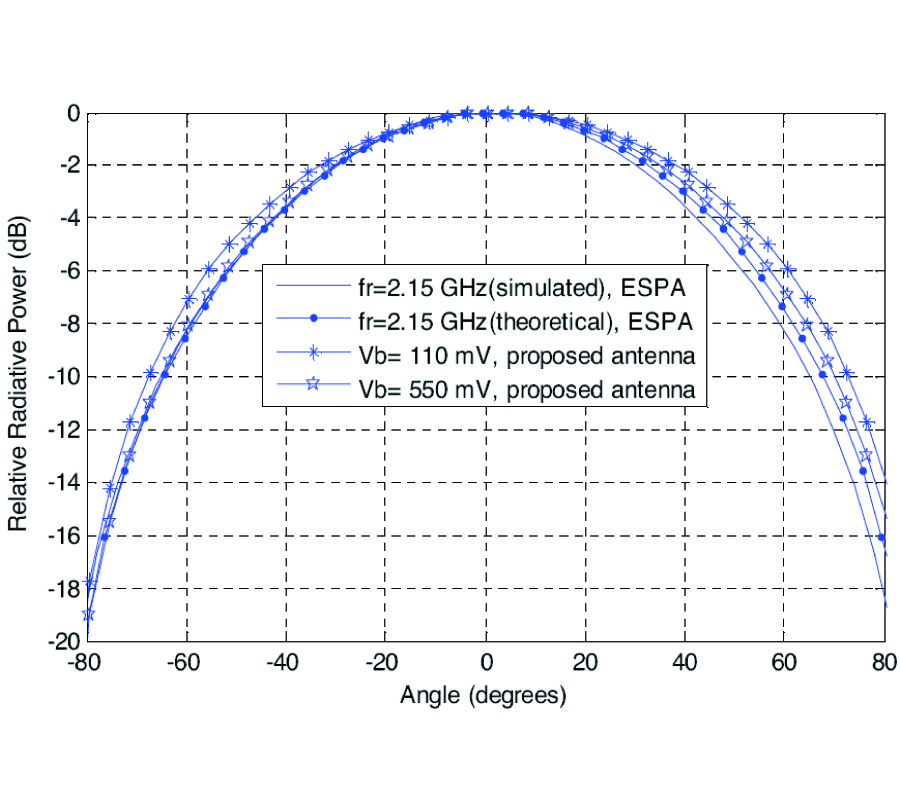
Analysis of a frequency agile broadband E-shaped patch antenna (ESPA) symmetrically loaded with tunnel diodes is presented in this paper. The notch parameters such as notch-length, notch-width and position are optimized to achieve the optimum broadband operation of ESPA. Under the optimum conditions of ESPA (bandwidth 32.35%), the performance of the antenna is also analyzed as a function of bias voltage of tunnel diode. It may be mentioned that the proposed antenna can be operated in tunable band that varies from 1055 MHz (bandwidth 42.54%) to 1324 MHz (bandwidth 49.77%) with the bias voltage. Further, the radiated power of the proposed antenna is enhanced by 5.67 dB as compared to the E-shaped patch antenna.
E-SHAPED PATCH SYMMETRICALLY LOADED WITH TUNNEL DIODES FOR FREQUENCY AGILE/BROADBAND OPERATION
2007-10-27
PIER
Vol. 79, 277-290
Robust Adaptive Beamforming for Steering Vector Uncertainties Based on Equivalent DOAs Method
Yujie Gu , Zhi-Guo Shi , Kang Chen and Yu Li
The adaptive beamformers often suffer severe performance degradation when there exist uncertainties in the steering vector of interest. In this paper, we develop a new approach to robust adaptive beamforming in the presence of an unknown signal steering vector. Based on the observed data, we try to estimate an equivalent directionof- arrival (DOA) for each sensor, in which all factors causing the steering vector uncertainties are ascribed to the DOA uncertainty only. The equivalent DOA of each sensor can be estimated one by one with the assumption that the elements of the steering vector are uncorrelated with each other. Using a Bayesian approach, the equivalent DOA estimator of each sensor is a weighted sum of a set of candidate DOA's, which are combined according to the value of the a posteriori probability for each pointing direction. In this way, the signal steering vector and the diagonal loading sample matrix inversion (DL-SMI) version adaptive beamformer can be obtained. Numerical simulations illustrate the robustness of the proposed beamforming algorithm.
ROBUST ADAPTIVE BEAMFORMING FOR STEERING VECTOR UNCERTAINTIES BASED ON EQUIVALENT DOAS METHOD