Search Results(13979)

2007-11-28
PIER B
Vol. 2, 165-176
Two New Loaded Compact Palnar Ultra-Wideband Antennas Using Defected Ground Structures
S. Hosseini , Zahra Atlasbaf and Keyvan Forooraghi
In this paper, two new line-fed loaded planar antennas are proposed for ultra-wideband applications. The first antenna is a circular patch with a circular ring as a Defected Ground Structure (DGS). A 50 Ohm microstrip line passes through the antenna which is symmetrical between the feed and the load. The impedance bandwidth of the first antenna with S11 < -10 dB is more than 10 GHz, from 3 GHz to more than 13 GHz, in both simulation and measurement. It will be shown that the antenna has quite a stable radiation pattern and also high gain over its bandwidth. The second configuration is a rhomboidal patch which a 50 Ohm microstrip line passes through it. A rhomboidal DGS ring is employed to widen the bandwidth of the proposed antenna. The impedance bandwidth with VSWR < 2 is more than 10 GHz, from 3 GHz to more than 13 GHz, in both simulations and measurement. The second antenna has also quite a stable radiation pattern and high gain values in its frequency band. For these antennas, a wideband 50 Ohm load has been used. Finally, it should be mentioned that the antennas have very compact structures as well as very simple configurations.
TWO NEW LOADED COMPACT PALNAR ULTRA-WIDEBAND ANTENNAS USING DEFECTED GROUND STRUCTURES
2007-11-28
PIER B
Vol. 2, 151-164
Numerical Study of Goos-h änchen Shift on the Surface of Anisotropic Left-Handed Materials
Wei Ding , Liang Chen and Chang-Hong Liang
The Goos-Hanchen shift on the surface when an optical beam is obliquely incident from one isotropic right-handed material (RHM) into another biaxial anisotropic left-handed material (BALHM) is numerically studied with the finite difference time domain (FDTD) method based on the Drude dispersive models. The analytical expression of the Goos-Hanchen shift is firstly presented, moreo ver the condition for the existence and the sign of the Goos-Hanchen shift are also discussed. According to the theoretical analysis,sev eral sets of constitutive parameters of BA-LHM are considered. The simulated results are in agreement with theoretical results, which validate the theoretical analysis.
NUMERICAL STUDY OF GOOS-HÄNCHEN SHIFT ON THE SURFACE OF ANISOTROPIC LEFT-HANDED MATERIALS
2007-11-28
PIER Letters
Vol. 1, 101-108
A Novel Ultra-Wideband Bow-Tie Slot Antenna in Wireless Communication Systems
Yan-Lin Chen , Cheng-Li Ruan and Lin Peng
A novel ultra-wideband bow-tie slot antenna fed by CPW is proposed in this paper. This antenna has been demonstrated to provide an UWB with return loss less than -10 dB from 9.5 GHz to 22.4 GHz. The bandwidth is up to 80%, which is quite better than the traditional bow-tie slot antenna. Simulated and measured results are presented.
A NOVEL ULTRA-WIDEBAND BOW-TIE SLOT ANTENNA IN WIRELESS COMMUNICATION SYSTEMS
2007-11-28
PIER Letters
Vol. 1, 93-99
Reflection and Transmission in the Ionosphere Considering Collisions in a First Approximation
Ali Yesil , Mehmet Aydogdu and Ana Elias
Reflection and transmission coefficients (R and T) of high frequency waves propagating in the ionosphere are studied taking collisions into account. This was done approximating the expression (1 + Z2)-1 in the refractive index using binomial expansion and neglecting terms of order higher than Z2, where Z is the ratio between the electron collision frequency and the wave frequency. R and T height profiles were assessed using the International Reference Ionosphere, IRI, to estimate the ionosphere plasma parameters. Although no significant differences are found between the estimation with and without collisions, the method employed to include collisions may be useful for other purposes where collisions should be taken into account.
REFLECTION AND TRANSMISSION IN THE IONOSPHERE CONSIDERING COLLISIONS IN A FIRST APPROXIMATION
2007-11-27
PIER
Vol. 80, 123-160
Handset Antenna Design: Practice and Theory
Geyi Wen , Qinjiang Rao , Shirook M. Ali and Dong Wang
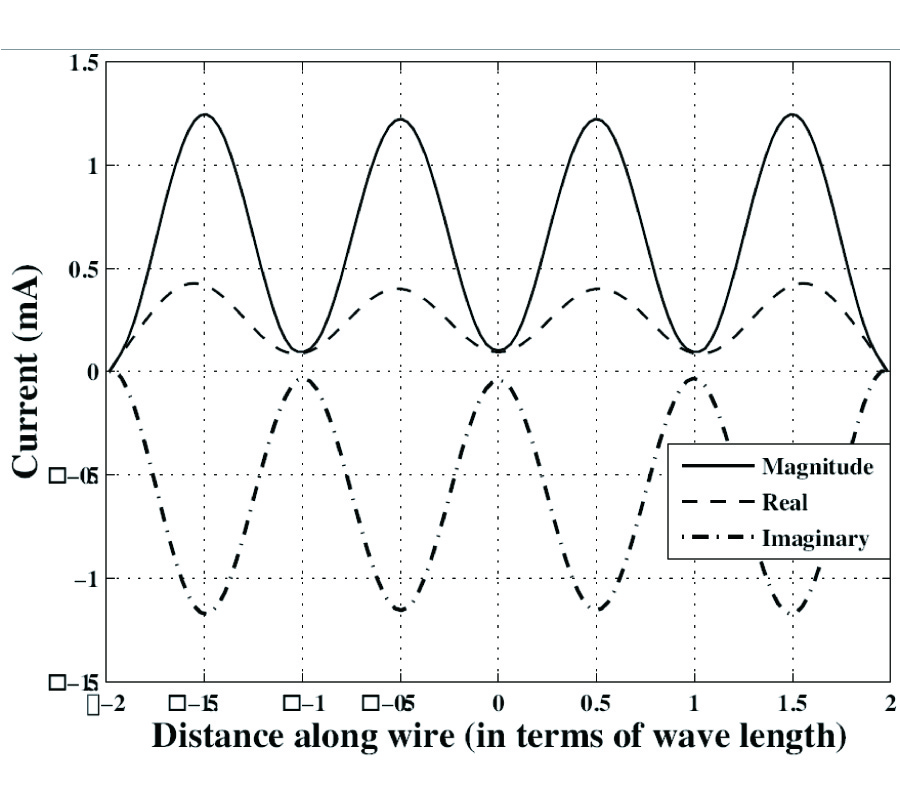
In this paper, an attempt is made to present a theory for the design of handset antennas, which results from the long experience that the authors have in the field of handset antenna design. The proposed theory is based on the well-known skin effect and constructs the antenna using a thin wire model that represent the backbone of the final antenna. The analytical solution for the thin wire model is first obtained, and the main properties (such as the return loss and the radiation properties) of the antenna can then be studied using this analytical solution. Once the antenna backbone is constructed, other elements, such as stubs, patches, etc., can be added to optimize the match at the desired frequency bands. A number of numerical and analytical examples are provided throughout the paper to validate the theory. Different antenna types, such as wire antennas and planar antennas, are tested and designed using the thin wire model. The correspondence between the analytical results and those from the numerical simulations using full-wave solvers agree very well in all examples. The authors also present in this paper a novel design of three small antennas for handset applications, which are based on the simple wire monopole, but in a three-dimensional form. The proposed three-dimensional monopole antennas have multi-band and broadband properties that cover most frequency bands being used for the handset device. The antennas feature remarkable properties while occupying a significantly small space, which makes them strong candidates for handset applications and for the future multi-antenna applications too. 1. INTRODUCTION
HANDSET ANTENNA DESIGN: PRACTICE AND THEORY
2007-11-27
PIER
Vol. 80, 107-122
Analysis and Design of Highly Compact Bandpass Waveguide Filter Using Complementary Split Ring Resonators(CSRR)
Hadi Bahrami , Mohammad Hakkak and Abbas Pirhadi
Split Ring Resonators (SRR) and Complementary Split Ring Resonators (CSRR) are widely used to design metamaterial structures. These structures when excited by suitable electromagnetic fields have resonance behavior and show unusual properties such as negative permeability and permittivity near the resonance frequency region. In this paper, CSRRs are used to design a bandpass waveguide filter in the X-band. The circuit model of these elements in the waveguide is similar to parallel L and C components that are placed in parallel form in a transmission line. Resonance frequency and bandwidth of LC resonance circuit are adjusted by proper choice of the CSRR geometrical dimensions. Then, to design the miniaturized filter these structures are combined with proper admittance inverter. The admittance inverter is designed such that its electric length is very smaller than the conventional λ/4 transmission line. As a result, a filter is compacted about 66% in comparison to the λ/4 transmission line as admittance inverter. Simulation results by Ansoft HFSS (Based on the Finite Element Method) confirm the results of filter circuit model.
ANALYSIS AND DESIGN OF HIGHLY COMPACT BANDPASS WAVEGUIDE FILTER USING COMPLEMENTARY SPLIT RING RESONATORS(CSRR)
2007-11-27
PIER B
Vol. 2, 137-150
Direction of Arrival and State of Polarization Estimation Using Radial Basis Function Neural Network (Rbfnn)
Saber Zainud-Deen , Hend Abd El-Azem Malhat , Kamal Awadalla and E. El-Hadad
A Neural Network architecture is applied to the problem of Direction of Arrival (DOA) and state of polarization estimation using a uniform circular cross and tri-crossed-dipoles antenna array. A three layer Radial Basis Function Network (RBFN) is trained with input output pairs. The network is then capable of estimating DOA not included in the training set through generalization and the corresponding state of polarization. This approach reduces the extensive computations required by conventional super resolution algorithms such as MUSIC and is easier to implement in real-time applications. The results suggest that the performance of the RBFNN method approaches the exact values. In real time, fast convergence rates of neural networks will allow the array to track mobile sources.
DIRECTION OF ARRIVAL AND STATE OF POLARIZATION ESTIMATION USING RADIAL BASIS FUNCTION NEURAL NETWORK (RBFNN)
2007-11-27
PIER B
Vol. 2, 125-136
Phasing of a Microstrip Reflectarray Using Multi-Dimensional Scaling of Its Elements
Khalil Hassan Sayidmarie and Marek Bialkowski
The paper reports on investigations into new schemes for dimensional scaling of the elements of a microstrip reflectarray to obtain a slower slope of the reflected wave phase characteristic. First, the phase response as a function of various shape elements is investigated when only one of their dimensions is varied. Next investigations concern the case when two dimensions or features of the element are scaled in a certain manner simultaneously. In the latter case, it is shown that phase responses of lower slopes with a minimal range reduction can be obtained. The feasibility of this concept is illustrated for dipoles, rectangular patches, and square and circular rings. Comparisons of the obtained results show that twodimensionally scaled square and circular rings offer much better phase responses than those observed for dipoles and patches.
PHASING OF A MICROSTRIP REFLECTARRAY USING MULTI-DIMENSIONAL SCALING OF ITS ELEMENTS
2007-11-27
PIER Letters
Vol. 1, 85-92
Analysis of Electrically Small Size Conical Antennas
Yu Yu Kyi and Jian-Ying Li
It has long been known that the conical antenna has broadband characteristics and good radiation efficiency. The design considerations in reducing the size of top loaded conical antenna by using posts with lumped resistive loading are presented. The resulting antenna can achieve a VSWR of better than 2.0 over 100-800MHz frequency range. Results indicate that the addition of posts and lumped resistive loading has significant role in designing broadband antennas which are in small size.
ANALYSIS OF ELECTRICALLY SMALL SIZE CONICAL ANTENNAS
2007-11-27
PIER Letters
Vol. 1, 77-83
Design for PCS Antenna Based on Wibro-MIMO
Kyeong-Sik Min , Min-Seong Kim , Chul-Keun Park and Manh Vu
This paper presents a design of wireless broadband (WiBro)-multi-input multi-output (MIMO) and personal communication service (PCS) antenna for practical mobile phone. To decrease the mutual coupling of WiBro-MIMO antenna, it is considered on the projected ground structure. In addition, two type PCS antennas for multi-function mobile phone are designed. The proposed antennas are well resonated in each operating frequency band. The measured bandwidths of 3-dimensional (3D) and 2-dimensional (2D) PCS antennas are 110MHz and 130MHz below -10 dB, respectively. The isolations between WiBro-MIMO and two PCS antenna are below -15dB by 2D antenna type and -20dB by 3D antenna type, respectively. The printed IFA has shown a better performance than modified planner IFA with spiral and shorting strip.
DESIGN FOR PCS ANTENNA BASED ON WIBRO-MIMO
2007-11-26
PIER Letters
Vol. 1, 69-75
On the Study of Left-Handed Coplanar Waveguide Coupler on Ferrite\R\Nsubstrate
Mahmoud Abdelrahman Abdalla and Zhirun Hu
This paper introduces a 3 dB tunable symmetric left handed coupled line coupler implemented on ferrite substrate. The proposed coupler is realized in LH coplanar waveguide configuration constructed using interdigital capacitors and meandered line inductors. The analytical analysis and the numerical verification of the proposed couple line coupler are presented. The full wave numerical simulation results for different DC magnetic bias indicate that a tunable left handed coupled line coupler propagation with transmission coefficient up to 3 dB and isolation level more than 25 dB over a wide bandwidth can be achieved.
ON THE STUDY OF LEFT-HANDED COPLANAR WAVEGUIDE COUPLER ON FERRITE\R\NSUBSTRATE
2007-11-26
PIER Letters
Vol. 1, 61-68
Wideband Star-Shaped Microstrip Patch Antenna
M. Abbaspour and Hamid Reza Hassani
A new wideband and small size star shaped patch antenna fed capacitively by a small diamond shape patch is proposed. To enhance the impedance bandwidth, posts are incorporated under the patch antenna.HFSS high frequency simulator is employed to analyze the proposed antenna and simulated results on the return loss, the E and H-plane radiation patterns and Gain of the proposed antenna are presented at various frequencies.The antenna is able to achieve in the range of 4-8.8 GHz an impedance bandwidth of 81% for return loss of less than -10 dB.
WIDEBAND STAR-SHAPED MICROSTRIP PATCH ANTENNA
2007-11-26
PIER Letters
Vol. 1, 51-60
Method of Largest Extended Circle for the Capacitance of Arbitrarily Shaped Conducting Plates
Chang-Hong Liang , Hao-Bo Yuan and Kang-Bo Tan
The most difficult step in the analysis of the capacitance of arbitrarily shaped conductingplates is the determination of the electric center, or the expansion point of the charge density. This paper presents the generalized Huygens' principle, which indicates that the charge distribution on a conducting plate of convex shape has a tendency to be a circle before approachingthe fringe. Therefore, the center of the largest extended circle can be taken as the electric center. The agreement with numerical methods is demonstrated.
METHOD OF LARGEST EXTENDED CIRCLE FOR THE CAPACITANCE OF ARBITRARILY SHAPED CONDUCTING PLATES
2007-11-26
PIER Letters
Vol. 1, 45-50
Improving of Shielding Effectiveness of a Rectangular Metallic Enclosure with Aperture by Using Extra Wall
Mehdi Bahadorzadeh Ghandehari , Mohammad Naser-Moghadasi and Amir Attari
A new method for improving shielding effectiveness (SE) of a rectangular enclosure with multiple apertures has been proposed. In this method in order to compensate the effects of the apertures on reduction of (SE) parameter, instead of the one wall, two metallic walls containing apertures has been used. The numerical simulation uses a symmetric condensed node of TLM-TD (Transmission line Modeling Method-Time Domain) and subsequent Fourier Transform. The shielding effectiveness response to an electric field impulsive excitation is obtained. A study of the influence of the place of apertures in the walls and the distance between the two walls is presented.
IMPROVING OF SHIELDING EFFECTIVENESS OF A RECTANGULAR METALLIC ENCLOSURE WITH APERTURE BY USING EXTRA WALL
2007-11-23
PIER Letters
Vol. 1, 35-44
Wide-Angle Absorption by the Use of a Metamaterial Plate
Andrey Lagarkov , Vladimir N. Kisel and V. Semenenko
The problem regarding top possible (hopefully, total) field suppression of a filamentary source placed above nonuniform impedance plane is discussed. New designs of the electromagnetic field absorbers and resonators are suggested which may be engineered with the use of metamaterials.
WIDE-ANGLE ABSORPTION BY THE USE OF A METAMATERIAL PLATE
2007-11-21
PIER
Vol. 80, 77-105
Computation of EM Field Scattered by an Open-Ended Cavity and by a Cavity Under Radome Using the Iterative Physical Optics
Régis Hémon , Philippe Pouliguen , Hongyang He , Joseph Saillard and Jean-Francois Damiens
It is always a challenge to predict Radar Cross Section (RCS) of a full scale military platform with a good accuracy. Most of the time antennas and cavities are the main contributors of aircrafts RCS. Several methods have been developed to compute the RCS of cavities such as analytical methods (modal methods) and asymptotic methods (geometrical optics (GO) methods and physical optics (PO) methods). This article presents the Iterative Physical Optics (IPO) method which consists in an iterative resolution of the Magnetic Field Integral Equation (MFIE) to compute the currents on the inner walls of the cavity. This method allows computing arbitrarily shaped cavity with a good accuracy even for cavity with a depth inferior to the wavelength. Comparisons of IPO results with Rays and Finite element methods show a better accuracy of IPO than Rays especially for cross polarization. But computation time represents one of the main limitations of the IPO method. We present here a new formulation of the Segmented IPO method which coupled with the generalized reciprocity theorem decreases significantly the complexity of the method and consequently the computation time. The S-IPO method has been validated by comparisons with Modal method and measurements. We have observed that the repartition of the electric currents density on the inner walls of the cavity is quite the same with IPO and S-IPO computations. Lastly we propose an evolution of the IPO method we have developed to compute the RCSof cavities under radome. This method has been validated by comparison with finite element results.
COMPUTATION OF EM FIELD SCATTERED BY AN OPEN-ENDED CAVITY AND BY A CAVITY UNDER RADOME USING THE ITERATIVE PHYSICAL OPTICS
2007-11-21
PIER B
Vol. 2, 115-124
Simulation of Ultra Wideband Microstrip Antenna Using Epml-TLM
Mahdi Rajabi , Morteza Mohammadi and Nader Komjani
In this paper the simulation of ultra wideband microstrip antenna is considered. Because of the ultra wideband characteristics of this antenna, it is better to use time domain simulation methods. In this work we use three dimensional transmission line matrix method (3D-TLM) and EPML-TLM algorithm for modeling PML boundary condition directly applied to TLM algorithm. Finally simulation results of some kinds of this antenna (e.g., linear tapered slot antenna and modified planar inverted cone antenna) are presented and compared with measurements and some commercial software's output.
SIMULATION OF ULTRA WIDEBAND MICROSTRIP ANTENNA USING EPML-TLM
2007-11-21
PIER Letters
Vol. 1, 27-33
The Electrostatic Potential Associated to Interface Phonon Modes in Nitride Single Heterostructures
Miguel Mora-Ramos , Rolando Perez-Alvarez and Victor Velasco
The electrostatic potential associated to the interface oscillation modes in nitride-based heterostructure is calculated with the use of a complete phenomenological electroelastic continuum approach for the long wave optical oscillations, and the Surface Green Function Matching technique. The crystalline symmetries of zincblende and - isotropically averaged - wurtzite are both considered in the sets of input bulk frequencies and dielectric constants.
THE ELECTROSTATIC POTENTIAL ASSOCIATED TO INTERFACE PHONON MODES IN NITRIDE SINGLE HETEROSTRUCTURES
2007-11-19
PIER B
Vol. 2, 83-102
A Numerical Analysis of Stop Band Characteristics by Multilayered Dielectric Gratings with Sinusoidal Profile
Taikei Suyama , Yoichi Okuno , Akira Matsushima and Michitoshi Ohtsu
An effective computational method based on a conventional modal expansion approach is presented for handling a multilayered dielectric grating whose profiles are multilayered and sinusoidally modulated. This structure fabricated by dielectric material is one of the useful photonic crystals. The method is based on Yasuura's modal expansion, which is known as a least-squares boundary residual method or a modified Rayleigh method. In the extended method, each layer is divided into shallow horizontal layers. The Floquet modal functions and approximate solutions are defined in each shallow layer, and the latter are matched with boundary conditions in the least-squares sense. A huge-sized least-squares problem that appears in finding the modal coefficients is solved by the QR decomposition accompanied by sequential accumulation. This procedure makes it possible to treat the case where the groove depths are the same as or a little more than the grating period. As numerical example, we calculate a diffractive characteristic by a multilayered deep dielectric grating and confirm that a common band gap occurs for both polarizations.
A NUMERICAL ANALYSIS OF STOP BAND CHARACTERISTICS BY MULTILAYERED DIELECTRIC GRATINGS WITH SINUSOIDAL PROFILE
2007-11-18
PIER
Vol. 80, 63-76
Design of Microstrip Array Antenna by Using Active Element Pattern Technique Combining with Taylor Synthesis Method
Qing-Qiang He and Bing-Zhong Wang
Active element pattern technique is applied for analyzing microstrip array, which divides a large array analysis problem as a superposition of various simplified small array problems and greatly reduces the computation burden. The effects of the mutual coupling and the surrounding array environment are rigorously taken into account in the proposed method. Based on the active element pattern technique, a low side lobe microstrip array is synthesized. The commercial full-wave simulation software, HFSS, is used to simulate the array as a whole and the efficiency of the proposed method is validated.
DESIGN OF MICROSTRIP ARRAY ANTENNA BY USING ACTIVE ELEMENT PATTERN TECHNIQUE COMBINING WITH TAYLOR SYNTHESIS METHOD