Search Results(13979)

2007-10-27
PIER
Vol. 79, 263-275
Broadband Radar Cross Section Reduction of a Rectangular Patch Antenna
Shu-Chen Zhao , Bing-Zhong Wang and Qing-Qiang He
A rectangular patch antenna with two circular apertures, a defected ground structure (DGS), and a shorting post is proposed in this paper. The novel structure can reduce the radar cross section (RCS) of the antenna at its operating frequency. At the same time, the return loss of the proposed antenna is maintained, and the RCSs of the patch antenna at the frequencies outside the operating band are also reduced. The proposed antenna is simulated by using high frequency electromagnetic simulation software. The peak of RCSs is reduced about 7 dB and the broadband RCSs are below −30 dB from 2 to 8 GHz. This result is useful for low-RCS antenna application.
BROADBAND RADAR CROSS SECTION REDUCTION OF A RECTANGULAR PATCH ANTENNA
2007-10-27
PIER
Vol. 79, 251-262
Accurate Modeling of Monopole Antennas in Shielded Enclosures with Apertures
Xiao-Chun Nie and Ning Yuan
Monopole antennas are usually used for measurement of the shielding effectiveness of metallic enclosures. This paper presents an accurate numerical modeling for monopole antennas attached in shielded enclosures with apertures. The electric field integral equation (EFIE) is formulated for the induced currents on both the monopoles and enclosure. The precorrected-FFT accelerated method of moments (pFFT-MoM) is used to solve the integral equation and the incomplete LU (ILU) preconditioner is applied to speed up the convergence of the equation. Compared with existing methods, the model presented in this paper considers the mutual coupling between the monopoles and shielded enclosure. Therefore, it is a better approximation to the actual measurement geometry.
ACCURATE MODELING OF MONOPOLE ANTENNAS IN SHIELDED ENCLOSURES WITH APERTURES
2007-10-27
PIER
Vol. 79, 225-250
Development of a Model for Detection and Estimation of Depth of Shallow Buried Non-Metallic Landmine at Microwave X-Band Frequency
Kailash Chandra Tiwari , Dharmendra Singh and Manoj Arora
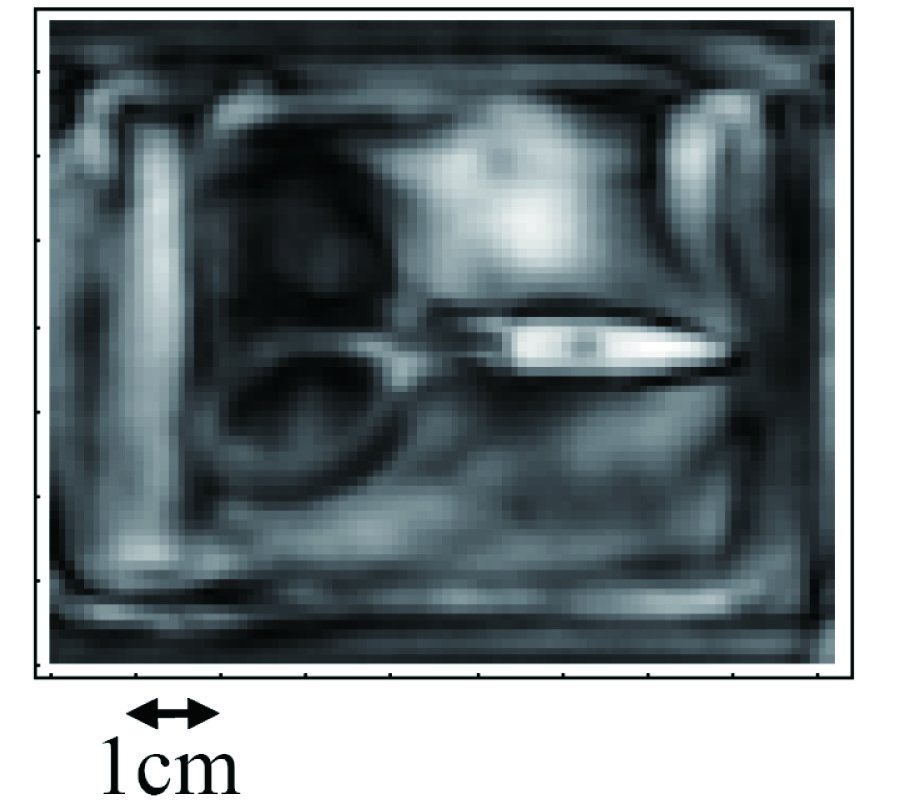
Detection andestimation of depth of shallow buried landmines using microwave remote sensing is a complex and computationally intensive task. Despite a lot of research to correctly locate and identify the buried landmines, and to estimate its depth using microwave remote sensing data which is essential for demining with minimal risk, a lot of uncertainties still exist. Therefore in this paper, an extensive study using a groundbasedX-bandscatterometer for detection of shallow buried landmine and estimation of its depth has been carriedout. An experimental setup consisting of a ground basedscatterometer operating in microwave X-band(10 GHz, 3 cm) has been usedto generate backscatter data in a gridof 24×24 and a series of experiments under laboratory conditions conducted using dummy landmines (without explosives) buried to different depths up to 10 cm in dry smooth sand. It is difficult to detect the buried landmine by visual inspection of the raw data; therefore a novel approach by fusion of image processing techniques with electromagnetic (EM) analysis has been evolvedfor detection andestimation of depth of the landmine. The raw data generated through the experiments was processedthrough a series of image processing steps and a region of interest segmentedusing Otsu andmaxim um entropy based thresholding methods for further processing. A detection figure test has been proposedat this stage to reduce false alarms. Genetic algorithm (GA) with an electromagnetic (EM) model fusion has been proposedto estimate the depth after segmenting a suspectedregion containing the mine. The main advantage of the proposed model is that it does not have any requirement of separate training and test data set to train the optimizer and validate the results. Analyses of the results indicate that it is possible to segment suspected region of interest containing the landmines in data obtained in microwave Xband using either of the two thresholding methods. The depth of buriedland mines estimatedusing the proposed GA optimized EM model was also foundto be in goodagreemen t with the actual depth. The proposedanalysis is expectedto be extremely useful in future in detection and estimation of the depth of landmines using satellite data in microwave X-band.
DEVELOPMENT OF A MODEL FOR DETECTION AND ESTIMATION OF DEPTH OF SHALLOW BURIED NON-METALLIC LANDMINE AT MICROWAVE X-BAND FREQUENCY
2007-10-25
PIER B
Vol. 1, 1-27
Using Microwave Energy to Treat Tumors
Ashraf Talaat Ibrahim
Recently, hyperthermia has been investigated as an alternate therapy for the treatment of tumors. This paper explored the feasibility of preferential hyperthermia as a method of treating deep seated tumors. The overall goal of this research was to determine theoretically if preferential heating could be used to attain the desired thermal dose (DTD) for a two cm diameter tumor. The simulations in this work show that, when using a single rod insert, the model cannot provide enough energy for an entire 2 cm diameter tumor to receive the DTD. However, when using an enhanced design model with multiple (4) rods inserts, the DTD could be attained in a tumor up to 3.5 cm in diameter. This study involved using the model a spherical 2 cm tumor, assuming the tumor is located in deep tissue with a constant perfusion rate and no major blood vessels nearby. This tumor was placed in the center of a cube of healthy tissue. To achieve the preferential heating of the tumor, a rod insert was placed in the center of the tumor and microwave energy was applied to the insert (in the form of volumetric heating). The thermal modeling of this system was based on the Pennes Bioheat equation with a maximum temperature limitation of 80C. Additional enhanced design models were also examined. These models include 2 cm and 4 cm tumors with four rod inserts symmetrically placed about the tumor and a 4 cm tumor model using a single rod insert with antennae attached to insert to increase energy distribution to the tumor. The simulations show that only the enhanced design cases with four rods inserts can achieve the DTD for an entire 2 cm tumor. The main purpose of this research was to determine if a minimally invasive treatment system using one or more rod inserts could be used to preferentially heat (and attain the DTD) a 2 cm diameter (or larger) tumor. Achieving the DTD for a 2 cm or larger tumor was important because currently the maximum diameter tumor that can be treated via hyperthermia is approximately 2 cm. In the remainder of this paper. I present the following: First, a background of prior research performed on various subject matters related to basic hyperthermia treatments, combination hyperthermia treatments, and computer modeling. After that, the development and verification of simplified thermal computer models of human tissue is described. Discussed next is the method of calculating the resulting thermal dose, the process of analyzing the results of the simulations of the thermal computer models. Once these introductory topics have been considered, the results of the computer modeling (using the primary thermal model) are presented. First, the effects of varying the perfusion rates in the computer model are explained. Then, a comparison of the overall treatment times, where the optimal treatment time was chosen, is discussed. Presented next is the results of varying the heat input rate. Rates examined include a constant heat generation rate, a constant insert temperature, a pulsed heat generation rate, various ramp heat generation rates, as well as exponential decay heat generation rates.
USING MICROWAVE ENERGY TO TREAT TUMORS
2007-10-24
PIER
Vol. 79, 209-223
An Electromagnetic Scattering Model for Soybean Canopy
Yang Du , Yingliang Luo , Wen-Zhe Yan and Jin Au Kong
Extraction of vegetation water content and soil moisture from microwave observations requires development of a high fidelity scattering model. A number of factors associated with the vegetation canopy and with the underlying bare soil should be taken into account. In this paper,w e propose an electromagnetic scattering model for a soybean canopy which includes the coherent effect due to the soybean structure and takes advantage of recently advanced scattering models for rough surface. We also take care of some other issues, such as including curvature effect in studying the ground bounce scattering mechanisms,and using array theory with perturbation for characterizing the inter-plant structure to account for the prevailing agriculture practice of soybean. Good agreements are obtained between the model results and measurement data.
AN ELECTROMAGNETIC SCATTERING MODEL FOR SOYBEAN CANOPY
2007-10-24
PIER
Vol. 79, 195-208
A Closed-Form Solution to Analyze RCS of Cavity with Rectangular Cross Section
Le Xu , Jin Tian and Xiao-Wei Shi
In this paper, a set of formulas to analyze the scattering from open-ended rectangular cavity is presented on the basis of Shooting and Bouncing Ray (SBR) method. By analyzing the ray paths inside the cavity, the Physical-Optics (PO) integration on the aperture is carried out in a close form. Using closed-form solution, the Radar Cross Section (RCS) of cavity in high frequency can be studied sententiously and accurately. All the peaks and nulls in the RCS plot of cavity are predicted successfully with the formulas deduced in the paper, and a 3-D scattering pattern of rectangular cavity is simulated by the proposed method.
A CLOSED-FORM SOLUTION TO ANALYZE RCS OF CAVITY WITH RECTANGULAR CROSS SECTION
2007-10-20
PIER
Vol. 79, 179-193
Nonlinear Stability Analysis of Microwave Oscillators Using the Periodic Averaging Method
Hamid Vahdati and Abdolali Abdipour
In this paper an approach for stability analysis of microwave oscillators is proposed. Using the perturbation theory and averaging method, a theorem which relates the oscillation stability to the stability of the periodic average of the circuit's Jacobian is mentioned. Using this theorem, a criterion for oscillation stability is devised. The proposed criterion is applied to the stability analysis of a negative resistance diode oscillators and a Colpitts oscillator. This method is readily applicable to microwave CAD routines.
NONLINEAR STABILITY ANALYSIS OF MICROWAVE OSCILLATORS USING THE  PERIODIC AVERAGING METHOD
2007-10-19
PIER
Vol. 79, 151-178
FAST Iterative Solution Methods in Electromagnetic Scattering
Bruno Carpentieri
In this paper we describe an effective and inherently parallel approximate inverse preconditioner based on Frobenius-norm minimization that can be easily combined with the fast multipole method. We show the numerical and parallel scalability of the preconditioner for solving large-scale dense linear systems of equations arising from the discretization of boundary integral equations in electromagnetism. We introduce simple deflating strategies based on low-rank matrix updates that can enhance the robustness of the approximate inverse on tough problems. Finally, we illustrate how to improve the locality of the preconditioner by using nested iterative schemes with different levels of accuracy for the matrix-vector products. Experiments on a set of model problems representative of realistic scattering simulations in industry illustrate the potential of the proposed techniques for solving large-scale applications in electromagnetism.
FAST ITERATIVE SOLUTION METHODS IN ELECTROMAGNETIC SCATTERING
2007-10-19
PIER
Vol. 79, 137-150
Application of the Invasive Weed Optimization Technique for Antenna Configurations
Ali Reza Mallahzadeh , Homayoon Oraizi and Zahra Davoodi-Rad
In this paper a novel numerical optimization technique for antenna configurations is introduced. This algorithm is inspired from colonizing weeds, which is shown to be very robust and adaptive to changes in the environment. Thus, capturing their properties would lead to a powerful optimization algorithm. The feasibility, efficiency and effectiveness of the proposed algorithm for optimization of antenna problems are examined by a set of antenna configurations. The obtained results are compared with a particle swarm optimization technique which is widely used in antenna optimization. Numerical results show that there is a good agreement between the corresponding results.
APPLICATION OF THE INVASIVE WEED OPTIMIZATION TECHNIQUE FOR ANTENNA CONFIGURATIONS
2007-10-19
PIER
Vol. 79, 119-136
Analytical Investigation and Evaluation of Pulse Broadening Factor Propagating through Nonlinear Optical Fibers (Traditional and Optimum Dispersion Compensated Fibers)
Ghassem Rostami , Ali Rostami and Nosrat Granpayeh
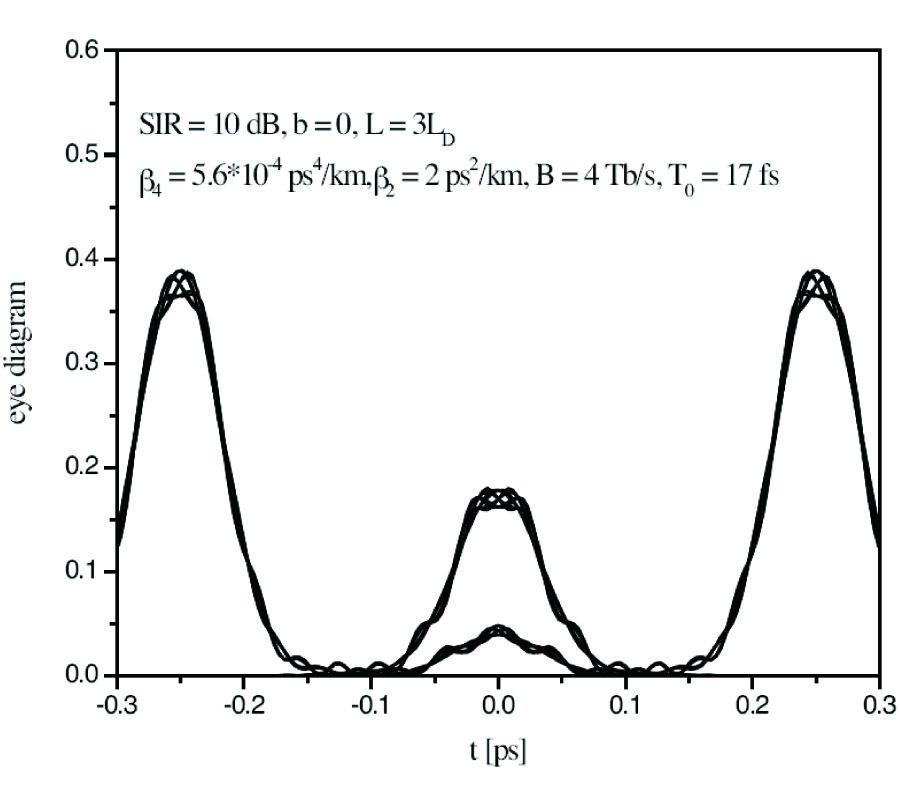
In this paper, analytical relation for pulse width evolution and broadening in fiber systems using the Volterra series transfer function (VSTF) in linear and nonlinear cases are derived. This evaluation is done for traditional and optimum dispersion compensated fibers. Effects of group velocity dispersion (GVD) and self-phase modulation (SPM) are taken into account. It is shown that the analytical formulation can be applied to design and analysis the long hauls practical systems, and is helpful in understanding the pulse distortion caused by the interaction between SPM and GVD. The proposed relations are extracted analytically and for the first time pulse broadening factor in general case is derived.
ANALYTICAL INVESTIGATION AND EVALUATION OF PULSE BROADENING FACTOR PROPAGATING THROUGH NONLINEAR OPTICAL FIBERS 
(TRADITIONAL AND OPTIMUM DISPERSION COMPENSATED FIBERS)
2007-10-17
PIER
Vol. 79, 107-118
An Exact Solution of Coherent Wave Propagation in Rain Medium with Realistic Raindrop Shapes
Mohammad Bahrami and Jalil Rashed-Mohassel
Computation of coherent electromagnetic wave propagation through rain medium with a realistic raindrop shape is the subject of this work. T-Matrix approach towards the computation of forward scattering amplitude of raindrops is considered numerically exact. The results of Total Cross Section and forward scattering amplitude due to raindrops with MPP model shape are calculated by T-Matrix method. Both horizontal and vertical polarization of incident wave are considered where specific attenuation, phase shift and cross polarization discrimination (XPD) for terrestrial coherent electromagnetic wave propagation in the frequency range of 3-300 GHz are presented. Furthermore the effect of temperature on specific attenuation vs. frequency is investigated.
AN EXACT SOLUTION OF COHERENT WAVE PROPAGATION IN RAIN MEDIUM WITH REALISTIC RAINDROP SHAPES
2007-10-17
PIER
Vol. 78, 437-455
Quasi-Metallic-Wall Technique for Increasing the Efficiency of CB-CPW Antennas
Mourad Nedil , Mohamed Adnane Habib , Tayeb Denidni and Halim Boutayeb
This paper presents a new quasi-metallic-wall technique for improving the gain of CB-CPW single antenna and arrays. This technique allows reducing the surface wave losses of the CB-CPW antennas, which decreases the antenna radiation efficiency. It consists on including pins as quasi-metallic wall between the upper and lower ground planes in the CB-CPW antenna structure. To validate the proposed approach, a CB-CPW-slot antenna fed through an inductive coupled CPW-line operating at 5.8 GHz is considered. This approach allows to increase the antenna efficiency from 70% to 95% around the operating frequency. The antenna gain achieves then an improvement of 2 dBi. Also, an antenna array is designed and the pins technique is also applied to prove its applicability for the array case. An efficiency increase from 64% to 95% was achieved. Both single antenna and antenna array withpins were fabricated and measured. A good agreement between numerical and experimental results was obtained.
QUASI-METALLIC-WALL TECHNIQUE FOR INCREASING THE EFFICIENCY OF CB-CPW ANTENNAS
2007-10-17
PIER
Vol. 78, 421-436
High Gain Rectangular Broad Band Microstrip Antenna with Embedded Negative Capacitor and Chip Resistor
Adnan Kaya
Various communication systems require single radiating element operating in wide band. In this paper, a novel active integrated single microstrip antenna is proposed and its radiation pattern and gain performance is optimized with analysis. The reactive loading is provided by a negative capacitor section embedded within the patch. The active negative capacitor is made of a field-effect transistor that exhibits negative resistance as well as capacitance. It can, therefore, compensate the loss of an inductor. A microstrip patch operating at 10.5 GHz having 12.2% bandwidth has been utilized as a reference antenna. With the proposed antenna design, the antenna radiation pattern can be as large as about 1.5 times that of an antenna without reactive loading. In addition, it has been shown that active compensation significantly improves the matching level.
HIGH GAIN RECTANGULAR BROAD BAND MICROSTRIP ANTENNA WITH EMBEDDED NEGATIVE CAPACITOR AND CHIP RESISTOR
2007-10-10
PIER
Vol. 79, 91-106
Monte Carlo Integration Technique for the Analysis of Electromagnetic Scattering from Conducting Surfaces
Mrinal Mishra and Nisha Gupta
A new numerical method is proposed for the analysis of electromagnetic scattering from conducting surfaces. The method involves Monte Carlo integration technique in the Method of Moments solution of the Electric Field Integral Equation for determining the unknown induced current distribution on the surface of the scatterers. The unknown current distribution is represented in terms of a modified entire domain polynomial basis functions satisfying the appropriate edge conditions and symmetry conditions of the problem. This leads to very small order of the Method of Moments matrix as compared to the conventional sub-domain basis functions. The accuracy and the effectiveness of the method are demonstrated in three cases of scattering from conducting circular disks and results are compared with the solutions using conventional sub-domain basis functions. While the sub domain analysis is incapable of handling large domain problems, the proposed method overcomes this limitation. It is also observed that the proposed method is superior to conventional sub-domain method in dealing with singularity problem of the integral equation easily and efficiently.
MONTE CARLO INTEGRATION TECHNIQUE FOR THE ANALYSIS OF ELECTROMAGNETIC SCATTERING FROM CONDUCTING SURFACES
2007-10-10
PIER
Vol. 79, 75-90
Pattern Synthesis of Conformal Antenna Array by the Hybrid Genetic Algorithm
Zhi Xu , Hong Li , Qi-Zhong Liu and Jian-Ying Li
Desired far-field radiation patterns of 5 × 11 conformal antenna array are synthesized using a hybrid genetic algorithm (HGA), which combines the simplified quadratic interpolation (SQI) method and the real-coded genetic algorithm (RCGA). This hybrid genetic algorithm is shown to outperform standard genetic algorithm (GA) when used to synthesize amplitude weights of the elements to satisfy specified deep notches, nulls and average sidelobe level constraints. The HGA procedure appears to be a high effective means to compensate the mutual coupling effects on the individual element patterns for the conformal antenna array.
PATTERN SYNTHESIS OF CONFORMAL ANTENNA ARRAY BY THE HYBRID GENETIC ALGORITHM
2007-10-08
PIER
Vol. 79, 59-74
Modal Analysis of Extraordinary Transmission through an Array of Subwavelength Slits
Galia Ghazi and Mahmoud Shahabadi
Using eigen-modes of a one-dimensional array of slits together with a mode matching technique, we investigate the extraordinary transmission through a subwavelength grating. The analysis serves to determine the contribution of various transmission mechanisms to the overall transmission. It is shown that surface plasmon polaritons excited on the input interface of the grating at certain wavelengths can absorb the incident power and thus reduce the total transmitted power. We also examine the characteristics of the different types of modes involved in the transmission through a metallic grating.
MODAL ANALYSIS OF EXTRAORDINARY TRANSMISSION THROUGH AN ARRAY OF SUBWAVELENGTH SLITS
2007-10-08
PIER
Vol. 79, 47-58
Scattering from Semi-Elliptic Channel Loaded with Impedance Elliptical Cylinder
Mehdi Zahedi and Mohammad Abrishamian
Analytical TM scattering from semi-elliptic channel loaded with confocal elliptic cylindrical impedance core is investigated. Fields in every regions are expressed appropriately in terms of Mathieu functions. Applying boundary conditions at the impedance core and across different regions of channels and using orthogonality of angular Mathieu functions result in two simultaneous set of equations which would be solved numerically.
SCATTERING FROM SEMI-ELLIPTIC CHANNEL LOADED WITH IMPEDANCE ELLIPTICAL CYLINDER
2007-10-05
PIER
Vol. 79, 39-46
A Novel Design of Dual Circularly Polarized Antenna Fed by L-Strip
Gao-Lei Wu , Wei Mu , Gang Zhao and Yong-Chang Jiao
A novel design of dual circularly polarized antenna is proposed. By etching cross slots on the patch, circular polarization (CP) is achieved. The patch is fed by two L-strips which provide wide impedance bandwidth and high isolation level. Polarization diversity between left-hand circular polarization (LHCP) and right-hand circular polarization (RHCP) is provided by switching the two ports and both LHCP and RHCP signals can be received simultaneously. The experimental results show that the 3 dB axial ratio CP bandwidth of the proposed design is increased two times, as compared to a referential CP antenna fed by L-strip. The details of experimental results for the proposed design are presented and discussed.
A NOVEL DESIGN OF DUAL CIRCULARLY POLARIZED ANTENNA FED BY L-STRIP
2007-10-05
PIER
Vol. 79, 23-38
Quad Ridged Horn Antenna for UWB Applications
Ramin Dehdasht-Heydari , Hamid Reza Hassani and Ali Reza Mallahzadeh
This paper describes a novel design of a dual-polarized ultra wideband horn antenna. Based on a VSWR ≤ 2.6, the bandwidth of the designed UWB horn antenna is from 8-18 GHz, most suitable for radar systems. A newcoaxial line to quadruple-ridged waveguide transition and a newtec hnique for tapering the flared section of the horn is introduced to improve the return loss and matching of the impedance, respectively. Results of simulation for VSWR, isolation, gain and radiation pattern of designed horn antenna are presented and discussed.
QUAD RIDGED HORN ANTENNA FOR UWB APPLICATIONS
2007-10-05
PIER
Vol. 79, 1-21
Closed–Form Solution to the Scattering of a Skew Strip Field by Metallic PIN in a Slab
Constantinos Valagiannopoulos
A tiny metallic cylinder placed into a planar dielectric waveguide scatters the field developed by a current-carrying skew strip centralized at the middle of the slab. Due to the small size of the scatterer, the induced surface current is taken independent of the azimuthal angle. The Green's function of the problem is expressed in closed form and it is inserted to the scattering integral after the polar equation of the strip has been determined. The behavior of nearfield quantities in the slab, with respect to geometrical and material parameters, is observed and examined.
CLOSED–FORM SOLUTION TO THE SCATTERING OF A SKEW STRIP FIELD BY METALLIC PIN IN A SLAB