Search Results(13876)

PIER
Vol. 39, 47-59
FDTD Modeling of a Vibrating Intrinsic ReverberationChamber
The field conditions inside a vibrating intrinsic reverberation chamber (VIRC) are examined. By the use of the Finite Difference Time Domain (FDTD) method,the field strength in the VIRC is calculated,and an investigation of the field uniformity and the field distribution is performed. The modes inside the cavity are excited by applying an appropriately modulated waveform on a dipoles gap. The use of this kind of waveform enables the study of the field conditions over a wide frequency range. On the contrary,an implementation of the field excitation with an unmodulated carrier would require a simulation of the FDTD method at each frequency of interest. Thus,a considerable reduction in the simulation time is achieved. The results presented,describing the field behavior inside the enclosure,agree with theory to a high degree.
FDTD Modeling of a Vibrating Intrinsic Reverberation
Chamber
PIER
Vol. 39, 1-45
Time-Domain EFIE, MFIE, and CFIE Formulations Using Laguerre Polynomials as Temporal Basis Functions for the Analysis of Transient Scattering from Arbitrary Shaped Conducting Structures
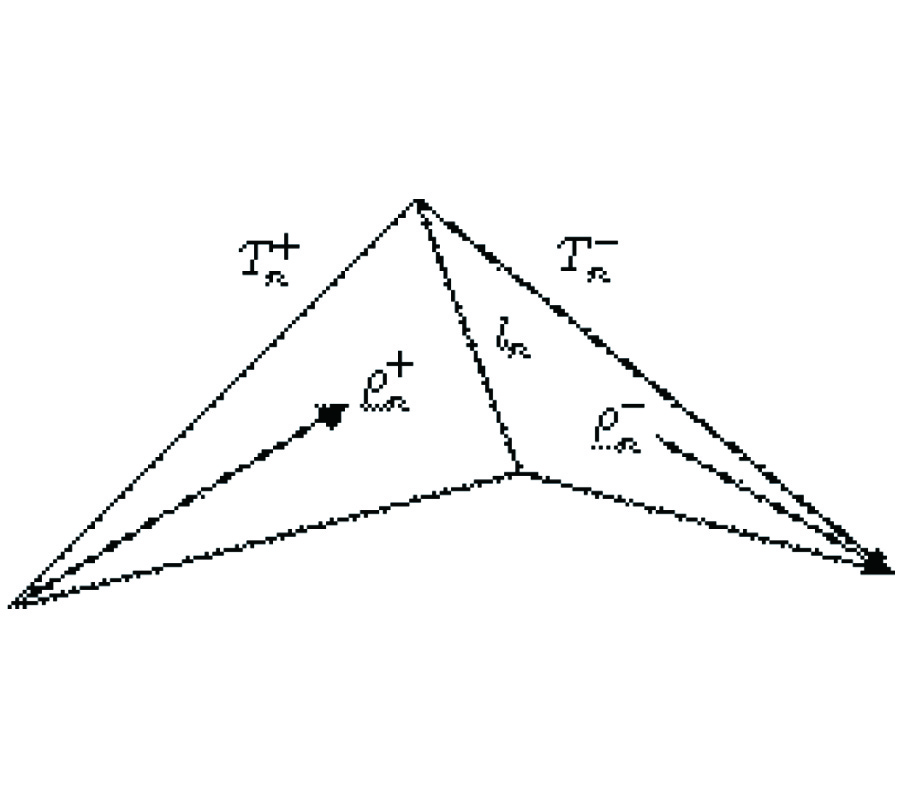
In this paper, we present time-domain integral equation (TDIE) formulations for analyzing transient electromagnetic responses from three-dimensional (3-D) arbitrary shaped closed conducting bodies using the time-domain electric field integral equation (TDEFIE), the time-domain magnetic field integral equation (TD-MFIE), and the time-domain combined field integral equation (TD-CFIE). Instead of the conventional marching-on in time (MOT) technique, the solution methods in this paper are based on the Galerkin's method that involves separate spatial and temporal testing procedure. Triangular patch basis functions are used for spatial expansion and testing functions for arbitrarily shaped 3-D structures. The timedomain unknown coefficient is approximated by using an orthonormal basis function set that is derived from the Laguerre functions. These basis functions are also used as temporal testing. Using these Laguerre functions it is possible to evaluate the time derivatives in an analytic fashion. We also propose a second alternative formulation to solve the TDIE. The methods to be described result in very accurate and stable transient responses from conducting objects. Detailed mathematical steps are included and representative numerical results are presented and compared.
Time-Domain EFIE, MFIE, and CFIE Formulations Using Laguerre Polynomials 
 as Temporal Basis Functions for the Analysis of Transient Scattering from 
 Arbitrary Shaped Conducting Structures
PIER
Vol. 36, 21-59
Theory of Optical Bullets
This paper is a theoretical study of solitons in multidimensions, also known as optical bullets, that is governed by the nonlinear Schrodinger's equation in 1 + 3 dimensions. The parameter dynamics of such multidimensional solitons has been obtained. The study is extended to obtain the adiabatic evolution of soliton parameters in presence of the perturbation terms. Furthermore, the parameter dynamics for the vector multidimensional solitons and including the presence of the perturbation terms has been obtained.
PIER
Vol. 33, 261-298
Plane Wave Scattering by an Achiral Multilayered Sphere in anInfinitely Extended Chiral Host Medium
L.-W. Li , M.-S. Leong , T. S. Yeo and J. A. Kong
An analytic solution to the problem of plane wave scattering by an achiral multilayered sphere in a host chiral medium is obtained in this paper. By applying the radiation-to-scattering transform, the scattering problem can be considered as the specific radiation problems where the radiated source equivalent to the electromagnetic plane wave is located at infinity. The volumetric currents which generate right circular polarization (RCP) and left circular polarization (LCP) plane waves,resp ectively, are found. An integral equation consisting the volumetric current distributions and the dyadic Green's functions is formulated to obtain both the equivalent incident wave fields and the scattered fields. Two-layered lossless and lossy dielectric spheres and a conducting sphere with a dielectric coated layer buried in an infinitely extended host chiral medium are considered and the expressions for the scattered fields in far-zone are found in explicit analytic form. The characteristics of scattered fields are illustrated and discussed in terms of the circular polarization degree and linear polarization degree against different chiral admittances and sizes.
Plane Wave Scattering by an Achiral Multilayered Sphere in an
Infinitely Extended Chiral Host Medium
PIER
Vol. 33, 237-259
The Influence of the Finite Size of the Illuminated Areaon Electromagnetic Scattering from Surfaces with and Without Slicks
Alla I. Timchenko and Klaus Schunemann
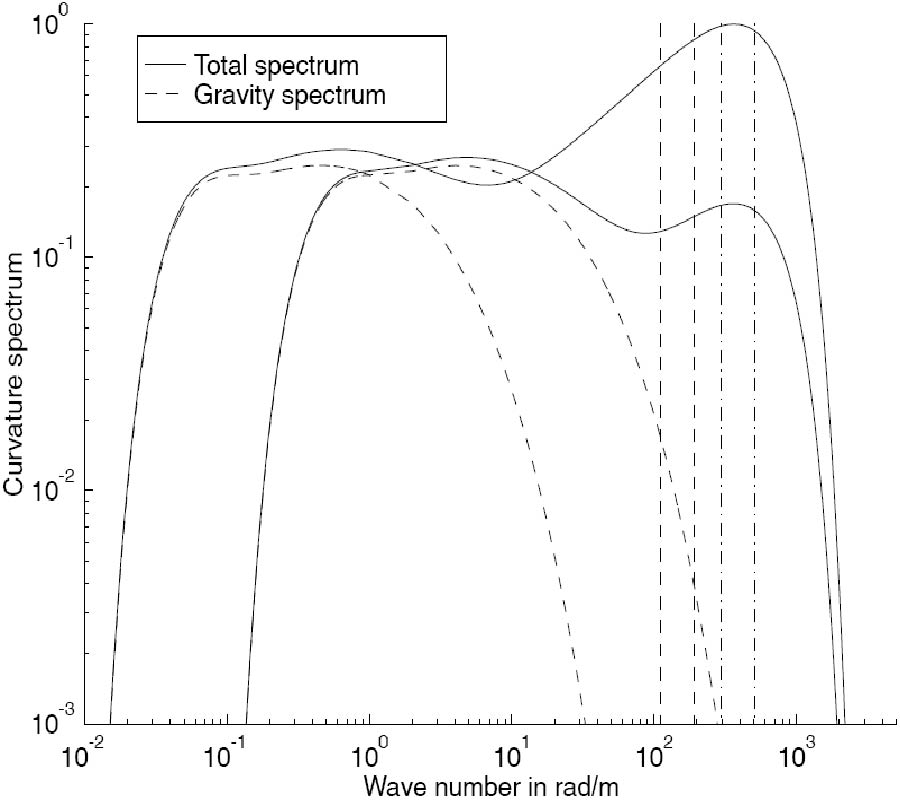
In this paper, the problem of scattering from sea surface with and without oil slicks is investigated taking the finite size of the illuminated area into account. A model of an inhomogeneous random rough surface with finite size of the scattering area is considered. To apply the results for a broad range of the random surface spectrum, an approach is developed which extends the range of validity beyond that of small perturbation theory. The general expression obtained for the scattering cross section takes into account a modulation of the rough surface by long surface waves. Analytical and numerical studies of the scattering cross section are provided to investigate the role of different mechanisms of scattering from various parts of the surface spectrum, and of diffraction caused by the finite size of the area. It is shown that the area size may affect the normalized scattering cross section in the case of the surface with a slick. Possibilities to explain the features of the suppression of the backscattering by oil slicks 238 Timchenko, Serebryannikov, and Schünemann are discussed. Furthermore, a way to distinguish between different scattering mechanisms is suggested.
The Influence of the Finite Size of the Illuminated Area
on Electromagnetic Scattering from Surfaces with and without Slicks
PIER
Vol. 33, 219-235
Analytical Asymptotic Extraction Technique for the Analysis of Bend Discontinuity
Chan-Byoung Chae , S.-O. Park and Kyoung Whoan Suh
The purpose of this paper is to use the analytical asymptotic extraction technique to analyze the bend discontinuity. We show that the derived analytical techniques significantly reduce the computational time while improving the accuracy compared to the conventional method. Especially, the advantage of the proposed method can eliminate the truncation error for evaluating the asymptotic part of impedance matrix. The proposed method has applied for solving the bend discontinuity, and verified with measurement results.
Analytical Asymptotic Extraction Technique for the Analysis of Bend Discontinuity
PIER
Vol. 33, 199-218
Numerical Analysis of Scattered Power from a Layer of RandomMedium Containing Many Particles of High Dielectric Constant -- Application to the Detection of a Water Content of Soil --
Tatsuro Matsuoka and Mitsuo Tateiba
This paper shows the scattering cross sections of a random medium which is a simple model of moist soil by analyzing a dense medium radiative transfer equation (DMRT). The parameters in the DMRT, the extinction rate and the scattering coefficient, are calculated by a multiple scattering method called our method in this paper. Our method is valid for particles with high dielectric constant like water drops. Characteristics of the scattering cross section are made clear by changing the fractional volume of water and the incident angle, polarization of incident waves. We discuss the possibility of detection of a water content in this approach by using the characteristics of the scattering cross section.
Numerical Analysis of Scattered Power from a Layer of Random
Medium Containing Many Particles of High Dielectric Constant -- Application to the Detection 
of a Water Content of Soil --
PIER
Vol. 33, 183-197
Diffraction of Scalar Pulses at Plane Apertures: A Different Approach
Pierre Hillion
We generalize to scalar pulses with finite duration a previous work [1] in which a new approach to diffraction at plane apertures is developed for scalar harmonic waves. A particular attention is given to rectangular pulse modulated signals for which an exact solution to the diffraction problem is obtained. As an example, the diffraction of a truncated harmonic pulse is investigated and the numerical problems to be solved are discussed with an important simplification when one is only interested in the diffraction pattern far from the aperture. More works are needed for apertures with no simple geometrical form.
Diffraction of Scalar Pulses at Plane Apertures: A Different Approach
PIER
Vol. 33, 167-182
Null Steering of Linear Antenna Arrays Using a Modified Tabu Search Algorithm
Kerim Guney and Ali Akdagli
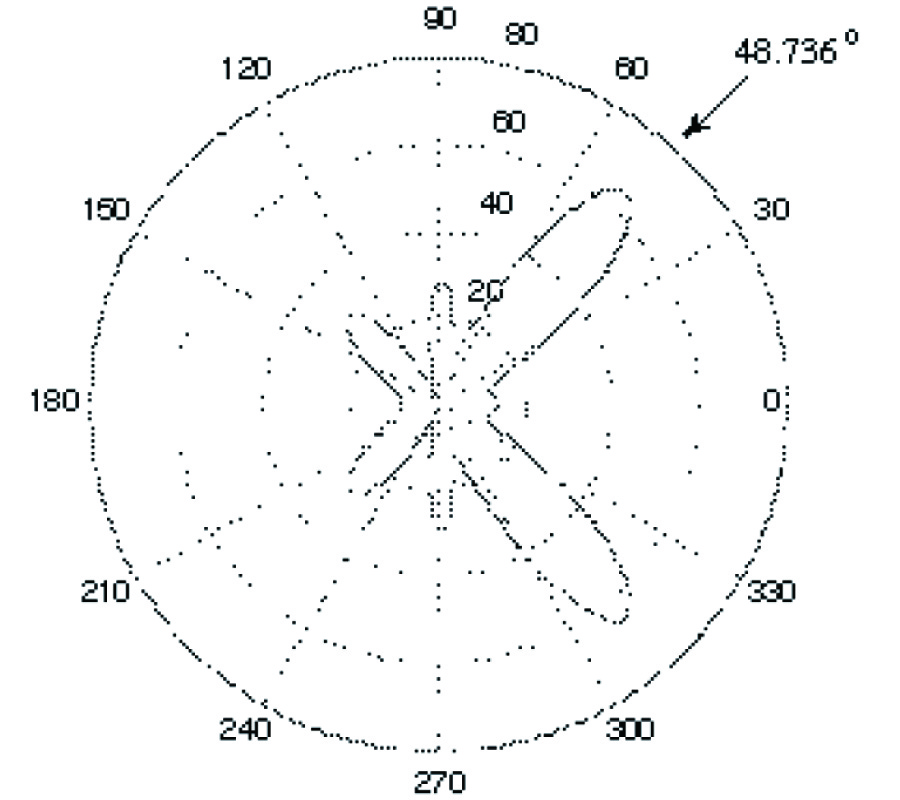
Auseful and flexible method based on the tabu search algorithm for the pattern synthesis of linear antenna arrays with the prescribed nulls is presented. Nulling of the pattern is achieved by controlling the amplitude-only and both the amplitude and phase of each array element. To show the versatility of the present method, some design specifications such as the sidelobe level, the null depth and the dynamic range ratio are considered by introducing a set of weighting factors in the cost function constructed for the tabu search algorithm. Several illustrative examples of Chebyshev pattern with the imposed single, multiple and broad nulls are given.
Null Steering of Linear Antenna Arrays Using a Modified Tabu Search Algorithm
PIER
Vol. 33, 141-165
Multilayered Media Green's Functions for Mpie with General Electric and Magnetic Sources by the Hertz Potential Approach
Pasi Yla-Oijala , Matti Taskinen and Jukka Sarvas
A complete set of three dimensional multilayered media Green's functions is presentedfor general electric andmagnetic sources. The Green's functions are derived in the mixed potential form, which is identical with the Michalski-Zheng C-formulation. The approach appliedin this paper is basedon the classical Hertz potential representation. A special emphasis is on the formulation of the dyadic Green's functions GHJ and GEM. In these functions the derivatives due to the curl operator are taken in the spectral domain. This avoids the needof the numerical differentiation. Furthermore, it is foundthat the Hertzian potentials satisfy several useful duality and reciprocity relations. By these relations the computational efficiency of the Hertz potential approach can be significantly improvedandthe number of requiredSommerfeldin tegrals can be essentially reduced. We show that all spectral domain Green's functions can be obtained from only two spectral domain Hertzian potentials, which correspond to the TE component of a vertical magnetic dipole and the TM component of a vertical electric dipole. The derived formulas are verified by numerical examples.
Multilayered Media Green's Functions for MPIE with General Electric and Magnetic 
Sources by the Hertz Potential Approach
PIER
Vol. 33, 119-139
Dynamics of Gaussian and Super-Gaussian Solitons in BirefringentOptical Fibers
The variational principle is employed to obtain the parameters dynamics of Gaussian and super-Gaussian chirped solitons which propagates through birefringent optical fibers that is governed by the dispersion-managed vector nonlinear Schrödinger's equation. The waveform deviates from that of a classical soliton. The periodically changing strong chirp of such a soliton reduces the effective nonlinearity that is necessary for balancing the local dispersion. This study is extended to obtain the adiabatic evolution of the parameters of such a soliton in presence of perturbation terms.
Dynamics of Gaussian and Super-Gaussian Solitons in Birefringent
Optical Fibers
PIER
Vol. 33, 97-118
Bandwidth Enhancement for Split CylindricalDielectric Resonator Antennas
Ahmed Kishk , Allen Wilburn Glisson and G. P. Junker
A numerical study of split cylindrical dielectric resonator antennas on a conducting ground plane excited by a coaxial probe is presented. The numerical solution is based on the method of moments for a body of revolution coupled to a wire. We consider in this study bandwidth enhancement for dielectric resonators excited in the HEM11 and HEM12 modes for the split dielectric cylinder. A wideband performance of about 35% has been achieved for the antenna and experimental measurements have verified this finding.
Bandwidth Enhancement for Split Cylindrical
Dielectric Resonator Antennas
PIER
Vol. 33, 69-96
On the Pulse Velocity in Absorbing and Nonlinear Media and Parallels with the Quantum Mechanics
I. Gurwich
A novel definition of pulse propagation velocity is introduced. It is shown that the present definition does not lead to confusing results such as complex velocity or velocity exceeding the light velocity in the vacuum. Also shown are the parallels of this definition to the classical and quantumm echanics conceptions. Using the present definition reveals certain analogies between electromagnetic pulse propagation in the classical physics and de Broglie wave-packets propagation in the quantumm echanics, thus adding support to its validity.
On the Pulse Velocity in Absorbing and Nonlinear Media and Parallels with the Quantum Mechanics
PIER
Vol. 33, 45-68
Probabilistic Response of a Transmission Line in a DissipativeMedium Excited by an Oblique Plane Wave
P. Trakadas , Panagiotis Papakanellos and Christos N. Capsalis
In this paper a statistical model of the excitation of a conjugate-matched two-wire transmission line in a lossy half space by an electromagnetic (EM) wave is developed. The EM field, radiating in the air, is obliquely incident to the interface defined by the lossy medium and air. Three different orientations of the transmission line for horizontal and vertical polarization of the EM field are examined. The objective is to derive analytic formulas for the probability density function (pdf) and cumulative distribution function (cdf) of the induced near-end and far-end voltage magnitudes in each case, taking into consideration the statistical behavior of the amplitude of the incident electric field vector and the angle of incidence as well. Consequently, the mean values as well as the typical deviation values are presented and the contribution of each one of the parameters is discussed in detail. Finally, a chi-square goodness-of-fit test is applied in order to fit the distribution of the induced voltage with one of the known distributions.
Probabilistic Response of a Transmission Line in a Dissipative
Medium Excited by an Oblique Plane Wave
PIER
Vol. 33, 29-43
FDTD Analysis of Stacked Microstrip Antenna with High Gain
Eisuke Nishiyama , Masayoshi Aikawa and Shigeru Egashira
The finite-difference time-domain (FDTD) method is applied to the probe-fed square patch microstrip antenna stacked a parasitic patch for high gain. The input impedance, the directivity, the far field radiation patterns and the near field distributions are calculated and the relation between the antenna structure and the high gain is investigated The calculated input impedance and radiation patterns agree well with the experimental values. When the size of parasitic patch is nearly equal to the fed patch and the distance between the fed patch and the parasitic patch is about a half wavelength, the maximum gain of 9.43 dBi is obtained. In this case, the region between the fed patch and the parasitic patch forms a resonator. Then, the amplitude of current distribution on the parasitic patch becomes large and its phase is opposite to the current on the fed patch. The amplitude of electromagnetic fields of the space between the patches are increased.
FDTD Analysis of Stacked Microstrip Antenna with High Gain
PIER
Vol. 30, 1-32
Hybrid Ray-FDTD Moving Coordinate Frame Approach for Long Range Tracking of Collimated Wavepackets
Y. Pemper , Ehud Heyman , Raphael Kastner and Richard Ziolkowski
Modeling of long range propagation of collimated wavepackets poses some major difficulties with the conventional FDTD scheme. The difficulties arise from the vast computer resources needed to discretize the entire region of interest and the accumulation of numerical dispersion error. As a means for circumventing these difficulties, the moving frame FDTD approach is in this work. In this approach, the computational grid size is limited to the order of the pulse length, and it and moves along with the pulse. The issues discussed in conjunction with this method are those of numerical dispersion, which is shown to be reduced substantially compared with the stationary formulation, numerical stability, and absorbing boundary conditions at the leading, trailing and side boundaries, Numerical results of pulsed beam propagation in both homogeneous and plane stratified media are shown, and the capability of the method is demonstrated with propagation distances exceeding the order of 104 pulse lengths.
Hybrid Ray-Fdtd Moving Coordinate Frame 
Approach for Long Range Tracking of 
Collimated Wavepackets
Direct Integration of Field Equations
Quantification of the Induced Electric Field 
in a Material Sample Placed within an 
Energized Cylindrical Cavity
Mode-Matching Analysis of the Induced 
Electric Field in a Material Sample Placed
within an Energized Cylindrical Cavity
Microwave Imaging of Parallel Perfectly 
Conducting Cylinders Using Real-Coded 
Genetic Algorithm Coupled with 
Newton-Kantorivitch Method