Search Results(13793)

2018-01-15
PIER B
Vol. 79, 127-147
Approximative Computation Methods for Monostatic Scattering from Axially Symmetric Objects
Andreas Ericsson , Daniel Sjöberg , Christer Larsson and Torleif Martin
Two approximation methods are presented for fast calculations of the monostatic scattering from axially symmetric scatterers coated with electromagnetic absorbers. The methods are designed for plane wave illumination parallel to the axis of rotation of the scatterer. The first method is based on simulating the scattering of a perfect electric conductor (PEC) enclosing the absorber coated scatterer, and multiplying the result with the squared magnitude of the absorber reflection coecient in a planar scenario. The second method is based on simulating the scattering scenario in a physical optics (PO) solver, where the electromagnetic absorber is treated as reflection dyadic at the outer surface of the scatterer. Both methods result in a significant acceleration in computation speed in comparison to full wave methods, where the PO method carries out the computations in a number of seconds. The monostatic scattering from different geometries have been investigated, and parametric sweeps were carried out to test the limits where the methods yield accurate results. For specular reflections, the approximation methods yield very accurate results compared to full wave simulations when the radius of curvature is on the order of half a wavelength or larger of the incident signal. It is also concluded that the accuracy of the two methods varies depending on what type of absorber is applied to the scatterer, and that absorbers based on ``volume losses'' such as a carbon doped foam absorber and a thin magnetic absorber yield better results than absorbers based on resistive sheets, such as a Salisbury absorber.
APPROXIMATIVE COMPUTATION METHODS FOR MONOSTATIC SCATTERING FROM AXIALLY SYMMETRIC OBJECTS
2018-01-15
PIER Letters
Vol. 72, 99-106
A Compact via-Less Metamaterial Wideband Bandpass Filter Using Split Circular Rings and Rectangular Stub
Dilip Kumar Choudhary and Raghvendra Kumar Chaudhary
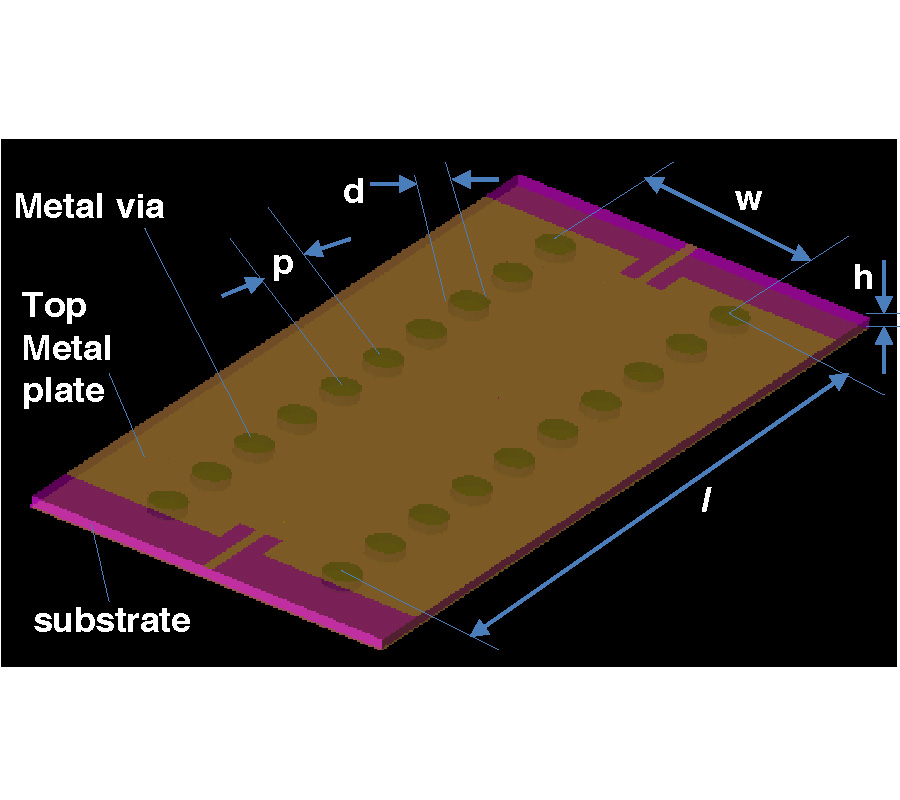
A compact via-less metamaterial (MTM) wideband bandpass filter using split circular rings, meander-line and rectangular stub is reported in this letter. The split circular rings produce series capacitance and a meander line along with a rectangular stub gives shunt inductance and capacitance. The measured insertion loss has 0.60 dB and return loss above 15 dB with 3 dB fractional bandwidth 74.28% at centre frequency 3.5 GHz. The zeroth order resonance frequency of proposed filter is guarded by shunt parameters due to its open ended boundary condition. The electrical size of the suggested filter is 0.12λgx0.22λg at ZOR frequency of 2.3 GHz. The designed structure has been fabricated and experimentally validated. The designed filter offers group delay variation between 0.2 ns to 0.7 ns within the passband. It is suitable for WLAN, WiMAX, Bluetooth applications.
A COMPACT VIA-LESS METAMATERIAL WIDEBAND BANDPASS FILTER USING SPLIT CIRCULAR RINGS AND RECTANGULAR STUB
2018-01-14
PIER M
Vol. 63, 207-215
Frequency Diverse Array Using Butler Matrix for Secure Wireless Communications.
Shaddrack Yaw Nusenu , Hui Chen , Wen-Qin Wang , Shilong Ji and Obour A. K. Opuni-Boachie
An antenna array system configured to offer directional dependent modulation has the capability to prevent eavesdroppers' attacks, thereby enhancing the security level of data transmission. In this paper, we propose artificial-noise-aided directional modulation transmitter utilizing a 4×4 Butler matrix with a four-element 2-D (i.e., range and angle) frequency diverse array (FDA) antenna to achieve secure transmissions, which outperforms the 1-D (i.e, angle) phased array scheme. The proposed scheme utilizes FDA Butler matrix excited by information data and injected artificial noise interference which radiates along all directions except the main information data direction. Thus, the radiation pattern during a particular transmission period will be range-angle dependent. The proposed scheme is evaluated by using constellation points in IQ space, bit error probability (BER), and secrecy capacity. Simulation results demonstrate that: 1) our scheme scrambles the constellation points along undesired direction(s) in both amplitude and phase, while preserving a clear constellation points along the pre-specified direction(s); 2) the scheme achieves better BER and secrecy capacity than that of the phased array based directional modulation scheme and other existing scheme; 3) the scheme significantly improve security performance especially in the range dimension.
FREQUENCY DIVERSE ARRAY USING BUTLER MATRIX FOR SECURE WIRELESS COMMUNICATIONS.
2018-01-13
PIER Letters
Vol. 72, 91-97
A Broadband High-Efficiency Rectifier Based on Two-Level Impedance Match Network
Ling-Feng Li , Xuexia Yang and Er-Jia Liu
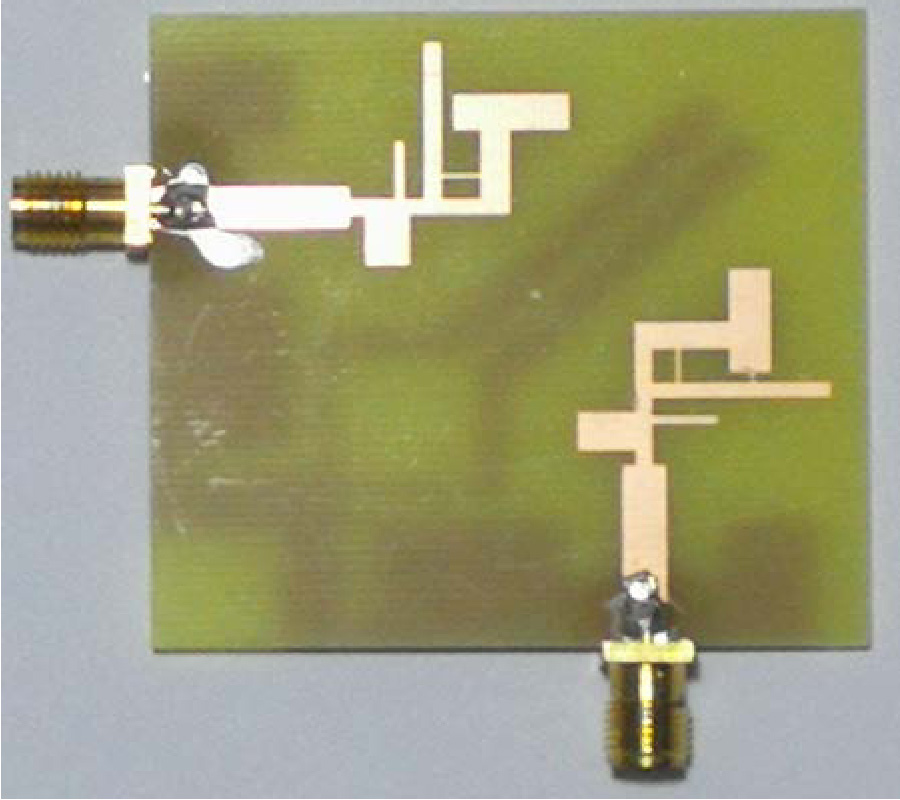
A broadband high-efficiency rectifier with shunt-diode circuit topological structure is presented in this paper. By utilizing the two-level impedance match network, the rectifier can achieve a high microwave-direct current (mw-dc) conversion efficiency within a broad range of operation bandwidth. A stepped microstrip line and a cross-shaped microstrip stub as two-level match network is designed to extend the operation bandwidth. A cross-shaped stub connected to the capacitances act as a dc-pass filter to block the fundamental frequency wave and the high order harmonics and further improve mw-dc efficiency within a broad bandwidth. Experimental results show that the peak conversion efficiency is 80.3% at the frequency of 1.9 GHz when the input power is 22 dBm. When the input power is 19.5 dBm, the bandwidth of efficiency higher than 70% is 40% (1.80 GHz-2.72 GHz). This rectifier has the characteristics of low profile and easy integration, which is suitable for RFIDs, WSNs, and other applications.
A BROADBAND HIGH-EFFICIENCY RECTIFIER BASED ON TWO-LEVEL IMPEDANCE MATCH NETWORK
2018-01-13
PIER M
Vol. 63, 195-206
Random Radiation Source Optimization Method for Microwave Staring Correlated Imaging Based on Temporal-Spatial Relative Distribution Entropy
Qingquan Meng , Tingting Qian , Bo Yuan and Dongjin Wang
Microwave Staring Correlated Imaging (MSCI) is a high-resolution radar imaging modality, whose resolution is mainly determined by the randomness of radiation source. To optimize the design of random radiation source, a novel concept of temporal-spatial relative distribution entropy (TSRDE) is proposed to describe the temporal-spatial stochastic characteristics of radiation source. The TSRDE can be utilized as the optimization criterion to design the array con guration and signal parameters by means of optimization algorithms. In this paper the genetic algorithm is applied to search for the best design. Numerical simulations are performed and the results show that the TSRDE is an effective method to characterize the randomness of radiation source, and the source parameters optimized by this method can dramatically improve the imaging resolution.
RANDOM RADIATION SOURCE OPTIMIZATION METHOD FOR MICROWAVE STARING CORRELATED IMAGING BASED ON TEMPORAL-SPATIAL RELATIVE DISTRIBUTION ENTROPY
2018-01-12
PIER C
Vol. 80, 111-118
SRR and NBCSRR Inspired CPW Fed Triple Band Antenna with Modified Ground Plane
Ramasamy Pandeeswari
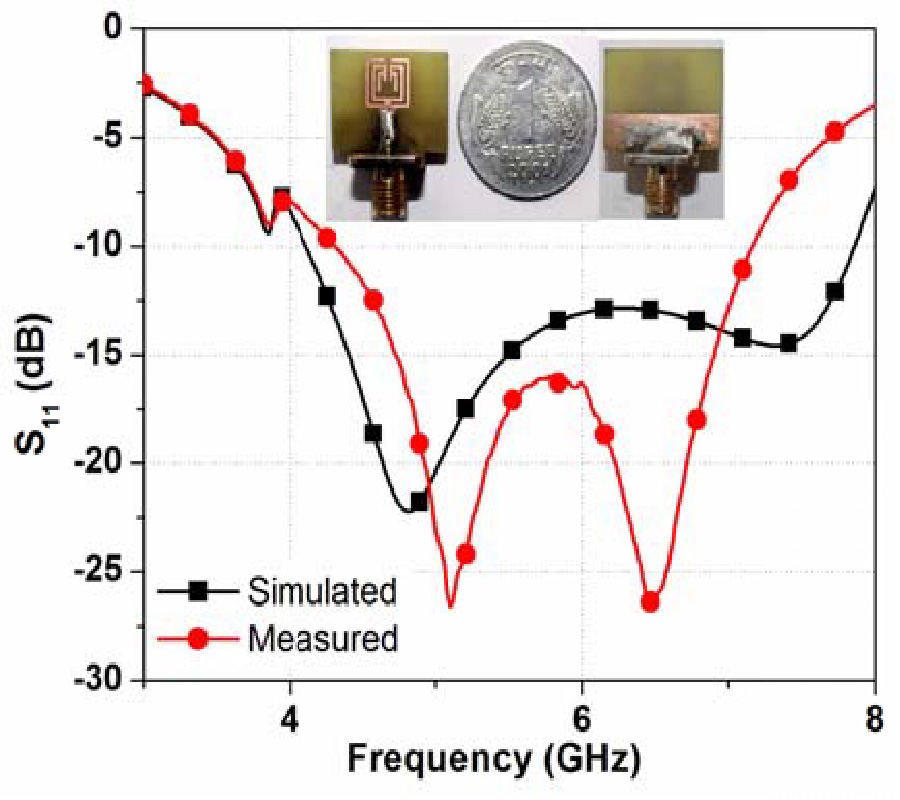
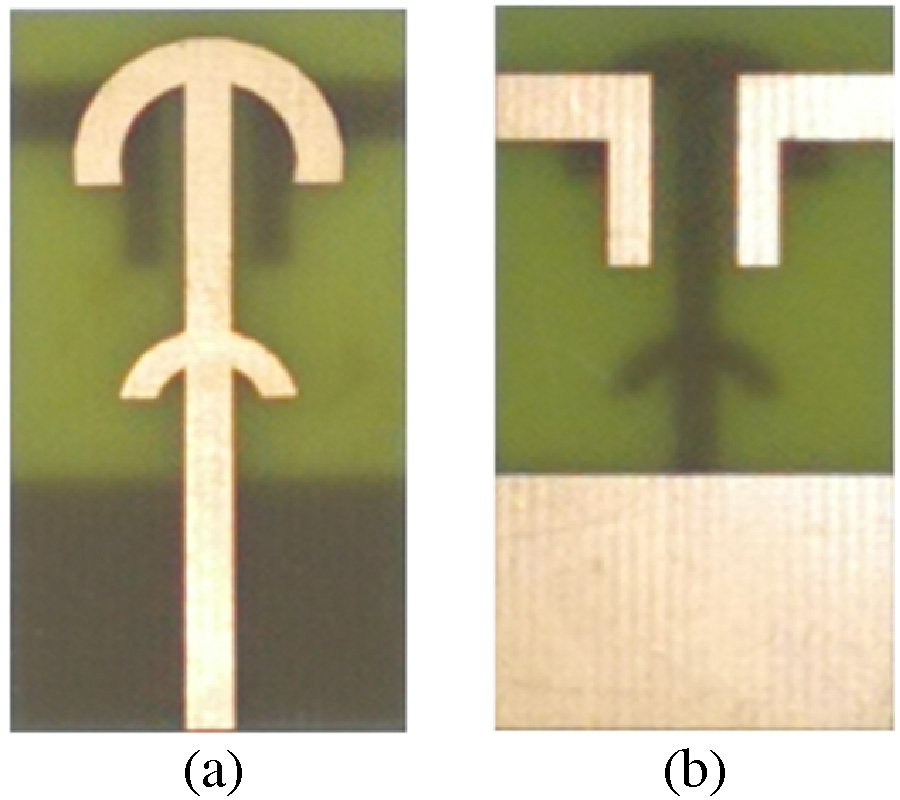
In this paper, a novel CPW-fed triple band metamaterial inspired antenna with modified ground plane is presented. The metamaterial inspired structures such as split ring resonator (SRR) and non bianisotropic complementary split ring resonator (NBCSRR) are embeded in this antenna for triple band operation. The proposed antenna with a compact size of 25 x 31.7 x 1.6 mm3 is fabricated and tested. The antenna with good radiation characteristics is suitable for WIMAX, C band and WLAN applications The simulated and measured results are discussed and are in good agreement with each other.
SRR AND NBCSRR INSPIRED CPW FED TRIPLE BAND ANTENNA WITH MODIFIED GROUND PLANE
2018-01-12
PIER C
Vol. 80, 103-110
A Novel Architecture of Millimeter-Wave Full-Duplex Radio-Over-Fiber System with Source-Free Bs Based on Polarization Division Multiplexing and Wavelength Division Multiplexing
Baofeng Chen , Yating Wu , Mengxin Han and Qianwu Zhang
In this paper, we propose a novel architecture of full-duplex millimeter-wave radio-over-fiber (RoF) system based on polarization division multiplexing (PDM) and wavelength division multiplexing (WDM) technology. In our scheme, the light waves for downlink and uplink transmission are provided by the same laser, which realize the source-free base station (BS) and multi-services transfer for next generation wireless access network. Since the uplink optical carrier is Y-polarized light wave which does not bear the downlink signal, no cross-talk from the downlink contaminates the uplink signal. At the BS, it is detected by a high-speed photoelectric diode (PD) to generate a 15 GHz intermediate frequency (IF) and a 63 GHz radio frequency (RF) signal. This reduces the system complexity and cost. The simulation with 2.5 Gbps NRZ signal transmission exhibits good performance both at 15 GHz (Ku-band) and 63 GHz (V-band).
A NOVEL ARCHITECTURE OF MILLIMETER-WAVE FULL-DUPLEX RADIO-OVER-FIBER SYSTEM WITH SOURCE-FREE BS BASED ON POLARIZATION DIVISION MULTIPLEXING AND WAVELENGTH DIVISION MULTIPLEXING
2018-01-12
PIER Letters
Vol. 72, 83-89
A High Gain Double-Octagon Fractal Microstrip Yagi Antenna
Kamelia Quzwain , Alyani Ismail and Aduwati Sali
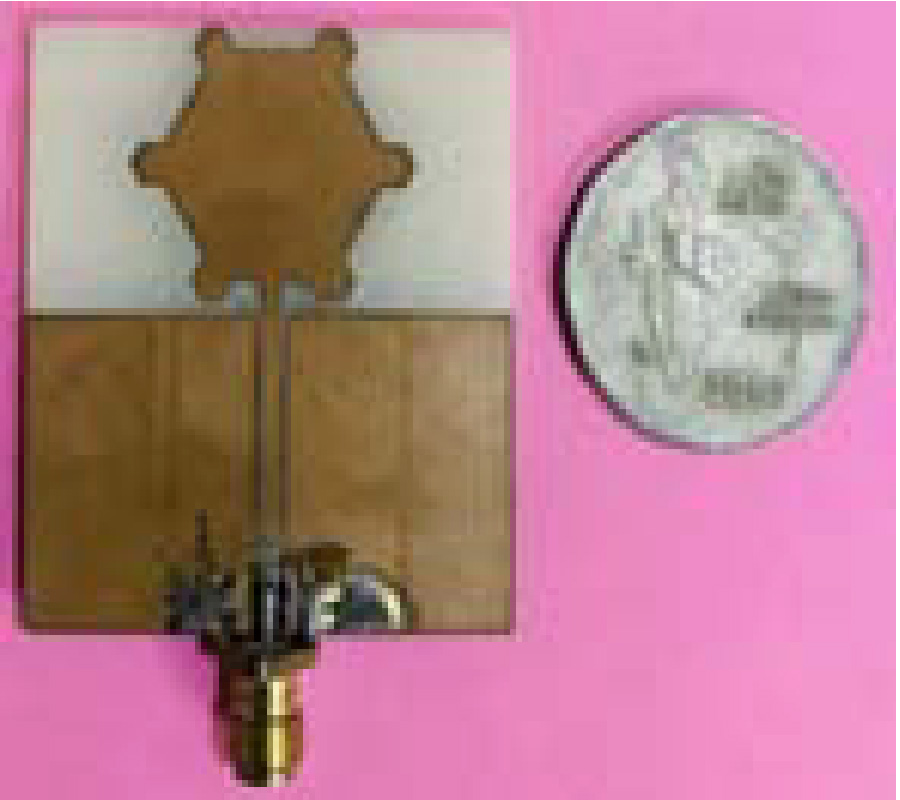
A Double-Octagon Fractal Microstrip Yagi Antenna (D-OFMYA) which is aimed to cover unlicensed frequency of 5.8 GH is presented in this paper. The primary purpose of this experiment is to enhance gain of conventional microstrip antenna. The proposed antenna built on Arlon CuClad 217 substrate with thickness of 0.787 mm and dielectric permittivity of 2.2. A 3D full-wave EM simulator was used to design and to simulate the antenna. A computerized simulation model of the proposed antenna showed that the antenna is able to generate a maximum gain of 14.49 dB with S11 of -24.2 dB in a surface size of 80 mm x 120 mm. By contrast, results of an experiment indicated the fabricated D-OFMYA can reach a gain as high as 14 dB with the value of S11 is -19.8 dB. It can be concluded that a nominal gain of the D-OFMYA comes in higher than other microstrip Yagi array antennas and size reduction can be achieved through this design.
A HIGH GAIN DOUBLE-OCTAGON FRACTAL MICROSTRIP YAGI ANTENNA
2018-01-12
PIER M
Vol. 63, 185-193
DOA Estimation of Quasi-Stationary Signals Using a Partly-Calibrated Uniform Linear Array with Fewer Sensors Than Sources
Kai-Chieh Hsu and Jean-Fu Kiang
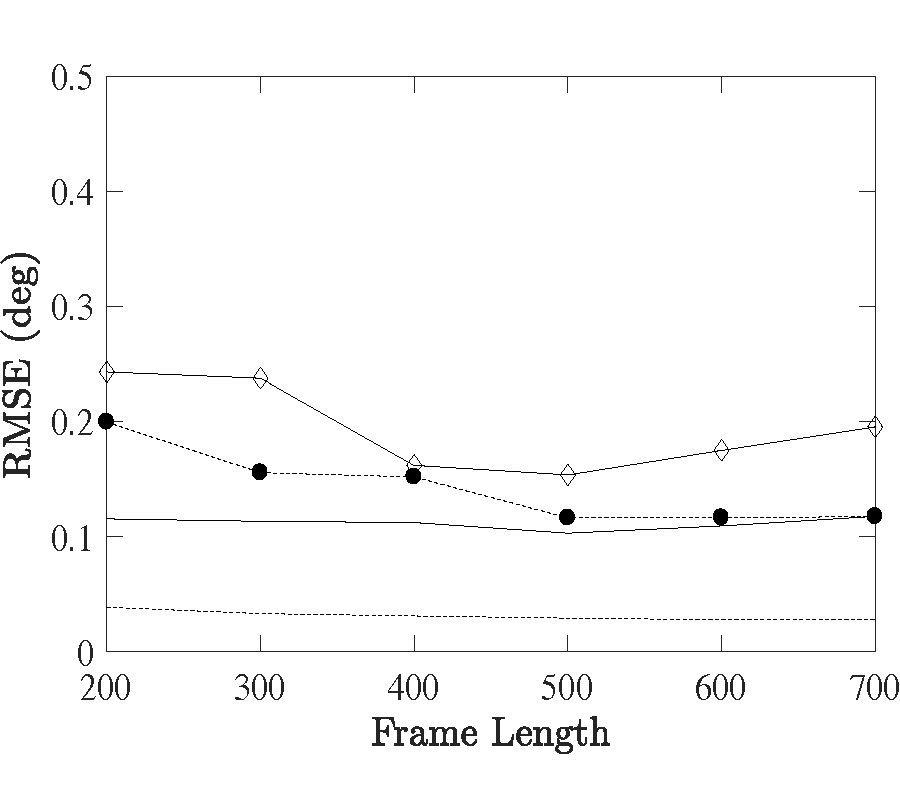
A two-step method is proposed to estimate the direction-of-arrivals (DOAs) of quasi-stationary source signals, with a partlycalibrated uniform linear array (PC-ULA). The special structure of Toeplitz matrix is utilized to estimate the sensors' uncertainties. Then, a Khatri-Rao (KR) based multiple signal classification (MUSIC) algorithm is proposed to estimate the DOAs of source signals. Simulation results show that the proposed method renders lower root-mean-square-error (RMSE) than existing KR-based ESPRIT algorithms, especially under low signal-to-noise-ratio (SNR) and small angle separation between DOAs. It is also shown that the proposed method increases the degree-of-freedom (DOF) by one, as compared to the counterpart ESPRIT methods.
DOA ESTIMATION OF QUASI-STATIONARY SIGNALS USING A PARTLY-CALIBRATED UNIFORM LINEAR ARRAY WITH FEWER SENSORS THAN SOURCES
2018-01-12
PIER M
Vol. 63, 175-184
A Compact Coplanar Waveguide Fed Wideband Monopole Antenna for RF Energy Harvesting Applications
Monika Mathur , Ankit Agrawal , Ghanshyam Singh and Satish Kumar Bhatnagar
For energy harvesting applications a new design of a coplanar waveguide (CPW) fed monopole antenna is presented. It covers almost all useful band ranges from 900 MHz-9.9 GHz (Radio, GSM, ISM, UWB bands). It also provides band reject characteristics for the range 3.1 GHz-5.6 GHz (HIPERLAN, C-Band, and W-LAN) to avoid interference from this range. The new design is based on the modification of coplanar waveguide (CPW) structure and optimizing the gap between patch and CPW ground for covering the ultra wideband (UWB) range and other useful ranges (Radio, GSM and ISM). Bandwidth enhancement and impedance matching for UWB range have been obtained by chamfering the corners, cutting two slots in CPW ground and dual stubs. The new design incorporates a parasitic patch above the antenna patch for tunning the desired band rejection. The entire design has been optimized at various stages during its evolution. The structure is compact in size 50×40×1.6 mm3. It may also be used for mobile, military and satellite applications.
A COMPACT COPLANAR WAVEGUIDE FED WIDEBAND MONOPOLE ANTENNA FOR RF ENERGY HARVESTING APPLICATIONS
2018-01-12
PIER M
Vol. 63, 163-173
Design of Hexadecagon Circular Patch Antenna with DGS at Ku Band for Satellite Communications
Ketavath Kumar Naik and Pasumarthi Amala Vijaya Sri
The design of hexadecagon circular patch (HDCP) antenna for dual band operation is presented In this paper. The proposed antenna operates at two resonating frequencies 13.67 GHz, 15.28 GHz with return loss of -42.18 dB, -38.39 dB, and gain 8.01 dBi, 6.01 dBi respectively. An impedance bandwidth of 854 MHz (13.179-14.033 GHz) and 1140 MHz (14.584-15.724 GHz) is observed for dual-bands respectively. To produce the circular polarization, the HDCP antenna is incorporated with ring and square slots on the radiating patch. The defected ground structure (DGS) is considered for enhancement of gain. The proposed antenna, axial ratio is less than 3 dB and VSWR ≤ 2 for dual bands. The measured and simulated (HFSS, CST) results of of the HDCP antenna are in agreement. The HDCP antenna has work at Ku band for satellite communications.
DESIGN OF HEXADECAGON CIRCULAR PATCH ANTENNA WITH DGS AT KU BAND FOR SATELLITE COMMUNICATIONS
2018-01-12
PIER M
Vol. 63, 151-161
Novel Miniaturized Broadband Quasi-Yagi Antennas Based on Modified Bowties Driver for Wireless Technology Applications
Liang-Hao Yuan and Wei Tang
This paper presents two novel miniaturized broadband Quasi-Yagi antennas which adopt compact layouts and two different modified bowties as driven dipoles. In these antennas, the microstrip feed and λ/4 impedance transformer are placed horizontally and rearranged in a same horizontal line with balun to reduce the vertical size. The horizontal size is reduced by loading the vertical metallic strips at the sides of bowtie driven dipole and ground patch. Compared with the conventional Quasi-Yagi antenna, the sizes of the two proposed antennas are decreased to approximately 50%. The experiment results exhibit that they have wide bandwidths of 2.27-3.35 GHz and 2.14-3.3 GHz for reflection coefficient below -10 dB. Their gains reach 4dBi over the operation frequency band, which indicate that they can be applied conveniently in wireless communications and recognition fields like WLAN, RFID, WiMAX and LTE frequency bands.
NOVEL MINIATURIZED BROADBAND QUASI-YAGI ANTENNAS BASED ON MODIFIED BOWTIES DRIVER FOR WIRELESS TECHNOLOGY APPLICATIONS
2018-01-11
PIER Letters
Vol. 72, 75-81
Electrically-Small Circularly-Polarized Quasi-Yagi Antenna
Son Xuat Ta
In this letter, an electrically-small circularly polarized (CP) quasi-Yagi antenna is presented. It is composed of three elements; i.e., a compact single-feed crossed-dipole antenna acted as the driver and two parasitic elements acted as the reflector and director, respectively. Each arm of all elements contains a meander line with an arrowhead ending to realize compactness. The driver has double vacant-quarter printed rings incorporated into it to generate the CP radiation. The parasitic elements are incorporated with the crossed-dipole driver to not only produce a directive radiation, but also broaden the antenna bandwidth. The final design with overall size of 35 mm×35 mm×27 mm (0.184λo×0.184λo×0.142λo at 1.575 GHz, ka = 0.93) a measured 10-dB bandwidth of 19.23% (1.476-1.790 GHz), 3-dB axial ratio bandwidth of 7.67% (1.505-1.625 GHz), a broadside gain of 3.0 ± 0.2 dBic, and the maximum front-to-back ratio of 8.2 dB. The proposed antenna is applicable to a variety of wireless system operating near 1.575 GHz, such as Global Positioning Systems, Global Navigation Satellite Systems, as well as international maritime satellite organization (Inmarsat) networks.
ELECTRICALLY-SMALL CIRCULARLY-POLARIZED QUASI-YAGI ANTENNA
2018-01-11
PIER M
Vol. 63, 141-149
A Dual-Band Slot-Embedded Microstrip Antenna for Dual-Polarization Operation
Muhammad Asad Rahman , Eisuke Nishiyama and Ichihiko Toyoda
In this study, a new slot embedded microstrip antenna for dual-band dual-polarization operation is proposed. The antenna comprises a single layer structure with a square radiating patch where the feed port is located along a diagonal line of the patch. Two narrow slots parallel and close to the radiating edges of the patch are loaded on the patch. Patch without slots is resonated for X-band and another resonant frequency at Ku-band is obtained by loading the slots. Moreover, the loading of slots helps to produce two orthogonal modes of equal amplitudes at X-band. Furthermore, the feed port along the diagonal line of the square patch makes it possible to radiate di erent polarization at the two bands. The antenna can radiate circular and linear polarization at X- and Ku-band, respectively. Current distributions of the antenna at both bands are observed to explain the behavior of the antenna and con rm the polarization characteristics at X- and Ku-band. A 3-dB axial ratio bandwidth of 1.35% is achieved. Measured gains of 6.60 dBic and 5.80 dBi with good radiation performances are achieved at X- and Ku-band, respectively. Moreover, good measured cross-polarization levels of 27.6 dB at X-band and 15.6 dB at Ku-band are obtained. The measured performances of the fabricated antenna are consistent with simulated results.
A DUAL-BAND SLOT-EMBEDDED MICROSTRIP ANTENNA FOR DUAL-POLARIZATION OPERATION
2018-01-11
PIER M
Vol. 63, 131-139
Investigation of Fold-Dependent Behavior in an Origami-Inspired FSS Under Normal Incidence
Deanna Sessions , Kazuko Fuchi , Sumana Pallampati , David Grayson , Steven Seiler , Giorgio Bazzan , Gregory Reich , Philip Buskohl and Gregory H. Huff
Frequency selective surfaces (FSS) lter specific electromagnetic (EM) frequencies that are defined by the geometry and often fixed periodic spacing of a conductive element array. By embedding the FSS pattern into an origami structure, we expand the number of physical configurations and periodicities of the FSS, allowing for fold-driven frequency tuning. The goal of this work is to examine the fold-dependent polarization and frequency behavior of an origami-inspired FSS under normal incidence and provide physical insight into its performance. The FSS is tessellated with the Miura-ori pattern and uses resonant length metallic dipoles with orthogonal orientations for two primary modes of polarization. A driven dipole model with geometric morphologies, representative of the folding operations, provides physical insight into the observed behavior of the FSS. Full-wave simulations and experimental results demonstrate a shift in resonant frequency and transmissivity with folding, highlighting the potential of origami structures as an underlying mechanism to achieve fold-driven EM agility in FSSs.
INVESTIGATION OF FOLD-DEPENDENT BEHAVIOR IN AN ORIGAMI-INSPIRED FSS UNDER NORMAL INCIDENCE
2017-12-08
PIER C
Vol. 80, 89-101
Metal-Covered Handset with LTE MIMO, Wi-Fi MIMO, and GPS Antennas
Joni Kurvinen , Anu Lehtovuori , Jianchun Mai , Chao Wang and Ville Viikari
Current phones include more metal than earlier, which deteriorates the performance of antennas. This paper presents the first complete antenna set designed for a modern handset with a full metal back cover. 4G, Wi-Fi, and GPS antennas are integrated into the metallic side frame of the device in a realistic model. The designed antennas are either capacitive coupling elements with reactive loads or slot antennas. Fixed matching circuits are used to improve total efficiency. The passive implementation enables the use of carrier aggregation (CA) to increase the data rates, and includes also the multiple-input multiple-output (MIMO) operation for 4G and Wi-Fi. The designed antennas cover frequency bands 704--960 MHz, 1.56--1.61 GHz, 1.71--2.69 GHz, 2.4--2.484 GHz, and 5.15--5.875 GHz, producing in measurements a good agreement with simulation results.
METAL-COVERED HANDSET WITH LTE MIMO, WI-FI MIMO, AND GPS ANTENNAS
2017-12-08
PIER Letters
Vol. 72, 61-67
A CP Antenna of Wide Half-Power Beamwidth for UHF RFID Near- and Far-Field Applications
Jingming Zheng , Yang Yang , Xiaoxiang He and Chen-Yang Mao
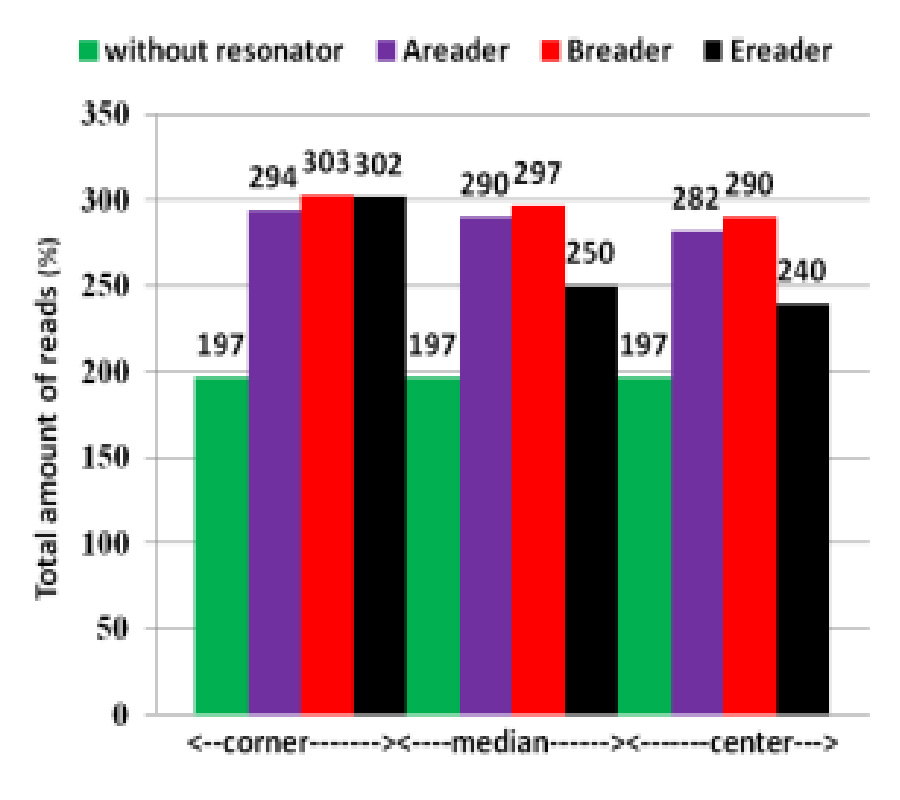
A wide half-power beamwidth antenna based on magnetic coupling in near-field (NF) regions and circular polarization (CP) in far-field (FF) is proposed for RFID multiservice applications in UHF band. The prototype consists of a cross-strip and an L-shaped strip on the top layer, fed by an F-shaped network on the bottom layer. CP electromagnetic wave is radiated by the cross-strip, and the antenna also simultaneously brings opposite directed currents (ODC) to generate strong magnetic field in near-field region. Half-power beamwidth is 100˚ in xoz-plane and 102˚ in yoz-plane, which can be used to scan for large regions. An 88 × 88 × 1.6 mm3 antenna has been fabricated on an FR-4 substrate to fit RFID applications. Measured tests on read range by observing feedback received signal strength indication (RSSI) values are carried out, exhibiting 100% read rate for near-field tags within 25 mm and exciting read distance for far field tags up to 1 m for large reading region of 170 × 170 mm2.
A CP ANTENNA OF WIDE HALF-POWER BEAMWIDTH FOR UHF RFID NEAR- AND FAR-FIELD APPLICATIONS
2017-12-08
PIER
Vol. 160, 71-87
Wideband Aperture Coupled Patch Array Antennas - High Gain, Low Side Lobe Design
Dhruva Poduval and Mohammod Ali
The study and design of a wideband aperture coupled microstrip patch array is presented. The proposed design considers the 2.4 to 3 GHz frequency range but may be adapted to other frequencies. A 16 element planar array of the size of about 400 mm by 400 mm by 12.5 mm provides measured gain between 15.4 to 16.8 dBi and Side-Lobe Level (SLL) between 15.3 to 20.7 dB without a reflector within the 2.4 to 3 GHz frequency range. With a reflector significant increase in F/B is obtained but at the expense of higher SLL.
WIDEBAND APERTURE COUPLED PATCH ARRAY ANTENNAS - HIGH GAIN, LOW SIDE LOBE DESIGN
2017-12-07
PIER C
Vol. 80, 79-87
Spatial Power Combining of VLF Umbrella Antenna Arrays with Multi-Delay Lines
Bin Li , Chao Liu and Ying-Hui Dong
The output power of antennas is an important factor affecting the radiation performance of umbrella antenna arrays. Considering the power limit of very-low-frequency (VLF) umbrella arrays and the uncontrollable directivity, we propose a novel method for the spatial power-combining (SPC) of VLF umbrella arrays. Using multiple groups of feeders, the problem of phase shifting of the signals can be solved for VLF arrays. In the high-frequency portion of the VLF range (25-30 kHz), this novel method can improve the efficiency of VLF arrays by 26% in the special directivity. A model of a trideco-tower umbrella antenna array is established in the FEKO simulation software. The simulation results show that, compared with the in-phase feeding, the VLF transmitting antenna array forms the main beam in all directions. The array gain of the umbrella phased array in the 0° (180°) beam position is larger than 1.1 dB. The front-to-back ratio of the arrays is 3.7 dB. Compared with the in-phase feed mode, the directivity of the phased array enhances and the efficiency increases markedly. The simulation results demonstrate the effectiveness of the proposed method.
SPATIAL POWER COMBINING OF VLF UMBRELLA ANTENNA ARRAYS WITH MULTI-DELAY LINES
2017-12-07
PIER M
Vol. 63, 119-129
Two Element Band-Notched UWB MIMO Antenna with High and Uniform Isolation
Dinesh Yadav , Mahesh Pandurang Abegaonkar , Shiban K. Koul , Vivekanand N. Tiwari and Deepak Bhatnagar
In this paper, a single band-notched at 5.2 GHz with complementary split ring resonator (CSRR) ultra-wideband (UWB) antenna and its implementation in designing of two element multiple-input multiple-output (MIMO) with high and uniform isolation are experimentally demonstrated. The proposed UWB MIMO consists of T-shaped stub in ground plane in between antenna elements of the size of λat 3.1 GHz/4 to achieve minimum 20 dB isolation, which is almost uniform in entire UWB band. The size of the UWB MIMO antenna is 0.31λat 3.1 GHz×0.434λat 3.1 GHz×0.008λat 3.1 GHz mm3 and it is printed on RT/duroid 5880 substrate (ɛr = 2.2, tanδ = 0.0009), which leads to good gain and high total efficiency of the antenna in operating bands. The simulated and measured result shows good agreement for the impedance bandwidth (|S11| < -10 dB) and isolation (|S21| < -20 dB) most of the operating band, excluding the notched band at 5.2 GHz in UWB range. The simulated, measured and calculated MIMO antenna diversity parameters proves that the antenna is suitable for UWB MIMO systems.
TWO ELEMENT BAND-NOTCHED UWB MIMO ANTENNA WITH HIGH AND UNIFORM ISOLATION