Search Results(13793)

2017-11-30
PIER C
Vol. 79, 241-255
Development of Graphene Based Tapered Slot Antennas for Ultra-Wideband Applications
Reefat Inum , Md. Masud Rana and Kamrun Nahar Shushama
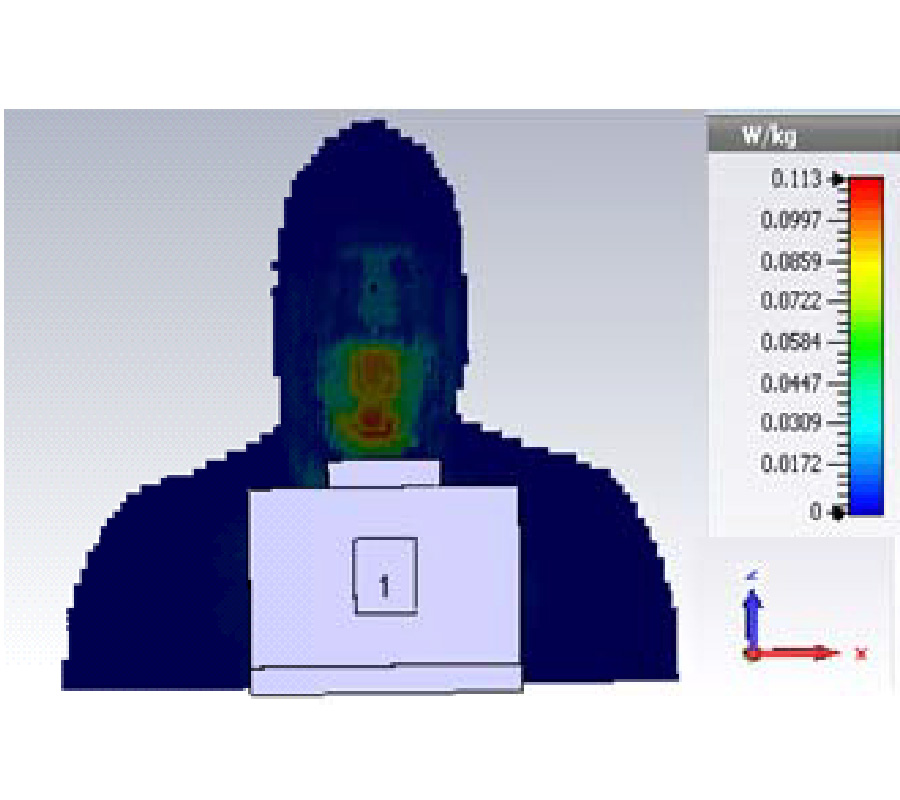
In this paper, three different types of graphene based tapered slot antennas are designed for ultrawideband (UWB) applications. The taper profiles for three antenna types are linear, exponential, and constant width. A single layer graphene sheet of 35 μm thickness is used to model the radiating element and feeding structure of the designed antennas. To feed the antennas, microstrip to slotline transition technique is adopted. An approximate analytical theory based on conical transmission line model is considered to authenticate the design of graphene based tapered slot antennas. Better impedance matching over 2-20 GHz is obtained by designing a balun in the form of a radial stub. Return loss, bandwidth, radiation pattern, and directive gain are the considered antenna performance parameters. Time domain solver of CST MWS software is used to evaluate the performances of linearly tapered slot antenna (LTSA), exponentially tapered slot antenna (Vivaldi), and constant width slot antenna (CWSA). The results obtained from CST are compared with that from HFSS to further validate the design. Simulation results with extensive parametric study confirm that the novel 2-D material graphene can be considered as a promising one to model UWB tapered slot antennas. Furthermore, the effectiveness of designed graphene based tapered slot antennas is revealed by comparing their performances with other existing UWB antennas. Moreover, as a UWB application, Vivaldi antenna shows promising results in microwave brain tumor detection.
DEVELOPMENT OF GRAPHENE BASED TAPERED SLOT ANTENNAS FOR ULTRA-WIDEBAND APPLICATIONS
2017-11-30
PIER C
Vol. 79, 225-240
Design, Optimization and Initial Testing of a High-Speed 5-kW Permanent Magnet Generator for Aerospace Application
Flur R. Ismagilov , Viacheslav Vavilov , Aybulat H. Miniyarov , Aleksey Mihailovich Veselov and Valentina V. Ayguzina
The article presents a new topology of the high-speed synchronous electrical machines with permanent magnets with the tooth-coil windings with a stator magnetic core made of amorphous alloys for prospective unmanned aerial vehicles. This is a multidisciplinary design algorithm with optimization elements, which are proposed to design such machines. Based on the proposed algorithm, calculations of several topologies were performed by using computer simulation methods. In addition, the analysis of the rotor dynamics as part of the turbojet engine of the unmanned aerial vehicle and the calculations of the mechanical rotor strength were performed. To minimize the eddy-current losses in permanent magnets, the multicriteria optimization of the slotted zone was carried out by using genetic algorithms. A cooling system was proposed, and thermal calculations were performed. To verify the proposed design algorithm and to evaluate the efficiency of the amorphous alloy, a full-sized 5 kW experimental sample with a rotational speed of 60,000 rpm was created. Results can be used to create new promising UAVs and to design electrical machines for other industrial applications.
DESIGN, OPTIMIZATION AND INITIAL TESTING OF A HIGH-SPEED 5-KW PERMANENT MAGNET GENERATOR FOR AEROSPACE APPLICATION
2017-11-30
PIER Letters
Vol. 72, 11-16
A Method of Stopband Widening in BPF Based on Two-Conductor Suspended-Substrate Resonators
Aleksandr Leksikov , Alexey Mikhailovich Serzhantov , Iliya Valerievich Govorun , Aleksey Olegovich Afonin , Andrey Vitalievich Ugryumov and Andrey Leksikov
A method aiming to widen the upper stopband in a microwave bandpass filter based on two-conductor suspended-substrate stripline resonators is described in this letter. Applicability of the method is illustrated by simulating and fabricating fourth-order filter that has a very wide upper stopband: Δfstop/f0=7.92 measured at a level -50 dB, which is achieved because the widths of the inner resonators in the structure are 1.4 times greater than that of the outer ones.
A METHOD OF STOPBAND WIDENING IN BPF BASED ON TWO-CONDUCTOR SUSPENDED-SUBSTRATE RESONATORS
2017-11-30
PIER M
Vol. 63, 13-21
Square Patch-Based Dielectric Microwave Absorber
Amit Bhati , Kirankumar Rajshekhar Hiremath and Vivek Dixit
The work presents a simple and novel design approach to extend the bandwidth of existing Dielectric Material Based Microwave Absorber (DMBMA). The design comprises planar square patches of DMBMA placed periodically on a metal-backed FR4 sheet. For demonstration purpose, the DMBMA is synthesized by adding conducting carbon fillers in polyurethane matrix, and its electromagnetic parameters are measured in X-band. A single reflection null is observed in DMBMA owing to λ/4 resonance. In comparison, the bandwidth of 8 GHz (10-18 GHz) is achieved for -10 dB reflection for square patch based DMBMA. The thickness of proposed absorber is 2.75 mm. An additional resonant mode is observed due to capacitive coupling between the square patches. The enhanced bandwidth is attributed to the overlapping of λ/4 resonance and induced coupling mode. A good agreement between the simulated and measured data is observed.
SQUARE PATCH-BASED DIELECTRIC MICROWAVE ABSORBER
2017-11-29
PIER M
Vol. 62, 211-221
A New Planar Electromagnetic Levitation System Improvement Method Based on SIMLAB Platform in Real Time Operation
Mundher H. A. Yaseen and Haider J. Abd
Electromagnetic levitation system is commonly used in the field of magnetic levitation system train. Magnetic levitation technology is one of the most promised issue of transportation and precision engineering. Magnetic levitation systems are free of problems caused by friction, wear, sealing and lubrication. In this paper, a new prototype of the magnetic levitation system is proposed, designed and successfully tested via SIMLAB platform in real time. In addition, the proposed system was implemented with an efficient controller, which is linear-quadratic regulator (LQR) and compared with a classical controller which is proportional-integral-derivative (PID). The present system has been tested with two different criteria: signal test and load test under different input signals which are Sine wave and Squar wave. The findings prove that the suggested levitation system reveals a better performance than conventional one. Moreover, the LQR controller produced a great stability and optimal response compared to PID controller used at same system parameters.
A NEW PLANAR ELECTROMAGNETIC LEVITATION SYSTEM IMPROVEMENT METHOD BASED ON SIMLAB PLATFORM IN REAL TIME OPERATION
2017-11-29
PIER M
Vol. 62, 199-210
Compact Multi-Band MIMO Antenna with Improved Isolation
Pasumarthi Srinivasa Rao , Jagadeesh Babu Kamili and Avala Mallikarjuna Prasad
Nowadays everyone needs electronic gadgets in compact size, and single device should accomplish all the tasks. A compact MIMO antenna resonating at multi-band of frequencies is proposed in the current research work. The proposed MIMO antenna consists of two elements. The edge to edge separation between the two antennas is λ0/31 and still maintains low mutual coupling levels between the two antennas. The proposed MIMO antenna resonates at 4.75 GHz, 5.89 GHz, 6.74 GHz, 8.25 GHz and 9.82 GHz. The mutual coupling is reduced by -23.78 dB at 4.75 GHz, -25.71 dB at 5.89 GHz, -29 dB at 6.74 GHz, -32.79 dB at 8.25 GHz and -21.5 dB at 9.82 GHz, respectively. The performance of the proposed MIMO system was evaluated in terms of S-parameters, Envelope Correlation Coefficient (ECC), Voltage Standing Wave Ratio (VSWR), and Radiation Pattern. The measured and simulated results are presented.
COMPACT MULTI-BAND MIMO ANTENNA WITH IMPROVED ISOLATION
2017-11-29
PIER M
Vol. 62, 189-198
A 2 to 4 GHz Instantaneous Frequency Measurement System Using Multiple Band-Pass Filters
Hossam Badran and Mohammad Deeb
In this paper, a 2 to 4 GHz Instantaneous Frequency Measurement (IFM) system is presented. The proposed design uses four band-pass filters to estimate the frequency value of an RF signal. The proposed design is an improvement of that presented in our previously published work. In this work, a new frequency estimator is developed, and a new methodology for designing the frequency response of the band-pass filters is proposed. These two improvements show better accuracy in estimating the frequency value. A closed form for the Standard Deviation (STD) and the bias of the new estimator were derived, and used to adjust the frequency response of the filters. The fabricated system showed a maximum error of about 11 MHz, for practical values of noise and measurements errors.
A 2 TO 4 GHZ INSTANTANEOUS FREQUENCY MEASUREMENT SYSTEM USING MULTIPLE BAND-PASS FILTERS
2017-11-28
PIER C
Vol. 79, 209-223
Time Domain and Frequency Domain Deterministic Channel Modeling for Tunnel/Mining Environments
Chenming Zhou , Ronald Jacksha , Lincan Yan , Miguel Reyes and Peter Kovalchik
Understanding wireless channels in complex mining environments is critical for designing optimized wireless systems operated in these environments. In this paper, we propose two physics-based, deterministic ultra-wideband (UWB) channel models for characterizing wireless channels in mining/tunnel environments --- one in the time domain and the other in the frequency domain. For the time domain model, a general Channel Impulse Response (CIR) is derived and the result is expressed in the classic UWB tapped delay line model. The derived time domain channel model takes into account major propagation controlling factors including tunnel or entry dimensions, frequency, polarization, electrical properties of the four tunnel walls, and transmitter and receiver locations. For the frequency domain model, a complex channel transfer function is derived analytically. Based on the proposed physics-based deterministic channel models, channel parameters such as delay spread, multipath component number, and angular spread are analyzed. It is found that, despite the presence of heavy multipath, both channel delay spread and angular spread for tunnel environments are relatively smaller compared to that of typical indoor environments. The results and findings in this paper have application in the design and deployment of wireless systems in underground mining environments.
TIME DOMAIN AND FREQUENCY DOMAIN DETERMINISTIC CHANNEL MODELING FOR TUNNEL/MINING ENVIRONMENTS
2017-11-27
PIER C
Vol. 80, 1-12
An Optimization-Based Design Technique for Multi-Band Power Amplifiers
Eyad Arabi , Peter Bagot , Souheil Bensmida , Kevin Morris and Mark Beach
Matching networks for dual-band power amplifiers typically rely on complex, non-general techniques, which either use switches or result in large and lossy matching networks. In this work, mathematical optimization is employed to design the matching networks for multi-band power amplifiers. The theory of continuous modes is utilized together with accurate models for the device package to define the required impedance terminations theoretically thus allowing mathematical optimization to be used for the design. This technique depends on neither the network architecture nor the number of frequency bands. Therefore, simple and compact multi-band matching networks can be achieved. As proof of concept, a triple-band amplifier at 0.8, 1.8, and 2.4 GHz has been designed using the proposed method. The fabricated amplifier demonstrates maximum power added efficiencies of 70%, 60%, and 58% and output powers of 40 dBm, 41 dBm and 40 dBm for the three frequency bands, respectively. The presented design approach is highly suitable for the next generation of wireless systems.
AN OPTIMIZATION-BASED DESIGN TECHNIQUE FOR MULTI-BAND POWER AMPLIFIERS
2017-11-27
PIER Letters
Vol. 72, 7-10
Optimized UWB Signal to Shallow Buried Object Imaging
Ali Gharamohammadi , Yaser Norouzi and Hassan Aghaeinia
The removal of ground surface influence from ground penetrating radar (GPR) signals in shallowly-buried objects is of great importance. The ultra-wideband (UWB) radar is a solution which uses short pulse to distinguish ground surface from shallowly-buried objects. In this paper, a novel method optimizes bandwidth based on designing a Gaussian signal. Experimental results confirm the proposed method efficiency.
OPTIMIZED UWB SIGNAL TO SHALLOW BURIED OBJECT IMAGING
2017-11-27
PIER M
Vol. 62, 175-188
Optimization of a Novel Magneto-Rheological Device with Permanent Magnets
Mauro Tucci , Luca Sani and Vincenzo Di Dio
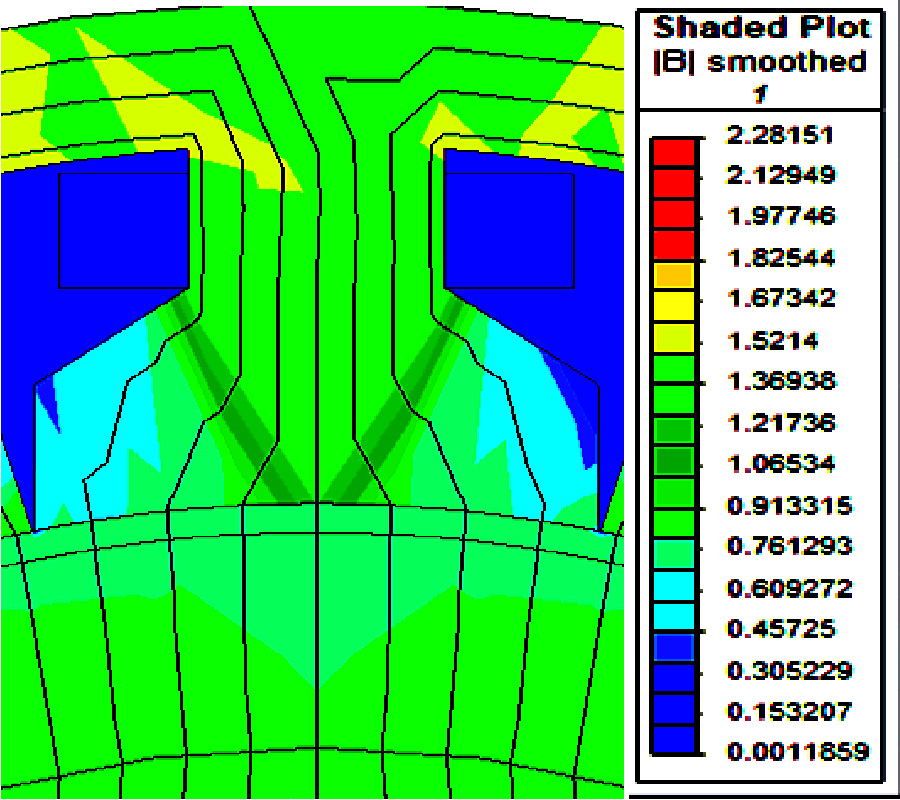
In this paper a novel evolutionary algorithm is used for the optimization of the performance of a magnetorheological (MR) device, capable to transmit torque between two shafts and powered by a system of Permanent Magnets (PMs). The stochastic, evolutionary, global optimization algorithm is based on a modified version of the self-organizing map. It uses a dedicated simpli ed analytical model of the device, developed in order to obtain a fast and accurate evaluation of the torque. Then, by means this model, the cost function to find the optimal parameters of the device is defined. Once the optimal parameters are identified, the performance of the proposed device is simulated by means of a FEM software. The results in terms of magnetic flux density inside the fluid, the transmissible torque and the actuation torque necessary to perform the device activation are discussed. Finally, a preliminary experimental validation of the proposed device is performed.
OPTIMIZATION OF A NOVEL MAGNETO-RHEOLOGICAL DEVICE WITH PERMANENT MAGNETS
2017-11-26
PIER C
Vol. 79, 199-208
Development of an Improved Response Ultra-Wideband Antenna Based on Conductive Adhesive of Carbon Composite
Erick Reyes-Vera , Mauricio Arias-Correa , Andres Giraldo-Muno , Daniel Catano-Ochoa and Juan Santa-Marin
Ultra-wideband (UWB) antennas have advantages such as high data rates, improved multipath resistance and lower power consumption. In this work, UWB patch antennas based on electrically conductive adhesive were manufactured with a simple technique and evaluated in the laboratory. Results showed that the thickness of the samples ranged from 207 to 261 μm. The bandwidth optimization obtained was 200% compared to a traditional copper-layer antenna. UWB antennas showed an average bandwidth of 8.558 GHz in the region 609 MHz to 9.105 GHz. The antennas covered the whole of UHF band, L band, S band, C band and part of X band. Finally, the proposed technique allows reducing the size of patch by 70% for low frequencies of operation, while achieving a similar performance.
DEVELOPMENT OF AN IMPROVED RESPONSE ULTRA-WIDEBAND ANTENNA BASED ON CONDUCTIVE ADHESIVE OF CARBON COMPOSITE
2017-11-26
PIER
Vol. 160, 63-69
Analysis on the Calculation of the Inverse Discrete Fourier Transform (IDFT) of Passband Frequency Response Measurements in Terms of Lowpass Equivalent Response
Angelo Gifuni and Stefano Perna
An analysis on the calculation of the inverse discrete Fourier transform (IDFT) of passband frequency response measurements in terms of lowpass equivalent responses is shown, in order to specify the differences in the results given from different common algorithms; differences with respect to the calculation of the IDFT for true lowpass responses are remarked. It is shown how the basic sequence has to be represented in time domain by invoking the causality, which is supported by results. Results are corroborated by an application on measured data in a reverberation chamber. The present analysis helps readers understand different IDFT algorithms used by Manufacturers and make their own codes whenever desirable.
ANALYSIS ON THE CALCULATION OF THE INVERSE DISCRETE FOURIER TRANSFORM (IDFT) OF PASSBAND FREQUENCY RESPONSE MEASUREMENTS IN TERMS OF LOWPASS EQUIVALENT RESPONSE
2017-11-25
PIER Letters
Vol. 71, 141-147
Graphene-Based THz Tunable Bandstop Filter with Constant Absolute Bandwidth
Mengdan Kong , Yongle Wu , Zheng Zhuang , Weimin Wang and Yuan'an Liu
In this paper, a novel terahertz tunable bandstop filter with constant absolute bandwidth is proposed, which consists of graphene-based three-section L resonators. In order to perform bandstop property, the L resonator is used and analyzed in details based on the traditional Z matrix and ABCD matrix. With the introduction of graphene materials, the operating frequency of bandstop filter can be extended to terahertz. Moreover, the tunable performance with constant absolute bandwidth can be achieved by only loading different chemical potentials on a graphene surface. For demonstration, a terahertz tunable bandstop filter prototype is designed and simulated with chemical potentials of 0.1, 0.3, and 1 eV. The simulated results agree well with the anticipation perfectly.
GRAPHENE-BASED THZ TUNABLE BANDSTOP FILTER WITH CONSTANT ABSOLUTE BANDWIDTH
2017-11-24
PIER C
Vol. 79, 185-198
A Novel Reconfigurable UWB Filtering-Antenna with Dual Sharp Band Notches Using Double Split Ring Resonators
Ammar Alhegazi , Zahriladha Zakaria , Noor Azwan Shairi , Imran Mohd Ibrahim and Sharif Ahmed
This study presents a novel technique for designing an ultra-wideband (UWB) filtering-antenna with dual sharp band notches. This design composed of a modified monopole antenna integrated with resonant structures. The monopole antenna is modified using microstrip transition between the feedline and the patch. In addition, block with a triangle-shaped slot is loaded on both sides of the ordinary circular patch to produce wide bandwidth with better return loss and higher frequency skirt selectivity. The resonant structures based on two double split ring resonators (DSRR) loaded above the ground plane of the antenna design to produce dual notched bands, and filter out WiMAX (3.3-3.7 GHz) and HiperLAN2 (5.4-5.7 GHz) frequencies. The band notch position is controlled by varying the length of the DSRR. The reconfigurability feature is achieved by using two PIN diode switches employed in the two DSRR. The measured results show that the proposed filtering-antenna provides wide impedance bandwidth from 2.58 to 15.5 GHz with controllable dual sharp band notches for WiMAX and HiperLAN, peak realized gain of 4.96 dB and omnidirectional radiation pattern.
A NOVEL RECONFIGURABLE UWB FILTERING-ANTENNA WITH DUAL SHARP BAND NOTCHES USING DOUBLE SPLIT RING RESONATORS
2017-11-24
PIER Letters
Vol. 72, 1-5
A Portable Standalone Microscope by Attaching a Compact Module to a Digital Camera
Youjun Li , Xuan Zhu , Jie Chen , Fuhong Cai , Jiong Zheng and Jianbo Guo
A portable microscope has been created through our work, so that we can observe and collect images in future scientific research whenever and wherever possible. The portable microscope is made up of a small LED chip, compact lens modules, a commonly used SLR camera and a USB driven power. The microscopic morphological features can be observed through our system. We also demonstrate that this standalone system can work well in moving state. Therefore, the portable microscope that has the potential for becoming a point-of-care setup in terms of health monitoring is appropriate for on-site micro-imaging.
A PORTABLE STANDALONE MICROSCOPE BY ATTACHING A COMPACT MODULE TO A DIGITAL CAMERA
2017-11-24
PIER M
Vol. 63, 1-11
Circular-Ring Antenna Arrays Being at the Same Time Sparse, Isophoric, and Phase-Only Reconfigurable: Optimal Synthesis via Continuous Aperture Sources
Andrea Francesco Morabito and Pasquale Giuseppe Nicolaci
An innovative and general approach is proposed to the optimal, mask-constrained power synthesis of circular continuous aperture sources able to dynamically reconfigure their radiation behavior by just modifying their phase distribution. The design procedure relies on an effective a-priori exploration of the search space which guarantees the achievement of the globally-optimal solution. The synthesis is cast as a convex programming problem and can handle an arbitrary number of pencil and shaped beams. The achieved solutions are then exploited as reference and benchmark in order to design phase-only reconfigurable isophoric circular-ring sparse arrays. Numerical results concerning new-generation telecommunication systems are provided in support of the given theory.
CIRCULAR-RING ANTENNA ARRAYS BEING AT THE SAME TIME SPARSE, ISOPHORIC, AND PHASE-ONLY RECONFIGURABLE: OPTIMAL SYNTHESIS VIA CONTINUOUS APERTURE SOURCES
2017-11-23
PIER C
Vol. 79, 175-183
A MIMO Antenna Decoupling Network Composed of Inverters and Coupled Split Ring Resonators
Luyu Zhao , Le Liu and Yuan-Ming Cai
A decoupling network for a pair of strongly coupled MIMO antennas is presented. The decoupling network is composed of two inverters and two split ring resonators (SRRs) that are also coupled. By properly transforming the mutual admittance of the original coupled antennas and properly designing the coupling between the two SRRs, more than 20dB isolation between the two antennas can be achieved while their respective matching performances remain good. To validate the concept, a microstrip decoupling network is designed and implemented for a pair of wideband printed monopole antenna elements. Measurement results have demonstrated that nearly 10% bandwidth for 20 dB isolation can be achieved. Measured radiation patterns have demonstrated a significant reduction of the correlation coefficient, which makes the proposed technique a promising candidate for both current and future generations of MIMO-enabled mobile terminals.
A MIMO ANTENNA DECOUPLING NETWORK COMPOSED OF INVERTERS AND COUPLED SPLIT RING RESONATORS
2017-11-21
PIER Letters
Vol. 71, 133-140
Design of Dual-Band Bandstop Filter Based on Dumbbell-Shaped Resonators and U-Shaped Slot
Xue-Liang Min and Hou Zhang
A novel dual-band bandstop filter based on a square, symmetric dumbbell-shaped resonator and U-shaped slot defected ground structure is presented. First, the characteristic of the fundamental structure which adopts two dumbbell-shaped resonators and one U-shaped slot is analyzed. Simulated results demonstrate that the proposed structure induces two transmission zeros within 2-8 GHz. Then, the structure adopting four dumbbell-shaped resonators and one U-shaped slot is analyzed. Simulated results point out that the characteristic of dual stopbands is better than the fundamental structure. Based on above implementation, a dual-band bandstop filter based on eight proposed dumbbell-shaped resonators and two U-shaped slots is proposed and fabricated. Two center frequencies at 4 and 6.5 GHz are reported, corresponding to the attenuation levels of 41.9 and 26.1 dB. The return losses of center frequencies are 0.04 and 0.20 dB, respectively, and the dual stopband bandwidths with 10 dB signal attenuation are 690 MHz and 250 MHz. In addition, two transmission poles at each stopband are induced for better selectivity. Owing to the symmetric dumbbell shape, the size of the filter gets reduced. It is simple to design and quite compatible with planar construction fabrication.
DESIGN OF DUAL-BAND BANDSTOP FILTER BASED ON DUMBBELL-SHAPED RESONATORS AND U-SHAPED SLOT
2017-11-21
PIER M
Vol. 62, 167-174
Design and Analysis of Wideband Monopole Antennas for Flexible/Wearable Wireless Device Applications
Bobbili Naga Balarami Reddy , Palaniswamy Sandeep Kumar , Thipparaju Rama Rao , Nishesh Tiwari and Molupoju Balachary
Compact wideband flexible monopole antennas are designed and analyzed for its performance for Body Centric Wireless Communications (BCWC). Two antennas with identical radiators on different substrates are designed and fabricated on polyamide and teslin paper substrates, deployinga modified rectangle-shaped radiator. With the aid of modifications in the radiating plane and defecting the ground plane, the polyamide based antenna is designed to operate between 1.8 and 13.3 GHz, and teslin paper based antenna is designed to operate between 1.45 and 13.4 GHz to cover the wireless communication technology frequencies and ultra-wideband range for various wireless applications. The reflection coefficient characteristics of the fabricated antennas on free space and on various sites of the body are measured and match reasonably well with the simulated reflection coefficient characteristics. The specific absorption rate (SAR) analysis is also carried out by placing the antennas on tissue layered model.
DESIGN AND ANALYSIS OF WIDEBAND MONOPOLE ANTENNAS FOR FLEXIBLE/WEARABLE WIRELESS DEVICE APPLICATIONS