Search Results(13793)

2017-11-20
PIER Letters
Vol. 71, 125-131
A Compact Meandered CPW-Fed Antenna with Asymmetrical Ground Plane for 5.8 GHz RFID Applications with Multiple Split Ring Resonator
Ramasamy Pandeeswari
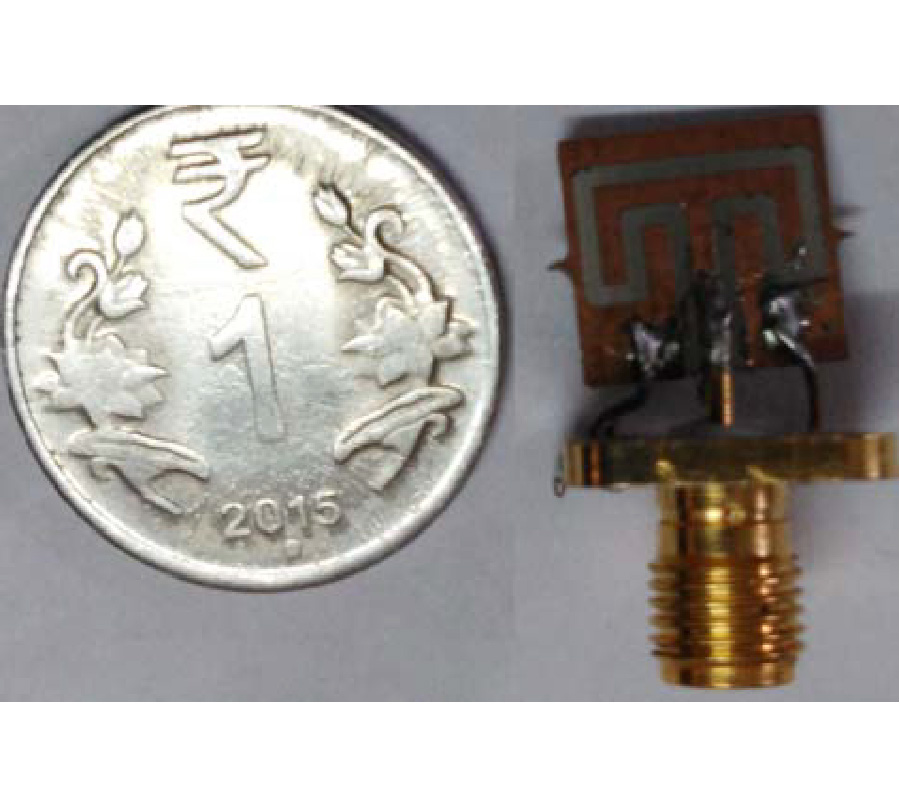
In this paper, a Multiple Split Ring Resonator (MSRR) based coplanar waveguide (CPW) fed antenna for 5.8 GHz RFID application is presented. The antenna has a compact size of 15 x 21 x 0.8 mm3. The proposed antenna is designed, fabricated and tested. The simulated results are discussed and in good compliance with the measured results. Split Ring Resonator (SRR) characteristics are also studied. The proposed antenna shows good performance at the measured resonance frequency of 5.75 GHz.
A COMPACT MEANDERED CPW-FED ANTENNA WITH ASYMMETRICAL GROUND PLANE FOR 5.8 GHZ RFID APPLICATIONS WITH MULTIPLE SPLIT RING RESONATOR
2017-11-20
PIER Letters
Vol. 71, 117-123
A Dual-Band MIMO Antenna Using a Passive Circuit for Isolation Enhancement
Peng Cheng , Deming Sun , Peng Wang and Peng Gao
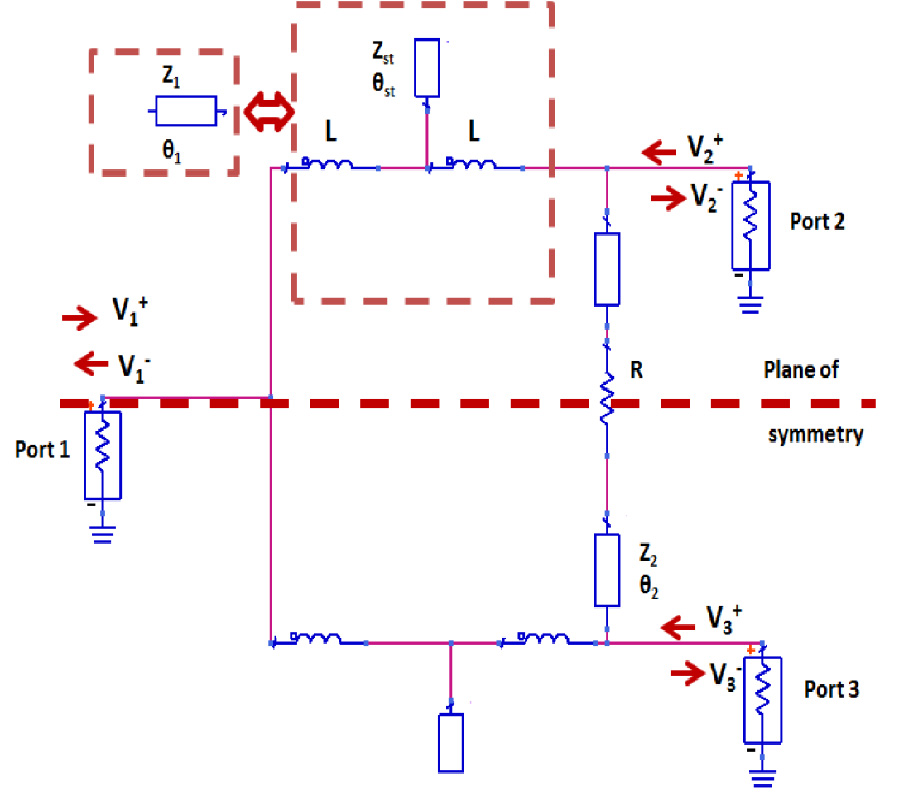
This letter presents a two-port dual-band multiple-input-multiple-output (MIMO) antenna, which is achieved based on a non-radiation passive circuit. The circuit is composed of two pairs of open-ended stubs and a transmission line connecting them. The decoupling condition of S21 = 0 is deduced, thus a good isolation is achieved. Then this non-radiation circuit is further designed to be a structure with enough radiation without affecting the character of port isolation. Since the implementation of port isolation does not adopt complex decoupling network or decoupling structure, the process of design is simple and effective. The simulation and physical demonstration obtain good agreements for the proposed dual-band MIMO antenna.
A DUAL-BAND MIMO ANTENNA USING A PASSIVE CIRCUIT FOR ISOLATION ENHANCEMENT
2017-11-20
PIER
Vol. 160, 51-61
Patch Antenna Using Rectangular Centre Slot and Circular Ground Slot for Circularly Polarized Synthetic Aperture Radar (CP-SAR) Application
Farohaji Kurniawan , Josaphat Tetuko Sri Sumantyo , Koichi Ito , Hiroaki Kuze and Steven Gao
In this paper, a circularly polarized antenna for Synthetic Aperture Radar (SAR) application is presented. The antenna is proposed to be implemented for the airborne SAR and the spaceborne SAR. To enhance the bandwidth of the antenna, the Circular-Ring-Slot (CRS) technique is implemented on the ground plane and in a square slot in the centre of the patch. In this antennas design, the model of the slot on the radiator is also investigated. The antenna is printed on NPC-H220A substrates with the dielectric constant of 2.17 and thickness of 1.6 mm. The resonant frequency of the antenna design sets at 9.4 GHz with the minimum requirement of the bandwidth of 800 MHz. The antenna design is produced under the -10 dB bandwidth of reflection coefficient, S11 of approximately 27% (8.2 GHz-10.76 GHz) and left-handed circular polarization (LHCP). The gain of the antenna is 6.5 dBic and 12.7% (8.8 GHz-9.84 GHz) for the axial ratio bandwidth (ARBW). This paper includes the description and presentation of the completed discussion.
PATCH ANTENNA USING RECTANGULAR CENTRE SLOT AND CIRCULAR GROUND SLOT FOR CIRCULARLY POLARIZED SYNTHETIC APERTURE RADAR (CP-SAR) APPLICATION
2017-11-17
PIER M
Vol. 62, 153-166
Theoretical Analysis and Design of Dual Band DGS Antenna with Small Frequency Ratio for Wi-Fi and WiMAX Applications
Sachin Kumar , Alind Pratap Singh and Mukesh Kumar Khandelwal
In this article, a theoretical analysis and design are presented for a Microstrip Patch Antenna (MPA) embedded with an inclined rectangular slot supported by a C-shaped Defected Ground Structure (DGS). Dual-band characteristics are achieved at 2.4 GHz and 2.6 GHz with a small frequency ratio of 1.08, which makes the proposed antenna useable for Wi-Fi and WiMAX applications. A theoretical analysis is also proposed for the designed antenna structure using modal expansion cavity model and equivalent circuit approach. The analyzed antenna design is fabricated, and it is found that measured results are in good match with theoretical and simulated results.
THEORETICAL ANALYSIS AND DESIGN OF DUAL BAND DGS ANTENNA WITH SMALL FREQUENCY RATIO FOR WI-FI AND WIMAX APPLICATIONS
2017-11-17
PIER M
Vol. 62, 143-151
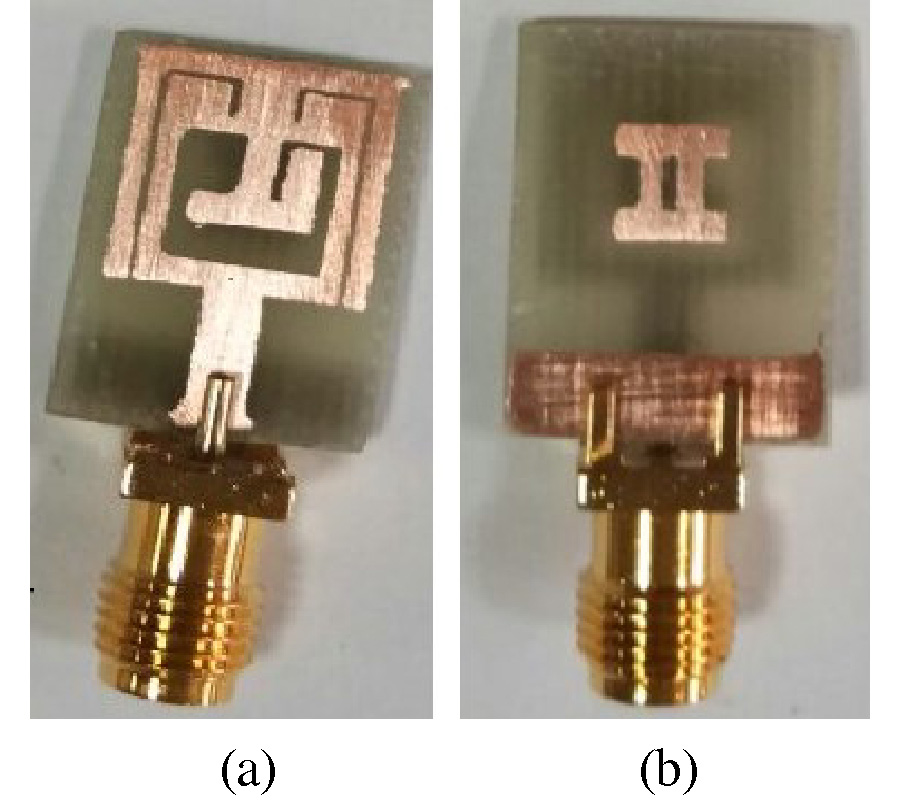
Compact Dual-Band Inverted-F Filtering Antenna Using Dual-Mode Resonators
Tianming Yang , Deqiang Yang , Kai Sun and Jianzhong Hu
A compact dual-band inverted-F filtering antenna with good band-edge selectivity for modern wireless communication systems is presented in this paper. A novel dual-band filter based on open-loop dual-mode resonator loading a T-shaped stub and an inverted-F antenna (IFA) also with a T-shaped open stub are integrated together. The higher band is controllable easily by adjusting the dimension of the T-shaped stub, leaving the lower band unaffected. To minimize the dimension of the filtering antenna, the last stage of the filter is folded. A flat gain response is obtained with steep skirts at both band edges. Simulated and measured results show that the integration makes the proposed antenna operate at 2.4/3.7 GHz with compact size, good band-edge selectivity, and controllable higher band compared with the traditional IFA.
COMPACT DUAL-BAND INVERTED-F FILTERING ANTENNA USING DUAL-MODE RESONATORS
2017-11-15
PIER M
Vol. 62, 131-141
A Horizon Ring Nulling Shorted Annular Patch Antenna with Shunted Stubs
Ian T. McMichael , Erik T. Lundberg , Drayton L. Hanna and Frank S. Kolak
A dual-band shorted annular ring patch antenna with interference rejection at the horizon is presented for GPS timing applications. It is shown that the dimensions of the annular ring can be optimized to make a null in the RHCP pattern at low elevation near the horizon for all azimuth angles. This null attenuates interfering signals originating from ground based sources. The antenna achieves circular polarization utilizing radial shunted stubs. The effect of the stubs on the resonance is analytically derived and verified through simulations. A novel feed configuration that incorporates a coplanar waveguide transition improves the impedance match for both L1 and L2 GPS frequency bands compared to previous designs that present compromises between the feed impedance of the two bands. Additionally, since the shunted stubs reduce the number of required electronic components compared to other antennas with similar horizon nulling capability, the cost is reduced. A prototype antenna operating at GPS L1 and L2 bands has been fabricated and validated through measurements.
A HORIZON RING NULLING SHORTED ANNULAR PATCH ANTENNA WITH SHUNTED STUBS
2017-11-15
PIER M
Vol. 62, 123-130
Investigation on Circularly Polarized Ring Dielectric Resonator Antenna for Dual-Band Wireless Applications
Deepika Pathak , Sudhir Kumar Sharma and Vivek Singh Kushwah
In this article, design and analysis of a dual-band ring dielectric resonator based radiator with circular polarization features is explored. The presented ring DRA is excited with the help of a tilted modified square-shaped aperture. Two important attractive features of present article are: (i) two radiating modes originated inside the ring DRA i.e. HEM11δ and HEM12δ mode; (ii) tilted modified square aperture generates circular polarized (CP) wave in both the operating frequency bands. For verifying the simulated results, practical model of the proposed antenna has been fabricated and verified. Experimental outcomes display that the proposed radiator functions over dual frequency bands i.e. 2.8-3.58 GHz and 5.5-5.92 GHz respectively. 3-dB axial ratio (AR) frequency ranges of proposed radiator are 2.8-3.2 GHz and 5.85-6.0 GHz, respectively. These appearances make it appropriate for some important wireless applications such as wireless LAN (2.4/5.2 GHz) and WiMAX (2.5 GHz) applications.
INVESTIGATION ON CIRCULARLY POLARIZED RING DIELECTRIC RESONATOR ANTENNA FOR DUAL-BAND WIRELESS APPLICATIONS
2017-11-13
PIER C
Vol. 79, 159-173
Design of RF Sensor for Simultaneous Detection of Complex Permeability and Permittivity of Unknown Sample
Pratik Porwal , Syed Azeemuddin , Prabhakar Bhimalapuram and Tapan Kumar Sau
In this paper, a novel microwave planar resonant sensor is designed and developed for simultaneous detection of permittivity and permeability of an unknown sample using a nondestructive technique. It takes advantage of two-pole filter topology where the interdigitated capacitor (IDC) and spiral inductor are used for placement of a sample with significant relative permittivity and permeability values. The developed sensor model has the potential for differentiating permittivity and permeability based on the odd mode and even mode resonant frequencies. It operates in the ISM (industrial, scientific and medical) frequency band of 2.2-2.8 GHz. The sensor is designed using the full wave electromagnetic solver, HFSS 13.0, and an empirical model is developed for the accurate calculation of complex permittivity and permeability of an unknown sample in terms of shifts in the resonant frequencies and transmission coefficients (S21) under loaded condition. The designed resonant sensor of size 44x24 mm2 is fabricated on a 1.6 mm FR4 substrate and tested, and corresponding numerical model is experimentally verified for various samples (e.g., magnetite, soft cobalt steel (SAE 1018), ferrite core, rubber, plastic and wood). Experimentally, it is found that complex permeability and permittivity measurement is possible with an average error of 2%.
DESIGN OF RF SENSOR FOR SIMULTANEOUS DETECTION OF COMPLEX PERMEABILITY AND PERMITTIVITY OF UNKNOWN SAMPLE
2017-11-13
PIER B
Vol. 79, 83-101
An Experimental 13.56 MHz Radio Frequency Heating System for Efficient Thermal Pretreatment of Wastewater Sludge
Md. Saimoom Ferdous , Ehssan Hosseini Koupaie , Cigdem Eskicioglu and Thomas Johnson
This paper describes the design of an experimental radio frequency (RF) heating system for efficiently heating waste activated sludge (WAS), a byproduct of wastewater treatment plants. Thermal pretreatment is used to increase the bio-gas yield from subsequent anaerobic processes which use WAS. The RF heating system operates at a frequency of 13.56 MHz and the frequency was selected based on a study of the electrical properties of WAS. RF heating has advantages over microwave heating including access to very efficient RF generators, and RF applicators can be designed to provide uniform heating through large load volumes, overcoming limitations of microwave heating which has a shallow penetration depth in the load. Experimental results for the RF heating system show a dc to RF power conversion efficiency of 85% and a power transfer efficiency from the amplifier to load of more than 86% over a temperature range from 20˚C to 120˚C.
AN EXPERIMENTAL 13.56 MHZ RADIO FREQUENCY HEATING SYSTEM FOR EFFICIENT THERMAL PRETREATMENT OF WASTEWATER SLUDGE
2017-11-13
PIER Letters
Vol. 71, 109-115
Genetic Algorithm Optimized Electromagnetic Band Gap Structure for Wide Band Noise Suppression
Bhargav Appasani , Vijay Kumar Verma , Rahul Pelluri and Nisha Gupta
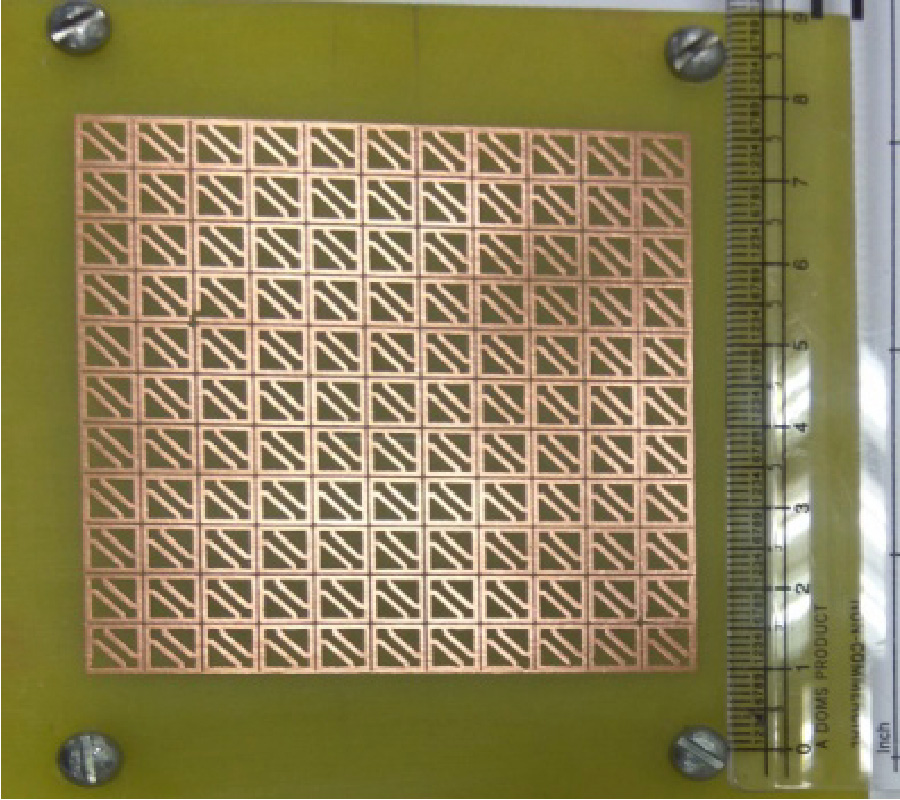
Ground bounce noise (GBN) is a major concern in high speed electronic circuits. In this paper a Genetic Algorithm (GA) optimized electromagnetic band gap (EBG) structure is proposed for suppression of the GBN. The unit cell of the structure is comprised of several square patches, each having a dimension of 5 mm x 5 mm. The position of the square patches is optimized using the GA, such that the stopband is maximized. A single unit cell of the optimized structure is fabricated and tested for its stopband characteristics using the vector network analyzer (VNA). The structure is then tested for its signal integrity (SI) using the Agilent ADS software. The single unit cell of the optimized structure provides a wide band gap of 20 GHz with 30 dB isolation and a band gap of 17.4 GHz with 40 dB isolation. The results obtained are compared with the existing results. The optimized structure shows improved performance in terms of stop band gap and signal integrity (SI).
GENETIC ALGORITHM OPTIMIZED ELECTROMAGNETIC BAND GAP STRUCTURE FOR WIDE BAND NOISE SUPPRESSION
2017-11-13
PIER M
Vol. 62, 111-122
Unobservable Potentials to Explain a Quantum Eraser and a Delayed-Choice Experiment
Masahito Morimoto
We present a new explanation for a quantum eraser. Mathematical description of the traditional explanation needs quantum-superposition states. However, the phenomenon can be explained without quantum-superposition states by introducing unobservable potentials which can be identified as an indefinite metric vector. In addition, a delayed choice experiment can also be explained by the interference between the photons and unobservable potentials, which seems like an unreal long-range correlation beyond the causality.
UNOBSERVABLE POTENTIALS TO EXPLAIN A QUANTUM ERASER AND A DELAYED-CHOICE EXPERIMENT
2017-11-11
PIER M
Vol. 62, 99-109
Transmission Line Model Considering Nonuniform Temperature Distribution at Different Locations
Yanling Wang , Yang Mo , Likai Liang , Wei Wang , Xiaofeng Zhou and Ran Wei
The temperature variation throughout overhead transmission lines has an important effect on the line operation. In order to describe the actual operation of transmission lines more accurately, this paper proposes a line segmentation method based on temperature distribution at different locations. Taking the actual transmission line of Shaanxi Province as a test case, the influence of the different temperature calculation methods on the maximum transmission power of lines is studied under the lumped parameter model and the distributed parameter model, respectively. It is shown that transmission line model considering non-uniform temperature distribution at different locations is more accurate for studying the operating state of the system.
TRANSMISSION LINE MODEL CONSIDERING NONUNIFORM TEMPERATURE DISTRIBUTION AT DIFFERENT LOCATIONS
2017-11-11
PIER M
Vol. 62, 89-98
Mm-Wave Dielectric Parameters of Magnesium Fluoride Glass Wafers
Vladimir Borisovich Yurchenko , Mehmet Ciydem , Marcin Lukasz Gradziel and Lidiya Valeriyevna Yurchenko
We measured millimeter-wave dielectric parameters of magnesium fluoride glass wafers at the room temperature in the frequency band of 75--110 GHz by applying the open resonator technique based on the use of Bragg structures and related multi-layer assemblies. Through the comparison of measured and simulated transmission spectra of various structures, the dielectric constant of magnesium fluoride glass is found as ε= 5.50±0.01. The estimate for the loss tangent is found to be tanδ= 0.00005, with a possibility that the actual losses could be smaller than this value.
MM-WAVE DIELECTRIC PARAMETERS OF MAGNESIUM FLUORIDE GLASS WAFERS
2017-11-10
PIER Letters
Vol. 71, 103-108
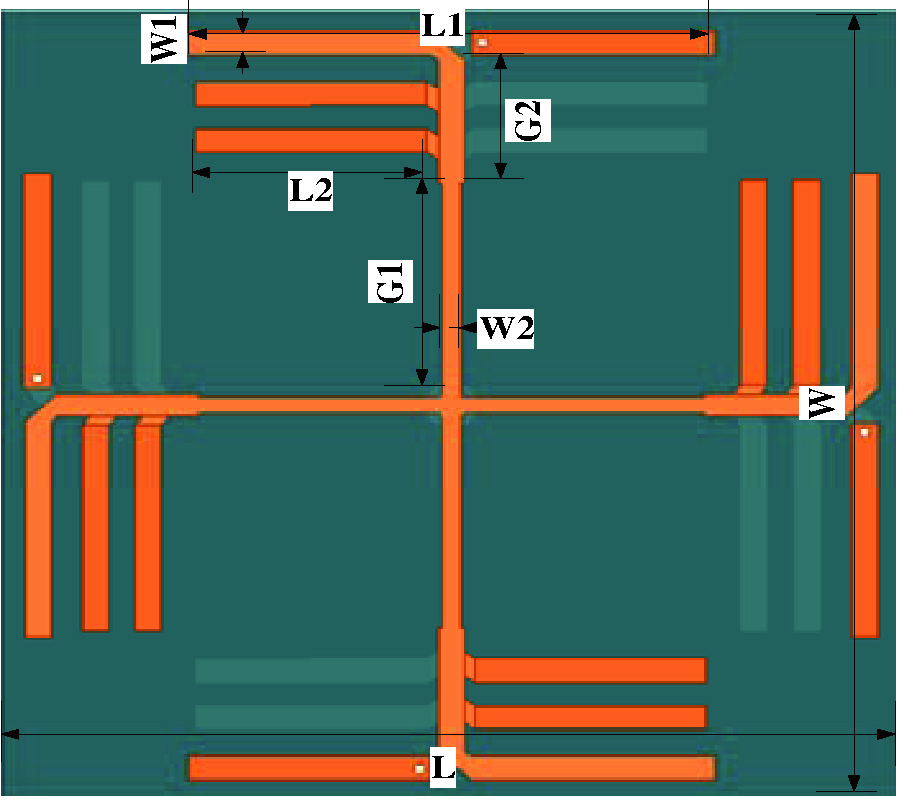
A Novel and Compact UWB Bandpass Filter-Crossover Using Microstrip to CPS Transitions
Mohamed Lamine Seddiki , Mourad Nedil and Farid Ghanem
In this letter, a new compact UWB uniplanar crossover with bandpass filter characteristics is proposed and implemented. The UWB Filter-Crossover is composed of two novel UWB filters placed on the top and bottom of the substrate to obtain the crossover features. These proposed filters are based on microstrip to coplanar stripline (CPS) transitions and sections of CPS section line used as a multiple mode resonator (MMR). The simulated and measured results show a good result in terms of isolation, return loss and insertion loss in the entire UWB band.
A NOVEL AND COMPACT UWB BANDPASS FILTER-CROSSOVER USING MICROSTRIP TO CPS TRANSITIONS
2017-11-09
PIER M
Vol. 62, 79-88
A Compact CPW Fed UWB Antenna with Quad Band Notch Characteristics for ISM Band Applications
Raed Abdulkareem Abdulhasan , Rozlan Alias and Khairun Nidzam Ramli
A quad band-notched compact ultra-wideband (UWB) patch antenna to operate on the industry, scientific, and medical (ISM) bands are presented in this study. A modified hexagonal patch vertex-fed with a coplanar waveguide (CPW) is fabricated on an FR-4 substrate with size of 43 × 28 × 1.6 mm3 and fractional bandwidth of 133%. The compact antenna operates at a frequency of 2.45 GHz, which is often required for the efficient performance of ISM utilisation. The existing bands share the same bandwidth as that of UWB systems. Therefore, a notched band at 3 GHz for worldwide interoperability for microwave access (WiMAX), and a further resonance band at 2.45 GHz for ISM are generated by implementing a meander-line strip on the antenna. Furthermore, the design demonstrates a couple of F-shaped slots and an inverted diamond-shaped slot on the patch. Moreover, a pair of J-shaped slots is loaded on the ground plane. The downlink C-band, wireless local area network (WLAN), and downlink X-band are rejected by the proposed slots, respectively. The current distribution, gain, radiation efficiency, and quad notched parameters of the proposed antenna are studied by using CST software. The demonstrated prototype covers an ISM band at (2.2 GHz-2.6 GHz) with a return loss of -23.45 dB and omnidirectional radiation patterns. A good agreement is observed between measured and the simulated results. This paper has presented a solution for both interference and miniaturised issues.
A COMPACT CPW FED UWB ANTENNA WITH QUAD BAND NOTCH CHARACTERISTICS FOR ISM BAND APPLICATIONS
2017-11-08
PIER M
Vol. 62, 65-77
A U-Shaped Meandered Slot Antenna for Biomedical Applications
Shikha Sukhija and Rakesh Kumar Sarin
In this paper, a U-shaped microstrip patch antenna with meandered slots is presented. It is designed for biomedical applications to operate at 2.45 GHz. Based on the simulation experience, two designs of the patch are introduced with and without use of meandered slots. The comparative study between these two is also demonstrated. It is observed that the antenna with meandered slots shows good performance with sufficient bandwidth, low losses and is capable of use in biomedical applications. Furthermore, the proposed antenna has small size of 35*29*1.6 mm3, and the size of the ground is only 14% of the overall antenna size. The measured and simulated results show good agreement with each other. The antenna is fabricated on an FR4 substrate, and simulation is carried out on FDTD based Empire XCcel simulator.
A U-SHAPED MEANDERED SLOT ANTENNA FOR BIOMEDICAL APPLICATIONS
2017-11-08
PIER M
Vol. 62, 51-63
Utilization of Low Computational Cost Two Dimensional Analytical Equations in Optimization of Multi Rings Permanent Magnet Thrust Bearings
Siddappa Iranna Bekinal , Mrityunjay Doddamani and Nikhil D. Dravid
Replacement of conventional bearings by passive magnetic bearings for highspeed applications, in terms of their performance will be effective, if the design is carried out by optimizing the geometrical dimensions in the given control volume. Present work deals with modification and utilization of two-dimensional (2D) analytical equations in optimization of multi rings permanent magnet (PM) thrust bearing configurations. Conventional and rotational magnetized direction (RMD) configurations are selected in optimizing the design variables for maximum bearing characteristics in a given volume with a constant aspect ratio. The design variables chosen for optimization are axial offset of rotor, number of rings, radial air thickness and inner diameter of the rotor and stator PM rings. MATLAB codes for solving 2D equations are developed in optimizing configuration variables. Further, optimized parameter values of the two configurations are compared. Finally, optimized results obtained using 2D and three-dimensional (3D) equations for the conventional configuration with same aspect ratio are compared, and conclusions are presented.
UTILIZATION OF LOW COMPUTATIONAL COST TWO DIMENSIONAL ANALYTICAL EQUATIONS IN OPTIMIZATION OF MULTI RINGS PERMANENT MAGNET THRUST BEARINGS
2017-11-07
PIER M
Vol. 62, 41-50
Analysis and Validation of Super-Resolution Micro-Deformation Monitoring Radar
Zelong Shao , Xiangkun Zhang and Yingsong Li
A light micro-deformation monitoring radar based on frequency modulation continuous wave (FMCW) technique is proposed and designed for scenes which are sensitive to micro deformation such as slopes, dams, and high buildings. The mini radar is well suited to measure micro-deformation of buildings or mountains. Meanwhile, interferometric method was used by the radar to obtain high range resolution of the micro-deformation monitoring radar. The radar acquires micro deformation of the target by inversion of phase difference between the transmitted and received waves. To get an accurate micro-deformation measure result, the radar was carefully designed in signal mode and hardware structure. Various experiments are used in the article to verify the radar's deformation measure ability. The experiments prove that the radar can measure micro deformation accurately and timely. For example, railway bridges' vibration can be monitored by the radar in real time. In addition, it can be used in structures monitoring, disaster alarming and other regions.
ANALYSIS AND VALIDATION OF SUPER-RESOLUTION MICRO-DEFORMATION MONITORING RADAR
2017-11-06
PIER C
Vol. 79, 149-157
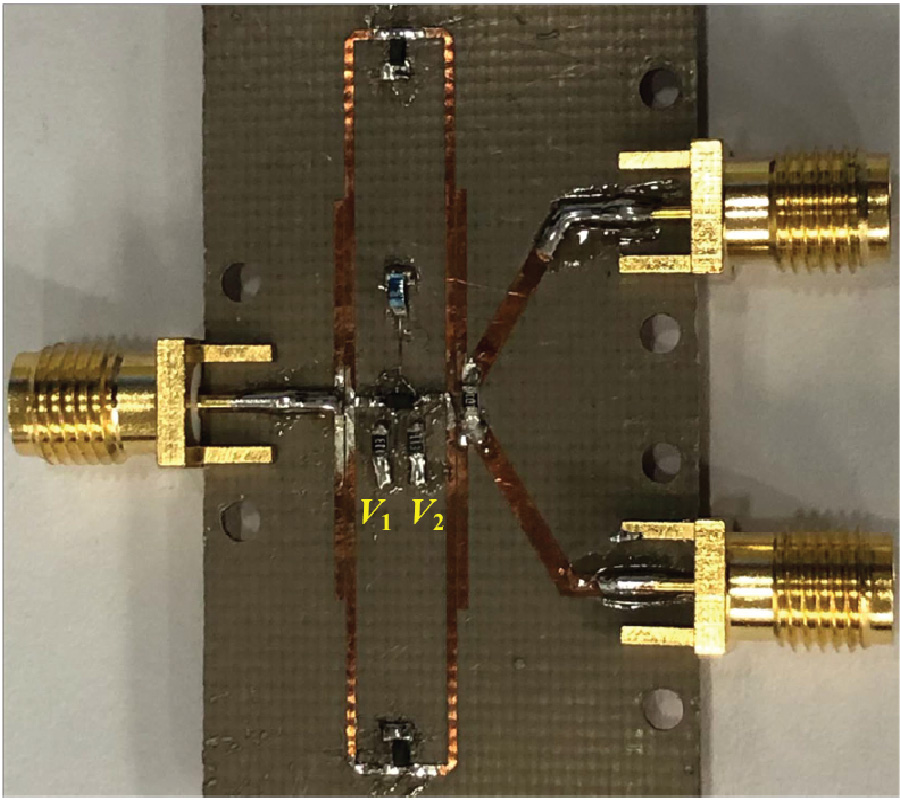
A Miniaturized Self-Matched Negative Group Delay Microwave Circuit
Te Shao , Zhongbao Wang , Shao-Jun Fang , Hongmei Liu and Shiqiang Fu
A miniaturized self-matched negative group delay (NGD) microwave circuit without the need for external matching networks is proposed. The NGD circuit is based on a modified parallel-type RLC resonator, in which lumped elements (capacitors and inductors) are implemented by microstrip gaps and high-impedance and short-circuited microstrip lines. To verify the design concept, an NGD circuit with the size of 0.21λg×0.29λg is designed and fabricated. From the measurement results, the NGD time of -5.9 ns at the center frequency of 1.532 GHz is obtained with insertion loss of less than 12.5 dB, return losses of more than 25 dB and the NGD bandwidth of 45 MHz.
A MINIATURIZED SELF-MATCHED NEGATIVE GROUP DELAY MICROWAVE CIRCUIT
2017-11-06
PIER M
Vol. 62, 29-40
Analysis of the Influence of Asymmetric Grid on Synchronous Hydro Generator
Hongbo Qiu , Xiaobin Fan , Jianqin Feng and Cunxiang Yang
In order to analyze the influence of three-phase asymmetrical operation of a generator on its stable operation, firstly, taking a 24-MW bulb turbine generator as an example, the 2-D transient electromagnetic field model is established. Through the comparison analysis of the experimental results and simulation data, the correctness of the model is verified. Secondly, the values of air gap flux density, torque and loss in different conditions are obtained by using the finite element method. The effects of asymmetric three-phase current on air gap flux density, torque and loss are determined. Thirdly, the corresponding relationships between the three-phase current unbalance degree and torque ripple, eddy current loss are established, and the variations of torque ripple and eddy current loss are given when the three-phase current unbalance degree is changed. The result shows that the asymmetry three-phase current makes the torque ripple and eddy current loss increase dramatically, which seriously threaten the safe and stable operation of the generator. Finally, the further study on the torque ripple and eddy current loss of the generator under different current distributions and the same three-phase unbalance degree identifies that the content of negative sequence current is a key factor to affect the torque ripple and eddy current loss.
ANALYSIS OF THE INFLUENCE OF ASYMMETRIC GRID ON SYNCHRONOUS HYDRO GENERATOR