Search Results(13793)

2017-10-27
PIER Letters
Vol. 71, 77-82
Combination of Two Measurement Techniques to Expand the Measurements Frequency Range of the Dielectric Permittivity
Mohamed Wajdi Ben Ayoub , Eric Georgin , Jean-Francois Rochas and Pierre Sabouroux
Usually, knowledge of material's dielectric properties, as a function of frequency, represents a key issue in scienti c elds and several industrial applications. At LNE-CETIAT, in partnership with Institut Fresnel UMR 72792, a set of capacitive and coaxial cells, dedicated to the measurement of complex dielectric permittivity, have been developed. The present paper focuses on the experimental calibration and validation of two cells using low and medium dielectric loss materials. It gives the main measurement results obtained on three di erent materials: decanol alcohol, polytetra uoroethylene (PTFE) and polyvinyl chloride (PVC) in the frequency range from 3 MHz up to 2 GHz.
COMBINATION OF TWO MEASUREMENT TECHNIQUES TO EXPAND THE MEASUREMENTS FREQUENCY RANGE OF THE DIELECTRIC PERMITTIVITY
2017-10-27
PIER M
Vol. 61, 159-167
A Quad-Band CPW Fed Slot Antenna Array for LTE and WiMAX Applications
Manzoor Elahi , Rizwan Khan , Azremi Abdullah Al-Hadi , Saeeda Usman , Ping Jack Soh and Habibullah Khan
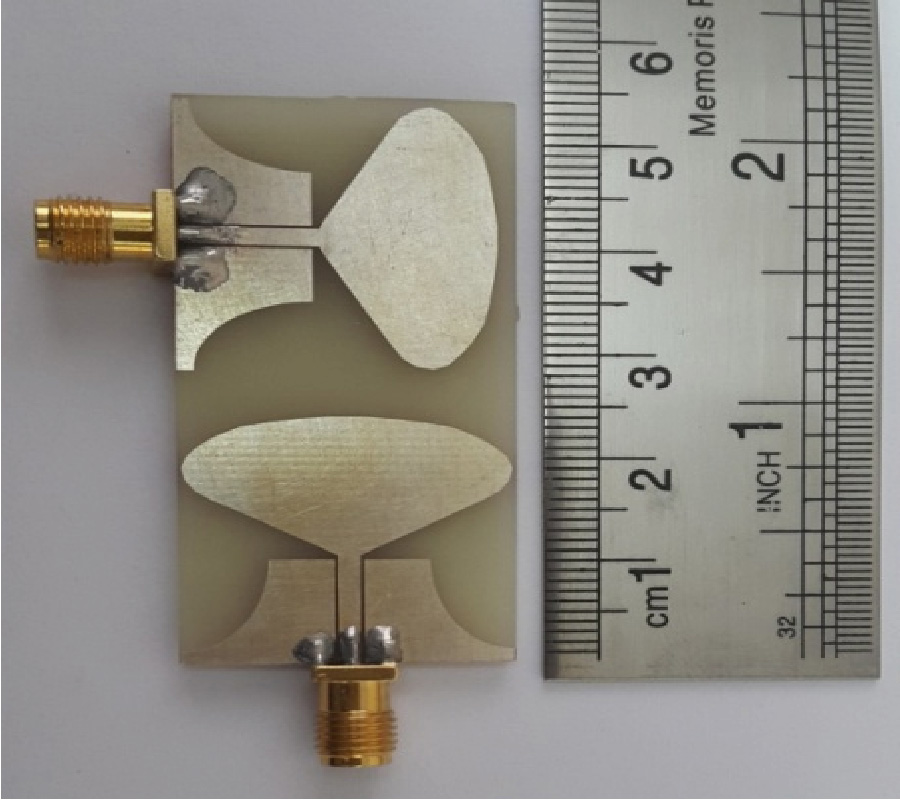
In this work, a quad-band omnidirectional slot antenna array is proposed. The structure consists of two closely-spaced radiating elements fed using coplanar waveguide (CPW) line. This combined structure is then integrated in a tapered slot etched on the antenna to enable operation in four frequency bands (0.8, 1.8, 2.6 and 3.45 GHz) for LTE and WiMAX applications with at least -10 dB of reflection coefficient. The antenna dimensional parameters are also studied to understand its behaviour and e ects on its performance in facilitating the optimization process. Measurements of the fabricated antenna on a low-cost FR4 substrate validate its operation centred at 0.845 (from 0.77 to 0.92 GHz), 1.74 (from 1.59 to 1.9 GHz), 2.655 (2.59 to 2.72 GHz) and 3.49 GHz (from 3.28 to 3.7 GHz). Meanwhile, simulated and measured radiation patterns of the proposed antenna in all bands agree well and are omnidirectional, making is suitable for application in mobile terminals.
A QUAD-BAND CPW FED SLOT ANTENNA ARRAY FOR LTE AND WIMAX APPLICATIONS
2017-10-25
PIER C
Vol. 79, 79-88
Recon UWB Antenna for Cognitive Radio
Deeplaxmi V. Niture , Santosh S. Jadhav and Shrinivas P. Mahajan
This paper talks about a simple printed reconfigurable antenna for cognitive radio. This antenna can be switched between ultra-wideband (UWB) and two other narrow bands. To achieve frequency reconfigurability, horizontal slots are inserted in the partial ground plane, and their lengths are varied by using ideal switches. These switches are incorporated so that they can be turned ON/OFF independently. The proposed antenna is suitable for cognitive radio as it is capable of sensing whole UWB from 3.1 GHz to 10.6 GHz (7.5 GHz bandwidth) and switching between two different narrow bands viz. 3.1 GHz and 8.23 GHz, and the corresponding observed gain and radiation pattern are also as per the requirement.
RECON UWB ANTENNA FOR COGNITIVE RADIO
2017-10-25
PIER C
Vol. 79, 65-77
Dynamic Thermal Processes in Ultra-High-Speed Microgenerators for UAV
Flur Rashitovich Ismagilov , Viacheslav Vavilov and Denis Gusakov
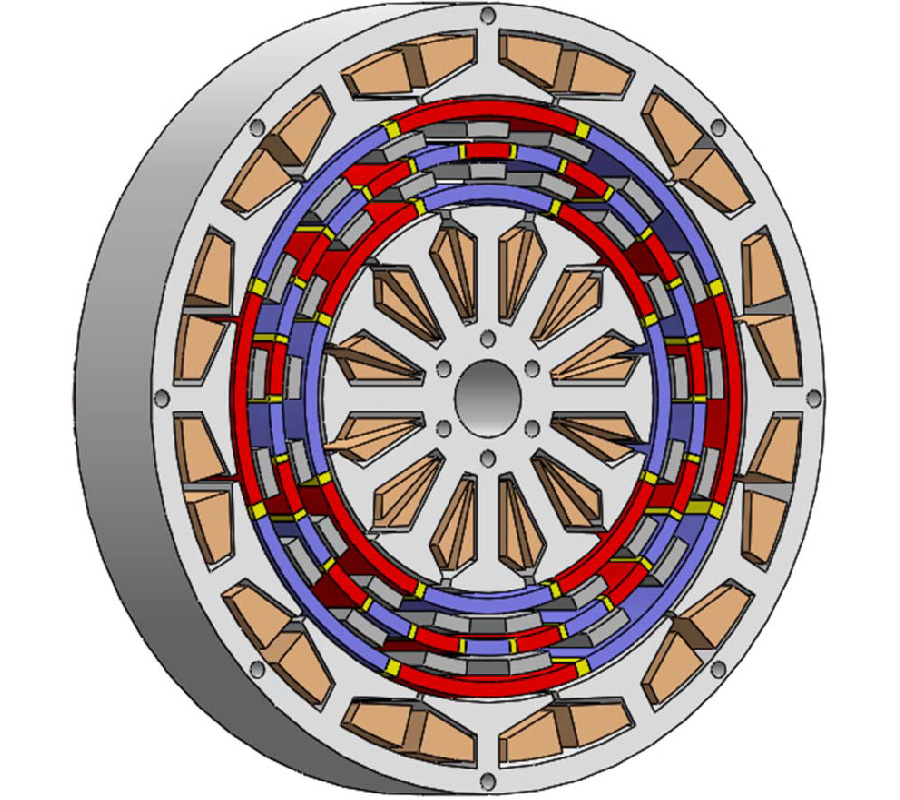
The paper presents a study of dynamic thermal processes in ultra-high-speed microgenerators power of 55 W with the rotational speed of 800,000 rpm for UAV. A large-scale study of current works devoted to this topic were done where the main shortcomings were identified. A mathematical description of heat exchange processes in microelectromechanical energy converters with a flight time of no more than 10 minutes was developed in a non-stationary formulation. A study of the thermal state of the microgenerator operating in a short-term mode without a special cooling system is conducted. An experimental study of the heating dynamics of its active parts is carried out using the method of physical analogies. On the basis of experimental studies, the FEMM model is verified. Afterwards, combined electromagnetic and thermal calculations of microgenerator are conducted.
DYNAMIC THERMAL PROCESSES IN ULTRA-HIGH-SPEED MICROGENERATORS FOR UAV
2017-10-25
PIER Letters
Vol. 71, 69-76
Terahertz Graphene-Based Reconfigurable Patch Antenna
Mohamed Karim Azizi , Mohamed Amin Ksiksi , Hosni Ajlani and Ali Gharsallah
The radiation properties of a copper-patch antenna designed for resonating at the frequency of 0.7 THz, which is used in aerospace applications, is presented. These properties are then compared to those of a graphene-patch antenna presenting the same dimensions. We show how the use of graphene, as a tunable material, allows to dynamically modify the frequency of operation of the antenna as well as its radiation pattern. Our results show that the return loss peak reaches -29 dB, at the operating frequency, which is almost twice the value obtained with the copper patch. This increase in the return loss peak is also accompanied by an improvement in the gain of the antenna from 5.73 dB in the case of the copper patch to 7.16 dB in the case of graphene. We focus our interest on how the reconfigurable radiation properties of the graphene-patch antenna are directly related to the graphene surface conductivity.
TERAHERTZ GRAPHENE-BASED RECONFIGURABLE PATCH ANTENNA
2017-10-25
PIER Letters
Vol. 71, 61-67
Modeling of Multichannel Filter Using Defective Nano Photonic Crystal with Thue-Morse Structure
Hadis Azarshab and Abdolrasoul Gharaati
In this work, we study a multichannel filter by using one-dimensional photonic crystal (1DPC) based on Thue-Morse sequence (TMS). We use a dielectric defect layer between binary sequence cells with a TMS structure. First, we show transmission in terms of wavelength for the structure without defect layers. Then, we plot transmission in terms of wavelength for a different number of defect layer periods (N) in normal incidence. The analysis shows that there are two photonic bang gaps (PBG) in visible and infrared regions and two defect modes in each one for N = 1. Moreover, the number of defect modes is increased by increasing N. So, by tuning them, this structure can be used as a multi-channel filter within an optical wavelength range.
MODELING OF MULTICHANNEL FILTER USING DEFECTIVE NANO PHOTONIC CRYSTAL WITH THUE-MORSE STRUCTURE
2017-10-25
PIER M
Vol. 61, 147-158
Compact Dual-Band Bandpass Filter Based on Substrate Integrated Waveguide Cavity with High Selectivity
Jing Li , Guanglin Li , Zhihua Wei , Guoqing Xu , Zongde Ju and Jie Huang
A compact dual-band bandpass filter implemented with an embedded coplanar waveguide (ECPW) resonator and a capacitively loaded resonator (CLR) in substrate integrated waveguide (SIW) cavity is presented and analyzed in this paper. Three transmission zeroes (TZs), of which two are located in the middle of the two passbands and one located in the upper stopband, are obtained to improve the inner-band isolation and the selectivity of the filter. The center frequencies and bandwidths of the two passbands can be easily tuned by changing the geometrical parameters of the two resonators. The proposed dual-band SIW filter is demonstrated with center frequencies located at 8.41/14.29 GHz. The measured insertion loss is -1.28/-1.91 dB with the corresponding fractional bandwidth (FBW) of 21.2%/7.3%. The measured results are in good agreement with the simulated ones.
COMPACT DUAL-BAND BANDPASS FILTER BASED ON SUBSTRATE INTEGRATED WAVEGUIDE CAVITY WITH HIGH SELECTIVITY
2017-10-25
PIER M
Vol. 61, 133-146
Comparative Analysis of Basic Models and Artificial Neural Network Based Model for Path Loss Prediction
Julia Ofure Eichie , Onyedi David Oyedum , Moses Ajewole and Abiodun Musa Aibinu
Propagation path loss models are useful for the prediction of received signal strength at a given distance from the transmitter; estimation of radio coverage areas of Base Transceiver Stations (BTS); frequency assignments; interference analysis; handover optimisation; and power level adjustments. Due to the differences in: environmental structures; local terrain profiles; and weather conditions, path loss prediction model for a given environment using any of the existing basic empirical models such as the Okumura-Hata's model has been shown to differ from the optimal empirical model appropriate for such an environment. In this paper, propagation parameters, such as distance between transmitting and receiving antennas, transmitting power and terrain elevation, using sea level as reference point, were used as inputs to Artificial Neural Network (ANN) for the development of an ANN based path loss model. Data were acquired in a drive test through selected rural and suburban routes in Minna and environs as dataset required for training ANN model. Multilayer perceptron (MLP) network parameters were varied during the performance evaluation process, and the weight and bias values of the best performed MLP network were extracted for the development of the ANN based path loss models for two different routes, namely rural and suburban routes. The performance of the developed ANN based path loss model was compared with some of the existing techniques and modified techniques. Using Root Mean Square Error (RMSE) obtained between the measured and the model outputs as a measure of performance, the newly developed ANN based path loss model performed better than the basic empirical path loss models considered such as: Hata; Egli; COST-231; Ericsson models and modified path loss approach.
COMPARATIVE ANALYSIS OF BASIC MODELS AND ARTIFICIAL NEURAL NETWORK BASED MODEL FOR PATH LOSS PREDICTION
2017-10-25
PIER
Vol. 160, 19-27
Broadband Generation of Orbital Angular Momentum Carrying Beams in RF Regimes
Fuchun Mao , Ming Huang , Tinghua Li , Jialin Zhang and Chengfu Yang
We propose a novel approach for the broadband generation of orbital angular momentum (OAM) carrying beams based on the Archimedean spiral. The mechanism behind the antenna is theoretically analyzed and further validated by numerical simulation and physical measurement. The results show that the spiral-based antenna is able to reliably generate the OAM carrying beams in an ultra-wide frequency band. Of particular interest is the fact that the mode number of radiated beams is reconfigurable with a change in operating frequency. Prototypes of a single-arm spiral antenna (SASA), a multi-arm spiral antenna (MASA), and a compact multi-arm spiral antenna (CMASA) are investigated and demonstrated to support our arguments. The proposed approach provides an effective and competitive way to generate OAM carrying beams in radio and microwave bands, which may have potential in wireless communication applications due to its characteristics of simplicity, broadband capacity and reconfiguration opportunities.
BROADBAND GENERATION OF ORBITAL ANGULAR MOMENTUM CARRYING BEAMS IN RF REGIMES
2017-10-25
PIER
Vol. 160, 9-17
General Near Field Synthesis of Reflectarray Antennas for Their Use as Probes in CATR
Daniel Rodriguez Prado , Alvaro F. Vaquero , Manuel Arrebola , Marcos R. Pino and Fernando Las-Heras
In this work, reflectarray antennas are proposed for their use as probes in compact antenna test ranges. For that purpose, the quiet zone generated by a single o set reflectarray is enhanced, overcoming the limitation imposed by the amplitude taper of the feed antenna. First, the near fi eld is characterized by a radiation model which computes the near eld of the reflectarray as far field contributions of each element, which are modeled as small rectangular apertures and thus taking into account the active element pattern. Then, a phase only synthesis is performed with the Levenberg-Marquardt algorithm in order to improve the size of the generated quiet zone. Due to the nature of the application, this near eld synthesis takes into account both the amplitude and phase, making it a more challenging task than an amplitude-only synthesis. The optimization is focused on flattening the amplitude while trying to preserve the phase front generated by the reflectarray.
GENERAL NEAR FIELD SYNTHESIS OF REFLECTARRAY ANTENNAS FOR THEIR USE AS PROBES IN CATR
2017-10-24
PIER M
Vol. 61, 123-131
Compact UWB Planar Antenna with Triple Band EMI Reduction Characteristics for WiMAX/WLAN/X-Band Satellite Downlink Frequency
Priyanka Usha and Krishnan Chitra
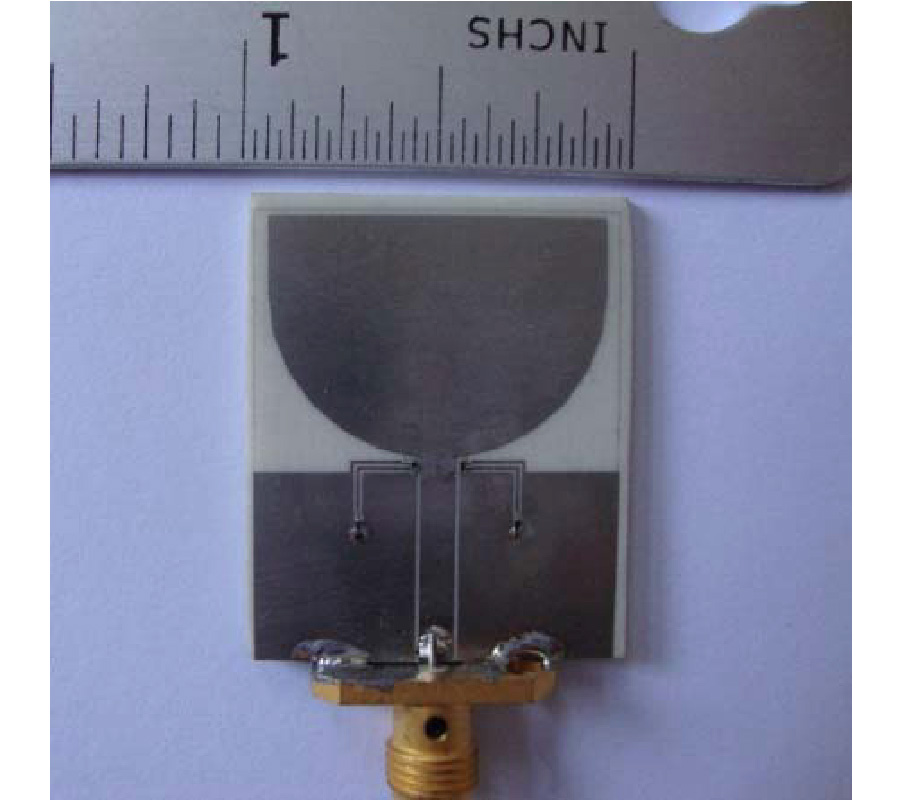
A new compact and simple design of UWB antenna with triple band-notched characteristic is proposed in this paper. The first band notch for 3.3-3.8 GHz (WiMAX) is created by cutting a line slot in the radiating patch. The second band rejection for 5.1-5.8 GHz (WLAN) is achieved by etching out an elliptical split ring resonator (ESRR) from the patch placed just above the feed line and patch junction. And the third notch for 7.25 GHz-7.75 GHz (X-band satellite downlink frequency) is created using rectangular split ring resonator (RSRR) in the feed line. Each notch can be adjusted without disturbing the others. A 10 dB return loss wide bandwidth (3.1-10.6 GHz) and VSWR>2 for the stopbands has been measured.
COMPACT UWB PLANAR ANTENNA WITH TRIPLE BAND EMI REDUCTION CHARACTERISTICS FOR WIMAX/WLAN/X-BAND SATELLITE DOWNLINK FREQUENCY
2017-10-24
PIER M
Vol. 61, 111-122
Integration of Image Segmentation Method in Inverse Scattering for Brain Tumour Detection
Eustacius Jude Joseph , Kismet Anak Hong Ping , Kuryati Kipli , Dayang Azra Awang Mat , Shafrida Sahrani , Dyg Norkhairunnisa Abg Zaidel , Mohd Iqbal Sariphn and Mohamad Hamiruce Marhaban
This paper presents a microwave imaging for brain tumour detection utilizing Forward-Backward Time-Stepping (FBTS) inverse scattering technique. This technique is applied to solve electromagnetic scattered signals. It is proven that this technique is able to detect the presence of tumour in the breast. The application is now extended to brain imaging. Two types of results are presented in this paper; FBTS and FBTS integrated with image segmentation as a pre-processing step to form a focusing reconstruction. The results show that the latter technique has improved the reconstructions compared to the primary technique. Integration of the image segmentation step helps to reduce the variation of the estimated dielectric properties of the head tissues. It is also found that the optimal frequency used for microwave brain imaging is at 2 GHz and able to detect a tumour as small as 5 mm in diameter. The numerical simulations show that the integration of image segmentation with FBTS has the potential to provide useful quantitative information on the head internal composition.
INTEGRATION OF IMAGE SEGMENTATION METHOD IN INVERSE SCATTERING FOR BRAIN TUMOUR DETECTION
2017-10-23
PIER B
Vol. 79, 45-64
High Resolution Radar Focusing Using Spectral Estimation Methods in Wide-Band and Near-Field Configurations: Application to Millimeter-Wave Near-Range Imaging
Antoine Jouade , Laurent Ferro-Famil , Stéphane Méric , Olivier Lafond and Laurent Le Coq
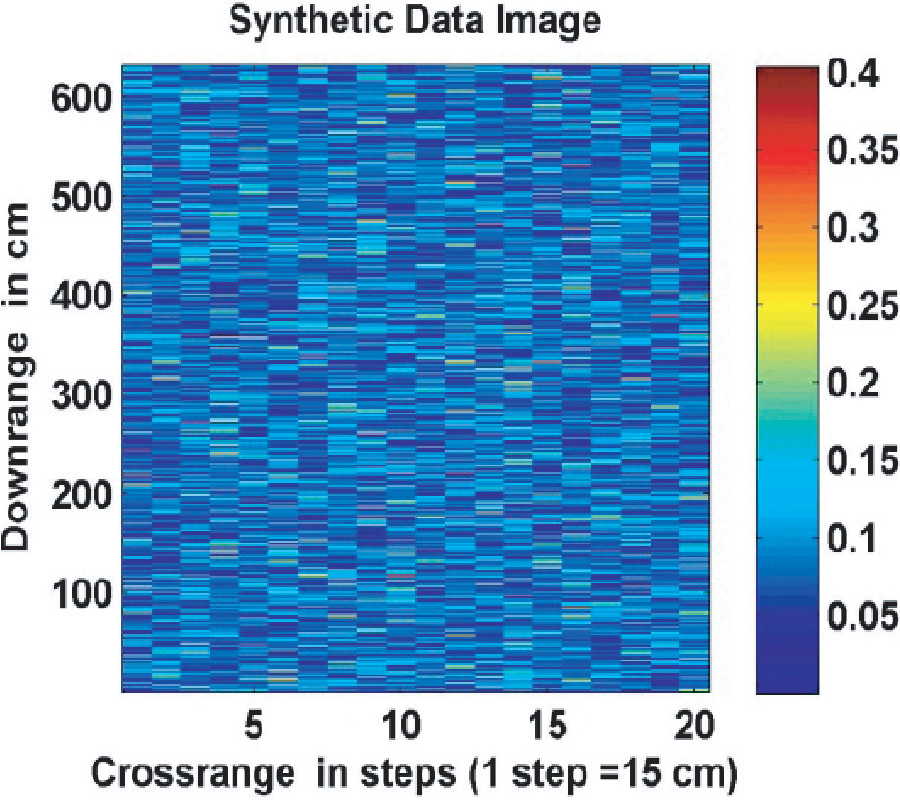
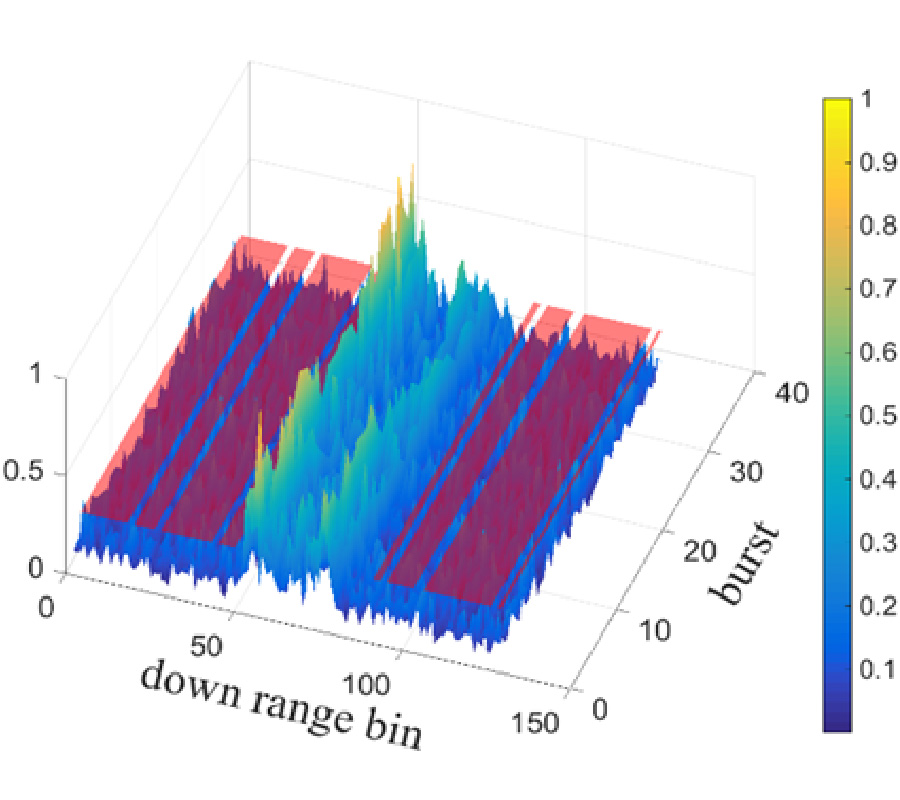
The spatial resolution of an imaging system is a key factor, which steers its performance for complex target detection, characterization and recognition. Active electromagnetic imaging systems with limited frequency bandwidth and synthetic aperture may fail to discriminate important details during the imaging process, due to their insufficient resolution properties. Spectral estimation methods may be used to overcome such limitations through dedicated signal processing techniques. This study proposes a new signal processing chain, which is able to cope with near-field and wide-band configurations, to significantly improve 2-D resolution, using classical spectral estimation methods. This work is based on an efficient handling and compensation of critical signal properties, such as near-field and wide bandwidths, which make the proposed technique able to deal with very general imaging configurations, such as near/far-ranges, narrow/wide-beamwidths and -bandwidths, very short aperture... Experimental results obtained at millimeter-wave are shown to demonstrate the performance and versatility of the proposed approach.
HIGH RESOLUTION RADAR FOCUSING USING SPECTRAL ESTIMATION METHODS IN WIDE-BAND AND NEAR-FIELD CONFIGURATIONS: APPLICATION TO MILLIMETER-WAVE NEAR-RANGE IMAGING
2017-10-23
PIER M
Vol. 61, 97-110
An Efficient Technique for Digital Video Broadcasting Using High-Altitude Aerial Platforms and Adaptive Arrays
Yasser Albagory
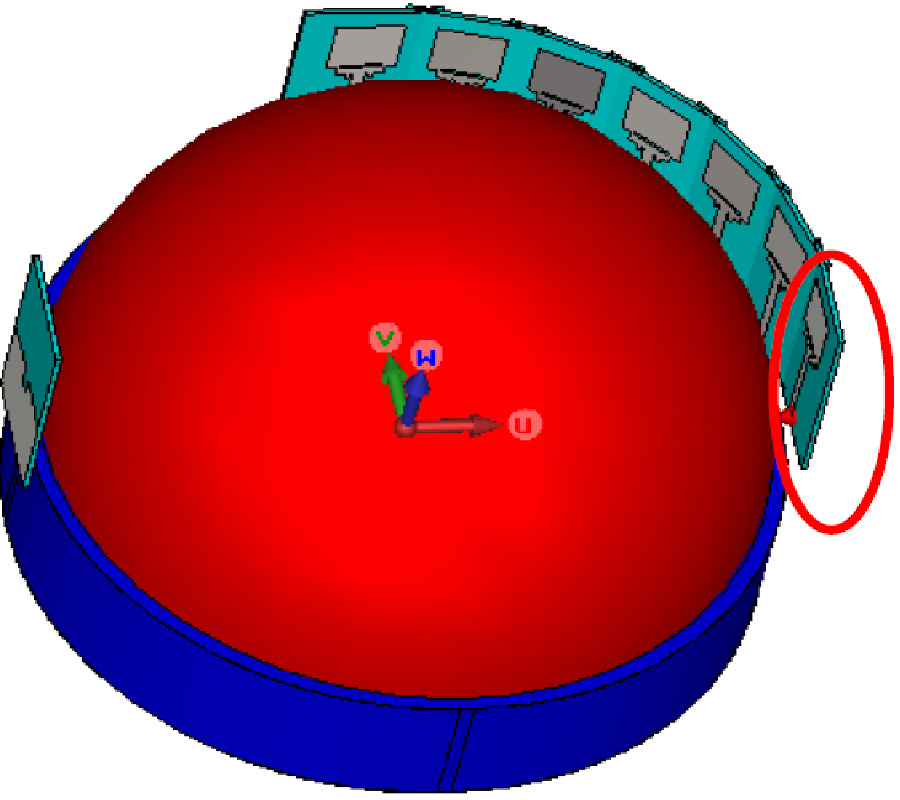
In this paper, an efficient broadcasting technique for digital-video and audio broadcasting (DVB/DAB) is proposed using High-Altitude Platforms (HAP) and a new adaptive beamforming technique. The proposed beamforming technique uses two cascaded weighting functions to generate uniform flat footprint with improved link performance compared to terrestrial systems. These two weighting functions include flattening and smoothing coefficients to generate flat power distribution with lower sidelobe levels. Simulation results show that the generated coverage beam pattern has low sidelobe levels that is more than 40 dB below the main coverage level with less than 1 dB variation over the main coverage lobe level. Also, an almost uniform bit-energy to noise power spectral density can be achieved over the coverage area with minor variations due to the changing slant distance over the coverage area of broadcasting HAP.
AN EFFICIENT TECHNIQUE FOR DIGITAL VIDEO BROADCASTING USING HIGH-ALTITUDE AERIAL PLATFORMS AND ADAPTIVE ARRAYS
2017-10-22
PIER C
Vol. 79, 49-64
Linear-to-Circular Polarizers for Multi-Octave Bandwidths and Wide Scan Angles at mm-Wave Frequencies Using Rotated Anisotropic Layers
Carl Pfeiffer and Boris Tomasic
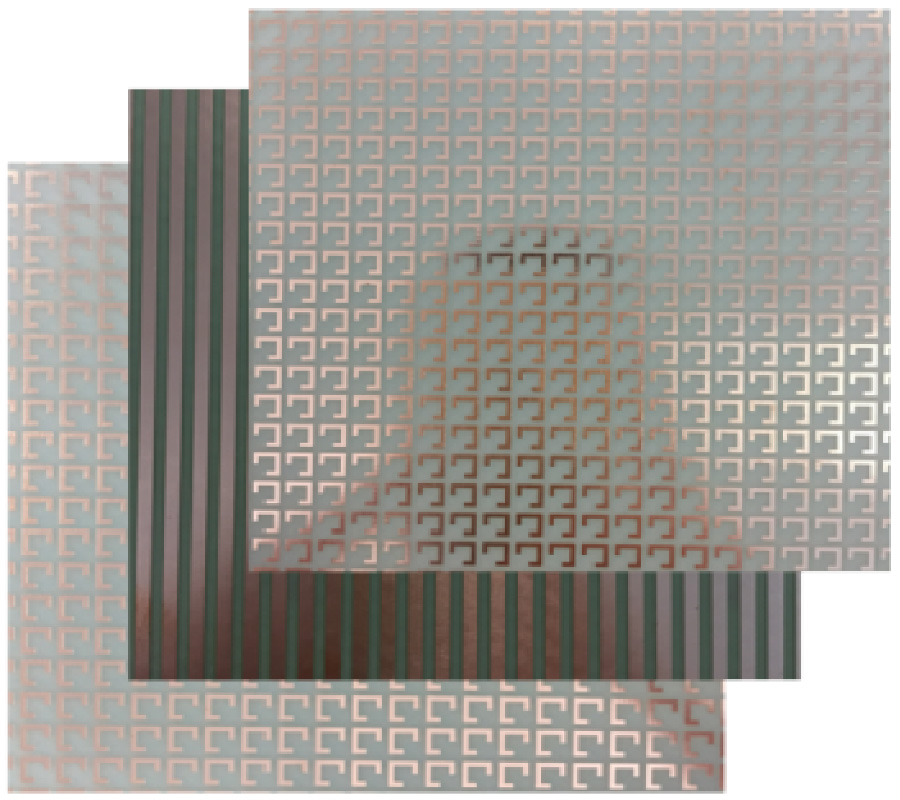
Linear-to-circular polarizers operating from roughly 17 to 65 GHz, and angles of incidence up to 60° are reported. These polarizers convert incident, linearly polarized radiation into circular polarization upon transmission. First, previous designs inspired by the optics community using cascaded waveplates are scaled down to mm-wave frequencies. The naturally occurring anisotropic crystals that the optics community employed are replaced here with metamaterials. The range of incidence angles is improved by utilizing biaxial, artificial dielectrics whose permittivity in the $x$, $y$ and $z$ directions are all engineered. Next, an ultra-wideband linear-to-circular polarizer consisting of cascaded sheet impedances is reported. The cascaded sheet impedance polarizer utilizes a combination of meanderline and metallic patch geometries. The principal axes of each patterned metallic sheet are oriented at an optimized angle, which increases the design degrees of freedom and performance. This polarizer has the advantages of being thinner and easier to fabricate than the polarizer utilizing cascaded waveplates, but is more difficult to design. Both polarizers rely heavily on genetic algorithm optimization in the design process to realize multiple octaves of bandwidths and robust performance at wide angles of incidence. The polarizers are fabricated with commercial printed-circuit-boards, and then experimentally characterized.
LINEAR-TO-CIRCULAR POLARIZERS FOR MULTI-OCTAVE BANDWIDTHS AND WIDE SCAN ANGLES AT MM-WAVE FREQUENCIES USING ROTATED ANISOTROPIC LAYERS
2017-10-22
PIER M
Vol. 61, 85-96
Study of the Calculation Method of Shielding Effectiveness of Rectangle Enclosure with an Electrically Large Aperture
Pu-Yu Hu and Xiaoying Sun
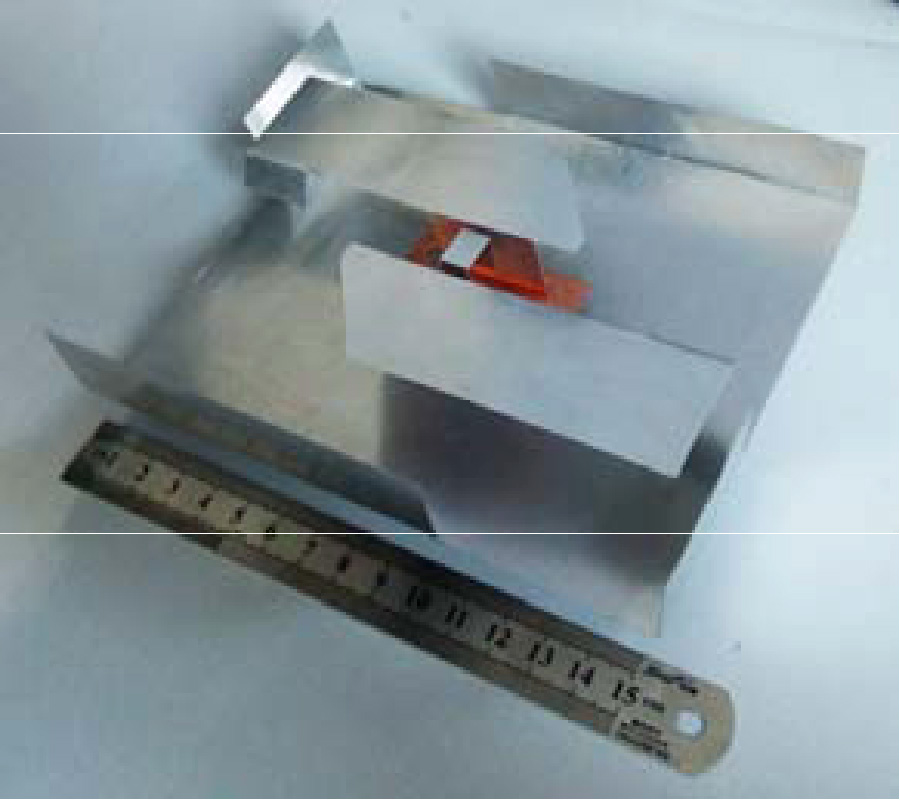
An analytical model based on the Bethe's theory of diffraction by small holes is presented to predict the shielding effectiveness (SE) of metallic rectangular enclosure with electrically large aperture under plane wave illumination over a wide frequency range (0~3 GHz). In this model, the aperture is represented as electric and magnetic dipoles located at the center of the aperture, and the coupling relation between external plane wave and electromagnetic field inside the enclosure is established. The approximate solution of electromagnetic field distribution inside the enclosure is obtained in terms of the integrals of the electric and magnetic dynamic Green function. Finally, the influence of enclosure thickness on SE is calculated by introducing thickness attenuation coefficient. The model considers the effect of the thickness on the calculation results and is simple with low computation complex and high estimation accuracy. Besides, the effects of parameters like enclosure and aperture dimensions, aperture and observation point positions, incident and polarization direction of the plane wave on SE can be analyzed comprehensively based on the model. Simulation results of the proposed model are in accord with that of the TLM method, which verifies the accuracy and reliability of the model.
STUDY OF THE CALCULATION METHOD OF SHIELDING EFFECTIVENESS OF RECTANGLE ENCLOSURE WITH AN ELECTRICALLY LARGE APERTURE
2017-10-22
PIER
Vol. 160, 1-8
Time Decomposition Method for the General Transient Simulation of Low-Frequency Electromagnetics
Bo He , Chuan Lu , Ningning Chen , Dingsheng Lin , Marius Rosu and Ping Zhou
This paper describes a highly robust and efficient parallel computing method for the transient simulation of low-frequency electromagnetics with nonlinear materials and/or permanent magnets. In this method, time subdivisions are introduced to control the memory usage and nonlinear convergence. A direct block triangular matrix solver is applied to solve the formulated block matrix for each subdivision. This method has been implemented using the Message Passing Interface (MPI) for distributed memory parallel processing. Depending on the number of available MPI processes and physical memory, the entire nonlinear transient simulation can be divided into several subdivisions along the time-axis such that each MPI process handles only the computation for one time-step. Application examples are presented to demonstrate that this method can achieve excellent scalability of speedup.
TIME DECOMPOSITION METHOD FOR THE GENERAL TRANSIENT SIMULATION OF LOW-FREQUENCY ELECTROMAGNETICS
2017-10-22
PIER
Vol. 159, 139-157
State-of-the-Art Electromagnetics Research in Electric and Hybrid Vehicles (Invited Paper)
Kwok-Tong Chau , Chaoqiang Jiang , Wei Han and Christopher H. T. Lee
There is no doubt that electrified vehicles are superseding internal combustion engine vehicles for road transportation. Among them, electric vehicles (EVs) have been identified as the greenest road transportation while hybrid EVs have been tagged as the super ultra-low emission vehicles. In this paper, the definition, classification, merits and demerits of electric and hybrid vehicles are first introduced. Then, after revealing their multidisciplinary technologies and development trends, the state-of-the-art electromagnetics research in electric and hybrid vehicles are discussed, with emphasis on electric motors for electric propulsion, electric machine systems for hybrid propulsion, wireless power transfer technologies for park-and-charge a well as move-and-charge, electromagnetic interference and compatibility issues in EVs, electromechanical flywheels for energy storage and magnetic sensors for EV operation. Meanwhile, the development trend of these research areas is revealed.
STATE-OF-THE-ART ELECTROMAGNETICS RESEARCH IN ELECTRIC AND HYBRID VEHICLES (INVITED PAPER)
2017-10-21
PIER C
Vol. 79, 39-48
A Comparison Between Carson's Formulae and a 2D FEM Approach for the Evaluation of ac Interference Caused by Overhead Power Lines on Buried Metallic Pipelines
Andrea Cristofolini , Arturo Popoli and Leonardo Sandrolini
In this paper, the AC interference produced by an overhead power transmission line on a buried metallic pipeline is estimated using a circuital method based on the well-known Carson's formulae and a two-dimensional finite element numerical code. The finite element formulation used in this paper implicitly takes into account the mutual inductive coupling between all the considered conductors, and it allows a more detailed analysis in cases where a nonhomogeneous soil is present. The FEM approach includes a procedure which has been developed to enforce that the sum of the currents flowing through the soil, pipeline and eventual overhead ground wire is equal to zero. A case study has been identified, and the results obtained by the two approaches have been compared and discussed
A COMPARISON BETWEEN CARSON'S FORMULAE AND A 2D FEM APPROACH FOR THE EVALUATION OF AC INTERFERENCE CAUSED BY OVERHEAD POWER LINES ON BURIED METALLIC PIPELINES
2017-10-20
PIER B
Vol. 79, 1-19
Comparative Study of the Rytov and Born Approximations in Quantitative Microwave Holography
Daniel Tajik , Aaron D. Pitcher and Natalia K. Nikolova
Quantitative microwave holography is a recent imaging methodology that shows promise in medical diagnostics. It is a real-time direct inversion algorithm that reconstructs the complex permittivity from S-parameter measurements on an acquisition surface outside of the imaged object. It is recognized that this imaging method su ers from limitations in tissue imaging due to a forward model which linearizes a highly nonlinear scattering problem. It is therefore important to study its limitations when reconstruction is aided by certain pre- and post-processing filters which are known to improve the image quality. The impact of ltering on the quantitative result is particularly important. In this work, the reconstruction equations of quantitative microwave holography are derived from rst principles. The implementation of two linearizations strategies, Born's approximation and Rytov's approximation, is explained in detail in the case of a scattering model formulated in terms of S-parameters. Furthermore, real-space and Fourier-space lters are developed to achieve the best performance for the given linearized model of scattering. Simulated and experimental results demonstrate the limitations of the method and the necessity of ltering. The two approximations are also compared in experimental tissue reconstructions.
COMPARATIVE STUDY OF THE RYTOV AND BORN APPROXIMATIONS IN QUANTITATIVE MICROWAVE HOLOGRAPHY