Search Results(13793)

2017-10-09
PIER M
Vol. 61, 29-41
C-Band Dual-Polarization Synthetic Aperture Radar Application for Peat Depth Classification: A Case Study in Siak Regency, Riau Province, Indonesia
Dandy Aditya Novresiandi and Ryota Nagasawa
Knowledge of peat depth distribution is vitally important for accurately estimating carbon stock within tropical peatlands. These estimates aid in understanding the role of tropical peatlands in global environmental change processes. This study evaluates the potential of C-band dual-polarization synthetic aperture radar (SAR) data for peat depth classification on oil palm plantations in Siak Regency, Riau Province, Indonesia. Specifically, features derived after the ground-range radar cross section (sigma-naught or sigma0) and slant-range perpendicular radar cross section (gamma-naught or γ0) for both polarization channels of C-band Sentinel-1 data were compared and evaluated on monthly basis, during 2015, for discriminating peat depth classes using the decision tree classifier. Overall, γ0 features yielded a higher value of distance factors (DF) for peat depth classes, for both polarization channels, than those produced by the sigma0, indicating a better performance in discriminating peat depth classes. Moreover, the seasonal variation of rainfall intensity was discovered to be influencing feature selection for peat depth classification. Thus, the combination of γ0 features derived in the much rain months was selected for separating the shallow- and medium-peat classes, whereas those derived in the less rain months was selected for discriminating the deep- and very deep-peat classes. In addition, the developed methodology gave the best accuracy for the very deep-peat class, with 76% and 67.86%, producer's accuracy (PA) and user's accuracy (UA), respectively, followed by the shallow-peat class that yielded a PA of 64% and UA of 80%. Subsequently, the deep-peat class produced a PA of 58% and UA of 59.18%, whereas the medium-peat class yielded the lowest PA and UA, of 54% and 49.09%, respectively. This study showed that the C-band dual-polarization SAR data have potential for classifying peat depth classes, particularly on oil palm plantations, and might serve as an efficient tool in peat depth classification used for sustainable management of tropical peatlands.
C-BAND DUAL-POLARIZATION SYNTHETIC APERTURE RADAR APPLICATION FOR PEAT DEPTH CLASSIFICATION: A CASE STUDY IN SIAK REGENCY, RIAU PROVINCE, INDONESIA
2017-10-09
PIER M
Vol. 61, 1-14
Generalized Exponential Matrix Technique Application for the Evaluation of the Dispersion Characteristics of a Chiro-Ferriteshielded Multilayered Microstrip Line
Samiha Daoudi , Fatiha Benabdelaziz , Chemseddine Zebiri and Djamel Sayad
In this work, a new analytical matrix formulation approach for the characterization of a microwave planar structure printed on a complex medium is detailed. The approach is based on the Generalized Exponential Matrix Technique (GEMT) combined with the Method of Moments (MoM)and Galerkin's procedure. The mathematical calculation development is a robust approach that exclusively uses matrix formulations starting from Maxwell's equations until the derivation of a compact form of the Green's tensor of the studied structure. Reduced complexity and calculation simplicity foundation of the applied approach have actually incited the authors to consider the case study of a complex bianisotropic lossy chiral substrate medium. The complexity of the medium is expressed by full tensors form of all four constitutive parameters: permittivity, permeability and magnetoelectric parameters, each is represented by a nine-element tensor. To investigate the electromagnetic behavior of complex media, results of particular bianisotropy cases are presented and discussed. Original results of the biaxial chiral anisotropy case are carried out, discussed and compared with data available in literature.
GENERALIZED EXPONENTIAL MATRIX TECHNIQUE APPLICATION FOR THE EVALUATION OF THE DISPERSION CHARACTERISTICS OF A CHIRO-FERRITESHIELDED MULTILAYERED MICROSTRIP LINE
2017-10-08
PIER C
Vol. 78, 145-158
The Role of Hybrid Modes in Extraordinary Optical Transmission through a Plasmonic Nanohole Array
Christopher Trampel
A mode-matching solution to plane wave scattering by a plasmonic nanohole array consisting of a silver film perforated by an infinite square array of circular holes is presented. A complete orthonormal basis set consisting of waveguide modes satisfying an impedance boundary condition on the hole wall is derived. Impedance boundary conditions are satisfied on the upper and lower horizontal surfaces of the film and on the walls of the hole. Extraordinary optical transmission (EOT) is studied over optical wavelengths. Theory predicts a peak transmission value that is in better agreement with experiment than previous modal studies. The effect of film thickness on coupling between modes bound to the upper and lower surfaces is studied. The transmission profile for thinner films evinces two peaks at different wavelengths resulting from strong coupling between surface waves bound to the upper and lower surfaces. For thicker films, the surface waves decouple and a single peak is observed. The effect of hole radius on EOT is considered. It is demonstrated that transmission peaks occur for holes of a roughly constant electrical size. A relationship between the lattice constant and the transmission-to-area efficiency is quantified.
THE ROLE OF HYBRID MODES IN EXTRAORDINARY OPTICAL TRANSMISSION THROUGH A PLASMONIC NANOHOLE ARRAY
2017-10-08
PIER C
Vol. 78, 129-143
Generalised Random Binned Antenna Arrays
Giovanni Buonanno and Raffaele Solimene
In binned arrays, radiators are classically located according to a uniform probability distribution. By doing so, it has been shown that they have the same mean radiation pattern as totally random arrays (i.e., the ones for which the radiators' positions are continuous independent and identically distributed random variables defined over the whole array aperture) but a lower variance. In this paper, we introduce a new class of generalised binned arrays by generalising the rule for assigning the radiators' positions. These new binned arrays, while maintaining the aforesaid advantage (in terms of the variance behaviour), allow to set the mean radiation pattern according to some design requirements. The achievable performance is estimated by measuring how much the radiation pattern deviates from the desired mean radiation pattern by resorting to the up-crossing theory. In particular, the study is developed for the case of symmetric arrays, which allows for easier maths. The paper includes an extensive numerical analysis which allows to check the developed theory. In particular, it focuses on the comparison between the generalised binned array and the totally random ones. A comparison with the nonuniform arrays coming from the density tapering approach is also presented. The latter appears natural in view of the new bins selection rule, which, as will be shown, is a sort of density-tapering in which the role of the reference current is played by the radiators' position density distribution.
GENERALISED RANDOM BINNED ANTENNA ARRAYS
2017-10-08
PIER Letters
Vol. 71, 23-28
Wide-Band Patch Antenna Array with Low Cross-Polarization Characteristics
Feibiao Dong , Limei Xu , Xue-Sheng Li , Min Chen and Xiao-Mei Xie
In this letter, a two-element wide-band patch antenna array with low cross-polarization is presented. The patch is excited by a magnetic-coupled loop. The two elements are placed symmetrically about the center of the array. Compared to the conventional feeding structure, the proposed feeding structure has the advantages of simple structure and much lower cross polarization. Parametric studies show the usefulness of the proposed feeding structure. Prototypes for the element and array have been fabricated and tested. The antenna array can achieve an impedance of 29.1% for VSWR <2 and a stable gain around 11.2 dBi. Unidirectional radiation patterns with low cross polarization less than -18 dB within the 3-dB beamwidths are obtained. The height of antenna is about 0.12λ(where λ is the free-space wavelength referring to the center frequency of the working band). Moreover, the proposed antenna is dc grounded, which is suitable for outdoor base station applications.
WIDE-BAND PATCH ANTENNA ARRAY WITH LOW CROSS-POLARIZATION CHARACTERISTICS
2017-10-06
PIER Letters
Vol. 71, 15-22
Antenna at S-Band as Ground for Array at X-Band in Dual Frequency Antenna at S/X-Bands
Pratigya Mathur and Girish Kumar
In this paper, a novel configuration for linearly polarised Dual Frequency Microstrip Antenna at S- and X-bands is presented. The proposed configuration utilises the frequency ratio of 1:3.3 between the two bands to its advantage by saving space. It uses the antenna at S-band as ground plane for a 2 x 2 antenna array at X-band without any additional requirement of separate space and ground plane. The patches are electromagnetically coupled to give measured bandwidth (|S11| <-10 dB) of 13% at S-band and 6.2% at X-band. It gives isolation better than 38 dB over the entire bandwidth of the two frequency bands. The measured antenna gain is 7.5 dB at S-band and 10.5 dB at X-band.
ANTENNA AT S-BAND AS GROUND FOR ARRAY AT X-BAND IN DUAL FREQUENCY ANTENNA AT S/X-BANDS
2017-10-06
PIER Letters
Vol. 71, 7-13
Electromagnetic Scattering from a Zero-Thickness PEC Disk: A Note on the Helmholtz-Galerkin Analytically Regularizing Procedure
Mario Lucido , Francesca Di Murro and Gaetano Panariello
Recently, a new analytically regularizing procedure, based on Helmholtz decomposition and Galerkin method, has been proposed to analyze the electromagnetic scattering from a zero-thickness perfectly electrically conducting disk. The convergence of the discretization scheme is guaranteed and of exponential type, i.e., few expansion functions are needed to achieve highly accurate solutions. However, it leads to the numerical evaluation of improper integrals of asymptotically oscillating and slowly decaying functions. Asymptotic acceleration techniques allow to obtain faster decaying integrands without overcoming the problem of the oscillating nature of the integrands themselves, i.e., the convergence of the integrals becomes slower and slower as the accuracy required for the solution is higher. In this paper, by means of algebraic manipulations and a suitable integration procedure in the complex plane, an alternative expression for the scattering matrix coefficients involving only fast converging proper integrals is devised. As shown in the numerical results section, the proposed technique is very effective and drastically outperforms the classical analytical asymptotic acceleration technique.
ELECTROMAGNETIC SCATTERING FROM A ZERO-THICKNESS PEC DISK: A NOTE ON THE HELMHOLTZ-GALERKIN ANALYTICALLY REGULARIZING PROCEDURE
2017-10-06
PIER M
Vol. 61, 15-27
New Type of Oversaturated Superconducting Machine
Anis Smara , Abderrezak Rezzoug , Jean Lévêque and Rachid Ibtiouen
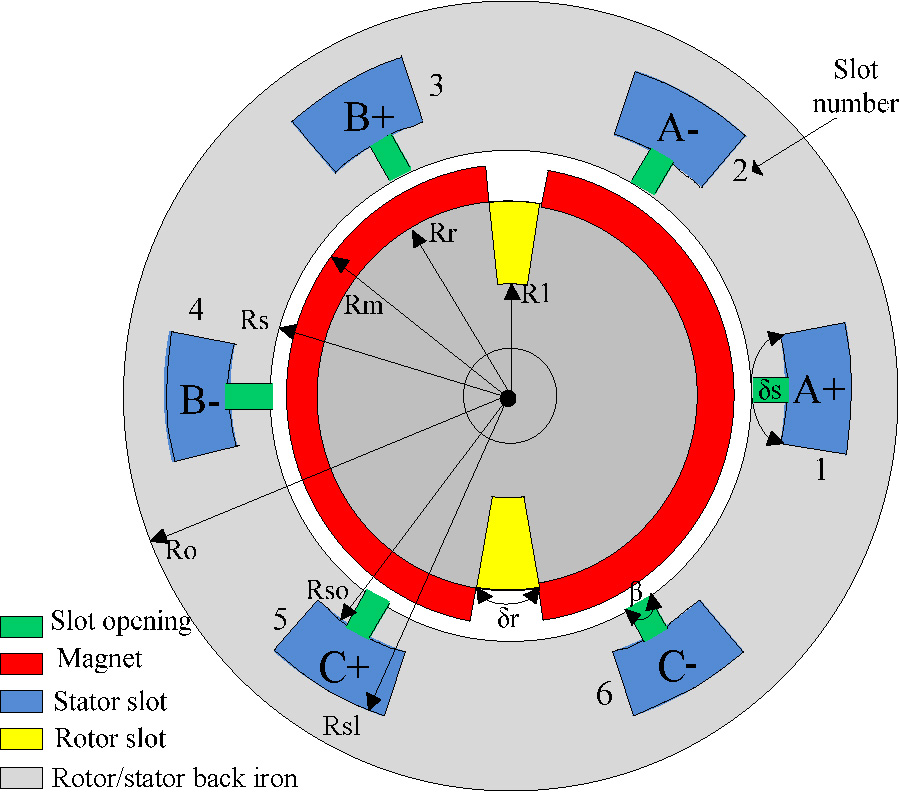
This paper presents the principle and design of an experimental bench of an oversaturated superconducting machine with radial flux density. A designed experimental bench is under construction to validate the computation principle of the inductor. Also, this work describes the encountered problems and lays out the tools that permit to study a high power oversaturated superconducting machine.
NEW TYPE OF OVERSATURATED SUPERCONDUCTING MACHINE
2017-10-05
PIER C
Vol. 78, 115-127
Design of Wideband, Circularly Polarized Patch Antennas for RFID Applications in the FCC/ETSI UHF Bands
Marios Nestoros , Marios Andreas Christou and Anastasis C. Polycarpou
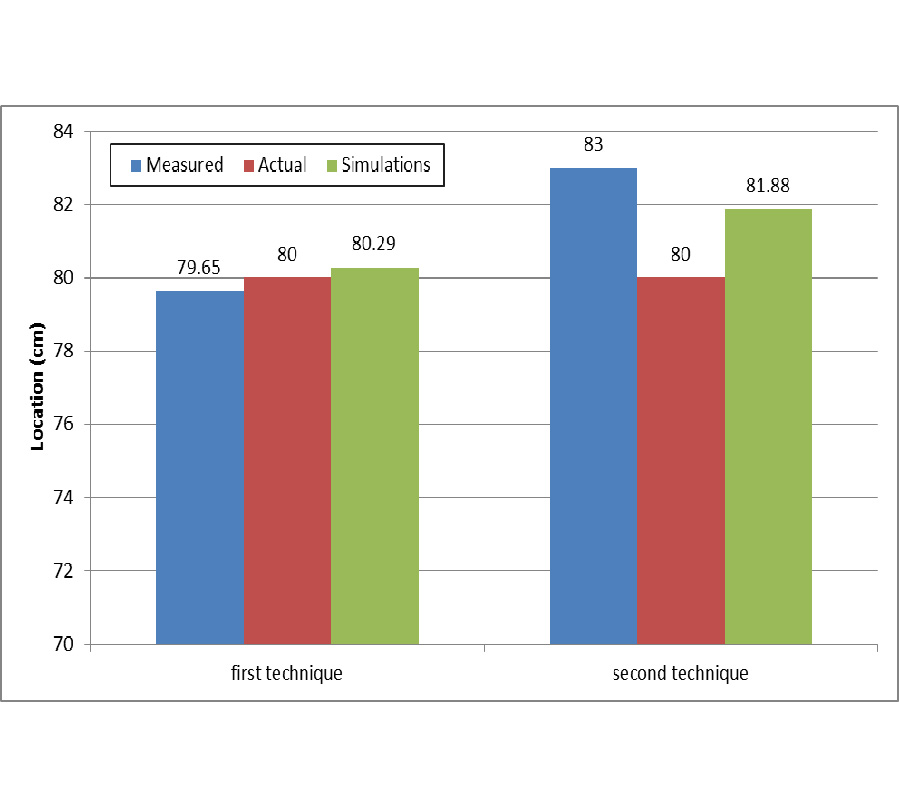
The primary objective of this paper is to design a high-gain, circularly polarized patch antenna suitable for Radio Frequency Identi cation (RFID) readers that operate in the FCC and ETSI bands (865-928 MHz). These designs will be used in a healthcare application to provide tag identification for thousands of medicines stored on shelves inside a pharmaceutical warehouse. Consequently, it is important that these antennas provide sucient electromagnetic coverage and polarization diversity in order to boost tag readability and minimize item identification errors. The proposed RFID reader antenna design begins with a single patch with truncated corners on air substrate in order to help us understand the effect of various geometrical parameters on critical antenna figures of merit. A stub is introduced in order to improve the impedance matching characteristics of the antenna. The wideband characteristic of the design, for both impedance matching and axial ratio, is achieved by a second truncated-corner patch antenna positioned on top of the first one. An optimum design is achieved by changing the heights of the main and parasitic patches, the size of the truncated corners, and the probe position. The final antenna designs are verified by comparing measurement and simulation results.
DESIGN OF WIDEBAND, CIRCULARLY POLARIZED PATCH ANTENNAS FOR RFID APPLICATIONS IN THE FCC/ETSI UHF BANDS
2017-10-05
PIER M
Vol. 60, 197-207
Antenna with Two Folded Strips Coupled to a T-Shaped Monopole
The-Nan Chang and Yi-Lin Chan
An antenna designated mainly for cellular telephony purposesis presented. It coversone full band from 690 MHz to 2700 MHzwith 6 dB return-loss criterion. The antenna is dimensioned 45 mm by 22.5 mm and is 0.8 mm in thickness. It is composed of a T-shaped monopole on the front-side and a meandered line on the back-side of an FR4 substrate. The T-shaped monopole is responsible for the high-band resonances. The meandered line is divided into three parts: the first partfunctions as a distributed inductor; the second part plays the role as a low-band resonator, and the third part is a tuning element. The distributed inductor and the low-band resonator are both folded strips in configuration, but with different spacing. The tuning element is used to improve the match so that one full band operation can be realized. To clarify the operational mechanism, modesseparately generated from each part are analyzed and compared to modes of the proposed antenna.
ANTENNA WITH TWO FOLDED STRIPS COUPLED TO A T-SHAPED MONOPOLE
2017-10-05
PIER M
Vol. 60, 189-196
High Power Over-Mode Bent Waveguides for Circular TM01 and Coaxial TEM Mode Transmission
Xiaomeng Li , Xiang-Qiang Li , Qing-Xiang Liu and Jianqiong Zhang
Three bent waveguides are proposed and investigated, two for circular waveguide TM01 mode transmission and one for coaxial TEM mode transimission. For high power-handling capacity, all of them are over-mode waveguides. In the bend, circular or coaxial waveguides transmitting only sector waveguide TE11 modes are split into several same sector waveguides by metal plates and metal rod. Those sector waveguides are grouped by their lengths. Different lengths of sector waveguides mean there are phase differences of the TE11 modes after bending. Due to requirements of mode conversion, the phase difference regulated by radii of circular waveguide and metal rod must be 2nπ, n = 0, 1, 2…. Since the phase difference is independent of bend radius, the radius could be as small as possible. One of the prototypes is experimented, and the test result of the VSWR shows that simulation has good match with experiment. Insertion loss is 0.2 dB at 8.4 GHz, which proves the feasibility of the prototype.
HIGH POWER OVER-MODE BENT WAVEGUIDES FOR CIRCULAR TM01 AND COAXIAL TEM MODE TRANSMISSION
2017-10-04
PIER Letters
Vol. 71, 1-5
Wideband Interdigital Capacitor with Spurious Spikes Suppression
Bo Zhou , Qipeng Wang , Yue Lu and Chong-Hu Cheng
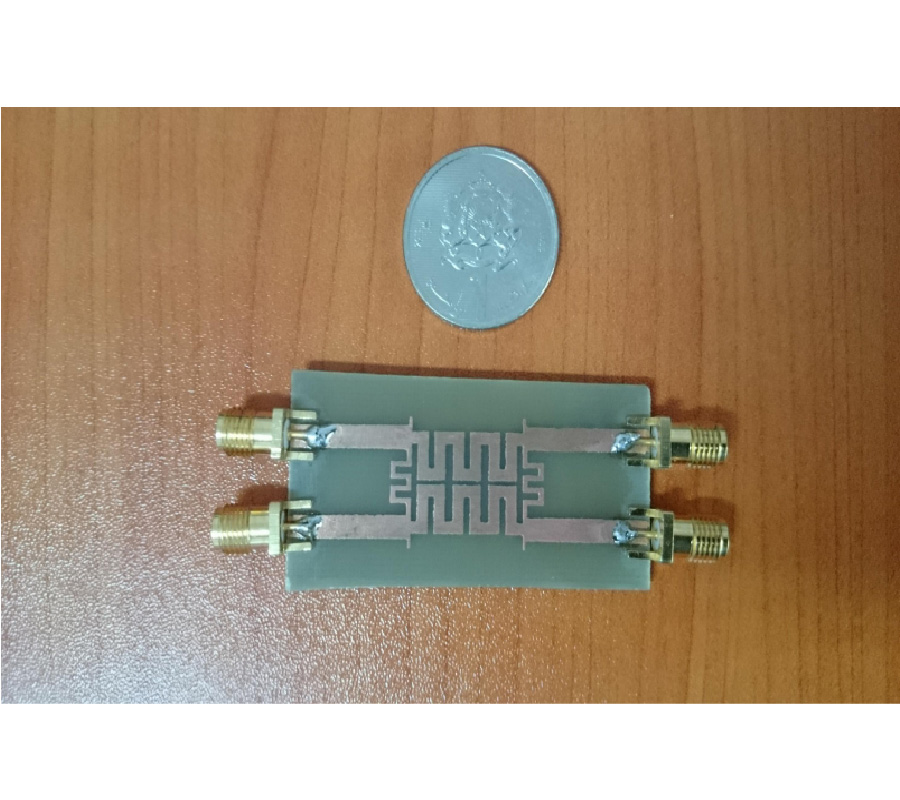
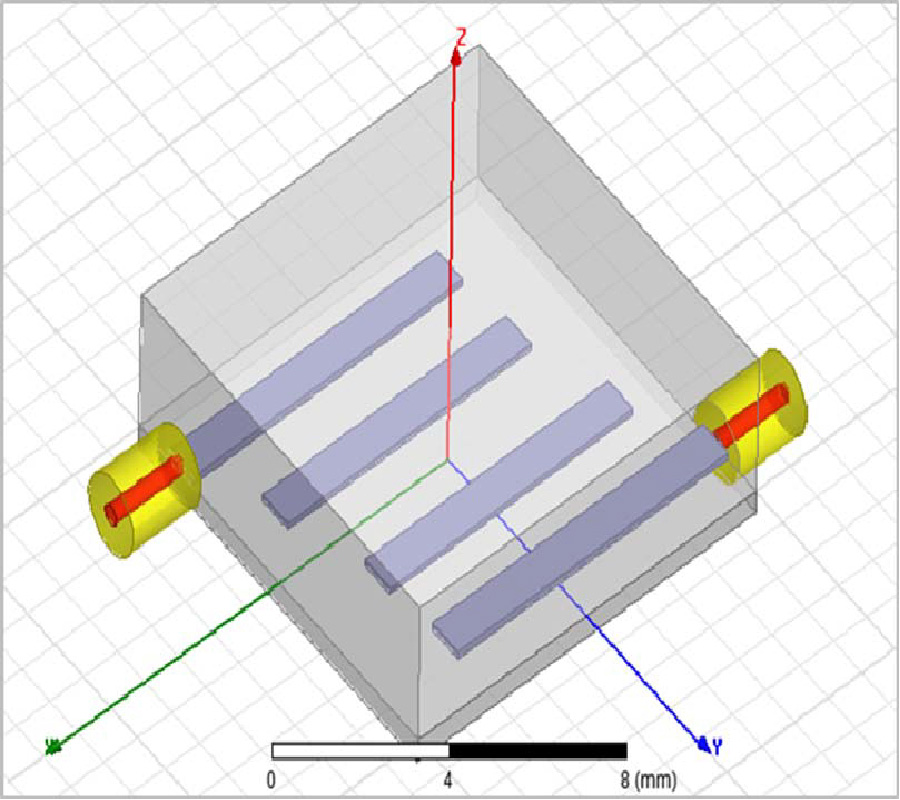
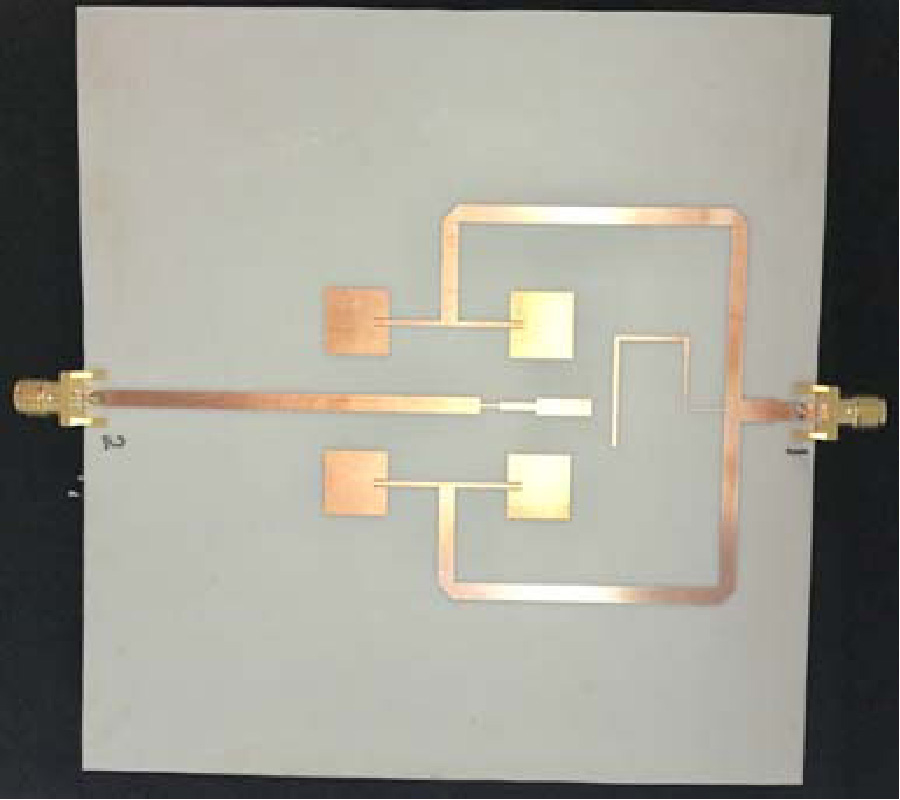
A wideband interdigital capacitor (WIDC) is proposed and verified. By short interconnecting the open ends of interval fingers with microstrip lines etched on PCB bottom layer, the spurious spikes that limit the bandwidth of conventional interdigital capacitor (IDC) are eliminated. The bandwidth and capacitance of IDC increase more than 2800% and 100%, respectively.
WIDEBAND INTERDIGITAL CAPACITOR WITH SPURIOUS SPIKES SUPPRESSION
2017-10-04
PIER Letters
Vol. 70, 147-153
DOA Estimation with Sparse Array Under Unknown Mutual Coupling
Sheng Liu , Jing Zhao and Zhengguo Xiao
In this paper, we propose a direction-of-arrival (DOA) estimation algorithm under unknown mutual coupling with a sparselinear array (SLA). We employ an SLA composed of two uniform linear arrays (ULA), and the element spacing of one of the subarrays is large enough to neglect the effect of the mutual coupling (MC). The forth-order-cumulants (FOCs) of the received data from partial elements of the first subarray and all elements of the second subarrayare exploitedto construct an extended FOC matrix. Then, the DOAs of incident signals are estimated by dealing with the FOC matrix. The array aperture is extended greatly due to the sparsestructure. Hence, the proposed method shows much better performance than some classical blind DOA estimation methods in accuracy and resolution. We also proposed some simulation results to prove the effectiveness of our method.
DOA ESTIMATION WITH SPARSE ARRAY UNDER UNKNOWN MUTUAL COUPLING
2017-10-04
PIER M
Vol. 60, 179-188
Compact Microstrip Lowpass Filter with High and Wide Rejection in the Stopband Utilizing Flabelliform Resonators
Ashkan Abdipour and Arash Abdipour
In this paper, a microstrip lowpass filter with -3 dB cutoff frequency of 3.8 GHz consisting of two cascaded resonators with flabelliform patches and two symmetric suppressing cells is proposed. To design the filter, the impact of each transmission line on the frequency response is determined by extracting the equations of the insertion loss (S21) and return loss (S11) on the basis of the equivalent LC circuit of the main resonance cell and the cascaded structure. The designed filter is constructed and tested, and a good agreement between the results of simulation and measurement is obtained. In the whole stopband region, a return loss close to zero and an acceptable suppression level of -30 dB from 4.47 to 25.17 GHz are achieved. Furthermore, a flat insertion loss in the passband and a low return loss (-23.02 dB) in the stopband can prove desired in-band and out-band frequency response.
COMPACT MICROSTRIP LOWPASS FILTER WITH HIGH AND WIDE REJECTION IN THE STOPBAND UTILIZING FLABELLIFORM RESONATORS
2017-10-03
PIER Letters
Vol. 70, 139-146
Scattering of Non-Diffracting Vortex Electromagnetic Wave by Typical Targets
Mei Ping Yu , Yiping Han and Zhiwei Cui
In the field of radar target detection, vortex electromagnetic (EM) wave carrying orbital angular momentum (OAM) has drawn great attention in recent years because of its prospect to improve the capacity of information acquisition. As a typical vortex EM wave, the high-order Bessel vortex beam (HOBVB) has the properties of non-diffraction propagation, small central spot diameter, good direction, and long propagation distance. This study investigates the scattering of non-diffracting HOBVB by radar targets. The mathematical description of the electromagnetic field components of the arbitrarily incident HOBVB are given. The surface integral equations for solving the scattering problems involving typical radar targets are established. The effects by OAM intrinsic mode characteristics on the radar scattering cross section are simulated. This investigation is expected to provide useful guidance for revealing EM scattering mechanism in the OAM domain.
SCATTERING OF NON-DIFFRACTING VORTEX ELECTROMAGNETIC WAVE BY TYPICAL TARGETS
2017-10-02
PIER C
Vol. 78, 105-113
Enhanced Bandwidth of a Horizontally Polarized Omnidirectional Printed Antenna Array Based on Dual-Dipole Structure
Yu-Liang Yang , Fu-Shun Zhang , Hong Zhang and Hong-Yin Zhang
In this paper, a horizontally polarized (HP) omnidirectional antenna array with a broadband characteristic is presented. The proposed antenna consists of a circular array based on four planar arc dual-dipole structures, a wideband 1-to-4 feeding network with baluns, four reflectors and twelve directors. The arc dual-dipoles with four etched slots are introduced to obtain the broadband characteristic. By using twelve directors in front of the dipoles, the gain variation in the horizontal plane is improved. In addition, the reflector elements are able to improve the gain for the middle frequency band. With the concept, a prototype antenna with an overall size of 0.66λL × 0.66λL × 0.01λLL× is the free-space wavelength at the lowest frequency) is fabricated and measured. The designed antenna exhibits a relative impedance bandwidth of 98.3% (1.245-3.652 GHz) for |S11|<-10 dB. The HP omnidirectional patterns provide a gain variation less than 3.0 dB over the frequency band 1.245-3.519 GHz (95.5%). Within the impedance bandwidth, the cross-polarization level is lower than -20 dB in the horizontal plane.
ENHANCED BANDWIDTH OF A HORIZONTALLY POLARIZED OMNIDIRECTIONAL PRINTED ANTENNA ARRAY BASED ON DUAL-DIPOLE STRUCTURE
2017-10-02
PIER C
Vol. 78, 93-104
A Circularly-Polarized Compact Wideband Patch Antenna Loaded by Metamaterial Structures
Mojtaba Simruni and Shahrokh Jam
In this paper a compact wideband aperture coupled microstrip patch antenna (MPA) with impedance bandwidth of 26.3% is designed. Size reduction of the radiating element and the slot in the ground plane is achieved by incorporating an interdigital capacitor (IDC) in the patch and a complementary split ring resonator (CSRR) close to the slot which offers composite right/left-hand (CRLH) antenna. An interdigital capacitor in the patch acts as series left-hand component, and the slot together with the CSRR in the ground plane acts as a left-hand parallel inductor. By this technique, the patch and slot dimensions compared with the initial designed antenna are reduced about 26.2% and 30.2%, respectively. Through cutting CSRRs with different arrangements in the ground plane, a dual frequency band antenna is designed. Finally, a compact wideband circularly-polarized (CP) MPA is proposed through imposing various perturbations in the current route in the ground plane of the antenna. The maximum gain and the impedance bandwidth of the designed CP antenna are 8.4 dBi and 25%, respectively. Two designed antennas are fabricated and tested. The measurement results confirm the simulation ones.
A CIRCULARLY-POLARIZED COMPACT WIDEBAND PATCH ANTENNA LOADED BY METAMATERIAL STRUCTURES
2017-10-02
PIER Letters
Vol. 70, 129-138
Implementation of the Parallel Higher-Order FDTD with Convolution PML
Yawen Liu , Pin Zhang and Yi-Wang Chen
In this paper, a parallel Higher-order FDTD (HO-FDTD) algorithm is described. Moreover, a novel implementation of convolution PML (CPML) is presented for the HO-FDTD method. A printed microstrip patch antenna is designed to analyze the feasibility of the parallel algorithm and the absorbing performance of the CPML. Moreover, the proposed algorithm is used to deal with the large-scale computational model of the vaulted tunnel. The simulation results show that the adopted parallel strategy is feasible. and the CPML performs well in the HO-FDTD scheme.
IMPLEMENTATION OF THE PARALLEL HIGHER-ORDER FDTD WITH CONVOLUTION PML
2017-10-02
PIER M
Vol. 60, 169-178
Half-Mode Slow-Wave Substrate Integrated Waveguide Analysis
Mohamad Khalil , Mohamad Khalil , Jalal Jomaah and Hussam Ayad
Design of a compact Substrate Integrated Waveguide (SIW) transmission line is presented in this paper. The main parameters of SIW were parametrically studied, and nal designed component was fabricated and measured, which showed very good matching (near 90%) with simulations, demonstrating significant miniaturization factor. The miniaturization was done using Half-Mode (HM) and Slow-Wave (SW) principles together. It was found that the HM-SW method for SIW miniaturization reduced the SIW surface area with a remarkable factor value (70%) while maintaining acceptable characteristics compared to the original SIW. In fact, HM technique reduced 40% the lateral dimension of the SIW, and using the SW technique allowed 30% of size reduction added to the HM principle. Furthermore, a proper microstrip to HM-SW-SIW tapered transition was designed, which showed a return loss decrease between 3 dB and 7.5 dB, as well as facilitating measurement. On the other hand, the proposed transmission line could lead to a size reduction of 30% compared to the HM-SIW miniaturization technique. The HM-SW-SIW transmission line concept presented in this paper can be used to design other compact SIW components such as bandpass filters, couplers, and power divider.
HALF-MODE SLOW-WAVE SUBSTRATE INTEGRATED WAVEGUIDE ANALYSIS
2017-09-29
PIER C
Vol. 78, 83-92
A Miniaturized Microstrip Lowpass Filter with Sharp Skirt Performance and Wide Stopband Utilizing Modified Hairpin Resonator with Long Straight Slots
Ashkan Abdipour , Alireza Nouritabar , Arash Abdipour , Hossein Shamsi and Seyed Arash Ahmadi
In this paper, a lowpass filter with -3 dB cut-off frequency of 1.69 GHz employing modified hairpin resonator with long straight slots is designed. In the first step, to design the primary resonator, the open stubs of a conventional hairpin resonator are folded inside its free area, which results in a smaller occupied area and an improved frequency response. Next, to control the scattering parameters, asymmetric coupled lines with slots are utilized instead of symmetric open-stubs of the primary resonance cell. In each step, the impact of the employed microstrip transmission lines on the scattering parameters of the designed resonator is determined by extracting the equations of the insertion loss (S21) and return loss (S11) on the basis of their equivalent LC circuit. Finally, by using two modified resonators with slots which are placed symmetrically around (Y) axis, a sharp transition band (264 dB/GHz) and wide stopband from 1.78GHz to 10GHz with a suppressing level of -20 dB are obtained. The overall circuit size is 0.140λg×0.076 λg, which indicates a small circuit size. The proposed lowpass filter has a high figure of merit equal to 72032.
A MINIATURIZED MICROSTRIP LOWPASS FILTER WITH SHARP SKIRT PERFORMANCE AND WIDE STOPBAND UTILIZING MODIFIED HAIRPIN RESONATOR WITH LONG STRAIGHT SLOTS