Search Results(13794)

2017-08-28
PIER C
Vol. 77, 133-144
A Novel Six-Band Polarization-Insensitive Metamaterial Absorber with Four Multiple-Mode Resonators
Guoqing Xu , Jie Huang , Zongde Ju , Zhihua Wei , Jing Li and Qian Zhao
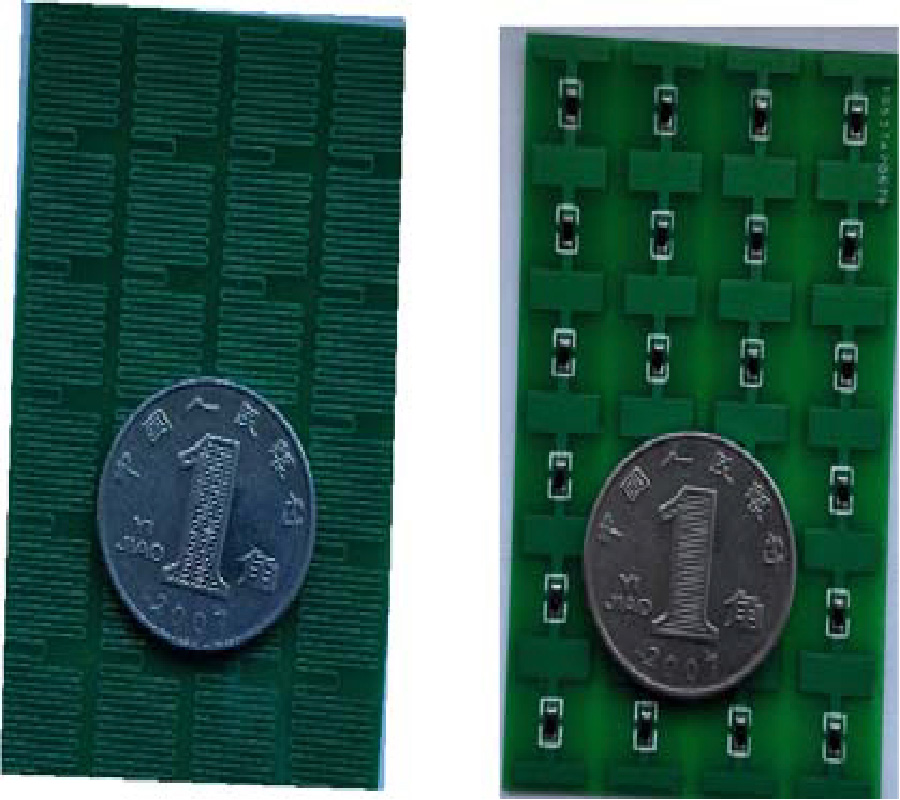
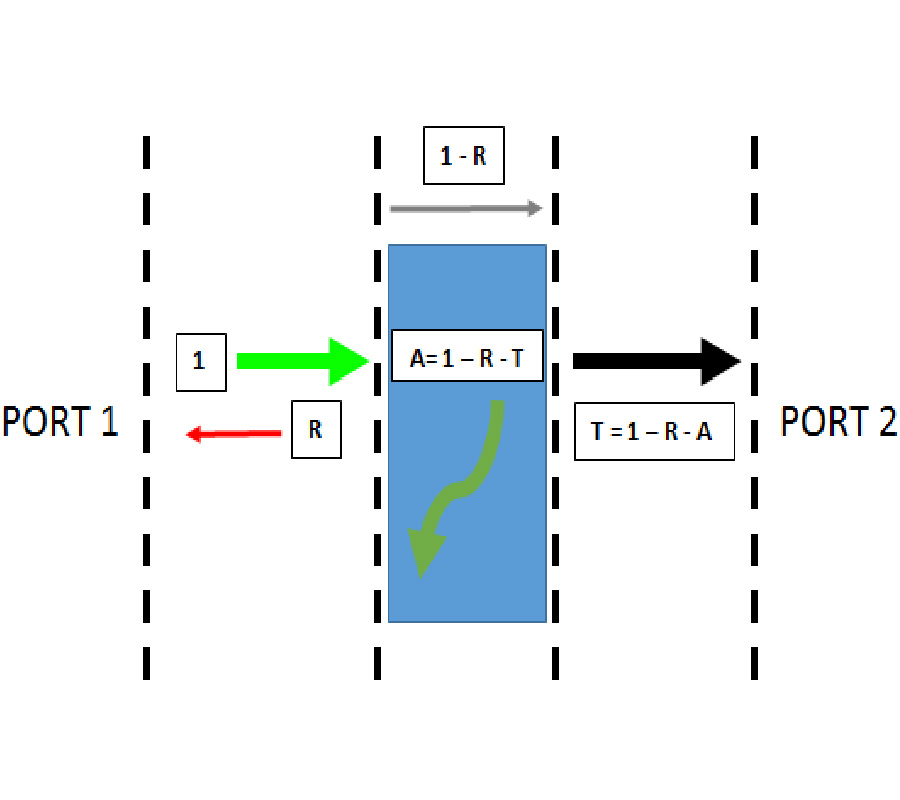
A novel six-band metamaterial absorber based on four multiple-mode Ω-shaped resonators (MMORs) is presented, analyzed and measured in this paper. The discrete absorption responses, determined by horizontal-oriented and vertical-oriented MMORs, can be combined to add the total number of absorption peaks. Among the six absorption peaks, four absorption peaks are excited by horizontal-oriented MMOR, and the other two are excited by vertical-oriented MMOR. The absorber, composed of a simple resonators-dielectric-sheet sandwich structure, has six distinct near-perfect absorption peaks with the polarization-insensitive characteristic in the range from 2 to 17 GHz. To reveal the physical mechanism, the distributions of surface current and power loss density, and the equivalent circuit model are also investigated at the six absorption peaks. Moreover, the measured results are in good agreement with the simulated ones and show that the average absorption rate of proposed absorber is over 97.21%.
A NOVEL SIX-BAND POLARIZATION-INSENSITIVE METAMATERIAL ABSORBER WITH FOUR MULTIPLE-MODE RESONATORS
2017-08-28
PIER C
Vol. 77, 123-131
A Novel Miniaturized Vivaldi Antenna for Ultra-Wideband Applications
Dongdong Geng , Deqiang Yang , Hua Xiao , Yongpin Chen and Jin Pan
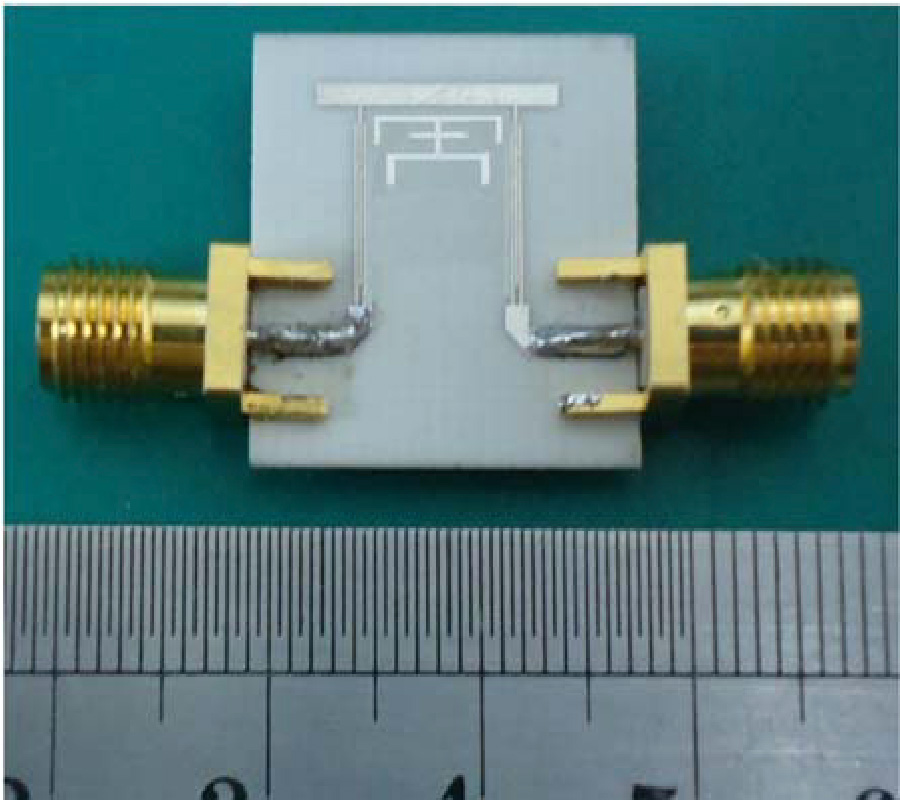
A novel Vivaldi antenna utilizing a tapered slot edge with a stepped structure (TSESS) to achieve miniaturization is presented in this paper. Compared with a conventional Vivaldi antenna of the same size, the proposed TSESS significantly extends the low-end bandwidth limitation and also improves the low-end antenna gain and radiation characteristics. The proposed antenna is fabricated and tested for validating the reliability of the design. The measured results show reasonable agreement with simulated ones. Moreover, a good time-domain response is indicated from the measured group delay, showing that the antenna meets the requirements of a UWB system.
A NOVEL MINIATURIZED VIVALDI ANTENNA FOR ULTRA-WIDEBAND APPLICATIONS
2017-08-28
PIER M
Vol. 60, 47-55
Design and Development of a Wideband Fractal Tetrahedron Dielectric Resonator Antenna with Triangular Slots
Kedar Trivedi and Dhaval A. Pujara
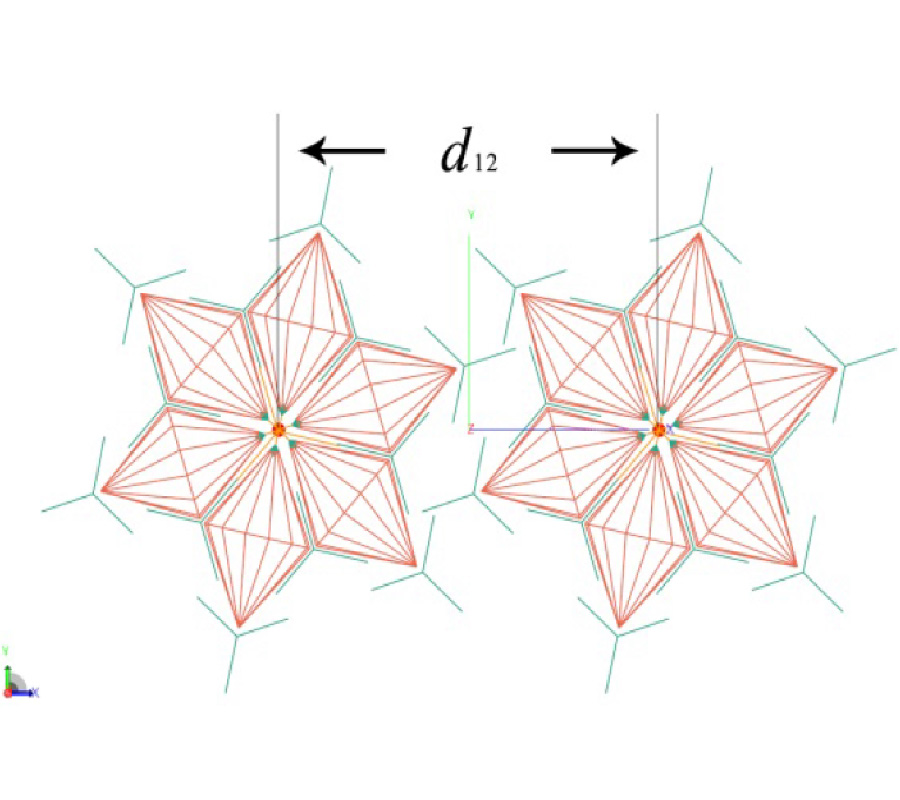
In this paper, a fractal tetrahedron shaped dielectric resonator antenna (DRA) design for wideband applications is proposed. Two triangular-shaped fractal slots of different sizes are introduced to reduce Q-factor of DRA and in turn to achieve wide bandwidth (BW). Internal coaxial feeding is utilized for good impedance matching and ease of fabrication. The proposed fractal DRA is fabricated and tested. The measured results are in good accordance with the simulated ones. Measured impedance bandwidth of about 72.3% covering frequency band of 3.8-8.1 GHz is achieved. Good separation between co- and cross-polarized radiation patterns in broadside direction is achieved. Various design parameters and associated results are discussed in this paper.
DESIGN AND DEVELOPMENT OF A WIDEBAND FRACTAL TETRAHEDRON DIELECTRIC RESONATOR ANTENNA WITH TRIANGULAR SLOTS
2017-08-28
PIER M
Vol. 60, 33-46
Oblique Incidence and Polarization Insensitive Multiband Metamaterial Absorber with Quad Paired Concentric Continuous Ring Resonators
Alkesh Agrawal , Mukul Misra and Ashutosh Singh
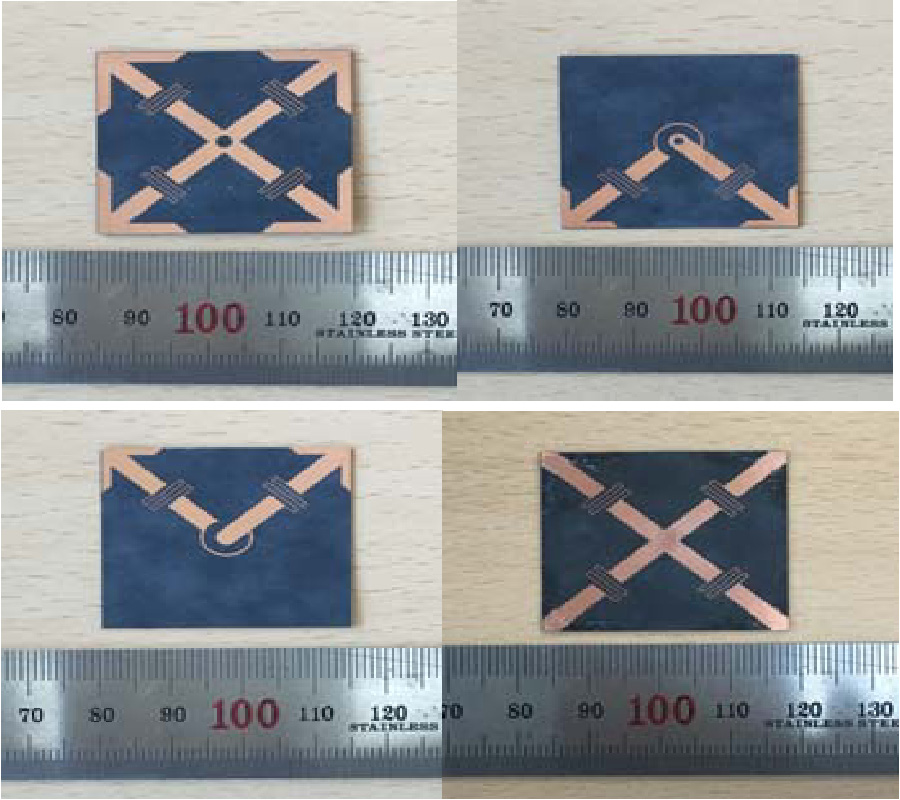
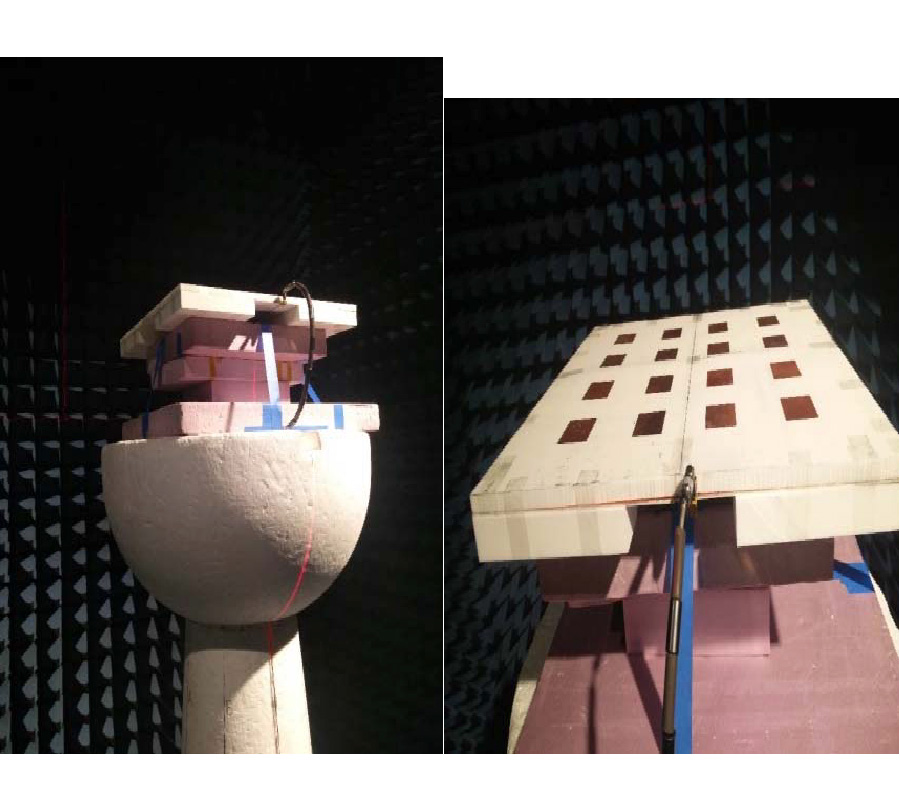
Simulation and experimental measurement of a new design of an oblique incidence and polarization insensitive metamaterial absorber with multiband absorption is presented in this paper. The unit cell of the proposed metamaterial absorber comprises concentric continuous rings of different radii and widths placed in four different quadrants with identical pair of rings placed diagonally opposite, with each ring responsible for high absorption. The calculated dispersion behavior of MM absorber in terms of effective permittivity (εeff), effective permeability (μeff), and refractive index (ηeff) shows the metamaterial characteristics. The surface current and field distributions in MM absorber are simulated to understand the occurrence of absorption bands. The measured results show the absorption peaks of 99.5%, 99.8%, 99.5% and 99.9% at 7.20 GHz, 9.3 GHz, 12.61 GHz, and 13.07 GHz, respectively. The simulated results are well supported by the experimentally measured performance of the fabricated metamaterial absorber. It offers multiband absorption with bands lying in C-band, X-band and Ku-band for mobile communication, satellite communication and radar applications. With merged third and fourth absorption peaks, the proposed metamaterial absorber structure exhibits a broadband absorption.
OBLIQUE INCIDENCE AND POLARIZATION INSENSITIVE MULTIBAND METAMATERIAL ABSORBER WITH QUAD PAIRED CONCENTRIC CONTINUOUS RING RESONATORS
2017-08-28
PIER M
Vol. 60, 19-31
A Lightweight Robust Indoor Radio Tomographic Imaging Method in Wireless Sensor Networks
Xiao Cao , Hongchun Yao , Yixian Ge and Wei Ke
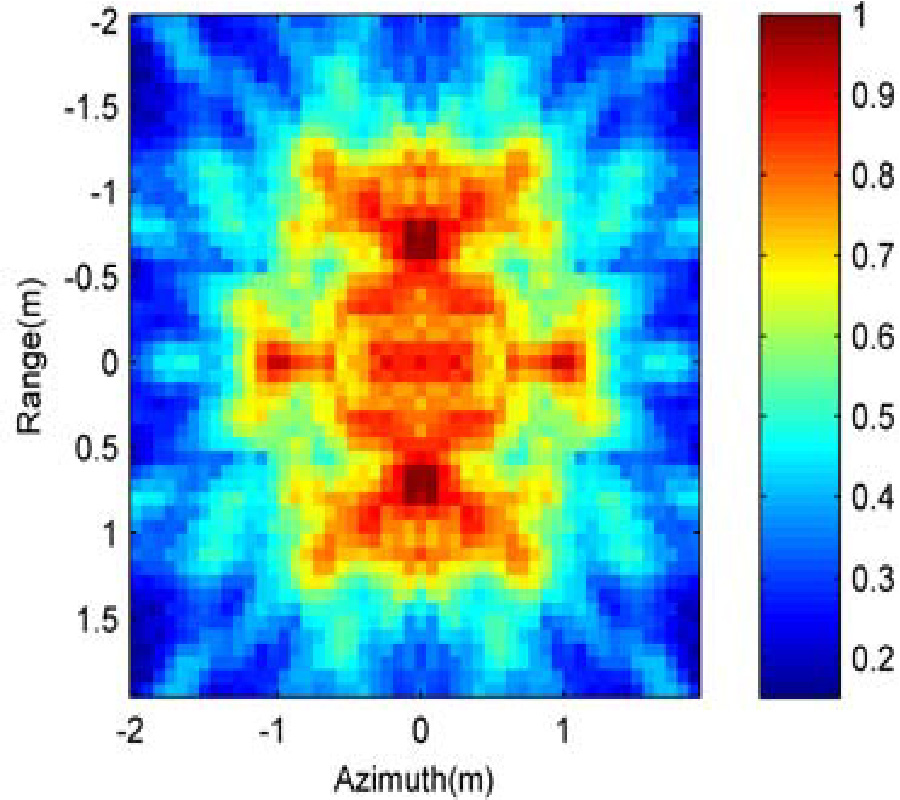
In recent years, radio tomographic imaging (RTI) is an emerging device-free localization (DFL) technology enabling the localization of people and other objects without requiring them to carry any electronic device. Different from other DFL techniques, the RTI method makes use of the changes of received signal strength (RSS) measured on links of the network to estimate the radio frequency (RF) attenuation field and forms an image of the changed field. This image is then used to infer the locations of targets within the deployed network. However, there still lacks an efficient scheme which can achieve robust location estimation performance with low computational cost. To solve this problem, we propose a lightweight robust RTI approach in this paper. The proposed method not only can reduce the algorithm's storage and computational resource requirements, but also exploits the location information of wireless measurement nodes to improve the accuracy of the localization result, which ensures its robust performance. The effectiveness and robustness of the proposed scheme are demonstrated by experimental results where the proposed algorithm yields substantial improvement for localization performance and complexity.
A LIGHTWEIGHT ROBUST INDOOR RADIO TOMOGRAPHIC IMAGING METHOD IN WIRELESS SENSOR NETWORKS
2017-08-27
PIER C
Vol. 77, 111-121
A Study on the Wireless Power Transfer Efficiency of Electrically Small, Perfectly Conducting Electric and Magnetic Dipoles
Charles Luke Moorey and William Holderbaum
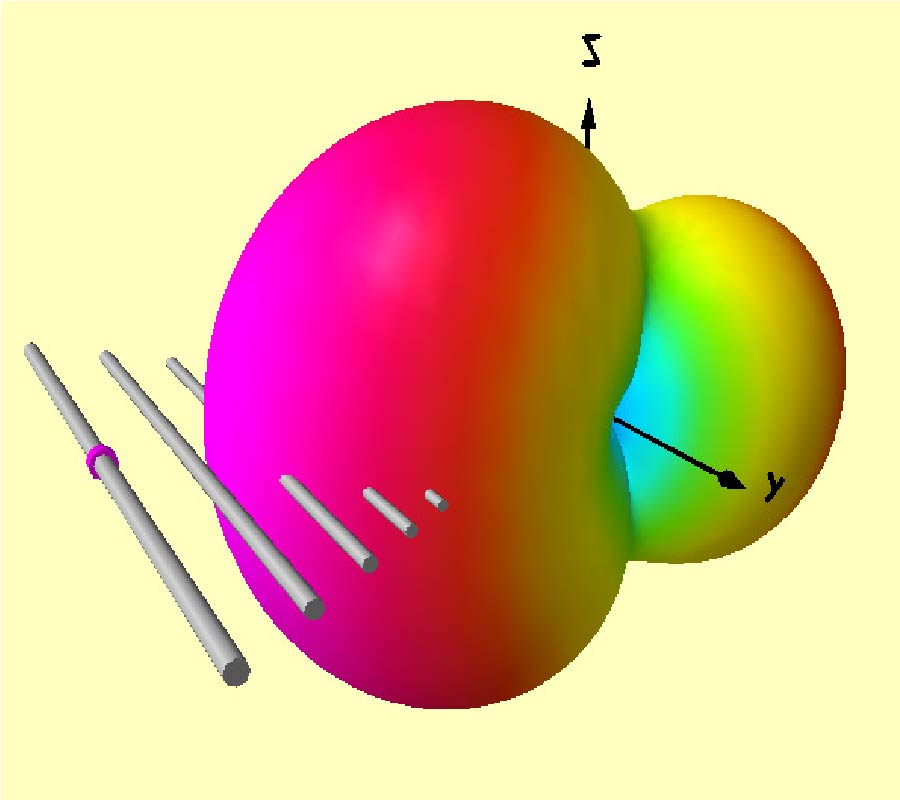
This paper presents a general theoretical analysis of the Wireless Power Transfer (WPT) efficiency that exists between electrically short, Perfect Electric Conductor (PEC) electric and magnetic dipoles, with particular relevance to near-field applications. The figure of merit for the dipoles is derived in closed-form, and used to study the WPT efficiency as the criteria of interest. The analysis reveals novel results regarding the WPT efficiency for both sets of dipoles, and describes how electrically short perfectly conducting dipoles can achieve efficient WPT over distances that are considerably greater than their size.
A STUDY ON THE WIRELESS POWER TRANSFER EFFICIENCY OF ELECTRICALLY SMALL, PERFECTLY CONDUCTING ELECTRIC AND MAGNETIC DIPOLES
2017-08-27
PIER C
Vol. 77, 101-110
A 2.45 GHz ISM Band CPW Rectenna for Low Power Levels
Jerome Riviere , Alexandre Douyère , Shailendra Oree and Jean-Daniel Lan Sun Luk
This paper presents the design and fabrication of a coplanar waveguide (CPW) rectenna using a sequential modular approach. The rectenna is printed on high permittivity, low-loss board ARLON AD1000 (εr = 10.35 and tanδ = 0.0023 @ 10 GHz). The recti er section is realized with a single reverse-biased schottky diode SMS-7630 in reverse topology for which a diode model is obtained at -20 dBm for frequencies F0 = 2.45 GHz and 2F0= 4.9 GHz. The low-pass lter and the impedance matching are synthesized from passive CPW structures. Co-simulation technique is used to overcome CPW simulation limitation and to integrate the diode characteristic. The antenna consists of a circular slot loop antenna with stub matching such that its input impedance is close to 50 Ω. The goal of this work is to design a rectifier to simplify and speed up the fabrication process of a rectenna array. We reduced the number of processes to etch the rectifier on the board and minimized the number of lumped elements. At -20 dBm, simulation of the rectifier with an ideal impedance matching network shows rectification at 2.45 GHz with efficiency of 12.8%. The rectifier and rectenna shows efficiency of approximately 10% at an operating frequency of 2.48 GHz.
A 2.45 GHZ ISM BAND CPW RECTENNA FOR LOW POWER LEVELS
2017-08-27
PIER Letters
Vol. 70, 31-38
Miniaturized Dual-Band Fractal Antenna with Omnidirectional Pattern for WLAN/WiMAX Applications
Meriem Harbadji , Tayeb Denidni and Amel Boufrioua
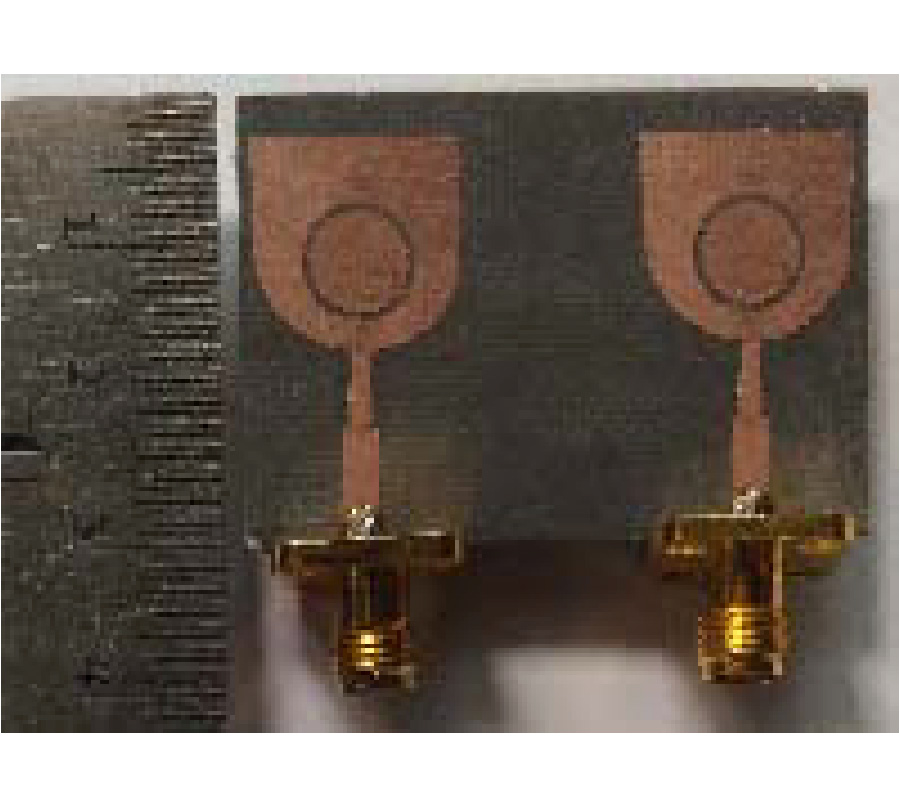
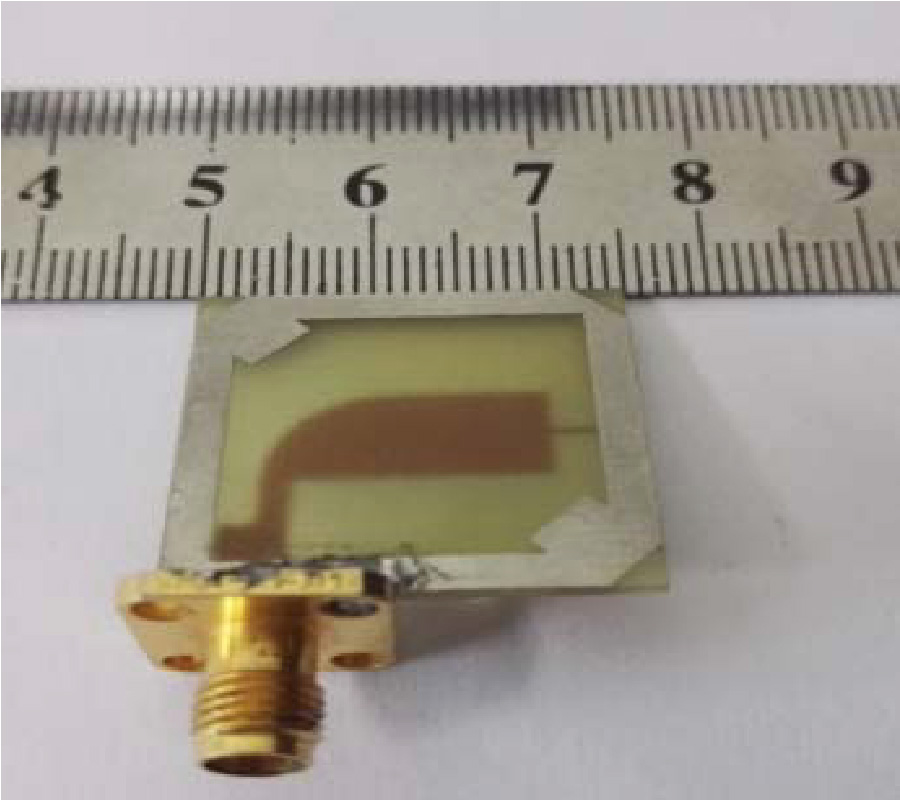
This paper presents a novel miniaturized dual-band fractal antenna for WLAN/WiMAX applications. The miniaturization of the proposed antenna is achieved by inserting, in the center ground of the antenna, square slots to excite two resonant modes simultaneously, leading to dual-band operation. The novelty of the proposed antenna is miniaturized size and ability to support multiband operations, which can be integrated in many electronic applications and wireless communication. This antenna has a compact size of only 25×25 mm2 and fed by a 50 Ω-microstrip feed line. To validate the design approach, an experimental prototype is fabricated and measured. The simulation and measurement results show that the antenna provides dual-band operation at 2.4 and 3.75 GHz with omnidirectional radiation pattern.
MINIATURIZED DUAL-BAND FRACTAL ANTENNA WITH OMNIDIRECTIONAL PATTERN FOR WLAN/WIMAX APPLICATIONS
2017-08-26
PIER C
Vol. 77, 91-100
Dual-Band Polarization-Insensitive Metamaterial Inspired Microwave Absorber for LTE-Band Applications
Kanwar Preet Kaur , Trushit K. Upadhyaya and Merih Palandoken
In this paper, the design, simulation andmeasurementof a dual-band polarizationinsensitive metamaterial inspired microwave absorber are presented.The unit cell is composed of two concentric closed ring resonator(CRR) structures forming octagonal rings which arecarved on an FR-4 dielectric substrate to give maximum absorption at dual frequencies of 2.09 GHz and 2.54 GHz. At these frequencies, the minimum reflection coefficients of -29.15 dB and -18.76 dB are achieved with absorption rates of 99.88% and 98.67% andnarrow 10 dB bandwidths of 2.62% and 2.76%, respectively. Microwave absorption property of the proposed absorber structure is simulated by setting the perfect electric boundary conditions in four planes whose surface normal vectors are directed perpendicular to the wave propagation direction. These numerical computation settings replicate the rectangular waveguideto be used in the experimental measurements for the comparison between the simulated and experimental results. It is experimentally verifiedby the waveguide measurement method that the absorption rates about 99% are achieved for dual bands with polarization insensitivity, thereby meeting the absorption requirements of LTE-band frequenciesfor a real time microwave absorber based energy harvesting systems.
DUAL-BAND POLARIZATION-INSENSITIVE METAMATERIAL INSPIRED MICROWAVE ABSORBER FOR LTE-BAND APPLICATIONS
2017-08-25
PIER B
Vol. 78, 91-124
Modelling and Validation of Combined Active and Passive Microwave Remote Sensing of Agricultural Vegetation at L-Band
Huanting Huang , Tien-Hao Liao , Leung Tsang , Eni Gerald Njoku , Andreas Colliander , Thomas J. Jackson , Mariko Burgin and Simon Yueh
The distorted Born approximation (DBA) of volume scattering was previously combined with the numerical solution of Maxwell equations (NMM3D) for rough surfaces to calculate radar backscattering coefficients for the Soil Moisture Active Passive (SMAP) mission. The model results were validated with the Soil Moisture Active Passive Validation Experiment 2012 (SMAPVEX12) data. In this paper, we extend the existing model to calculate the bistatic scattering coefficients for each of the three scattering mechanisms: volume, double bounce and surface scattering. Emissivities are calculated by integrating the bistatic scattering coefficients over the hemispherical solid angle. The backscattering coefficients and emissivities calculated using this approach form a consistent model for combined active and passive microwave remote sensing. This has the advantage that the active and passive microwave remote sensing models are founded on the same theoretical basis and hence allow the use of the same physical parameters such as crop density, plant height, stalk orientation, leaf radius, and surface roughness, amongst others. In this paper, this combined active and passive model is applied to four vegetation types to calculate both backscattering coefficients and brightness temperature: wheat, winter wheat, pasture and canola. This model uses a single-scattering and incoherent vegetation model, which is applicable for the vegetation fields studied in this paper but not suitable for vegetation types where collective scattering or multiple scattering effects are important. We demonstrate the use of the DBA/NMM3D for both active and passive using the same input parameters for matching active and passive coincident data. The model results are validated using coincident airborne Passive Active L-band System (PALS) low-altitude radiometer data and Uninhabited Aerial Vehicle Synthetic Aperture Radar (UAVSAR) data taken during the SMAPVEX12 field campaign. Results show an average root mean squared error (RMSE) of 1.04 dB and 1.21 dB for backscatter at VV and HH, respectively, and 4.65 K and 6.44 K for brightness temperature at V-pol and H-pol, respectively. The results are comparable to those from the tau-omega model which is commonly used to compute the brightness temperature, though the physical parameters used in this model are different from the empirically adjusted parameters used in the tau-omega model.
MODELLING AND VALIDATION OF COMBINED ACTIVE AND PASSIVE MICROWAVE REMOTE SENSING OF AGRICULTURAL VEGETATION AT L-BAND
2017-08-25
PIER C
Vol. 77, 81-89
A Frequency Reconfigurable Meandered Slot Cut Rectangular Patch Antenna Using PIN Diodes
Rocktotpal Baruah and Nidhi Saxena Bhattacharyya
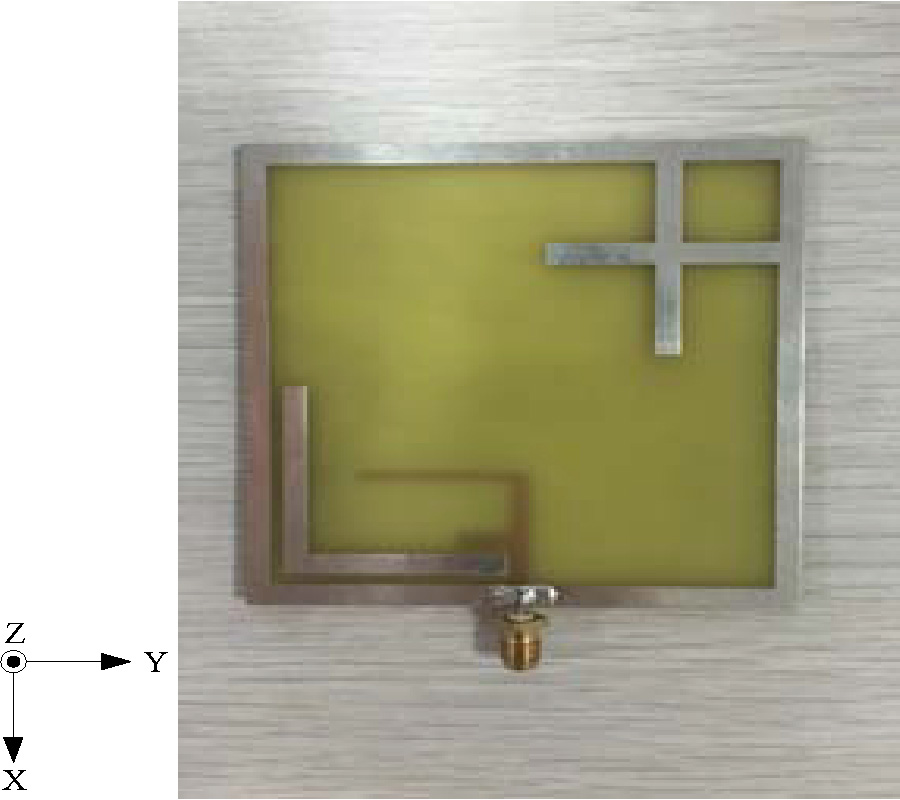
A frequency reconfigurable patch antenna is proposed. The antenna has a rectangular patch with two meandered slots. It can be switched between four bands using two PIN diodes by altering current distribution across the slot edges. The overall dimension of the antenna patch is 11.51 mm × 8.37 mm and fabricated on an FR4 substrate. The design is investigated by simulation and measurement, and the result includes S11 parameters, radiation patterns, measured directivity and gain. With different combinations of PIN diode biasing conditions, the antenna can be set to 6.80 GHz, 7.34 GHz, 7.80 GHz and 8.18 GHz, which collectively covers a continuous frequency range of 1.80 GHz (- 10 dB band width). The antenna also shows consistent radiation patterns at all the reconfigured frequency bands with an average beam width of about 75°. In the accessible frequency range an average gain of 5.14 dBi and low level of cross polarizations are also recorded. A good agreement between measured and simulated results validates the presented concept of frequency reconfiguration.
A FREQUENCY RECONFIGURABLE MEANDERED SLOT CUT RECTANGULAR PATCH ANTENNA USING PIN DIODES
2017-08-25
PIER M
Vol. 60, 1-10
Rapid Design of Wide-Area Heterogeneous Electromagnetic Metasurfaces Beyond the Unit-Cell Approximation
Krupali D. Donda and Ravi Hegde
We propose a novel numerical approach for the optimal design of wide-area heterogeneous electromagnetic metasurfaces beyond the conventionally used unit-cell approximation. The proposed method exploits the combination of Rigorous Coupled Wave Analysis (RCWA) and global optimization techniques (two evolutionary algorithms namely the Genetic Algorithm (GA) and a modi ed form of the Arti cial Bee Colony (ABC with memetic search phase method) are considered). As a speci c example, we consider the design of beam deflectors using all-dielectric nanoantennae for operation in the visible wavelength region; beam deflectors can serve as building blocks for other more complicated devices like metalenses. Compared to previous reports using local optimization approaches our approach improves device eciency; transmission eciency is especially improved for wide deflection angle beam deflectors. The ABC method with memetic search phase is also an improvement over the more commonly used GA as it reaches similar eciency levels with a 35% reduction in computation time. The method described here is of interest for the rapid design of a wide variety of electromagnetic metasurfaces irrespective of their operational wavelength.
RAPID DESIGN OF WIDE-AREA HETEROGENEOUS ELECTROMAGNETIC METASURFACES BEYOND THE UNIT-CELL APPROXIMATION
2017-08-24
PIER Letters
Vol. 70, 23-30
Archimedean Spiral Antenna with Two Opposite Uni-Directional Circularly Polarized Radiation Bands Designed by Resonance Based Reflectors
Ji-Yang Xie , Lin Peng , Bao-Jian Wen and Xing Jiang
Two opposite uni-directional radiation bands with good circular polarization (CP) characteristics are achieved in an Archimedean Spiral Antenna (ASA). A sandwich configuration is formed by utilizing two resonance based reflectors (RBRs) at the bottom and top sides of the ASA. Owing to the resonance characteristic, the RBRs do not act as reflectors at the other operational band, then, opposite uni-directional radiations are obtained, and the two uni-directional bands can be tuned independently. The proposed ASA with two uni-directional bands (ASA-TUB) has a wide impedance bandwidth about 4.4:1 (1.8-8 GHz), while its front-fire band (FFB) ranges from 1.8 GHz to 2.2 GHz (20.0%), and its back-fire band (BFB) is 4.4-7.1 GHz (46.9%) for front-to-back ratio (FBR) larger than 5 dB. The maximal FBRs for the FFB and BFB are 11.3 dB and 20 dB, respectively. Moreover, good CP performances are also obtained for the FFB and BFB. Besides, the whole profile of the proposed antenna is only 0.16 λ at the lowest operational frequency. The proposed antenna has the properties of dual opposite uni-directional radiation bands, low profile, good FBR and CP.
ARCHIMEDEAN SPIRAL ANTENNA WITH TWO OPPOSITE UNI-DIRECTIONAL CIRCULARLY POLARIZED RADIATION BANDS DESIGNED BY RESONANCE BASED REFLECTORS
2017-08-24
PIER Letters
Vol. 70, 15-22
Design of a Compact Stacked Yagi with a Novel Slotted Reflector and a Ladder-Like Director for Bandwidth Enhancement
Li Jiang , Fu-Shun Zhang and Fan Zhang
A compact stacked Yagi antenna is proposed with bandwidth enhancement in this paper. To reduce the size of the antenna and simultaneously improve the front-to-back ratio (FTBR), a reflector, modified with six slots, two λ0/4 meanderline-shaped slots and four straight short slots, is employed. Furthermore, a ladder-like director is designed to overcome the mismatch loss caused by the diminution of the height between the reflector and driven dipole. As shown in both simulation and measurement, the proposed compact Yagi antenna can achieve a compact size of 0.55λ0×0.55λ0×0.08λ0, |S11| ≤ -10 dB bandwidth of 17.2% and an FTBR of 22dB at 2.2GHz. The acceptable results make the proposed Yagi antenna a good candidate for applications where compact size and wide bandwidth are needed.
DESIGN OF A COMPACT STACKED YAGI WITH A NOVEL SLOTTED REFLECTOR AND A LADDER-LIKE DIRECTOR FOR BANDWIDTH ENHANCEMENT
2017-08-24
PIER M
Vol. 60, 11-18
Joint DOA and Polarization Estimation Using a UCA of Single-Polarized Antennas
Wen Dong , Ming Diao and Limin Guo
In this paper, the direction of arrival (DOA) and polarization parameters are estimated by a uniform circular array (UCA) with several single-polarized sensors. An ecient and improved polarization MUSIC algorithm for estimating the DOA and polarization parameters is presented. This method uses information on the amplitude to reduce the computational complexity. When the source is linearly polarized, the proposed algorithm is more accurate at a low signal-to-noise ratio (SNR). Monte Carlo simulations verify the ecacy of the proposed method.
JOINT DOA AND POLARIZATION ESTIMATION USING A UCA OF SINGLE-POLARIZED ANTENNAS
2017-08-23
PIER C
Vol. 77, 69-80
Dielectric Sheets Covered Broadband Vivaldi Antenna for Gain Enhancement
Xiangxiang Li , Dong Wei Pang , Hai Lin Wang , Yanmei Zhang and Guoqiang Lv
To enhance the gain of conventional Vivaldi antenna (CVA), a novel dielectric sheets-covered Vivaldi antenna (DSCVA) is proposed. The dielectric sheets suck energy from the tapered slot region and flare termination region of the CVA, and thus act as surface wave antennas to improve end-fire performances. The CVA, DSCVA as well as the DSCVA with elongated tapered profile (SP-DSCVA) are designed, fabricated and measured. The simulation results are in good agreement with the experimental data. Measurement results show that the gain increase of the DSCVA is up to 5.1 dBi in the range of 3.5-16.5 GHz without increasing antenna length compared to the CVA. More gain enhancement is achieved for the SP-DSCVA. In addition, the half power beamwidths of the CVA as well as the sidelobe levels are improved in both E- and H-planes.
DIELECTRIC SHEETS COVERED BROADBAND VIVALDI ANTENNA FOR GAIN ENHANCEMENT
2017-08-22
PIER B
Vol. 78, 75-90
Design of Multilayer Microwave Absorbers Using Hybrid Binary Lightning Search Algorithm and Simulated Annealing
Yuting Lu and Yongquan Zhou
In this paper, a hybrid algorithm of binary lightning search algorithm and simulated annealing (BLSA-SA) is proposed to optimize the design of multilayer microwave absorbers for normal incidence. The multilayer absorber is designed to find a set of coatings that minimize the reflection coefficient over the desired frequency. The design problem is translated into solving the binary problem. Three different design examples are presented to verify the performance of the BLSA-SA. The results show that the reflection coefficient and thickness of BLSA-SA are better than those of other heuristic algorithms for multilayer absorber design. In the five-layer design, the standard deviation of BLSA-SA is the smallest among the 20 independent test results of the algorithms, which indicates that the BLSA-SA algorithm, has a strong stability.
DESIGN OF MULTILAYER MICROWAVE ABSORBERS USING HYBRID BINARY LIGHTNING SEARCH ALGORITHM AND SIMULATED ANNEALING
2017-08-22
PIER M
Vol. 59, 213-221
Design of Multiband Quad-Rectangular Shaped Microstrip Antenna for Wireless Applications
Abhishek Kumar Saroj , Mohd Gulman Siddiqui , Mukesh Kumar and Jamshed Ansari
This paper presents a Quad-Rectangular Shaped Microstrip Antenna (QRSMA) fed by a single microstrip line feed. QRSMA having different frequency bands is designed to be applied to L(1-2GHz), S(2-4GHz) and C(4-8GHz) bands applications. QRSMA is loaded with a single square patch and 4 rectangular patches. The patches are loaded using a flame retardant substrate (Fr-4). The patches are connected with 1 mm width of copper (Cu) stripline. Thus the proposed design of patches and width is responsible for desired multiband operations. The antenna resonates at frequencies f1=1.074, f2=3.119, f3=4.089, f4=5.683 and f5=6.514 GHz. Thus, the antenna is useful in the L, S and C band applications. Compared to other antenna designs, the proposed antenna exhibits multiband performance, size reduction and is economical. It also realizes tunability of frequencies having stable radiation pattern with compact electrical size. The paper analyses the simulated and experimental results. Various cases of QRSMA performances are also compared in this paper.
DESIGN OF MULTIBAND QUAD-RECTANGULAR SHAPED MICROSTRIP ANTENNA FOR WIRELESS APPLICATIONS
2017-08-22
PIER M
Vol. 59, 203-212
An Efficient Adaptive Clutter Compensation Algorithm for Bistatic Airborne Radar Based on Improved OMP Application
Cunxiao Ji , Mingwei Shen , Chao Liang , Di Wu and Dai-Yin Zhu
In this study, the misalignment of bistatic clutter spectral centers is considered, and an efficient adaptive main-lobe clutter compensation approach is presented for mitigating the bistatic geometry-induced clutter dispersion. In order to reduce computational load, an improved orthogonal matching pursuit (OMP) is introduced into the space-time clutter spectrum estimation. This method can accurately extract the required parameters for compensating the clutter spectral centers misalignment via sparse reconstruction with the desired Doppler cells. Simulation results are presented to demonstrate the effectiveness and efficiency of the proposed method.
AN EFFICIENT ADAPTIVE CLUTTER COMPENSATION ALGORITHM FOR BISTATIC AIRBORNE RADAR BASED ON IMPROVED OMP APPLICATION
2017-08-21
PIER B
Vol. 77, 155-173
Integrated Design and Optimization Method of an Asymmetric Hybrid Thrust Magnetic Bearing with Secondary Air-Gap
Xiaojun Ren , Yun Le and Chune Wang
In this paper, an asymmetric thrust magnetic bearing (MB) design principle and method are introduced. Different from the general design method of magnetic bearing, the asymmetric magnetic bearing design method focuses on the effect of asymmetric factor. A permanent magnet biased asymmetric hybrid thrust magnetic bearing (AHTMB) with secondary air-gap is designed in detail. A multi-objective optimization is conducted with genetic algorithm (GA) to get smaller mass and less loss. According to optimized model parameters, magnetic field distribution, stiffness and effect of asymmetry factor on stiffness are also analyzed. For stability of the system, equivalent stiffness and equivalent damping and current characteristics are deduced. Based on the analysis results and design methods, appropriate asymmetry factor asymmetric can be chosen to satisfy the different bias force requirement. With small number of coils and current, AHTMB with secondary air-gap is beneficial for decreasing the copper loss and enhancing dynamic performance of control system.
INTEGRATED DESIGN AND OPTIMIZATION METHOD OF AN ASYMMETRIC HYBRID THRUST MAGNETIC BEARING WITH SECONDARY AIR-GAP