Search Results(13794)

2017-09-29
PIER C
Vol. 78, 83-92
A Miniaturized Microstrip Lowpass Filter with Sharp Skirt Performance and Wide Stopband Utilizing Modified Hairpin Resonator with Long Straight Slots
Ashkan Abdipour , Alireza Nouritabar , Arash Abdipour , Hossein Shamsi and Seyed Arash Ahmadi
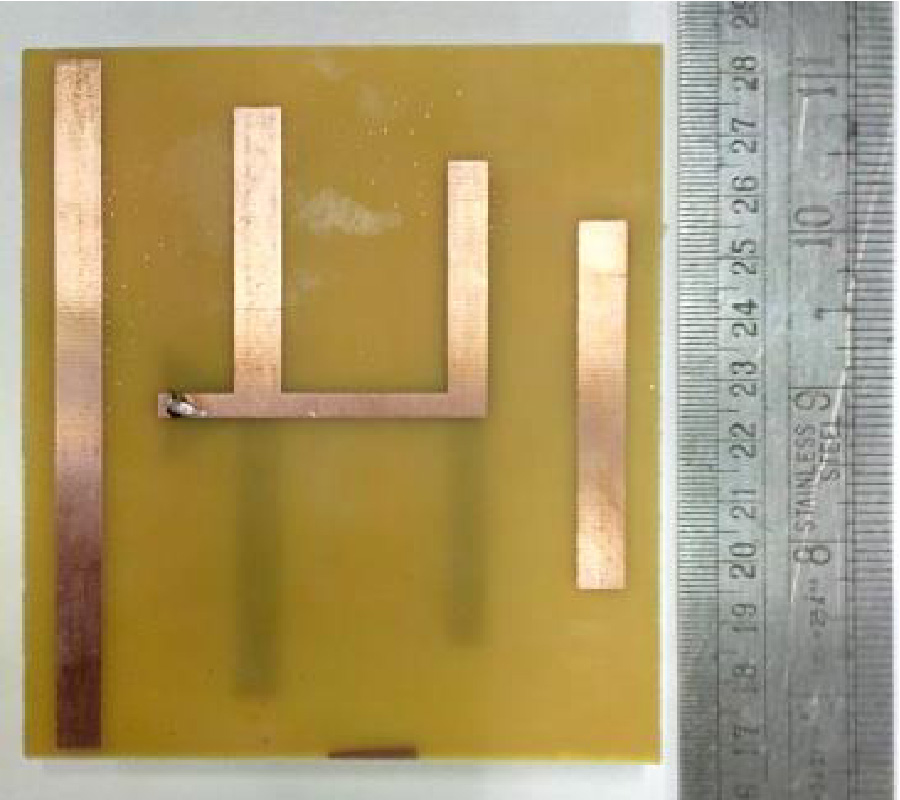
In this paper, a lowpass filter with -3 dB cut-off frequency of 1.69 GHz employing modified hairpin resonator with long straight slots is designed. In the first step, to design the primary resonator, the open stubs of a conventional hairpin resonator are folded inside its free area, which results in a smaller occupied area and an improved frequency response. Next, to control the scattering parameters, asymmetric coupled lines with slots are utilized instead of symmetric open-stubs of the primary resonance cell. In each step, the impact of the employed microstrip transmission lines on the scattering parameters of the designed resonator is determined by extracting the equations of the insertion loss (S21) and return loss (S11) on the basis of their equivalent LC circuit. Finally, by using two modified resonators with slots which are placed symmetrically around (Y) axis, a sharp transition band (264 dB/GHz) and wide stopband from 1.78GHz to 10GHz with a suppressing level of -20 dB are obtained. The overall circuit size is 0.140λg×0.076 λg, which indicates a small circuit size. The proposed lowpass filter has a high figure of merit equal to 72032.
A MINIATURIZED MICROSTRIP LOWPASS FILTER WITH SHARP SKIRT PERFORMANCE AND WIDE STOPBAND UTILIZING MODIFIED HAIRPIN RESONATOR WITH LONG STRAIGHT SLOTS
2017-09-29
PIER Letters
Vol. 70, 123-128
Design and Analysis of Vee Dipole Based Reconfigurable Planar Antenna
Snehalatha Lalithamma , Nagendra Prasad Pathak and Sanjeev Kumar Manhas
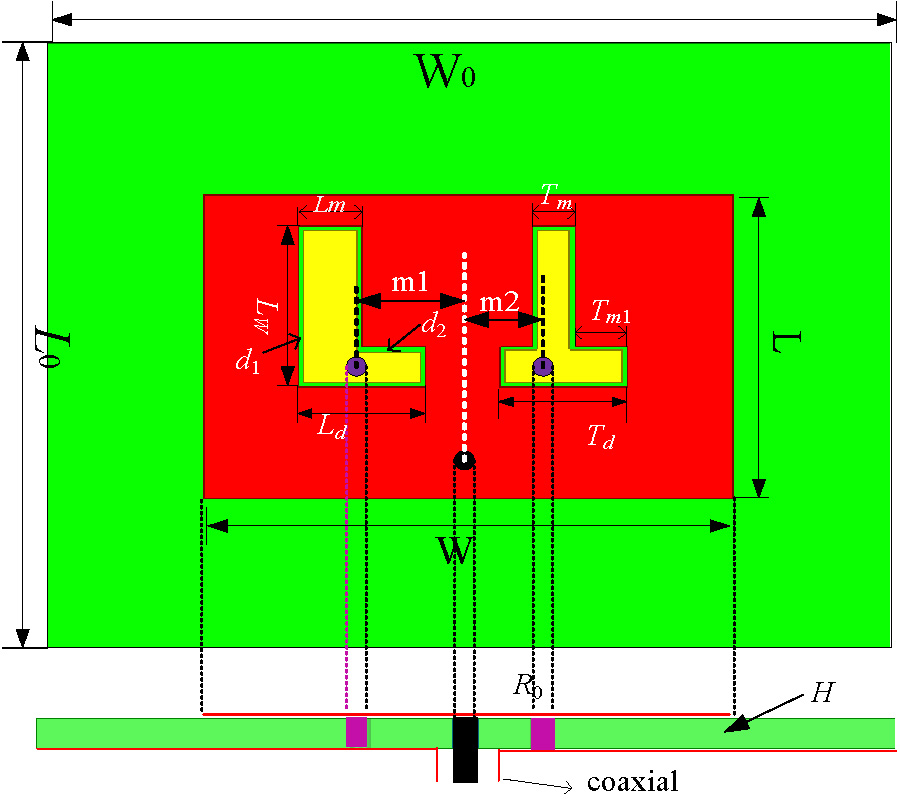
This paper presents the design and analysis of a planar pattern reconfigurable antenna for WLAN applications. The proposed design makes use of four Vee dipoles placed around a center input probe. The directional beam generated can be reconfigured to any one of the four directions in the azimuth plane. The antenna pattern can be controlled by means of switches provided to connect the Vee dipoles to the input port. The design and analysis of the parameters show the scalability of the design to adapt to any frequency of choice. To validate the concept, an antenna is designed for the WLAN frequency of 5.3 GHz, and a prototype is fabricated. The measured results match closely to that of simulated results. The gain provided by the antenna is noted as 7.5 dBi. The planar structure and simple design of the antenna enable this antenna to be useful for modern pattern reconfigurable communication systems.
DESIGN AND ANALYSIS OF VEE DIPOLE BASED RECONFIGURABLE PLANAR ANTENNA
2017-09-29
PIER Letters
Vol. 70, 115-121
Design of a Frequency Reconfigurable Fabry-Perot Cavity Antenna with Single Layer Partially Reflecting Surface
Peng Xie and Guang-Ming Wang
A novel design of frequency reconfigurable Fabry-Pérot cavity antenna is presented. The superstrate of the antenna is a reconfigurable partially reflecting surface with PIN diodes on it. A dual-band patch antenna is used as the radiator of the antenna. Through changing the states of diodes, the partially reflecting surface can present different reflection phases, so the working frequency of the antenna can be tuned. The operation of frequency reconfiguration and the design method of the antenna are described exhaustively. A prototype antenna is fabricated and measured. The measured results show that the antenna can realize 13.1 dB gain at 4.6 GHz and 17.1 dB gain at 5.5 GHz with impedance bandwidths of 3.3% and 4.7%, respectively. Good agreement between the simulated and measured results is achieved, which proves the correctness of the design method. Besides, this method can also be used to design Fabry-Pérot cavity antenna working at other frequencies.
DESIGN OF A FREQUENCY RECONFIGURABLE FABRY-PEROT CAVITY ANTENNA WITH SINGLE LAYER PARTIALLY REFLECTING SURFACE
2017-09-29
PIER Letters
Vol. 70, 107-113
Miniaturized UWB Monopole-Like Slot Antenna with Low Un-Roundness of h-Plane Radiation Patterns at High-Frequency Band
Hao Feng , Li Xu , Peng Wang and Peng Gao
A miniaturized monopole-like slot antenna with improved un-roundness of H-plane radiation patterns at higher frequency response for ultra-wideband application is presented and discussed. With the monopole-like slot antenna structure, wide working band (3.21-16.3 GHz) is obtained within a limited physical size (21×21.5×1.6 mm3). By modifying the structure of the proposed antenna, such as etching a quarter of a circular slot at the corner of the ground plane and a trapezoidal slot in the radiating patch, the un-roundness of H-plane radiation patterns is reduced by 5 dB in high-frequency band. Measured results show that it has a bandwidth from 3.2 GHz to 17.52 GHz, which are in good agreement with simulations.
MINIATURIZED UWB MONOPOLE-LIKE SLOT ANTENNA WITH LOW UN-ROUNDNESS OF H-PLANE RADIATION PATTERNS AT HIGH-FREQUENCY BAND
2017-09-27
PIER C
Vol. 78, 69-81
Design and Development of a Multi-Feed End-Fired Microstrip Antenna for TCAS Airborne System
Debajit De and Prasanna Kumar Sahu
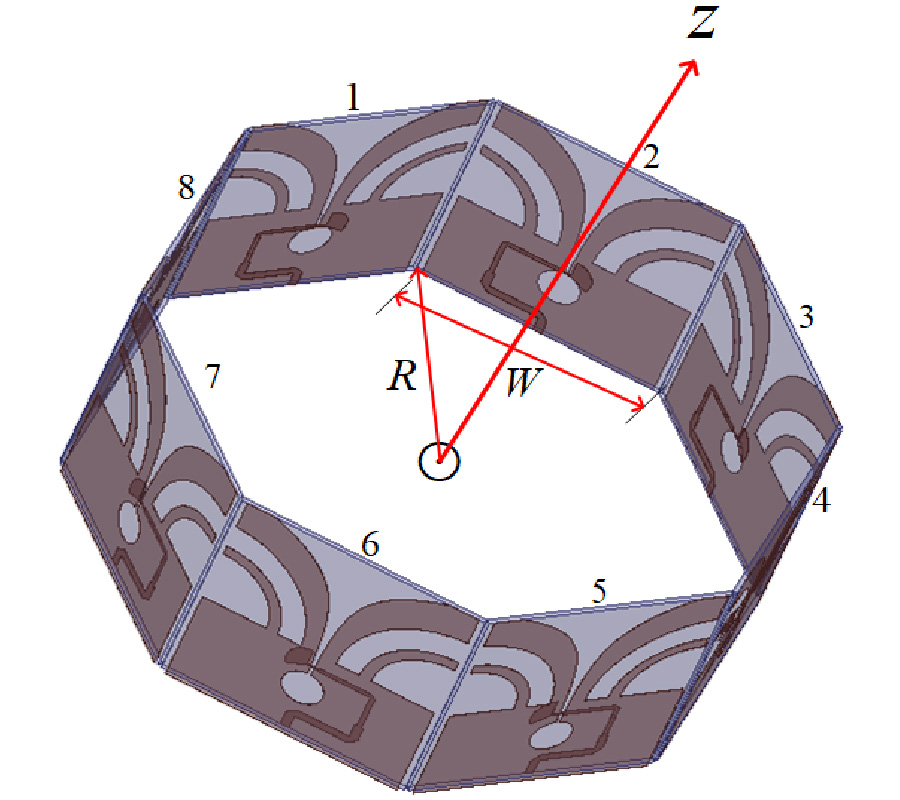
Traffic alert and Collision Avoidance System (TCAS) is an airborne system which is designed to provide the service as a last defense equipment for avoiding mid-air collisions between the aircraft. In such airborne systems, where low aerodynamic drag is urgently required, the end-fire antenna is suitable to be used. An effort to develop such an antenna, using microstrip elements, is described in this paper. Here, a Multi-Feed Microstrip Antenna is presented which radiates in the end-fire direction. The proposed antenna is designed in such a way that it can radiate the whole 360° surveillance region of the aircraft. To encapsulate the antenna inside an enclosure, an aerodynamically shaped Radome is also designed and presented in this paper. For designing this antenna model and its Radome, CST Microwave Studio is used here as the EM tool. The performance and other antenna characteristics have been explored from the simulation results followed by the antenna fabrication and measurement. Quite good agreement is achieved between the simulated and measured results. Much better performance characteristics make this proposed antenna a good candidate for this application.
DESIGN AND DEVELOPMENT OF A MULTI-FEED END-FIRED MICROSTRIP ANTENNA FOR TCAS AIRBORNE SYSTEM
2017-09-26
PIER M
Vol. 60, 157-167
Design & Development of Compact Uniplanar Semi-Hexagonal ACS Fed Multi-Band Antenna for Portable System Application
Arvind Kumar , Praveen Vummadisetty Naidu , Vinay Kumar and Agileswari K. Ramasamy
In the present work, a compact size, dual-band antenna is proposed for WLAN/WiMAX/LTE2500/DMB applications. The designed antenna is fed by a 50 Ω coplanar line. The radiating component of the composed antenna consists of radiating strips with half hexagonal and vertical rectangular shapes and square-shaped ground plane which are printed on the same layer. The overall size of the antenna substrate is only 10 x 24 x 1.6 mm3. The simulated and measured results of the proposed antenna show that it operates in the frequency range of 2.5 GHz to 2.75 GHz and 5.0 GHz to 6.7 GHz, respectively.
DESIGN & DEVELOPMENT OF COMPACT UNIPLANAR SEMI-HEXAGONAL ACS FED MULTI-BAND ANTENNA FOR PORTABLE SYSTEM APPLICATION
2017-09-25
PIER B
Vol. 78, 143-154
Accurate Determination of Gold Nanorods Concentrations from Optoacoustic Signals Detected at 870 nm and 905 nm by Using High-Power Diode Lasers with Fast Switching Electronics
Luca Leggio , Daniel Gallego , Raul Arroyo , Sandeep Babu Gawali , Sergio Rodriguez , Miguel Sanchez , Guillermo Carpintero del Barrio and Horacio Lamela
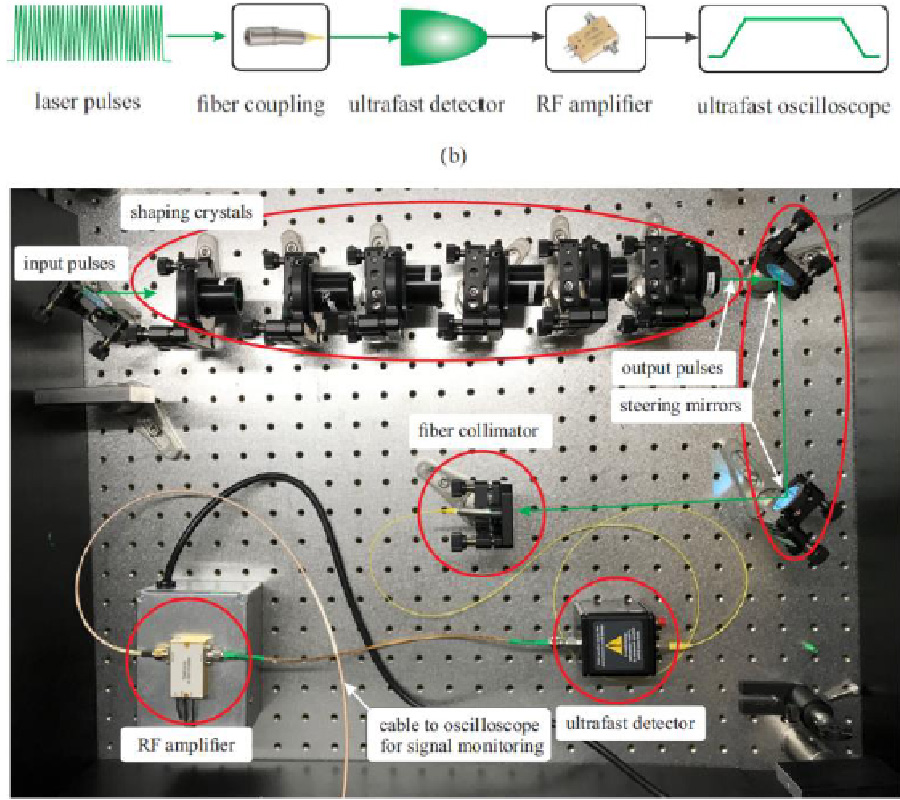
Optoacoustic imaging (OAI) is an emerging biomedical technique that allows visualization of in-depth tissues by using ultrasonic signals generated by short laser pulses. In this work, the authors combine the optical power of several pulsed high-power diode lasers (HPDLs) at 870 nm and 905 nm to a 7-to-1 675-μm fiber bundle to generate optoacoustic (OA) signals from different mixtures of two gold nanorods solutions with absorbance peak at ~860 nm and ~900 nm, respectively. The pulses produced to generate OA signals are alternated between the two wavelengths by a microcontroller circuit with fast switching (0.5 ms). From the amplitude of the OA signals, the concentrations of the nanoparticles solutions are easily estimated with high accuracy using a fluence model. The results achieved with the proposed system show very good agreement between the concentrations of gold nanorods estimated from measurements and the expected values.
ACCURATE DETERMINATION OF GOLD NANORODS CONCENTRATIONS FROM OPTOACOUSTIC SIGNALS DETECTED AT 870 NM AND 905 NM BY USING HIGH-POWER DIODE LASERS WITH FAST SWITCHING ELECTRONICS
2017-09-25
PIER Letters
Vol. 70, 99-106
An Electrically Small Low-Profile and Ultra-Wideband Antenna with Monopole-Like Radiation Characteristics
Hong Zhang , Fu-Shun Zhang and Yu-Liang Yang
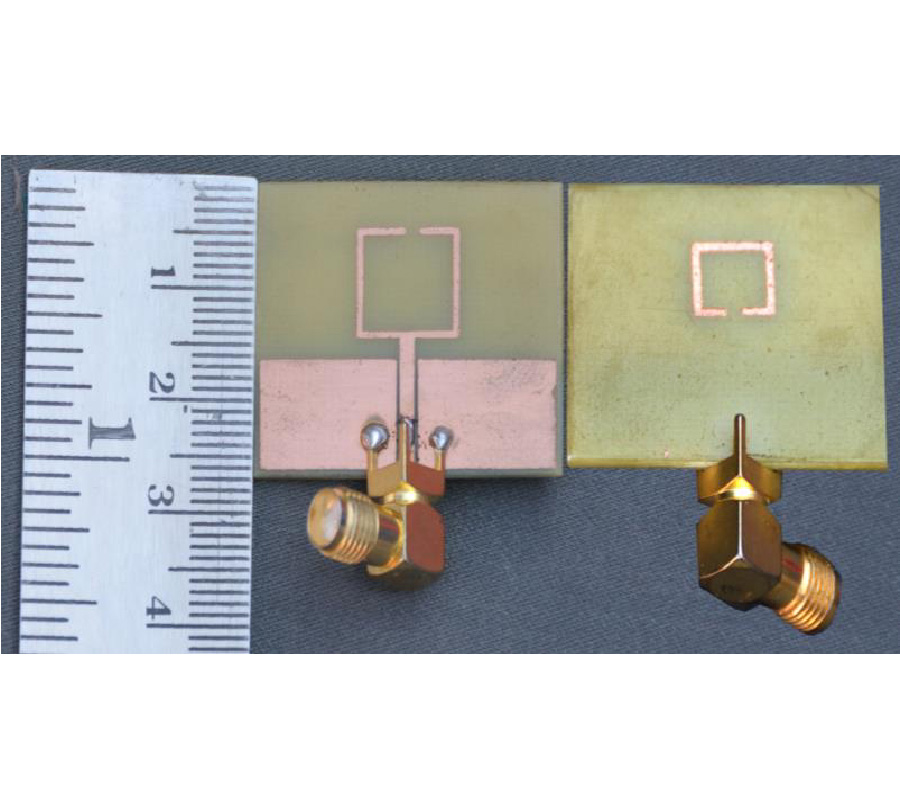
This paper presents an electrically small, low-profile and ultra-wideband antenna with monopole-like radiation type. The antenna is composed of a top-loading hat and two tapered radiation patches on the crossed substrates shorted to the ground. Introducing two tapered radiation patches with the meander loop traces allows for achieving ultra-wideband operation and very low profile simultaneously. In addition, two columns of metal via-holes nested in the crossed substrates can broaden the bandwidth further. The proposed antenna is simulated, fabricated and measured. The measured and simulated results show good agreement and indicate that a measured VSWR lower than 2.0 over 632-3907 MHz (a 144% relative bandwidth) can be accomplished. The antenna has a low profile (0.053 λmin) in height and occupies a small circle of radius 0.078 λmin, where λmin is the free-space wavelength at the lowest frequency. The antenna has a kmin a = 0.59, where kmin is the wavenumber at the lowest frequency of operation. The frequency band covers LTE (0.7 GHz), BDS (1.268 GHz), GPS (1.575 GHz), WIFI (2.5 GHz) and WIMAX (3.5 GHz).
AN ELECTRICALLY SMALL LOW-PROFILE AND ULTRA-WIDEBAND ANTENNA WITH MONOPOLE-LIKE RADIATION CHARACTERISTICS
2017-09-25
PIER Letters
Vol. 70, 89-97
Compact Planar Dual Band Antenna for WLAN Application
Riki Patel and Trushit K. Upadhyaya
A miniaturized dual-band microstrip antenna has been designed and analyzed for Wireless LAN application. The proposed antenna comprises a 29 × 29mm2 radiating patch, fed by a microstrip line on a 1.6mm thick FR4 dielectric material substrate. The antenna measurement illustrates impedance bandwidth of around 10% at 2.4GHz resonance and 6% at 5.5GHz resonance. The measured stable return loss and radiation patterns are presented for the proposed dual-band electrically small microstrip antenna for wireless applications.
COMPACT PLANAR DUAL BAND ANTENNA FOR WLAN APPLICATION
2017-09-25
PIER Letters
Vol. 70, 81-87
Design and Test of a 0.3 THz Compact Antenna Test Range
Chi Liu and Xuetian Wang
The terahertz (THz) compact antenna test range (CATR) detection technology is the foundation of terahertz target recognition technology. It provides an excellent plane wave area which can well meet the far-field condition of antenna pattern and RCS test. Based on the microwave single reflector CATR system that we have designed before, this paper mainly aims at designing a 0.3 THz CATR system and then gives the simulation model of the system errors. After the preparation of the above work, we begin to detect its 0.3 THz band plane wave field, and the final test results can be used for further application.
DESIGN AND TEST OF A 0.3 THZ COMPACT ANTENNA TEST RANGE
2017-09-22
PIER C
Vol. 78, 57-67
Broadbanding of Printed Bell-Shaped Monopole Antenna by Using Short Stub for UWB Applications
Nobuyasu Takemura and Syunta Ichikawa
This paper presents a design and evaluation for a miniaturized ultra-wideband (UWB) printed monopole antenna. The design integrates a UWB printed bell-shaped monopole antenna with a short stub. This antenna improves the matched impedance in the lower frequency band by using the short stub structure. The proposed antenna is formed on a low-cost FR-4 dielectric substrate with the size: 28 x 20 x 1.6 mm3. The designed antenna operates with impedance bandwidth of 3.1~4.0 GHz. The omnidirectional radiation patterns are obtained over the frequency range. Calculation and measurement show that this antenna acquires broadband characteristics covering the required frequency band of UWB system. The proposed antenna is assumed for applying to UWB radar, etc.
BROADBANDING OF PRINTED BELL-SHAPED MONOPOLE ANTENNA BY USING SHORT STUB FOR UWB APPLICATIONS
2017-09-22
PIER Letters
Vol. 70, 75-80
Miniature Triple-Mode Diplexer with Good Selectivity
Sugchai Tantiviwat , Mohammad Shahrazel Razalli and Siti Zuraidah Binti Ibrahim
This paper presents a compact diplexer with high selectivity. The proposed diplexer employs two sets of triple-mode bandpass lters. Using this approach, the pair of even-mode resonant frequencies can be flexibly controlled by adjusting the characteristic impedance or electrical lengths of the two open-circuited stubs while the odd-mode resonant frequency remains at the fundamental resonant frequency. For a demonstration, a diplexer with two passbands centred at 1.50 and 1.70 GHz and the transmission zeros are created close to the passband edges which extremely improve the skirt selectivity. As a result, the proposed diplexer occupies an extremely small area, i.e., approximately 0.30λg x 0.35λg. The measured results are in good agreement with the simulated predictions.
MINIATURE TRIPLE-MODE DIPLEXER WITH GOOD SELECTIVITY
2017-09-22
PIER M
Vol. 60, 141-156
Positive Definite Matrix Space Based Detector with Limited Training Samples for Multiple Target Situations
Wen Jiang , Yulin Huang , Guolong Cui and Jianyu Yang
Multiple target situation is a typical situation of nonhomogeneous clutter environment, which can cause excessive target masking in radar signal detection system. In order to reduce target masking caused by multiple target situations, this paper proposes a new detection structure based on positive-de nite matrix space and limited training samples. The proposed detection structure uses a positive-de nite matrix to estimate the background power level. In addition, with limited training samples, the detection structure is used to resist the multiple target situations. The simulation results show that the proposed detection structure exhibits a better detection performance than that of the well-known CA-CFAR in homogeneous environment. The detector also performs robustly in multiple target situations, even though 10 interfering targets exist in a length of 24 samples of reference window. Furthermore, the measured results validate the performance of the proposed method.
POSITIVE DEFINITE MATRIX SPACE BASED DETECTOR WITH LIMITED TRAINING SAMPLES FOR MULTIPLE TARGET SITUATIONS
2017-09-21
PIER C
Vol. 78, 47-55
Wideband Omnidirectional Circularly Polarized Patch Antenna with Multi-Resonant Structure
Long Yang , Zhi-Ya Zhang , Luyang Ji , Dan Wu , Guang Fu and Ze-Hong Yan
A wideband omnidirectional circularly polarized (CP) patch antenna is proposed in this paper. The proposed antenna is composed of a disk-loaded coaxial probe and four pairs of modified Γ-shaped strips loaded with shorting pins. Each pair of modified Γ-shaped strips consists of an inner Γ-shaped strip and an outer Γ-shaped strip. The approach employed in this design to improve the impedance bandwidth is to add an inner Γ-shaped strip and make it couple to the outer one. By introducing the two coupled Γ-shaped strips, two different monopole modes can be achieved simultaneously and controlled separately by two different corresponding parts of these two Γ-shaped strips, respectively, and they can be merged to realize a wide-band impedance matching. Meanwhile, the dual minimum axial ratio (AR) points around the resonance frequency of the antenna are excited by the coupled Γ-shaped strips, and they can be reallocated closely to each other for wide AR bandwidth. In the design, the monopole mode of the patch antenna is excited by the disk-loaded coaxial probe for generating the θ-polarization and the Γ-shaped strips are utilized for achieving the φ-polarization. Omnidirectional CP radiation pattern is obtained once the two orthogonal components are equal in amplitude but in phase quadrature. is conducted to further verify the proposed design.
WIDEBAND OMNIDIRECTIONAL CIRCULARLY POLARIZED PATCH ANTENNA WITH MULTI-RESONANT STRUCTURE
2017-09-21
PIER M
Vol. 60, 131-139
Improved Bucking Coil Design in Helicopter Transient Electromagnetic System
Pan Xiao , Zongyang Shi , Xin Wu and Guangyou Fang
The presence of the primary field in the helicopter transient electromagnetic system makes the dynamic range of the response signal so large that it is difficult to observe the secondary field. Therefore, a bucking coil is usually introduced to eliminate the primary field. However, in a traditional design, the size of the bucking coil increases with the size of the system, which makes the bucking coil hard to install, and opposite magnetic moment is large in huge systems. In this paper, a new bucking coil design for a helicopter transient electromagnetic system is proposed. Compared with the traditional design, the bucking coil diameter, total weight and total magnetic moment in two designs are calculated. The results show that the bucking coil we designed is more than 8 times smaller and 5 times lighter than that in the traditional design, which is easier for installation. The bucking moment impact is reduced to 0.03% of the total magnetic moment when the diameter of the transmitting coil increases to 35m, which improves the efficiency of the system. Then we analyze the requirement of manufactory precision and installation accuracy for the bucking coil in our design to get the best bucking result.
IMPROVED BUCKING COIL DESIGN IN HELICOPTER TRANSIENT ELECTROMAGNETIC SYSTEM
2017-09-20
PIER M
Vol. 60, 121-129
Novel Decoupling Technique for Enhancing the Mutual Coupling Between Printed Antennas
Otman Oulhaj , Naima Amar Touhami , Mohamed Aghoutane , Abdelmounaim Belbachir Kchairi and Hanae Elftouh
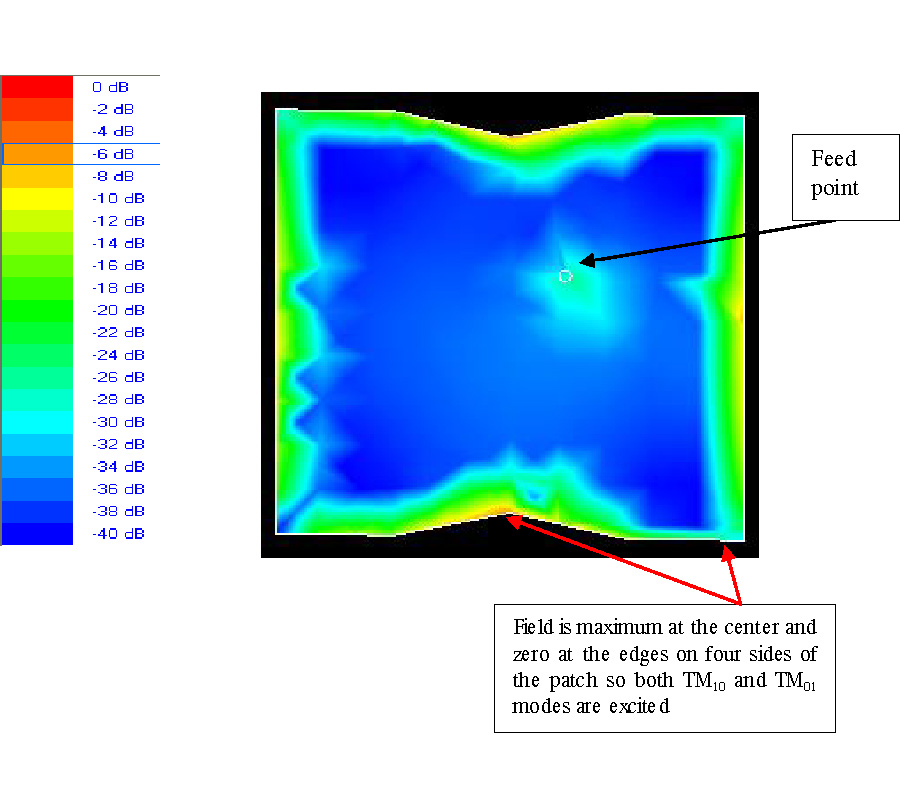
In this work, an E-shape Defected Ground Structure (DGS) is achieved to reduce the mutual coupling between two nearby microstrip antennas up to 47%(from 0.064 to 0.03). Both antennas radiate in the same frequency band of 10 GHz. The technique is based on a wall integrating periodic structure permitting the absorption of the electromagnetic field. By using this structure, it was possible to achieve a 20dB reduction in the insertion loss S21 between the two microstrip patch antennas with center-to-center distance of 0.37λ0 (λ0 is the free-space wavelength). The obtained coupling coefficient demonstrates that we have a good isolation between the two antennas. EM solver, simulating and measuring the reflection and transmission coefficients of the designed antenna arrays, achieves the reduction of the mutual coupling. The simulated results are verified by measuring the fabricated prototypes.
NOVEL DECOUPLING TECHNIQUE FOR ENHANCING THE MUTUAL COUPLING BETWEEN PRINTED ANTENNAS
2017-09-18
PIER M
Vol. 60, 111-120
Study on Operating Status of Overhead Transmission Lines Based on Wind Speed Variation
Yang Mo , Xiaofeng Zhou , Yanling Wang and Likai Liang
In the spatial dimension, the variation of the wind speed along the overhead transmission line makes the conductor temperature and line parameter show a nonuniform distribution characteristic, which has an important influence on the operating status of the system. In order to describe the actual situation more accurately, a line cutting model based on the wind speed variation along the line is proposed. This paper proves the application value of the model by using a typical 4-bus system. From the two aspects of the power flow and the maximum power transmission capacity, we contrast the line cutting model with the traditional models, indicating that the cutting model is closer to the actual situation of the system.
STUDY ON OPERATING STATUS OF OVERHEAD TRANSMISSION LINES BASED ON WIND SPEED VARIATION
2017-09-18
PIER M
Vol. 60, 101-110
A Novel Binary Butterfly Mating Optimization Algorithm with Subarray Strategy for Thinning of Large Antenna Array
Huaning Wu , Chao Liu , Bin Li and Xu Xie
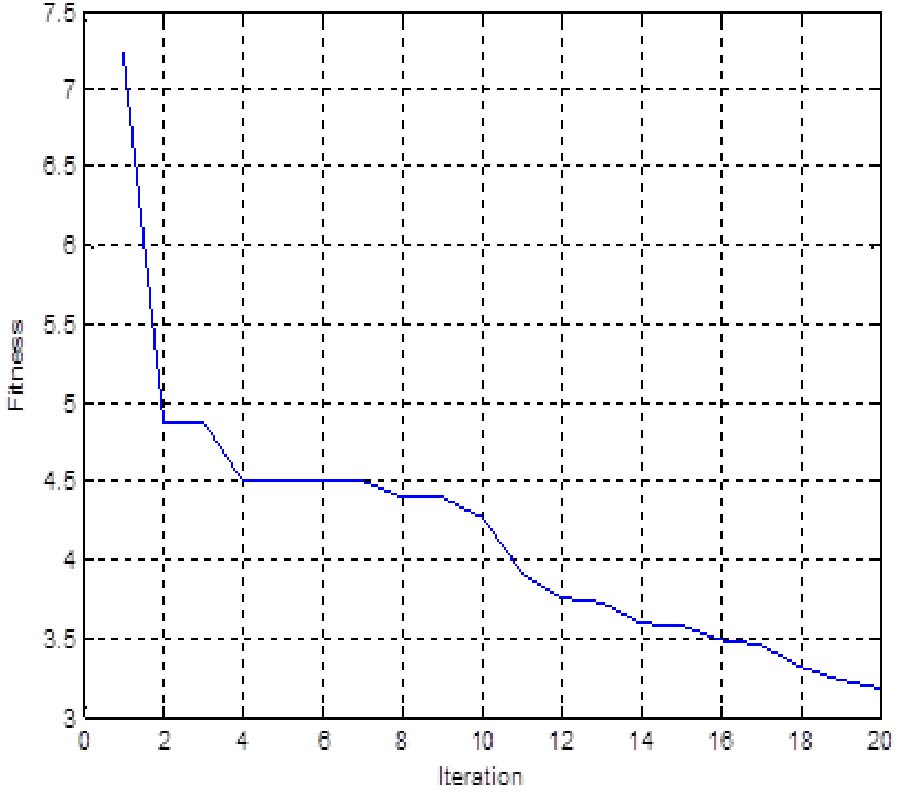
This paper presents a novel binary algorithm named as binary butterfly mating algorithm (BBMO) combined with sub-array strategy for thinning of antenna array. The proposed algorithm has been adapted from a recently developed nature inspired optimization, butterfly mating optimization (BMO). The subarray strategy is dividing the linear array into two parts, one part with a fixed number of element turned on in the middle of array and the rest elements on the edge of array composing another subarray. In order to reduce the complexity of the thinning process, BBMO algorithm is used to optimize the element on the edge of an array. The proposed BBMO with subarray strategy is used to synthesize a linear sparse antenna array in order to reduce maximum sidelobe level and at the same time keeping the percentage of thinning equal to or more than the desired level. To evaluate the performance of the proposed thinning method, a linear array with 100 elements is optimized by BBMO algorithm without and with subarray strategy. And we discuss the impact of number of fixed elements on thinning results. The novel method BBMO with subarray strategy gives reduced SLL as compared to the results available in literature of ant colony algorithm, genetic algorithm, binary differential evolution algorithm, chaotic binary particle swarm optimization, and improved binary invasive weed optimization algorithm. Moreover, the convergence rate of BBMO with subarray strategy is faster than BBMO without subarray strategy and the other methods.
A NOVEL BINARY BUTTERFLY MATING OPTIMIZATION ALGORITHM WITH SUBARRAY STRATEGY FOR THINNING OF LARGE ANTENNA ARRAY
2017-09-15
PIER C
Vol. 78, 33-46
Wideband High Gain Antenna Subarray for 5G Applications
Seyyedehelnaz Ershadi , Asghar Keshtkar , Ahmed H. Abdelrahman and Hao Xin
Wideband arrays have recently received considerable attention in 5G applications to cover larger frequency bands. This paper presents a novel design of a high gain and wideband antenna subarray from 23 GHz to 32 GHz, which covers the frequency bands proposed by the Federal Communications Commission (FCC) for 5G communications. The proposed subarray consists of four radiating elements with wideband and high gain characteristics. These elements are composed of two stacked patches, which are fed using the proximity coupling technique. A unit-cell element prototype is first fabricated and tested to validate the gain and bandwidth performances. A 1x4 subarray prototype is then fabricated and tested, while maintaining an element spacing less than half-wavelength at the center frequency, to avoid grating lobes and to keep the small size of the antenna subarray. The measurement results of the prototypes, i.e. unit cell element and subarray prototypes, show good agreements with the simulations. The subarray measurements demonstrate a high gain of 10-12 dBi, an impedance bandwidth of 33.4 %, and a 1-dB gain bandwidth of 10.5 %. The proposed antenna subarray is a good candidate for wideband and high gain antenna arrays suitable for 5G mmW applications.
WIDEBAND HIGH GAIN ANTENNA SUBARRAY FOR 5G APPLICATIONS
2017-09-15
PIER M
Vol. 60, 93-100
Multiple-GPU-Based Frequency-Dependent Finite-Difference Time Domain Formulation Using MATLAB Parallel Computing Toolbox
Wenyi Shao and William McCollough
A parallel frequency-dependent, finite-difference time domain method is used to simulate electromagnetic waves propagating in dispersive media. The method is accomplished by using a single-program-multiple-data mode and tested on up to eight Nvidia Tesla GPUs. The sppedup using different numbers of GPUs is compared and presented in tables and graphics. The results provide recommendations for partitioning data from a 3-D computational model to achieve the best GPU performance.
MULTIPLE-GPU-BASED FREQUENCY-DEPENDENT FINITE-DIFFERENCE TIME DOMAIN FORMULATION USING MATLAB PARALLEL COMPUTING TOOLBOX