Search Results(13797)

2014-08-25
PIER C
Vol. 53, 67-73
Compact Wideband Differential Bandpass Filter Using a Marchand Balun
Shi Bai , Wenjie Feng and Wenquan Che
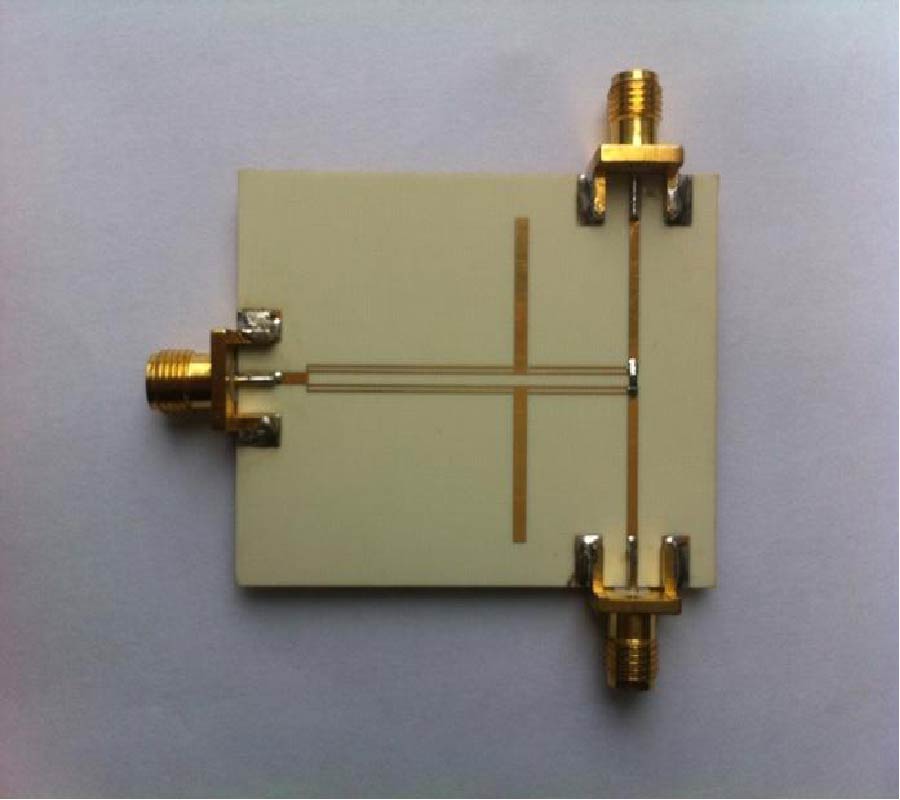
A novel compact wideband differential bandpass filter with wideband common mode suppression using a Marchand balun is presented in this paper. Open/shorted coupled lines and stubs are used to improve the selectivity for the differential mode and common mode suppression. The demonstrated filter with a compact size of 50 mm × 30 mm exhibits a fractional bandwidth of 53% centered at 3.0 GHz and 13 dB common-mode suppression from 0 to 9 GHz. The theoretical and measured results agree well with each other and show good in-band performances.
COMPACT WIDEBAND DIFFERENTIAL BANDPASS FILTER USING A MARCHAND BALUN
2014-08-25
PIER Letters
Vol. 48, 109-115
Design of Novel Compact Tri-Band Bandpass Filter with Controllable Frequencies and High Selectivity
Qian Fei Su
This paper presents a compact tri-band bandpass filter (BPF) with high selectivity. The proposed filter utilizes novel stub-loaded quarter-wavelength resonators and conventional uniform quarter-wavelength resonators. The latter is embedded in the former, and they are separated by a feed line. Due to these quarter-wavelength resonators, the total size is greatly reduced. Moreover, the passband frequencies can be controlled individually. To enhance its selectivity, source-load coupling is employed. For demonstration, an experimental filter is implemented. High skirt selectivity and suppression levels are observed in the measured results. The circuit area of the filter is 0.17λg×0.19λg, featuring compact size.
DESIGN OF NOVEL COMPACT TRI-BAND BANDPASS FILTER WITH CONTROLLABLE FREQUENCIES AND HIGH SELECTIVITY
2014-08-23
PIER C
Vol. 53, 55-66
Design of Compact Wideband High-Selectivity Band-Stop Filter Based on Coupled Lines
Menglou Rao , Yongle Wu , Weimin Wang and Yuan'an Liu
In this paper, a compact band-stop filter with a wideband and high-selectivity performance is proposed and analyzed. This band-stop filter includes two parallel-coupled lines of different electrical lengths and two open-circuit stubs. A lossless transmission line model is used to obtain the filter design parameters. In order to verify this new filter circuit structure and its corresponding design theory, five groups of numerical examples are demonstrated. Finally, a practical band-stop filter with a 3-dB cutoff frequency bandwidth of 58.2% centered at 0.94 GHz has been designed, simulated and measured. The measured results show a good agreement with the simulated responses.
DESIGN OF COMPACT WIDEBAND HIGH-SELECTIVITY BAND-STOP FILTER BASED ON COUPLED LINES
2014-08-23
PIER Letters
Vol. 48, 103-108
Low-Cost Fiber-Tip Fabry-Perot Interferometer and Its Application for Transverse Load Sensing
Xiaogang Jiang and Daru Chen
A Fabry-Perot interferometer sensor based on a fiber-tip bubble-structure micro-cavity is proposed, fabricated, and demonstrated for transverse load sensing. The micro-cavity is fabricated by using arc discharge at the end of a multimode fiber which has been processed with chemical etching. A transverse load sensitivity of 3.64 nm/N and a relative low temperature sensitivity of about 2 pm/°C are experimentally demonstrated for the proposed fiber-tip bubble-structure micro-cavity sensor. The sensor has the advantages of low-cost, ease of fabrication and compact size, which make it a promising candidate for transverse load sensing in harsh environments.
LOW-COST FIBER-TIP FABRY-PEROT INTERFEROMETER AND ITS APPLICATION FOR TRANSVERSE LOAD SENSING
2014-08-23
PIER Letters
Vol. 48, 95-101
A Symmetrical Outputs Uniplanar Out-of-Phase Power Divider Without Phase Shifter
Chen Miao , Xuezheng Zheng , Jinping Yang and Wen Wu
A new out-of-phase power divider (PD) without phase shifter at the output ports is proposed. Based on admittance matrix, a new topology of uniplanar power divider with symmetrical outputs is designed. Under conditions of good matching, perfect isolation, and 180° phase difference between two output ports, the corresponding design equations and synthesis procedures are derived and given with admittance matrix. To verify the design approach, an out-of-phase power divider operating at 2 GHz with equal power division ratio is designed, fabricated, and measured. Experimental results demonstrate that the input return loss is better than 32 dB, the insertion loss is less than 0.29 dB and the isolation is better than 33 dB. The amplitude imbalance between the output ports is 0.03 dB and the phase difference between the two output ports is 181.6 °at the operation frequency. Further more, 49.9% relative bandwidth of 15 dB return loss and 39.4% relative bandwidth of 20 dB port isolation are achieved.
A SYMMETRICAL OUTPUTS UNIPLANAR OUT-OF-PHASE POWER DIVIDER WITHOUT PHASE SHIFTER
2014-08-23
PIER M
Vol. 38, 83-89
Noise Removal Technique in Near-Field Millimeter-Wave Cylindrical Scanning Imaging System
Xin Wen , Feng Nian , Yujie Yang and Keming Fen
The accuracy of scattering measurements in near-field millimeter-wave cylindrical scanning imaging system is often degraded by the contamination from additive noise and clutter. Thus, efficient noise removal technique is necessary to achieve accuracy improvement. This paper proposes an independent component analysis denoising algorithm, which relies on the assumption of statistical independence of the sources, where high order statistical properties are used. In the algorithm, the virtual noise components are incorporated into the independent component analysis model, which expands original one-dimensional observation to virtual multi-dimensional observations. The computationally efficient sources estimation technique is presented, based of joint diagonalization of fourth order cumulant matrix. The high speed millimeter-wave near-field cylinder scanning imaging system is set up to verify the denoising results of range profiles, three-dimensional scatter intensity and two-dimensional projection images. The results indicate both the feasibility and validity of the proposed denoising algorithm to be applied in the near-field millimeter-wave cylindrical scanning imaging system.
NOISE REMOVAL TECHNIQUE IN NEAR-FIELD MILLIMETER-WAVE CYLINDRICAL SCANNING IMAGING SYSTEM
2014-08-23
PIER
Vol. 149, 15-44
Surface and Volume Integral Equation Methods for Time-Harmonic Solutions of Maxwell's Equations (Invited Paper)
Pasi Yla-Oijala , Johannes Markkanen , Seppo Jarvenpaa and Sami P. Kiminki
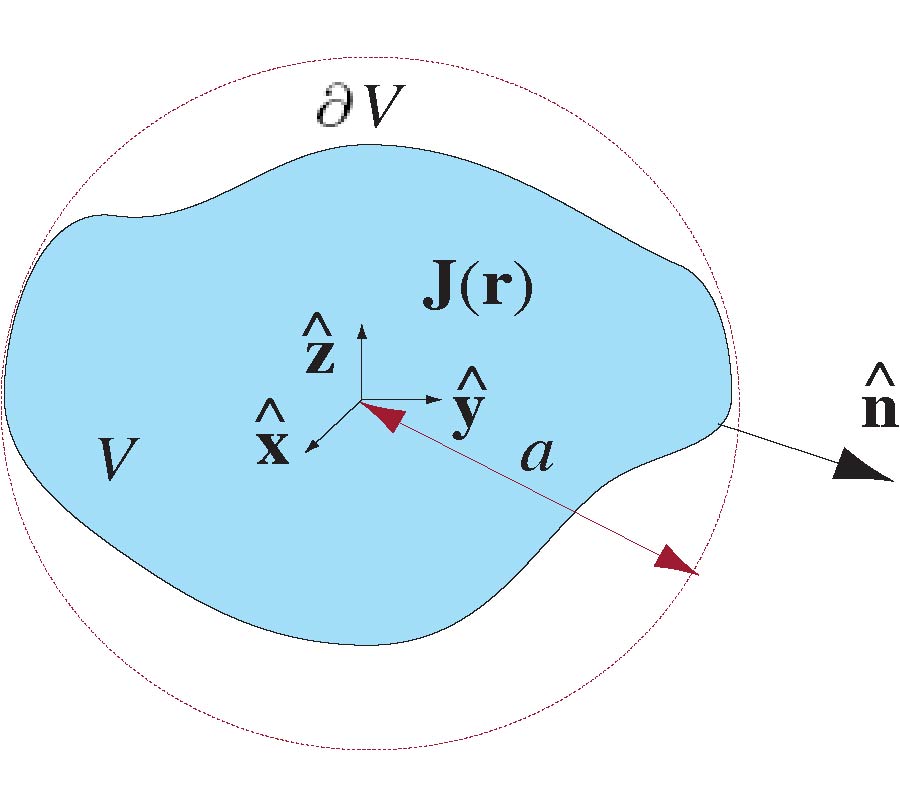
During the last two-three decades the importance of computer simulations based on numerical full-wave solutions of Maxwell's has continuously increased in electrical engineering. Software products based on integral equation methods have an unquestionable importance in the frequency domain electromagnetic analysis and design of open-region problems. This paper deals with the surface and volume integral equation methods for finding time-harmonic solutions of Maxwell's equations. First a review of classical integral equation representations and formulations is given. Thereafter we briefly overview the mathematical background of integral operators and equations and their discretization with the method of moments. The main focus is on advanced techniques that would enable accurate, stable, and scalable solutions on a wide range of material parameters, frequencies and applications. Finally, future perspectives of the integral equation methods for solving Maxwell's equations are discussed.
SURFACE AND VOLUME INTEGRAL EQUATION METHODS FOR TIME-HARMONIC SOLUTIONS OF MAXWELL'S EQUATIONS (Invited Paper)
2014-08-23
PIER
Vol. 149, 1-13
Wiener-Hopf Analysis of the h-Polarized Plane Wave Diffraction by a Finite Sinusoidal Grating (Invited Paper)
Toru Eizawa and Kazuya Kobayashi
The diffraction by a finite sinusoidal grating is analyzed for the H-polarized plane wave incidence using the Wiener-Hopf technique combined with the perturbation method. Assuming the depth of the grating to be small compared with the wavelength and approximating the boundary condition on the grating surface, the problem is reduced to the diffraction problem involving a flat strip with a certain mixed boundary condition. Introducing the Fourier transform for the unknown scattered field and applying an approximate boundary condition together with a perturbation series expansion for the scattered field, the problem is formulated in terms of the zero-order and first-order Wiener-Hopf equations. The Wiener-Hopf equations are solved via the factorization and decomposition procedure leading to the exact and asymptotic solutions. Taking the inverse Fourier transform and applying the saddle point method, the scattered field expression is explicitly derived. Scattering characteristics of the grating are discussed in detail via numerical examples of the far field intensity.
WIENER-HOPF ANALYSIS OF THE H-POLARIZED PLANE WAVE DIFFRACTION BY A FINITE SINUSOIDAL GRATING (Invited Paper)
2014-08-22
PIER B
Vol. 60, 275-285
Wave Transition and Trapping by Suddenly Created Periodic Plasma
Spencer P. Kuo
Theory, numerical simulation, and experiment on the interaction of electromagnetic wave with suddenly created periodic plasma layers are presented. In the experiment, frequency-downshifted signals of considerably large spectral width and enhanced spectral intensity were detected. Numerical simulation of the experiment, that the plasma has a finite periodic structure and is created much faster than its decay, shows that the frequency downshifted waves have a broad power spectrum and are trapped in this plasma crystal until the plasma frequency drops to become less than the wave frequency. The spectral power increases exponentially with the frequency of the frequency downshifted wave, consistent with the experiment. The simulation reveals that wave trapping results in accumulating the frequency-downshifted waves generated in the finite transition period of plasma creation and decay. Though frequency-upshifted signals were missing in the experimental measurement, it might be attributed to the collision damping of the plasma.
WAVE TRANSITION AND TRAPPING BY SUDDENLY CREATED PERIODIC PLASMA
2014-08-22
PIER C
Vol. 53, 45-53
T-Shaped Antenna Loading T-Shaped Slots for Multiple Band Operation
Tao Ni , Yong-Chang Jiao , Zibin Weng and Li Zhang
The method of a T-shaped antenna loading T-shaped slots for multiple band operation is presented in this paper. Inspired by the fractal antenna, the proposed method is intended to be used for designing multiple band antennas. Through loading T-shaped slots in the terminals of a T-shaped antenna, dual or triple operating bands can be achieved. In order to validate the feasibility of this method, this type of antenna is designed and simulated. The antennas are respectively fed by two different feeding transmission lines (microstrip transmission line and coplanar waveguide (CPW) transmission line) for the purpose of identifying the method that can be commonly used. The parametric analysis in detail has been given to explain the effects of the key parameter variations. For WLAN and WiMAX applications, the antennas are fabricated and measured. Both simulated and measured results are presented to demonstrate the feasibility of these designs.
T-SHAPED ANTENNA LOADING T-SHAPED SLOTS FOR MULTIPLE BAND OPERATION
2014-08-22
PIER C
Vol. 53, 35-43
Port Isolation Enhancement by Connecting Dual-Element Antenna for MIMO Communications
Wei Ni and Yanru Chen
This paper presents a general method to isolate the compact dual-element antenna for mobile radio communications. The basic concept to cancel the coupling current is proposed, and two individual implemental solutions, connecting the transmission lines and the antenna elements, are illustrated respectively. Two examples targeted at 2.4 GHz ISM band have been implemented for the practical cellular phone environment. The antennas are well designed followed by the proposed principle. The result shows that the magnitude of S21 between two ports can be no higher than -10 dB in the interested bandwidth after applying the proposed methods. Good agreements are observed between measurements and simulations. It is suitable for application to mobile terminals due to its relatively low profile and good MIMO performance.
PORT ISOLATION ENHANCEMENT BY CONNECTING DUAL-ELEMENT ANTENNA FOR MIMO COMMUNICATIONS
2014-08-22
PIER Letters
Vol. 48, 83-93
Novel Coplanar EBG Low Pass Filter
Xing-Jun Wang and Ling-Feng Shi
The traditional coplanar electromagnetic bandgap (EBG) structure is analyzed. The method is studied to lower the center frequency and broaden the bandwidth in this paper. A novel structure of U-bridged EBG power plane is proposed. The simulation and test results show that the bandwidth of the new structure is 4.32 GHz, and the lower side cutoff frequency is at 380 MHz with stopband depth at -40 dB. The elimination of simultaneous switching noise (SSN) as this kind of U-bridged coplanar EBG structure is more effective below 1 GHz. In addition, the eye diagram of the structure is analyzed. The degradation of the maximum eye open and the maximum eye width on the structure is about 1.2% and 5.7% respectively. Finally, the IR-drop and dc resistance is accurately investigated through 3-D simulations.
NOVEL COPLANAR EBG LOW PASS FILTER
2014-08-22
PIER M
Vol. 38, 73-82
Negative Absorption Coefficient of a Weak Electromagnetic Wave Caused by Electrons Confined in Rectangular Quantum Wires in the Presence of Laser Radiation Modulated by Amplitude
Nguyen Thi Thanh Nhan and Dinh Quoc Vuong
The analytic expressions for the absorption coefficient (ACF) of a weak electromagnetic wave (EMW) by confined electrons in rectangular quantum wires (RQWs) in the presence of laser radiation modulated by amplitude are calculated by using the quantum kinetic equation for electrons with the electron-optical phonon scattering mechanism. Then, the analytic results are numerically calculated and discussed for GaAs/GaAsAl RQWs. The numerical results show that the ACF of a weak EMW in a RQW can have negative values, which means that in the presence of laser radiation (non-modulated or modulated by amplitude), under proper conditions, the weak EMW is increased. This is different from the similar problem in bulk semiconductors and from the case of the absence of laser radiation. The results also show that in some conditions, when laser radiation is modulated by amplitude, ability to increase a weak EMW can be enhanced in comparison with the use of non-modulated laser radiation.
NEGATIVE ABSORPTION COEFFICIENT OF A WEAK ELECTROMAGNETIC WAVE CAUSED BY ELECTRONS CONFINED IN RECTANGULAR QUANTUM WIRES IN THE PRESENCE OF LASER RADIATION MODULATED BY AMPLITUDE
2014-08-22
PIER M
Vol. 38, 63-71
A Hybrid SAR Autofocus Technique by Two Methods of Sub-Aperture Estimation and Iterative Golden Section Search
Boyeon Koh , Sanghyouk Choi and Joohwan Chun
In a real airborne synthetic aperture radar (SAR), its major phase errors are usually composed of two categories, such as slow-time varying phase errors (less than several cycles of change in phase during synthetic aperture time) and fast-time varying phase errors (otherwise, including wide band random) according to the motion of aircraft. If the fast errors are no more negligible compared to the slow errors, they should be estimated and then compensated accurately to obtain a well focused image. However, it is not proper to estimate all phase errors at the same time like conventional autofocus techniques because the estimation of the fast-time varying phase errors are seriously affected by blurring in image due to the slow-time varying phase errors. In this paper, we presents an accurate hybrid phase estimation technique using two independent estimation stages of sub-aperture and an iterative golden section search method, which has advantages over several existing methods, because of its better estimation accuracy and less sensitive to the quality of extracted range bins as well as requiring less computation time. The performance of our method is illustrated by simulations of point targets and an experiment with real SAR data.
A HYBRID SAR AUTOFOCUS TECHNIQUE BY TWO METHODS OF  SUB-APERTURE ESTIMATION AND ITERATIVE GOLDEN SECTION SEARCH
2014-08-21
PIER Letters
Vol. 48, 75-81
A Novel Measurement System for the Common-Mode- and Differential-Mode- Conducted Electromagnetic Interference
Qiang Feng , Cheng Liao and Xiang-Zheng Xiong
Electromagnetic Interference (EMI) test is an important part for the manufacture of power electronic equipment, which helps us not only analyze the noise characteristics of the Equipment Under Test (EUT) but also design EMI filters. The previous separation method for the Common Mode (CM) and Differential Mode (DM) noise was time consuming or costly. In this paper, a novel measurement system for CM and DM conducted EMI is described showing a good performance. The system consists of two parts, part 1: getting CM noise or DM noise through a current probe; part 2: obtaining another mode noise from a software-based method. A 150w switch mode power supply is measured to verify the proposed measurement system. The noise spectra of CM and DM signal is shown, and the results obtained by software program are compared with those obtained from a current probe measurement showing a good concordance in terms of peak value.
A NOVEL MEASUREMENT SYSTEM FOR THE COMMON-MODE- AND DIFFERENTIAL-MODE- CONDUCTED ELECTROMAGNETIC INTERFERENCE
2014-08-21
PIER Letters
Vol. 48, 67-73
A Compact Microstrip Patch Antenna with Reconfigurable Feed Network for Polarization Diversity
Chun-Xia Cheng , Fu-Shun Zhang and Ya-Li Yao
A compact reconfigurable four-feeding microstrip antenna with polarization diversity is presented in this paper. With four triangle-shaped elements as the radiation patch, the proposed antenna can achieve good impedance match for linear polarization (LP), left hand circular polarization (LHCP) and right hand circular polarization (RHCP). A four-way power divider made by three Wilkinson power dividers and interconnected with PIN diodes is designed to feed the four elements. By controlling the states of the diodes, the antenna can produce LP, LHCP and RHCP. By using T-shaped slots on the patch and back to back geometry, a compact size of 0.6λ0× 0.6λ0×0.02λ0 is achieved. The impedance bandwidth of LP is about 80 MHz (3.3%), while the usable bandwidths (overlap of impedance bandwidth and AR bandwidth) of LHCP and RHCP are about 370 MHz (15%) and 250 MHz (10%). The average gain for LP is -2.1 dBi, and that for CP is -3.3 dBi. This reconfigurable patch antenna with switchable polarization has good performance and simple structure, which can be used for 2.4 GHz wireless communication systems.
A COMPACT MICROSTRIP PATCH ANTENNA WITH RECONFIGURABLE FEED NETWORK FOR POLARIZATION DIVERSITY
2014-08-20
PIER C
Vol. 53, 27-34
Reduction of Mutual Coupling Between Cavity-Backed Slot Antenna Elements
Qi-Chun Zhang , Jindong Zhang and Wen Wu
Maintaining mutual coupling suppressing structure as simple as possible is becoming attractive in the electromagnetic and antenna community. A novel parasitic patch structure that can reduce mutual coupling between cavity-backed slot antenna elements is proposed and studied. The structure consists of only a simple rectangular patch inserted between the antenna elements and it is therefore low cost and straightforward to fabricate. The proposed structure can not only suppress the surface-mode propagation and reduce mutual coupling between slot antennas, but also improve radiation patterns. The features include small occupied area and very simple structure.
REDUCTION OF MUTUAL COUPLING BETWEEN CAVITY-BACKED SLOT ANTENNA ELEMENTS
2014-08-20
PIER C
Vol. 52, 183-195
Shared-Aperture Dual-Band Dual-Polarization Array Using Sandwiched Stacked Patch
Zhu Sun , Karu P. Esselle , Shun-Shi Zhong and Yingjie Jay Guo
An L/C dual-band dual-polarized (DBDP) shared aperture microstrip array is proposed in the paper. In the array, the sandwiched stacked patch is employed for the L-band element to exploit the bandwidth for given element thickness. Several key issues regarding the proposed structure are discussed, including: 1) benefit of proposed L band sandwiched stacked patch; 2) C-band feeding method; 3) radiation performance in both bands. A prototype array of L/C DBDP sandwiched stacked patch is designed and fabricated to verify the feasibility of the proposed structure, where the measured data are presented in the paper.
SHARED-APERTURE DUAL-BAND DUAL-POLARIZATION ARRAY USING SANDWICHED STACKED PATCH
2014-08-20
PIER Letters
Vol. 48, 59-65
A Distinctive Method of Eliminating Out-Band Instability in Cascaded Active Device System Based on Narrow-Band Attenuation
Xiaowei Zhu , Jun-Ping Geng , Xianling Liang , Rong-Hong Jin and Yangzhen Huang
A distinctive connection method in cascaded RF/MW active device system achieving both stability and low gain loss is presented. Unlike traditional methods (isolator and attenuator), the proposed solution introduces an appropriate length of transmission line to change the input impedance at the out-band instable frequency point and uses a narrow-band termination to absorb the instable power without deteriorating in-band signal. Moreover, the reason that instability often occurs in the cascaded system is analysed with S-parameters, and it turns out to be a kind of out-band instability. And then the solution is verified by an adjustable circuit example whose insertion loss is below 0.3 dB.
A DISTINCTIVE METHOD OF ELIMINATING OUT-BAND INSTABILITY IN CASCADED ACTIVE DEVICE SYSTEM BASED ON NARROW-BAND ATTENUATION
2014-08-20
PIER
Vol. 148, 233-243
Multiband Frequency Reconfigurable 4G Handset Antenna with MIMO Capability
Janne Ilvonen , Risto Valkonen , Jari Holopainen and Ville Viikari
A novel frequency reconfigurable 4G Multiple-Input Multiple-Output (MIMO) handset antenna is presented and verified with experimental results. Frequency tuning is used to minimize the antenna volume and to compensate for the losses related to user-originated impedance detuning. Both antenna elements are independently frequency reconfigurable and can cover most of the LTE-A bands. The study compares the losses of CMOS- and MEMS-based digitally tunable capacitors (DTC). In addition, two prototypes with total antenna volumes of 1170 and 3900 mm3 have been studied. The results show that the larger antenna structure operates with an efficiency better than 49% across the frequencies of 698-960 MHz and better than 56% across the frequencies of 1430-2690 MHz, when a MEMS-based DTC is used. In addition, a new method is introduced to estimate the suitability of the antenna geometry for frequency tunable antennas.
MULTIBAND FREQUENCY RECONFIGURABLE 4G HANDSET ANTENNA WITH MIMO CAPABILITY