Search Results(13797)

2014-08-12
PIER M
Vol. 37, 203-211
Enhancement of Angular Resolution of a Flat-Base Luneburg Lens Antenna by Using Correlation Method
Xiang Gu , Sidharath Jain , Raj Mittra and Yunhua Zhang
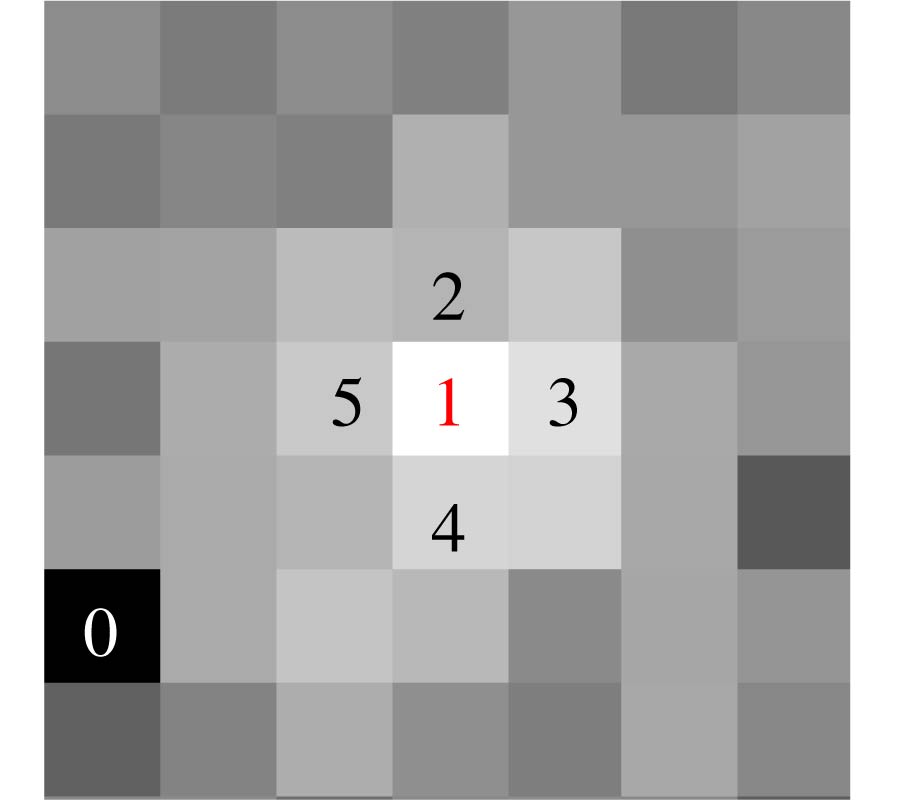
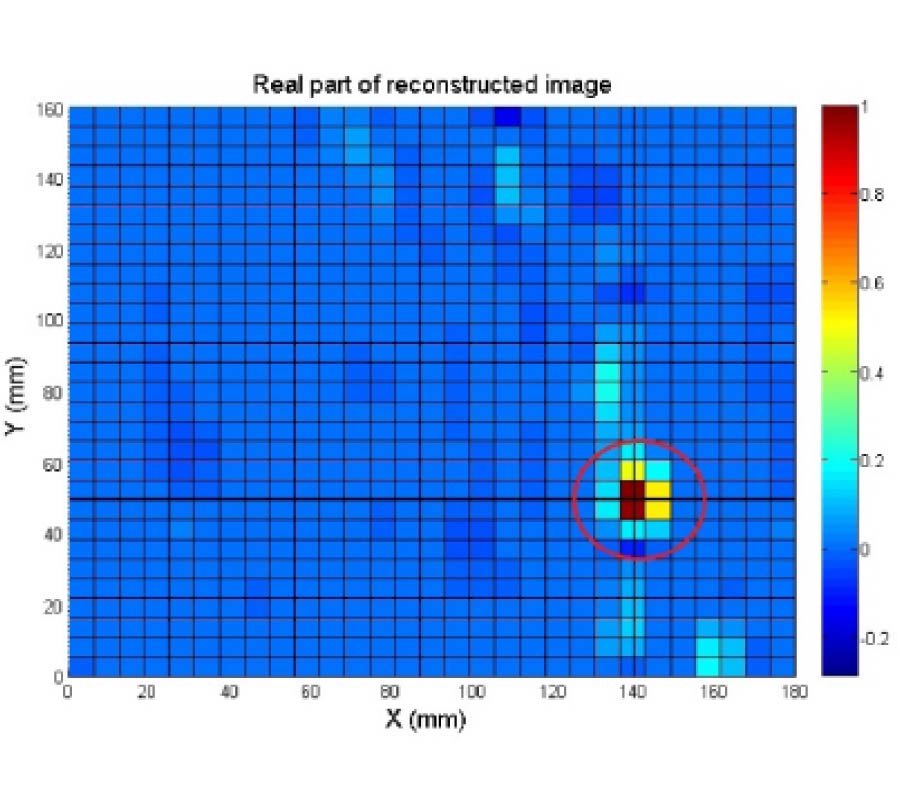
We propose a technique for enhancing the angular resolution of a flat-base Luneburg lens antenna to enable it to detect multiple targets with arbitrary scattering cross-sections that are located in angular proximity. The technique involves measuring the electric field distribution on the flat plane of the Luneburg lens antenna, operating in the receive mode, at a specified number of positions, and correlating these distributions with the known distributions derived from the field distributions in the measurement plane generated by single target at different look angles. We show that the proposed approach can achieve enhanced resolution than the basis of the beam-width of the Luneburg lens antenna, and it is capable of distinguishing between two targets with different scattering cross-sections that have an angular separation as small as 1˚ for a Luneburg lens with 6.35λ aperture size, for Signal-to-Noise Ratio (SNR) better than 20 dB.
ENHANCEMENT OF ANGULAR RESOLUTION OF A FLAT-BASE LUNEBURG LENS ANTENNA BY USING CORRELATION METHOD
2014-08-11
PIER C
Vol. 52, 153-162
New UWB Monopole Planer Antenna with Dual Band Notched
Mojtaba Mighani and Mohammad Akbari
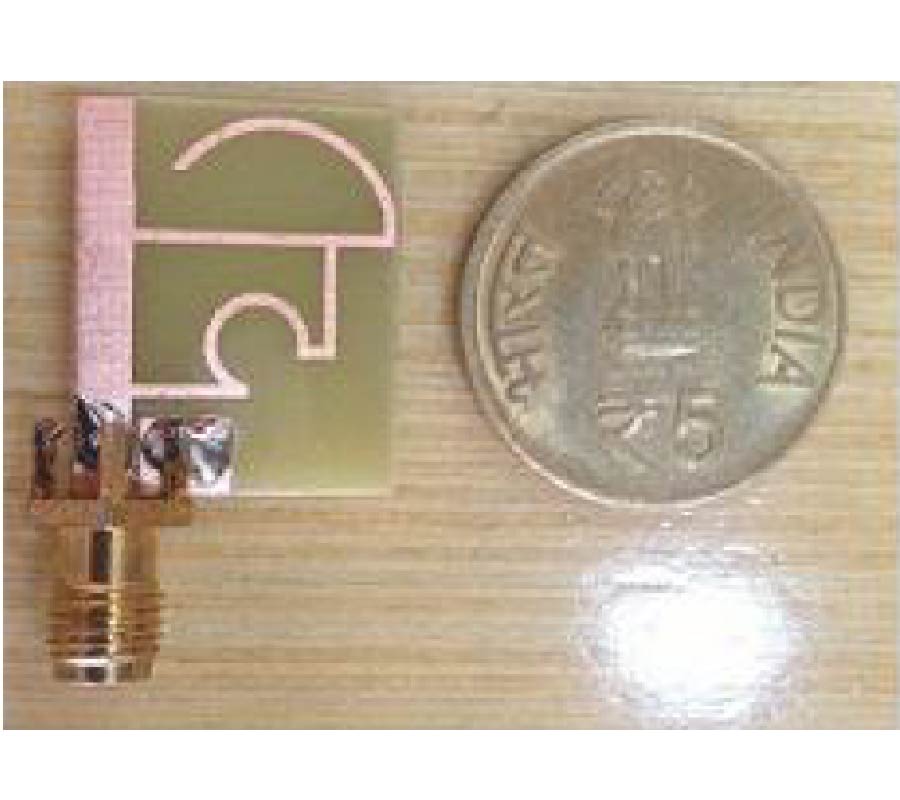
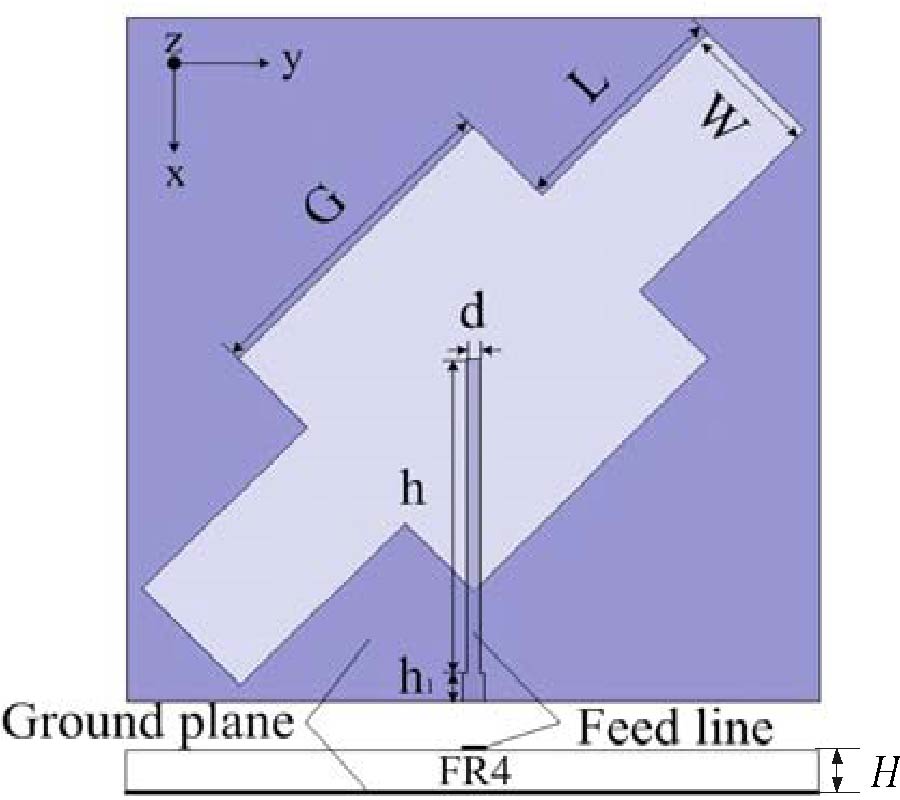
A new compact antenna with the capability of covering Ultra Wide Band (UWB) Communication is presented. The size of the antenna is 22×24 mm2. Moreover, the proposed antenna has been successfully fabricated and measured, showing broadband matched impedance (~149%, 2.1 up to more than 14.3 GHz, VSWR ≤ 2). Also the antenna has dual band rejected characteristic on WLAN and WiMAX bands. Frequency and time domain performances of the antenna such as fidelity factor are examined at the end of the paper.
NEW UWB MONOPOLE PLANER ANTENNA WITH DUAL BAND NOTCHED
2014-08-11
PIER Letters
Vol. 48, 15-19
Dual-Band MIMO Antenna with High Isolation Application by Using Neutralizing Line
Jie-Huang Huang , Wen-Jiun Chang and Christina F. Jou
In this letter, a dual-band Multiple Input Multiple Output (MIMO) antenna system with high isolation is presented. This design consists of two dual-band monopole antennas and neutralizing transmission line. For each antenna element, the operating frequency band covers from 2.4 GHz to 2.6 GHz and 5.2 GHz to 6 GHz. To improve the isolation between these two antenna elements spacing only 0.1225 λ0 at 2.45 GHz, a neutralization decoupling transmission line is introduced. The measured return loss results of these two antennas are better than 10-dB in operating frequency band. The measured isolation between the two antennas is better than 15 dB. The envelope correlation coefficient (ECC) is smaller than 0.01 of whole operating frequency band. The peak gain of this design is better than 2 dBi in operating bands. This configuration can be applied for Wireless local area network (WLAN) and Bluetooth (BT) communication system.
DUAL-BAND MIMO ANTENNA WITH HIGH ISOLATION APPLICATION BY USING NEUTRALIZING LINE
2014-08-10
PIER B
Vol. 60, 241-258
Test Dipole Selection for Linear Sampling in Transverse Electric Case
Krishna Agarwal
This paper discusses the problem of choosing an appropriate direction of the test dipole used in linear sampling for the 2-dimensional inverse scattering problem of the transverse electric case. In particular, we propose two approaches, one purely mathematical and the other based on the physics theory of multipole expansion of the scattered magnetic field. It is shown that though the approaches are drawn from different perspectives, they perform similarly and show reasonable reconstruction for several interesting and difficult to reconstruct dielectric scatterers.
TEST DIPOLE SELECTION FOR LINEAR SAMPLING IN TRANSVERSE ELECTRIC CASE
2014-08-10
PIER B
Vol. 60, 227-239
Efficient Isolation Between Electrically Small Metamaterial-Inspired Monopole Antennas
Nektarios K. Bourgis and Traianos V. Yioultsis
In this paper, a new electrically small metamaterial-inspired monopole antenna is presented. The antenna consists of a simple square-shaped coplanar waveguide (CPW-fed) monopole with an embedded complementary split ring resonator (CSRR). It operates at three distinct frequency ranges with central frequencies around 2.45, 4.2, and 5.8 GHz, exhibiting low return loss and uniform radiation patterns, making it a perfect candidate for modern wireless applications. Furthermore, using this antenna as a primary unit to construct two different 2×2 MIMO system configurations, we achieve systematic minimization of mutual coupling between the radiation elements around 2.45 GHz, using additional single negative (SNG) metamaterial inspired resonators. Mutual coupling is reduced by as much as 27 dB at the aforementioned frequency. The simulated and measured results of all the fabricated antennas are in good agreement.
EFFICIENT ISOLATION BETWEEN ELECTRICALLY SMALL METAMATERIAL-INSPIRED MONOPOLE ANTENNAS
2014-08-10
PIER M
Vol. 38, 15-24
Orbital Angular Momentum Density of a Hollow Vortex Gaussian Beam
Yimin Zhou and Guoquan Zhou
Here the hollow vortex Gaussian beam is described by the exact solution of the Maxwell equations. By means of the method of the vectorial angular spectrum, analytical expressions of the electromagnetic fields of a hollow vortex Gaussian beam propagating in free space are derived. By using the electromagnetic fields of a hollow vortex Gaussian beam beyond the paraxial approximation, one can calculate the orbital angular momentum density distribution of a hollow vortex Gaussian beam in free space. The overall transverse components of the orbital angular momentum of a hollow vortex Gaussian beam are equal to zero. Therefore, the influences of the topological charge, beam order, Gaussian waist size, and linearly polarized angle on the distribution of longitudinal component of the orbital angular momentum density of a hollow vortex Gaussian beam are numerically demonstrated in the reference plane. The outcome is useful to optical trapping, optical guiding, and optical manipulation using the hollow vortex Gaussian beams.
ORBITAL ANGULAR MOMENTUM DENSITY OF A HOLLOW VORTEX GAUSSIAN BEAM
2014-08-08
PIER C
Vol. 52, 145-152
Proposing a Criss-Cross Metamaterial Structure for Improvement of Performance Parameters of Microstrip Antennas
Kirti Inamdar , Yogesh Pasad Kosta and Suprava Patnaik
In this paper, we present the design of a metamaterial based microstrip patch antenna, optimized for bandwidth and multiple frequency operations. A Criss-Cross structure has been proposed. This shape is inspired by the famous Jerusalem Cross. The theory and design formulas to calculate various parameters of the proposed antenna have been presented. The software analysis of the proposed unit cell structure has been validated experimentally thus giving negative response of ε and μ. Following this, a metamaterial-based-microstrip-patch-antenna is designed. A detailed comparative study is conducted exploring the response of the designed patch made of metamaterial and that of the conventional patch. Finally, antenna parameters such as gain, bandwidth, radiation pattern and multiple frequency responses are investigated and optimised and presented in tables and response-graphs. It is also observed that the physical dimension of the metamaterial based patch antenna is smaller than its conventional counterpart operating at the same fundamental frequency. The response of the patch antenna has also been verified experimentally. The challenging part was to develop metamaterial based on some signature structures and techniques that would offer advantage in terms of bandwidth and multiple frequency operation, which is demonstrated in this paper. The unique shape proposed in this paper gives improvement in bandwidth without reducing the gain of the antenna.
PROPOSING A CRISS-CROSS METAMATERIAL STRUCTURE FOR IMPROVEMENT OF PERFORMANCE PARAMETERS OF MICROSTRIP ANTENNAS
2014-08-08
PIER Letters
Vol. 48, 7-13
Tailoring the Properties of Photonic Nanojets by Changing the Material and Geometry of the Concentrator
Abdul Khaleque and Ziyuan Li
Some microobjects can concentrate an incoming incident plane wave and create the socalled photonic nanojets. These highly focused emerging beams have a high intensity and can be used in applications such as microscopy, beam manipulation and imaging. In this article, it is shown that an adequate choice of geometric shape and material can lead to an improvement of the electric field enhancement capability of nanojets by a factor of 40%.
TAILORING THE PROPERTIES OF PHOTONIC NANOJETS BY CHANGING THE MATERIAL AND GEOMETRY OF THE CONCENTRATOR
2014-08-08
PIER Letters
Vol. 47, 131-137
Low Profile Dual-Polarized Circular Patch Antenna with an AMC Reflector
Jian Ren , Bo Wang and Ying-Zeng Yin
A coax-feed low profile dual-polarized circular patch antenna with ±45˚ polarization is presented. The antenna consists of a dual-polarized circular patch excited by two coax-lines and an AMC reflector. By using the AMC reflector as the ground plane of the patch antenna, the profile of the antenna is reduced to λ/8 of the operation frequency, which is much lower than that of the conventional dual-polarized patch antenna. The experimental results show that the proposed design obtains a wide bandwidth (2.12-2.77 GHz) and a high isolation (>35 dB) over the entire band. In addition, the front-back radio of the antenna is improved significantly by using the AMC reflector. The wide bandwidth, low-profile and high front-to-back ratio make the antenna a good candidate as a base station antenna for WLAN, WiMAX and LTE applications.
LOW PROFILE DUAL-POLARIZED CIRCULAR PATCH ANTENNA WITH AN AMC REFLECTOR
2014-08-08
PIER Letters
Vol. 47, 125-129
A Dual Beam Scanning Microstrip Antenna
Jie-Huang Huang and Christina F. Jou
A dual-beam frequency scann ing microstrip antenna is proposed in this letter. The wellknown characteristic of the conventional leaky wave antenna is the beam scanning with operating frequency variation. Here, four slots are applied on the ground plane of the conventional leaky wave antenna structure to obtain the dual-beam frequency scanning characteristic. According the results, it shows that this work with relatively simple structure radiating not only in upper half-plane, but also in lower half-plane. The upper half-plane main lobe scans from 356˚ (-4˚) to 24˚ (scanning region is 28˚). Meanwhile, the lower half-plane main lobe scans form 190˚ (-170˚) to 161˚ (scanning region is 29˚). The 7-dB return loss bandwidth is 600 MHz from 3.4 GHz to 4 GHz. In addition, the measured average antenna gain is about 5.3 dBi in the operating frequency.
A DUAL BEAM SCANNING MICROSTRIP ANTENNA
2014-08-08
PIER
Vol. 148, 171-182
A General Solution to Wireless Power Transfer Between Two Circular Loop
Ada S. Y. Poon
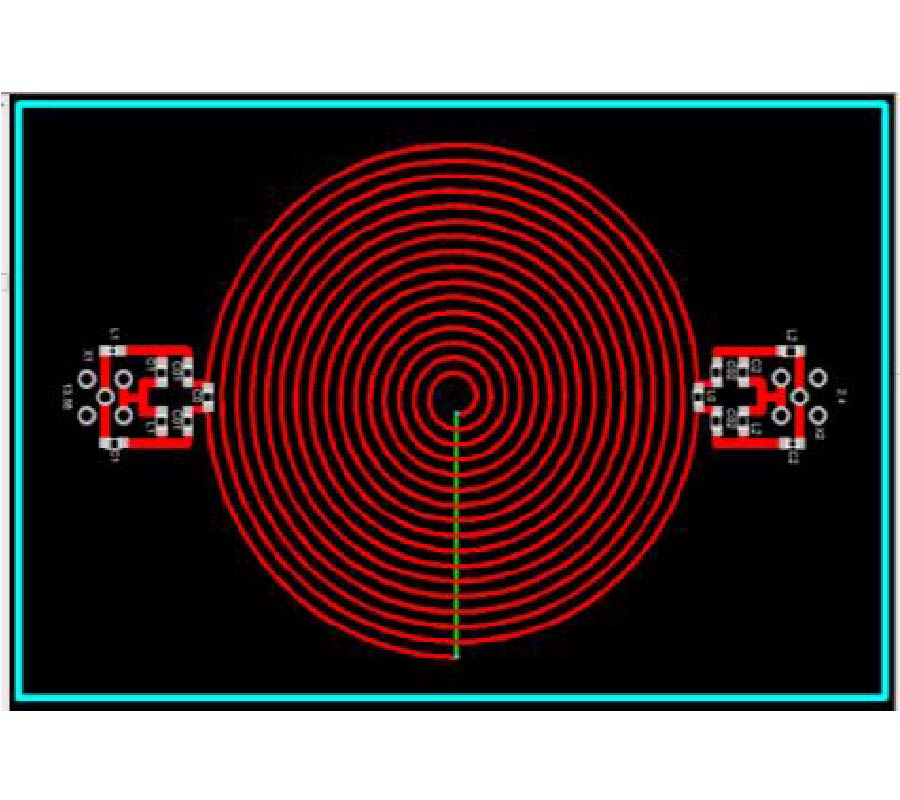
Wireless power transmision has been analytically studied in near-field coupling systems based on the small-antenna and near-field approximations, and in microwave power beaming systems based on the far-field approximation. This paper attempts to provide a general solution based on full-wave analysis to wireless power transmission between two circular loops. The solution applies to arbitrary transmit and receive loop radii, transmission range, orientation and alignment of the loops, and dielectric properties in a homogeneous isotropic medium. The power link is modeled as a two-port network and the efficiency based on simultaneous conjugate matching is used as the performance metric. The self and mutual admittances are analytically solved by expressing the current on the loops in Fourier series and the fields in vector spherical wave functions, and by the use of vector addition theorem to relate the coupling between the loops. The general solution is then applied to draw new insights such as the optimal carrier frequency between symmetric loops and impact of higher order modes on the power transfer efficiency between asymmetric loops.
A GENERAL SOLUTION TO WIRELESS POWER TRANSFER BETWEEN TWO CIRCULAR LOOP
2014-08-08
PIER
Vol. 148, 159-170
Mixed Finite Element Method for 2D Vector Maxwell's Eigenvalue Problem in Anisotropic Media
Wei Jiang , Na Liu , Yifa Tang and Qing Huo Liu
It is well known tha the conventional edge element method in solving vector Maxwell's eigenvalue problem will lead to the presence of nonphysical zero eigenvalues. This paper uses the mixed finite element method to suppress the presence of these nonphysical zero eigenvalues for 2D vector Maxwell's eigenvalue problem in anisotropic media. We introduce a Lagrangian multiplier to deal with the constraint of divergence-free condition. Our method is based on employing the first-order edge element basis functions to expand the electric field and linear nodal element basis functions to expand the Lagrangian multiplier. Our numerical experiments show that this method can successfully remove all nonphysical zero and nonzero eigenvalues. We verify that when the cavity has a connected perfect electric boundary, then there is no physical zero eigenvalue. Otherwise, the number of physical zero eigenvalues is one less than the number of disconnected perfect electric boundaries.
MIXED FINITE ELEMENT METHOD FOR 2D VECTOR MAXWELL'S EIGENVALUE PROBLEM IN ANISOTROPIC MEDIA
2014-08-07
PIER Letters
Vol. 48, 1-6
The Electromagnetic Properties of the Generalized Cantor Stack in Spherical Multilayered Systems
Gennadiy Burlak , Maricruz Najera Villeda and Rene Santaolaya Salgado
By the transfer matrix approach we numerically study the electromagnetic properties (narrow peak positions) of the transmission spectra for microspheres coated by a multilayered stack with the generalized Cantor structure (fractal). As opposed to the standard Cantor system with removed γ/3 [γ=1] section we consider here the solid stack with Si/SiO2 layers at general γ value. In such a solid composition the SiO2 layers replace the empty Cantor sections and the parameter γ acquires meaning of a specific control parameter. At successive generations the central layers (in blocks of the spherical stack) acquire a progressive decreased width that leads to generation of the radially inhomogeneous defects. We show that the wave phase interference in such a fractal pattern leads to formation of very narrow electromagnetic transmittance resonances that can be used in modern optoelectronics.
THE ELECTROMAGNETIC PROPERTIES OF THE GENERALIZED CANTOR STACK IN SPHERICAL MULTILAYERED SYSTEMS
2014-08-07
PIER Letters
Vol. 47, 119-124
A Reflectarray Based on the Folded SIR Patch-Slot Configuration Backed on FSS for Low RCS
Mohammad Mehdi Fakharian , Pejman Rezaei and Ali A. Orouji
In this letter, a reflectarray antenna based on the folded stepped impedance resonator (SIR) patch-slot configuration with variable size is presented. A novel frequency selective surface (FSS) in the reflectarray as a ground plane for reducing radar cross section (RCS) level is applied. The FSS is based on the folded SIR configuration. Two prime-focus 15 × 15 reflectarray antennas backed on the folded SIR FSS ground and a conventional ground are designed and manufactured. The radiation performance of a reflectarray element backed either by a solid ground plane or a band-stop FSS structure is compared. The measured results demonstrate that the radiation pattern and gain of the FSS-backed reflectarray are almost same to its counterpart backed by a conventional ground plane at the operating band of 11.5 GHz. The RCS is effectively reduced in the out of this band when compared with the reflectarray with a solid metal ground plane of the same dimension.
A REFLECTARRAY BASED ON THE FOLDED SIR PATCH-SLOT CONFIGURATION BACKED ON FSS FOR LOW RCS
2014-08-07
PIER
Vol. 148, 151-158
Energy Transfer for Implantable Electronics in the Electromagnetic Midfield (Invited Paper)
John S. Ho and Ada S. Y. Poon
The wireless transfer of electromagnetic energy into the human body could power medical devices and enable new ways to treat various disorders. To control energy transfer, metal structures are used to generate and manipulate radio-frequency electromagnetic fields. Most systems for transfer across the biological tissue operate in the quasi-static limit, but operation beyond this regime could afford new powering capabilities. This review discusses some recent developments in the design and implementation of systems operating in the electromagnetic midfield, where transfer exploits wave-like fields in the body.
ENERGY TRANSFER FOR IMPLANTABLE ELECTRONICS IN THE ELECTROMAGNETIC MIDFIELD (Invited Paper)
2014-08-06
PIER Letters
Vol. 47, 111-117
A Novel Compact Wideband Bandpass Filter Using Rotational Symmetric Loaded Structure
Kai Wang , Yuan-Yuan Li and Sai Wai Wong
A novel compact wideband b andpass filter using rotational symmetric loaded structure is proposed in this paper. A λ/4 parallel coupled line is first introduced to form a passband with desired center frequency. The rotational symmetric structure with short/open circuit stubs is then introduced as a loading structure to improve the filter's performance. The rotational symmetric loading structure is discussed in detail in this paper, and a pair of transmission zeros is obtained and located at two sides of the passband to improve the passband selectivity intensively. Moreover, three open circuit stubs are utilized to replace one single stub for obtaining a wide stopband. At last, the proposed filter is fabricated and measured, and the results show a good agreement with each other.
A NOVEL COMPACT WIDEBAND BANDPASS FILTER USING ROTATIONAL SYMMETRIC LOADED STRUCTURE
2014-08-06
PIER M
Vol. 38, 1-13
Improvement of Iterative Physical Optics Using the Physical Optics Shadow Radiation
Antoine Thomet , Gildas Kubicke , Christophe Bourlier and Philippe Pouliguen
The prediction of Radar Cross Section (RCS) of complex targets which present shadowing effects is an interesting challenge. This paper deals with the problem of shadowing effects in the computation of electromagnetic scattering by a complex target using Iterative Physical Optics (IPO). The original IPO is limited to cavities applications, but a generalized IPO can be applied to arbitrary geometries. This paper proposes a comparison between the classical PO approach and a physical approach based on shadow radiation (around forward direction) with PO approximation for the consideration of shadowing effects in generalized IPO. Based on the integral equations, a rigorous demonstration of this physical shadowing is provided. Then simulation results illustrate the interest of using physical shadowing both from the transmitter and towards the receiver, compared to the classical approach.
IMPROVEMENT OF ITERATIVE PHYSICAL OPTICS USING THE PHYSICAL OPTICS SHADOW RADIATION
2014-08-05
PIER Letters
Vol. 47, 103-109
Design of Compact Asymmetric Coplanar Strip-Fed UWB Antenna with Dual Band-Notched Characteristics
Long Chen , Yuan-Fu Liu and Pu-Chao Wu
In this paper, a new design of asymmetric coplanar strip (ACS)-fed UWB planar monopole antenna with dual band-notched characteristics is presented and investigated. The proposed antenna is composed of an asymmetric ground plane, a semi-circular radiator, together with two open-ended half wavelength bow-shaped slots etched on the radiation patch. This leads to the desired dual notched bands of 3.12-3.69 GHz for WiMAX and 5.51-6.01 GHz for WLAN. Experimental results show that the designed antenna, with compact size of 29.5×12 mm2, has stable and omnidirectional radiation pattern, sharp reduction in gain and group delay at notched frequencies. The very simple feeding structure and compact uniplanar design make it easy to be integrated within the portable device for UWB communication systems.
DESIGN OF COMPACT ASYMMETRIC COPLANAR STRIP-FED UWB ANTENNA WITH DUAL BAND-NOTCHED CHARACTERISTICS
2014-08-04
PIER B
Vol. 60, 215-225
Design and Analysis of a Compact Triple Band Slotted Microstrip Antenna with Modified Ground Plane for Wireless Communication Applications
Sudipta Das , Partha Pratim Sarkar and Santosh Kumar Chowdhury
A novel single layer, coaxial probe feed compact triple band slotted microstrip patch antenna with modified ground plane for wireless application has been designed and analyzed. The presented antenna, occupying a compact size of 24×22×1.6 mm3, embodies a rectangular slotted patch and a rectangular ground plane modified with open ended step graded slots. The step graded slots are introduced on the ground plane to reduce the size of the antenna by reducing the resonant frequency and also to improve the operating bandwidth of the proposed antenna. The size of the antenna has been reduced by 74% by introducing slots on the ground plane. The measured bandwidths for -10 dB reflection coefficient are 360 MHz (1.72-2.08 GHz) at lower band, 300 MHz (3.36-3.66 GHz) at middle band and 3650 MHz (4.85-8.5 GHz) at upper band which cover the bandwidth requirements of 1.92 GHz PCS, 1.9 GHz PHS, 3.5/5.5 GHz WiMAX, 5.2/5.8 GHz WLAN, 5.2 GHz HisWaNa, 5.5 GHz Wi-Fi 802.11n and 5 GHz HiPERLAN wireless application bands.
DESIGN AND ANALYSIS OF A COMPACT TRIPLE BAND SLOTTED MICROSTRIP ANTENNA WITH MODIFIED GROUND PLANE FOR WIRELESS COMMUNICATION APPLICATIONS
2014-08-04
PIER C
Vol. 52, 135-144
Q-Band Single-Layer Planar Fabry-Perot Cavity Antenna with Single Integrated-Feed
Seyed Ali Hosseini , Filippo Capolino and Franco De Flaviis
An extremely simple design of a planar Fabry-Pérot cavity antenna is proposed as a very promising candidate for millimeter-wave wireless systems. The simplicity of this design is obtained by using a dielectric slab, here quartz, to form a single-layer cavity with thin layers of copper etched/printed on both sides, to form the ground plane on one side and the frequency-selective surface (FSS) on the opposite side of the slab. By keeping the planarity of the structure and not-requiring an additional supporting layer, the cavity is excited using an integrated feeding-slot antenna etched on its ground plane. The variations in the radiation properties of the proposed antenna, linked to its leaky-wave behavioral explanation, are studied by designing three prototypes with different maximum gain values. The prototype FPCs are designed to operate for Q-band wireless communication systems (here, resonating at three different frequencies in the range of 42-46 GHz). The performance of the designed antennas, backed by initial analytical and numerical simulations, is verified with a full set of measurement results.
Q-BAND SINGLE-LAYER PLANAR FABRY-PEROT CAVITY ANTENNA WITH SINGLE INTEGRATED-FEED