Search Results(13983)

2014-10-19
PIER C
Vol. 54, 125-131
Millimeter-Wave Offset Fresnel Zone Plate Lenses Characterization
German Leon Fernandez , Luis F. Herran , Max O. Munoz , Fernando Las-Heras and Yang Hao
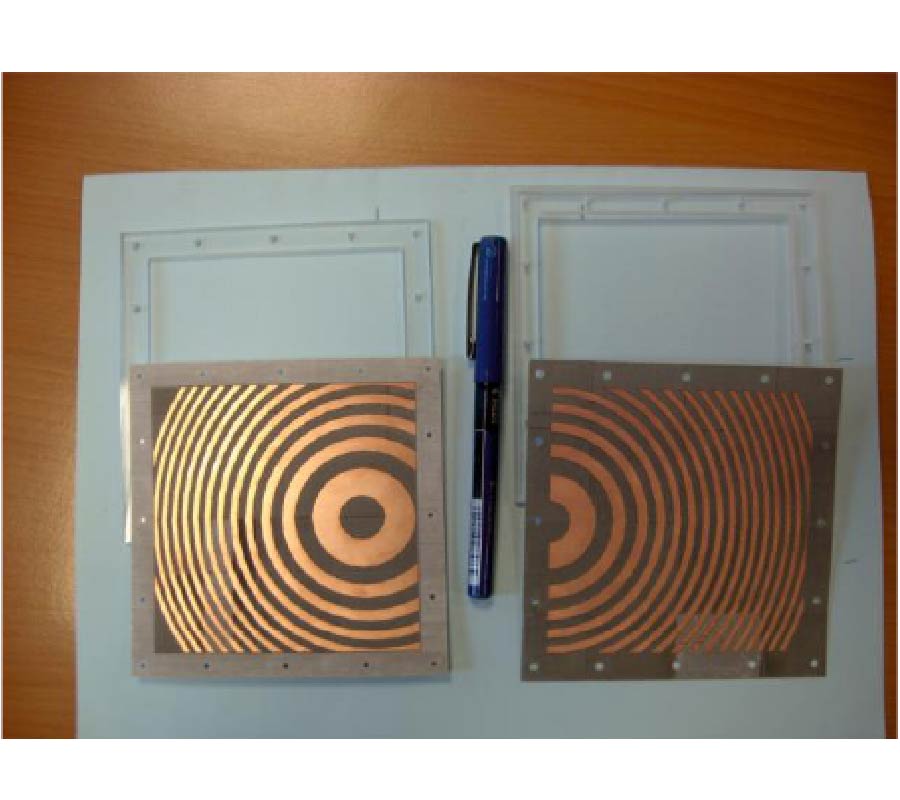
Fresnel Zone Plate Lenses (FZPLs) are transparent-opaque lenses that filter the desirable phase. The centred Fresnel lenses have a strong back radiation towards the feed. In order to solve this drawback, offset feeding or offset pointing lenses are used. In this work, both offset FZPLs are studied using an optical physics method and experimentally characterized in the millimeter band. Two prototypes have been manufactured and measured, presenting a narrow beamwidth. The characteristics of pointing of this beam are studied depending on the feed gain. This work shows the pointing characteristics of the lenses, simply moving the lens in a plane.
MILLIMETER-WAVE OFFSET FRESNEL ZONE PLATE LENSES CHARACTERIZATION
2014-10-19
PIER C
Vol. 54, 85-94
A Push-Push Oscillator Array Using Resonator Type Coupling Circuits
Takayuki Tanaka , Kengo Kawasaki , Masayoshi Aikawa and Ichihiko Toyoda
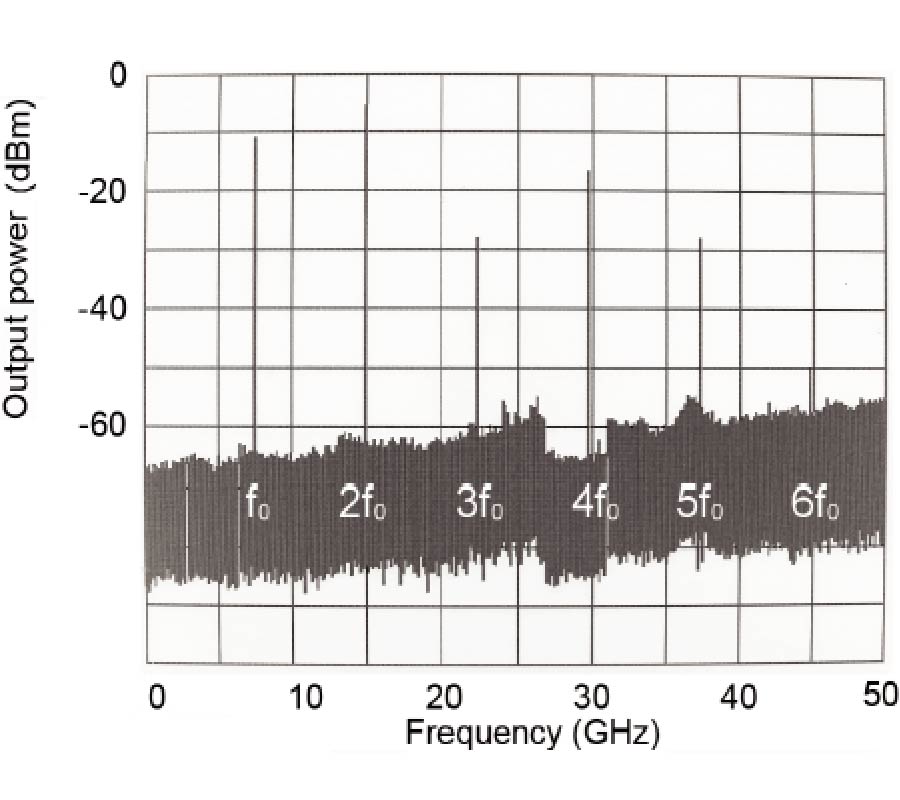
A coupled oscillator array using push-push oscillators and resonator type coupling circuits is presented. In the proposed oscillator array, the coupling circuit operates at the fundamental frequency and the output signal is the 2nd harmonics. The adjacent oscillators are connected via the coupling circuits. The coupling circuit is used to synchronize the oscillators and control the phase difference of the output signals. In this study, a three elements push-push oscillator array has been designed in Ku band. The measured phase shift between the output signals of the adjacent oscillators is 511 degrees at the maximum.
A PUSH-PUSH OSCILLATOR ARRAY USING RESONATOR TYPE COUPLING CIRCUITS
2014-10-17
PIER Letters
Vol. 49, 99-104
A Varactor-Tuned Bandpass Filter Using Open Split-Ring Resonators
Cheng Liu , Xin Huai Wang , Yangbing Xu and Xiao-Wei Shi
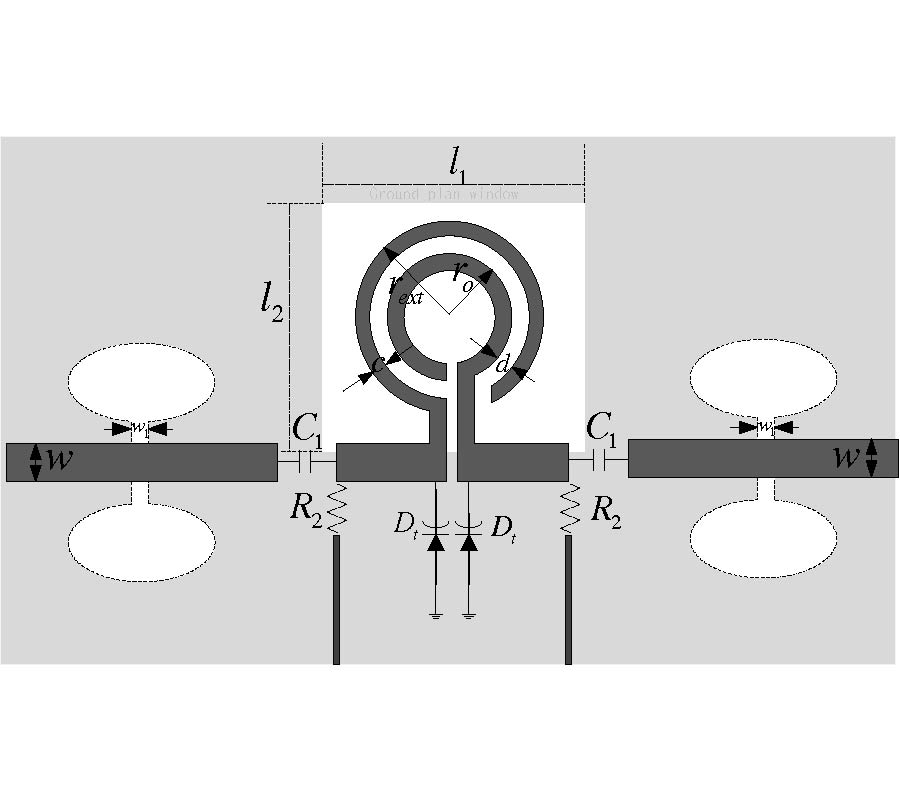
This paper presents a compact tunable bandpass filter that is based on open split ring resonator to achieve high out-of-band rejection. Exact equations and design procedures are given based on strict theoretical analysis. By loading the varactor diodes, the center frequency and bandwidth of the bandpass filter could realize reconfigurable. Then defected ground structure was adopted in the input and output ports for the sake of high out-of-band rejection. In order to verify the result of theoretical analysis, a compact tunable bandpass filter with defected ground structure, whose range of frequency was 1.61 GHz~1.82 GHz and range of relative bandwidth was 8.3%~24.8%, had been simulated and fabricated. Good agreement between the measured data and the anticipated results is achieved.
A VARACTOR-TUNED BANDPASS FILTER USING OPEN SPLIT-RING RESONATORS
2014-10-17
PIER M
Vol. 39, 107-114
The Extended Gauge Transformations
Arbab Ibrahim Arbab
In this work, new ``extended gauge transformations'' involving current and fields are presented. The transformation of Maxwell's equations under these gauges leads to a massive boson field (photon) that is equivalent to Proca field. The charge conservation equation and Proca equations are invariant under the new extended gauge transformations. Maxwell's equations formulated with Lorenz gauge condition violated give rise to massive vector boson. The inclusion of London supercurrent in Maxwell's equations yields a massive scalar boson satisfying Klein-Gordon equation. It is found that in superconductivity Lorenz gauge condition is violated, and consequently massive spin-0 bosons are created. However, the charge conservation is restored when the total current and charge densities are considered.
2014-10-17
PIER M
Vol. 39, 93-106
Transient Analysis of a Rectangular Cavity Containing an Interior Scatterer Using TD-EFIE with Weighted Laguerre Polynomials as Temporal Basis Functions
Dorsaf Omri and Taoufik Aguili
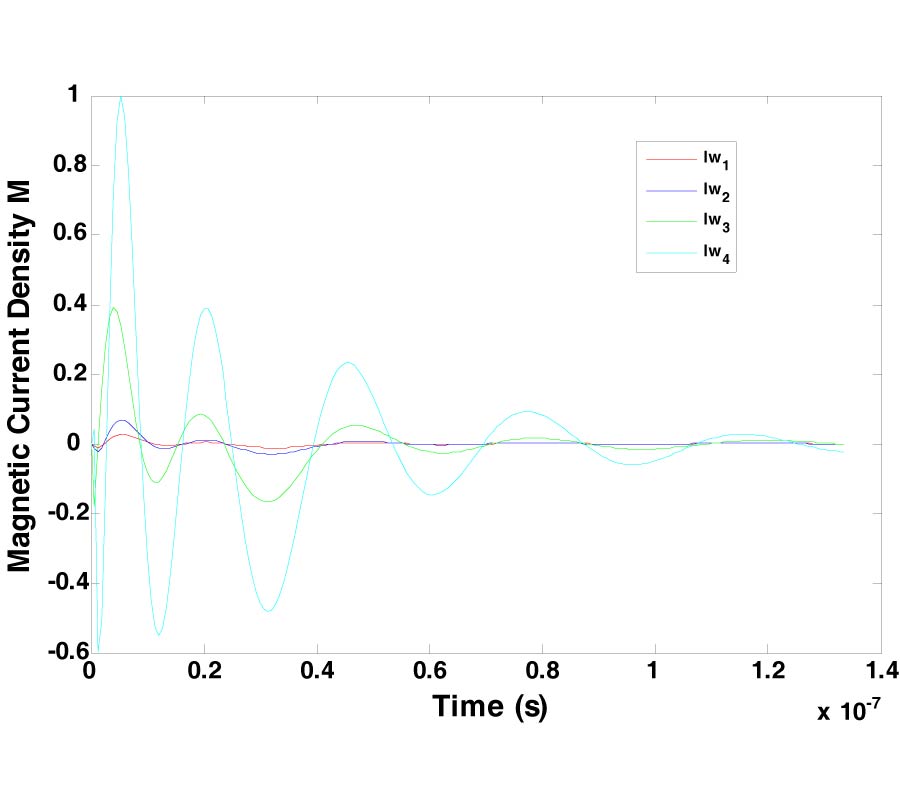
Novel 2-D Time Domain Electric Field Integral Equations (TD-EFIE) are established in order to predict transient response of a wire enclosed within a rectangular cavity. The wire and cavity are excited by an external incident transient electromagnetic wave through a slot in the cavity wall. The formulation of the TD-EFIE is based on equivalence principle and boundary conditions taking account the effect of reflection from cavity walls. The equations are efficiently solved by Method of Moments. The transient unknown coefficients of the electric current at the wire and magnetic current at the slot are approximated using a set of orthonormal temporal basis functions derived from Laguerre Polynomials. The analysis demonstration is presented to prove that the novel TD-EFIE combined to MoM is able to solve this critical problem. No late-time instability is encountered.
TRANSIENT ANALYSIS OF A RECTANGULAR CAVITY CONTAINING AN INTERIOR SCATTERER USING TD-EFIE WITH WEIGHTED LAGUERRE POLYNOMIALS AS TEMPORAL BASIS FUNCTIONS
2014-10-16
PIER C
Vol. 54, 75-84
A T-Section Dual-Band Matching Network for Frequency-Dependent Complex Loads Incorporating Coupled Line with DC-Block Property Suitable for Dual-Band Transistor Amplifiers
Mohammad A. Maktoomi , Mohammad S. Hashmi and Fadhel M. Ghannouchi
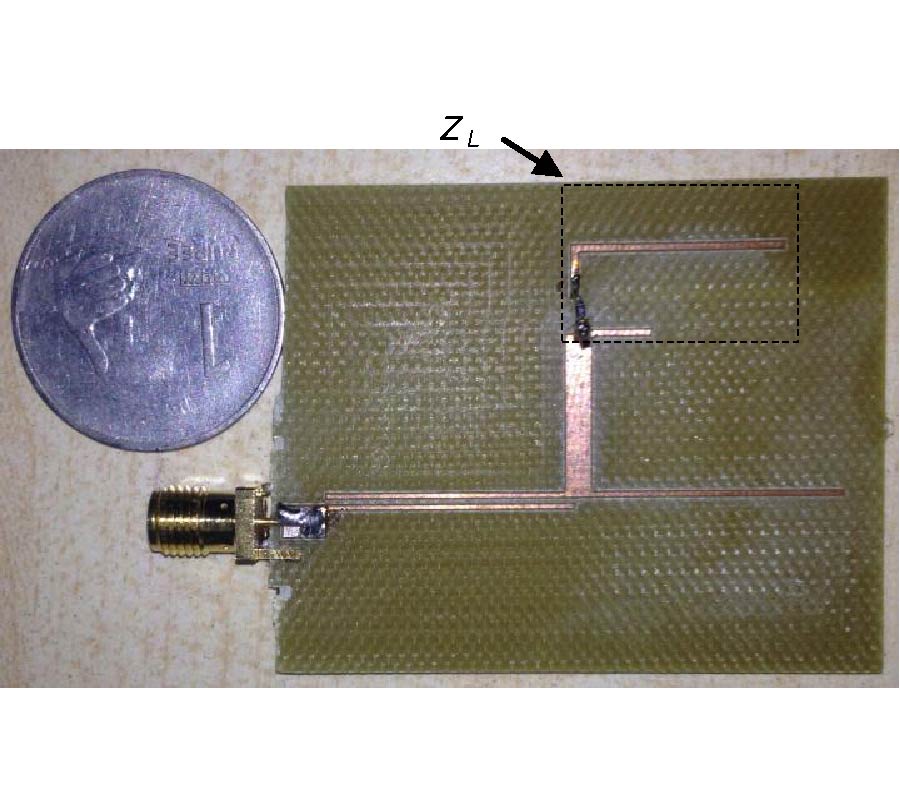
This paper reports design of a new dual-band T-type impedance transformer also exhibiting DC-blocking feature. The design aims at achieving matching for frequency-dependent complex loads having distinct values at two arbitrary frequencies to Zs (here, 50 Ω). A step-wise analysis on the developed dual-band impedance transformer provides simple closed-form design equations. The design is verified by extensive simulation in Agilent ADS. For experimental verification a PCB prototype is fabricated using FR-4 material, operating at 1.45 GHz and 2.61 GHz. A good result is obtained confirming the theory and simulation.
A T-SECTION DUAL-BAND MATCHING NETWORK FOR FREQUENCY-DEPENDENT COMPLEX LOADS INCORPORATING COUPLED LINE WITH DC-BLOCK PROPERTY SUITABLE FOR DUAL-BAND TRANSISTOR AMPLIFIERS
2014-10-15
PIER C
Vol. 54, 67-74
Two-Dimensional DOA Estimation Using a Co-Prime Symmetric Cross Array
Sheng Liu , Li Sheng Yang , De Cheng Wu and Jian Hua Huang
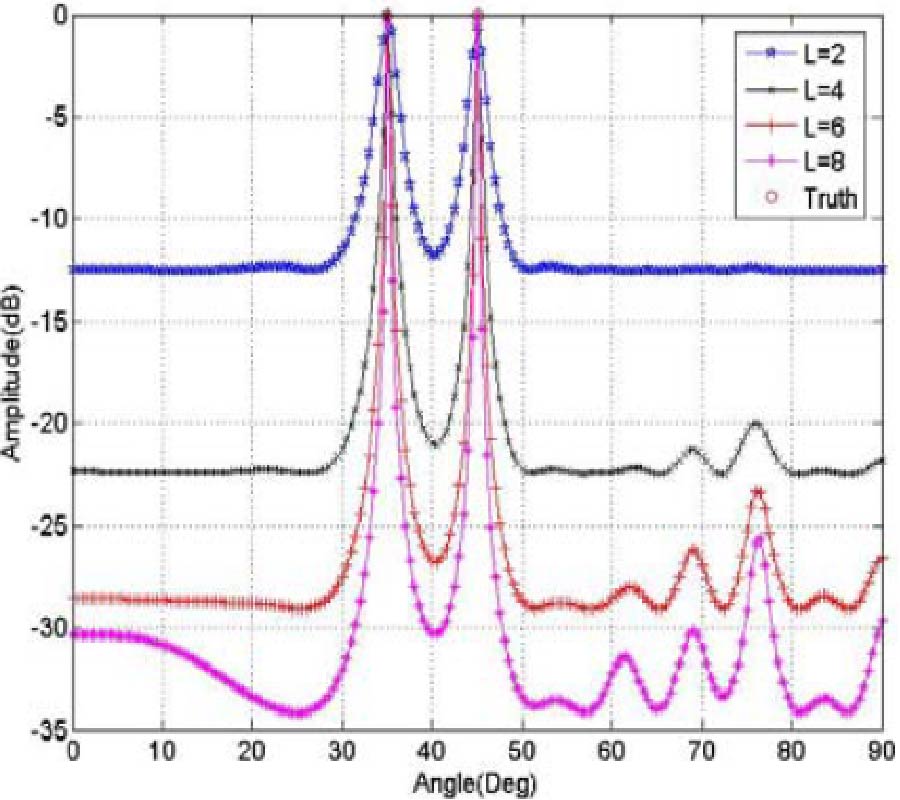
In this paper, a co-prime symmetric sparse cross array is employed to estimate two-dimensional (2-D) direction-of-arrival (DOA). Some special forth-order-cumulants (FOCs) of array received data are used to construct a high-order matrix that is equivalent to a cross-covariance matrix based on two uniform linear arrays. After some modifications, an existing 2-D DOA estimation algorithm becomes more effective, and it shows further improved performance when the co-prime symmetric cross array is utilized. Numerical simulations demonstrate the effectiveness of our methods.
TWO-DIMENSIONAL DOA ESTIMATION USING A CO-PRIME SYMMETRIC CROSS ARRAY
2014-10-15
PIER M
Vol. 39, 85-92
Study on Available Condition of Static Circuit Parameters Applied to Predict the Transmission Characteristics of Step Microstrip Line
Ruigang Fu , Hui Zhang , Zengrui Li , Qing-Xin Guo , Jun-Hong Wang , Xueqin Zhang and Yaoqing Lamar Yang
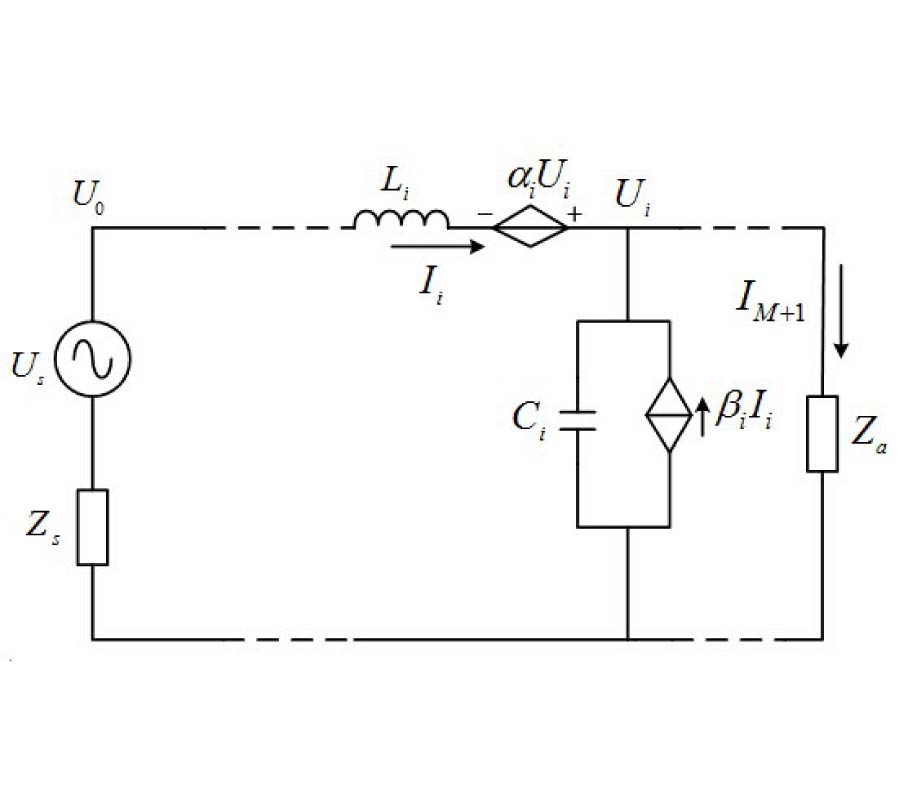
The static circuit parameters extracted from the field results of non-uniform microstrip line provides an efficient way to predict dynamic effect of non-uniform structure. The predictable frequency range of the static circuit parameters on prediction of the transmission characteristics of step microstrip line is researched in this paper. The circuit parameters are extracted from the full wave results of step line, respectively, at three frequencies (9 GHz, 15 GHz and 20 GHz). On one hand, the time domain transmission characteristics of step line can be solved from the equivalent circuit constructed by these extracted circuit parameters. On the other hand, the frequency domain S-parameter can be derived by the static distributed characteristic impedance. By comparing these time and frequency domain results obtained from the static circuit parameters with those obtained directly from the full wave method, the available condition of the static circuit parameters of the step microstrip line can be analyzed. This comparison shows that the static circuit parameters can be used in frequency bands from DC up to 20 GHz. To verify the accuracy of the static parameters used to predict the transmission characteristics of step line, the measured S11 is also given for comparison with static circuit parameters measurements.
STUDY ON AVAILABLE CONDITION OF STATIC CIRCUIT PARAMETERS APPLIED TO PREDICT THE TRANSMISSION CHARACTERISTICS OF STEP MICROSTRIP LINE
2014-10-15
PIER
Vol. 149, 173-182
A Third Way to Cloak an Object: Cover-Up with a Background Object (Invited Paper)
Fei Sun and Sailing He
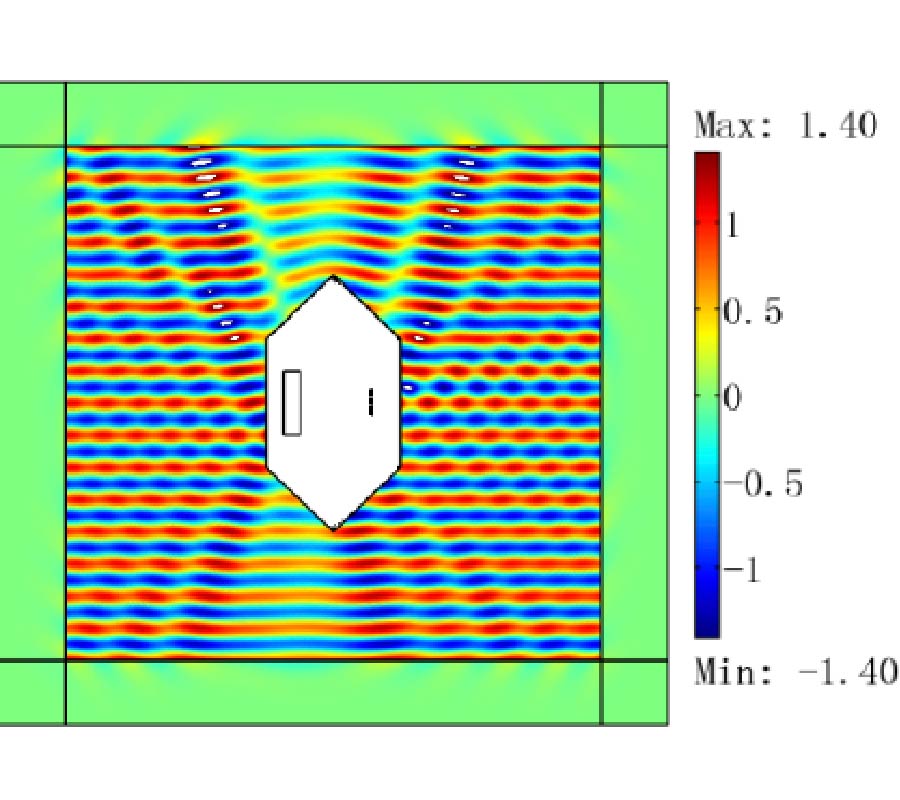
Based on a space folding transformation, we propose a new way to hide an object in full space,namely, to cover-up the scattering of the hidden object with the scattering of a background object so that only the scattering of the background object can be detected by an outside observer and the hidden object disappears electromagnetically (a very weak ``ghost image'' or perturbation may appear inside the strong background object image in an experiment). The present method is essentially different from previous methods of cloaking an object. This work furthers efforts to achieve invisibility and conceal an object in a real environment in full space.
A THIRD WAY TO CLOAK AN OBJECT: COVER-UP WITH A BACKGROUND OBJECT (Invited Paper)
2014-10-14
PIER
Vol. 149, 161-171
Breast Imaging Using Microwave Tomography with Radar-Based Tissue-Regions Estimation
Anastasia Baran , Douglas J. Kurrant , Amer Zakaria , Elise C. Fear and Joe LoVetri
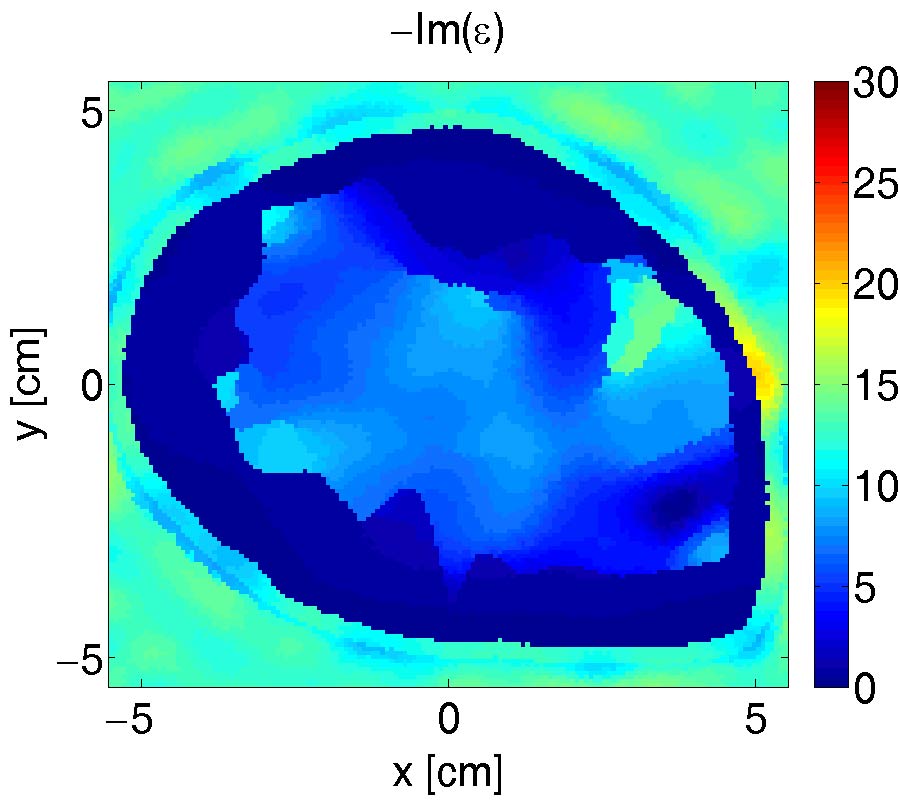
Microwave tomography (MWT) and a radar-based region estimation technique are combined to create a novel algorithm for biomedical imaging with a focus on breast cancer detection and monitoring. The region estimation approach is used to generate a patient-specific spatial map of the breast anatomy that includes skin, adipose and fibroglandular regions, as well as their average dielectric properties. This map is incorporated as a numerical inhomogeneous background into an MWT algorithm based on the finite element contrast source inversion (FEM-CSI) method. The combined approach reconstructs finer structural details of the breast and better estimates the dielectric properties than either technique used separately. Numerical results obtained with the novel combined algorithmic approach, based on synthetically generated breast phantoms, show significant improvement in image quality.
BREAST IMAGING USING MICROWAVE TOMOGRAPHY WITH RADAR-BASED TISSUE-REGIONS ESTIMATION
2014-10-14
PIER
Vol. 149, 147-160
A Design of Multiband, Dual-Polarization, Beam-Switchable Dual-Antenna for Indoor Base Stations
Viet-Anh Nguyen , Rao Shahid Aziz , Seong-Ook Park and Giwan Yoon
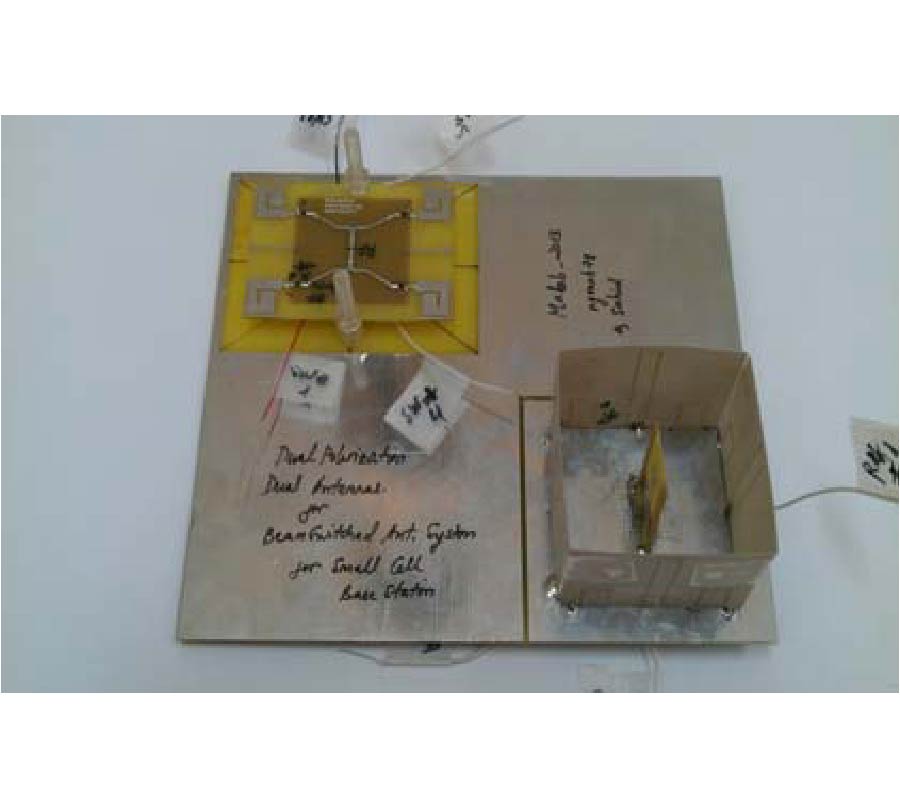
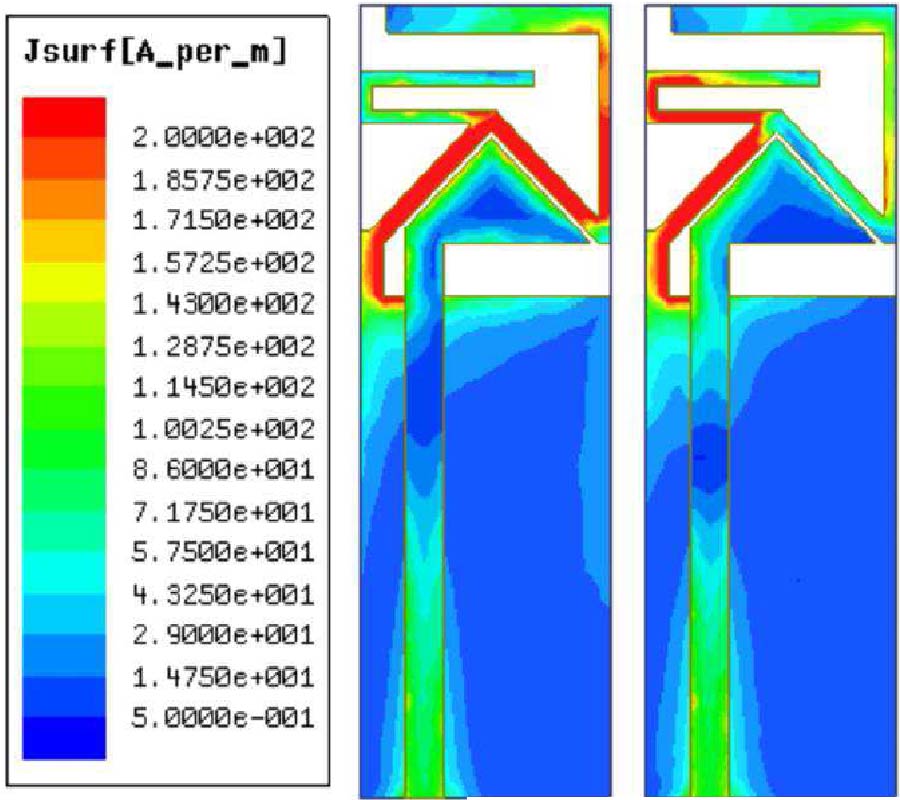
A novel multiband, dual-polarization, beam-switched dual-antenna design, covering some LTE and WLAN bands, has been proposed for indoor base stations. The proposed design consists mainly of dual modified monopole antennas. The horizontal antenna consists of four printed monopole elements, and the control circuit using p-i-n diodes has been implemented for feeding to each monopole element. The vertical monopole antenna beam patterns are controlled by reconfigurable frequency selective reflectors (RFSR) technique. The p-i-n diodes have been utilized for switching mechanism to feed the four RFSR. The measured and simulated results indicate that the antenna system possesses multiband and dual polarization. It has been observed from the simulated and measured reflection coefficients |S11| that the presented dual antenna system supports both LTE (1.7-2.1 GHz) and WLAN (2.5 GHz and 5.8 GHz) band frequencies. Moreover, the radiation characteristics show dual-polarization behaviors of the presented antenna system and beam switching states suitable for small cell indoor-base stations.
A DESIGN OF MULTIBAND, DUAL-POLARIZATION, BEAM-SWITCHABLE DUAL-ANTENNA FOR INDOOR BASE STATIONS
2014-10-13
PIER C
Vol. 54, 57-66
A Wideband and High Gain Dual-Polarzied Antenna Design by a Frequency-Selective Surface for WLAN Application
Hua Zhu , Yang Yu , Xiuping Li and Bo Ai
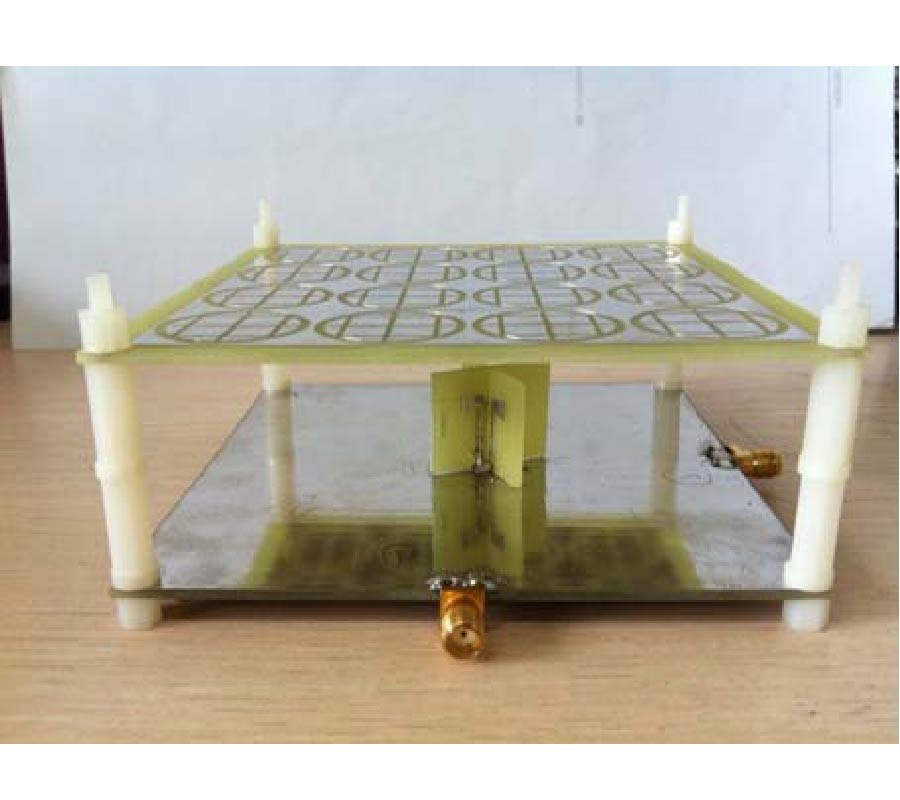
A new dual-polarized antenna loading frequency-selective surface (FSS) is proposed for 5G wireless local networks (WLANs) application. The antenna consists of two orthogonal bow-tie dipoles and a ground plane. A new wideband FSS is designed comprising ring-slot connecting rectangular slots. The reflection coefficient of wideband FSS is less than 0.9 from 4-6.5 GHz. The phase of reflection coefficient is -163°at 5.5 GHz. The novel cell analyzed by the equivalent circuit is given and simulated. The wideband FSS is employed as a superstrate layer for bandwidth enhancement and radiation gain improvement of the antenna. After loading wideband FSS, the measured bandwidth is 5.3-6.3 GHz (17.2%) with S11 and S22 both less than -10 dB, which cover various 5G WLAN bandwidths. The gain of the antenna is 12.1 dBi at 5.5 GHz. The bandwidth of antenna with FSS increases 40%, and gain improves 5.6 dBi. The simulated and measured results agree well.
A WIDEBAND AND HIGH GAIN DUAL-POLARZIED ANTENNA DESIGN BY A FREQUENCY-SELECTIVE SURFACE FOR WLAN APPLICATION
2014-10-13
PIER Letters
Vol. 49, 91-97
A Compact Dual-Band Printed Monopole Antenna for WiMAX /WLAN Applications
Hui-Fen Huang and Yuanhua Hu
A compact printed dual-band antenna for WiMAX/WLAN applications is proposed in this paper. The dual-band monopole antenna consists of a triangular patch and two folding arms shorted to the ground plane. The proposed antenna features a low profile and compact dimension. To avoid via process in the fabrication, the triangular patch. The two folding arms are separately constructed on the two sides of a FR4 substrate. By employing this structure, five different resonances can be yielded. The triangular patch provides two resonant modes (4.62 GHz and 7.05 GHz), two folding arms produces three resonances at 2.43 GHz, 3.43 GHz, and 6.59 GHz. A prototype of the dual-band antenna is experimentally fabricated and tested. The measured results shows good impedance bandwidth and radiation pattern.
A COMPACT DUAL-BAND PRINTED MONOPOLE ANTENNA FOR WIMAX/WLAN APPLICATIONS
2014-10-13
PIER M
Vol. 39, 77-84
An Accurately Scalable Small-Signal Model for Millimeter-Wave Hemts Based on Electromagnetic Simulation
Weibo Wang , Zhi-Gong Wang , Xu Ming Yu , Bin Zhang and Feng Qian
By using some special passive structures and correction of boundary conditions, a novel method to improve the electromagnetic (EM) simulation accuracy is proposed. With this method, the substrate parameters, such as thickness, loss, dielectric constant, loss tangent, sheet resistance, square capacitance and conductivity of the metal, can be described more accurately, and a lot of high frequency effects caused by skin effects, parasitic effects, coupling between micro-strip lines and fluctuation from the sheet resistance, etc. can also be simulated more precisely. Then an accurately scalable small-signal model for millimeter-wave HEMTs is proposed and presented. Combined with distributed modeling, pulsed IV and S parameter measurements, this model can be made scalable freely. The measurements agree with simulated results very well, which also proves that this method applied to the scalable small-signal models has a good consistency and accuracy.
AN ACCURATELY SCALABLE SMALL-SIGNAL MODEL FOR MILLIMETER-WAVE HEMTS BASED ON ELECTROMAGNETIC SIMULATION
2014-10-13
PIER
Vol. 149, 133-145
A Satellite Multiple-Beam Antenna for High-Rate Data Relays
Lukasz A. Greda , Andreas Winterstein , Achim Dreher , Sascha A. Figur , Bernhard Schonlinner , Volker Ziegler , Marco Haubold and Martin W. Brueck
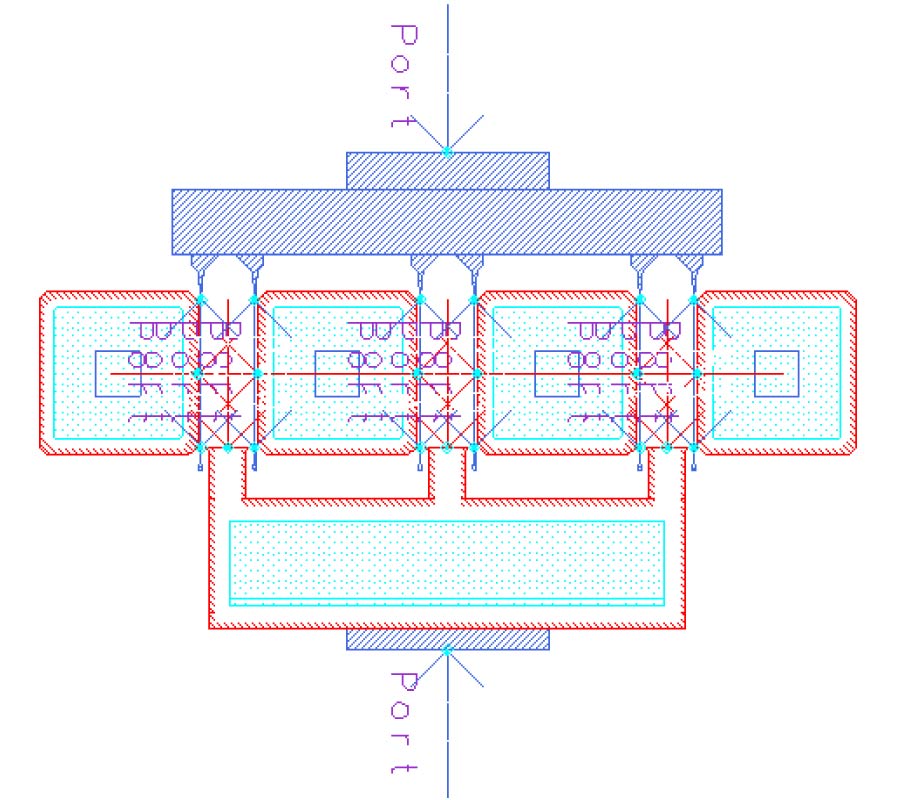
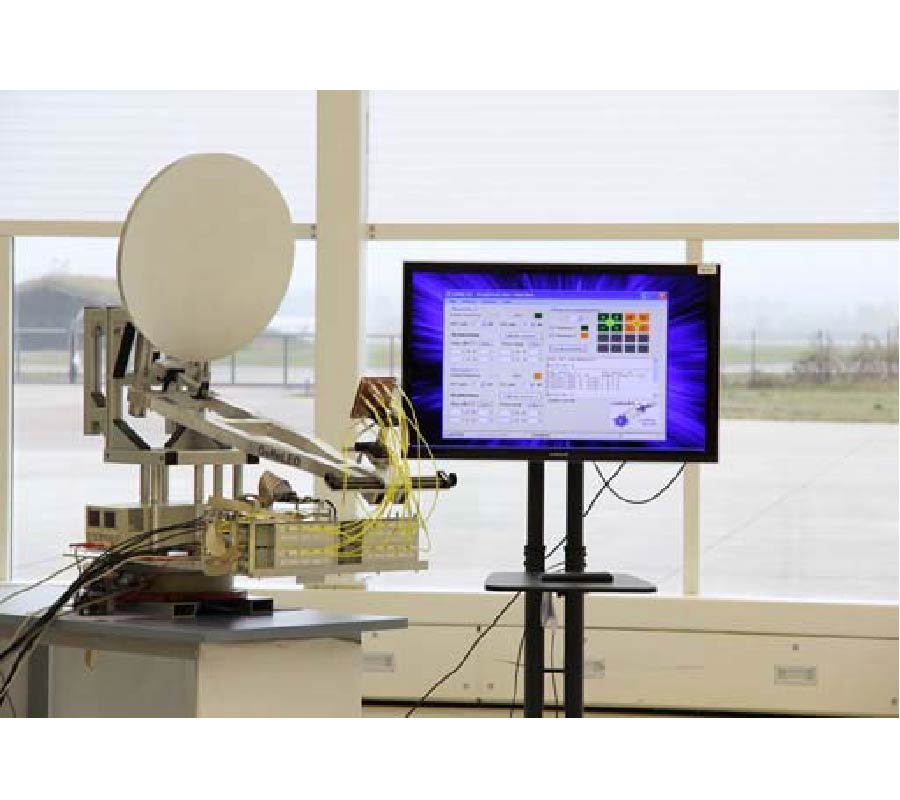
This paper describes the concept and the development of key components of a novel multiple-beam antenna for satellite applications. The antenna is designed to be used in a transparent high-rate data relay system that links several low earth orbit (LEO) satellites to a single ground station via a satellite positioned on a geostationary orbit (GEO). The proposed antenna is based on the concept of an array-fed reflector. The antenna can track LEO satellites by switching between different subarrays of a bigger multifeed array using a reconfigurable switch matrix based on radio frequency micro-electro-mechanical system (RF MEMS) switches. The radiation characteristic of the antenna is further improved by combining digital beamforming with beam switching. In order to validate the proposed antenna concept and to show its suitability for space applications a demonstrator has been built. Measurements of the antenna's key components and of the demonstration system are given.
A SATELLITE MULTIPLE-BEAM ANTENNA FOR HIGH-RATE DATA RELAYS
2014-10-09
PIER C
Vol. 54, 49-56
Simulation and Implementation of a New X-Band 1:4 Power Divider/Combiner Based on a New Waveguide h -Plane Folded Magic-T
Alaa Aldin Sarhan , Seyed Hosein Mohseni Armaki , Homayoon Oraizi , Nader Ghadimi and Majid Tayarani
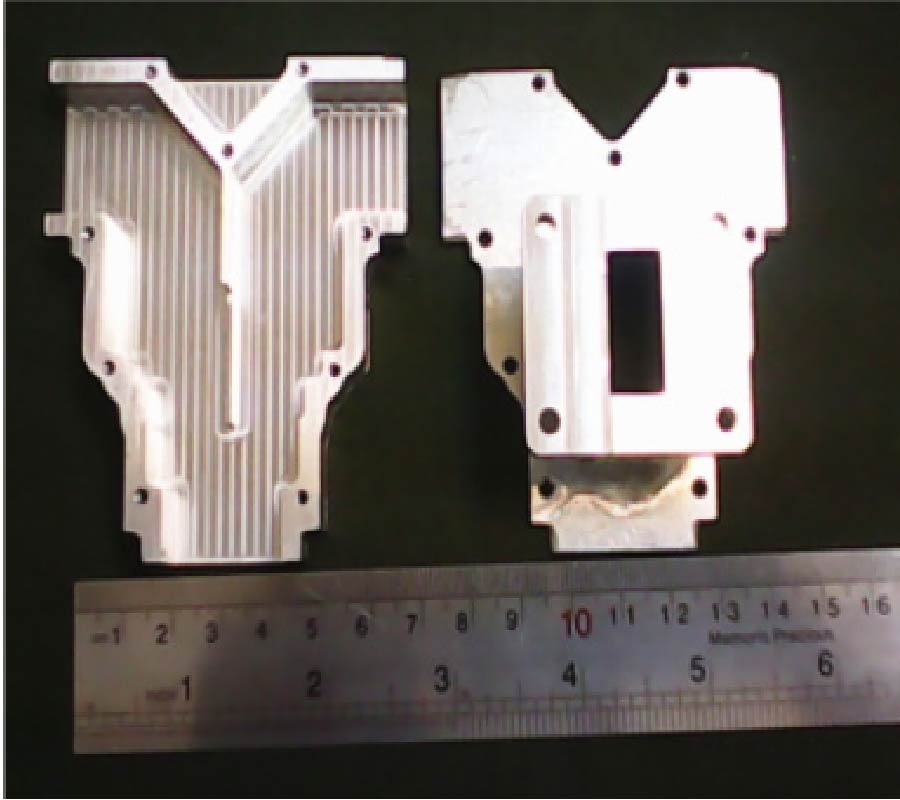
This paper presents the simulation and fabrication of a new power divider/combiner based on a new waveguide H-plane folded magic-T structure. Measurements of the fabricated magic-T confirm the accuracy of the optimization algorithms existing in the CST software (Genetic algorithm, Particle Swarm Optimization algorithm PSO, etc.). The magic-T structure exhibits moderate bandwidth response in the frequency range of 8-10 GHz. Also, it shows that the return loss is better than -15 dB, the insertion loss about -3.4 dB, and the isolation between the two output ports better than -25 dB in the frequency range of 8.4-10 GHz, with good transmission phase characteristics. Based on this magic-T structure, a 1:4 power divider/combiner is simulated and tested. The measured results show that the insertion loss is about -6.5±0.25 dB, the return loss less than -15 dB, the isolation among the output ports less than -25 dB, the combining efficiency about 89%, and the transmission phase differences are about ±2° in the frequency range of 8-10 GHz.
SIMULATION AND IMPLEMENTATION OF A NEW X-BAND 1:4 POWER DIVIDER/COMBINER BASED ON A NEW WAVEGUIDE <I>H</I>-PLANE FOLDED MAGIC-T
2014-10-06
PIER C
Vol. 54, 41-48
MIMO Capacity Comparisons of Three Types of Colocated Dual-Polarized Loop Antennas
Dazhi Piao and Lingyu Yang
The 2 × 2 multiple-input-multiple-output (MIMO) capacities of three types of colocated dual-polarized loop (DPL) antennas with different current distributions and isolations are investigated in the free space (FS) channel, the corridor with perfect electric conductor walls (PEC corridor) and the corridor with concrete walls (CON corridor), separately. Capacity results show strong dependences on both the structure and the position of the DPL antenna, in addition to the propagation conditions. For all the three propagation scenarios, the largest capacity can be reached is in the PEC corridor, employing the DPL antenna with a uniform current distribution and a high isolation. Specifically, for a 20 dB signal-to-noise ratio (SNR), the maximum dual-polarized MIMO capacity is 13.1 bps/Hz, which is 1.97 time of that obtained by the one-polarized loop. It is also noted that, the rich-multipath environment can increase the robustness of the DPL MIMO system and the difference of the MIMO capacity obtained by different antenna structures will get smaller with respect to that in the FS channel.
MIMO CAPACITY COMPARISONS OF THREE TYPES OF COLOCATED DUAL-POLARIZED LOOP ANTENNAS
2014-10-06
PIER Letters
Vol. 49, 87-90
A Dictionary-Based Image Fusion for Integration of SAR and Optical Images
Meng Yang and Gong Zhang
In this letter, a new image fusion methodology for integration of SAR and optical images using combined dictionary is proposed. The approach taken is based on sparse and redundant representations by employing a combined dictionary consisting of wavelets, shearlets and discrete cosine transform (DCT). Wavelets and shearlets provide pointlike and curvelike structures for the optical image, and DCT are taken as obtaining the best performance on SAR image. The experimental results demonstrate feasibility and effectiveness of the method.
A DICTIONARY-BASED IMAGE FUSION FOR INTEGRATION OF SAR AND OPTICAL IMAGES
2014-10-06
PIER Letters
Vol. 49, 79-85
Wideband Balun Bandpass Filter Based on a Balanced Circuit
Lishang Yang and Wenjie Feng
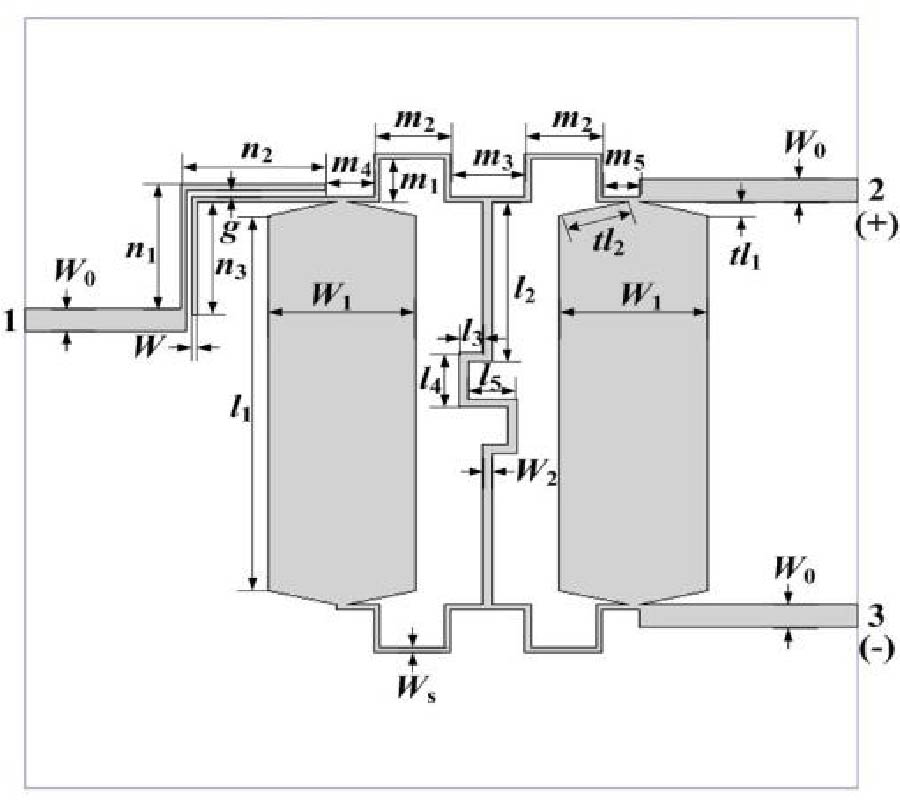
A novel wideband balun filter based on a symmetric four-port balanced circuit is proposed in this paper. A pair of open coupled lines is used to realize DC suppression and in-band balance improvement for the balun bandpass filter. The bandwidth can be easily adjusted by changing the characteristic impedance of transmission lines in the balanced circuit. For the proposed balun bandpass filter, excellent in-band balance performance (amplitude and phase imbalance are less than 0.25 dB and 1.3˚ respectively) over the passband are achieved. A wideband balun bandpass filter prototype with center frequency 3.75 GHz and 3-dB bandwidth 33.8% is designed and fabricated. Good agreement can be observed between the measured results and theoretical expectations.
WIDEBAND BALUN BANDPASS FILTER BASED ON A BALANCED CIRCUIT
2014-10-06
PIER M
Vol. 39, 65-75
Triple Band Circular Ring-Shaped Metamaterial Absorber for X-Band Applications
Osman Ayop , Mohamad Kamal Abd Rahim , Noor Asniza Murad , Noor Asmawati Binti Samsuri and Raimi Dewan
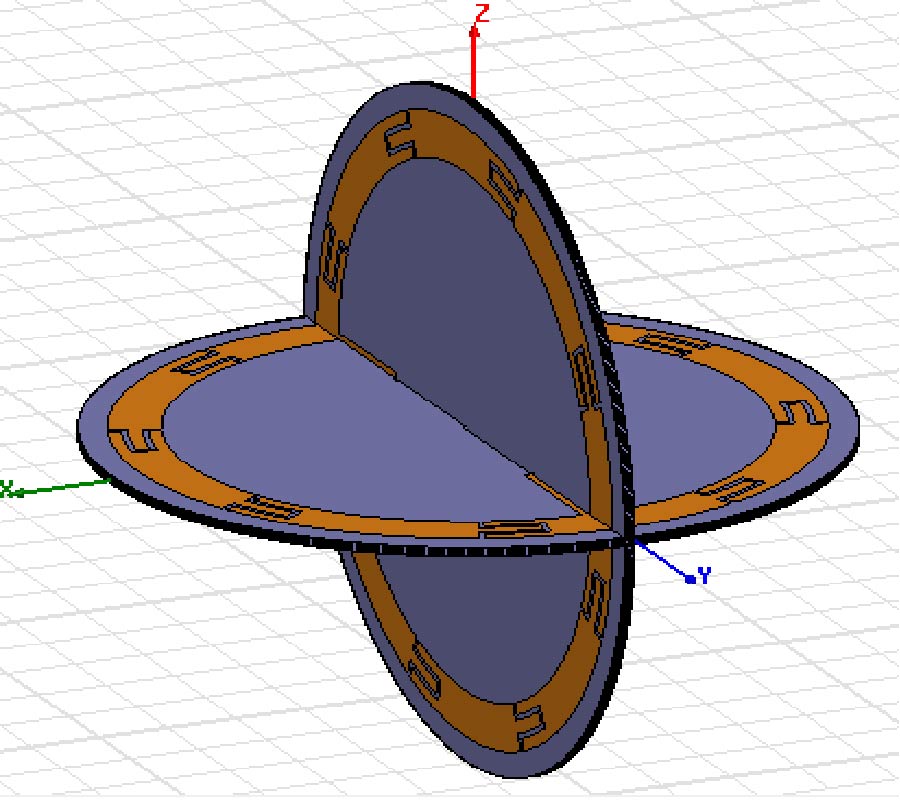
This paper presents the design, fabrication, and measurement of triple band metamaterial absorber at 8 GHz, 10 GHz and 12 GHz which are in the X-band frequency range. The unit cell of the metamaterial consists of three concentric copper rings at different radii, printed on 0.8 mm thick FR4 substrate in order to obtain triple resonant frequencies. The highly symmetrical ring structure in nature makes this absorber insensitive to any polarization state of incident electromagnetic (EM) waves for normal incident waves. The proposed structure is capable to operate at wide variations angle of incident wave. The simulated result shows that the triple-band metamaterial absorber achieves high absorbance for normal incident electromagnetic waves of 97.33%, 91.84% and 90.08% at 8 GHz, 10 GHz and 12 GHz respectively, when subjected to normal incident electromagnetic. With metamaterial absorber maintaining 50% of absorbance value, the corresponding full width half maximum (FWHM) are 5.61%, 2.90% and 2.33%. The operating angles in which the metamaterial structure can maintain 50% absorbance at TE mode and TM mode are 670 and 640 respectively. The experimental result verifies that the absorber is well performed at three different resonant frequencies with absorbance greater than 80%.
TRIPLE BAND CIRCULAR RING-SHAPED METAMATERIAL ABSORBER FOR X-BAND APPLICATIONS