Search Results(13798)

2014-06-16
PIER Letters
Vol. 47, 19-24
Electromagnetically Induced Absorption in Metamaterials in the Infrared Frequency
Sharhabeel Alyones
In this paper, the author studies, through numerical simulation, the classical analog of the electromagnetically induced absorption/reflection (EIA) in a planar metamaterial structure in the near infrared spectral region. The structure is designed by transforming an electromagnetically induced transparency (EIT) structure into an EIA structure using Babinet's principle. The structure exhibits a coupling between a bright mode (a complementary ring resonator (CRR)) and a dark mode (pair of parallel straight slits) imprinted on a glass substrate. A narrow absorption window, induced in a wide transparent window, is achieved by the structure and the strength of coupling is tuned by the degree of breaking symmetry and relative displacement of the two mode elements.
ELECTROMAGNETICALLY INDUCED ABSORPTION IN METAMATERIALS IN THE INFRARED FREQUENCY
2014-06-16
PIER M
Vol. 37, 41-50
Magnitude Constraint Minimum Variance Beamformer with Conjugate Symmetric Constraint and Norm Constraint
Lulu Zhao , Guang Liang and Huijie Liu
In this paper, an improved robust minimum variance beamformer against direction of arrival (DOA) mismatch and finite sample effect is proposed. Multiple inequality magnitude constraints are imposed to broaden the main lobe of beampattern. The conjugate symmetric structure of the optimal weight is utilized to transform the non-convex inequality magnitude constraints into convex ones. A quadratic constraint on the norm of weight is introducing to make further improvement on robustness against DOA mismatch and finite sample effect. The proposed beamforming problem can be reformulated in the form of the second order cone programming and solved efficiently by interior point method. Simulation results show that the proposed beamformer outperforms several other adaptive beamformers.
MAGNITUDE CONSTRAINT MINIMUM VARIANCE BEAMFORMER WITH CONJUGATE SYMMETRIC CONSTRAINT AND NORM CONSTRAINT
2014-06-16
PIER M
Vol. 37, 31-40
Analytical Prediction of Cogging Torque for Interior Permanent Magnet Synchronous Machines
Hooshang Mirahki and Mehdi Moallem
In this paper, a combination of Lumped-Parameters Model, Quasi-Poisson's equations and Conformal Mapping methods is used for predicting radial and tangential air gap flux density of Interior Permanent Magnet Synchronous Machine for calculation of cogging torque. In the proposed method, Lumped Parameters Model is used for calculation of saturation and flux leakage. Quasi-Poisson's equation is used for forming radial and tangential flux density in slotless stator, and finally Conformal Mapping is used to account for slot effects. Using the results of this method, cogging torque waveform can be calculated using Maxwell stress tensor and virtual work methods. To validate the method, results are compared with Finite Element Method results for a candidate Interior Permanent Magnet Synchronous Machine.
ANALYTICAL PREDICTION OF COGGING TORQUE FOR INTERIOR PERMANENT MAGNET SYNCHRONOUS MACHINES
2014-06-15
PIER B
Vol. 60, 95-110
Analytical Derivation of Induction Motors Inductances Under Eccentricity Conditions
Hossein Hooshmandi Safa , Mohammad Ebrahimi , Ali Davoudi and Alireza Pouramin
Geometrical modeling of induction machines under eccentricity conditions involves a significant number of self and mutual inductances. These inductances are functions of rotor angular position, and calculating them at each time step requires solving computationally-intensive definite integrals. Conventional techniques use numerical look-up tables, or employ approximated analytical expressions such as limited-term Fourier series expression of turn functions. The former approach needs large memory volume given the size of inductance matrix. Moreover, numerical interpolations are needed upon model execution, which significantly slows down the simulation. The later technique is computationally tasking for a large set of Fourier series terms, or lacks sufficient accuracy if only a few terms are used. Alternatively, computationally efficient closed-form solutions for self- and mutual- inductance expressions are presented here. The step variations of turn functions are considered which streamlines the model formulation. The experimental results validate the proposed model. In particular, the frequency spectrum of the stator current illustrates the ability of proposed technique to detect eccentricity.
ANALYTICAL DERIVATION OF INDUCTION MOTORS INDUCTANCES UNDER ECCENTRICITY CONDITIONS
2014-06-15
PIER C
Vol. 51, 35-43
A Novel Single Feed Omnidirectional Circularly Polarized Antenna with Wide Ar Bandwidth
Long Yang , Neng-Wu Liu , Zhi-Ya Zhang , Guang Fu , Qiong-Qiong Liu and Shaoli Zuo
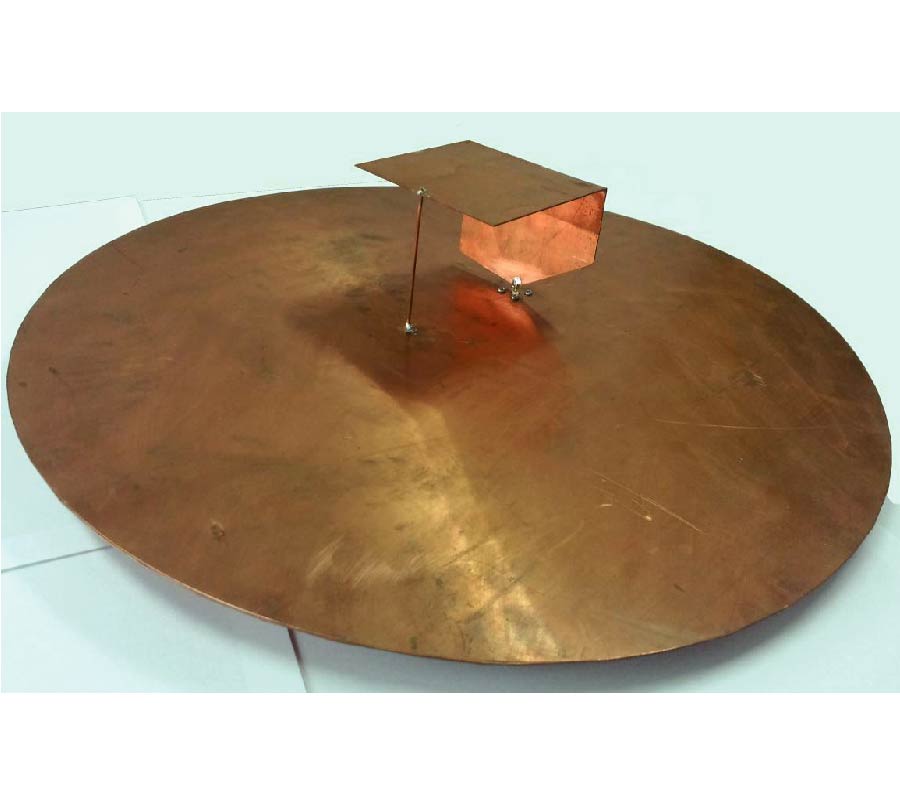
A novel omnidirectional circularly polarized (CP) antenna with single feed is proposed for 2.4 GHz WLAN applications. Based on the zeroth-order resonance (ZOR) mode of epsilon negative (ENG) transmission line (TL), the antenna excites uniform vertically polarized E-field just as the monopole does. A modified Alford loop with electromagnetic coupling fed by L-shaped strip consists of four curved branches, which is placed on the top of the antenna and generates an equivalent horizontally polarized magnetic dipole mode. Once the two orthogonally polarized components are equal in amplitude but different in phase by 90˚, omnidirectional CP wave can be obtained. The measured results show that the impedance bandwidth (S11<-10 dB) is 6% (2.38-2.53 GHz), and the 3-dB axial ratio bandwidth in the azimuth plane is very wide which achieves 54% (1.60-2.80 GHz). Additionally, the 3-dB axial ratio beamwidth is over 50˚ for radiation pattern in elevation plane. Moreover, the antenna achieves excellent omnidirectional right-hand CP performance with a variation of 0.5 dB in the azimuth plane and an average gain over 1.5 dB across the operating band, which are well applied to the wireless system.
A NOVEL SINGLE FEED OMNIDIRECTIONAL CIRCULARLY POLARIZED ANTENNA WITH WIDE AR BANDWIDTH
2014-06-15
PIER Letters
Vol. 47, 13-18
Wideband Vertical Planar Printed Unidirectional Antenna
Chao Wang , Lei Chen , Hao Wang and Xiao-Wei Shi
A new wideband vertical planar printed unidirectional antenna is presented. The proposed antenna is composed of a bowtie electric dipole, a loop antenna and a microstrip-to-coplanar stripline balun. All of them are printed in the same plane perpendicular to the ground. The antenna has a wide impedance bandwidth of 87.2% for SWR≤2 from 3.3 to 8.4 GHz and a stable gain of 7.3±1.5 dBi over the operating frequencies. Moreover, stable unidirectional radiation pattern with low back-lobe radiation, low cross polarization and nearly identical E- and H-plane patterns is also demonstrated over the frequency of interest. A prototype is fabricated and measured. The measured results indicate that the antenna is suitable for wideband wireless communication system.
WIDEBAND VERTICAL PLANAR PRINTED UNIDIRECTIONAL ANTENNA
2014-06-15
PIER M
Vol. 37, 21-30
Synthesis of Thinned Array with Side Lobe Levels Reduction Using Improved Binary Invasive Weed Optimization
Chao Liu and Huaning Wu
As a very powerful optimization algorithm, invasive weed optimization has been widely applied to continuous optimization problems in electromagnetic (EM) field. However, the optimization of a thinned array can be formulated as a discrete-variable optimization problem with solutions encoded as binary strings. Therefore, in this paper, an improved binary invasive weed optimization (IBIWO) is proposed to design a thinned array with minimum sidelobe levels. To evaluate the performance of the proposed algorithm, two examples have been presented and solved. Simulation results of the proposed thinned arrays obtained by IBIWO are compared with published results to verify the effectiveness of the proposed method.
SYNTHESIS OF THINNED ARRAY WITH SIDE LOBE LEVELS REDUCTION USING IMPROVED BINARY INVASIVE WEED OPTIMIZATION
2014-06-15
PIER
Vol. 148, 1-14
Analysis of Moving Human Micro-Doppler Signature in Forest Environments
Jose Miguel Garcia-Rubia , Ozlem Kilic , Vinh Dang , Quang M. Nguyen and Nghia Tran
Automatic detection of human motion is important for security and surveillance applications. Compared to other sensors, radar sensors present advantages for human motion detection and identification because of their all-weather and day-and-night capabilities, as well as the fact that they detect targets at a long range. This is particularly advantageous in the case of remote and highly cluttered radar scenes. The objective of this paper is to investigate human motion in highly cluttered forest medium to observe the characteristics of the received Doppler signature from the scene. For this purpose we attempt to develop an accurate model accounting for the key contributions to the Doppler signature for the human motion in a forest environment. Analytical techniques are combined with full wave numerical methods such as Method of Moments (MoM) enhanced with Fast Multipole Method (FMM) to achieve a realistic representation of the signature from the scene. Mutual interactions between the forest and the human as well as the attenuation due to the vegetation are accounted for. Due to the large problem size, parallel programming techniques that utilize a Graphics Processing Unit (GPU) based cluster are used.
ANALYSIS OF MOVING HUMAN MICRO-DOPPLER SIGNATURE IN FOREST ENVIRONMENTS
2014-06-15
PIER
Vol. 147, 69-79
Light Absorber with an Ultra-Broad Flat Band Based on Multi-Sized Slow-Wave Hyperbolic Metamaterial Thin-Films (Invited Paper)
Sailing He , Fei Ding , Lei Mo and Fanglin Bao
Here we realize a broadband absorber by using a hyperbolic metamaterial composed of alternating aluminum-alumina thin films based on superposition of multiple slow-wave modes. Our super absorber ensures broadband and polarization-insensitive light absorption over almost the entire solar spectrum, near-infrared and short-wavelength infrared regime (500-2500 nm) with a simulated absorption of over 90%. The designed structure is fabricated and the measured results are given. This absorber yields an average measured absorption of 85% in the spectrum ranging from 500 nm to 2300 nm. The proposed absorbers open an avenue towards realizing thermal emission and energy-harvesting materials.
LIGHT ABSORBER WITH AN ULTRA-BROAD FLAT BAND BASED ON MULTI-SIZED SLOW-WAVE HYPERBOLIC METAMATERIAL THIN-FILMS (Invited Paper)
2014-06-15
PIER
Vol. 147, 57-68
A STED Microscope Designed for Routine Biomedical Applications (Invited Paper)
Frederik Gorlitz , Patrick Hoyer , Henning Falk , Lars Kastrup , Johann Engelhardt and Stefan W. Hell
We present a multi-color STED fluorescence microscope providing far-field optical resolution down to 20 nm for biomedical research. The optical design comprises fiber lasers, beam scanners, and a set of active and passive polarizing elements that cooperatively yield an optically robust system for routinely imaging samples at subdiffraction length scales.
A STED MICROSCOPE DESIGNED FOR ROUTINE BIOMEDICAL APPLICATIONS (Invited Paper)
2014-06-14
PIER C
Vol. 51, 27-33
A Single-Feed Dual-Band Dual-Sense Circularly Polarized Microstrip Antenna
Qiqiang Li , Fu-Shun Zhang , Guowei Zhang , Bo Wang and Min Liang
A single-feed dual-band dual-sense circularly polarized (CP) microstrip antenna is proposed. The antenna consists of a circular radiating patch with a ring slot, two substrates with an air layer sandwiched between them and a capacitive coupling feed. The two resonant frequencies are controlled by the size of the circular radiating patch and the ring slot. By introducing the perturbation, the fundamental resonant mode splits into two orthogonal degenerate modes, and the CP radiation pattern is obtained. Capacitive disk coupling feed is also used in the design to enhance the band-width. The key parameters of the design are investigated to show how to obtain dual-band and dual-sense CP. The proposed antenna prototype is fabricated and measured. Experimental results show that good CP radiation performances are obtained at both resonant frequencies.
A SINGLE-FEED DUAL-BAND DUAL-SENSE CIRCULARLY POLARIZED MICROSTRIP ANTENNA
2014-06-14
PIER M
Vol. 37, 11-20
Energy Optimized Wireless Sensor Network for Monitoring Inside Buildings: Theoretical Model and Experimental Analysis
Malka N. Halgamuge , Priyan Mendis , Lu Aye and Tuan Ngo
Environment monitoring and automatic control of a building is a vital application of wireless sensor network, however, to maximize the network lifetime is a key challenge. The investigation of designing an efficient sensor network that minimizes energy dissipation in a battery of the sensor node, with limited battery power, is a vital consideration for the sensor network lifetime. Battery lifetime greatly affects the overall network communication performance, hence, the careful management of communication distance is very important. In this paper we propose a model to estimate the mean square distance from the sensor to the cluster head in sensor fields, such as the ones used for monitoring humidity, temperature, light intensity and air quality (CO and CO2 level), considering three dimensional building structures. We use experimental datasets of the link quality distribution in an indoor building environment (single storey as well as multi-storey buildings) to investigate the possible building length of the different clusters and the data success rates. We then statistically analysed the data success rate of the experimental datasets using the Wilcoxon Rank Sum test and found that there was no statistically significant difference (p > 0.05). Our results show that the clustering is important for the single storey and multi-storey building sensor networks, however, after a certain size of the building it is unimportant. Our results also demonstrate that we can save sensor battery energy, significantly, by optimizing the distance from the sensor to the cluster head, while obtaining a high data success rate. The results over different clusters of sensor networks suggest its applicability for different building sizes. Based on this paper the designers can optimize energy e±ciency subject to the required specifications.
ENERGY OPTIMIZED WIRELESS SENSOR NETWORK FOR MONITORING INSIDE BUILDINGS: THEORETICAL MODEL AND EXPERIMENTAL ANALYSIS
2014-06-13
PIER Letters
Vol. 46, 101-106
Multiband and Wideband Planar Antenna for WLAN and WiMAX Applications
Xueshuang Dong , Zhouying Liao , Jiabin Xu , Qibo Cai and Gui Liu
In this paper, the design of a multiband antenna for WLAN and WiMAX applications is proposed. The proposed antenna comprises a circular radiating patch with a pair of rectangular slits and an inverted U-shaped slot. A hexagon-shaped slot is cut on the ground plane. By adjusting the inverted U-shaped slot, a pair of rectangular slits, and a hexagon-shaped slot, three distinct resonance frequencies centered at 2.4 GHz, 3.52 GHz, and 5.68 GHz can be generated. The measurements show that the proposed antenna can cover three frequency bands with sufficient bandwidth. The proposed antenna exhibits an omnidirectional radiation pattern and acceptable gain.The overall dimension of the proposed antenna is 25 × 39 × 1.59 mm3.
MULTIBAND AND WIDEBAND PLANAR ANTENNA FOR WLAN AND WIMAX APPLICATIONS
2014-06-13
PIER M
Vol. 37, 1-10
Focusing Translational Variant Bistatic Forward-Looking SAR Data Based on Two-Dimensional Non-Uniform FFT
Chan Liu , Shunsheng Zhang , Chunyang Dai and Ji Zhou
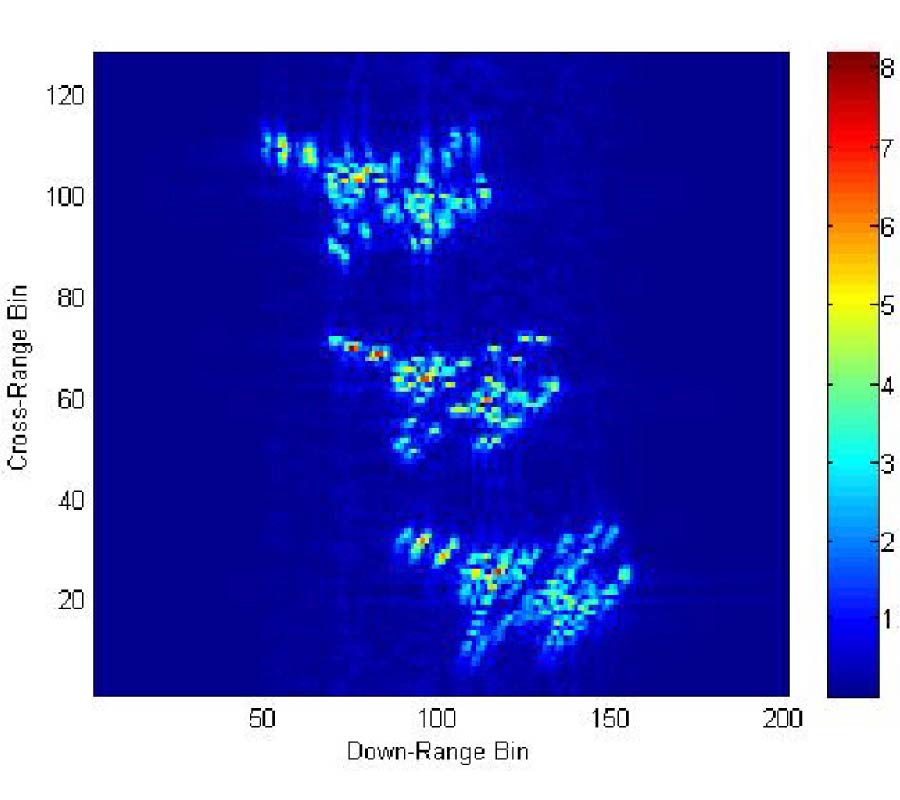
Forward-looking imaging has extensive potential applications, such as self-navigation and self-landing. By choosing proper geometry, bistatic synthetic aperture radar (BiSAR) can break through the limitations of monostatic SAR on forward-looking imaging and provide possibility of the forward-looking imaging. In this special bistatic configuration, two problems involving large range cell migration (RCM) and large range-azimuth coupling are introduced by the forward-looking beam, which make it difficult to use traditional data focusing algorithms. To address these problems, a novel Omega-K algorithm based on two-dimensional non-uniform FFT (2-D NUFFT) for translational variant (TV) bistatic forward-looking SAR (BFSAR) imaging is proposed in this paper. In this study, we derive an accurate spectrum expression based on two-dimensional principle of stationary phase (2-D POSP). 2-D NUFFT is utilized to eliminate the range-variant term, which can make full use of the data and improve the computational efficiency as well. The experimental results, presented herein, demonstrate the effectiveness and advantages of the proposed algorithm.
FOCUSING TRANSLATIONAL VARIANT BISTATIC FORWARD-LOOKING SAR DATA BASED ON TWO-DIMENSIONAL NON-UNIFORM FFT
2014-06-12
PIER C
Vol. 51, 19-26
A Compact Band-Notched Ultra-Wideband Spatial Diversity Antenna
Hui Zhao , Fu-Shun Zhang , Xiao-Kuan Zhang and Chunyang Wang
A compact band-notched ultra-wideband (UWB) spatial diversity antenna is presented in this paper. The antenna is fabricated on an FR4 substrate and consists of two tapered microstrip feeding lines and two radiating elements. The wireless local area network (WLAN) for IEEE 802.11a operating in 5.15-5.825 GHz and-notched function is achieved by introducing two slits in the radiators as λ/4 resonators. The simulated and measured results show that the presented antenna has a broadband impedance bandwidth which covers UWB band and also has a band-notched characteristic. Additionally, the antenna has a good transmission coefficient better than -15 dB across the UWB. The radiation patterns, peak gain, and envelope correlation coefficient are measured and discussed.
A COMPACT BAND-NOTCHED ULTRA-WIDEBAND SPATIAL DIVERSITY ANTENNA
2014-06-12
PIER C
Vol. 51, 11-18
A Dual-Broadband Circularly Polarized Antenna with Unidirectional Radiation Pattern
Neng-Wu Liu , Ya-Li Yao , Zhi-Ya Zhang , Yang Li , Guang Fu and Shaoli Zuo
A novel dual-band circularly polarized (CP) antenna with wide axial ratio (AR) and impedance bandwidths is proposed. Based on a rectangular ground, the antenna consists of a trapezoid patch, an L-shaped strip, a cavity, and T-shaped and L-shaped perturbations. By embedding a feeding line with a trapezoid patch and an L-shaped strip, dual-band input impedance performance and a CP performance at upper band are obtained. In order to achieve a CP performance at the lower band, a T-shaped perturbation is embedded inside the slot. Moreover, the CP performance is enhanced by inserting an L-shaped perturbation at the right bottom corner of the slot. Furthermore, using a cavity underneath the antenna, unidirectional radiation patterns with greatly gain enhancement are obtained. The measured results show that the impedance bandwidths for S11<-10 dB are 22.7% (2.34-2.94 GHz) and 79.8% (4.64-10.8 GHz) while the axial ratio bandwidths (AR<3 dB) are 26.4% (2.3-3 GHz) and 12.6% (5.2-5.9 GHz) at the lower and upper bands, respectively. Additionally, the measured gain is more than 7.4 dB and 2.4 dB in the two operating bands, respectively. Thus, the antenna can be well applied for both 2.4/5.8 GHz WLAN bands and 2.5/5.5 GHz WiMAX bands.
A DUAL-BROADBAND CIRCULARLY POLARIZED ANTENNA WITH UNIDIRECTIONAL RADIATION PATTERN
2014-06-12
PIER C
Vol. 51, 1-10
Coupling Measurements of an Antenna System Suitable for Relay-Aided WiMAX Network
Ioannis Petropoulos , Konstantinos N. Voudouris , Raed A. Abd-Alhameed and Steve M. R. Jones
In this paper two novel antennas, suitable for access and backhaul links, are designed, fabricated and tested for a Relay Station in a WiMAX wireless network. A single modified E-shaped patch antenna is described, presenting 10 dB gain over 12.4% bandwidth. This antenna element is used for the design of a 4×4 planar array which provides experimental gain of 21.2 dB. The antenna system on the Relay Station operates at 3.4 GHz and includes one single antenna element for access link realization and an antenna array for the backhaul link realization. These antennas are installed in two configuration arrangements and tested in terms of their radiation performances and coupling effects. The simulated and measured results are quite satisfactory and in good agreement at which the maximum coupling between the access and backhaul antennas is found below -25 dB for all tested cases.
COUPLING MEASUREMENTS OF AN ANTENNA SYSTEM SUITABLE FOR RELAY-AIDED WIMAX NETWORK
2014-06-12
PIER C
Vol. 50, 171-179
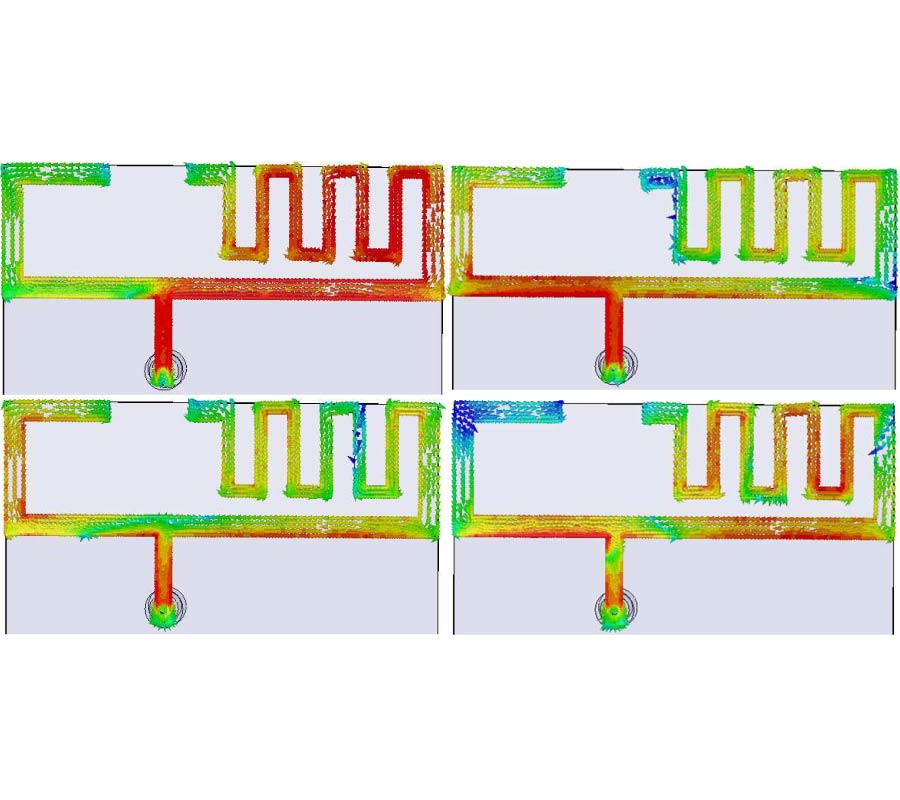
Small-Size Wideband Monopole Antenna with CRLH-TL for LTE Mobile Phone
Jie Luo , Shu-Xi Gong , Pei Duan , Chunhui Mou and Mao Long
A planar monopole loaded with composite right/left-handed transmission line (CRLH-TL) for broadband LTE mobile phone is presented. The CRLH-TL with a propagation constant of zero is added to widen the input impedance bandwidth of the antenna. The proposed antenna covers the LTE700/2500/GSM850/900/1800/1900/UMTS2100 and WLAN2400 bands. Impedance bandwidths of VSWR<2.5 (S11<-7 dB) ranging from 675 to 1010 MHz and 1690 to 2550 MHz are obtained. The size of the monopole is 60×16×1mm3 which is smaller than most of the LTE antennas. Detailed design considerations of the monopole are described. A prototype is fabricated and tested. Both simulated and experimental results are discussed.
SMALL-SIZE WIDEBAND MONOPOLE ANTENNA WITH CRLH-TL FOR LTE MOBILE PHONE
2014-06-12
PIER Letters
Vol. 46, 95-100
High Gain Circularly Polarized Rectangular Dielectric Resonator Antenna Array with Helical-Like Exciter
Biswarup Rana and Chandan Kumar Ghosh
A novel (2×2) high gain circularly polarized rectangular dielectric resonator antenna array integrated with helical-like exciter is proposed. The array offers a maximum gain of 12.9 dBi at the operating frequency. The circular polarization is obtained by incorporating helical-like exciter in the array structure. A prototype of the proposed configuration integrated with helical-like exciter has been fabricated and tested, and the idea has been verified. A good agreement has been obtained between the measured and simulated results.
HIGH GAIN CIRCULARLY POLARIZED RECTANGULAR DIELECTRIC RESONATOR ANTENNA ARRAY WITH HELICAL-LIKE EXCITER
2014-06-12
PIER M
Vol. 36, 177-183
Variations in Non-Linearity in Vertical Distribution of Microwave Radio Refractivity.
Adekunle Titus Adediji and Samuel Toluwalope Ogunjo
Radio refractivity values obtained for different heights (Ground surface, 50 m, 100 m and 150 m) over a tropical station, Akure, South-Western Nigeria using in-situ data over a period of five years has been investigated for chaos. Several chaos quantifiers such as entropy, Lyapunov exponent, recurrence plot were used. Determinism was detected in the time series studied at all the levels. Results obtained from the computation of radio refractivity show that the value of radio refractivity decreases with increasing altitude while chaotic quantifiers obtained at ground level and height 100m are found to be more chaotic than the other two levels (50 m and 150 m).
VARIATIONS IN NON-LINEARITY IN VERTICAL DISTRIBUTION OF MICROWAVE RADIO REFRACTIVITY.