Search Results(13893)

2014-07-21
PIER
Vol. 148, 113-128
Lattice Maxwell's Equations (Invited Paper)
Fernando Lisboa Teixeira
We discuss the ab initio rendering of four-dimensional (4-d) spacetime of Maxwell's equations on random (irregular) lattices. This rendering is based on casting Maxwell's equations in the framework of the exterior calculus of differential forms, and a translation thereof to a simplicial complex whereby fields and causative sources are represented as differential p-forms and paired with the oriented p-dimensional geometrical objects that comprise the set of spacetime lattice cells (simplices). We pay particular attention to the case of simplicial spacetime lattices because these can serve as building blocks of lattices made of more generic cells (polygons). The generalized Stokes' theorem is used to construct discrete calculus operations on the lattice based upon combinatorial relations depending solely on the connectivity and relative orientation among simplices. This rendering provides a natural factorization of (lattice) 4-d spacetime Maxwell's equations into a metric-free part and a metric-dependent part. The latter is encoded by discrete Hodge star operators which are built using Whitney forms, i.e., canonical interpolants for discrete differential forms. The derivation of Whitney forms is illustrated here using a geometrical construction based on the concept of barycentric coordinates to represent a point on a simplex, and the generalization thereof to represent higher-dimensional objects (lines, areas, volumes, and hypervolumes) in 4-d. We stress the role of the primal lattice, the barycentric dual lattice, and the barycentric decomposition lattice in achieving a complete description of the lattice theory. Lattice Maxwell's equations based on the exterior calculus of differential forms and on the use of Whitney forms as field interpolants inherits the symplectic structure and discrete analogues of conservation laws present in the continuum theory, such as energy and charge conservation. This framework also provides precise localization rules for the degrees of freedom associated with the different fields and sources on the lattice, and design principles for constructing consistent numerical solution methods that are free from spurious modes, spectral pollution, and (unconditional) numerical instabilities. We also brie y consider the relationship between lattice 4-d Maxwell's equations and some incarnations of discretization schemes for Maxwell's equations in (3+1)-d, such as finite-differences and finite-elements.
LATTICE MAXWELL'S EQUATIONS (Invited Paper)
2014-07-21
PIER
Vol. 148, 83-112
Differential Forms and Electromagnetic Field Theory (Invited Paper)
Karl Warnick and Peter H. Russer
Mathematical frameworks for representing fields and waves and expressing Maxwell's equations of electromagnetism include vector calculus, differential forms, dyadics, bivectors, tensors, quaternions, and Clifford algebras. Vector notation is by far the most widely used, particularly in applications. Of the more sophisticated notations, differential forms stand out as being close enough to vectors that most practitioners can readily understand the notation, yet at the same time offering unique visualization tools and graphical insight into the behavior of fields and waves. We survey recent papers and book on differential forms and review the basic concepts, notation, graphical representations, and key applications of the differential forms notation to Maxwell's equations and electromagnetic field theory.
DIFFERENTIAL FORMS AND ELECTROMAGNETIC FIELD THEORY (Invited Paper)
2014-07-21
PIER
Vol. 148, 73-82
Hybrid Simulation of Maxwell-Schrodinger Equations for Multi-Physics Problems Characterized by Anharmonic Electrostatic Potential (Invited Paper)
Takashi Takeuchi , Shinichiro Ohnuki and Tokuei Sako
A novel hybrid simulation based on the coupled Maxwell-Schrödinger equations has been utilized to investigate, accurately, the dynamics of electron confined in a one-dimensional potential and subjected to time-dependent electromagnetic fields. A detailed comparison has been made for the computational results between the Maxwell-Schrödinger and conventional Maxwell-Newton approaches, for two distinct cases, namely, characterized by harmonic and anharmonic electrostatic confining potentials. The results obtained by the two approaches agree very well for the harmonic potential while disagree quantitatively for the anharmonic potential. This clearly indicates that the Maxwell-Schrödinger scheme is indispensable to multi-physics simulation particularly when the anharmonicity effect plays an essential role.
HYBRID SIMULATION OF MAXWELL-SCHRODINGER EQUATIONS FOR MULTI-PHYSICS PROBLEMS CHARACTERIZED BY ANHARMONIC ELECTROSTATIC POTENTIAL (Invited Paper)
2014-07-18
PIER C
Vol. 52, 71-82
Design of Fragment-Type Isolation Structures for MIMO Antennas
Lu Wang , Gang Wang and Johan Siden
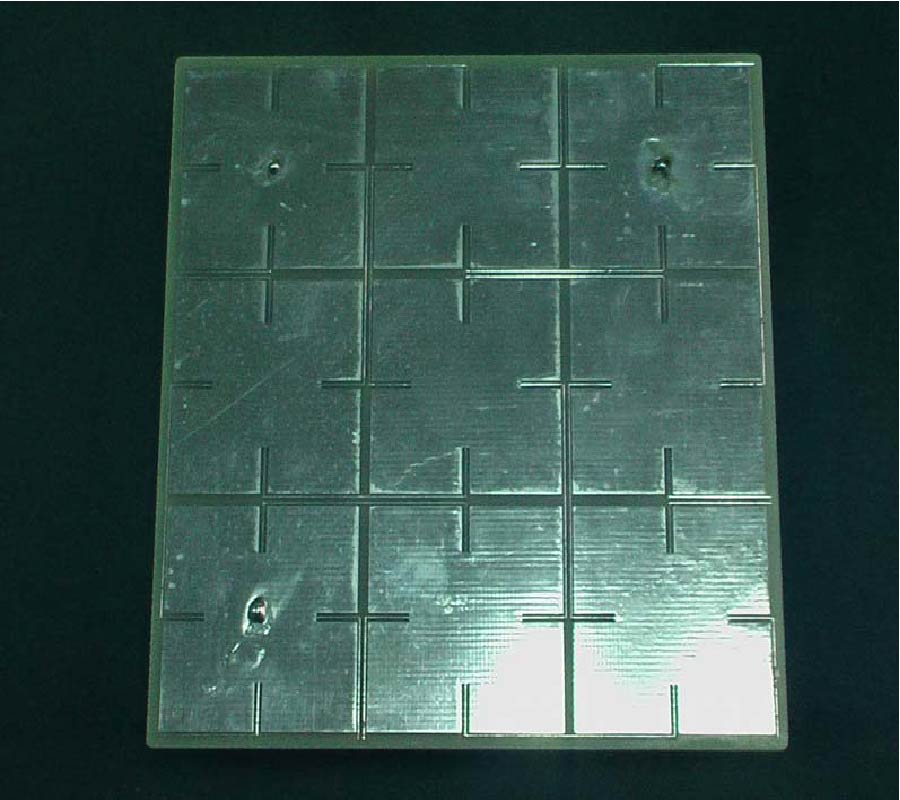
Fragment structure should find its application in acquiring high isolation between multiple-input multiple-output (MIMO) antennas. By gridding a design space into fragment cells, a fragment-type isolation structure can be constructed by metalizing some of the fragment cells. For MIMO isolation design, cells to be metalized can be selected by optimization searching scheme with objectives such as isolation, return losses, and even radiation patterns of MIMO antennas. Due to the exibility of fragment-type isolation structure, fragment-type structure has potentials to yield isolation higher than canonical isolation structures. In this paper, multi-objective evolutionary algorithm based on decomposition combined with genetic operators (MOEA/D-GO) is applied to design fragment-type isolation structures for MIMO patch antennas and MIMO PIFAs. It is demonstrated that isolation can be improved to different extents by using fragment-type isolation design. Some technique aspects related to the fragment-type isolation design, such as effects of fragment cell size, design space, density of metal cells, and efficiency consideration, are further discussed.
DESIGN OF FRAGMENT-TYPE ISOLATION STRUCTURES FOR MIMO ANTENNAS
2014-07-18
PIER C
Vol. 52, 63-69
A Waveguide-Fed Pyramid-Shaped Dielectric Rod Antenna with Size Reduction and High Gain for Wideband Applications
Ashutosh Kedar and Anil Kumar Singh
This article proposes a new design of wideband wide beam microstrip like antenna (MLA) in X-band (8-12 GHz) overcoming the limitations of conventional MLA design. The waveguide is filled with a dielectric material, which is shaped beyond the waveguide aperture as a pyramidal structure. This helps in achieving the size reduction of the waveguide and matching of aperture admittance over the complete operational band. Also a vertical electric dipole feed design is proposed to excite MLA and match the source and load admittances. The input reflection coefficient observed over the complete band is better than -10 dB. The measured gain and cross polarized levels of antenna achieved are better than 3 dBi and -18 dB across the bandwidth, respectively. The measured and simulated results are in good agreement.
A WAVEGUIDE-FED PYRAMID-SHAPED DIELECTRIC ROD ANTENNA WITH SIZE REDUCTION AND HIGH GAIN FOR WIDEBAND APPLICATIONS
2014-07-17
PIER B
Vol. 60, 195-213
Dielectric Resonator Antennas: Designs and Advances
Dipali Soren , Rowdra Ghatak , Rabindra Kishore Mishra and Dipak Poddar
This article presents a comprehensive review of the research carried out on Dielectric Resonator Antennas (DRAs) over the last three decades. Dielectric resonator antennas (DRAs) have received increased attention in various applications due to their attractive features in terms of high radiation efficiency, light weight, small size and low profile. Over last decades, various bandwidth enhancement techniques have been developed for DRAs. In this article, the attention is focused on a type of DRAs that can offer multi-resonance frequencies and these frequencies can be merged into a broad band. In order to effectively review design techniques, DRAs in this article are categorized into three types, broadband, ultra-wideband (UWB) and multiband. The latest developments in DRAs are discussed in the limited scope of this article.
DIELECTRIC RESONATOR ANTENNAS: DESIGNS AND ADVANCES
2014-07-17
PIER C
Vol. 52, 53-62
MIMO Antenna for Bluetooth, Wi-Fi, Wi-MAX and UWB Applications
Shilpa U. Kharche , Gopi Shrikanth Reddy , Biswajeet Mukherjee , Rajiv Kumar Gupta and Jayanta Mukherjee
A Multiple Input Multiple Output (MIMO) antenna consisting of two 90° angularly separated semicircular monopoles with steps for Bluetooth, Wi-Fi, Wi-MAX and UWB applications is proposed. Initially, an array of two coplanar circular monopoles with element separation of 25 mm is investigated. In this configuration, mutual coupling is < -5 dB and < -10 dB over 2 GHz-3 GHz and 3 GHz-10.6 GHz, respectively. Mutual coupling is reduced by using 90° angularly separated semicircular monopoles. With semicircular configuration, though the mutual coupling is improved, impedance bandwidth is reduced due to reduction in electrical length. A step like structure is introduced in the semicircular monopoles, and ground plane is modified and extended between the two elements to improve the impedance bandwidth and mutual coupling. Impedance bandwidth from 2.0 GHz-10.6 GHz with S21 < -20 dB and -14 dB is achieved over 3.1 GHz-10.6 GHz and 2.0-3.1 GHz, respectively. The antenna is fabricated using 46 mm × 37 mm RT Duroid substrate. Measurement results agree with the simulation os. Radiation patterns are stable, and correlation coefficient is < 0.02 over 2.0-10.6 GHz.
MIMO ANTENNA FOR BLUETOOTH, WI-FI, WI-MAX AND UWB APPLICATIONS
2014-07-16
PIER M
Vol. 37, 139-147
Application of Pulsed Magnetic Ponderomotive Force for Intra-Cellular Gene Delivery
Peter Babinec , Andrej Krafcik , Melania Babincova , Joseph Rosenecker and Ivan Frollo
A novel method of the aerosolized gene delivery is proposed, and its feasibility is computationally analyzed. Aerosolized DNA or siRNA attached to magnetic particles can be accelerated using ponderomotive force to high velocities in a pulsed magnetic field of a solenoid and efficiently delivered to cell culture or to the lung epithelium. The proposed noninvasive method of intra-cellular gene delivery can be considered as a combination of principles of classical high-pressure air jet gene delivery with magnetophoresis.
APPLICATION OF PULSED MAGNETIC PONDEROMOTIVE FORCE FOR INTRA-CELLULAR GENE DELIVERY
2014-07-15
PIER C
Vol. 52, 39-52
A Multi-Feature Visibility Processing Algorithm for Radio Interferometric Imaging on Next-Generation Telescopes
Mu-Min Chiou , Jean-Fu Kiang and Raj Mittra
The visibility distribution, which is related to the configuration of stations, can be categorized into different features, each having different levels of data number density. A computationally efficient multi-feature image reconstruction algorithm, well adapted for next-generation telescopes, is proposed based on this observation, which is more flexible to handle massive amount of visibility data expected in the future. In reconstructing the M87 image with the visibility data simulated on the Low-Frequency Array (LOFAR), this algorithm turns out to be a few hundreds to one thousand times faster and is more resilient to noises than the conventional algorithms.
A MULTI-FEATURE VISIBILITY PROCESSING ALGORITHM FOR RADIO INTERFEROMETRIC IMAGING ON NEXT-GENERATION TELESCOPES
2014-07-14
PIER C
Vol. 52, 27-38
A Broadband Technique for a Decoupling Network in a Compact Antenna Array in a MIMO System
Jung Hoon Ko , Jung-Hoon Han and Noh-Hoon Myung
Decoupling networks (DNs) have frequently been used to obtain high isolation performance between coupled antennas in multiple-input multiple-output (MIMO) systems due to their advantage of spatial efficiency, which is particularly important for mobile devices. However, conventional DNs suffer from narrowband limitations. In this paper, a broadband decoupling technique is proposed that broadens the isolation bandwidth using a parallel resonant point. A 1.95 GHz MIMO antenna system with 460 MHz of bandwidth (fractional bandwidth, FBW = 23.6%) is designed and measured using the scattering parameters. The isolation is found to be better than -15 dB, while the reflection coefficient is better than -6 dB. Furthermore, the antenna efficiency and envelope correlation coefficient (ECC) are evaluated in a reverberation chamber.
A BROADBAND TECHNIQUE FOR A DECOUPLING NETWORK IN A COMPACT ANTENNA ARRAY IN A MIMO SYSTEM
2014-07-14
PIER C
Vol. 52, 13-25
Real Time RSS Based Adaptive Beam Steering Algorithm for Autonomous Vehicles
Mohamed A. Ibrahim and Mohammad S. Sharawi
A real time, low complexity algorithm is developed to steer a planar patch antenna array beam to the maximum received signal strength (RSS) direction for communication link enhancement. The beam steering towards the maximum incoming signal direction is based on an iterative technique utilizing a set of RSS measurements taken from specific locations in the search space, these locations collectively form an ellipse. The algorithm is denoted as ``elliptical peeking''. It was simulated for a flying unmanned aerial vehicle (UAV) as the vehicle tries to identify the maximum signal strength incoming direction of a stationary ground signal and it was tested on an embedded platform to validate its low demand for computational power. Such an algorithm is suitable for autonomous platforms due to its simplicity and low cost.
REAL TIME RSS BASED ADAPTIVE BEAM STEERING ALGORITHM FOR AUTONOMOUS VEHICLES
2014-07-14
PIER
Vol. 148, 63-71
A Printed Vivaldi Antenna with Improved Radiation Patterns by Using Two Pairs of Eye-Shaped Slots for UWB Applications
Kun Ma , Zhiqin Zhao , Jiangniu Wu , Sani Mubarak Ellis and Zai-Ping Nie
In this paper, a printed Vivaldi antenna with two pairs of eye-shaped slots is proposed for UWB applications. By using two pairs of eye-shaped slots, the side lobe levels of the radiation pattern are reduced, and the antenna gain is improved at low frequencies. To illustrate the effectiveness of the proposed design, a prototype of the proposed antenna is fabricated and measured. Experimental results show that the proposed antenna presents a measured impedance bandwidth, defined by |S11| < -10 dB, from 3 to 12.8 GHz with a compact size (36 mm×36 mm). Good unidirectional radiation characteristics with a front-to-back ratio better than 10 dB are also achieved. The measured gain is better than 3.7 dBi in the operating frequency band. In addition, the measured group delay of the proposed antenna is around 1.2 ns with a variation less than ± 0.5 ns.
A PRINTED VIVALDI ANTENNA WITH IMPROVED RADIATION PATTERNS BY USING TWO PAIRS OF EYE-SHAPED SLOTS FOR UWB APPLICATIONS
2014-07-14
PIER
Vol. 148, 55-61
Snowfall Detectability of NASA's CloudSat: the First Cross-Investigation of Its 2c-Snow-Profile Product and National Multi-Sensor Mosaic QPE (NMQ) Snowfall Data
Qing Cao , Yang Hong , Sheng Chen , Jonathan J. Gourley , Jian Zhang and Pierre E. Kirstetter
This study investigates snowfall detectability and snowfall rate estimation with NASA's CloudSat through the first evaluation of its newly released 2C-16 SNOW-PROFILE products using the National Mosaic and Multisensor QPE System (NMQ) snowfall products. The primary focus is on the detection and estimation of 18 surface snowfall. The results show that the CloudSat product has good detectability of light snow (snow water equivalent less than 1 mm/h) but degrades in moderate and heavy snow (heavier than 1 mm/h). The analysis suggests that the new 2C-SNOW-PROFILE algorithm is insufficient in correcting signal losses due to attenuation. Its underestimation is well correlated to snowfall intensity. Issues of sensitivity and data sampling with ground radars, which may affect the interpretation of the results, are also discussed. This evaluation of the new 2C-SNOW-PROFILE algorithm provides guidance for applications of the product and identifies particular error sources that can be addressed in future versions of the CloudSat snowfall algorithm.
SNOWFALL DETECTABILITY OF NASA'S CLOUDSAT: THE FIRST CROSS-INVESTIGATION OF ITS 2C-SNOW-PROFILE PRODUCT AND NATIONAL MULTI-SENSOR MOSAIC QPE (NMQ) SNOWFALL DATA
2014-07-10
PIER C
Vol. 52, 7-12
An UWB Microstrip Antenna Array with Novel Corporate-Fed Structure
Chen-Xin Zhang , Ya-Qiang Zhuang , Xiao-Kuan Zhang and Lizhong Hu
A novel feed network based on the microstrip/slotline transition is proposed in this paper. This feed network not only has ultra-wide impedance bandwidth but also can improve space utilization and make the design of antenna array easier. Then an ultra-wideband (UWB) antenna array with four elements fed by the network is designed. The antenna array is simulated, manufactured and measured. The results show that: the impedance bandwidth with return loss under -10 dB is 88.76%, from 2.35 GHz to 6.1 GHz. Within the impedance bandwidth, the radiation performance is satisfactory, and the gain of the array is 2.1-7.1 dB, higher than that of the element. The cross-polarization level of the array is lower than -20 dB, just as the element. A reasonable agreement of results is achieved between simulation and measurement.
AN UWB MICROSTRIP ANTENNA ARRAY WITH NOVEL CORPORATE-FED STRUCTURE
2014-07-08
PIER M
Vol. 37, 127-137
Three-Dimensional Scattering Centers Extraction of Radar Targets Using High Resolution Techniques
Jun Zhang , Jiemin Hu , Yanzhao Gao , Ronghui Zhan and Qinglin Zhai
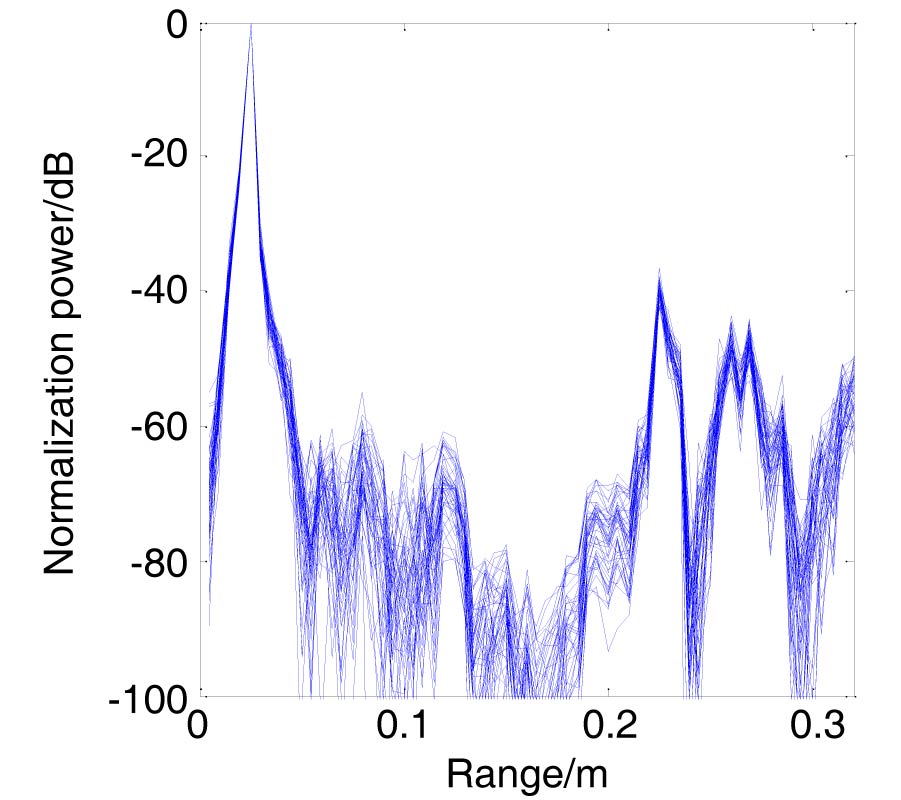
In optical region, the scattering center model is very useful in scattering analysis, target recognition and data compression. The method based on Hough transformation performs well in most cases. However, the algorithm extracts the scattering centers one by one via a clean method, which is time consuming. To solve this problem, a novel method is proposed in this paper to extract the scattering centers. By searching the estimated 1D scattering centers, the candidate positions for 3D scattering centers are extracted. Then the candidates are discriminated by a clustering based procedure. By employing the new algorithm, the 3D scattering centers can be extracted simply and the clean step is unnecessary, which makes the procedure efficient. The experiment results of the high-frequency-electro-magnetic data demonstrate the performance of the proposed method.
THREE-DIMENSIONAL SCATTERING CENTERS EXTRACTION OF RADAR TARGETS USING HIGH RESOLUTION TECHNIQUES
2014-07-07
PIER C
Vol. 51, 169-177
Bandwidth Enhancement for Low Frequency Meander Line Antenna
Jun Fan , Zhen-Ya Lei , Yong-Jun Xie and Mingyuan Man
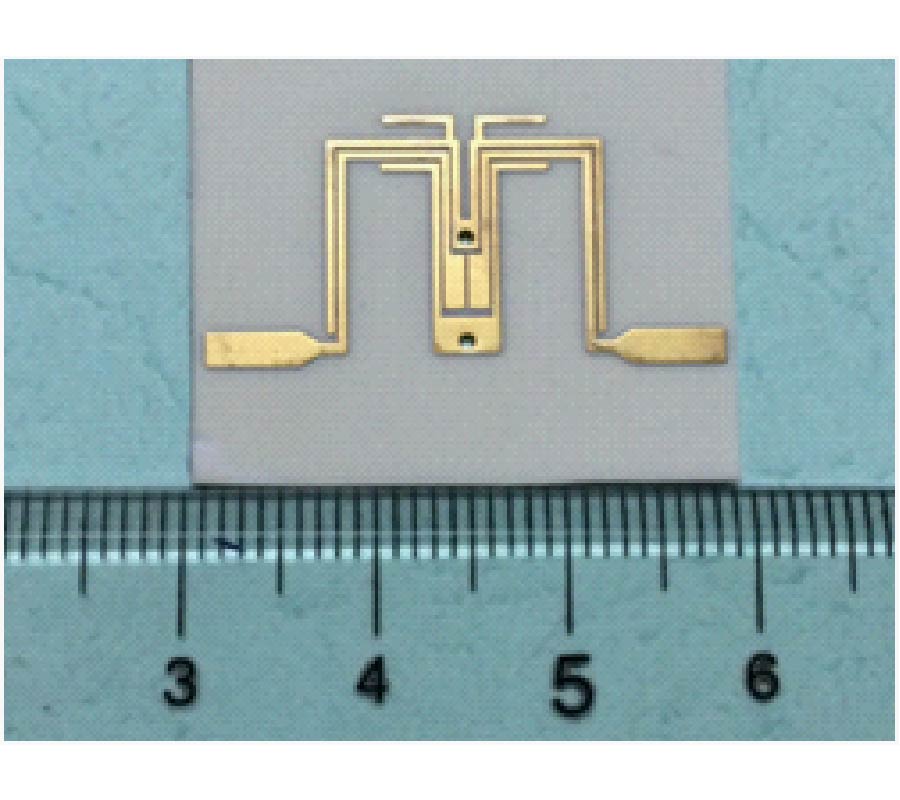
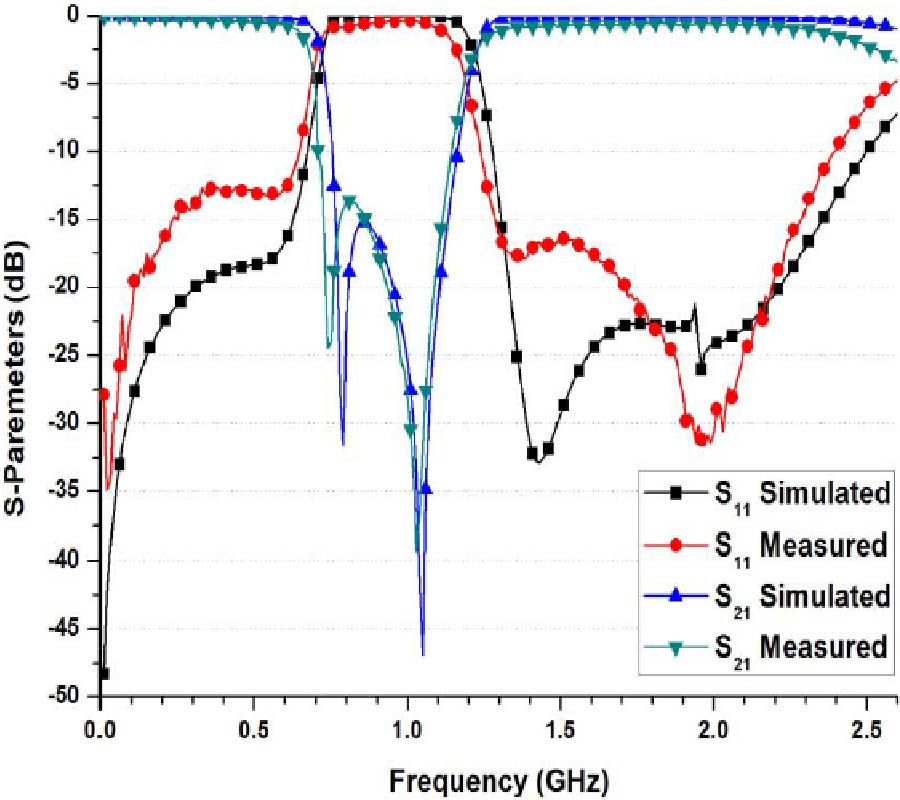
A simple and effective method of bandwidth enhancement for the printed meander line antenna (MLA) is proposed. This approach is characterized by symmetrically printing two meandering sections on both sides of a dielectric substrate and connecting them via shorting pins at the bottom of meandering sections, which are connected to a capacitive stripe for impedance matching. The illustrative equivalent circuit and the corresponding principle of bandwidth enhancement of this double-layered MLA are presented. The measured results of these double-layered and single-layered MLAs manifest the validity of our design approach.
BANDWIDTH ENHANCEMENT FOR LOW FREQUENCY MEANDER LINE ANTENNA
2014-07-03
PIER C
Vol. 51, 161-167
Design of a Rectangular Metallic Monopole Antenna with Protruding Normal Plates for Applications in UWB Communication
Seyed Arash Naghdehforushha , Homayoon Oraizi , Farrokh Hojjat-Kashani and Ahmad Jalali Deel
In this paper, a rectangular metallic monopole antenna with normal rectangular stubs is presented for application in ultra-wide band communication systems. It is shown by computer simulations (HFSS and CST) and actual fabrication and measurement that the addition of protruding normal metallic stubs lead to the increase of impedance band width. The optimum design of geometrical dimensions of the antenna (consisting of the monopole plate and stubs) achieves up to 10 dB return loss in the UWB (3.1-10.6 GHz) frequency range. The radiation efficiency of antenna is better than 95%. Furthermore, the antenna provides linear polarization, with quite low cross-polarization levels.
DESIGN OF A RECTANGULAR METALLIC MONOPOLE ANTENNA WITH PROTRUDING NORMAL PLATES FOR APPLICATIONS IN UWB COMMUNICATION
2014-07-03
PIER M
Vol. 37, 119-125
Generalization Propagator Method for DOA Estimation
Sheng Liu , Lisheng Yang , Jian Hua Huang and Qing Ping Jiang
A generalization propagator method (GPM) is presented. It is the extension of traditional propagator method (PM). In order to make full use of the received data, many propagators are structured according to different block structures of array manifold. By these propagators, a high order matrix is obtained in a symmetric mode, and it is orthogonal with array manifold. Based on this matrix, a generalization spectral function is obtained to solve the problem of direction-of-arrival (DOA) estimation by spectral peak searching. Moreover, in order to avoid spectral peak searching, a generalization root-propagator method (GRPM) is also proposed, and shows excellent estimation precision. Numerical simulations demonstrate the performance of the proposed method.
GENERALIZATION PROPAGATOR METHOD FOR DOA ESTIMATION
2014-07-02
PIER C
Vol. 52, 1-6
A Novel Wideband Sleeve Antenna with Capacitive Annulus for Wireless Communication Applications
Yang Li , Zhi-Ya Zhang , Qiong-Qiong Liu , Yong-Xia Zhang and Guang Fu
A novel wideband sleeve antenna with capacitive annulus for wireless communication applications is presented in this paper. A sleeve structure is introduced to improve the impedance bandwidth through exciting a new resonate point. By loading capacitive annulus at the center of sleeve, an impedance bandwidth enhancement is achieved at the upper frequency band. The measured impedance bandwidth for VSWR≤2 about 142.8% ranging from 1.01 to 6.06 GHz is achieved, and monopole-like radiation patterns are presented. A prototype has been fabricated and tested, and the experimental results validate the design procedure. It is sufficient for accommodating recent wireless communication services such as DCS1800, PCS1900, IMT2000, WLAN, WiMAX2350/3500, etc.
A NOVEL WIDEBAND SLEEVE ANTENNA WITH CAPACITIVE ANNULUS FOR WIRELESS COMMUNICATION APPLICATIONS
2014-07-02
PIER C
Vol. 51, 149-159
A Quad-Antenna System Operating at the 2.4/5.2/5.8 GHz WLAN Bands for Laptop Computers
Lin Guo , Yan Wang , Zhengwei Du , Yougang Gao and Dan Shi
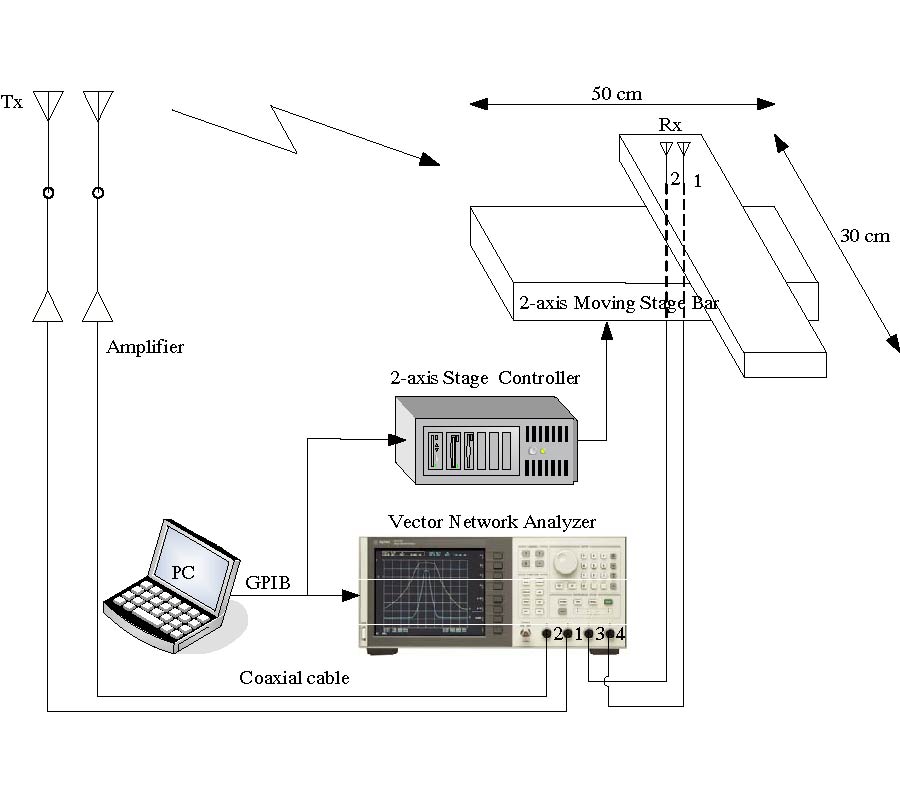
In this paper, a quad-antenna system for laptop computers is studied. Because two dual-antenna systems can construct a quad-antenna system, the dual-antenna systems in the open literature are utilized. The mutual coupling between the two dual-antenna systems is analyzed and reduced. To validate the design of a quad-antenna system, the quad-antenna system, consisting of two dual-antenna systems proposed in the open literature and a decoupling element, is fabricated and tested. Its measured -10 dB impedance bandwidths are 200 MHz (2.33-2.52 GHz) and 1.62 GHz (4.5-6.12 GHz). The measured mutual couplings are below -15.5/-19 dB at the 2.4- and 5.2/5.8-GHz WLAN bands, respectively. The measured gains are better than 2.4/3.9 dBi with efficiencies higher than 70%/72% at the two bands, respectively. The envelop correlation coefficient is evaluated based on the measured results.
A QUAD-ANTENNA SYSTEM OPERATING AT THE 2.4/5.2/5.8 GHZ WLAN BANDS FOR LAPTOP COMPUTERS