Search Results(13798)

2014-05-04
PIER C
Vol. 50, 21-28
Broadband Radar Cross-Section Reduction for Microstrip Patch Antenna Based on Hybrid AMC Structures
Ying Liu , Hui Wang , Yongtao Jia and Shu-Xi Gong
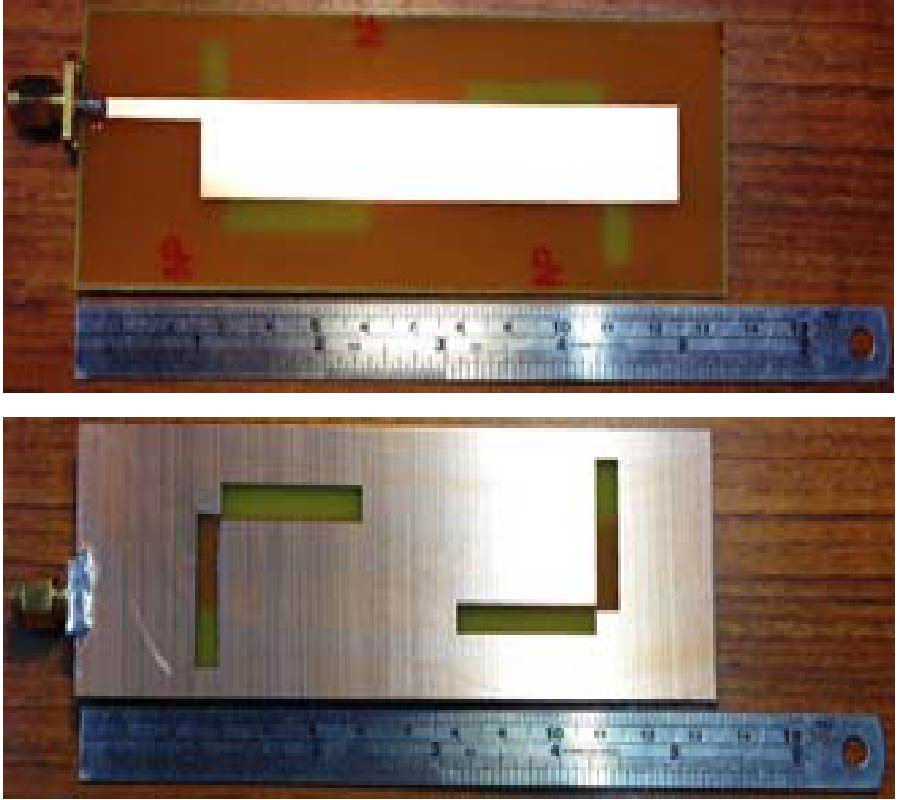
Two different kinds of artifical magnetic conductors (AMCs) are used to reduce the out-of-band radar cross section (RCS) of microstrip patch antenna. The principle of this method is based on the high impedance characteristic of the AMC structures. The simulated results show that out-of-band RCS of the proposed patch antenna is much lower than that of the reference antenna over the frequency range of 5-12 GHz. The in-band scattering characteristic of the microstrip patch antenna is analyzed, and two slots are cut on the patch antenna to reduce in-band RCS. Prototypes of the reference and designed antennas are manufactured and tested, and the measured and simulated results of the two antennas are in good agreement.
BROADBAND RADAR CROSS-SECTION REDUCTION FOR MICROSTRIP PATCH ANTENNA BASED ON HYBRID AMC STRUCTURES
2014-05-04
PIER
Vol. 146, 99-108
An Independently Tunable Dual-Band Filter Using Asymmetric λ/4 Resonator Pairs with Shared via-Hole Ground
Fei Liang , Xiaofei Zhai , Wenzhong Lu , Qianxing Wan and Yanyu Zhang
This paper presents a dual-band tunable bandpass filter with independently controllable dual passbands based on a novel asymmetric λ/4 resonator pair with shared via-hole ground. Because two separated passbands can be independently generated by the two λ/4 resonators with different electric lengths, the asymmetric λ/4 resonator pair can realize flexible passband allocation when it is utilized to design dual-band filters. Two varactors are placed at the two open circuit ends of the asymmetric λ/4 resonator pair to control the two dominant resonant frequencies, respectively. A prototype tunable dual-band filter with Chebyshev response is designed and fabricated. The measured results are in good agreement with the full-wave simulated ones. The results show that the first passband varies in a frequency range from 0.88 GHz to 1.12 GHz with the 3-dB fractional bandwidth of 5.1%-6.4%, while the second passband can be tuned from 1.5 GHz to 1.81 GHz with the 3-dB fractional bandwidth of 5.4%-6.4%.
AN INDEPENDENTLY TUNABLE DUAL-BAND FILTER USING ASYMMETRIC λ/4 RESONATOR PAIRS WITH SHARED VIA-HOLE GROUND
2014-05-04
PIER
Vol. 146, 89-97
New Design of All-Optical Slow Light Tdm Structure Based on Photonic Crystals
Yaw-Dong Wu
This work demonstrates an all-optical slow light Time Division Multiplexing (TDM) structure based on photonic crystals (PCs). The structure shows good ability of divide time domain signal into repetition time slots signal by four tunable group velocity waveguides from 0.006*c to 0.248*c where c is the velocity of light in the vacuum at the center wavelength of 1550 nm and over a bandwidth 4.52 THz with group velocity dispersion below 10 2 ps2/km. New high efficiency Y-type directional coupling output can get larger than ~1.4 times intensity and ~93% loss improvement which are comparable to conventional output device. The proposed PCs waveguide structure is leading the way to achieve the TDM application and has good capability to extend the application of the optical communication and optical fiber sensors systems.
NEW DESIGN OF ALL-OPTICAL SLOW LIGHT TDM STRUCTURE BASED ON PHOTONIC CRYSTALS
2014-05-03
PIER Letters
Vol. 46, 25-30
Dual-Band Dual-Polarized Spiral Antenna for Chinese Compass Navigation Satellite System
Hangying Yuan , Shaobo Qu , Jieqiu Zhang , Hang Zhou , Jiafu Wang , Hua Ma and Zhuo Xu
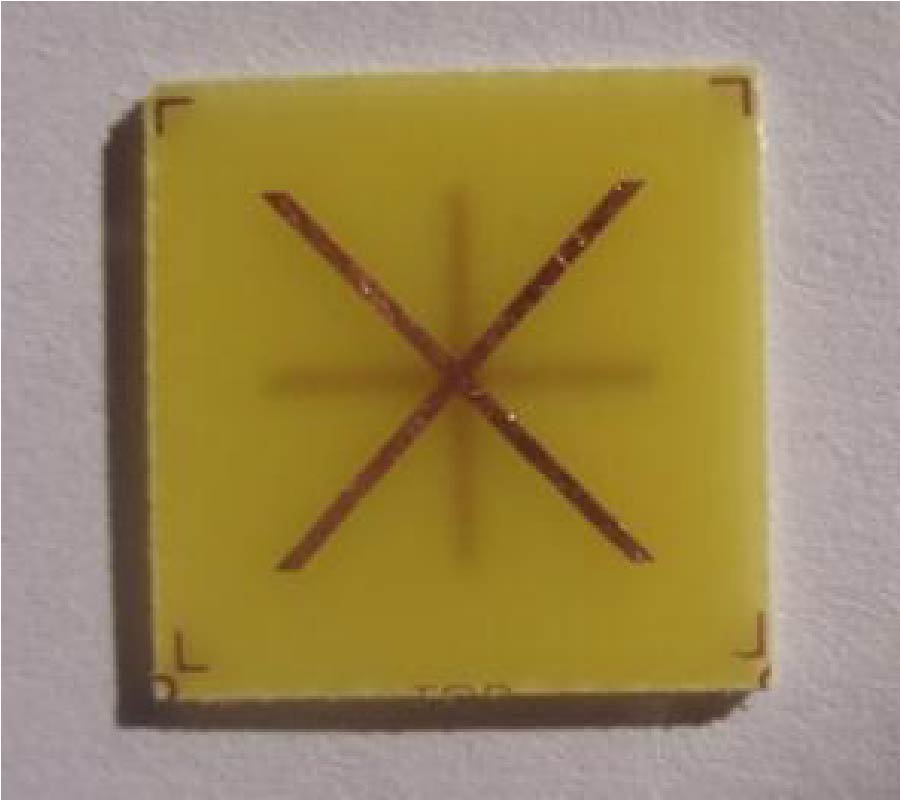
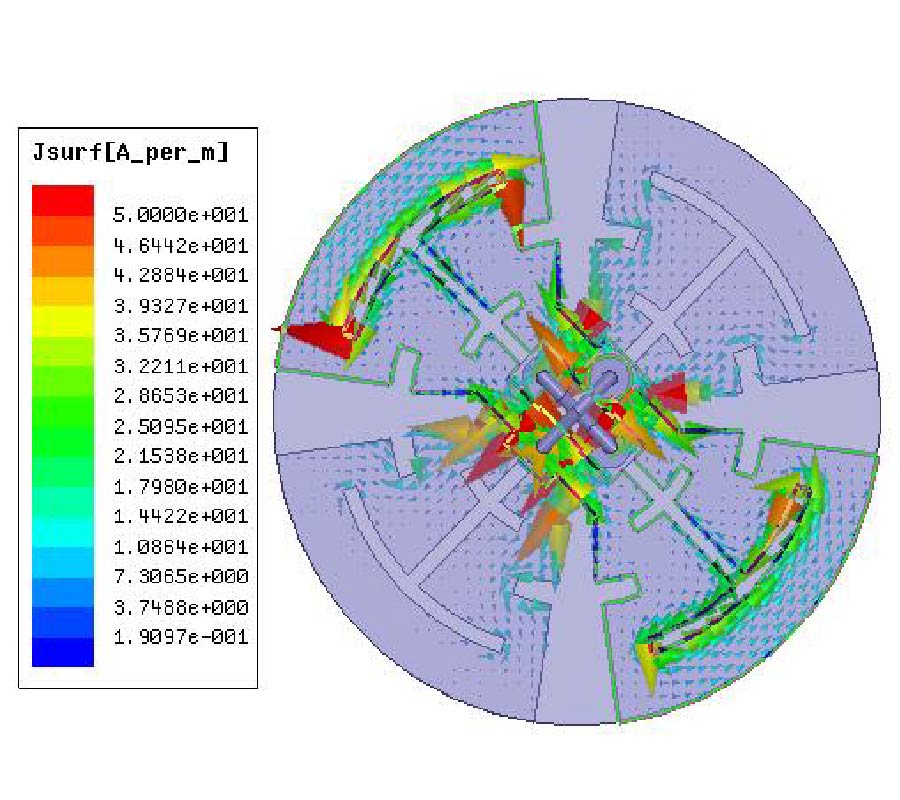
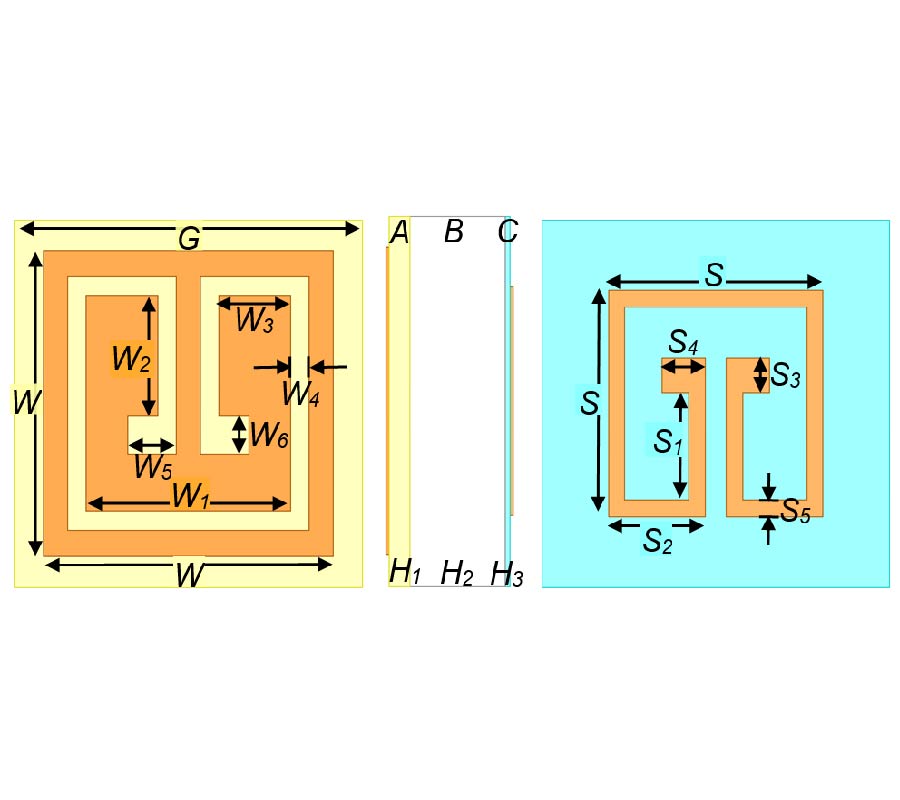
In Chinese Compass Navigation Satellite System (CNSS for short), dual-band antennas are more attractive, because they can provide both navigation and communication services. In this paper, we present a dual-band dual-circular-polarized planar spiral-slot CNSS antenna. This antenna works at L Band (1616±5 MHz, left-handed circular polarization, LHCP) and S Band (2492±5 MHz, right-handed circular polarization, RHCP). Numerical results show that the impedance bandwidth (S11<-10 dB), 3 dB axial ratio bandwidth and antenna gain at L Band are about 242 MHz, 79 MHz and 4.92 dB, respectively, while the simulated impedance bandwidth (S11<-10 dB), 3dB axial ratio bandwidth and antenna gain at S Band are about 180 MHz, 58 MHz and 5.25 dB, respectively. An experiment was carried out to verify our design. Measured results show that impedance bandwidth (S11<-10 dB) and 3 dB axial ratio bandwidth L Band are about 300 MHz and 14 MHz, respectively, while the measured impedance bandwidth (S11<-10 dB) and 3 dB axial ratio bandwidth at S Band are about 210 MHz, 10 MHz, respectively. The measured results basically agree with the simulated ones and meet the requirement of CNSS terminal antennas.
DUAL-BAND DUAL-POLARIZED SPIRAL ANTENNA FOR CHINESE COMPASS NAVIGATION SATELLITE SYSTEM
2014-05-01
PIER Letters
Vol. 46, 19-24
Design of a Wideband Planar Microstrip-Fed Quasi-Yagi Antenna
Hao Wang , Shu-Fang Liu , Wen-Tao Li and Xiao-Wei Shi
A compact wideband planar microstrip-fed quasi-Yagi antenna is presented. In order to achieve a high gain, the traditional rectangular director in one row is replaced by two rows of directors with an angle, and the overall size of the antenna is unchanged. By adjusting the angle between the two rows of directors, a better performance is achieved. The measurement results show that a broadband impedance about 85.5% (1.84-4.59 GHz) for S11 less than -10 dB and a gain about 4.5-9.3 dBi are obtained. Simulation and measurement results are provided and discussed. The agreements between the simulation and measurement results indicate that the antenna is suitable for wireless communication applications and phased arrays.
DESIGN OF A WIDEBAND PLANAR MICROSTRIP-FED QUASI-YAGI ANTENNA
2014-05-01
PIER
Vol. 146, 77-88
Near-Field Properties of Plasmonic Nanostructures with High Aspect Ratio
Yacoub Ould Agha , Olivier Demichel , Christian Girard , Alexandre Bouhelier and Gerard Colas des Francs
Using the Green's dyad technique based on cuboidal meshing, we compute the electromagnetic field scattered by metal nanorods with high aspect ratio. We investigate the effect of the meshing shape on the numerical simulations. We observe that discretizing the object with cells with aspect ratios similar to the object's aspect ratio improves the computations, without degrading the convergency. We also compare our numerical simulations to finite element method and discuss further possible improvements.
NEAR-FIELD PROPERTIES OF PLASMONIC NANOSTRUCTURES WITH HIGH ASPECT RATIO
2014-04-30
PIER B
Vol. 59, 257-267
Linear Momentum Density of a General Lorentz-Gauss Vortex Beam in Free Space
Yiqing Xu and Guoquan Zhou
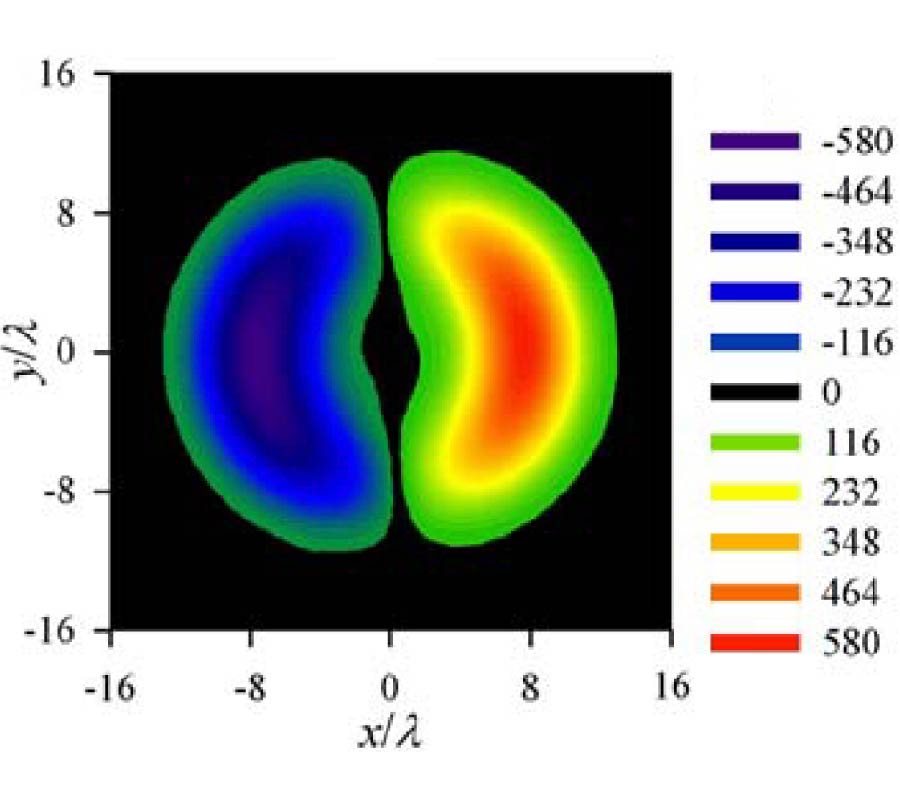
Based on the Collins integral, an analytical expression of a general Lorentz-Gauss vortex beam propagating in free space is derived, which allows one to calculate the linear momentum density of a general Lorentz-Gauss vortex beam in free space. The linear momentum density distribution of a general Lorentz-Gauss vortex beam propagating in free space is graphically demonstrated. The x- and y-components of the linear momentum density are composed of two lobes with the equivalent area and the opposite sign. Therefore, the overall x- and y-components of the linear momentum in an arbitrary reference plane are equal to zero. The longitudinal component of the linear momentum density is proportional to the intensity distribution. The influences of the Gaussian waist, the width parameters of the Lorentzian part, the axial propagation distance, and the topological charge on the linear momentum density distribution of a general Lorentz-Gauss vortex beam in free space are examined in detail.
LINEAR MOMENTUM DENSITY OF A GENERAL LORENTZ-GAUSS VORTEX BEAM IN FREE SPACE
2014-04-30
PIER C
Vol. 50, 11-19
Study of Cross-Slotted Circular Microstrip for Reflectarray Design
Wai-Hau Ng , Eng Hock Lim , Fook-Loong Lo and Kia-Hock Tan
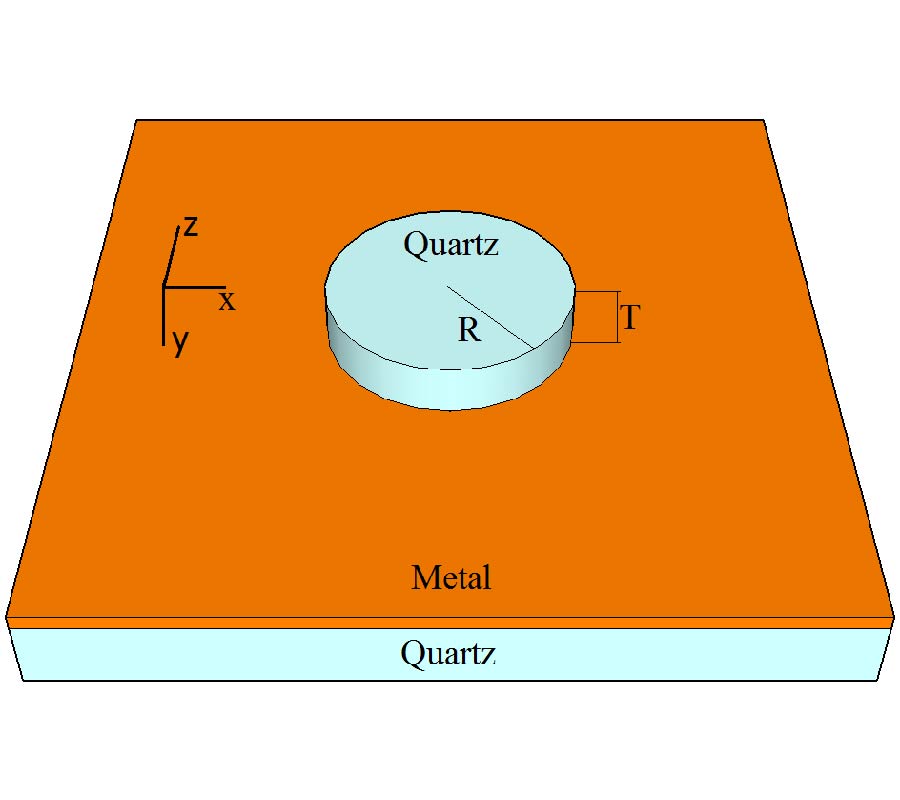
In this paper, a circular microstrip patchcentrally etched with a cross slot is studied. The slot dimensions are varied for controlling the reflection lossand thephase range of a reflectarray. It is found that the dominant TM mode of the slotted circular patch can be easily excited, and the slot length can be varied to function as a phase-changing parameter. Cross slots with equal and unequal arms are investigated. Study shows that the slope of the S curve can be made slow-changing by increasing the slot width. A maximum reflection phase range of 328.68º is achievable in the S curve. Rectangular waveguide method has been deployedfor simulating and verifying the design idea. Reasonable agreement is found between the measurement and simulation.
STUDY OF CROSS-SLOTTED CIRCULAR MICROSTRIP FOR REFLECTARRAY DESIGN
2014-04-30
PIER C
Vol. 50, 1-9
A Differential k-Band UWB Transmitter for Short Range Radar Application with Continuous Running Local Oscillator
Kristian G. Kjelgard and Tor Sverre Lande
The design of a differential K-band UWB(Ultra Wideband) Short Range Radar (SRR) transmitter in 90nm bulk CMOS is presented. Implementation of SRRs in deep submicron CMOS technology is attractive, in terms of cost and monolithic integration of RF font-end with signal base-band processor. The transmitted pulse bandwidth limits the range resolution of the radar system. Due to the wide bandwidth and high frequency of CMOS implementation, UWB transmitters in the K-band are challenging to make and critical for the system performance. The design presented is based on frequency up conversion using a double balanced mixer. The differential output is combined and matched with the antenna using an on-chip balun. To mitigate local oscillator (LO) leakage of UWB differential transmitters we propose a new Pulse Generator (PG) design. A switching technique is used to minimize the LO leakage enabling continuous wave operation with very wideband pulses. Measurements of the proposed transmitter achieves a -10 dB bandwidth (BW) of 5 GHz. Using a Pulse Repetition Frequency (PRF) of 100 MHz the peak average power is -40 dBm. Compared to measured transmitter performance of a single balanced mixer design, the LO leakage of this dual balanced mixer is decreased with more than 20 dB, and is lower than the peak average power of the pulse. It consumes 11 mW from a 1.2 v supply where 6 mW is from the LO.
A DIFFERENTIAL K-BAND UWB TRANSMITTER FOR SHORT RANGE RADAR APPLICATION WITH CONTINUOUS RUNNING LOCAL OSCILLATOR
2014-04-30
PIER Letters
Vol. 46, 13-18
Implementation of a Pldro with a Fractional Multiple Frequency of Reference
Won Il Chang and Chul Soon Park
A PLDRO (Phase Locked Dielectric Resonator Oscillator) with the output frequency of a fractional multiple of reference is proposed and implemented. The key element in the proposed PLDRO is an image rejection mixer placed between a VCDRO (Voltage Controlled Dielectric Resonator Oscillator) and SPD (Sampling Phase Detector). The image rejection mixer shifts the coupled signal from the VCDRO before the signal feeds the SPD. Therefore, the output frequency of the PLDRO can be realized such that it is not harmonically related with its reference frequency. The frequency divider and multiplier generate the IF frequency for the mixer from the reference frequency. The general PLL (Phase Locked Loop) design parameters such as the damping coefficient and the natural frequency are derived for the proposed topology of the PLDRO. A 7.25 GHz PLDRO with a 100MHz reference, intended for use as a local oscillator for a ka band Block-up Converter (BUC), is designed and measured. A BJT (Bipolar Junction Transistor) is used as an active component of the VCDRO and a modified two micro-strip line coupled DR model is presented and used for frequency tuning range estimation. The measured phase noise at 10 kHz/100 kHz offset is 101 dBc/Hz and 115 dBc/Hz, respectively. The fabricated PLDRO size is 100 mm by 105 mm by 23 mm including a 100 MHz reference crystal oscillator.
IMPLEMENTATION OF A PLDRO WITH A FRACTIONAL MULTIPLE FREQUENCY OF REFERENCE
2014-04-30
PIER M
Vol. 36, 39-46
Theoretical Study on Single-Scattering Properties of Ice Particles of Different Orientation at 94 GHz
Jinhu Wang , Jun-Xiang Ge and Ming Wei
The single-scattering properties of hexagonal columns and plates were studied using Discrete Dipole Approximation at 94GHz, including scattering efficiency, absorption efficiency, asymmetry factor, backscattering cross section and phase function. Random and horizontal orientations of particles were compared, and 35 sizes of maximum dimension D ranging from 1 um to 10 mm were selected. The results indicate that scattering and absorption efficiencies of horizontally oriented hexagonal columns are larger than those of the randomly oriented ones, whereas this phenomenon does not appear to hexagonal plates. The asymmetry factor of horizontally oriented hexagonal plates has a negative value, which means that the backscattered energy is more than forward energy when the particle is large enough. The backscattering cross sections of horizontally oriented hexagonal columns and plates are larger than those of random orientation, which can be explained by that different cross sections of particles will be exposed to incident plane wave. When the particle size is smaller than incident wavelength, little scattering energy difference between random and horizontal orientation exists, while if the particle is larger than incident wavelength, a turning point will happen at θ=110˚, which can be explained by the theory of energy conservation.
THEORETICAL STUDY ON SINGLE-SCATTERING PROPERTIES OF ICE PARTICLES OF DIFFERENT ORIENTATION AT 94 GHZ
2014-04-29
PIER B
Vol. 59, 245-256
Inhomogeneous and Homogeneous Losses and Magnetic Field Effect in Planar Undulator Radiation
Konstantin V. Zhukovsky
We construct an analytical model for the description of emission of undulator radiation (UR) harmonics with account for several sources of line broadening, including the effect of a constant magnetic constituent. We compare it with that of the beam energy spread, emittance and focusing components. The analytical expressions obtained for the UR intensity and spectrum allow for profound analysis of homogeneous and inhomogeneous losses in their explicit form. We analyse the contributions to the fundamental frequency as well as to higher harmonics in long undulators. We study a possibility to compensate for the off-axis effects in undulators by a properly imposed constant magnetic field and obtain an expression for the intensity of such compensating effect. The results obtained are discussed in the context of their possible applications to free electron lasers (FEL). Recommendations for improvement of an UR harmonic line quality, profitable for FEL, are also proposed.
INHOMOGENEOUS AND HOMOGENEOUS LOSSES AND MAGNETIC FIELD EFFECT IN PLANAR UNDULATOR RADIATION
2014-04-29
PIER C
Vol. 49, 179-185
Design of a Wire Grid Inverted-F Antenna with Ultra Wideband Characteristics
Mehdi Hosseini
In this paper, a new wire inverted-F antenna (IFA) is proposed, which is structured by grids of thin wires. This novel wire grid IFA is ~0.3λ long and ~0.14λ high and renders 41% fractional bandwidth which is nearly 5 times higher than the bandwidth of a classic IFA. In addition to the novel structure and high bandwidth, the distinguishing feature of the design process employed is its computational efficiency. While the constituent wires of the wire grid (WG) model are one-dimensional (1D) thin wires, they can indirectly form very thick arms leading to bandwidth enhancement. The thin-wire structure of the WG-IFA provides the opportunity to carry out the analysis and design accurately and fast in a 1D MoM-based software like NEC.
DESIGN OF A WIRE GRID INVERTED-F ANTENNA WITH ULTRA WIDEBAND CHARACTERISTICS
2014-04-29
PIER C
Vol. 49, 171-178
Multi-Band Circularly Polarized Slot Antenna for GPS, Bluetooth and WiMAX Bands
Mohammad Bod and Hamid Reza Hassani
This paper describes the concept, design, and measurement of a multi-band circularly polarized printed slot antenna with a single microstrip feed line. The antenna design for circular polarization (CP) at 1.5 GHz for GPS, 2.4 GHz for Bluetooth, and 3.75 GHz for WiMAX application is given. The proposed antenna also provides a fourth linear polarized band over 5.2 to 6 GHz covering the WLAN band. The design is such that all three CP bands can be tuned for any other desired frequencies. Three configurations of the proposed antenna with different design parameters for different circularly polarized bands are reported in the paper. A prototype of the proposed antenna is fabricated, and measured results are compared with those of the simulations.
MULTI-BAND CIRCULARLY POLARIZED SLOT ANTENNA FOR GPS, BLUETOOTH AND WIMAX BANDS
2014-04-29
PIER M
Vol. 36, 23-37
A Complete Analytical Analysis and Modeling of Few Mode Non-Uniform Fiber Bragg Grating Assisted Sensing Waveguide Devices
Sanjeev Kumar Raghuwanshi and Debi Prasad Panda
In this paper, we develop and present a complete analytical method to analyze the spectral response of a non-uniform multimode fiber Bragg grating assisted devices supporting a few modes. We present the analytical solution while taking into account the two forward and two backward propagating even or odd normal modes of the grating using the matrix method of multimode coupled grating assisted coupler, for sensing application. Earlier, these types of numerical technique based analysis were presented by other researchers, but no one seems to present a complete analytical solution for the given case. The present analytical analysis can simulate a single mode to multimode coupled sensing waveguide devices based on non-uniform grating assisted operation in a coupled structure. The potential applications of our findings will be mostly in sensing devices.
A COMPLETE ANALYTICAL ANALYSIS AND MODELING OF FEW MODE NON-UNIFORM FIBER BRAGG GRATING ASSISTED SENSING WAVEGUIDE DEVICES
2014-04-29
PIER
Vol. 146, 71-76
Reduction of Radar Cross Section Based on a Metasurface
Jie Chen , Qiang Cheng , Jie Zhao , Di Sha Dong and Tie-Jun Cui
A metasurface for Radar Cross Section (RCS) reduction is proposed. The surface is composed of the same type of metamaterial units with different geometric dimensions, leading to various reflection phases under the incidence of plane waves. By carefully choosing the phase distributions, diffusion will be produced for the reflected waves which may redistribute the scattering energy from the surface toward all the directions, and hence it can be applied as the coating of metallic targets with ultra-low RCS. Both the simulated and experimental results have validated the proposed method.
REDUCTION OF RADAR CROSS SECTION BASED ON A METASURFACE
2014-04-25
PIER B
Vol. 59, 231-244
Enhanced the Complete Photonic Band Gaps for Three-Dimensional Photonic Crystals Consisting of Epsilon-Negative Materials in Pyrochlore Arrangement
Hai Feng Zhang , Shaobin Liu and Hui-Chao Zhao
In this paper, the properties of photonic band gaps (PBGs) for three-dimensional (3D) photonic crystals (PCs) composed of isotropic positive-index materials and epsilon-negative materials with pyrochlore lattices are theoretically investigated by a modified plane wave expansion method. The eigenvalue equations of calculating the band structure for such 3D PCs in the first irreducible Brillouin zone (spheres with the isotropic positive-index materials inserted in the epsilon-negative materials background) are theoretically deduced. Numerical simulations show that the PBG and a flatbands region can be achieved. It is also found that the larger PBG can be obtained in such PCs structure than the conventional lattices, such as diamond, face-centered-cubic, body-centered-cubic and simple-cubic lattices. The influences of the relative dielectric constant of spheres, filling factor, electronic plasma frequency, dielectric constant of epsilon-negative materials and damping factor on the properties of the PBG for such 3D PCs are studied in detail, respectively, and some corresponding physical explanations are also given. The calculated results also show that the PBG can be manipulated by the parameters mentioned above except for the damping factor. Introducing the epsilon-negative materials into 3D dielectric PCs can obtain the complete and larger PBGs as such 3D PCs with pyrochlore lattices, and also provides a way to design the potential devices.
ENHANCED THE COMPLETE PHOTONIC BAND GAPS FOR THREE-DIMENSIONAL PHOTONIC CRYSTALS CONSISTING OF EPSILON-NEGATIVE MATERIALS IN PYROCHLORE ARRANGEMENT
2014-04-25
PIER C
Vol. 49, 159-170
Design and Analysis of Two Novel CPW-Fed Dual Band-Notched UWB Antennas with Modified Ground Structures
Kirti Vyas , Arun Kumar Sharma and Pramod Kumar Singhal
In this paper two novel coplanar waveguide (CPW) fed printed ultra wide band (UWB) monopole antennas with dual band-notching characteristics are proposed. The modified ground technique with symmetric ground plane in antenna-1 and asymmetric ground planes in antenna-2 is exploited to cover UWB application. Both antennas are compact with dimensions of 30 x 30 x 1.6 mm3 and have dual band-notched characteristics with first notched band for integrated band of WiMax 3.5/5.5 GHz and C-band satellite communications 3.7-4.2 GHz, and second notched band for WLAN 5.2/5.8 GHz bands. Antenna with symmetric ground plane achieves the impedance bandwidth of 2.9-11.5 GHz, and antenna with asymmetric ground plane achieves the impedance bandwidth of 2.9-11.89 GHz, respectively with VSWR < 2 except in the notched bands. The antennas are designed and optimised in CST Microwave Studio. The simulated VSWR of the proposed antenna designs is compared with the measured VSWR of fabricated antennas, and it is found that they are in a good agreement. Both antennas exhibit monopole-like radiation patterns with significant gain in entire operating band. Maximum gain of the proposed antenna with symmetric ground plane is 5.3 dBi at 8 GHz, and that with asymmetric ground plane is 4.5 dBi at 7 GHz.
DESIGN AND ANALYSIS OF TWO NOVEL CPW-FED DUAL BAND-NOTCHED UWB ANTENNAS WITH MODIFIED GROUND STRUCTURES
2014-04-25
PIER C
Vol. 49, 149-157
Study of EM Wave Absorption and Shielding Characteristics for a Bonsai Tree for GSM-900 Band
Md. Faruk Ali and Sudhabindu Ray
Electromagnetic (EM) wave absorption characteristics for a Bonsai tree are investigated at GSM-900 band. Finite Difference in Time Domain (FDTD) method is hybridized with Friis transmission equation to carry out all the required EM simulations. The tree has been modelled using CT scan based 3D dataset considering different electrical parameters. Maximum local electric (E) field, magnetic (H) field, Specific Absorption Rate (SAR) and Shielding Effectiveness (SE) have been calculated for the tree placing at distance of 5 m away from a radiating Base Station Antenna (BSA) with 20 W input power. The maximum local E field, H field, 1-g SAR and SE obtained by the simulation are found to be 70.1 V/m, 0.09 A/m, 0.135 W/kg and 13.18 dB, respectively. Plants are found to be good natural electromagnetic radiation shield.
STUDY OF EM WAVE ABSORPTION AND SHIELDING CHARACTERISTICS FOR A BONSAI TREE FOR GSM-900 BAND
2014-04-25
PIER M
Vol. 36, 9-22
Constraint-Based Synthesis of Linear Antenna Array Using Modified Invasive Weed Optimization
Lakshman Pappula and Debalina Ghosh
This paper presents a novel technique for the synthesis of unequally spaced linear antenna array. The modified Invasive Weed Optimization (IWO) algorithm is applied to optimize the antenna element positions for suppressing peak side lobe level (PSLL) and for achieving nulls in specified directions. The novelty of the proposed approach is in the application of a constraint-based static penalty function during optimization of the array. The static penalty function is able to put selective pressure on the PSLL, the first null beam width (FNBW) or the accurate null positioning as desired by the application at hand lending a high degree of flexibility to the synthesis process. Various design examples are considered and the obtained results are validated by comparing with the results obtained using Particle Swarm Optimization (PSO), Ant Colony Optimization (ACO) and Cat Swarm Optimization (CSO). Results demonstrate that the proposed method outperforms the previously published methods in terms of a significant reduction in peak side lobe level while maintaining strong nulls in desired directions. The flexibility and ease of implementation of the modified IWO algorithm in handling the constraints using static penalty function is evident from this analysis, showing the usefulness of the constraint based method in electromagnetic optimization problems.
CONSTRAINT-BASED SYNTHESIS OF LINEAR ANTENNA ARRAY USING MODIFIED INVASIVE WEED OPTIMIZATION