Search Results(13798)

2014-04-24
PIER M
Vol. 36, 1-7
Numerical Investigation on the Spectral Properties of One-Dimensional Triadic-Cantor Quasi-Periodic Structure
Yassine Bouazzi , Osswa Soltani , Manel Romdhani and Mounir Kanzari
We numerically investigate the optical spectra of a photonic band gap material realized by one-dimensional Triadic-Cantor quasi-periodic structure. The studied system is composed of two elementary layers H and L with refractive indices nL=1,45 (SiO2) and nH=2,3 (TiO2), respectively. Analytical calculations using a trace and antitrace maps approach have been used to find the reflection and transmission theoretical expressions in visible range under quarter wavelength condition. In our results we present the effect of iteration order of Triadic-Cantor sequence on the optical properties of these multilayer systems, namely the photonic band gap behavior and the optical windows presence, which makes this type of structures good candidates for interesting applications in the field of the nano-optical engineering.
NUMERICAL INVESTIGATION ON THE SPECTRAL PROPERTIES OF ONE-DIMENSIONAL TRIADIC-CANTOR QUASI-PERIODIC STRUCTURE
2014-04-23
PIER C
Vol. 49, 141-147
Asymmetric Chiral Metamaterial Multi-Band Circular Polarizer Based on Combined Twisted Double-Gap Split-Ring Resonators
Wenshan Yuan , Honglei Zhang and Yongzhi Cheng
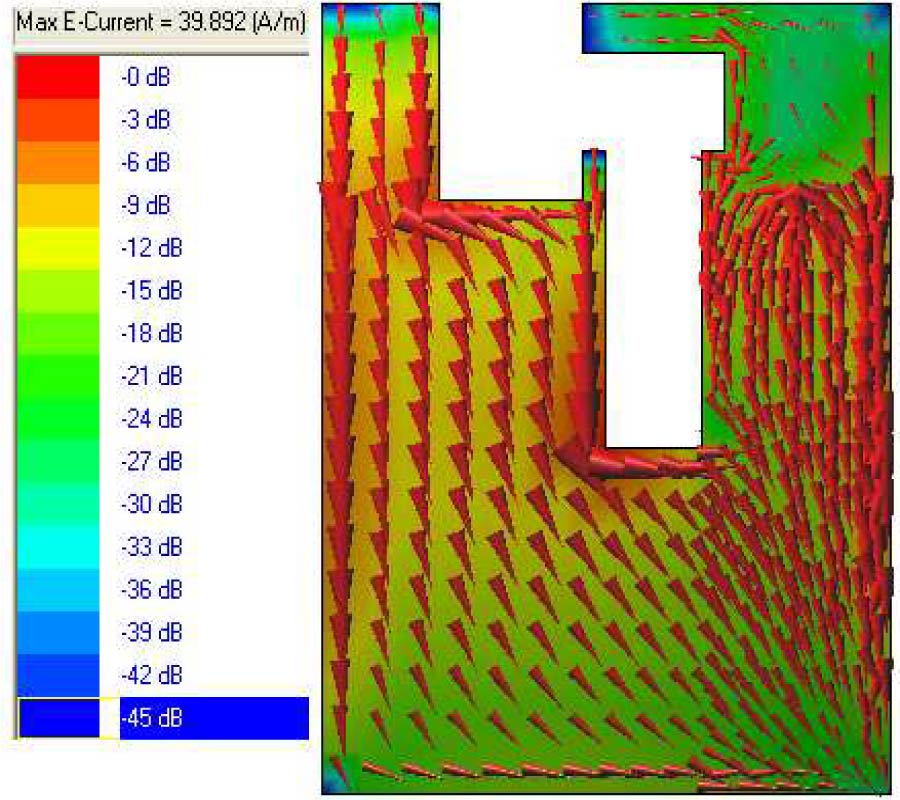
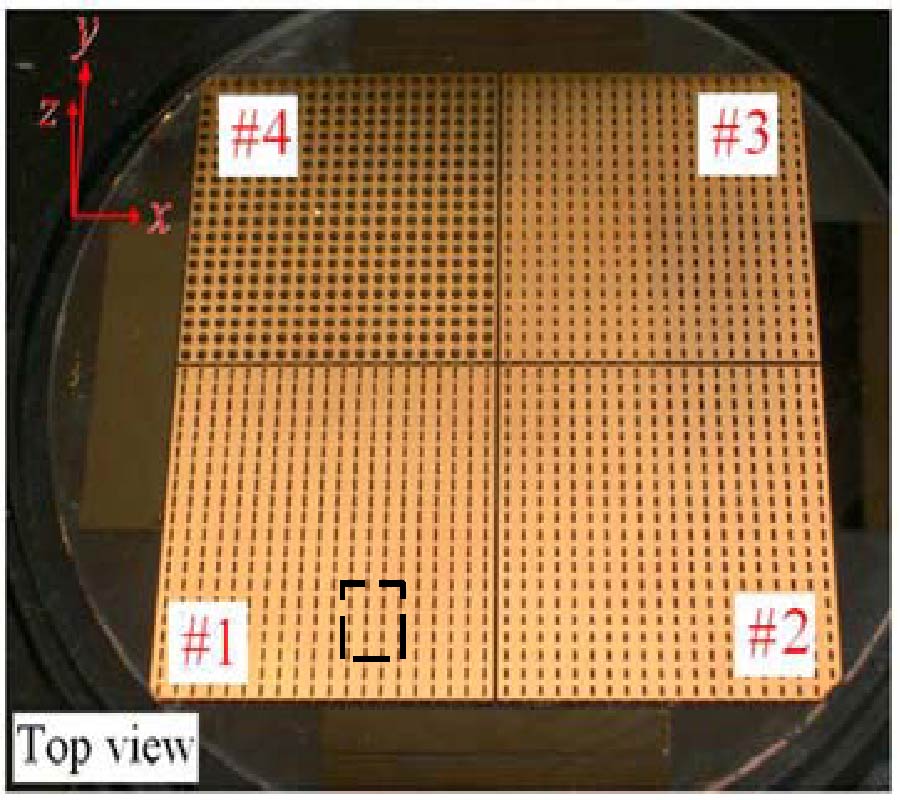
In this paper, an ultrathin asymmetric chiral metamaterial multi-band circular polarizer using combined twisted double-gap split-ring resonators (DGSRRs) is proposed and investigated. Experiment and numerical simulations are in good agreement, indicating that when a y-polarized wave is incident on this chiral metamaterial propagating along -z direction, the right circularly polarized (RCP) wave is emitted at 5.58 GHz and 9.34 GHz, while left circularly polarized (LCP) wave is excited at 6.41 GHz and 7.65 GHz, in addition to large polarization extinction ratio of more than 18 dB at the four resonant frequencies. The surface current distributions are studied to illustrate the transformation behavior for both circular polarizations.
ASYMMETRIC CHIRAL METAMATERIAL MULTI-BAND CIRCULAR POLARIZER BASED ON COMBINED TWISTED DOUBLE-GAP SPLIT-RING RESONATORS
2014-04-23
PIER
Vol. 146, 57-69
RCS Reduction of Open-Ended Circular Waveguide Cavity with Corrugations Using Mode Matching and Scattering Matrix Analysis
Young-Dam Kim , Ho Lim , Jung-Hoon Han , Won-Young Song and Noh-Hoon Myung
A scattered radar signal by a jet engine inlet involves engine information of the target. The jet engine RCS due to the engine inlet is therefore significant in radar target recognition. Accordingly, several accurate analyses of the jet engine RCS have been reported. Reduction of the jet engine RCS is also required for stealth technology. We suggest a new approach for jet engine RCS reduction that involves the insertion of many small corrugations into the jet engine inlet. The proposed jet engine structure is assumed to be a circular waveguide cavity with many corrugations. The structure is analyzed by combining a mode matching technique with a scattering matrix analysis. The proposed closed-form RCS solutions of the corrugated engine structure are validated with a MoM simulation using FEKO. The proposed closed-form solution has numerical efficiency and rapid convergence. Using the characteristics of the solution, we simply apply a genetic algorithm (GA) to optimize the structure of the corrugations in terms of minimizing the RCS.
RCS REDUCTION OF OPEN-ENDED CIRCULAR WAVEGUIDE CAVITY WITH CORRUGATIONS USING MODE MATCHING AND SCATTERING MATRIX ANALYSIS
2014-04-22
PIER C
Vol. 49, 133-139
A Compact Dual Band-Notched Ultrawideband Antenna with Λ/4 Stub and Open Slots
Jian Ren and Ying-Zeng Yin
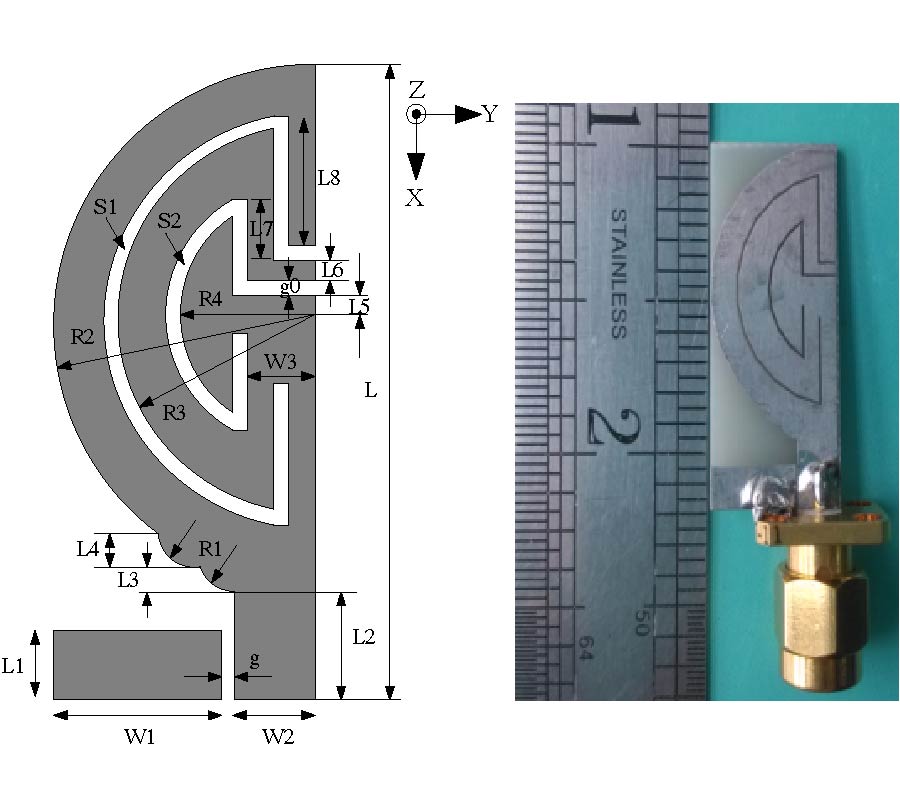
A novel compact UWB antenna with 3.5/5.5 GHz dual notch-band characteristics is presented. The proposed antenna has a simple structure and compact size of 30×35mm2. Firstly, a compact modified rotated monopole antenna that covers UWB band is achieved. Then by inserting a λ/4 stub and etching two symmetrical λ/4 L-shape slots on the UWB antenna achieved before, a dual band-notched ultra-wideband antenna is obtained. The prototypes of UWB antenna with and without notched bands were fabricated and measured. Good performance of dual notched bands, stable gain and omnidirectional radiation patterns make the proposed antenna promising for UWB application.
A COMPACT DUAL BAND-NOTCHED ULTRAWIDEBAND ANTENNA WITH Λ/4 STUB AND OPEN SLOTS
2014-04-22
PIER Letters
Vol. 46, 7-12
Microwave Analogue of Tamm States in Periodic Chain-Like Structures
Dmitry P. Belozorov , Aleksey Girich , Sergey V. Nedukh , Anastasiia N. Moskaltsova and Sergey I. Tarapov
The paper is devoted to the study of microwave analogue of Tamm states appearing at the boundary of two different periodical chain-like structures in contact. A comparison of numerical and experimental data is provided for periodical chains of quadripoles modelling our system. As it turns out, at the point of contact of two different periodic structures, significant concentration of electromagnetic wave energy takes place. The corresponding concentration of energy is quite similar to those characteristics for Tamm states concentration which takes place at the boundary between two adjacent photonic crystals. We use the term microwave analogue of Tamm states for the considered periodic chain-like structures.
MICROWAVE ANALOGUE OF TAMM STATES IN PERIODIC CHAIN-LIKE STRUCTURES
2014-04-22
PIER Letters
Vol. 46, 1-6
380 GHz Sub-Harmonically Pumped Mixer Based on Anti-Parallel Planar Schottky Diode
Xiaofan Yang , Guoyu Wang , Liandong Wang and Bo Zhang
This paper presents the design and fabrication of a feed horn antenna integrated fix-tuned 380 GHz sub-harmonically pumped mixer, based on planar GaAs air-bridged Schottky anti-parallel diode from Rutherford Appleton Laboratory. The diode was designed and fabricated by millimeter technology group, Rutherford Appleton Laboratory, UK. The mixer's circuit configuration and cavity block are realized by joint simulation of ANSOFT's three-dimensional full-wave electromagnetic simulation software HFSS and AGILENT's circuit simulation software ADS. The mixer circuit is fully integrated with the microstrip circuit and the flip-chipped diode on suspended 50 μm thick quartz substrate, and whole fixed-tuned mixer cavity block is integrated with RF feed horn antenna, using least parts to minimize the cost, as well as maximizing its potential convenience for circuit and block manufacture. The simulation and test investigation have good agreement and show state-of-the-art results. The experimental results show that over an IF band of 2.5-3.5 GHz, the mixer's conversion loss is lower than 10 dB with mean value 9 dB, and the mixer's equivalent noise temperature is less than 3000K with mean value 2000 K. Besides, mixer equivalent noise temperature curve's variation trends show good consistency with conversion loss curve.
380 GHZ SUB-HARMONICALLY PUMPED MIXER BASED ON ANTI-PARALLEL PLANAR SCHOTTKY DIODE
2014-04-20
PIER C
Vol. 49, 123-131
High Selectivity Filter Employing Stepped Impedance Resonators,Series Capacitors and Defected Ground Structures for Ultra Wide Band Applications
Chettiparampil Bindu , Shanta Mridula and Pezholil Mohanan
The paper presents a compact planar Ultra Wide Band filter employing folded stepped impedance resonators with series capacitors and Dumb bell shaped Defected Ground Structures. An interdigital quarter wavelength coupled line is used for achieving the band pass characteristics. The transmission zeros are produced by Stepped Impedance Resonators. The filter has steep roll off rate and good attenuation in its lower and upper stop bands, contributed by the series capacitor and DGS respectively.
HIGH SELECTIVITY FILTER EMPLOYING STEPPED IMPEDANCE RESONATORS,SERIES CAPACITORS AND DEFECTED GROUND STRUCTURES FOR ULTRA WIDE BAND APPLICATIONS
2014-04-20
PIER C
Vol. 49, 115-122
A Single-Layer Wideband Dual-Polarized Antenna with High Isolation
Ruina Lian , Shu-Feng Zheng , Ying-Zeng Yin , Jianjun Wu , Shaoshuai Zhang and Guanxi Zhang
A single-layer wideband printed antenna for dual-polarized applications is proposed in this paper. Two orthogonal linear polarizations are achieved by adopting a hybrid feeding technique. The horizontal polarization is excited by an aperture-coupled microstrip feed line while the coplanar waveguide (CPW) feed line is responsible for the vertical polarization. Measurements demonstrate a fairly wide common impedance bandwidth of 56.3% (1.61-2.87 GHz) with SWR ≤ 2 could be achieved. By loading a rectangular patch in the narrow rectangular slot, the isolation between two ports can be improved to better than 40dB over the entire bandwidth. Moreover, the average gains of the proposed antenna are about 5.8 dBi and 5 dBi for port 1 and port 2, respectively.
A SINGLE-LAYER WIDEBAND DUAL-POLARIZED ANTENNA WITH HIGH ISOLATION
2014-04-20
PIER Letters
Vol. 45, 115-119
A Folded SIR Cross Coupled WLAN Dual-Band Filter
Zi Jian Su , Xi Chen , Long Li , Bian Wu and Chang-Hong Liang
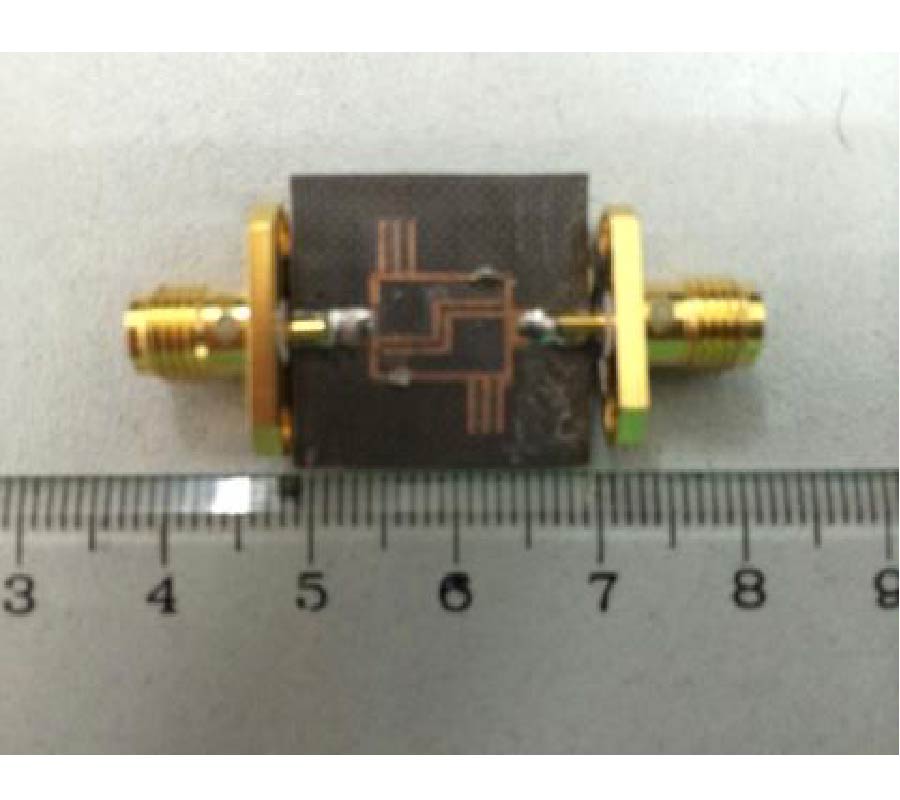
A compact cross-coupled dual-band bandpass filter based on folded Stepped Impedance Resonators (SIRs) with four controllable transmission zeros is proposed in this paper. A pair of stepped impedance tapped lines is utilized to improve the dual band impedance matching, which reduces the insertion loss of the filter; meanwhile the tapped lines are also coupled with non-adjacent resonators to produce transmission zeros to improve skirt characteristics. At the end of this paper, the simulated and measured results are compared with each other, and good agreement is achieved.
A FOLDED SIR CROSS COUPLED WLAN DUAL-BAND FILTER
2014-04-18
PIER B
Vol. 59, 219-229
Optimization of a Plasmon-Assisted Waveguide Coupler Using FEM and Mmp
Mengyu Wang , Aytac Alparslan , Sascha M. Schnepp and Christian Hafner
In this paper, we focus on the problem of optimizing plasmonic structures. A plasmon-assisted waveguide coupler is considered as a test problem, which leads to a five-dimensional optimization problem carried out by an evolution strategy (ES). The optimization results are verified by a comparative analysis between different solvers, i.e., the finite element package CONCEPTs and the multiple multipole program (MMP). We also compared with results obtained using a deterministic optimization algorithm, namely the Nedler-Mead method as implemented in the commercial software package COMSOL Multiphysics. Some issues concerning deterministic versus evolutionary optimization, in particular, in the field of plasmonics have been discussed.
OPTIMIZATION OF A PLASMON-ASSISTED WAVEGUIDE COUPLER USING FEM AND MMP
2014-04-18
PIER B
Vol. 59, 205-217
Experimental Characterization of the Propagation Channel Along a Very Large Virtual Array in a Reverberation Chamber
Andres Alayon Glazunov , Sathyaveer Prasad and Peter Handel
We show that the combined use of radio frequency absorbers and directive antennas can produce significant changes of the radio propagation channel properties along the positions of a virtual array inside a reverberation chamber. A multidimensional characterization of the channel was performed at 40 antenna positions with spacing of 0.233λ at 1 GHz. The average power, the Ricean K-factor, the coherence bandwidth, the r.m.s. delay spread, the mean delay, the beamforming power angle spectrum and array antenna correlation have been studied for different arrangements in the reverberation chamber. The analysis shows that the joint average over time and frequency channel behavior is, as expected, rather homogeneous along the very large array. However, individual realizations of the channel present a pronounced selective behavior in space, time and frequency with parameters varying along the positions of the virtual array suggesting that a heterogeneous behavior of the radio channels can be emulated in reverberation chambers. An important application of the presented study comprises testing of antenna array designs and algorithms in multipath environments. Further development may lead to Over The Air testing of Multiple Input Multiple Output antenna systems of various sizes, i.e., from small to very large arrays.
EXPERIMENTAL CHARACTERIZATION OF THE PROPAGATION CHANNEL ALONG A VERY LARGE VIRTUAL ARRAY IN A REVERBERATION CHAMBER
2014-04-18
PIER C
Vol. 49, 105-113
A Family of Directive Metamaterial-Inspired Antennas
Saber Dakhli , Hatem Rmili , Kouroch Mahdjoubi , Jean-Marie Floc'h and Fethi Choubani
A new family of metamaterial-inspired monopole antennas designed for GPS operation is reported. By adding a simple Split-Ring Resonator (SRR) into the near-field region of a monopole antenna resonating at 2.45 GHz, we have created a second resonance situated in the L1-band (f=1,537 for example) lower than the monopole's one. At this new resonance, the directivity of the structure was enhanced and its profile was reduced. Four SRR-configurations were considered depending on the orientation of the slot into the resonator. The structure was first optimized by adjusting the resonator size and the coupling distance between it and the monopole. Next, the directivity of the structure was improved by adjusting both the SRR-slot position and the coupling distance. Finally, the optimized structure in terms of size and directivity was realized and characterized.
A FAMILY OF DIRECTIVE METAMATERIAL-INSPIRED ANTENNAS
2014-04-18
PIER
Vol. 146, 47-56
Near-Field Time-Domain Shielding Effectiveness of Thin Conductive Screens
Giampiero Lovat , Rodolfo Araneo and Salvatore Celozzi
The time-domain shielding effectiveness of planar conductive thin screens excited by a transient electric-line source is studied in detail by means of an approximate semi-analytical formulation based on a Cagniard-De Hoop approach. Such a formulation allows for easily deriving and discussing several definitions of time-domain shielding effectiveness, recently introduced in the literature. Comparisons with results obtained numerically through an exact canonical double inverse Fourier transform are provided which furnish a benchmark to discuss the advantages and limits of the proposed approximate formulation.
NEAR-FIELD TIME-DOMAIN SHIELDING EFFECTIVENESS OF THIN CONDUCTIVE SCREENS
2014-04-17
PIER C
Vol. 49, 97-104
Compact Dual-Band MIMO Antenna with High Port Isolation for WLAN Applications
Hao Qin and Yuan-Fu Liu
A compact dual-band MIMO antenna with high port isolation for WLAN applications is proposed. The proposed antenna is basically composed of two monopoles and designed at 2.4/5.2 GHz. High port isolation is achieved by introducing a T-shaped junction on the top surface of the substrate and etching two slots on the ground. The measured bandwidth of the proposed antenna are 2.34-2.55 GHz and 5.13-5.85 GHz, which are suitable for WLAN applications, and the measured isolation between the two monopoles is higher than 20 dB in both bands. Meanwhile, the envelope correlation coefficient of the antenna at both operating bands is lower than 0.001, which means that the antenna has high diversity gain. Good agreement is achieved between the predicted result and the measured data. The overall size of the proposed antenna is 38 mm×43 mm×1.6 mm.
COMPACT DUAL-BAND MIMO ANTENNA WITH HIGH PORT ISOLATION FOR WLAN APPLICATIONS
2014-04-16
PIER
Vol. 146, 25-46
Multi-Physical Properties of Plasmonic Organic Solar Cells (Invited Paper)
Wallace C. H. Choy , Wei E. I. Sha , Xuanhua Li and Di Zhang
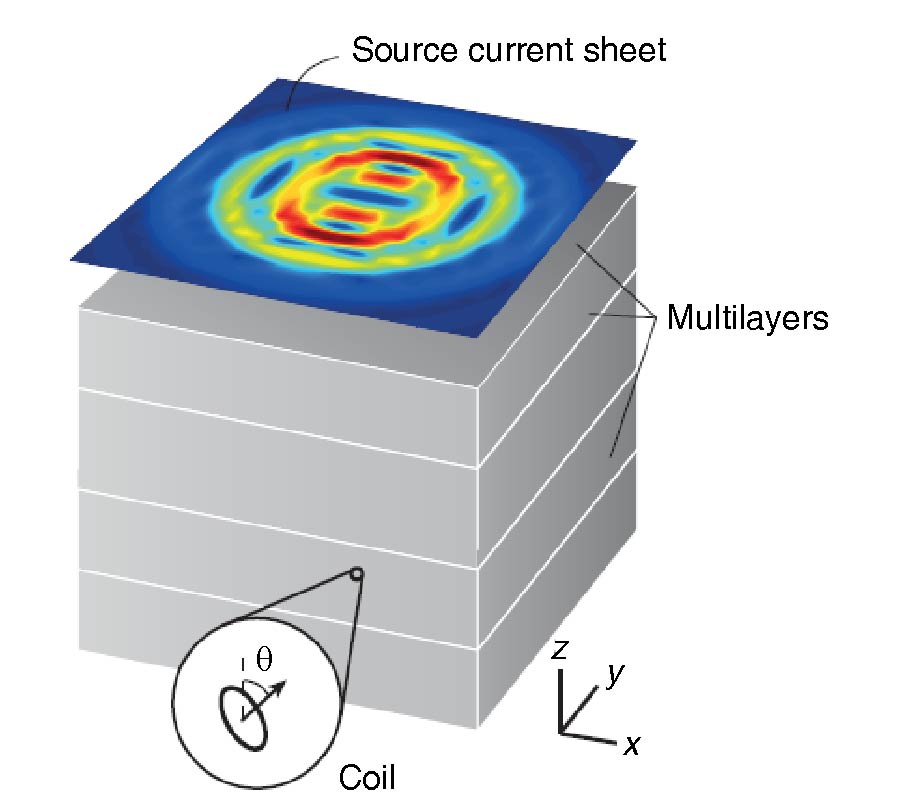
Organic solar cells (OSCs) have recently attracted considerable research interest. For typical OSCs, it is highly desirable to have optically thick and physically thin thickness for strong light absorption and efficient carrier collection respectively. In the meantime, most organic semiconductors have short exciton diffusion length and low carrier mobility [1-3]. As a consequence, the active layers of OSCs are generally thin with a thickness of few hundred nanometers to ensure the efficient extraction of carriers, hence limiting the total absorption of incident light. Optimizing both the optical and electrical (i.e. multi-physical) properties of OSCs is in demands for rationally designed device architectures. Plasmonic nanomaterials (e.g. metallic nanoparticles [4-6], nanorods [7, 8], nanoprisms [9, 10], etc.) have recently been introduced into different layers of multilayered solar cells to achieve highly efficient light harvesting. The multilayered solar cells structures commonly have active layer, carrier (electron and hole) transport layer and electrode (anode and cathode). Through the localized plasmonic resonances (LPRs) [11-16] from metallic nanomaterials, very strong near-fields will be generated, which can provide a large potential for enhancing optical absorption in the multilayered OSCs. Besides the optical effects, it has been reported that metallic nanomaterials can modify the morphology, interface properties as well as the electrical properties of OSCs which will significantly modify the performances of OSCs [17-23]. In this article, the effects of various optical resonance mechanisms and the theoretical studies of the multi-physical properties of OSCs will be reviewed. Meanwhile, the experimental optical and electrical effects of metallic nanomaterials incorporated in different layers of OSCs will be studied. The morphology and interface effects of metallic nanomaterials in the carrier transport layers on the performances of OSCs will also be described.
MULTI-PHYSICAL PROPERTIES OF PLASMONIC ORGANIC SOLAR CELLS (Invited Paper)
2014-04-15
PIER B
Vol. 59, 193-204
High-Frequency Method for Terahertz Radar Cross Section of Conductive Targets in Free Space
Houqiang Hua , Yue-Song Jiang and Yuntao He
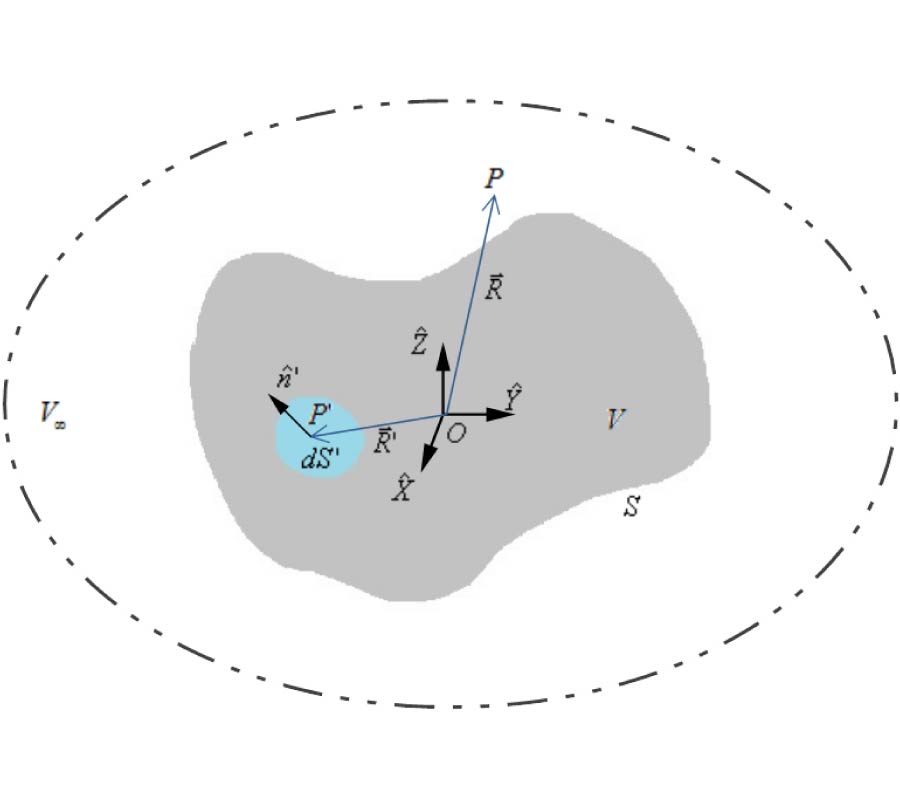
The high-frequency method for the prediction of the terahertz (THz) radar cross section (RCS) of conductive targets with extremely electrically large size in free space was presented. In order to consider the scattering fields of the perfectly electric conducting (PEC) targets with extremely electrically large size in free space, the Green's function was introduced into the conventional physical optics (PO) method which was combined with the graphical electromagnetic computing (GRECO) method and improved using the partition display algorithm. The shadow regions were eliminated quickly by displaying lists of OpenGL to rebuild the targets, and the geometry information was attained by reading the color and depth of each pixel. The THz RCS of conductive targets can be exactly calculated in free space. The RCS comparison between the partition display GRECO prediction by the self-written Visual C++ 2010 program and the simulation of FEKO software with the large element PO method proves the validity and accuracy of the proposed method. The results provide an important basis and method for the potential applications of THz radar in many fields such as military, astronomy and remote sensing.
HIGH-FREQUENCY METHOD FOR TERAHERTZ RADAR CROSS SECTION OF CONDUCTIVE TARGETS IN FREE SPACE
2014-04-15
PIER C
Vol. 49, 89-96
Low Cost System for the Measurement of the Electromagnetic Microwave Emission by Hot Surfaces
Maurizio Tinti
Research centers and industries often need to measure the microwave electromagnetic emission of hot bodies, in order to calculate their temperature. It is well known that the most critical part of a microwave radiometer is its receiver, to obtain a very sensitive system that can also measure low emissions this needs, among other features, to be very sensitive, necessitating the use of expensive low noise amplifiers. For some time now, low-cost components for the reception of satellite TV have been available on the consumer market. These are known as Low Noise Block (LNB), and they include, as a front-end, an amplifier with very low intrinsic noise. In this study, we wanted to test the feasibility of designing and using a 12 GHz total power radiometer, using, as a front-end, an LNB. The system was tested, in different configurations, to measure the emission due to natural sources (Earth, Sun and a sunny wall).
LOW COST SYSTEM FOR THE MEASUREMENT OF THE ELECTROMAGNETIC MICROWAVE EMISSION BY HOT SURFACES
2014-04-15
PIER C
Vol. 49, 79-87
Design and Validation of Asymmetrically Slotted Ultra Wide Band Antenna for Wireless Communication
Tuhina Oli , Raj Kumar and Nagendra Kushwaha
A new compact CPW-fed slot antenna for UWB applications is presented in this paper. The slot in the ground plane is asymmetric which helps in wide band impedance matching. The radiating element is a star-shaped geometry fed by a double stepped co-planar waveguide. Three antennas are designed with this geometry. Out of these three antennas, a compact antenna is proposed. The size of the proposed antenna is 27.2 x 32.2 mm2, and it has a measured impedance bandwidth of 8.7 GHz (3-11.7 GHz). The radiation patterns are stable with respect to frequency and of bi-directional shape in E-plane and omnidirectional shape in H-plane. The measured and simulated results are in good agreement.
DESIGN AND VALIDATION OF ASYMMETRICALLY SLOTTED ULTRA WIDE BAND ANTENNA FOR WIRELESS COMMUNICATION
2014-04-15
PIER Letters
Vol. 45, 111-114
The Frequency Behaviour of the Intrinsic Immunity of the on-Chip Transistor Circuit
Tao Su , Hanyu Zheng , Yehua Yang and Zixin Wang
To extract the immunity model in an easy way and to complete the immunity simulation in a short time, it is preferred to consider only the disturbance propagation network in an integrated circuit system. However, through theoretical analyses, simulations and measurements, this paper shows that the on-chip transistor circuit has a nonuniform frequency response on its immunity against arrival disturbances. Including the nonuniform frequency response qualitatively improves the match between the simulation and measurement results. The conclusion is that both the disturbance propagation network and on-chip transistor circuit should be considered in the immunity simulation.
THE FREQUENCY BEHAVIOUR OF THE INTRINSIC IMMUNITY OF THE ON-CHIP TRANSISTOR CIRCUIT
2014-04-15
PIER Letters
Vol. 45, 105-110
A Novel Face-Like Triple-Band Antenna for WLAN/WiMAX Applications
Neng-Wu Liu , Long Yang , Zhi-Ya Zhang , Guang Fu and Qiong-Qiong Liu
A novel microstrip antenna for triple-band WLAN/WiMAX applications is presented. Based on a face-shaped slot, the antenna consists of a pair of symmetrical eye-like patches, a smiling-mouth-shaped feeding line and a rectangular stub that looks like the fringe. The resonant mode at 3.5 GHz is excited by the basic radiation patch with the face-shaped slot. By adding a rectangular fringe-shaped stub on the top of the radiation patch and a pair of symmetrical eye-like patches without increasing the size of the antenna, the antenna can effectively generate three different resonances to cover the WLAN/WiMAX bands. The measured results show that the antenna has three separated impedance bandwidths for S11<-10 dB of 550 MHz (2.36 GHz-2.91 GHz), 790 MHz (3.27 GHz-4.06 GHz) and 810 MHz (5.07 GHz-5.88 GHz), and the measured gain is above 2.8 dB over the operating band, which can be well applied for both 2.4/5.2/5.8 GHz WLAN bands and 2.5/3.5/5.5 GHz WiMAX bands.
A NOVEL FACE-LIKE TRIPLE-BAND ANTENNA FOR WLAN/WIMAX APPLICATIONS