Search Results(13798)

2014-06-11
PIER M
Vol. 36, 169-175
A Novel Approach to Design of Microstrip UWB Bandpass Filter Using Modified Genetic Algorithm
Huaxia Peng , Junding Zhao , Hao Zhang , Minxian Du , Yufeng Luo , Xin Wang and Wenhai Wang
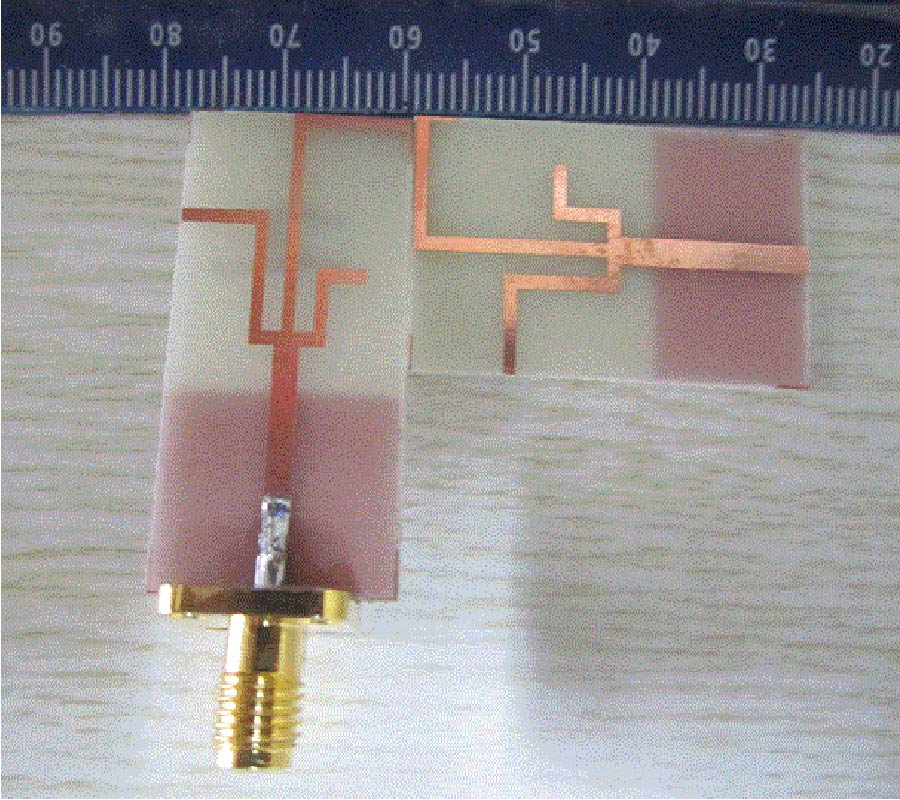
A novel approach to design microstrip ultra-wideband (UWB) bandpass filter (BPF) using modified genetic algorithm (MGA) is proposed in this paper. To achieve high efficiency and accuracy, conventional GA is modified. By improving the fitness evaluation, selection, crossover, and mutation, the two possible drawbacks of conventional GA, i.e., slow rate of convergence and local-best solution, are overcome. The modified genetic algorithm is then applied to simultaneously search for the appropriate circuit topology and the corresponding electrical parameters with UWB characteristic. To demonstrate the effectiveness of the novel approach, a new microstrip UWB BPF is designed and fabricated. Measurement results agree well with the design index and full-wave EM simulated results.
A NOVEL APPROACH TO DESIGN OF MICROSTRIP UWB BANDPASS FILTER USING MODIFIED GENETIC ALGORITHM
2014-06-11
PIER
Vol. 146, 195-207
Miniaturized Low Frequency Platform Tolerant Antenna
Shaozhen Zhu , Daniel Graham , Kenneth Lee Ford , Alan Tennant and Richard J. Langley
A miniature platform tolerant antenna is presented which is suitable for low frequency applications. A Split Ring Resonator (SRR) antenna loaded with lumped capacitances is proposed. The antenna is compact, low profile and easy to fabricate. It has a maximum dimension of λ/9 and -10 dB bandwidth of 1%. Miniaturized artificial magnetic conductor surfaces (AMCs) are designed using capacitance loaded metal patches with individual elements measuring just λ/70. Placing the SRR above the AMC improves the bandwidth to between 1.5 and 3.5% dependent on the overall size of the AMC and produces a platform tolerant antenna measuring 0.11λ×0.17λ×0.019λ. The performance of the antenna over an AMC with and without vias is studied and discussed. The AMC mounted antenna's performance in free space and over a ground plane is also compared.
MINIATURIZED LOW FREQUENCY PLATFORM TOLERANT ANTENNA
2014-06-07
PIER C
Vol. 50, 165-170
Design of a Miniaturized Dual-Band Bandpass Filter with High Selectivity
Xiao-Lei Ma , Yong-Lun Luo , Shuang-Lin Yuan and Long Chen
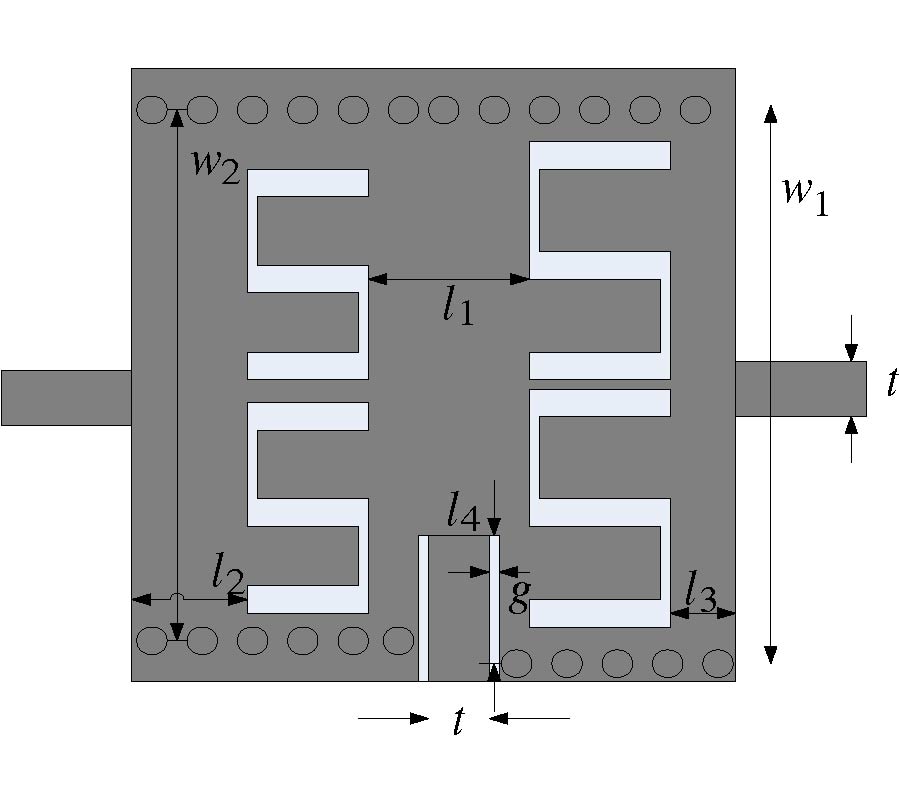
In this paper, a miniaturized dual-band bandpass filter with high selectivity and band-to-band isolation is presented. The filter consists of two quarter-wavelength stepped impedance resonators (SIRs) which share a common grounded via-hole and two symmetrical half-wavelength SIRs which are embedded into the inner space to reduce the size of the filter. Two independent mixed coupling paths which are created by the coupling between these SIRs introduce two different passbands. Five transmission zeros (TZs) are generated near the two passbands to achieve high frequency selectivity and band-to-band isolation. To validate the design theory, a dual-band filter operating at 2.45 and 5.2 GHz was designed and fabricated. The size of the proposed filter only occupies 0.095λg × 0.109λg and the measured 3 dB fractional bandwidth (FBW) of the first and second passbands is 11.5% and 7.4% respectively. The measured results are in good agreement with the simulated results.
DESIGN OF A MINIATURIZED DUAL-BAND BANDPASS FILTER WITH HIGH SELECTIVITY
2014-06-06
PIER B
Vol. 60, 79-93
Simple Relations Between a Uniaxial Medium and an Isotropic Medium
Saffet Sen
In this article, in a simple way, simple relations are derived between the electric field components of an electrically uniaxial medium and those of an isotropic medium. The permittivity of the isotropic medium is the same as the permittivity of the uniaxial medium that is common to the axes transverse to the optic axis. Using the spectral representation, the vector wave equation for the electric field intensity vector of the uniaxial medium is solved for the x directed, y directed and z directed point sources. For the x directed and y directed point sources, the electric field components transverse to the optic axis are written in terms of the corresponding components of the isotropic medium plus some other terms. Part of these terms are closed forms expressions, and the rest are Sommerfeld type integrals. Elements of each group are related to each other by coordinate transformations. The electric field components parallel to the optic axis are shown to be obtained from the isotropic medium components using coordinate transformations. The relations between the uniaxial medium and isotropic medium field components are verified by comparing the results of a previous study in the literature to the results obtained using the relations in this study. Good agreement is achieved between these results.
SIMPLE RELATIONS BETWEEN A UNIAXIAL MEDIUM AND AN ISOTROPIC MEDIUM
2014-06-05
PIER C
Vol. 50, 155-164
Double-Layered Circular Microstrip Reflectarray Element with Broad Phase Range
Wai-Hau Ng , Eng Hock Lim , Fook-Loong Lo and Kia-Hock Tan
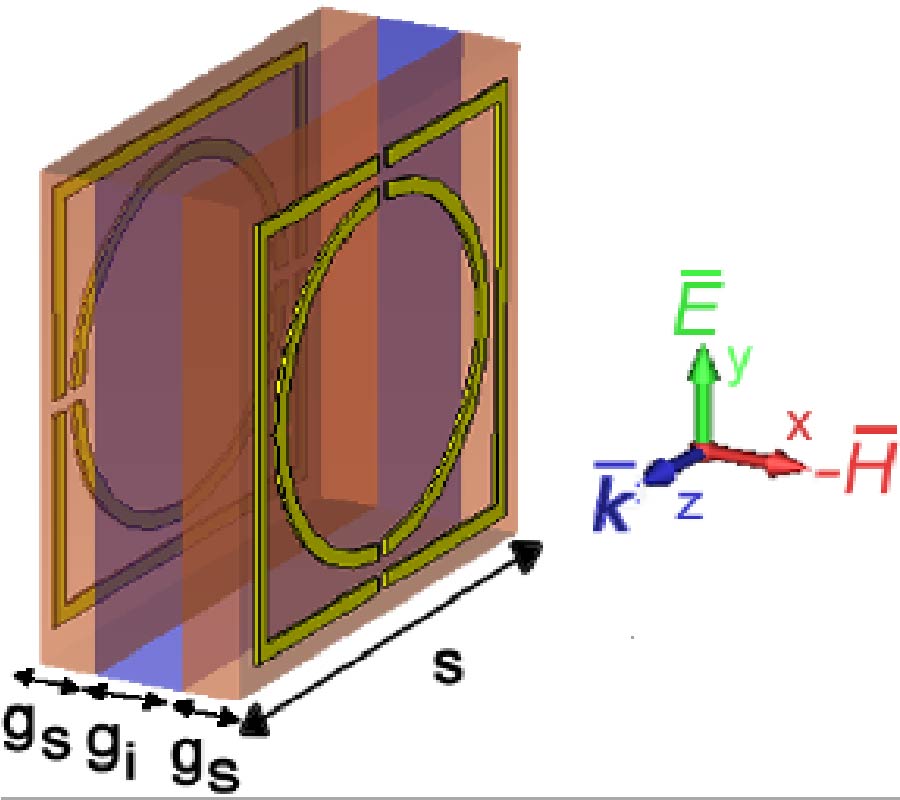
In this paper, a microstrip double-layered reflectarray element is studied. The unit element consists of a circular patch sandwiched between two substrates and a cross-slotted circular patch placed on the top-most surface. The radii of the two circular patches as well as the cross-slot lengths are varied simultaneously for controlling the phase range and the gradient of the reflection phase angle. Study shows that the sensitivity of the reflection phase angle can be made slower by utilizing substrates with lower dielectric constants. The component performance is studied using a rectangular waveguide and good agreement is found between thesimulation and experiment. A wide reflection phase range of 681.82° with loss magnitude of less than -1 dB is achievable in the reflection phase angle. A complete parametric analysis has been conducted to study the reflection characteristics of the proposed reflectarray unit element.
DOUBLE-LAYERED CIRCULAR MICROSTRIP REFLECTARRAY ELEMENT WITH BROAD PHASE RANGE
2014-06-05
PIER Letters
Vol. 46, 89-94
A Novel Defected Ground Structure with Both Adjustable Center Frequency and Reconfigurable Bandwidth
Xue Cao , Kai-Yu Zhao , Li-Li Yang and Lin Li
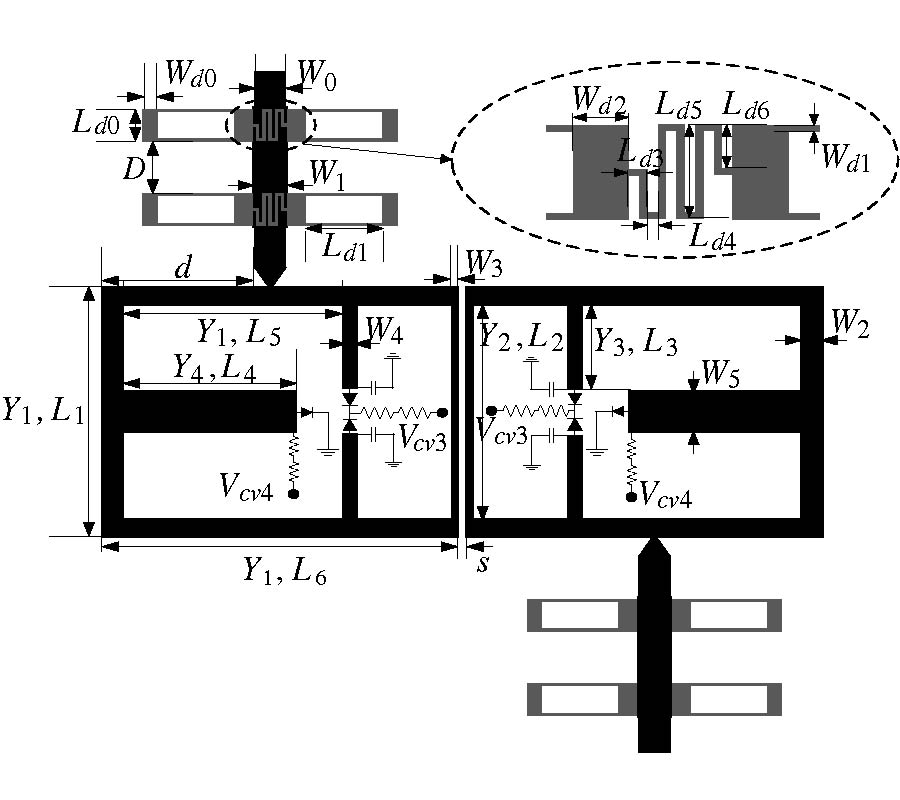
A new defected ground structure (DGS) with tunable working frequency and reconfigurable bandwidth is proposed in this paper. The prototype combines the conventional DGS with T-shaped patch featuring narrow bandwidth and two such units located symmetrically featuring wide bandwidth. The proposed structure is designed, simulated and measured. By embedding two reversely-set PIN diodes and four varactors, the proposed structure achieves a narrow bandwidth with a tuning range of 21.1% and a wide bandwidth with a tuning range of 24.6%. In comparison, the bandwidth (-10 dB) is about 13.6% for the narrowband state and 49.2% for the broadband state, where an approximately 4-times extension is obtained.
A NOVEL DEFECTED GROUND STRUCTURE WITH BOTH ADJUSTABLE CENTER FREQUENCY AND RECONFIGURABLE BANDWIDTH
2014-06-04
PIER Letters
Vol. 46, 83-87
Reply to the ``Comment on `Fringe Waves in an Impedance Half-Plane'"
Husnu Deniz Basdemir
In [1], Hacivelioglu and co-authors criticize my paper, named ``Fringe waves in an impedance half-plane" [2]. Unfortunately, the general scenario of the criticisms is based on misconceptions and lack of basic knowledge in the diffraction theory. Below we give our detailed rebuttals on their comments.
REPLY TO THE ``COMMENT ON `FRINGE WAVES IN AN IMPEDANCE HALF-PLANE'
2014-06-04
PIER Letters
Vol. 46, 79-81
Comment on ``Fringe Waves in an Impedance Half-Plane''
Feray Hacivelioglu , Levent Sevgi and Pyotr Ufimtsev
This paper (i.e., [1]) extends PTD to an impedance half-plane problem.
COMMENT ON ``FRINGE WAVES IN AN IMPEDANCE HALF-PLANE''
2014-06-04
PIER
Vol. 146, 187-194
Experimental Realization of Strong DC Magnetic Enhancement with Transformation Optics (Invited Paper)
Kexin Liu , Wei Jiang , Fei Sun and Sailing He
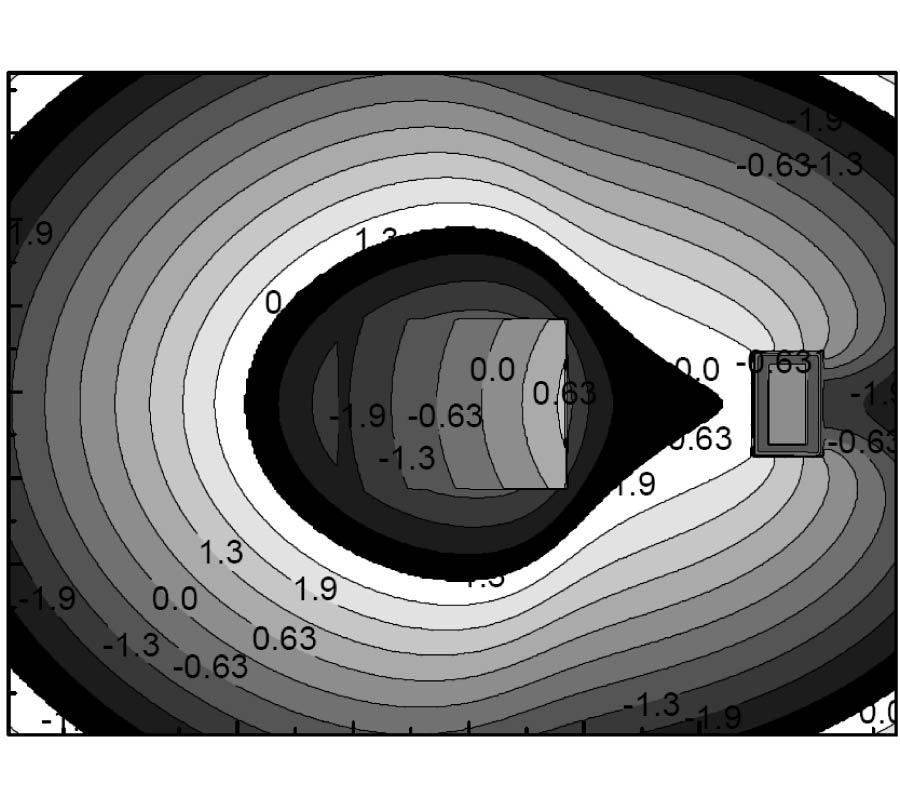
A passive DC magnetic concentrator is designed with transformation optics (TO) and realized by meta-materials. The passive DC magnetic concentrator, based on space compression transformation, can greatly enhance the magnetic field in a free space region, which can be used for e.g. improving the sensitivity of magnetic sensors and increasing the efficiency of wireless energy transmission. The magnetic property of the medium obtained by TO is extremely anisotropic. To solve this, we use magnetic meta-materials made of alternated high-permeability ferromagnetic (HPF) materials and high-temperature superconductor (HTS) materials. We optimize our structure by conducting simulations using the finite element method (FEM), and experimentally demonstrate a strong, 4.74-time enhancement of the DC magnetic field by our meta-material magnetic concentrator. We also demonstrate that a simplified structure with only HPF materials working at room temperature could still give 3.84-time enhancement of the DC magnetic field. The experimental results are in good agreement with the numerical simulations based on FEM.
EXPERIMENTAL REALIZATION OF STRONG DC MAGNETIC ENHANCEMENT WITH TRANSFORMATION OPTICS (Invited Paper)
2014-06-04
PIER
Vol. 146, 181-186
High Performance Silicon-Based Inductors for RF Integrated Passive Devices
Mei Han , Gaowei Xu and Le Luo
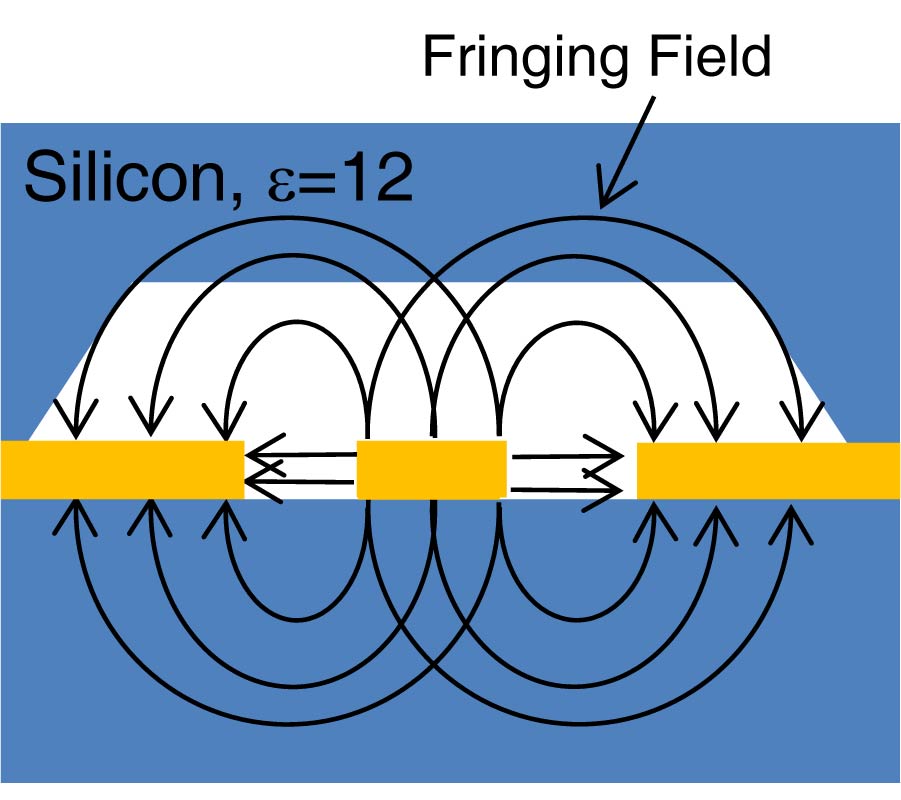
High-Q inductors are realized on a 3-8 Ω•cm silicon substrate in the buildup of BCB/Cu. Anisotropic wet etching is utilized to remove the silicon in the cavities underneath the spirals from the backside. Examples of 3.5-turn spiral inductors with and without cavity are compared, and their parameter extractions are accomplished with an equivalent circuit model. Compared to the inductor without cavity, the measured peak quality factor of a 8.19-nH inductor with cavity increases from 24 at 0.8 GHz to 39 at 2.5 GHz by 67%, and the inductor with cavity has a wider bandwidth using the same equivalent model. The inductors utilizing this technique have a potential wide application in hand-held RF modules either as part of an off-chip device or as an integrated passive in a silicon interposer.
HIGH PERFORMANCE SILICON-BASED INDUCTORS FOR RF INTEGRATED PASSIVE DEVICES
2014-05-27
PIER C
Vol. 50, 147-154
Power Divider Based on Stepped-Impedance Slotline
Long Xiao , Hao Peng , Tao Yang and Jun Dong
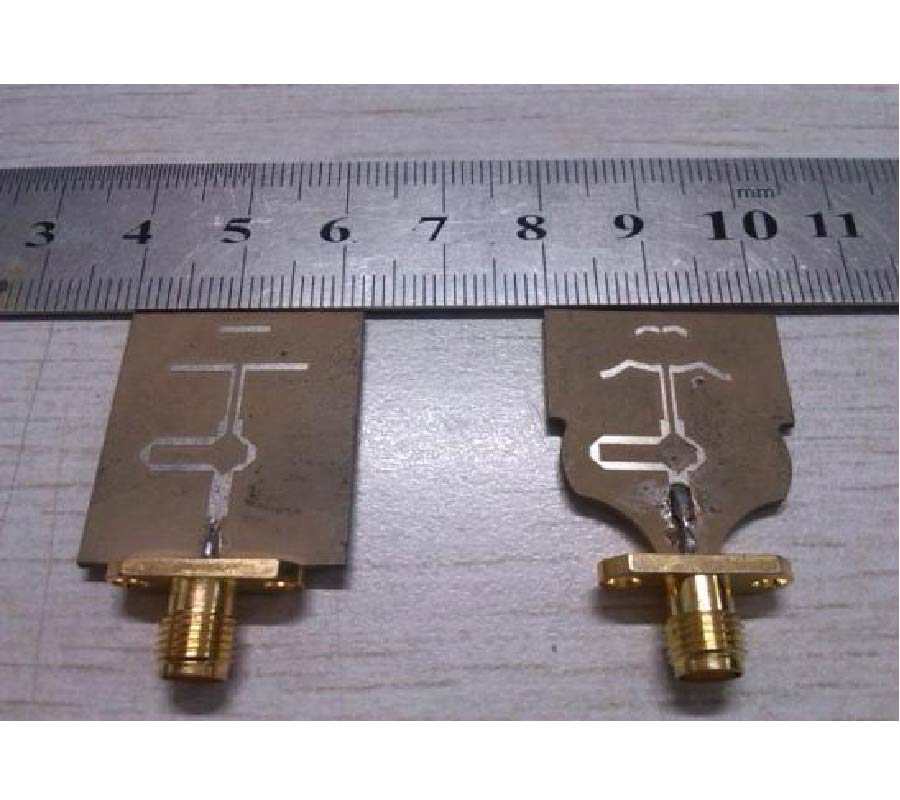
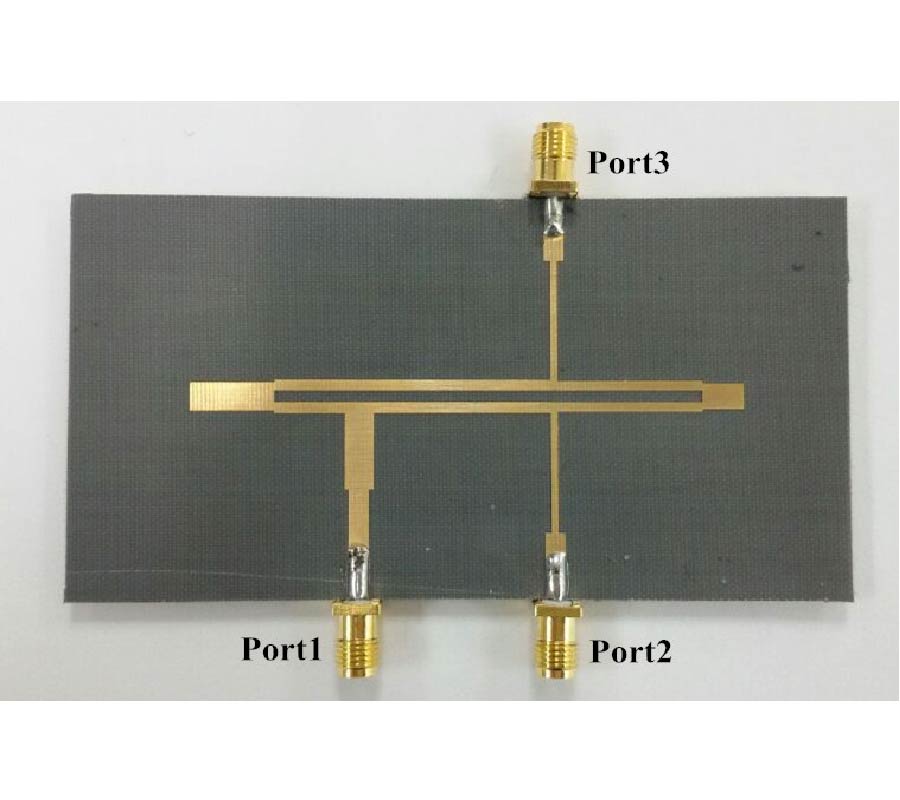
A novel 180˚ out-of-phase power divider based on stepped-impedance slotline is presented in this article. This power divider employs one T-junction formed by microstrip line and slotline to obtain two out-of-phase dividing signals. Stepped-impedance slotline and lumped resistor are introduced to improve the isolation between output ports. The experimental data show that the proposed power divider has good performance on insertion loss, return losses, isolation, phase balance, as well as group delay over the wide band 5 GHz-10 GHz.
POWER DIVIDER BASED ON STEPPED-IMPEDANCE SLOTLINE
2014-05-27
PIER C
Vol. 50, 139-145
Novel Compact Tri-Band Bandpass Filter Using Multi-Stub-Loaded Resonator
Li Gao , Jun Xiang and Quan Xue
In this paper, a compact tri-band bandpass filter (BPF) using multi-stub-loaded resonator with controllable frequencies is presented. The multi-stub-loaded resonator consists of a main transmission line, two open stubs and a short stub. Characterized by using even- and odd-mode analysis, it is found that the resonator consists three modes, and the modes can be controlled individually, which enables convenient designs of tri-band BPFs. To demonstrate the proposed idea, a tri-band BPF with operating frequencies of 2.45, 3.8 and 5.15 GHz is implemented. Five transmission zeros are generated near the passband edges, resulting in high skirt selectivity. The total size of the filter is 0.19λg × 0.13λg, featuring compact size. The comparisons of the measured and simulated results are presented to validate the theoretical predications.
NOVEL COMPACT TRI-BAND BANDPASS FILTER USING MULTI-STUB-LOADED RESONATOR
2014-05-27
PIER M
Vol. 36, 161-168
Effect of Dust Grain Parameters on Ion Beam Driven Ion Cyclotron Waves in a Magnetized Plasma
Ved Prakash , Suresh C. Sharma , Vijayshri Vijayshri and Ruby Gupta
Excitation of electrostatic ion cyclotron waves (EICW) in a magnetized dusty plasma by an ion beam is studied taking into account the effect of dust particle size, dust particle charge and dust particle number density variations. The presence of dust grain charge fluctuations modifies the dispersion relation for ion cyclotron waves in dusty plasma. It is shown that in the absence of ion beam, the ion cyclotron mode damps due to dust charge fluctuations and an additional damping dust charge fluctuation mode is induced in plasma. The ion beam propagating parallel to the magnetic field drives ion cyclotron waves to instability via Cerenkov interaction. Using the analytical and numerical results the influence of the relative density of negatively charged dust particles on growth rate of ion cyclotron waves is studied. The dust grain size distribution has also significant contributions on the growth rate of ion cyclotron waves.
EFFECT OF DUST GRAIN PARAMETERS ON ION BEAM DRIVEN ION CYCLOTRON WAVES IN A MAGNETIZED PLASMA
2014-05-26
PIER B
Vol. 60, 63-77
Hrr Profiles Time-Frequency Non-Negative Sparse Coding for SAR Target Classification
Xinzheng Zhang , Qizheng Wu , Shujun Liu , Jianhong Qin and Wei Song
A new approach to classify synthetic aperture radar (SAR) targets is presented based on high range resolution (HRR) profiles time-frequency matrix non-negative sparse coding (NNSC). Firstly, SAR target images have been converted into HRR profiles. And the non-negative time-frequency matrix for each of the profiles is obtained by using an adaptive Gaussian representation (AGR). Secondly, NNSC is applied to learn target time-frequency basis of the training set. Feature vectors are constructed by projecting each HRR profile time-frequency matrix to low dimensional time-frequency basis space. Finally, the target classification decision is found with support vector machine and nearest neighbor algorithm respectively. To demonstrate the performance of the proposed approach, experiments are performed with Moving and Stationary Target Acquisition and Recognition (MSTAR) public release SAR database. The experimental results support the effectiveness of the proposed technique for SAR target classification.
HRR PROFILES TIME-FREQUENCY NON-NEGATIVE SPARSE CODING FOR SAR TARGET CLASSIFICATION
2014-05-26
PIER
Vol. 146, 167-180
Efficiency Improvement of P-I-n Solar Cell by Embedding Quantum Dots
Yi-Hsien Lin and Jean-Fu Kiang
A model of solar cell embedding quantum dots in the intrinsic layer of a p-i-n solar cell has been presented. With proper selection of material, size and fractional volume, quantum dots can provide an intermediate band between the valence and conduction bands of the matrix material, which will absorb photons with energy lower than the original bandgap to absorb more incident photons in the otherwise unused spectral irradiance. The design approach to acquire the highest efficiency of the conventional p-i-n solar cell is presented as a benchmark. Quantum dots are then embedded in the intrinsic region of the reference solar cell to improve its efficiency. InAs is chosen to implement the quantum dots, to be embedded in the p-i-n solar cell made of GaAs. With a more packed arrangement of QD's from that in the literatures, the simulation results shows that the efficiency of the conventional GaAs p-i-n solar cell can be increased by 1.05%.
EFFICIENCY IMPROVEMENT OF P-I-N SOLAR CELL BY EMBEDDING QUANTUM DOTS
2014-05-25
PIER C
Vol. 50, 131-138
Dual-Band Filter for WiMAX and WLAN with Improved Upper Stop Band Performance
Anil Kamma , Gopi Shrikanth Reddy , Rajesh Singh Parmar and Jayanta Mukherjee
In this paper, a novel and compact dual-band filter with enhanced upper stop characteristics has been presented. Dual band pass filter characteristics are achieved by introducing transmission zero (TZ) in pass band of band pass filter (BPF). The wide band pass filter (BPF) is implemented by combining low pass filter characteristics (i.e. stepped impedance resonator) and high pass filter characteristics (i.e. short stubs). Closed rectangular ring resonator (CRRR) and open loop rectangular ring (OLRR) combination is used to produce two transmission zeros (TZs). One TZ is placed on the pass band of BPF such that resultant filter characteristic consists of two pass bands. However, the second TZ is placed at edge of the pass band in BPF to improve skirt selectivity. The two pass bands are designed to cover two popular wireless bands namely WiMAX (center frequency f1 (3.5 GHz) and WLAN (center frequency f2 (5.7 GHz)) bands i.e. 3.35-3.65 GHz and 5.5-5.85 GHz respectively. Equi-ripple low pass stepped impedance resonator (SIR) filter response is responsible for improved and spurious free upper stop band (>20 GHz i.e. >6f1) and also provides sharp skirt attenuation at upper stop band. The proposed filter is implemented on an RT/Duroid 5880 (εr=2.2) substrate with thickness of 0.785 mm and surface area of 19 × 12 sq. mm. Good agreement between simulated and measured results ensures that the proposed filter is a suitable candidate for modern dual band communications.
DUAL-BAND FILTER FOR WIMAX AND WLAN WITH IMPROVED UPPER STOP BAND PERFORMANCE
2014-05-23
PIER C
Vol. 50, 121-129
Compact Ultrawideband MIMO Antenna with WLAN/UWB Bands Coverage
Jian Ren , Dawei Mi and Ying-Zeng Yin
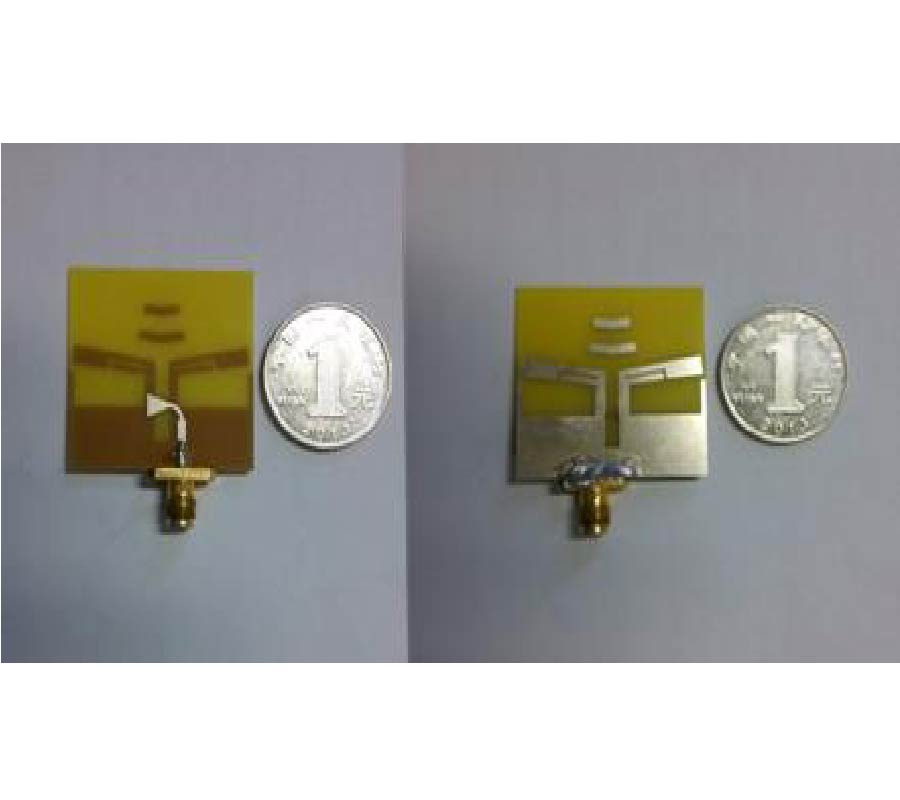
A compact multiple-input-multiple-output (MIMO) antenna that covers the WLAN (2.4 GHz) and UWB (3.1-10.6 GHz) bands for wireless device applications is presented. The proposed antenna consists of two open L-shaped slot (LS) antenna elements and a narrow slot on the ground plane. The antenna elements are placed perpendicularly to each other to obtain a high isolation, and the narrow slot is added to reduce the mutual coupling between antenna elements at the WLAN band (2.4 GHz). The presented MIMO antenna has a small size of 40×40mm2, and the prototypes of antenna is fabricated and measured. The measured results show that the antenna has an impedance bandwidth of larger than 2.4-10.6 GHz with the mutual coupling less than 20 dB in WLAN band and 18dB in 3.1-10.6GHz, making the antenna a good candidate for portable applications.
COMPACT ULTRAWIDEBAND MIMO ANTENNA WITH WLAN/UWB BANDS COVERAGE
2014-05-23
PIER M
Vol. 36, 149-160
An Adaptive Beamformer Based on Adaptive Covariance Estimator
Lay Teen Ong
Based on the Minimum Variance Distortionless Response-Sample Matrix Inversion (MVDR-SMI) method, we propose a novel Adaptive Covariance Estimator (MVDR-ACE) beamformer for adaptation to multiple interference environments. The MVDR-ACE beamformer iteratively determines a minimum number of data samples required while maintaining its average signal-to-interference-noise to be within 3dB from the performance of a theoretical optimum MVDR beamformer and meeting an instantaneous interference cancellation requirement. Finally, based on numerical simulations, we analyze and validate the performance of the MVDR-ACE beamformer. We also compare its performance to the conventional MVDR-SMI beamformer that uses a fixed data sample in its covariance estimator.
AN ADAPTIVE BEAMFORMER BASED ON ADAPTIVE COVARIANCE ESTIMATOR
2014-05-23
PIER M
Vol. 36, 139-147
Fast Wideband Analysis of Antennas Using Ie-PO Hybrid Method and the Best Uniform Approximation
Wen-Feng Chen , Shu-Xi Gong , Bo Zhao and Peng-Fei Zhang
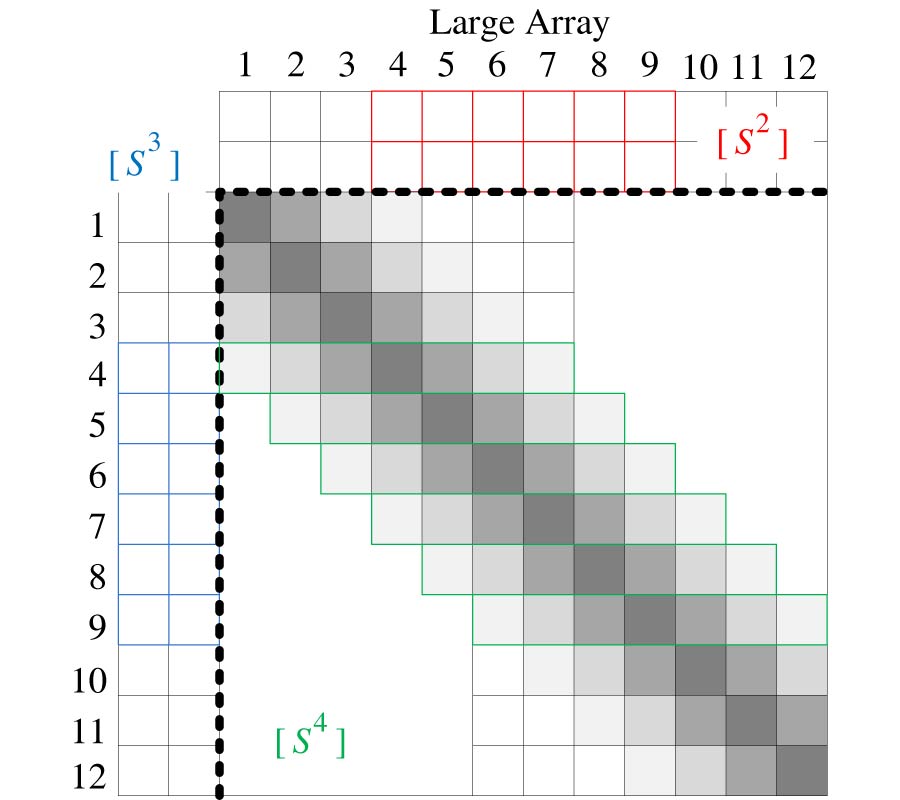
An efficient wide-band analysis that combines modified integral equation-physical optics (IE-PO) hybrid formulation with the best uniform approximation is proposed for antennas around an electrically large platform in this paper. The modified single-level Fast Fourier Transform (FFT) algorithm which is based on the subdomain FFT acceleration is employed by interpolating the Green's function and introducing the concept of the empty groups. Furthermore, the correction of the near-interaction is avoided. On the other hand, the best uniform approximation technique is applied to analyze wide-band properties of antennas. Due to the above modifications, the hybrid method needs fewer unknowns and memory requirements than the conventional one.
FAST WIDEBAND ANALYSIS OF ANTENNAS USING IE-PO HYBRID METHOD AND THE BEST UNIFORM APPROXIMATION
2014-05-23
PIER M
Vol. 36, 131-137
Space-Time Matrix Method for Mixed Near-Field and Far-Field Sources Localization
Ruiyan Du , Fulai Liu and Jinkuan Wang
Mixed near-field and far-field sources localization problem has received significant attention recently in some practical applications, such as speaker localization using microphone arrays and guidance systems, etc. This paper presents a novel space-time matrix method to localize mixed near-field and far-field sources. Using the proposed method, both the direction-of-arrival (DOA) and range of a source can be estimated by the same eigen-pair of a defined spacetime matrix. Therefore, the pairing of the estimated angles and ranges is automatically determined. Compared with the previous work, the presented method offers a number of advantages over other recently proposed algorithms. For example, it can avoid not only parameters matching problem but also aperture loss problem. It has lower computational complexity since the proposed method does not require the high-order statistics or any parameter search. Simulation results show the performance of the proposed algorithm.
SPACE-TIME MATRIX METHOD FOR MIXED NEAR-FIELD AND FAR-FIELD SOURCES LOCALIZATION