Search Results(13798)

2014-06-23
PIER Letters
Vol. 47, 7-12
Novel High-Selectivity Dual-Band Substrate Integrated Waveguide Filter with Multi-Transmission Zeros
Guo Hui Li , Xiao-Qi Cheng , Hao Jian and Huan-Ying Wang
A novel dual-band filter based on substrate integrated waveguide (SIW) is presented in this paper. The proposed filter is composed of two filters with different center frequencies and bandwidths, where they share the input and output ports with source-load coupling using rectangular SIW cavity structure. Muliti-transmission zeros have been obtained through electrical coupling between the source and load, which improves the frequency-selective characteristics of the filter greatly. Finally, a Ku-band substrate integrated waveguide dual-band filter with bandwidths of 220 MHz and 120 MHz was finally designed, fabricated, and measured. The measurement results are found to be in good agreement with the simulation results.
NOVEL HIGH-SELECTIVITY DUAL-BAND SUBSTRATE INTEGRATED WAVEGUIDE FILTER WITH MULTI-TRANSMISSION ZEROS
2014-06-23
PIER
Vol. 147, 81-93
Challenges in Application of Luminescent Materials, a Tutorial Overview (Invited Review)
Cees Ronda
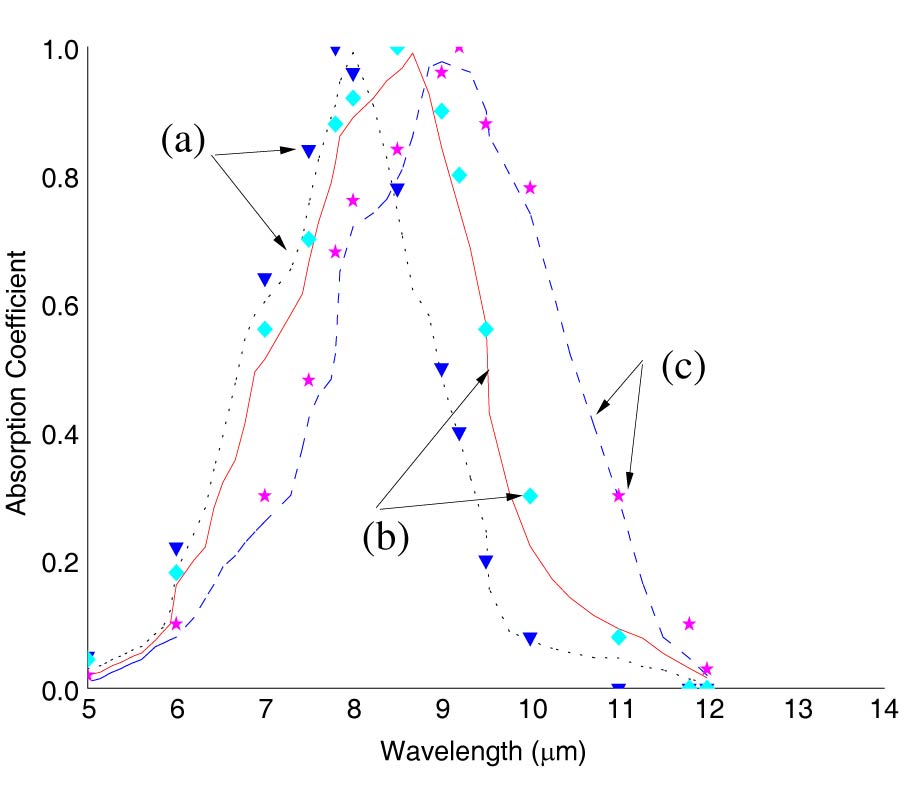
In this paper, a number of different application fields of inorganic luminescent materials are being discussed. In a tutorial manner, it will be shown how device requirements are being translated into properties the luminescent materials need to have. To this end many different material properties that have a strong influence on the device performance are discussed, such as the shape, the spectral position of the absorption- and emission bands and the decay time of the emission. The light yield under excitation with ionizing radiation, the energy resolution and the occurrence of afterglow are being treated as well. Subsequently, strategies are shown how to optimize these properties. Examples are given for light sources (fluorescent lamps and LEDs), radiation sources used for disinfection purposes and also for devices used in medical imaging and in horticultural applications.
CHALLENGES IN APPLICATION OF LUMINESCENT MATERIALS, A TUTORIAL OVERVIEW (Invited Review)
2014-06-21
PIER C
Vol. 51, 103-109
A Broadband Printed Quadrifilar Helical Antenna with a Novel Compact Broadband Feeding Network
Xiao-Qiang Yang , Ze-Hong Yan , Ping Xu , Tian-Ling Zhang , Zhanfa Zhu and Tuanjie Liang
A broadband printed quadrifilar helical antenna (BPQHA) integrated with a broadband feeding network for satellite communications is proposed. Using a multiple arm technique, satisfactory antenna characteristics over a wide bandwidth are realized. To feed the antenna, a novel compact broadband feeding network composed of a frequency independent 180° out-of-phase power divider, two Wilkinson power dividers and two broadband 90° phase shifters is designed. The measured boresight gain remains positive with a reflection coefficient lower than -11 dB over a bandwidth of approximately 26%. The axial ratio is below 1.7 dB and the half-power beamwidth is more than 120° over the same bandwidth. Details of the proposed antenna design are provided and discussed, as well as the experimental results.
A BROADBAND PRINTED QUADRIFILAR HELICAL ANTENNA WITH A NOVEL COMPACT BROADBAND FEEDING NETWORK
2014-06-21
PIER Letters
Vol. 47, 1-5
Design of a Miniaturized Zeroth- and First-Order Resonant Antenna with Mushroom Cells and Interdigital Capacitors
Ke Li , Yuan-Ming Cai , Long Li and Chang-Hong Liang
A novel design of miniaturized dual-bandantenna based on mushroom cell and interdigital capacitor is presented in this paper. Four transmission line (TL) elements are loaded in a microstrip antenna, and each one is composed ofamushroom cell and interdigital capacitors. The interdigital capacitors contribute to the series capacitance and metallicvia-hole of mushroom structuresresult in the shunt inductance in the equivalent circuit model. The antenna works as a zeroth-order (f0= 2.51 GHz) and first-order (f1 = 3.78 GHz) resonant antenna with varied radiation patterns. Omnidirectionalradiation pattern and unidirectional radiation pattern are obtained at 2.51 GHz and 3.78 GHz, respectively.The overall size of the antenna is only 0.25×0.25×0.017λ03 (at f0= 2.51 GHz). The proposed antenna features compact structure, low profile and easy fabrication. Good agreement between the simulated and measured results is also achieved, validating our design concept.
DESIGN OF A MINIATURIZED ZEROTH- AND FIRST-ORDER RESONANT ANTENNA WITH MUSHROOM CELLS AND INTERDIGITAL CAPACITORS
2014-06-21
PIER Letters
Vol. 46, 119-125
A New Polarization Reconfigurable Microstrip Antenna Based on Complementary Split Ring Resonator
Ke Li , Long Li , Cheng Zhu and Chang-Hong Liang
A new metamaterial-inspired polarization reconfigurable microstrip antenna is presented in this paper, in which a square slot is etched on the ground plane and two PIN diodes are mounted across the slot for polarization reconfigurability. A complementary split ring resonator (CSRR) can be formed by integrating the square slot with two diodes. By controlling the working states of two diodes, we can change the gap position of CSRR which will alter the polarization of the microstrip antenna. Therefore, the polarization of the microstrip antenna can be switched among linear polarization (LP), left-hand circular polarization (LHCP) and right-hand circular polarization (RHCP), respectively. The planar electromagnetic bandgap (EBG) structure is further introduced to extend the bandwidth of the 3dB axial ratio. In addition, the proposed metamaterial-inspired antenna with agile polarization reconfiguration can be feasibly controlled by using a simple biasing circuit. The simulations and experiments are given to verify the effectiveness and correctness of the proposed reconfigurable antenna design.
A NEW POLARIZATION RECONFIGURABLE MICROSTRIP ANTENNA BASED ON COMPLEMENTARY SPLIT RING RESONATOR
2014-06-21
PIER Letters
Vol. 46, 113-118
Printed UWB MIMO Antenna with Different Polarizations and Band-Notch Characteristics
Jia-Yue Zhao , Zhi-Ya Zhang , Qiong-Qiong Liu , Guang Fu and Shu-Xi Gong
A novel ultra wideband (UWB) multiple-input-multiple-output (MIMO) antenna with different polarizations and band-notch characteristics is proposed in this letter. The antenna consists of two monopole antenna radiating elements with gradual change structure, which are placed perpendicularly to each other and printed on each side of the substrate to achieve a wide bandwidth and different polarizations. Band-rejected filtering property in the WLAN band is achieved by etching a H-shaped slot and employing a resonant L-shaped strip on two antenna elements. The proposed antenna has a small size of 27×37×1 mm3 with a bandwidth of 128.6% (2.35-10.82 GHz). Within the required band, the isolation for the two ports exceeds 18 dB. The envelope correlation coefficient is also measured.
PRINTED UWB MIMO ANTENNA WITH DIFFERENT POLARIZATIONS AND BAND-NOTCH CHARACTERISTICS
2014-06-21
PIER M
Vol. 36, 185-191
Graphene Based Transmitarray for Terahertz Applications
Hend Abd El-Azem Malhat , Saber Zainud-Deen and Shaymaa Gaber
Circularly polarized graphene based transmitarray for terahertz applications is proposed. The characteristics of the graphene material is explained. The cell element of the transmitarray is made of square Quartz cell. Dual circular graphene rings are printed on both sides of the Quartz substrate. The graphene ring radius is varied to change the transmission coefficient phase and magnitude. The effect of the graphene chemical potential on the transmission coefficient is demonstrated. Transmitarray is composed of 9×9 unit cell elements. A circularly polarized circular horn is used to feed the transmitarray at f=6 THz. The left- and right-hand field components in the E- and H-plane are determined. The variation of the gain and the axial-ratio with the frequency are explained. The peak gain is 18.63 dB and 1-dB gain bandwidth is 6.8%. The transmitarray produces a circular polarization from 5.5 THz to 6.5 THz.
GRAPHENE BASED TRANSMITARRAY FOR TERAHERTZ APPLICATIONS
2014-06-21
PIER
Vol. 148, 23-30
Circular Polarized Patch Antenna Generating Orbital Angular Momentum
Mirko Barbuto , Fabrizio Trotta , Filiberto Bilotti and Alessandro Toscano
The recent extension of the orbital angular momentum (OAM) concept from optical to microwave frequencies has led some researchers to explore how well established antenna techniques can be used to radiate a non-zero OAM electromagnetic field. In this frame, the aim of the present paper is to propose a new approach to generate a non-zero OAM field through a single patch antenna. Using the cavity model, we first analyze the radiated field by a standard circular patch and show that a circular polarized (CP) TMnm mode excited by using two coaxial cables generates an electromagnetic field with an OAM of order ±(n-1). Then, in order to obtain a simpler structure with a single feed, we design an elliptical patch antenna working on the right-handed (RH) CP TM21 mode. Using full-wave simulations and experiments on a fabricated prototype, we show that the proposed antenna effectively radiates an electromagnetic field with a first order OAM. Such results prove that properly designed patch antennas can be used as compact and low-cost generators of electromagnetic fields carrying OAM.
CIRCULAR POLARIZED PATCH ANTENNA GENERATING ORBITAL ANGULAR MOMENTUM
2014-06-20
PIER
Vol. 148, 15-22
Antenna Pattern Retrieval from Reflection Coefficient Measurements with Reflective Loads
Zhou Du , Ville Viikari , Juha Ala-Laurinaho , Aleksi Tamminen and Antti V. Räisänen
This paper presents a new method for antenna pattern retrieval from reflection coefficient measurements. A reflective load with known reflective properties is placed close to the aperture of the antenna under test. The reflection coefficient of the antenna is measured at the antenna feed with multiple different reflective loads. The antenna pattern is then solved from the measurements with an inversion method. This paper derives and verifies the analytical foundations needed to implement the method, and demonstrates the method both by simulations and experiments for a pyramidal horn antenna at 30 GHz.
ANTENNA PATTERN RETRIEVAL FROM REFLECTION COEFFICIENT MEASUREMENTS WITH REFLECTIVE LOADS
2014-06-19
PIER C
Vol. 51, 95-101
RCS Reduction of Patch Array Antenna by Complementary Split-Ring Resonators Structure
Jun Zheng , Shao-Jun Fang , Yongtao Jia and Ying Liu
In this paper, a new approach for the radar cross section (RCS) reduction of patch array antenna is proposed. Complementary split-ring resonators (CSRRs) are etched on the ground of the proposed patch antenna array. A conventional 1 × 4 patch antenna array is designed with the central frequency of 5.0 GHz. The monostatic RCS of the patch antenna array with CSRRs can be reduced as much as 14 dB compared to that of the conventional array while maintaining almost the same radiation characters. For the case of φ-polarized incident wave, the RCS has been reduced in the angular range of -90° ≤ θ≤+90° in xoz-plane and this angular range is usually less than ±45° when using conventional methods of RCS reduction.
RCS REDUCTION OF PATCH ARRAY ANTENNA BY COMPLEMENTARY SPLIT-RING RESONATORS STRUCTURE
2014-06-19
PIER M
Vol. 37, 63-72
Complex HRRP Target Recognition Based on Phase and Amplitude Fusion Analysis
Jian-Sheng Fu , Hui Zu , Zhi Qiao and Shao-Fei Wang
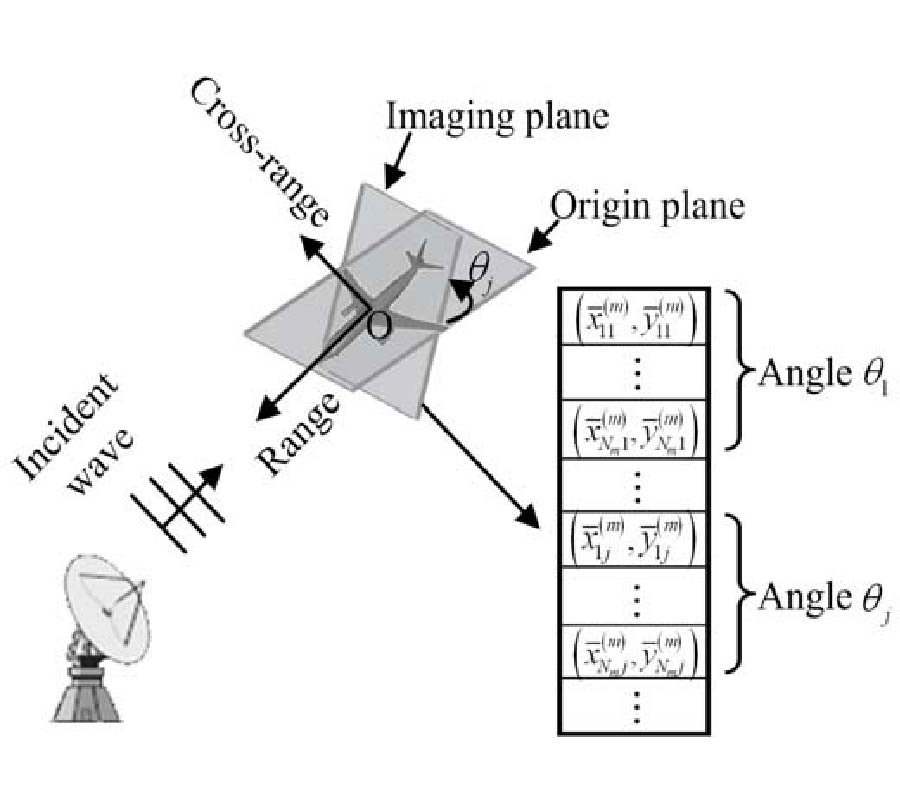
Due to the traditional recognition researches prevalently fastening on HRRP's amplitudes while almost completely neglecting the phases, this paper attempts to directly prove the discriminant availability of HRRP's phases via two proposed fusion recognition strategies. The first strategy includes three sub-processes, respectively, based on phase cosine, phase sine and their fusion. The second strategy also includes three sub-processes, respectively, based on phases, amplitudes and their fusion. Additionally, a trigonometric function couple (TFC) method is used to reduce the phase sensitivity. Several measured experimental results indicate as follows. Firstly, employing TFC can perform much better. Secondly, the two fusion recognition sub-processes apparently outperform the corresponding subprocesses constructing them. Finally, phase information usually has a better noise immunity compared with amplitude information, and fusing phase information into amplitudes may improve the traditional recognition performance. Therefore, the availabilities of HRRP's phases and the two fusion strategies have been experimentally proven.
COMPLEX HRRP TARGET RECOGNITION BASED ON PHASE AND AMPLITUDE FUSION ANALYSIS
2014-06-18
PIER M
Vol. 37, 51-62
Scattering by a Tilted Strip Buried in a Lossy Half-Space at Oblique Incidence
Mario Lucido
The analysis of the scattering by a tilted perfectly conducting strip buried in a lossy half-space at oblique incidence is formulated as an electric field integral equation (EFIE) in the spectral domain and discretized by means of Galerkin's method with Chebyshev polynomials basis functions weighted with the edge behaviour of the surface current density on the strip. In this way, a convergence of exponential type is achieved. Moreover, a new analytical technique is introduced to rapidly evaluate the slowly converging integrals of the scattering matrix coefficients consisting of algebraic manipulations and a suitable integration procedure in the complex plane.
SCATTERING BY A TILTED STRIP BURIED IN A LOSSY HALF-SPACE AT OBLIQUE INCIDENCE
2014-06-17
PIER B
Vol. 60, 111-123
Design of Asymmetric Slot Antenna with Meandered Narrow Rectangular Slit for Dual Band Applications
Raj Kumar , Praveen Vummadisetty Naidu and Vivek Kamble
A compact coplanar waveguide (CPW) fed asymmetric slot antenna with dual operating bands is proposed. The slot is modified rectangular in shape and asymmetrically cut in the ground plane. A hexagonal patch fed by a two-step CPW is used to excite the slot. The feed itself is slightly asymmetric (shifted, with unequal ground planes). The asymmetric cuts on the slot together with the feed line asymmetry have helped in obtaining ultra wideband impedance matching. An extra resonance at 2.4 GHz for Bluetooth applications is obtained by cutting an additional meandered narrow rectangular shape slit in the ground plane. The prototype of the proposed antenna has been fabricated and tested. The measured 10 dB return loss bandwidth of the proposed antenna is 200 MHz (2.3-2.5 GHz) for the first band and 12.1 GHz (2.9-15.0 GHz) for the second band. The radiation patterns of the proposed antenna are obtained and found to be Omni-directional in H-plane and bi-directional in E-Plane. The measured and simulated results are in good agreement.
DESIGN OF ASYMMETRIC SLOT ANTENNA WITH MEANDERED NARROW RECTANGULAR SLIT FOR DUAL BAND APPLICATIONS
2014-06-17
PIER C
Vol. 51, 87-93
A Dual-Frequency Single Layer Circularly Polarized Reflectarray with Frequency Selective Surface Backing
Xian Jiang Zhong , Lei Chen , Yan Shi and Xiao-Wei Shi
The design of a dual-frequency single-layer circularly polarized reflectarray with frequency selective surface (FSS) backing is presented in this paper. The proposed reflectarray consists of rotated cross dipole elements etched on an FSS-backed substrate. Compared with the conventional design, the FSS layer reduces the mutual effect between the elements of two bands between the elements of two frequencies. The technique of element rotation ensures the proposed reflectarray obtain excellent performance of circular polarization. A dual-frequency circularly polarized reflectarray with FSS backing is fabricated and tested. All the simulated and measured results demonstrate these advantages.
A DUAL-FREQUENCY SINGLE LAYER CIRCULARLY POLARIZED REFLECTARRAY WITH FREQUENCY SELECTIVE SURFACE BACKING
2014-06-17
PIER C
Vol. 51, 79-86
A Miniaturized Gysel Power Divider/Combiner Using Planar Artificial Transmission Line
Minxian Du , Huaxia Peng , Yufeng Luo and Weilong Zhou
A miniaturized Gysel power divider/combiner(PDC) based on planar artificial transmission line (ATL) is presented in this paper. This planar ATL is composed of microstrip quasi-lumped elements and their discontinuities, and the ATL is capable of synthesizing microstrip line with various characteristic impedances and electrical lengths. For demonstration, the simulated and experimental results of the proposed PDC @1 GHz implemented on microstrip are given. Experimental results of the designed PDC agree well with the theoretical predictions. The proposed Gysel PDC circuit not only demonstrates low insertion loss at the fundamental frequency with compact size and high frequency suppression features, but also maintains Gysel PDC's high power-handling advantage. The occupied sizes of the proposed Gysel PDC are merely about 40% of the conventional Gysel PDC.
A MINIATURIZED GYSEL POWER DIVIDER/COMBINER USING PLANAR ARTIFICIAL TRANSMISSION LINE
2014-06-17
PIER C
Vol. 51, 71-78
Bandwidth Enhancement of Planar Inverted Cone Antenna
Santanu Mondal and Partha Pratim Sarkar
In this paper, initially a Planar Inverted Cone Metal Antenna (PICMA) is optimized for wideband wireless communication. Finally, a compact Shorted Planar Inverted Cone Metal Antenna (SPICMA) is developed by introducing a shorting strip on the radiating element of optimized PICMA. The PICMA is optimized to operate from 1.7 GHz to more than 20 GHz, and the SPICMA is optimized to extend the operating band from 1.05 GHz to more than 20 GHz resulting in size reduction of 38%. The proposed antenna yields bidirectional radiation pattern in E and H planes. Various characteristics of the antenna have been analyzed using Finite Integration Technique (FIT) based commercial software CST studio. The measured reflection coefficient agrees with the simulated result for the optimized SPICMA.
BANDWIDTH ENHANCEMENT OF PLANAR INVERTED CONE ANTENNA
2014-06-17
PIER Letters
Vol. 46, 107-112
Broadband Rectangular Waveguide to GCPW Transition
Jun Dong , Tao Yang , Yu Liu , Ziqiang Yang and Yi-Hong Zhou
A broadband transition design between rectangular waveguide and GCPW is proposed and studied. The E-field of GCPW is designed to be gradually changed to that of waveguide via the simple tapered probes and metallic vias. The planar circuit of the transition is fabricated by low cost standard PCB process. The tolerance analysis for this transition is also given. A back-to-back transition prototype at Ka-band is fabricated and measured. The measurement results show that maximum insertion loss of 0.75 dB and return loss of better than 15 dB are obtained within a desired frequency range from 26.5 to 40 GHz. The measurement results agree well with simulation results, which validate the feasibility of this design.
BROADBAND RECTANGULAR WAVEGUIDE TO GCPW TRANSITION
2014-06-16
PIER C
Vol. 51, 63-70
Broadband Radial Waveguide Power Combiner with Improved Isolation Among Adjacent Output Ports
Alaa Aldin Sarhan , Nader Ghadimi , Emad Hamidi and Homayoon Oraizi
An eight-way waveguide-based power combiner/divider is presented and investigated in the frequency range 7.5-10.5 GHz. A simple approach is proposed for design purposes. The measured combiner shows a good agreement between the simulated and measured results. Insertion loss is about -0.3 dB, return loss is less than -15 dB and isolation between adjacent output ports is better than -11 dB at 8.5 GHz and reaches about -14 dB at 9.5 GHz.
BROADBAND RADIAL WAVEGUIDE POWER COMBINER WITH IMPROVED ISOLATION AMONG ADJACENT OUTPUT PORTS
2014-06-16
PIER C
Vol. 51, 55-62
A Fast Hybrid WCIP and Fdtlm Approach to Study Inhomogeneous Circuits
Asmaa Zugari , Nathalie Raveu , Caroline Girard , Henri Baudrand and Mohsine Khalladi
The hybrid approach based on the coupling of the Wave Concept Iterative Procedure method and the Frequency Domain Transmission Line Matrix method is improved. The proposed method reduces the computation time by solving waves at the planar circuit interface: the volumic method is replaced by an equivalent surface condition. Thanks to this new approach, planar circuits presenting inhomogeneous dielectric substrates are studied. The proposed approach is compared to other methods on several examples.
A FAST HYBRID WCIP AND FDTLM APPROACH TO STUDY INHOMOGENEOUS CIRCUITS
2014-06-16
PIER C
Vol. 51, 45-53
Design and Experiment of a Permanent Magnet Tubular Linear Generator for Wave Energy Conversion System
Zhongxian Chen and Haitao Yu
In this paper, flux of permanent magnet tubular linear generator (PMTLG) is modeled and analyzed. With the model, air-gap leakage flux coefficient can be expressed analytically in terms of permanent magnet dimensions and air-gap width. The validity of analytical expression of air-gap leakage flux coefficient is verified by finite element analysis (FEA) with a maximum error of 6.8%. Furthermore, longitudinal end flux's influence on the detent force of PMTLG is analyzed in detail with the model. A detent force minimization technique is deduced from the analysis results, and confirmed by FEA. Finally, after optimization of air-gap leakage flux coefficient and detent force, a PMTLG is built and experimented.
DESIGN AND EXPERIMENT OF A PERMANENT MAGNET TUBULAR LINEAR GENERATOR FOR WAVE ENERGY CONVERSION SYSTEM