Search Results(13983)

2015-02-05
PIER M
Vol. 41, 43-50
Dynamic Properties of Rain Attenuation in Athens, Greece: Slant Path Rain Attenuation Synthesizer and Dynamic Diversity Gain
Charilaos I. Kourogiorgas , Athanasios Panagopoulos , Spiros N. Livieratos and George Chatzarakis
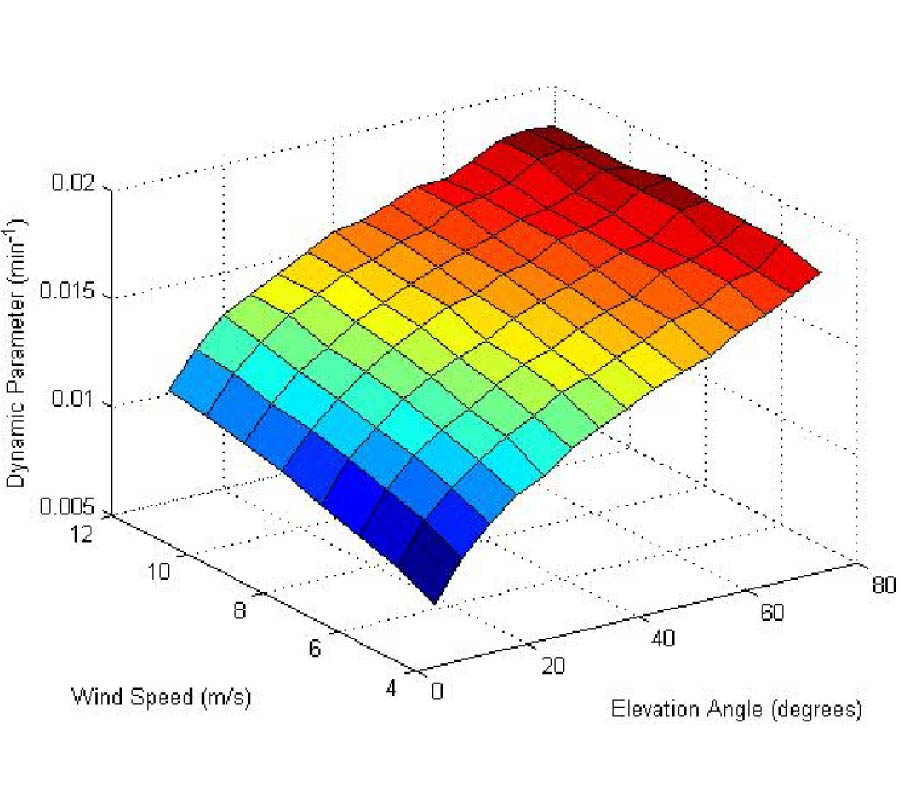
In this paper, the dynamics of rain attenuation are examined, and dynamic diversity gain is evaluated for a pico-scale site diversity system. Since modern satellite communication systems operate at frequencies above 10 GHz, their efficient design requires the adoption of Propagation Impairment Mitigation techniques and so rain attenuation time series synthesizers. For rain attenuation, which is the most dominant fading mechanism, the dynamic stochastic model, proposed by Maseng-Bakken, based on the lognormal distribution is the most widely accepted and used. In this latter model, the dynamic parameter is required for the generation of slant path rain attenuation time series. In this paper, firstly, a simple expression is proposed for the calculation of the dynamic parameter in terms of the mean wind speed, elevation angle of the link, and dynamic parameter of rainfall rate. The new theoretical expression is tested with simulated data with very encouraging results. This expression is then used into a unified rain attenuation synthesizer with inputs from the rainfall rate statistics and the satellite slant path characteristics. Finally, the dynamic diversity gain is calculated for pico-scale site diversity systems for various link characteristics.
DYNAMIC PROPERTIES OF RAIN ATTENUATION IN ATHENS, GREECE: SLANT PATH RAIN ATTENUATION SYNTHESIZER AND DYNAMIC DIVERSITY GAIN
2015-02-03
PIER C
Vol. 56, 39-53
Effect of Second and Third Harmonic Input Impedances in a Class-F Amplifier
Sadegh Abbasian and Thomas Johnson
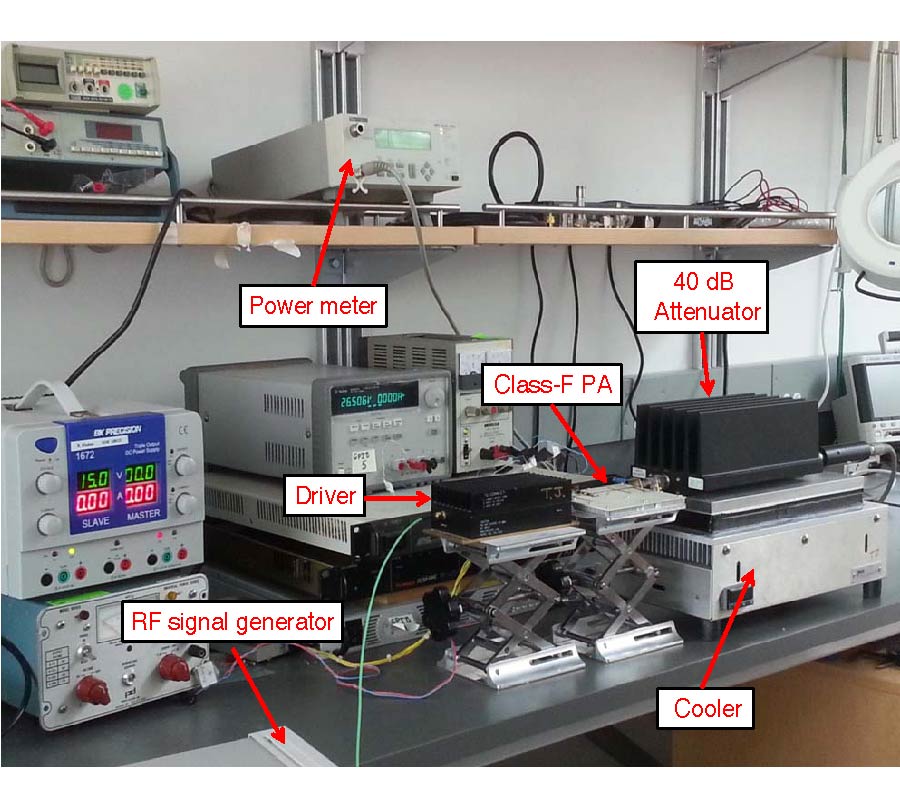
In this paper, the design of a class-F radio frequency power amplifier with a multiharmonic input transmission line network is presented. Harmonic signal components at the gate come from several sources including nonlinear device capacitances and imperfect output harmonic terminations that create harmonic components that are fed back to the gate through the gate-drain capacitance. The effect of these harmonic generation mechanisms and the potential to shape the gate waveform to improve power efficiency are investigated. The study shows that a second harmonic short is most beneficial and the effect of a third harmonic termination is small. The concepts are applied to the design of a 10 W GaN class-F amplifier and the design is supported by theoretical, simulation and experimental results. The fabricated design has a measured drain efficiency of 78.8% at an output power of 40.5 dBm for a frequency of 990 MHz. The amplifier was also tested with a 8.8 dB peak-to-average power ratio 5 MHz WCDMA signal. With the modulated signal, the adjacent channel power ratio was -33.1 dBc at a drain efficiency of 46.1% without predistortion correction.
EFFECT OF SECOND AND THIRD HARMONIC INPUT IMPEDANCES IN A CLASS-F AMPLIFIER
2015-02-02
PIER M
Vol. 41, 33-41
Omnidirectional Reflection from Generalized Kolakoski Multilayers
Volodymyr I. Fesenko
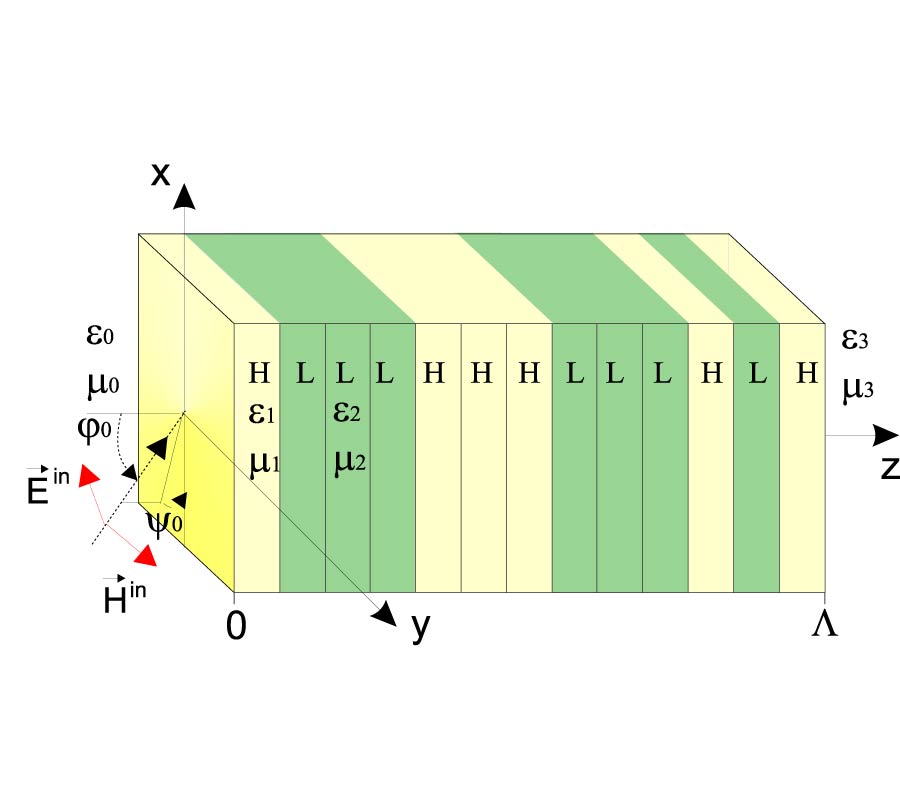
The origin of omnidirectional band gaps in one-dimensional layered photonic structures which are aligned according to the generalized Kolakoski in flation rule are studied using the transfer matrix formalism. On their basis some particular designs of cascaded aperiodic heterostructures are proposed. It is found that the proposed cascaded structures stand out by the omnidirectional reflection bands which cover whole near-infrared spectral region.
OMNIDIRECTIONAL REFLECTION FROM GENERALIZED KOLAKOSKI MULTILAYERS
2015-01-30
PIER C
Vol. 56, 29-38
CPW-Fed UWB Compact Antenna for Multiband Applications
Saira Joseph , Binu Paul , Shanta Mridula and Pezholil Mohanan
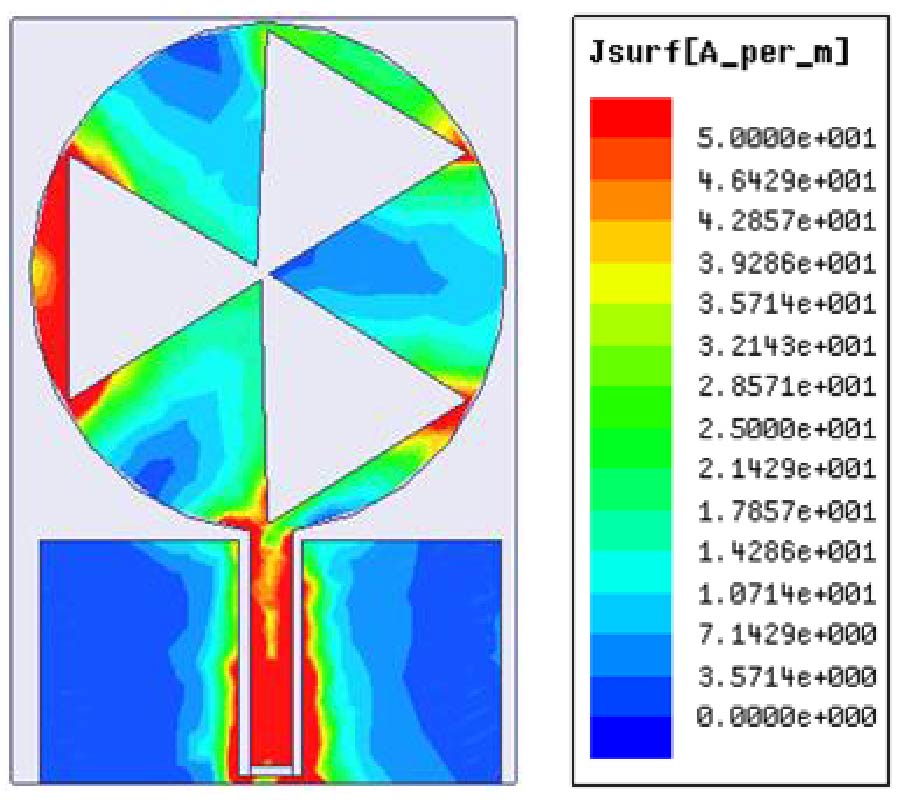
A planar UWB antenna with added GSM 1800/WMTS and UMTS bands is presented. A CPW-fed circular patch is used to obtain wideband characteristic covering the UWB range. A novel slot formed by merging the alternate sides of a hexagon with isosceles triangles is inserted in the patch to obtain dual-band operation with the lower band suitable for GSM 1800 operation. By inserting a bent monopole in the space created by the slot, a triple-band antenna is developed with two lower bands suitable for WMTS and UMTS operation. The antenna prototype is fabricated and tested. Simulated and experimental results are in good agreement. The antenna exhibits stable radiation characteristics and nearly constant group delay in the UWB range.
CPW-FED UWB COMPACT ANTENNA FOR MULTIBAND APPLICATIONS
2015-01-30
PIER C
Vol. 56, 15-28
Design of Slotted Waveguide Antennas with Low Sidelobes for High Power Microwave Applications
Hilal M. El Misilmani , Mohammed Al-Husseini and Karim Youssef Kabalan
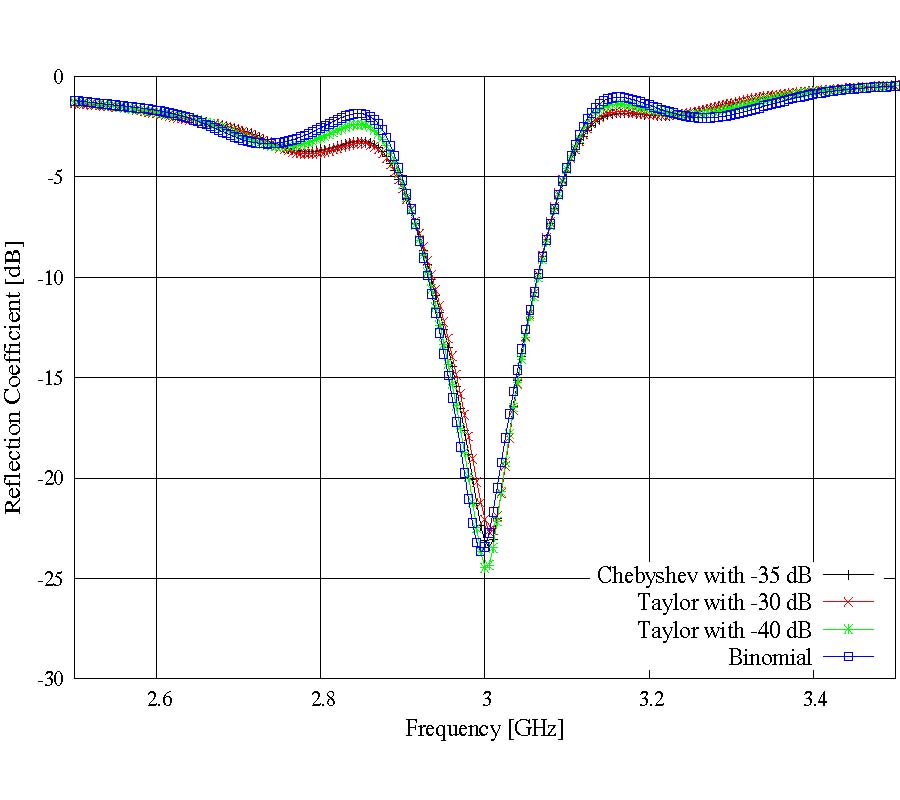
Slotted waveguide antenna (SWA) arrays offer clear advantages in terms of their design, weight, volume, power handling, directivity, and efficiency. For broadwall SWAs, the slot displacements from the wall centerline determine the antenna's sidelobe level (SLL). This paper presents a simple inventive procedure for the design of broadwall SWAs with desired SLLs. For a specified number of identical longitudinal slots, and given the required SLL and operating frequency, this procedure finds the slots length, width, locations along the length of the waveguide, and displacements from the centerline. Compared to existing methods, this procedure is much simpler as it uses a uniform length for all the slots and employs closed-form equations for the calculation of the displacements. A computer program has been developed to perform the design calculations and generate the needed slots data. Illustrative examples, based on Taylor, Chebyshev and the binomial distributions are given. In these examples, elliptical slots are considered, since their rounded corners are more robust for high power applications. A prototype SWA has been fabricated and tested, and the results are in accordance with the design objectives.
DESIGN OF SLOTTED WAVEGUIDE ANTENNAS WITH LOW SIDELOBES FOR HIGH POWER MICROWAVE APPLICATIONS
2015-01-30
PIER Letters
Vol. 51, 79-85
A Novel Compact Dual-Wideband Bandpass Filter with Multi-Mode Resonators
Jun Li , Shan Shan Huang , Hui Wang and Jian Zhong Zhao
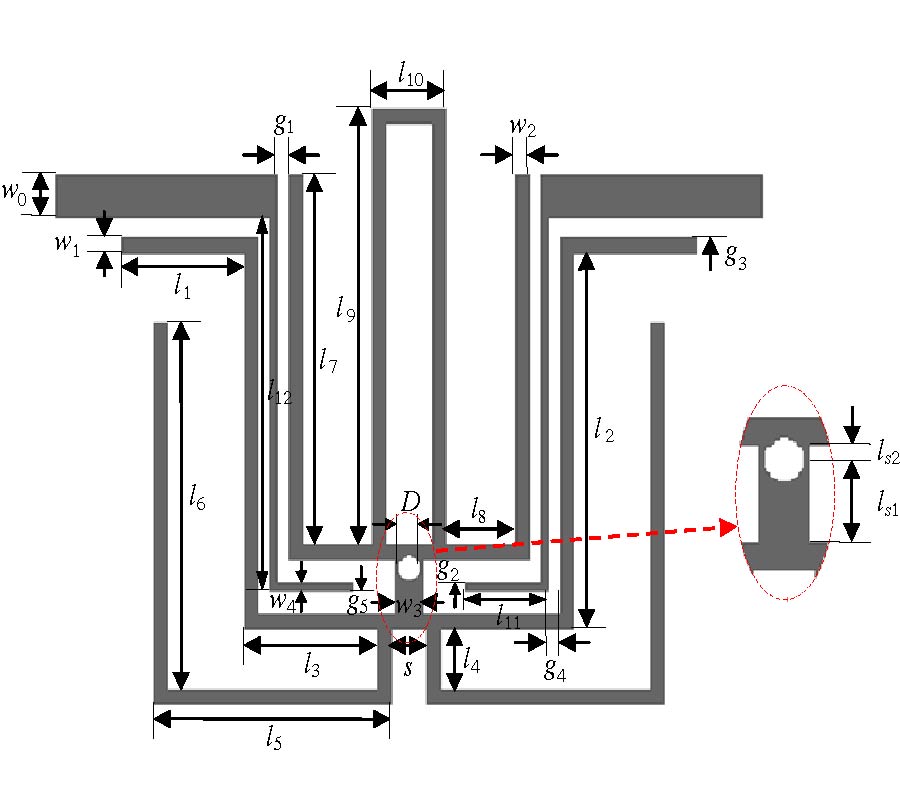
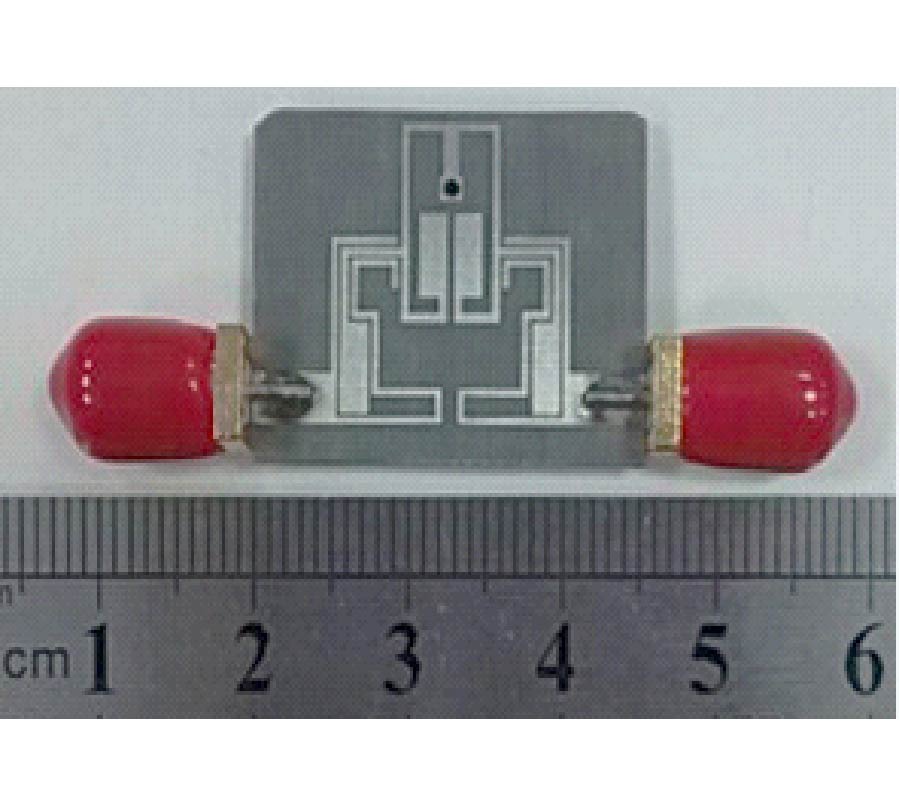
A novel compact dual-wideband bandpass filter (BPF), with two multi-mode resonators (MMRs), a quad-mode one (QMR) and a triple-mode one (TMR), is proposed in this paper. The first passband is generated by a QMR loaded with a short-ended stub and two open-ended stubs, and the second one is realized by a TMR loaded with a square ring and a short-ended stub. Each passband can be tuned separately by controlling the corresponding resonator. The classical even-/odd-mode analysis is applied to characterize the presented MMRs due to their symmetric configurations. In order to validate the design methodology, a dual-wideband BPF prototype centered at 2.34 and 3.46 GHz with fractional bandwidths of 25.6% and 21.4% for WLAN and WiMAX applications is designed, fabricated and measured. Measurements have good agreement with simulations.
A NOVEL COMPACT DUAL-WIDEBAND BANDPASS FILTER WITH MULTI-MODE RESONATORS
2015-01-29
PIER C
Vol. 56, 1-13
Development of an Equivalent Circuit Model of a Finite Ground Coplanar Waveguide Interconnect in MIS System for Ultra-Broadband Monolithic ICs
Md Amimul Ehsan , Zhen Zhou and Yang Yi
An equivalent circuit model of a finite ground plane coplanar waveguide (FGCPW) interconnect in a metal-insulator-semiconductor (MIS) system for an ultra-broadband monolithic IC is proposed and illustrated. An effective substrate considering Maxwell-Wagner Polarization is suggested and demonstrated. The method of modeling the weak skin effect of the conductor is presented. The accuracy of the equivalent circuit model is evaluated. This proposed FGCPW interconnect equivalent circuit model enables a quick and efficient time domain simulation to estimate the time delay and bandwidth of the ultra-broadband ICs.
DEVELOPMENT OF AN EQUIVALENT CIRCUIT MODEL OF A FINITE GROUND COPLANAR WAVEGUIDE INTERCONNECT IN MIS SYSTEM FOR ULTRA-BROADBAND MONOLITHIC ICS
2015-01-29
PIER C
Vol. 55, 187-197
Ultra-Compact Electromagnetic Metamaterial Transmission Line and Its Application in Miniaturized Butler Matrix
Minxian Du and Huaxia Peng
A novel super compact electromagnetic metamaterial transmission line (EM-MTM TL) is proposed in this paper by using the structure of symmetric double spiral lines (SDSLs). The investigation results indicate that the proposed EM-MTM TL not only has controllable resonant frequency, but also has very compact size, and the circuit area is only 8.8 mm×7.2 mm (equal to λ0/32.16×λ0/39.31, where λ0 is the free space wavelength at the resonant frequency) without the feed lines. Using the proposed structure, a 3-dB branch-line coupler and a 0-dB crossover operated at 0.86 GHz have been designed, fabricated and measured; the measured and simulated results are in good agreement. The two microwave devices realize 84.8% and 85.7% size reduction, respectively. Then, a compact Butler matrix is obtained by optimizing the combination of the branch-line couplers, 0 dB crossovers and 45-degree phase shifters. The measured and simulated results of the proposed Butler matrix agree well, showing that the proposed device operates at 0.86 GHz with very good electromagnetic performances. Moreover, the circuit area of the proposed Butler matrix is 109.0 mm×89.3 mm, which realizes at least 80.9% size reduction in comparison with the conventional one (whose circuit area is at least 226.2 mm×226.2 mm), and the miniaturization is considerable. Besides, these designed microwave devices, without any lumped elements, bonding wires, defected ground structure (DGS), and via-holes, are more suitable for modern wireless communication systems.
ULTRA-COMPACT ELECTROMAGNETIC METAMATERIAL TRANSMISSION LINE AND ITS APPLICATION IN MINIATURIZED BUTLER MATRIX
2015-01-29
PIER M
Vol. 41, 25-32
Ultra-Compact Metamaterial Absorber with Low-Permittivity Dielectric Substrate
Haibin Sun , Yongjun Huang , Jian Li , Weiren Zhu and Guangjun Wen
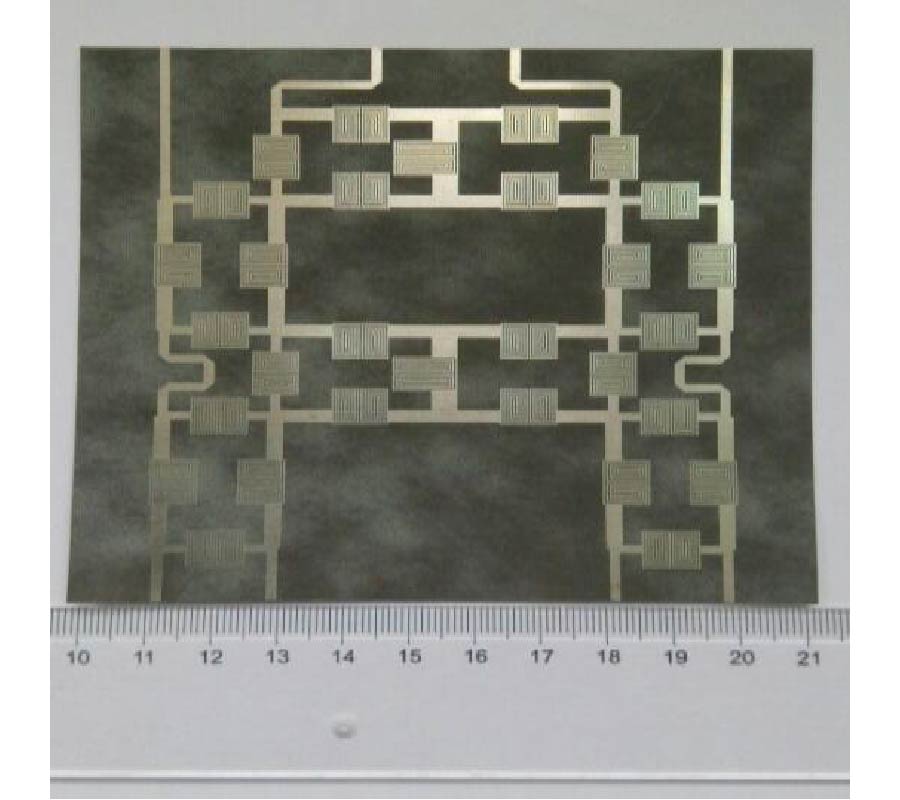
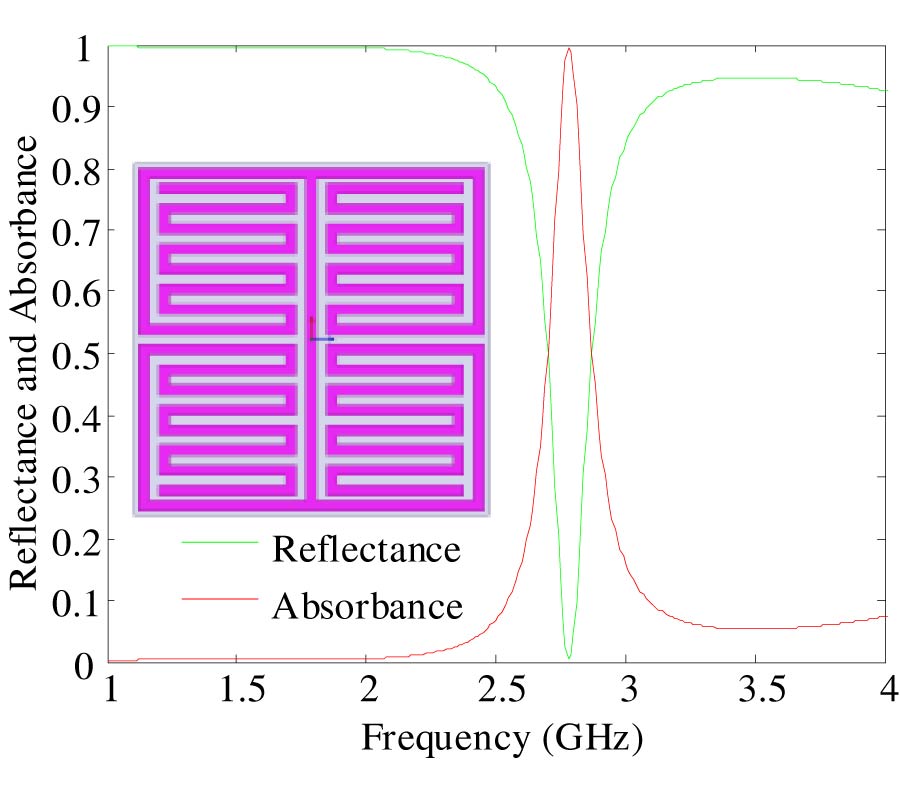
We analyze and discuss an ultra-compact metamaterial absorber (MA) by introducing meander lines into the resonant cells and covering another dielectric layer onto the MA. The size reduction procedures are presented step by step and an ultra-compact metamaterial absorber with in-plane (lateral) dimension of λ/28 and vertical thickness of λ/37 is obtained. We further present two variations of MA con gurations which can reach similar ultra-compact sizes. The proposed ultra-compact MAs show near-unity absorption under a wide range of incident angles for both TE and TM radiations.
ULTRA-COMPACT METAMATERIAL ABSORBER WITH LOW-PERMITTIVITY DIELECTRIC SUBSTRATE
2015-01-29
PIER
Vol. 150, 109-121
An Overview of the Evolution of Method of Moments Techniques in Modern EM Simulators (Invited Paper)
Carlos Delgado , Eliseo Garcia , Javier Moreno , Ivan Gonzalez-Diego and Felipe Catedra
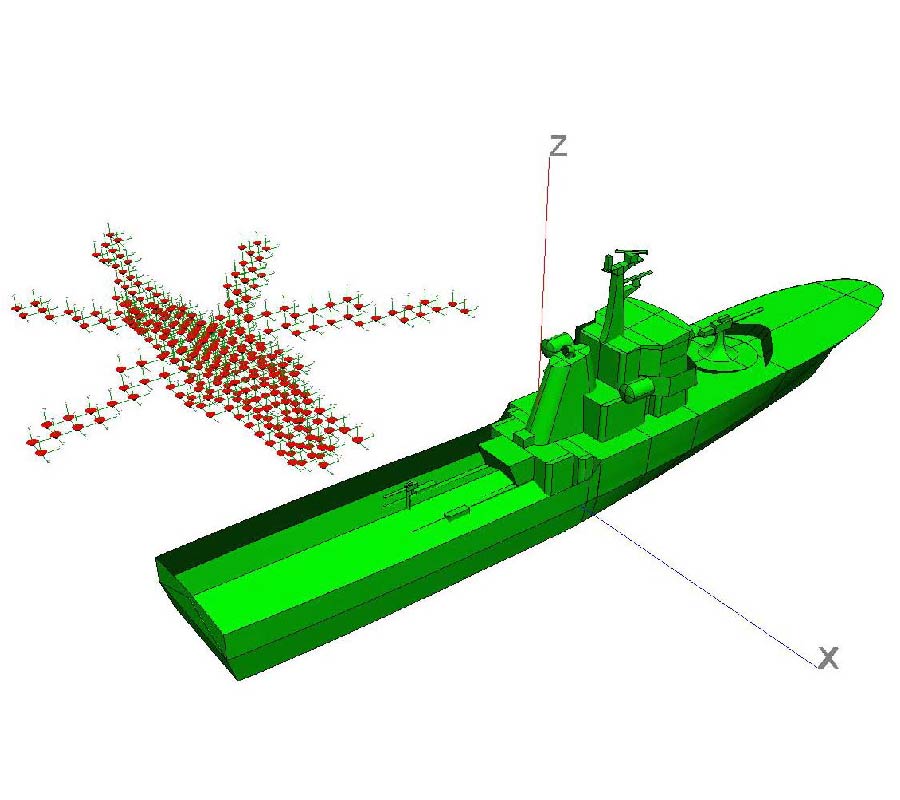
This paper presents an evolution of the challenges and solutions found in the application of techniques based on the Method of Moments until the present day. The original MoM presented very high computational restrictions that have motivated the development of more efficient approaches. The main features of these newer improvements are presented, as well as other technical details regarding preconditioning and parallelization techniques. Some representative examples are shown in order to assert the suitability of these approaches for the analysis of complex and realistic scenarios.
AN OVERVIEW OF THE EVOLUTION OF METHOD OF MOMENTS TECHNIQUES IN MODERN EM SIMULATORS (Invited Paper)
2015-01-26
PIER M
Vol. 41, 11-24
Building Height Estimation from High Resolution SAR Imagery via Model-Based Geometrical Structure Prediction
Zhuang Wang , Libing Jiang , Lei Lin and Wenxian Yu
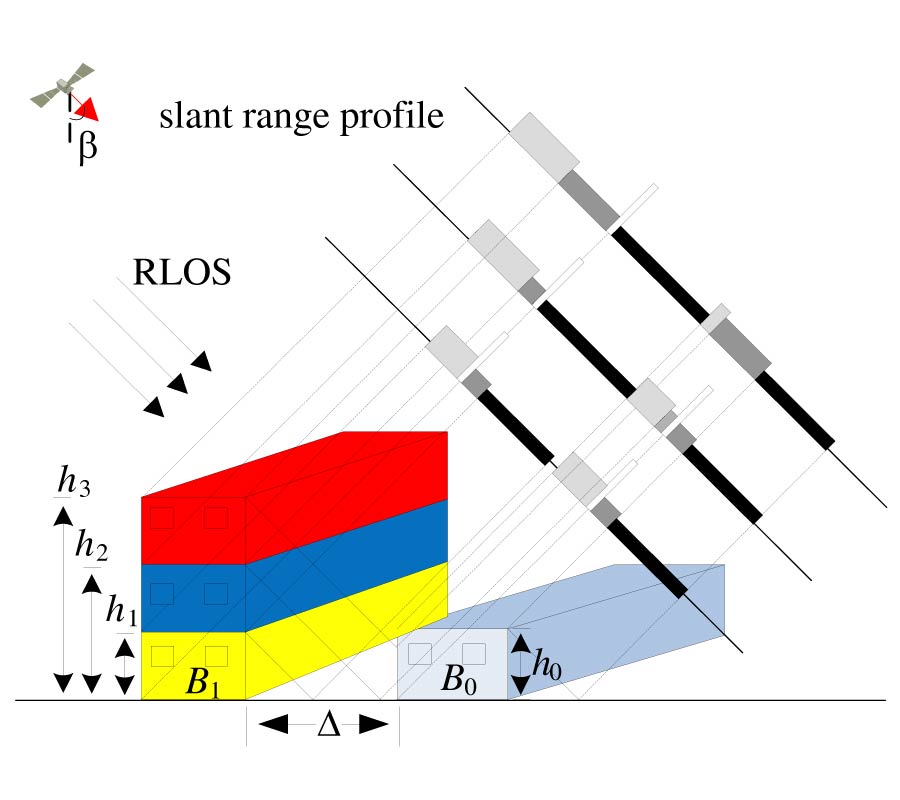
Height extraction by radar remote sensing is an attractive issue for the building detection and recognition. According to the analysis on the building geometrical properties in the SAR imagery, a novel height estimation algorithm is proposed following a model-based geometrical structure prediction and matching strategy. The range Doppler equation is introduced and simplified for the building 2D geometrical structure prediction in the slant image plane. An evaluation function implementing the ratio of exponentially weighted averages (ROEWA) is also established for the matching between the predicted structure and the observed SAR image. By incorporating the genetic algorithm (GA), the evaluation function is maximized to get the optimal height parameter. The experimental results with the simulated and real airborne and spaceborne SAR images show that the proposed method could efficiently estimate building height from single SAR imagery, and achieve better performance than two popular algorithms with the partial occlusion case.
BUILDING HEIGHT ESTIMATION FROM HIGH RESOLUTION SAR IMAGERY VIA MODEL-BASED GEOMETRICAL STRUCTURE PREDICTION
2015-01-24
PIER M
Vol. 41, 1-9
3D Computation of the Power Lines Magnetic Field
Tonci Modric , Slavko Vujević and Dino Lovrić
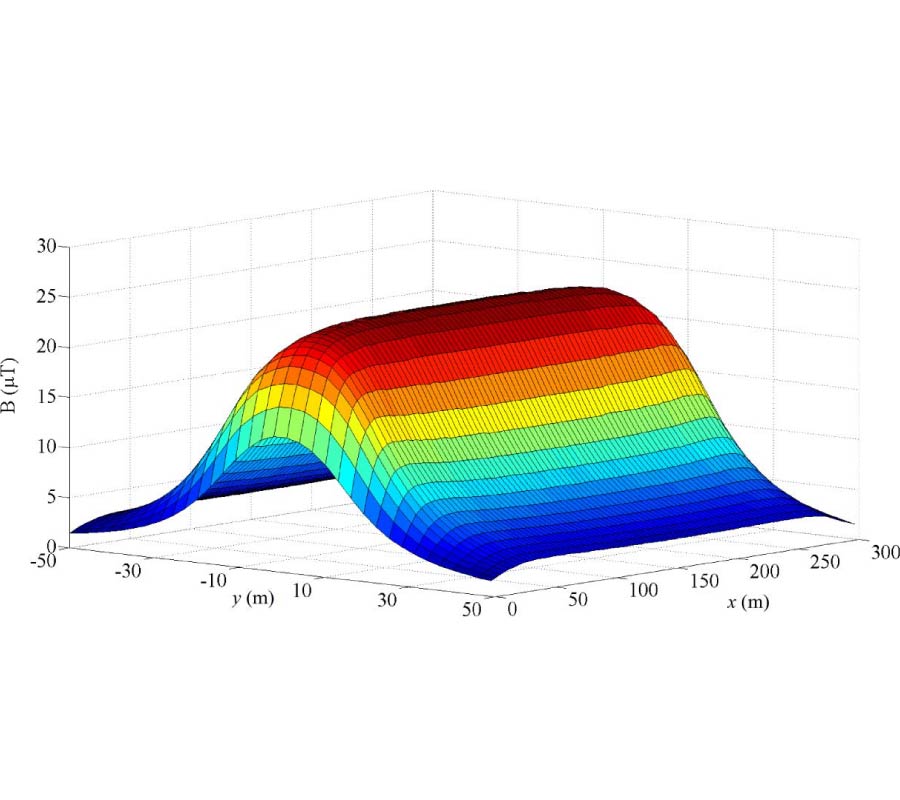
In this paper, a 3D quasi-static numerical algorithm for computation of the magnetic field produced by power lines is presented. These power lines can be overhead power line phase conductors and shield wires or buried cable line phase conductors. The basis of the presented algorithm is the application of Biot-Savart law and the thin-wire approximation of cylindrical conductors. The catenary form of the power line conductors is approximated by a set of straight cylindrical segments. By summing up contributions of all conductor segments, magnetic field distribution is computed. On the basis of the presented theory, a FORTRAN program PFEMF for computation of the magnetic flux density distribution was developed. For each conductor catenary, it is necessary to define only global coordinates of the beginning and ending points and also the value of the longitudinal phase conductor current. Global coordinates of beginning and ending points of each catenary segment are generated automatically in PFEMF. Numerical results obtained by program PFEMF are compared with results obtained by simple 2D model and results obtained using software package CDEGS.
3D COMPUTATION OF THE POWER LINES MAGNETIC FIELD
2015-01-23
PIER
Vol. 147, 153-170
Design of Absorptive Coatings for Arbitrarily Shaped Targets for Reduction of Radar Cross Section (RCS) Using an Alternative to the Transformation Optics (to) Algorithm (Invited Paper)
Raj Mittra and Yuda Zhou
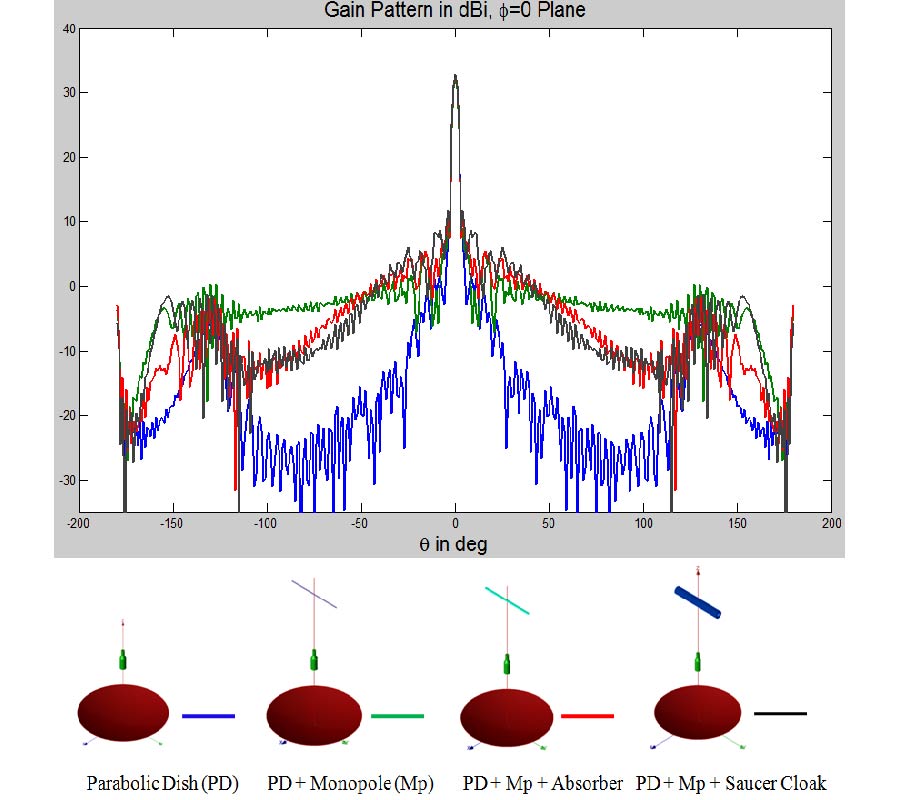
In this paper we present an alternative approach to addressing the problem of scattering reduction for radar targets, which have recently been dealt with by using the Transformation Optics (TO) algorithm which typically calls for the use of Metamaterials (MTMs) that are inherently narrowband, dispersive and highly sensitive to polarization as well as to the incident angle. The present design utilizes realistic lossy materials that can be conveniently fabricated in the laboratory, and are wideband as well as relatively insensitive to polarization and incident angle of the incoming wave. A modified interpretation of the TO algorithm is presented and is employed the design of RCS-reducing absorbers for arbitrarily shaped targets, and not just for canonical shapes, e.g., cylinders, for which cloaks have been designed by using the TO. The paper also briefly examines the topic of performance enhancement of absorbers by using graphene materials and embedded Frequency Structure Surfaces (FSSs). We begin by presenting the design procedure for planar absorbers, and then examine how well those designs perform for arbitrarily-shaped objects. Finally, we discuss how the planar design can be modified by tailoring the material parameters of the coating for specific object shapes. A number of test cases are included as examples to illustrate the application of the proposed design methodology, which is a modification of the classical TO paradigm.
DESIGN OF ABSORPTIVE COATINGS FOR ARBITRARILY SHAPED TARGETS FOR REDUCTION OF RADAR CROSS SECTION (RCS) USING AN ALTERNATIVE TO THE TRANSFORMATION OPTICS (TO) ALGORITHM (Invited Paper)
2015-01-22
PIER Letters
Vol. 51, 73-78
Very Compact Open-Slot Antenna for Wireless Communication Systems
Ali A. Al-Azza , Frances Harackiewicz and Hemachandra Reddy Gorla
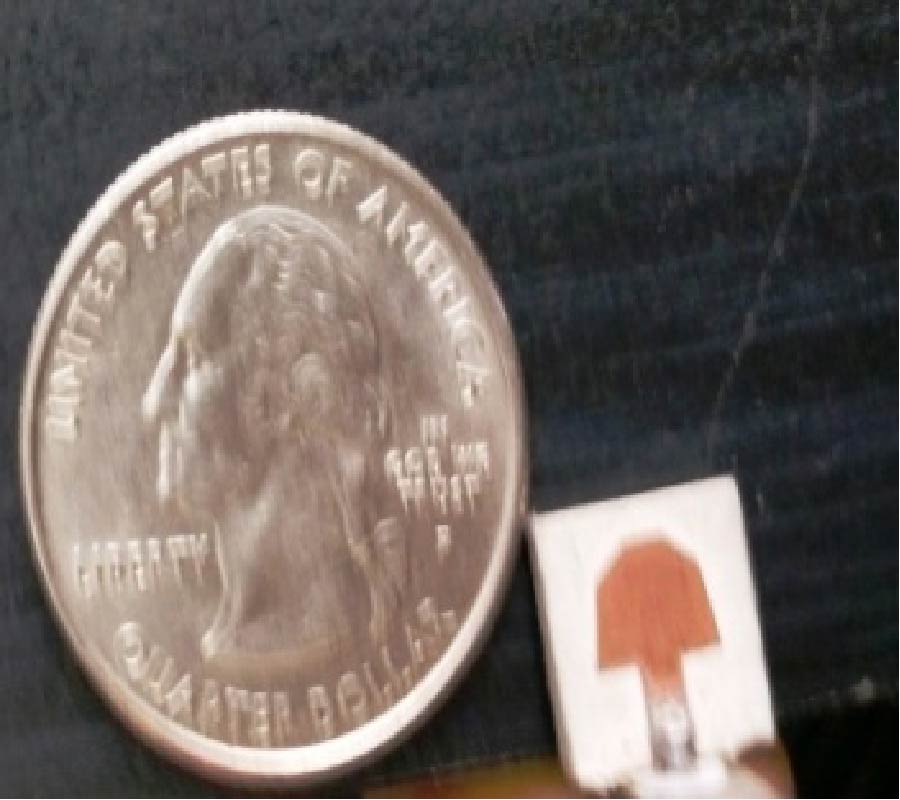
A new very compact open slot antenna for wireless communication systems application has been designed and fabricated. With antenna overall dimension of 9.2 x 9.8 mm2, the proposed design can be used in many modern communication devices with size constraints. Experimental measurements have also been performed to validate the performance of the proposed antenna. The measured results show that the antenna provides a wide bandwidth of 48% (5-8.17 GHz) with an average size reduction of about 88% with respect to a conventional microstrip patch antenna.
VERY COMPACT OPEN-SLOT ANTENNA FOR WIRELESS COMMUNICATION SYSTEMS
2015-01-21
PIER B
Vol. 62, 49-61
Cogging Torque Minimization of Surface-Mounted Permanent Magnet Synchronous Machines Using Hybrid Magnet Shapes
Ladghem-Chikouche Brahim , Kamel Boughrara and Rachid Ibtiouen
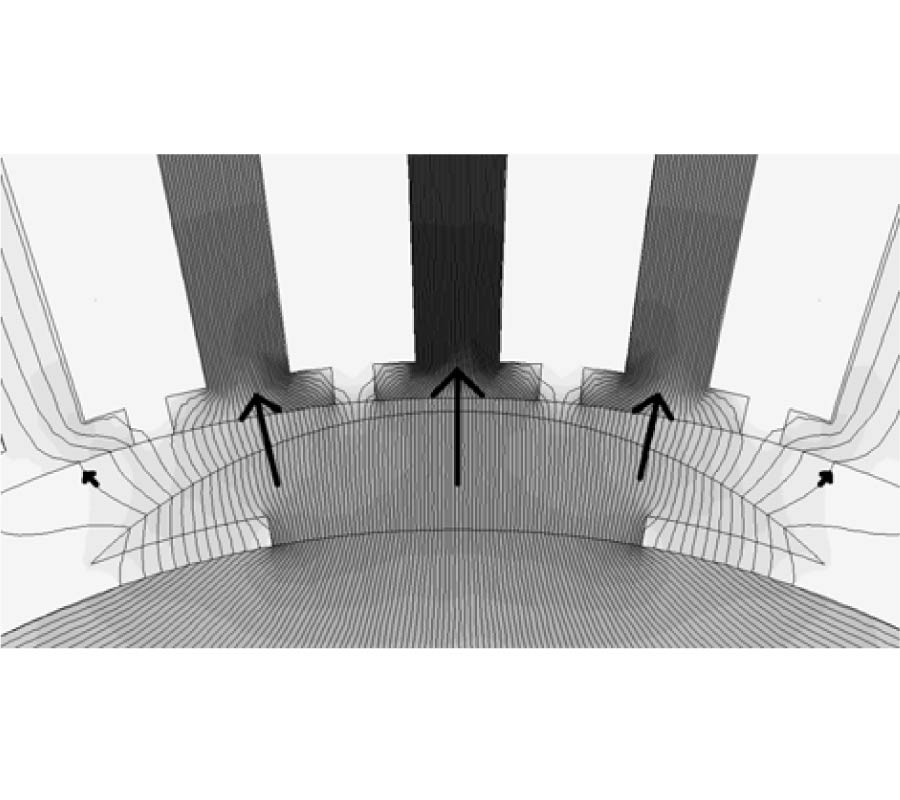
This paper deals with the magnet pole shape design for the minimization of cogging torque in permanent magnet synchronous machines (PMSM). New shapes of permanent magnet are proposed. The magnet shape is modeled analytically by a set of stacked and well dimensioned layers relatively to the height and opening angle. The final shape of magnet is configured by using three models in view of obtaining lower magnitude of cogging torque. A 2-D exact analytical solution of magnetic field distribution taking into account the shape of magnet, the irregular mechanical thickness of air-gap and semi-closed stator slots is established. The influence of motor's parameters such as the number of stator slots per pole and per phase and PM's magnetization on cogging torque is discussed. Analytical results are validated by the static finite-element method (FEM).
COGGING TORQUE MINIMIZATION OF SURFACE-MOUNTED PERMANENT MAGNET SYNCHRONOUS MACHINES USING HYBRID MAGNET SHAPES
2015-01-21
PIER C
Vol. 55, 179-186
A Retrodirective Array with Reduced Surface Waves for Wireless Power Transfer Applications
Mohammad Fairouz and Mohammad Saed
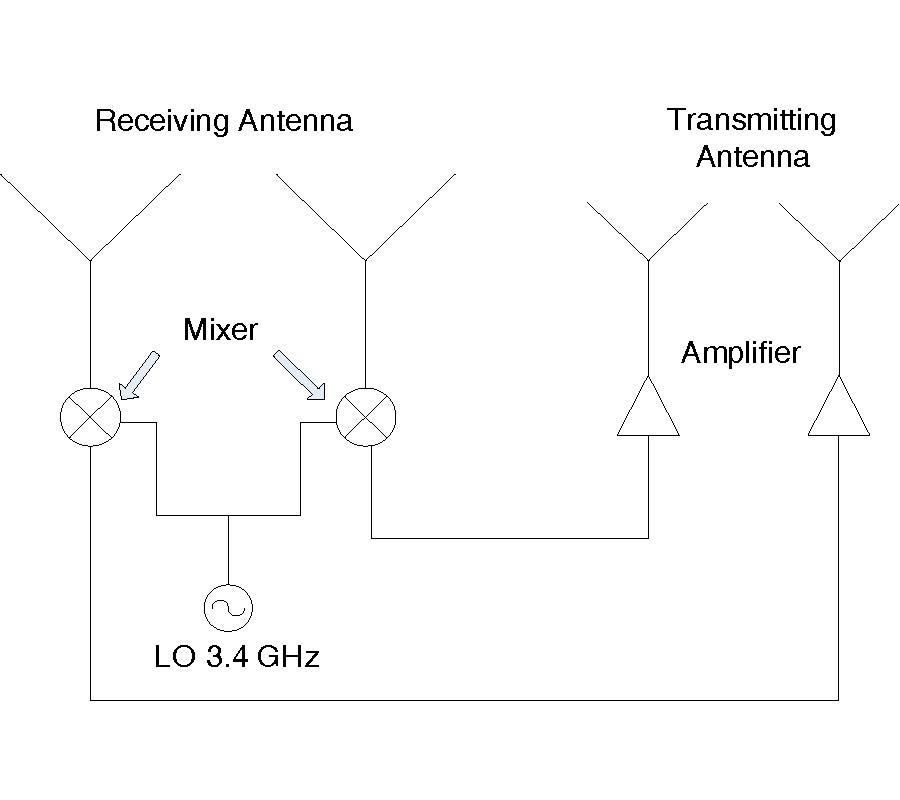
A one-dimensional, dual frequency, active retrodirective array is proposed for wireless power transfer applications. Microstrip circular patch antennas with four shorting pins are used as array elements to suppress surface waves. The proposed design eliminates undesired coupling between array elements due to surface waves present in conventional microstrip antenna arrays in order to improve array performance. The antenna array uses circularly polarized microstrip elements with higher gain than conventional microstrip antennas. The proposed retrodirective array operates at 2.4GHz for the interrogating signal and 5.8GHz for the retransmitted signal, using up-converting mixers. The beam scanning inherent in retrodirective arrays ensures a constant power level available to the charging devices, regardless of their location within an angular sector over which retrodirectivity is achieved. A two-element experimental prototype provided uniform power density within a 60° angular sector. The Design procedure, simulation results and experimental measurements are presented.
A RETRODIRECTIVE ARRAY WITH REDUCED SURFACE WAVES FOR WIRELESS POWER TRANSFER APPLICATIONS
2015-01-19
PIER B
Vol. 62, 29-47
Scattered Field in Random Dielectric Inhomogeneous Media: A Random Resolvent Approach
Ellaheh Barzegar , Stef J. L. van Eijndhoven and Martijn Constant van Beurden
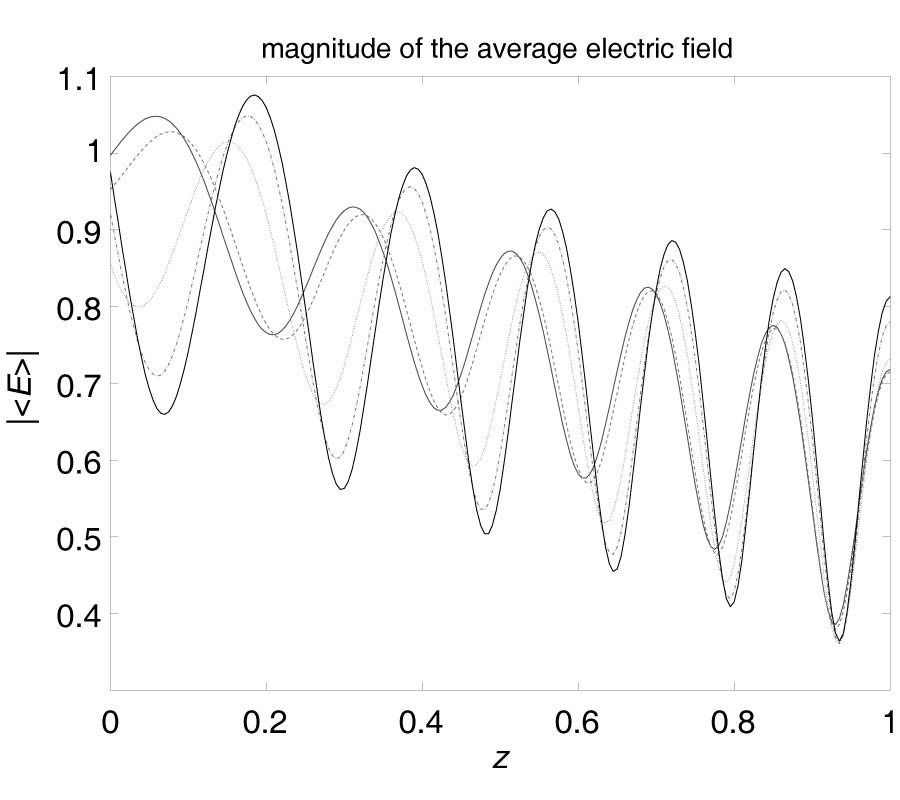
In modeling electromagnetic phenomena randomness of the propagation medium and of the dielectric object should be taken up in the model. The usually applied Monte-Carlo based methods reveal true characteristics of the random electromagnetic field at the expense of large computation time and computer memory. Use of expansion based methods and their resulting algorithm is an efficient alternative. In this paper the focus is on characteristics of electromagnetic fields that satisfy integral equations where the integral kernel has a random component, typically, electromagnetic fields that describe scattering due to dielectric objects with an inhomogeneous random contrast field. The assumption is that the contrast is affinely related to a random variable. The integral equation is of second kind Fredholm type so that its solutions are determined by the resolvent, a random operator field. The key idea is to expand that operator field with respect to orthogonal polynomials defined by the probability measure on the underlying sample space and to derive the properties of the solution from that expansion. Two types of illustration are presented: an inhomogeneous dielectric slab and a 2D dielectric grating with 1D periodicity.
SCATTERED FIELD IN RANDOM DIELECTRIC INHOMOGENEOUS MEDIA: A RANDOM RESOLVENT APPROACH
2015-01-19
PIER Letters
Vol. 51, 67-72
Wideband Planar Inverted-F MIMO Antenna with High Isolation
Zhaoyang Tang , Bo Wang , Ying-Zeng Yin and Ruina Lian
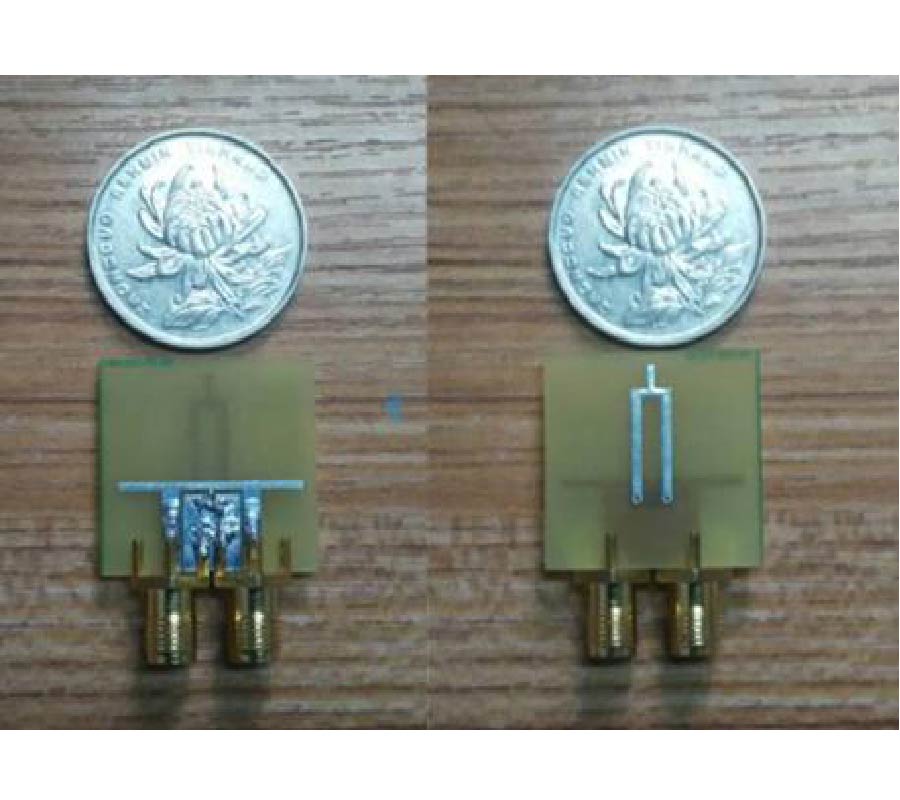
A wideband planar inverted-F MIMO antenna with high isolation is proposed in this letter. The proposed MIMO antenna consists of two back-to-back planar inverted-F antennas and a fork-shaped de-coupling stub. The two planar inverted-F antennas are merged together with a shorting strip connected to the ground plane. In order to enhance the isolation, a fork-shaped decoupling stub connected to the ground plane through shorting pins is introduced, and the impedance matching is significantly improved simulta-neously. The proposed antenna prototype is fabricated and measured, and a compact size of 28×26 mm2 makes the proposed antenna be easily integrated in a MIMO system. Measured results show that the measured bandwidth for |S11| less than -10 dB covers from 5.05 GHz to 6.23 GHz, and the measured isolation is higher than 20 dB in the whole working frequency band.
WIDEBAND PLANAR INVERTED-F MIMO ANTENNA WITH HIGH ISOLATION
2015-01-19
PIER
Vol. 150, 97-107
Resolution of the Frequency Diverse Metamaterial Aperture Imager
Okan Yurduseven , Mohammadreza F. Imani , Hayrettin Odabasi , Jonah Gollub , Guy Lipworth , Alec Rose and David R. Smith
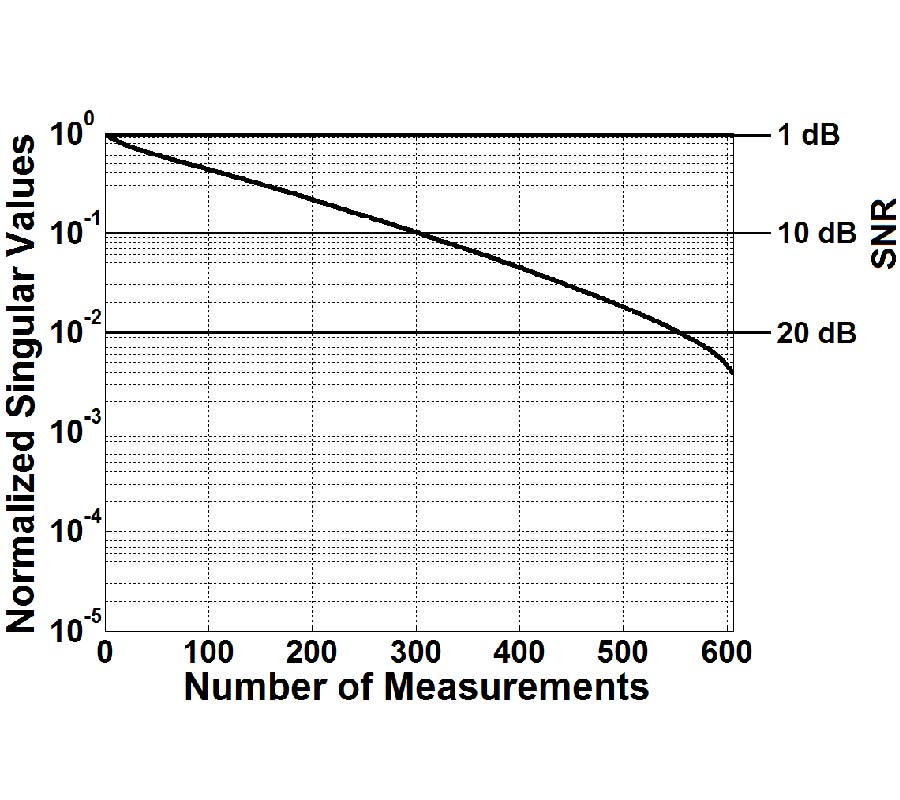
The resolution of a frequency diverse compressive metamaterial aperture imager is investigated. The aperture consists of a parallel plate waveguide, in which an array of complementary, resonant metamaterial elements is patterned into one of the plates. Microwaves injected into the waveguide leak out through the resonant metamaterial elements, forming a spatially diverse waveform at the scene. As the frequency is scanned, the waveforms change, such that scene information can be encoded onto a set of frequency measurements. The compressive nature of the metamaterial imager enables image reconstruction from significantly reduced number of measurements. We characterize the resolution of this complex aperture by studying the simulated point spread function (PSF) computed using different image reconstruction techniques. We compare the imaging performance of the system with that expected from synthetic aperture radar (SAR) limits.
RESOLUTION OF THE FREQUENCY DIVERSE METAMATERIAL APERTURE IMAGER
2015-01-16
PIER Letters
Vol. 51, 61-66
Dual-Band Bandpass Filter with Wide Upper Stopband Using Novel Stepped Impedance Stub-Loaded Quad-Mode Resonator
Lei Lin , Zhenlong Zhang , Shou Jia Sun and Chang-Hong Liang
This paper presents a wide upper stopband dual-band bandpass filter (BPF) with controllable passband frequencies and bandwidths as well as a high out-of-band rejection level. The proposed filter is realized by utilizing a novel stepped impedance stub-loaded quad-mode resonator. All the four-mode equivalent circuits of the resonator are quarter-wavelength stepped impedance resonators (SIRs), and their fundamental resonance frequencies are used to form the passbands, so the designed filter has a compact circuit size. By controlling the impedance and length ratios of the stubs of the resonator, wide upper stopband performance is obtained. Hook-shape feed-lines and source-load coupling are applied to provide appropriate external coupling and generate three extra transmission zeros, which greatly improve the selectivity of the proposed filter. An experimental filter operating at 1.5 and 3.5 GHz is designed, fabricated, and measured for validation. The measured results have good agreement with the simulated ones.
DUAL-BAND BANDPASS FILTER WITH WIDE UPPER STOPBAND USING NOVEL STEPPED IMPEDANCE STUB-LOADED QUAD-MODE RESONATOR