Search Results(13983)

2015-02-19
PIER M
Vol. 41, 73-84
Electrical Capacitance Volume Tomography: A Comparison Between 12- and 24-Channels Sensor Systems
Aining Wang , Qussai M. Marashdeh , Fernando Lisboa Teixeira and Liang-Shih Fan
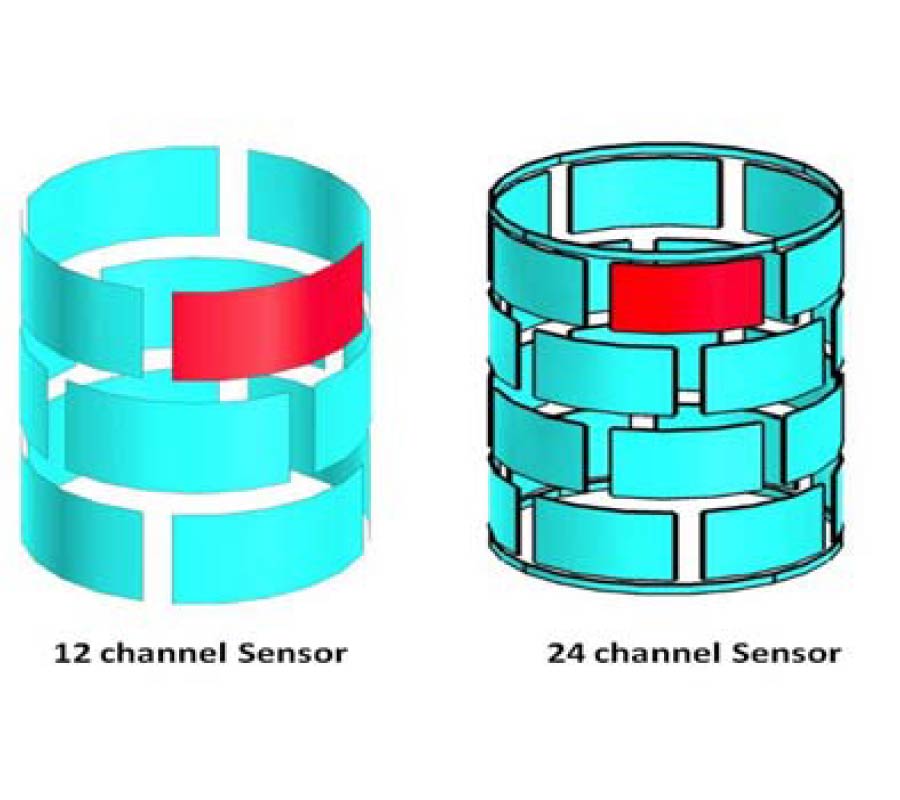
Spatial resolution represents akey performance aspect in electrical capacitance volume tomography (ECVT). Factors affecting the resolution include the ``soft-field'' nature of ECVT, the number of capacitance channels used, the ill-conditioned nature of the imaging reconstruction problem, and the signal-to-noise ratio of the measurement apparatus. In this study, the effect of choosing different numbers of capacitance plates on the performance of ECVT is investigated. Specifically, two ECVT sensors with 12 and 24 capacitance channels but covering equal volumes of a cylinder are used to examine the resulting impact on the image resolution.
ELECTRICAL CAPACITANCE VOLUME TOMOGRAPHY: A COMPARISON BETWEEN 12- AND 24-CHANNELS SENSOR SYSTEMS
2015-02-17
PIER C
Vol. 56, 101-108
Design of a 225 GHz High Output Power Tripler Based on Unbalanced Structure
Jin Meng , De Hai Zhang , Chang Fei Yao , Chang Hong Jiang and Xin Zhao
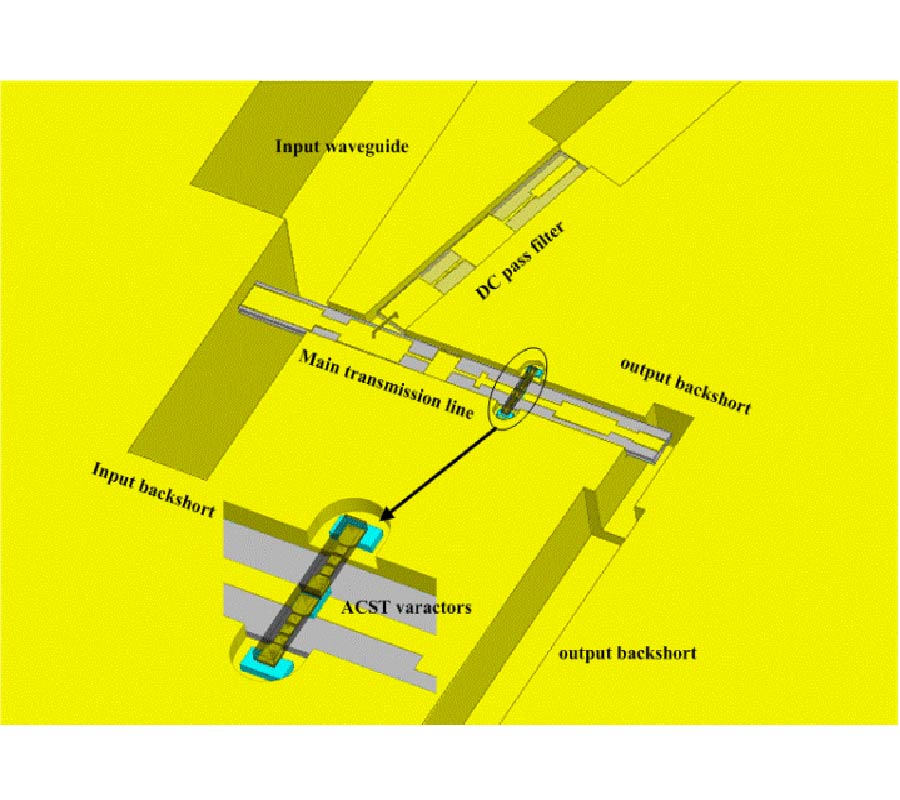
We report the results of a high-output power unbalanced tripler at 225 GHz, in which a pair of discrete Schottky varactor chips in parallel is adopted. Considering the present situation of domestic processing technology, the advantage of unbalanced structure is that it could provide bias to the diodes without a on-chip capacitor, which is essential in the balanced tripler scheme. The whole circuits are built on a 50 um-thick quartz substrate, and the novel field-circuit method is applied to the design process that enables us to calculate the impact of the parastics. The measured results indicate that the output power is more than 7 dBm in 215~228 GHz, and the output power is 12.3 dBm at 224 GHz when driven with 23.8 dBm of input power at room temperature. In general, this tripler has important practical value.
DESIGN OF A 225 GHZ HIGH OUTPUT POWER TRIPLER BASED ON UNBALANCED STRUCTURE
2015-02-16
PIER B
Vol. 62, 105-120
Antenna Aperture Localization for Arrival Time Correction Using First-Break
Kay Yuhong Liu , Elise C. Fear and Mike E. Potter
For microwave imaging systems that utilize antennas with spatially separated feeds and apertures, arrival time correction based on the antenna aperture location is one of the fundamental steps in radar data processing. The estimates of the antenna aperture time and the corresponding average velocity in the material in contact with the antenna are expected to have a significant impact on the quality of the reconstructed image. In this paper, we propose antenna aperture and average velocity estimation by least-squares regression analysis of the first-breaks. The results indicate that the proposed method is able to process either the reflection data or the transmission data measured by antennas with different structures. Compared to those readily identifiable characteristics in the signal, the first-break is less influenced by waveform distortion and is able to provide more consistent reference. Differences in the images of test objects are also noted.
ANTENNA APERTURE LOCALIZATION FOR ARRIVAL TIME CORRECTION USING FIRST-BREAK
2015-02-16
PIER B
Vol. 62, 87-103
Novel Wearable Eagle Shape Microstrip Antenna Array with Mutual Coupling Reduction
Mohamed Ismail Ahmed , Esmat A. F. Abdallah and Hadia El-Hennawy
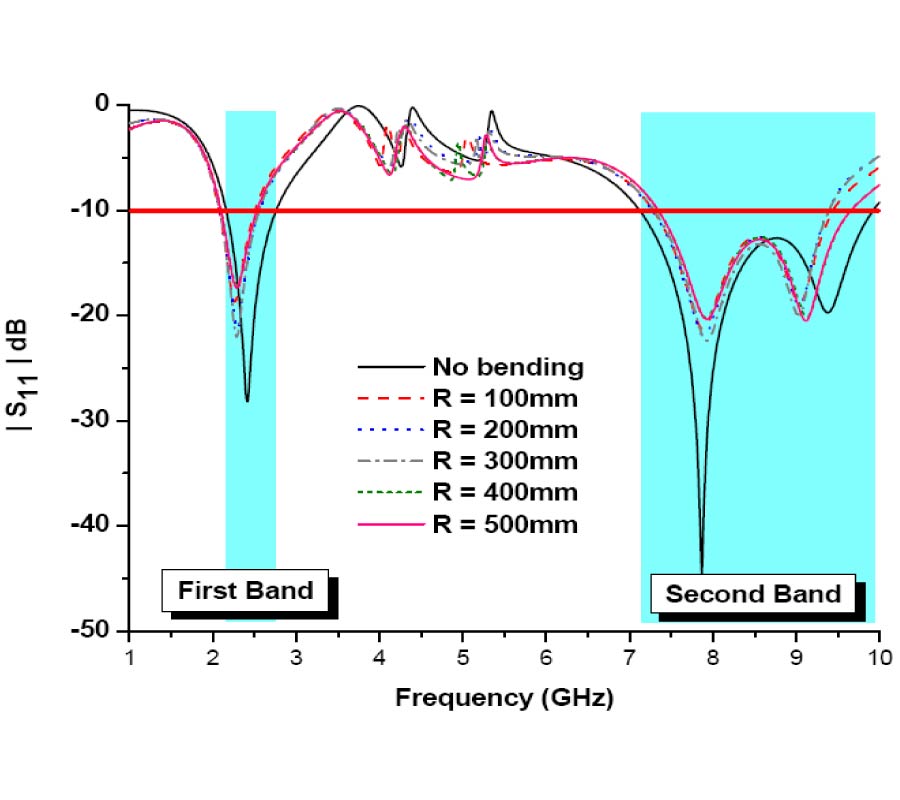
Novel eagle shape microstrip wearable antennas (element and array) are presented. The single- and two-element antenna arrays are designed and fabricated on a Roger RT/Duroid 5880 substrate with dielectric constant of 2.2, thickness of 1.5748 mm, and tan δ = 0.001. The measured results show that a reduction in mutual coupling of 36 dB is achieved at the first band (1.68-2.65) GHz and 22.1 dB over the second band (6.5-8.86) GHz due to introducing electromagnetic bandgap (EBG) structures. EBG structure has an eagle-like shape with more gaps. By increasing the number of EBG cells and varying the gap distance between cells to certain limit, the mutual coupling reduction is improved. Also, a size reduction of 80% is achieved. The microstrip array was simulated by CST simulator version 2014 and fabricated by proto laser machine with precision 25 μm. The specific absorption rate (SAR) investigation is carried out on CST2014 Simulator. Maximum SAR value is 1.953 W/Kg which indicates that the eagle-shaped microstrip wearable antennas are safe for human. The antennas can be used in the official or RFID applications.
NOVEL WEARABLE EAGLE SHAPE MICROSTRIP ANTENNA ARRAY WITH MUTUAL COUPLING REDUCTION
2015-02-16
PIER C
Vol. 56, 93-100
A Thin and Broadband Microwave Absorber Based on Magnetic Sheets and Resistive FSS
Dong Wan , Shaowei Bie , Jie Zhou , Haibing Xu , Yongshun Xu and Jianjun Jiang
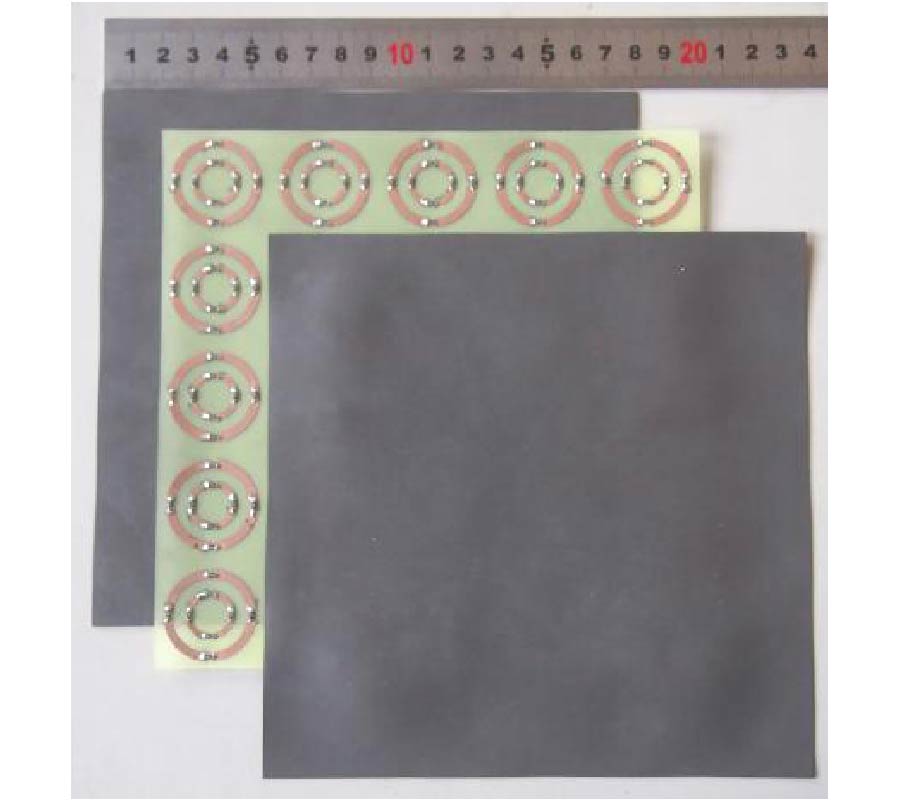
To achieve broadband microwave absorption, a three-layer structure is designed and manufactured. It involves a resistive frequency selective surface (FSS) sandwiched between two layers of magnetic sheets. The measurement results reveal that this structure exhibits -13 dB reflectivity in the frequency range of 7.9-18 GHz while the thickness is only 1.7 mm. The reflectivity bandwidth at the level of -10 dB is 11.4 GHz which is much wider than that of magnetic sheets with non-resistive FSS or the magnetic sheets without FSS. The effect of resistive FSS on the performance of the multilayered absorber is discussed in detail. It is concluded that an embedded resistive double loops FSS can result in a secondary resonance peak which obviously broadens the reflectivity bandwidth of the magnetic sheets.
A THIN AND BROADBAND MICROWAVE ABSORBER BASED ON MAGNETIC SHEETS AND RESISTIVE FSS
2015-02-16
PIER
Vol. 150, 145-161
Omnidirectional Radiation in the Presence of Homogenized Metasurfaces
David Di Ruscio , Paolo Burghignoli , Paolo Baccarelli and Alessandro Galli
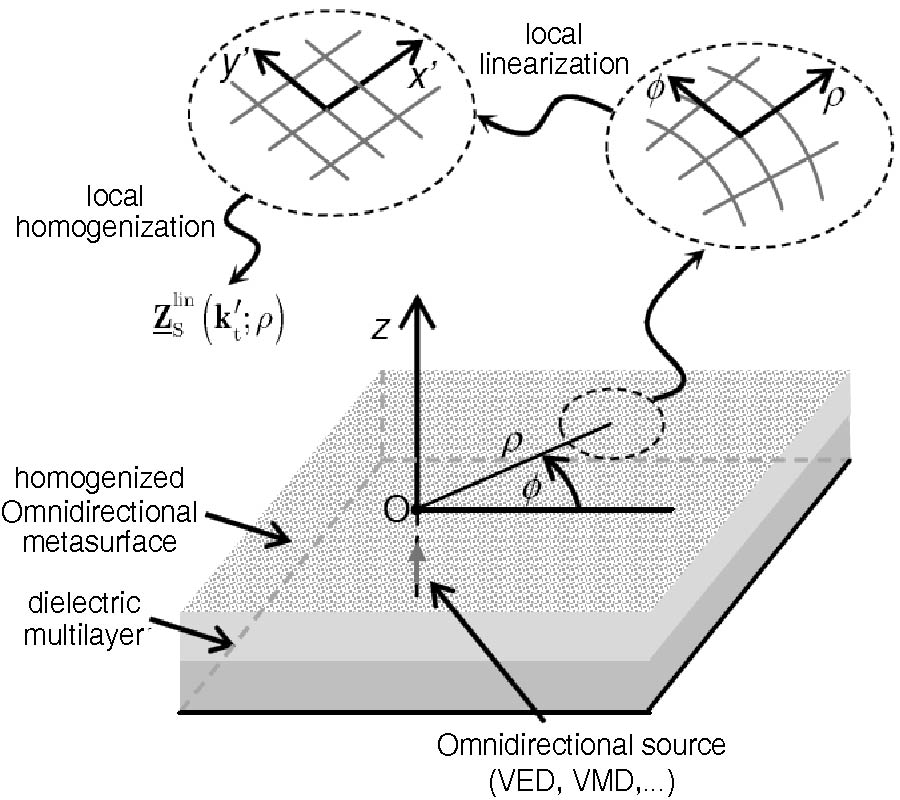
Analytical and numerical approaches are presented for modeling the interaction of azimuthally symmetric fields with omnidirectional metasurfaces, based on the use of locally homogenized equivalent sheet impedances. Radially uniform metasurfaces on layered dielectric media are described in terms of a spectral impedance dyadic, thus allowing for the derivation of the field excited by omnidirectional sources through a simple transmission-line model. In a first approximation, the effect of circular edges in laterally truncated structures is taken into account through an efficient physicaloptics method. Then, truncated and radially non-uniform homogenized layered structures are treated numerically with the method of moments, by suitably extending a recently developed spectral-domain formulation. Numerical results are presented for planar radiating structures based on omnidirectional metasurfaces, comparing the radiation patterns obtained through the proposed homogenized models with those calculated by means of full-wave simulations. The discussion emphasizes the validity of the proposed approaches and their usefulness in the analysis of two-dimensional leaky-wave antennas based on printed omnidirectional metasurfaces.
OMNIDIRECTIONAL RADIATION IN THE PRESENCE OF HOMOGENIZED METASURFACES
2015-02-14
PIER Letters
Vol. 51, 109-115
An Improved Wideband 180-Degree Hybrid Applied to Balanced Mixer
Wei Zhao , Yong Zhang , Shuang Liu , Li Li and Rui-Min Xu
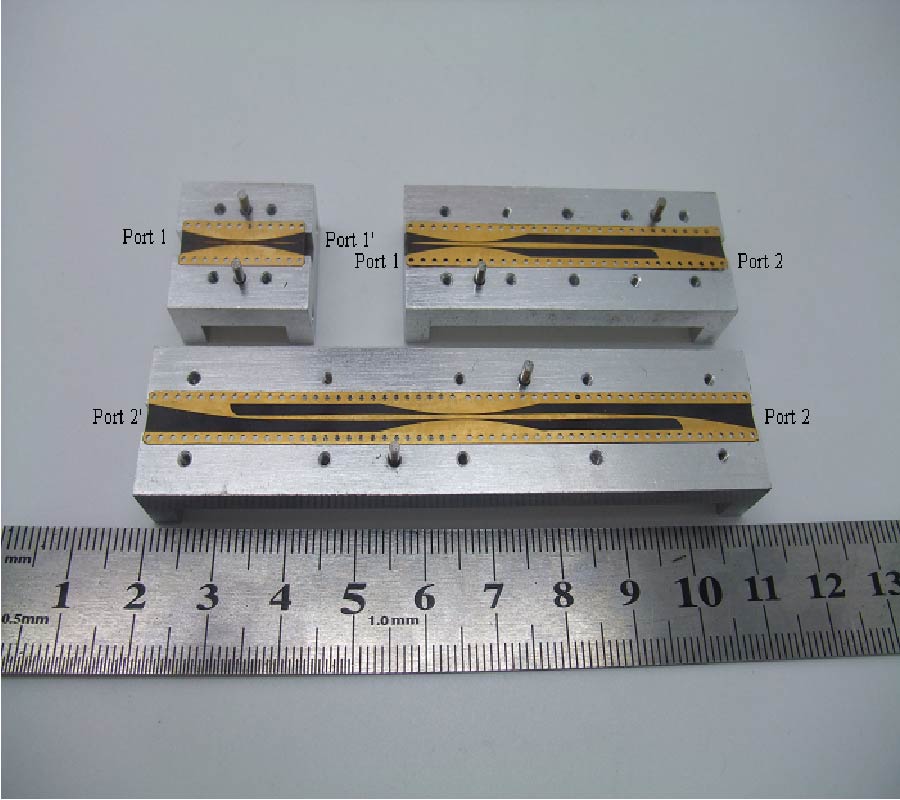
In this paper, an improved wideband millimeter-wave 180° hybrid is proposed to apply to balanced mixers and multipliers. The proposed hybrid consists of a transition of standard waveguide to suspended coplanar waveguide (SCPW) and a transition of SCPW to suspended stripline. According to the inherent electromagnetic field characteristics of the two transitions, the proposed hybrid has merits of broadband power distribution and high isolation, which does not rely on resonant circuits. The measured insertion losses and isolation of two transitions at Ka-band are typically 1.4 dB and 25 dB, respectively. To verify the application of the proposed hybrid, A W-band single balanced mixer based on the hybrid has been designed and fabricated. The measured single-sideband (SSB) conversion losses of the fabricated mixer are less than 9.5 dB for the radio frequency (RF) range from 80 to 108 GHz. The presented hybrid has been proven to be efficient for the design of millimeter-wave balanced mixers and could be well applied in multipliers and other integrated circuits.
AN IMPROVED WIDEBAND 180-DEGREE HYBRID APPLIED TO BALANCED MIXER
2015-02-14
PIER Letters
Vol. 51, 101-107
Analysis of Complex Discontinuities in Circular Waveguides Using Hybrid Finite Element Method and Multimodal Variational Method
Mohamed Yahia , Junwu Tao and Hedi Sakli
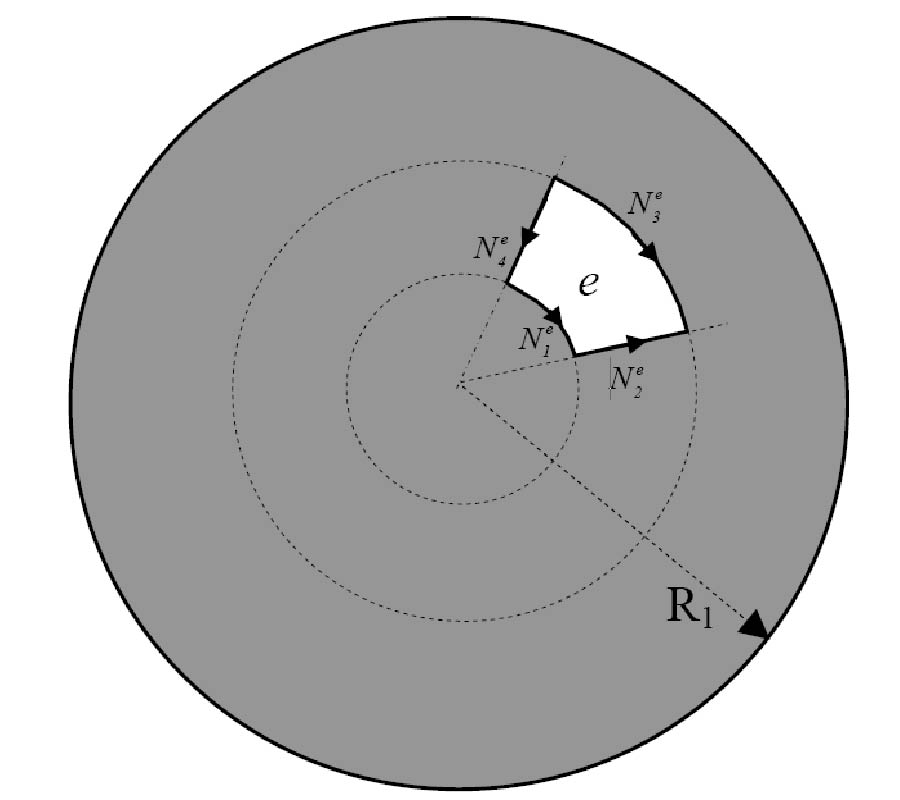
We propose a hybrid multimodal variational method (MVM) and finite element method (FEM) to the analysis of complex 2D discontinuities in circular waveguides. The finite element method characterizes waves in arbitrarily shaped discontinuities, and the total response of the circuit is obtained by applying the multimodal variational method. The proposed hybrid method is successfully applied to the full-wave analysis of discontinuities with great practical interest (i.e., circular, crossshaped, off-centered, ridged, multi-aperture irises, etc.), thus improving CPU time and memory storage against several full-wave finite element method based computer aided design (CAD) tools (i.e. HFSS High Frequency Structural Simulator).
ANALYSIS OF COMPLEX DISCONTINUITIES IN CIRCULAR WAVEGUIDES USING HYBRID FINITE ELEMENT METHOD AND MULTIMODAL VARIATIONAL METHOD
2015-02-14
PIER Letters
Vol. 51, 95-99
Homogenization of Periodic Objects Embedded in Layered Media
Teng Zhao , Jiming Song , Telesphor Kamgaing and Yidnekachew S. Mekonnen
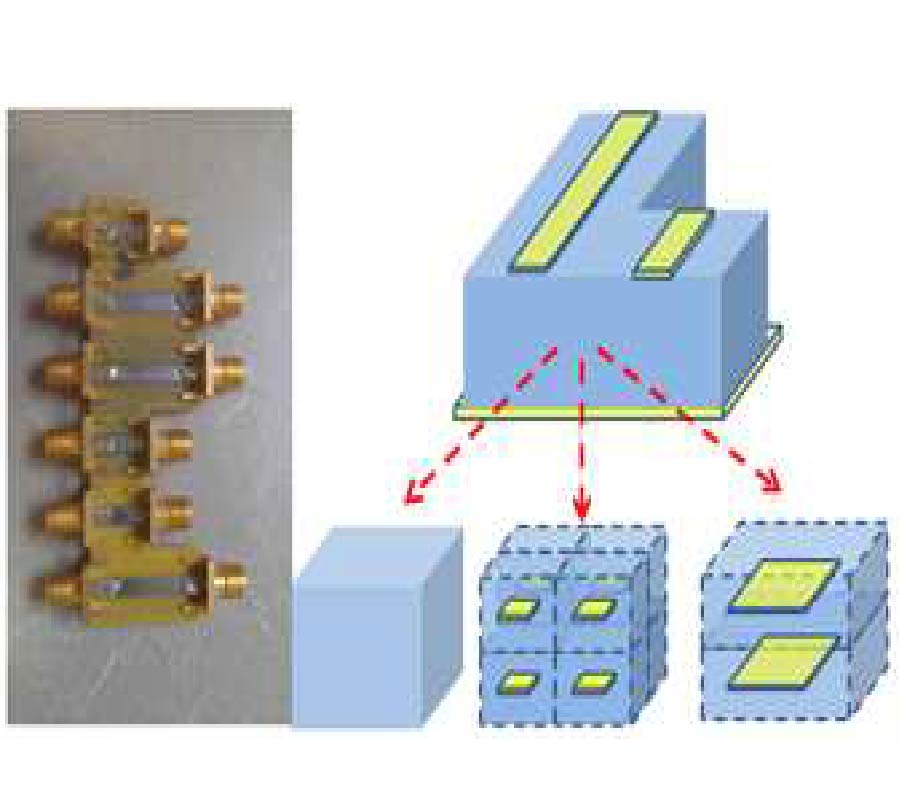
An effective medium modeling technique is proposed to homogenize the periodic objects embedded in layered media. The homogenization is based on the same scattering coefficients. An integral equation based approach is adopted to solve the scattering problem of original structures. Our modeling results are compared with Maxwell-Garnett mixing formula and published results. Good agreements have been observed. Periodic metal patches embedding in layered dielectric structure is fabricated and measured to validate the modeling technique. The difference between experiment results and proposed modeling results is less than 3%.
HOMOGENIZATION OF PERIODIC OBJECTS EMBEDDED IN LAYERED MEDIA
2015-02-14
PIER M
Vol. 41, 63-72
Equivalent Model from Two Layers Stratified Media to Homogeneous Media for Overhead Lines
Zeyneb Belganche , Abderrahman Maaouni , Ahmed Mzerd and Amine Bouziane
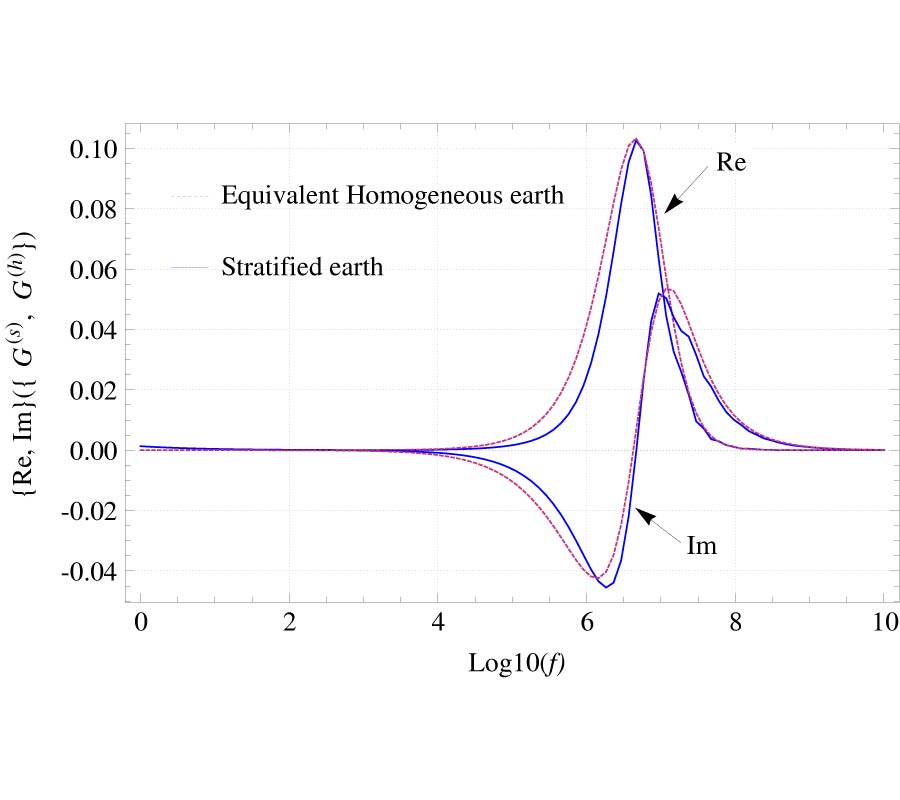
Overhead power transmission line is influenced by the resistivity of earth return path. The topic is developed in literature by considering a homogeneous and isotropic earth, or verily the soil is more represented by several layers. The scope of this paper is to provide an equivalent homogeneous soil to the two layers stratified soil. The equivalent electromagnetic properties of the soil are calculated using an accurate minimization method. Numerical results presented in this paper, show the efficiency of the proposed model.
EQUIVALENT MODEL FROM TWO LAYERS STRATIFIED MEDIA TO HOMOGENEOUS MEDIA FOR OVERHEAD LINES
2015-02-13
PIER B
Vol. 62, 63-86
Floquet Modal Analysis to Modelize and Study 2-d Planar Almost Periodic Structures in Finite and Infinite Extent with Coupled Motifs
Bilel Hamdi , Taoufik Aguili and Henri Baudrand
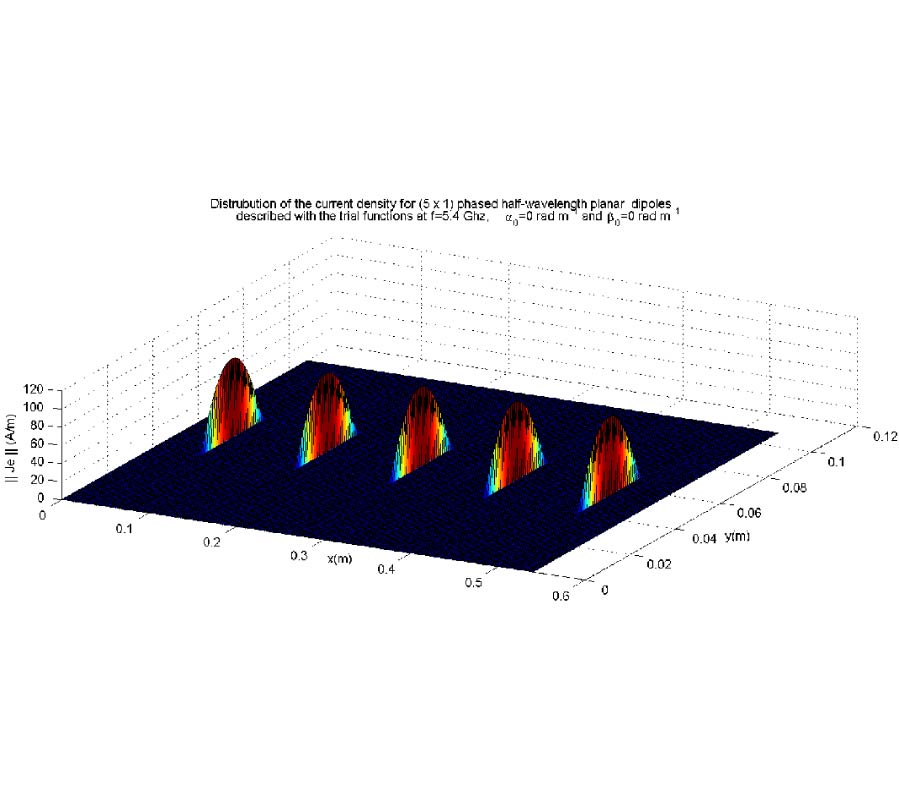
Studying of mutual coupling parameters between the antenna elements in an array environment has been considered as the subject of feature research. That is why, in this paper, we present a new Floquet modal analysis procedure for analyzing almost periodic structures. Accurate evaluation of the mutual coupling could be achieved by this analysis. It is shown how Floquet analysis can be exploited to study a finite array with arbitrary amplitude and linear phase distribution in both x-y directions including mutual coupling effects. Two different calculation methods of coupling coefficients between the array elements are presented, in spectral and spatial domains, to solve the suggested problem. For modeling the given structures, the moment method combined with Generalized Equivalent Circuit (MoM-GEC) is proposed. High gain in the running time and memory used is given using Floquet analysis. To validate this work, several examples are shown.
FLOQUET MODAL ANALYSIS TO MODELIZE AND STUDY 2-D PLANAR ALMOST PERIODIC STRUCTURES IN FINITE AND INFINITE EXTENT WITH COUPLED MOTIFS
2015-02-13
PIER C
Vol. 56, 83-91
Compact Printed Diversity Antenna for LTE700/GSM1700/1800/UMTS/Wi-Fi/Bluetooth/LTE2300/2500 Applications for Slim Mobile Handsets
Hari Shankar Singh , Gaurav Kumar Pandey , Pradutt Kumar Bharti and Manoj Kumar Meshram
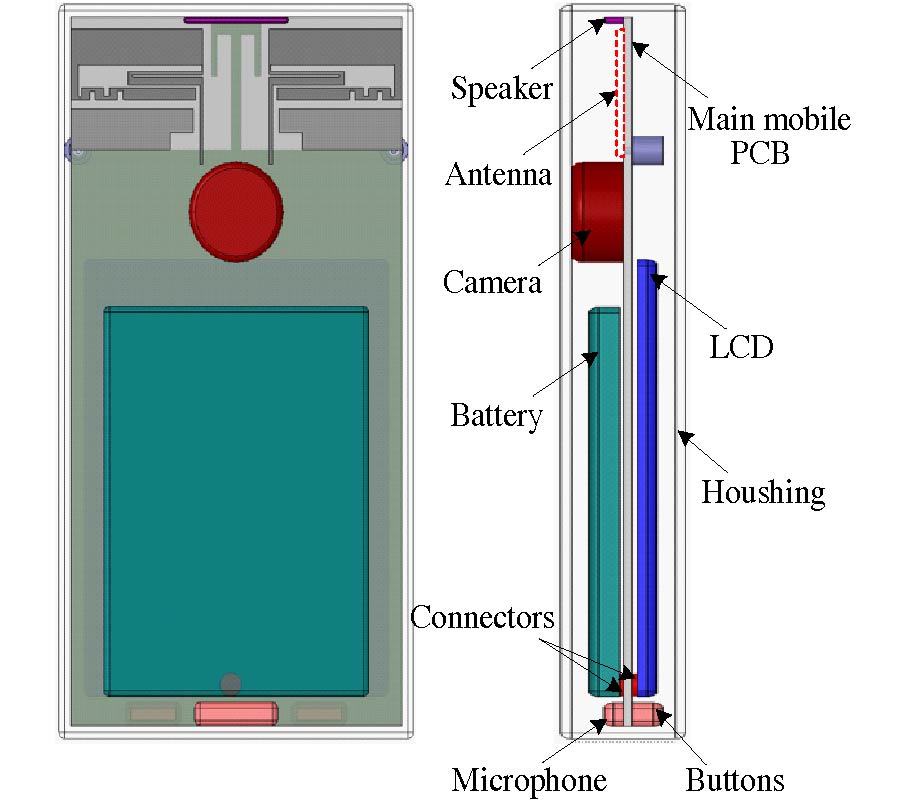
A planar, printed multiple-input multiple-output (MIMO) antenna for slim mobile handset is presented. The dual-antenna system, comprises two symmetric antenna elements, is printed on a printed circuit board (PCB) of mobile phone. Each antenna element consists of coupled-fed loop antenna. The loop antenna is formed by a quarter wavelength (at 762 MHz) meandered loop strip with end terminal short-circuited to the ground plane. A Tshaped protruded ground is deliberately designed to enhance the impedance matching and decoupled the two closely deposed antenna elements (distance between antenna elements are 0.03λ at 762 MHz). The integrity of the T-shaped decoupling structure and coupled-fed loop antenna array covers LTE700 (0.747 GHz−0.787 GHz) and WWAN (1.7 GHz-3.04 GHz) based on -6 dB reflection coefficient and achieves isolation between elements well below -10 dB over all the operating bands. The application platform is LTE700, GSM1700, GMS1800, UMTS, Wi-Fi, Bluetooth, LTE2300, and LTE2500 bands for the 2G/3G/4G mobile terminals. The effect of user proximity by considering the actual mobile environment is also studied in the form of total radiated power (TRP), specific absorption rate (SAR), diversity performances, and radiation performances. Finally, a prototype is fabricated and tested with network analyser. The measured results are found in good agreement with simulated ones.
COMPACT PRINTED DIVERSITY ANTENNA FOR LTE700/GSM1700/1800/UMTS/WI-FI/BLUETOOTH/LTE2300/2500 APPLICATIONS FOR SLIM MOBILE HANDSETS
2015-02-09
PIER C
Vol. 56, 73-82
Wideband Gap Coupled Sectoral Antenna for Communication Systems
Abhishek Kandwal , Jai Verdhan Chauhan and Sunil Kumar Khah
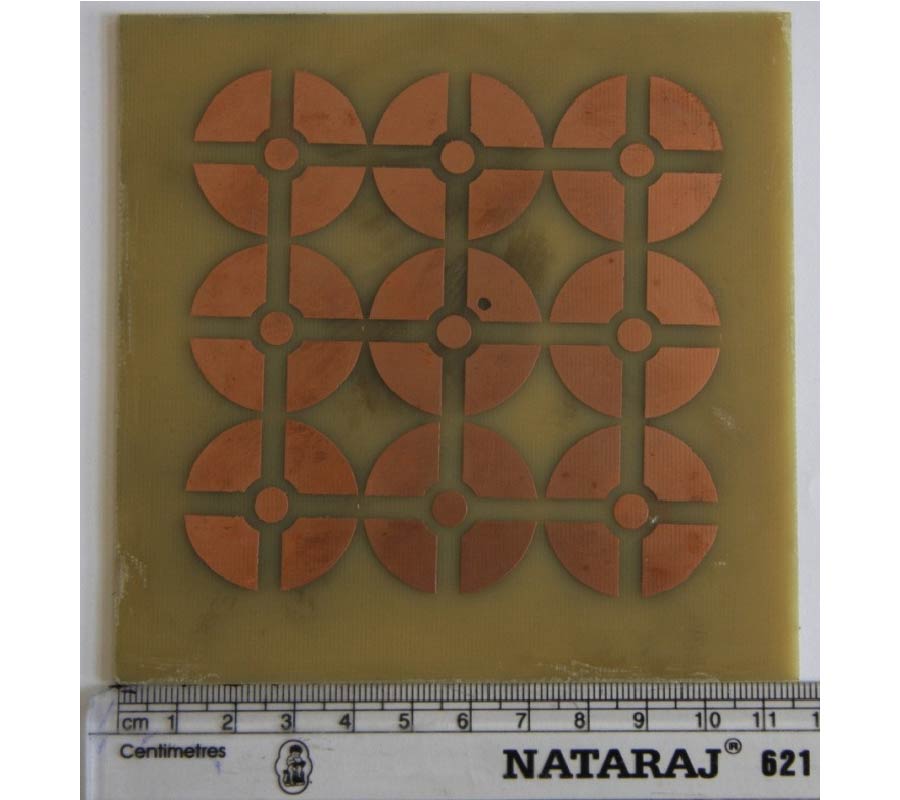
This paper presents the design of a novel wideband gap coupled sectoral antenna for communication systems. The circular patch is placed in the aperture of four sectoral rings. The antenna parameters are optimized using various simulations to attain good return loss and corresponding resonant frequency. The antenna operates in X-band at 10.35 GHz showing wideband characteristics along with high directivity and reduced side lobe level to a good extent. The antenna has also been studied using fuzzy inference system (FIS). The return loss and analogous frequency obtained from simulated results and fuzzy system are compared and in good agreement. Design is extended to an array of nine elements mutually coupled to the active fed patch. The antenna is fabricated, and the simulated results are found to be in good agreement with experimentally measured ones. A bandwidth of 900 MHz at resonant frequency of 10.35 GHz with a directivity of 7.0 dBi and reduced side lobe level of -18.9 dB is therefore obtained.
WIDEBAND GAP COUPLED SECTORAL ANTENNA FOR COMMUNICATION SYSTEMS
2015-02-08
PIER
Vol. 147, 203-226
Performance Enhancement of Microwave Sub-Wavelength Imaging and Lens-Type DOA Estimation Systems by Using Signal Processing Techniques (Invited Paper)
Xiang Gu , Raj Mittra , Chiara Pelletti , Sidharath Jain and Yunhua Zhang
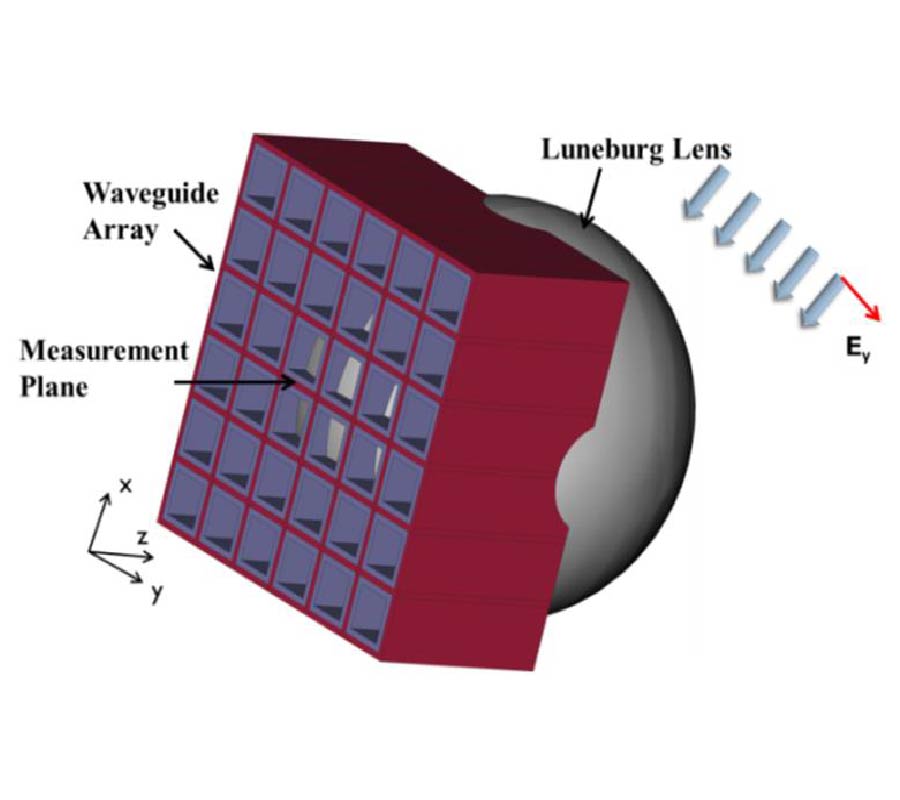
In this work, we show how we can improve the image resolution capabilities of a Phase Conjugating (PC) lens as well as the angular resolution of Luneburg lens antennas by employing signal processing techniques, such as the Correlation Method (CM), the Minimum Residual Power Search Method (MRPSM), the sparse reconstruction method, and the Singular-Value-Decomposition (SVD)-based basis matrix method. In the first part, we apply these techniques for sub-wavelength imaging in the microwave regime by combining them with the well-known phase conjugation principle. We begin by considering a one-dimensional microwave sub-wavelength imaging problem handled by using three signal processing methods, and then we move on to two- or three-dimensional problems by using the SVD-based basis matrix method. Numerical simulation results show that we can enhance the resolution significantly by using these methods, even if the measurement plane is not located in the very near-field region of the source. We describe these proposed algorithms in detail and study their abilities to resolve at the sub-wavelength level. Next, we investigate the sparse reconstruction method for a normal Luneburg lens antenna, and the Correlation Method and the SVD-based basis matrix method for a flat-base Luneburg lens antenna to estimate the Direction-of-Arrival (DOA). Numerical simulation results show that the signal processing techniques are capable of enhancing the angular resolution of the Luneburg lens antenna, enabling the lens to locate multiple targets with different scattering cross-sections, and achieving higher angular resolution.
PERFORMANCE ENHANCEMENT OF MICROWAVE SUB-WAVELENGTH IMAGING AND LENS-TYPE DOA ESTIMATION SYSTEMS BY USING SIGNAL PROCESSING TECHNIQUES (INVITED PAPER)
2015-02-07
PIER
Vol. 147, 171-202
Cloaking and Invisibility: A Review (Invited Review)
Romain Fleury and Andrea Alu
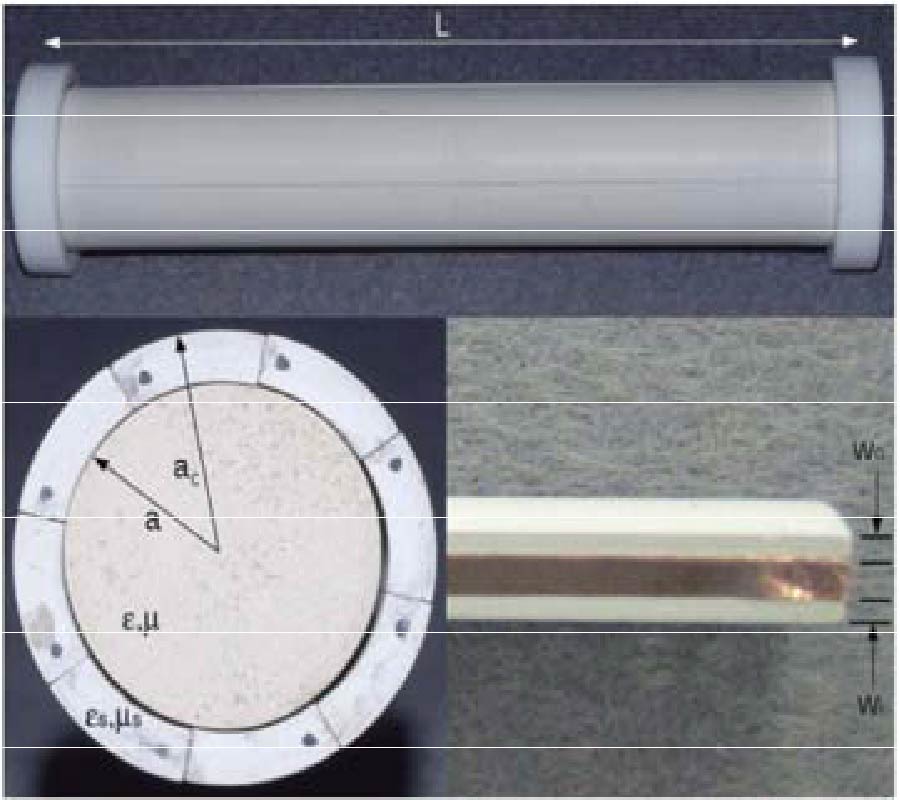
Invisibility has been a tantalizing concept for mankind over several centuries. With recent developments in metamaterial science and nanotechnology, the possibility of cloaking objects to incoming electromagnetic radiation has been escaping the realm of science fiction to become a technological reality. In this article, we review the state-of-the-art in the science of invisibility for electromagnetic waves, and examine the different available technical concepts and experimental investigations, focusing on the underlying physics and the basic scientific concepts. We discuss the available cloaking methods, including transformation optics, plasmonic and mantle cloaking, transmission-line networks, parallel-plate cloaking, anomalous resonance methods, hybrid methods and active schemes, and give our perspective on the subject and its future. We also draw a parallel with cloaking research for acoustic and elastodynamic waves, liquid waves, matter waves and thermal flux, demonstrating how ideas initiated in the field of electromagnetism have been able to open groundbreaking venues in a variety of other scientific fields. Finally, applications of cloaking to non-invasive sensing are discussed and reviewed.
CLOAKING AND INVISIBILITY: A REVIEW (Invited Review)
2015-02-06
PIER C
Vol. 56, 65-72
CPW-Fed Small Slot Antenna with Reconfigurable Circular Polarizion and Impdeance Bandwidth Characteristics for DCS/WiMAX Applications
Arash Valizade , Mouhammad Ojaroudi and Naser Ojaroudi Parchin
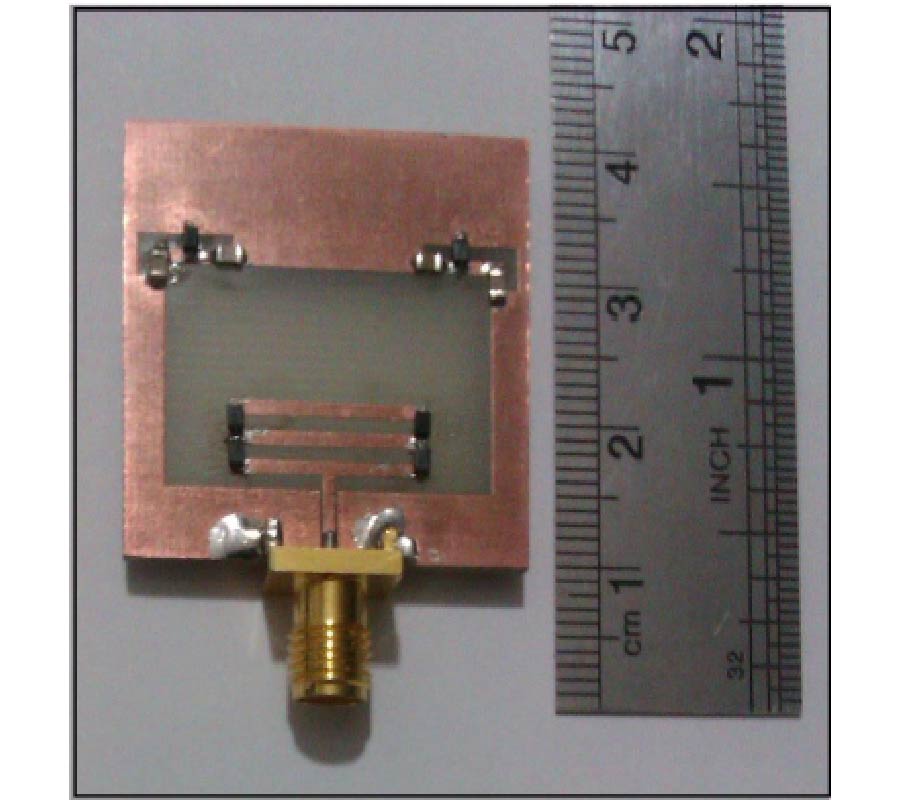
A novel printed reconfigurable square slot antenna with switchable right/left-handed circular-polarization (CP) and switchable dual-band performances for use in DCS/WiMAX applications is designed and manufactured. In the proposed antenna, in order to create a reconfigurable structure with switchable dual-band performance, a meander-line shaped radiating stub is utilized. This radiating stub can select between two operating frequency bands with respect to the number of its steps, and also right- or left-handed circular polarization at one of the operating bands (WiMAX) is determined by the growth direction of this meander-line structure. Moreover, through embedding an L-shaped slot on the ground section, circular polarization can be provided for the other operating frequency band (DCS). Having right or left handed circular polarization at this frequency band can be determined by the location and orientation of the L-shaped slot on the ground plane. In order to achieve a reconfigurable antenna structure with simultaneous switchable dual-band and circular polarization functions, six PIN diodes were utilized. The designed antenna has a small size of 30×30 mm. Simulated and experimental results obtained for the designed antenna reveal good radiation behavior within the DCS (1.85 GHz) and WiMAX (3.5 GHz) frequency ranges.
CPW-FED SMALL SLOT ANTENNA WITH RECONFIGURABLE CIRCULAR POLARIZION AND IMPDEANCE BANDWIDTH CHARACTERISTICS FOR DCS/WIMAX APPLICATIONS
2015-02-06
PIER
Vol. 150, 123-143
Propagation of Partially Coherent Beam in Turbulent Atmosphere: A Review (Invited Review)
Fei Wang , Xianlong Liu and Yangjian Cai
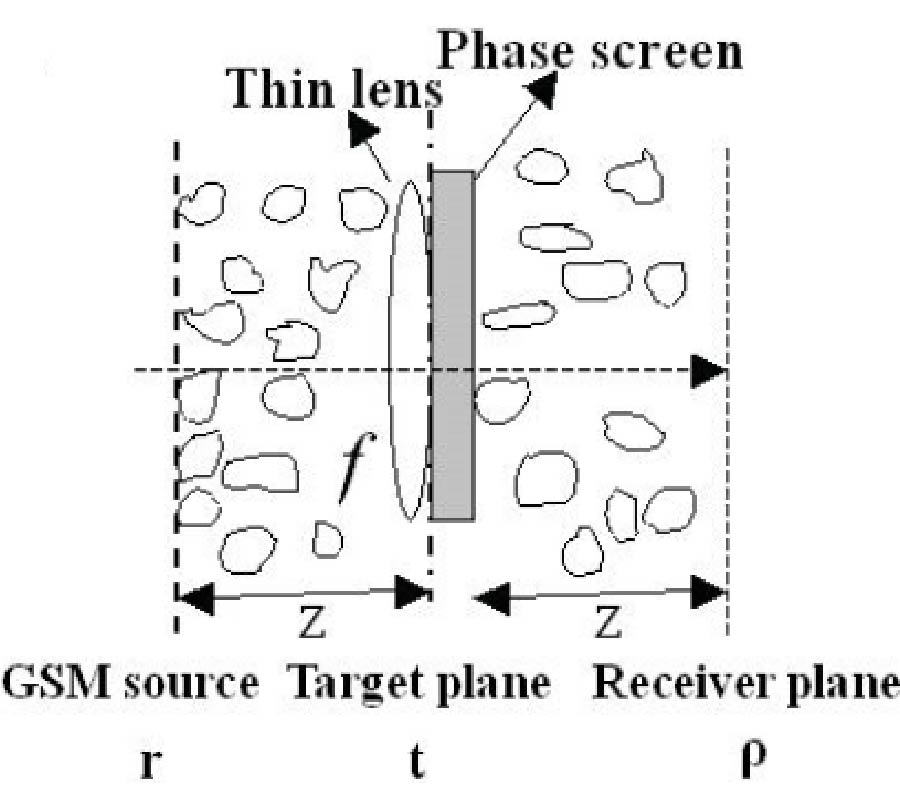
Partially coherent beam is preferred in many applications, such as free-space optical communications, remote sensing, active laser radar systems, etc., due to its resistance to the deleterious effects of atmospheric turbulence. In this paper, after presenting a historical overview on propagation of optical beams in turbulent atmosphere, we describe the basic theory for treating the propagation of optical beams in turbulent atmosphere and we mainly introduce recent theoretical and experimental developments on propagation of partially coherent beam in turbulent atmosphere. Recent progress on the interaction of a partially coherent beam with a semirough target in turbulent atmosphere and the corresponding inverse problem are also reviewed.
PROPAGATION OF PARTIALLY COHERENT BEAM IN TURBULENT ATMOSPHERE: A REVIEW (Invited Review)
2015-02-05
PIER C
Vol. 56, 55-64
Multiband Circularly Polarized Stacked Microstrip Antenna
Dinesh Kumar Singh , Binod Kanaujia , Santanu Dwari , Ganga Prasad Pandey and Sandeep Kumar Amera
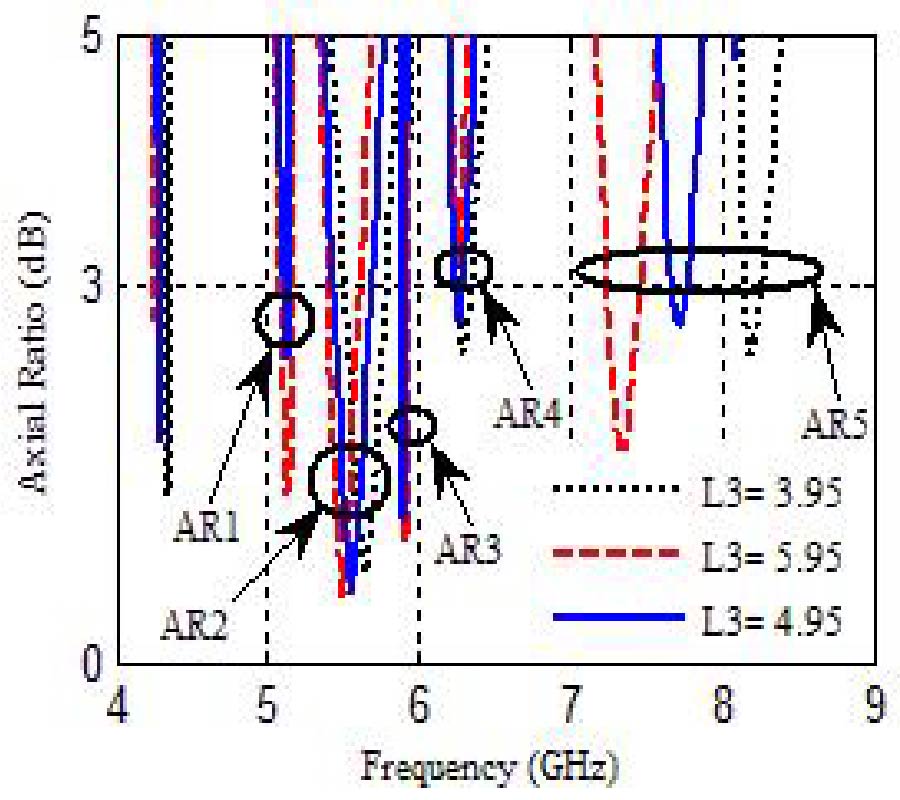
In this paper, a multiband circularly polarized capacitive coupled stacked microstrip antenna is proposed. The multiband circular polarization (CP) is achieved by corner truncation, embedding slits and inclined slots on a three layered antenna structure. The proposed antenna also shows wideband behavior with an impedance bandwidth of 52.13% in the frequency range of 4.85 GHz to 8.27 GHz, while 3 dB axial ratio bandwidths in five CP bands are 0.51%, 4.54%, 0.33%, 0.83% and 1.29% in the frequency range of 5.12 GHz to 5.15 GHz, 5.45 GHz to 5.70 GHz, 5.90 GHz to 5.92 GHz, 6.25 GHz to 6.31 GHz and 7.68 GHz to 7.78 GHz, respectively. The antenna prototype is fabricated, and simulated results as axial ratio, radiation pattern and the reflection coefficient are validated with measured result.
MULTIBAND CIRCULARLY POLARIZED STACKED MICROSTRIP ANTENNA
2015-02-05
PIER Letters
Vol. 51, 87-93
Design of Compact Quad-Channel Diplexer Using Quad-Mode Stub-Loaded Resonators
Lei Lin , Yu-Tong Zhao , Bian Wu and Chang-Hong Liang
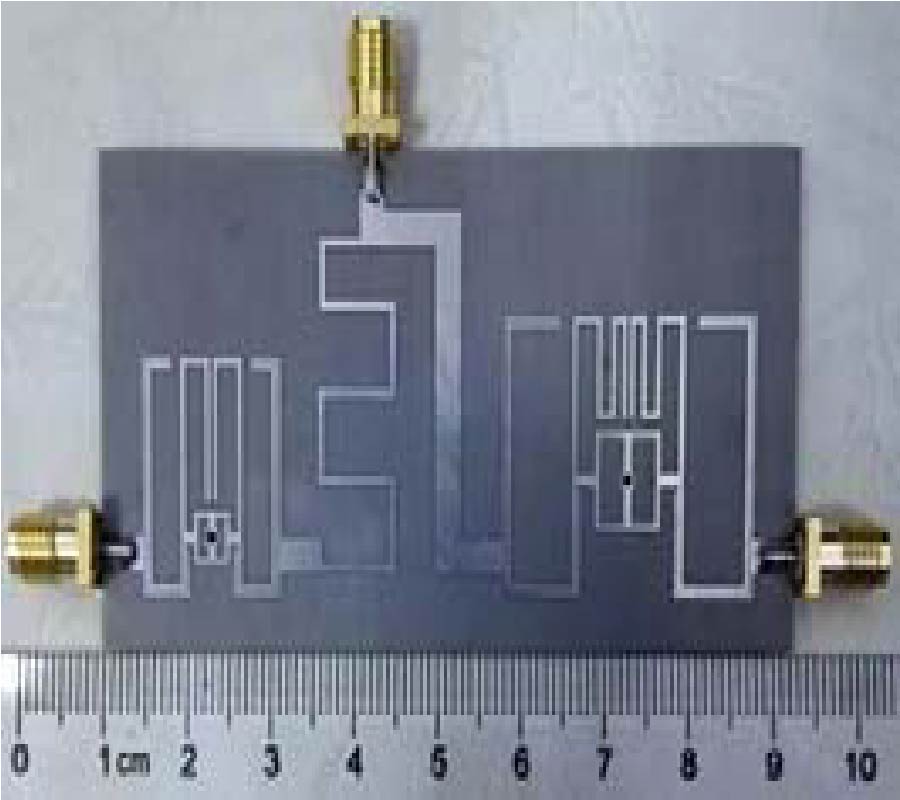
In this paper, a compact quad-channel diplexer utilizing quad-mode stub-loaded resonators (QMSLRs) is proposed. The proposed quad-channel diplexer is composed of two dual-band bandpass filters (BPFs) based on QMSLRs and source-load coupling lines. Due to the symmetry of the proposed quad-mode resonator, its resonance characteristics are analyzed by using the even-odd-mode method twice. All four modes equivalent circuits of the resonator are quarter wavelength resonators, so the circuit size can be very compact, and the first resonance frequencies is three times of the fundamental ones. Stub-to-stub coupling is introduced to split two identical resonance modes, which is in favor of implementing dual-band BPF by using a single quad-mode resonator. By tuning the corresponding physical dimensions of the stubs, the resonant modes can be individually adjusted. The source-load coupling lines are properly designed to provide appropriate external coupling for the passbands and high isolation level between channels. For demonstration, a quad-channel diplexer (0.9/1.2 GHz at Load 1 and 1.5/1.8 GHz at Load 2) using the quad-mode resonator is designed, fabricated and measured. The simulated and measured results with good agreement are presented.
DESIGN OF COMPACT QUAD-CHANNEL DIPLEXER USING QUAD-MODE STUB-LOADED RESONATORS
2015-02-05
PIER M
Vol. 41, 51-62
A Novel Analytical Expressions Model for Corona Currents Based on Curve Fitting Method Using Artificial Neural Network
Gaohui Fan , Shanghe Liu , Ming Wei and Xiao-Feng Hu
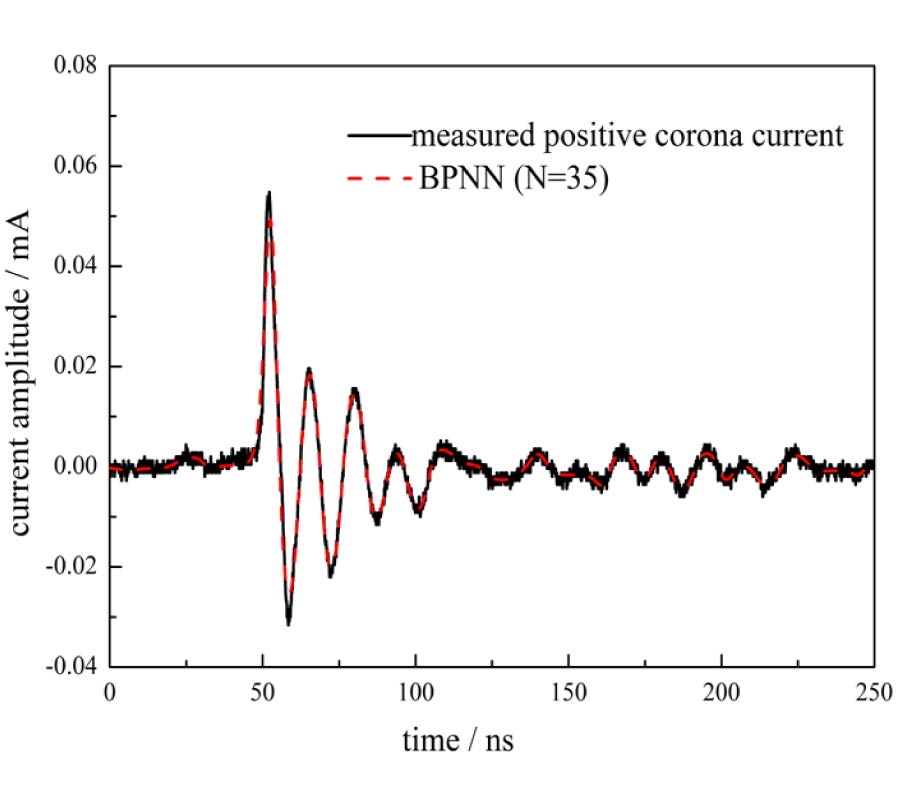
The analytical expressions for corona discharge currents are usually represented by the mathematic models based on curve fitting method. For the complex mechanisms, none of these currently models can describe a measured corona current with arbitrary waveforms. A novel curve fitting method using BP neural network (BPNN) technique is applied to describe the mathematic model of the corona currents in time domain. The analytical expressions for the currents can be established via extracting the weights and thresholds parameters of the trained BPNN. The expressions all have the same structure which has only four types of parameters, and the structure is independent of the corona current waveforms. A curve fitting for the measured corona currents with arbitrary waveforms by different models was carried out, and the results were analyzed, which indicate that the BPNN method performs best. Compared with the current expressions fitted by the double exponential function and Gaussian function, the expressions by BPNN can fit the current waveforms with the lowest mean square error (MSE) in time domain and the highest accuracy to spectra of the currents in frequency domain. The proposed method is suitable for establishing a unified analytical expressions model for corona currents with arbitrary shapes.
A NOVEL ANALYTICAL EXPRESSIONS MODEL FOR CORONA CURRENTS BASED ON CURVE FITTING METHOD USING ARTIFICIAL NEURAL NETWORK