Search Results(13798)

2013-09-18
PIER C
Vol. 43, 93-108
Design and Characterization of an Efficient Dual Patch Rectenna for Microwave Energy Recycling in the ISM Band
Hakim Takhedmit , Laurent Cirio , Odile Picon , Christian Vollaire , Bruno Allard and Francois Costa
This paper describes the design, modeling and optimization of an efficient ISM band dual patch rectenna capable of achieving more than 80% RF-to-DC conversion efficiency at low/medium power densities. The circuit is based on a full-wave rectifier, designed and optimized at 2.45 GHz with ADS software and the FDTD algorithm. The performances of the rectenna have been accurately predicted using the full-wave 3D-FDTD method extended to lumped linear and non-linear elements. It exhibits 73% (<VDC = 1.1 V for RL= 1.2 kΩ) measured efficiency at a low power density of 14 μW/cm2 and 84% (VDC = 1.94 V) at 43 μW/cm2. The differences between the experimental and FDTD simulated efficiencies are less than 3%. The proposed circuit is particularly suitable for low/medium power recycling and power remote supply of wireless sensors, sensor nodes and actuators.
DESIGN AND CHARACTERIZATION OF AN EFFICIENT DUAL PATCH RECTENNA FOR MICROWAVE ENERGY RECYCLING IN THE ISM BAND
2013-09-18
PIER Letters
Vol. 43, 65-72
Compact Bandpass Filter Based on Novel Hairpin Resonator with Self-Contained Triple Transmission Zeros
Yun Xiu Wang , Lei Zhu and Songbai Zhang
A compact coupled-line hairpin resonator is proposed and analyzed for designing a novel bandpass filter (BPF) in this letter. Compared with conventional stepped-impedance and stub-loaded resonator, the proposed resonator can produce three transmission zeros, which can be applied to achieve a wide and highly-attenuated upper stopband. To validate this attractive feature, a microstrip BPF is designed and fabricated with the center frequency at 2.4 GHz and a fractional bandwidth of 6%. Measured frequencies responses show a wider upper stopband up to 6.9 GHz (2.9f0) with insertion loss higher than 20 dB.
COMPACT BANDPASS FILTER BASED ON NOVEL HAIRPIN RESONATOR WITH SELF-CONTAINED TRIPLE TRANSMISSION ZEROS
2013-09-18
PIER M
Vol. 33, 45-55
Wideband Radar Echo Simulation of Midcourse Precesional Target with Non-Ideal Scattering Centers
Jiajia Sun , Chuang-Ming Tong and Xi-Min Li
Radar echo of ballistic midcourse target contains unique motion information of the target, which can provide important evidence for target recognition. A wideband radar echo simulation model for midcourse precesional target is developed, where the micro-motion model, electromagnetic scattering calculation and linear frequency modulated (LFM) radar signal model are integrated. Firstly, the position variation of each scattering center of the moving target is analyzed. Then, the high frequency method is used to judge the masking effect of scattering centers of the rotational symmetry target. Finally, the wideband radar echo is simulated, and the impacts of high speed translational motion, non-precession movement and non-idealization of the scattering centers on the echo are also analyzed.
WIDEBAND RADAR ECHO SIMULATION OF MIDCOURSE PRECESIONAL TARGET WITH NON-IDEAL SCATTERING CENTERS
2013-09-17
PIER
Vol. 142, 545-557
Novel Energy Harvesting Antenna Design Using a Parasitic Radiator
Jung-Ick Moon and Young-Bae Jung
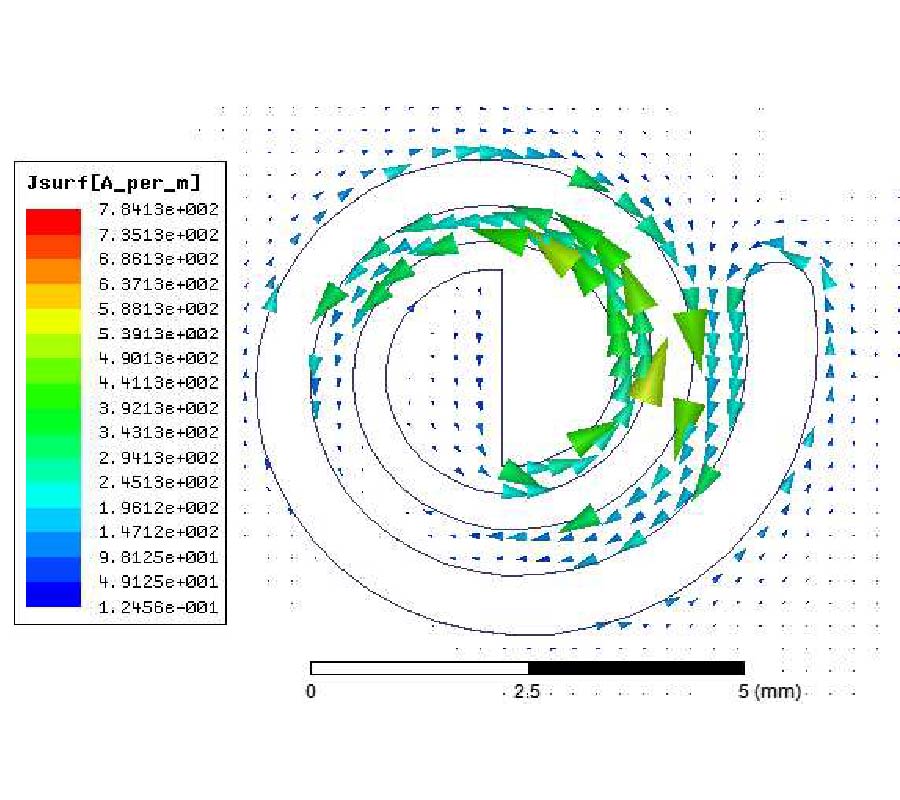
A novel energy harvesting antenna for various wireless transceivers is proposed. This antenna is composed of two parts, the main and the parasitic radiator. The main radiator has the same role as a general element antenna. i.e., to transmit and receive the RF signal. The parasitic radiator is used to gather the RF power from the main radiators, which mostly do not contribute the main radiator's electrical performance. Thus, we can generate DC power using the dissipated RF energy that is radiated from the main radiator. The main radiator is designed as a printed dipole and the parasitic radiator has a two-turn loop structure fabricated on a substrate. The main radiator is vertically placed on the ground and inserted in the rectangular slit of the substrate of the parasitic radiator. The height of the parasitic radiator can be controlled by two supporters. In the design process, we analyzed how the antenna performance changed when adjusting the height of the parasitic radiator and thus determined its optimal height.
NOVEL ENERGY HARVESTING ANTENNA DESIGN USING A PARASITIC RADIATOR
2013-09-17
PIER
Vol. 142, 523-544
Hp-FEM and PML Analysis of Plasmonic Particles in Layered Media
Mengyu Wang , Kersten Schmidt , Aytac Alparslan and Christian V. Hafner
In this paper, we introduce a high order finite element (FEM) implementation using perfectly matched layer (PML) for the scattering by plasmonic structures inside layered media. The PML is proven to be very accurate and efficient by a comparative analysis with a commercial FEM software and the Multiple Multipole Program (MMP). A convergence analysis using hp-adaptive refinement inside the PML layer shows that adaptive mesh refinement inside the PML layer is most efficient. Based on this convergence analysis an hp-strategy is proposed, which shows a remarkable error reduction for small additional computational costs.
HP-FEM AND PML ANALYSIS OF PLASMONIC PARTICLES IN LAYERED MEDIA
2013-09-16
PIER B
Vol. 54, 321-336
Stand-off Distances for Non-Line-of-Sight Maritime Mobile Applications in 5 GHz Band
Yee Hui Lee , Feng Dong and Yu Song Meng
Non-line-of-sight (NLoS) maritime mobile radio channel in 5 GHz band is experimentally investigated in this paper through wideband channel soundings. During the measurements, the transmitter was installed onboard a speed boat, while the receiver was placed on the roof top of a building on shore. Different types of cargo ships anchored off the east coast of Singapore were examined as obstructions for the NLoS propagations. Besides power delay profile (PDP), stand-off distance is introduced in this work to analyze the NLoS propagations associated with three different types of cargo ships. The measured PDPs and stand-off distances are found to be comparable qualitatively with the simulated results using 3-D ray tracing. The reported information is found to be useful for military applications such as unmanned surface vehicles (USVs) in maritime environments or surveillance.
STAND-OFF DISTANCES FOR NON-LINE-OF-SIGHT MARITIME MOBILE APPLICATIONS IN 5 GHZ BAND
2013-09-16
PIER B
Vol. 54, 303-319
Bluetooth/UWB Dual-Band Planar Diversity Antenna with WiMAX and WLAN Band-Notch Characteristics
Gopi Shrikanth Reddy , Ashish Chittora , Shilpa U. Kharche , Sanjeev Kumar Mishra and Jayanta Mukherjee
In this paper, a stage wise realization of compact Bluetooth - UWB dual-band diversity antenna with WiMAX and WLAN band-notch characteristics is presented. The proposed structure consists of two co-planar semicircular dual band-notch monopole antennas, mounted with planar spiral. Individual antenna configuration provides an impedance bandwidth (VSWR < 2) for dual-band i.e. both Bluetooth and UWB bands. For dual band-notch characteristic, two sets of spirals are capacitively coupled with the feed line of antenna. This configuration provides band-notch (VSWR > 2) for WiMAX i.e. (3.3-3.6 GHz) and WLAN (5.13-5.85 GHz) bands. For enhancing reception capabilities of the proposed structure, twin coplanar antennas are used to fulfill diversity requirements. However, due to coplanar and close proximity to each other, there is high possibility of mutual coupling between coplanar antenna elements. To address the mutual coupling between elements, cross-strip variable-sized frequency selective structures are used. Antenna diversity of the proposed structure is validated by measuring radiation pattern characteristic and envelop co-relation factor (ECC). A good agreement between measured and simulated responses ensures that the proposed diversity antenna can be used for interference free Bluetooth/UWB dual-band applications.
BLUETOOTH/UWB DUAL-BAND PLANAR DIVERSITY ANTENNA WITH WIMAX AND WLAN BAND-NOTCH CHARACTERISTICS
2013-09-16
PIER M
Vol. 33, 31-44
Low RCS Metamaterial Absorber and Extending Bandwidth Based on Electromagnetic Resonances
Huanhuan Yang , Xiang-Yu Cao , Jun Gao , Wenqiang Li , Zidong Yuan and Kai Shang
A low radar cross section (RCS) metamaterial absorber (MMA) with an enhanced bandwidth is presented both numerically and experimentally. The MMA is realized by assembling three simple square loops in a three-layer structure according to the idea of separating electric and magnetic resonances. Different from one-layer MMA, the proposed MMA can effectively couple with the electric and magnetic components of the incident wave in different positions for fixed frequency, while, for different frequencies, it can trap the input power into different dielectric layers and absorb it in the lossy substrate. Experimental results indicate that the MMA exhibits a bandwidth of absorbance above 90% which is 4.25 times as that of one-layer MMA, and 10 dB RCS reduction is achieved over the range of 4.77-5.06 GHz. Moreover, the cell dimensions and total thickness of the MMA are only 0.17λ and 0.015λ, respectively. The low RCS properties of the MMA are insensitive to both polarization and incident angles.
LOW RCS METAMATERIAL ABSORBER AND EXTENDING BANDWIDTH BASED ON ELECTROMAGNETIC RESONANCES
2013-09-16
PIER
Vol. 142, 505-521
Extended High Resolution Range Profile-Jet Engine Modulation Analysis with Signal Eccentricity
Ji-Hoon Park , Woo-Yong Yang , Jun-Woo Bae , Seong-Cheol Kang and Noh-Hoon Myung
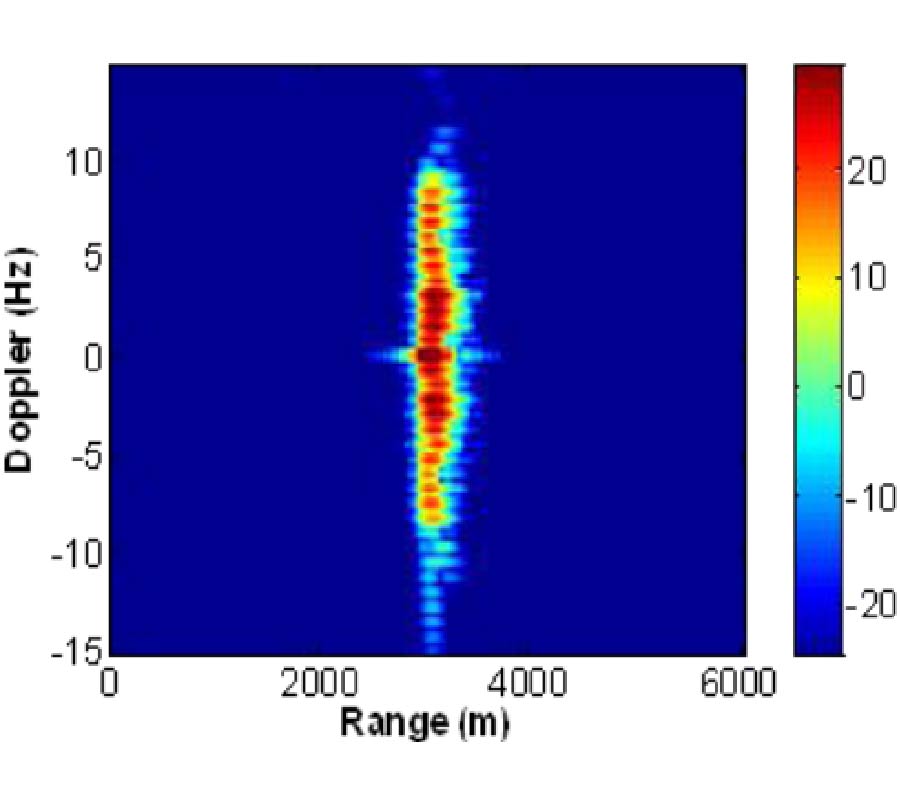
In this paper, high resolution range profile-jet engine modulation (HRRP-JEM) analysis is extended by including quantitative estimation of the jet engine location and extraction of the JEM micro-Doppler component. Based on a parametric model of the range cell data, signal eccentricity was introduced for the purpose of determining the jet engine location. Then, complex empirical mode decomposition (CEMD) was employed to extract the embedded JEM component. The signal eccentricity also served as an auxiliary means of CEMD-based micro-Doppler extraction. Application to the simulated HRRP-JEM data demonstrated that the analysis results described in this paper could be useful for advanced radar target recognition with HRRP-JEM.
EXTENDED HIGH RESOLUTION RANGE PROFILE-JET ENGINE MODULATION ANALYSIS WITH SIGNAL ECCENTRICITY
2013-09-14
PIER B
Vol. 54, 285-301
Reconfigurable Patch Antennas with Four-Polarization States Agility Using Dual Feed Ports
Xuexia Yang , Bo Gong , Guannan Tan and Zhongliang Lu
Polarization reconfigurable patch antennas which can switch polarization states among vertical and horizontal linear polarization (LP), left- and right-hand circular polarization (CP) is demonstrated in this paper. The original orthogonal linear polarized antenna is a square patch fed by two ports at the adjacent edges. CP operations can be activated by introducing perturbations at the opposite corners of the patch. If a diode is loaded on every perturbed corner, the antenna polarization states can be alternated by controlling the bias voltage of two PIN diodes. Perturbation elements can be cut on the patch or on the ground. Two antenna prototypes are suggested, simulated, and verified by experiments. These polarization reconfigurable antennas have good antenna performances of low reflection coefficient, axial ratio, and cross-polarization (X-pol), and high isolation between two LP operations. They have concise structure with only two PIN diodes being required. The two reconfigurable antennas are low cost and can be integrated easily in wireless communication systems.
RECONFIGURABLE PATCH ANTENNAS WITH FOUR-POLARIZATION STATES AGILITY USING DUAL FEED PORTS
2013-09-14
PIER Letters
Vol. 43, 55-63
A Novel Design of Low Profile Highly Directive Antenna with Partially Reflecting Surface Superstrate
Xiao-Jing Qi , Yong-Chang Jiao , Gang Zhao and Kai-Lun Liang
This paper presents a new design of high-gain low-profile resonant cavity antenna. A novel partially reflecting surface (PRS) is adopted as the superstrate with the characteristics of high-reflection magnitude and low-reflection phase that allows the reduction of cavity height to about λ/8 and the enhancement of the gain by 10.73 dB. Several significant parameters that characterize the PRS superstrate are investigated based on the unit cell simulation. The measured results show that this method is effective, and this structure can provide a high-gain at the operating frequency. The measured results agree reasonably well with the simulated ones.
A NOVEL DESIGN OF LOW PROFILE HIGHLY DIRECTIVE ANTENNA WITH PARTIALLY REFLECTING SURFACE SUPERSTRATE
2013-09-14
PIER Letters
Vol. 43, 45-54
Realization of Miniaturized Quadrature Hybrid Coupler with Reduced Length Branch Arms Using Recursively Loaded Stubs
Rowdra Ghatak , Manimala Pal and Biswajit Sarkar
This paper presents a novel design of miniaturized microstrip quadrature coupler at 2.45 GHz. The design topology is based on reduced transmission line branch arms using recursively loaded stubs that contribute to the compact size. The proposed coupler result in a size reduction of 70.4% when compared to a conventional branch line hybrid. The designed coupler provides, at the operating frequency, a 25 dB isolation and exhibits equal power division at the output ports with quadrature phase difference. A fabricated prototype is developed with simulation and measurement in close agreement.
REALIZATION OF MINIATURIZED QUADRATURE HYBRID COUPLER WITH REDUCED LENGTH BRANCH ARMS USING RECURSIVELY LOADED STUBS
2013-09-13
PIER C
Vol. 44, 41-53
Integrated Ultra-Wideband Plannar Monopole with Cylindrical Dielectric Resonator Antennas
Yongfeng Wang , Shu Liu , Tayeb Denidni , Qingsheng Zeng and Gao Wei
An ultra-wideband (UWB) planar monopole antenna integrated with a narrow-band (NB) cylindrical dielectric resonator antenna (DRA) is presented. The proposed antenna consists of a UWB monopole excited by a coplanar waveguide (CPW) transmission line, acting as a ground for a DRA excited by a slot. The mode HEM11δ is excited in the NB DRA. To validate the concept of integration, an antenna is fabricated and measured. The measured results demonstrate that the UWB antenna provides a 2:1 voltage standing wave ratio (VSWR) bandwidth for 3.05-11 GHz, integrated with a dual-band NB antenna. Moreover, the two ports have the same polarization and a reasonable isolation (less than -10 dB) between each other. This is a promising candidate for applications in cognitive radio, where the UWB antenna can be used for spectrum sensing and the NB antenna for communication operation.
INTEGRATED ULTRA-WIDEBAND PLANNAR MONOPOLE WITH CYLINDRICAL DIELECTRIC RESONATOR ANTENNAS
2013-09-13
PIER C
Vol. 44, 27-40
An Alternative Technique for Estimating the k-Factor from the Phase of the Electromagnetic Field Within a Reverberating Chamber
Antonio Sorrentino , Giuseppe Ferrara , Angelo Gifuni and Maurizio Migliaccio
In this paper, an alternative technique for estimating the Rice factor, K, is applied to the phase of electromagnetic field within a reverberating chamber (RC) for classifying the fading depth on the coherent components in the emulated line-of-sight (LOS) environments. The estimator is time-effective and general, and can be applied for any angle of arrival (AoA) of the received field and for any time varying propagation channel as a complementary method to the classical estimators for evaluating K above all when small but consistent coherent components are present. Measurements accomplished at the RC of the Università di Napoli Parthenope (formerly Istituto Universitario Navale, IUN) confirm the goodness of the proposed technique.
AN ALTERNATIVE TECHNIQUE FOR ESTIMATING THE K-FACTOR FROM THE PHASE OF THE ELECTROMAGNETIC FIELD WITHIN A REVERBERATING CHAMBER
2013-09-13
PIER M
Vol. 33, 17-29
An Improved Model for Estimating Radiated Emissions from a PCB with Attached Cable
Jia Haw Goh , Boon-Kuan Chung , Eng Hock Lim and Sheng-Chyan Lee
Common mode current induced on cable attached to a PCB has been a well-known source of unintentional radiated emissions. The coupling mechanism of the common mode current to the cable can be divided into two types: voltage-driven and current-driven. In voltage-driven mechanism, the common mode current is induced by electric field that couples from traces on PCB to the cable. Previous work showed that these radiated emissions can be estimate based on the self-capacitance of the trace and the signal return plane but the method is only reasonably accurate at lower frequency. This paper develops a model which gives an extended frequency range up to 800 MHz. The formulation for the equivalent common-mode voltage source is improved by taking into account the driving point impedance of the cable which behaves as a wire antenna. The radiated emissions estimated by the improved model match well with the values from 3D electromagnetic simulation of the original PCB with attached cable. It represents an improvement compared to earlier model by 11 dB at 400 MHz to 16 dB at 700 MHz for board size of 10 cm x 16 cm and cable length of 3 m. Similar improvements are obtained for other combinations of board size and cable length. The results show that the cable length is an important factor, in addition to the board area as suggested by earlier work, in determining the magnitude of the equivalent common-mode voltage source. Resonant of the wire antenna affects not only the radiated electromagnetic field but also the commonmode voltage source magnitude due to varying antenna impedances.
AN IMPROVED MODEL FOR ESTIMATING RADIATED EMISSIONS FROM A PCB WITH ATTACHED CABLE
2013-09-13
PIER
Vol. 142, 485-503
An Impulse Sampling Approach for Efficient 3D TLM-Based Adjoint Sensitivity Analysis
Osman S. Ahmed , Mohamed H. Bakr and Xun Li
We present a memory efficient algorithm for the estimation of adjoint sensitivities with the transmission line modeling (TLM) method. Our algorithm manipulates the local scattering matrices to drastically reduce the required storage for problems with lossy dielectric discontinuities. Only one impulse per cell is stored for two dimensional simulations and three impulses per cell are stored for three dimensional simulations. The required memory storage for our impulse sampling approach is only 10% of that of the original TLM-based adjoint sensitivity analysis. The technique is illustrated through two examples including the sensitivity analysis of a dielectric resonator antenna.
AN IMPULSE SAMPLING APPROACH FOR EFFICIENT 3D TLM-BASED ADJOINT SENSITIVITY ANALYSIS
2013-09-12
PIER C
Vol. 44, 13-26
Compact Microstrip UWB Bandpass Filter with Triple-Notched Bands
Jian Wang , Junding Zhao and Jia-Lin Li
A new microstrip ultra-wideband (UWB) bandpass filter (BPF) with triple-notched bands is presented in this paper. The circuit topology and its corresponding electrical parameters of the initial microstrip UWB BPF are desired by a variation of genetic algorithm (VGA). Then, triple-notched bands inside the UWB passband are implemented by coupling a square ring short stub loaded resonator (SRSSLR) to the main transmission line of the initial microstrip UWB BPF. The triple-notched bands can be easily generated and set at any desired frequencies by varying the designed parameters of SRSSLR. For verification, a microstrip UWB BPF with triple-notched bands respectively centered at frequencies of 4.3 GHz, 5.8 GHz, and 8.1 GHz is designed and fabricated. Simulated and experimental results are in good agreement.
COMPACT MICROSTRIP UWB BANDPASS FILTER WITH TRIPLE-NOTCHED BANDS
2013-09-12
PIER C
Vol. 44, 1-11
Non-Uniform Transmission Line Ultra-Wideband Wilkinson Power Divider
Khair Al Shamaileh , Mohammad Almalkawi , Vijay K. Devabhaktuni , Nihad I. Dib , Bassem Henin and Amin M. Abbosh
We propose a technique with clear guidelines to design a compact planar Wilkinson power divider (WPD) for ultra-wideband (UWB) applications. The design procedure is accomplished by replacing the uniform transmission lines in each arm of the conventional power divider with varyingimpedance profiles governed by a truncated Fourier series. Such non-uniform transmission lines (NTLs) are obtained through the even mode analysis, whereas three isolation resistors are optimized in the odd mode circuit to achieve proper isolation and output ports matching over the frequency range of interest. For verification purposes, an in-phase equal split WPD is designed, simulated, and measured. Simulation and measurement results show that the input and output ports matching as well as the isolation are below -10 dB, whereas the transmission parameters are in the range of (-3.2 dB, -4.2 dB) across the 3.1 GHz-10.6 GHz band.
NON-UNIFORM TRANSMISSION LINE ULTRA-WIDEBAND WILKINSON POWER DIVIDER
2013-09-12
PIER M
Vol. 33, 1-15
MOEA/d-GO for Fragmented Antenna Design
Da-Wei Ding and Gang Wang
In this paper, a hybrid multiobjective evolutionary algorithm, MOEA/D-GO (Multiobjective Evolutionary Algorithm Based on Decomposition combined with Enhanced Genetic Operators), is proposed for fragment-type antenna design. It combines the ability and efficiency of MOEA/D to deal with multiobjective optimization problems with the speci c character of two-dimensional chromosome coding of genetic algorithm. And enhanced genetic operators are also introduced to generate new individuals. Numerical results of a set of six multiobjective 0/1 knapsack problems show that MOEA/D-GO with weighted sum decomposition approach outperforms original MOEA/D and MOEA/D-PR (MOEA/D combined with Path-Relinking operator). Then it's applied to optimize a CPW-fed monopole antenna to achieve band-notch characteristic. Both numerical and test results show that MOEA/D-GO is promising for solving multiobjective optimization problems about fragmented antenna.
MOEA/D-GO FOR FRAGMENTED ANTENNA DESIGN
2013-09-11
PIER Letters
Vol. 43, 35-43
Required Number of OTA Antennas in the Multi-Probe Test System
Xiaoming Chen
The number of OTA antennas of the multi-probe over-the-air (OTA) test system should be large enough for accurate OTA testing yet not too large due to the increasing cost. In this work, the required number of OTA antennas is studied using the spatial correlation function. Some key issues are discussed.
REQUIRED NUMBER OF OTA ANTENNAS IN THE MULTI-PROBE TEST SYSTEM