Search Results(13798)

2013-09-26
PIER C
Vol. 44, 123-131
Novel Simplified Dual-Composite Right/Left-Handed Transmission Line and Its Application in Bandpass Filter with Dual Notch Bands
Guo-Cheng Wu , Guangming Wang and Ya-Wei Wang
In this article, a novel simplified dual-composite right/left-handed transmission line (S-DCRLH-TL) is proposed according to the theory of dual-composite right/left-handed transmission line. The electromagnetic characteristics of S-D-CRLH-TL are analyzed by simulator, and the results indicate that the proposed structure has two narrow stopbands; they can be controlled by changing the geometry parameters of the structure. Then, a bandpass filter with dual notched bands is designed by using the unit cell of S-D-CRLH-TL, and the designed filter is simulated, fabricated and measured, the measured and simulated results are in good agreement with each other, showing that the two notched bands centered at 3.60 GHz and 5.50 GHz, and the bandwidths are 9.7% and 7.3%. This designed filter can avoid the interference to UWB communication system effectively, which comes from the signals of WiMAX and WLAN. Besides, in comparison with the other bandpass filter with notched bands, the designed filter has good electromagnetic performances.
NOVEL SIMPLIFIED DUAL-COMPOSITE RIGHT/LEFT-HANDED TRANSMISSION LINE AND ITS APPLICATION IN BANDPASS FILTER WITH DUAL NOTCH BANDS
2013-09-26
PIER M
Vol. 33, 57-68
Performance Study of Dipole and Its Variants in Broadband Scenario
Sukh Das Ahirwar , Chandana Sairam , Sheilu Singh and Khumanthem Takeshore
In this paper, the comparison of the performances of planar broadband dipole antenna, broadband folded dipole antenna and broadband bent dipole antenna in broadband scenario is presented. All the three antennas have been designed, developed and evaluated for their electrical characteristics such as VSWR, radiation patterns and gain in the frequency range of 100-1000 MHz. Simulated and measured results are presented.
PERFORMANCE STUDY OF DIPOLE AND ITS VARIANTS IN BROADBAND SCENARIO
2013-09-25
PIER B
Vol. 55, 131-149
An Introduction to a Medium Frequency Propagation Characteristic Measurement Method of a Transmission Line in Underground Coal Mines
Jingcheng Li , Joseph Waynert and Bruce G. Whisner
An underground coal mine medium frequency (MF) communication system generally couples its electromagnetic signals to a long conductor in a tunnel, which acts as a transmission line, and exchanges signals with transceivers along the line. The propagation characteristics of the transmission line, which is usually the longest signal path for an MF communication system, play a major role in determining the system performance. To measure the MF propagation characteristics of transmission lines in coal mine tunnels, a method was developed based on a basic transmission line model. The method will be presented in this paper along with the propagation measurements on a transmission line system in a coal mine using the method. The measurements confirmed a low MF signal power loss rate, and showed the influence of the electrical properties of surrounding coal and rock on the MF propagation characteristics of the line.
AN INTRODUCTION TO A MEDIUM FREQUENCY PROPAGATION CHARACTERISTIC MEASUREMENT METHOD OF A TRANSMISSION LINE IN UNDERGROUND COAL MINES
2013-09-25
PIER
Vol. 142, 591-613
Miniaturized 0.3-6 GHz LTCC Six-Port Receiver for Software Defined Radio
Cristina de la Morena-Álvarez-Palencia , Mateo Burgos-Garcia and Javier Gismero-Menoyo
The six-port architecture reemerges from the search of low-cost, multi-band and multi-standard transceivers. Its inherent advantages, especially its broadband behavior, make this a structure a good candidate to implement a Software Defined Radio (SDR). However, broadband six-port network designs lead to large size circuits, especially for operating frequencies in the lower gigahertz region. New technologies must be explored in order to achieve compact size and low-cost productions for configurable radio terminals and mobile communication applications. In this paper, the Low Temperature Co-fired Ceramic (LTCC) technology is proposed for implementing a broadband six-port receiver. A compact (30 mm × 30 mm × 1.25 mm) four-octave LTCC sixport receiver is presented. Experimental demodulation results show a good performance over the frequency range from 0.3 to 6 GHz. The demodulation of up to 15.625 Msymbol/s signals, i.e., 93.6 Mbps for 64-QAM, has been satisfactorily performed, with a measured Error Vector Magnitude (EVM) value of 3.7%.
MINIATURIZED 0.3-6 GHZ LTCC SIX-PORT RECEIVER FOR SOFTWARE DEFINED RADIO
2013-09-24
PIER B
Vol. 55, 115-130
Microwave Breast Screening in the Time-Domain: Identification and Compensation of Measurement-Induced Uncertainties
Emily Porter , Evgeny Kirshin , Adam Santorelli and Milica Popović
In this work we examine several sources of measurement uncertainty that can hinder the use of time-domain microwave techniques for breast imaging. The effects that are investigated include those due to clock and trigger jitter, antenna movements, discrepancies in antenna fabrication, and random measurement noise. We explore the significance of the noise contribution of each effect, and present methods to mitigate them when possible and necessary. We demonstrate that, after applying the aforementioned methods, the noise is minimized to the noise floor of the system, thereby enabling successful tumor detection.
MICROWAVE BREAST SCREENING IN THE TIME-DOMAIN: IDENTIFICATION AND COMPENSATION OF MEASUREMENT-INDUCED UNCERTAINTIES
2013-09-24
PIER B
Vol. 55, 87-114
A Multi-Fidelity Based Adaptive Sampling Optimisation Approach for the Rapid Design of Double-Negative Metamaterials
Patrick J. Bradley
Due to the increasing complexity of metamaterial geometric structures, direct optimisation of these designs using conventional approaches, such as Gradient-based and evolutionary algorithms, are often impractical and limited. This is in part due to the inherently high computational cost associated with running multiple expensive high-fidelity full-wave simulations, commonly required to optimise the constitutive parameters of a single metamaterial particle. In order to alleviate this issue, we propose an efficient optimisation approach which exploits the Co-Kriging methodology, such that we can successfully couple varying levels of discretisation and solver accuracy obtained from a 3d full wave numerical solver suite. In contrast to other optimisation strategies, we investigate the improvement in efficiency of optimisation through the use of the LOLA-Voronoi, in conjunction with Expected Improvement and the embedding of a trustregion framework within our optimisation algorithm, to accelerate the convergence of Co-Kriging. Finally, the effectiveness of the outlined algorithm will be demonstrated by a quantitative evaluation of the performance of optimised planar 2D negative index of refraction structures.
A MULTI-FIDELITY BASED ADAPTIVE SAMPLING OPTIMISATION APPROACH FOR THE RAPID DESIGN OF DOUBLE-NEGATIVE METAMATERIALS
2013-09-24
PIER B
Vol. 55, 63-86
Magnetic Field Distribution and Levitation Force Calculation in Htsc-Pmg Maglev Vehicles
Kamel Boughrara and Rachid Ibtiouen
This paper presents a new analytical method for predicting magnetic field distribution and levitation force in three configurations of high temperature superconducting (HTSC) maglev vehicles. The permanent magnet guideways (PMG) are composed with ferromagnetic materials and NdFeB permanent magnets. The proposed analytical model is based on the resolution in each region of Laplace's and Poisson's equations by using the technique of separation of variables. For the study, we consider the HTSC as a perfect diamagnetic material. The boundary conditions and Fourier series expansion of interfaces conditions between each region are used to find the solution of magnetic field. The developed analytical method is extended to compute the magnetic field distribution generated by the three types of PMGs when removing the HTSC bulk. Magnetic field distribution and vertical force obtained analytically are compared with those issued from the finite element method (FEM).
MAGNETIC FIELD DISTRIBUTION AND LEVITATION FORCE CALCULATION IN HTSC-PMG MAGLEV VEHICLES
2013-09-24
PIER B
Vol. 55, 45-62
Novel Non-Direct Contacting Measurement Using Signal Transfer Model Extraction and Vertical Coupling Theorem
Sung-Mao Wu , Wen De Chien and Ren-Fang Hsu
Traditional contacting measurement has numerous disadvantages, including high cost, high damage rate, low mobility, etc. In this study, to resolve these serious problems, a simiple, broadband non-contacting loop has been disigned to transmit and receive a signal. An equivalent dual-port non-contacting measurement model and a theorem of vertical coupling capacitance and inductance have been proposed. From the results of the dual-port model simulation and the fabricated sample measurement, a theorem of singal reconstruction and novel non-contacting measurement presented.
NOVEL NON-DIRECT CONTACTING MEASUREMENT USING SIGNAL TRANSFER MODEL EXTRACTION AND VERTICAL COUPLING THEOREM
2013-09-24
PIER C
Vol. 44, 109-122
MIMO Capacity in UWB Channels in an Office Environment for Different Polarizations
Concepcion Garcia-Pardo , José-Maria Molina-García-Pardo , José-Víctor Rodríguez and Leandro Juan-Llácer
In this paper, a 4 × 4 indoor Multiple-Input Multiple-Output Ultra-Wideband (MIMO-UWB) measurement campaign in the 2-5 GHz bandwidth is presented. The main contribution of this work is the impact of radio-wave polarization as well as the effect of frequency dependence on the capacity of MIMO-UWB systems working in an office environment. To accomplish this, the capacityfor different polarizations is analyzed under two different assumptions: constant or variable Signalto-Noise Ratio.
MIMO CAPACITY IN UWB CHANNELS IN AN OFFICE ENVIRONMENT FOR DIFFERENT POLARIZATIONS
2013-09-24
PIER C
Vol. 44, 95-108
A Compact Stacked Bidirectional Antenna for Dual-Polarized WLAN Applications
Tianyu Jia and Xiuping Li
A compact stacked bidirectional antenna is presented for dual-polarized 2.4 GHz WLAN applications in this paper. The antenna consists of an orthogonal coupling feed driver and stacked director array, with the overall size 50×50×160 mm3. Dual-polarization is excited by the orthogonal coupling line, and the director array contributes to the bidirectional radiation pattern. Both the coupling feed driver and directors are printed on FR4 substrate and supported by plastic pillars. The measured bandwidth of the two ports are 2.33-2.62 GHz (11.8%) and 2.32-2.64 GHz (13%) under the condition of VSWR less than 2. The isolation between two ports are lower than -20 dB. The peak gains along one radiation direction are 9.65 dBi and 9.30 dBi for each port, with highly symmetric bidirectional beam pattern. The proposed antenna is compact and stable, and suitable for bidirectional 2.4 GHz WLAN applications.
A COMPACT STACKED BIDIRECTIONAL ANTENNA FOR DUAL-POLARIZED WLAN APPLICATIONS
2013-09-24
PIER C
Vol. 44, 83-93
Ultra-Wideband Performance of Printed Hexagonal Wide-Slot Antenna with Dual Band-Notched Characteristics
Krishnendu Chattopadhyay , Swarup Das , Santanu Das and Sekhar Ranjan Bhadra Chaudhuri
In this paper, ultra-wideband characteristics of a hexagonal wide slot antenna with dual band-notched property have been proposed and experimentally investigated. By etching a pair of L-shaped slots and embedding a pair of parallel strip conductors, dual band-notched properties in WiMAX/C-Band satellite application and WLAN band are achieved respectively. Good impedance matching is obtained over a wide band by designing the feed structure with a 50 Ω microstripline loaded by a tuning stub. The stub is proposed to have one hexagonal section and one straight section. The proposed antenna operates over 2.0 GHz-10.7 GHz range, for VSWR≤2,excluding the two rejection bands from 3.4 GHz to 4.3 GHz and 5.12 GHz to 6.4 GHz having rejection level VSWR of 7.84 and 6.5 respectively. The impedance bandwidth of the antenna is 5.35:1. The proposed ultra-wideband structure also exhibits constant group delay, satisfactory gain and high radiation efficiency in the pass band.
ULTRA-WIDEBAND PERFORMANCE OF PRINTED HEXAGONAL WIDE-SLOT ANTENNA WITH DUAL BAND-NOTCHED CHARACTERISTICS
2013-09-23
PIER B
Vol. 55, 23-44
2D Fdtlm Hybridization with Modal Method
Caroline Girard , Asmaa Zugari and Nathalie Raveu
This article focuses on the 2D hybrid technique between the Frequency Domain Transmission Line Matrix Method (FDTLM) and the Wave Concept Iterative Procedure (WCIP). 3D hybridization has already been studied, but results may be improved through a better knowledge of method order. Consequently, developing 2D hybridization aims at understanding the hybridization in simplest problems, especially because Transverse Electric (TE) and Transverse Magnetic (TM) are uncoupled. Our study dwells on accuracy and convergence order of the 2D hybrid method, which will help for 3D mesh use. In this perspective, the scattering nodes and electromagnetic elds expressions are established in the 2D general case with anisotropic materials. As a result, validation examples are presented to check the approach.
2D FDTLM HYBRIDIZATION WITH MODAL METHOD
2013-09-23
PIER B
Vol. 55, 1-21
Impact of Finite Ground Plane Edge Diffractions on Radiation Patterns of Aperture Antennas (Invited Paper)
Nafati A. Aboserwal , Constantine Balanis and Craig R. Birtcher
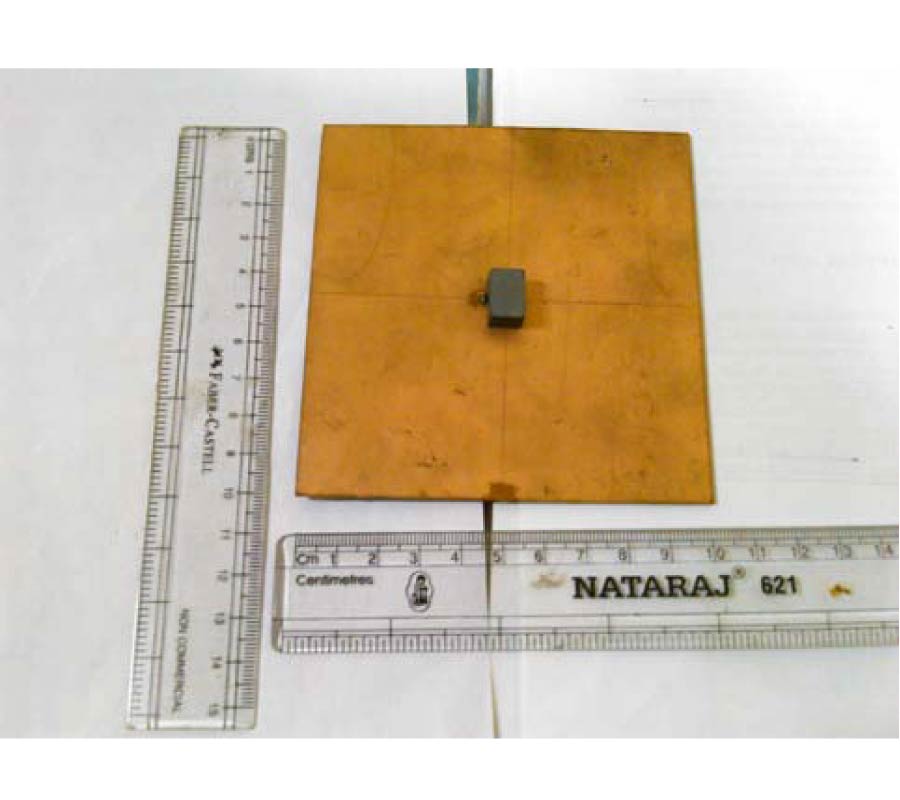
In this study, the impact of finite ground plane edge diffractions on the amplitude patterns of aperture antennas is examined. The Uniform Theory of Diffraction (UTD) and the Geometrical Optics (GO) methods are utilized to calculate the amplitude patterns of a conical horn, and rectangular and circular waveguide apertures mounted on square and circular finite ground planes. The electric field distribution over the antenna aperture is obtained by a modal method, and then it is employed to calculate the geometrical optics field using the aperture integration method. The UTD is then applied to evaluate the diffraction from the ground planes' edges. Far-zone amplitude patterns in the E and H planes are finally obtained by the vectorial summation of the GO and UTD fields. In this paper, to accurately predict the H-plane amplitude patterns of circular and rectangular apertures mounted on square ground plane, the E-plane edge diffractions need to be included because the E-plane edge diffractions are much more intensive than those of the H-plane edge regular and slope diffractions. Validity of the analysis is established by satisfactory agreement between the predicted and measured data and those simulated by Ansoft's High Frequency Structure Simulator (HFSS). Good agreement is observed for all cases considered.
IMPACT OF FINITE GROUND PLANE EDGE DIFFRACTIONS ON RADIATION PATTERNS OF APERTURE ANTENNAS (Invited Paper)
2013-09-23
PIER
Vol. 142, 579-590
Static Magnetic Field Concentration and Enhancement Using Magnetic Materials with Positive Permeability
Fei Sun and Sailing He
In this paper a novel compressor for static magnetic fields is proposed based on finite embedded transformation optics. When the DC magnetic field passes through the designed device, the magnetic field can be compressed inside the device. After it passes through the device, one can obtain an enhanced static magnetic field behind the output surface of the device (in a free space region). We can also combine our compressor with some other structures to get a higher static magnetic field enhancement in a free space region. In contrast with other devices based on transformation optics for enhancing static magnetic fields, our device is not a closed structure and thus has some special applications (e.g., for controlling magnetic nano-particles for gene and drug delivery). The designed compressor can be constructed by using currently available materials or DC meta-materials with positive permeability. Numerical simulation verifies good performance of our device.
STATIC MAGNETIC FIELD CONCENTRATION AND ENHANCEMENT USING MAGNETIC MATERIALS WITH POSITIVE PERMEABILITY
2013-09-22
PIER
Vol. 142, 559-578
Lasso Based Performance Evaluation for Sparse One-Dimensional Radar Problem Under Random Sub-Sampling and Gaussian Noise
Yin Xiang , Bingchen Zhang and Wen Hong
Sparse microwave imaging is the combination of microwave imaging and sparse signal processing, which aims to extract physical and geometry information of sparse or transformed sparse scene from least number of radar measurements. As a primary investigation on its performance, this paper focuses on the performance guarantee for a one-dimensional radar, which detects delays of several point targets located at a sparse scene via randomly sub-sampling of radar returns. Based on the Lasso framework, the quantity relationship among three important factors is discussed, including the sub-sampling ratio ρM, sparse ratio ρK and signal-to-noise ratio (SNR), where ρM is the ratio of number of random sub-sampling to that of Nyquist's sampling, and ρK is the ratio of sparsity to the number of unknowns. In particular, to ensure correct delay detection and accurate back scattering coefficient reconstruction for each target, one needs ρM to be greater than C(ρK)ρKlogN and the input SNR be of order logN, where N is the number of range cells in scene.
LASSO BASED PERFORMANCE EVALUATION FOR SPARSE ONE-DIMENSIONAL RADAR PROBLEM UNDER RANDOM SUB-SAMPLING AND GAUSSIAN NOISE
2013-09-21
PIER B
Vol. 54, 385-405
Modified Bayesian Optimization Algorithm for Sparse Linear Antenna Design
Bui Van Ha , Paola Pirinoli , Riccardo Enrico Zich , Marco Mussetta and Francesco Grimaccia
In this paper, a modified Bayesian Optimization Algorithm (BOA), named M-BOA, is proposed to introduce a suitable mutation scheme for the traditional procedure in order to speed up the convergence of the algorithm and to avoid it to be trapped in local minima or to stagnate in suboptimal solutions. The proposed algorithm has been applied both to a specific mathematical test function and to sparse linear antenna arrays design, showing outperforming capabilities not only with respect to the standard BOA, but also with respect to other assessed global optimization methods.
MODIFIED BAYESIAN OPTIMIZATION ALGORITHM FOR SPARSE LINEAR ANTENNA DESIGN
2013-09-21
PIER B
Vol. 54, 357-383
Complex Surface Wave Modes of Plasma Column Loaded Closed Cylindrical Waveguide
Ersoy Kelebekler
The complex dispersion characteristics of the surface wave modes of plasma column loaded closed cylindrical waveguides have been investigated. The numerical results for partially or fully plasma loaded waveguides have been obtained from the Method of Moment(MOM), the exact dispersion equation and the quasistatic dispersion equation. A numerical technique based on the solution of the MoM has been proposed in order to obtain the complex propagation constant from the exact solution. The surface wave modes obtained from these methods have been presented comparatively in the figures. Thus, the insufficiency of the quasistatic approximation to obtain the complex surface wave modes has been shown. Additionally, the study involves a comprehensive literature review including physical descriptions and/or behavior in different physical media of surface wave modes and complex wave modes.
COMPLEX SURFACE WAVE MODES OF PLASMA COLUMN LOADED CLOSED CYLINDRICAL WAVEGUIDE
2013-09-21
PIER C
Vol. 44, 67-82
Specific Emitter Identification Based on Transient Energy Trajectory
Ying-Jun Yuan , Zhitao Huang and Zhi-Chao Sha
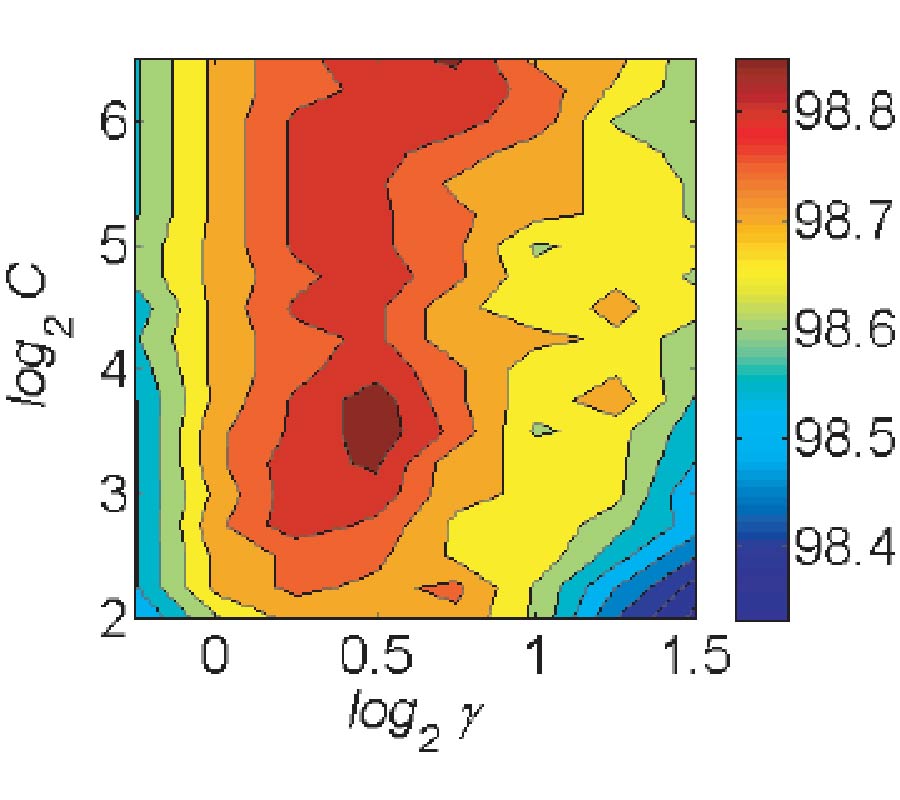
Specific emitter identification (SEI) is the technique which identifies the individual emitter based on the RF fingerprint of signal. Most existing SEI techniques based on the transient RF fingerprint are sensitive to noise and need different variables for transient detection and RF fingerprint extraction. This paper proposes a novel SEI technique for the common digital modulation signals, which is robust to Gaussian noise and can avoid the problem that different variables are needed for transient detection and RF fingerprint extraction. This makes the technique more practical. The technique works based on the signal's energy trajectory acquired by the fourth order cumulants. A relative smoothness measure detector is used to detect the starting point and endpoint of the transient signal. The polynomial fitting coefficients of the energy trajectory and transient duration form the RF fingerprint. The principal component analysis (PCA) technique is used to reduce the feature vector's dimension, and a support vector machine (SVM) classifier is used for classification. The signals captured from eight mobile phones are used to test the performance of the technique, and the experimental results demonstrate that it has good performance even at low SNR levels.
SPECIFIC EMITTER IDENTIFICATION BASED ON TRANSIENT ENERGY TRAJECTORY
2013-09-18
PIER B
Vol. 54, 337-356
Analysis, Design Optimization and Performance Comparison of Bias Adapted and Asymmetrical Doherty Power Amplifiers
Necip Sahan and Simsek Demir
Doherty type Power Amplifier (DPA) design is one of the most practical efficiency enhancement methods that provide moderate linearity. Asymmetrical device usage and employment of bias adaptation are among the most commonly used Doherty architectures in recent applications. In this paper, the efficiency performances of bias adapted DPA and asymmetrical DPA are compared based on the new efficiency expression that is derived in terms of the conduction angle. The efficiency of bias adapted DPA is analyzed in terms of conduction angle of the peaking device; various bias waveforms are proposed and their effects on enhanced efficiency performance are demonstrated. This paper also facilitates an approach to determine the required relative periphery of the peaking amplifier in order to have a fully load modulated asymmetrical DPA. Both DPA structures are designed and implemented at the output power of 50 dBm with nearly 60% drain efficiencies in 6 dB load modulation region. The measurements verify the better efficiency characteristics of the bias adapted DPA and asymmetric DPA in comparison to the conventional DPA. For the first time in the literature, as a fair comparison, the performances of asymmetrical DPA and bias adapted DPA are compared on the same platform and their advantages as well as drawbacks are demonstrated using measurement results.
ANALYSIS, DESIGN OPTIMIZATION AND PERFORMANCE COMPARISON OF BIAS ADAPTED AND ASYMMETRICAL DOHERTY POWER AMPLIFIERS
2013-09-18
PIER C
Vol. 44, 55-66
Complex Rectangular Filter Design Using Hybrid Finite Element Method and Modified Multimodal Variational Formulation
Mohamed Yahia , Junwu Tao and Hedi Sakli
We hybridize vector Finite Element Method (FEM) and a Modified Multimodal Variational Formulation (MMVF) to the accurate and fast design of complex isotropic rectangular filters. The MMVF is applied to the full-wave description in the rectangular waveguides while the FEM characterizes waves in the arbitrarily shaped discontinuities. The proposed hybrid method is applied to the full-wave analysis of circuits with great practical interest (i.e., cross-shaped iris and multimode filters), thus improving CPU time and memory storage against several full-wave FEM based Computer Aided Design (CAD) tools (i. e. HFSS High Frequency Structural Simulator). The performances of the proposed hybrid method are validated with experimental results and HFSS simulations.
COMPLEX RECTANGULAR FILTER DESIGN USING HYBRID FINITE ELEMENT METHOD AND MODIFIED MULTIMODAL VARIATIONAL FORMULATION