Search Results(13983)

2014-01-17
PIER
Vol. 144, 185-191
Compact Microstrip UWB Bandpass Filter with Triple-Notched Bands and Wide Upper Stopband
Huaxia Peng , Junding Zhao and Bing Wang
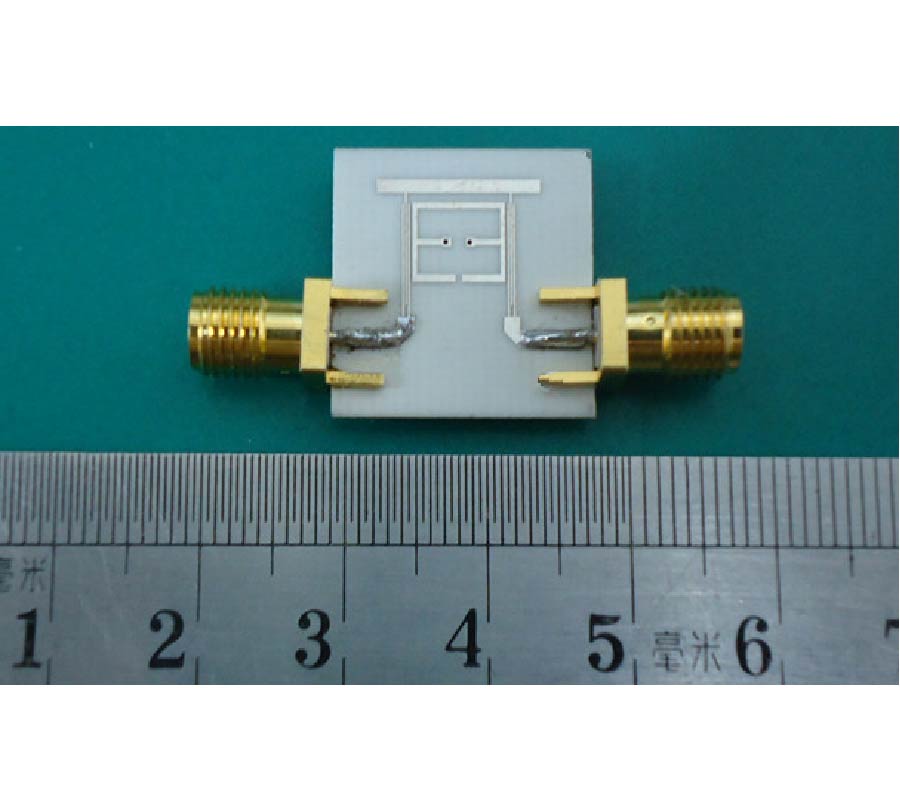
A novel compact ultra-wideband (UWB) bandpass filter (BPF) with triple sharply notched bands and wide upper stopband is proposed. The basic UWB BPF is composed of two microstrip interdigital coupled lines and one multiple-mode resonator (MMR). Then, to achieve triple band-notched performance, the proposed triple-mode stepped impedance resonator (TMSIR) is studied and coupled to the interdigital coupled lines of the basic UWB BPF. To validate the design theory, a microstrip UWB BPF with three notched bands respectively centered at 5.2 GHz, 5.8 GHz, and 6.8 GHz is designed and fabricated. Both simulated and experimental results are provided with good agreement.
COMPACT MICROSTRIP UWB BANDPASS FILTER WITH TRIPLE-NOTCHED BANDS AND WIDE UPPER STOPBAND
2014-01-17
PIER
Vol. 143, 745-760
Differential Forms Inspired Discretization for Finite Element Analysis of Inhomogeneous Waveguides (Invited Paper)
Qi Dai , Weng Cho Chew and Li Jun Jiang
We present a differential forms inspired discretization for variational finite element analysis of inhomogeneous waveguides. The variational expression of the governing equation involves transverse fields only. The conventional discretization with edge elements yields an unsolvable generalized eigenvalue problem since one of the sparse matrix is singular. Inspired by the differential forms where the Hodge operator transforms 1-forms to 2-forms, we propose to discretize the electric and magnetic field with curl-conforming basis functions on the primal and dual grid, and discretize the magnetic flux density and electric displacement field with the divergence-conforming basis functions on the primal and dual grid, respectively. The resultant eigenvalue problem is well-conditioned and easy to solve. The proposed scheme is validated by several numerical examples.
DIFFERENTIAL FORMS INSPIRED DISCRETIZATION FOR FINITE ELEMENT ANALYSIS OF INHOMOGENEOUS WAVEGUIDES (Invited Paper)
2014-01-16
PIER C
Vol. 46, 135-143
New Compact Circular Ring Microstrip Patch Antennas
Mohamed A. Abdelaal and Hussein Hamed Ghouz
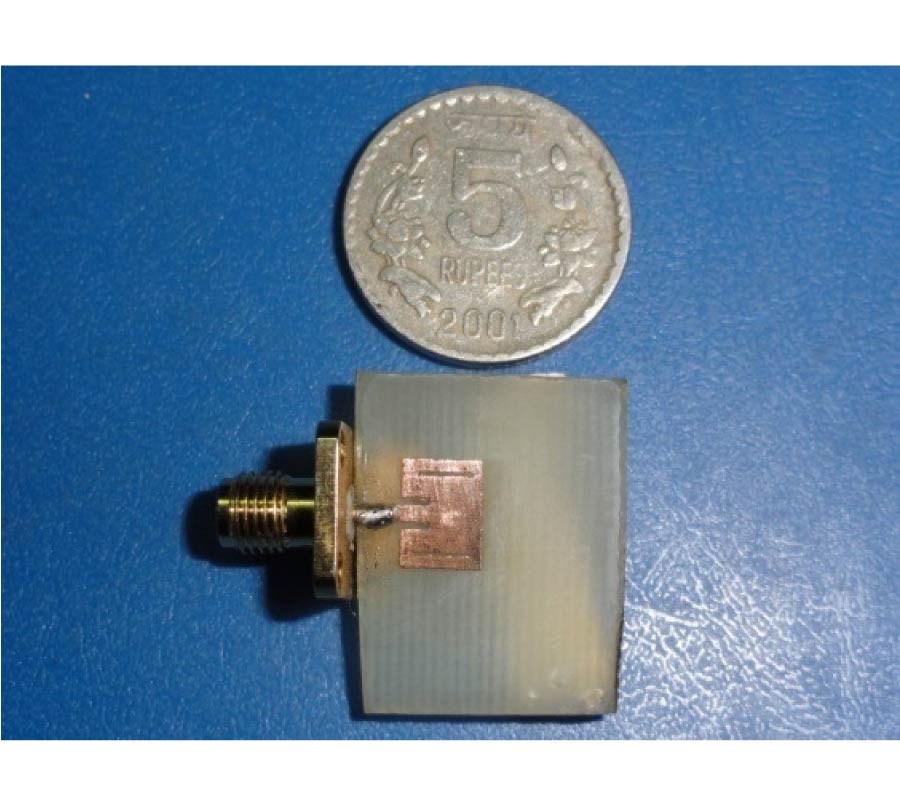
In this paper, three different compact circular-ring microstrip patch antenna structures have been proposed. These antennas have been analyzed, investigated and optimized using the CST-MW-simulator. The proposed designs are mainly based on the concept of patch shape reconfiguration while its overall dimensions are kept constant. The objective is to design dual and/or triple broadband antennas resonate within the fourth generation band (4G). The presented antennas are simulated and fabricated on cheaper and lossy FR-4 substrate, and their parameters are measured and compared. The obtained results show that the proposed antenna structures resonate within the 4G frequency band. The operating bandwidths have been varied between 270.0 MHz and 1000.0 MHz (about 4% up to 7% of center frequency). In addition, maximum VSWR value of less than 1.5 has been achieved. The obtained results verify the validity and the benefits of reconfiguring the patch shape. Finally, good agreement has been obtained between simulated and measured parameters.
NEW COMPACT CIRCULAR RING MICROSTRIP PATCH ANTENNAS
2014-01-16
PIER M
Vol. 34, 143-151
Full-Wave Analysis of Anisotropic Circular Microstrip Antenna with Air Gap Layer
Sami Bedra , Randa Bedra , Siham Benkouda and Tarek Fortaki
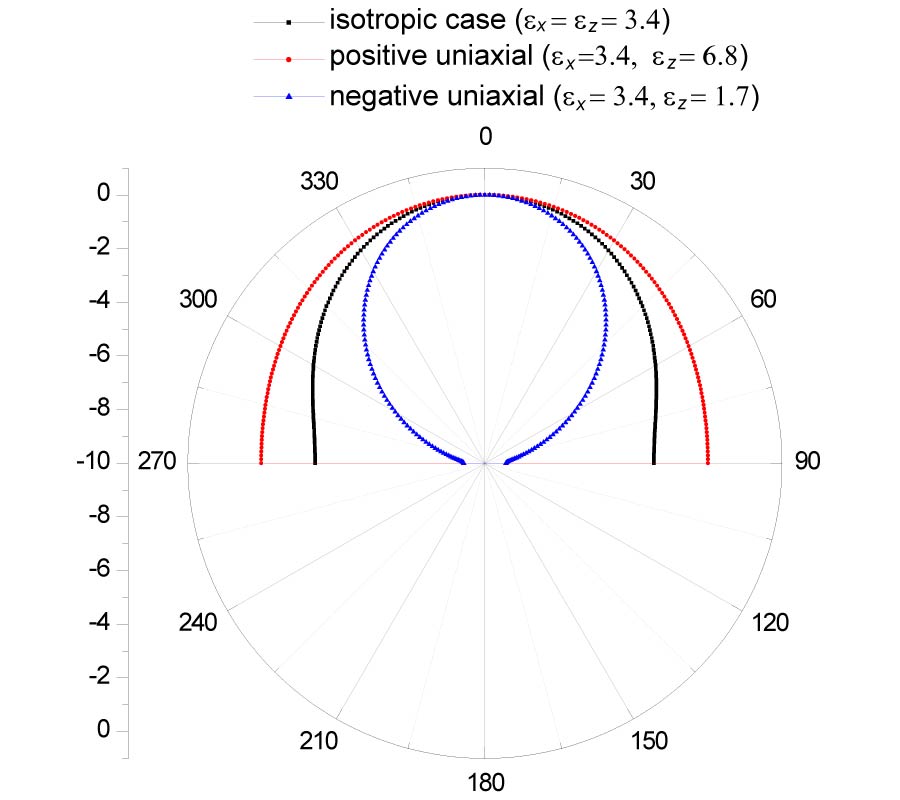
In this paper, the effect of both uniaxial anisotropy in the substrate and air gap layer on the resonant frequency and bandwidth of circular microstrip patch are investigated. The problem is rigorously formulated based on the spectral domain technic in conjunction with Galerkin approach for computing the resonant frequency, half-power bandwidth, and radiation field of a tunable circular patch antenna which is printed on isotropic or uniaxial anisotropic substrate. The TM set of modes issued from the magnetic wall cavity model theory are used to expand the unknown currents on the patch. Resonant frequency shift due to uniaxial anisotropy is firstly investigated for different anisotropy ratio values of substrate. Then, the effect of inclusion of air gap layer inserted between anisotropic substrate and ground plane on the resonance characteristics is also investigated. The results obtained from this approach are in very good agreement with the experimental results available in the literature.
FULL-WAVE ANALYSIS OF ANISOTROPIC CIRCULAR MICROSTRIP ANTENNA WITH AIR GAP LAYER
2014-01-16
PIER
Vol. 144, 171-184
Classification of Alzheimer Disease Based on Structural Magnetic Resonance Imaging by Kernel Support Vector Machine Decision Tree
Yudong Zhang , Shuihua Wang and Zhengchao Dong
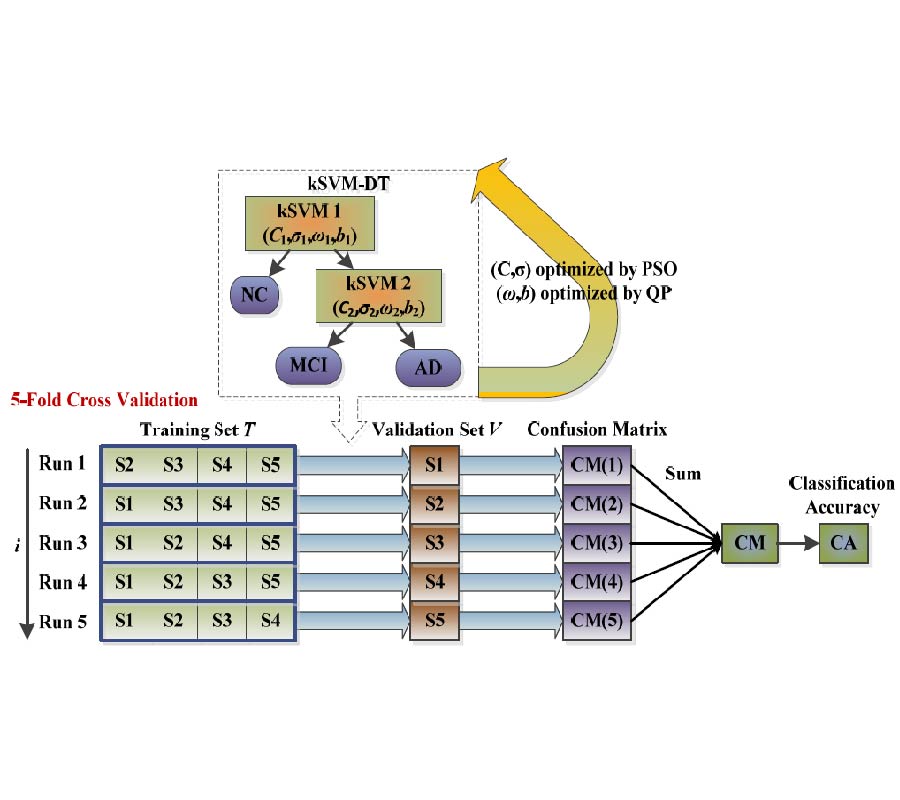
In this paper we proposed a novel classification system to distinguish among elderly subjects with Alzheimer's disease (AD), mild cognitive impairment (MCI), and normal controls (NC). The method employed the magnetic resonance imaging (MRI) data of 178 subjects consisting of 97 NCs, 57 MCIs, and 24 ADs. First, all these three dimensional (3D) MRI images were preprocessed with atlasregistered normalization. Then, gray matter images were extracted and the 3D images were undersampled. Afterwards, principle component analysis was applied for feature extraction. In total, 20 principal components (PC) were extracted from 3D MRI data using singular value decomposition (SVD) algorithm, and 2 PCs were extracted from additional information (consisting of demographics, clinical examination, and derived anatomic volumes) using alternating least squares (ALS). On the basic of the 22 features, we constructed a kernel support vector machine decision tree (kSVM-DT). The error penalty parameter C and kernel parameter σ were determined by Particle Swarm Optimization (PSO). The weights ω and biases b were still obtained by quadratic programming method. 5-fold cross validation was employed to obtain the out-of-sample estimate. The results show that the proposed kSVM-DT achieves 80% classification accuracy, better than 74% of the method without kernel. Besides, the PSO exceeds the random selection method in choosing the parameters of the classifier. The computation time to predict a new patient is only 0.022s.
CLASSIFICATION OF ALZHEIMER DISEASE BASED ON STRUCTURAL MAGNETIC RESONANCE IMAGING BY KERNEL SUPPORT VECTOR MACHINE DECISION TREE
2014-01-15
PIER
Vol. 144, 151-169
The Wavelength Division Multiplexer Realized in Three-Dimensional Unusual Surface-Plasmon-Induced Photonic Crystals Composed of the Epsilon-Negative Materials Shells
Hai Feng Zhang , Shaobin Liu and Hai-Ming Li
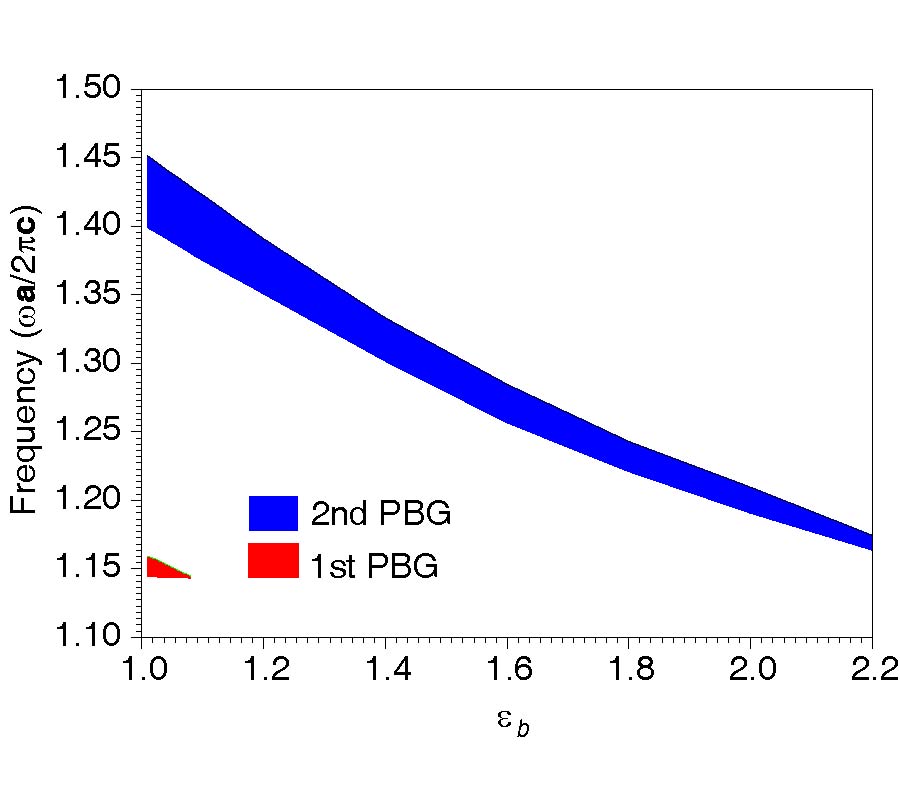
In this paper, the dispersive properties and switching state of three-dimensional (3D) photonic crystals (PCs) with diamond lattices, which are composed of the core isotropic dielectric spheres with surrounded by the epsilon-negative (ENG) materials shells inserted in the isotropic dielectric background (air), are theoretically investigated in detail based on a modified plane wave expansion method. The wavelength division multiplexer can be realized easily by tuning the switching state of such PCs. The equations for computing band structures for such 3D PCs are presented. Our analysis shows that the proposed double-shell structures can obtain the complete photonic band gaps (PBGs) which can be realized optical switching with on or off states by manipulating the radius of core dielectric sphere, the relative dielectric constant of background, the dielectric constant of ENG materials and the electronic plasma frequency, respectively. However, the thickness of the ENG materials shell cannot change the switching state as the radius of core dielectric sphere is certain. Numerical simulations also show that a flatbands region, and the stop band gaps (SBGs) in (1 0 0) and (1 1 1) directions which are above the flatbands region can be achieved. The SBGs in (1 0 0) and (1 1 1) directions can also be tuned by the parameters as mentioned above. There also exists a threshold value for the thickness of ENG material shell, which can make the band structures for the 3D PCs with double-shell structures similar to those obtained from the same structure containing the pure ENG materials spheres. In this case, the dielectric function of inserted core sphere will not affect the band structures. It means that we can achieve the PBGs by replacing the pure ENG materials spheres with such double-shell structures to make fabricate easily and save the material in the realization. It is also noticed that the flatband region is determined by the existence of surface plasmon modes, and the upper edge of flatband region does not depend on the topology of lattice. Such presented 3D PCs with double-shell structures offer a novel way to realize the wavelength division multiplexers.
THE WAVELENGTH DIVISION MULTIPLEXER REALIZED IN THREE-DIMENSIONAL UNUSUAL SURFACE-PLASMON-INDUCED PHOTONIC CRYSTALS COMPOSED OF THE EPSILON-NEGATIVE MATERIALS SHELLS
2014-01-14
PIER M
Vol. 34, 135-142
Synthesis of Simultaneous Multiple-Harmonic-Patterns in Time-Modulated Linear Antenna Arrays
Sujit Kumar Mandal , Gautam Mahanti and Rowdra Ghatak
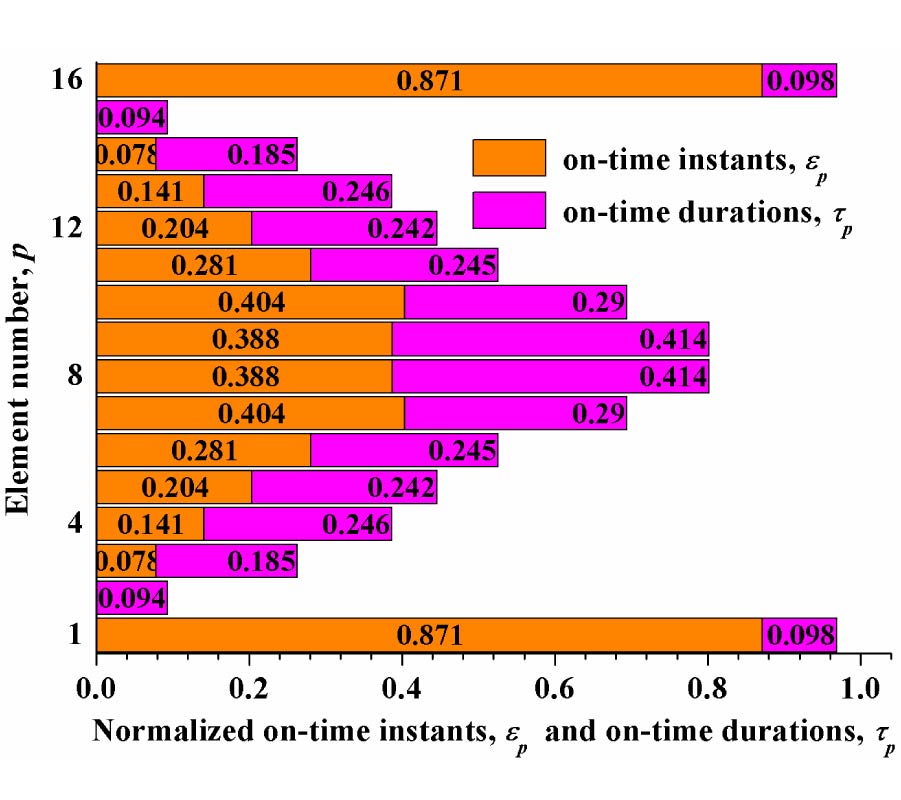
In time-modulated antenna arrays (TMAAs), as a result of periodical switch-on and switch-off of the antenna elements, including operating frequency (termed as center frequency) signal, sideband signals are appeared at either sides of the center frequency in integer multiples of the modulation frequency. In this paper, it is shown that without using phase shifters, just by suitably controlling the on-time instants (OTIs)and on-time durations (OTDs) of a timemodulated linear antenna array (TMLAA) elements, simultaneously, along with a pencil beam pattern at the operating frequency, a shaped beam pattern can be obtained at both the first positive and negative harmonics of the time-modulation frequency. The important advantage of such a technique is that realization of multi-beam pattern in conventional antenna array (CAA) system generally requires complex feed network, whereas by using simple radio frequency (RF) switching circuit in the feed network of TMLAA, by virtue of the properties of harmonic radiations, synthesis of a shaped pattern at either (positive or negative) harmonic results in generating the same pattern in its opposite harmonic, and the synthesized patterns at different harmonics can be simultaneously used as independent communication channels. By employing a differential evolution (DE) based optimization method, numerical results for a 16-element TMLAA with uniform excitation show that in conjunction with a pencil beam pattern at the center frequency, a flat-top or a cosec square pattern at first positive and negative sidebands of side-lobe levels (SLL) -20 dB can be synthesized by suppressing the higher sideband level (SBL) to below -10 dB.
SYNTHESIS OF SIMULTANEOUS MULTIPLE-HARMONIC-PATTERNS IN TIME-MODULATED LINEAR ANTENNA ARRAYS
2014-01-14
PIER
Vol. 144, 141-150
Synthesis of a Magnetic Field Concentrated in One Dimension
Gareth K. Sessel and Ivan William Hofsajer
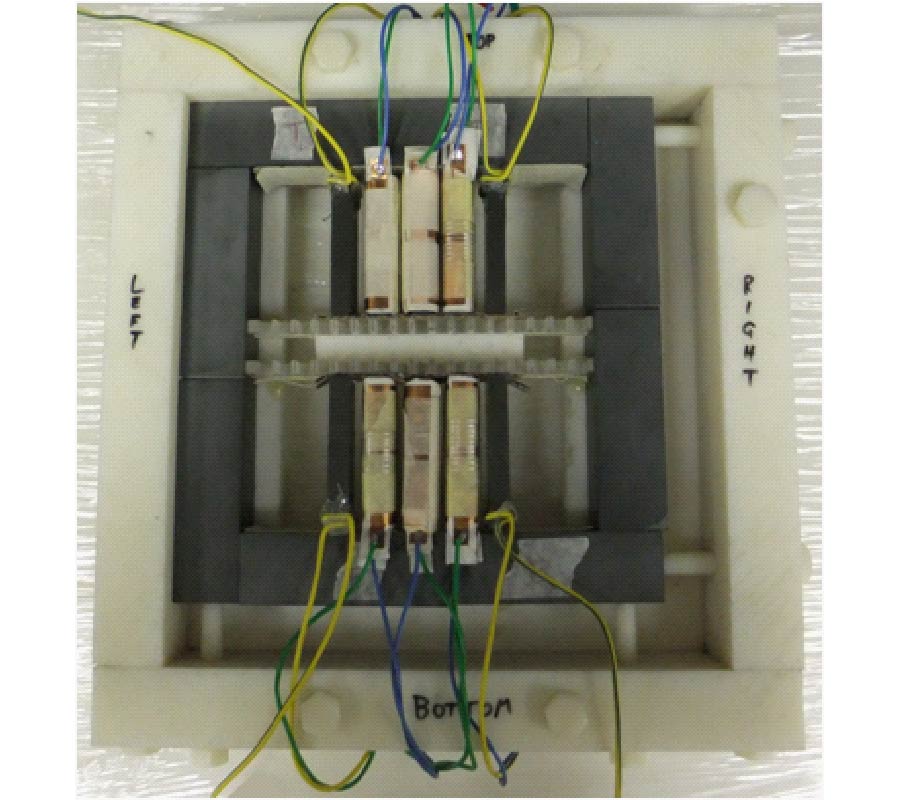
The focusing of a magnetic field, at low frequencies, in the very near field is difficult as flux lines naturally tend to disperse. It is not possible to use antenna array techniques due to large wavelengths at low frequencies. A method for synthesizing a concentrated magnetic field in a large air gap between two magnetic poles is presented. The focusing effect is brought about by the inclusion of side poles, adjacent to each of the main poles. Through the correct dimensioning of the side poles' reluctances and relative magneto-motive forces it is possible to focus the field in the center of the gap. General design curves for normalized parameters, determined via finite element modelling, are presented. A scale model is experimentally verified.
SYNTHESIS OF A MAGNETIC FIELD CONCENTRATED IN ONE DIMENSION
2014-01-14
PIER
Vol. 144, 133-140
A Robust Vector Matching Localization Approach Based on Multiple Channels Ssd Fingerprinting of ZigBee Networks
Lei Chu , Xian-Sheng Guo , Baocang Li , Baogen Xu , Qun Wan and Yijiang Shen
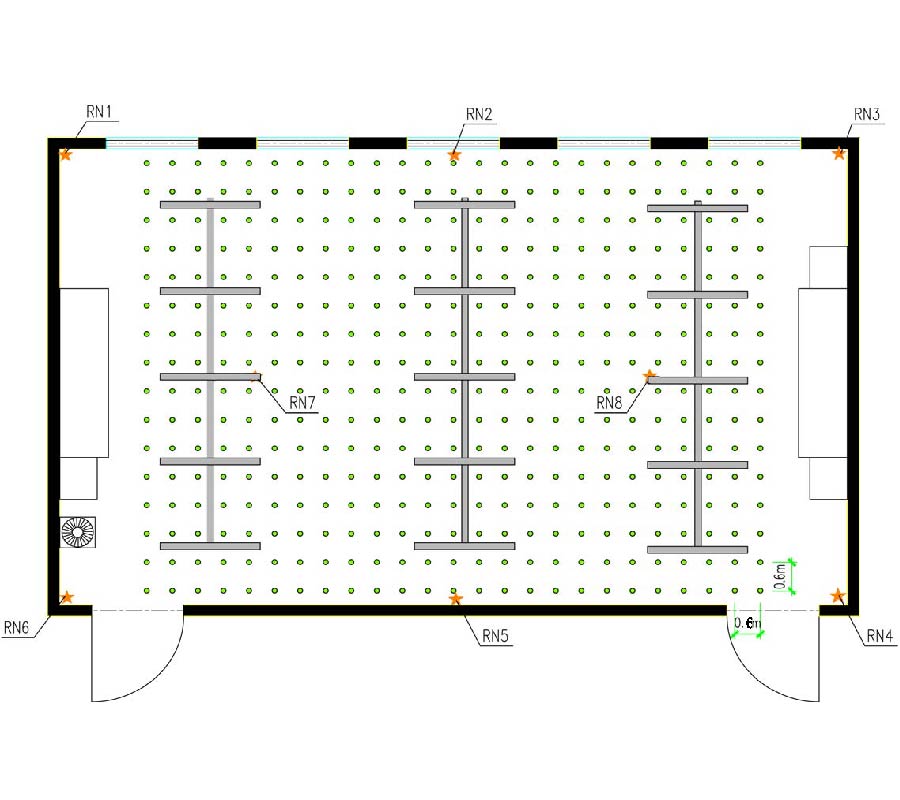
We present a robust multiple-channel vector-matching localization approach (MCVM) based on signal strength difference (SSD) fingerprinting of ZigBee Network. Compared with some existing algorithms, our presented approach has threefold advantages: firstly, far fewer numbers of received signal strength(RSS) measurements and reference nodes are needed; secondly, it shows more robustness to the fluctuation of RSS; thirdly, it requires low time-consuming signal strength collection surveys in the location space. We demonstrate the performances of our algorithm experimentally using different numbers of channels, reference nodes and training points. The Cramer-Rao Low Bound(CRLB) of SSD is derived in order to compare the performance of the different localization methods addressed. The experiment results show the efficacy of our proposed approach.
A ROBUST VECTOR MATCHING LOCALIZATION APPROACH BASED ON MULTIPLE CHANNELS SSD FINGERPRINTING OF ZIGBEE NETWORKS
2014-01-13
PIER C
Vol. 46, 75-81
Design of a Compact and Broadband Inverse Class-F-1 Power Amplifier
Jongkyun Kim and Youngcheol Park
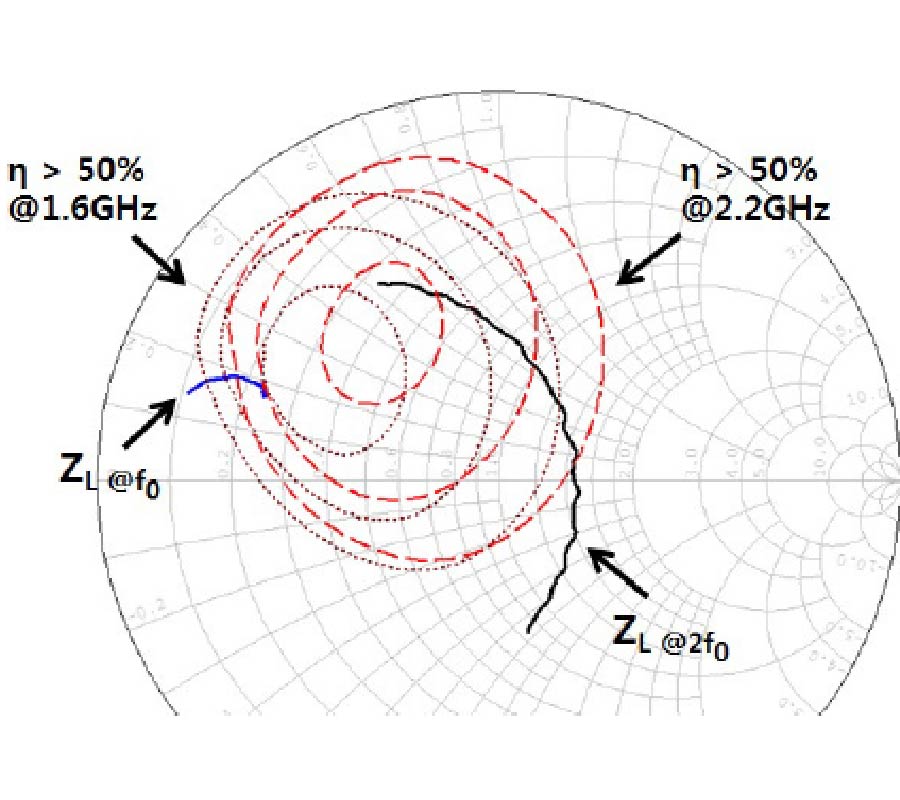
In this paper, a broadband class-F-1 power amplifier (PA) that can be integrated into compact-sized micro-radio units is introduced. This PA utilizes a multi-harmonic impedance merging technique at harmonic frequencies so that the circuit areas of matching networks can be minimized. As well, in order to maximize the bandwidth of high efficiency, circuit configuration was optimized by the first order differentiation of the fundamental-frequency impedance. For the sake of verification, a 10 W inverse class-F PA operating at 1.9 GHz was designed with a commercial GaN transistor. It exhibited a 39.2% size reduction as compared to conventional PAs of the similar power. In addition, it exhibited a bandwidth of 600 MHz (1.6 ~ 2.2 GHz) at an efficiency greater than 60%, a peak efficiency of 83.9%, and an output power of 42.2 dBm.
DESIGN OF A COMPACT AND BROADBAND INVERSE CLASS-F<sup>-1</sup> POWER AMPLIFIER
2014-01-13
PIER Letters
Vol. 44, 107-111
High Gain Circularly-Polarized Dielectric Resonator Antenna Array with Helical Exciter
Biswarup Rana and Susanta Kumar Parui
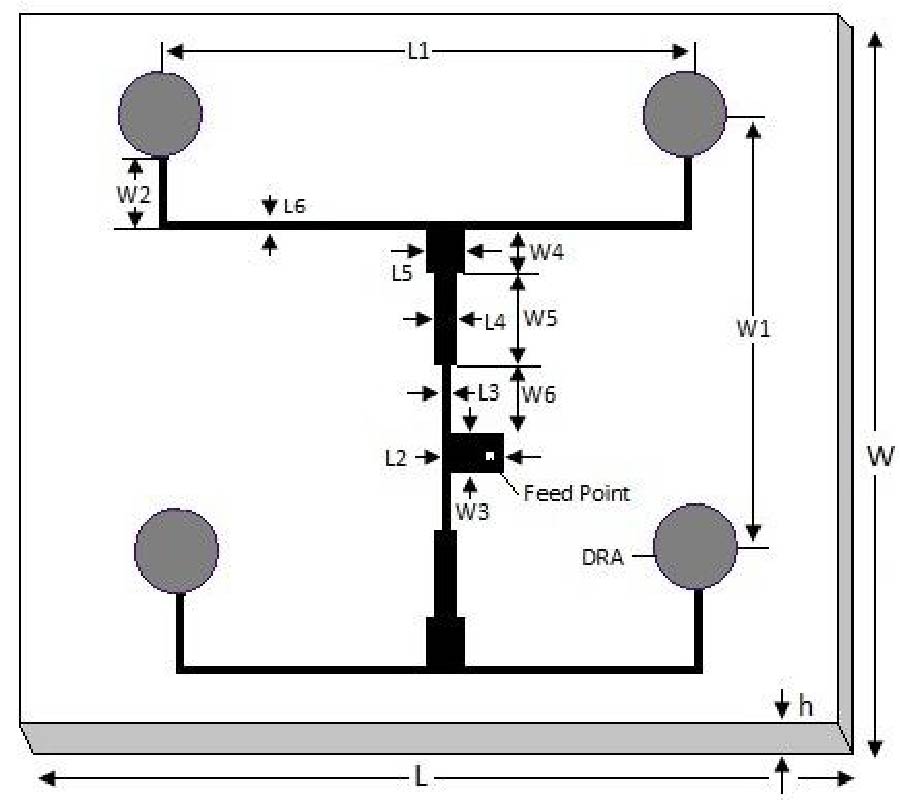
A novel (2x2) high-gain circularly-polarized cylindrical dielectric resonator antenna array integrated with helical exciter is proposed. The array offers a maximum gain of 13.8 dBi at the operating frequency. The circular polarization is obtained by incorporating helical exciter in the array structure. A prototype of the proposed configuration integrated with helical exciter has been fabricated, tested and the idea has been verified. A good agreement has been obtained between the measured and the simulated results.
HIGH GAIN CIRCULARLY-POLARIZED DIELECTRIC RESONATOR ANTENNA ARRAY WITH HELICAL EXCITER
2014-01-13
PIER
Vol. 144, 123-132
Design of Polarization and Incident Angle Insensitive Dual-Band Metamaterial Absorber Based on Isotropic Resonators
Furkan Dincer , Muharrem Karaaslan , Emin Unal , Kemal Delihacioglu and Cumali Sabah
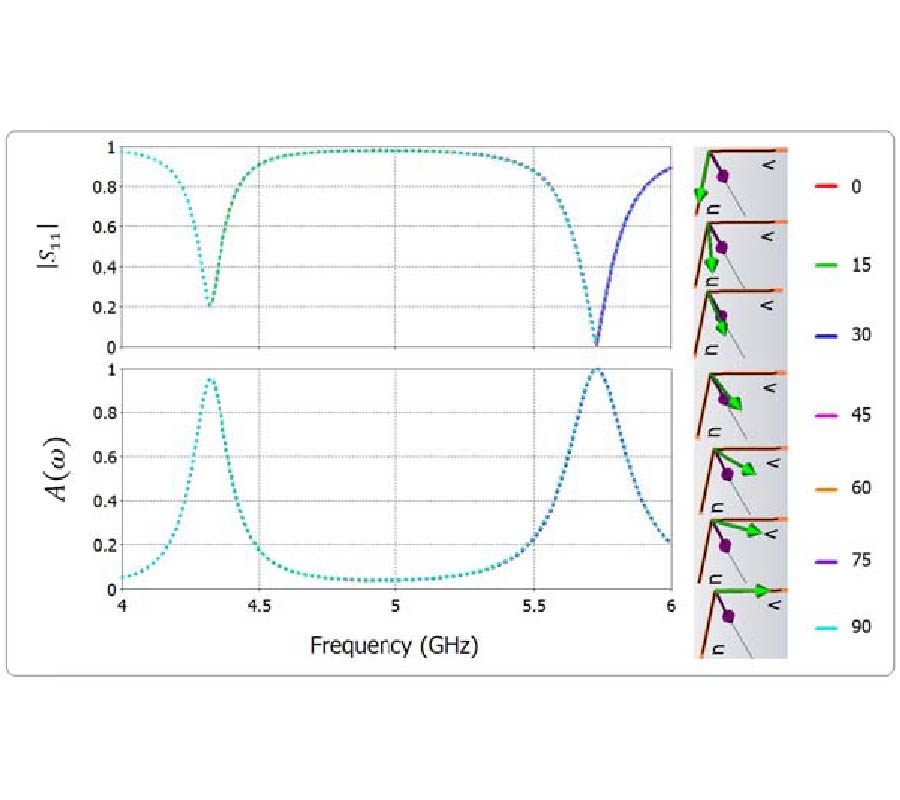
Polarization and incident angle independent metamaterial-based absorber (MA) which acts as a strong dual-band resonator is designed and constructed. Besides, a method to design single/dual-band MA is presented in detail. The proposed model is based on isotropic ring resonator with gaps and octa-star strip (OSS) which allows maximization in the absorption because of the characteristic features of the structure. Reflection and absorption responses are obtained both numerically and experimentally and compared to each other. Two maxima in the absorption are experimentally obtained around 90% at 4.42 GHz for the first band and 99.7% at 5.62 GHz for the second band which are in good agreement with the numerical simulations (95.6% and 99.9%, respectively). The numerical studies verify that the dual-band MA can provide perfect absorption at wide angles of incidence for both transverse electric (TE) and transverse magnetic (TM) waves. The proposed model can easily be used in many potential application areas such as security systems, sensors, medical imaging technology.
DESIGN OF POLARIZATION AND INCIDENT ANGLE INSENSITIVE DUAL-BAND METAMATERIAL ABSORBER BASED ON ISOTROPIC RESONATORS
2014-01-12
PIER Letters
Vol. 44, 101-106
Microstrip Bandpass Filters Based on Inductive-Coupled Stepped-Impedance Quarter-Wavelength Resonators
Fei Cheng , Xianqi Lin , Yuan Jiang , Kaijun Song and Yong Fan
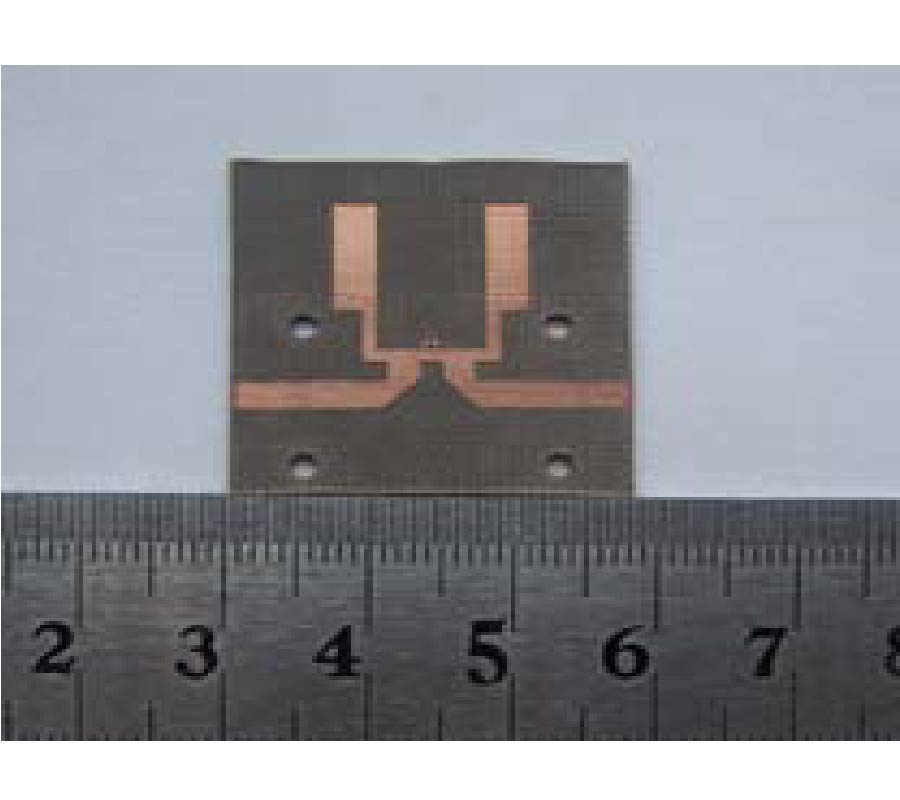
Inductive-coupling scheme for microstrip bandpass filters with quarter-wavelength stepped-impedance resonators is proposed. This is realized by a short-end stub which behaves as a K-inverter. It is investigated that the coupling coefficient of the resonators can be easily controlled by the length of the short-end stub. The filter has a compact size and good stopband rejection by employing the quarter-wavelength stepped-impedance resonators. The design procedure of this kind of filter is provided. Two filters working at 2.4 GHz are designed and fabricated to demonstrate the proposed method.
MICROSTRIP BANDPASS FILTERS BASED ON INDUCTIVE-COUPLED STEPPED-IMPEDANCE QUARTER-WAVELENGTH RESONATORS
2014-01-10
PIER B
Vol. 58, 47-57
Parallel Implementation of Hybrid Gsa-nm Algorithm for Adaptive Beam-Forming Applications
Korany Ragab Mahmoud and Safwat Hamad
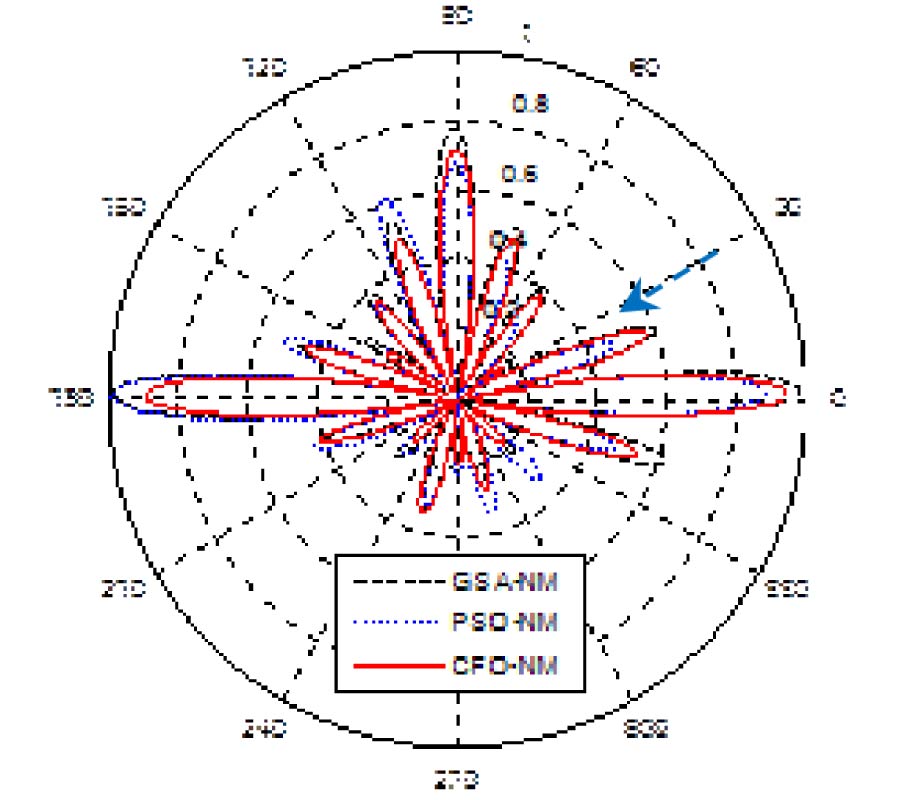
Recently researchers have great interest in using multi-core processors for applications requiring intensive parallel computing. In this paper, an approach for the implementation of hybrid parallel Gravitational Search Algorithm (GSA) and Nelder-Mead (NM) algorithm using open Multi-Processing (OPEN-MP) on multi-core processors is proposed for beam-forming applications. The proposed parallel GSA-NM algorithm is used to optimize the complex excitations, amplitudes and phases, of the adaptive array elements to synthesize the array beam-pattern. The array consists of 24-elements uniformly distributed in a circular configuration. To measure the performance of the proposed approach, the results are compared with those obtained using parallel hybrid CFO-NM, and PSO-NM Algorithms.
PARALLEL IMPLEMENTATION OF HYBRID GSA-NM ALGORITHM FOR ADAPTIVE BEAM-FORMING APPLICATIONS
2014-01-10
PIER C
Vol. 46, 125-133
Loss Reduction in Substrate Integrated Waveguide Structures
Pejman Mohammadi and Simsek Demir
A method for decreasing the loss in substrate integrated waveguide (SIW) structures is introduced. In this method, the dielectric substrate is partially removed. Accordingly, dielectric loss reduction has been explicated analytically. Its equivalence to the rectangular waveguide of solid walls which is partially filled with dielectric has been identified. A novel topology for demonstrating the idea is established and a low loss three port substrate integrated waveguide power divider is presented. This SIW power divider shows lower loss than conventional SIW power dividers. Proper TRL standards are realized for removing the effect of transition and/or matching sections in measurement process. For a low-loss three-port PSIW power divider, the return loss below 10 dB and transmission coefficients between -3 dB to -3.5 dB from 8.75 GHz to 10 GHz have been achieved. The measured amplitude imbalance is less than ±0.2 dB, and the measured phase difference between <S21 and <S31 is about 40 in the same frequency band.
LOSS REDUCTION IN SUBSTRATE INTEGRATED WAVEGUIDE STRUCTURES
2014-01-10
PIER Letters
Vol. 44, 93-99
Optimizing the Bowtie Nano-Antenna for Enhanced Purcell Factor and Electric Field
Jie Yang , Fanmin Kong , Kang Li and Jia Zhao
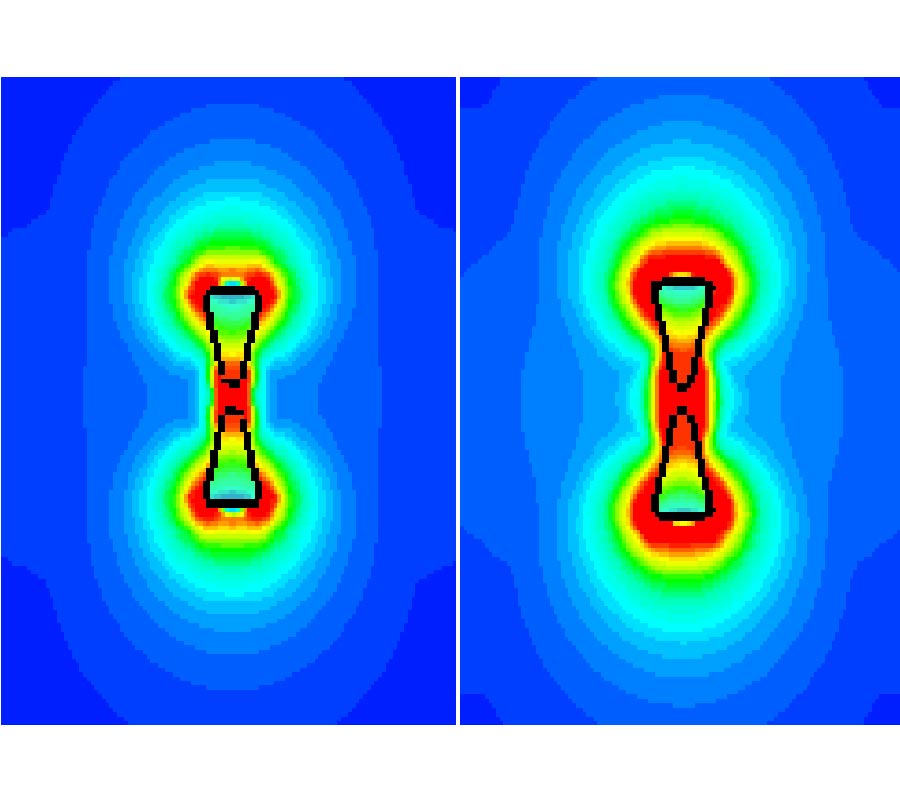
With the development of nano-optic technology, the optical nano-antenna has been widely used in the fields of novel light sources, high-sensitive biological sensors, nanometer lithography, and nano-optical imaging. The relationship between the structural parameters of the antenna and the Purcell factor is very important for engineering applications. The electric near field profile of the antenna was calculated and analyzed by using the finite-difference time-domain (FDTD) method, and the influence of the structural parameters on the Purcell factor and the electric field was thoroughly investigated. A careful comparison of bowtie antenna radiation characteristics with different structural parameters was carried out. The results show that the thickness, the length and the curvature radius have great effects on the Purcell factor and the optical antenna's electric near field. These findings are promising for improving the performance of the optical bowtie nano-antenna.
OPTIMIZING THE BOWTIE NANO-ANTENNA FOR ENHANCED PURCELL FACTOR AND ELECTRIC FIELD
2014-01-10
PIER M
Vol. 34, 125-133
A 'Maximum Entropy'-Based Novel Numerical Methodology for Problems in Statistical Electromagnetics
Kausik Chatterjee
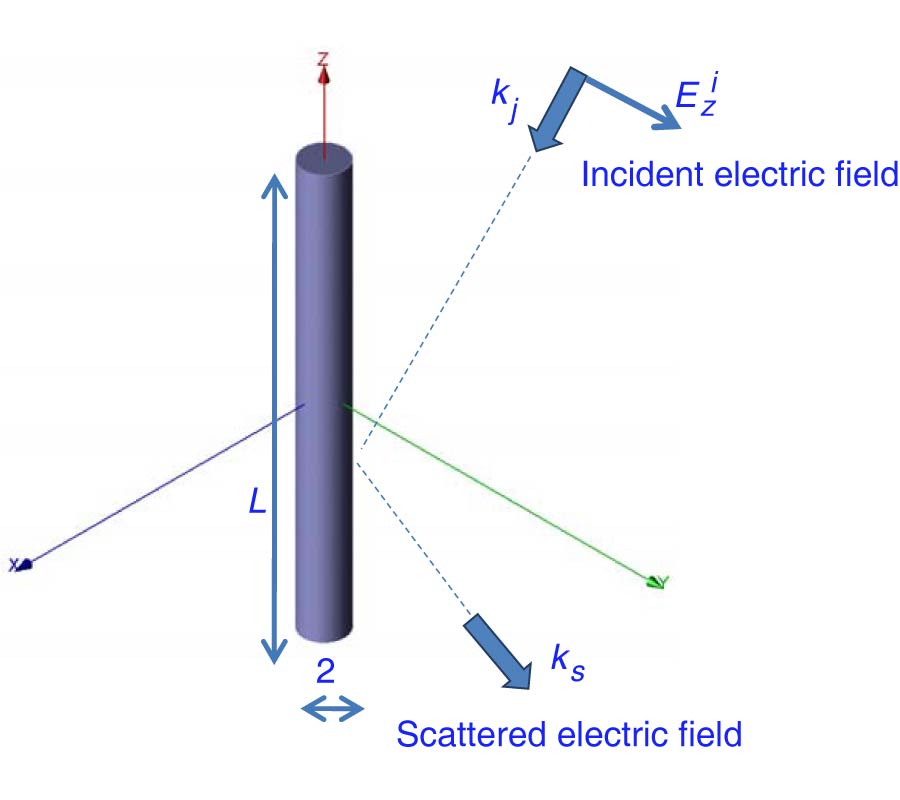
This paper presents the development of a novel‘maximum entropy'-based numerical methodology for the solution of electromagnetic problems, where the inputs and system parameters vary statistically. The application of this methodology to the problem of a plane wave impinging on an array of cylindrical conducting rods with stochastic variations in its parameters is then presented. To address this problem, a statistically significant number of replicas of this array of conductors are constructed. The current profiles in these coupled conductors are estimated by using the Method of Moments (MoM). Upon estimation of the current profiles on the conductors, the monostaticradar cross-section is estimated for each replica of the array. The probability density function isthen constructed through the estimation of a finite number of moments from the available output data subject to the constraint of maximum entropy. The methodology is very general in its scope and its application to scatterers with other geometries such as spheres, spheroids and ellipsoids as well as to other application areas would form the basis of our future work.
A 'MAXIMUM ENTROPY'-BASED NOVEL NUMERICAL METHODOLOGY FOR PROBLEMS IN STATISTICAL ELECTROMAGNETICS
2014-01-09
PIER B
Vol. 58, 35-46
Analysis of Microstrip Line Feed Slot Loaded Patch Antenna Using Artificial Neural Network
Mohammad Aneesh , Jamshed Aslam Ansari , Ashish Singh , Kamakshi and Saiyed Salim Sayeed
In this article, the parametric analysis of the slot-loaded microstrip line feed patch antenna is investigated using artificial neural network model. The bandwidths of the proposed antenna obtained at TM01, TM02, and TM03 frequency modes are 10.2 GHz, 13.6 GHz, and 17.2 GHz, respectively. The performance of the proposed antenna is analysed using artificial neural network model. The changes obtained in bandwidth due to the position of slot length and slot width are reported. The antenna parameters such as return loss, VSWR, gain and efficiency are also calculated. The simulated results obtained with the help of IE3D simulation software are trained and tested using ANN. Theoretical results are compared with simulated and experimental ones, and they are in close agreement.
ANALYSIS OF MICROSTRIP LINE FEED SLOT LOADED PATCH ANTENNA USING ARTIFICIAL NEURAL NETWORK
2014-01-09
PIER C
Vol. 46, 117-124
Complementary Spiral Resonators for Ultrawideband Suppression of Simultaneous Switching Noise in High-Speed Circuits
Amir Ghobadi , Kagan Topalli , Necmi Biyikli and Ali Kemal Okyay
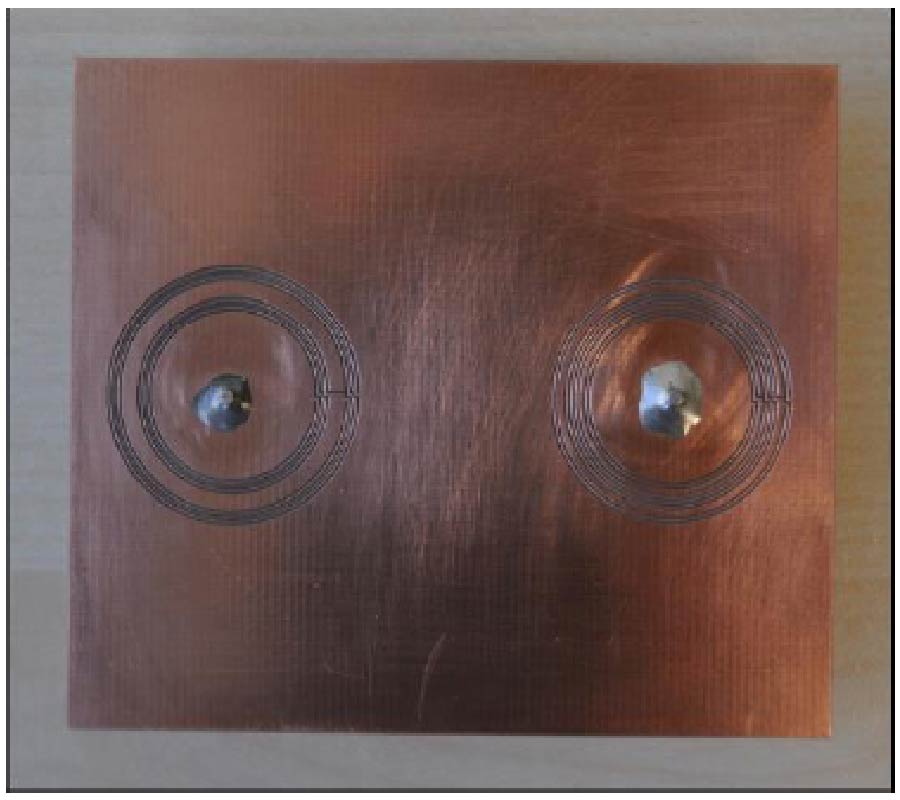
In this paper, a novel concept for ultra-wideband simultaneous switching noise (SSN) mitigation in high-speed printed circuit boards (PCBs) is proposed. Using complementary spiral resonators (CSRs) etched on only a single layer of the power plane and cascaded co-centrically around the noise port, ultra-wideband SSN suppression by 30 dB is achieved in a frequency span ranging from 340 MHz to beyond 10 GHz. By placing a slit in the co-centric rings, lower cut-off frequency is reduced to 150 MHz, keeping the rest of the structure unaltered. Finally, the power plane structure with modified complementary spiral resonators (MCSRs) is designed, fabricated, and evaluated experimentally. Measurement and simulation results are in well-agreement.
COMPLEMENTARY SPIRAL RESONATORS FOR ULTRAWIDEBAND SUPPRESSION OF SIMULTANEOUS SWITCHING NOISE IN HIGH-SPEED CIRCUITS
2014-01-09
PIER C
Vol. 46, 109-116
Closely Spaced Dual Band-Notched UWB Antenna for MIMO Applications
Xianglong Liu , Zedong Wang , Ying-Zeng Yin and Jun Hui Wang
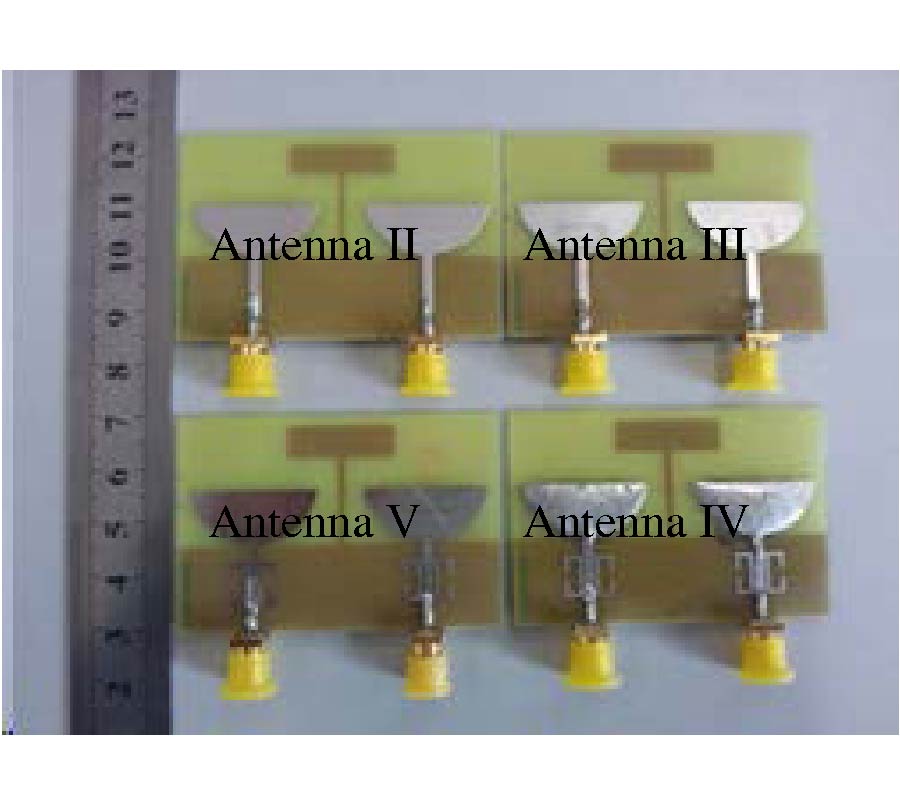
A closely spaced dual-band notched UWB MIMO antenna is proposed in this paper. A traditional semi-circular monopole with ultra-wideband operation is chosen as an element of the proposed MIMO antenna. When two of the UWB monopoles are put together closely, the mutual coupling between them is apparently strong. To reduce the coupling between the antenna elements, a T-shaped branch is inserted between them, which reduces the mutual coupling obviously over the entire operating band. Also, the T-shaped branch can perform as a compensating radiator which can lower the operating frequencies of the proposed antenna. In order to achieve dual band-notched characteristics, meandering slots are cut in the patches, and symmetrical C-shape strips are nearly placed to the monopoles' feed-lines. The meandering slot is for lower band notch (WiMAX, 3.3-3.7 GHz) while the C-shape strips are for upper band (WLAN, 5.15-5.825 GHz). The measured radiation efficiencies, peak gains and radiation patterns are illustrated and show good agreement as anticipated.
CLOSELY SPACED DUAL BAND-NOTCHED UWB ANTENNA FOR MIMO APPLICATIONS