Search Results(13798)

2013-11-08
PIER B
Vol. 56, 269-287
Permanent Magnet Thrust Bearing: Theoretical and Experimental Results
Siddappa Iranna Bekinal , Anil Tumkur Ramakrishna , Soumendu Jana , Sadanand Subhas Kulkarni , Aditya Sawant , Narsinha Patil and Sagar Dhond
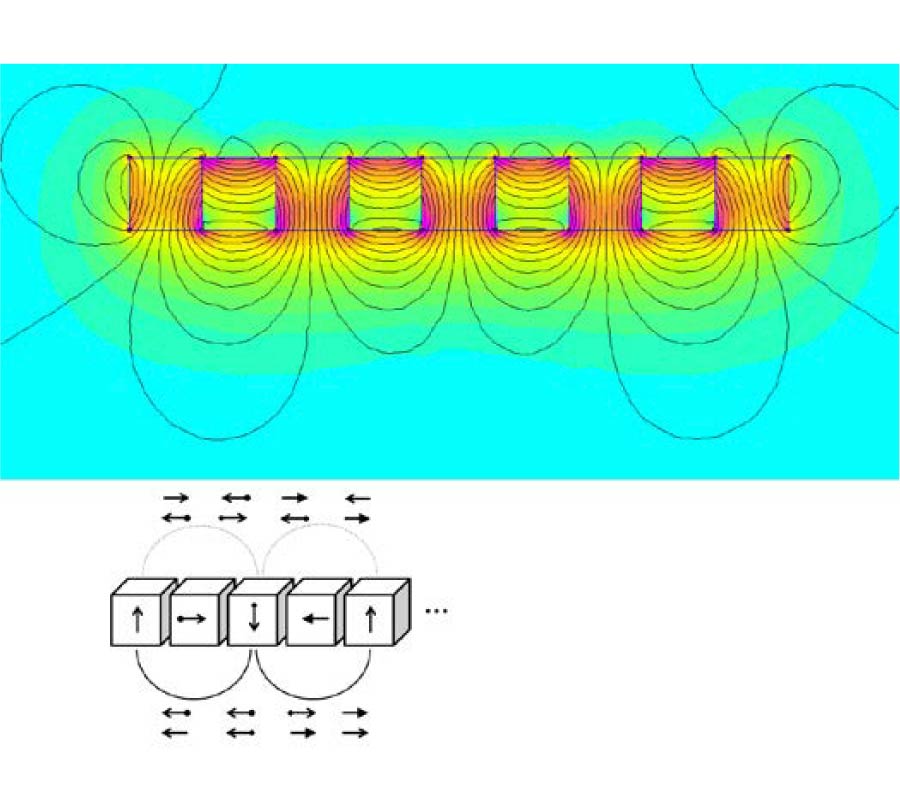
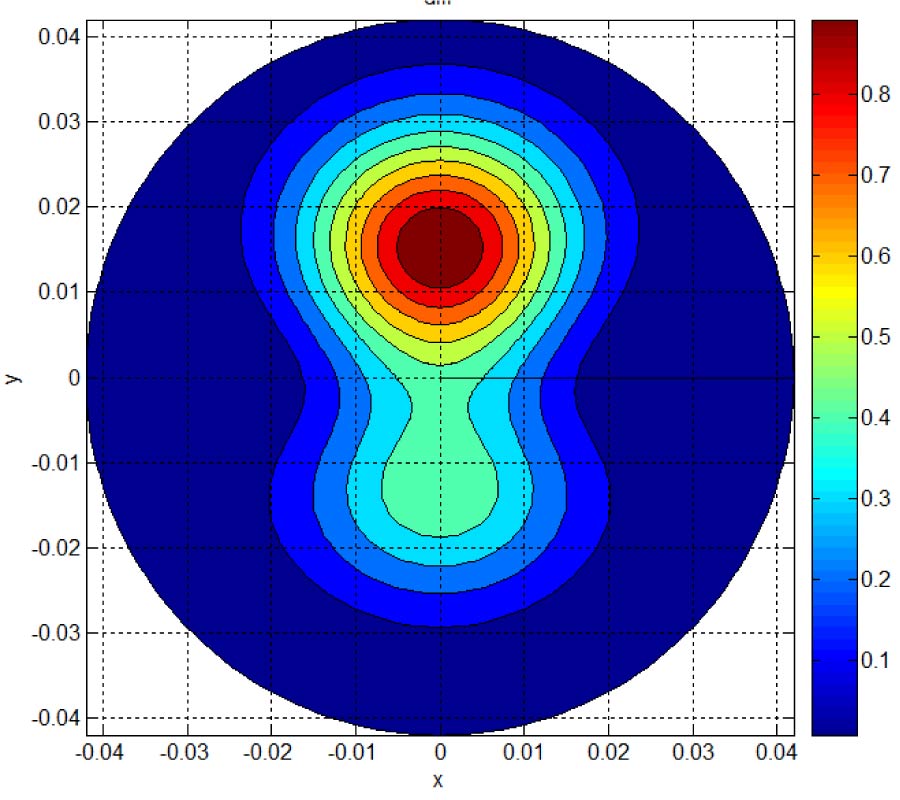
This paper presents the design and analysis of permanent magnet (PM) thrust bearing made up of three ring pairs for five degrees of freedom of the inner rings (rotor rings). The arrangement pattern of rings in PM bearing is considered in two ways: conventional structure and Halbach structure. The simplified three dimensional (3D) mathematical models employing Coulombian approach and vector method are used to design the bearing. MATLAB codes are written to evaluate the axial force, stiffness and moments in both the structures for five degrees of freedom, thereby the effect of axial, radial and angular displacements of the rotor on the aforementioned characteristics is addressed. The results of the mathematical model are validated by the results of 3D Finite Element Analysis (FEA) and experiments. It is observed that, the conventional structure seems to be more sensitive to the angular displacement, as the percentage decrease in force and stiffness is more with respect to angular displacement than the Halbach structure. The effect of angular displacement of the rotor on the performance of bearing in both the structures is crucial.
PERMANENT MAGNET THRUST BEARING: THEORETICAL AND EXPERIMENTAL RESULTS
2013-11-08
PIER C
Vol. 45, 137-150
Design Ultra-Wide Bandwidth Monopole Antenna for DVB-T and Wireless Applications
Dalia Mohammed Nasha Elsheakh and Esmat A. F. Abdallah
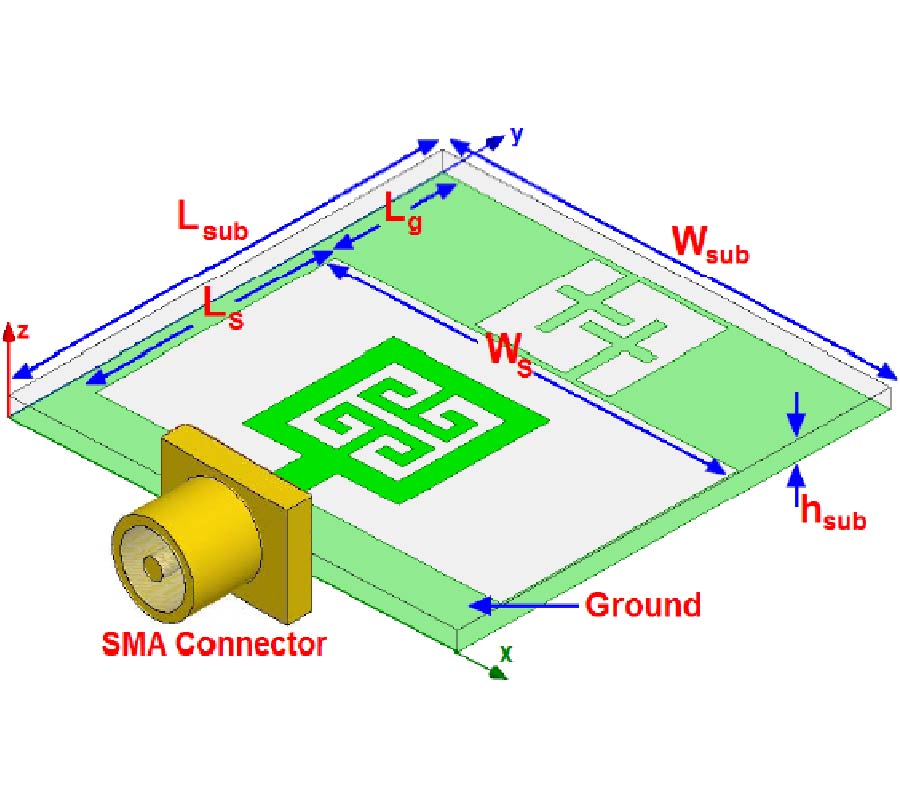
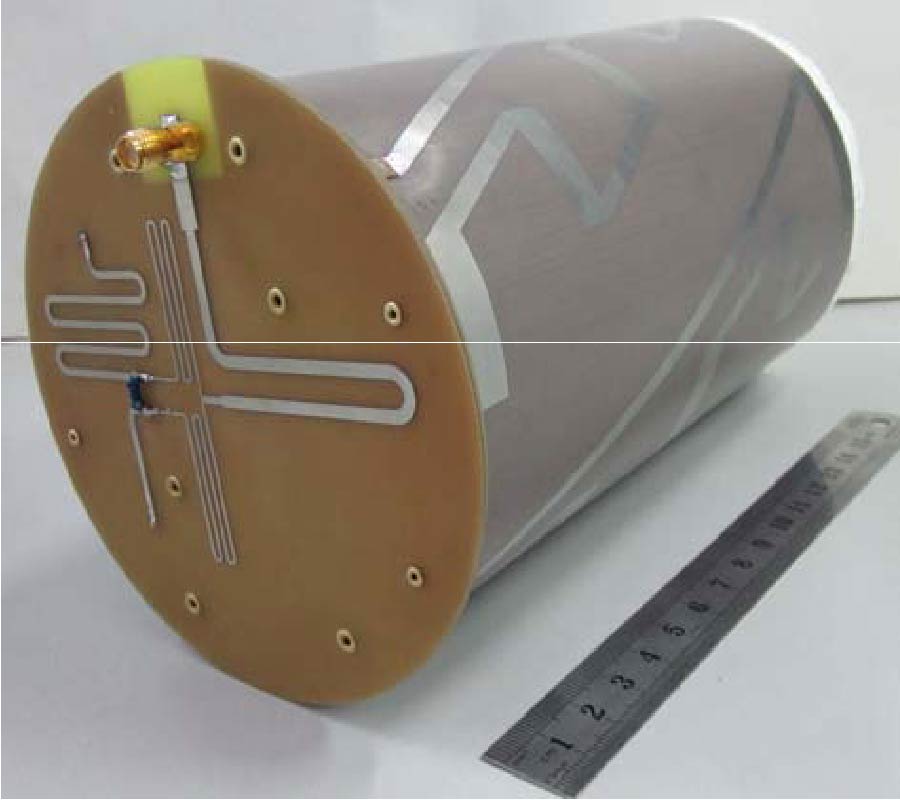
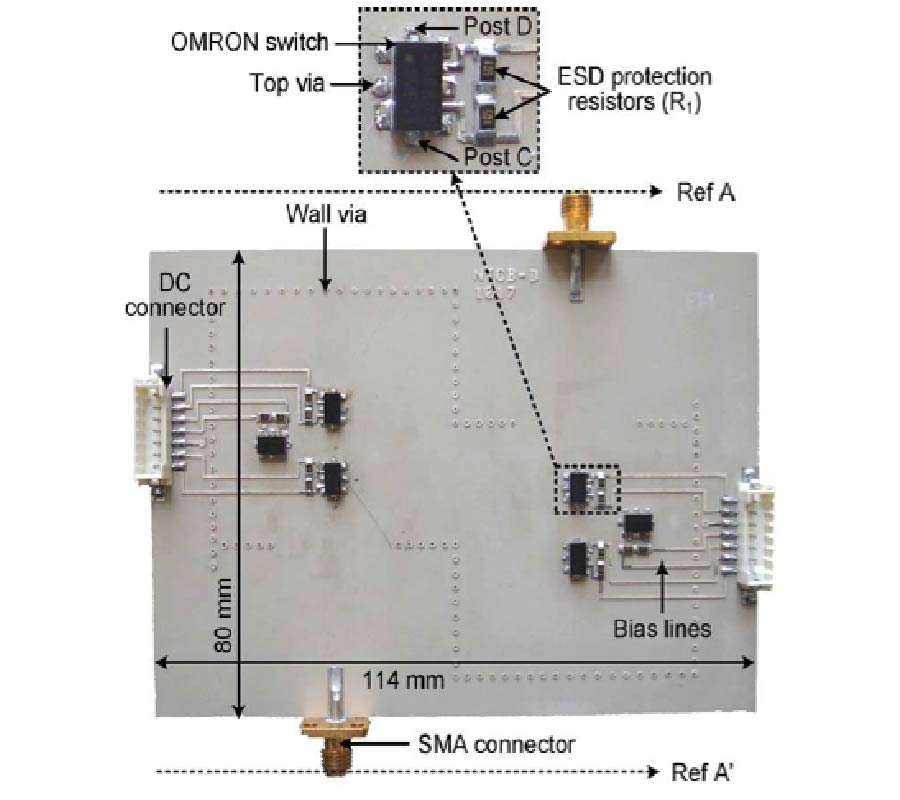
A novel shaped of printed monopole antenna with a koch fractal technique is presented in this paper. The ultra-wide bandwidth (UWB) antenna is composed of a modified ground plane with two independently elements as cross and Egyptian arc shapes to improve the antenna bandwidth. PIN diode is used to connect or disconnect the circular arc between two bands to switch frequencies from 500 to 2500 MHz and from 4 to 10 GHz. This implemented antenna effectively support personal communication system (PCS 1.85-1.99) GHz, universal mobile telecommunication system (UMTS 1.92-2.17) GHz, wireless local area network (WLAN), which usually operate in the 2.4 GHz (2.4-2.484 GHz) and 5.2/5.8 GHz (5.15-5.35 GHz/5.725-5.825 GHz) bands, mobile worldwide interoperability for microwave access and WiMAX, which operate in the range from 2.305 to 2.360 GHz, from 2.5 to 2.69 GHz and from 5.25 to 5.85 GHz bands. The properties of the antenna as reflection coefficient, efficiency, radiation patterns and gain are simulated and approved by the experimental results.
DESIGN ULTRA-WIDE BANDWIDTH MONOPOLE ANTENNA FOR DVB-T AND WIRELESS APPLICATIONS
2013-11-08
PIER Letters
Vol. 43, 175-184
Microstrip Wideband Bandpass Filter Based on Square Ring Loaded Resonator
Kun Deng , Jian Zhong Chen , Shou Jia Sun , Bian Wu and Chang-Hong Liang
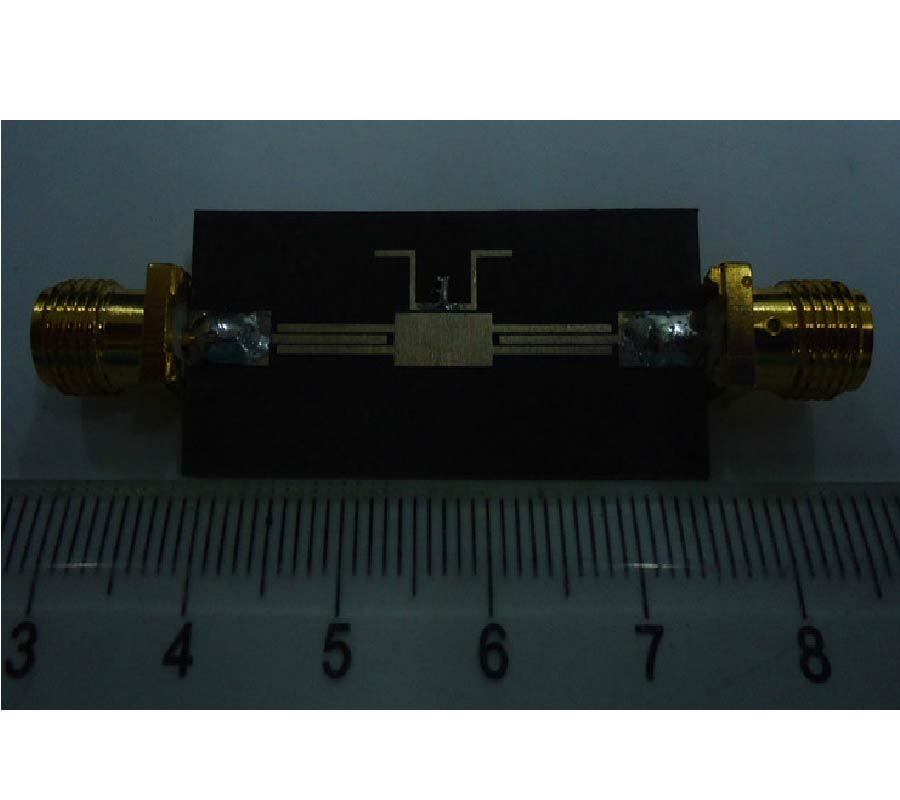
In this paper, a compact microstrip wideband bandpass filter (BPF) based on square ring loaded resonator (SRLR) is proposed. The SRLR is formed by loading a pair of bent open-stubs outside the diagonal corners of a square ring, which generates three split degenerated modes. The first two split modes form a dominant wideband passband. By introducing another pair of loaded open-stubs, the third split mode is moved into the passband to achieve an extra bandwidth for the wideband passband. Measured results show that this proposed BPF has a 3 dB fractional bandwidth of 69%, and the insertion loss of the BPF is less than 1.0 dB.
MICROSTRIP WIDEBAND BANDPASS FILTER BASED ON SQUARE RING LOADED RESONATOR
2013-11-08
PIER M
Vol. 33, 251-262
The Research on Short-Range Target Holographic Imaging Algorithm
Li Zhu , Xing-Guo Li and Ben-Qing Wang
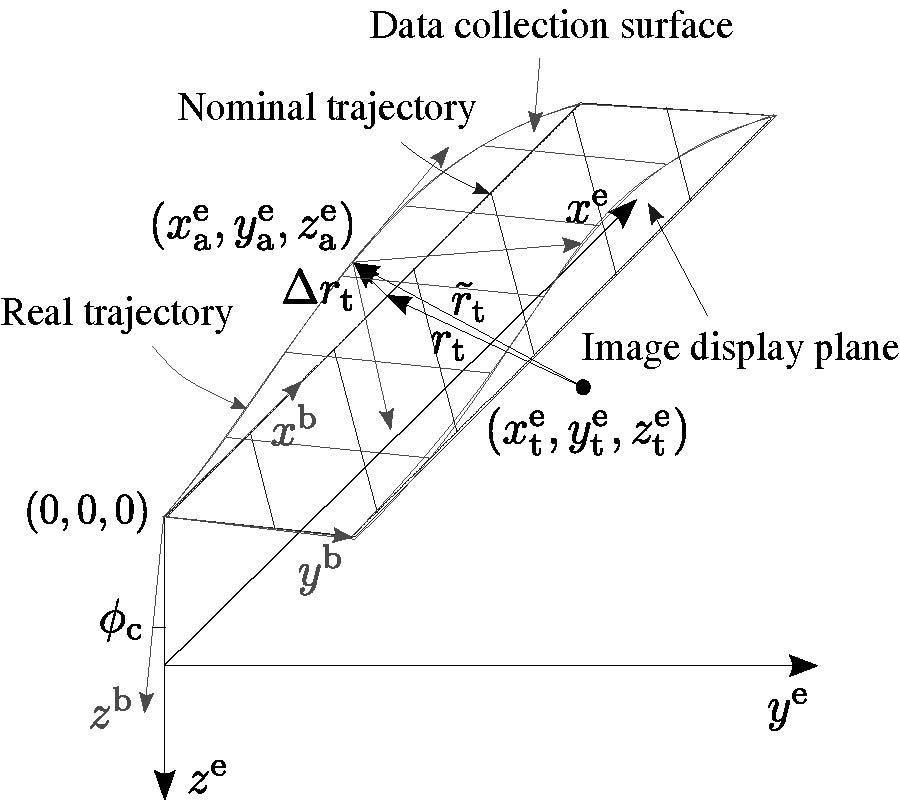
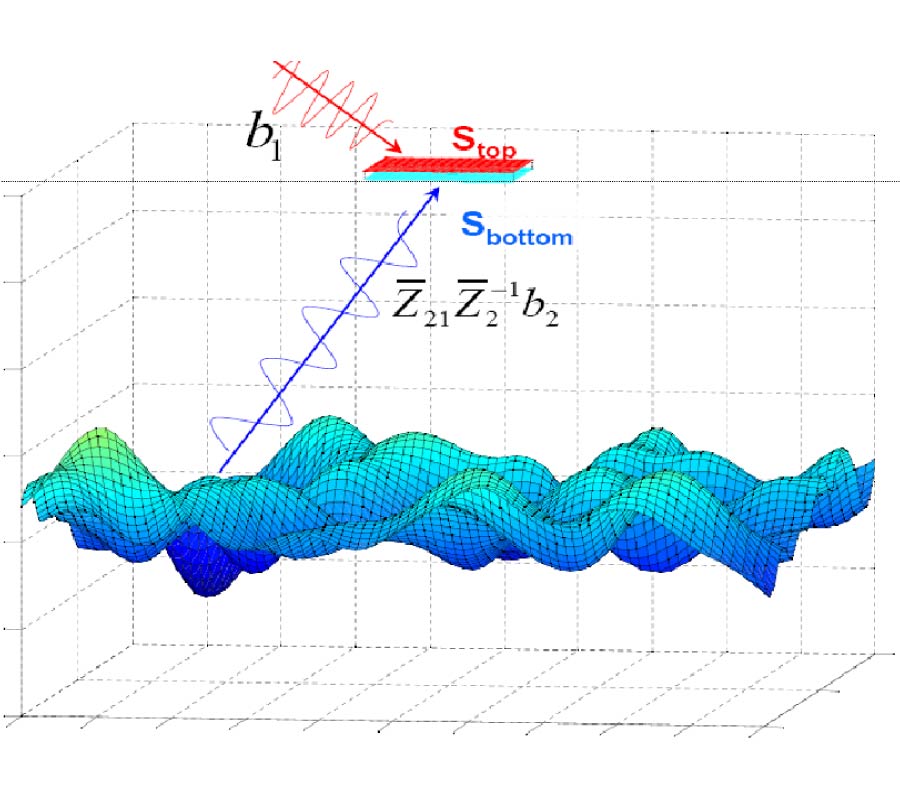
Because the oversized, ultra short-range and arbitrary-shape goals cannot be imaged by Fourier transform algorithm, a Boundary Element Method(BEM) is presented for short-range millimeter wave holographic imaging.Through the discrete boundary integral equation, the discrete electromagnetic fields on the source surface and holographic surface are obtained. They are linked by a transfer matrix. Finally, the discrete electromagnetic fields obtain target holographic image. Due to the complexity of the transfer matrix, the Distributed Source Boundary Point Method (DSBPM) is introduced to calculate it, which greatly simplifies the calculation process. The simulation experiments of three-dimensional hemisphere imaging show the sensitivity of the imaging algorithm to test error, and regularization method has been proposed. The actual measurement of the four small metal balls verifies the validity of the imaging algorithm for large target imaging. The imaging results show that holographic imaging of the boundary element method can obtain high resolution and high amplitude accuracy.
THE RESEARCH ON SHORT-RANGE TARGET HOLOGRAPHIC IMAGING ALGORITHM
2013-11-08
PIER
Vol. 143, 349-368
Enhanced Design of Narrowband Filters Based on the Extraordinary Transmission through Single Fishnet Structures
Nicholas S. Nye , Alexandros I. Dimitriadis , Nikolaos V. Kantartzis and Theodoros Tsiboukis
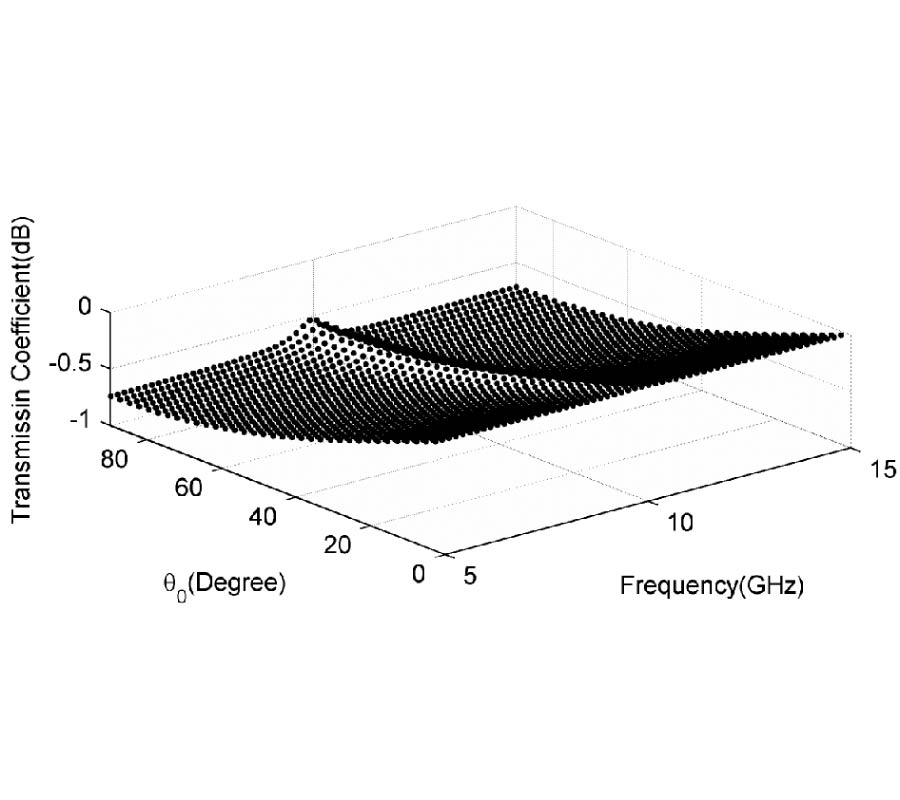
A systematic method for the efficient design of narrowband filters founded on the extraordinary transmission via single fishnet structures (SFSs) is presented in this paper.~Essentially, due to its strong resonant behavior, this phenomenon is proven suitable for the implementation of high-$Q$ devices.~The new design formulas are derived through the combination of full-wave numerical simulations and curve fitting algorithms. Also, adequate mathematical criteria are defined for the evaluation of the filters' linear performance, indicating that the transmitted electromagnetic waves remain practically undistorted in the frequency band of interest. Then, by exploiting the previously developed relations, proper correction factors are introduced in the existing SFS equivalent circuit expressions, which hardly increase the overall computational complexity. This quantitative modification leads to an enhanced characterization of SFSs, as key components for diverse applications. Finally, several limitations as well as possible ways of extending the featured algorithm to more complicated structures and higher frequency bands are briefly discussed.
ENHANCED DESIGN OF NARROWBAND FILTERS BASED ON THE EXTRAORDINARY TRANSMISSION THROUGH SINGLE FISHNET STRUCTURES
2013-11-08
PIER
Vol. 143, 331-347
Time-Frequency and ISAR Characteristics of Wind Turbines with Higher Order Motions
Aale Naqvi and Hao Ling
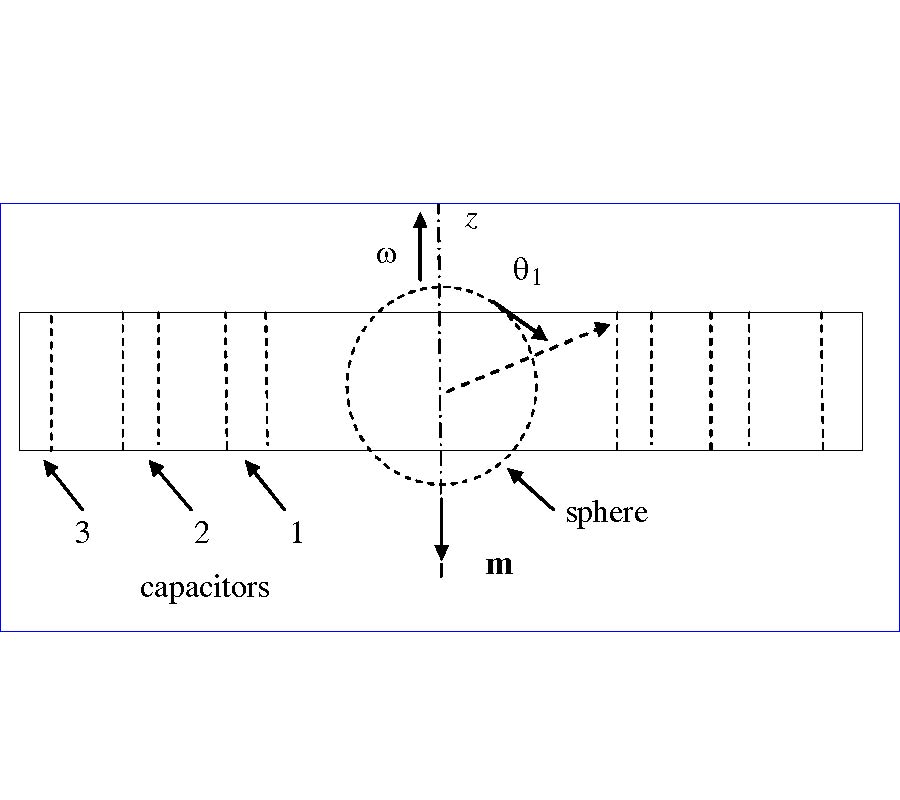
Radar features from higher order motions of a wind turbine undergoing rotation are studied. Mathematical models for the motions are proposed and used to simulate the joint time-frequency (JTF) and inverse synthetic radar aperture (ISAR) characteristics of the motions. The motions are studied for an isolated turbine as well as for a turbine rotating above a ground. Selected motions are corroborated by laboratory model measurements.
TIME-FREQUENCY AND ISAR CHARACTERISTICS OF WIND TURBINES WITH HIGHER ORDER MOTIONS
2013-11-08
PIER
Vol. 143, 315-330
Inductively Coupled Loop Antenna Design for UHF RFID on-Body Applications
Min-Chuan Tsai , Chien-Wen Chiu , Hwang-Cheng Wang and Ter-Feng Wu
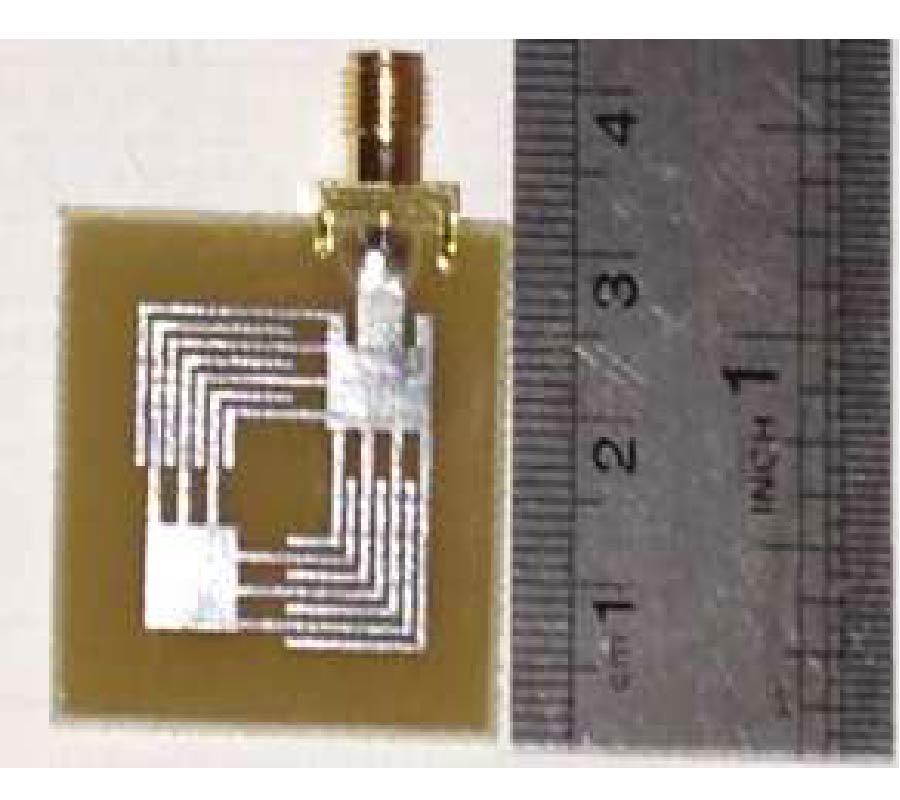
This paper presents a one-wavelength loop antenna fed by an inductively coupled loop for on-body applications. An equivalent circuit for the inductively coupled loop antenna is proposed to synthesize the antenna system with a microchip. The designed tag is printed on a PVC substrate and placed close to a four-layer stratified elliptical cylinder human model. The card-type tag measures 85.5 × 54 × 0.76 mm3 and is suitable for use on a student ID card for a broad range of applications. The impedance bandwidth of the inductively coupled loop tag antenna is 60 MHz (880-940 MHz, 6.6%), which covers the operating UHF bands in U.S. and Taiwan. The measured reading distance ranges from 2.7 to 5.7 meters when placed at different positions on the chest of a human body in the open site.
INDUCTIVELY COUPLED LOOP ANTENNA DESIGN FOR UHF RFID ON-BODY APPLICATIONS
2013-11-08
PIER
Vol. 143, 285-314
Dispersion and Local-Error Analysis of Compact Lfe-27 Formula for Obtaining Sixth-Order Accurate Numerical Solutions of 3D Helmholtz Equation
Sin-Yuan Mu and Hung-Wen Chang
We present the dispersion and local-error analysis of the twenty-seven point local field expansion (LFE-27) formula for obtaining highly accurate semi-analytical solutions of the Helmholtz equation in a 3D homogeneous medium. Compact finite-difference (FD) stencils are the cornerstones in frequency-domain FD methods. They produce block tri-diagonal matrices which require much less computing resources compared to other non-compact stencils. LFE-27 is a 3D compact FD-like stencil used in the method of connected local fields (CLF) [1]. In this paper, we show that LFE-27 possesses such good numerical quality that it is accurate to the sixth order. Our analyses are based on the relative error studies of numerical phase and group velocities. The classical second-order FD formula requires more than twenty sampling points per wavelength to achieve less than 1% relative error in both phase and group velocities, whereas LFE-27 needs only three points per wavelength to match the same performance.
DISPERSION AND LOCAL-ERROR ANALYSIS OF COMPACT LFE-27 FORMULA FOR OBTAINING SIXTH-ORDER ACCURATE NUMERICAL SOLUTIONS OF 3D HELMHOLTZ EQUATION
2013-11-07
PIER B
Vol. 56, 251-267
Analysis and Design of Circular Fractal Antenna Using Artificial Neural Networks
Jagtar Singh Sivia , Amar Partap Singh Pharwaha and Tara Singh Kamal
A Neural Network is a simplified mathematical model based on Biological Neural Network, which can be considered as an extension of conventional data processing technique. In this paper, an Artificial Neural Network (ANN) based simple approach is proposed as forward side for the design of a Circular Fractal Antenna (CFA) and analysis as reverse side of problem. Proposed antenna is simulated up to 2nd iteration using method of moment based IE3D software. Antenna is fabricated on Roger RT 5880 Duroid substrate (High frequency material) for validation of simulated, measured and ANN results. The main advantage of using ANN is that a properly trained neural network completely bypasses the complex iterative process for the design and analysis of this antenna. Results obtained by using artificial neural networks are in accordance with the simulated and measured results.
ANALYSIS AND DESIGN OF CIRCULAR FRACTAL ANTENNA USING ARTIFICIAL NEURAL NETWORKS
2013-11-07
PIER B
Vol. 56, 235-250
Time-Reversal Microwave Imaging Based on Random Configuration of Transmitters or Receivers
Mojtaba Razavian , Mohammad Hossein Hosseini and Reza Safian
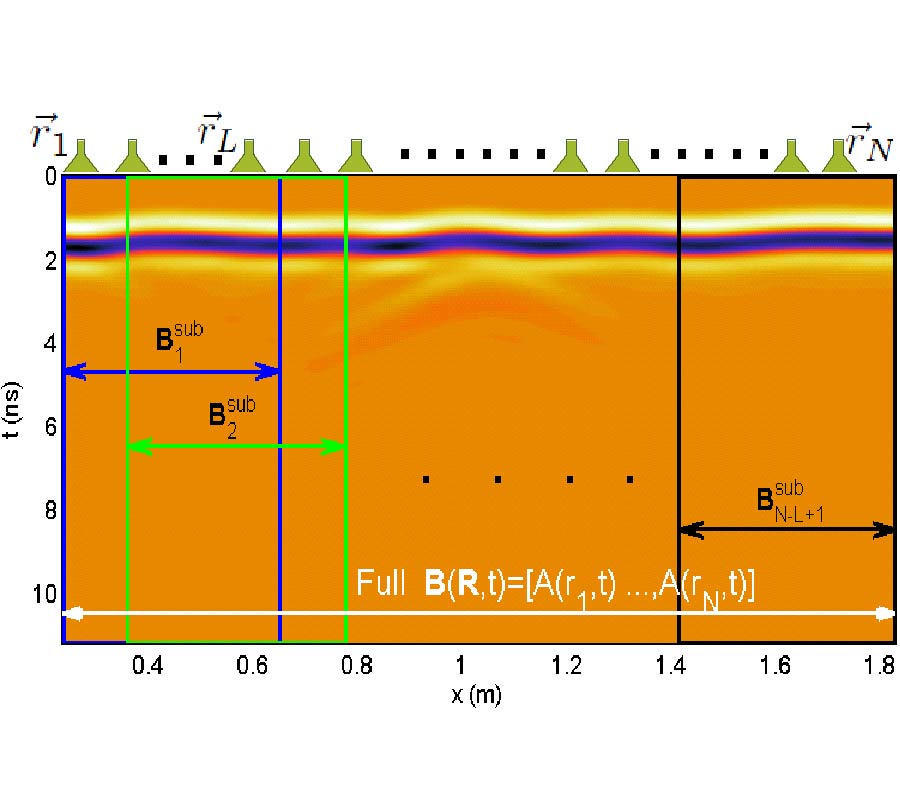
Imaging techniques based on time reversal method are particularly suitable for detection of targets embedded in a strongly scattering media. Generally in time reversal imaging technique we need to know the Green's function of the medium and the exact locations of the transmitter and receiver antennas. We introduce a target imaging method in which imaging is made with an arbitrary placement of the transmitting or receiving antennas. Numerical simulations are used to illustrate the capabilities of the proposed algorithms in different scenarios. We use the two-dimensional finite difference time domain method in our simulations. The numerical simulations are done for a typical through-the-wall scenario. We also present results in which the same method is used for tracking targets behind the wall.
TIME-REVERSAL MICROWAVE IMAGING BASED ON RANDOM CONFIGURATION OF TRANSMITTERS OR RECEIVERS
2013-11-07
PIER C
Vol. 45, 125-135
A CPW-Fed Propeller Shaped Monopole Antenna with Super Wideband Characteristics
Abhik Gorai , Anirban Karmakar , Manimala Pal and Rowdra Ghatak
A super-wideband antenna based on a propeller shaped printed monopole with CPW feed is presented in this paper. The enhanced bandwidth is obtained by modifying the disk of a conventional circular disk monopole to resemble a propeller. This design produces an extremely wide impedance bandwidth from 3 to 35 GHz with an impedance bandwidth ratio of 11.6:1. The gain of the proposed antenna varies from 4 dBi to 5.2 dBi. The antenna has fairly stable radiation characteristics throughout its operating band. The developed prototype is fabricated and measured. Simulation and experimental results are in good agreement.
A CPW-FED PROPELLER SHAPED MONOPOLE ANTENNA WITH SUPER WIDEBAND CHARACTERISTICS
2013-11-07
PIER Letters
Vol. 43, 165-173
Closed-Form Design Formulations of Arbitrary Phase Delay Crossover Based on Admittance Matrix
Ge Tian , Jinping Yang and Wen Wu
A design method for four-port crossover with arbitrary phase delay is proposed in this paper. This method is based on admittance matrix. Closed-form design formulations are deduced by making the structure admittance matrix equal to theoretical one. A crossover with 45˚ phase delay is designed and fabricated for theory verification. In the Butler beam forming network, this crossover has two functions for making the elimination of the 45˚ phase shifter possible and being used for circuit layout. Thus compact structure and good performance of Butler network can be realized.
CLOSED-FORM DESIGN FORMULATIONS OF ARBITRARY PHASE DELAY CROSSOVER BASED ON ADMITTANCE MATRIX
2013-11-05
PIER Letters
Vol. 43, 155-163
A Wideband High-Gain Stacked Cylindrical Dielectric Resonator Antenna
Yongfeng Wang , Tayeb Denidni , Qingsheng Zeng and Gao Wei
A new wideband and high-gain dielectric resonator antenna (DRA) is proposed. Three cylindrical dielectric resonators (DRs) with different materials and different sizes and a metallic cylinder are designed to obtain a wideband bandwidth and a high gain. The stacked structure provides a wideband bandwidth, and the cavity formed by the metallic cylinder provides a high gain. The measured results demonstrate that the proposed DRA has a wide bandwidth from 5.4 to 7.0 GHz with VSWR less than two and a gain around 11 dBi, covering the frequency range of 26%. The experimental and numerical results are discussed and compared with each other, showing a good agreement between them.
A WIDEBAND HIGH-GAIN STACKED CYLINDRICAL DIELECTRIC RESONATOR ANTENNA
2013-11-04
PIER Letters
Vol. 43, 149-154
Millimeter Wave Binary Photon Sieve Fresnel Zone Plate: FDTD Analysis
Igor Minin and Oleg Minin
In this paper, we report the possibilities to apply photon sieve principle to binary diffractive lens in millimeter wave band. The FDTD simulation showing the idea of the photon sieve application to millimeter wave optics does not allow increasing resolution power, due to the small number of holes in the FZP aperture. But such simulation results may be used in simple computational experiments in millimeter wave which allows obtaining insight into physical systems characterized by nanometric objects because D/f and D/λ are almost the same.
MILLIMETER WAVE BINARY PHOTON SIEVE FRESNEL ZONE PLATE: FDTD ANALYSIS
2013-11-04
PIER
Vol. 143, 263-284
A Dressed-State Assisted Left-Handed Coherent Medium for High-Gain Optical Amplification
Katus Maski
A scheme of double-negative left-handed atomic vapor medium based on dressed-state assisted simultaneous electric and magnetic resonances is suggested. In this mechanism, simultaneous electric- and magnetic-dipole allowed transitions of atoms are driven by an optical wave by taking full advantage of both mixed-parity dressed-state assisted resonance and incoherent population pumping in a quantum-coherent atomic medium (e.g., alkali-metal atomic vapor). Since the simultaneously negative permittivity and permeability can be achieved in a same frequency band, such an atomic vapor will exhibit an incoherent-gain double-negative refractive index that is three-dimensionally isotropic and homogeneous. The imaginary part of the negative refractive index of the present atomic vapor would be drastically suppressed or would become negative because of loss compensation through incoherent population transfer. The quantumcoherent left-handed atomic vapor presented here will have four characteristics: i) three-dimensionally isotropic and homogeneous negative refractive index, ii) double-negative atomic medium at visible (and infrared) wavelengths, iii) tunable negative refractive index based on dressed-state quantum coherence, and iv) high gain due to incoherent pumping action.
A DRESSED-STATE ASSISTED LEFT-HANDED COHERENT MEDIUM FOR HIGH-GAIN OPTICAL AMPLIFICATION
2013-11-01
PIER B
Vol. 56, 219-234
Direction Finding in the Presence of Near Zone Resonant Size Scatterers
Irfan Ahmed and Warren Perger
A self calibration algorithm for direction finding in the presence of arbitrary shape 3D scatterers of resonating size is presented. This algorithm removes the effects of mutual coupling and 3D scatterers on direction of arrival estimation. The scatterers and wire type antenna array are excited by incident plane waves of arbitrary direction. The 3D scatterers shape is approximated as a sphere, thus spherical harmonics are assumed to be originated in response to the plane wave excitation. The algorithm requires the location of the scatterers with reference to antenna elements. However, knowledge of exact shape of scatterers is not required. Moreover, scatterers may be located in near or far fields. The work is supported by numerical examples for different scenarios of multiple incident waves and scatterers.
DIRECTION FINDING IN THE PRESENCE OF NEAR ZONE RESONANT SIZE SCATTERERS
2013-11-01
PIER B
Vol. 56, 203-218
A Hybrid Numerical-Analytical Model for the Electromagnetic Characterization of the Admittance Matrix of Scattering Objects
Paola Russo , Desar Shahu , Alfredo De Leo , Valter Mariani Primiani , Lorenzo Scalise and Graziano Cerri
The aim of this work is to implement a hybrid approach able to provide an efficient solution of the electromagnetic coupling between an antenna and an obstacle distant few meters away. The idea is to divide the problem into a small number of less complex sub-problems exploiting the advantage of generating the admittance matrix that describes the scattering problem by a numerical code. To this end, the electromagnetic field impinging on the object has been characterized by means of a proper number of very narrow beams; for each beam the scattering problem has been solved by a commercial code; finally, the total admittance matrix has been obtained as composition of all the scattering contributions. The resulting echoof a moving obstacle has been compared with that measured by experimental investigations, both for metallic and dielectric bodies.
A HYBRID NUMERICAL-ANALYTICAL MODEL FOR THE ELECTROMAGNETIC CHARACTERIZATION OF THE ADMITTANCE MATRIX OF SCATTERING OBJECTS
2013-11-01
PIER
Vol. 143, 243-261
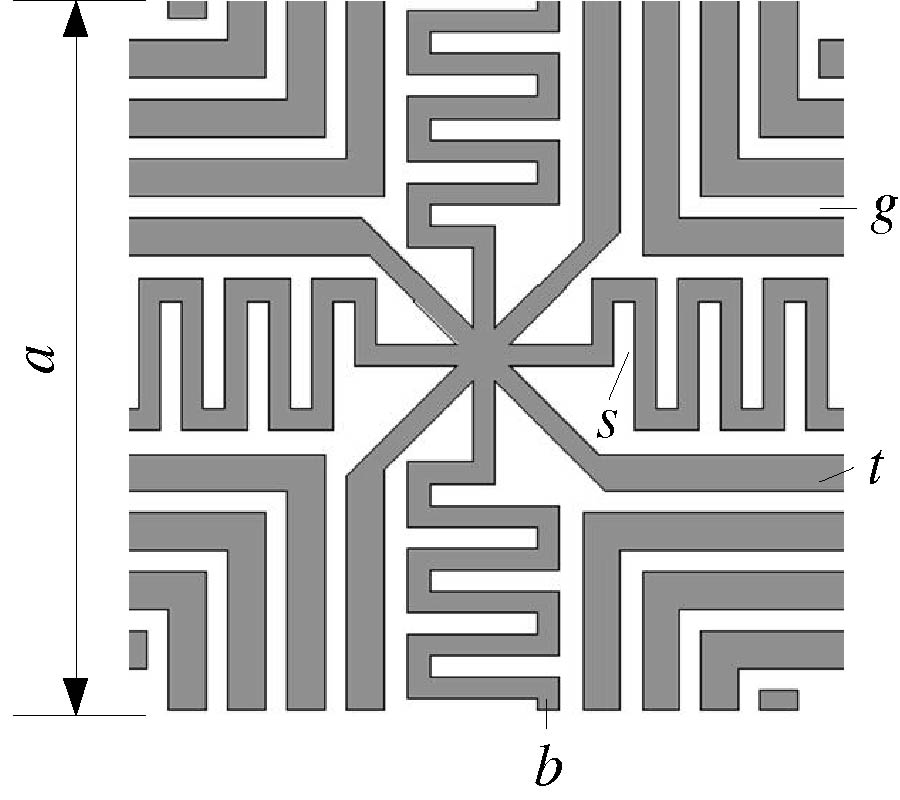
Dual-Band Circular Polarizer and Asymmetric Spectrum Filter Using Ultrathin Compact Chiral Metamaterial
He-Xiu Xu , Guang-Ming Wang , Mei-Qing Qi and Tong Cai
A compact chiral metamaterial is proposed and comprehensively investigated that can achieve circularly polarized wave emission from linearly polarized incident wave (giant circular dichroism) over dual bands and near Diodelike asymmetric transmission of linearly polarized waves. The chiral metamaterial also features exceptionally strong optical activity. For verification, two proof-of-concept slab samples are designed, fabricated and measured at microwave frequencies. Numerical and experimental results agree well, indicating that the former dual-band circular polarizer features high conversion efficiency around 8.1 and 9.9 GHz in addition to large polarization extinction ratio of more than 16 dB, while the latter chiral sample enables the near 90% cross-polarization transmission in one direction and almost 10% transmission in the opposite direction. The block "meta-atom" that utilized to build the ultrathin CMM slab is less than λ0/6.73 evaluated at operating frequency. Good performances of the two chiral slabs with simple and compact package suggest promising applications in the circular polarizers (circulators) and transparent linear polarization transformers or spectrum filters (isolators) that need to be interpreted with other compact devices.
DUAL-BAND CIRCULAR POLARIZER AND ASYMMETRIC SPECTRUM FILTER USING ULTRATHIN COMPACT CHIRAL METAMATERIAL
2013-11-01
PIER
Vol. 143, 223-242
Parallel Implementation and Application of the MRTD with an Efficient Cfs-PML
Yawen Liu , Yi-Wang Chen and Pin Zhang
In this paper, we describe two parallel MRTD algorithms. Both algorithms are proved to be feasible by comparing the result of the serial MRTD method, the efficiency of them are also compared in order to evaluate a better strategy. Moreover, a novel implementation of "complex frequency-shifted" perfect matched layer (CFS-PML) with auxiliary differential equation (ADE) is presented for the MRTD method. The implementation is easier to obtain and more memory saving when treating more generalized media, and numerical results demonstrate that the CFS-PML with ADE is more absorptive than the popularly used APML. Furthermore, using one of the parallel algorithms and the CFS-PML, the characteristic of the field cross-section distribution of the electromagnetic pulse (EMP) propagation in vaulted tunnel is studied.
PARALLEL IMPLEMENTATION AND APPLICATION OF THE MRTD WITH AN EFFICIENT CFS-PML
2013-11-01
PIER
Vol. 143, 207-221
Single-Feed Triple-Band Circularly Polarized Spidron Fractal Slot Antenna
Thuy Nguyen Thi , Son Trinh-Van , Gina Kwon and Keum Cheol Hwang
In this paper, the design of a single-feed triple-band circularly polarized Spidron fractal slot antenna is presented. The proposed antenna is composed of a Spidron fractal slot, a Z-shaped slit, and two L-shaped slits to realize triple-band circular polarization operation. A simple 50 Ω microstrip line is utilized to feed the proposed antenna. A conducting reflector is also used to reduce back radiation, thereby enhancing the forward antenna gain. The proposed antenna has total dimensions of 40.7 mm × 40.7 mm × 18.52 mm (0.42λ × 0.42λ × 0.19λ) and was fabricated and tested. The experimental results show that the proposed antenna has -10 dB reflection coefficient bandwidths from 2.76 GHz to 3.13 GHz and from 3.56 GHz to 6.22 GHz. The measured 3 dB axial ratio bandwidths are 2.28% (3.04-3.11 GHz) for the lower band, 7.15% (4.18-4.49 GHz) for the middle band, and 2.6% (4.93-5.06 GHz) for the upper band. The peak gains within the -10 dB reflection coefficient bandwidths are 3.41 dBic and 6.29 dBic, respectively.
SINGLE-FEED TRIPLE-BAND CIRCULARLY POLARIZED SPIDRON FRACTAL SLOT ANTENNA