Search Results(13798)

2013-10-10
PIER C
Vol. 44, 175-184
On the Outage Probability Prediction of Time Diversity Scheme in Broadband Satellite Communication Systems
Charilaos I. Kourogiorgas , Athanasios Panagopoulos , Spiros N. Livieratos and George Chatzarakis
A novel model for the outage probability prediction in time diversity satellite communication (SatCom) systems operating above 10 GHz is proposed. Due to the migration of operating frequency at Ka band and above, atmospheric phenomena affect the signal. Rain is the dominant fading mechanism. Diversity techniques are the probable solution of the compensation of rain fading. Among the diversity techniques, time diversity has been identified as an efficient and cost effective technique. A method for the prediction of outage performance and diversity gain of time diversity SatCom systems is presented based on the physical assumptions of a well accepted dynamic stochastic model. The new method is tested against with simulated and experimental data with encouraging results.
ON THE OUTAGE PROBABILITY PREDICTION OF TIME DIVERSITY SCHEME IN BROADBAND SATELLITE COMMUNICATION SYSTEMS
2013-10-10
PIER C
Vol. 44, 161-174
Design, Assembly and Testing of a High Gain LHCP Helical Antenna for Reception of Reflected GPS Signals
Mohammad Usman , Tahir Saleem and David W. Armitage
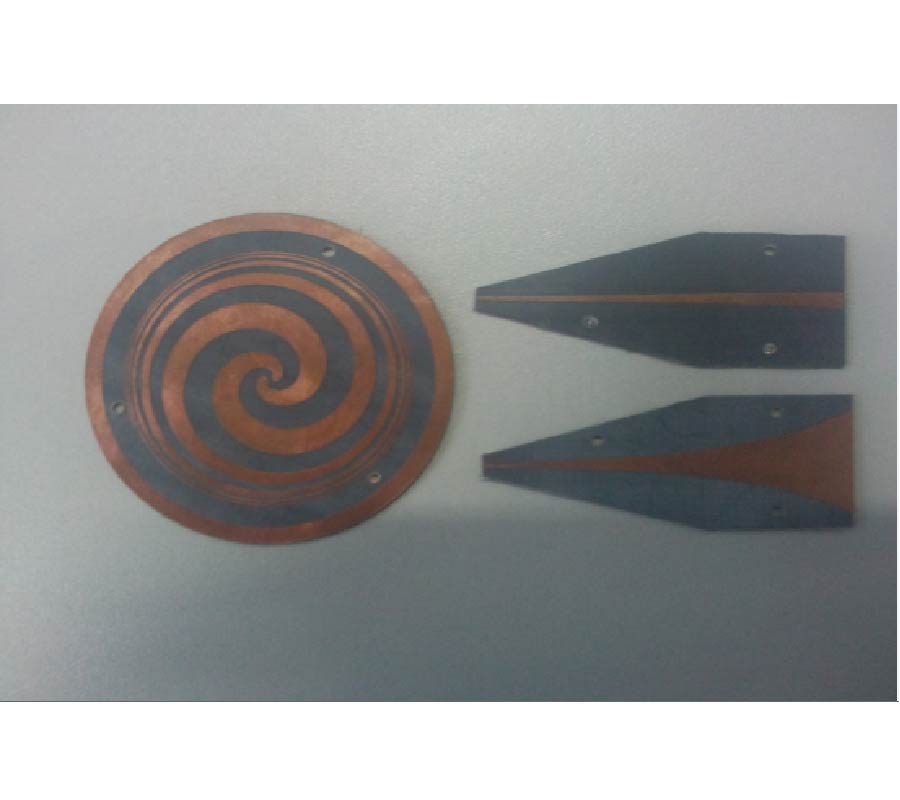
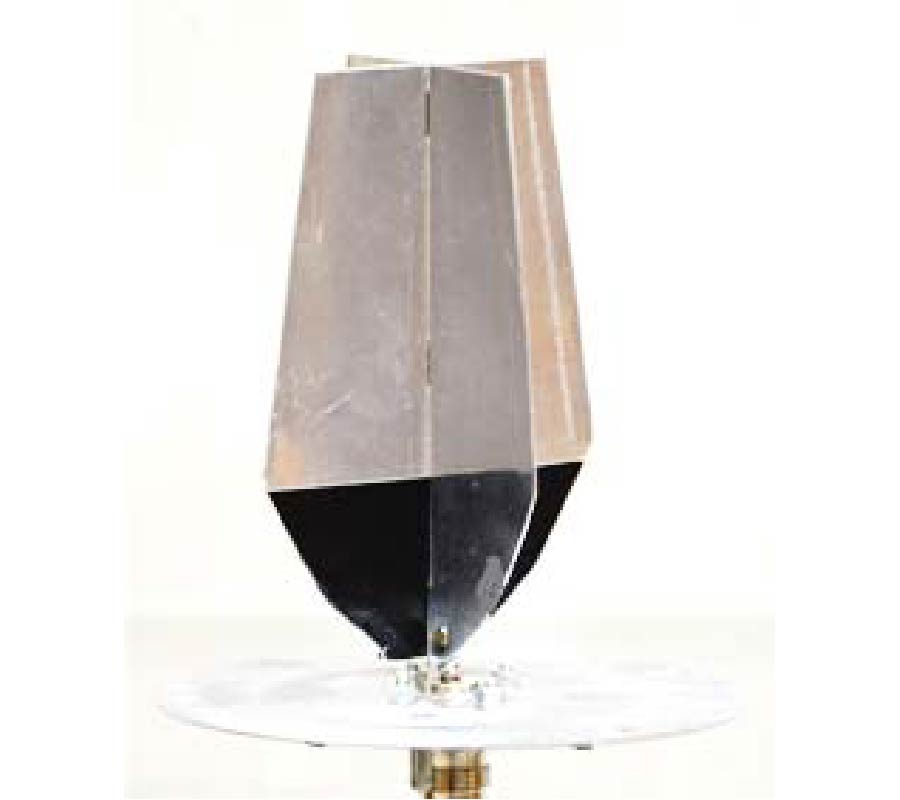
This paper describes the design, assembly and field testing of a LHCP (Left Hand Circularly Polarized) high gain helical antenna. The antenna is to be utilized for the reception of reflected Global Positioning System (GPS) signals, which are correlated with the direct signals to form an image of the area of interest. Thus the antenna forms a constituent element of a remote imaging system. Owing to the low power of the reflected GPS signals the major design parameter was obviously high gain, while maintaining the polarization integrity of reflected GPS signals. *
DESIGN, ASSEMBLY AND TESTING OF A HIGH GAIN LHCP HELICAL ANTENNA FOR RECEPTION OF REFLECTED GPS SIGNALS
2013-10-10
PIER Letters
Vol. 43, 95-104
A Novel Quad-Mode Resonator and Its Application to Dual-Band Bandpass Filters
Shou Jia Sun , Lei Lin , Bian Wu , Kun Deng and Chang-Hong Liang
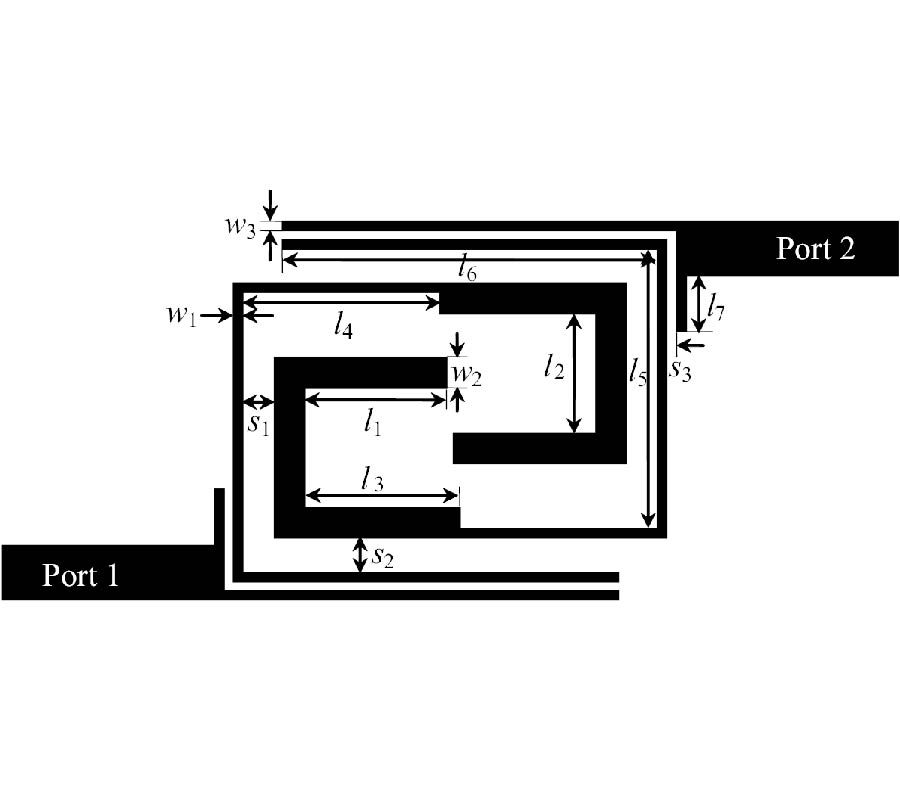
In this paper, a novel square-loop quad-mode resonator is presented. Due to its symmetry, the even-odd-mode method is utilized to analyze the resonant characteristics. Two modes resonating at lower frequencies are employed to construct the first passband, and other two form the second passband. Meanwhile, both passband center frequencies can be controlled by the corresponding physical dimensions. Two dual-band bandpass filters (BPFs) without and with source-load coupling operating at 2.4 and 3.5 GHz are designed based on the proposed quad-mode resonator. Due to the source-load coupling, the passband selectivity and band-to-band isolation of the latter one are better than those of the former one. For demonstration, these two filters are fabricated and measured, and the measured results show good agreement with the simulated ones.
A NOVEL QUAD-MODE RESONATOR AND ITS APPLICATION TO DUAL-BAND BANDPASS FILTERS
2013-10-10
PIER M
Vol. 33, 95-104
A Monolithic Frequency Selective Strucutre with Dual-Band Quasi-Elliptic Filtering Response
Xian-Jun Huang , Peiguo Liu , Jianfeng Tan , Dongming Zhou and Gaosheng Li
This paper presents the design of a monolithic structure with dual-band quasi-elliptic frequency selective filtering responses. The frequency selective structure consists of a two-dimensional (2-D) array of cavities apertured with six ring slots. The transmission response is with a quasi-elliptic passband in lower frequency, and an elliptic passband in upper frequency. By placing transmission zeros near the passband edge, the proposed structure is characterized with high selectivity, rapid rolloff, and high separation between two passbands. Besides, the working principles and influence of the dimensional parameters are fully investigated with simulations and analysis, which is helpful to the design. In this design, five resonances and three transmission zeros are obtained with a simple unit by introducing coupling and phase controlling. This work will be meaningful in study of three dimensional frequency selective structures with high performance.
A MONOLITHIC FREQUENCY SELECTIVE STRUCUTRE WITH DUAL-BAND QUASI-ELLIPTIC FILTERING RESPONSE
2013-10-10
PIER
Vol. 142, 683-699
DC Magnetic Concentrator and Omnidirectional Cascaded Cloak by Using Only One or Two Homogeneous Anisotropic Materials of Positive Permeability
Fei Sun and Sailing He
A novel concentrator for static magnetic field enhancement is proposed and designed utilizing transformation optics. Compared with other devices for static magnetic field enhancement, our device has many good features: first, our concentrator can achieve a DC magnetic field enhancement in a relatively large free space with high uniformity. Secondly, our concentrator is composed by only one or two homogenous anisotropic materials with principal value greater than zero (without any infinitely large or zero value), which can be achieved by using currently available materials. Thirdly, the geometrical shape of the proposed device determines the enhancement factor and the permeability of the device. After choosing suitable geometrical parameters, we can obtain a concentration with a suitable enhancement factor and a material requirement that is easily achievable. The proposed concentrator will have many important applications in many areas (e.g., magnetic resonance imaging and magnetic sensors). Based on the same theoretical model, we also proposed a cascaded shielding device cloak for static magnetic fields. The proposed DC magnetic shielding device can be realized without using any material of zero permeability, and will have potential applications in, e.g., hiding a metallic object from being detected by a metal locator.
DC MAGNETIC CONCENTRATOR AND OMNIDIRECTIONAL CASCADED CLOAK BY USING ONLY ONE OR TWO HOMOGENEOUS ANISOTROPIC MATERIALS OF POSITIVE PERMEABILITY
2013-10-09
PIER Letters
Vol. 43, 83-94
Integrated Metal-Insulator-Metal Plasmonic Nano Resonator: an Analytical Approach
Rehab Kotb , Yehia Ismail and Mohamed A. Swillam
A novel structure is proposed as an inline resonator. The resonator has low loss, compact size and good sensing characteristics. A simple analytical form to the plasmonic waveguide discontinuity, filter resonance response and cascaded filters behavior is proposed. The model is extracted from the waveguide physical parameters and provides a physical insight into the structure of the filter. This model is simple, accurate, and shows a good agreement with FDTD simulations. The ability of the model to provide a good methodology to obtain high quality filters using cascaded inline filtering is verified using FDTD. The proposed nanofilter can be used in various plasmonic applications such as sensing, biomedical diagnostics and on-chip interconnects. Using cascaded filters, a higher quality filter is achieved.
INTEGRATED METAL-INSULATOR-METAL PLASMONIC NANO RESONATOR: AN ANALYTICAL APPROACH
2013-10-09
PIER
Vol. 142, 667-681
Vectorial Electric Field Monte Caro Simulations for Focused Laser Beams (800 nm-2220 nm) in a Biological Sample
Fuhong Cai , Jiaxin Yu and Sailing He
Here we develop a method that combines vectorial electric field Monte Carlo simulation with Huygens-Fresnel principle theory to determine the intensity distribution of a focused laser beam in a biological sample. The proper wavelengths for deep tissue imaging can be determined by utilizing our method. Furthermore, effects of anisotropic factor, scattering and absorption coefficients on the focal spots are analyzed. Finally, the focal beams formed by objective lenses with different values of numerical aperture are also simulated to study the focal intensity in the biological sample.
VECTORIAL ELECTRIC FIELD MONTE CARO SIMULATIONS FOR FOCUSED LASER BEAMS (800 NM-2220 NM) IN A BIOLOGICAL SAMPLE
2013-10-09
PIER
Vol. 142, 639-665
Polarimetric SAR Model for Soil Moisture Estimation Over Vineyards at C-Band
Josep David Ballester-Berman , Fernando Vicente-Guijalba and Juan Manuel Lopez-Sanchez
In this paper we propose a two-component polarimetric model for soil moisture estimation on vineyards suited for C-band radar data. According to a polarimetric analysis carried out here, this scenario is made up of one dominant direct return from the soil and a multiple scattering component accounting for disturbing and nonmodeled signal fluctuations from soil and short vegetation. We propose a combined X-Bragg/Fresnel approach to characterize the polarized direct response from soil. A validation of this polarimetric model has been performed in terms of its consistency with respect to the available data both from RADARSAT-2 and from indoor measurements. High inversion rates are reported for different phenological stages of vines, and the model gives a consistent interpretation of the data as long as the volume component power remains about or below 50% of the surface contribution power. However, the scarcity of soil moisture measurements in this study prevents the validation of the algorithm in terms of the accuracy of soil moisture retrieval and an extensive campaign is required to fully demonstrate the validity of the model. Different sources of mismatches between the model and the data have been also discussed and analyzed.
POLARIMETRIC SAR MODEL FOR SOIL MOISTURE ESTIMATION OVER VINEYARDS AT C-BAND
2013-10-04
PIER B
Vol. 55, 217-240
32-Channel Optical Interleaver/Deinterleaver Using Fibonacci Quasi-Periodic Structures
Saeed Golmohammadi
The design of Interleaver/Deinterleavers using Fibonacci-class quasistructures is proposed. We introduce an optical passive configuration composed of Fibonacci quasistructures and circulators which acts as interleaver and deinterleaver. Odd and even channels are interleaved/deinterleaved with dense wavelength-division multiplexing (DWDM) multichannel filter based on Fibonacci quasi-periodic structures. We use Fibonacci based DWDM filters in order to separate the odd and even wavelength channels. These quasi-periodic structures, with different geometrical and physical parameters, act as DWDM filters that reflect even and odd wavelengths. A modified numerical approach is presented to design the Fibonacci based DWDM filter. We demonstrate that it is possible to optimize DWDM filter response by varying the parameters of the Fibonacci structure, such as generation number, Fibonacci order and optical lengths of the layers. The proposed filter structures can separate 32 DWDM channels with 0.8 nm spacing into two 16 DWDM channels with 1.6 nm spacing. In order to eliminate the crosstalk between the adjacent channels, we apply the refractive index profile apodization. These structures are useful for multiplexing/demultiplexing of a high numbers of the channels.
32-CHANNEL OPTICAL INTERLEAVER/DEINTERLEAVER USING FIBONACCI QUASI-PERIODIC STRUCTURES
2013-10-04
PIER C
Vol. 45, 113-123
Directional Coupler Using Multi-Stage Coupled Structure Theory
Zonglong Chen , Ling Tong , Yu Tian and Bo Gao
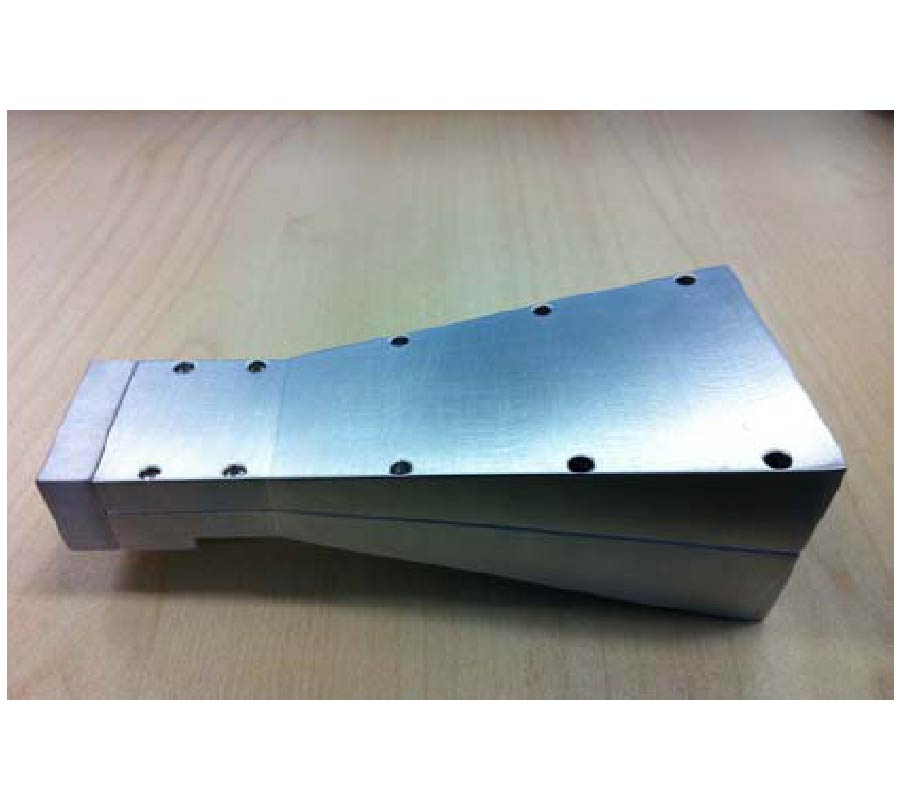
This paper presents a new directional coupler design, which can increase power capacity working with S band. The design concept is based on multi-stage coupled structure. Aim is to increase the size of coupling aperture by reducing the coupling degree of each stage structure. In view of this, multi-stage coupled structure theory is utilized to improve the directivity of directional coupler, coupling flatness and power capacity. According to the derivation of theory, it can be deduced that the sum of the coupling degree of single stage coupling structure is equal to the coupling degree of two-stage coupling directional coupler (TSCDC), and the directivity of TSCDC depends on the directivity of the first stage coupling structure. Then, rectangular waveguide two-stage coupled directional coupler is designed and fabricated. The measured results demonstrate full-band from 1.72 to 2.61 GHz with coupling flatness < 0.65 dB and the directivity > 26 dB.
DIRECTIONAL COUPLER USING MULTI-STAGE COUPLED STRUCTURE THEORY
2013-10-02
PIER B
Vol. 55, 195-215
A New Imaging Algorithm for Geosynchronous SAR Based on the Fifth-Order Doppler Parameters
Bingji Zhao , Yunzhong Han , Wenjun Gao , Yunhua Luo and Xiaolei Han
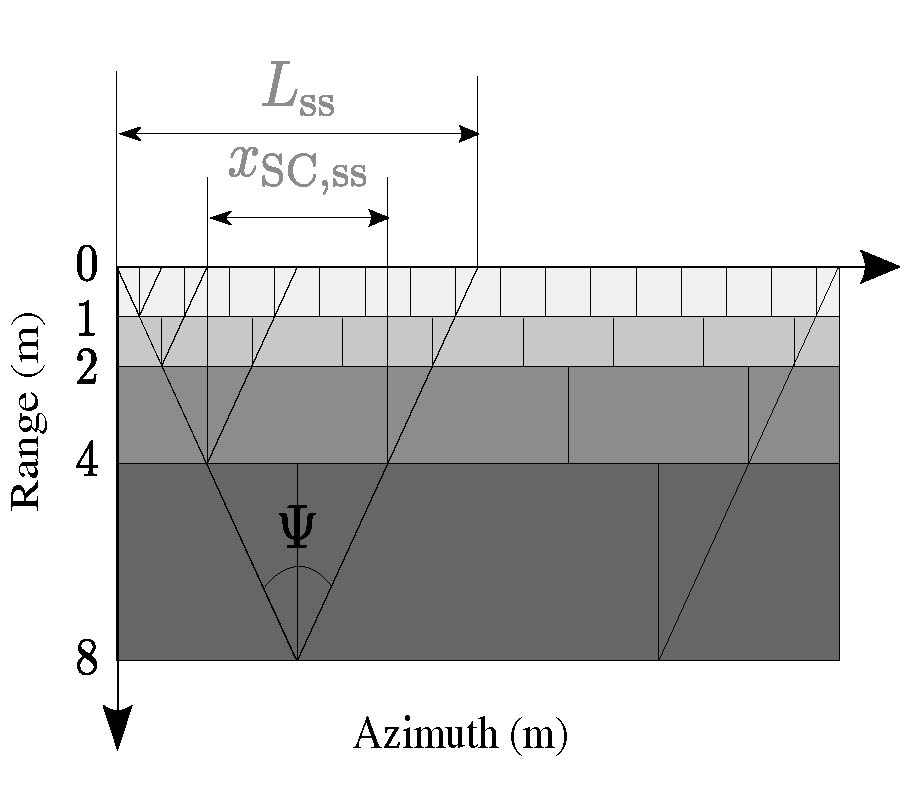
This paper proposes a new imaging algorithm based on a novel accurate range model to process the data acquired by Geosynchronous-Earth-orbital Synthetic Aperture Radar (Geo-SAR). The new range model, called DRM-5, is obtained from the 1-5th order Doppler parameters of spaceborne SAR. It is employed to describe the slant range of Geo-SAR during the super-long integration time. Furthermore, the two-dimensional frequency spectrum of point targets based on the new range model is derived and analyzed. An advanced Frequency Domain Algorithm (FDA) based on DRM-5 is proposed to process the data of stripmap mode Geo-SAR. The varied Doppler parameters in the cross-azimuth direction are considered in the new imaging algorithm, and the space-varied range-azimuth coupling phase term is compensated through data blocking. A simulation experiment is performed to verify the efficiency and superiority of the new algorithm, and the results show that it has a good effect on an L-band stripmap mode Geo-SAR system with azimuth resolution around 5m and 300km range swath.
A NEW IMAGING ALGORITHM FOR GEOSYNCHRONOUS SAR BASED ON THE FIFTH-ORDER DOPPLER PARAMETERS
2013-09-30
PIER C
Vol. 44, 145-159
Research on Vessel and Chaff Echo Characteristics for Wideband Coherent Radar
Bo Liu and Wenge Chang
To study effective anti-chaff jamming methods, this paper investigates the echo characteristics of the vessel and the chaff for missile-borne wideband coherent radars. Firstly, the echo model of the missile-borne wideband coherent LFM pulses radar is built, and the range-Doppler image of the echoes is derived. Based on the measured data, the differences of the echoes between the vessel and the chaff are analyzed. Then in terms of the spread feature and the energy evenness of the range-Doppler image, two features of the radar echoes are proposed to distinguish the vessel and chaff. Finally, statistical distributions of the two features are investigated, and we find that the proposed features can be used for chaff jamming identification and suppression.
RESEARCH ON VESSEL AND CHAFF ECHO CHARACTERISTICS FOR WIDEBAND COHERENT RADAR
2013-09-30
PIER Letters
Vol. 43, 73-81
3D Super-Resolution Fluorescence Microscopy Using Cylindrical Vector Beams
Taikei Suyama and Yaoju Zhang
We propose a method to obtain nano-scale 3D super-resolution in STED fluorescence microscopy. A double-ring-shaped cylindrical vector vortex beam, with an appropriate vortex angle and a proper truncation parameter of the beam, is used to generate a 3D dark spot as the erase spot. A single-ring-shaped radially polarized beam is used as a pump beam, which can generate a sharper 3D bright spot. The volume of the generated 3D dark spot is small and the uniformity of the light wall surrounding the spot is quite high. Consequently, the 3D super-resolution ability of a STED microscope is improved and nano-scale three-dimensional resolutions are obtained.
3D SUPER-RESOLUTION FLUORESCENCE MICROSCOPY USING CYLINDRICAL VECTOR BEAMS
2013-09-28
PIER M
Vol. 33, 69-82
Experimental Results for Microwave Tomography Imaging Based on FDTD and GA
Abas Sabouni and Sima Noghanian
The authors recently presented a novel microwave tomography method for creating quantitative images of the electromagnetic properties of the interior of unknown objects [1]. This method is based on a time-domain inverse solver which uses the multi-illumination technique and includes the dispersive and heterogeneous characteristic of the object. The Frequency Dependent Finite Difference Time Domain ((FD)2TD) and Genetic Algorithm (GA) technique were utilized for determining unknown characteristics of the object. In the present paper, the calibration of measured data are described and image reconstruction results for preliminary experiments performed at the University of Manitoba's Microwave Tomography Laboratory and at the Institut Frsenel are presented.
EXPERIMENTAL RESULTS FOR MICROWAVE TOMOGRAPHY IMAGING BASED ON FDTD AND GA
2013-09-27
PIER B
Vol. 55, 169-194
Slow Scale Maxwell-Bloch Equations for Active Photonic Crystals
Gandhi Alagappan
We present a theory to describe the transient and steady state behaviors of the active modes of a photonic crystal with active constituents (active photonic crystal). Using a couple mode model, we showed that the full vectorial Maxwell-Bloch equations describing the physics of light matter interaction in the active photonic crystal can be written as system of integro-differential equations. Using the method of moments and the mean value theorem, we showed that the system of integro-differential equations can be transformed to a set of differential equations in slow time and slow spatial scales. The slow time (spatial) scale refers to a duration (distance) that is much longer than the optical time period (lattice constant of the photonic crystal). In the steady state, the slow scale equations reduce to a nonlinear matrix eigenvalue problem, from which the nonlinear Bloch modes can be obtained by an iterative method. For cases, where the coupling between the modes are negligible, we describe the transient behavior as an onedimensional problem in the spatial coordinate, and the steady behaviors are expressed using simple analytical expressions.
2013-09-27
PIER B
Vol. 55, 151-168
Two-Dimensional Pattern Synthesis of Stacked Concentric Circular Antenna Arrays Using Bee Colony Algorithms
Song-Han Yang and Jean-Fu Kiang
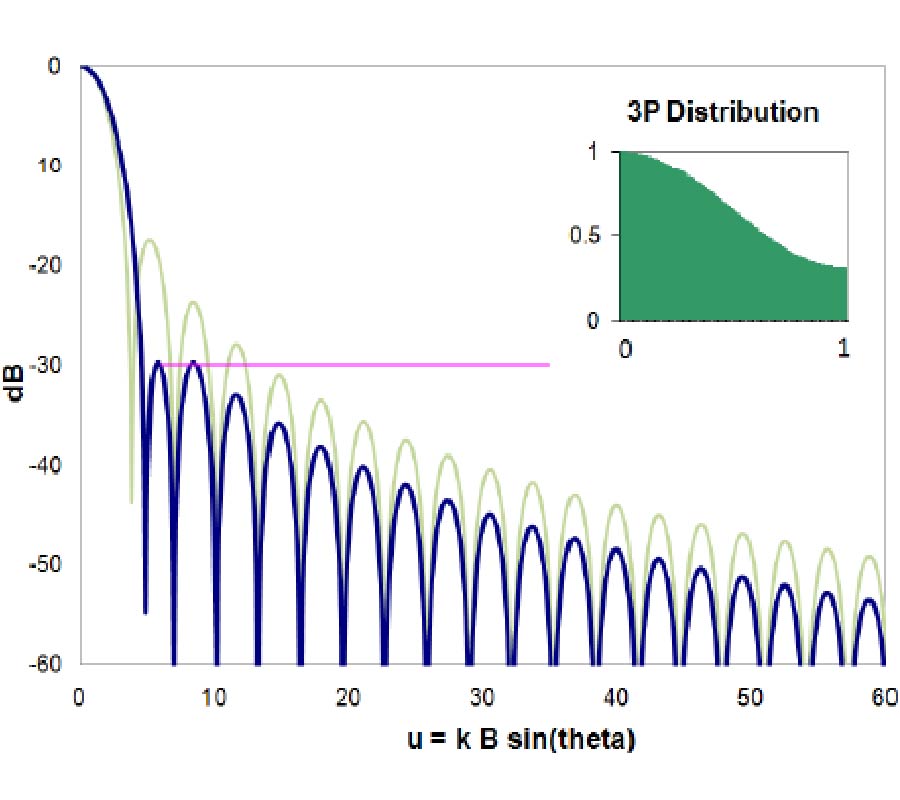
Stacked concentric circular antenna arrays (SCCAA's) supporting both the scanning mode and the tracking mode are optimized in both the azimuth and elevation planes. The gbest-guided artificial bee colony algorithm (GABCA) is adopted to optimize the dual-mode field patterns of thinned SCCAA's. Performance comparison of the GABCA with conventional ABCA and particle swarm optimization (PSO) algorithms is also presented.
TWO-DIMENSIONAL PATTERN SYNTHESIS OF STACKED CONCENTRIC CIRCULAR ANTENNA ARRAYS USING BEE COLONY ALGORITHMS
2013-09-27
PIER C
Vol. 44, 133-144
Estimate of the Shielding Effectiveness of an Electrically Large Enclosure Made with Pierced Metallic Plate in a Well-Stirred Reverberation Chamber
Angelo Gifuni , Giuseppe Ferrara , Maurizio Migliaccio and Antonio Sorrentino
In this document, a simple and efficacious method to estimate the shielding effectiveness of an electrically large enclosure (SEe) made with pierced metallic plate is shown under uniform and isotropic field conditions, which are produced in a reverberation chamber (RC) where the field is well stirred. The estimate is made by the calculation of the transmission cross sections (TCSs) of the walls of an enclosure and absorption cross sections (ACSs) of the inner losses. TCSs and ACSs are connected to the shielding effectiveness (SE) of the walls and inner losses, respectively; the latter are also connected to the reflectivity of the enclosure internal walls. The comparison with measurements made in an RC matches enough. It shows that the method shown here is sound. Moreover, the results support a recent model that connects SEe to SE by the reflectivity of the enclosure internal walls, and show still further that unloaded electrically large enclosures with distributed apertures are not very efficacious.
ESTIMATE OF THE SHIELDING EFFECTIVENESS OF AN ELECTRICALLY LARGE ENCLOSURE MADE WITH PIERCED METALLIC PLATE IN A WELL-STIRRED REVERBERATION CHAMBER
2013-09-27
PIER M
Vol. 33, 83-94
Planar Array Synthesis with Sidelobe Reduction and Null Control Using Invasive Weed Optimization
Huaning Wu and Chao Liu
Planar antenna array design is one of the most important electromagnetic optimization problems of current interest. This paper introduces a recently developed metaheuristic algorithm, known as the Invasive Weed Optimization(IWO), to the pattern synthesis of planar antenna arrays with desired pattern nulls and sidelobe level by amplitude-only and position-only optimization. The steps in the problem formulation are presented along with a design example that illustrates the performance of the IWO algorithm. Three examples have been presented and solved. Simulation results are proposed to compare with published ones to verify the effectiveness of the IWO algorithm for planar arrays.
PLANAR ARRAY SYNTHESIS WITH SIDELOBE REDUCTION AND NULL CONTROL USING INVASIVE WEED OPTIMIZATION
2013-09-27
PIER
Vol. 142, 625-638
Broadband Millimeterwave Metamaterial Absorber Based on Embedding of Dual Resonators
Pramod Singh , Shideh Kabiri Ameri , Liu Chao , Mohammed Nurul Afsar and Sameer Sonkusale
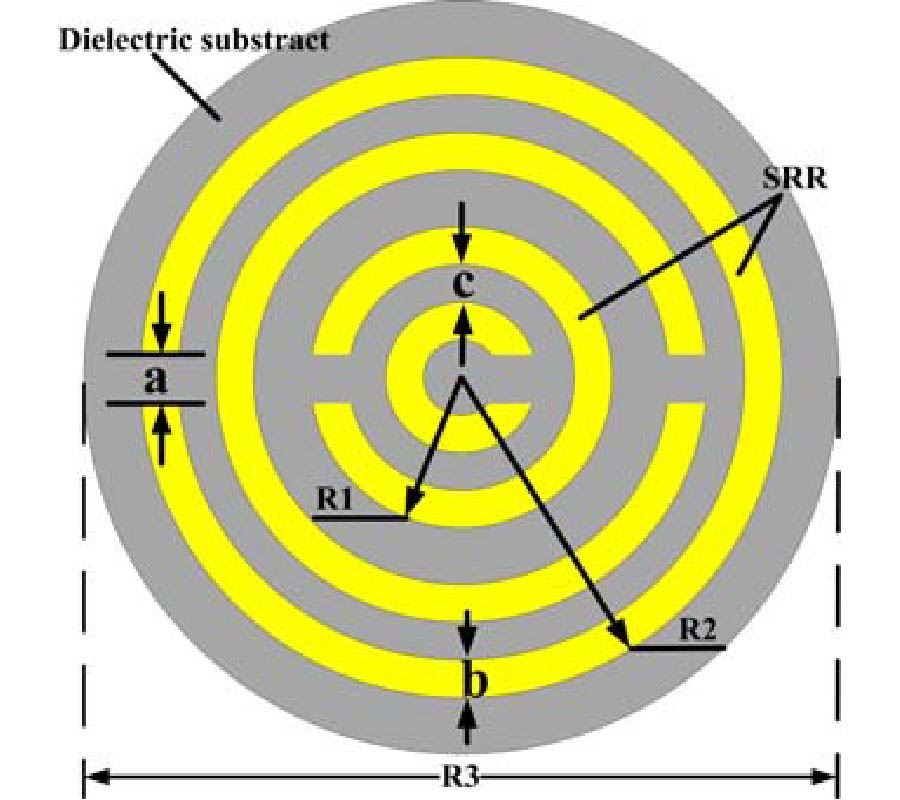
Metamaterial based electromagnetic wave absorbers provide perfect absorption only over a narrow bandwidth. In this paper, broadband response is achieved through embedding of one resonator inside another in each unit cell of the metamaterial absorber lattice. These two resonators are oriented in the same direction to achieve reduced coupling between them realizing two absorption frequencies close to each other in order to broaden the effective bandwidth. Paper presents such an absorber at 77 GHz with a bandwidth of 8 GHz with the peak absorption of greater than 98%. The absorber is fabricated on 125 μm thin and flexible polyimide substrate by patterning gold thin film in the shape of two split ring resonators as the metamaterial unit cell. The bandwidth is enhanced by more than a factor of two compared to what could be achieved from a metamaterial with single resonator structure.
BROADBAND MILLIMETERWAVE METAMATERIAL ABSORBER BASED ON EMBEDDING OF DUAL RESONATORS
2013-09-27
PIER
Vol. 142, 615-624
Casimir Force for Arbitrary Objects Using the Argument Principle and Boundary Element Methods
Phillip R. Atkins , Qi Dai , Wei E. I. Sha and Weng Cho Chew
Recent progress in the simulation of Casimir forces between various objects has allowed traditional computational electromagnetic solvers to be used to find Casimir forces in arbitrary three-dimensional objects. The underlying theory to these approaches requires knowledge and manipulation of quantum field theory and statistical physics. We present a calculation of the Casimir force using the method of moments via the argument principle. This simplified derivation allows greater freedom in the moment matrix where the argument principle can be used to calculate Casimir forces for arbitrary geometries and materials with the use of various computational electromagnetic techniques.
CASIMIR FORCE FOR ARBITRARY OBJECTS USING THE ARGUMENT PRINCIPLE AND BOUNDARY ELEMENT METHODS