Search Results(13798)

2013-09-11
PIER Letters
Vol. 43, 25-34
Wideband Monopole Antenna Based on CRLH for Mobile Applications
Min Jie Hua , Peng Wang , You Zheng , Hao Qin , Yuanfu Liu , Shuanglin Yuan and Jiaxuan Liao
In this paper, we present a wideband monopole antenna loaded with Composite Right Left Hand (CRLH) unit cell for mobile applications. By loading one CRLH unit cell, the monopole antenna can achieve wideband and generate an additional resonant mode much lower than the unloaded antenna's normal frequency. The antenna has a compact size of 0.1λ0×0.15λ0 at the lowest resonance frequency. Measured impedance bandwidth is 2000 MHz (1710~3810 MHz), which can cover one more frequency band for WiMAX applications than conventional antenna. Furthermore, it introduces a narrow band for LTE 700 applications. Stable omni-directional radiation patterns make it suitable for mobile terminals.
WIDEBAND MONOPOLE ANTENNA BASED ON CRLH FOR MOBILE APPLICATIONS
2013-09-11
PIER Letters
Vol. 43, 15-23
A Compact C-Shaped Printed UWB Antenna with Band-Notched Characteristic
Jiawei Zang and Xuetian Wang
A compact printed ultra-wideband (UWB) antenna with band-notched characteristic is proposed. The presented antenna consists of a modified ground plane structure and a novel C-shaped radiation patch fed by a microstrip line. By etching a C-shaped slot in the radiating patch, the notched band of 3.3-3.8 GHz for WiMAX is generated. The notched band can be easily tuned by controlling the size of the slot. The measured results show that the proposed antenna operates over a wide bandwidth from 3 GHz to 16 GHz with return loss less than -10, except a stop-band of 3.3-3.8 GHz. Some key parameters of the antenna are discussed in details. The time-domain characteristics are given.
A COMPACT C-SHAPED PRINTED UWB ANTENNA WITH BAND-NOTCHED CHARACTERISTIC
2013-09-11
PIER
Vol. 142, 463-483
Full-Vectorial Parallel Finite-Element Contrast Source Inversion Method
Amer Zakaria , Ian Jeffrey , Joe LoVetri and Amer Zakaria
The multiplicatively regularized finite-element contrast source inversion algorithm (MR-FEM-CSI) is used to solve the full-vectorial three-dimensional (3D) inverse scattering problem. The contrast and contrast-source optimization variables are located at the centroids of tetrahedra within the problem domain; whereas the electric field is expanded in terms of edge basis functions on the same tetrahedra. A dual-mesh is created in order to apply the multiplicative regularization. To handle large-scale problems the inversion algorithm is parallelized using the MPI library, with sparse matrix and vector computations supported by PETSc. The algorithm is tested using experimental datasets obtained from the Institut Fresnel database. A synthetic example shows that the technique is able to successfully image moisture hot-spots within a partially lled grain bin.
FULL-VECTORIAL PARALLEL FINITE-ELEMENT CONTRAST SOURCE INVERSION METHOD
2013-09-11
PIER
Vol. 142, 437-462
Dipole Radiation Near Anisotropic Low-Permittivity Media (Invited Paper)
Mohammad Memarian and George Eleftheriades
We investigate radiation of a dipole at or below the interface of (an)isotropic Epsilon Near Zero (ENZ) media, akin to the classic problem of a dipole above a dielectric half-space. To this end, the radiation patterns of dipoles at the interface of air and a general anisotropic medium (or immersed inside the medium) are derived using the Lorentz reciprocity method. By using an ENZ halfspace, air takes on the role of the denser medium. Thus we obtain shaped radiation patterns in air which were only previously attainable inside the dielectric half-space. We then follow the early work of Collin on anisotropic artificial dielectrics which readily enables the implementation of practical anisotropic ENZs by simply stacking sub-wavelength periodic bi-layers of metal and dielectric at optical frequencies. We show that when such a realistic anisotropic ENZ has a low longitudinal permittivity, the desired shaped radiation patterns are achieved in air. In such cases the radiation is also much stronger in air than in the ENZ media, as air is the denser medium. Moreover, we investigate the subtle differences of the dipolar patterns when the anisotropic ENZ dispersion is either elliptic or hyperbolic.
DIPOLE RADIATION NEAR ANISOTROPIC LOW-PERMITTIVITY MEDIA (Invited Paper)
2013-09-11
PIER
Vol. 142, 423-435
Vertical Cascaded Planar EBG Structure for SSN Suppression
Ling-Feng Shi and Hong-Feng Jiang
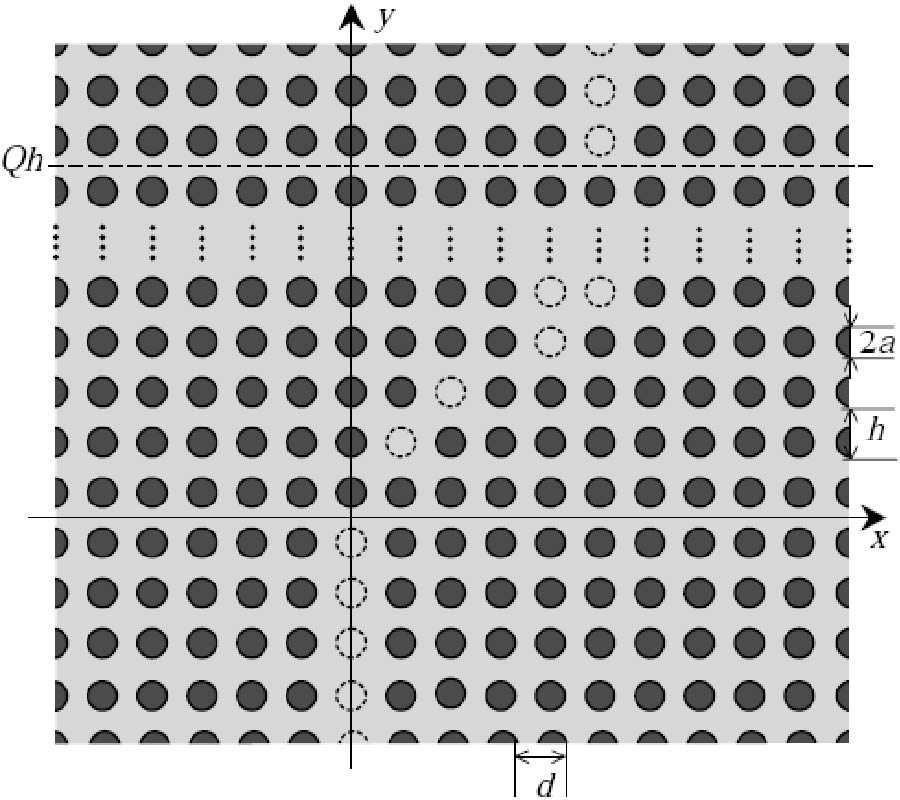
A novel vertical cascaded planar electromagnetic bandgap (EBG) structure is proposed for SSN suppression with the ultra-wideband at the restraining depth of -30 dB by analyzing the simultaneous switching noise (SSN) suppression mechanism and the equivalent circuit model for EBG structure. Moreover, the SSN suppression bandwidth can be broadened by using different novel EBG structures required by vertically cascading different planar EBG structures. In addition, the structure is verified to meet signal integrity (SI) by the time-domain simulation. The tested results show that the presented EBG is accordant to the simulated results of the theory method by the vector network analyzer. The proposed structures provide a new designing method for EBG structures to improve the ability of suppressing SSN.
VERTICAL CASCADED PLANAR EBG STRUCTURE FOR SSN SUPPRESSION
2013-09-10
PIER Letters
Vol. 43, 1-14
First-Order Perturbation Approach to Transformer Winding Deformations
Mariana Dalarsson and Martin Norgren
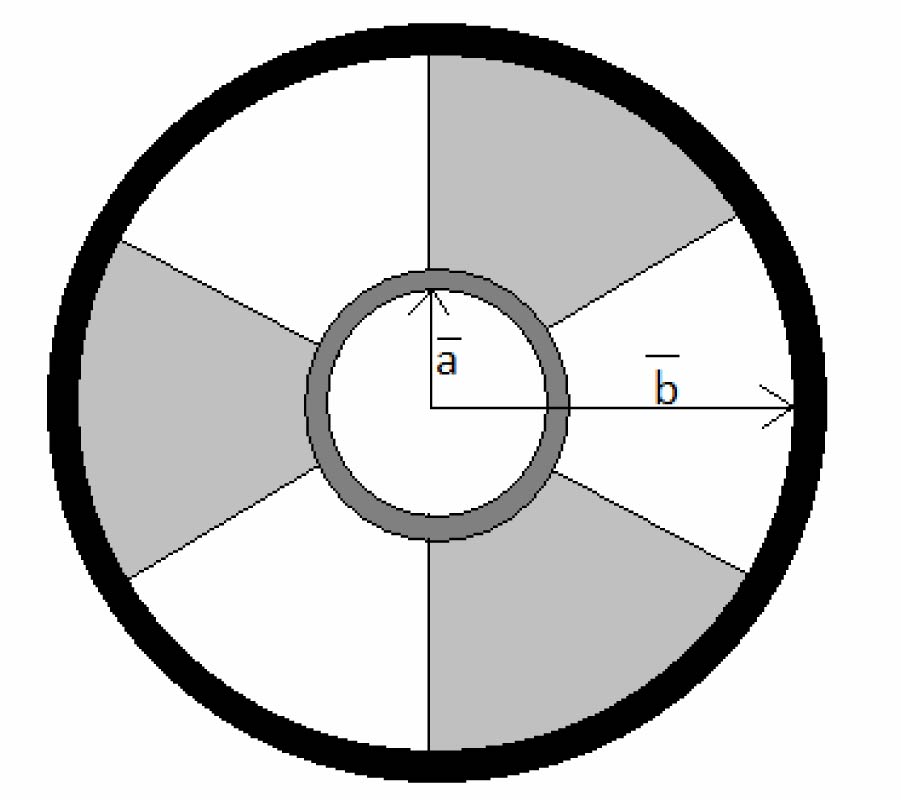
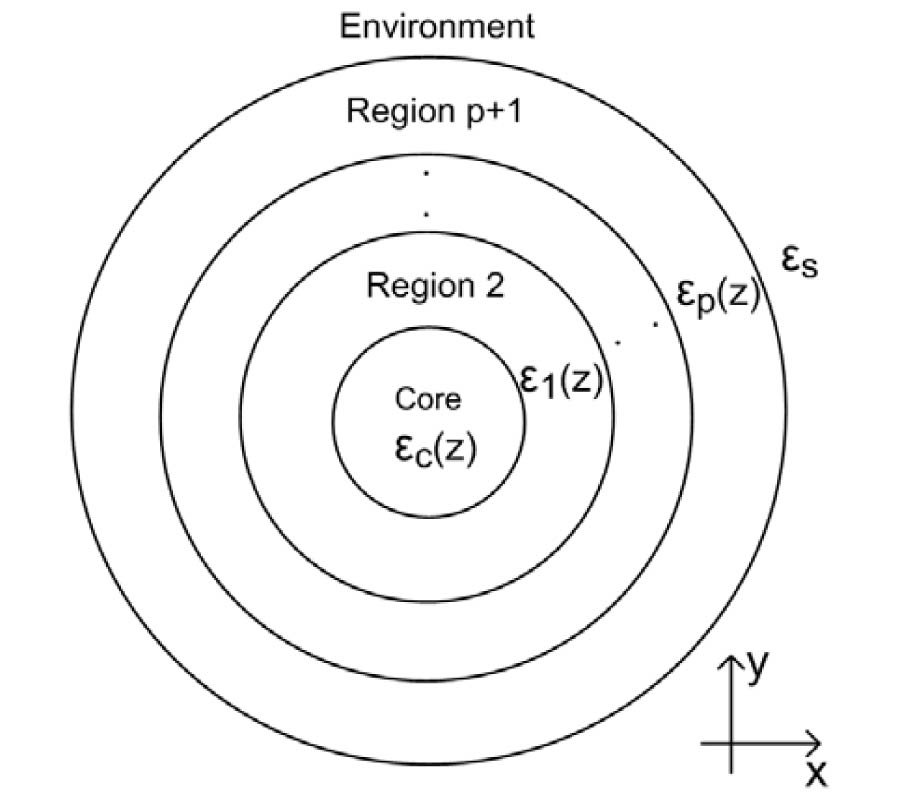
An on-line method to detect radial mechanical deformations of power transformer winding turns is presented. First-order perturbation theory is applied to a transformer winding surrounded by the transformer tank wall and the iron core. The transformer winding is modeled as thin conducting cylindrical rings (winding segments or turns) situated within a coaxial waveguide, where the outer conducting cylinder represents the transformer tank wall while the inner conducting cylinder represents the iron core. Antennas which radiate and measure microwave fields are proposed inside the transformer tank in order to identify and quantify the mechanical deformations of winding turns. The direct propagation problem is solved using conventional waveguide theory with mode-matching and cascading techniques. An optimization algorithm is then used to solve the inverse problem whereby a good agreement between the reconstructed and true deformations of the winding segments is obtained.
FIRST-ORDER PERTURBATION APPROACH TO TRANSFORMER WINDING DEFORMATIONS
2013-09-10
PIER Letters
Vol. 42, 209-223
Numerical Simulation of Gold Nanostructure Absorption Efficiency for Fiber-Optic Photoacoustic Generation
Ye Tian , Hamzeh Jaradat , Nan Wu , Xiaotian Zou , Yang Zhang , Yuqian Liu , Alkim Akyurtlu , Chengyu Cao and Xingwei Wang
In many non-destructive testing and medical diagnostic applications, photoacoustic generation by optical fiber is an effective approach to meet the requirements of broad bandwidth and compact size. The energy absorption layer coated onto the fiber endface plays an important role in the conversion of laser energy into heat used to excite acoustic waves. Gold nanostructures are promising solutions to be utilized as energy absorption layers due to their capability of absorbing maximum optical energy at plasmon resonant frequencies. The appropriate selection of the organization and dimensions of the gold nanostructures is the key to achieving high absorption efficiency. Numerical modeling is an efficient way to predict the behavior of the system as a variation of select parameters. A 3D finite integral technique model was established to simulate the dependency of absorption efficiency on the organization and dimensions of the gold nanospheres and nanorods. The simulation results provided practical clues to the design and fabrication of fiber-optic photoacoustic generators.
NUMERICAL SIMULATION OF GOLD NANOSTRUCTURE ABSORPTION EFFICIENCY FOR FIBER-OPTIC PHOTOACOUSTIC GENERATION
2013-09-10
PIER Letters
Vol. 42, 201-208
Compact Ultra-Wideband Bandpass Filter with Sharp Attenuation Using Modified Composite Right/Left-Handed Transmission Lines
Gyuje Sung and Young Kim
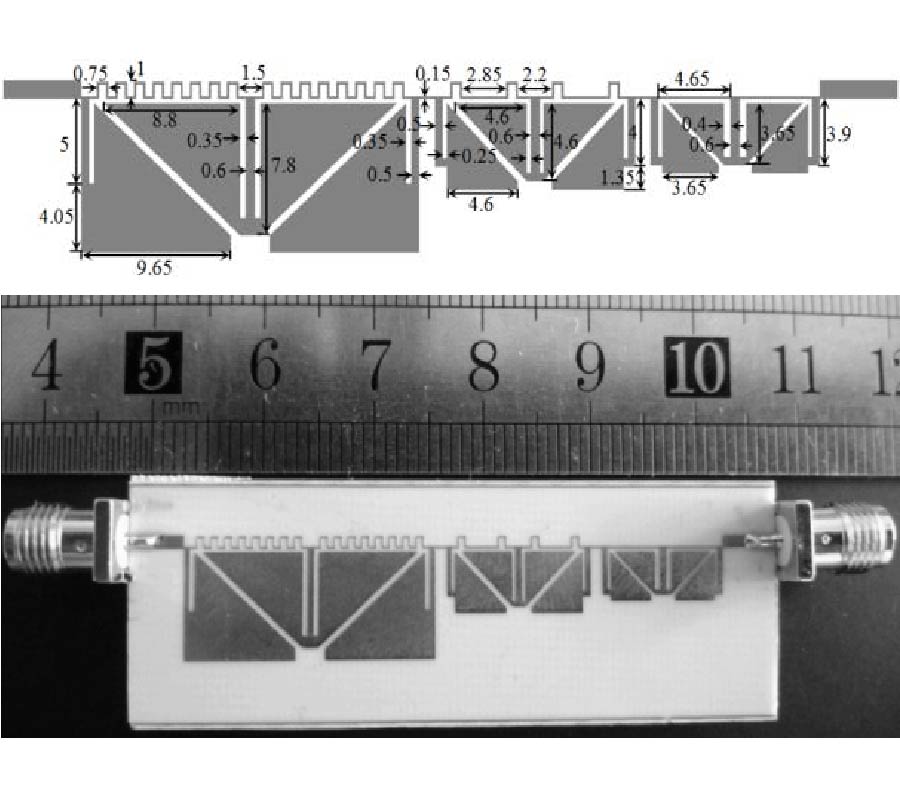
In this paper, the characteristics of novel modified composite right/left-handed (CRLH) transmission lines are discussed, and an ultra-wideband (UWB) bandpass filter (BPF) using the modified CRLH transmission lines is presented. Design formulas of a novel modified CRLH unit cell are theoretically derived. Based on the design formulas, the UWB bandpass filter with three unit cells is designed, fabricated, and measured. The measurement results show that the UWB bandpass filter has an insertion loss of less than 1 dB, bandwidths of 2.9~4.9 GHz, and a rejection of greater than 50 dB at 5.8 GHz.
COMPACT ULTRA-WIDEBAND BANDPASS FILTER WITH SHARP ATTENUATION USING MODIFIED COMPOSITE RIGHT/LEFT-HANDED TRANSMISSION LINES
2013-09-10
PIER
Vol. 142, 409-422
Radio Interface Design for Inkjet-Printed Biosensor Applications
Janne Jalo , Hannu P. Sillanpaa and Riku M. Makinen
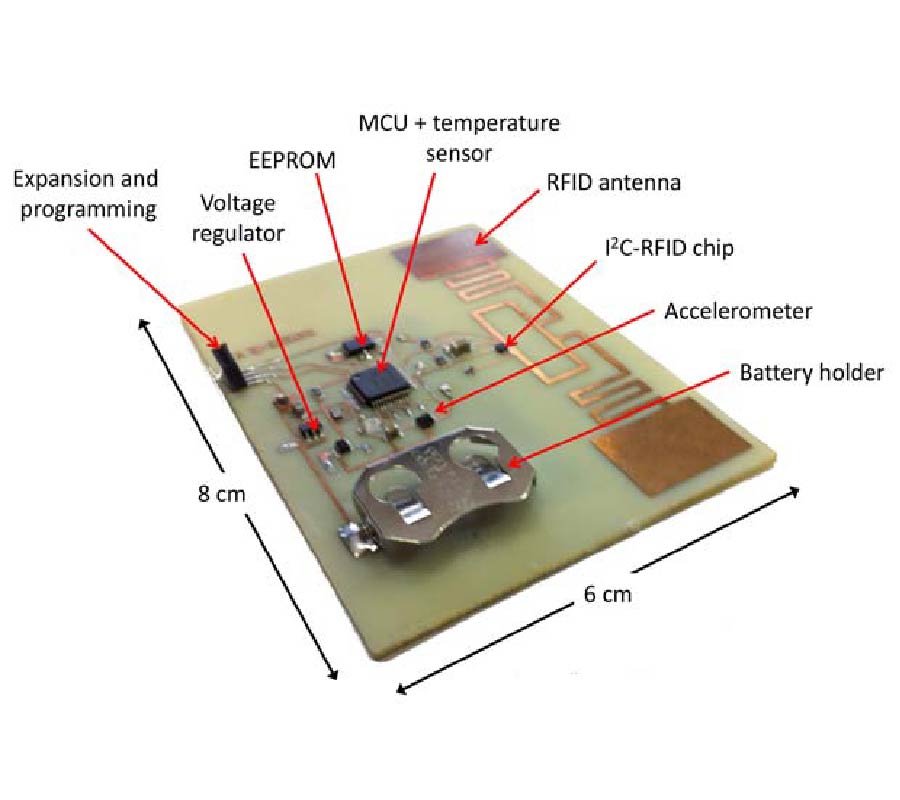
Biomedical wireless sensors require thin, lightweight, and flexible single-layer structures operating in immediate proximity of human body. This poses a challenge for RF and antenna design required for wireless operation. In this work, the radio interface design for a 2.4 GHz wireless sensor including a discrete filter balun circuit and an antenna operating at 0.3 mm distance from the body is presented. Thin, lightweight single-layer structure is realized using printed electronics manufacturing technology. The RF and antenna designs are validated by measurements, and a sensor with a fully functional radio interface is implemented and verified. At 0.3 mm from the body, 2.4 dB insertion loss and -10 dBi realized gain at 2.4 GHz were achieved for a discrete lter balun and antenna, respectively. The received power level on a Bluetooth low energy (BLE) channel was above -80 dBm at 1 m distance from the body, indicating capability for short-range off-body communications. The paper also provides guidelines for printed electronics RF and antenna design for on-body operation.
RADIO INTERFACE DESIGN FOR INKJET-PRINTED BIOSENSOR APPLICATIONS
2013-09-09
PIER C
Vol. 43, 255-269
Superdirective Beamforming with Interferences and Noise Suppression via Second-Order Cone Programming
Qing-Chen Zhou , Huotao Gao , Huajun Zhang and Lin Zhou
Based on second-order cone programming, we present a new superdirective beamforming method with interferences and noise suppression for small aperture HF receive arrays. In the novel method, low side lobe level (SLL) and nulls are not only used to suppress interferences and noise, but also play an important part in overcoming the low array efficiency brought by superdirective beamforming. According to the actual condition, the new method can present a good tradeoff between directive gain, array efficiency, SLL, nulls and robustness against array uncertainty. Compared with the existing methods, it is more effective in suppressing interference and noise. The superiority and validity of the proposed method can be illustrated by numerical results.
SUPERDIRECTIVE BEAMFORMING WITH INTERFERENCES AND NOISE SUPPRESSION VIA SECOND-ORDER CONE PROGRAMMING
2013-09-09
PIER C
Vol. 43, 247-254
A Varactor-Tunable High Impedance Surface for Active Metamaterial Absorber
Baoqin Lin , Shao-Hong Zhao , Qiu-Rong Zheng , Meng Zhu , Fan Li and Heng-Yang Zhang
One varactor-tunable High Impedance Surface (HIS) is proposed and used in design of an active metamaterial absorber. The proposed HIS structure is based on mushroom-type HIS, in which varactors are introduced to adjust the effective capacitance and tune the resonance frequency. The primary ground plane is etched as the bias network for these loaded varactors, and another ultra-thin grounded sheet is attached to the bottom. In addition, the absorbing characteristics are introduced for dielectric loss to construct an active metamaterial absorber. Numerical simulations show that a wide tuning range can be achieved by adjusting the varactor capacitance, and effective absorption is realized at different states. Two identical absorbers, which are loaded with fixed-value chap capacitors of different capacitances, are fabricated and measured using a waveguide measurement setup. Excellent agreement between the simulated and measured results is demonstrated.
A VARACTOR-TUNABLE HIGH IMPEDANCE SURFACE FOR ACTIVE METAMATERIAL ABSORBER
2013-09-09
PIER C
Vol. 43, 231-246
A Tunable High Impedance Surface and Its Application to Dual-Band Microstrip Antenna
Ankush Gupta , Mahesh Pandurang Abegaonkar , Ananjan Basu and Shiban Kishen Koul
This paper presents a simple method of tuning the AMC band of a high-impedance surface. The tunability is obtained with only two varactor diodes and a simple biasnetwork. The proposed structure, when used as a ground plane for a microstrip antenna, splits the resonance frequencies on the two sides of a reference antenna frequency. The resonance split is analyzed by employing cavity model and transmission line model of the patch antenna. Considerable tuning range is obtained in both the split bands. The simulated, measured and calculated results are found to be in good agreement.
A TUNABLE HIGH IMPEDANCE SURFACE AND ITS APPLICATION TO DUAL-BAND MICROSTRIP ANTENNA
2013-09-09
PIER Letters
Vol. 42, 187-199
Design of a High Power, High Efficiency Ka-Band Helix Traveling-Wave Tube
Lu-Wei Liu , Yan-Yu Wei , Yabin Zhang , Guoqing Zhao , Zhaoyun Duan , Wen-Xiang Wang , Yu-Bin Gong and Minghua Yang
The design and analysis of a high power and high efficiency helix traveling-wave tube operating in the Ka-band are presented. First, the double-slotted helix slow-wave structure is proposed and employed in the interaction circuit. Then, negative phase-velocity tapering technology is used to improve electronic efficiency. From our calculations, when the design voltage and beam current are set to be 18.45 kV and 0.2 A, respectively, this tube can produce average output power over 800 W ranging from 28 GHz to 31 GHz. The corresponding conversion efficiency varies from 21.83% to 24.16%, and the maximum output power is 892 W at 29 GHz.
DESIGN OF A HIGH POWER, HIGH EFFICIENCY KA-BAND HELIX TRAVELING-WAVE TUBE
2013-09-08
PIER B
Vol. 54, 265-284
Circular Antenna Array Design by Using Evolutionary Search Algorithms
Pinar Civicioglu
Evolutionary Search Algorithms (EA) have been intensively used in solving numerical optimization problems. Since design of antenna arrays is a numerical optimization problem, EAs have been intensively used in solving antenna arrays design problems. Although EAs are widely used in antenna array design problems, a performance comparison study of the intensively used EAs for circular antenna array design problem has been scarcely studied. In this paper, 3 different circular antenna array design problems have been solved by using 15 different evolutionary search algorithms (i.e., ABC, ACS, BSA, CK, CLPSO, CMAES, DE, E2-DSA, EPSDE, GSA, JADE, JDE, PSO, SADE, S-DSA). The objective function designed for solution of the relevant circular antenna array design problems ensures minimization of side lobe levels, acquisition of maximum directivity, and null control of the non-uniform, planar circular antenna array. Obtained statistical analysis results show that S-DSA solves the relevant circular antenna array design problems statistically better than the other evolutionary algorithms used in this paper.
CIRCULAR ANTENNA ARRAY DESIGN BY USING EVOLUTIONARY SEARCH ALGORITHMS
2013-09-08
PIER C
Vol. 43, 217-229
Broadband Asymmetrical Multi-Section Coupled Line Wilkinson Power Divider with Unequal Power Dividing Ratio
Puria Salimi , Mehdi Moradianpour and Ebrahim Borzabadi
The uniform asymmetrical microstrip parallel coupled line is used to design the multi-section unequal Wilkinson power divider with high dividing ratio. The main objective of the paper is to increase the trace widths in order to facilitate the construction of the power divider with the conventional photolithography method. The separated microstrip lines in the conventional Wilkinson power divider are replaced with the uniform asymmetrical parallel coupled lines. An even-odd mode analysis is used to calculate characteristic impedances and then the per-unit-length capacitance and inductance parameter matrix are used to calculate the physical dimension of the power divider. To clarify the advantages of this method, two three-section Wilkinson power divider with an unequal power-division ratio of 1:2.5 are designed and fabricated and measured, one in the proposed configuration and the other in the conventional configuration. The simulation and the measurement results show that not only the specified design goals are achieved, but also all the microstrip traces can be easily implemented in the proposed power divider.
BROADBAND ASYMMETRICAL MULTI-SECTION COUPLED LINE WILKINSON POWER DIVIDER WITH UNEQUAL POWER DIVIDING RATIO
2013-09-08
PIER C
Vol. 43, 201-216
Three-Hop AF Distributed Relay Systems Under Power Constraints
Kanghee Lee and Hyuck M. Kwon
This paper proposes an amplify-and-forward (AF) distributed relay network consisting of a one-source-one-destination pair and two-level N relays. Optimal relay amplifying matrices (or vectors) at the relays in the first and second levels are determined based on the minimum mean square error (MMSE) criterion. Power is globally, locally, and aggregately constrained at the relays in the first and second levels, independently or separately. With the derived optimal relay amplifying matrices, bit error rate (BER), mean square error (MSE) behavior, and the achievable rate are investigated. It is also proven that minimizing the MSE is equal to maximizing the signal-to-noise ratio (SNR) in a three-hop AF wireless relay network.
THREE-HOP AF DISTRIBUTED RELAY SYSTEMS UNDER POWER CONSTRAINTS
2013-09-08
PIER Letters
Vol. 42, 177-185
Dual and Tri-Band-Notched Ultrawideband (UWB) Antennas Using Compact Composite Resonators
Xing Qun Qi , Hong-Chun Yang , Dikai Liu and Yang Li
An ultra-wideband (UWB) antenna with triple band-notched characteristics is presented in this paper. The triple-notched bands (5.15-5.35 GHz and 5.725-5.825 GHz for WLAN, 7.9-8.395 GHz for X-band) are achieved by using only one novel composite resonator with multiple resonant characteristics. The resonator is placed on the back surface of the substrate and connected to the radiation patch through one via-hole. An equivalent circuit model is built for analyzing the band-notched characteristics. Moreover, the notched bands can be adjusted independently, and the resonator structure is very compact.
DUAL AND TRI-BAND-NOTCHED ULTRAWIDEBAND (UWB) ANTENNAS USING COMPACT COMPOSITE RESONATORS
2013-09-08
PIER
Vol. 142, 389-408
NMR Detection at 8.9 mT with a GMR Based Sensor Coupled to a Superconducting Nb Flux Transformer
Raffaele Sinibaldi , Cinzia De Luca , Jaakko O. Nieminen , Angelo Galante , Vittorio Pizzella , Piero Sebastiani , Myriam Pannetier-Lecoeur , Antonietta Manna , Piero Chiacchiaretta , Gabriella Tamburro , Antonello Sotgiu , Claude Fermon , Gian Luca Romani and Stefania Della Penna
This study presents NMR signal detection by means of a superconducting channel consisting of a Nb surface detection coil inductively coupled to a YBCO mixed sensor. The NMR system operates at a low field (8.9 mT) in a magnetically shielded room suitable for magnetoencephalographic (MEG) recordings. The main field is generated by a compact solenoid and the geometry of the pickup coil has been optimized to provide high spatial sensitivity in the NMR field of view. The Nb detection coil is coupled to the mixed sensor through a Nb input coil. The mixed sensor consists of a superconducting YBCO loop with 2-μm constriction above which two Giant Magneto Resistance sensors are placed in a half-bridge configuration to detect changes of the bridge voltage as a function of the flux through the YBCO loop. The sensitivity of the receiving channel is calibrated experimentally. The measured spatial sensitivity is in agreement with the simulations and is ~10 times better than that of the stand-alone mixed sensor. A NMR echo at 375 kHz shows a SNR only a factor 4 smaller than a tuned room temperature coil tightly wound around the sample, with a noise level which is a factor 3 better than for the volume coil. Our results suggest that mixed sensors are suitable for the integration of low-field MRI and MEG in a hybrid apparatus, where MEG and MRI would be recorded by SQUIDs and mixed sensors, respectively.
NMR DETECTION AT 8.9 MT WITH A GMR BASED SENSOR COUPLED TO A SUPERCONDUCTING NB FLUX TRANSFORMER
2013-09-08
PIER
Vol. 142, 369-388
Sparsity of the Field Signal-Based Method for Improving Spatial Resolution in Antenna Sensor Array Processing
Patrizia Vergallo , Aime Lay-Ekuakille and Diego Caratelli
The goal of array processing is to gather information from propagating radio-wave signals, as their Direction Of Arrival (DOA). The estimation of the DOA can be carried out by extracting the information of interest from the steering vector relevant to the adopted antenna sensor array. Such task can be accomplished in a number of different ways. However, in source estimation problems, it is essential to make use of a processing algorithm which feature not only good accuracy under ideal working conditions, but also robustness against non-idealities such as noise, limitations in the amount of collectible data, correlation between the sources, and modeling errors. In this work particular attention is devoted to spectrum estimation approaches based on sparsity. Conventional algorithms based on Beamforming fail wherein the radio sources are not within Rayleigh resolution range which is a function of the number of sensors and the dimension of the array. DOA estimation techniques such as MUSIC (MUltiple Signal Classifications) allow having a larger spatial resolution compared to Beamforming-based procedures, but if the sources are very close and the Signal to Noise Ratio (SNR) level is low, the resolution turns to be low as well. A better resolution can be obtained by exploiting sparsity: if the number of sources is small, the power spectrum of the signal with respect to the location is sparse. In this way, sparsity can enhance the accuracy of the estimation. In this paper, an estimation procedure based on the sparsity of the radio signals and useful to improve the conventional MUSIC method is presented and analyzed. The sparsity level is set in order to focus the signal energy only along the actual direction of arrival. The obtained numerical results have shown an improvement of the spatial resolution as well as a reduced error in DOA estimation with respect to conventional techniques.
SPARSITY OF THE FIELD SIGNAL-BASED METHOD FOR IMPROVING SPATIAL RESOLUTION IN ANTENNA SENSOR ARRAY PROCESSING
2013-09-06
PIER B
Vol. 54, 245-264
Physics-Based Expansion on 3D Conformal Gaussian Beams for the Scattering from a Curved Interface
Alexandre Chabory , Jérôme Sokoloff and Sylvain Bolioli
Gaussian beams techniques are high-frequency asymptotic methods that can be used to model the propagation/interaction of fields in a variety of problems. In this article, an expansion is proposed to express the scattering of magnetic/electric currents from a curved interface in terms of a new kind of elementary beams, the conformal Gaussian beams. The expansion characteristics rely on the physical properties of the configuration, which leads to represent the scattering with a small number of conformal Gaussian beams. An analytical formulation for the conformal Gaussian beams is developed, which expression is derived from an asymptotic evaluation of the radiation integrals valid at great distance from the interface. An example is presented to show that this analytical formulation is in good agreement with the reference result. Numerical tests are led on the expansion in order to show that the scattering can be represented with accuracy by adding the contribution of conformal Gaussian beams.
PHYSICS-BASED EXPANSION ON 3D CONFORMAL GAUSSIAN BEAMS FOR THE SCATTERING FROM A CURVED INTERFACE