Search Results(13800)

2012-06-12
PIER C
Vol. 30, 131-145
A Reconfigurable Ultrawideband (UWB) Compact Tree-Design Antenna System
Muzammil Jusoh , Mohd Faizal Bin Jamlos , Muhammad Ramlee Kamarudin , Mohd Fareq Abd Malek , Mohd Asmi Romli , Zahari Awang Ahmad , Mohd Hafizuddin Mat and Muhammad Solihin Zulkefli
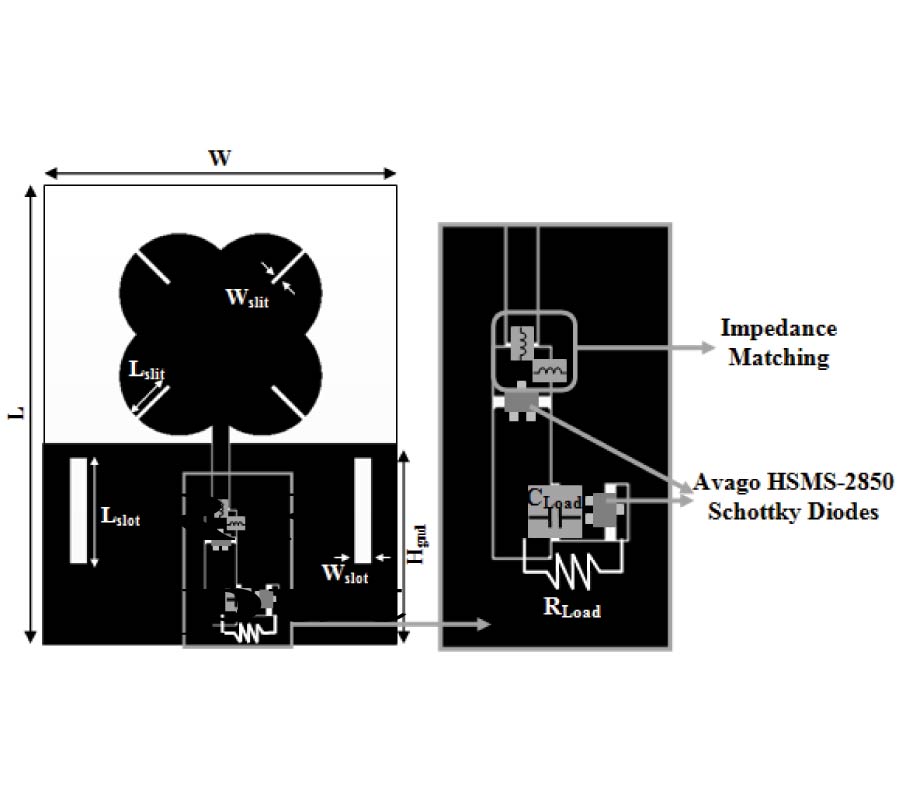
A novel compact tree-design antenna (NCTA) with the ability of reconfigurable ultra-wideband (UWB) of 3.1 GHz to 10.6GHz to five multi-narrowband applications is proposed. This antenna has a novel radiating element design that consists of seven small circles (7-filter) surrounding a central circle. Moreover, the NCTA incorporates the 7-filter that functioned as filter into the antenna design. The compact 38mm x 38mm antenna integrates three PIN diode switches, which are connected to a single National Instrument Data Acquisition (NI-DAQ) Board. The DAQ itself is controlled (ON/OFF state) by a virtual instrument known as "Lab VIEW Interface Software". The activation of specific PIN diode switches in the configuration that is controlled by the DAQ then, in turn, determines the frequency agility. The presented antenna is capable of performing up to five multi-bands. The operating frequencies are as follows; band 1 (2.72-11.8 GHz), band 2 (2.4-4 GHz, 5.3-11.6 GHz), band 3 (2.7-6.5 GHz, 7.1-11.6 GHz), band 4 (2.7-4.4 GHz, 5.2-6.5 GHz, 7.1-11.7 GHz) and band 5 (2.6-3.5 GHz, 4.8-7.0 GHz, 7.4 GHz-11.5 GHz). Furthermore, the antenna has a gain of up to 6dBi, which is considered better than that of conventional antenna. The proposed antenna produces a proficient divisive radiation pattern at 4 and 6 GHz. The experimental results exhibit the success of the antenna performance. It is competent as future candidate for cognitive radio and military applications.
A RECONFIGURABLE ULTRAWIDEBAND (UWB) COMPACT TREE-DESIGN ANTENNA SYSTEM
2012-06-12
PIER
Vol. 129, 17-32
Four Dimensional Reconstruction Using Magnetic Induction Tomography: Experimental Study
Hsin-Yu Wei and Manuchehr Soleimani
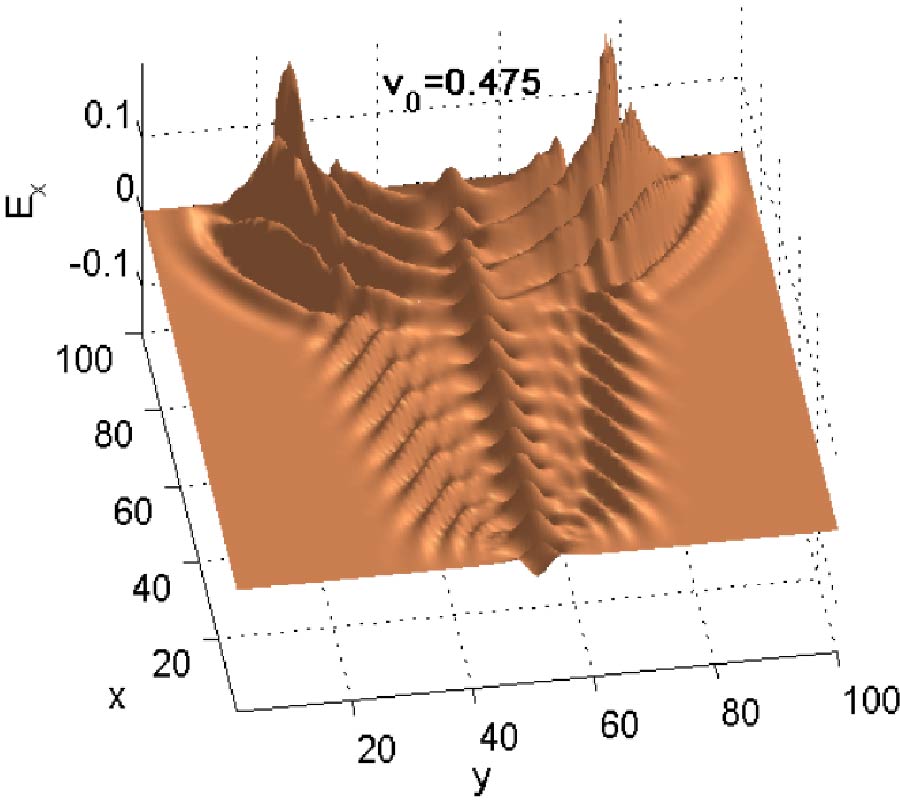
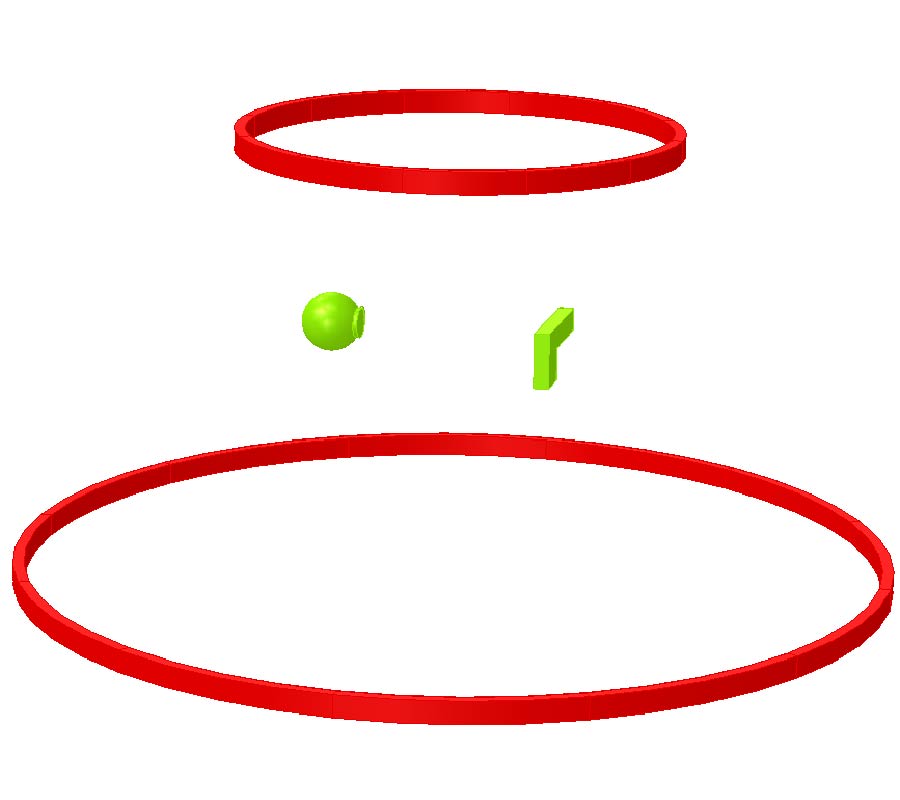
Magnetic Induction Tomography (MIT) is a relatively new and emerging type of tomography techniques that is able to map the conductivity distribution of an object. Its non-invasive and contactless features make it an attractive technique for many applications compared to the traditional contact electrode based electrical impedance tomography. Recently, MIT has become a promising monitoring technique in industrial process tomography, and the area of the research interest has moved from 2D to 3D because of the volumetric nature of electromagnetic field. Three dimensional MIT images provide more information on the conductivity distribution, especially in the axial direction. However, it has been reported that the reconstructed 3D images can be distorted when the imaging object is located at a less sensitive region. Although this distortion can be com- pensated by adjusting the regularisation criteria, this is not practical in real life applications as the prior information about the object's location is often unavailable. This paper presents a memory ecient 4D MIT algorithm which can maintain the image quality under the same regularisation circumstances. Instead of solving each set of measurement individually, the 4D algorithm takes advantage of the correlations between the image and its neighboring data frames to reconstruct 4D of conductivity movements. The 4D algorithm improves the image qualities by increasing the temporal resolution. It also overcomes some sensitivity issues of 3D MIT algorithms and can provide a smoother and stabler result. Several experimental results are presented for validating the propose algorithms.
FOUR DIMENSIONAL RECONSTRUCTION USING MAGNETIC INDUCTION TOMOGRAPHY: EXPERIMENTAL STUDY
2012-06-12
PIER
Vol. 129, 1-16
A Compact Beam Reconfigurable Antenna for Symmetric Beam Switching
Woong Kang , Kwang Hee Ko and Kangwook Kim
In this paper, two radiation pattern-reconfigurable antennas are designed to operate over DCS 1800 frequency bands. The geometry of the proposed antennas is symmetric with respect to the vertical center line. The electrical shapes of the antennas are composed of a monopole-loaded loop and an open wire. The open wire functions as either a director or reflector for the two antennas. Depending on the switching state, the antennas can select between two beam directions with no input impedance difference. The sizes of each antenna are then optimized to achieve beam switching capability using PIN diodes and FETs. The reflection coefficients and gain patterns for two bias conditions using both switches are measured and compared with the simulated results. The measured results show that the proposed antennas can clearly alternate their beam directions using the switching components.
A COMPACT BEAM RECONFIGURABLE ANTENNA FOR SYMMETRIC BEAM SWITCHING
2012-06-11
PIER B
Vol. 41, 285-305
ISAR Imaging of Non-Uniform Rotation Targets with Limited Pulses via Compressed Sensing
Jihong Liu , Xiang Li , Shaokun Xu and Zhaowen Zhuang
This research introduces compressed sensing (CS) principle into inverse synthetic aperture radar (ISAR) imaging of non-uniform rotation targets, and high azimuth resolution can be achieved with limited number of pulses. Firstly, the sparsity of the echoed signal of radar targets with non-uniform rotation in certain matching Fourier domain is analyzed. Then the restricted isometry property (RIP) and incoherence of partial matching Fourier matrices are checked, following which an ISAR imaging method based on CS for both random sparse aperture and short aperture cases is proposed. In particular, considering the dependence of the sparse dictionary on the relative rotation parameter, a parameter estimation method by the optimal search in fractional Fourier domain is presented. Simulation experiments verify the effectiveness as well as superiority of the proposed imaging method over traditional methods in terms of imaging performance.
ISAR IMAGING OF NON-UNIFORM ROTATION TARGETS WITH LIMITED PULSES VIA COMPRESSED SENSING
2012-06-11
PIER B
Vol. 41, 269-283
All-Dielectric Frequency Selective Surfaces with Few Number of Periods
Jay H. Barton , Raymond C. Rumpf , Randall W. Smith , Carrie L. Kozikowski and Phillip A. Zellner
All-dielectric frequency selective surfaces (FSSs) can serve as an alternative to their metallic counterparts when they must operate at very high power, loss must be minimized, or when the surface itself must be low observable. When metals are avoided, there is a weaker interaction with electromagnetic waves and it becomes more difficult to achieve strong suppression in the stop band while also realizing compact size, wide field-of-view or broadband operation. One attractive approach utilizes guided-mode resonance (GMR) as the filtering mechanism, but this phenomenon exhibits several drawbacks that must be overcome for practical application at radio frequencies. This paper introduces the concept of guide-mode resonance for FSSs and describes how they can be made to operate with a dramatically fewer number of periods than conventional GMR devices.
ALL-DIELECTRIC FREQUENCY SELECTIVE SURFACES WITH FEW NUMBER OF PERIODS
2012-06-11
PIER Letters
Vol. 32, 137-143
A Slot Antenna-Coupled Microbolometer for Detection at 94 GHz
Mohamed Abdel-Rahman , Nageeb Fouad Al-Khalli , Andi Hakim Kusuma and Nacer Amara Debbar
In this paper, we report on the design, fabrication and characterization of a slot antenna on quarter wavelength silicon substrate coupled to a Titanium microbolometer for detection at 94 GHz. The detector was fabricated using conventional photolithographic and microfabrication techniques. The detector exhibited a responsivity of 0.779 V/W, a noise equivalent power (NEP) of 10.2 nW/√Hz, and a time constant of 3.88 μsec.
A SLOT ANTENNA-COUPLED MICROBOLOMETER FOR DETECTION AT 94 GHZ
2012-06-11
PIER Letters
Vol. 32, 129-136
A Novel Dual-Polarized Antenna with High Isolation and Low Cross Polarization for Wireless Communication
Chao Liu , Jing-Li Guo , You-Huo Huang and Lin-Ya Zhou
In this paper, a new design of a dual-polarized antenna with high isolation and low cross polarization is proposed. The main radiation structures comprise two pairs of petaloid patches, which are fed by coaxial lines. Behind the patches, a U-shaped ground is placed to improve the front-to-back ratio of the antenna. Stable and symmetric radiation patterns at slanted ±45° polarization have been obtained within the frequency band 1.71-2.17 GHz. A return loss of -14 dB is achieved and measured isolation between the two input ports is over 31 dB. The 3 dB beamwidths of the two polarizations is stable (65°) and the average gain of the proposed antenna is about 9dBi across the whole frequency band.
A NOVEL DUAL-POLARIZED ANTENNA WITH HIGH ISOLATION AND LOW CROSS POLARIZATION FOR WIRELESS COMMUNICATION
2012-06-11
PIER Letters
Vol. 32, 119-127
An Improved CRLH Wide-Band Filter Using CSRRs with High Stop Band Rejection
Peng Su , Xianqi Lin , Rong Zhang and Yong Fan
In this paper, a filter based on Composite Right/Left Handed (CRLH) structures is presented, wide pass band is obtained due to the balanced CRLH properties. Besides, it has Complementary Split-Ring Resonator (CSRR) units etched on ground plane, which improves signal rejection in its upper stop band. The CSRRs work as a stop band filter in a band near the main pass band of the filter and bring in equivalent negative permittivity. CSRRs and CRLH units occupy the two sides of substrate respectively and have little mutual affection in the pass band, so either structure can be designed independently, without considering the effect from the other. The improvement occupy no additional space, the size is as large as the original filter. Detailed design procedure is illustrated. Good agreements among simulation and measurement results are achieved. In addition, the filter has a semi-enclosed structure and compact size, and the performance is greatly improved.
AN IMPROVED CRLH WIDE-BAND FILTER USING CSRRS WITH HIGH STOP BAND REJECTION
2012-06-11
PIER C
Vol. 30, 119-130
Miniaturized Ultrawideband Wide Slot Antenna with Dual Band-Notches and Eliminating Spurious Stop Band
Zhong-Min Yan , Yun-Sheng Xu and Weidong Wang
A wide slot antenna fed by a microstrip line ended with a hexagonal tuning stub and its variation with dual band-notched function for ultrawideband operations are presented. The fundamental configuration is a rectangular slot on a printed circuit board with a low relative dielectric constant of 2.65. Three tuning stubs are employed at the edges of the slot to ensure the impedance matching. This original antenna achieves an operation bandwidth from 3.1 to 11.5 GHz with a stable gain performance and a very compact size of 22 mm×22 mm×0.5 mm. By etching a C-shaped slit and a Hilbert fractal curve slit on the original antenna without retuning, band-notched characteristics in the 3.40-3.69 GHz WiMAX band and the 5.15-5.825 GHz WLAN band can be realized, respectively. A rectangular patch is added to eliminate the spurious notched band around 10.5 GHz.
MINIATURIZED ULTRAWIDEBAND WIDE SLOT ANTENNA WITH DUAL BAND-NOTCHES AND ELIMINATING SPURIOUS STOP BAND
2012-06-11
PIER C
Vol. 30, 105-118
One Decade Microwave Forward Network Analyzer Based on the Multi-Port Technique
Kamel Haddadi and Tuami Lasri
This paper presents a one decade low-cost forward network analyzer based on a modified six-port technique. An instrumentation integrating the hardware and software resources offering advantages such as robustness and compactness is developed. The microwave part of the system is fabricated in planar technology. Associated to this system, a one-step calibration procedure is implemented on an 8-bits microcontroller. The performance, in term of measurement accuracy, is evaluated by comparing the results obtained from the system proposed to those given by a conventional network analyzer in the frequency band 1-10 GHz.
ONE DECADE MICROWAVE FORWARD NETWORK ANALYZER BASED ON THE MULTI-PORT TECHNIQUE
2012-06-11
PIER M
Vol. 24, 265-279
High-q Reflection Notch Method for mm Wave Measurements of Large Dielectric Losses Using a Stack Resonator: Analysis and Simulations
Vladimir Borisovich Yurchenko
A high-Q reflection notch method for measuring large dielectric losses in absorbing materials when using a stack resonator, which is a one-dimensional analogue of a capillary-in-a-waveguide technique, has been proposed. A detailed explanation of the effects that lay the basis of the method has been presented. The method is particularly accurate and sensitive for highly absorbing materials when other techniques are inadequate. The method can be used for dielectric spectroscopy of a broad range of liquid and solid materials, with applications in chemical, pharmaceutical and food industry, biomedical sciences, agriculture etc, in those frequency bands of infrared, millimeter wave and, especially, THz waves where dielectric losses are significant.
HIGH-Q REFLECTION NOTCH METHOD FOR MM WAVE MEASUREMENTS OF LARGE DIELECTRIC LOSSES USING A STACK RESONATOR: ANALYSIS AND SIMULATIONS
2012-06-11
PIER
Vol. 128, 539-555
Scattering of Gaussian Beam by a Spheroidal Particle
Xianming Sun , Haihua Wang and Huayong Zhang
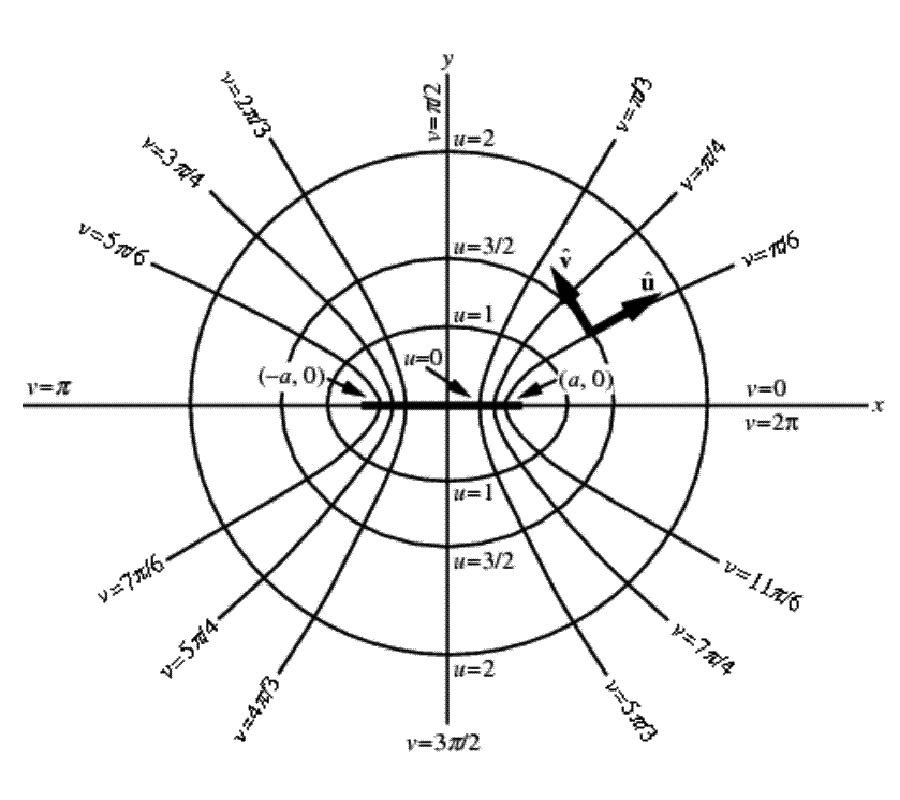
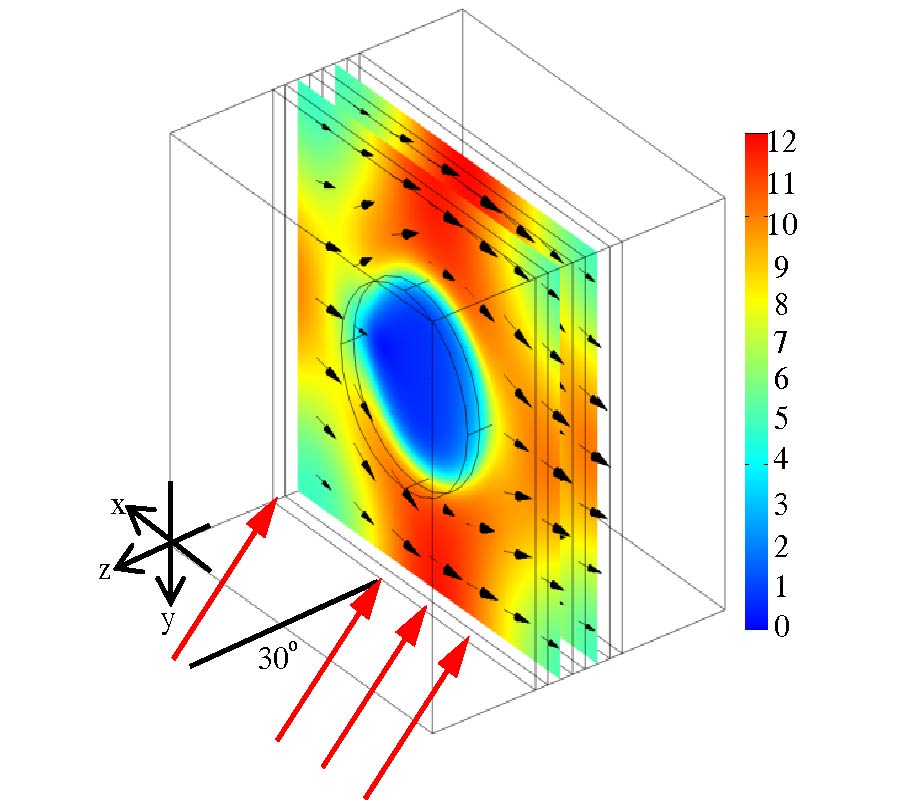
Gaussian beam scattering by a spheroidal particle is studied in detail. A theoretical procedure is given to expand an incident Gaussian beam in terms of spheroidal vector wave functions within the generalized Lorenz-Mie theory framework. Exact analytic solutions are obtained for an arbitrarily oriented spheroid with non-confocal dielectric coating. Normalized differential scattering cross sections are shown and discussed for three different cases of a dielectric spheroid, spheroid with a spherical inclusion and coated spheroid.
SCATTERING OF GAUSSIAN BEAM BY A SPHEROIDAL PARTICLE
2012-06-08
PIER Letters
Vol. 32, 109-118
Distortion Analysis of Electromagnetic Field Sensors in Laguerre Functions Subspace
Shekoofeh Saboktakin and Behzad Kordi
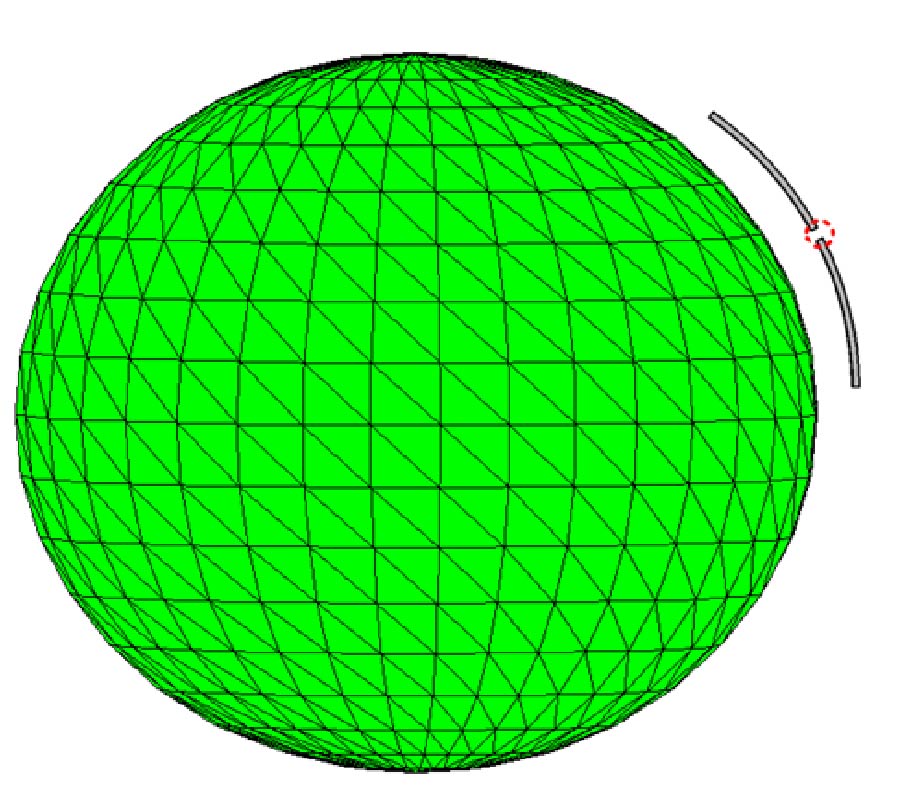
A time-domain approach for distortion analysis of electromagnetic eld senors is developed in Laguerre functions subspace. Using Laguerre convolution preservation property, it is proved that every electromagnetic eld sensor corresponds to an equivalent discrete-time LTI system. The equivalent discrete-time system is compared to a reference system as a measure of distortion. Further, this analysis may be performed repeatedly to obtain a bandwidth-limited distortion characteristic. The method is employed to compare the distortion characteristic of an asymptotic conical dipole (ACD) to wire monopoles of various lengths. A time-domain simulation is performed in order to nd the distortion characteristics by solving an electric eld integral equation (EFIE) using the method of moments (MoM).
DISTORTION ANALYSIS OF ELECTROMAGNETIC FIELD SENSORS IN LAGUERRE FUNCTIONS SUBSPACE
2012-06-08
PIER Letters
Vol. 32, 101-108
Third-Order Dual-Band Bandpass Filter with Controllable Bandwidths Using Short Stub-Loaded Resonators
Fu-Chang Chen and Jie Ming Qiu
A compact microstrip-line dual-band bandpass filter using a short stub-loaded resonator is presented. The resonator is formed by loading one short stub in shunt to a simple uniform impedance line. A key merit of the filter configuration is that the center frequency and bandwidth of the first passband can be conveniently controlled by properly adjusting the lengths of the short stubs and the coupling between the short stubs, whereas those of the second passband are fixed. To illustrate the concept, a third-order dual-band filter is designed, fabricated and measured. Simulated and measured results are found to be in good agreement with each other.
THIRD-ORDER DUAL-BAND BANDPASS FILTER WITH CONTROLLABLE BANDWIDTHS USING SHORT STUB-LOADED RESONATORS
2012-06-08
PIER C
Vol. 30, 93-103
High Gain Linear Polarization Switchable Planar Array Antenna
Md. Azad Hossain , Eisuke Nishiyama , Ichihiko Toyoda and Masayoshi Aikawa
In this paper, a linear polarization switchable planar array antenna with enhanced gain and better crosspolarization is proposed. The proposed array antenna consists of a fed patch and four parasitic patches. Four switching diodes are loaded on the corners of the fed patch. The boundary condition of the fed patch is controlled by using the ON/OFF condition of the diodes, and the polarization angle of the array antenna can be orthogonally switched to ±45° with better than -22 dB of crosspolarization. The simulated gain of the array antenna is remarkably increased to 12 dBi by using four parasitic patches surrounding the fed patch. For matching the resonance frequency of the parasitic patches with the fed patch, a square slot is formed at the center of each parasitic patch. The characteristics of the proposed array antenna are investigated by the FDTD simulation method. The array antenna is fabricated and the experiment is carried out. Both the simulation and the experimental results of the proposed array antenna demonstrate the polarization switching functionality successfully with the enhanced gain in S-band.
HIGH GAIN LINEAR POLARIZATION SWITCHABLE PLANAR ARRAY ANTENNA
2012-06-08
PIER
Vol. 128, 519-537
Modified Cylindrical Holographic Algorithm for Three-Dimensional Millimeter-Wave Imaging
Bailing Ren , Shiyong Li , Hou-Jun Sun , Weidong Hu and Xin Lv
Millimeter-wave (MMW) imaging techniques have been developed for the detection of concealed weapons and plastic explosives carried on personnel at major transportation hubs and secure locations. The combination of frequency-modulated continuous-wave (FMCW) technology and MMW imaging techniques leads to wideband, compact, and cost-effective systems which are especially suitable for security detection. Cylindrical three-dimensional (3-D) imaging technique, with the ability of viewing multiple sides, is an extension of rectilinear 3-D imaging technique only viewing a single side. Due to the relatively long signal sweep time, the conventional stop-and-go approximation of the pulsed systems is not suitable for FMCW systems. Therefore, a 3-D backscattered signal model including the effects of the continuous motion within the signal duration time is developed for cylindrical imaging systems. Then, a modified cylindrical holographic algorithm, with motion compensation, is presented and demonstrated by means of numerical simulations.
MODIFIED CYLINDRICAL HOLOGRAPHIC ALGORITHM FOR THREE-DIMENSIONAL MILLIMETER-WAVE IMAGING
2012-06-07
PIER C
Vol. 30, 81-91
Design and Analysis of a Novel Electromagnetic Bandgap Structure for Suppressing Simultaneous Switching Noise
Hongmin Lu , Jian Zhao and Zhiyong Yu
An electromagnetic bandgap (EBG) structure is proposed to suppress the simultaneous switching noise (SSN) from 0.45 GHz to 5.3 GHz with an averaged suppression level of −66.4 dB. The design is based on the inductance enhancement by using meander lines to bridge slotted metal patches embedded into the power plane. Numerical simulation and experimental measurement are both used in the study for mutual verification. Compared to the conventional L-bridged EBG structure, the novel design increases the bandwidth by 15% and reduces the lower frequency by 150 MHz. A better omnidirectional SSN suppression is also achieved. For high-speed digital applications, the signal integrity is analyzed and improved.
DESIGN AND ANALYSIS OF A NOVEL ELECTROMAGNETIC BANDGAP STRUCTURE FOR SUPPRESSING SIMULTANEOUS SWITCHING NOISE
2012-06-07
PIER M
Vol. 24, 251-264
A Novel RC-FDTD Algorithm for the Drude Dispersion Analysis
Antonino Cala' Lesina , Alessandro Vaccari and Alessandro Bozzoli
One of the main techniques for the Finite-Difference Time-Domain (FDTD) analysis of dispersive media is the Recursive Convolution (RC) method. The idea here proposed for calculating the updating FDTD equation is based on the Laplace transform and is applied to the Drude dispersion case. A modified RC-FDTD algorithm is then deduced. We test our algorithm by simulating gold and silver nanospheres exposed to an optical plane wave and comparing the results with the analytical solution. The modified algorithm guarantees a better overall accuracy of the solution, in particular at the plasmonic resonance frequencies.
A NOVEL RC-FDTD ALGORITHM FOR THE DRUDE DISPERSION ANALYSIS
2012-06-06
PIER B
Vol. 41, 251-268
Performance Analysis of STAP Algorithms Based on Fast Sparse Recovery Techniques
Zhaocheng Yang , Zhen Liu , Xiang Li and Lei Nie
In the field of space-time adaptive processing (STAP), spare recovery type STAP (SR-STAP) algorithms exploit formulation of the clutter estimation problem in terms of sparse representation of a small number of clutter positions among a much larger number of potential positions in the angle-Doppler plane, and provide an effective approach to suppress the clutter especially in very short snapshots. However, it differs from many situations encountered by other SR application fields in the following ways: (i) it does not require to obtain the exact solution; (ii) it highly requires low-complexity approaches. In this paper, we focus on the performance analysis and parameters setting of STAP algorithms based on five representative fast SR techniques, namely, the compressive sampling matching pursuit, the sparse reconstruction by separable approximation, the fast iterative shrinkage-thresholding algorithm, the focal underdetermined system solution and the smoothed l0 norm method.
PERFORMANCE ANALYSIS OF STAP ALGORITHMS BASED ON FAST SPARSE RECOVERY TECHNIQUES
2012-06-06
PIER B
Vol. 41, 231-249
Rigorous Substantiation of the Method of Exact Absorbing Conditions in Time-Domain Analysis of Open Electrodynamic Structures
Olena Shafalyuk , Paul Smith and Lyudmyla Velychko
Exact absorbing conditions are used in computational electrodynamics of nonsine waves for truncating the domain of computation when replacing the original open initial boundary value problem by a modified problem formulated in a bounded domain. In this paper we prove the equivalency of these two problems.
RIGOROUS SUBSTANTIATION OF THE METHOD OF EXACT ABSORBING CONDITIONS IN TIME-DOMAIN ANALYSIS OF OPEN ELECTRODYNAMIC STRUCTURES