Search Results(13800)

2012-06-06
PIER Letters
Vol. 32, 91-99
A Compact CPW-Fed Omni-Directional Monopole Antenna for WLAN and RFID Applications
Xin You Teng , Xiao-Miao Zhang , Zhu Xi Yang , Yi Wang , Yang Li , Qing Feng Dai and Zhe Zhang
A compact dual-band CPW-fed triangle-shaped antenna is proposed for applications in 2.4/5 GHz WLAN and RFID. The designed antenna, including ground plane, is only 28 mm in height and 26 mm in width. By introducing a Π-shaped slot and a T-shaped strip, the proposed antenna can generate two separate impedance bandwidths. Prototypes of the proposed antenna have been constructed and tested. The measured impedance bandwidths, ranging from 2.36 GHz to 2.50 GHz and from 5.01 GHz to 6.33 GHz separately, are obtained with return loss less than -10.00 dB, which meet the required bandwidths specification of WLAN and RFID. Good omni-directional radiation and appropriate gain characteristics in the desired frequency bands have been achieved.
A COMPACT CPW-FED OMNI-DIRECTIONAL MONOPOLE ANTENNA FOR WLAN AND RFID APPLICATIONS
2012-06-06
PIER C
Vol. 30, 65-80
Orthogonal Circular Polarization Detection Patch Array Antenna Using Double-Balanced RF Multiplier
Md. Azad Hossain , Yu Ushijima , Eisuke Nishiyama , Ichihiko Toyoda and Masayoshi Aikawa
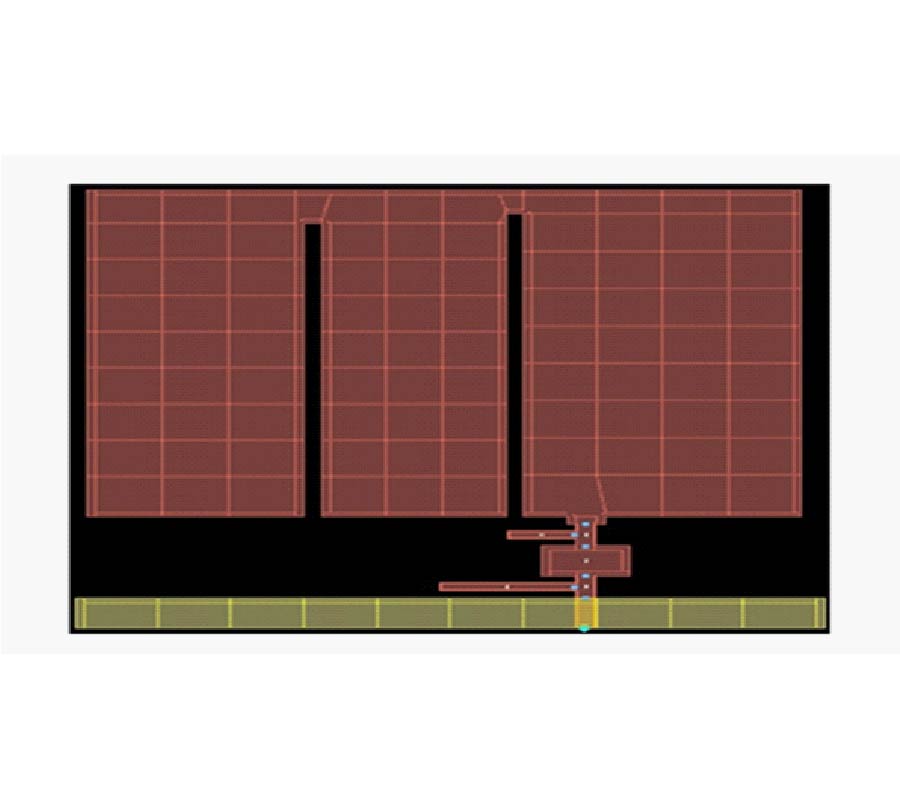
In this paper, a technical concept and design of circular polarization detection patch array antenna using a double-balanced RF multiplier is proposed. The microwave integration technology is effectively employed to realize the proposed array antenna. The double-balanced RF multiplier is integrated with an orthogonal planar array antenna. The array antenna which consists of 12 patch elements and the RF multiplier is realized by embedding four zero bias Schottky barrier diodes on a slot-ring. The Both-sided MIC technology is successfully employed to realize the array antenna. The array antenna is realized in a very simple and compact structure as all the antenna elements, feeding circuit and the RF multiplier are integrated on both sides of a dielectric substrate. The ability of the proposed array antenna to detect the orthogonal circular polarization (LHCP and RHCP) is successfully confirmed by the experimental investigation.
ORTHOGONAL CIRCULAR POLARIZATION DETECTION PATCH ARRAY ANTENNA USING DOUBLE-BALANCED RF MULTIPLIER
2012-06-06
PIER M
Vol. 24, 235-249
Antenna Pattern Reconstruction Directly from Nonredundant Near-Field Measurements Collected by a Cylindrical Facility
Francesco D'Agostino , Flaminio Ferrara , Claudio Gennarelli , Gianluca Gennarelli , Rocco Guerriero and Massimo Migliozzi
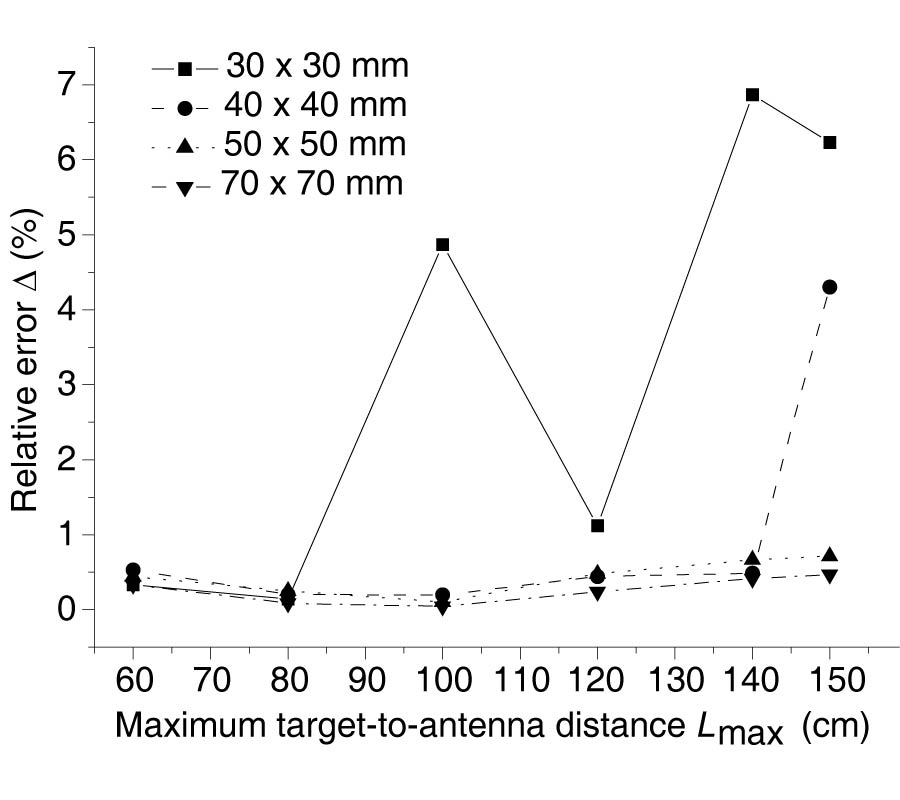
This paper is devoted to the experimental validation of two direct near-field-far-field transformations with cylindrical scanning for elongated antennas requiring a minimum number of near-field measurements. They rely on the nonredundant sampling representations of electromagnetic fields and employ two different source modellings suitable to deal with electrically long antennas. These transformations allow the accurate reconstruction of the antenna far-field pattern in any cut plane directly from the collected near-field data without interpolating them. Their effectiveness is assessed by the good agreement between the so recovered far-field patterns and those obtained by means of the classical near-field-far-field transformation with cylindrical scanning.
ANTENNA PATTERN RECONSTRUCTION DIRECTLY FROM NONREDUNDANT NEAR-FIELD MEASUREMENTS COLLECTED BY A CYLINDRICAL FACILITY
2012-06-06
PIER
Vol. 128, 503-518
Motion Compensation for Squint Mode Spotlight SAR Imaging Using Efficient 2D Interpolation
Sang-Hong Park , Jong-Il Park and Kyung-Tae Kim
In the squint mode airborne spotlight synthetic aperture radar system using the range migration algorithm (RMA), autofocus (AF) technique yields poor results due to the squint spreading of the point spread function (PSF) of a scatterer. Thus, two-dimensional (2D) interpolation is required to direct PSF blurring in cross-range direction, to improve the cross-range resolution ¢y and to remove the spatially-varying sidelobe. Because conventional 2D interpolation requires huge computation time and yields large computation errors, we propose an efficient 2D interpolation technique for squint-mode RMA composed of two 1D interpolations. Simulation results using the measured turbulence data show ¢y was improved considerably and PSF was successfully focused by the proposed method with a reduced computation time.
MOTION COMPENSATION FOR SQUINT MODE SPOTLIGHT SAR IMAGING USING EFFICIENT 2D INTERPOLATION
2012-06-06
PIER
Vol. 128, 479-502
Bistatic FMCW SAR Raw Signal Simulator for Extended Scenes
Yue Liu , Yun-Kai Deng , Robert Wang and Xiaoxue Jia
By mounting the transmitter and receiver of Frequency Modulated Continuous Wave (FMCW) Synthetic Aperture Radar (SAR) system on separate platforms, bistatic FMCW SAR offers more considerable capabilities, reliability and flexibility while maintaining the small size, low cost and agile reaction. The bistatic FMCW SAR raw signal simulator is highly required to quantitatively support the design of bistatic FMCW SAR, to help mission planning, test processing algorithms, and analyze jamming and noises. Bistatic FMCW SAR raw signal can be exactly simulated target-by-target in time domain but with extremely time and memory consuming, especially when extended scenes are considered. In this paper, bistatic FMCW SAR signal model and Bistatic Point Target Reference Spectrum (BPTRS) is proposed, based on which a raw signal simulator is developed in the 2-D frequency domain for the first time, where Chirp-Z Transform (CZT) is used to formulate the range migration terms. By taking advantage of Fast Fourier Transform (FFT), the proposed raw signal simulator highly reduces the computational load with respect to the time domain approach. The simulated raw data is verified by analyzing the corresponding images focused by Range Doppler Algorithm (RDA).
BISTATIC FMCW SAR RAW SIGNAL SIMULATOR FOR EXTENDED SCENES
2012-06-05
PIER
Vol. 128, 457-477
A Study on Millimeter-Wave Imaging of Concealed Objects: Application Using Back-Projection Algorithm
Sevket Demirci , Harun Cetinkaya , Enes Yigit , Caner Özdemir and Alexey A. Vertiy
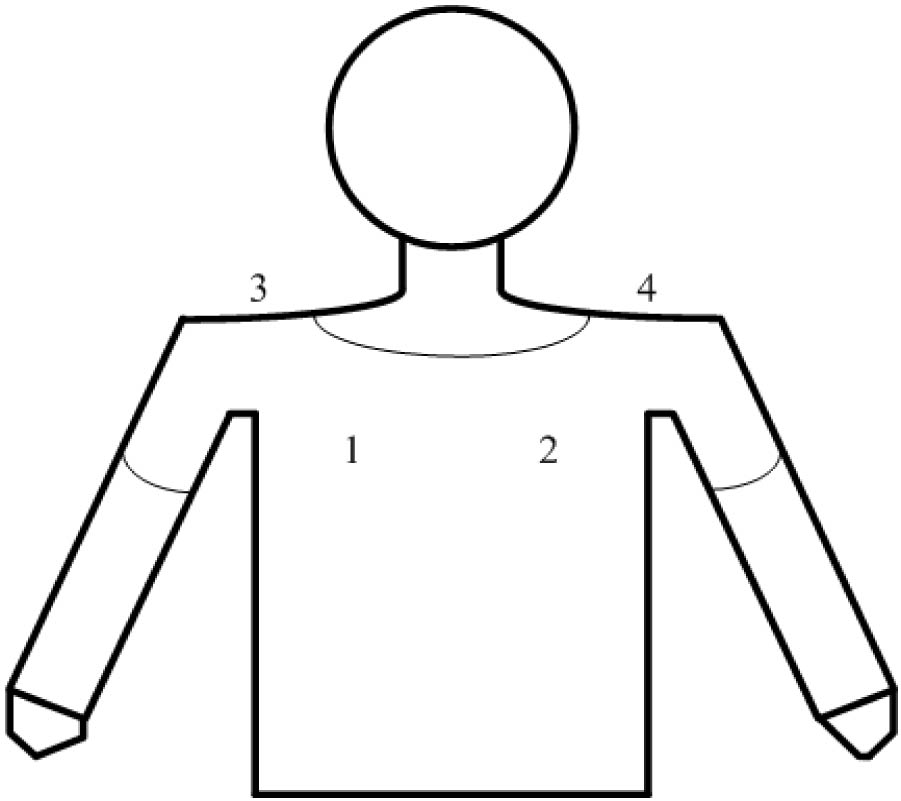
Millimeter-wave (MMW) imaging is a powerful tool for the detection of objects concealed under clothing. Several factors including different kinds of objects, variety of covering materials and their thickness, accurate imaging of near-field scattered data affect the success of detection. To practice with such considerations, this paper presents the two-dimensional (2D) images of different targets hidden under various fabric sheets. The W-band inverse synthetic aperture radar (ISAR) data of various target-covering situations are acquired and imaged by applying both the focusing operator based inversion algorithm and the spherical back-projection algorithm. Results of these algorithms are demonstrated and compared to each other to assess the performance of the MMW imaging in detecting the concealed objects of both metallic and dielectric types.
A STUDY ON MILLIMETER-WAVE IMAGING OF CONCEALED OBJECTS: APPLICATION USING BACK-PROJECTION ALGORITHM
2012-06-04
PIER B
Vol. 41, 213-230
A Multi-Dimensional Adaptive Sampling Method for Analysis and Design of Frequnecy Selective Surface with Arbitrary Element
Xin Ma , Guobin Wan and Wei Wan
A fast and efficient multi-dimensional adaptive sampling method (ASM) based on Stoer-Bulirsch (S-B) algorithm for frequency selective surface (FSS) analysis and design is presented in this paper. The multivariate rational function is established according to the functional relation of the scattering parameters with frequency and direction of incident wave, medium parameters and geometry dimensions of FSS structure, et al. In order to evaluate the values of the multivariate rational function fully automatically without determining the coefficients of the targeted rational interpolant, the one-dimensional S-B algorithm is expanded into multidimensional method. The sampling points in each dimension are chosen at the areas of maximum error in an adaptive way. The recursive interpolation results of one dimension are used as the initial values of next dimension in the recursive tabular until n-dimension recursive interpolation is accomplished. The initial values of recursive algorithm are calculated by spectral domain method of moments (MoM) at every sample point. The current distribution of FSS cell is predicted by Rao-Wilton-Glisson (RWG) subdomain basis functions which are applicable for arbitrarily shape elements. Four examples, including FSS with the eight-legged, cross and ring elements and FSS radome enclosed antennas, are considered to demonstrate the feasibility of applying the multi-dimensional ASM to analysis and optimal design of FSS. Numerical results show that the proposed method is superior in computation efficiency compared to the direct MoM. Good agreement between the proposed technique and the direct MoM is observed.
A MULTI-DIMENSIONAL ADAPTIVE SAMPLING METHOD FOR ANALYSIS AND DESIGN OF FREQUNECY SELECTIVE SURFACE WITH ARBITRARY ELEMENT
2012-06-04
PIER B
Vol. 41, 187-211
Analysis of Coupled Microstrip Lines for Quad-Band Equal Power Dividers/Combiners
Ayman Mohamed Elsayed El-Tager , Abdelrahman Mohamed El-Akhdar and Hadia El-Hennawy
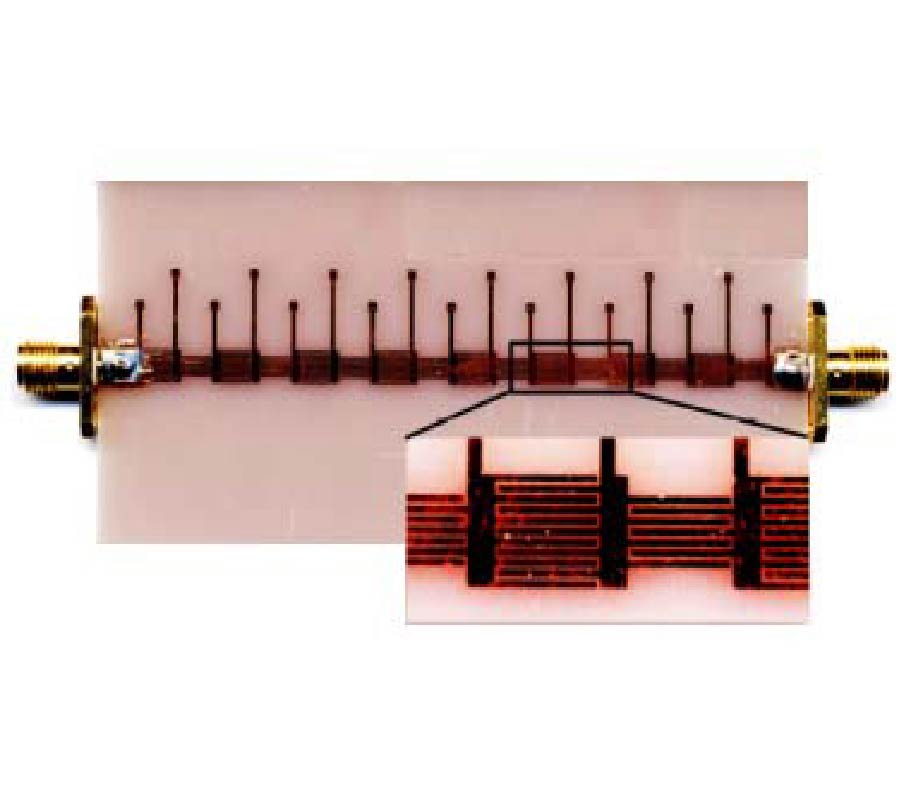
This paper presents a novel quad-band power divider with equal power division ratio. The proposed power divider is realized using two cascaded sections of dual-band transformers based on coupled microstrip lines. Limitations of using dual-band quarter-wavelength transformers based on coupled lines are studied through parametric analysis to obtain useful design guidelines related to available fabrication facilities. General closed-form expressions are used to calculate design parameters. To verify analysis and design methodologies, a prototype of quad-band equal power divider is proposed. Compared to conventional quad-band power dividers using sections of transmission line transformers the proposed power divider records a size reduction of about 20% and reduced parasitic effects at higher frequencies according to the usage of only two resistors instead of four with much smaller ohmic values. In addition, a quad-band power divider is proposed, fabricated and measured for 3G and 4G applications at 2.1, 2.5, 3.5, and 3.8 GHz frequencies. Measured and simulated data are in very good match which validates the novel design.
ANALYSIS OF COUPLED MICROSTRIP LINES FOR QUAD-BAND EQUAL POWER DIVIDERS/COMBINERS
2012-06-04
PIER Letters
Vol. 32, 81-90
Thermal Expansion of Photonic Band Gap for One Dimensional Photonic Crystal
Bhuvneshwer Suthar , Vipin Kumar , Arun Kumar , Khundrakpam Saratchandra Singh and Anami Bhargava
The effect of temperature on the photonic band gap has been investigated. One dimensional photonic crystal in the form of Si/air multilayer system has been studied in this communication. The refractive index of silicon layers is taken as a function of temperature and wavelength both. Therefore, this study may be considered to be physically more realistic. It may be useful for computing the optical properties for wider range of wavelength as well as temperature. We can use the proposed structure as temperature sensing device, narrow band optical filter and in many optical systems.
THERMAL EXPANSION OF PHOTONIC BAND GAP FOR ONE DIMENSIONAL PHOTONIC CRYSTAL
2012-06-04
PIER Letters
Vol. 32, 69-79
Bandwidth Enhancement of Microstrip Line and CPW-Fed Asymmetrical Slot Antennas
Debasis Mitra , Dhruba Das and Sekhar Ranjan Bhadra Chaudhuri
In this paper, a bandwidth enhancement technique of asymmetrical slot antennas with two different excitation methods is presented. One method of excitation is the microstrip line feed, and the other is the coplanar waveguide feed. The rectangular slot excited by microstrip line feed gives an impedance bandwidth of 14.76% (|S11| < −10 dB). When the rectangular slot is excited by a coplanar waveguide (CPW), it gives an impedance bandwidth of 26.61%. Both impedance and radiation characteristics of these antennas are studied.
BANDWIDTH ENHANCEMENT OF MICROSTRIP LINE AND CPW-FED ASYMMETRICAL SLOT ANTENNAS
2012-06-04
PIER M
Vol. 24, 221-234
TM Mode Analysis in a Metamaterial Based Dielectric Waveguide
Cheng Jin , Arokiaswami Alphones and Manisha M. Dhirendra
A TM mode analysis in a metamaterial based dielectric waveguide is proposed and introduced. Rigorously derived from Maxwell's equations, the dispersion properties are focussed on the fundamental properties of bound, surface and leaky modes of metamaterial based dielectric waveguide. Comparing with the conventional right handed material based waveguide, typical backward wave characteristic of volume and surface wave modes are found from the distribution of Poynting power to the transverse direction of waveguide.
TM MODE ANALYSIS IN A METAMATERIAL BASED DIELECTRIC WAVEGUIDE
2012-06-02
PIER B
Vol. 41, 153-185
Human Head Interaction Over Ground Plane Booster Antenna Technology: Functional and Biological Analysis
Aurora Andujar , Jaume Anguera , Cristina Picher and Carles Puente
Handset antennas strongly interact with the human body. When a user holds a handset during a phone call, the proximity of the human head considerably affects the antenna performance and eventually the quality of the wireless connection. Consequently, the assessment of the antenna parameters regarding free-space conditions is not enough to fully characterize the performance of handset antennas and a further analysis taking into account human head interaction is required. In this sense, this paper presents a study that deals with the human head interaction concerning two aspects: functional and biological. The first one analyzes the effect of the human head over the main antenna parameters (reflection coefficient, efficiency, and radiation pattern) whereas the second one evaluates the impact of the antenna over the human head in terms of Specific Absorption Rate (SAR). Four representative prototypes of radiating structures are measured in both conditions in order to compare their performance: a dual-band Planar Inverted F Antenna (PIFA), a hexa-band PIFA with a slotted ground plane, a set of coupled monopoles, and a new architecture referred as compact radiating system based on the excitation of the ground plane through a set of non-resonant ground plane boosters. A figure of merit that relates the antenna efficiency with the SAR values is proposed for comparison purposes. The results demonstrate that losses caused by the human head power absorption can be minimized if the antennas are placed in the edge located at a higher distance from the human cheek. Furthermore, the study reveals the robustness of the compact radiating system taking into account the human presence. This fact reinforces its position as an alternative solution to current handset antennas, capable of providing penta-band operation (GSM850/900, DCS, PCS, and UMTS) through ground plane boosters featured by their reduced volume of only 250 mm3.
HUMAN HEAD INTERACTION OVER GROUND PLANE BOOSTER ANTENNA TECHNOLOGY:  FUNCTIONAL AND BIOLOGICAL ANALYSIS
2012-06-02
PIER
Vol. 128, 441-456
Development of a Broadband Horizontally Polarized Omnidirectional Planar Antenna and Its Array for Base Stations
Xu Lin Quan , Rong-Lin Li , Jian Ye Wang and Yue Hui Cui
A novel broadband horizontally polarized (HP) omnidirectional planar antenna is developed for mobile communications. The proposed antenna consists of four printed arc dipoles that form a circular loop for HP omnidirectional radiation. A broadband feeding network which includes four broadband baluns and an impedance matching circuit is designed to excite the four arc dipoles. An eight-element linear antenna array is developed for 2G/3G base stations. A broadband power divider is used to feed the antenna array. Experimental results show that the HP omnidirectional antenna element has a bandwidth of 31% (1.66-2.27 GHz) while its array has a bandwidth of 34% (1.67-2.35 GHz) and an omnidirectional antenna gain of ~8 dBi. Both of the antenna element and its array have good omnidirectivity over the 10-dB return loss bandwidth. Simulated and measured results for the antenna element and its array are presented.
DEVELOPMENT OF A BROADBAND HORIZONTALLY POLARIZED OMNIDIRECTIONAL PLANAR ANTENNA AND ITS ARRAY FOR BASE STATIONS
2012-06-02
PIER
Vol. 128, 419-440
An Active Ring Slot with RF MEMS Switchable Radial Stubs for Reconfigurable Frequency Selective Surface Applications
Rosalba Martinez-Lopez , Jorge Rodriguez-Cuevas , Alexander E. Martynyuk and Jose I. Martinez-Lopez
An active ring slot resonator loaded by switchable radial stubs is investigated. It is shown that this element can be used as the unit cell of a switchable reconfigurable frequency selective surface (RFSS). Equivalent circuit and full-wave mathematical models are obtained to evaluate the reflection characteristics of the RFSS based on this element. The possibility to obtain different resonant transmission frequencies is discussed. The mathematical model developed is used to design an X band RFSS capable of obtaining resonant frequencies at 9.65, 10.28, 10.83 and 12.05 GHz. Commercially available RF MEMS switches are used to evaluate the effect of the off-state capacitances over the response of the periodic structure. To validate the numerical simulation results, different active and passive diaphragms were designed, fabricated, and tested using the waveguide simulator. A good agreement between numerical and measured results was found.
AN ACTIVE RING SLOT WITH RF MEMS SWITCHABLE RADIAL STUBS FOR RECONFIGURABLE FREQUENCY SELECTIVE SURFACE APPLICATIONS
2012-06-02
PIER
Vol. 128, 399-418
Specific Absorption Rate Computations with a Nodal-Based Finite Element Formulation
Ruben Otin and Herve Gromat
The aim of this work is to asses the performance of a nodal-based finite element formulation when applied to the computation of specific absorption rate (SAR) problems. This formulation solves numerically the regularized Maxwell equations using nodal elements and, in principle, it offers several advantages: It provides spurious-free solutions and well-conditioned matrices without the need of Lagrange multipliers or scalar potentials. Its integral representation is well-suited for hybridization with integral numerical techniques because of a low-order singular kernel. Also, the nodal approximation of the electromagnetic problem is easier to couple to a thermal finite element problem which usually also employs nodal elements. But, on the other hand, we need to take special care of the points of the domain where the field is singular to obtain accurate solutions. In this paper, we show the impact of the singularities on the performance of the proposed finite element formulation and how its good features are affected when solving real-life SAR problems.1
SPECIFIC ABSORPTION RATE COMPUTATIONS WITH A NODAL-BASED FINITE ELEMENT FORMULATION
2012-06-02
PIER
Vol. 128, 381-398
A Wideband Planar Monopole Antenna Array with Circular Polarized and Band-Notched Characteristics
Wang-Sang Lee , Kyoung-Sub Oh and Jong-Won Yu
A wideband circular polarized planar monopole antenna array (PMAA) that employs dual band-notched characteristics is presented in this paper. The proposed antenna array is formed by four pinwheel-shaped folded planar monopole antennas (PMAs) in order to improve the performance of circular polarization and high directivity. Also, it achieves low-profile, smallsized structure. The attractive characteristics of the proposed PMAA are a wide impedance bandwidth of 87.3% (1 GHz to 2.55 GHz), the 3 dB axialratio (AR) bandwidth of 92.3% (1.05 GHz to 2.85 GHz) excluding dual notch bands, the total bandwidth of 35% (1.8 GHz to 2.55 GHz), and the maximum gain of 8.24 dBic within the total bandwidh. Moreover, in order to generate dual band-notched characteristics in a circular polarized antenna, a folded PMAA with multiple U radiators and inverted W slots is proposed.
A WIDEBAND PLANAR MONOPOLE ANTENNA ARRAY WITH CIRCULAR POLARIZED AND BAND-NOTCHED CHARACTERISTICS
2012-06-02
PIER
Vol. 128, 365-380
Application of a Useful Uncertainty Analysis as a Metric Tool for Assessing the Performance of Electromagnetic Properties Retrieval Methods of Bianisotropic Metamaterials
Ugur Cem Hasar , Joaquim Jose Barroso , Mehmet Ertugrul , Cumali Sabah and Bulent Cavusoglu
We applied a useful uncertainty model, ignored in most metamaterials retrieval studies, to monitor the accuracy of retrieved electromagnetic properties of bianisotropic metamaterial (MM) slabs composed of split-ring resonators and cut wires. Two different MM slab structures are considered to make the analysis complete. As uncertaintymaking factors, we took into consideration of uncertainties in scattering (S-) parameters of bianisotropic MM slabs as well as the length of these slabs. The applied uncertainty model is based upon considering the effect of minute change (differential) in uncertainty factors on the retrieved electromagnetic properties of bianisotropic MM slabs. The significant results concluded from the analysis are: 1) any abrupt changes in the phase of S-parameters of bianisotropic MM slabs remarkably influence the retrieved electromagnetic properties; 2) any small-scale loss (i.e., the loss of the substrate) in the bianisotropic MM slabs improves the accuracy of the retrieved electromagnetic properties of these slabs; and 3) precise knowledge of bianisotropic MM slab lengths are required for correct analysis of exotic properties of these slabs. The presented uncertainty analysis can be utilized as a metric tool for evaluating various retrieval methods of MM slabs in the literature.
APPLICATION OF A USEFUL UNCERTAINTY ANALYSIS AS A METRIC TOOL FOR ASSESSING THE PERFORMANCE OF ELECTROMAGNETIC PROPERTIES RETRIEVAL METHODS OF BIANISOTROPIC METAMATERIALS
2012-06-02
PIER
Vol. 128, 347-363
Path-Loss Prediction of Radio Wave Propagation in an Orchard by Using Modified UTD Method
Kittisak Phaebua , Chuwong Phongcharoenpanich , Monai Krairiksh and Titipong Lertwiriyaprapa
The proposed theoretical path-loss prediction procedure and measured results of radio wave propagation in an orchard environment are presented. The wireless sensor network (WSN) in a Durian orchard is primarily chosen to be an example of this study. The three-dimensional (3-D) modified uniform geometrical theory of diffraction (UTD) for curved impedance surface is employed for theoretical path-loss prediction in this paper. The orchard scenario is modeled by using canonical geometries such as a dielectric flat surface and cylindrical structures with an impedance surface to respectively represent ground and trees. Moreover, since the wireless sensor node is attached to the outside peel of a hanging durian fruit, the fruit partially acts as a wireless sensor node. Therefore, to obtain greater accuracy in the source radiation pattern, the Gaussian beam (GB) expansion via the CSP technique is used for source modeling. The path loss prediction from the proposed numerical procedure and the measured results are in good agreement. The proposed numerical procedure to calculate the path loss from actual scenario of the orchard is useful for network planning such as the pre-harvesting WSN system and other orchard scenarios.
PATH-LOSS PREDICTION OF RADIO WAVE PROPAGATION IN AN ORCHARD BY USING MODIFIED UTD METHOD
2012-06-01
PIER Letters
Vol. 32, 59-68
Active Slot-Ring Antennas as a Receivers
Somnath Chatterjee and Baidyanath N. Biswas
A Gunn mounted active microstrip slot-ring antenna (ASRA) has been investigated for the reception of FM microwave signal. Current well/valley phenomenon has been successfully utilized to demodulate the modulation information. The monolithic behaviour of an active slot-ring antenna as a lock-in amplifier, FM (Frequency Modulation) to AM (Amplitude Modulation) converter and square law detector has been demonstrated in this paper. Theoretical analysis coupled with experimental results has been presented. The proposed receiving scheme is unique in the sense that it does not require IF electronics for the purpose of demodulation. It also works well in a multi-channel environment due to the excellent noise-squelching property of an Injection Locked Gunn Oscillator.
ACTIVE SLOT-RING ANTENNAS AS A RECEIVERS
2012-06-01
PIER Letters
Vol. 32, 49-57
A Novel Circular Slot Antenna with Two Pairs of T-Shaped Slots for WLAN/WiMAX Applications
Jiao-Jiao Xie , Ying-Zeng Yin , Shuan-Long Pan and Liang Sun
A novel circular slot antenna with two pairs of T-shaped slots is proposed for satisfying WLAN and WiMAX applications simultaneously. The proposed antenna consists of a 50 Ω microstrip feed line with a tuning stub on the top and a circular slot ground plane with an embedded straight strip and two pairs of etched T-shaped slots on the bottom side. By carefully adjusting the length of the straight strip, the proposed antenna can operate in two separate bands. With the use of two pairs of T-shaped slots, a new resonant frequency has been excited, and the impedance bandwidth can be widened. The measured results show that the 10 dB return loss bandwidths of the proposed antenna are 760 MHz (3.18-3.94 GHz) and 1002 MHz (5.05-6.07 GHz), which can cover both 5.2/5.8 GHz WLAN bands and 3.5/5.5 GHz WiMAX bands. The design evolution and parametric study of the proposed antenna are presented to provide information for designing and optimizing such an antenna. Furthermore, good omnidirectional radiation patterns with appreciable antenna gain are obtained over the operating bands.
A NOVEL CIRCULAR SLOT ANTENNA WITH TWO PAIRS OF T-SHAPED SLOTS FOR WLAN/WIMAX APPLICATIONS