Search Results(13800)

2012-06-01
PIER C
Vol. 30, 53-64
Experimental Characterization of a 434 MHz Wireless Energy Link for Medical Applications
Giuseppina Monti , Luciano Tarricone and Carlo Trane
This paper presents an experimental study of the performance of a wireless resonant energy link for implantable biomedical devices. More specifically, the proposed system consists of two planar resonators: a primary resonator that is connected to a power source and operates outside the body, and a secondary resonator that is connected to the implanted device and operates inside the body. Each resonator is a planar spiral resonator; the wireless power transmission is obtained by exploiting the magnetic coupling between the two resonators when they are operating at small distances. A prototype working in the ISM band centered at 434 MHz has been developed and analyzed. Reported results confirm that the proposed system is a viable solution for wirelessly providing implantable devices with the power necessary for operation.
EXPERIMENTAL CHARACTERIZATION OF A 434 MHZ WIRELESS ENERGY LINK FOR MEDICAL APPLICATIONS
2012-06-01
PIER C
Vol. 30, 41-52
Design of Millimeter-Wave Wideband Mixer with a Novel IF Block
Ming Zhou Zhan , Wei Zhao and Rui-Min Xu
In this paper, a novel suspended stripline IF block is proposed for the design of millimeter-wave finline balanced mixer which covers the full U-band. In high IF frequency applications, IF block of a finline mixer is needed to act as open terminal for IF signal, and is required to have minimum attenuation for LO signal. For the purpose of reducing the insertion loss of the IF block in the LO path, a novel compact low loss IF block is developed for the first time. Then the IF block, two Schottky diodes, a LPF, a finline to waveguide transition and a suspended stripline to waveguide transition are integrated together to compose the mixer. The RF port matching is designed by using impedance substitution method to achieve better RF return loss. The measured results show that a conversion loss of 4.1 to 9.6 dB over a 20 GHz instantaneous IF bandwidth has been achieved when sweeping RF from 40 to 60 GHz under fixed LO condition. The P-1dB at RF port is higher than 5 dBm, and the return loss of RF port is between -18 to -4 dB.
DESIGN OF MILLIMETER-WAVE WIDEBAND MIXER WITH A NOVEL IF BLOCK
2012-06-01
PIER M
Vol. 24, 209-220
The Effect of Power-Line Sagged Conductors on the Evaluation of the Differential Voltage in a Nearby Circuit at Ground Level
Jose Antonio Marinho Brandao Faria
Overhead-line power conductors do not run parallel to the ground; they actually sag between adjacent towers, defining catenary curves. However, in the analysis of inductive coupling phenomena between power lines and neighboring circuits, the standard approach to deal with the sag effect is to assign a constant average height to power line conductors. The purpose of this research is to assess the accuracy of such an ordinary procedure. To do that, two different approaches are developed in order to more accurately account for the sag effect: a pure segmentation method, and a corrected segmentation method which takes into consideration the real curvature of the sagged conductors. The latter, and novel, approach is compared with the other options. Calculations presented in this work utilize magnetic vector potential as an analysis tool.
THE EFFECT OF POWER-LINE SAGGED CONDUCTORS ON THE EVALUATION OF THE DIFFERENTIAL VOLTAGE IN A NEARBY CIRCUIT AT GROUND LEVEL
2012-06-01
PIER
Vol. 128, 331-346
Design of Low-Loss and Highly-Selective CMOS Active Bandpass Filter at k-Band
Sen Wang and Bo-Zong Huang
In this paper, a second-order Chebyshev active bandpass filter (BPF) with three finite transmission zeros is presented. The filter utilizes a tapped-inductor feedback technique to compensate resistive losses of on-chip inductors, and a shunt-feedback inductor between input and output ports to achieve the transmission zeros. Moreover, one transmission zero is in the lower stopband, and two transmission zeros are in the upper stopband, thus improving the selectivity of the filter significantly. The filter is designed and fabricated in a standard 0.18-μm CMOS technology with a chip area of 0.57 mm×0.65 mm including all testing pads. The circuit draws 6 mA from a 0.7-V supply voltage. Additionally, the filter achieves a 1.65-dB insertion loss and 13.2-dB return loss with a 17% 3-dB bandwidth at 23.5 GHz. The measured NF and input P1 dB is 6.7 dB and -3.5 dBm. The rejection levels at the transmission zeros are greater than 15.2 dB. Finally, the large-signal characterizations are also investigated by the 1-dB compression point (P1 dB) of the filter.
DESIGN OF LOW-LOSS AND HIGHLY-SELECTIVE CMOS ACTIVE BANDPASS FILTER AT K-BAND
2012-06-01
PIER
Vol. 128, 313-329
Printed Wideband Antenna with Chip-Capacitor-Loaded Inductive Strip for LTE/GSM/UMTS WWAN Wireless USB Dongle Applications
Yong-Ling Ban , Jin-Hua Chen , Si-Cheng Sun , Joshua Le-Wei Li and Jin-Hong Guo
This paper proposes a planar printed wideband antenna for eight-band LTE/GSM/UMTS WWAN wireless USB dongle applications. An inductive shorted strip with a chip capacitor loaded is employed in order to improve the characteristics of small-size terminal antennas which usually have a narrow band over the LTE700/GSM850/900 (698-960 MHz) operation. While the desired upper band is mainly realized by the rectangular radiating patch, covering DCS1800/PCS1900/UMTS2100/LTE2300/2500 (1710-2690 MHz) band. Easily printed on a 0.8-mm thick FR4 dielectric substrate of size 20×70 mm², the proposed antenna structure occupies a compact size of 20×19 mm². Then the proposed design can be attached to laptop computer by the USB interface. Good radiation efficiency and antenna gain for frequencies over the desired operating bands is obtained. Detailed design considerations of the proposed antenna are described, and both experimental and simulation results are also presented and discussed.
PRINTED WIDEBAND ANTENNA WITH CHIP-CAPACITOR-LOADED INDUCTIVE STRIP FOR LTE/GSM/UMTS WWAN WIRELESS USB DONGLE APPLICATIONS
2012-06-01
PIER
Vol. 128, 291-311
Adaptive Clutter Suppression for Airborne Random Pulse Repetition Interval Radar Based on Compressed Sensing
Zhen Liu , Xizhang Wei and Xiang Li
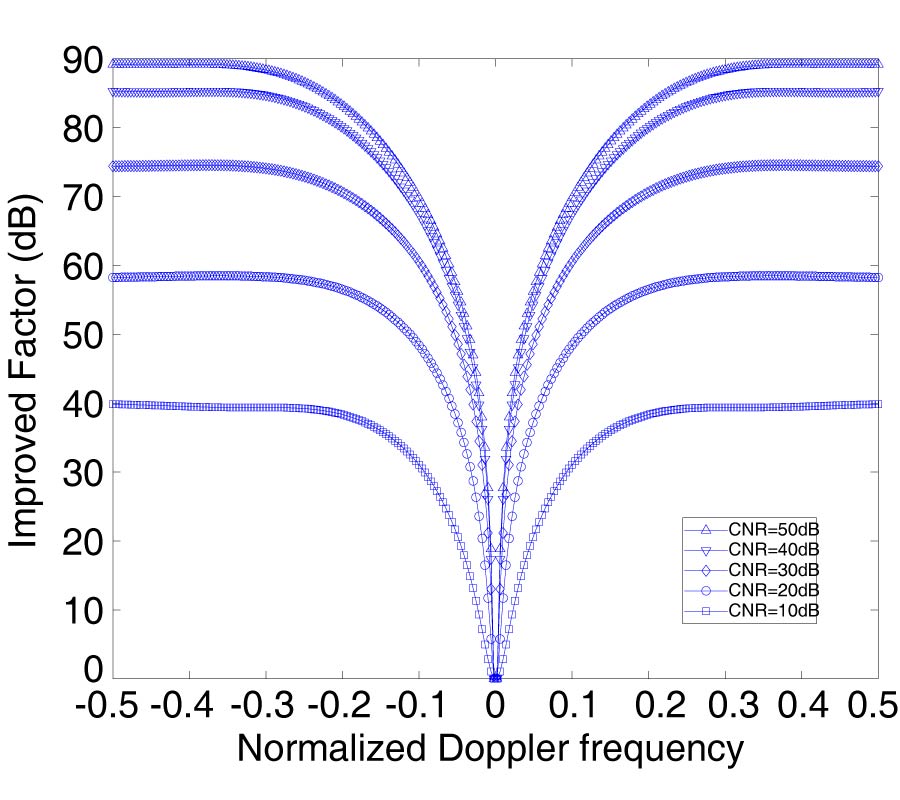
We present an adaptive clutter suppression method for airborne random pulse repetition interval radar by using prior knowledge of clutter boundary in Doppler spectrum. In this method, by exploiting the intrinsic sparsity, compressed sensing based on iterative grid optimization (CS-IGO) is applied to directly recover the clutter spectrum with only the test range cell instead of nonhomogeneous training data from adjacent range cells. Since the sensing matrix and clutter spectrum obtained by CS-IGO are well adapted to the data, the prewhitening filter can be effectively obtained to cancel the mainlobe clutter. Further, the clutter residue can be suppressed by the iterative reweighted l1 minimization to enhance the target response. Simulation results show that the approach is capable of effective suppression of clutter and precise recovery of targets' unambiguous spectrum, offering a high performance of output signal to clutter and noise ratio.
ADAPTIVE CLUTTER SUPPRESSION FOR AIRBORNE RANDOM PULSE REPETITION INTERVAL RADAR BASED ON COMPRESSED SENSING
2012-06-01
PIER
Vol. 128, 267-290
Multilayer Model Formulation and Analysis of Radar Backscattering from Sea Ice
Mohan Dass Albert , Yu Jen Lee , Hong-Tat Ewe and Hean-Teik Chuah
The Antarctic continent is an extremely suitable environment for the application of remote sensing technology as it is one of the harshest places on earth. Satellite images of the terrain can be properly interpreted with thorough understanding of the microwave scattering process. The proper model development for backscattering can be used to test the assumptions on the dominating scattering mechanisms. In this paper, the formulation and analysis of a multilayer model used for sea ice terrain is presented. The multilayer model is extended from the previous single layer model developed based on the Radiative Transfer theory. The Radiative Transfer theory is chosen because of its simplicity and ability to incorporate multiple scattering effects into the calculations. The propagation of energy in the medium is characterized by the extinction and phase matrices. The model also incorporates the Dense Medium Phase and Amplitude Correction Theory (DM-PACT) where it takes into account the close spacing effect among scatterers. The air-snow interface, snowsea ice interface and sea ice-ocean interface are modelled using the Integral Equation Method (IEM). The simulated backscattering coefficients for co- and crosspolarization using the developed model for 1 GHz and 10 GHz are presented. In addition, the simulated backscattering coefficients from the multilayer model were compared with the measurement results obtained from Coordinated Eastern Artic Experiment (CEAREX) (Grenfell, 1992) and with the results obtained from the model developed by Saibun Tjuatja (based on the Matrix Doubling method) in 1992.
MULTILAYER MODEL FORMULATION AND ANALYSIS OF RADAR BACKSCATTERING FROM SEA ICE
2012-05-31
PIER B
Vol. 41, 137-152
A Novel Green Antenna Phase-Shift System with Data Acquisition Boards
Mohd Faizal Bin Jamlos , Tharek Bin Abdul Rahman , Muhammad Ramlee Kamarudin , Mohd Aminudin Jamlos , Mohd Asmi Romli , Zahari Awang Ahmad , Mohd Fareq Bin Abd Malek , Muzammil Jusoh , Nur Farhan Kahar and Sharul Kamal Bin Abd Rahim
A novel green phase shifter system is proposed in this research. The system is developed by a combination of reconfigurable beam steering antennas and data acquisition (DAQ) boards. A combination of two reconfigurable beam steering antennas, located side-by-side, forms a spatial configuration structure with a fabricated `green' element plank of rice husk placed in between. The concept of a spatial configuration technique has been `mutated' by shifting the structure of spiral feed line and aperture slots of first beam steering antenna by as much as 45º. The PIN diode switches connected to the DAQ boards enable the intelligent capability of the spatial antennas. The activation of certain degree radiation patterns of either the first beam steering antenna or the second beam steering antenna depends on the memory of the DAQ boards --- Beam Manager. When an intruder comes from the cardinal angles of 0º/360º, 90º, 180º, or 270º, its range and angles' location will be automatically detected by the first antenna through the output ports of the 1st DAQ: P1.0, P1.1, P1.2, and P1.3. The second antenna is then activated by the output ports of the 2nd DAQ: P2.0 up to P2.3, to adaptively maneuver the beam towards four different ordinal directions of 45º, 135º, 225º, and 315º. As a result, this system collectively contributes to the development of eight angles of radiation patterns, which can be rotated in 45º steps within 0.01 ms and successfully cover 360º without any uncovered and overlapped angle; 0°/360°, 45º, 90°, 135º, 180°, 225º, 270°, and 315º. Moreover, a mutual coupling effect generated by the spatial configuration of both antennas is alleviated by the element plank of rice husk, whose width, length, and thickness are 45 mm, 150 mm, and 10 mm, respectively. Possessing the characteristics of an adaptive new phase shifter concept and assisted by the green element of a rice husk, this system is potentially an effective way to decrease the number of drop outs and lost connections, and provides larger coverage. It is a promising candidate for installation with a WiMAX application.
A NOVEL GREEN ANTENNA PHASE-SHIFT SYSTEM WITH DATA ACQUISITION BOARDS
2012-05-31
PIER B
Vol. 41, 121-136
Mutual Coupling Analysis Using FDTD for Dielectric Resonator Antenna Reflectarray Radiation Prediction
Izyani Dzulkipli , Mohd Haizal Jamaluddin , Raphael Gillard , Ronan Sauleau , Razali Ngah , Muhammad Ramlee Kamarudin , Norhudah Seman and Mohamad Kamal Abd Rahim
A simulation technique based on Finite-Difference Time-Domain (FDTD) is used to analyze mutual coupling effects in reflectarray environment. The neighbouring element method has the ability to analyze actual non-identical reflectarray unit-cell accurately compared to the traditional Floquet simulation which assumes all unit-cell is identical. It is also found that the nearest neighbouring unit-cell located in E-plane has a larger mutual coupling effects compared to the neighbouring unit-cell in H-plane. A good agreement is shown between simulation and measurement results. This technique presents a new prediction method for the radiation pattern of reflectarray antenna.
MUTUAL COUPLING ANALYSIS USING FDTD FOR DIELECTRIC RESONATOR ANTENNA REFLECTARRAY RADIATION PREDICTION
2012-05-31
PIER C
Vol. 30, 27-39
Platform-Robust Passive UHF RFID Tags: A Case-Study in Robotics
Luca Catarinucci , Salvatore Tedesco , Danilo De Donno and Luciano Tarricone
The use of Radio Frequency IDentification (RFID) technology in a large array of contexts is a matter of fact. In many cases, such as in robotic applications, the RFID tags should satisfy specific requisites so that read range, platform robustness, radiation properties, cost, and size must be properly taken into account during the design phase. In this work, the specific requirements of tags for RFID-assisted localization and navigation of mobile robots are highlighted and discussed. On such basis, an ad-hoc platform-robust RFID tag is designed, realized and exhaustively tested through both simulations and measurements. The achieved results are impressive and demonstrate the appropriateness of the proposed tag to operate in application scenarios where performance stability is mandatory.
PLATFORM-ROBUST PASSIVE UHF RFID TAGS: A CASE-STUDY IN ROBOTICS
2012-05-31
PIER
Vol. 128, 249-265
Finite Element Matrix Generation on a GPU
Adam Dziekonski , Piotr Sypek , Adam Lamecki and Michal Mrozowski
This paper presents an efficient technique for fast generation of sparse systems of linear equations arising in computational electromagnetics in a finite element method using higher order elements. The proposed approach employs a graphics processing unit (GPU) for both numerical integration and matrix assembly. The performance results obtained on a test platform consisting of a Fermi GPU (1x Tesla C2075) and a CPU (2x twelve-core Opterons), indicate that the GPU implementation of the matrix generation allows one to achieve speedups by a factor of 81 and 19 over the optimized single-and multi-threaded CPU-only implementations, respectively.
FINITE ELEMENT MATRIX GENERATION ON A GPU
2012-05-30
PIER Letters
Vol. 32, 39-48
Non-Destructive Evaluation of Concrete Structures by Non-Stationary Thermal Wave Imaging
Ravibabu Mulaveesala , Soma Sekhara Balaji Panda , Rupla Naik Mude and Muniyappa Amarnath
Reinforced concrete structures (RCS) have potential application in civil engineering and with the advent of nuclear engineering RCS to be capable enough to withstanding a variety of adverse environmental conditions. However, failures/loss of durability of designed structures due to premature reinforcement corrosion of rebar is a major constrain. Growing concern of safety of structure due to pre-mature deterioration has led to a great demand for development of non-destructive and non-contact testing techniques for monitoring and assessing health of RCS. This paper presents an experimental investigation of rebar corrosion by non-stationary thermal wave imaging. Experimental results have been proven, proposed approach is an effective technique for identification of corrosion in rebar in the concrete samples.
NON-DESTRUCTIVE EVALUATION OF CONCRETE STRUCTURES BY NON-STATIONARY THERMAL WAVE IMAGING
2012-05-30
PIER C
Vol. 30, 15-26
Radar HRRP Target Recognition Using Multi-Kfd-Based Lda Algorithm
Jian-Sheng Fu , Kuo Liao and Wanlin Yang
Linear double-layered feature extraction (DFE) technique has recently appeared in radar automatic target recognition (RATR). This paper develops this technique to a nonlinear field via parallelizing a series of kernel Fisher discriminant (KFD) units, and proposes a novel kernel-based DFE algorithm, namely, multi-KFD-based linear discriminant analysis (MKFD-LDA). In the proposed method, a multi-KFD (MKFD) parallel algorithm is constructed for feature extraction, and then the projection features on the MKFD subspace are further processed by LDA. Experimental results on radar HRRP databases indicate that, compared with some classical kernel-based methods, the proposed MKFD-LDA not only performs better and more harmonious recognition, but also keeps higher robustness to kernel parameters, lower training computational cost, and competitive noise immunity.
RADAR HRRP TARGET RECOGNITION USING MULTI-KFD-BASED LDA ALGORITHM
2012-05-30
PIER C
Vol. 30, 1-13
A Human Body Model Exposed to a Cluster of Waves: A Statistical Study of SAR
Ourouk Jawad , David Lautru , Aziz Benlarbi-Delai , Jean Michel Dricot , Francois Horlin and Philippe De Doncker
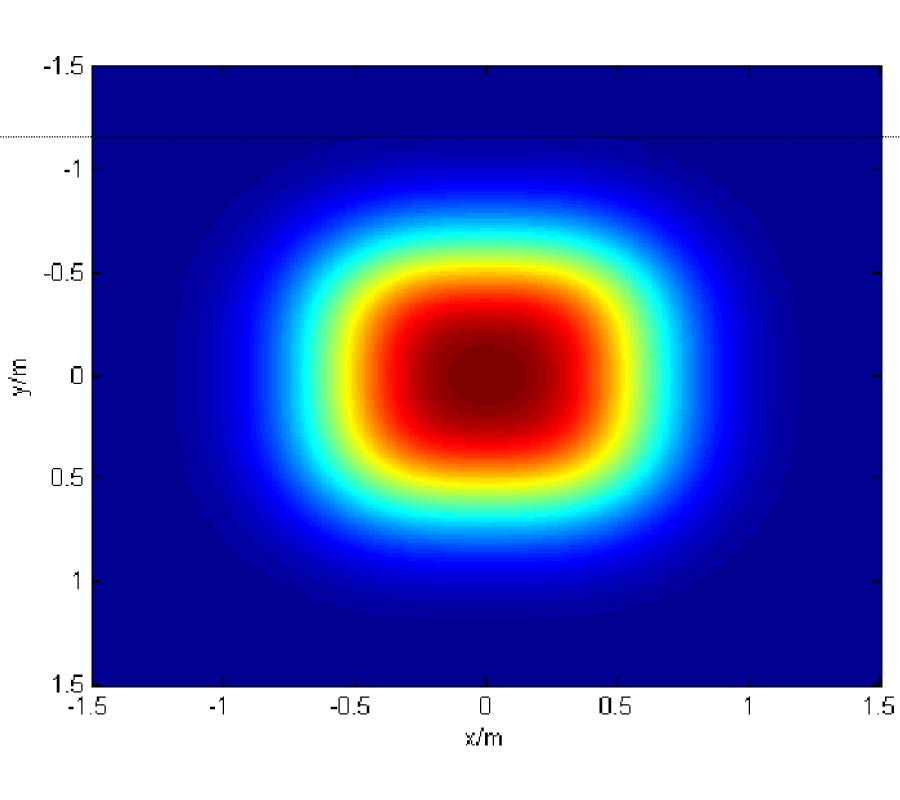
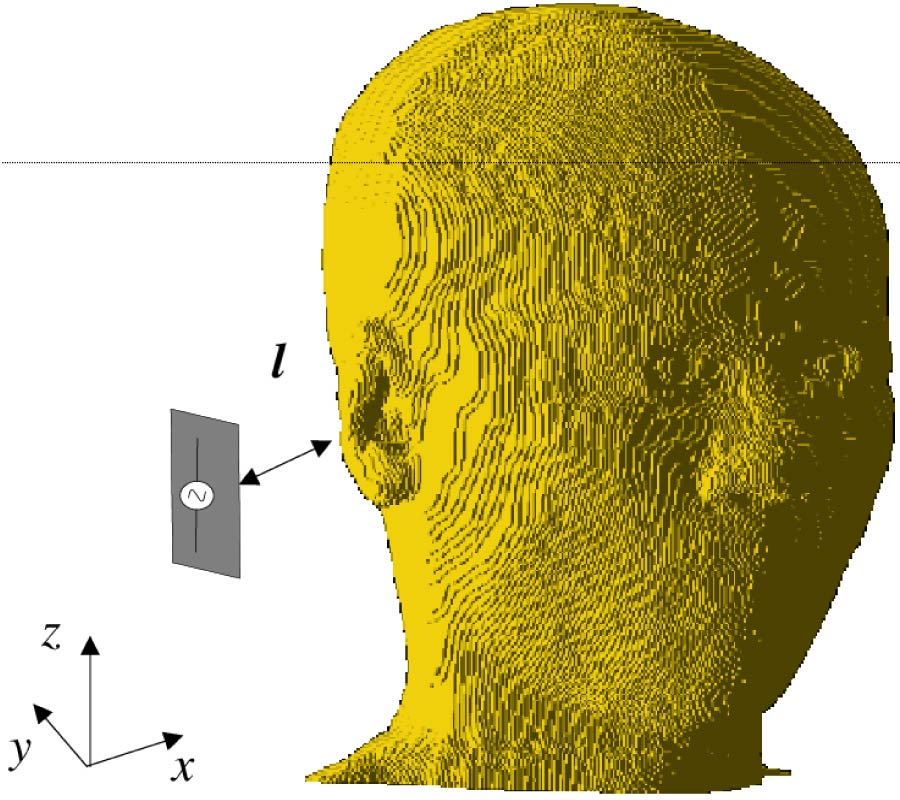
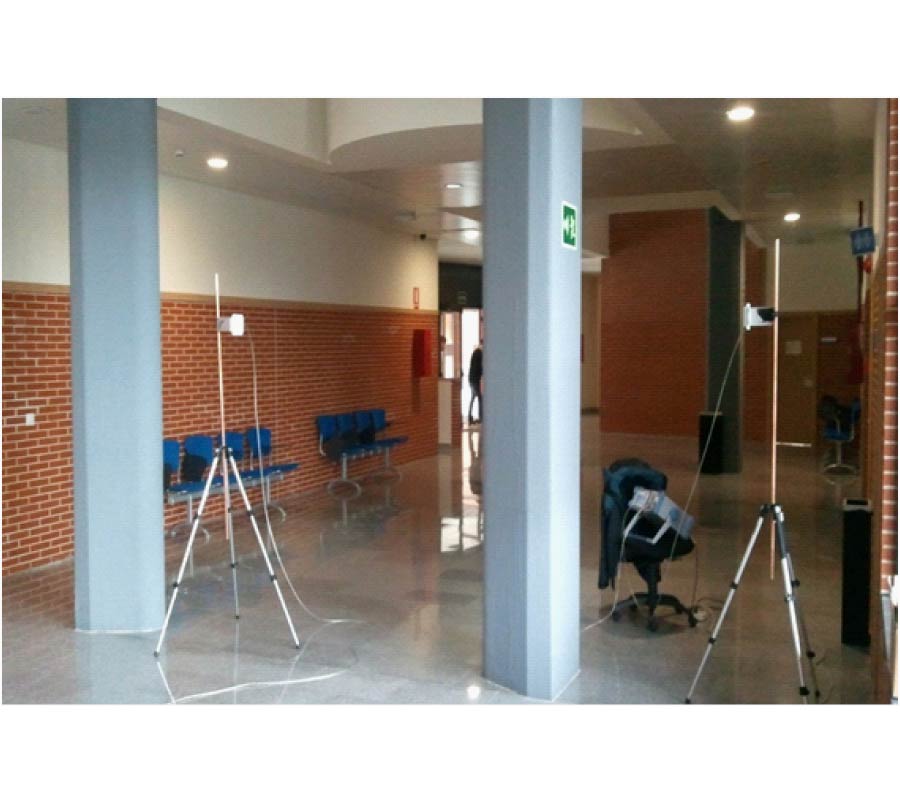
The impact of wireless channel modelling on exposure to electromagnetic radiation is studied. Two methods are developed in order to assess the statistical properties of whole body Specific Absorption Rate for exposure estimation in indoor environment. The body model is exposed to a bundle of waves, named cluster, following the wireless channel modelling approach. The first method is analytical and based on the Uncorrelated Scattering Assumption of the incident waves. The second method is a classical stochastic method. The point is to identify the parameters of Wireless Channel which led to significant SAR's variation.
A HUMAN BODY MODEL EXPOSED TO A CLUSTER OF WAVES: A STATISTICAL STUDY OF SAR
2012-05-30
PIER C
Vol. 29, 261-273
Two Dimensional Multi-Port Method for Analysis of Propagation Characteristics of Substrate Integrated Waveguide
Elnaz Abaei , Esfandiar Mehrshahi , Giandomenico Amendola , Emilio Arnieri and Alireza Shamsafar
In this paper, two dimensional multi-port method is used to analyze substrate integrated waveguide by using Green's function approach to obtain the impedance matrix of equivalent planar structure. Modes propagation constant of substrate integrated waveguide, as a periodic structure, is calculated by applying Floquet's theorem on the impedance matrix of a unit cell. Field distribution of the propagating mode is obtained by this method. Results obtained by this method are verified, in a broad range of dimensions, by comparing with published results and also those calculated by commercial electromagnetic simulator, HFSS. Electromagnetic band gaps and mode conversion phenomenon as properties of periodic structures are also observed and investigated. Mode conversion in SIW is reported for the first time by our proposed method.
TWO DIMENSIONAL MULTI-PORT METHOD FOR ANALYSIS OF PROPAGATION CHARACTERISTICS OF SUBSTRATE INTEGRATED WAVEGUIDE
2012-05-30
PIER
Vol. 128, 229-248
Improved Thermal Ablation Efficacy Using Magnetic Nanoparticles: A Study in Tumor Phantoms
Sonia García-Jimeno , Rocío Ortega-Palacios , Mario Francisco Cepeda-Rubio , Arturo Vera , Lorenzo Leija-Salas and Joan Estelrich
Magnetic heating used for inducing hyperthermia and thermal ablation is particularly promising in the treatment of cancer provided that the therapeutic temperature is kept constant during the treatment time throughout the targeted tissue and the healthy surrounding tissues are maintained at a safe temperature. The present study shows the temperature increment produced by different concentrations of magnetic nanoparticles (ferrofluid and magnetoliposomes) inside a phantom, after irradiating tissue-mimicking materials (phantoms) with a minimally invasive coaxial antenna working at a frequency of 2.45 GHz. This frequency was chosen because maximum dielectric loss of water molecules begins at 2.4 GHz and because this is an ISM (industrial, scientific and medical) frequency. Temperature sensors were placed inside and outside the tumor phantom to assess the focusing effect of heat produced by nanoparticles. Results have shown that the temperature increments depend on the nanoparticles concentration. In this way, a temperature increment of more than 56 ºC was obtained with a ferrofluid concentration of 13.2 mg/mL, whereas the increment in the reference phantom was only of ≈ 21 ºC. Concerning the magnetoliposomes, the temperature achieved was similar to that obtained with the ferrofluid but at a lesser concentration of nanoparticles. These results demonstrate that it is possible to achieve higher temperatures and to focus energy where the nanoparticles are located.
IMPROVED THERMAL ABLATION EFFICACY USING MAGNETIC NANOPARTICLES: A STUDY IN TUMOR PHANTOMS
2012-05-30
PIER
Vol. 128, 215-228
Stopband-Extended Balanced Filters Using Both λ/4 and λ/2 SIRs with Common-Mode Suppression and Improved Passband Selectivity
Shih-Cheng Lin and Chong-You Yeh
Benefitting from the simultaneous utilization of quarter-wave (λ/4) and half-wave (λ/2) microstrip resonators, a via-free balanced bandpass filter (BPF) with direct-coupled scheme is presented in this study. In the beginning, a single-ended filter with transmission zeros (TZs) is newly proposed and the mechanism of creating two TZs around the passband without necessitating cross couplings is adopted. The TZs can be made structure-inherent based on the coexisted out-of-phase couplings among a coupled-resonator pair. On the foundation of the presented single-ended filter, a balanced filter featuring extended differential-mode (DM) stopband, good common-mode (CM) suppression, and improved passband selectivity has been designed and implemented. The DM stopband extension is achieved by misaligning the higher-order harmonic frequencies of each resonator in the DM bisected circuit while the CM suppression is accomplished by both harmonic misalignment and careful designed coupled structure in the CM bisected circuit. Eventually, a demonstrated balanced filter centering at 1.5 GHz possesses DM stopband extended up to 8fd0, where fd0 denotes the DM operation frequency, and its CM rejection ratio (CMRR) within DM passband better than 51.9 dB is attained. For measurement convenience, the DM characterizations have been accomplished by 2-port network analyzer with simple rat-race baluns and are found relatively accurate within the -15dB bandwidth of the utilized baluns.
STOPBAND-EXTENDED BALANCED FILTERS USING BOTH λ/4 AND λ/2 SIRS WITH COMMON-MODE SUPPRESSION AND IMPROVED PASSBAND SELECTIVITY
2012-05-29
PIER B
Vol. 41, 101-119
Uncertainty Estimation in Complex Permittivity Measurements by Shielded Dielectric Resonator Technique Using the Monte Carlo Method
Eduardo Paez , Marco A. Azpurua , Ciro Tremola and Roberto Cesare Callarotti
In this paper we estimate the uncertainty in complex permittivity measurements performed in a shielded dielectric resonator, by using the Monte Carlo method. We selected this approach since the theoretical expressions required to interpret the experimental results are highly non-linear. Furthermore the resonant frequency of the system and its quality factor are highly correlated. Thus we propose a model for the measurement process which considers the major sources of uncertainty previously reported in published experimental results. The proposed model combined with the Monte Carlo method was used to propagate the probability distributions of each uncertainty contribution, obtaining a) the approximate probability density function for the measured complex permittivity, and b) the estimated expanded uncertainty for the mode TE011. The results show that this procedure leads to small uncertainty intervals for the real part of the dielectric permittivity, while it is not very reliable in the loss tangent measurement. Additionally, for each input quantity, we calculated the standard deviation in the experimental results produced independently by each uncertainty contribution.
UNCERTAINTY ESTIMATION IN COMPLEX PERMITTIVITY MEASUREMENTS BY SHIELDED DIELECTRIC  RESONATOR TECHNIQUE USING THE MONTE CARLO METHOD
2012-05-29
PIER C
Vol. 29, 249-260
Novel Class of Microstrip Bandpass Filters with Improved Upper Rejection Band
Yun Long Lu and Gao-Le Dai
In this paper, we present a novel class of microstrip bandpass filters with improved upper rejection band. The proposed filters are composed of two half-wavelength resonators and two shortended microstrip feed lines for input and output. Using voltagewave analysis, we examine the resonance and coupling properties at harmonic frequencies. It is found that different combinations of the feed line and the resonator with proper selection of the coupling regions can suppress spurious responses. Benefiting from this approach, two single-band and one dual-band bandpass filters are designed, fabricated and measured. Simulated and measured results indicate that the upper rejection bands of the proposed filters are increased up to near thirdand fifth-order harmonics, respectively. And the rejection level during the stop-bands is kept below 20 dB.
NOVEL CLASS OF MICROSTRIP BANDPASS FILTERS WITH IMPROVED UPPER REJECTION BAND
2012-05-29
PIER
Vol. 128, 195-214
Constrained Trilinear Decomposition with Application to Array Signal Processing
Xu Liu , Ting Jiang , Longxiang Yang and Hong-Bo Zhu
This paper links the constrained trilinear tensor model into array signal processing. The structure properties of baseband signal, such as the Constant-Modulus (CM) and Finite Alphabet (FA) structures which are already known in the receiving array, are exploited in trilinear decomposition. Two novel algorithms for constrained trilinear decomposition are proposed and applied to array signal processing. The distinguishing features of the proposed model and algorithms compared to the traditional trilinear signal processing methods are: (i)~the proposed model has a better performance and lower computation complexity. (ii)~it can still work well even if degeneracy of factors are involved in the data model, which is not valid in traditional algorithms. Simulation results are presented to illustrate the application of the constrained trilinear decomposition to array signal processing and evaluate the performance of the proposed algorithms in DOAs estimation.
CONSTRAINED TRILINEAR DECOMPOSITION WITH APPLICATION TO ARRAY SIGNAL PROCESSING