Search Results(13800)

2012-05-15
PIER B
Vol. 40, 415-431
Properties of Omnidirectional Photonic Band Gaps in Fibonacci Quasi-Periodic One-Dimensional Superconductor Photonic Crystals
Hai Feng Zhang , Shaobin Liu , Xiang-Kun Kong , Bo-Rui Bian and Xin Zhao
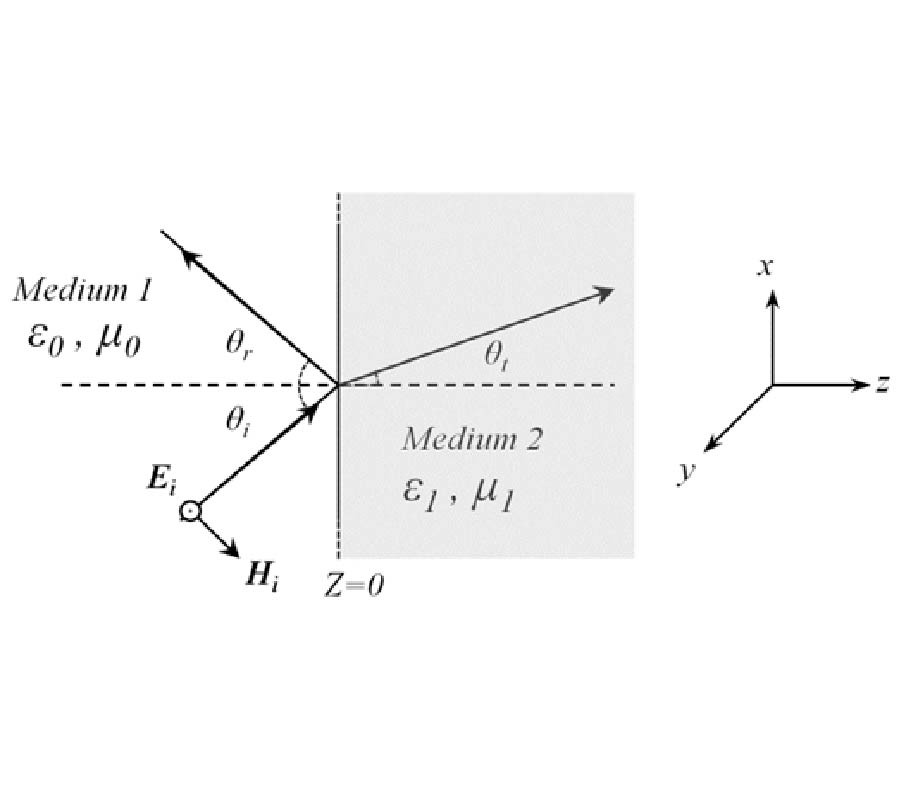
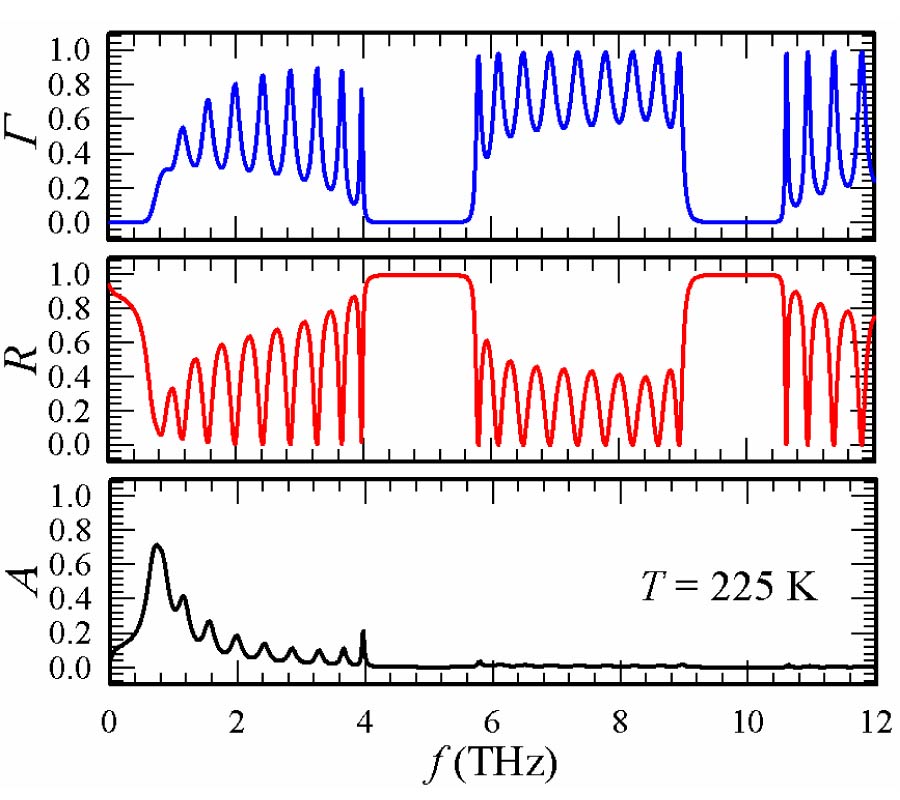
In this paper, the properties of the omnidirectional photonic band gap (OBG) realized by one-dimensional (1D) Fibonacci quasi-periodic structure which is composed of superconductor and isotropic dielectric have been theoretically investigated by the transfer matrix method (TMM). From the numerical results, it has been shown that this OBG is insensitive to the incident angle and the polarization of electromagnetic wave (EM wave), and the frequency range and central frequency of OBG cease to change with increasing Fibonacci order, but vary with the ambient temperature of system, the thickness of the superconductor, and dielectric layer, respectively. The bandwidth of OBG can be notably enlarged with increasing the superconductor thickness. Moreover, the frequency range of OBG can be narrowed with increasing the thickness of dielectric layer and ambient temperature. The damping coefficient of superconductor layers has no effect on the frequency range of OBG under low-temperature conditions. It is shown that Fibonacci quasi-periodic 1D superconductor dielectric photonic crystals (SDPCs) have a superior feature in the enhancement frequency range of OBG. This kind of OBG has potential applications in filters, microcavities, and fibers, etc.
PROPERTIES OF OMNIDIRECTIONAL PHOTONIC BAND GAPS IN FIBONACCI QUASI-PERIODIC ONE-DIMENSIONAL SUPERCONDUCTOR PHOTONIC CRYSTALS
2012-05-15
PIER
Vol. 128, 55-74
Symmetric Inverse-Based Multilevel Ilu Preconditioning for Solving Dense Complex Non-Hermitian Systems in Electromagnetics
Bruno Carpentieri and Matthias Bollhöfer
Boundary element discretizations of exterior Maxwell problems lead to dense complex non-Hermitian systems of linear equations that are difficult to solve from a linear algebra point of view. We show that the recently developed class of inverse-based multilevel incomplete LU factorization has very good potential to precondition these systems effectively. This family of algorithms can produce numerically stable factorizations and exploits efficiently the possible symmetry of the underlying integral formulation. The results are highlighted by calculating the radar-cross-section of a full aircraft, and by a numerical comparison against other standard preconditioners.
SYMMETRIC INVERSE-BASED MULTILEVEL ILU PRECONDITIONING FOR SOLVING DENSE COMPLEX NON-HERMITIAN SYSTEMS IN ELECTROMAGNETICS
2012-05-15
PIER
Vol. 128, 35-53
Surface Plasmon Properties of Hollow Auag Alloyed Triangular Nanoboxes and Its Applications in Sers Imaging and Potential Drug Delivery
XinWei Liu , Jiao Lin , Tian Feng Jiang , Zhen Feng Zhu , Qiuqiang Zhan , Jun Qian and Sailing He
We successfully synthesized hollow AuAg alloyed triangular nanoboxes (TNBs) with localized surface plasmon resonances (LSPR) spectra position from visible to NIR region. We then study the surface plasmon properties of AuAg alloyed TNBs and explore their application in surface enhanced Raman scattering (SERS) imaging. We also investigated the laser induced near-field ablation of TNBs, which have the potentials of drug delivery for cancer treatment. Finite Difference Time Domain (FDTD) method is used to calculate electromagnetic fields induced by optical excitation of LSPR of AuAg alloyed TNBs for the first time. The calculated results are proved through in-vivo SERS imaging by three types of SERS tags based on TNBs. Furthermore, the unique hollow structure of TNBs may facilitate direct encapsulation of anticancer drugs, without any surface coatings. The femtosecond laser near-field ablation experiment is studied as one possible method to release the drug encapsulated inside the hollow structure. These studies show that the nanostructures are easy to break down and promising as a nanodevice model for controlled drug delivery.
SURFACE PLASMON PROPERTIES OF HOLLOW AUAG ALLOYED TRIANGULAR NANOBOXES AND ITS APPLICATIONS IN SERS IMAGING AND POTENTIAL DRUG DELIVERY
2012-05-14
PIER B
Vol. 40, 399-414
Surface Waves Investigation of a Bianisotropic Chiral Substrate Resonator
Chemseddine Zebiri , Fatiha Benabdelaziz and Djamel Sayad
In this paper we studied the effect of a chiral-substrate bianisotropy on the surface waves of the microstrip resonator. The effective technique used to formulate the characteristic equations of the surface waves in a medium equipped with a complex anisotropy is presented and detailed. The equations concerning an evaluation of the cut-off frequencies are given in more detailed forms. A simple approximate formula for estimating the wave number of the surface mode TM0 and TE1 are obtained. An estimated maximum value of chiral slab thickness without the excitation of surface waves is given. All of our original results are compared with those published in the literature.
SURFACE WAVES INVESTIGATION OF A BIANISOTROPIC CHIRAL SUBSTRATE RESONATOR
2012-05-14
PIER
Vol. 128, 19-34
Switchable Distance-Based Impedance Matching Networks for a Tunable HF System
Wang-Sang Lee , Han-Lim Lee , Kyoung-Sub Oh and Jong-Won Yu
Distance-based impedance matching networks for a tunable high frequency (HF) system are presented in this paper for the improved performance. The transmitting antenna for a HF system with an operating frequency of 13.56 MHz consists of a two-turn loop and three channel impedance matching networks corresponding to the distance of the receiving antenna. Each impedance matching network maximizes the system performance such as uniform power efficiency and reading range at specific distance between a transmitting and a receiving antenna. By controlling the distance-based matching networks, the power efficiency of the proposed antenna improves by up to 89% compared to the conventional antenna system with the fixed matching (FM) condition for distances, and the reliable reading range according to the impedance matching conditions is also increased. The proposed technique is applicable for near field communication (NFC), radio frequency identification (RFID), or wireless power transfer (WPT) devices.
SWITCHABLE DISTANCE-BASED IMPEDANCE MATCHING NETWORKS FOR A TUNABLE HF SYSTEM
2012-05-13
PIER C
Vol. 29, 123-133
Planar Monopole Antenna with Two Coupled Strips for Internal Eight-Band LTE/WWAN Laptop Computer Application
Hsien-Wen Liu , Chi-Ming Chiang and Chang-Fa Yang
In this paper, a compact planar monopole antenna with eight-band LTE/WWAN (LTE700/2300/2500/GSM850/900/1800/1900/UMTS) operation for laptop computer application is presented. This design structure comprises a bent driven strip and two coupled strips, which can contribute multiple resonance modes to combine two wide operating frequency bands covering 665-1023 MHz and 1612-2924 MHz. The proposed antenna fed by a 50-Ω coaxial cable occupies a small size of only 65(L)x11(W)x0.4(H) mm3, so it can be flexibly embedded inside the casing of the laptop computer as an internal antenna. A fabricated prototype of the antenna is tested and analyzed. Experimental results exhibit that nearly omnidirectional coverage and stable gain variation across the desirable LTE/WWAN bands can be obtained with the antenna.
PLANAR MONOPOLE ANTENNA WITH TWO COUPLED STRIPS FOR INTERNAL EIGHT-BAND LTE/WWAN LAPTOP COMPUTER APPLICATION
2012-05-12
PIER B
Vol. 40, 381-398
Improvement of Electrical Near-Field Measurements with an Electro-Optic Test Bench
David Chevallier , David Baudry and Anne Louis
In this paper, two different kinds of near-field measurement techniques are presented. The first one uses coaxial probes that do not give precise measurements on microelectronic devices. We saw in [1] that the spatial resolution of these probes reach 500 μm for monopole and is millimetric for dipole probe. The second one is based on the Pockels effect that converts an electromagnetic (EM) field into optical modulation. Our objective is to improve the Ex/Ey near-field measurement with this second technique. The performance of the electro-optic (EO) probe is compared with dipole probes of 2.5 and 5 mm with the use of simulations and measurements, on a wire above a ground plane and on coupled microstrip lines. At the end, a discussion about the technical limitations of the EO probe is made.
IMPROVEMENT OF ELECTRICAL NEAR-FIELD MEASUREMENTS WITH AN ELECTRO-OPTIC TEST BENCH
2012-05-12
PIER C
Vol. 29, 109-122
An Improved L1-SVD Algorithm Based on Noise Subspace for DOA Estimation
Fulai Liu , Lu Peng , Ming Wei , Pingping Chen and Shouming Guo
In this paper, an improved L1-SVD algorithm based on noise subspace is presented for direction of arrival (DOA) estimation using the reweighted L1 minimization. In the proposed method, the weighted vector is obtained by utilizing the orthogonality between the noise subspace and the subspace spanned by the array manifold matrix. The presented algorithm banishes the nonzero entries whose indices are inside of the row support of the jointly sparse signals by smaller weights and the other entries whose indices are more likely to be outside of the row support of the jointly sparse signals by larger weights. Therefore, the sparsity at the real signal locations can be enhanced by using the presented method. The proposed approach offers a good deal of merits over other DOA techniques. It not only increases the robustness to noise, but also enhances resolution in DOA estimation. Furthermore, it does not require an exact initialization. Simulation results show that the presented algorithm has better performance than the existing algorithms, such as MUSIC, L1-SVD algorithm.
AN IMPROVED L1-SVD ALGORITHM BASED ON NOISE SUBSPACE FOR DOA ESTIMATION
2012-05-12
PIER
Vol. 128, 1-17
Comprehensive Analysis of Lenz Effect on the Artificial Heart Valves During Magnetic Resonance Imaging
Laleh Golestanirad , Emad Dlala , Graham Wright , Juan Mosig and Simon J. Graham
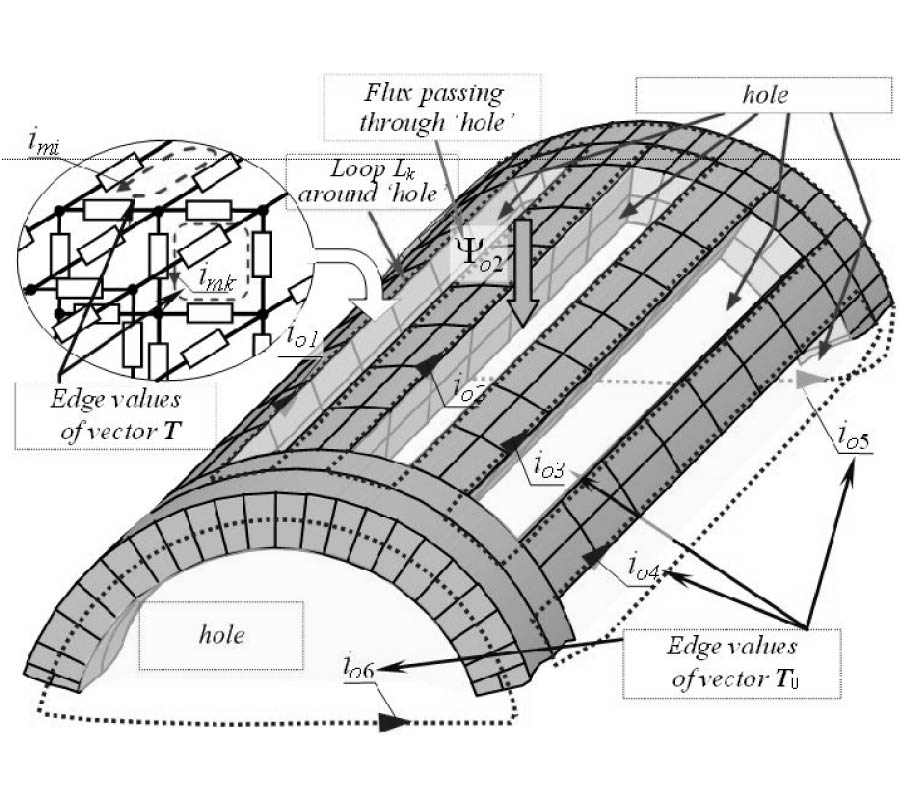
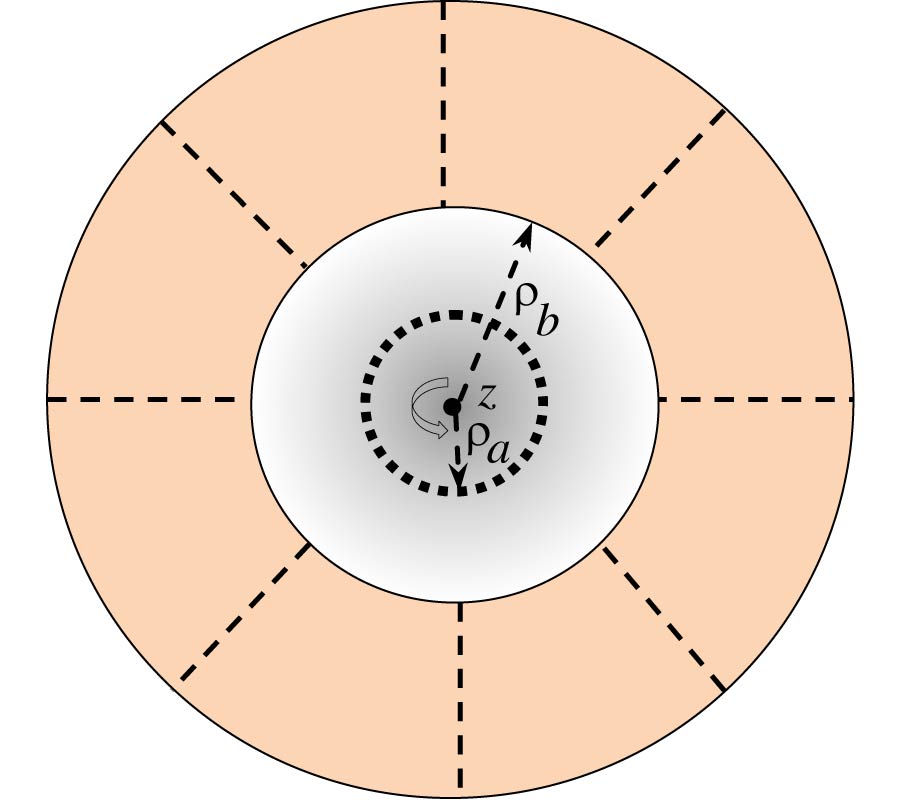
This work presents results of a comprehensive analysis of the Lenz effect due to motion of artificial heart valves during magnetic resonance imaging. The interaction of rotating metallic heart valves with magnetic fields is studied by performing a time-domain analysis of the corresponding electromagnetic problem. We applied the finite element method (FEM) to solve the T-Ω formulation of Maxwell equations in two cases: first, for metallic disks located in the high intensity homogenous field of the magnet iso-center, and second, disks located in the non-uniform fringe field of the bore entrance. We showed that for valves with full solid disks (such as Starr-Edwards 6500) located in the magnet iso-center, the magnitude of adverse forces can be comparable to the forces applied by the beating heart. However, for rings which consist of multiply connected conductive regions, skin effect and proximity effect counteract, which leads to a diminished magnetic force. Results of this study show that mechanical heart valves with strengthening rings {may} be considered safe even under ultra-high imaging conditions with field intensities as high as 10 T. However, heart valves with full conducting disks should be considered as a contraindication to MR imaging.
COMPREHENSIVE ANALYSIS OF LENZ EFFECT ON THE ARTIFICIAL HEART VALVES DURING MAGNETIC RESONANCE IMAGING
2012-05-10
PIER B
Vol. 40, 361-380
An Informative Differential Evolution Algorithm with Self Adaptive Re-Clustering Technique for the Optimization of Phased Antenna Array
Dipankar Maity , Udit Halder and Swagatam Das
In this paper we propose a new algorithm called An Informative Differential Evolution with Self Adaptive Reclustering Technique to find the amplitude-phase excitation of a linear phased array to have the desired far field pattern. Here we consider three problems for three different far field patterns and each problem is optimized with this algorithm. This algorithm has a proper balancing of exploration and exploitation power which is achieved with the help of information exchange among the subpopulations. We also used an elitist local search algorithm for the fine tuning at the suspected optimal position, and that helps us from the unnecessary wastage of Function Evaluations (FEs).
AN INFORMATIVE DIFFERENTIAL EVOLUTION ALGORITHM WITH SELF ADAPTIVE RE-CLUSTERING TECHNIQUE FOR THE OPTIMIZATION OF PHASED ANTENNA ARRAY
2012-05-10
PIER C
Vol. 29, 97-107
Conical Linear Spiral Antenna for Tracking, Telemetry and Command of Low Earth Orbit Satellites
Khalid Fawzy Ahmed Hussein
Conical log spiral antennas are famous for being appropriate for tracking, telemetry and command (TT&C) applications in low earth orbit (LEO) satellites. In this work, a conical linear (not log) spiral antenna is introduced and investigated for the same purpose. The electric field integral equation (EFIE) technique is applied to a triangular-patch surface model of the conical equiangular linear spiral antenna. This antenna is optimized to produce the radiation characteristics required for TT&C applications for LEO satellites. The input impedance, polarization and radiation patterns of this antenna are investigated over a wide band of frequencies. Some of the obtained results especially those concerning the input impedance, radiation pattern, polarization and bandwidth are verified experimentally. It is shown that the proposed antenna is quite appropriate for TT&C in LEO satellite applications.
CONICAL LINEAR SPIRAL ANTENNA FOR TRACKING, TELEMETRY AND COMMAND OF LOW EARTH ORBIT SATELLITES
2012-05-10
PIER
Vol. 127, 553-569
A Modified Taguchi's Optimization Algorithm for Beamforming Applications
Zaharias D. Zaharis
The present paper is a study of adaptive beamforming (ABF) techniques applied to antenna arrays. The structure of these techniques is based on Taguchi's Optimization (TagO) method. The high convergence speed and the ability to reach near-optimal solutions by adjusting only one parameter make the Taguchi's method an attractive choice for real time implementations like the case of ABF. Modifications are proposed in order to enhance the applicability of the TagO algorithm and decrease the computational time needed by the algorithm to terminate. The TagO method is used here to construct an ABF technique that aims at steering the main lobe of a uniform linear array towards a signal of interest, under the constraint of low side lobe level (SLL) or the constraint of placing radiation pattern nulls towards respective interference signals. Properly defined fitness functions must be minimized by the TagO algorithm to satisfy respectively the above mentioned constraints. The TagO-based ABF technique is compared with typical beamforming methods, like the Sample Matrix Inversion (SMI) and Maximum Likelihood (ML) ones, and with two evolutionary ABF techniques based on Particle Swarm Optimization (PSO) and Differential Evolution (DE), respectively. The comparison is performed regarding the convergence speed, the ability to achieve better fitness values in less time, the ability to properly steer the main lobe and finally the null-steering ability or the SLL control depending on the constraint type. The results exhibit the superiority of the TagO-based technique.
A MODIFIED TAGUCHI'S OPTIMIZATION ALGORITHM FOR BEAMFORMING APPLICATIONS
2012-05-09
PIER B
Vol. 40, 343-360
Energy Density of Macroscopic Electric and Magnetic Fields in Dispersive Medium with Losses
Oleg B. Vorobyev
Electric permittivity and magnetic permeability of linear passive dispersive medium were defined using the circuit equation of an electrically small antenna (scatterer) with resonant and antiresonant properties. It was shown that the average macroscopic energy stored by the scatterers is proportional to frequency derivative of the input admittance of corresponding antenna. It was found that the average macroscopic energy density of electric and magnetic fields in dispersive lossy medium is a function of frequency derivatives of its effective constitutive parameters in accordance with Poynting's theorem in dispersive lossy medium clarified for this case in the paper.
ENERGY DENSITY OF MACROSCOPIC ELECTRIC AND MAGNETIC FIELDS IN DISPERSIVE MEDIUM WITH LOSSES
2012-05-09
PIER
Vol. 127, 537-552
A Novel Dual-Loop Coupler for One-Port Cylindrical Cavity Permittivity Measurement
Hai Zhang , Bao-Qing Zeng , Lei Ao and Zhaotang Zhang
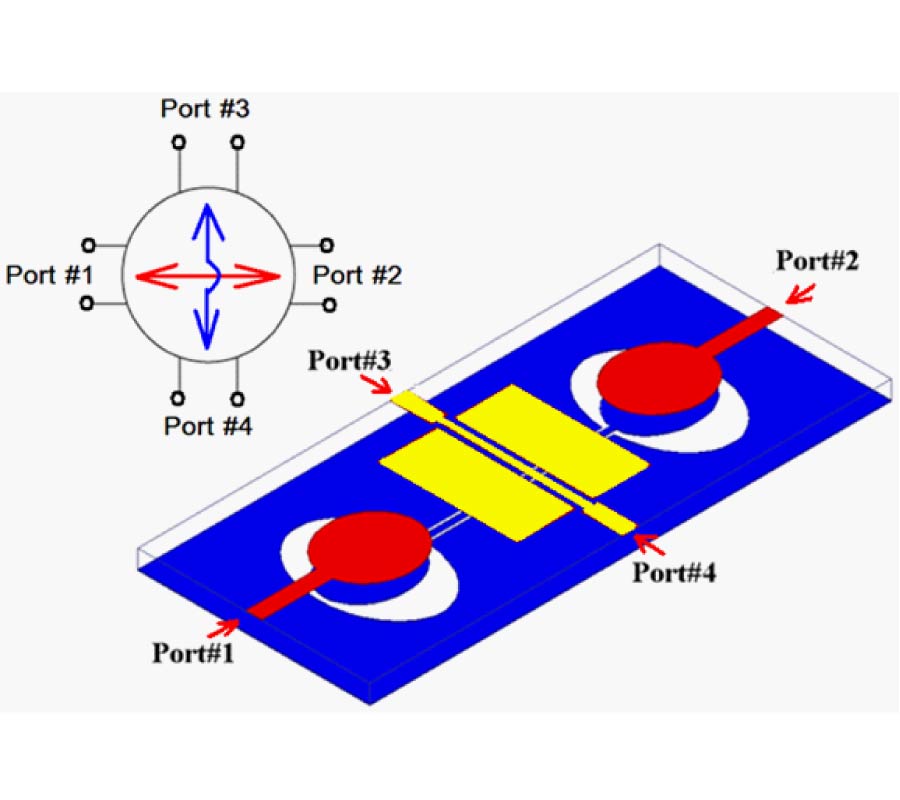
The one-port cavity resonator method based on the S11 parameter measurement technique for measuring the complex permittivity of dielectric samples has been proposed. A novel dual-loop coupler is developed for avoiding and suppressing the spurious modes in one-port cavity resonator. Through threading the pair of half loop in the opposite direction, the opposite surface currents can be generated and only TE011 mode will be excited. The operating principles of the dual-loop coupler are investigated. This technique has the advantages of the coupling. Equivalent electronic circuit model has been set up. Simulation and experimental results show good agreement.
A NOVEL DUAL-LOOP COUPLER FOR ONE-PORT CYLINDRICAL CAVITY PERMITTIVITY MEASUREMENT
2012-05-07
PIER B
Vol. 40, 325-341
Some Numerical and Experimental Observations on the Growth of Oscillations in an X-Band Gunn Oscillator
Bishnu Charan Sarkar , Chaitali Koley , Arun Kanti Guin and Suvra Sarkar
The dynamics of the onset of oscillations in a wave guide cavity based Gunn Oscillator (GO) has been critically examined through numerical simulations and experimental studies.The transition of the GO from a non-oscillatory to an oscillatory state and the same in the reverse direction occurs at different critical values of the dc bias voltage applied to the GO. In presence of a weak RF field in GO cavity, oscillations with broad band continuous spectrum and multiple discrete line spectrum are observed at the GO output for different values of dc bias below the above mentioned critical values. Analysing the numerically obtained time series data, chaos quantifiers have been obtained to prove the occurrence of the chaotic oscillations in the GO. Experimental results and observations of numerical simulation show good qualitative agreement.
SOME NUMERICAL AND EXPERIMENTAL OBSERVATIONS ON THE GROWTH OF OSCILLATIONS IN AN X-BAND GUNN OSCILLATOR
2012-05-07
PIER C
Vol. 29, 83-96
Geometrical Correction for Cell Deployment in Stratospheric Cellular Systems
Sultan Aljahdali , Mostafa Nofal and Yasser Albagory
In this paper, cellular communications from Stratospheric platforms (SPs) is studied, and the coverage footprint analysis and design is demonstrated. In the analysis, two coverage schemes are introduced; flat-earth and real-earth models and cell footprint are determined in each case. The flat-earth provides simple footprint equations describing the cell dimensions especially for the cells of higher elevation angles while more accurate coverage equations, which well determine the geometry of the cells of lower elevation angles, can be obtained from the real-earth scheme. The design of a cellular system using the proposed coverage models is then introduced through a procedure that determines the cells locations and dimensions on the ground according to the teletraffic information. The procedure takes into considerations the cell broadening when going outwardly from the central cell to the outer lower elevation cells and constructs a cellular layout that has the most proper cells overlap and uniform coverage edges, which helps the linking between different SPs coverage areas.
GEOMETRICAL CORRECTION FOR CELL DEPLOYMENT IN STRATOSPHERIC CELLULAR SYSTEMS
2012-05-07
PIER
Vol. 127, 523-536
Design and Analysis of Planar Ultra-Wideband Antenna with Dual Band-Notched Function
Fuguo Zhu , Steven Gao , Anthony Tung Shuen Ho , Chan Hwang See , Raed A. Abd-Alhameed , Jianzhou Li and Jia-Dong Xu
A novel planar ultra-wideband (UWB) antenna with dual band-notched characteristics is proposed. The antenna is fabricated on a printed circuit board (PCB), having a circular monopole and arc-shaped parasitic strips on one side and a ground plane with a slot aperture on the other side. Two narrow bands at 5.15-5.35 GHz and 5.725-5.825 GHz are notched by using two arc-shaped parasitic strips on the same layer of the radiator. Compared with other band-notched UWB antennas, the proposed antenna exhibits the advantages of simple structure, compact size, simple control of each notched frequency band using separate parasitic strips, and good performance. Surface current distributions and equivalent circuit model are applied to analyze the operating principle of the proposed antenna. To validate the concept, a prototype is fabricated and tested. Both simulated and measured results confirm that the proposed antenna achieves a wide bandwidth from 3.1 GHz to 10.6 GHz with two narrow bands notched successfully. The results of VSWR, radiation patterns and gain response are shown and discussed in detail. The antenna enables the independent control of the notched frequency bands, and the proposed method can be extended for designing planar UWB antennas with multiple band-notched characteristics and reconfigurable notched frequency.
DESIGN AND ANALYSIS OF PLANAR ULTRA-WIDEBAND ANTENNA WITH DUAL BAND-NOTCHED FUNCTION
2012-05-07
PIER
Vol. 127, 501-522
Scattering of Electromagnetic Plane Wave by a Circular Disk with Surface Impedance
Allah Ditta Ulfat Jafri , Qaisar Abbas Naqvi and Kohei Hongo
In this investigation, scattering from a circular disk with surface impedance has been studied rigorously. The method of analysis is Kobayashi Potential (KP). The mathematical formulation yields the dual integral equations (DIEs). These DIEs are solved by using the discontinuous properties of Weber-Schafheitlin's integral. After applying the boundary conditions and projection, the resulting expressions, finally, reduce to matrix equations for expansion coefficients. The matrix elements are in the form of infinite integrals with single variable. These are then used to compute the values of expansion coefficients. The far field patterns of the scattered wave are computed for different incident angles and surface impedances for both E- and H-polarizations. To verify the results, we have computed the solution based on the physical optics approximation. The agreement between them is fairly good.
SCATTERING OF ELECTROMAGNETIC PLANE WAVE BY A CIRCULAR DISK WITH SURFACE IMPEDANCE
2012-05-07
PIER
Vol. 127, 479-499
Non Linear Optimization Technique for the Reduction of the Frequency Scanning Effect in a Phased Array Based on Broadband Injection-Locked Third Harmonic Self-Oscillating Mixers
Miguel Fernandez-Garcia , Samuel Ver-Hoeye , Carlos Vazquez-Antuna , George Roberto Hotopan , Rene Camblor-Diaz and Fernando Las Heras Andres
In this work, an electronically tunable large range phase shifter based on a broadband Injection-Locked Third Harmonic Self-Oscillating Mixer (IL3HSOM) is designed and analyzed. This multifunctional circuit generates a down-converted Intermediate Frequency (IF) signal and provides a theoretical 540◦ continuous phase shift range. The conversion gain and the bandwidth of the circuit are optimized through bifurcation control techniques. The IL3HSOM will be used as the core of a broadband phased antenna array with electronic beam-steering capabilities. The use of a multi-harmonic load based on an arbitrarily width modulated transmission line allows the nonlinear optimization of the circuit phase shift frequency response to ompensate the frequency scanning effect, which negatively influences the performance of broadband antenna arrays.
NON LINEAR OPTIMIZATION TECHNIQUE FOR THE REDUCTION OF THE FREQUENCY SCANNING EFFECT IN A PHASED ARRAY BASED ON BROADBAND INJECTION-LOCKED THIRD HARMONIC SELF-OSCILLATING MIXERS
2012-05-04
PIER Letters
Vol. 32, 19-28
Broadband Monopole Antenna with Wideband Circular Polarization
Bo Chen , Yong-Chang Jiao , Feng-Chao Ren and Li Zhang
A novel broadband monopole antenna design with wideband circular polarization (CP) characteristic is presented. This antenna consists of a feed line and a step-shaped ground plane which is formed by cutting a notch in the upper left corner of an asymmetric ground plane. The asymmetric ground plane is capable of exciting two orthogonal electric field vectors with equal amplitude and 90° phase difference (PD) for CP. By cutting a notch, the impedance-bandwidth can be enhanced greatly and the 3-dB axial ratio (AR) bandwidth is improved meanwhile. The measured impedance-bandwidth is about 5.96 GHz (84.7%) from 4.06 to 10.02 GHz, and the measured AR-bandwidth is about 2.64 GHz (36.5%) from 5.91 to 8.55 GHz. The results show that the antenna can achieve wide impedance-bandwidth and wide AR-bandwidth simultaneously.
BROADBAND MONOPOLE ANTENNA WITH WIDEBAND CIRCULAR POLARIZATION