Search Results(13800)

2012-04-18
PIER C
Vol. 28, 257-270
Pulse Repetition Interval Estimation in Moving Passive Sensors Based on Observation Calibration
Haohuan Ye , Zheng Liu and Wenli Jiang
High-accuracy pulse repetition interval (PRI) estimation is meaningful for passive sensors to identify radar emitters. This paper considers the problem of estimating the PRIs of motionless radars in moving passive sensor systems. A modified method which based on observation calibration is proposed. This method can efficiently compensate the estimation bias induced by model mismatch, through calibrating the pulse time of arrival (TOA) measurements with emitter geolocation information. Performance analysis and simulation results show that our method can improve the PRI estimation accuracy significantly.
PULSE REPETITION INTERVAL ESTIMATION IN MOVING PASSIVE SENSORS BASED ON OBSERVATION CALIBRATION
2012-04-16
PIER B
Vol. 40, 141-158
Right-Angled Triangular Patch Resonator and Filter with Fractal Hole
Jian-Kang Xiao , Xiao-Peng Zu , Xue Li and Li Tian
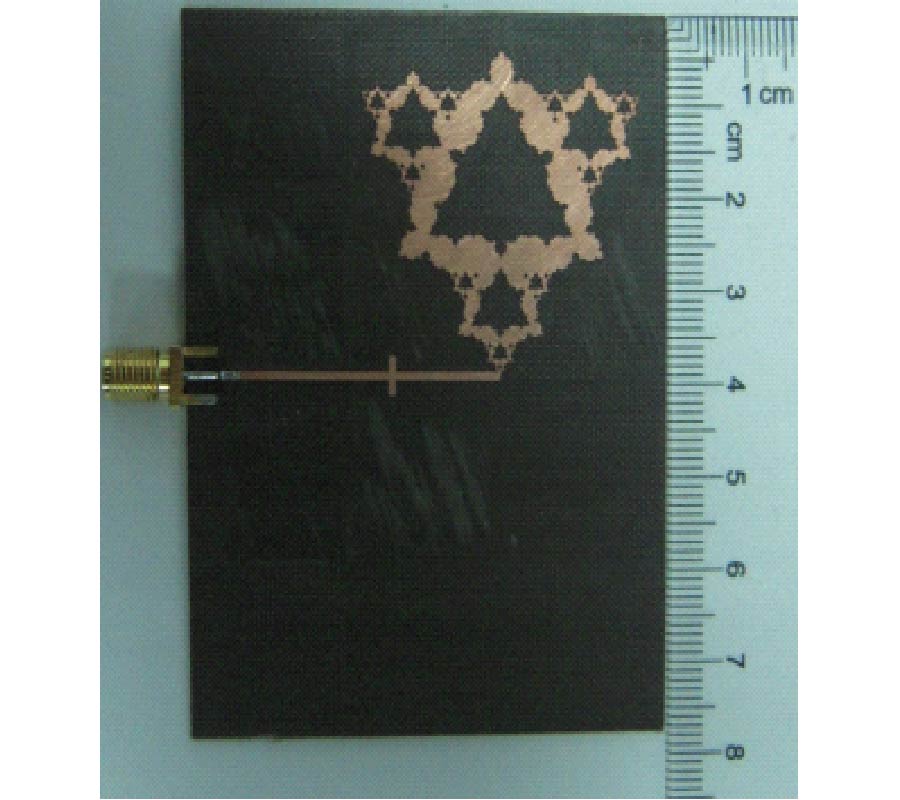
Fractal-shaped microwave passive circuits offer a great deal of promise for achieving good performance in small circuits. In this paper, isosceles right-angled triangular patch resonator with fractal hole is analyzed, and new single band and dual-band RF filters by using isosceles right-angled triangular patch resonators with fractal pattern are proposed. It is shown that with the assistance of a fractal, the right-angled triangular resonator can be miniaturized and filter performance is greatly improved, simultaneously, resonance of the resonator higher order mode is enhanced, which is helpful for a dual-band filter implementation. Two proposed fractal bandpass filters are fabricated, and their performance is verified by measurement. The proposed filters demonstrate the applications of right-angled triangular patch resonator and exhibit advantages of a simple structural topology and compactness, which are essential in RF circuit design.
RIGHT-ANGLED TRIANGULAR PATCH RESONATOR AND FILTER WITH FRACTAL HOLE
2012-04-16
PIER Letters
Vol. 31, 107-112
Robust Calculations of Maximum Ratio Combining Diversity Gains Based on Stochastic Measurements
Xiaoming Chen
Previous works on maximum ratio combining (MRC) diversity have derived a closed-form cumulative distribution function (CDF), referred to as Lee's formula, for spatially correlated Rayleigh fading channels. It is usually believed that (due to its singularity) Lee's formula will result in large numerical error when two eigenvalues of a diversity antenna's covariance matrix are close to each other. This letter shows that the limit of Lee's formula converges to the true CDF as eigenvalues converge to each other, which implies that Lee's formula is robust in determining diversity gains of arbitrary antennas based on stochastic measurements.
ROBUST CALCULATIONS OF MAXIMUM RATIO COMBINING DIVERSITY GAINS BASED ON STOCHASTIC MEASUREMENTS
2012-04-16
PIER
Vol. 127, 297-318
Transpose Return Relation Method for Designing Low Noise Oscillators
Jose Luis Jiménez-Martín , Vicente Gonzalez-Posadas , Ángel Parra-Cerrada , Alvaro Blanco-del-Campo and Daniel Segovia-Vargas
In this paper, a new linear method for optimizing compact low noise oscillators for RF/MW applications will be presented. The first part of this paper makes an overview of Leeson's model. It is pointed out, and it is demonstrates that the phase noise is always the same inside the oscillator loop. It is presented a general phase noise optimization method for reference plane oscillators. The new method uses Transpose Return Relations (RRT ) as true loop gain functions for obtaining the optimum values of the elements of the oscillator, whatever scheme it has. With this method, oscillator topologies that have been designed and optimized using negative resistance, negative conductance or reflection coefficient methods, until now, can be studied like a loop gain method. Subsequently, the main disadvantage of Leeson's model is overcome, and now it is not only valid for loop gain methods, but it is valid for any oscillator topology. The last section of this paper lists the steps to be performed to use this method for proper phase noise optimization during the linear design process and before the final non-linear optimization. The power of the proposed RRT method is shown with its use for optimizing a common oscillator, which is later simulated using Harmonic Balance (HB) and manufactured. Then, the comparison of the linear, HB and measurements of the phase noise are compared.
TRANSPOSE RETURN RELATION METHOD FOR DESIGNING LOW NOISE OSCILLATORS
2012-04-16
PIER
Vol. 127, 277-295
Efficient Model Order Reduction for FEM Analysis of Waveguide Structures and Resonators
Grzegorz Fotyga , Krzysztof Nyka and Michal Mrozowski
An efficient model order reduction method for three-dimensional Finite Element Method (FEM) analysis of waveguide structures is proposed. The method is based on the Efficient Nodal Order Reduction (ENOR) algorithm for creating macro-elements in cascaded subdomains. The resulting macro-elements are represented by very compact submatrices, leading to significant reduction of the overall number of unknowns. The efficiency of the model order reduction is enhanced by projecting fields at the boundaries of macro-elements onto a subspace spanned by a few low-order waveguide modes. The combination of these two techniques results in considerable saving in overall computational time and memory requirement. An additional advantage of the presented method is that the reduced-order system matrix remains frequency-independent, which allows for very fast frequency sweeping and efficient calculation of resonant frequencies. Several numerical examples for driven and eigenvalue problems demonstrate the performance of the proposed methodology in terms of accuracy, memory usage and simulation time.
EFFICIENT MODEL ORDER REDUCTION FOR FEM ANALYSIS OF WAVEGUIDE STRUCTURES AND RESONATORS
2012-04-16
PIER
Vol. 127, 259-275
Applications of Compressed Sensing for Multiple Transmitters Multiple Azimuth Beams SAR Imaging
Jing Li , Shunsheng Zhang and Junfei Chang
High speed analog-to-digital (A/D) sampling and a large amount of echo storage are two basic challenges of high resolution synthetic aperture radar (SAR) imaging. In this paper, a novel SAR imaging algorithm which named CS-MTMAB is proposed based on compressed sensing (CS) and multiple transmitters multiple azimuth beams (MTMAB). In particular, this new algorithm, which respectively reconstructs the targets in range and azimuth directions via CS technique, simultaneously provides a high resolution and wideswath two-dimensional map of the spatial distribution of targets with a significant reduction in the number of data samples beyond the Nyquist theorem and with an implication in simplification of radar architecture. The simulation results and analysis show that this new imaging scheme allows the aperture to be compressed and presents many important applications and advantages among which include reduced on-board storage constraints, higher resolution, lower peak side-lobe ratio (PSLR) and integrated side-lobe ratio (ISLR), less sampled data than the traditional SAR imaging algorithm, and also indicate that it has high robustness and strong immunity in the presence of serious noise. Finally, the real raw airborne SAR data experiment is performed to validate the proposed processing procedure.
APPLICATIONS OF COMPRESSED SENSING FOR MULTIPLE TRANSMITTERS MULTIPLE AZIMUTH BEAMS SAR IMAGING
2012-04-16
PIER
Vol. 127, 211-257
An Efficient Method for Computing Highly Oscillatory Physical Optics Integral
Yumao Wu , Li Jun Jiang and Weng Cho Chew
In this work, we use the numerical steepest descent path (numerical SDP) method in complex analysis theory to calculate the highly oscillatory physical optics (PO) integral with quadratic phase and amplitude variations on the triangular patch. The Stokes' phenomenon will occur due to various asymptotic behaviors on different domains. The stationary phase point contributions are carefully studied by the numerical SDP method and complex analysis using contour deformation. Its result agrees very well with the leading terms of the traditional asymptotic expansion. Furthermore, the resonance points and vertex points contributions from the PO integral are also extracted. Compared with traditional approximate asymptotic expansion approach, our method has significantly improved the PO integral accuracy by one to two digits (10-1 to 10-2) for evaluating the PO integral. Moreover, the computation effort for the highly oscillatory integral is frequency independent. Numerical results for PO integral on the triangular patch are given to verify the proposed numerical SDP theory.
AN EFFICIENT METHOD FOR COMPUTING HIGHLY OSCILLATORY PHYSICAL OPTICS INTEGRAL
2012-04-13
PIER Letters
Vol. 31, 97-105
Miniature Triple-Band CPW-Fed Monopole Antenna for WLAN/WiMAX Applications
Xin Qian Zhang , Yong-Chang Jiao and Wei Hua Wang
A miniature single-layer CPW-fed monopole antenna with triple-band operation for wireless local area network (WLAN) and worldwide interoperability for microwave access (WiMAX) applications is presented. The proposed antenna, comprising a planar rectangular patch element embedded with dual U-shaped slot, is capable of generating three distinct operating bands, 2.37 - 2.53, 3.34 - 3.82, and 4.23 - 6.88 GHz covering all the 2.4/5.5/5.8 GHz WLAN bands and the 3.5/5.5 GHz WiMAX bands. The designed antenna has a simple uniplanar structure and occupies a small size of 25×18 mm2 including the finite ground CPW feeding mechanism. Moreover, the proposed antenna shows good monopole-like radiation patterns with small cross-polarization and stable antenna gains across the three operating bands.
MINIATURE TRIPLE-BAND CPW-FED MONOPOLE ANTENNA FOR WLAN/WIMAX APPLICATIONS
2012-04-13
PIER C
Vol. 28, 239-255
Synthesis, Design and Implementation of Ultra-Wideband Impulse Radio Active MMIC Matched Filters
Jingjing Xia , Choi Look Law and Yuan Zhou
In this paper, we present a comprehensive framework from synthesis to implementation of active matched filters for UWB Impulse Radio. The method delays and sums UWB pulses coherently to strengthen the signal over white Gaussian noise. Theoretical analysis shows that the signal peak is maximized against noise, and an arbitrary transfer function could be realized by adjusting filter parameters. To verify the concept, a four-stage matched filter operating in 3-5 GHz with 360 degrees phase delay is demonstrated first. It is implemented in a commercial 2-μm GaAs HBT process and achieves a power gain of 13.8 dB with a 10 dB bandwidth of 1.3 GHz. Based on a similar architecture, another design is presented but with only half of the delay. It has a power gain of 15.9 dB at the center frequency of 4 GHz and a 10 dB bandwidth of 2.3 GHz. An advantage of the proposed method is a precise control of the impulse response that can be matched to either symmetrical or asymmetrical UWB pulses by taking a time domain design approach.
SYNTHESIS, DESIGN AND IMPLEMENTATION OF ULTRA-WIDEBAND IMPULSE RADIO ACTIVE MMIC MATCHED FILTERS
2012-04-13
PIER C
Vol. 28, 223-238
High-Gain Low Side Lobe Level Fabry Perot Cavity Antenna with Feed Patch Array
Avinash R. Vaidya , Rajiv Kumar Gupta , Sanjeev Kumar Mishra and Jayanta Mukherjee
In this paper, a high gain, low side lobe level Fabry Perot Cavity antenna with feed patch array is proposed. The antenna structure consists of a microstrip antenna array, which is parasitically coupled with an array of square parasitic patches fabricated on a FR4 superstrate. The patches are fabricated at the bottom of superstrate and suspended in air with the help of dielectric rods at 0.5λ0 height. Constant high gain is obtained by resonating parasitic patches at near close frequencies in 5.725-5.875 GHz ISM band. The structure with 9 × 9 square parasitic patches with 1.125λ0 spacing between feed elements is fabricated on 5λ0 × 5λ0 square ground. The fabricated structure provides gain of 21.5 dBi associated with side lobe level less than -25 dB, cross polarization less than -26 dB and front to back lobe ratio of more than 26 dB. The measured gain variation is less than 1 dB and VSWR is less than 2 over 5.725-5.875 GHz ISM band. The proposed structures are good candidates for base station cellular systems, satellite systems, and point-to-point links.
HIGH-GAIN LOW SIDE LOBE LEVEL FABRY PEROT CAVITY ANTENNA WITH FEED PATCH ARRAY
2012-04-13
PIER C
Vol. 28, 209-222
Systematic Calibration of Two-Port Network Analyzer for Measurement and Engineering of Waveforms at Radio Frequency
Walid Saber El-Deeb , Mohammad S. Hashmi , Noureddine Boulejfen and Fadhel M. Ghannouchi
This paper reports algorithm and technique for the accurate phase calibration in order to measure current and voltage waveforms at the terminals of two-port microwave devices. The calibration approach presented in this paper does not require any multi-harmonic coherent signal generator and golden standard, reported in earlier papers, thus allowing the system to be more reliable, generic and accurate. The results achieved using the reported calibration algorithm on a developed measurement setup shows good agreement with those obtained on a standard commercial scope. In the end, it has been shown that the developed algorithm and measurement setup can be adapted for carrying out waveform engineering which clearly identifies the application of this work in the characterization and measurement of microwave devices.
SYSTEMATIC CALIBRATION OF TWO-PORT NETWORK ANALYZER FOR MEASUREMENT AND ENGINEERING OF WAVEFORMS AT RADIO FREQUENCY
2012-04-13
PIER
Vol. 127, 189-210
An Extended Delay-Rational Macromodel for Electromagnetic Interference Analysis of Mixed Signal Circuits
Ming Luo and Kama Huang
This paper presents an extended delay-rational macromodel for electromagnetic interference analysis of mixed signal circuits. Firstly, an S-parameter matrix based delay-rational macromodel of the associated microwave network or system is established. Then, we extend the macromodel to include the external electromagnetic interference effects. The forced waves induced by the excitation fields are computed using full-wave method and treated as additional equivalent sources. Next, the macromodel is modified to embed the additional sources at each corresponding port. Finally, the resulting macromodel is converted into equivalent circuit for circuit analysis with the corresponding linear and non-linear port terminations. Several examples are computed by using the proposed method and the numerical results are compared with those obtained by 3-D FDTD method only. They are all in a good agreement that validate this method.
AN EXTENDED DELAY-RATIONAL MACROMODEL FOR ELECTROMAGNETIC INTERFERENCE ANALYSIS OF MIXED SIGNAL CIRCUITS
2012-04-12
PIER Letters
Vol. 31, 89-96
Compact Triple-Band Slot Antenna for Wireless Communications
Feng-Chao Ren , Fu-Shun Zhang , Bo Chen , Yang-Tao Wan and Yong-Chang Jiao
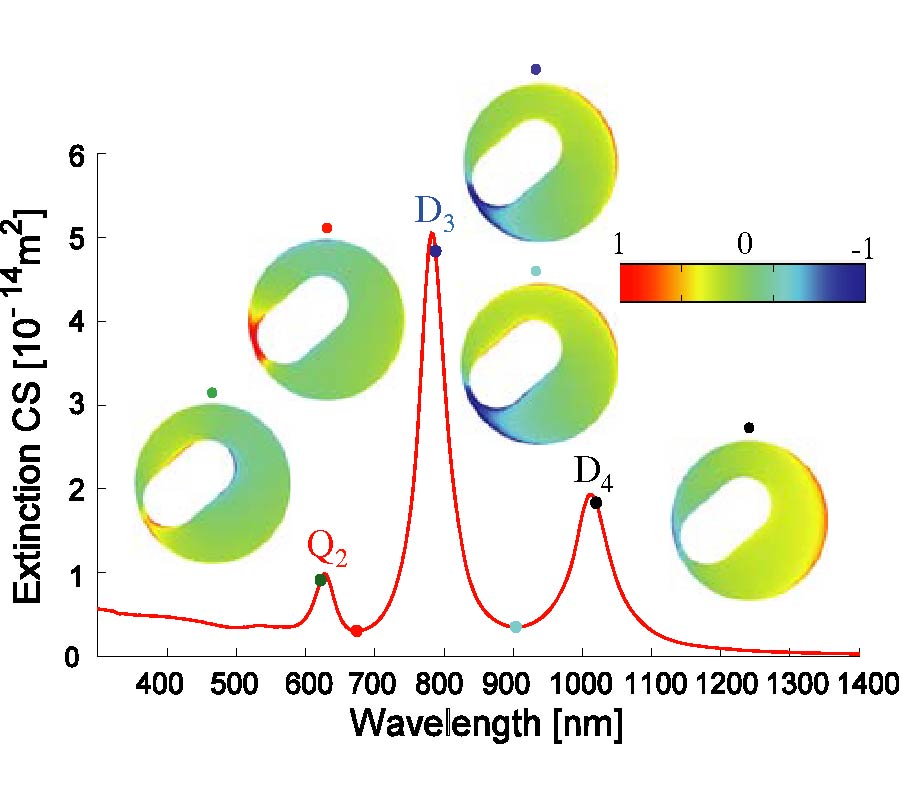
This paper presents a compact microstrip-fed slot antenna with triple-frequency operation. The proposed antenna structure consists of a cross-shaped microstrip feed line and multiple open-ended slots on the ground plane. By properly selecting shapes and dimensions of these embedded slots, the triple-resonance situations at 2.4/3.5/5.8GHz are obtained. Meanwhile, the cross-shaped feedline with shorting pin makes a joint benefit to adjust the matching condition and impedance bandwidth. The numerical and experimental results exhibit the designed antenna operates over triple frequency ranges and covers numbers of useful frequency bands for present wireless communication systems. In addition, acceptable radiation characteristics are obtained over the operating bands.
COMPACT TRIPLE-BAND SLOT ANTENNA FOR WIRELESS COMMUNICATIONS
2012-04-12
PIER M
Vol. 24, 127-140
Convergence Properties of a Diakoptics Method for Electromagnetic Scattering from 3-D Complex Structures
Vito Lancellotti and Antonius G. Tijhuis
Linear embedding via Green's operators (LEGO) is a diakoptics method that employs electromagnetic ``bricks'' to formulate problems of wave scattering from complex structures (e.g., penetrable bodies with inclusions). In its latest version the LEGO integral equations are solved through the Method of Moments combined with adaptive generation of Arnoldi basis functions (ABF) to compress the resulting algebraic system. In this paper we review and discuss the convergence properties of the numerical solution in relation to the number of ABFs. Besides, we address the issue of setting the threshold for stopping the generation of ABFs in conjunction with the adaptive Arnoldi algorithm.
CONVERGENCE PROPERTIES OF A DIAKOPTICS METHOD FOR ELECTROMAGNETIC SCATTERING FROM 3-D COMPLEX STRUCTURES
2012-04-12
PIER
Vol. 127, 173-188
A Novel Multilayer Dual-Mode Substrate Integrated Waveguide Complementary Filter with Circular and Elliptic Cavities (SICC and Siec)
Zhi Gang Zhang , Yong Fan , Yu Jian Cheng and Yong-Hong Zhang
A multilayer dual-mode complementary filter is developed based on substrate integrated circular and elliptic cavity (SICC and SIEC) in this paper. The filter is constructed with two different kinds of cavities, and each cavity supports two degenerate modes, which can be generated and controlled by the coupling aperture and slot located between layers. Detailed design process is introduced to synthesize an X-band dual-mode complementary filter. It not only has good performance, but also reduces the circuit size much more. Moreover, Sharp transition characteristic both in the lower and upper sidebands demonstrates high selectivity of the filter. Good agreement is obtained between the simulated and measured results of the proposed structure.
A NOVEL MULTILAYER DUAL-MODE SUBSTRATE INTEGRATED WAVEGUIDE COMPLEMENTARY FILTER WITH CIRCULAR AND ELLIPTIC CAVITIES (SICC AND SIEC)
2012-04-11
PIER Letters
Vol. 31, 75-87
Novel Nano-Antenna System Design Using Photonic Spin in a Panda Ring Resonator
Nopparat Thammawongsa , Narongchai Moongfangklang , Somsak Mitatha and Preecha P. Yupapin
A novel nano-antenna system design using photonic spin in a PANDA ring resonator is proposed. This photonic spins are generated by a soliton pulse within a PANDA ring, in which the transverse electric (TE) and a transverse magnetic (TM) fields are generated. The magnetic field is introduced by using an aluminum plate coupling to the microring resonator, in which the spin-up and spin-down states are induced, where finally, the photonic dipoles are formed. In operation, the dipole oscillation frequency is controlled by a soliton power, coupling coefficients, and ring radii. The obtained results have shown that THz frequency source can be generated by the proposed system. The advantage of proposed system is that the simple and compact nano-antenna with high power pulse source can be fabricated, which can generate and detecte the THz frequency in a single system.
NOVEL NANO-ANTENNA SYSTEM DESIGN USING PHOTONIC SPIN IN A PANDA RING RESONATOR
2012-04-11
PIER C
Vol. 28, 195-207
Design of CPW-Fed Dual-Band Circularly-Polarized Annular Slot Antenna with Two Perturbation Strips
Qiong Chen , Hui-Li Zheng , Juhang Hu and Shugang Jiang
A new CPW-fed dual-band circularly-polarized (CP) annular slot antenna with two perturbation strips is proposed. The structure of the annular slot, along with two concentric annular-ring patches, can achieve dual-band input impedance matching. And circular polarization at the operation bands can be achieved by using the two perturbation strips placed on the backside of the antenna. To reduce the resonant frequencies, a third strip protruded from the ground plane is introduced. Both the simulated and measured results show that the impedance bandwidths determined by 10-dB return loss are about 29.1% for the lower band (1.92-2.61 GHz) and 12.1% for the upper band (3.21-3.65 GHz). And the AR bandwidths are about 7.5% and 11.0%, respectively.
DESIGN OF CPW-FED DUAL-BAND CIRCULARLY-POLARIZED ANNULAR SLOT ANTENNA WITH TWO PERTURBATION STRIPS
2012-04-11
PIER
Vol. 127, 155-171
Analytical Field Calculation for Linear Tubular Magnetic Gears Using Equivalent Anisotropic Magnetic Permeability
Wenlong Li and Kwok-Tong Chau
Linear magnetic gears take the definite merit of direct force amplification or speed reduction without using any bulky, inefficient rotary-to-linear mechanism. In this paper, an analytical calculation approach to determine the performance of linear tubular magnetic gears is proposed. The key is to adopt the concept of anisotropic magnetic permeability to handle the field-modulation region which consists of iron rings and airspaces in a zebra-striped manner. By solving the Laplace's and Poisson's equations in the linear tubular magnetic gear, the corresponding magnetic field distributions can be analytically determined. Finally, the analytical calculation results are compared with the numerical results obtained from the finite element method, hence verifying the validity of the proposed analytical field calculation.
ANALYTICAL FIELD CALCULATION FOR LINEAR TUBULAR MAGNETIC GEARS USING EQUIVALENT ANISOTROPIC MAGNETIC PERMEABILITY
2012-04-11
PIER
Vol. 127, 139-154
Adaptive Beamforming with Low Side Lobe Level Using Neural Networks Trained by Mutated Boolean PSO
Zaharias D. Zaharis , Konstantinos A. Gotsis and John Sahalos
A new adaptive beamforming technique based on neural networks (NNs) is proposed. The NN training is accomplished by applying a novel optimization method called Mutated Boolean PSO (MBPSO). In the beginning of the procedure, the MBPSO is repeatedly applied to a set of random cases to estimate the excitation weights of an antenna array that steer the main lobe towards a desired signal, place nulls towards several interference signals and achieve the lowest possible value of side lobe level. The estimated weights are used to train efficiently a NN. Finally, the NN is applied to a new set of random cases and the extracted radiation patterns are compared to respective patterns extracted by the MBPSO and a well-known robust adaptive beamforming technique called Minimum Variance Distortionless Response (MVDR). The aforementioned comparison has been performed considering uniform linear antenna arrays receiving several interference signals and a desired one in the presence of additive Gaussian noise. The comparative results show the advantages of the proposed technique.
ADAPTIVE BEAMFORMING WITH LOW SIDE LOBE LEVEL USING NEURAL NETWORKS TRAINED BY MUTATED BOOLEAN PSO
2012-04-11
PIER
Vol. 127, 121-137
The Application of Modified Phase Extracted Basis Functions in Scattering Analysis of Dielectric-Coated Targets
Xue Niu , Zai-Ping Nie and Shiquan He
A novel basis function, called as the Modified Phase Extracted (MPE) basis function, has been proposed to analyze three-dimensional scattering problems for electrically large, thin dielectric-coated targets. The MPE basis function, which can be defined on large (e.g., a wavelength or more) curvilinear geometrical elements, is developed for quadrilateral cells. Consequently, combining with the thin dielectric sheet (TDS) approximation, the MPE basis function solves the scattering problem accurately with fewer unknowns than the solutions based on the conventional basis functions. In order to improve the accuracy of the solution solving the problem which has thicker dielectric coatings, some modifications about the TDS approximation model are made. Numerical examples demonstrate that the validity of the proposed approach in solving the scattering from electrically large, thin coated objects.
THE APPLICATION OF MODIFIED PHASE EXTRACTED BASIS FUNCTIONS IN SCATTERING ANALYSIS OF DIELECTRIC-COATED TARGETS