Search Results(13800)

2012-03-26
PIER B
Vol. 39, 337-354
Jute and Tea Discrimination through Fusion of SAR and Optical Data
Dipanwita Haldar , Chakrapani Patnaik , Shiv Mohan and Manab Chakraborty
Remote sensing approaches based on both optical and microwave region of EM spectra have been widely adapted for large scale crop monitoring and condition assessment. Visible, infrared and microwave wavelengths are sensitive to different crop characteristics, thus data from optical and radar sensors are complementary. Synthetic Aperture Radar (SAR) responds to the large scale crop structure (size, shape and orientation of leaves, stalks, and fruits) and the dielectric properties of the crop canopy. Research is needed to assess the saturation effects of SAR data and to investigate the synergy between the optical and SAR imagery for exploring various dimensions of crop growth which is not possible with any one of them singly with higher degree of accuracy. An attempt has been made to study the potential of SAR and optical data individually and by fusing them to separate various landcover classes. Two-date and three-date SAR data could distinguish jute and tea crop with 70-85% accuracy, while cloud free optical data (green, red and infrared bands) resulted in accuracy 80-85%. On fusing the optical and SAR single date data of May, 29 2010 using Brovey method, an accuracy of 85{\%} was obtained. PCA and HSV with munsell based approaches resulted in similar accuracies but HSV performed the best among these. This emphasizes on the synergistic effect of SAR and optical data. Also the fused data could be used to delineate the crop condition and age by inputs like NDVI from optical and XPR (Cross polarization ratio) from SAR data. The co- and cross polarization ratios along with various indices viz. Biomass Index (BMI), Volume Scattering Index (VSI) and canopy structural index (CSI) were used to discriminate tea from jute. Due to differences in structural component of tea and jute at early season as manifested by the indices, there is clear separability as observed from the mean values. Among the dual polarization combinations, HV/VV performed the best (70%) followed by HV/HH (62%) and lastly HH/VV (42%). Among the single best indices for discrimination BMI performed the best. Combination of Co, Cross-polarization and BMI yields around 80% classification accuracy. BMI and VSI combination yielded the best classification accuracy of 84%. This level of accuracy obtained was much superior to that of multidate HH polarization SAR data.
JUTE AND TEA DISCRIMINATION THROUGH FUSION OF SAR AND OPTICAL DATA
2012-03-26
PIER B
Vol. 39, 319-335
Amplitude and Directional of Arrival Estimation: Comparison Between Different Techniques
Fawad Zaman , Ijaz Mansoor Qureshi , Aqdas Naveed , Junaid Ali Khan and Raja Muhammad Asif Zahoor
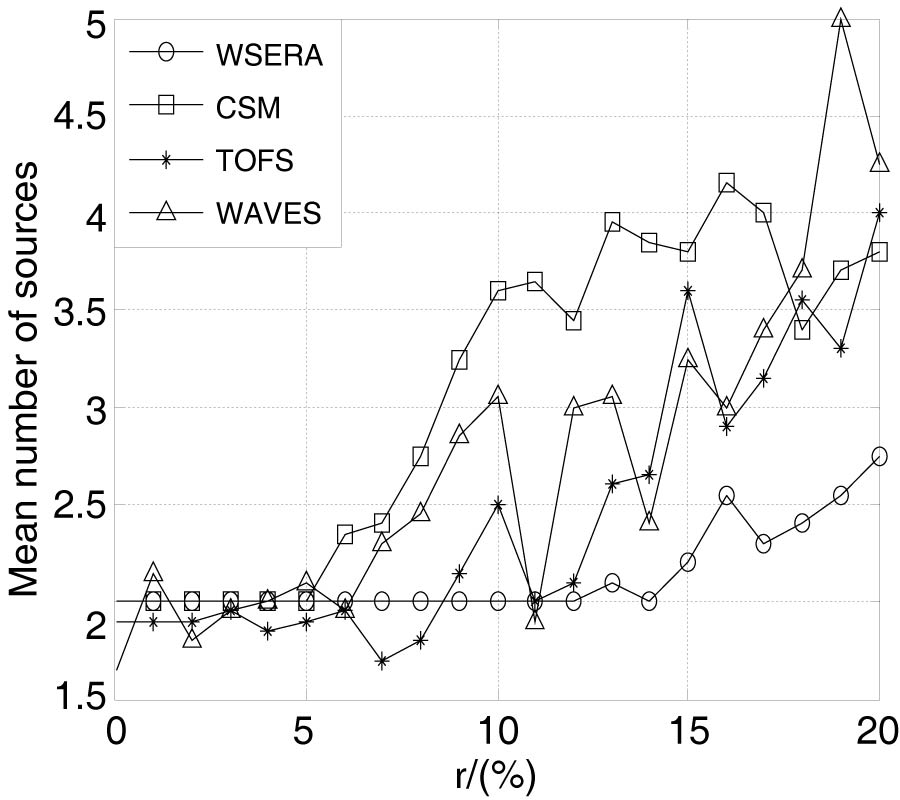
In this work, we propose a method based on Genetic algorithm hybridized with Pattern Search for joint estimation of Amplitude and Direction of Arrival, azimuth as well as elevation angles using L-type array. Four other schemes i.e., the Genetic algorithm, Pattern Search, Simulated Annealing and Simulated Annealing hybridized with Pattern Search are also discussed and compared with Genetic algorithm hybridized with Pattern Search. Multiple sources are taken in the far field of sensors array and Mean Square Error is taken as a fitness function. This fitness function is optimal in nature and requires only a single snapshot. It avoids any ambiguity or required permutation as in some other methods to link it with angles found in the previous snapshot. The reliability and effectiveness of the proposed scheme is tested on the basis of Monte- Carlo simulations and its statistical analysis.
AMPLITUDE AND DIRECTIONAL OF ARRIVAL ESTIMATION: COMPARISON BETWEEN DIFFERENT TECHNIQUES
2012-03-26
PIER Letters
Vol. 30, 163-171
Comparison of THz Backward Wave Oscillators Based on Corrugated Waveguides
Mauro Mineo and Claudio Paoloni
The backward wave oscillator is a promising and powerful source at THz frequencies. The rectangular corrugated waveguide is an effective solution as slow wave structure to design backward-wave oscillators (BWOs), suitable to be fabricated by photolithographic high-aspect ratio processes. However, assembling and vacuum pumping are a critical issue. In this paper, a corrugated waveguide with the width of the corrugation narrower than the waveguide width will be investigated as slow wave structure for BWOs. A relevant improvement from the point of view of the assembling, together with even better performance will be demonstrated. Two backward wave oscillators, at 1 THz central frequency, designed with conventional and narrow corrugated waveguide will be compared in terms of output power and frequency band of tuning.
COMPARISON OF THz BACKWARD WAVE OSCILLATORS BASED ON CORRUGATED WAVEGUIDES
2012-03-26
PIER
Vol. 126, 449-461
42.13 Gbit/S 16qam-OFDM Photonics-Wireless Transmission in 75-110 GHz Band
Lei Deng , Deming Liu , Xiaodan Pang , Xu Zhang , Valeria Arlunno , Ying Zhao , Antonio Caballero , Anton K. Dogadaev , Xianbin Yu , Idelfonso Tafur Monroy , Marta Beltran and Roberto Llorente
We present a simple architecture for realizing high capacity W-band (75-110 GHz) photonics-wireless system. 42.13 Gbit/s 16QAM-OFDM optical baseband signal is obtained in a seamless 15 GHz spectral bandwidth by using an optical frequency comb generator, resulting in a spectral efficiency of 2.808 bits/s/Hz. Transparent photonic heterodyne up-conversion based on two free-running lasers is employed to synthesize the W-band wireless signal. In the experiment, we program an improved DSP receiver and successfully demonstrate photonics-wireless transmission of 8.9 Gbit/s, 26.7 Gbit/s and 42.13 Gbit/s 16QAM-OOFDM W-band signals, with achieved bit-error-rate (BER) performance below the forward error correction (FEC) limit.
42.13 GBIT/S 16QAM-OFDM PHOTONICS-WIRELESS TRANSMISSION IN 75-110 GHz BAND
2012-03-26
PIER
Vol. 126, 429-447
Analysis of Characteristics of Two Close Stationary Human Targets Detected by Impulse Radio UWB Radar
Yanfeng Li , Xijing Jing , Hao Lv and Jianqi Wang
The detection and identification of multi-stationary human targets with IR-UWB radar is a new and important technology. This paper is focused on the detection and identification of two close stationary human targets by using monostatic IR-UWB radar with low center frequency. For this purpose, the characteristics of the radar echoes from two close stationary human targets are processed and analyzed. Furthermore, the effect that the interference behind the anterior target affects the signal of posterior target is represented, and the features of this interference are interpreted. According to the analyses, a method using adaptive cancellation is proposed to attenuate the interference and improve the detection and identification of two close stationary human targets. Series of experiments are done in different scenarios, and the results of the experiments are presented to demonstrate the validity of the method. It has been shown that the proposed method can attenuate the interference and make the detection and identification of multi-human targets more precise.
ANALYSIS OF CHARACTERISTICS OF TWO CLOSE STATIONARY HUMAN TARGETS DETECTED BY IMPULSE RADIO UWB RADAR
2012-03-26
PIER
Vol. 126, 399-427
Koch-Like Sided Sierpinski Gasket Multifractal Dipole Antenna
Daotie Li and Jun-Fa Mao
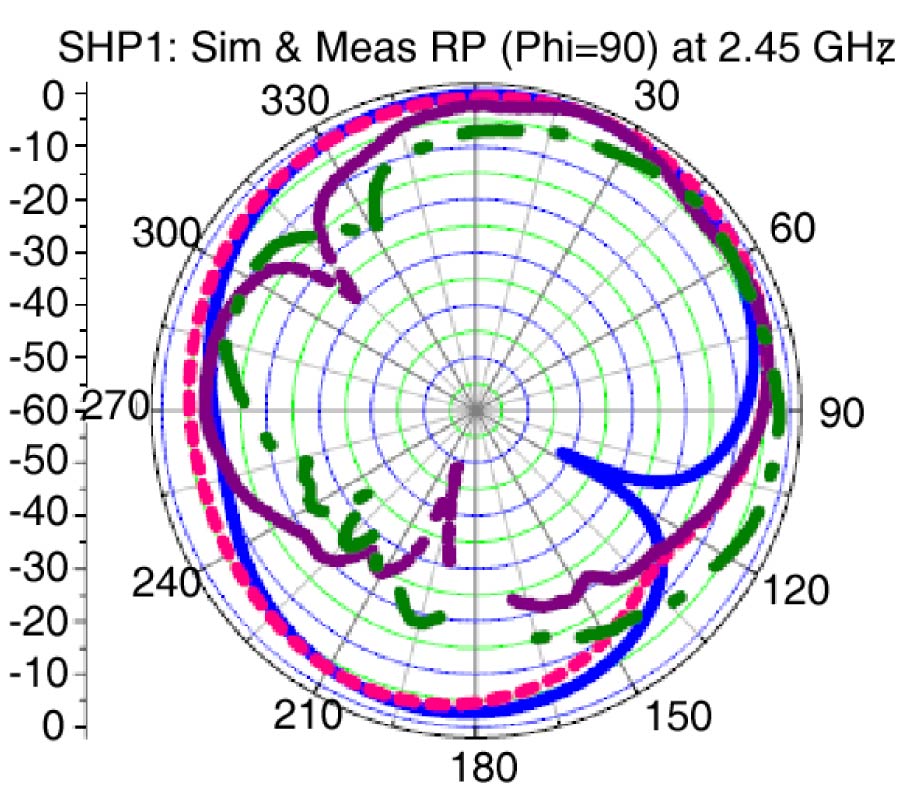
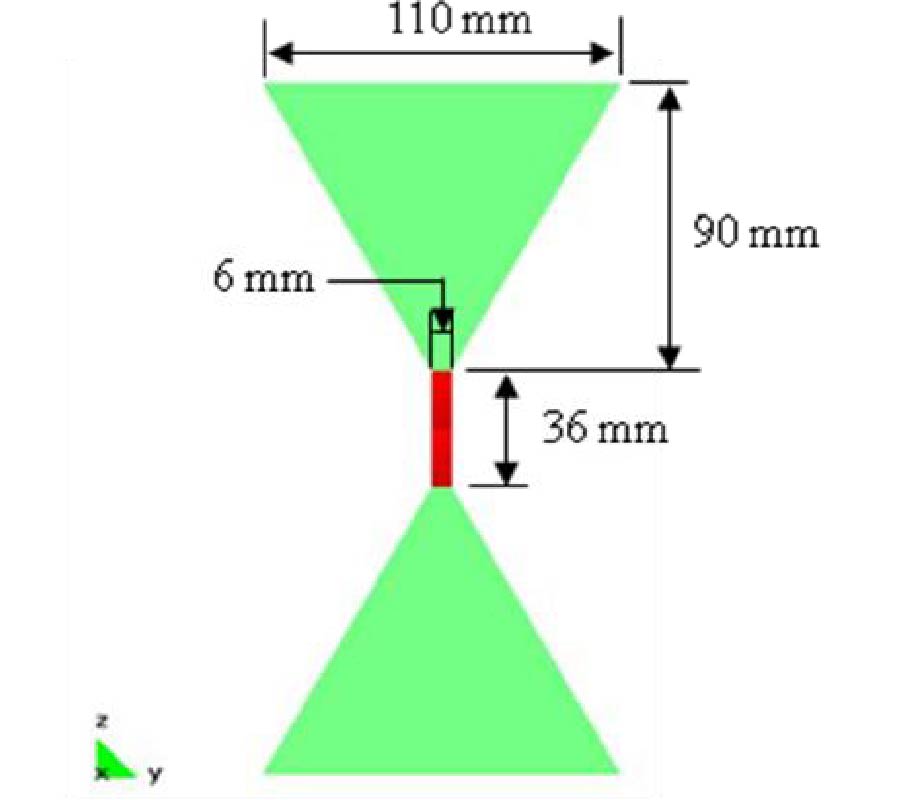
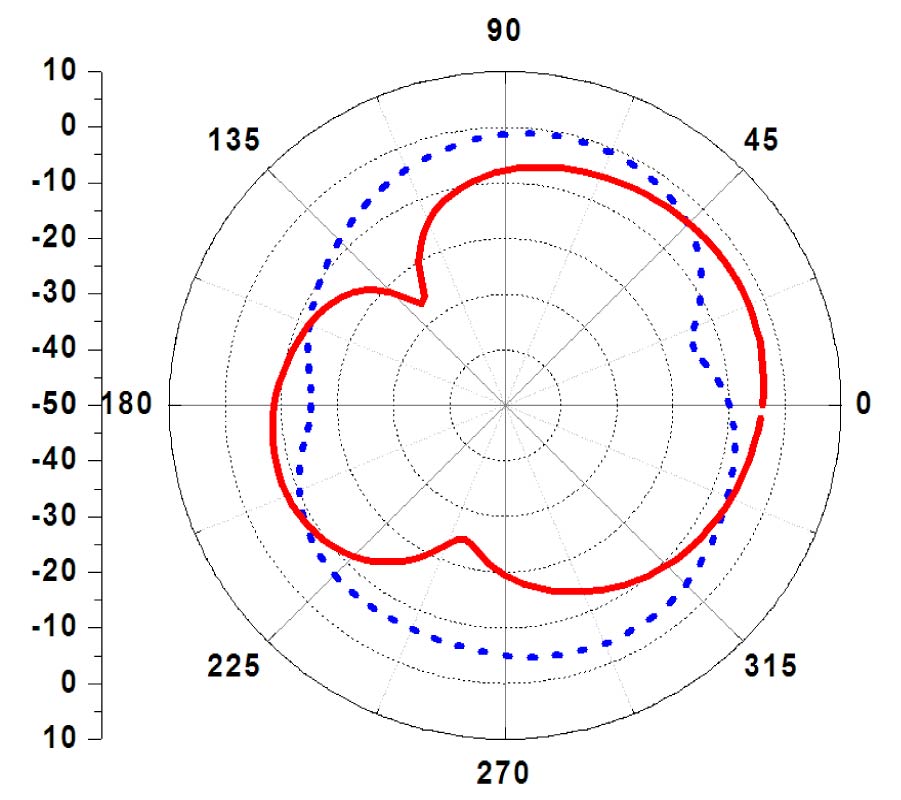
Koch-like fractal curve and Sierpinski Gasket are syncretized in minor-main way, forming so called Koch-like sided Sierpinski Gasket multifractal dipole (KSSG). Some iterative combinatorial cases of the two monofractals KiSj KSSG have been investigated in free space without feedline for revealing the assumed multifractal property. Then a pragmatical coplanar stripline (CPS) fed K4S1 KSSG multifractal bow-tie dipole with dimension of 61.1mm×34.75mm was designed, fabricated and measured. Six matched bands(S11<-10dB) with moderate gain (2dBi-6dBi) and high efficiency (80%-95%) are obtained within band 1.5GHz-14GHz, of which f1=2.137GHz (1.978-2.287GHz, 309MHz, 14.46%, PCS1900+IMT2000+UMTS), f2=4.103GHz (3.916-4.2GHz, 374MHz, 9.12%, WiMAX), f3=5.596GHz (5.499-5.679GHz, 180MHz, 3.22%, WLAN+WiMAX) are commonly used. Gain patterns of these bands are all almost omnidirectional in H-plane (Phi=0o, XOZ) and doughnut-shaped in E-plane (Phi=90o, YOZ), which suggests that K4S1 KSSG operates as a half-wavelength dipole. It behaviors like the main fractal in low frequency and resembles the minor one in high frequency. The consistent results of simulation and measurement have evinced the multifractal antennas' peculiar properties and superiority over its monofractals in impedance uniformity, gain pattern, efficiency and dimension. So it is attractive to PCS, UMTS, WLAN, WiFi, WiMAX and other communication systems.
KOCH-LIKE SIDED SIERPINSKI GASKET MULTIFRACTAL DIPOLE ANTENNA
2012-03-26
PIER
Vol. 126, 375-398
Hybrid TDIE-TDPO Method Using Weighted Laguerre Polynomials for Solving Transient Electromagnetic Problems
Ming-Da Zhu , Xi-Lang Zhou , Wei Luo and Wen-Yan Yin
An efficient and stable hybrid method, based on the time-domain integral equation (TDIE) and time-domain physical optics (TDPO), is developed for investigating transient radiation and scattering from perfectly electrical conducting (PEC) objects. It at first requires partitioning the PEC object surface into TDIE and TDPO regions, respectively. Then, a set of hybrid TDIE-TDPO equations is derived and solved using an adaptive marching-on-in-order (MOO) method. The fast Fourier transforms (FFT)-based blocking scheme is further implemented into the proposed algorithm so as to reduce N2O dependence of the traditional MOO method to NOlog2(NO), where NO is the highest order of the weighted Laguerre polynomials used for computation. Under such circumstances, its computational cost, in comparison with the full TDIE-MOO solver, is reduced significantly. Several numerical examples are presented to demonstrate its accuracy and efficiency in solving some typical transient electromagnetic problems.
HYBRID TDIE-TDPO METHOD USING WEIGHTED LAGUERRE POLYNOMIALS FOR SOLVING TRANSIENT ELECTROMAGNETIC PROBLEMS
2012-03-24
PIER B
Vol. 39, 301-318
Design and Fabrication of RF-MEMS Switch for V-Band Reconfigurable Application
Thanh Mai Vu , Gaetan Prigent , Jinyu Ruan and Robert Plana
This paper presents a study of RF MEMS switch designed to be integrated in tunable filters for applications from W-frequency band to V-frequency band. Along the whole process, we go into detail of each procedure to present a complete study from design to fabrication and characterization of a RF-MEMS switch. The proposed concepts are validated by experimental results.
DESIGN AND FABRICATION OF RF-MEMS SWITCH FOR V-BAND RECONFIGURABLE APPLICATION
2012-03-24
PIER C
Vol. 28, 113-126
Optimization of Non-Uniform Circular Arrays with Covariance Matrix Adaptation Evolutionary Strategy
Li Zhang , Yong-Chang Jiao , Bo Chen and Zibin Weng
In this paper, a covariance matrix adaptation evolutionary strategy (CMA-ES) is employed for optimization design of non-uniform circular antenna arrays. To achieve minimum sidelobe levels with the constraint of a specific first null beamwidth, the CMA-ES is utilized to find out the optimal weights and geometry of the circular array. The three various circular ring arrays are solved via CMA-ES, and the results are presented for arrays of varying configurations. The design results obtained with CMA-ES are compared to the existing array designs in the literature and to those found by the other evolutionary algorithms. Comparison with the results of other algorithms reveals the superiority of the CMA-ES.
OPTIMIZATION OF NON-UNIFORM CIRCULAR ARRAYS WITH COVARIANCE MATRIX ADAPTATION EVOLUTIONARY STRATEGY
2012-03-23
PIER C
Vol. 28, 99-111
An Effective Wideband Spectrum Sensing Method Based on Sparse Signal Reconstruction for Cognitive Radio Networks
Fulai Liu , Shouming Guo , Qingping Zhou and Ruiyan Du
Wideband spectrum sensing is an essential functionality for cognitive radio networks. It enables cognitive radios to detect spectral holes over a wideband channel and to opportunistically use under-utilized frequency bands without causing harmful interference to primary networks. However, most of the work on wideband spectrum sensing presented in the literature employ the Nyquist sampling which requires very high sampling rates and acquisition costs. In this paper, a new wideband spectrum sensing algorithm based on compressed sensing theory is presented. The proposed method gives an effective sparse signal representation method for the wideband spectrum sensing problem. Thus, the presented method can effectively detect all spectral holes by finding the sparse coefficients. At the same time, the signal sampling rate and acquisition costs can be substantially reduced by using the compressive sampling technique. Simulation results testify the effectiveness of the proposed approach even in low signal-to-noise (SNR) cases.
AN EFFECTIVE WIDEBAND SPECTRUM SENSING METHOD BASED ON SPARSE SIGNAL RECONSTRUCTION FOR COGNITIVE RADIO NETWORKS
2012-03-22
PIER B
Vol. 39, 281-299
Electromagnetic Vector-Sensor Array Processing for Distributed Source Localization
X.M. Shi and Zhiwen Liu
We consider the problem of direction-of-arrival (DOA) estimation for distributed signals with electromagnetic vector sensors, of which each provides measurements of the complete electric and magnetic fields induced by electromagnetic (EM) signals. In this paper, we consider situations where the sources are distributed not only in space with a deterministic angular signal density,but also in polarization with partially polarized components. A distributed signals general model with electromagnetic vector-sensor array (EMVS-DIS) is established with some reasonable assumptions. Based on the EMVS-DIS model, the minimum-variance distortionless response (MVDR) estimators for distributed source DOA are derived. MVDR estimators do not require the knowledge of the effective dimension of the pseudosignal subspace. We compare our method with the distributed signal MUSIC-like estimator in electromagnetic vector-sensor arrays. The simulation studies show significant advantages in using the proposed EMVS-DIS model with electromagnetic vector sensors. Simulation results show that the new MVDR method outperforms the MUSIC-like algorithm by reducing the estimation RMSE and improving resolution performance for scenario with distributed sources. A robustness study of MVDR localizer was also conducted via simulations.
ELECTROMAGNETIC VECTOR-SENSOR ARRAY PROCESSING FOR DISTRIBUTED SOURCE LOCALIZATION
2012-03-22
PIER
Vol. 126, 355-373
A Novel Dielectric Conformal FDTD Method for Computing SAR Distribution of the Human Body in a Metallic Cabin Illuminated by an Intentional Electromagnetic Pulse (Iemp)
Ling-Yu Kong , Jian Wang and Wen-Yan Yin
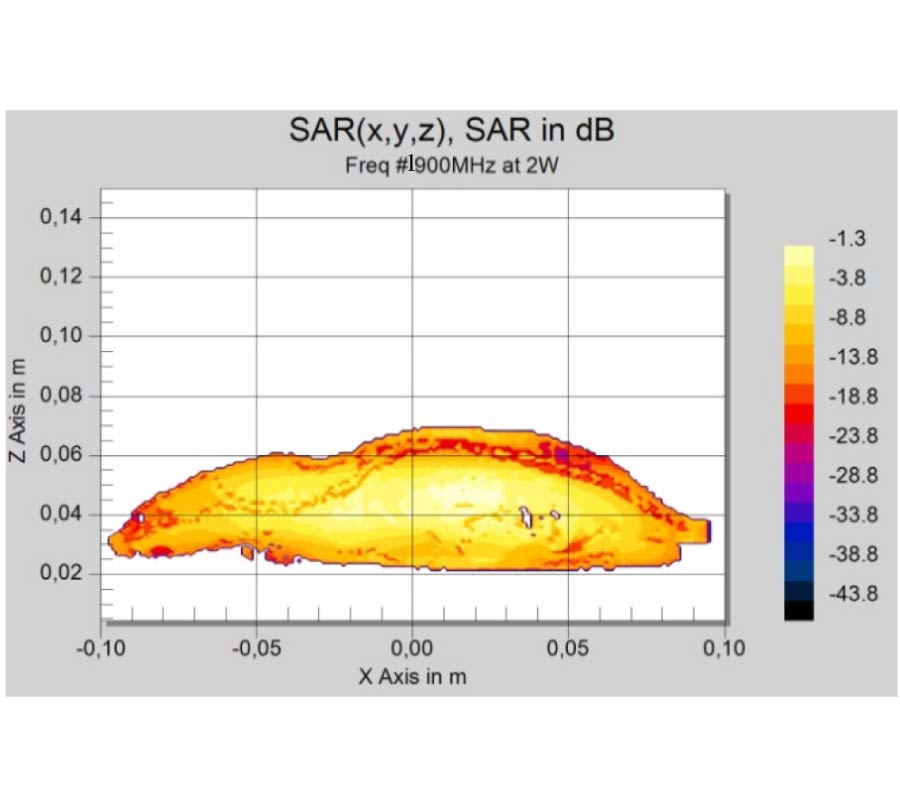
One novel dielectric conformal finite-difference time-domain (FDTD) method is proposed for computing specific absorption rate (SAR) distribution over the human body model in one metallic cabin with some windows on its wall. It is based on the concept of area average, which is different from other traditional conformal FDTD schemes. Our developed algorithm is verified by calculating both point and average SARs of dielectric sphere and human head models illuminated by an intentional electromagnetic pulse (IEMP), respectively, and CST Microwave Studio (MWS) also used for validating its accuracy. Numerical calculations are further performed to show the average SAR distribution over the human body model for different IEMP incidences, where the cabin door is opened or closed. The effects of E-field amplitude, direction and polarization of the incident IEMP on the SAR distributions are characterized in detail. We would like to say that this study will be useful for further electromagnetic protection for some persons working in high power radiation environment.
A NOVEL DIELECTRIC CONFORMAL FDTD METHOD FOR COMPUTING SAR DISTRIBUTION OF THE HUMAN BODY IN A METALLIC CABIN ILLUMINATED BY AN INTENTIONAL ELECTROMAGNETIC PULSE (IEMP)
2012-03-21
PIER B
Vol. 39, 267-280
The Role of Fibre Orientation on the Electromagnetic Performance of Waveguides Manufactured from Carbon Fibre Reinforced Plastic
Alexe Bojovschi , Kelvin J. Nicholson , Amir Galehdar , Paul J. Callus and Kamran Ghorbani
Aircraft skins manufactured from carbon fibre reinforced plastic (CFRP) can simultaneously support structural load and act as antennas. This offers the potential for disproportionately large antenna elements and arrays, and thus enhanced aircraft capability. The efficient design of such structures requires that the link between CFRP microstructure and electromagnetic performance be established. This paper presents a method of predicting the electromagnetic attenuation of waveguides manufactured from CFRP. The method considers both the orthotropic, complex conductivity of CFRP, high in the fibre direction and low transverse to it, and the local electric fields in waveguides, which vary with location and frequency. The method was validated experimentally using waveguides manufactured from aerospace grade IM7/977-3 prepreg tape with [0 90]s, [90 0]s and [±45]s ply stacking sequences.
THE ROLE OF FIBRE ORIENTATION ON THE ELECTROMAGNETIC PERFORMANCE OF WAVEGUIDES MANUFACTURED FROM CARBON FIBRE REINFORCED PLASTIC
2012-03-21
PIER Letters
Vol. 30, 153-162
Spectro-Temporal Mismatch Analysis of a Transmission Line Based on on-Wafer Optical Sampling
Dong-Joon Lee , Jae-Yong Kwon and Joo-Gwang Lee
We present an optical sampling technique that enables exploration of mismatches of a microstrip transmission line based on reflection analyses of electromagnetic pulses. The external electro-optic sampling scheme with a minute crystal detects high-speed electrical pulses over arbitrary locations of a line with very low-intrusiveness. The temporal pulsed signals measured with an on-wafer optical probing system and the corresponding spectra are obtained to analyze the transfer characteristics of a microstrip transmission line with 20 GHz bandwidth. The spectro-temporal response was cross-checked with commercial instruments. Applications of this optical probing technique to explore mismatches at the terminal port - based on both time and frequency domain reflectometry analyses - are also presented.
SPECTRO-TEMPORAL MISMATCH ANALYSIS OF A TRANSMISSION LINE BASED ON ON-WAFER OPTICAL SAMPLING
2012-03-21
PIER C
Vol. 28, 83-97
Spurious Pass-Band Suppression in Coupled-Serial-Shunted Lines Wideband Band-Pass Filters
Lin-Chuan Tsai
In this paper, a synthesis method is presented for Chebyshev type II band-pass filters in the microwave frequency range. We investigate the cause of the second harmonic passband of coupled-serial-shunted lines bandpass filters. Filters are employed substrate suspension, wavy-edge coupling, ring resonators, defect ground structure (DGS), and a combination of the wavy-edge coupling and ring resonators may be used and were investigated to suppress the harmonic pass-band. With a combination of the wavy-edge coupled-lines and ring resonators, the harmonic pass-band of the parallel-coupled line filter is rejected more effectively. Several filters are fabricated and measured to demonstrate the design.
SPURIOUS PASS-BAND SUPPRESSION IN COUPLED-SERIAL-SHUNTED LINES WIDEBAND BAND-PASS FILTERS
2012-03-21
PIER M
Vol. 24, 57-68
Preliminary Results on Brain Monitoring of Meningitis Using 16 Channels Magnetic Induction Tomography Measurement System
Hai Jun Luo , Wei He , Zhang Xu and Li Liu
Magnetic induction tomography (MIT) is a contactless measurement technique of biological tissue conductivity. In this study, the differential induced voltage equations are shown in single layer and n layers models. The paper describes a 16 channels MIT measurement system with working frequency of 1MHz, which can image the plan of low conductivity object. According to physical experiments, the sensitivity is about 0.29°/S·m-1, and the maximum shift of the phase noise is 0.08°. Some preliminary clinical experiments were done, including 2 cases of meningitis and 5 cases of brain normal patients. The comparison of all the measured values shows that all values are smaller than 1.7° in the brain normal cases, but the values of meningitis cases are more than 2°, higher than those of brain normal patients. Therefore, the MIT measurement system has great application prospect in dynamically monitoring the brain diseases.
PRELIMINARY RESULTS ON BRAIN MONITORING OF MENINGITIS USING 16 CHANNELS MAGNETIC INDUCTION TOMOGRAPHY MEASUREMENT SYSTEM
2012-03-21
PIER
Vol. 126, 333-353
Fast 3-D Microwave Imaging Method Based on Subaperture Approximation
Ke-Fei Liao , Xiao-Ling Zhang and Jun Shi
In this paper, the subaperture approximation (SA) method for 3-D microwave imaging is presented based on the sparsity of 3-D image. The idea is that the sparsity information can be extracted from the lower resolution image obtained using the subaperture of the (virtual) array and be used for high-resolution imaging to reduce the imaging region. Thus, a recursion procedure that can significantly reduce the computational cost is established. Compared with the surface-tracing-based method, the SA method can avoid the loss of isolated scatterers. The feasibility is verified by using experimental data. After analysis, the SA method can reduce the computational cost from two aspects: reducing the array element number needed to be processed and the pixels needed to be processed. The computational cost is mainly related to the target characteristics (the sparsity ratio and the topological structure), and decreases with the increase of the sparsity ratio. When the sparsity ratio is larger than 97.6%, the computational cost can be lower than 10% of the 3-D back-projection (BP) method.
FAST 3-D MICROWAVE IMAGING METHOD BASED ON SUBAPERTURE APPROXIMATION
2012-03-21
PIER
Vol. 126, 317-332
A Frequency Selective Absorbing Ground Plane for Low-RCS Microstrip Antenna Arrays
Filippo Costa , Simone Genovesi and Agostino Monorchio
An efficient strategy for reducing the signature of an antenna is to substitute the conventional solid ground plane with a patterned ground plane thus letting the incoming energy to pass through the structure except over the operating band of the antenna. However, in a real environment, the energy flowing through the FSS (Frequency Selective Surface) can be intercepted by eventual scatterers located behind the antenna, so to nullify the RCS (Radar Cross Section) reduction. To overcome this drawback, a novel composite structure is proposed which is able to dissipate such energy by placing a thin absorbing layer below the FSS ground. It is shown that a careful analysis has to be performed to accomplish this goal since the transparent antenna array and the backing absorber strongly interact and thus they cannot be separately designed. The optimal value of the foam spacer thickness between the FSS ground and the absorbing layer is investigated by an efficient equivalent transmission line approach. Criteria for enlarging the low-RCS band with respect to the free space design are also provided. An antenna array prototype backed by the thin multilayer structure is finally manufactured and tested.
A FREQUENCY SELECTIVE ABSORBING GROUND PLANE FOR LOW-RCS MICROSTRIP ANTENNA ARRAYS
2012-03-20
PIER B
Vol. 39, 241-266
Design and Optimization of Multilayered Electromagnetic Shield Using a Real-Coded Genetic Algorithm
Heeralal Gargama , Sanjay Kumar Chaturvedi and Awalendra K. Thakur
We report optimized design of multilayered electromagnetic shield using real coded genetic algorithm. It is observed that the shielding effectiveness in multilayer design is higher than single layered counterpart of equal thickness. An effort has been made to develop alternative approach to achieve specific objective of identifying the design characteristics of each layer in the multilayered shielding configuration. The proposed approach incorporates interrelated factors, such as, absorption and reflection in the design optimization as per specific shielding requirements. The design problem has been solved using shielding effectiveness theory based on transmission line (TL) modeling and real-coded genetic algorithm (GA) with simulated binary crossover (SBX) and parameter-based mutation. The advantage of real-coded GA lies in efficient solution for electromagnetic interference (EMI) shielding design due to its strength in solving constraint optimization problems of continuous variables with many parameters without any gradient information. Additionally, the role of material parameters, such as permittivity and permeability on reflection characteristics and shielding effectiveness has also been investigated and optimized using the proposed models and real-coded GA. Theoretical optimization of electromagnetic parameters has been carried out for SE ~40 dB for many industrial/commercial applications and SE ~80 dB for military applications.
DESIGN AND OPTIMIZATION OF MULTILAYERED ELECTROMAGNETIC SHIELD USING A REAL-CODED GENETIC ALGORITHM
2012-03-20
PIER C
Vol. 28, 71-81
An Inexpensive Reconfigurable Planar Array for Wi-Fi Applications
Massimo Donelli and Pascal Febvre
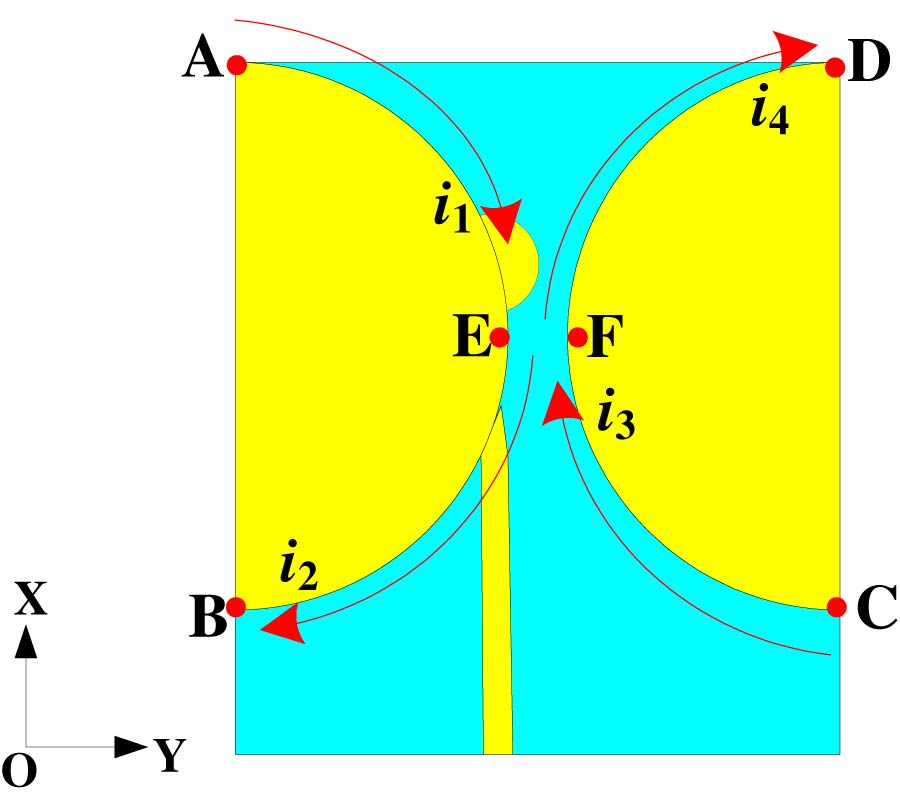
This work presents the results of the synthesis of a light-weight inexpensive reconfigurable planar array antenna. The antenna structure is based on four circular patches. The sources points and some discontinuities on the patches can be electronically reconfigured by means of radio-frequency (RF) switches in order to modify the radiation pattern. In particular, the main lobe could be steered towards a desired direction to obtain an optimal management of wireless resources. An experimental prototype has been realized and tested. Numerical and experimental results are reported and compared to assess the reconfigurable capabilities of the proposed antenna prototype.
AN INEXPENSIVE RECONFIGURABLE PLANAR ARRAY FOR WI-FI APPLICATIONS