Search Results(14091)

2012-06-21
PIER
Vol. 129, 231-250
Adaptive Detection of Multiple Point-Like Targets Under Conic Constraints
Chengpeng Hao , Francesco Bandiera , Jun Yang , Danilo Orlando , Shefeng Yan and Chaohuan Hou
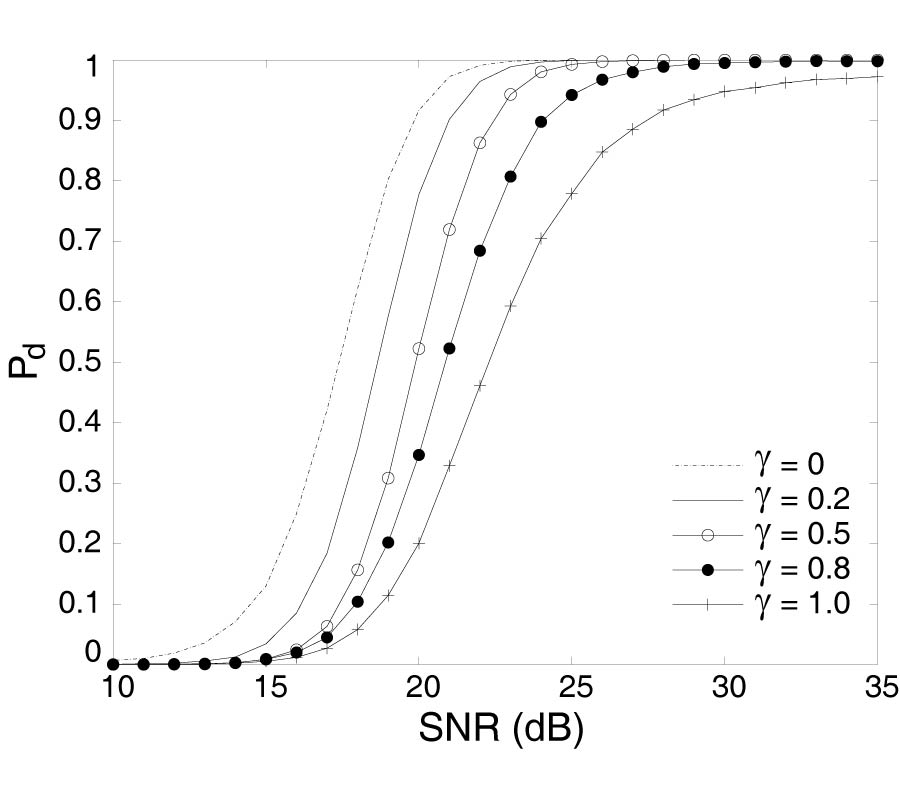
This paper addresses the problem of detecting multiple point-like targets in the presence of steering vector mismatches and Gaussian disturbance with unknown covariance matrix. To this end, we first model the actual useful signal as a vector belonging to a proper cone whose axis coincides with the whitened direction of the nominal array response. Then we develop two robust adaptive detectors resorting to the two-step GLRT-based design procedure without assignment of a distinct set of secondary data. The performance assessment has been conducted by Monte Carlo simulation, also in comparison to previously proposed detectors, and confirms the effectiveness of the newly proposed ones. In the last part of the work, in order to restore the detection performance of the newly proposed detectors in the presence of a large number of range cells contaminated by useful signals, we consider two adaptive detectors which resort to the structure information of the disturbance covariance matrix, and show that the a-priori information on the covariance structure can lead to a noticeable performance improvement.
ADAPTIVE DETECTION OF MULTIPLE POINT-LIKE TARGETS UNDER CONIC CONSTRAINTS
2012-06-21
PIER
Vol. 129, 215-229
Equivalent Circuit Analysis of Ridge-Loaded Folded-Waveguide Slow-Wave Structures for Millimeter-Wave Traveling-Wave Tubes
Yan Hou , Jin Xu , Hai-Rong Yin , Yan-Yu Wei , Ling-Na Yue , Guoqing Zhao and Yu-Bin Gong
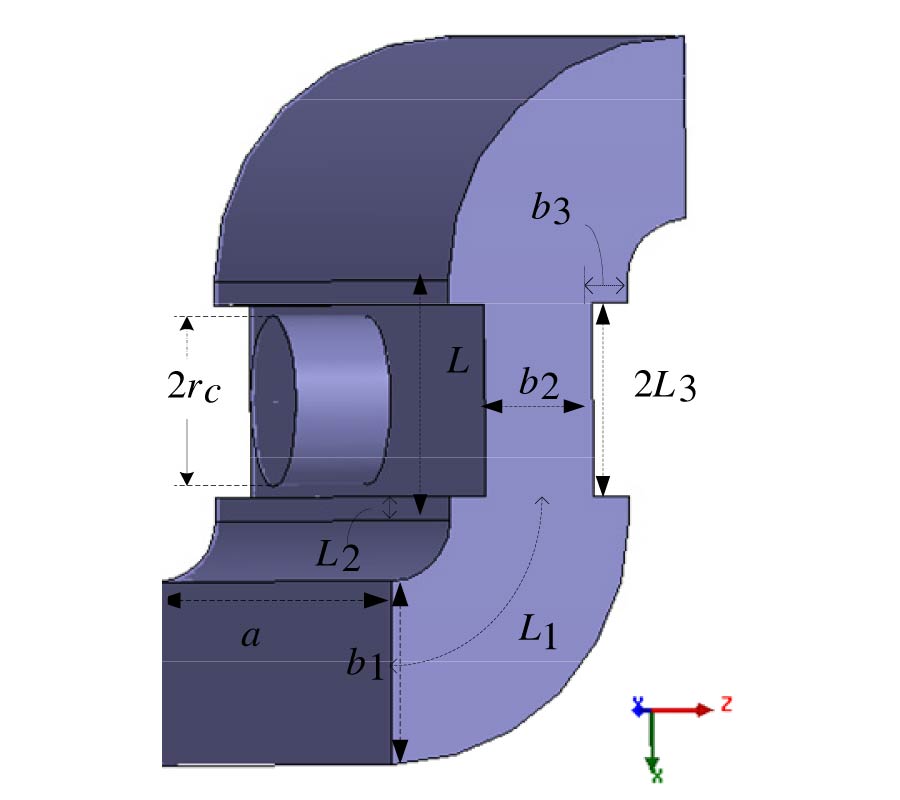
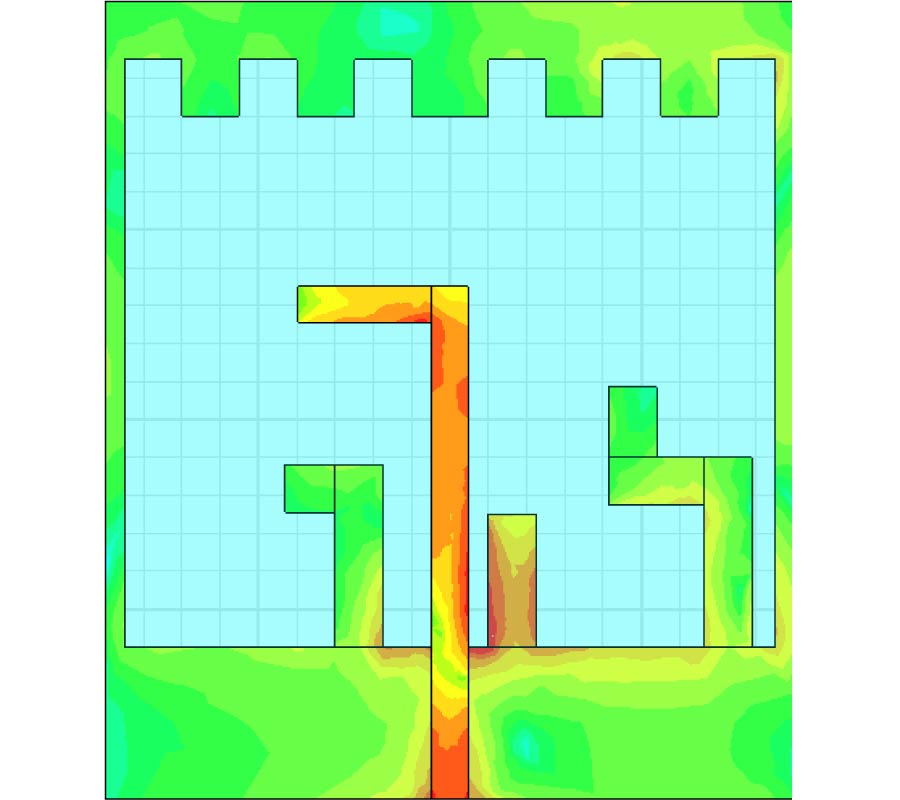
In this paper, a new simple equivalent circuit model for analysis of dispersion and interaction impedance characteristics of ridge-loaded folded-waveguide slow-wave structure is presented. In order to make the computational results more accurately, the effects of the presence of the beam-hole and discontinuity due to the waveguide bend and the narrow side dimension change of this kind of structure were considered. The dispersion characteristics and the interaction impedance are numerical calculated and discussed. The analytical results agree very well with those obtained by the 3-D electromagnetic high-frequency simulation software. It is indicated that the equivalent circuit methods are reliable and high efficiency.
EQUIVALENT CIRCUIT ANALYSIS OF RIDGE-LOADED FOLDED-WAVEGUIDE SLOW-WAVE STRUCTURES FOR MILLIMETER-WAVE TRAVELING-WAVE TUBES
2012-06-20
PIER B
Vol. 41, 357-375
Efficient Adaptive Detection Threshold Optimization for Tracking Maneuvering Targets in Clutter
Jian-Tao Wang , Hong-Qiang Wang , Yu-Liang Qin and Zhaowen Zhuang
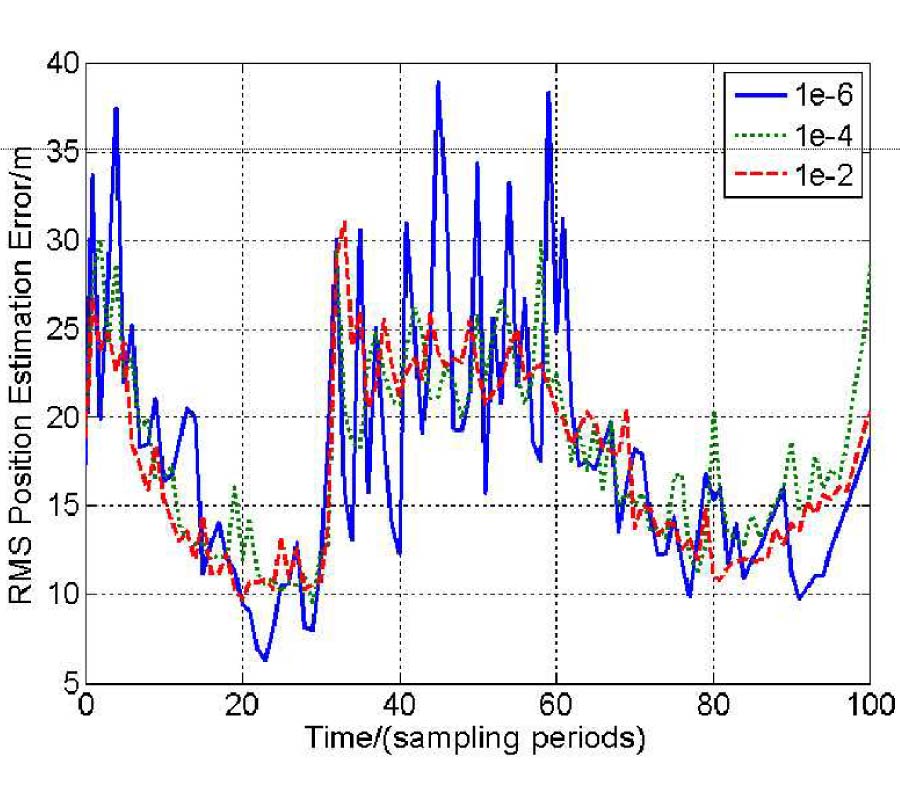
In this paper, we focus on the adaptive prior detection threshold setting problem to optimize the overall performance of the joint detection-tracking system for maneuvering target tracking in clutter. It is shown that our problem can be reduced to the information reduction factor (IRF) maximization by Gaussian fitting of maneuvering target Markovian switching dynamics via moment matching, even for the case with the nonlinear measurement equation. Our proposed adaptive threshold setting method outperforms the conventional threshold setting approaches greatly and also exhibits a mildly improvement in comparison with the earlier method for this problem in terms of tracking performance, especially in track loss percentage (TLP). However the computational burden of our method is reduced significantly because in our method generally only one IRF corresponding to the common validation region, not the every IRF corresponding to the individual model-conditioned validation region, is needed for threshold optimization at each time step and an approximate closed-form solution can also be obtained for the special case of the Neyman-Pearson (NP) detector.
EFFICIENT ADAPTIVE DETECTION THRESHOLD OPTIMIZATION FOR TRACKING MANEUVERING TARGETS IN CLUTTER
2012-06-20
PIER Letters
Vol. 33, 1-12
A Dual-Band Metamaterial Absorber Based with Resonant-Magnetic Structures
Hong-Min Lee and Hyungsup Lee
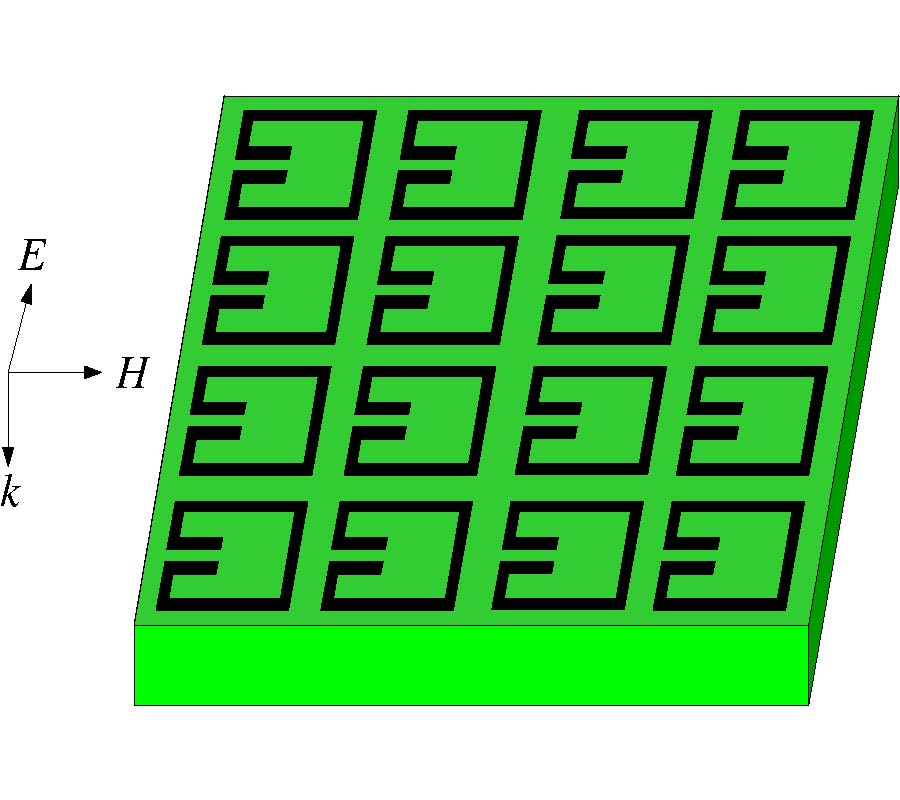
In this paper, we present a new type of a double-negative metamaterial (MTM) absorber based with resonant-magnetic structures, with a periodic array composed of a split-ring resonator (SRR) and two open complementary split-ring resonators (OCSRRs). In contrast to common absorber configurations, the absorber proposed in this paper does not use a metallic back plate or a resistive sheet. In order to eliminate the need for this metallic back plate, a planar array of SRRs is placed parallel to the incident wave propagation direction. An appropriately designed combination structure of two OCSRRs and a SRR exhibits negative permittivity and negative permeability in the same frequency band. Each unit cell is printed on both sides of an FR-4 substrate. A prototype absorber was fabricated with a planar array of 75 × 42 unit cells. Both simulations and experiments verify the effectiveness of the proposed backplane-less MTM absorber. The proposed backplane-less absorber can be used for microwave applications.
A DUAL-BAND METAMATERIAL ABSORBER BASED WITH RESONANT-MAGNETIC STRUCTURES
2012-06-20
PIER M
Vol. 25, 39-52
Moving Target Tracking Using Time Reversal Method
Siroos Bahrami , Ahmad Cheldavi and Ali Abdolali
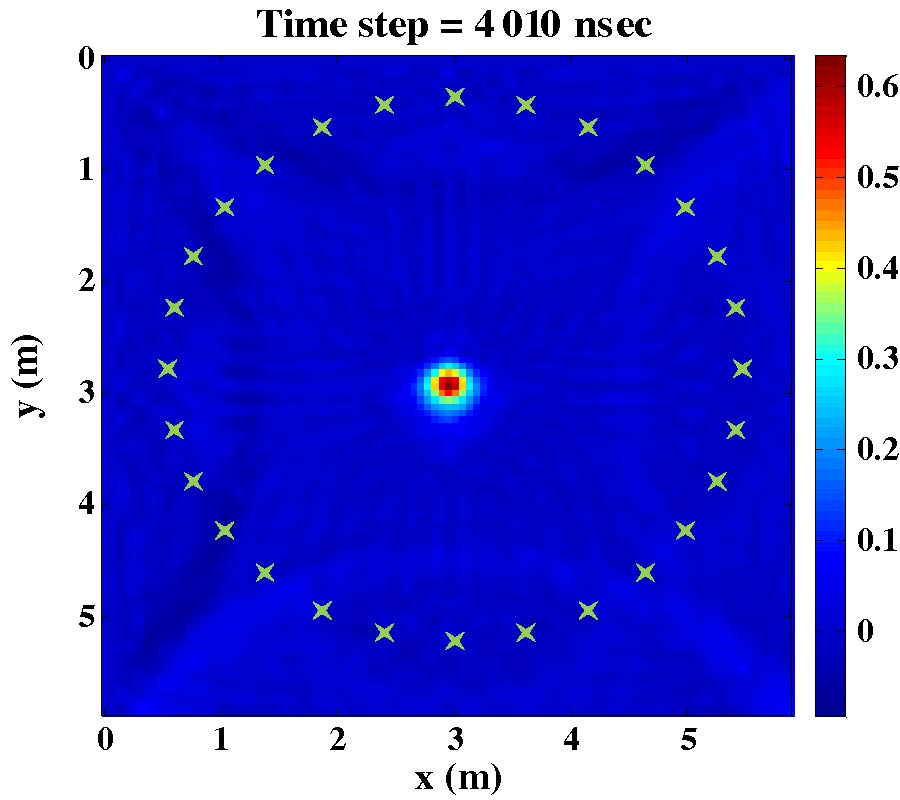
Time reversal focusing of electromagnetic waves is investigated in case of source motion. We extract analytical formulation of uniformly moving source in presence of ideal time reversal cavity (TRC) and a more realistic model, time reversal mirror (TRM). Similar to the acoustic case, it has been observed that in case of moving point source spatial focusing is still achievable. Furthermore, we also investigate super resolution effects on time reversal (TR) focusing of moving source in continuous random media. Results shows that an increase in (multipath) leads to better focusing resolution of the time-reversed signals.
MOVING TARGET TRACKING USING TIME REVERSAL METHOD
2012-06-19
PIER Letters
Vol. 32, 187-195
A 460 MHz Doherty Amplifier for IMT-Advanced System
Rongwei Zhou , Yue Dong and Jingfu Bao
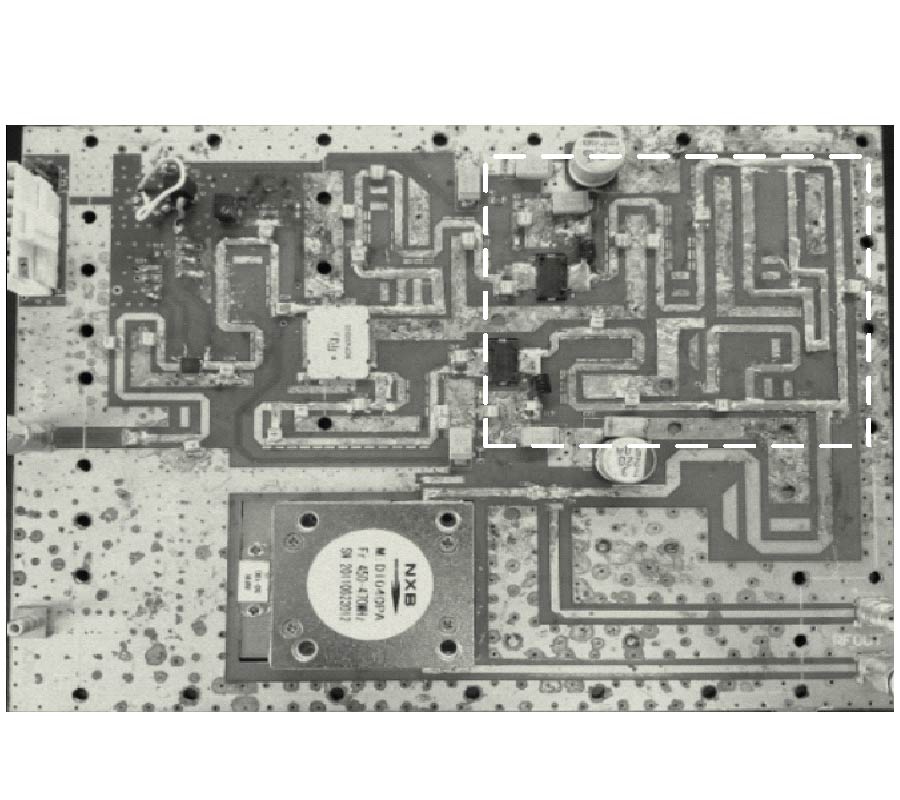
A 2-way symmetrical Doherty power amplifier (PA) with high efficiency is presented. This amplifier delivers 49.2 dBm (83 W) of saturated output power and 63% drain efficiency with 38.2 dB of power gain at 460MHz. The drain efficiency at 6 dB backed-off power level shows about 62%. After digital pre-distortion (DPD) system corrected, about 48% power-added efficiency (PAE) at 42.2 dBm (16.6 W) average output power has been demonstrated, while achieving -52 dBc (-28 dBc before linearization) Adjacent Channel Leakage Ratio (ACLR) at 20 MHz offset using a LTE-Advanced input signal with 6.5 dB peak to average ratio (PAR) to meet the IMT-Advanced system requirements. We also used a π type structure network based on lumped elements to replace the traditional Doherty amplifier 1/4λ transmission line, and compared the performance.
A 460 MHZ DOHERTY AMPLIFIER FOR IMT-ADVANCED SYSTEM
2012-06-19
PIER Letters
Vol. 32, 177-186
A Compact Multimode Bandpass Filter with Extended Stopband Bandwidth
Kaixue Ma , Shouxian Mou , Keping Wang and Kiat Seng Yeo
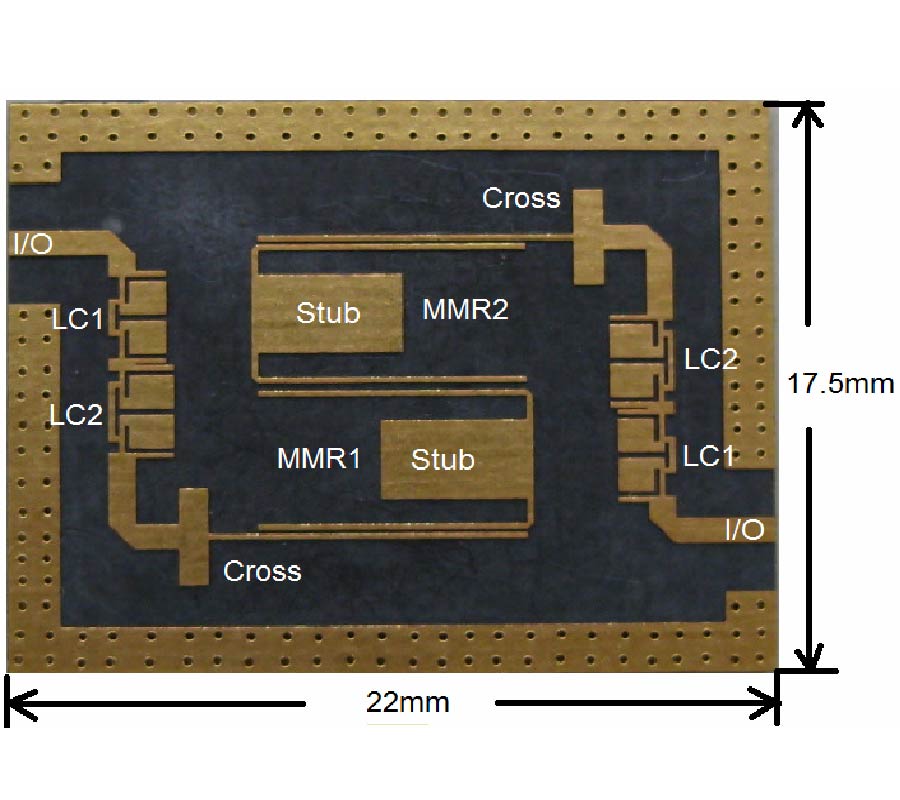
A compact multimode bandpass filter with low insertion loss, high stopband rejection and wide stopband bandwidth is introduced by using cascaded multimode resonators and compact loading cells in combination. The measured minimum insertion loss is of 1.7dB including the connector loss in the input and output ports in the passband of 5.7~8 GHz. Through the use of cascaded multimode resonators, steep skirt selectivity and wide stopband up to 18 GHz can be achieved. When incorporated with the lowpass loading cells, which have elliptical low-pass response by using the source-load coupling, the stopband of the proposed filter can be further extended up to 40 GHz, with only negligible influence on the passband performance.
A COMPACT MULTIMODE BANDPASS FILTER WITH EXTENDED STOPBAND BANDWIDTH
2012-06-19
PIER M
Vol. 25, 27-38
Patterned Resistive Strip Loading for Edge Scattering Suppression of a Finite Wedge
Zhi-Wei Zhu , Haiyan Chen , Hui-Bin Zhang , Peiheng Zhou , Long-Jiang Deng and Jianliang Xie
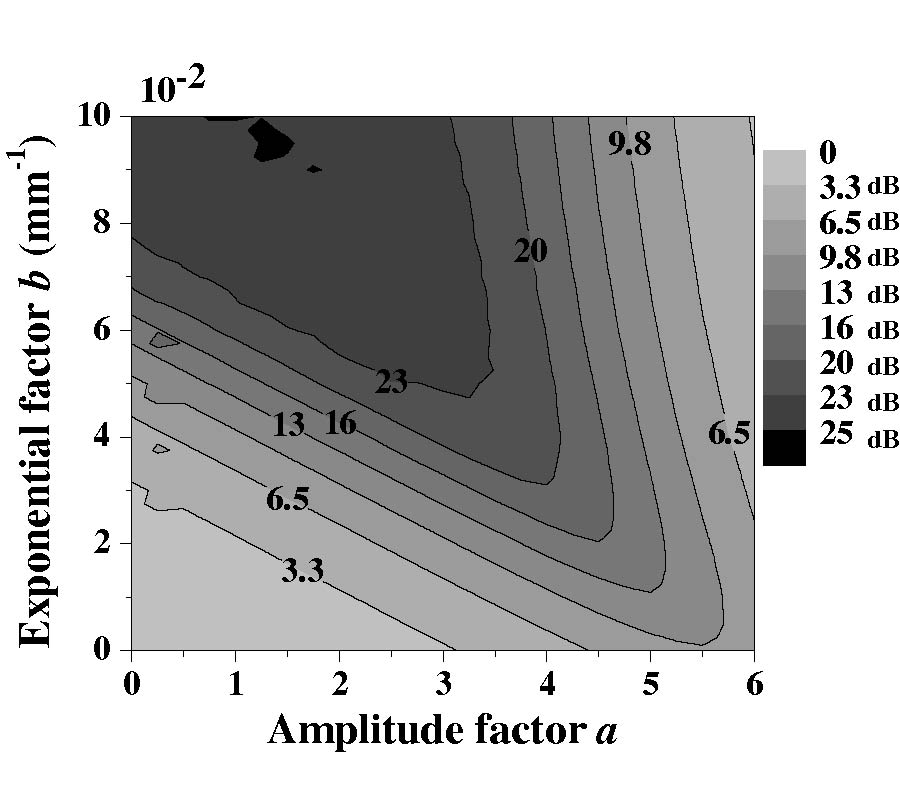
Tapered resistive strip realized by patterning the constant resistive strip is used to suppress edge scattering of a finite wedge. The suppression effect is simulated and evaluated by the reduction in mono-static RCS (Radar Cross Section). This reduction is compared with the one which loaded by the ideal tapered resistive strip. The result indicating that patterning a constant resistive strip to create a gradient in sheet resistance is feasible. To verify this method of fabricating tapered resistive strip, patterned resistive strip with a proper gradient in sheet resistance is conducted and loaded on the wedge target for test. The gradient in sheet resistance used for test is obtained from the optimization. Resistive strip with this sheet resistance gradient renders a promising effect of edge scattering suppression. The test result shows a reduction of 20dB for the geometric mean of mono-static RCS in the angular range of 45º. This value is close to the one of 23dB in simulation.
PATTERNED RESISTIVE STRIP LOADING FOR EDGE SCATTERING SUPPRESSION OF A FINITE WEDGE
2012-06-19
PIER M
Vol. 25, 13-26
Electric-Field Distributions of Dielectric Single Layers of Spheres with Different Compactness
Angel Andueza , Paola Morales and Joaquín Sevilla
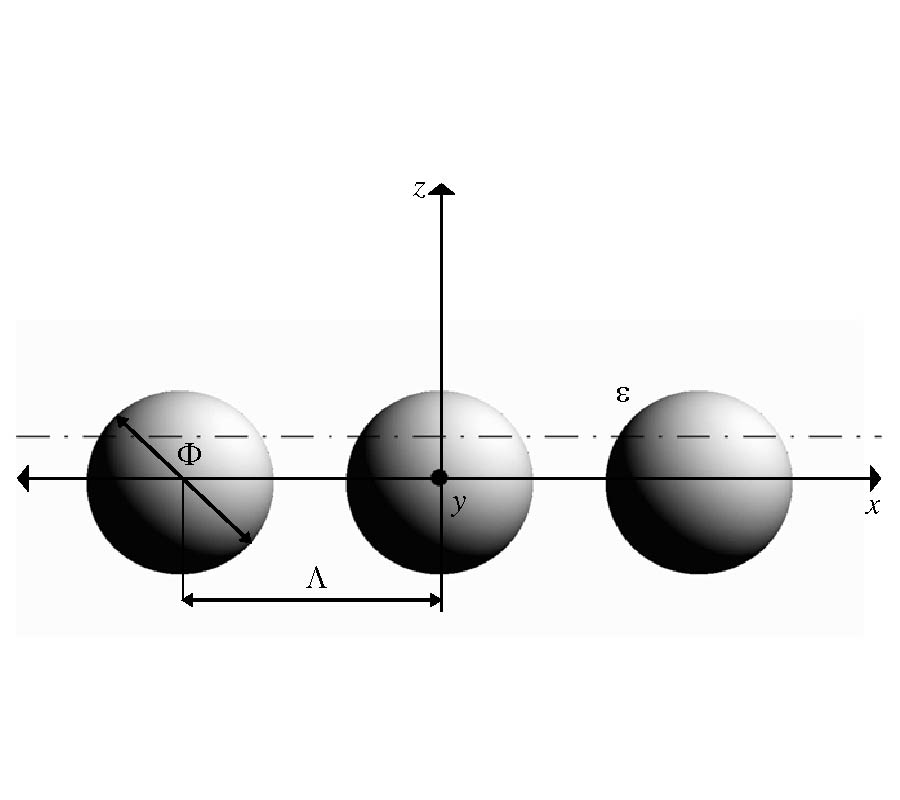
The internal electric-field distribution from single layers of dielectric spheres with high refractive index (n=2.65) has been analyzed for a number of different compactness cases by FDTD (Finite-Difference Time-Domain) method. The field distributions from the transmission spectra were compared with the internal electric-field distribution of the Mie modes of an isolated sphere. In general, the agreement is very good in almost all cases studied. The results show that TE and TM Mie modes are the origin of the resonances in the transmission spectra of the single layers. The resonances of the monolayer attributed to TE11 and TM11 Mie modes are only excited for compactness values lower than 0.38, suggesting a dependence of periodical arrangement effects for these modes. Moreover, the field distribution corresponding to some of the dips in the spectrum cannot be directly attributed to Mie modes (TE21). The result indicates these are formed by degenerated or weakly coupled Mie modes induced by the periodic structure.
ELECTRIC-FIELD DISTRIBUTIONS OF DIELECTRIC SINGLE LAYERS OF SPHERES WITH DIFFERENT COMPACTNESS
2012-06-19
PIER
Vol. 129, 197-214
A Generalized Coupled-Line Dual-Band Wilkinson Power Divider with Extended Ports
Jiuchao Li , Yongle Wu , Yuan'an Liu , Jun-Yu Shen , Shulan Li and Cuiping Yu
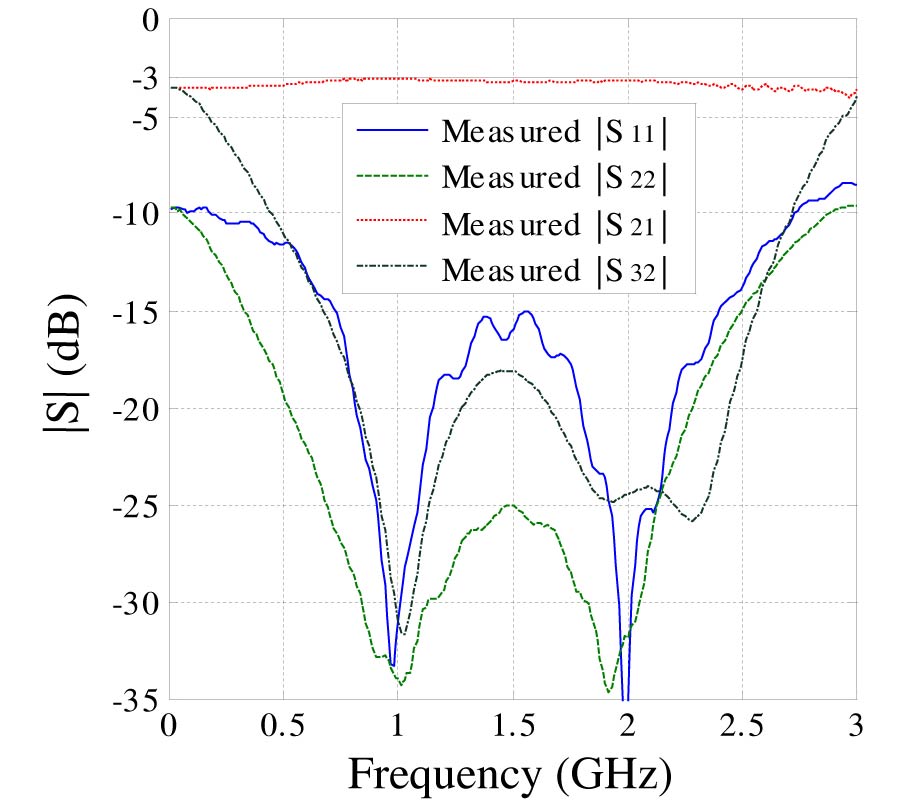
A generalized two-way coupled-line power divider with extended ports for dual band is proposed in this paper. The power divider is composed of two section coupled-lines, one conventional transmission line, and an isolation resistor, and employs extension of a transmission line or coupled-line at each port. The design equations are obtained based on even- and odd-mode analysis, and analytical ideal closed-form scattering parameter expressions derived. Because the traditional ring structure is a special case of coupled line, four cases of this generalized power divider are discussed and compared. In addition, the six power dividers simulated results of three special cases are shown. Finally, three fabricated power dividers measurements are used to certify this proposed structure and corresponding design parameters.
A GENERALIZED COUPLED-LINE DUAL-BAND WILKINSON POWER DIVIDER WITH EXTENDED PORTS
2012-06-19
PIER
Vol. 129, 181-195
Microwave Thermotherapy in Cancer Treatment: Evaluation of Homogeneity of SAR Distribution
Barbora Vrbova and Jan Vrba
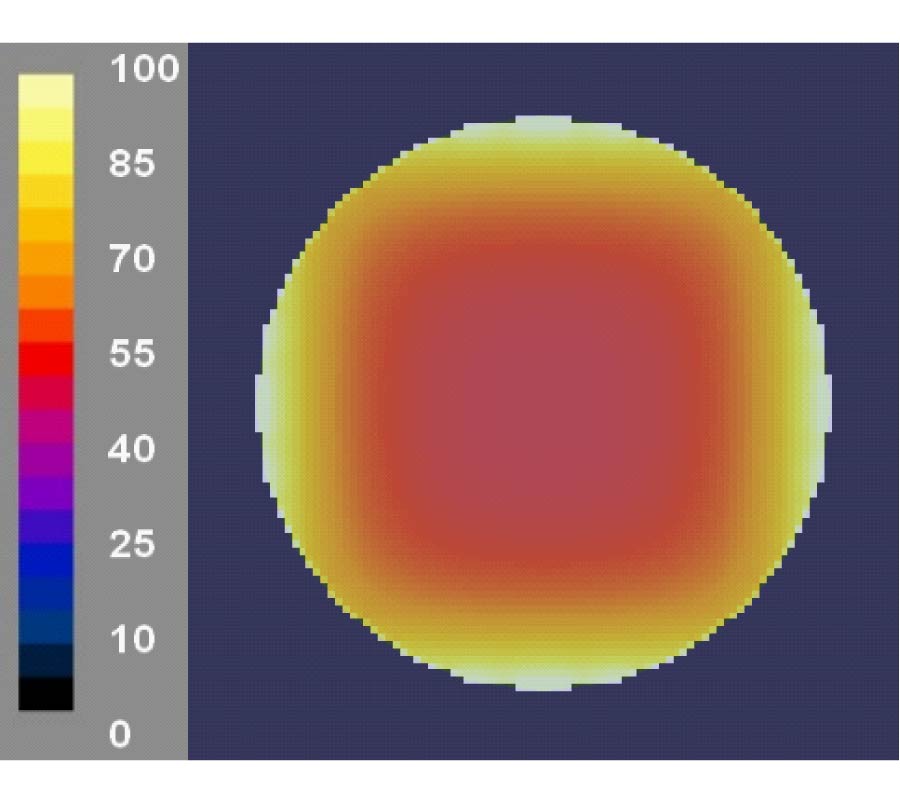
Medical applications of microwaves (i.e. a possibility to use microwave energy and/or microwave technique and technology for therapeutical purposes) are a quite new and very rapidly developing field. Microwave thermotherapy is being used in medicine for cancer treatment and treatment of some other diseases since early eighties. This paper is a contribution to a theory of phase array applicators to be used for a microwave thermotherapy (microwave hyperthermia) in a cancer treatment. It deals with a study and theoretical evaluation of homogeneity of SAR distribution in cylindrical agar phantom for several different values of its radius. Discussed SAR distribution is in our case created by simulations of EM field exposure done by aid of four microwave stripline type TEM mode applicators of the same type.
MICROWAVE THERMOTHERAPY IN CANCER TREATMENT: EVALUATION OF HOMOGENEITY OF SAR DISTRIBUTION
2012-06-19
PIER
Vol. 129, 161-179
Triple Band-Notched Planar UWB Antenna Using Parasitic Strips
Mohammad Tariqul Islam , Rezaul Azim and Ahmed Toaha Mobashsher
A compact planar ultra-wideband (UWB) antenna with triple band notch characteristics is proposed in this paper. The antenna consists of a rectangular radiating patch and a modified partial ground plane, and has an overall dimension of 24 mm × 22 mm. Three resonant elements are placed above the ground plane to generate three notch frequency bands separately in the WiMAX, the lower WLAN and the upper WLAN frequency bands. The proposed antenna successfully simulate, prototyped and measured. Effects of the key deign parameters on band notch characteristics are also investigated. The realized antenna achieved an operating bandwidth (VSWR ≤ 2) ranges from 2.9 to more than 11 GHz with triple notched bands of 3.26-3.71 (12.9%), 5.15-5.37 (8.5%), and 5.78-5.95 (2.9%) GHz. Measured flat transfer function and constant group delay within the operating band except at notched bands makes the proposed antenna suitable for being used in practical UWB applications.
TRIPLE BAND-NOTCHED PLANAR UWB ANTENNA USING PARASITIC STRIPS
2012-06-18
PIER C
Vol. 30, 213-223
Dual-Band Dual-Polarized Microstrip Antenna for Compass Navigation Satellite System
Hangying Yuan , Jieqiu Zhang , Shaobo Qu , Hang Zhou , Jiafu Wang , Hua Ma and Zhuo Xu
With the development of China's Compass Navigation Satellite System (CNSS), the demand for terminal antennas is quite urgent. In CNSS system, dual-band antennas are more attractive, because they can provide both the navigation and communication functions. In addition, since the `BEIDOU' antennas operate at low frequencies, they are not easy to be installed due to their usually large volumes, limiting their practical application. In this paper, we present a dual-band miniaturized CNSS microstrip antenna based on high-permittivity ceramic substrate. This antenna works at S Band (2492 MHz±5 MHz, right-handed circular polarization, RHCP) and L Band (1616±5 MHz, left-handed circular polarization, LHCP). Numerical results show that the impedance bandwidth (S11<-10 dB), 3 dB axial ratio bandwidth and antenna gain at L Band are about 26 MHz, 6.5 MHz and 3.22 dB, respectively. While the impedance bandwidth (S11<-10 dB), 3 dB axial ratio bandwidth and antenna gain at S Band are about 127 MHz, 28 MHz and 4.72 dB, respectively. An experiment was carried out to verify our design and the measured results agree well with the simulation ones. In addition, by using high-permittivity ceramic (εr=16) as the substrate, the antenna keeps its performances with a reduced size by 80% comparing with the conventional ones using low-permittivity substrates. This makes it suitable for practical applications.
DUAL-BAND DUAL-POLARIZED MICROSTRIP ANTENNA FOR COMPASS NAVIGATION SATELLITE SYSTEM
2012-06-18
PIER C
Vol. 30, 201-211
Quad-Band Rectangular Wide-Slot Antenna for GPS/WiMAX /WLAN Applications
Ling Xiong , Peng Gao and Pengju Tang
A compact quad-band rectangular wide-slot antenna is developed for GPS L1 band, 2.5/3.5/5.5 GHz WiMAX and 2.4/5.2/5.8 GHz WLAN applications. The planar antenna consists of an L-shaped microstrip feed line and three stubs extending from the wide-slot on the ground plane. The performance of the antenna is enhanced by etching meander line on the top of the wide-slot. The proposed antenna has a size of 36*42*1 mm3 which is more compact than the previously reported antennas for the same application. The antenna has been simulated, fabricated and measured successfully. The measured results show that the antenna has the impedance bandwidths of 160 MHz (1.54-1.7 GHz), 380 MHz (2.38-2.76 GHz), 570 MHz (3.2-3.77 GHz) and 1130 MHz (5.12-6.25 GHz) for S11 ≤ -10 dB. In addition, good radiation characteristics and stable antenna gains over the operating bands are obtained.
QUAD-BAND RECTANGULAR WIDE-SLOT ANTENNA FOR GPS/WIMAX/WLAN APPLICATIONS
2012-06-18
PIER C
Vol. 30, 189-199
Measurement of Electrical Characteristics of Female Breast Tissues for the Development of the Breast Cancer Detector
Tae-Hong Kim and Jeong-Ki Pack
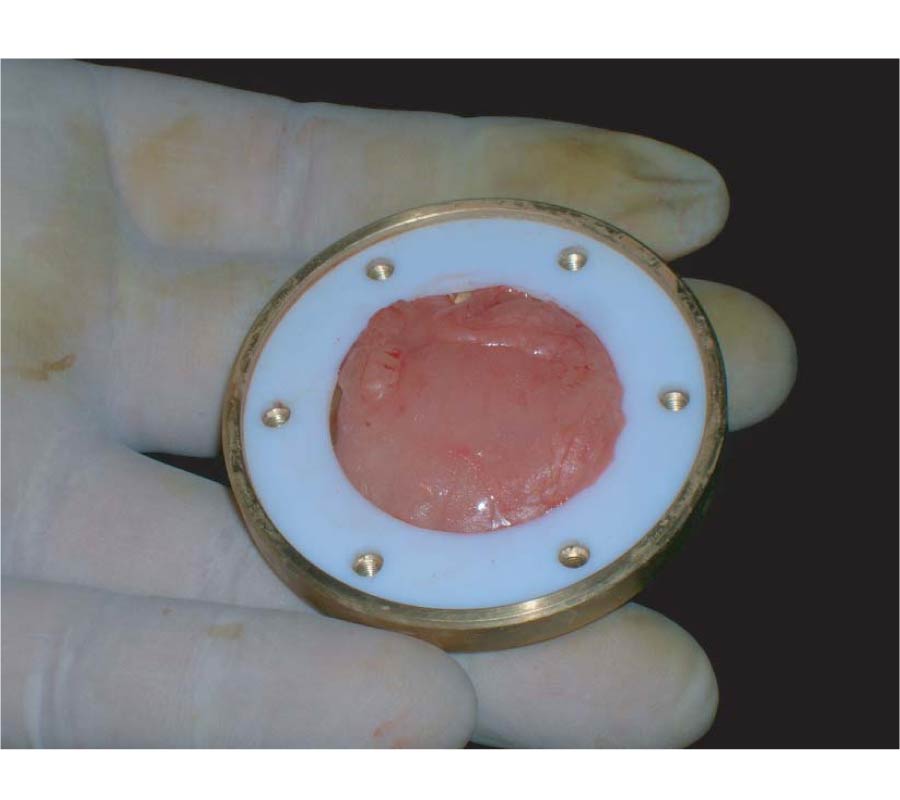
In this paper, dielectric characteristics of female breast tissues were measured. Breast Tissues were mainly composed of fat, fibro-glandular and tumor. Measured tissues were directly extracted from mice and a rat just before the measurements to maintain the tissues as fresh as living ones before degeneration. This makes the measured results more accurate. Because the extracted tissues were very thin, they were measured by two methods using HP probe and a newly designed two-port sample holder. Numerical results for the two-port sample holder were obtained for both the forward and inverse problems. Dielectric properties of breast tissues were measured in the frequency range between 50 MHz and 5 GHz. We calculated the electrical constant with the measured data from the two-port sample holder. As a result of the measurement, the dispersion characteristics of the female breast tissues were fitted into the first Cole-Cole model.
MEASUREMENT OF ELECTRICAL CHARACTERISTICS OF FEMALE BREAST TISSUES FOR THE DEVELOPMENT OF THE BREAST CANCER DETECTOR
2012-06-17
PIER
Vol. 129, 143-159
Processing One-Stationary Bistatic SAR Data Using Inverse Scaled Fourier Transform
Junjie Wu , Zhongyu Li , Yulin Huang , Qing Huo Liu and Jianyu Yang
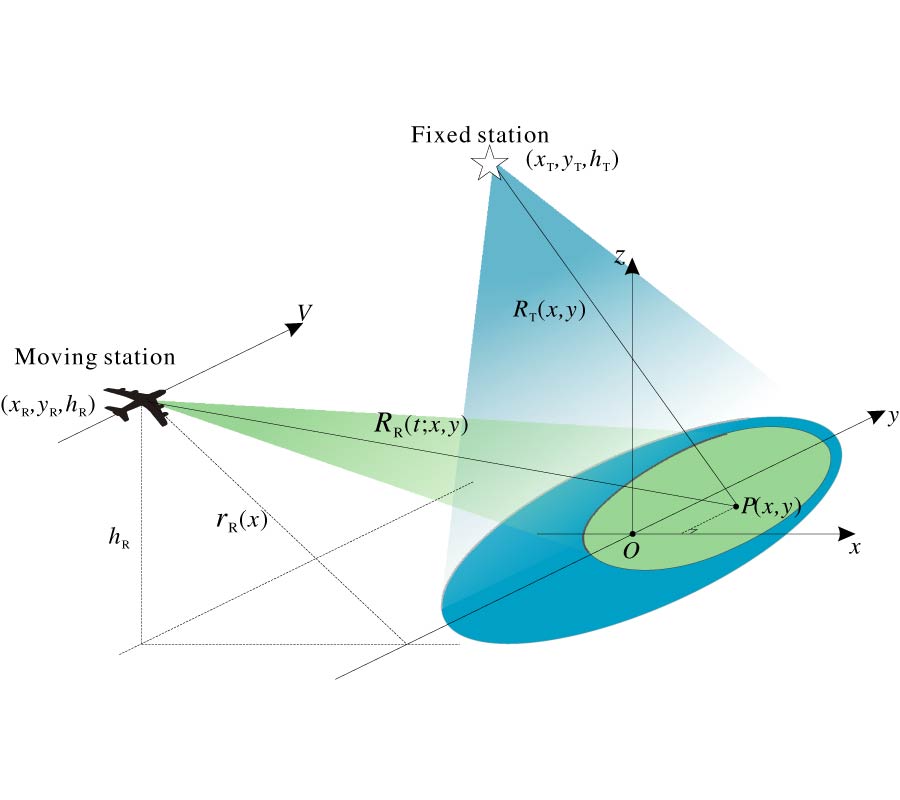
In bistatic synthetic aperture radar (SAR) with one stationary station, two-dimensional spatial variance is a major problem which should be handled. In this paper, an Inverse Scaled Fourier Transform (ISFT) imaging algorithm to deal with this problem is proposed. The approach linearizes the two-dimensional spatiallyvariant point target reference spectrum to derive the reflectivity pattern's spectrum. Based on this spectrum, an ISFT along range direction and a frequency shift along azimuth direction are used to achieve the two-dimensional spatial variance correction. This method is efficient as it only uses phase multiplication and FFTs. Numerical simulations verified the effectiveness of the method.
PROCESSING ONE-STATIONARY BISTATIC SAR DATA USING INVERSE SCALED FOURIER TRANSFORM
2012-06-16
PIER B
Vol. 41, 333-356
Marginal Moment Generating Function Based Analysis of Channel Capacity Over Correlated Nakagami-m Fading with Maximal-Ratio Combining Diversity
Vivek K. Dwivedi and Ghanshyam Singh
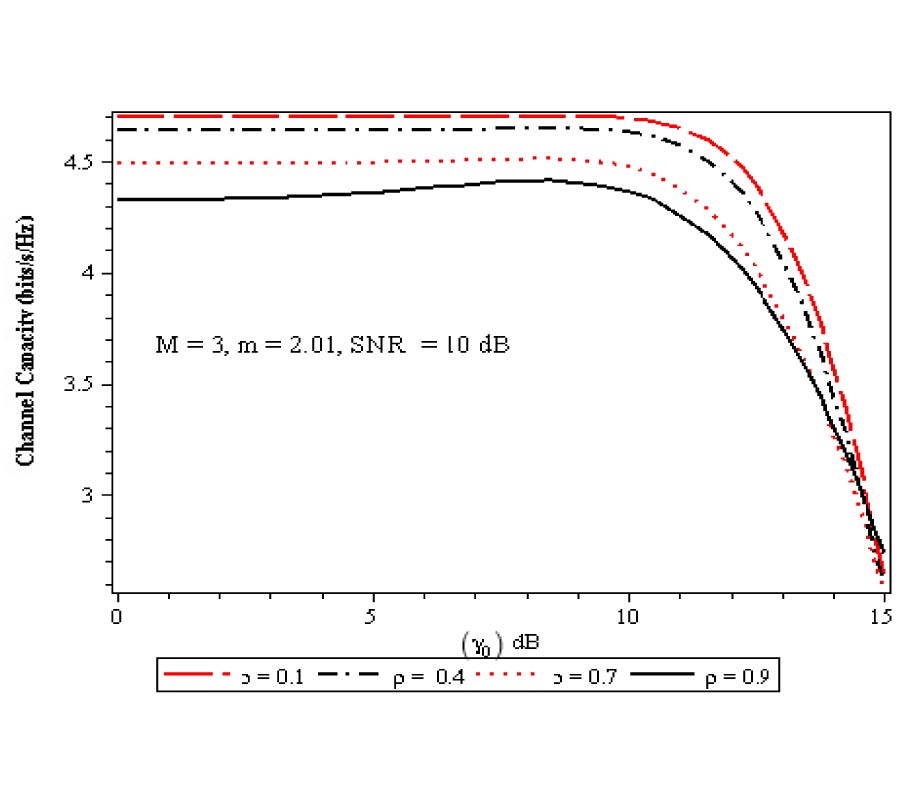
In this paper, we have investigated the marginal moment generating function (MMGF) for the correlated Nakagami-m fading channel by using maximal-ratio combining (MRC) diversity scheme at receiver for the computation of the channel capacity for various adaptive transmission schemes such as: 1) optimal simultaneous power and rate adaptation, 2) optimal rate adaptation with constant transmit power, 3) channel inversion with fixed rate, and 4) truncated channel inversion with fixed rate. The effects of diversity receiver as well as correlation coefficients on all these transmission schemes are discussed and the channel capacity obtained by this proposed approach for all schemes is compared with reported literature.
MARGINAL MOMENT GENERATING FUNCTION BASED ANALYSIS OF CHANNEL CAPACITY OVER CORRELATED NAKAGAMI-M FADING WITH MAXIMAL-RATIO COMBINING DIVERSITY
2012-06-16
PIER Letters
Vol. 32, 169-176
Analysis of Circularly Polarized Ring Slot Antenna Fed by Coupling Strip with Resistive Loading
Chuen-Ching Wang and Jeen-Sheen Row
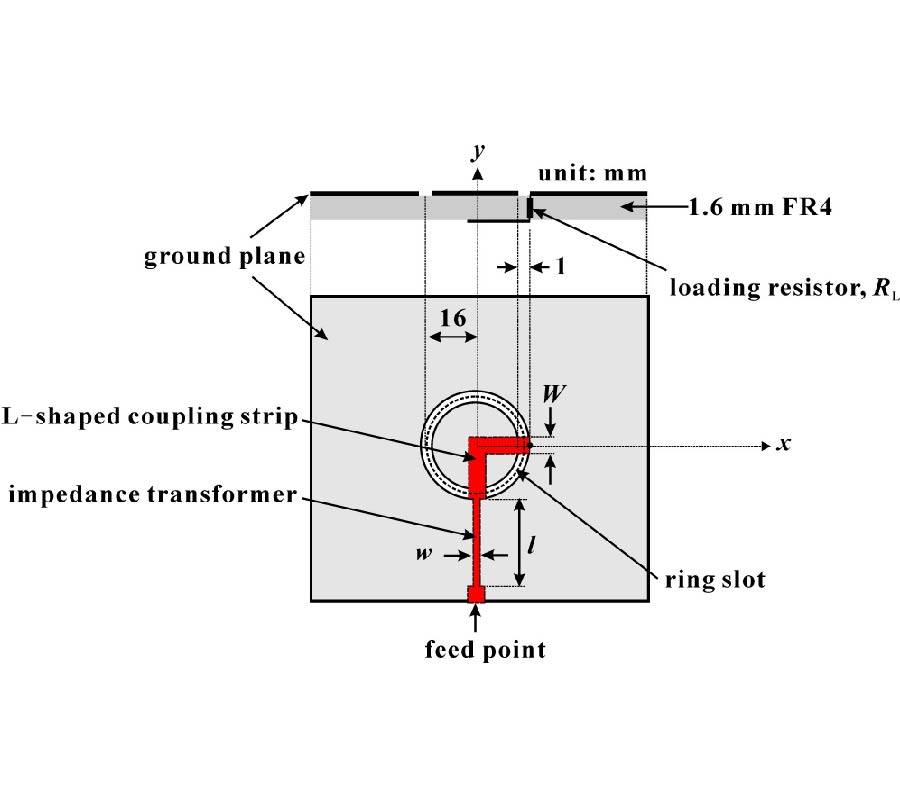
An analysis for circularly-polarized (CP) ring slot antennas fed by a coupling strip with resistive loading is presented. By treating the antenna as a two-port circuit, the amplitudes and phases of two orthogonal modes excited from the slot antenna can be found and expressed in terms of the S parameters of the circuit. The axial ratio calculated through the S parameters has a good agreement with that obtained from the pattern simulation of IE3D. The effects of varying key parameters of the coupling strip on the amplitudes and phases of the dual orthogonal modes are investigated in detail.
ANALYSIS OF CIRCULARLY POLARIZED RING SLOT ANTENNA FED BY COUPLING STRIP WITH RESISTIVE LOADING
2012-06-16
PIER C
Vol. 30, 173-188
Design, Simulation and Experimental Analysis of Wideband Circularly Polarized Capacitive Fed Microstrip Antenna
Sathiyamoorthy Murugan and Vayanaperumal Rajamani
Wideband Circularly polarized antenna receive much attention in the wireless communication applications such as Global positioning system (GPS) and Personal communication system (PCS). In this paper, a microstrip square patch, truncated in opposite corners, suspended above the ground plane is proposed. The geometry incorporates the capacitive feed strip which is fed by a coaxial probe. The proposed structure is designed, simulated and fabricated to cover the entire frequency of GPS, i.e., L1 (1.575 GHz), L2 (1.227 GHz), and L5 (1.176 GHz), covering from (1.15 GHz-1.6 GHz). The parameters such as return loss, VSWR, impedance, radiation efficiency axial ratio and radiation pattern are used for analyzing the performance of the antenna. Both simulated and experimental results are presented and they exhibit broadband characteristics, covering the desired frequency bands.
DESIGN, SIMULATION AND EXPERIMENTAL ANALYSIS OF WIDEBAND CIRCULARLY POLARIZED CAPACITIVE FED MICROSTRIP ANTENNA
2012-06-16
PIER C
Vol. 30, 159-172
Multi-Layer Substrate Integrated Waveguide E-Plane Power Divider
Pejman Mohammadi and Simsek Demir
A new multilayer power divider with Substrate Integrated Waveguide (SIW) technology is proposed. In this work, two-way and four-way power dividers realizations by two-layer and three-layer SIW, respectively, are presented. Considering the small size of the structure, extension of this method to n-way power dividers and antenna feed networks are possible, and it has the potential for integration of compact multi-layer SIW circuits. Due to the lack of a multiport counterpart of the two-port thru-reflect-line (TRL) calibration, scattering matrix of an n-way power divider must be reconstructed from measured data. A method is introduced for reconstruction of S-parameters of the n-port noncoaxial device with a two-port vector network analyzer (VNA). The two-way power divider is designed for 8.7-10.5 GHz band. Transmission coefficient about -3.5 dB and return loss below -10 dB has been measured for this two-way power divider. For four-way power divider, transmission about -7 dB in the 9.5-10.5 GHz has been achieved.
MULTI-LAYER SUBSTRATE INTEGRATED WAVEGUIDE E-PLANE POWER DIVIDER