Search Results(13800)

2012-02-28
PIER
Vol. 125, 255-272
SAR Imaging of Suicide Bombers Wearing Concealed Explosive Threats
Jose Angel Martinez-Lorenzo , Fernando Quivira and Carey Rappaport
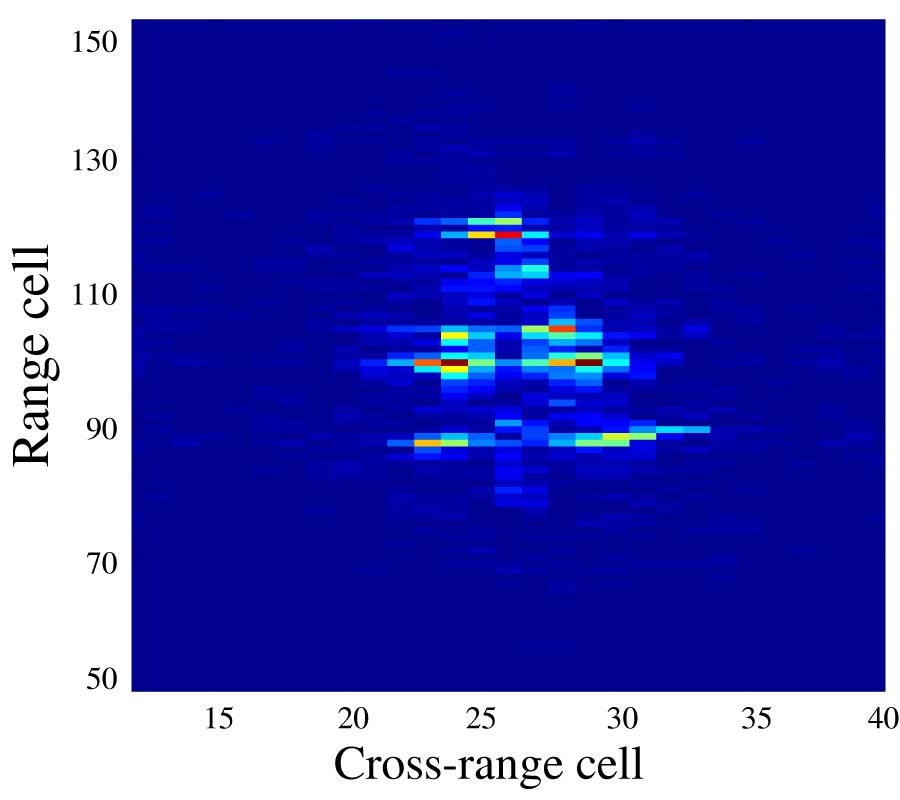
This paper deals with the problem of detecting potential suicide bombers wearing concealed metallic and dielectric objects. The data produced by Millimeter-Wave-Radar system, working on a Multiple Frequency-Multiple Transmitters and Multiple Receivers configuration (MF-MTMR), is synthetically generated by an electromagnetic code based on Finite Differences Frequency Domain (FDFD) method. The numerical code provides the scattered field produced by the subject under test, which is later processed by using a multiple bistatic Synthetic Aperture Radar (SAR) algorithm. The blurring effect produced by the Point Spread Function (PSF) in the SAR image is removed by applying a regularized deconvolution algorithm that uses only magnitude information (no phase). Finally, the SAR algorithm and the deconvolution procedure are tested on a person wearing metallic and dielectric objects. The SAR response of dielectric rods is quite different from the metallic pipes. Our algorithm not only distinguishes between cases but also is capable of estimating the dielectric constant of the rods. Each constitutive parameter directly maps to the dielectric constant of explosive compounds, such as TNT or RDX, making feasible the detection of potential suicide bombers.
SAR IMAGING OF SUICIDE BOMBERS WEARING CONCEALED EXPLOSIVE THREATS
2012-02-28
PIER
Vol. 125, 237-254
Detection of Corona and Dry-Band Arc Discharges on Nano-Composite Epoxy Insulators Using RF Sensing
Sahan Chathura Fernando , Alan Khoi Loon Wong and Wayne Rowe
RF radiation due to corona and dry-band arc discharges have been observed using an antenna. Variations in radiated energy were observed due to change in the distance between two water droplets, the contact angle and the volume of the droplets, and the condition of the insulator surface. Changes in the frequency spectrum within the 800 MHz-900 MHz and 1.25 GHz-1.4 GHz frequency bands have been used to identify the transition from corona discharge to dry-band arc discharge. The 800 MHz-900 MHz emission band has also been used to monitor the condition of the insulator. These findings highlight the potential for RF sensing in the identification of partial discharges and insulator condition monitoring.
DETECTION OF CORONA AND DRY-BAND ARC DISCHARGES ON NANO-COMPOSITE EPOXY INSULATORS USING RF SENSING
2012-02-28
PIER
Vol. 125, 219-235
Enhancement of Near-Infrared Photonic Band Gap in a Doped Semiconductor Photonic Crystal
Hui-Chuan Hung , Chien-Jang Wu , Tzong-Jer Yang and Shoou-Jinn Chang
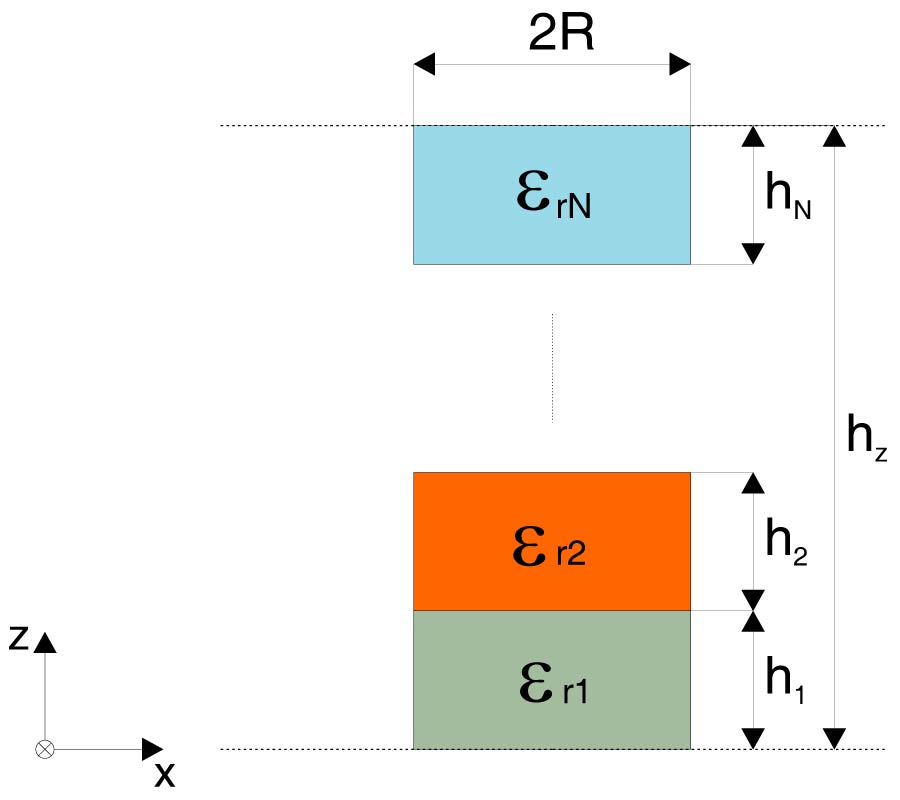
In this work, the enhancement in photonic band gap (PBG) in a dielectric-semiconductor photonic crystal (DS PC) is investigated. We consider two possible schemes that can be used to enhance the PBG in the near-infrared region. The first scheme is to add an ultrathin metal layer into the DS PC such that a structure of ternary metal-dielectric-semiconductor (MDS) PC is formed. The second scheme is to make use of the heterostructured PC. In scheme 1, it is found that the addition of metal layer will significantly move the left band edge to the shorter wavelength position, leading to an enlargement in the PBG. This enlargement can be extended as the thickness of metal film is increased. In addition, a pronounced enhancement in PBG is achieved when the metal with a higher plasma frequency is used. In scheme 2, we find that the PBG can be significantly enlarged compared to scheme 1. In addition, the increase in the band extension is shown to be four times larger than that in scheme 1. The results illustrate that, in order to enhance the PBG, the use of scheme 2 is superior to scheme 1. The enhancement of near-infrared (NIR) PBG is of technical use in the optical communications.
ENHANCEMENT OF NEAR-INFRARED PHOTONIC BAND GAP IN A DOPED SEMICONDUCTOR PHOTONIC CRYSTAL
2012-02-28
PIER
Vol. 125, 203-218
Multiport Analysis by PadÉ Approximation
Goker Sener
In this paper, a new method to analyze arbitrary shaped microstrip patch antennas is introduced. This method uses the multiport network model (MNM) together with a mathematical approximation called the "Pade approximation" such that the antenna input impedance obtained from the multiport analysis is approximated as a rational function of polynomials. Then, the roots of the denominator of this rational function are used to determine the antenna resonant characteristics. This new method is more time efficient than the standard multiport analysis because the evaluations are made at a single frequency. In the standard method, evaluations are made at multiple frequency values throughout the analysis. Results obtained by the new method are verified using the examples of rectangular and slot loaded compact microstrip patch antennas. Computational efforts for both procedures are presented.
MULTIPORT ANALYSIS BY PADÉ APPROXIMATION
2012-02-27
PIER C
Vol. 27, 223-238
Wideband Conical Monopole Antenna with Integrated Stopband Filter
Zhen Hua Hu , James Robert Kelly , Peter S. Hall and Peter Gardner
This paper presents a conical monopole antenna with two C-shaped slots to provide a frequency stopband to suppress interference. Compared to previous work reported in the literature, the antenna provides increased gain suppression to vertically polarised signals within the notch-band of up to 41.5 dB in four specific directions. It also yields omni-directional radiation patterns at frequencies throughout the operating band, outside the rejection band. The four null directions in vertically polarised plane at the notched band frequency are explained by an analysis of simplified equivalent current sources. The effect of different length of slots has been investigated. Two methods to control the stop band directions are also discussed.
WIDEBAND CONICAL MONOPOLE ANTENNA WITH INTEGRATED STOPBAND FILTER
2012-02-27
PIER C
Vol. 27, 209-222
A Novel 180°Hybrid Based on the Modified Gysel Power Divider
Mahdi Fartookzadeh , Seyed Hosein Mohseni Armaki and Morteza Kazerooni
A novel 180° hybrid is proposed, based on a modified Gysel power combiner, using phase shifter and ground bridge for the difference output. Also the Defected Microstrip Structure has been used to increase the hybrid's phase matching. All steps of the design are simulated using HFSS 11 and the final design is validated by the fabrication. It has good results between 7 GHz to 10 GHz and can be used between 6 GHz to 11 GHz with less accuracy.
A NOVEL 180°HYBRID BASED ON THE MODIFIED GYSEL POWER DIVIDER
2012-02-26
PIER Letters
Vol. 30, 67-79
An Investigation of Tradeoff Options for the Improvement of Spurious-Free Dynamic Range in Hbt Transimpedance Distributed Amplifiers
Shuchin M. Taher and James R. Scott
This work introduces and investigates various methods of improving spurious-free dynamic rage (SFDR) in HBT transimpedance distributed amplifiers by trading off transimpedance gain. The methods are theoretically analyzed in detail with design examples, compared against each other in terms of performance and the best tradeoff is determined. SFDR improvements of up to 9 dB are reported in our design examples.
AN INVESTIGATION OF TRADEOFF OPTIONS FOR THE IMPROVEMENT OF SPURIOUS-FREE DYNAMIC RANGE IN HBT TRANSIMPEDANCE DISTRIBUTED AMPLIFIERS
2012-02-26
PIER
Vol. 125, 185-202
Radial Force Characteristic Assessment in a Novel Two-Phase Dual Layer Srg Using FEM
Hossein Torkaman and Seyed Ebrahim Afjei
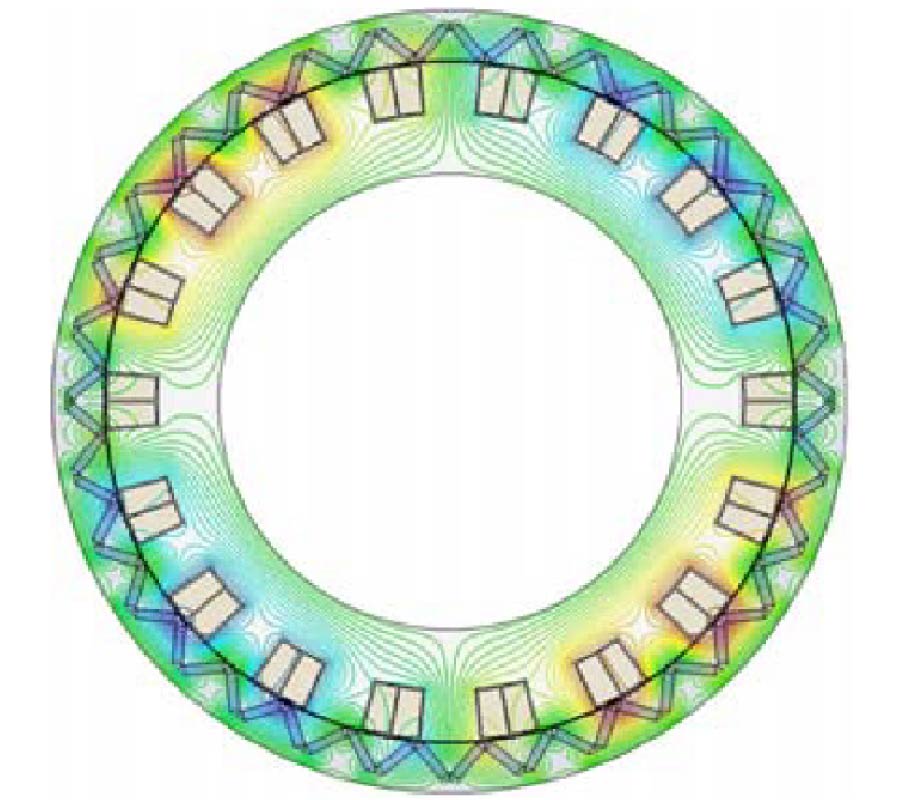
This paper investigates the radial force characteristics of a novel two-phase dual layer switched reluctance generator. The proposed generator consists of two magnetically dependent stator and rotor layers, where each stator set includes four salient poles with windings wrapped around them while, the rotor comprises of two salient poles. In this paper, the radial and tangential force components and their trends in healthy condition under different load levels are assessed with the respect to critical rotor positions. One of the most important problems seen in the industrial applications of generators which have concerned users is the rotor eccentricity which may conclude the unbalanced distribution of flux linkage as well as acoustic noise and vibration due to the radial forces produced during the rotation of machine's rotor. In this regard, in this paper, it is attempted to obtain and evaluate the radial force components resulted from different degrees of eccentricity faults.
RADIAL FORCE CHARACTERISTIC ASSESSMENT IN A NOVEL TWO-PHASE DUAL LAYER SRG USING FEM
2012-02-26
PIER
Vol. 125, 165-184
On Adaptive Beamforming for Coherent Interference Suppression via Virtual Antenna Array
Wenxing Li , Yi-Peng Li and Wen-Hua Yu
In this paper, we propose Modified Interpolated Spatial Smoothing (MISS) algorithm that solves the problem when the inhibition gain generated by Interpolated Spatial Smoothing (ISS) algorithm is not sufficiently high in virtual antenna adaptive beam forming to suppress coherent interference. Using the subspace projection concept, this paper establishes an interference subspace spanned by the interference steering vectors of the virtual antenna array, and then the interference direction information can be imported into the transformation matrix by projecting the transformation matrix into the subspace, which will make the interference components in virtual smoothing covariance matrix enhanced as it is demonstrated by theoretical analysis. Employing the Minimum Variance Distortionless Response (MVDR) beam forming method, the interference inhibition gain and Signal to Interference and Noise Ratio (SINR) performance can be significantly improved.
ON ADAPTIVE BEAMFORMING FOR COHERENT INTERFERENCE SUPPRESSION VIA VIRTUAL ANTENNA ARRAY
2012-02-25
PIER
Vol. 125, 151-164
Comparison of Three Novel Types of Two-Phase Switched Reluctance Motors Using Finite Element Method
Hossein Torkaman and Seyed Ebrahim Afjei
This paper describes the performance characteristics and comparison results of three different types of two-phase switched reluctance motors (SRM). This collection includes conventional, stepped rotor and slanted rotor two-phase SRMs. These motors have four stator poles and two rotor poles, named 4/2 configuration. The main difference between these configurations is their rotor structures. The number of turns and areas of all stator pole faces jointly involving in torque production mechanism in the motors are taken to be equal. The terminal inductance per phase, flux linkage of each stator pole winding, and components of leakage inductances are determined and plotted for different rotor positions and excitation currents. Finally, the static torque for different forced current levels and rotor positions are also presented for each motor.
COMPARISON OF THREE NOVEL TYPES OF TWO-PHASE SWITCHED RELUCTANCE MOTORS USING FINITE ELEMENT METHOD
2012-02-24
PIER C
Vol. 27, 197-207
A 20-31 GHz High Image Rejection Ratio Subharmonic Mixer
Yi-Chang Lee , Chien-Hung Liu , Shih-Han Hung , Chun-Chi Su and Yeong-Her Wang
A broadband monolithic image rejection subharmonic mixer using a standard 0.18 μm CMOS technology is proposed. This circuit is composed of a band-pass filter with an intermediate frequency (IF) extraction function that can simplify the block diagram of the image rejection mixer. The entire passive circuit is constructed using a broadside coupling structure to achieve a high level of integration. Based on measured results, the proposed mixer exhibits conversion loss of 15.5-18.5 dB at a local oscillator (LO) power of 13 dBm, whereas the 3 dB bandwidth ranges from 20 to 31 GHz (43.1%) with a miniature chip dimension of 0.77×0.81 mm2. The LO-to-radio frequency (RF), 2LO-to-RF, and RF-to-IF isolation levels are higher than 22.5, 42.9, and 34.5 dB, respectively. The best image rejection ratio of 29 dBc with 20° phase compensation at 24.5 GHz can be achieved.
A 20-31 GHz HIGH IMAGE REJECTION RATIO SUBHARMONIC MIXER
2012-02-24
PIER
Vol. 125, 137-150
Compact Notched Ultra-Wideband Bandpass Filter with Improved Out-of-Band Performance Using Quasi Electromagnetic Bandgap Structure
Ming-Jian Gao , Lin-Sheng Wu and Jun-Fa Mao
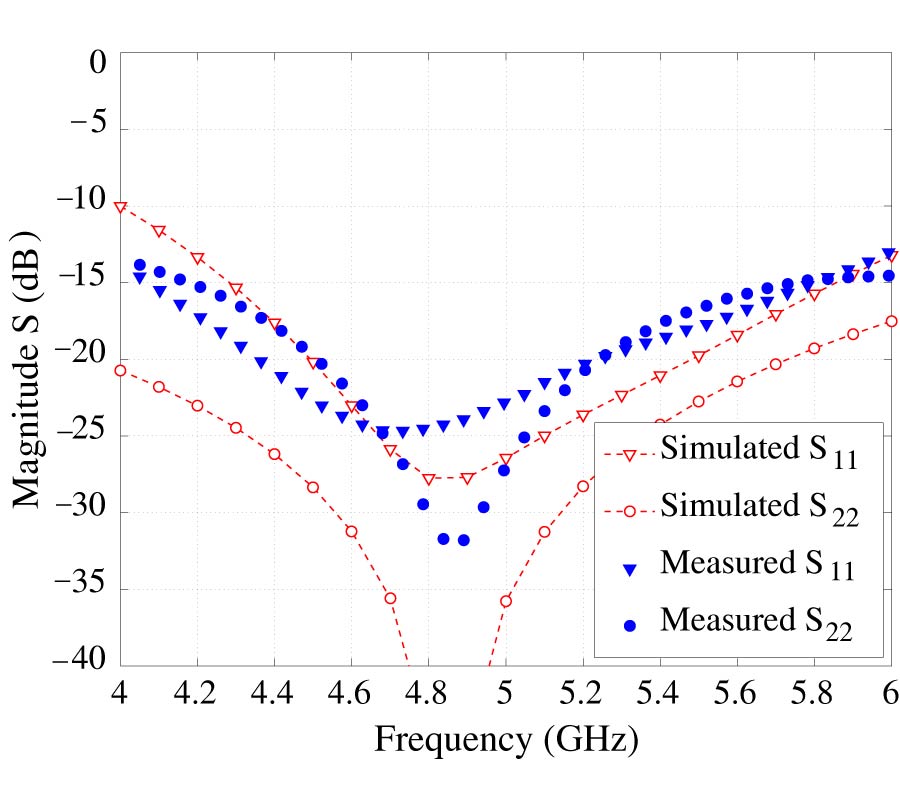
In this paper, a compact notched ultra-wideband (UWB) bandpass filter with improved out-of-band performance using quasi electromagnetic bandgap (EBG) structure is proposed. Firstly, a UWB bandpass filter based on a stepped-impedance stub-loaded resonator (SISLR) is combined with quasi-EBG structures, which suppress the undesired spurious bands to improve the out-of-band performance. In order to eliminate the interference caused by WLAN, a notched band is introduced at 5.2 GHz, which is implemented by adding a folded stepped-impedance resonator (SIR) near the stub of the SISLR. At last, the proposed filter is fabricated and measured. Good performances of the UWB filter have been demonstrated both in the simulated and measured results.
COMPACT NOTCHED ULTRA-WIDEBAND BANDPASS FILTER WITH IMPROVED OUT-OF-BAND PERFORMANCE USING QUASI ELECTROMAGNETIC BANDGAP STRUCTURE
2012-02-24
PIER
Vol. 125, 119-135
Inhomogeneous Planar Layered Chiral Media: Analysis of Wave Propagation and Scattering Using Taylor's Series Expansion
Davoud Zarifi , Ali Abdolali , Mohammad Soleimani and Vahid Nayyeri
In this paper, an analytic frequency domain method based on Taylor's series expansion approach is introduced to analyze inhomogeneous planar layered chiral media for an arbitrary linear combination of TM and TE polarizations. In the presented method, electromagnetic parameters of inhomogeneous chiral media and also the electric and magnetic fields are expressed using Taylor's series expansion. Finally, the validity of the method is verified considering some special types of homogeneous and inhomogeneous chiral media and comparison of the obtained results from the presented method with the exact solutions.
INHOMOGENEOUS PLANAR LAYERED CHIRAL MEDIA: ANALYSIS OF WAVE PROPAGATION AND SCATTERING USING TAYLOR'S SERIES EXPANSION
2012-02-23
PIER Letters
Vol. 30, 59-66
On the Performance of MIMO Systems for LTE Downlink in Underground Gold Mine
Ismail Ben Mabrouk , Larbi Talbi , Mourad Nedil and Tayeb Denidni
This paper deals with the challenges related to evaluating the performance of Multiple Input Multiple Output (MIMO) antenna based on Long Term Evolution (LTE) system within an underground mine environment at 2.4 GHz. Actual measured channels parameters have been used in simulation tools based on Agilent SystemVue software. The results suggest that LTE is able in practice to support multi stream transmission with very high data rates in an underground mine gallery.
ON THE PERFORMANCE OF MIMO SYSTEMS FOR LTE DOWNLINK IN UNDERGROUND GOLD MINE
2012-02-22
PIER B
Vol. 39, 89-114
Towards Broadband Over Power Lines Systems Integration: Transmission Characteristics of Underground Low-Voltage Distribution Power Lines
Athanasios G. Lazaropoulos
A complete methodology is employed to determine the transmission characteristics of low-voltage/broadband over power lines (LV/BPL) channels associated with underground power distribution networks, in the light of the multiconductor transmission line (MTL) theory. The established bottom-up approach, already used to treat overhead and underground MV/BPL transmission, is extended to analyze BPL transmission in three-phase N-conductor underground lines with common shield and armor. This analysis shows that these cables may support N + 2 modes, giving rise to N + 2 separate transmission channels which reduce to N + 1 if the armor either does not exist or is grounded and to N if the shield is also grounded. In addition to the generalized analysis, a simplified approximation concerning three-phase N-conductor underground cables is also presented. Taking the generalized analysis and the simplified approximation into account, their numerical results concerning attenuation in various underground LV/BPL channels in the frequency range 1-100 MHz are validated against relevant sets of simulations and measurements with satisfactory accuracy and compared to corresponding results of overhead and underground MV/BPL channels. It has been verified that the attenuation in overhead and underground BPL channels depends drastically on power distribution grid type, MTL configuration, and cables used. Moreover, the attenuation in underground LV/BPL channels exhibits a lowpass behavior, is significantly higher than that of overhead MV/BPL ones, and is comparable to that of underground MV/BPL ones. A consequence of the proposed methodology is that it can facilitate the integration process and intraoperability of LV/BPL and MV/BPL systems through their common physical layer handling.
TOWARDS BROADBAND OVER POWER LINES SYSTEMS INTEGRATION: TRANSMISSION CHARACTERISTICS OF UNDERGROUND LOW-VOLTAGE DISTRIBUTION POWER LINES
2012-02-22
PIER B
Vol. 39, 71-88
FDTD Analysis of the Dispersion Characteristics of the Metal PBG Structures
Ashutosh Singh and Pradip Kumar Jain
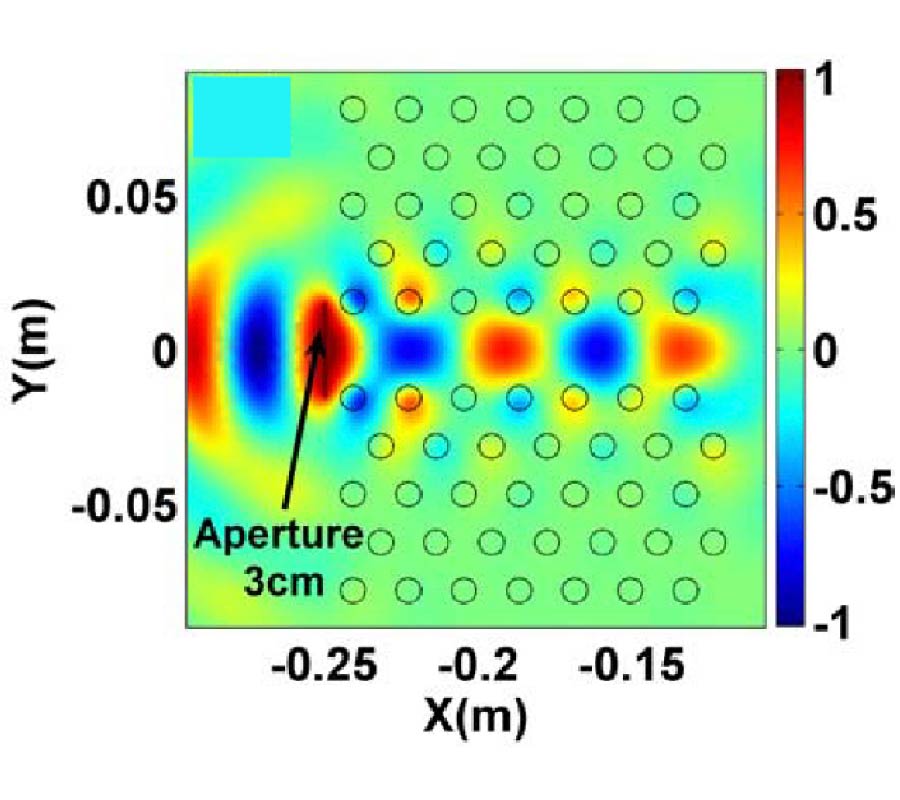
Two dimensional metallic photonic band gap (PBG) structures, which have higher power handling capability, have been analyzed for their dispersion characteristics. The analysis has been performed using finite difference time domain (FDTD) method based on the regular orthogonal Yee's cell. A simplified unit cell of triangular lattice PBG structure has been considered for the TE and TM modes of propagation. The EM field equations in the standard central-difference form have been taken in FDTD method. Bloch's periodic boundary conditions have been used by translating the boundary conditions along the direction of periodicity. For the source excitation, a wideband Gaussian pulse has been used to excite the possible modes in the computational domain. Fourier transform of the probed temporal fields has been calculated which provides the frequency spectrum for a set of wave vectors. The determination of eigenfrequencies from the peaks location in the frequency spectrum has been described. This yields the dispersion diagram which describes the stop and pass bands characteristics. Effort has been made to describe the estimation of defect bands introduced in the PBG structures. Further, the present orthogonal FDTD results obtained have been compared with those obtained by a more involved non-orthogonal FDTD method. The universal global band gap diagrams for the considered metal PBG structure have been obtained by varying the ratio of rod radius to lattice constant for both polarizations and are found identical with those obtained by other reported methods. Convergence of the analysis has been studied to establish the reliability of the method. Usefulness of these plots in designing the devices using 2-D metal PBG structure has also been illustrated.
FDTD ANALYSIS OF THE DISPERSION CHARACTERISTICS OF THE METAL PBG STRUCTURES
2012-02-22
PIER
Vol. 125, 97-118
Ultra Wideband Wave-Based Linear Inversion in Lossless Ladder Networks
Amir Shlivinski
A wave-based inversion algorithm for the recovery of deviation in he values of elements of discrete lossless inductance-capacitance and capacitance-inductance ladder networks from their nominal values is formulated. The algorithm uses ultra wideband source excitation over the frequency range where forward and backward voltage and current waves propagate along the network. Employing a weak type scattering formulation renders the voltage wave reflection coefficient to be a Z transform of the sequence of perturbation in the value of the elements. Inversion of the reflected date from the transformed domain to the spatial domain by Fourier type integration yields the element's perturbations and consequently, the actual elements of the network. Demonstrations of the algorithm performance on several test cases show its efficacy as a non-destructive testing tool.
ULTRA WIDEBAND WAVE-BASED LINEAR INVERSION IN LOSSLESS LADDER NETWORKS
2012-02-21
PIER Letters
Vol. 30, 49-58
Terahertz Interferometer for Integrated Goubau-Line Waveguides
Simon Laurette , Anthony Treizebre , Nour-Eddine Bourzgui and Bertrand Bocquet
An integrated Terahertz {Mach-Zehnder} interferometer is presented in order to perform differential measurements in a chip. Both simulation and experiment are performed for validating the interferometer structure. Destructive interference peaks are observed, and destructive frequencies are predicted by a mathematical model with a good agreement. The structure is then used to characterize dielectric constant of materials. Simulation results enable to quantify the device sensitivity. An experimental validation is given with the characterization of a thermosensitive polymer (Cyclotene BCB) in the sub-THz frequency band. Perspectives to increase investigated frequencies are discussed.
TERAHERTZ INTERFEROMETER FOR INTEGRATED GOUBAU-LINE WAVEGUIDES
2012-02-20
PIER B
Vol. 39, 55-69
New Class of Surface Magnon Polaritons in Enantiomeric Antiferromagnetic Structures
Roland Tarkhanyan
A novel class of surface magnon polaritons supported in identical enantiomeric antiferromagnetic structures is presented. The surface waves arise due to bianisotropy. The existence of two distinct surface modes with unusual dispersion and polarization properties is predicted. The role of losses is investigated and the propagation length of the surface waves is determined.
NEW CLASS OF SURFACE MAGNON POLARITONS IN ENANTIOMERIC ANTIFERROMAGNETIC STRUCTURES
2012-02-20
PIER B
Vol. 39, 39-53
Inverse Scattering Shape Reconstruction of 3D Bacteria Using the Level Set Algorithm
Ahmed M. Hassan , Mohammad Reza Hajihashemi and Magda El-Shenawee
Bacteria exist in a variety of groups of shapes, sizes, and single or multiple cell formations. In this paper, the level set shape reconstruction technique, the method of moments, and the marching cubes methods are integrated in the high frequency band for imaging three dimensional bacteria. The time step and the resolution of the marching cubes method are investigated to smooth the error function of the level set and hence speed up the convergence at high frequencies. The numerical results demonstrate the robustness of the level set algorithm for the detection of bacteria based on their shapes. The three dimensional shape reconstructions of unknown bacteria can be utilized to classify biological warfare agents.
INVERSE SCATTERING SHAPE RECONSTRUCTION OF 3D BACTERIA USING THE LEVEL SET ALGORITHM