Search Results(13800)

2012-04-10
PIER Letters
Vol. 31, 65-73
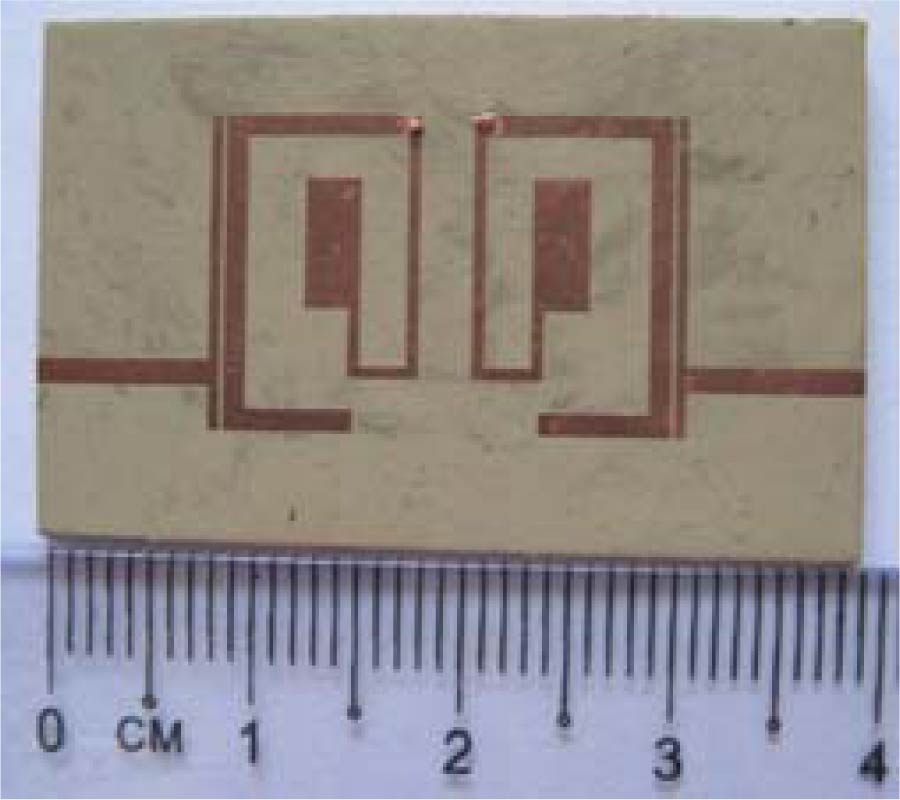
Miniaturized Forced-Mode Ring Resonator with Capacitive Loading
Alonso Corona-Chavez , J. Roberto Reyes Ayona , D. V. B. Murthy and Jose Luis Olvera Cervantes
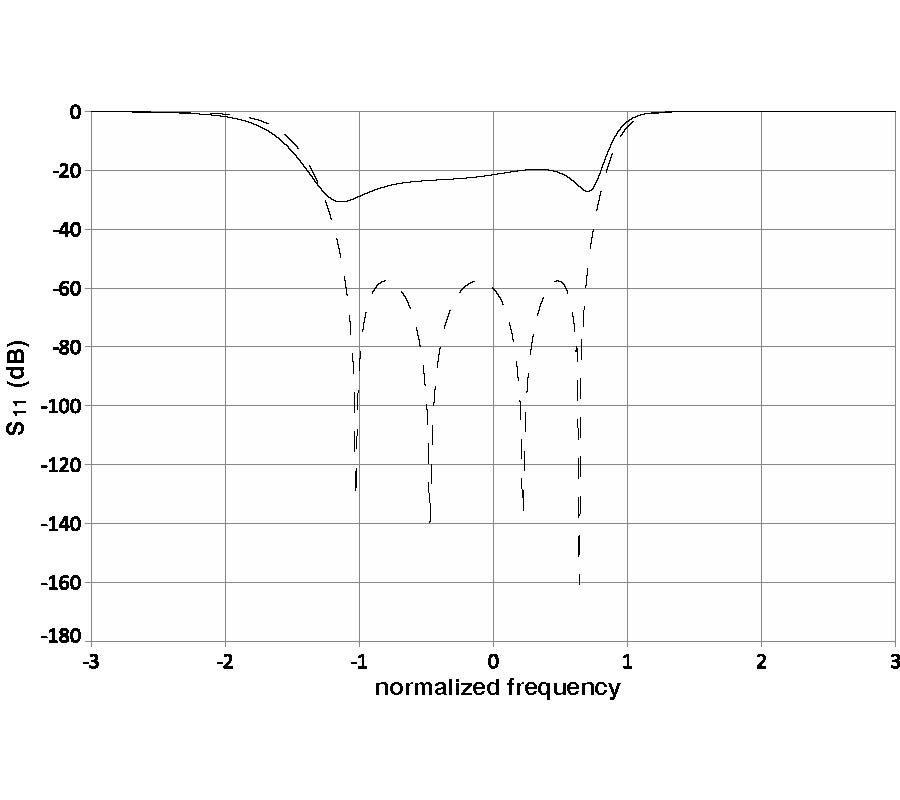
The miniaturization of conventional ring resonators is demonstrated by forcing a voltage minimum at one end of the resonator. In addition, the resonator is loaded with a capacitance to achieve further miniaturization and reducing its sensitivity to substrate thickness tolerance. The final resonator is 73% smaller than a conventional ring resonator and has a tenfold decrease in sensitivity to substrate thickness variations. Using this resonator a 4-pole quasi-elliptic filter is fabricated showing good agreement between simulation and experimental results.
MINIATURIZED FORCED-MODE RING RESONATOR WITH CAPACITIVE LOADING
2012-04-10
PIER Letters
Vol. 31, 55-64
Electromagnetic Field of a Horizontal Infinitely Long Magnetic Line Source Over the Earth Coated with a Dielectric Layer
Yongjian Zhi , Ji En Ma , You-Tong Fang and Kai Li
In this paper, the electromagnetic field of a horizontal infinitely long magnetic line source over the dielectric-coated earth is treated analytically, and the complete approximate solution for the radiated field under the far-field conditions is outlined. The total field is composed of four modes: the direct wave, the ideal reflected wave or image wave, the trapped surface wave, and the lateral wave. In particular, the complete analytical formulas are obtained for both the trapped surface wave and the lateral wave. The trapped surface wave is determined by the sum of residues of the poles. When the infinitely long magnetic line source or the observation point is away from the planar surface of the dielectric-coated earth, the trapped surface wave deceases exponentially in the z direction, and the total field is determined primarily by the lateral wave. When the conductivity of the earth is large, and both the infinitely long magnetic line source and the observation point are on or close to the air-dielectric boundary, the total field is determined primarily by the trapped surface wave.
ELECTROMAGNETIC FIELD OF A HORIZONTAL INFINITELY LONG MAGNETIC LINE SOURCE OVER THE EARTH COATED WITH A DIELECTRIC LAYER
2012-04-10
PIER C
Vol. 28, 181-193
Simulation Modeling on Dispersion Shaping and Harmonic Suppression in Helix TWT from 2 GHz to 6 GHz
Zhao-Jun Zhu and Chao Lei Wei
This paper describes the investigation of broadband interaction and harmonic suppression. A special dispersion shape used in broadband traveling-wave tubes (TWT) is obtained. The theoretical and simulation studies of negative dispersion are presented. On the basis of these studies, a broadband TWT used in microwave power module (MPM) is designed. Compared with the old TWT with flat dispersion, the new one with negative dispersion decreases the second harmonic content about 10 dB and improves the fundamental efficiency about 5% at the low end of the band. The new one operates with the beam voltage of 3600 V and current of 250 mA. The modified TWT is fabricated and the simulation results meet the measurements very well.
SIMULATION MODELING ON DISPERSION SHAPING AND HARMONIC SUPPRESSION IN HELIX TWT FROM 2 GHz TO 6 GHz
2012-04-10
PIER C
Vol. 28, 165-179
Novel Modeling and Design of Circularly Polarized Dielectric Resonator Antenna Array
Mohd Fadzil Ain , Yazeed Mohammad A. Qasaymeh , Zainal Arrifin Ahmad , Mohammad Azman Zakariya , Mohamad Ariff Othman , Seyi Stephen Olokede and Mohd Zaid Abdullah
This paper presents a design of circularly polarized dielectric resonator antenna (DRA) array. The dielectric resonators (DRs) were excited by rectangular aperture coupling slots feed with a linear microstrip. The slot positions were determined based on the characteristic of standing wave ratio over a short ended microstrip to deliver the maximum amount of coupling power to the DRs, in order to improve the array gain. Each DR element was rotated 45ᵒ with respect to the sides of the exciting slot to generate circular polarization pattern. The DRA array was modeled and simulated as a parallel RLC input impedance component using Agilent (ADS) software, since that will ensure the resonant frequency of the antenna as primary design step before simulating in (CST) software and doing the measurements. The results of the return loss, gain, radiation and pattern axial ratio are shown. The gain of the proposed array in X band was about 8.5 dBi, while the 3dB axial ratio bandwidth started from 8.14 to 8.24 GHz. The impedance bandwidths started from 8.14GHz to 8.26GHz. The proposed DRA exhibited an enhancement of the gain in comparison to a single pellet DRA. The size of the whole antenna structure is about 40 mm X 50 mm and can potentially be used in wireless systems.
NOVEL MODELING AND DESIGN OF CIRCULARLY POLARIZED DIELECTRIC RESONATOR ANTENNA ARRAY
2012-04-10
PIER
Vol. 127, 93-120
Inverse Design of Dielectric Materials by Topology Optimization
Masaki Otomori , Jacob Andkjaer , Ole Sigmund , Kazuhiro Izui and Shinji Nishiwaki
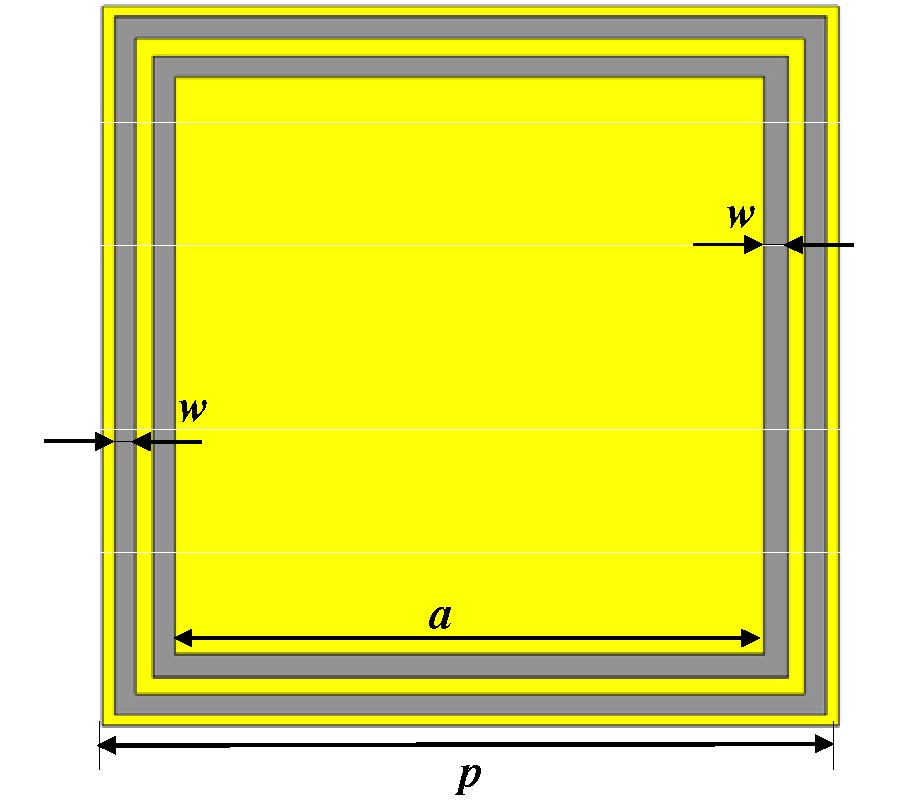
The capabilities and operation of electromagnetic devices can be dramatically enhanced if artificial materials that provide certain prescribed properties can be designed and fabricated. This paper presents a systematic methodology for the design of dielectric materials with prescribed electric permittivity. A gradient-based topology optimization method is used to find the distribution of dielectric material for the unit cell of a periodic microstructure composed of one or two dielectric materials. The optimization problem is formulated as a problem to minimize the square of the difference between the effective permittivity and a prescribed value. The optimization algorithm uses the adjoint variable method (AVM) for the sensitivity analysis and the finite element method (FEM) for solving the equilibrium and adjoint equations, respectively. A Heaviside projection filter is used to obtain clear optimized configurations. Several design problems show that clear optimized unit cell configurations that provide the prescribed electric permittivity can be obtained for all the presented cases. These include the design of isotropic material, anisotropic material, anisotropic material with a non-zero off-diagonal terms, and anisotropic material with loss. The results show that the optimized values are in agreement with theoretical bounds, confirming that our method yields appropriate and useful solutions.
INVERSE DESIGN OF DIELECTRIC MATERIALS BY TOPOLOGY OPTIMIZATION
2012-04-10
PIER
Vol. 127, 79-92
Bandwidth Improvement of Microstrip Antenna Array Using Dummy EBG Pattern on Feedline
Manik Gujral , Joshua Le-Wei Li , Tao Yuan and Cheng-Wei Qiu
Microstrip patch antennas have several advantages over conventional antennas including their low profile structure, light weight and low cost. As such, they have been widely used in a variety of applications. However, one of the major drawbacks of this antenna is the low bandwidth. In this paper, bandwidth of a dual patch antenna is improved by etching dummy EBG pattern on the feedline. Effects of different positions of the feedline on the bandwidth are also studied. A good improvement in bandwidth for the antenna with the dummy EBG pattern when compared to the reference antenna is obtained for all the feedline positions.
BANDWIDTH IMPROVEMENT OF MICROSTRIP ANTENNA ARRAY USING DUMMY EBG PATTERN ON FEEDLINE
2012-04-10
PIER
Vol. 127, 65-77
Fabrication of Carbon Nanotubes on Inter-Digitated Metal Electrode for Switchable Nanophotonic Devices
Qing Dai , Haider Butt , Ranjith Rajasekharan , Timothy D. Wilkinson and Gehan A. J. Amaratunga
This paper reports the modeling and characterization of interdigitated rows of carbon nanotube electrodes used to address a liquid crystal media. Finite Element Method modeling of the nanotube arrays was performed to analyze the static electric fields produced to find suitable electrode geometry. A device was fabricated based on the simulation results and electro optics characteristics of the device are presented. This finding has applications in the development of micron and submicron pixels, precise beem steering and nanotube based active back planes.
FABRICATION OF CARBON NANOTUBES ON INTER-DIGITATED METAL ELECTRODE FOR SWITCHABLE NANOPHOTONIC DEVICES
2012-04-10
PIER
Vol. 127, 49-64
Calculation of Shape Derivatives with Periodic Fast Multipole Method with Application to Shape Optimization of Metamaterials (Invited Paper)
Wu Wang and Naoshi Nishimura
This paper discusses computation of shape derivatives of electromagnetic fields produced by complex 2-periodic structures. A dual set of forward and adjoint problems for Maxwell's equations are solved with the method of moments (MoM) to calculate the full gradient of the object function by the adjoint variable method (AVM). The periodic fast multipole method (pFMM) is used to accelerate the solution of integral equations for electromagnetic scattering problems with periodic boundary conditions (PBC). This technique is applied to shape optimization problems for negative-index metamaterials (NIM) with a double-fishnet structure. Numerical results demonstrate that the figure of merit (FOM) of metamaterials can reach a maximum value when the shape parameters are optimized iteratively by a gradient-based optimization method.
CALCULATION OF SHAPE DERIVATIVES WITH PERIODIC FAST MULTIPOLE METHOD WITH APPLICATION TO SHAPE OPTIMIZATION OF METAMATERIALS (Invited Paper)
2012-04-09
PIER B
Vol. 40, 101-140
A Dirichlet to Neumann Map Based Hybridization of a Mode Matching and Offset Moment Method for Horn Antennas Analysis
Stergios G. Diamantis , Anastasios P. Orfanidis , Michael T. Chryssomallis and George Kyriacou
A hybrid technique for the analysis of pyramidal and conical horn antennas is presented based on an exact vector Dirichlet to Neumann (DtN) mapping mathematical formalism. The transition from the feeding waveguide to the radiating aperture is analyzed by using the mode matching technique (MMT) employing a stepped-waveguide approach. Love's field equivalence principle is employed for the de nition of equivalent electric and magnetic current densities at the horn aperture. Explicitly, these currents are located at a plane parallel to the aperture but slightly shifted inwards in order to implement an offset Moment Method for their discretization, which is free of integral singularities. The unbounded area field generated by these sources is enforced to be continuous with the internal mode matching field by strictly following DtN principles. Besides that, this procedure mimics a By-moment approach ensuring the decoupling of the required number of modes from that of the sources discretization degrees of freedom. Finally, the implemented hybrid method is validated against published experimental and numerical results for a number of pyramidal and conical horn antennas including various corrugated geometries.
A DIRICHLET TO NEUMANN MAP BASED HYBRIDIZATION OF A MODE MATCHING AND OFFSET MOMENT METHOD FOR HORN ANTENNAS ANALYSIS
2012-04-09
PIER C
Vol. 28, 155-164
Area and Power Optimization of 802.15.4a UWB Pulse Low Noise Amplifiers by Genetic Algorithms
Loay D. Khalaf
An Ultra Wide Band (UWB) Low Noise Amplifier (LNA) for 802.15.4a UWB PHY (physical layer) is proposed. The amplifier is designed using IHP Microelectronis CMOS 0.25 μm technology for lower price. The LNA area, power, and performance was optimized using the Genetic Algorithm (GA). The optimization goals included inductance values, power consumption, and performance in the frequency domain using S-Parameters, then fine tuned in the time domain using the reference UWB pulses of the 802.15.4a standards. The LNA consumes around 10mW excluding the output buffer stage, has a gain of 11 to 15 dB, a 1 dB compression point of -9 dBm, and five inductors with a total value around 10 nH.
AREA AND POWER OPTIMIZATION OF 802.15.4A UWB PULSE LOW NOISE AMPLIFIERS BY GENETIC ALGORITHMS
2012-04-09
PIER M
Vol. 24, 113-126
Resonant Transmission through a Pair of Ridge-Loaded Circular Sub-Wavelength Apertures
Jong-Ig Lee , Young-Ki Cho , Ji-Hwan Ko and Junho Yeo
This paper deals with resonant transmission through a pair of ridge-loaded circular sub-wavelength apertures in an infinite perfect electric conductor (PEC) plane. The effect of the distance between the two resonant circular sub-wavelength apertures allocated along the ridge direction (``parallel'' case) and perpendicular to the ridge direction (``collinear'' case) on the transmission cross section (TCS) is analyzed numerically by using a method of moments (MoM). It is found that the TCS for the parallel case varies more sensitively to the distance than that for the collinearly located case, and the maximum TCS for the parallel case is tripled compared to the TCS value of a single resonant aperture. For the case of maximum TCS in the parallel configuration, the directivity in the broadside direction is about 8.76 times (=9.43 dB) compared to that for the single resonant aperture. For the purpose of validation, the single resonant aperture and a pair of resonant apertures in the parallel configuration with a distance for maximum TCS are fabricated on a stainless steel plate with 0.3 mm thickness, and their transmission characteristics are measured. Experimental results show that the transmittance, which is a transmitted power density measured at 50 cm away from the aperture plane, for the parallel resonant apertures is about 7 times (=8.43 dB) higher than that for the single aperture, which agrees well with the simulation.
RESONANT TRANSMISSION THROUGH A PAIR OF RIDGE-LOADED CIRCULAR SUB-WAVELENGTH APERTURES
2012-04-09
PIER M
Vol. 24, 97-111
A Simple Technique for Optimizing the Implementation of the Aperture Theorem Based on Equivalence Principle
Sihai Qiu , Ying-Hua Lu , Ning Liu and Peng Li
The electromagnetic characteristics of the aperture located on a PEC (Perfect Electric Conductor) cavity is an important and challenged research in CEM(Computational Electromagnetics) and practical applications. Researches have been done well when the aperture locates on a large flat surface. But the complex slots and apertures are still difficult to analyze, such as a thin long slot. Thin long slots present on different kinds of the structures, such as missiles, aircrafts, handset equipments, and computers. And, most of the surfaces are non-flat. Furthermore, the multiscale characteristic of the structure makes the modeling very difficult in such cases. It becomes an increasing interested research recently. A better result can be obtained by generating much more denser meshes. Because of the complexity of the algorithm and ill-posed matrix problem, It is not an optimized option. In order to get a better use of the aperture theorem in the multiscale problems, a separation technique is developed in this paper. By using readjustment of the equivalence electric and magnetic currents, a simplified model is proposed. Arbitrary shaped aperture can be very well handled through this method, especially the thin long slots.
A SIMPLE TECHNIQUE FOR OPTIMIZING THE IMPLEMENTATION OF THE APERTURE THEOREM BASED ON EQUIVALENCE PRINCIPLE
2012-04-09
PIER
Vol. 127, 31-48
Theoretical Study of Superconducting Annular Ring Microstrip Antenna with Several Dielectric Layers
Ouarda Barkat
An analytical model is presented to investigate the performances of an annular-ring patch etched on a two layered dielectric substrate and is covered by a dielectric superstrate, by using a full-wave spectral domain technique in conjunction with the complex resistive boundary condition. Galerkin's method and Parseval's theorem are used to obtain the resonant frequency and bandwidth. To validate the theoretical results, a study has been performed for an annular-ring patch on a single layer, with air gap, and cover layer. The computed data are found to be in good agreement with results obtained using other methods. Variations of the resonant frequency and bandwidth with the high temperature superconducting (HTS) thin film are also presented. The proposed model is simple, accurate and thus should help a designer for practical applications.
THEORETICAL STUDY OF SUPERCONDUCTING ANNULAR RING MICROSTRIP ANTENNA WITH SEVERAL DIELECTRIC LAYERS
2012-04-05
PIER B
Vol. 40, 79-99
Inaccuracies of Anisotropic Magneto-Resistance Angle Sensors Due to Assembly Tolerances
Udo Ausserlechner
A large class of angle sensors uses a small permanent magnet attached to the rotor. The magnet is polarized perpendicularly to the axis of rotation, and a magnetic field sensor is placed ahead on the axis. The sensor circuit consists of two full bridges at 45o, each having four anisotropic magneto-resistive (AMR) elements. Even though the electronic system may be calibrated to have nearly no errors like offset, nonlinearity, and mismatch, still significant angle errors may result from assembly tolerances of the magnet and the sensor. This work gives an analytical description of the angle error caused by tilts and eccentricities of magnet and sensor elements against the axis of rotation. Particular emphasis is given to worst case combinations of all tolerances. One part of the angle error can be cancelled by an optimized layout of the AMR-resistors. The remaining part is identical to the case of giant magneto-resistive (GMR) angle sensors. Errors of both AMR and GMR angle sensors are effectively reduced by identical optimization of the shape of magnets. One such optimized shape is disclosed.
INACCURACIES OF ANISOTROPIC MAGNETO-RESISTANCE ANGLE SENSORS DUE TO ASSEMBLY TOLERANCES
2012-04-05
PIER B
Vol. 40, 55-77
Case Study of High Blood Glucose Concentration Effects of 850 MHz Electromagnetic Fields Using Gtem Cell
Nattaphong Boriraksantikul , Kiran D. Bhattacharyya , Paul J. D. Whiteside , Christine O'Brien , Phumin Kirawanich , John A. Viator and Naz E. Islam
The effect of 850 MHz electromagnetic radiation on diabetic blood at 2 W and 60 W power levels was investigated and compared with normal blood cells. The power levels respectively represent radiations from a cell phone and the cell phone tower, both operating 850 MHz. A GTEM cell was designed for the tests to generate the desired uniform electromagnetic field and power in a shielded environment. Blood samples, having normal and high glucose concentrations, were placed in the usable area inside the GTEM cell for 10, 30, 60 minutes and the glucose levels and red and white blood cell viabilities were monitored and compared with the controls. Results show that the 850 MHz exposure significantly influences the blood cell counts and the glucose level in both normal and high glucose blood samples. In cell survivability analysis in normal blood samples it was found that the white blood cells are significantly higher than the control at 60 min exposure from cell phone radiation, while both the white and red blood cell are significantly higher following a 30 min exposure from tower radiation. For high glucose blood tests at 30 and 60 min exposure times, the tower radiation for 60 min and the cell phone radiation at both the exposure times show significantly changes in white blood cell counts, whereas there was no effect in red blood cells. Also, for 30 and 60 min exposure times, the glucose level in normal blood samples increased from cell phone radiation and decreased due to tower radiation. Finally, in high glucose blood samples, the glucose level decreased significantly for a 30 minute tower exposure, while the glucose level increased significantly for the cell phones exposure duration of 60 min and for tower exposure duration of 10 min. Electromagnetic radiation effects on cells can be better analyzed through a combination of the frequency, power and test duration as a single factor as opposed to the effects of frequency alone.
CASE STUDY OF HIGH BLOOD GLUCOSE CONCENTRATION EFFECTS OF 850 MHZ ELECTROMAGNETIC FIELDS USING GTEM CELL
2012-04-05
PIER Letters
Vol. 31, 45-53
Broad Band-Stop Filter Using Frequency Selective Surfaces in Uniplanar Microwave Transmission Line
Jae-Young Kim , Jung Han Choi and Chang Won Jung
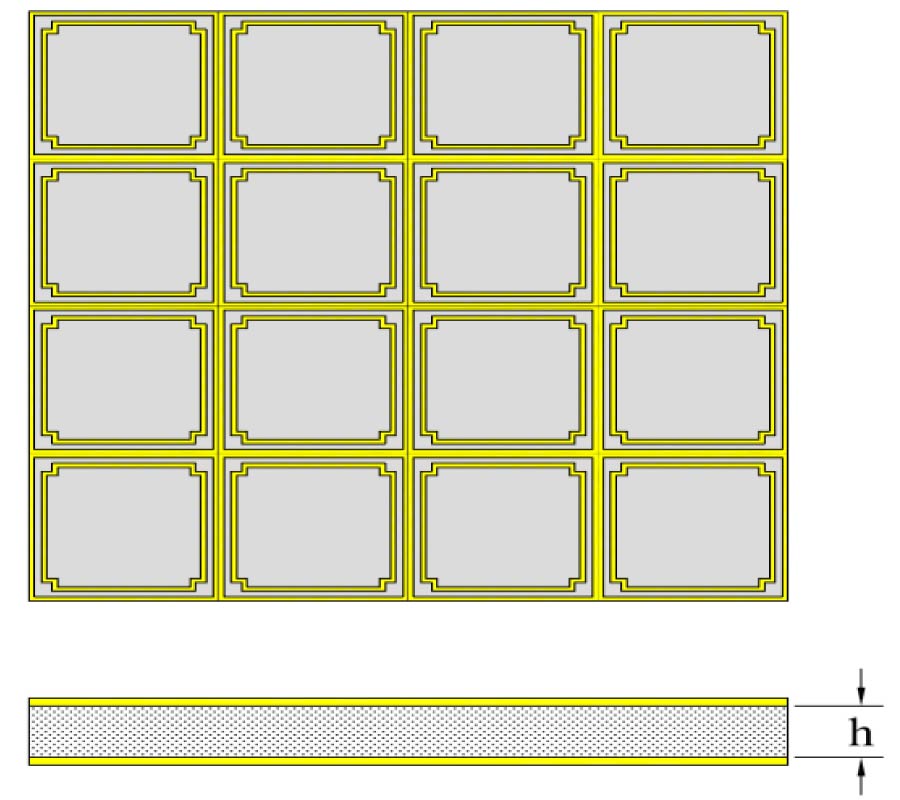
We present a band-stop filter (BSF) by using a periodic structure property of frequency selective surfaces (FSSs) embedded in a microstrip transmission line. The proposed BSF is designed with FSS unit cells modifying the cross-loop slots. The center frequency (fo) of the BSF is 6.6 GHz, and the 3-dB bandwidth varies by the number of cascading unit cells. The BSF is interpreted with an equivalent circuit model and a dispersion diagram, and exhibits uniplanar geometry, low return loss, simple fabrication, smaller size, and wide bandwidth.
BROAD BAND-STOP FILTER USING FREQUENCY SELECTIVE SURFACES IN UNIPLANAR MICROWAVE TRANSMISSION LINE
2012-04-05
PIER Letters
Vol. 31, 35-43
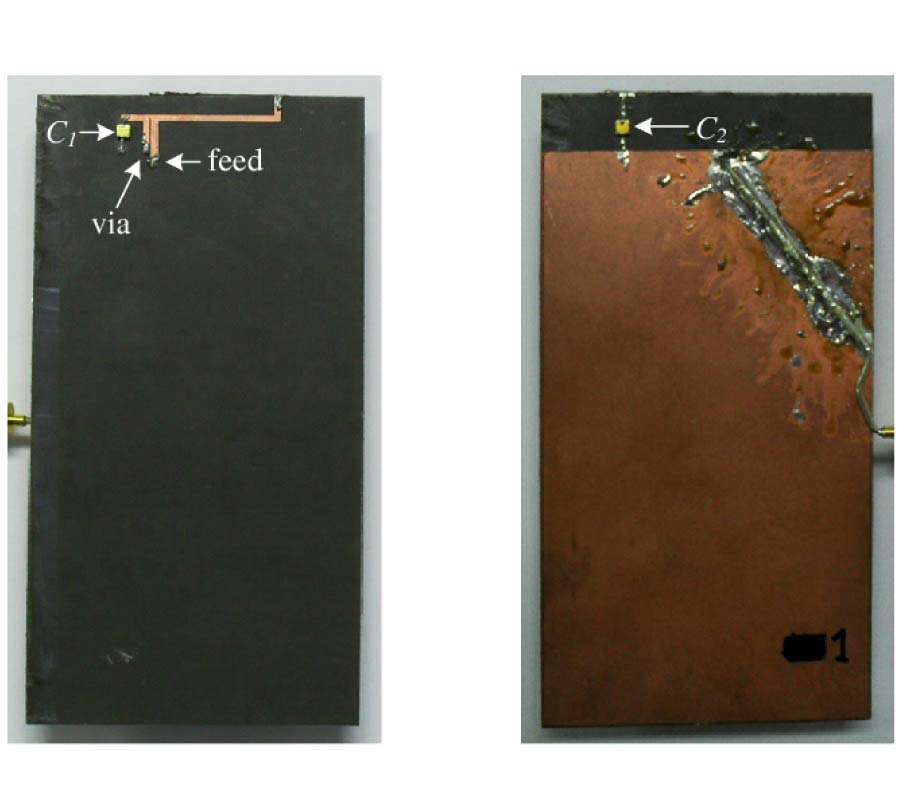
Metamaterial Inspired Patch Antenna with L-Shape Slot Loaded Ground Plane for Dual Band (WiMAX/WLAN) Applications
Jagannath Malik and Machavaram Kartikeyan
Due to the integration of different wireless applications at different bands on a single device, multi-band microstrip patch antenna is the best solution keeping the overall size of the device small. In the present work, a metamaterial-inspired antenna is proposed for WiMAX/WLAN applications. Design studies, parametric analysis, simulation results along with measurements for an L-shape slotted ground microstrip patch antenna with CSRR (Complementary Split Ring Resonator) embedded on patch structure operating simultaneously at WiMAX (3.5 GHz) and WLAN (5.8 GHz) are presented. The metamaterial-inspired loading is exploited to create resonance for upper WLAN band while an L-shape slot on the ground plane resonates at the WiMAX band, maintaining the antenna's overall small form-factor. The measured S-parameter and radiation patterns of fabricated prototype show that the proposed design is suitable for emerging WiMAX/WLAN applications.
METAMATERIAL INSPIRED PATCH ANTENNA WITH L-SHAPE SLOT LOADED GROUND PLANE FOR DUAL BAND (WIMAX/WLAN) APPLICATIONS
2012-04-05
PIER M
Vol. 24, 85-95
Hybrid Finite Difference/Finite Volume Method for 3-D Conducting Media Problems
Zhi-Li He , Kai Huang and Chang-Hong Liang
A hybrid time-domain method combing finite-difference and cell-centered finite-volume method is presented in this paper. This method is applied to solve three dimensional electromagnetic problems which involve media having finite conductivity. The fractional-step technique (FST) for FVTD scheme is applied to solve these problems. Local time-step scheme is used to enhance the efficiency of this method. Numerical results are given and compared with a reliable numerical method, which is used to show the validation of this method.
HYBRID FINITE DIFFERENCE/FINITE VOLUME METHOD FOR 3-D CONDUCTING MEDIA PROBLEMS
2012-04-05
PIER
Vol. 127, 15-30
An Electronically Controllable Method for Radar Cross Section Reduction for a Microstrip Antenna
Yuping Shang , Shao-Qiu Xiao , Jia-Lin Li and Bing-Zhong Wang
PIN diodes are used to electronically switch a rectangular microstrip antenna between the optimal radiation state and the low radar cross section (RCS) state in this paper. A useful loading circuit is proposed. The circuit is connected between the patch and the ground plane of the antenna at each loading position. The loading positions of the circuit are determined by studying magnitude distributions of the induced electric field and analyzing statistically how many times that the maximum electric field occurs in each area for each discussed incident angle. PIN diodes are equivalent to capacitances and resistances when diodes are reverse-biased and forward-biased, respectively. When the antenna is not in service and excited by an incident plane wave, obvious RCS reduction is realized. In addition, the radiation performances are well maintained when the antenna is in service for transmitting or receiving signals.
AN ELECTRONICALLY CONTROLLABLE METHOD FOR RADAR CROSS SECTION REDUCTION FOR A MICROSTRIP ANTENNA
2012-04-05
PIER
Vol. 127, 1-14
Optimal Design for High-Temperature Broadband Radome Wall with Symmetrical Graded Porous Structure
Licheng Zhou , Yongmao Pei , Rubing Zhang and Daining Fang
This study focuses on electromagnetic and thermo-mechanical optimal design for high-temperature broadband radome wall with symmetrical graded porous structure. The position-dependent porosity increases from the two surfaces of the structure to its intermediate layer. Electromagnetic and thermo-mechanical properties of the proposed structure are investigated simultaneously via numerical simulations. Optimal results suggest that the symmetrical porous structure possesses better broadband transmission performance in the 1-100 GHz frequency range, in contrast to a traditional A-sandwich structure. The thermo-mechanical investigation also indicates that the novel structure meets the requirement for high-temperature (up to 1400°C) applications.
OPTIMAL DESIGN FOR HIGH-TEMPERATURE BROADBAND RADOME WALL WITH SYMMETRICAL GRADED POROUS STRUCTURE