Search Results(13800)

2012-05-28
PIER B
Vol. 41, 77-100
Performance Analysis of Parallel Non-Orthogonal Peec-Based Solver for EMC Applications
Danesh Daroui and Jonas Ekman
A parallel implementation of a quasi-static Partial Element Equivalent Circuit (PEEC)-based solver that can handle electromagnetic problems with non-orthogonal structures is presented in this paper. The solver has been written in C++ and employs GMM++ and ScaLAPACK computational libraries to make the solver fast, efficient, and adaptable to current parallel computer systems. The parallel PEEC-based solver has been tested and studied on high performance computing clusters and the correctness of the solver has been verified by doing comparisons between results from orthogonal routines and also another type of electromagnetic solver, namely FEKO. Two non-orthogonal numerical test cases have been analysed in the time and frequency domain. The results are given for solution time and memory consumption while bottlenecks are pointed out and discussed. The benchmarks show a good speedup which gets improved as the problem size is increased. With the capability of the presented solver, the non-orthogonal PEEC formulation is a viable tool for modelling geometrically complex problems.
PERFORMANCE ANALYSIS OF PARALLEL NON-ORTHOGONAL PEEC-BASED SOLVER FOR EMC APPLICATIONS
2012-05-28
PIER C
Vol. 29, 235-248
Novel Composite Right/Left-Handed Leaky-Wave Antennas Based on the Folded Substrate-Integrated-Waveguide Structures
Tao Yang , Pei-Ling Chi and Rui-Min Xu
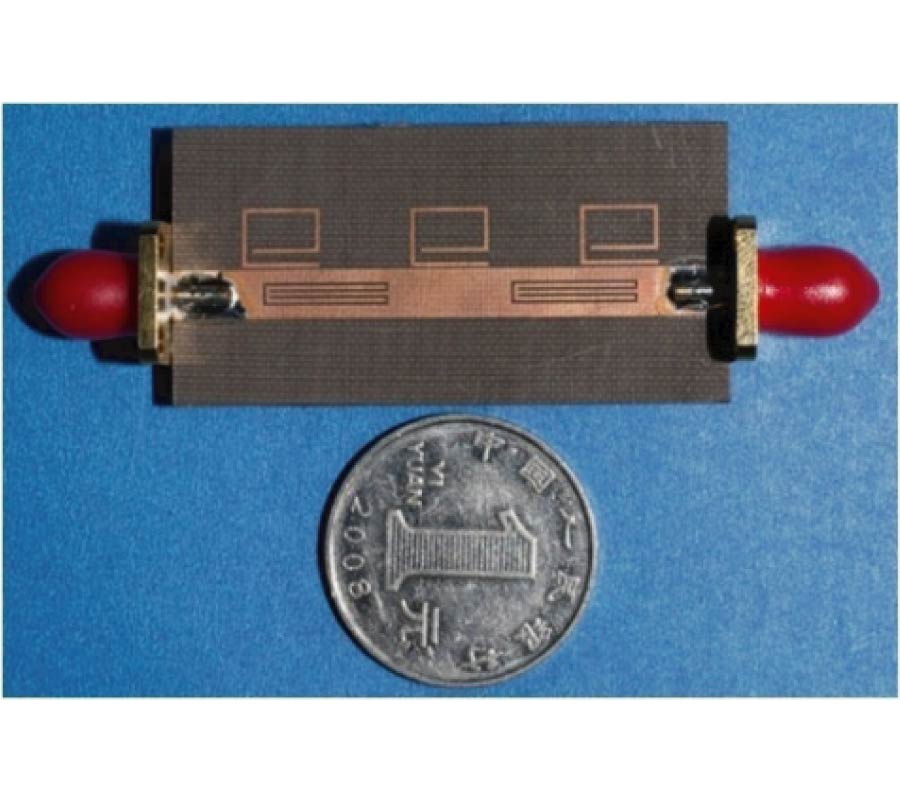
In this paper, novel composite right/left-handed (CRLH) leaky-wave antennas based on folded substrate-integrated-waveguide (FSIW) structures are proposed. The proposed leaky-wave antennas were realized by periodically loading the radiating slots on the top metallization of the FSIW-based CRLH transmission lines. The structural advantages of the FSIW combined with the unique dispersion characteristics of the CRLH transmission line enable the proposed leaky-wave antennas to present continuous beam-scanning capability from backfire to endfire directions, occupy smaller footprint size, and provide more design flexibility than the conventional CRLH leaky-wave antennas. Two of such CRLH leaky-wave antennas were developed. In addition to the continuous beam scanning, it is found that the radiation efficiency and polarization of the FSIW-based leaky-wave antennas can be easily tuned by means of the slot size and slot orientation, respectively, indicating their potential for versatile applications. Calculated and experimental results are presented and compared. A good agreement is obtained. To the best of our knowledge, it is the first time that the leaky-wave antenna exploits both of the dispersion behavior of the CRLH transmission lines and the structural benefits of the FSIW configuration.
NOVEL COMPOSITE RIGHT/LEFT-HANDED LEAKY-WAVE ANTENNAS BASED ON THE FOLDED SUBSTRATE-INTEGRATED-WAVEGUIDE STRUCTURES
2012-05-27
PIER B
Vol. 41, 51-76
A Circuit Model for Vertical Multilayer Transitions in Coplanar Waveguide Technology
Benito Lopez-Berrocal , Enrique Marquez-Segura , Inigo Molina-Fernandez and Juan Carlos Gonzalez-Delgado
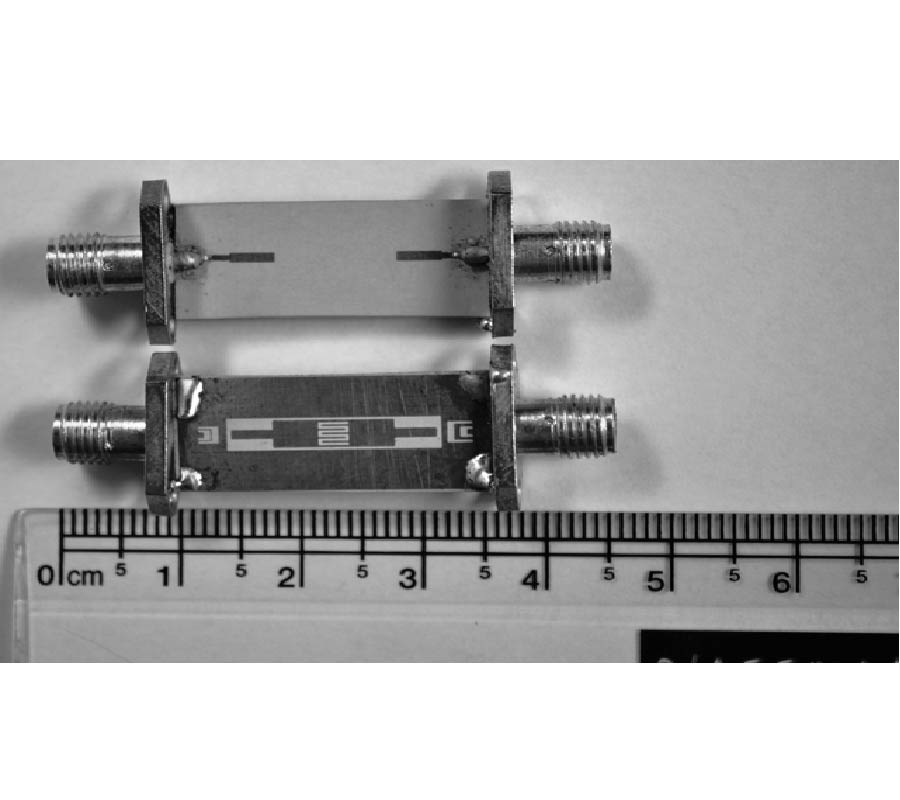
A circuit model for vertical transitions between different coplanar waveguide systems using via-holes is presented. The model is directly extracted from the geometry of the transition using closed expressions. Additionally, it can be used to find suitable initial dimensions for the transition in a circuit simulator, thereby greatly reducing the effort spent on subsequent electromagnetic simulations. To test the validity of the developed model, it is applied to a variety of situations involving a wide range of stack heights, dielectric constants, and transmission line geometry values. These situations cover most of the relevant broadband vertical transitions used in practical PCB and LTCC designs. Comparative analysis of the circuit model and electromagnetic simulations yields good agreement in all analyzed situations. Experimental assessment of the model is also provided for some of the transitions that were built and characterized in a back-to-back configuration.
A CIRCUIT MODEL FOR VERTICAL MULTILAYER TRANSITIONS IN COPLANAR WAVEGUIDE TECHNOLOGY
2012-05-27
PIER
Vol. 128, 171-193
Novel Pre-Processing Techniques for Coherence Improving in Along-Track Dual-Channel Low Frequency SAR
Chongyi Fan , Xiao-Tao Huang , Tian Jin , Jun-Gang Yang and Dao Xiang An
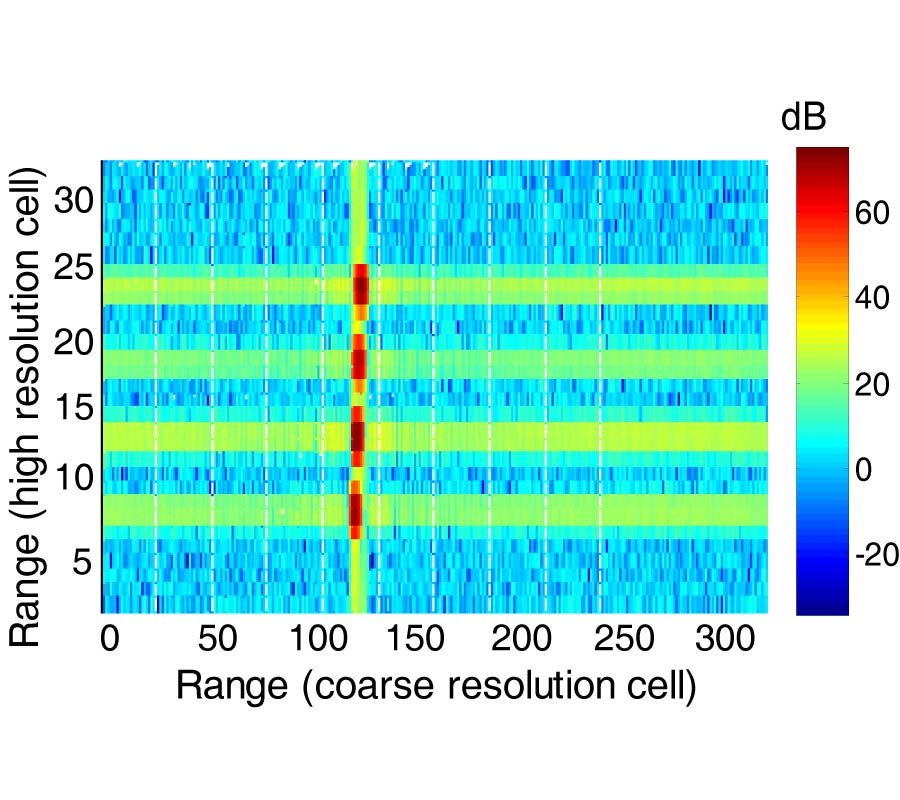
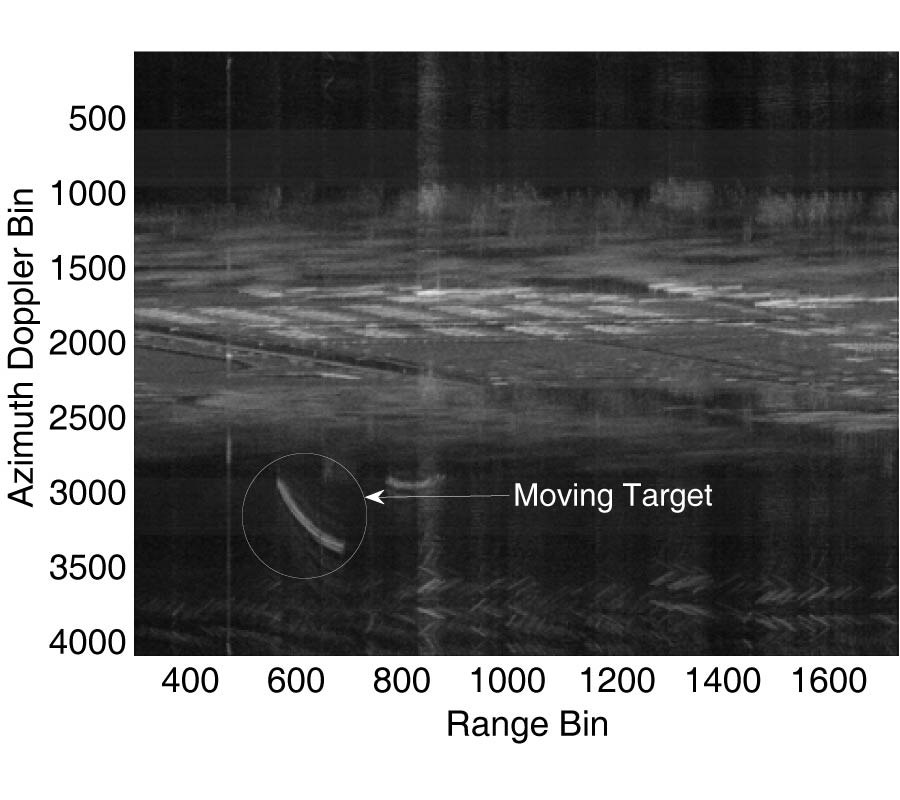
The coherence between the complex image pair from two channels is important for improving the capability of along-track interferometry (ATI) processing in synthetic aperture radar (SAR) ground moving target indication (GMTI). The along-track dual-channel low frequency SAR can be easily influenced by not only mismatch errors of the image pair but also the radio frequency interference (RFI). RFI has great impacts on the joint probability density function (PDF) of magnitude and phase in the interferometric image. However, little work has been done to investigate the coherence improvement under RFI. This study develops an algorithm to improve the coherence of the image pair for along-track dual-channel low frequency SAR, which can be used by ATI. After analyzing RFI imaging in detail, it is proposed that the along-track interferometric image in the range frequency and cross-range slow time domain can be used to detect RFI. Median filters are proposed to further suppress RFI. This suppression has the same implementations to the image pair without heavy computation load. Considering RFI suppression and mismatch errors compensation, a pre-processing flow is proposed to achieve high coherence of the interferometric image in low frequency SAR. It is shown that the coherence of the complex image pair can be improved greatly by using this pre-processing flow. The effectiveness of this algorithm is demonstrated with real data acquired by an airborne along-track dual-channel P-band SAR GMTI system.
NOVEL PRE-PROCESSING TECHNIQUES FOR COHERENCE IMPROVING IN ALONG-TRACK DUAL-CHANNEL LOW FREQUENCY SAR
2012-05-27
PIER
Vol. 128, 153-170
A Hybrid Implicit-Explicit Spectral FDTD Scheme for Oblique Incidence Problems on Periodic Structures
Yunfei Mao , Bin Chen , Hao-Quan Liu , Jing-Long Xia and Ji-Zhen Tang
This paper combines a hybrid implicit-explicit (HIE) method with spectral finite-difference time-domain (SFDTD) method for solving periodic structures at oblique incidence, resulting in a HIE-SFDTD method. The new method has the advantages of both HIE-FDTD and SFDTD methods, not only making the stability condition weaker, but also solving the oblique incident wave on periodic structures. Because the stability condition is determined only by two space discretizations in this method, it is extremely useful for periodic problems with very fine structures in one direction. The method replaces the conventional single-angle incident wave with a constant transverse wave-number (CTW) wave, so the fields have no delay in the transverse plane, as a result, the periodic boundary condition (PBC) can be implemented easily for both normal and oblique incident waves. Compared with the ADI-SFDTD method it only needs to solve two untridiagonal matrices when the PBC is applied to, other four equations can be updated directly, while four untridiagonal matrices, two tridiagonal matrices, and six explicit equations should be solved in the ADI-SFDTD method. Numerical examples are presented to demonstrate the efficiency and accuracy of the proposed algorithm. Results show the new algorithm has better accuracy and higher efficiency than that of the ADI-SFDTD method, especially for large time step sizes. The CPU running time for this method can be reduced to about 45% of the ADI-SFDTD method.
A HYBRID IMPLICIT-EXPLICIT SPECTRAL FDTD SCHEME FOR OBLIQUE INCIDENCE PROBLEMS ON PERIODIC STRUCTURES
2012-05-25
PIER C
Vol. 29, 219-234
Decoupled Unitary ESPRIT Algorithm for 2-d DOA Estimation
Jiacai Jiang and Lu Gan
In this paper, a new decoupled Unitary ESPRIT algorithm for two-dimensional (2-D) direction-of-arrival (DOA) estimation is presented. By exploiting the centro-symmetric array configurations of two parallel uniform linear arrays (TP-ULAs) and utilizing the via rotational invariance techniques, the proposed algorithm has advantages as listed below. First, the algorithm enables decoupling the estimation problem into a two-step estimation problem and obtains the automatically matched 2-D DOAs. Second, employing the elements of the array fully, the algorithm can estimate 2-D DOAs up to 2(M−1), where 2M is the sensor number of the array. Besides, the computational complexity of the proposed algorithm is lower than other representative 2-D DOA estimation methods. Simulation results are presented to show the effectiveness of the proposed method.
DECOUPLED UNITARY ESPRIT ALGORITHM FOR 2-D DOA ESTIMATION
2012-05-23
PIER C
Vol. 29, 205-218
A New Accurate Volterra-Based Model for Behavioral Modeling and Digital Predistortion of RF Power Amplifiers
Tianjiao Du , Cuiping Yu , Jinchun Gao , Yuan'an Liu , Shulan Li and Yongle Wu
A new accurate Volterra-based model is introduced for behavioral modeling and digital predistortion (DPD) of power amplifiers (PAs). This model extends the GMP model with specific cross terms, and these augmented terms significantly increase the model's performance. The proposed model's performance is assessed using a LDMOS Doherty PA driven by two modulated signals (a 4-carrier WCDMA signal and a single carrier 16QAM signal). The experimental results in both behavioral modeling and DPD applications demonstrate that the proposed model outperforms the hybrid memory polynomial-envelope memory polynomial (HME) model and generalized memory polynomial (GMP) model. Compared with the HME model, the proposed model shows an average normalized mean square error (NMSE) improvement of 2.2 dB in the behavioral modeling, average adjacent channel power ratio (ACPR) improvement of 2.8/2.5 dB in the DPD application, and 20% reduction in the number of coe±cients. In comparison with the GMP model, the proposed model achieves higher model accuracy and better DPD performance, but reduces approximately 40% of coefficients.
A NEW ACCURATE VOLTERRA-BASED MODEL FOR BEHAVIORAL MODELING AND DIGITAL PREDISTORTION OF RF POWER AMPLIFIERS
2012-05-23
PIER
Vol. 128, 137-151
Performance Analysis of the Scenario-Based Construction Method for Real Target ISAR Recognition
Sang-Hong Park , Joon-Ho Lee and Kyung-Tae Kim
Due to the difficulty in estimating the 2D image plane of the inverse synthetic aperture radar (ISAR) image, we recently proposed a new paradigm to construct the training database based on the flight scenario. However, because the flight condition for the training and the test data was identical, much more study is required for this method to be applied to the real ISAR scenario. This paper presents a study on the factor that can affect the applicability of scenario-based method to the real target ISAR recognition. Simulation results using five scatterer models show that accurate measurement of flight direction and aspect angle variation are required and enough bandwidth larger than 200 MHz should be guaranteed for the successful classification.
PERFORMANCE ANALYSIS OF THE SCENARIO-BASED CONSTRUCTION METHOD FOR REAL TARGET ISAR RECOGNITION
2012-05-22
PIER C
Vol. 29, 191-203
3D Frequency Selective Surfaces
Saidatul Norlyana Azemi , Kamran Ghorbani and Wayne Rowe
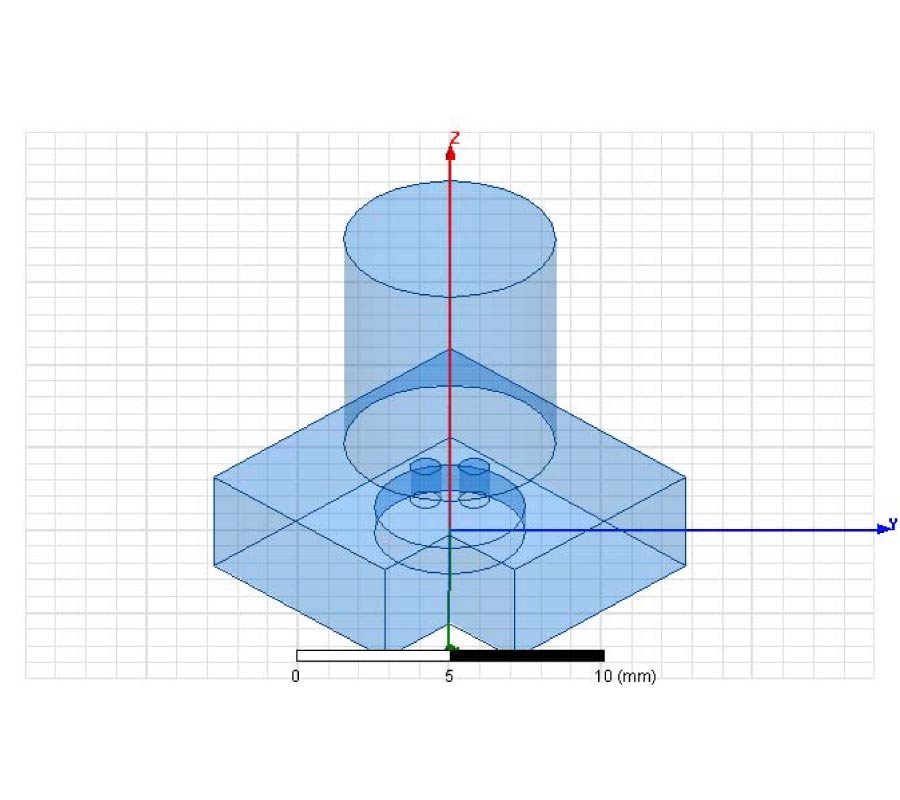
A novel 3D Frequency Selective Surface (FSS) architecture based on a circular ring unit element is presented. The circular ring was made 3D by creating a cylindrical element of a certain length, adding an extra degree of freedom into the structure. The length of the cylinder is shown through electromagnetic simulation to have a significant effect on the frequency characteristics of the FSS. Increasing the length of the cylinder can change the FSS from a band-stop to a band-pass filter response. The center frequency of both band pass and band stop responses can also be tuned with adjustment to the length. Dielectric materials are introduced in the center of the cylindrical unit cell elements to simultaneously obtain a stop and pass band with a sharp transition. For high dielectric filling materials, the 3D periodic structure exhibits negative refractive index metamaterial properties. A parametric analysis was conducted on these new cylindrical unit elements, and a prototype 3D FSS structure has been constructed and experimentally validated.
3D FREQUENCY SELECTIVE SURFACES
2012-05-22
PIER C
Vol. 29, 177-190
The Research and Application of Combining Lut and Memory Compensation for Twta Linearization with Relatively Low Sampling Frequency
Xin Hu , Gang Wang , Q.-L. Li , Zi-Cheng Wang and Jirun Luo
If sampling frequency is not high enough, the effect of adaptive memory polynomial predistortion linearizer is not very good for TWTA linearization. In order to keep the adaptive memory polynomial predistortion linearizer valid, usually the output power level of the TWTA must be reduced, which corresponds to a reduced efficiency of the TWTA. In this paper, we present a digital predistortion linearizer by combining LUT (Look-Up-Table) and memory-effect compensation technique, which may provide good linear performance with less reduction of the output power and relatively low sampling frequency. The results of simulations and experiments show that good linearity improvement can be reached for an X-band TWTA with this predistortion linearizer.
THE RESEARCH AND APPLICATION OF COMBINING LUT AND MEMORY COMPENSATION FOR TWTA LINEARIZATION WITH RELATIVELY LOW SAMPLING FREQUENCY
2012-05-22
PIER
Vol. 128, 121-136
Analysis of Materials Effects on Radio Frequency Electromagnetic Fields in Human Head
Mohammad Tariqul Islam , Hafizah Zainool Abidin , Mohammad Rashed Iqbal Faruque and Norbahiah Misran
In this paper, we propose to study the variability of specific absorption rate (SAR) of a human head due to different materials in the vicinity of the handset. We include the effects of the human hand, handset chassis and additional conductive material particularly hand-ring jewelry. A finite-difference time-Domain (FDTD) method was used to analyze different positions of the conductive ring materials within the hand model. Furthermore, the impact of this material on the performance of an antenna was considered in this study. We found that including a hand model leads to a significant reduction in SAR. The hand influences not only SAR distribution but also antenna performance. Moreover, adding conductive materials to the hand results in increases in the local SAR values of the head model. The results suggest that the hand model is important in SAR evaluation and that having an additional conductive material on the hand may vary the amount of electromagnetic (EM) energy absorption depending on the position of the material.
ANALYSIS OF MATERIALS EFFECTS ON RADIO FREQUENCY ELECTROMAGNETIC FIELDS IN HUMAN HEAD
2012-05-21
PIER C
Vol. 29, 163-176
A Compact Linear Tapered Slot Antenna with Integrated Balun for UWB Applications
Jiangniu Wu , Zhiqin Zhao , Jiazhou Liu , Zai-Ping Nie and Qing Huo Liu
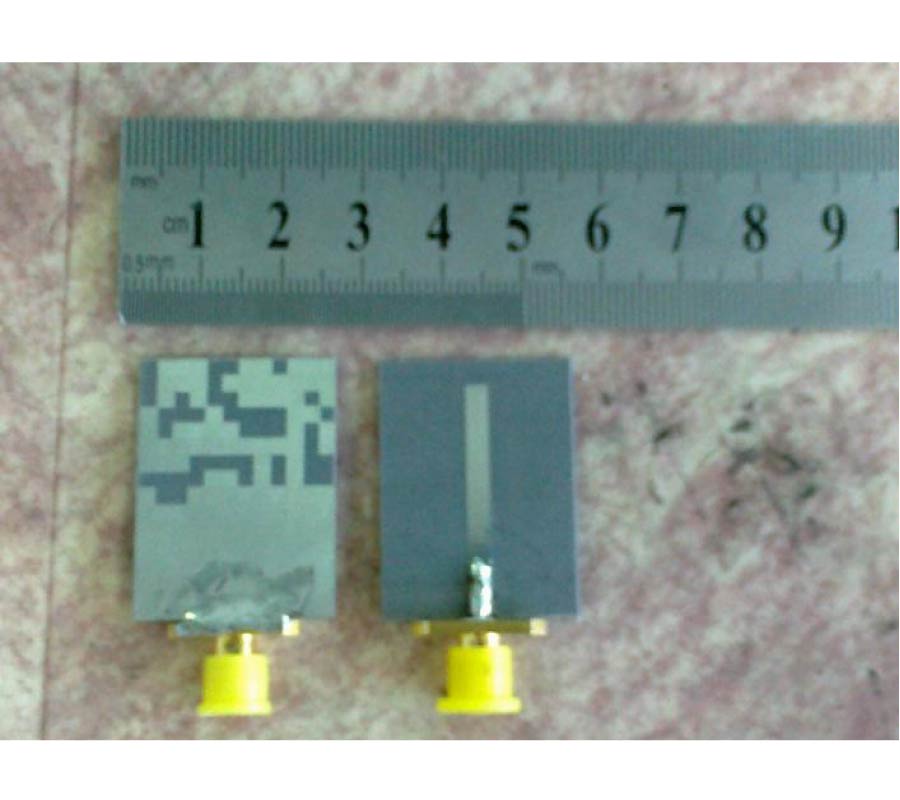
A compact linear tapered slot antenna with wideband performance is proposed. The antenna consists of a microstrip to slotline transition and a linear tapered slot structure which is connected to the slotline. Due to the linear tapered slot, the antenna can realize unidirectional radiation in wideband band. The microstrip to slotline transition is implemented by using a tapered cross, which can easily obtain impedance transformation. Furthermore, this transition can be realized with a small size. The antenna is fabricated and optimized numerically. Both simulated and measured results validate the performance of the antenna in frequency and time domains. The results show that the antenna achieves a bandwidth up to 118% from 2.6 -10.1 GHz. The simulated time domain response of the antenna also shows its good performance in time-domain. The antenna can be well applied to ultra-wideband system.
A COMPACT LINEAR TAPERED SLOT ANTENNA WITH INTEGRATED BALUN FOR UWB APPLICATIONS
2012-05-18
PIER B
Vol. 41, 23-50
Behavioral Model of Symmetrical Multi-Level T-Tree Interconnects
Blaise Ravelo
An accurate and behavioral modeling method of symmetrical T-tree interconnect network is successfully investigated in this paper. The T-tree network topology understudy is consisted of elementary lumped L-cells formed by series impedance and parallel admittance. It is demonstrated how the input-output signal paths of this single input multiple output (SIMO) tree network can be reduced to single input single output (SISO) network composed of L-cells in cascade. The literal expressions of the currents, the input impedances and the voltage transfer function of the T-tree electrical interconnect via elementary transfer matrix products are determined. Thus, the exact expression of the multi-level behavioral T-tree transfer function is established. The routine algorithm developed was implemented in Matlab programs. As application of the developed modeling method, the analysis of T-tree topology comprised of different and identical RLC-cells is conducted. To demonstrate the relevance of the model established, lumped RLC T-tree networks with different levels for the microelectronic interconnect application are designed and simulated. The work flow illustrating the guideline for the application of the routine algorithm summarizing the modeling method is proposed. Then, 3D-microstrip T-tree interconnects with width 0.1 μm and length 3 mm printed on FR4-substrate were considered. As results, very good agreement between the results from the reduced behavioral model proposed and SPICE-computations is found both in frequency- and time-domains by considering arbitrary binary sequence ''01001100" with 2 Gsym/s rate. The model proposed in this paper presents significant benefits in terms of flexibility and very less computation times. It can be used during the design process of the PCB and the microelectronic circuits for the signal integrity prediction. In the continuation of this work, the modeling of clock T-tree interconnects for packaging systems composed of distributed elements using an analogue process is in progress.
BEHAVIORAL MODEL OF SYMMETRICAL MULTI-LEVEL T-TREE INTERCONNECTS
2012-05-18
PIER C
Vol. 29, 149-161
Antenna Characterization and Determination of Path Loss Exponents for 677 MHz Channel Using Fixed and Portable Digital Terrestrial Television
Felicito S. Caluyo and Jennifer C. Dela Cruz
This paper presents propagation measurements results using Integrated Services Digital Broadcast - Terrestrial (ISDB-T) to investigate the characteristics of 6 MHZ wideband Digital Terrestrial Television channel at 677 MHz for fixed and portable reception. Empirical measurements were done at predetermined measurement points consisting of 21 radials for a total of 92 locations extending to 20 kilometers around the National Broadcasting Network (NBN) digital transmitter. Characterizations were conducted using antenna heights of 9 m (fixed reception), 3 m (fixed reception), and 1.5 m (portable reception). Modulation Error Rate (MER), power received, field strength and delay profiles were captured to help characterize the channel in an urban area in and around Metro Manila at day time for temperatures ranging from 26°C to 32°C. Measured field strength was compared to NTC F (50, 90) curves. Polynomial fit using least square errors was used to plot the field strength coverage of NBN. For large-scale fading, it is observed that signal power conforms to Log Normal distribution. The study helped identify problem sites within the coverage. These are locations within the coverage area or at the outskirts of the coverage area where DTV signal is not received at all. A more accurate description of the DTT channel will lead to a better design of the parts of the Digital Television system from the network to transmitting system and receiving equipment. Path loss exponents computed for the three antenna heights can be helpful in developing empirical prediction models.
ANTENNA CHARACTERIZATION AND DETERMINATION OF PATH LOSS EXPONENTS FOR 677 MHZ CHANNEL USING FIXED AND PORTABLE DIGITAL TERRESTRIAL TELEVISION
2012-05-18
PIER C
Vol. 29, 135-148
A Compact UWB Antenna with Sharp Dual Band-Notched Characteristics for Lower and Upper WLAN Band
Guang Yang , Qing-Xin Chu and Tian-Gui Huang
A compact dual band-notched Ultra-Wideband antenna with sharp band-notched characteristics and controllable notched bandwidths is presented. The antenna consists of a spade-shaped microstrip-fed Ultra-Wideband planar monopole antenna and two sets of band-notched structures. The band-notched structures are employed to generate the desired lower and upper rejection bands with good frequency selectivity and sufficient rejection bandwidths. Moreover, the bandwidth of the lower and upper rejection bands can be independently adjusted by changing the size of the band-notched structures. Finally, a UWB antenna is successfully designed with the dual notched bands for the lower WLAN band (5.15-5.35 GHz) and upper WLAN band (5.725-5.825 GHz). A good impedance match is obtained in 3.1-10.6 GHz frequency range (|S11|<-10 dB), except the lower and upper WLAN band (|S11| >-5 dB). The ratios of the notched bandwidths between -5 dB and -10 dB in the two stop bands are greater than 0.73.
A COMPACT UWB ANTENNA WITH SHARP DUAL BAND-NOTCHED CHARACTERISTICS FOR LOWER AND UPPER WLAN BAND
2012-05-18
PIER
Vol. 128, 105-120
Analysis of Scattering with Multi-Slotted Cylinder with Thickness: TM Case
Wang-Sang Lee , Han-Lim Lee , Hyeong-Seok Jang , Hyun-Sung Tae and Jong-Won Yu
An exact series solution for radiation and scattering of the dielectric-loaded multi-slotted cylinder with thickness is formulated by using radial mode matching technique. The radiated and guided fields are represented in terms of an infinite series of radial modes. By applying the appropriate boundary conditions, the coefficients of radiated and guided fields are obtained. The behaviors of resonance features are characterized for variation in frequencies, source positions, slot thickness, and dielectric coating properties.
ANALYSIS OF SCATTERING WITH MULTI-SLOTTED CYLINDER WITH THICKNESS: TM CASE
2012-05-18
PIER
Vol. 128, 91-103
Multi-Refraction with Same Polarization State in Two Dimensional Triangular Photonic Crystals
Guoyan Dong , Ji Zhou , Xiulun Yang and Xiangfeng Meng
Multi-refraction effects with one polarization in a two-dimensional triangular photonic crystal (PhC) were systematically studied by theoretical analysis and numerical simulation. The more complicated refraction behaviors can be excited in the higher band regions based on the intricate undulation of one band or the overlap of different bands. A novel non-handedness effect is proposed for the first time with group velocity perpendicular to phase velocity. Furthermore, triple refraction phenomena and special collimation effects of symmetrical positive-negative refraction with the loose incident conditions have been found in different band regions of this PhC. These unique features will provide us with more understanding of electromagnetic wave propagation in PhCs and give important guideline for the design of new type optical device.
MULTI-REFRACTION WITH SAME POLARIZATION STATE IN TWO DIMENSIONAL TRIANGULAR PHOTONIC CRYSTALS
2012-05-18
PIER
Vol. 128, 75-90
Study of Magnetic Gravity Compensator Topologies Using an Abstraction in the Analytical Interaction Equations
Jeroen L. G. Janssen , Johannes J. H. Paulides and Elena A. Lomonova
This paper identifies an abstraction that is found in the equations that describe the 3D interaction between cuboidal permanent magnets and applies this to the magnetic design of a gravity compensator. It shows how the force between magnets and its position-sensitivity, important design parameters for magnetically levitated 6-DoF gravity compensators, may be translated into the magnetic domain and verifies this with 3D analytical models. With this information, a number of basic gravity compensator topologies is derived. These topologies are subsequently investigated in more detail, with specific focus on combining a high force with low position sensitivity.
STUDY OF MAGNETIC GRAVITY COMPENSATOR TOPOLOGIES USING AN ABSTRACTION IN THE ANALYTICAL INTERACTION EQUATIONS
2012-05-16
PIER Letters
Vol. 32, 29-38
Impact of the Wave Number Estimation in Underground Focused SAR Imaging
Fernando Quivira , Jose Angel Martinez-Lorenzo and Carey Rappaport
This work studies the impact of estimating soil wave number in Underground Focused SAR imaging for tunnel detection applications. It is demonstrated that neglecting wave refraction at the ground surface results in poor underground imaging; however, by considering refraction with inexact, yet sufficiently high, estimates of soil dielectric constant, clear target images can be produced. In addition, using a wrong wave number for the soil incorrectly predicts the tunnel's depth, but gives positive identification of its transverse extent.
IMPACT OF THE WAVE NUMBER ESTIMATION IN UNDERGROUND FOCUSED SAR IMAGING
2012-05-15
PIER B
Vol. 41, 1-22
Determination of Closed-Form Expressions for Rayleigh Scattering of Polarized Light from Adsorbed Particles on or Below a Substrate
Ray Simpkin
An integral equation formulation describing the scattered field from a distribution of optically small Rayleigh objects of arbitrary shape adsorbed onto a planar dielectric substrate is presented. When certain approximations are introduced concerning the scatterers' permittivity contrast and small size compared to the wavelength, simple closed-form expressions are obtained for the ellipticity ratio and reflectivity which can be readily related to the surface coverage and average height of the surface layer. The formulation is an alternative to thin-island film theory often used to describe electromagnetic scattering from such configurations. Results derived from the integral equation model are compared with previously published measurements of ellipticity ratio and reflectivity and are found to be in good agreement with observation.
DETERMINATION OF CLOSED-FORM EXPRESSIONS FOR RAYLEIGH SCATTERING OF POLARIZED LIGHT FROM ADSORBED PARTICLES ON OR BELOW A SUBSTRATE