Search Results(14091)

2012-10-18
PIER
Vol. 133, 137-157
A Pole and AMC Point Matching Method for the Synthesis of Hsf-UC-EBG Structure with Simultaneous AMC and EBG Properties
Lamei Zhao , Daquan Yang , Huiping Tian , Yuefeng Ji and Kun Xu
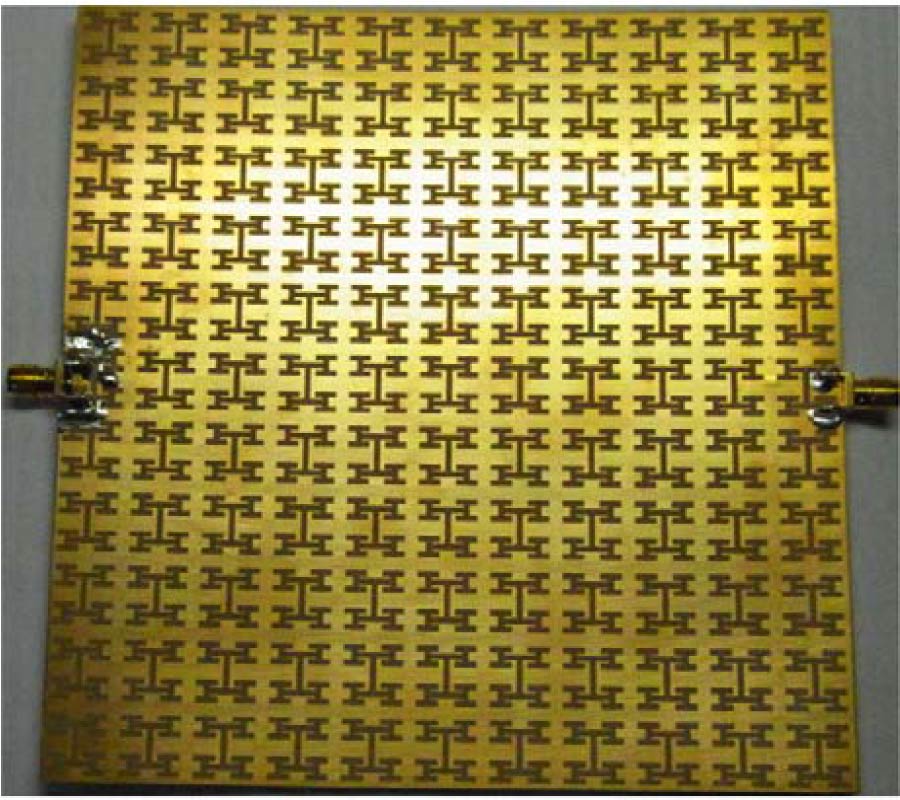
The relationship between the reflection phase curve and the dispersion curve of a H-shaped slot fractal uniplanar compact electromagnetic bandgap (HSF-UC-EBG) structure is investigated in this paper. It is demonstrated numerically and theoretically that the pole (located at phi = 180 degrees) of the reflection phase curve is related to the EBG location of the dispersion curve. More specifically, the pole is always located in the bandgap and the frequency shift characteristics of the pole and the EBG location are the same. Therefore, locations of the artificial magnetic conductor (AMC) and EBG can match with the AMC point and the pole, respectively. By realizing and making appropriate use of this, we can tailor the AMC and EBG locations to coincide in the frequency region only by reducing the spectral distance (d) between the AMC point and the pole. This method can improve the computational efficiency significantly. Parametric studies have been performed to obtain guidelines for reducing d. Finally, an example to design HSF-UC-EBG structure with simultaneous AMC and EBG properties by using this technique is presented with detail steps.
A POLE AND AMC POINT MATCHING METHOD FOR THE SYNTHESIS OF HSF-UC-EBG STRUCTURE WITH SIMULTANEOUS AMC AND EBG PROPERTIES
2012-10-18
PIER
Vol. 133, 117-136
Hybrid Computational Scheme for Antenna-Human Body Interaction
Khairun Nidzam Ramli , Raed A. Abd-Alhameed , Chan Hwang See , Peter S. Excell and James M. Noras
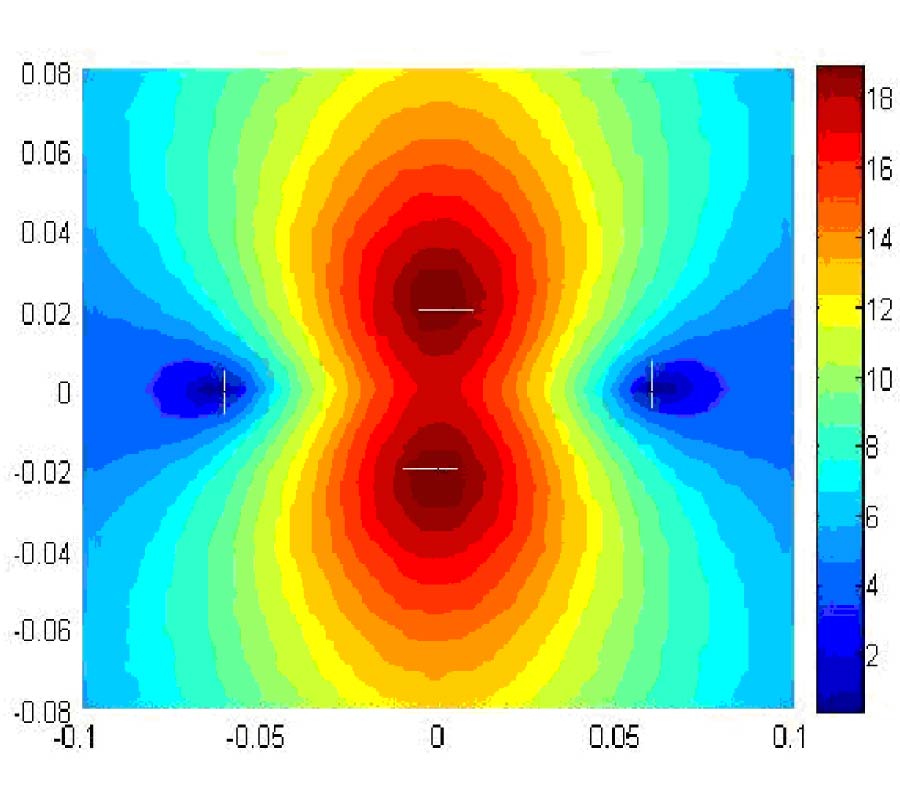
A new hybrid method of moments (MoM)/finite-difference time-domain (FDTD), with a sub-gridded finite-difference time-domain (SGFDTD) approach is presented. The method overcomes the drawbacks of homogeneous MoM and FDTD simulations, and so permits accurate analysis of realistic applications. As a demonstration, it is applied to the short-range interaction between an inhomogeneous human body and a small UHF RFID antenna tag, operating at 900 MHz. Near-field and far-field performance for the antenna are assessed for different placements over the body. The cumulative distribution function of the radiation efficiency and the absorbed power are presented and analyzed. The algorithm has a five-fold speed advantage over fine-gridded FDTD.
HYBRID COMPUTATIONAL SCHEME FOR ANTENNA-HUMAN BODY INTERACTION
2012-10-18
PIER
Vol. 133, 91-115
Quad-Frequency Linearly-Polarized and Dual-Frequency Circularly-Polarized Microstrip Patch Antennas with CRLH Loading
Daniel Segovia-Vargas , Francisco Javier Herraiz-Martinez , Eduardo Ugarte-Munoz , Luis Enrique Garcia-Munoz and Vicente Gonzalez-Posadas
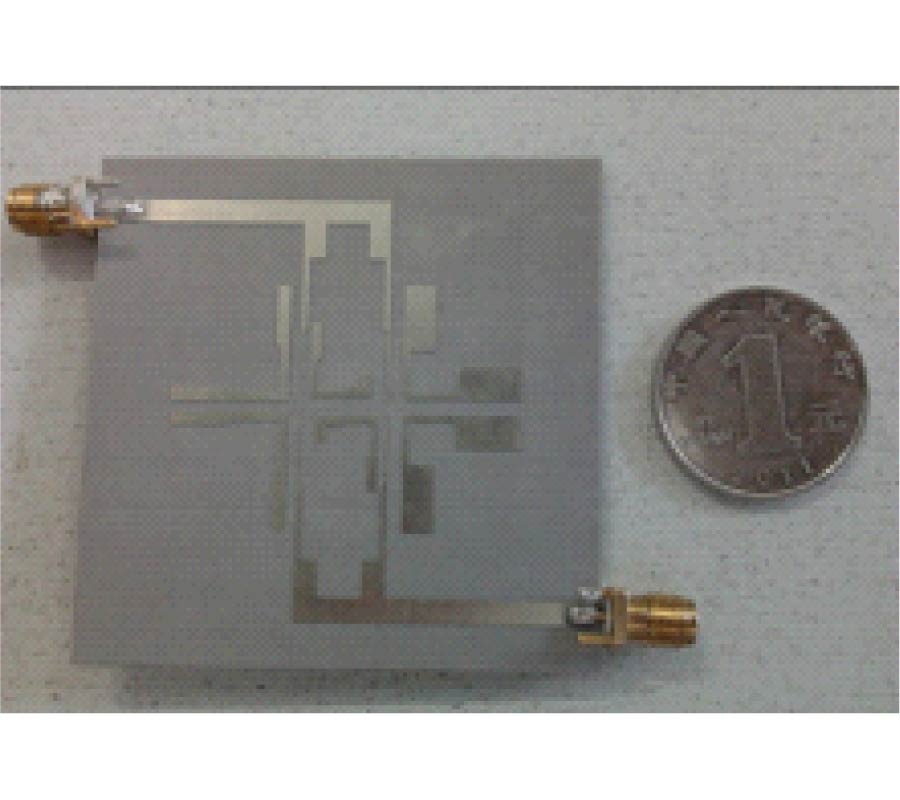
In this paper, a novel technique to develop multifrequency microstrip patch antennas with polarization diversity or circular polarization is presented. The proposed approach consists of exciting modes with orthogonal polarizations in microstrip patches partially filled with Composite Right/Left-Handed (CRLH) cells. Two different kinds of quad-frequency single-layer patch antennas are proposed. The first one has two orthogonal ports with high isolation between them. The second kind of quad-frequency patch antennas consists of exciting the four modes with two orthogonal polarizations through only one port. Finally, the proposed approach is used to develop dualfrequency circularly-polarized (CP) patch antennas by exciting the modes with orthogonal polarizations in quadrature phase. Prototypes of all the designs are manufactured and measured, showing good performance.
QUAD-FREQUENCY LINEARLY-POLARIZED AND DUAL-FREQUENCY CIRCULARLY-POLARIZED MICROSTRIP PATCH ANTENNAS WITH CRLH LOADING
2012-10-17
PIER Letters
Vol. 35, 125-133
Reconfigurable Bandstop Filter with Adjustable Bandwidth and Center Frequency
Kai-Yu Zhao , Lin Li , Qing-Hua Wu , Weiqiang Xu and Ya-Ming Wang
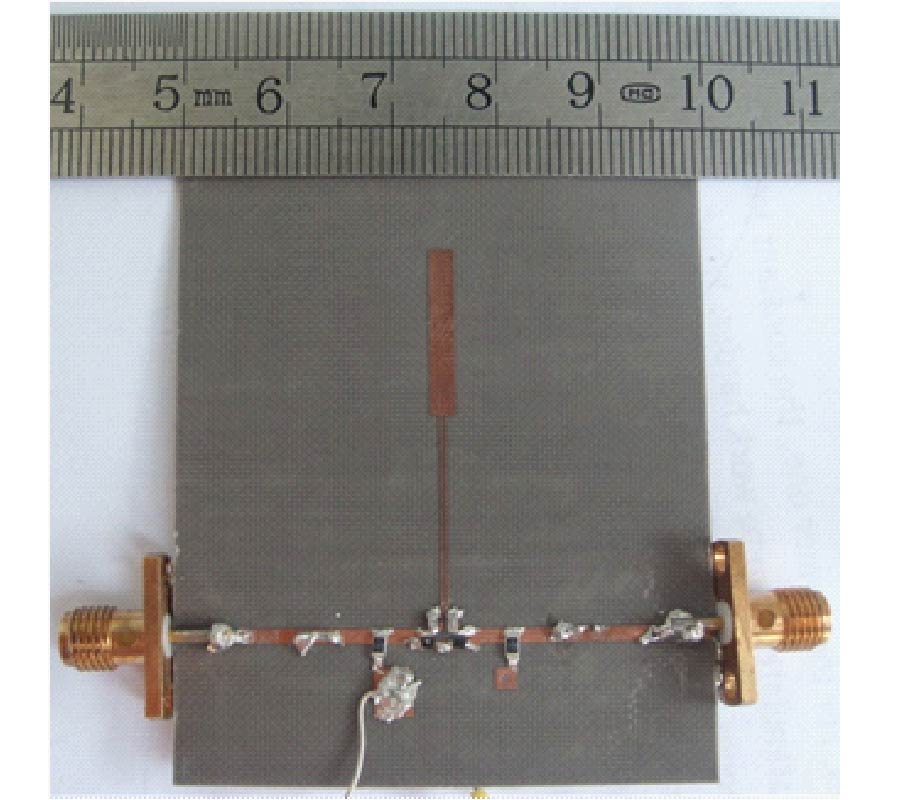
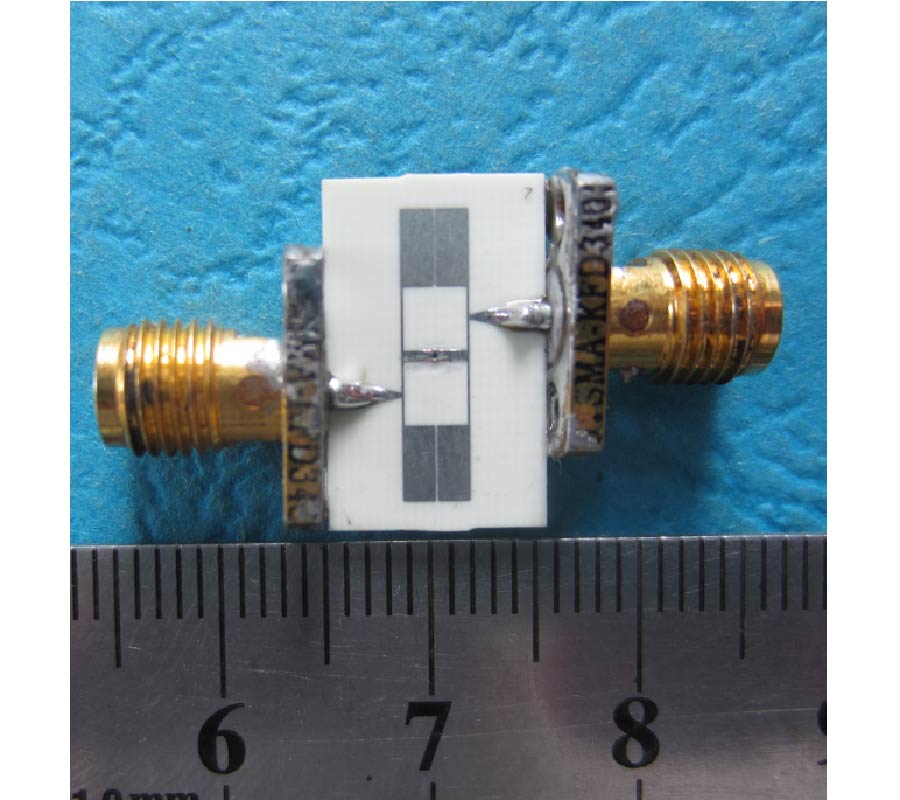
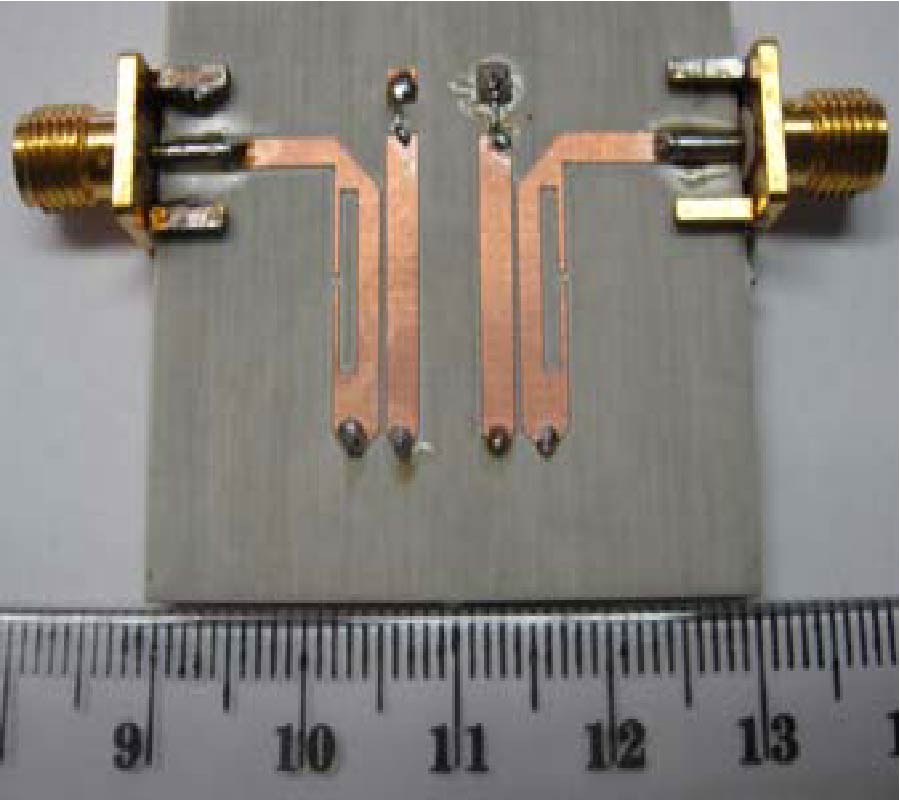
A bandstop filter with reconfigurable two-state center frequency and bandwidth is presented. The prototype of the proposed reconfigurable bandstop filter consists of one section of anti-coupled line short-circuited by an open low-impedance line. By introducing PIN diodes, this bandstop filter exhibits a lower stopband response centered at a lower frequency in the ON state, and a wider stopband response centered at a higher frequency in the OFF state. Filter using the proposed structure is designed, simulated and measured. The results confirm the designing method by showing a narrow stopband with the center frequency of 1 GHz and a wide stopband of 2.9 GHz bandwidth centered at 2.5 GHz respectively.
RECONFIGURABLE BANDSTOP FILTER WITH ADJUSTABLE BANDWIDTH AND CENTER FREQUENCY
2012-10-17
PIER Letters
Vol. 35, 115-123
Performance of a Lozenge Monopole Antenna Made of Pure Composite Laminate
Lilia Manac'h , Xavier Castel and Mohamed Himdi
The use of carbon-fiber tissue as a replacement for metal radiating element has been investigated to fabricate microwave antennas embedded in composite material panels. A single ply of a dry carbon-fiber tissue with a 0.15 Ω/sq sheet resistance value and a square shape (50 mm × 50 mm) acts as the radiating element. It has been embedded inside the glass-fiber and polyester resin composite laminate by using the infusion technique. The measured radiofrequency characteristics of the pure composite antenna are presented, discussed and compared to those of a reference counterpart, made from a plain metal sheet. The pure composite antenna exhibits a measured gain strictly alike to that of the reference antenna up to 2.1 GHz.
PERFORMANCE OF A LOZENGE MONOPOLE ANTENNA MADE OF PURE COMPOSITE LAMINATE
2012-10-17
PIER Letters
Vol. 35, 107-114
Compact Bandpass Filter with Mixed Electric and Magnetic (EM) Coupling
Bo Fu , Xubo Wei , Xue Zhou , Meijuan Xu and Jiaxuan Liao
A compact wide-band bandpass filter (BPF) with high frequency selectivity using stepped impedance resonators (SIRs) is presented in this paper. The proposed BPF consists of four SIRs, which share a common grounded via-hole. To improve the frequency selectivity, multiple transmission zeros (TZs) are employed in the stopband by mixed electric/magnetic (EM) coupling. The novel filter with 32.2% fractional bandwidth (FBW) has been designed and fabricated to verify the validity of the proposed method. Measured results are in good agreement with the electromagnetic simulation. The measured results show three finite transmission zeros in the stopband, located at 2.47 GHz, 5.26 GHz, 9.39 GHz, respectively. The circuit size of proposed BPF only occupies 3.10 x 13.30 mm2.
COMPACT BANDPASS FILTER WITH MIXED ELECTRIC AND MAGNETIC (EM) COUPLING
2012-10-17
PIER C
Vol. 33, 229-241
A Novel Single and Dual-Band Miniaturized Matched Band-Stop Filter Using Stepped Impedance Resonator
Amine Adoum Bakhit and Peng Wen Wong
In this paper in order to reduce the size and improve the performance of microwave filter, novel single and dual band matched band-stop filters are developed. A stepped impedance dual mode resonator is used, resulting in a much more compact size, compared to the conventional dual mode ring resonator that has an electrical length of 360˚. The proposed prototype is able to achieve high stop band attenuation even with low Q factor values. Moreover, for the short electrical length of this filter, the first spurious resonance occurs at 4.7 times the fundamental resonance frequency. Therefore, the proposed technique selectively removes only the fundamental resonance frequency when such a resonator is implemented. A theoretical analysis, along with an experimental prototype is proposed in order to demonstrate the feasibility of these proposed networks.
A NOVEL SINGLE AND DUAL-BAND MINIATURIZED MATCHED BAND-STOP FILTER USING STEPPED IMPEDANCE RESONATOR
2012-10-17
PIER M
Vol. 26, 173-786
Unconditionally Stable Leapfrog Adi-FDTD Method for Lossy Media
Theng Huat Gan and Eng Leong Tan
This paper presents an unconditionally stable threedimensional (3-D) leapfrog alternating-direction-implicit finite-difference time-domain (ADI-FDTD) method for lossy media. Conductivity terms of lossy media are incorporated into the leapfrog ADI-FDTD method in an analogous manner as the conventional explicit FDTD method since the leapfrog ADI-FDTD method is a perturbation of the conventional explicit FDTD method. Implementation of the leapfrog ADI-FDTD method for lossy media with special consideration for boundary condition is provided. Numerical results and examples are presented to validate the formulation.
UNCONDITIONALLY STABLE LEAPFROG ADI-FDTD METHOD FOR LOSSY MEDIA
2012-10-17
PIER
Vol. 133, 53-89
Phase-Only Synthesis of Flat Aperiodic Reflectarrays
Amedeo Capozzoli , Claudio Curcio , Angelo Liseno and Giovanni Toso
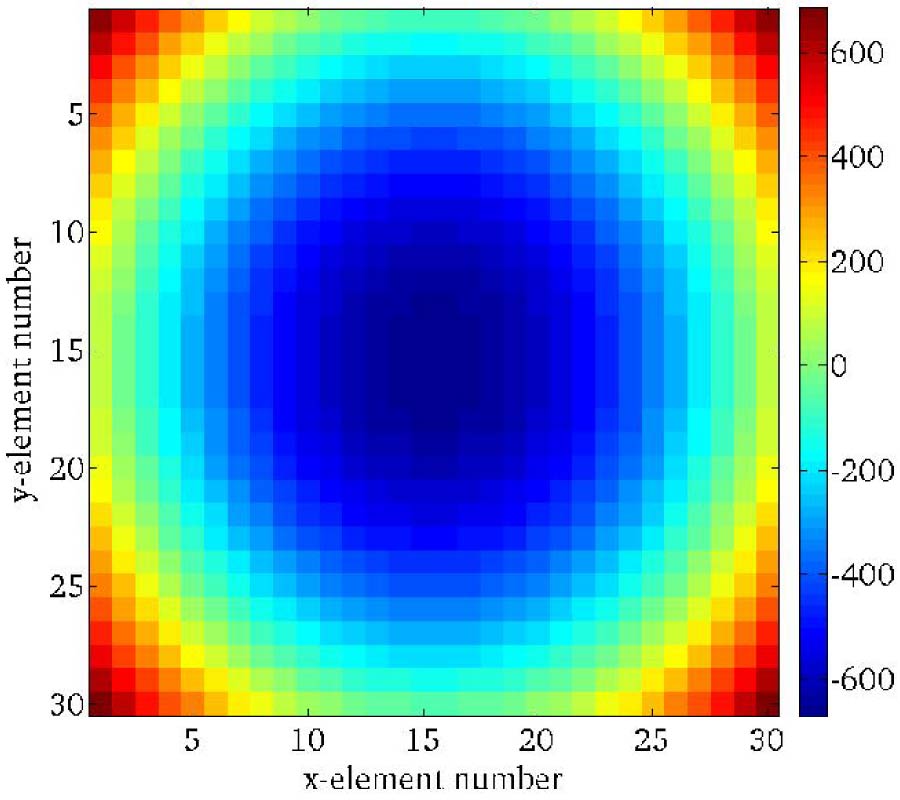
A phase-only power pattern synthesis technique for at (aperiodic) microstrip reflectarrays with elements arranged on a nonregular lattice is presented. The approach mitigates the typical design issues of reflectarray antennas related to the computational burden and to the possible occurrence of suboptimal solutions which are here even more significant due to the non-regular element lattice. This is done by a convenient two-stage procedure for choosing the starting point of the iterations and by proper representations of the unknowns of the problem. Design constraints on the element positions are also imposed to avoid overlapping as well as too large spacings. The algorithm, accelerated by parallel programming on Graphics Processing Units, has been analyzed against the cases of a pencil-beam and of a shaped-beam involving a typical South America coverage. In order to properly characterize the performance of the synthesis algorithm, it has been applied also to the design of reflectarrays with elements located on a non-regular lattice. The results show that in the case of non-regular lattice better directivities, better coverage behavior and better side-lobe levels are achievable as compared to reflectarrays characterized by a regular lattice.
PHASE-ONLY SYNTHESIS OF FLAT APERIODIC REFLECTARRAYS
2012-10-16
PIER B
Vol. 45, 1-18
Metal Foams for Electromagnetics: Experimental, Numerical and Analytical Characterization
Luca Catarinucci , Giuseppina Monti and Luciano Tarricone
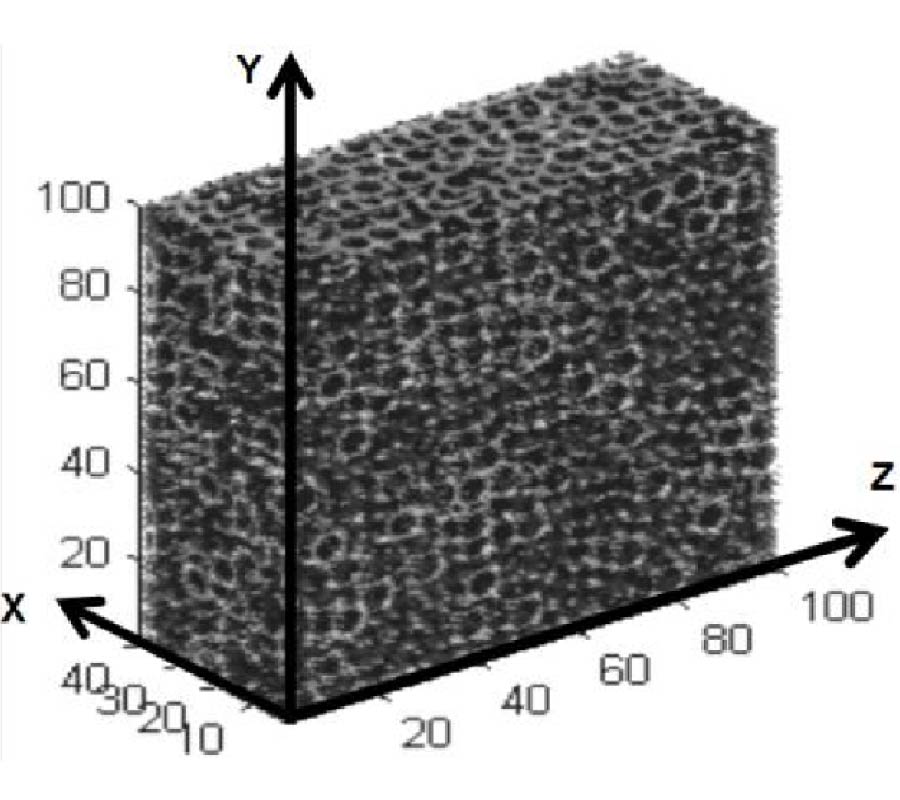
This work focuses on the use of metal foams, a relatively new class of materials, for high added-value electromagnetic (EM) shields. First, the Shielding Effectiveness (SE) of aluminum foam slabs is experimentally evaluated, showing very good shielding properties. Successively, accurate numerical models of metal foams are proposed and used in a proprietary Variable-Mesh Parallel Finite Difference Time Domain code, in order to characterize the EM properties of slabs of such materials. Afterwards, a third approach is adopted. It consists in the application of the effective medium theories in order to obtain an analytical EM model of the metal foams; this way, their SE can be evaluated with a negligible computational time by using common mathematical tools. Finally, a methodology to design/analyze customized metal foams for EM shield applications is suggested. It takes advantage from the joint use of the numerical and analytical presented approaches, thus allowing a computationally efficient evaluation of SE and other electromagnetic properties of metal foams. Results demonstrate the suitability of metal foam structures for effective EM shielding in many industrial applications, as well as the accuracy of the proposed analytical and numerical approaches.
METAL FOAMS FOR ELECTROMAGNETICS: EXPERIMENTAL, NUMERICAL AND ANALYTICAL CHARACTERIZATION
2012-10-16
PIER Letters
Vol. 35, 99-105
Compact Realization of Combline Bandpass Filter Integrated with Defected Microstrip Structure Bandstop Filter
Mohammad Almalkawi and Vijay K. Devabhaktuni
In this paper, a microstrip combline bandpass filter (BPF) with a broad upper stopband performance is presented. The proposed filter is based on the design of a bandpass filter cascaded with a defected microstrip structure (DMS) bandstop filter. The bandstop characteristic is realized using T-shaped DMS at the external input and output coupling transformers. The measured and simulated electrical performances are in good agreement and demonstrate broad upper stopband bandwidth. The proposed filter is also compared with the characteristic of a conventionally designed filter to highlight the advantages of the proposed approach.
COMPACT REALIZATION OF COMBLINE BANDPASS FILTER INTEGRATED WITH DEFECTED MICROSTRIP STRUCTURE BANDSTOP FILTER
2012-10-16
PIER C
Vol. 33, 213-227
Maximum Bandwidth Performance for an Ideal Lumped-Element Circulator
Hang Dong , Jeffrey Young , Jacob R. Smith and Brandon Aldecoa
A procedure based on the analytical model of a lumpedelement, crossover circulator has been developed to maximize its operating bandwidth. The procedure considers the circulator as a network and employs the circulation impedance - the load associated with perfect circulation - as a metric to optimize the bandwidth. Using this procedure, we find that a maximum 194% bandwidth can be obtained for an ideal circulator for any above-FMR range operation. By applying this same procedure to an actual circulator device in 225-400 MHz frequency range, we achieve a 125% bandwidth from a numerical simulation model. We have verified this result from the measurement of a fabricated device; the measured data reveals a bandwidth of 129%.
MAXIMUM BANDWIDTH PERFORMANCE FOR AN IDEAL LUMPED-ELEMENT CIRCULATOR
2012-10-16
PIER C
Vol. 33, 199-211
A Novel Triple Passband Filter Design Method Based on Stepped Impedance Resonators
Zhi-Peng Li , Sheng-Jie Wang , Tao Su and Chang-Hong Liang
In this letter, a novel compact tri-band bandpass filter (BPF) with high selectivity is presented. The proposed tri-band performance measure is realized by using eight sets of resonators, i.e., two- and three-section stepped impedance resonators (SIRs). The three-section SIR is designed for determining the three passbands and providing the electric coupling, while the two-section SIR is used for determining each passband respectively and providing the magnetic coupling. Then, coupling structures with two transmission zeros near each passband edge are presented, therefore, the band selectivity of the filter is much improved. The three passband frequencies could be independently designed and tuned. This novel tri-band BPF is fabricated and the measured results are in good agreement with the full-wave simulation results.
A NOVEL TRIPLE PASSBAND FILTER DESIGN METHOD BASED ON STEPPED IMPEDANCE RESONATORS
2012-10-16
PIER M
Vol. 26, 157-171
Evaluation of the Far Field Radiated by Long Antennas Directly from Data Acquired through a Fast Helicoidal Scanning
Francesco D'Agostino , Flaminio Ferrara , Claudio Gennarelli , Rocco Guerriero and Massimo Migliozzi
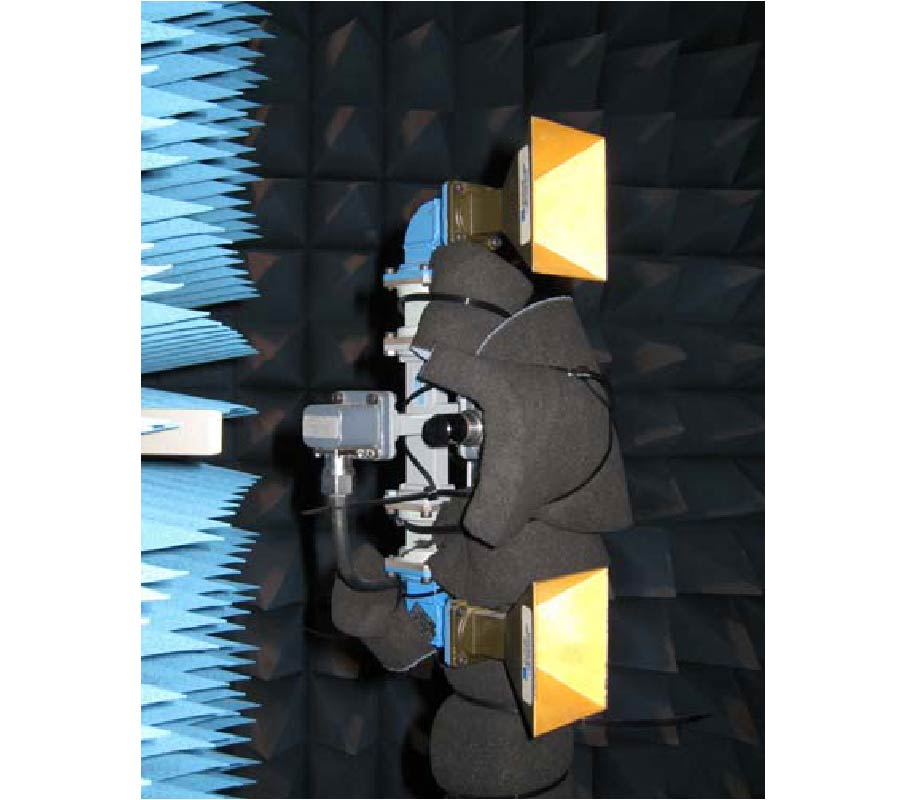
A direct near-field - far-field transformation with helicoidal scanning for electrically long antennas is proposed in this paper. Such a transformation, which allows the evaluation of the antenna far field in any cut plane directly from the acquired near-field data without interpolating them, relies on the nonredundant sampling representation of electromagnetic fields and makes use of a prolate ellipsoidal modelling of the antenna under test for determining the number of helix turns, whereas the number of samples on each of them is fixed by the minimum cylinder rule, as in the classical cylindrical scan. Numerical and experimental tests assessing the effectiveness of the approach are shown.
EVALUATION OF THE FAR FIELD RADIATED BY LONG ANTENNAS DIRECTLY FROM DATA ACQUIRED THROUGH A FAST HELICOIDAL SCANNING
2012-10-16
PIER
Vol. 133, 37-51
Gain-Assisted Negative Refractive Index in a Quantum Coherent Medium
Katus Maski
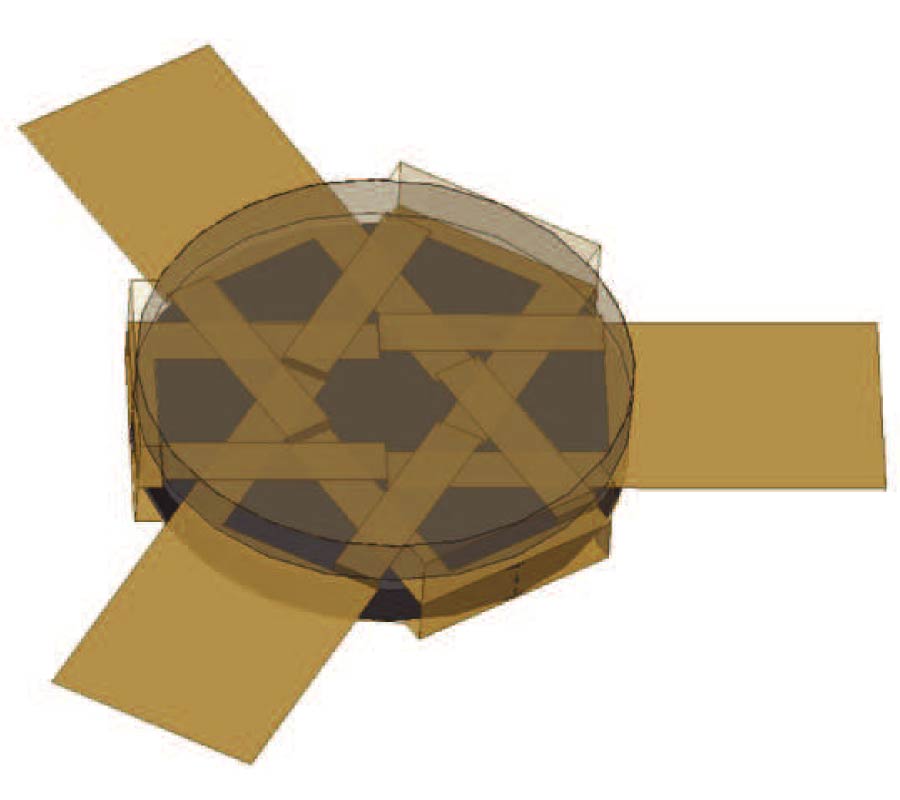
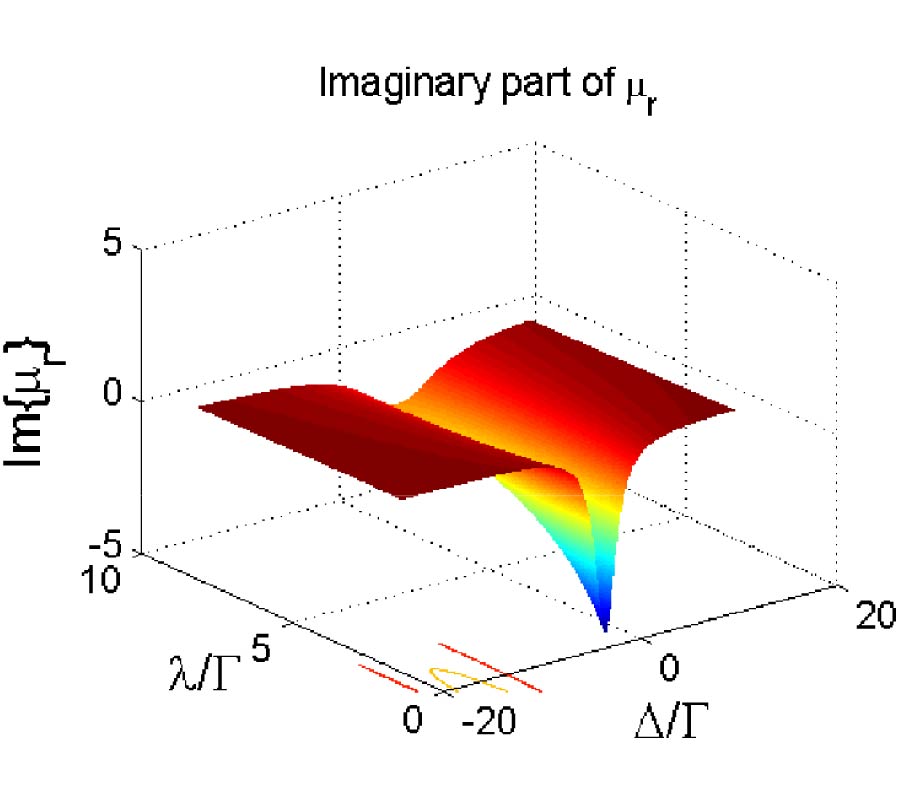
A new scheme for overcoming losses with incoherent optical gain in a quantum-coherent left-handed atomic vapor is suggested. In order to obtain low-loss, lossless or active left-handed media (LHM), a pump field, which aims at realizing population inversion of atomic levels, is introduced into a four-level atomic system. Both analytical and numerical results are given to illustrate that such an atomic vapor can exhibit intriguing electric and magnetic responses required for achieving simultaneously negative permittivity and permeability (and hence a gain-assisted quantum-coherent negative refractive index would emerge). The quantum-coherent left-handed atomic vapor presented here could have four fascinating characteristics: i) three-dimensionally isotropic negative refractive index, ii) doublenegative atomic medium at visible and infrared wavelengths, iii) high-gain optical amplification, and iv) tunable negative refractive index based on quantum coherent control. Such a three-dimensionally isotropic gain medium with negative refractive index at visible and infrared frequencies would have a potential application in design of new quantum optical and photonic devices, including superlenses for perfect imaging and subwavelength focusing.
GAIN-ASSISTED NEGATIVE REFRACTIVE INDEX IN A QUANTUM COHERENT MEDIUM
2012-10-16
PIER
Vol. 133, 17-35
Modal Method Based on Subsectional Gegenbauer Polynomial Expansion for Lamellar Gratings: Weighting Function, Convergence and Stability
M. Kofi Edee , Ismail Fenniche , Gerard Granet and Brahim Guizal
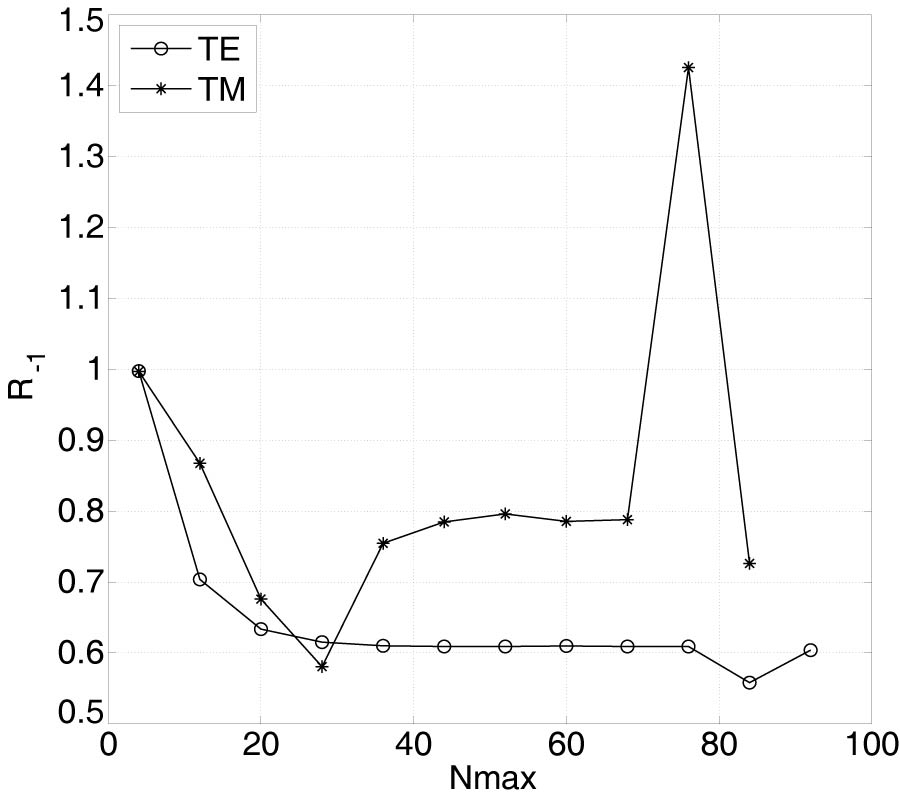
The Modal Method by Gegenbauer polynomials Expansion (MMGE) has been recently introduced for lamellar gratings by Edee [J. Opt. Soc. Am. 28, (2011)]. This method shows a promising potential of outstanding convergence but still suffers from instabilities when the number of polynomials is increased. In this work, we identify the origin of these instabilities and propose a way to remove them.
MODAL METHOD BASED ON SUBSECTIONAL GEGENBAUER POLYNOMIAL EXPANSION FOR LAMELLAR GRATINGS: WEIGHTING FUNCTION, CONVERGENCE AND STABILITY
2012-10-16
PIER
Vol. 133, 1-15
Reflectarrays of Rectangular Microstrip Patches for Dual-Polarization Dual-Beam Radar Interferometers
Sembiam Rajagopal Rengarajan
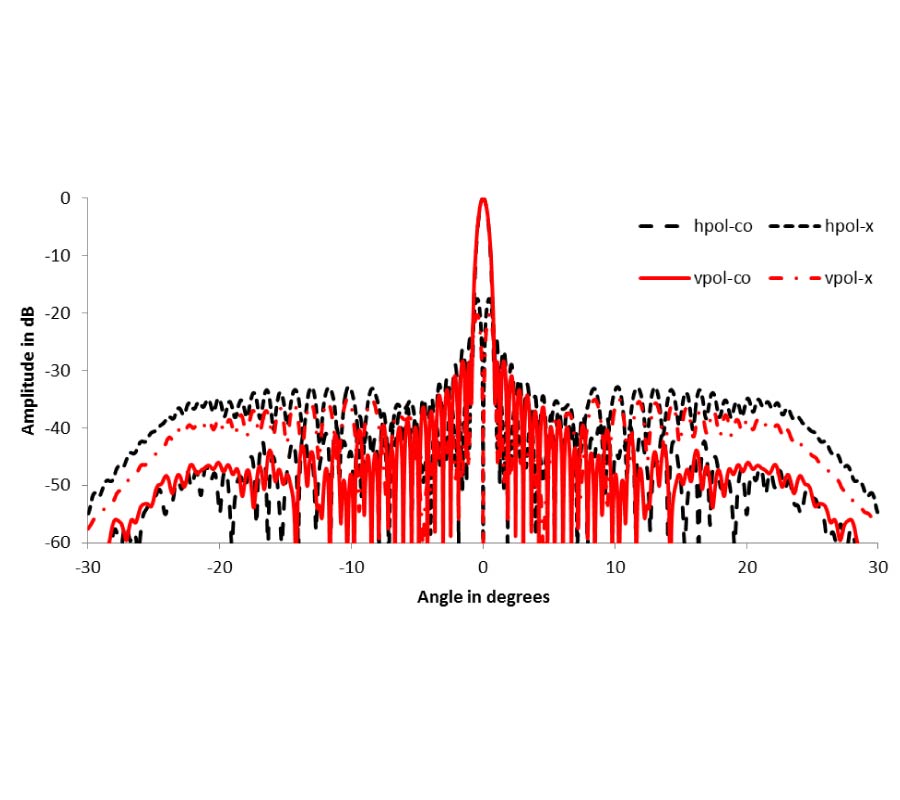
Microstrip reflectarrays consisting of rectangular patches are investigated for application in space-based dual-polarized dual-beam radar interferometers. For nadir looking beams the angle of incidence of feed radiation in each patch is nominally 45˚. In such an application, square-patch reflectarrays can be designed for only one polarization with a sacrifice in performance in the other whereas reflectarrays consisting of rectangular patches may be designed for both polarizations, thereby improving their radiation performance. Piecewise planar parabolic reflectarrays consisting of square patches exhibit poor scan performance in tilted configuration. It is shown that with the use of rectangular patches in such a reflectarray one can design two beams of different polarizations for two offset feeds, thereby providing significant improvement in bandwidth and radiation performance.
REFLECTARRAYS OF RECTANGULAR MICROSTRIP PATCHES FOR DUAL-POLARIZATION DUAL-BEAM RADAR INTERFEROMETERS
2012-10-16
PIER
Vol. 132, 587-601
Coupling Effect for Dielectric Metamaterial Dimer
Fuli Zhang , Veronique Sadaune , Lei Kang , Qian Zhao , Ji Zhou and Didier Lippens
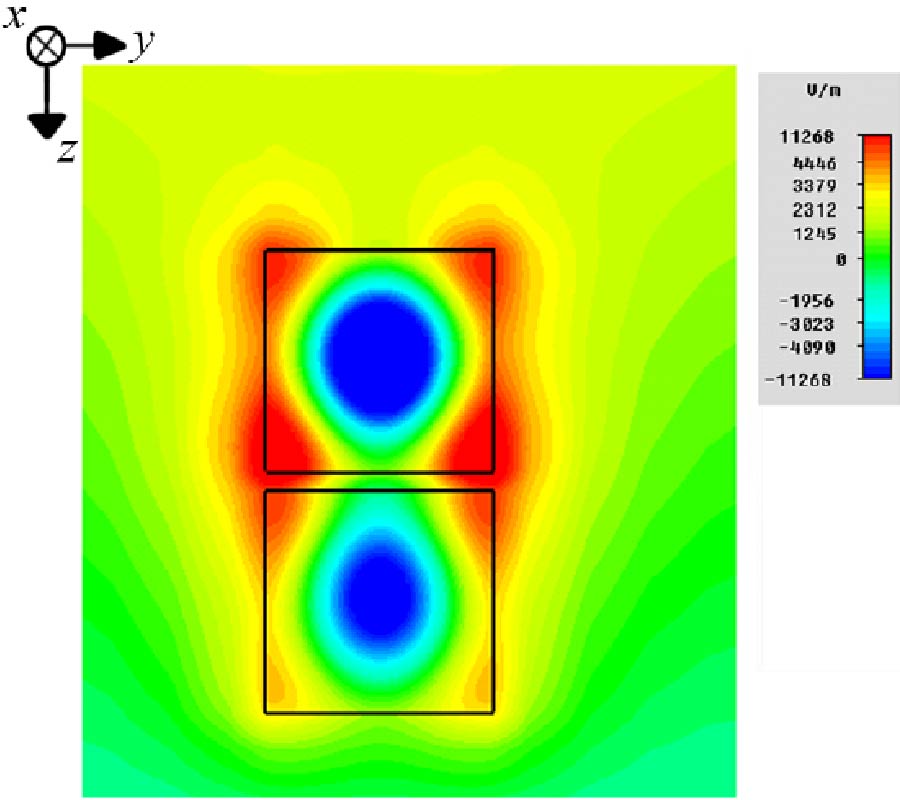
In this paper, we report experimentally and numerically on coupling effects of dielectric metamaterial dimer (metadimer) which composed of two identical ceramic cubes with high permittivity. The distance dependence of Mie resonance for metadimer is investigated under various polarizations of external wave. By changing the configurations and alignment of dimer resonator, it is revealed that magnetic and electric resonances of metadimer exhibits a red/blue shift, resulting from longitudinal or transverse coupling effects of dipoles. Besides, quasi bound states between tightly stacked dielectric cubes are also been pointed out for electric Mie resonance, which is responsible for an unexpected frequency shift with a reverse variation.
COUPLING EFFECT FOR DIELECTRIC METAMATERIAL DIMER
2012-10-16
PIER
Vol. 132, 571-586
Interferometric ISAR Imaging on Maritime Target Applications: Simulation of Realistic Targets and Dynamics
David Felguera-Martin , Jose-Tomas Gonzalez-Partida and Mateo Burgos-Garcia
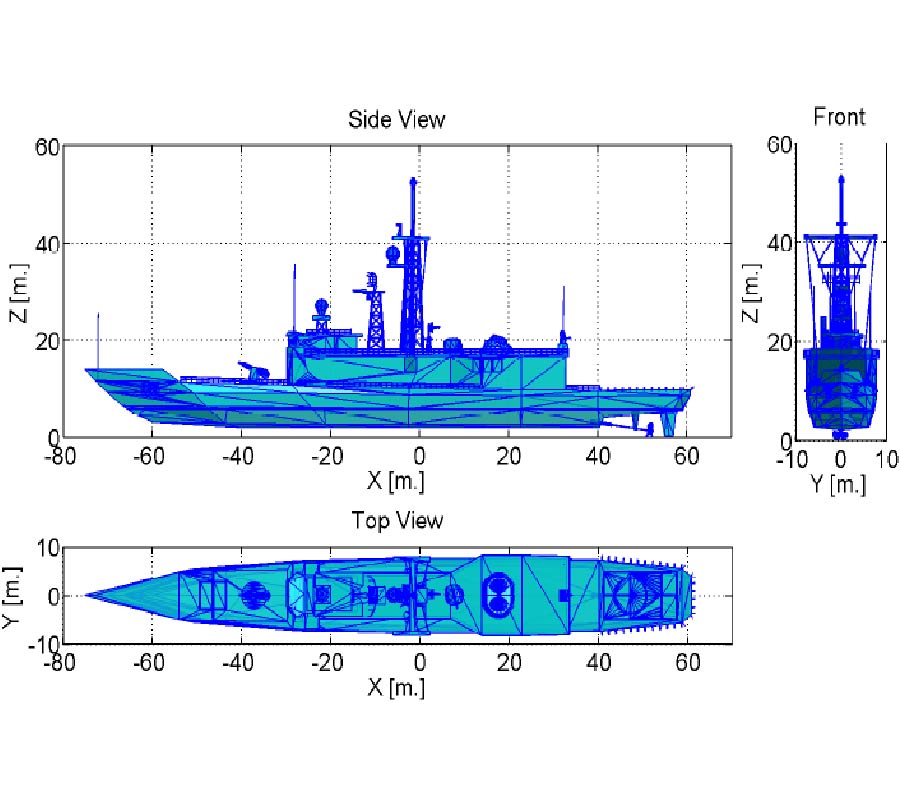
ISAR imaging of maritime targets has greater success than other ISAR applications due to the constant oscillatory motions induced by waves and wind. However, relative target motions are usually unknown, difficult focusing, image interpretation and target classification. Using interferometry to obtain the height information makes possible to obtain a 3-D reconstruction of a target, aiding image focusing, image interpretation and target classification. However, the information and utility of the ISAR image and the interferometric information depends highly on geometry and targets dynamics. In this paper we will study the influence of movement dynamics in interferometric ISAR imaging using a realistic extended moving target simulation, a general geometry and complex dynamics models.
INTERFEROMETRIC ISAR IMAGING ON MARITIME TARGET APPLICATIONS: SIMULATION OF REALISTIC TARGETS AND DYNAMICS
2012-10-15
PIER
Vol. 132, 551-570
Simple Formula and Its Exact Analytic Solution of Mutual Impedance for Nonplanar-Skew Dipoles
Jung-Hoon Han , Won-Young Song , Kyoung-Sub Oh and Noh-Hoon Myung
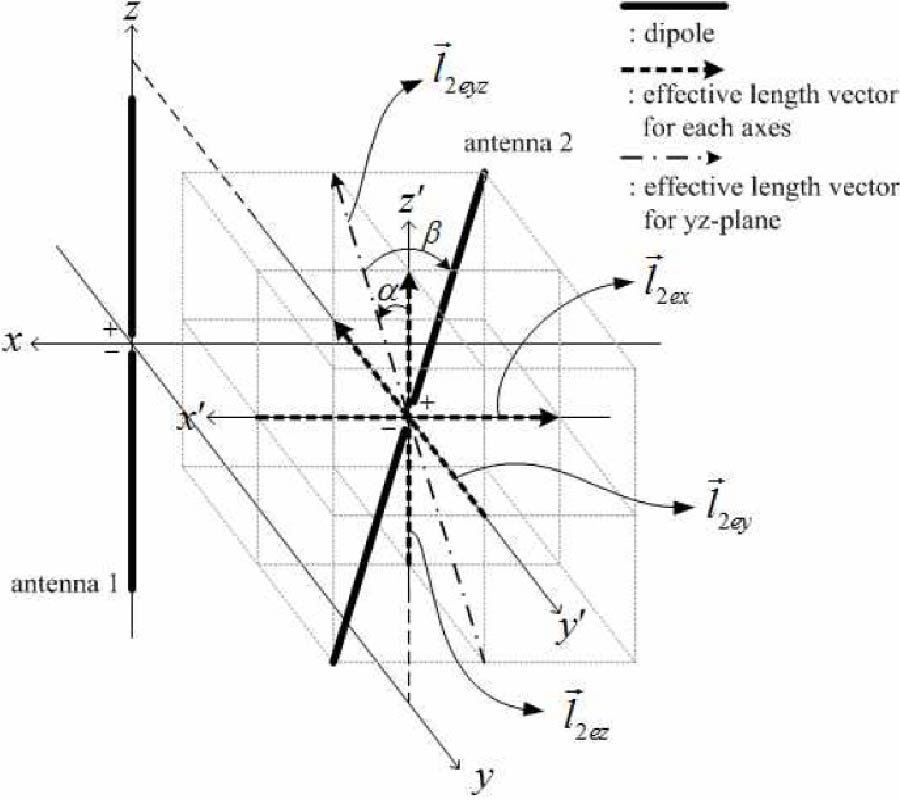
The analysis of an antenna mutual coupling is a significant issue for designing the wireless communication system especially includes an array mutual coupling problem. The accurate analysis of the mutual coupling between antennas is needed. Accordingly, several methods for the mutual impedance calculation of dipoles have been studied in cases of coplanar-skew and nonplanar-skew. This paper proposes an exact and simple method for analyzing the mutual impedance between two arbitrarily located and slanted dipoles using the modified induced EMF method; their expressions and the exact analytic solution. The proposed formula and their closed-form solutions are verified by numerical solution using HFSS and give good agreement.
SIMPLE FORMULA AND ITS EXACT ANALYTIC SOLUTION OF MUTUAL IMPEDANCE FOR NONPLANAR-SKEW DIPOLES