Search Results(13800)

2012-07-12
PIER B
Vol. 42, 163-180
Scattering of a Radially Oriented Hertz Dipole Field by a Perfect Electromagnetic Conductor (PEMC) Sphere
Abdul Ghaffar , Nasir Mehmood , Muhammad Shoaib , Muhammad Yasin Naz , Ahsan Illahi and Qaisar Abbas Naqvi
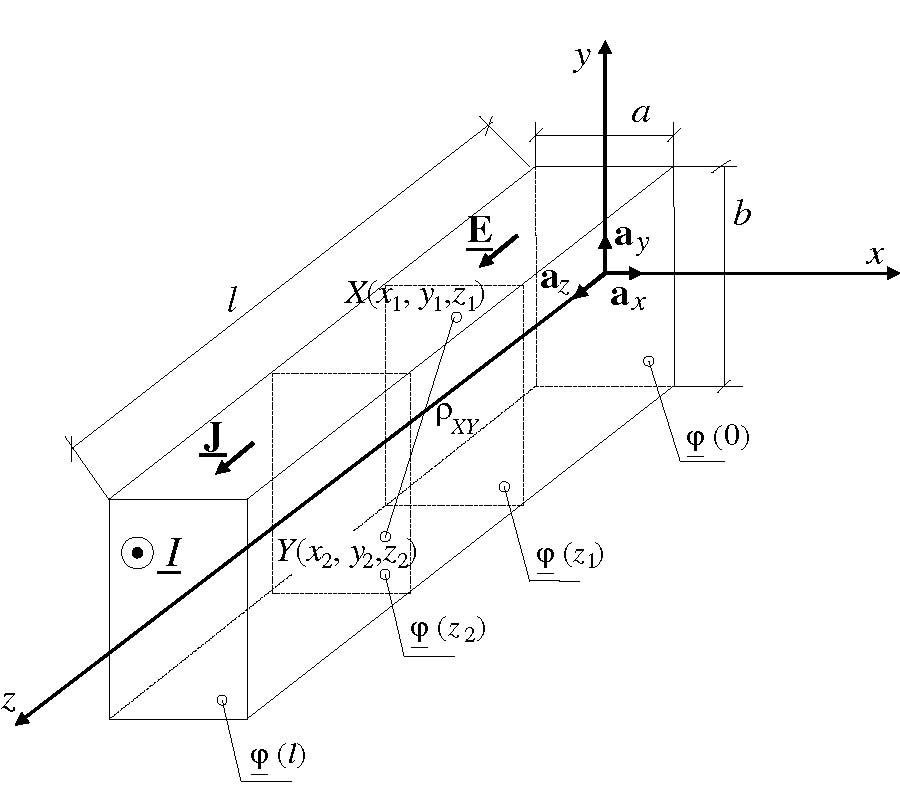
PEMC medium is a special type of metamaterial which generalizes the pre-existing concepts of perfect electric conductor (PEC) and perfect magnetic conductor (PMC). PEMC medium is described by a special parameter named as admittance and denoted as M. This admittance parameter acts as a base in order to extract the nature of medium as PEC or PMC. Electromagnetic fields scattered by a PEMC sphere are investigated theoretically. A Hertz dipole as a source of excitation is considered. Co-polarized as well as cross-polarized component of the scattered fields are taken into consideration. A general solution of fields scattered by the PEMC sphere has been sought.
SCATTERING OF A RADIALLY ORIENTED HERTZ DIPOLE FIELD BY A PERFECT ELECTROMAGNETIC CONDUCTOR (PEMC) SPHERE
2012-07-12
PIER M
Vol. 25, 127-140
Solving Wave Propagation Within Finite-Sized Composite Media with Linear Embedding via Green's Operators
Vito Lancellotti and Antonius G. Tijhuis
The calculation of electromagnetic (EM) fields and waves inside finite-sized structures comprised of different media can benefit from a diakoptics method such as linear embedding via Green's operators (LEGO). Unlike scattering problems, the excitation of EM waves within the bulk dielectric requires introducing sources inside the structure itself. To handle such occurrence, we have expanded the set of LEGO sub-domains - employed to formulate an EM problem - to deal with the inclusion of elementary sources. The corresponding subdomains (bricks) play the role of ``generators'' in the equivalent model. Moreover, if a source is ``turned off'', as it were, the enclosing brick can be utilized as a numerical ``probe'' to sample the EM field. In this paper, we present the integral equations of LEGO modified so as to accommodate generator/probe bricks. Numerical results are provided which demonstrate the validity and the efficiency of the approach.
SOLVING WAVE PROPAGATION WITHIN FINITE-SIZED COMPOSITE MEDIA WITH LINEAR EMBEDDING VIA GREEN'S OPERATORS
2012-07-12
PIER
Vol. 129, 541-558
An Experimental Multi-Frequency System for Studying Dosimetry and Acute Effects on Cell and Nuclear Morphology in Rat Tissues
Alberto López-Furelos , Maria del Mar Miñana-Maiques , Jose Manuel Leiro-Vidal , Juan Antonio Rodríguez-Gonzalez , Francisco Ares-Pena and Maria Elena Lopez-Martin
Simultaneous exposure to multiple electromagnetic signals with widely differing carrier frequencies is a reality of daily life, but its possible effects on health are unknown. In this study we exposed rats to non-thermal levels of 900 and 2450 MHz TEM-mode radiation, applied individually or simultaneously, and we obtained estimates of 1 g mean SAR (specific absorption rate) in various tissues using a numerical model of the rat and finite-difference time-domain software. The experimental system comprised a GTEM (gigahertz TEM) chamber connected to two vector signal generators, a signal mixer and amplifier, a directional coupler, a spectrum analyzer and a power meter. Tissue sections from rats sacrificed 24 h after exposure, and from negative controls and positive controls exposed to gamma radiation, were stained with haematoxylin-eosin for evaluation of general cell morphology and with DAPI (4',6-diamidino-2-phenylindole) for evaluation of apoptosis. Lesions, tissue destruction and apoptosis were only observed in positive controls. The results for rats exposed to either frequency, or to both simultaneously, were similar to those of unexposed negative controls. It remains to determine whether chronic exposure is similarly innocuous.
AN EXPERIMENTAL MULTI-FREQUENCY SYSTEM FOR STUDYING DOSIMETRY AND ACUTE EFFECTS ON CELL AND NUCLEAR MORPHOLOGY IN RAT TISSUES
2012-07-11
PIER
Vol. 129, 517-539
On-Body Characterization of Dual-Band All-Textile PIFA
Ping Jack Soh , Stephen J. Boyes , Guy Vandenbosch , Yi Huang and Soo Liam Ooi
The introduction of various wearable textile radiators facilitates the realization of a fully wearable electronic system. However, the human body itself poses a serious fundamental challenge to its realization, mainly due to electromagnetic interaction with radiators placed in its proximity. Thus antenna performance in terms of reflection coefficient, bandwidth, radiation pattern and efficiency is expected to be severely influenced during on-body deployment. Besides addressing the need for a systematic on body evaluation procedure, this work presents an in-depth discussion on the measured degradation relative to free space operation. Considering a practical deployment scenario, the two antenna designs are first optimized in proximity of a human-emulating box using a commercial simulator. ShieldIt textile is chosen to build the antenna's conductive components, and this prototype is then benchmarked against another similarly dimensioned prototype constructed using conductively-homogeneous copper foil. For each material, two dual-band prototypes are fabricated, one resonating at 2.45 GHz and 5.2 GHz, and the other at 2.45 GHz and 5.8 GHz. Two realistic on-body deployment locations are chosen to be investigated, on the chest and back, considering two antenna orientations - one radiating away from the user, and the other radiating along the body. Free space and on-body reflection coefficient, bandwidth and radiation pattern are evaluated for each prototype in an anechoic chamber, while a reverberation chamber is utilized to determine their efficiency. All measurements were carried out using consistently the same human volunteer. Evaluations show that coupling distance and conductivity are the main factors in determining efficiency rather than on-body location, given that evaluations are carried out while the antenna keeps its planar form.
ON-BODY CHARACTERIZATION OF DUAL-BAND ALL-TEXTILE PIFA
2012-07-11
PIER
Vol. 129, 485-515
Field Approach in the Transformation Optics Concept
Andrey V. Novitsky , Sergei V. Zhukovsky , Leonid M. Barkovsky and Andrei V. Lavrinenko
An alternative, field-based formulation of transformation optics is proposed. Field transformations are expressed in the language of boundary conditions for the electromagnetic fields facilitated through the introduction of generalized potential functions. It is shown that the field-based approach is equivalent to the conventional coordinate-transformation approach but is preferable when looking for specific field distribution. A set of example devices such as invisibility cloaks, concentrators, rotators, and transformation optics lenses capable of creating light beams with predetermined field distribution (e.g., Gaussian and sinusoidal) is studied to validate the effectiveness of the field-based formulation. As for the boundary conditions for the cloaked region the absence of the normal component of the Poynting vector is justified. In the frames of the field-based approach the physical reasons behind infinite components (singularities) of the material parameters of transformation optics devices are straightforwardly revealed.
FIELD APPROACH IN THE TRANSFORMATION OPTICS CONCEPT
2012-07-10
PIER M
Vol. 25, 115-126
Generation of a Wide-Band Response Using Early-Time and Middle-Frequency Data through the Use of Orthogonal Functions
Woojin Lee , Tapan Kumar Sarkar , Jinhwan Koh , Hongsik Moon and Magdalena Salazar-Palma
Generation of a wide-band response using partial information from the time domain (TD) data and frequency domain (FD) data has been accomplished in this paper through the use of three different orthogonal functions, such as the continuous Laguerre functions, the Bessel-Chebyshev functions, and the associate Hermite functions. In this hybrid approach, one can generate the early-time response using the method of marching-on-in-time (MOT) and use the method of moment (MOM) to generate the middle-frequency response, as the low-frequency data may be unstable. Since the early-time and the middle-frequency data are mutually complimentary, they can provide the missing low- and high-frequency response and the late-time response, respectively. Even though obtaining middle-frequency response from an object needs more computation time than the low-frequency response, this approach has better performance for the interpolation and extrapolation of a wide-band response.
GENERATION OF A WIDE-BAND RESPONSE USING EARLY-TIME AND MIDDLE-FREQUENCY DATA THROUGH THE USE OF ORTHOGONAL FUNCTIONS
2012-07-10
PIER
Vol. 129, 469-483
Bandwidth Enhancement of LTE/WWAN Printed Mobile Phone Antenna Using Slotted Ground Structure
Zhi Chen , Yong-Ling Ban , Jin-Hua Chen , Joshua Le-Wei Li and Yu-Jiang Wu
In this article, a coupled-fed planar printed antenna mounted on the compact no-ground portion of the system circuit board of a mobile phone with a low profile of 10\,mm is proposed and studied. The presented antenna is formed by a double-branch feeding strip, a shorted coupling strip with two open-ended loops of different lengths, and a slotted ground structure consisting of two monopole slots, yet it has a size only 15×50 mm2. Two wide operating bandwidths of 698--960\,MHz and 1710-2690 MHz can be achieved by these radiating strips, which provide multiple resonant modes at about 750, 1000, 1750, 2300 and 2900 MHz. In addition, with the presence of the two narrow slots and a chip inductor (L = 1.5 nH), in this study, the printed antenna can lead to much widened bandwidths in both the antenna's lower and upper bands to cover LTE700/GSM850/900 and DCS1800/PCS1900/UMTS2100/LTE2300/2500, respectively. Good radiation efficiency and antenna gain for frequencies over the desired operating bands are obtained. Detailed design considerations of the proposed antenna are described, and both experimental and simulated results are also presented and discussed.
BANDWIDTH ENHANCEMENT OF LTE/WWAN PRINTED MOBILE PHONE ANTENNA USING SLOTTED GROUND STRUCTURE
2012-07-07
PIER C
Vol. 31, 97-108
The Analysis of the Influence of Random Array Error to Wideband Signal DOA Estimation Reiterative Algorithm
Fei Zhang , Ke-Song Chen , Bin Tang and Honggang Wu
This paper proposed a new approach, which is based on minimum mean-square error (MMSE) criterion, for wideband signal spatial direction-of-arrival (DOA) estimation when there is array error, and the impact of random array error to the new algorithm is analyzed in this paper. Pass the wideband signal mixed with array error through a bank of narrowband filters to obtain narrowband signals, then recover the sparse representation of the narrowband signals by re-iterative method in the MMSE frameworks, and estimate the number and DOA of sources from the sparse representation. The new method do not require the number of sources for direction finding, furthermore, it can estimate the DOA of coherent signals and the robustness of new algorithm to array error is better than coherent subspace algorithms. The simulated results confirmed the effectiveness and robustness of the new method.
THE ANALYSIS OF THE INFLUENCE OF RANDOM ARRAY ERROR TO WIDEBAND SIGNAL DOA ESTIMATION REITERATIVE ALGORITHM
2012-07-07
PIER C
Vol. 31, 83-96
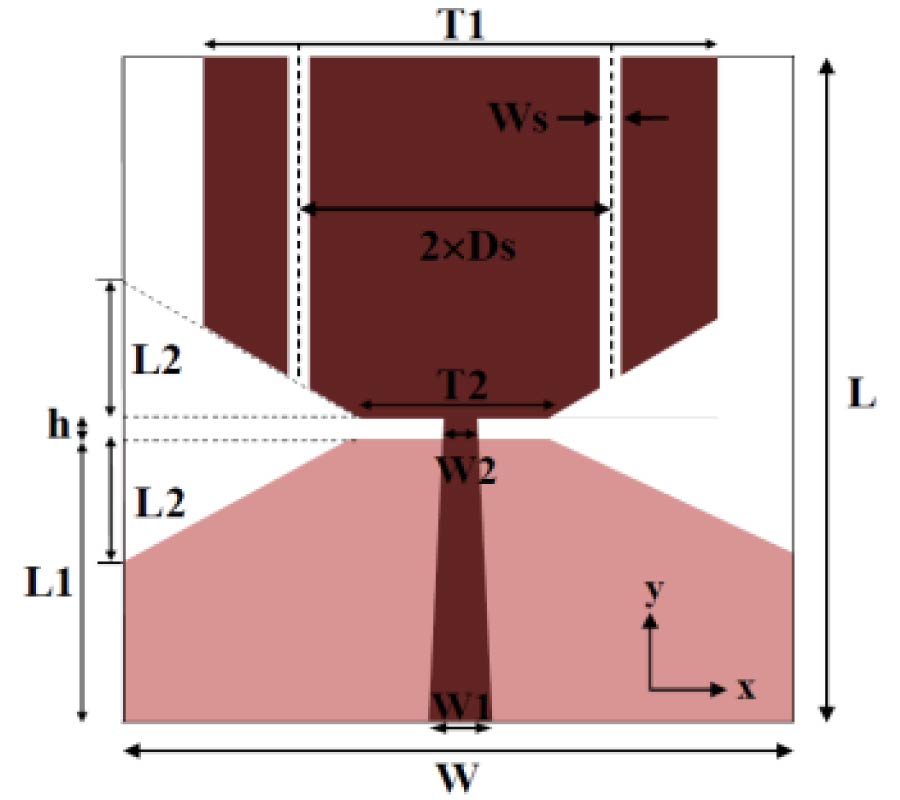
A UWB Printed Dipole Antenna and Its Radiation Characteristic Analysis
Shu Lin , Yu Tian , Jia Lu , Di Wu , Jia-Hong Liu and Hong-Jun Zhang
In this paper, an ultra-wideband (UWB) printed dipole antenna with semicircular dipoles is presented. A balanced microstrip line is used for feeding the dipole antenna. By introducing the loading disc, an ultra wide frequency band from 3.2 GHz to 15.6 GHz with VSWR < 2 is obtained. Through analyzing the surface current of the antenna, the equivalent array radiation models of standing wave current and traveling wave current are obtained. These models can well explain the antenna's radiation characteristic, which matches measured results well.
A UWB PRINTED DIPOLE ANTENNA AND ITS RADIATION CHARACTERISTIC ANALYSIS
2012-07-06
PIER C
Vol. 31, 67-81
Evaluation of Dcs1800/CDMA-Evdo Dual-Mode and Dual-Link Ue System Performance Based on the High Isolation Handset Antenna
An-Ming Gao , Wei Jiang , Ling-Li Kong , Jian-Ping Ding and Yong Jiang
This paper investigates the performance of DCS1800/CD-MA-EVDO dual-mode dual-link (DM-DL) UE, and presents an effective solution which is based on our designed high isolation antenna for the UE local electromagnetic interference (EMI). To this end, a DCS1800/CDMA-EVDO DM-DL UE model is firstly brought out, together with its system model, interference analysis and performance evaluation. Simulated results show that the DCS1800 (CDMA-EVDO) local interference will cause a sharp deterioration of the CDMA-EVDO (DCS1800) receiving sensitivity. To solve this problem, then, a compact and high isolation double-band handset antenna is given with its structure designed and performance validated by measurement. On the basis of this antenna and existing UE bandpass filter, we introduce a solution called ``passive isolation" to eliminate the local interference. Finally, the performance of DCS1800/CDMA-EVDO DM-DL UE is researched again by our solution, simulated results indicate that the isolation effect is quite good and the DM-DL UE can work normally.
EVALUATION OF DCS1800/CDMA-EVDO DUAL-MODE AND DUAL-LINK UE SYSTEM PERFORMANCE BASED ON THE HIGH ISOLATION HANDSET ANTENNA
2012-07-06
PIER M
Vol. 25, 101-114
A Broadband Metal-Mesh Half-Wave Plate for Millimetre Wave Linear Polarisation Rotation
Giampaolo Pisano , Ming Wah Ng , Victor Haynes and Bruno Maffei
We present a polarisation rotator based on a dielectrically embedded metal Mesh Half Wave Plate (MHWP) working in the W-band frequency range (75-110 GHz). The device was realised using metallic grids with sub-wavelength anisotropic geometries able to mimic the behaviour of natural birefringent materials. The device was designed using a combination of transmission line codes and finite-element analysis able to achieve phase accuracy down to a fraction of degree. Very accurate intensity and phase measurements were carried out using coherent radiation from a Vector Network Analyser (VNA). The presented device performs better and it is much thinner than previous devices having reduced the number of grids by a factor two and minimised their inductive losses. The new mesh HWP has excellent performances in terms of differential phase-shift flatness and cross-polarisation, respectively 180.4±2.9° and -28 dB across a 25% bandwidth.
A BROADBAND METAL-MESH HALF-WAVE PLATE FOR MILLIMETRE WAVE LINEAR POLARISATION ROTATION
2012-07-05
PIER C
Vol. 30, 253-265
High-Order Dual-Band Bandpass Filter with Independently Controllable Frequencies and Bandwidths
Qing-Xin Chu and Zhi-Hui Li
A multi-stub-loaded resonator is presented in this paper. The resonators can be conveniently applied to design high-order dual-band bandpass filters (BPFs). Base on the analysis of the resonator, the first two even-mode resonant frequencies are controlled independently by the lengths of the loaded stubs. Two high-order dual-band BPFs using the first two even-mode resonant frequencies of the multi-stub-loaded resonators are proposed. The bandwidth of each passband can be adjusted independently by the coupling strength of the adjacent resonators. This paper deals with the analysis and design of the proposed high-order dual-band BPFs as well as the experimental validations of the predicted dual-band performance.
HIGH-ORDER DUAL-BAND BANDPASS FILTER WITH INDEPENDENTLY CONTROLLABLE FREQUENCIES AND BANDWIDTHS
2012-07-04
PIER C
Vol. 31, 53-66
Resonance Characteristics of Non-Uniform Width Square Ring Antennas
Subhrakanta Behera and Kalarickaparambil Vinoy
This paper presents a study of the effects of line width on the resonance frequency and bandwidth of a microstrip square-ring antenna at its primary resonance frequency. Although such ring antennas operating in TM11 mode are smaller than regular patch antennas, they are not explored much as they are considered to have poor bandwidth and efficiency at this mode. We have used a transmission line model to study their input characteristics and found that a non-uniform width ring antenna has significantly better (nearly double) bandwidth and radiation efficiency than a uniform width square ring antenna. Extensive simulations were done and a prototype non-uniform width square ring antenna is fabricated and tested to verify these results.
RESONANCE CHARACTERISTICS OF NON-UNIFORM WIDTH SQUARE RING ANTENNAS
2012-07-04
PIER C
Vol. 31, 41-52
High Performance V-Band GaAs Low Noise Amplifier with Modified Coplanar Waveguide EBG Transmission Lines Technology
Po-Yu Ke , Fan-Hsiu Huang and Hsien-Chin Chiu
This paper presents an integrated millimeter-wave (mmW) low noise amplifier (LNA) which is implemented by using 0.15-μm baseline GaAs pHEMT technology. The design utilized modified co-planar waveguide (CPW) to perform a slow wave transmission line (TLine) with electromagnetic band gap (EBG) ground structures for the input/output matching networks. The low noise V-band LNA chip size was hence reduced by adopting the new EBG transmission lines. The developed amplifier exhibited a noise figure of 6.21 dB, and a peak gain of 17.3 dB at 66 GHz. Additionally, the amplifier has linear characteristics and its measured third-order intercept (IIP3) point is greater than -0.5 dBm a dc power consumption of 75 mW.
HIGH PERFORMANCE V-BAND GAAS LOW NOISE AMPLIFIER WITH MODIFIED COPLANAR WAVEGUIDE EBG TRANSMISSION LINES TECHNOLOGY
2012-07-04
PIER C
Vol. 31, 29-40
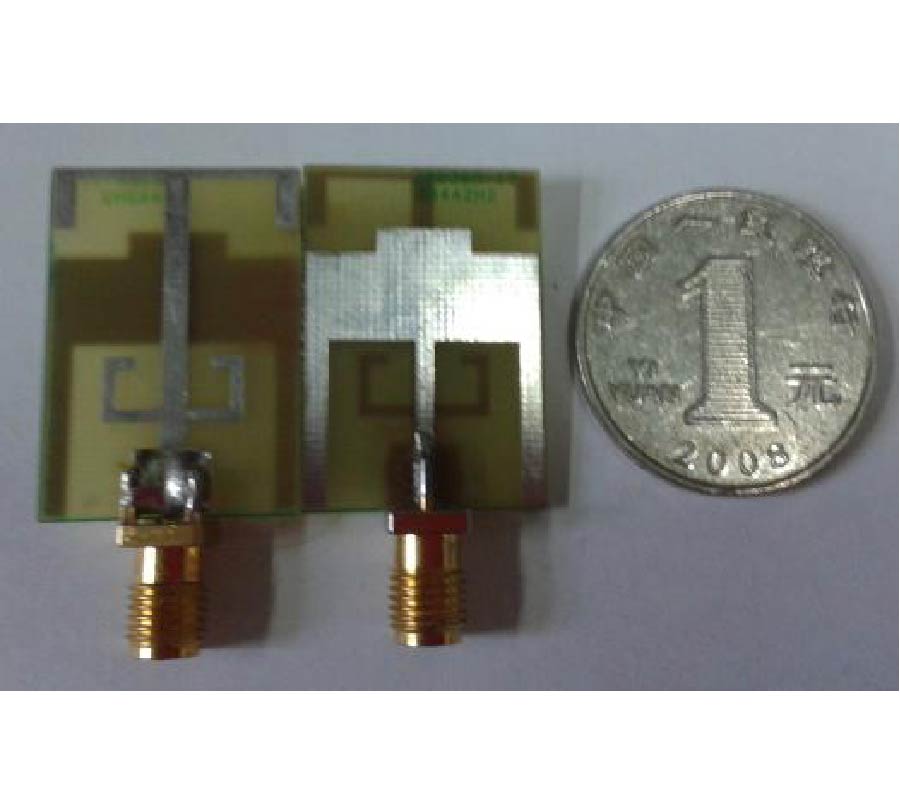
Compact Dual Band Tag Antenna Design for Radio Frequency Identification (RFID) Application
Chek Ling Tan and Widad bt Ismail
The increasing need for automatic identification and object tracking in supply chains has led to the development of radio frequency identification (RFID) systems. High frequency (HF) and ultra-high frequency (UHF) bands are frequently used because of their advantages over other bands. Although many HF and UHF band tags exist, some are unsuitable to handle the hostile environment of a supply chain. Therefore, this paper contributes to the research on a dual band RFID tag antenna operating on both the HF (13.56 MHz) and the UHF (919 MHz to 923 MHz) band, the UHF band used in Malaysia, by embracing the advantages of both HF and UHF bands to overcome the previously mentioned problems. The compact design is constructed by locating the UHF band antenna inside the HF band antenna and by reducing the number of turns of the HF band antenna compared to previous designs. The -10 dB bandwidth for the proposed design covers 12.9 MHz to 14.2 MHz for the HF band and 914.0 MHz to 929.0 MHz for the UHF band. The proposed antenna also overcomes the degradation problem by obtaining a high efficiency around 94% and a gain of 3.709 dB.
COMPACT DUAL BAND TAG ANTENNA DESIGN FOR RADIO FREQUENCY IDENTIFICATION (RFID) APPLICATION
2012-07-03
PIER C
Vol. 31, 17-28
Design of Compact Dual-Band Bandpass Filter Using λ/4 Bended SIRs
Lu Lu , Manzuo Zhu , Fei Gao and Xianglong Liu
A simple method and structure to design a dual-band filter by using λ/4 stepped impedance resonators (SIRs) is presented in this paper. This filter has enhanced performance, including a good rolloff in the stopband and good insertion-loss response. The structure is compact and easy to fabricate. The circuit is investigated with the even-odd mode theory to prove the existence of transmission zeros. The dual-band response is analyzed by using SIR theory and the parallel-coupled line theory. Based on the proposed filter topology, two dual-band filters center operating frequency at 2.4 GHz and 5.2 GHz respectively with different configurations have been designed and one of them was tested, which validates the diversity of the filter configuration. Experimental results show that the measured and simulated performances are in good agreement. The overall area of the fabricated filter is 12mm * 12 mm.
DESIGN OF COMPACT DUAL-BAND BANDPASS FILTER USING  λ/4  BENDED  SIRS
2012-07-03
PIER C
Vol. 31, 1-16
Novel Wideband Multilayer Butler Matrix Using CB-CPW Technology
Moez Ben Kilani , Mourad Nedil , Nahi Kandil , Mustapha Yagoub and Tayeb Denidni
This paper presents a novel design of a 4x4 two-layer wideband Butler matrix using a CB-CPW wideband multilayer directional coupler as well as a novel CB-CPW wideband elliptic directional coupler. With this configuration, the proposed matrix was designed to avoid crossovers as in conventional Butler matrices, thus reducing its size, losses and the design complexity while leading to a broad bandwidth of 3 GHz. To evaluate the performance of the proposed matrix, experimental prototypes of the directional elliptic coupler, the CB-CPW multilayer directional coupler and Butler matrix were fabricated and measured. Furthermore, a 4-element antenna array was connected to the matrix to form a beamforming antenna system at 5.8 GHz. As a result, four orthogonal beams were realized in the band 4.5-7.5 GHz.
NOVEL WIDEBAND MULTILAYER BUTLER MATRIX USING CB-CPW TECHNOLOGY
2012-07-03
PIER
Vol. 129, 439-467
Designing Asian-Sized Hand Model for SAR Determination at GSM900/1800: Simulation Part
Suzanna Harun Ronald , Mohd Fareq Bin Abd Malek , Syed Idris Syed Hassan , Ee Meng Cheng , Mohd Hafizuddin Mat , Muhammad Solihin Zulkefli and Siti Fazlina Binti Maharimi
A simple geometrical Asian-hand model with human tissue properties posed at two common talk-mode positions is proposed for comparative study. The newly designed hand is formed by measuring adult female hand at open-hand position before being posed into the presented styles. Four human hand tissues are included; skin, bone, muscle, and tendon, and also three homogeneous set of hands using specific anthropomorphic mannequin (SAM) hand phantom dielectric properties. A candy-bar type mobile phone with Planar Inverted-F Antenna (PIFA) is used to radiate dual-band frequency of GSM900/1800 in the vicinity of the SAM head phantom. The mobile phone casing is made out of plastic and only two components were considered: the FR-4 ground plane and PIFA. The specific absorption rate (SAR) averaged over a mass of 10 gram and 1gram is calculated after obtaining the power loss density and electric field value from simulation in CST Studio Suite 2011. The SAR and return loss results of six hand structures, including the SAM hand phantom are compared. The antenna performance with the inclusion of hand does not decrease as much as 1800 MHz in 900 MHz range, but absorbs energy more in the hands for 1800MHz compared to 900 MHz SAR values.
DESIGNING ASIAN-SIZED HAND MODEL FOR SAR DETERMINATION AT GSM900/1800: SIMULATION PART
2012-07-02
PIER B
Vol. 42, 141-161
Investigation of Cavity Reflex Antenna Using Circular Patch Type FSS Superstrate
Abhay Kotnala , Prateek Juyal , Ashok Mittal and Asok De
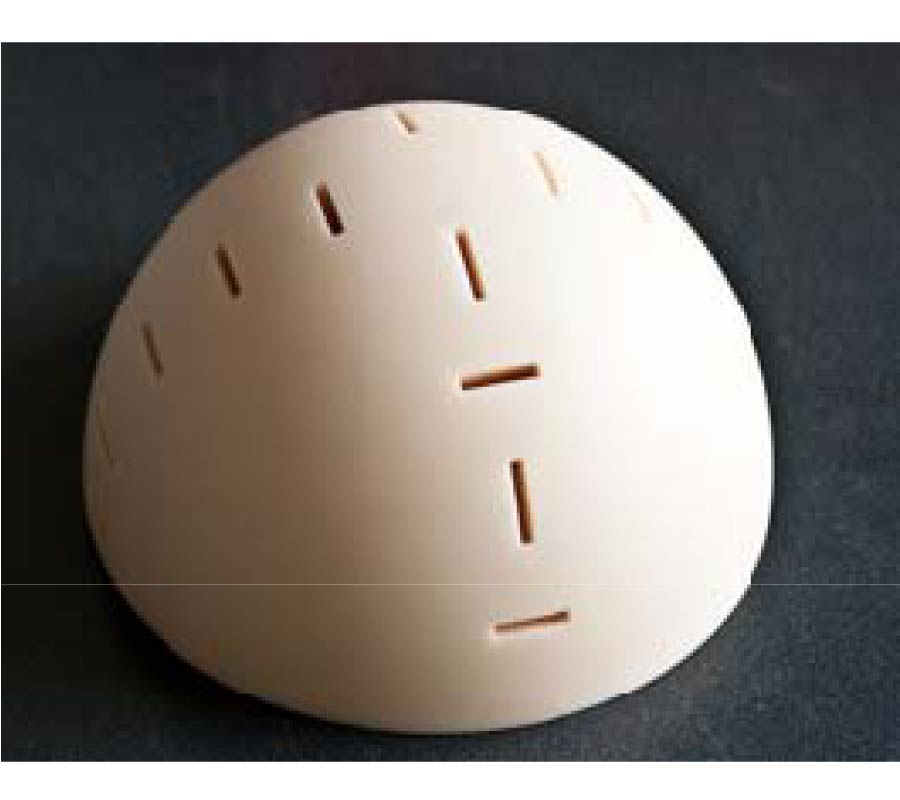
Cavity reflex antenna (CRA) employing a circular patch type FSS (Frequency Selective Surface) superstrate is investigated. Analysis in terms of gain, bandwidth (impedance and gain) and radiation pattern has been presented. The aim of this work was to study low profile CRA having very thin superstrate sizes. In this CRA a circular patch antenna is used as a feeding source. The circular patch type FSS possesses some unique properties favorable for thin superstrate sizes. In practice when the excitation source of the CRA is a probe-fed microstrip antenna with finite ground plane, substrate and superstrate, cross-polarization increases. In the presented design, the cross polar level has been reduced by choosing the optimum air gap and superstrate geometrical and electrical properties. A CRA with circular patch type FSS offers better performance both in terms of gain and impedance bandwidth for, thin superstrates (0.008) while giving a gain of 13 dBi and considerably reduced crosspolar level. The proposed antenna exhibit nearly equal E-plane and H-plane radiation pattern. Measurement results are provided to support the simulated results (by Ansoft HFSS). The circular patch type FSS is easy to fabricate and can be embedded into the host profile.
INVESTIGATION OF CAVITY REFLEX ANTENNA USING CIRCULAR PATCH TYPE FSS SUPERSTRATE
2012-07-02
PIER B
Vol. 42, 115-139
Generalized Synthesis and Design of Symmetrical Multiple Passband Filters
Akhilesh Mohan , Surinder Singh and Animesh Biswas
In this paper, we present a new synthesis method for a generalized symmetric multiple band bandpass filter. By using frequency transformations on the low pass prototype, the poles and zeros of the single/dual band filtering function are obtained. These poles and zeros are combined and re-arranged to get the multiband filtering function. The coupling matrix is obtained from this multiband filtering function. A variety of filters are synthesized in order to validate the proposed theory. A triple band and quadruple band filters have been designed, fabricated and measured. The measured results have good agreement with the simulated results.
GENERALIZED SYNTHESIS AND DESIGN OF SYMMETRICAL MULTIPLE PASSBAND FILTERS