Search Results(13901)

2009-03-11
PIER Letters
Vol. 7, 97-103
A Low-Profile and Broadband Conical Antenna
Shi-Gang Zhou , Jie Ma , Jing-Ya Deng and Qi-Zhong Liu
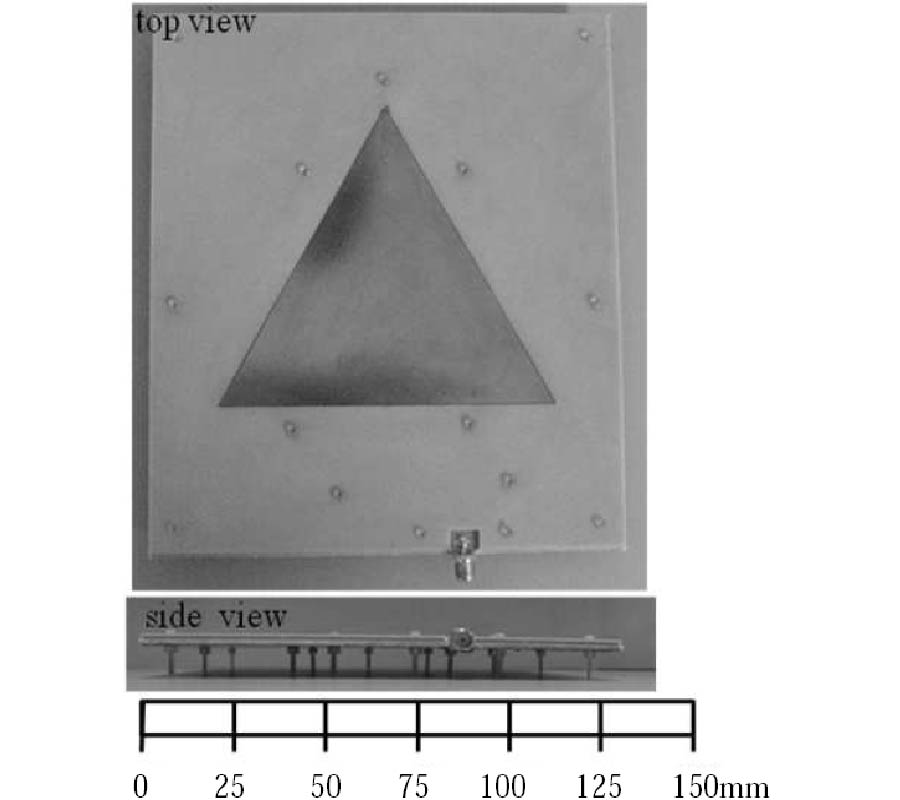
A novel electric small conical antenna working on a very broad band, 0.47-6 GHz, with the height of only 60 mm, is presented. A capacitive ring on the top of the cone and three oblique shorted lines are used to expanding the work band. By changing the width of the ring and the slope of the oblique line, the impedance of the antenna can be matched to 50-ohm feed line commendably. Simulations and experiments results demonstrate that this antenna provides very broadband and low-profile characters, which exhibits a 12.8:1 impedance bandwidth with voltage standing wave ratio (VSWR) below 2:1 (the impedance bandwidth is 11.9:1 with the VSWR below 1.5:1) and with the height only 0.094 wavelength associated to the lowest frequency.
A LOW-PROFILE AND BROADBAND CONICAL ANTENNA
2009-03-11
PIER C
Vol. 7, 13-24
Effects of Soil Physical Properties on Landmines Detection Using Microstrip Antenna as a Sensor
Saber Zainud-Deen , Mosad Badr , Emadeldeen Hassan , Kamal Awadalla and Hamdy Sharshar
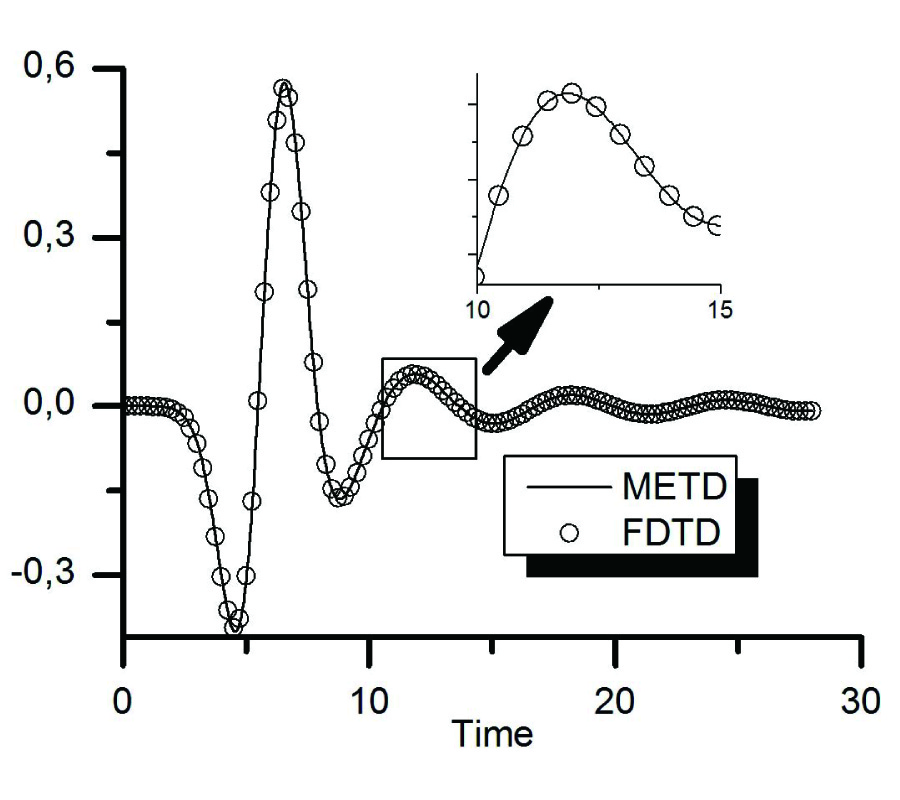
The effect of soil properties on landmines detection using Microstrip antenna with corrugated ground between the two microstrip elements as a sensor has been investigated. The effect of the electrical properties of the soil as well as the shape of the soil surface on the detection capability of the sensor is studied. The Finite-Difference Time-Domain (FDTD) has been used to simulate the sensor for landmines detection.
EFFECTS OF SOIL PHYSICAL PROPERTIES ON LANDMINES DETECTION USING MICROSTRIP ANTENNA AS A SENSOR
2009-03-11
PIER C
Vol. 7, 1-12
Measurement of Radiated Computer RGB Signals
Hidenori Sekiguchi
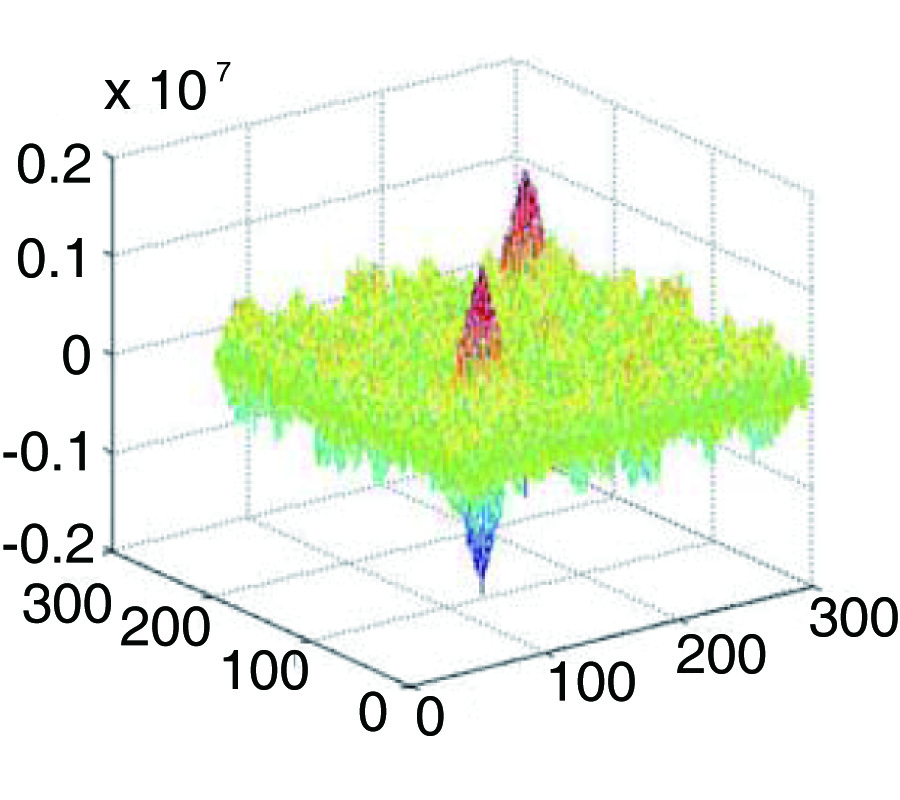
The present study was conducted to evaluate the information leakage of the display image that can be reconstructed using the electromagnetic interference emitted from a computer. A reconstructed image was generated from the information signal that correlated with the switching of the RGB signals of the computer display. Based on this observation, a measurement method and system for the information signal was developed by displaying an image with vertical stripes. To check the validity of this measurement method and system, test measurements were carried out. The test result revealed that the information signal can be detected in the electromagnetic interference. In addition, the information signal was found to be contained in high volume between 300 and 600 MHz, depending on the receiving frequency band.
MEASUREMENT OF RADIATED COMPUTER RGB SIGNALS
2009-03-11
PIER M
Vol. 6, 75-90
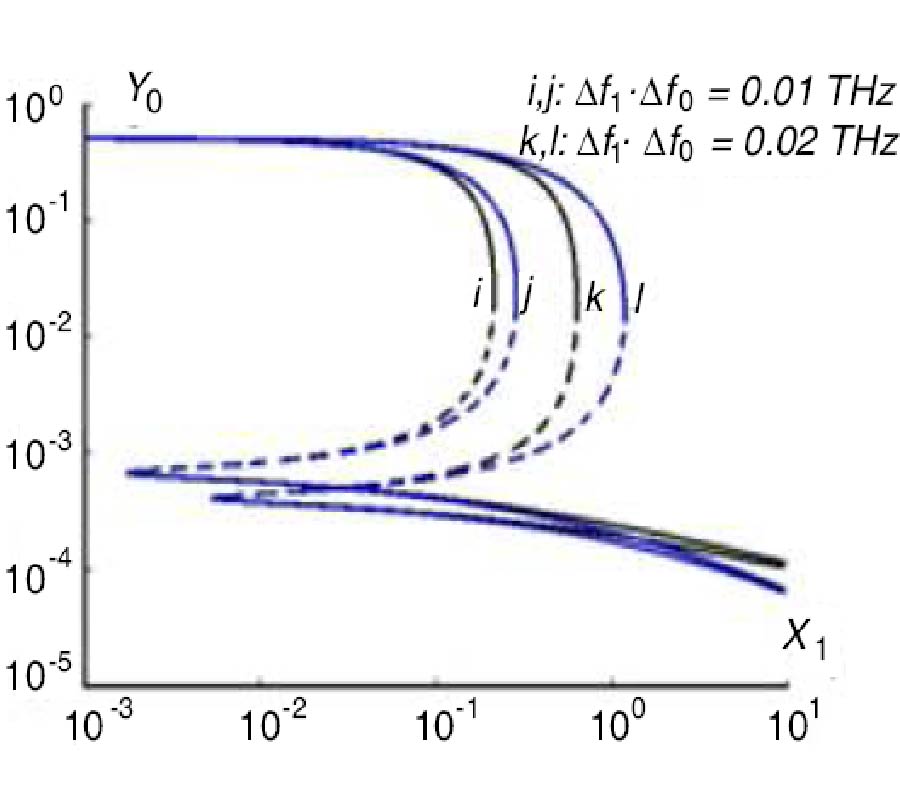
The Sycle Slipping Phenomenon and the Degeneration Effect of Guided-Wave Modes
Leonid A. Pazynin
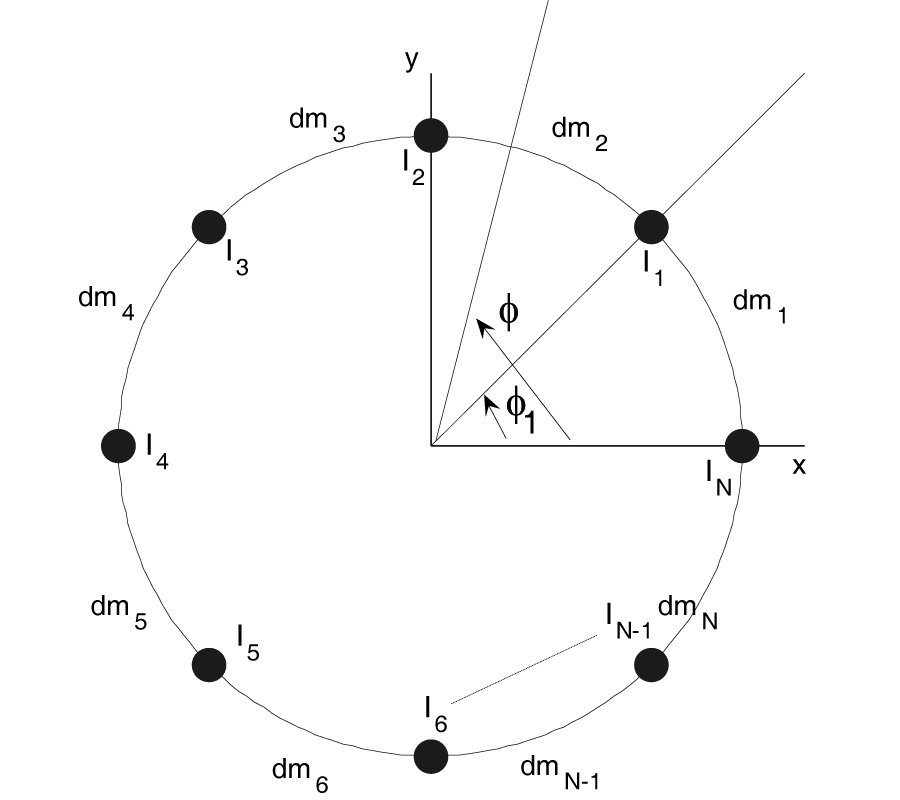
A model of the ring waveguide of a fixed cross-section and variable distribution of the surface impedance of waveguide's wall has been considered. For a class of circular hodographs of surface impedance the analytical solution of the corresponding boundary-value problem has been obtained. This solution has been used for simulating a 'cycle slipping' phenomenon, known from the observations of VLF signals propagating over long paths in the earth-ionosphere waveguide, with the goal of clarifying the cause for its initiation. Numerical experiments have shown that this phenomenon, in the context of the model in question, is a consequence of the interconversion of two dominant waveguide modes in circumstances where their propagation constants are close.
THE SYCLE SLIPPING PHENOMENON AND THE DEGENERATION EFFECT OF GUIDED-WAVE MODES
2009-03-11
PIER B
Vol. 13, 433-451
Synthesis of Triple-Band and Quad-Band Bandpass Filters Using Lumped-Element Coplanar Waveguide Resonators
Min-Sou Wu , Yu-Zhi Chueh , Jen-Chun Yeh and Shau-Gang Mao
This paper develops a novel design method for synthesizing the multi-passband filter with high flexibility in various passband location and fractional bandwidth. Using the proposed compensation technology in the equivalent circuit of multi-passband resonator, the cutoff frequencies and matching property in passband regions can be improved. Triple- and quad-band bandpass filters operating in both wireless local area network (WLAN) 802.11 a/b/g and worldwide interoperability for microwave access (WiMAX) systems are presented to verify the design method. The lumped-element coplanar waveguide stub fabricated by the split-ring resonator is established to realize filter with compact size. All the measured, full-wave simulated and equivalent-circuit modeled results illustrate a good agreement among them, which validates the multi-passband design methodology and shows the advantages of DC elimination and deep rejection between each passband.
SYNTHESIS OF TRIPLE-BAND AND QUAD-BAND BANDPASS FILTERS USING LUMPED-ELEMENT COPLANAR WAVEGUIDE RESONATORS
2009-03-11
PIER B
Vol. 13, 409-431
Simulating Wide Band Radar Response from PEC Targets Using Phase Extracted Basis Functions
Su Yan , Shiquan He , Zai-Ping Nie and Jun Hu
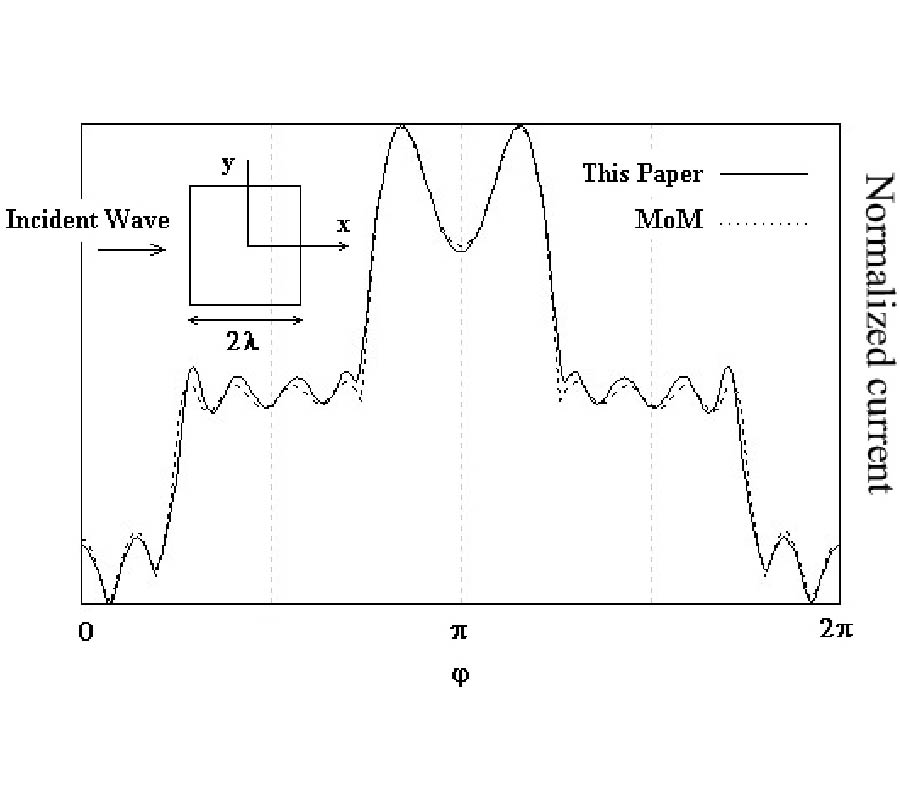
In this paper, we first review the Phase Extracted (PE) basis functions by recalling the derivation which shows that the induced current on a PEC surface has the propagating phase factor the same as the incident wave in a scattering problem. The wide band characteristic of this PE basis functions has been investigated by demonstrating that very wide band radar response from PEC objects can be simulated accurately by using PE bases, only based on a single coarse mesh grid. Besides, the resulted current coefficients are shown to vary slowly and smoothly with frequency changing and can be interpolated and extrapolated in very wide band easily. The piecewise cubic Hermite interpolation/extrapolation method with respect to the current coefficients is used to obtain the coefficients in the frequency band of interest. Numerical examples demonstrate very good accuracy and high efficiency in wide band radar response prediction in terms of the amplitude of the scattering field as well as its phase distribution.
SIMULATING WIDE BAND RADAR RESPONSE FROM PEC TARGETS USING PHASE EXTRACTED BASIS FUNCTIONS
2009-03-11
PIER B
Vol. 13, 385-407
Mechanical Properties of a Ferrofluid Seal: Three-Dimensional Analytical Study Based on the Coulombian Model
Romain Ravaud and Guy Lemarquand
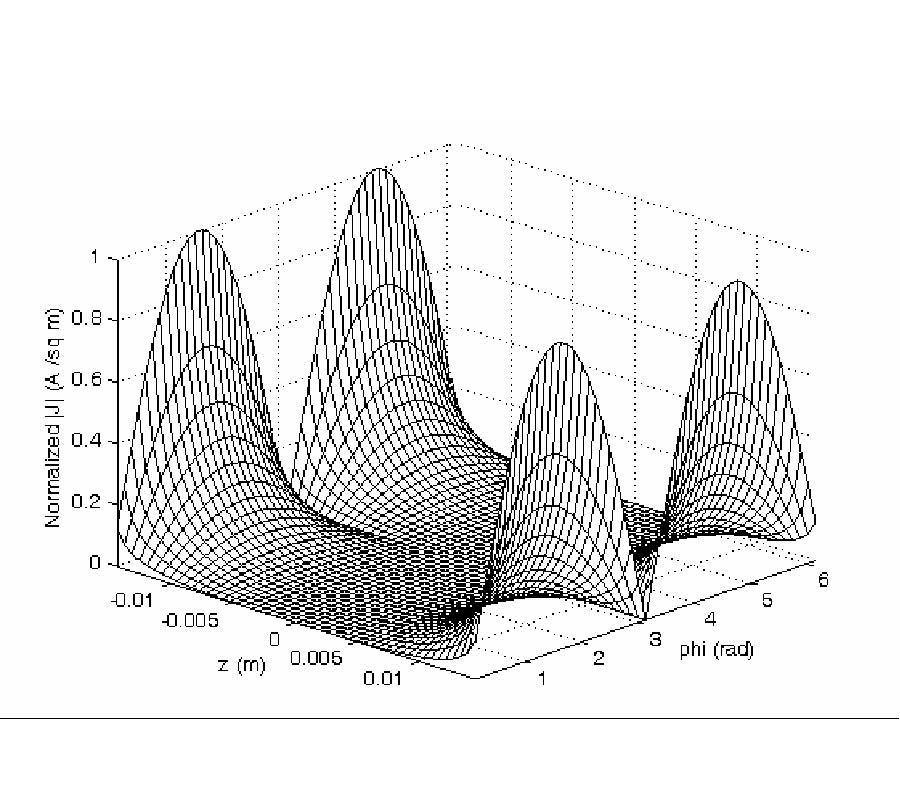
This paper presents a general method for studying the mechanical properties of a ferrofluid seal by using a three-dimensional analytical approach based on the coulombian model of a magnet. The fundamental Maxwell's equations lead us to define the concept of magnetic energy of the ferrofluid seal by using only the threedimensional equations of the magnetic field created by ring permanent magnets radially magnetized. Our study corresponds to the specific case when the ferrofluid is submitted to a very high magnetic field. Under these conditions, we assume that the mechanical properties of the ferrofluid depend only on the magnetic field created by the permanent magnets. Throughout this paper, the remanence polarization J of the magnets used is higher than 1T. The magnetic field we use in order to align the magnetic particles is very intense, greater than 400 kA/m. Consequently, the magnetic particles are assumed to be saturated and the magnetic field they create can be omitted. In this paper, a cylindrical structure consisting of two outer ring permanent magnets radially magnetized and an inner nonmagnetic cylinder is considered. In addition, a ferrofluid seal is placed between them. The calculation of the magnetic pressure of the ferrofluid seal has been analytically established in three dimensions in order to determine its shape. Moreover, the geometrical evolution of the ferrofluid seal shape is presented when the inner non-magnetic cylinder crushes the ferrofluid seal. The radial stiffness of the ferrofluid seal is determined in three dimensions when the inner cylinder is decentered. Furthermore, a way of obtaining the ferrofluid seal static capacity is discussed.
MECHANICAL PROPERTIES OF A FERROFLUID SEAL: THREE-DIMENSIONAL ANALYTICAL STUDY BASED ON THE COULOMBIAN MODEL
2009-03-10
PIER
Vol. 91, 139-152
A Simple Approach for Evaluating the Reciprocity of Materials Without Using Any Calibration Standard
Ugur Cem Hasar and O. Simsek
A simple approach for evaluation of the reciprocity of materials using raw scattering parameter measurements is proposed. This approach not only reduces the overall measurement time but also eliminates the need for calibrating the measurement system since it uses calibration-independent measurements. We have derived a metric function for reflecting and nonreflecting cells, which are used to house the sample under test. This function does not depend on electrical properties of materials and their lengths, and whether the cell is reflecting. We have also investigated the effects of the sample length and air pockets between sample external surfaces and cell inner walls on the performance of the evaluation of sample reciprocity.
A SIMPLE APPROACH FOR EVALUATING THE RECIPROCITY OF MATERIALS WITHOUT USING ANY CALIBRATION STANDARD
2009-03-10
PIER Letters
Vol. 7, 87-95
A Compact Composite Broad Stop-Band Elliptic-Function Low-Pass Filter for Ultra Wide-Band Applications Using Interdigital Capacitors
Mehdi Nosrati , Tayeb Faraji and Zahra Atlasbaf
A compact composite ultra wide-band elliptic-function low-pass filter is introduced by combining in cascade a microstrip stepped-impedance resonator using interdigital capacitor and an admittance inverter. A triple cascade low-pass filter is designed, analyzed and tested with this technique accompanied by its equivalent circuit model. This composition acts similar to composite filter with desire attenuation and matching properties in order to obtain wide bandwidth and broad stop-band. The proposed low-pass filter features the sharpness of cut off frequency, low insertion-loss, enhancement of bandwidth up to X-band frequencies and very compact size.
A COMPACT COMPOSITE BROAD STOP-BAND ELLIPTIC-FUNCTION LOW-PASS FILTER FOR ULTRA WIDE-BAND APPLICATIONS USING INTERDIGITAL CAPACITORS
2009-03-10
PIER C
Vol. 6, 193-207
Numerical Study of a Circulator Using YIG Thin Film with a Coplanar Structure
Oussama Zahwe , Bruno Sauviac , Bassel Abdel Samad , Jean Pierre Chatelon and Jean Jacques Rousseau
The transmission characteristics of a high frequency circulator using coplanar wave guide have been designed and studied. To miniaturize the device, we have dramatically reduced the thickness of the YIG ferrite layer (Yttrium Iron Garnet). The circulator has an hexagonal shape with dimensions of 10*10 mm2, the width of the central line (LINE) is 400 ?m, the space between LINE-to-GND is 130 ?m and the thickness of ferrite film (YIG) is 10 ?m. this compact circulator operates at 10 GHz. The insertion loss is 3.14 dB, the return loss is 18.57 dB and the isolation is greater than 20 dB.
NUMERICAL STUDY OF A CIRCULATOR USING YIG THIN FILM WITH A COPLANAR STRUCTURE
2009-03-10
PIER M
Vol. 6, 59-74
Computation of Physical Optics Integral by Levin's Integration Algorithm
Ahmet Cemal Durgun and Mustafa Kuzuoğlu
In this paper, a novel algorithm for computing Physical Optics (PO) integrals is introduced. In this method, the integration problem is converted to an inverse problem by Levin's integration algorithm. Furthermore, the singularities, that are possible to occur in the applications of Levin's method, are handled by employing trapezoidal rule together with Levin's method. Finally, the computational accuracy of this new method is checked for some radar cross section (RCS) estimation problems performed on flat, singly-curved and doubly-curved PEC plates which are modeled by 8-noded isoparametric quadrilaterals. The results are compared with those obtained by analytical and brute force integration.
COMPUTATION OF PHYSICAL OPTICS INTEGRAL BY LEVIN'S INTEGRATION ALGORITHM
2009-03-09
PIER
Vol. 91, 123-138
An Accurate Complex Permittivity Method for Thin Dielectric Materials
Ugur Cem Hasar and O. Simsek
A promising microwave method has been proposed to accurately determine the complex permittivity of thin materials. The method uses amplitude-only scattering parameter measurements at one frequency for this purpose. It resolves the problems arising from any offset of the sample inside its cell in complex reflection scattering parameter measurements and from any uncertainty in sample thickness in transmission scattering parameter measurements. The method determines unique permittivity since, for thin samples, multi-valued trigonometric terms can be linearized. It uses higher order approximations to extract highly accurate permittivity values. It works very well in limited frequency-band applications or for dispersive materials since it is based upon point-bypoint or (frequency-by-frequency) measurements. For validation of the method, we measured the complex permittivity of two thin polytetrafluoro-ethylene (PTFE) samples.
AN ACCURATE COMPLEX PERMITTIVITY METHOD FOR THIN DIELECTRIC MATERIALS
2009-03-06
PIER
Vol. 91, 101-121
A New Metric to Analyze Propagation Models
Juan Blas Prieto , Ruben Mateo Lorenzo Toledo , Patricia Fernandez Reguero , Evaristo Jose Abril , Alfonso Bahillo Martinez , Santiago Mazuelas Franco and David Bullid
Deterministic propagation models are typically validated by performing comparisons between real and simulated E-field envelope distributions. These distributions correspond to straight spatial segments and, occasionally, also surfaces. This approach is correct to study large scale fading for relatively large distances. However, in a real environment and shorter distances, there are too many details to consider. As a result, it is almost impossible to reach a point by point match in a minimally realistic experiment. There are two ways to deal with this problem. The first one is to model every minor detail everywhere around us, keeping the point by point metric. The second one is to change that metric in order to admit, at least in part, that we can not take into account of all the details. If uncertainty can not be eliminated, we should learn to take advantage of it by using a statistical metric like the one proposed here. This paper uses such a kind of metric to validate several structural and geometrical simplifications of a model for the transition between outdoor and indoor propagation that has been recently published. Furthermore, we demonstrate that this metric has helped us to improve and understand better this model, while revealing unexpected model properties at the same time.
A NEW METRIC TO ANALYZE PROPAGATION MODELS
2009-03-05
PIER
Vol. 91, 85-100
1x2 Y-Branch Plastic Optical Fiber Waveguide Coupler for Optical Access-Card System
Abang Annuar Ehsan , Sahbudin Shaari and Mohd Kamil Abd-Rahman
Design and fabrication of optical code generating devices based on plastic optical fiber (POF) for security access-card system is presented. The POF waveguide coupler will utilize two basic designs: 1 × 2 Y-branch coupler as the main device structure and 1 × 2 asymmetric coupler which allows non-symmetric optical power splitting. The Y-branch coupler are based on two designs: A metalbased POF coupler with a hollow taper waveguide and an acrylicbased POF coupler with optical glue for the taper waveguide region. The Y-branch device is composed of input POF fiber, middle taper waveguide and output POF fibers. Simulation based on non-sequential ray tracings have been performed on both types of POF couplers. Low cost aluminum and acrylic based materials are used for the substrates. Fabrications of the POF couplers are done by producing the device mold insert using CNC machining tool and POF fibers are then slotted into the Y-branch coupler mold insert. The insertion loss for both devices are about 8 dB.
1X2 Y-BRANCH PLASTIC OPTICAL FIBER WAVEGUIDE COUPLER FOR OPTICAL ACCESS-CARD SYSTEM
2009-03-05
PIER
Vol. 91, 69-84
On the Field Patterns of Helical Clad Dielectric Optical Fibers
Asrul H. B. M. Safie and Pankaj Kumar Choudhury
An analytical investigation of the lightwave propagation through dielectric optical fibers with helical clads is presented with the emphasis on their field patterns. The helical clad section is effectively realized by introducing conducting windings on the core-clad boundary. Using Maxwell's equations, a rigorous analytical approach is implemented to determine the field patterns in such fibers. For simplicity, two particular values of the helix pitch angle are considered, viz. 0°and 90°. The nature of fields is presented in both the situations corresponding to different allowed values of the propagation constants and the fiber diameters. The radial distributions of fields are presented under different situations, which exhibit the patterns like spikes. The observed smooth match of the fields at the core-clad interface validates of our analytical approach. The presence of a little higher amount of field in the fiber clad section is essentially attributed to the helical windings introduced over the fiber core. Further, the existence of considerable amount of evanescent waves in such fibers opens up the possibility of their applications in optical sensing.
ON THE FIELD PATTERNS OF HELICAL CLAD DIELECTRIC OPTICAL FIBERS
2009-03-05
PIER
Vol. 91, 53-68
Modelling an Ironless Loudspeaker by Using Three-Dimensional Analytical Approaches
Romain Ravaud and Guy Lemarquand
This paper presents some improved three-dimensional expressions of the magnetic field created by tile permanent magnets uniformly and radially magnetized for the design of ironless loudspeaker structures. All the expressions determined have been reduced to compact forms. We use these expressions for the optimization of ironless loudspeaker structures in which the radial field must be radially uniform. Indeed, as ring permanent magnets radially magnetized are rather difficult to manufacture, these magnets are replaced by assemblies of tile permanent magnets radially and uniformly magnetized. We present an example of ironless loudspeaker structure that has been optimized with our threedimensional approaches.
MODELLING AN IRONLESS LOUDSPEAKER BY USING THREE-DIMENSIONAL ANALYTICAL APPROACHES
2009-03-05
PIER B
Vol. 13, 357-383
A Projective Approach to Electromagnetic Propagation in Complex Environments
Emidio Di Giampaolo and Fernando Bardati
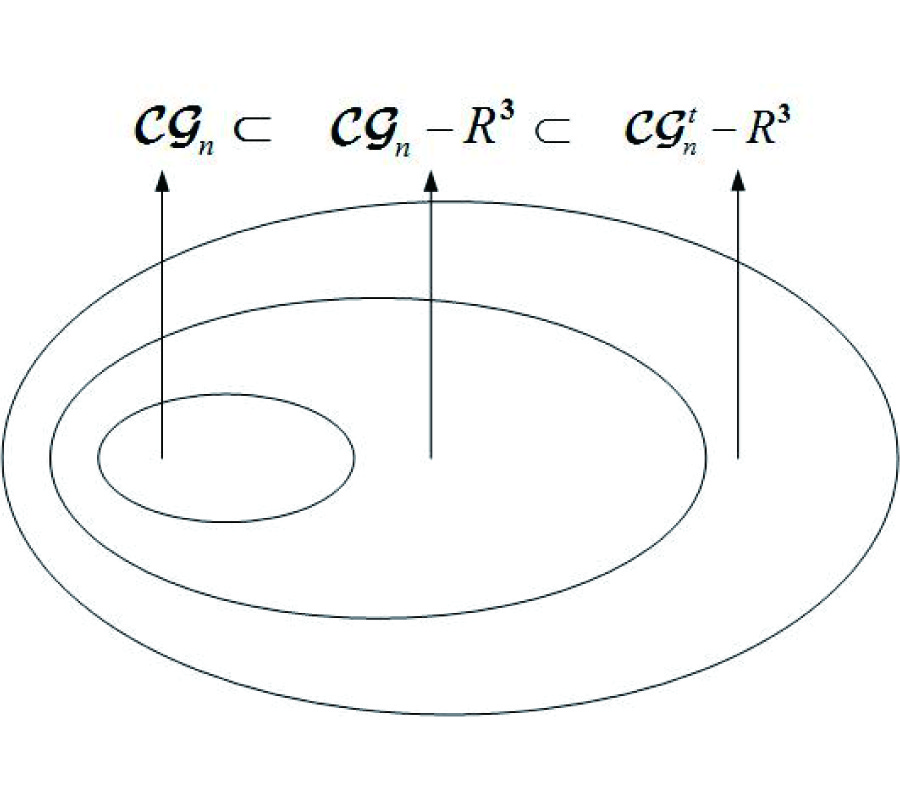
High frequency methods resort to numerical ray tracing for application to complex environments. A new method based on the geometrical projection performed by a ray-congruence has been developed as a preconditioning of the ray tracing procedure. It builds a visibility tree, i.e., a database, storing information on all possible ray paths inside a scenario. The method gives a solution to a class of open problems of ray tracing techniques: ray missing, double (multiple) counting, termination criterion, calculation upgrade. Other features of the method are the multipath map and the multipath classification that allow the user to know the relevance of multipath at any point of the scenario in advance, before ray-tracing calculation. The method can be systematically applied to scenarios pertaining to different applications provided that the objects belong to the class of polyhedrons. Reflected and diffracted contributions in a scene are modelled as secondary sources which are handled with an off-line electromagnetic field calculation. Numerical analysis is provided showing the efficiency of the method.
A PROJECTIVE APPROACH TO ELECTROMAGNETIC PROPAGATION IN COMPLEX ENVIRONMENTS
2009-03-05
PIER B
Vol. 13, 309-328
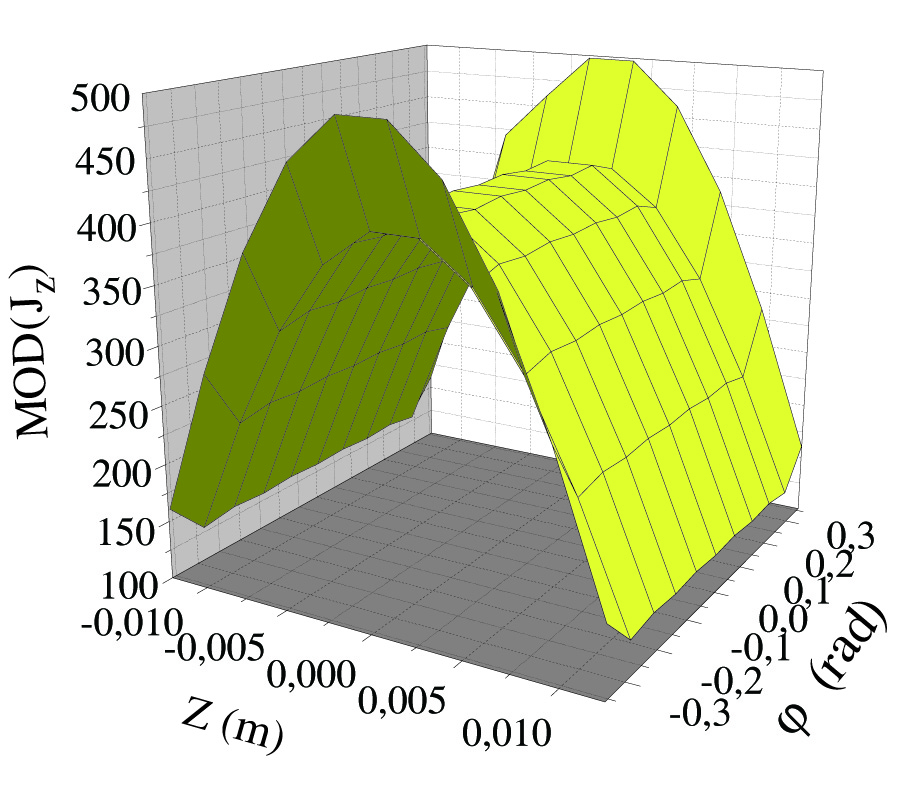
Analytical Expression of the Magnetic Field Created by Tile Permanent Magnets Tangentially Magnetized and Radials Current in Massive Disks
Romain Ravaud and Guy Lemarquand
In this paper, we present new expressions for calculating the magnetic field produced by either tile permanent magnets tangentially magnetized or by radial currents in massive disks. These expressions are fully analytical, that is, we do not use any special functions for calculating them. In addition, they are three-dimensional and can be used for calculating the magnetic field for all regular points in space. The expressions commonly used for calculating the magnetic field produced by radial currents in massive disks are often based on elliptic integrals or semi-analytical forms. We propose in this paper an alternative analytical method that can also be used for tile permanent magnets. Indeed, by using the analogy between the coulombian model and the amperian current model, radial currents in massive disks can be represented by using the fictitious magnetic pole densities that are located on two faces of a tile permanent magnet tangentially magnetized. The two representations are equivalent and thus, the shape of magnetic field produced is the same for all points in space, with a smaller value in the case of it is produced by radial currents in massive disks. Such expressions can be used for realizing easily parametric studies.
ANALYTICAL EXPRESSION OF THE MAGNETIC FIELD CREATED BY TILE PERMANENT MAGNETS TANGENTIALLY MAGNETIZED AND RADIALS CURRENT IN MASSIVE DISKS
2009-03-04
PIER
Vol. 91, 35-51
Numerical Characterization of Bistatic Scattering from PEC Cylinder Partially Embedded in a Dielectric Rough Surface Interface: Horizontal Polarization
Xiande Wang and Joshua Le-Wei Li
Scattering from a two-dimensional (2-D) perfectly electrically conducting (PEC) cylinder partially embedded in a random dielectric rough surface interface is studied using the method of moments (MoM) with pulse basis functions and the point matching technique, for the case of horizontal polarization. The random rough surface is modeled using Gaussian statistical characteristic for the rough surface height and surface correlation function, and generated by the spectralmethod. The tapered plane-wave incidence is used to avoid artificial edge diffraction due to the truncation of the rough surface into finitelength rough surface in the numerical simulations. With the developed algorithms, the interactions between the dielectric rough surface and the partially buried PEC cylinder are investigated using the Monte Carlo simulation, and are expressed as a function of the root mean square (rms) height of a random dielectric rough surface and the moisture content of the soil. The numerical results show that the bistatic scattering coefficients are dependent upon the moisture content, the rms height of a rough surface, and other parameters.
NUMERICAL CHARACTERIZATION OF BISTATIC SCATTERING FROM PEC CYLINDER PARTIALLY EMBEDDED IN A DIELECTRIC ROUGH SURFACE INTERFACE: HORIZONTAL POLARIZATION
2009-03-04
PIER Letters
Vol. 7, 79-85
A New Ultra-Wideband Microstrip-Line Fed Antenna with 3.5/5.5ghz Dual Band-Notch Function
Jie Ma , Ying-Zeng Yin , Shi-Gang Zhou and Luyu Zhao
A novel and compact planar ultra-wideband wide-slot antenna with dual band-notched function is proposed. The method of creating dual band-notch function is unique from traditional ones. By embedding a U-shaped parasitic strip and a pair of T-shaped stubs in the wide slot, dual bandstops around 3.5 GHz and 5.5 GHz can be obtained. The measured results demonstrate that the proposed antenna, with a compact size of 20X32.5 mm, has a large bandwidth over the frequency band from 3.1 to 10.6 GHz with voltage standing wave ratio (VSWR) less than 2, except the bandwidths of 3.3~3.7 GHz for WIMAX and 5~6 GHz for WLAN. In addition, the radiation pattern has an excellent omni-directional characteristic in the H-plane and a typical monopole like pattern in the E-plane.
A NEW ULTRA-WIDEBAND MICROSTRIP-LINE FED ANTENNA WITH 3.5/5.5GHZ DUAL BAND-NOTCH FUNCTION